Tag Archives: Abdul Wahid Shaikh

‘When I Got Home, We Just Cried’: A Muslim Man’s Journey From the Phansi Yard to Acquittal

Younuspur (Jaunpur District), UTTAR PRADESH :

42-year-old Ehtesham Qutubuddin Siddiqui, who was a death row convict for nearly a decade before being acquitted by the Bombay high court earlier this month, reflects on time in prison.
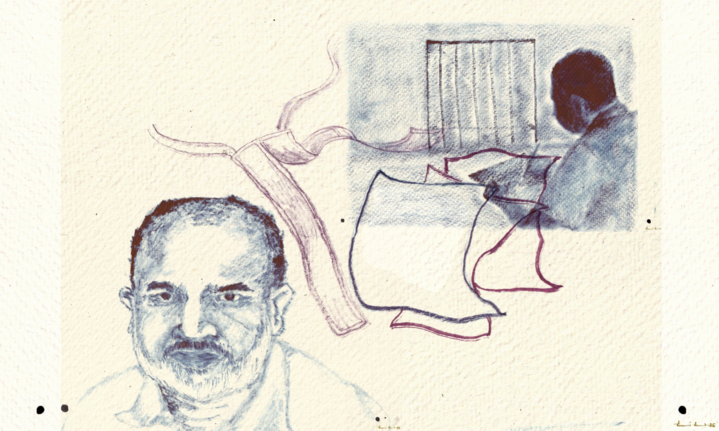
Illustration: Pariplab Chakraborty

A tiny 80-square-feet room, fitted inside a compact V-shaped enclosure known as the phansi yard (gallows yard) of Nagpur Central Prison, served as “home” for 42-year-old Ehtesham Qutubuddin Siddiqui for nearly a decade. In 2015, soon after a special Maharashtra Control of Organised Crime Act (MCOCA) court sentenced 12 individuals – five men, including Siddiqui, to death, and the remaining seven to life imprisonment –  in the 2006 Mumbai serial train blasts case, he was transferred to Nagpur jail.

All 12 men were acquitted by the Bombay high court on July 21.

Siddiqui describes his decade-long solitary confinement as a place that made him feel “safe.” “In the existing political atmosphere, especially as Muslim men convicted on terror charges, this isolation was the only way we could have stayed safe in jail,” he feels.
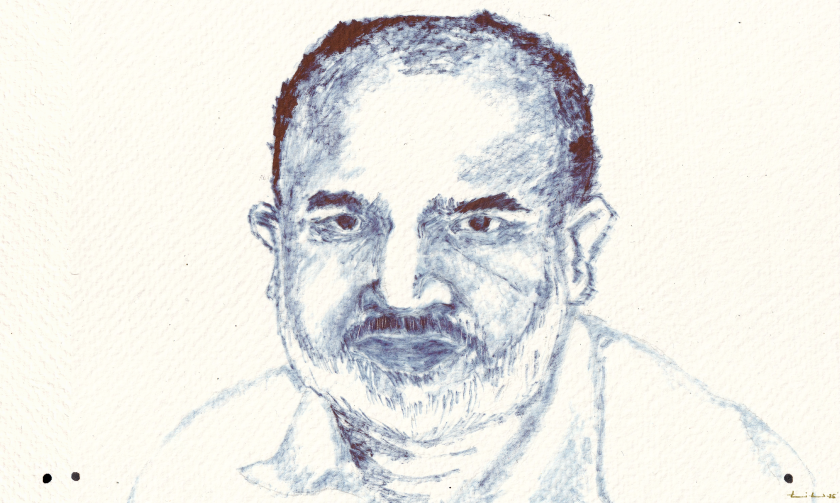
Illustration: Pariplab Chakraborty

An incarceration spanning two decades

Reflecting on his two decades of incarceration – nine years as an undertrial prisoner in Mumbai and then as a death row convict in Nagpur – Siddiqui says that while the trial took nearly a decade, the transition from undertrial to death row prisoner was “quite sudden.”

“One minute, we were jostling for space in the overcrowded prison barracks in Mumbai (until the lower court’s verdict), and suddenly, we were thrown into solitary confinement. It was a very small room but it was still ours. It had an attached bathroom, a ceiling fan and a tubelight,” he says, describing the prison room. 

Solitary confinement in India is unconstitutional. Even for death row convicts, it is permissible only after their mercy petition is rejected by the President of India. In the serial train blasts case, the death penalty had not yet been confirmed by the High Court but they were still subjected to solitary confinement. “But none of this really matters. It’s a common practice. The moment a person is given a death sentence, the prison authorities transfer them into the phansi yard,” Siddiqui says, as he recalls the names of many death row convicts housed in the 30 tiny solitary cells near his.
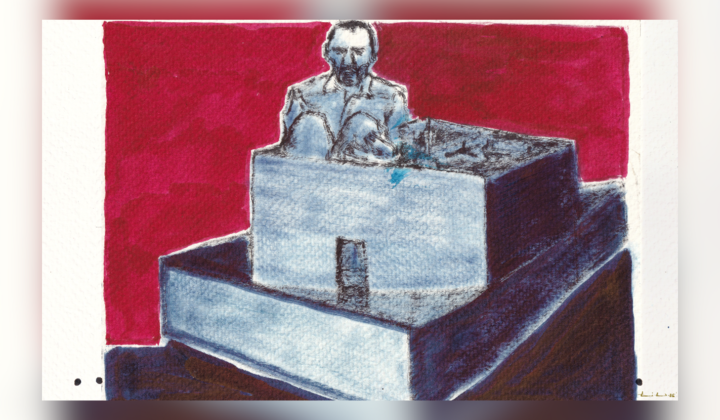
Illustration: Pariplab Chakraborty

“Many lacked proper legal representation and were simply abandoned here after the trial court imposed a death sentence. They would arrive here horrified, thinking this was where they would be hanged the very moment they reached there.”

It became almost a duty of other death row convicts like Siddiqui to explain legal procedures, offer advice, and calm newcomers in the phansi yard. Siddiqui says he saw many come and go over those ten years. “Almost all were eventually acquitted in their appeals before higher courts,” he points out.

Siddiqui’s observation is in sync with different studies on the Indian judicial system and capital punishment. The Death Penalty reports that the NLU- Delhi’s Project 39A (now renamed as The Square Circle Clinic after it shifted its base to NALSAR University of Law, Hyderabad), a criminal justice research and legal aid programme released every year has long established the pattern of death penalties getting either commuted to life or lesser punishment or in many cases, simply ending up in acquittals. 

Siddiqui recalls his interactions with five men from the Shinde family, who were sentenced to death by a trial court in a rape and murder case, only to be later acquitted by the Supreme Court. The Shindes, from a Nomadic Tribal community, endured 16 years of incarceration, 13 as death row convicts.

“They would keep asking me what I thought of their case, and I would keep reassuring them they’d be out soon. That simple fact made them so happy.” The Shindes were acquitted in 2019 following a strongly worded Supreme Court judgment. Among them, Ankush Maruti Shinde, was only 17, a minor, at the time of his arrest. 

Experienced sustained physical torture

Siddiqui says the hope that their innocence would eventually be proven kept them going. “We too survived prison life on that one hope. After all, how long could justice evade us?” he asks.

Siddiqui experienced both extremes of prison life: sustained physical torture in Mumbai’s Arthur Road Jail (complaints about which led to the transfer of the then-jail superintendent, Swati Sathe) and a relatively calmer existence with better food and living conditions in Nagpur. “I’m not romanticising prison life, but Nagpur’s prison was certainly a lot better. Which also means prisons can be made liveable if one wished,” he says.

Illustration: Pariplab Chakraborty

But his co-defendant Kamal Ansari’s death during the second wave of the COVID-19 outbreak in 2021 shook him. “Everyone around us was falling sick. Kamal fell sick and was moved to the hospital ward. He never returned.”
Illustration: Pariplab Chakraborty

Siddiqui says most of the men implicated in the case were unknown to him at the time of arrest. “But as circumstances brought us together, we eventually became each others’ support system,” he adds. The police and jail officials, he claims, tried hard to turn them against each other. “And the frustration does eventually get to you. So, each time we reached a point of anger or frustration against each other, we would simply stop talking. That helped us cool off, and rework on our relationship,” he shares.  
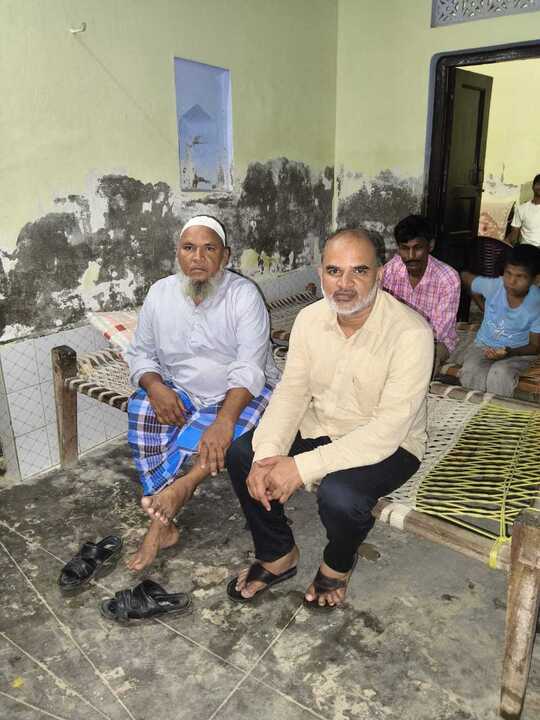
Ehtesham Qutubuddin Siddiqui with his father at their family house in Jaunpur. Photo: By arrangement

In Nagpur, Siddiqui had no trouble accessing writing materials. So he wrote extensively. His book, Horror Saga, which details his prison life and the botched up trial, was published last year. He has a manuscript ready for his next book. He has also translated several others while incarcerated.

How did he access books and research materials in jail? “I deviced a unique method,” he says, with a sense of pride. Siddiqui filed nearly 6,000 Right to Information (RTI) applications over two decades, primarily to gather evidence against the investigating agency, which helped debunk the police’s case, and also to access books published by the government press.

Earned over 20 degrees while in prison

A college dropout at the time of his arrest, Siddiqui has since earned over 20 degrees, including several Master’s, Bachelor’s, and Diplomas. In 2001, while in his third year of a Chemical Engineering program, he was arrested for a few days for alleged involvement with the Students Islamic Movement of India (SIMI), an organisation banned that year, leading to the overnight criminalisation of many men from the Muslim community.

Since then, Siddiqui says he tried several times to complete his education and earn a formal degree, but it didn’t happen. “So, in jail, I made full use of the time to gain as many degrees as I could,” he shares.

As strange as it may sound, among the first undergraduate degrees that Siddiqui enrolled himself was Tourism. “I wanted to keep my brain stimulated somehow and not let the incarceration consume me. So, I went on this rage of enrolling myself for every opportunity that was made available,” he recalls. He knew how to read Urdu, Arabic but didn’t possess a formal degree.

“So, I got one while in jail.” Siddiqui, who worked as a Desktop Publishing (DTP) operator as a local publishing house in Mumbai, now holds an MBA degree, master’s degrees in English Literature, Sociology, Marketing, and Financial Management, and diplomas in Nutrition and Mass Communication, among others. He is in the final semester of a three-year law degree.
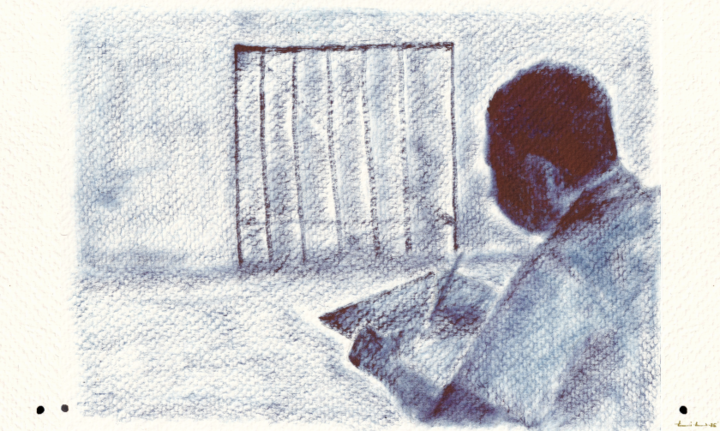
Illustration: Pariplab Chakraborty

If not studying, Siddiqui would take care of the small garden outside the barrack. “Those plants were the only pretty thing to look at,” Siddiqui laughs. The prison rules don’t allow assignment of any work to a death row convict. Which means, even though Siddiqui worked, he was not paid for his labour.

According to the Maharashtra state’s revised prison rules, a convicted prisoner is paid up to Rs. 65 per day, although a paltry sum and much lower than the minimum wages standards, yet some money that most incarcerated people look forward to to lead a dignified life in jail or to take back home at the end of their jail term.

Having spent nearly two decades in different prisons of Maharashtra, Siddiqui says the level of surveillance is “simply unnerving” now. “You will find hundreds of cameras loom overhead. Even a slight movement for exercise inside your barrack is instantly tracked, and jail officials confront you with a barrage of questions,’ he says.” Surveillance doesn’t stop here.

Abdul Wahid Shaikh, one of 13 arrested in this case and acquitted in 2015, and several other terror accused have had to install multiple CCTVs inside and outside their homes to simply shield themselves from police harassment.
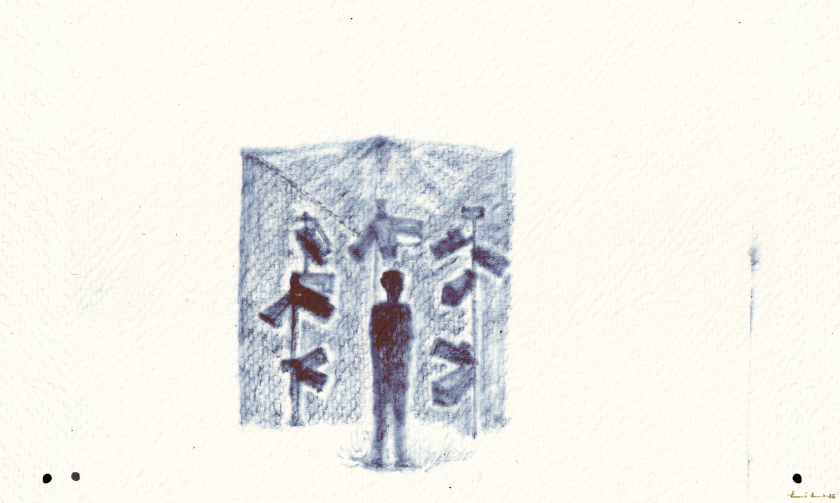
Illustration: Pariplab Chakraborty

‘Since release, every experience feels new’

On July 21, when the high court acquitted the 12 men, their release orders were  immediately executed – an unusual move. In many cases, even after the court order reaches jail authorities, releases are delayed, just to allow the state to file an appeal in the higher court. “Maybe they just wanted us out. The Solicitor General of India, Tushar Mehta, stating before the Supreme Court that the state no longer wanted us in jail is quite telling,” Siddiqui points out.
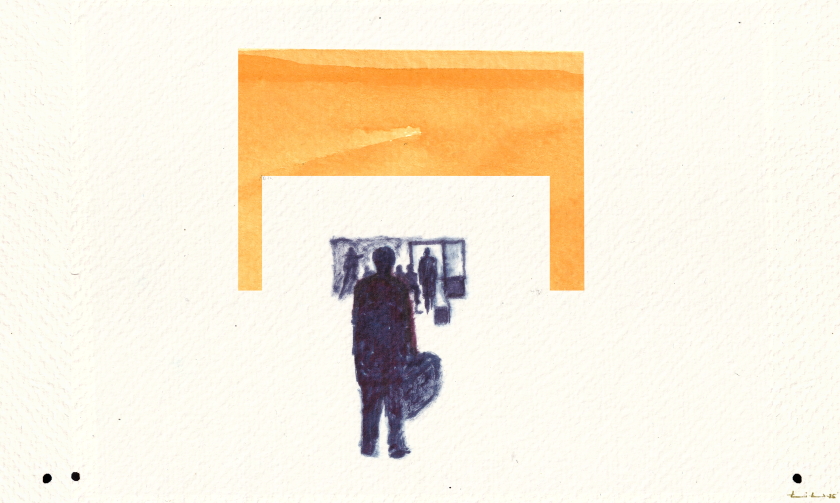
Illustration: Pariplab Chakraborty

Since his release, every experience feels “new,” Siddiqui says. He and his co-defendant, Shaikh Mohammed Ali Alam Shaikh, boarded a flight from Nagpur to Mumbai. “Hairaan kar diya Mohammed Ali ne (Mohammed Ali exhausted me),” he laughingly shares, as he narrates the experience of tasting freedom for the first time in two decades. “He was so excited he simply couldn’t stop talking. I worried his chatter would draw attention. I told him, ‘Bhai, agle ek ghanta shaant rehna (Brother, stay calm for the next hour).”

At Mumbai airport, they were met by a media frenzy. “We didn’t know how to handle this sudden attention; the last time we experienced anything like this was two decades ago at the time of our arrest,” Siddiqui says. In Mumbai, they had the chance to take a train to reach the Jamiat Ulema-i-Hind (an organisation that provided legal aid to the men all along) office but chose not to. When asked why, Siddiqui pauses but says nothing.

Illustration: Pariplab Chakraborty

At the time of his arrest, Siddiqui lived in Mira Road, but he now stays with his family in Younuspur, Jaunpur district, Uttar Pradesh, where his parents, four siblings, and, most importantly, his wife, Sabina, reside. Siddiqui and Sabina were married for less than a year at the time of his arrest in 2006. Siddiqui was only 23 at the time of his arrest, Sabina even younger. 

‘She stood by me, and my parents cared for her as their own’

“In those 19 years, I must have told her many times this could be an endless wait and that I wouldn’t hold it against her if she sought a divorce. But she was steadfast. She stood by me, and my parents cared for her as their own,” Siddiqui says. He calls Sabina the “real hero” of his story. “Her resilience and trust in me was so deep.I can’t express my gratitude enough,” he tells The Wire.

Returning to Younuspur was an emotional homecoming. “When I got home, we just cried. We barely talked; we just cried for many hours.” Relatives and well-wishers have been visiting non-stop. “I don’t recall most faces, but it would be rude to say so, so I simply nod. When I was behind bars, these individuals offered support and solidarity to my family. Now they are here again to celebrate my freedom. It’s all too surreal,” he says.

Siddiqui might have returned with close to two dozen degrees, but the future still looks “uncertain,” he admits. “Finding a job might not be possible. Maybe I will consider pursuing a legal profession,” he thinks aloud. But for now, he says he wants to just return to writing those many stories he has. “The ones I’ve safely kept locked inside me for so many years.”

source: http://www.thewire.in / The Wire / Home> English>Rights / by Sukanya Shantha / July 27th, 2025

Aurangabad Chapter of Innocence Network India Launched to Combat Wrongful Incarceration

Aurangabad, MAHARASHTRA :

Advocate Faiz Syed leads new regional initiative inspired by Abdul Wahid Shaikh’s movement for justice and reform.

On 28th September, the Aurangabad (Chhatrapati Sambhaji Nagar) chapter of the Innocence Network, India was formally established, with an ad-hoc committee of 14 advocates led by Advocate Faiz Syed.

Speaking to Muslim Mirror, Syed said, “We felt the urgent need to start this chapter due to the widespread issues of wrongful incarceration, false implication, filing of bogus cases, and arbitrary arrests across the country. When a sole breadwinner or a poor individual is drawn into this legal labyrinth, it becomes incredibly difficult for them to navigate their freedom.”

He added, “Our aim is to provide legal aid and guidance across the Marathwada region and ensure that no instance of wrongful implication goes unchallenged.”

The Innocence Network was founded by Abdul Wahid Shaikh, one of the accused in the 2006 Mumbai train bombings (7/11 case), following his acquittal by the Maharashtra Control of Organised Crime Act (MCOCA) court in 2015. Shaikh spent nine years in Arthur Road Jail before being acquitted. “We had fought the case to the best of everyone’s ability,” he recalled. “Yet, we were convicted. That experience made me question the limits of legal struggle alone.”

As he was released, Shaikh’s co-accused urged him to continue the fight for their freedom—a moral responsibility that, he says, became his life’s mission. After returning to work as a teacher, Shaikh began assisting Advocate Yug Mohit Chaudhry, who led the 7/11 defense in the Bombay High Court. It was during this time that he met Advocate Pari Jata and researcher Sharib Ali, both deeply involved in civil rights work.

Inspired by the global Innocence Network movement, Ali proposed launching an Indian chapter. Together, they began mobilizing civil society to challenge wrongful convictions, especially in terrorism cases. Their first public gathering in Delhi—attended by lawyers, students, scholars, and activists—marked the formal establishment of the Innocence Network India.

The Network describes itself as “an all-India collective of individuals and organisations working for the rights of those wrongfully prosecuted or convicted, especially under charges of terrorism.” Led by exonerees and supported by lawyers, researchers, and civil rights groups, it focuses on criminal justice reform, rehabilitation, and policy advocacy. Its website also archives documents related to the 7/11 case.

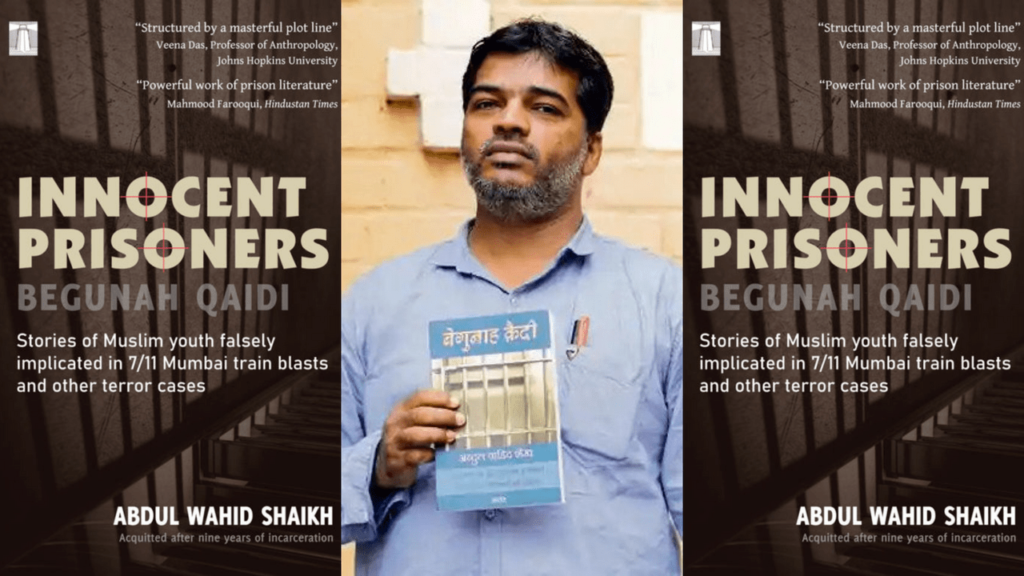
Shaikh’s first book, “Innocent Prisoners,” exposed what he described as fabricated evidence by the Anti-Terrorism Squad (ATS) in framing 13 innocent men. The book was widely discussed as a crucial work highlighting the pattern of false implication of young Muslims in terrorism cases.

In 2016, the Network organized its first Innocent People’s Tribunal at the Constitution Club of India, where 16 wrongfully prosecuted individuals testified publicly about their ordeal. The report from this tribunal later informed the Law Commission’s Report No. 277. Another tribunal followed in Kolkata in 2018.

Since 2017, the Network has hosted two annual programs in Mumbai—one on the anniversary of the 7/11 bombings and another, the Shahid Azmi Memorial Lecture, in memory of the lawyer who represented the 7/11 accused. These events feature legal experts, journalists, and filmmakers such as Justice Abhay Thipsay, Hansal Mehta, Yug Mohit Chaudhry, Susan, Nazia Sayed, and Faisal Qazi, among others.

Shaikh has also used books, media, and digital platforms to expand his advocacy. His YouTube channel “Begunah Qaidi” features over 250 videos documenting cases of wrongful incarceration. His “Mobile Legal Aid” helpline operates 24×7, offering immediate support to those facing fabricated charges. “It has already helped prevent several cases of wrongful incarceration,” he noted.

Beyond advocacy, Shaikh continues to assist exonerees with legal representation, education, and rehabilitation. His upcoming books include an autobiography with Roli Books and a collaborative work profiling his co-accused.

Recently, the Innocence Network launched a think-tank to document wrongful incarcerations and misuse of draconian laws. “Our team includes researchers, professors, and lawyers,” Shaikh said, adding that a detailed report is in progress.

Sohail Shaikh, one of the 7/11 exonerees, told Muslim Mirror: “The Innocence Network may have been formally established in 2016, but its roots go back to Arthur Road Jail. Shaikh has only continued the work we all started in prison. The Network’s work made it possible for society to finally recognize our innocence.”

Advocate Shruti, a researcher with the network, emphasized, “The kind of miscarriage of justice in the 7/11 case represents a double injustice—innocent people are tortured while real perpetrators remain free. The Network’s work is vital to restoring ordinary citizens’ faith in justice.”

Shaikh revealed that new chapters of the Innocence Network are being planned in Bangalore, Jalgaon, Jalna, and Hyderabad, set to be launched later this month.

source: http://www.muslimmirror.com / Muslim Mirror / Home> Human Rights> Indian Muslim> Positive Story / by Osama Rawal / October 20th, 2025

Bomb Blast Acquit Turned Advocate Abdul Wahid Shaikh Awarded PhD at MGM University, Aurangabad

Mumbai, MAHARASHTRA :

Bomb Blast Acquit Turned Advocate Abdul Wahid Shaikh Awarded PhD at MGM University, Aurangabad

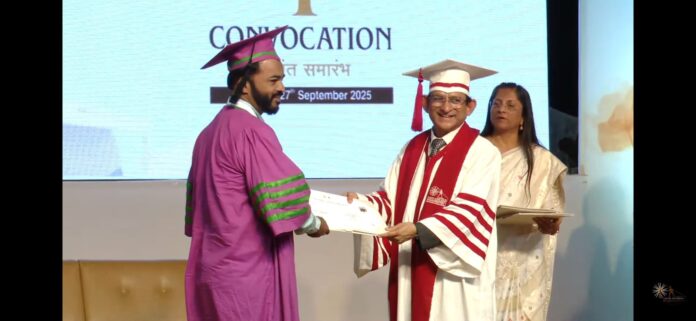
Advocate Abdul Wahid Shaikh, noted lawyer, prison rights activist, and the first person person acquitted in the 2006 Mumbai train blast case, was conferred with a Doctor of Philosophy (PhD) degree at MGM University, Aurangabad. The degree was presented by Vice Chancellor Prof. Dr. Vilas Sakpal during a formal convocation ceremony.

Dr. Shaikh’s doctoral research, titled “Prison Literature: Post-Independence”, brings focus to the writings emerging from Indian prisons, highlighting voices of resistance, resilience, and injustice. His work underscores how incarcerated individuals have shaped Urdu literature and contributed to broader narratives of social justice in post-independence India.

Speaking on the occasion, Dr. Shaikh said:“This PhD is not just an academic milestone, but a continuation of my struggle for prison justice. Prison literature is the voice of the silenced, the testimony of those behind bars, and a mirror to our society’s conscience.”

As General Secretary of the Innocence Network, Dr. Shaikh has long campaigned for the release of wrongfully imprisoned individuals and advocated for humane prison reforms. His latest academic achievement strengthens his commitment to legal activism and adds a scholarly dimension to his work.

Faculty members, scholars, students, and well-wishers attended the convocation, applauding Dr. Shaikh’s perseverance and his contribution at the crossroads of academia, activism, and law.

His achievement is a landmark—demonstrating how an exoneree can turn personal suffering into intellectual strength and contribute meaningfully to the pursuit of justice and the rights of the incarcerated.

source: http://www.muslimmirror.com / Muslim Mirror / Home> Positive Story / by Muslim Mirror Special Correspondent / September 29th, 2025

Haemolymph: Movie portrays Muslim teacher crushed by Indian state

Mundra, MAHARASHTRA:

Bollywood industry have been criticised by viewers for its Islamophobic portrayal. Be it woke series like Family Man or commercial flicks Batla House and Sooryavanshi, Muslims are always portrayed as sleeper cells, terrorists or smugglers. Films always acted as an integral compound for the Hindutva nationalist project. Only a few films stood as exception. This year, May 27 witnessed a unique release.

An industry, which parroted the state narrative of Muslim being the terrorists dared to tell the story of an innocent Muslim teacher Wahid Shaikh who was falsely implicated in 7/11 Mumbai train blast and spent almost nine years in jail to satisfy the ‘collective conscience’ of the state. Haemolymph movie, directed by Sudarshan Gamare, got released in more than 120 theatres across India in its initial phase. 

“The title Haemolymph, loosely translated as the ‘blood of the ant’ symbolises how the life of a common can be easily crushed by the authorities similar to how an ant can be easily crushed,” the director Sudarshan Ghamare said to Maktoob.

Wahid Shaikh, a primary school teacher respected in the neighbourhood, got picked from Mundra as an accused in the 7/11 Mumbai train blasts of 2006. Shaikh had to spend almost nine years in jail to prove his innocence. Of the 13 accused charge sheeted by the Mumbai Anti-Terrorism Squad, Wahid was the only one to be acquitted of all charges. 

Wahid Shaikh was not excited when he got a call from Sudarshan Gamare asking permission to make a biopic on him. ”Many people had contacted me telling their interest to make movie on my life. But all of them got dropped in the midway. I guess nobody had the courage to tell my story,” said Wahid Shaikh. 

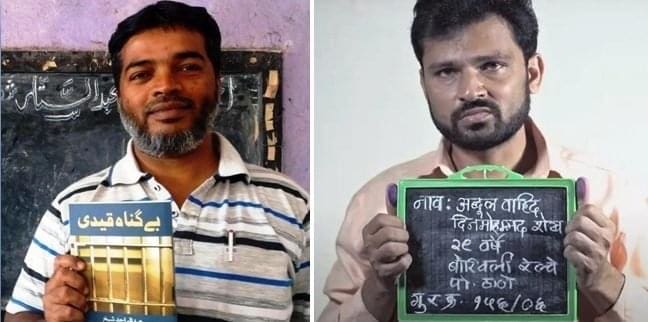
Sudarshan Gamare got hooked to Wahid’s story after reading NDTV journalist Sunetra Choudhury’s book “Behind Bars” which featured a chapter on Wahid Sheikh . After completing the book, Gamara read Beguna Qaidi( Innocent prisoner), a book wrote by Wahid Shaikh on his experience inside the jail. The book was a documentation of the torture, fabricated charges, forced confessions, prejudice from the investigative agencies and jail authorities and the deep rooted Islamophobia.

“His life story was very horrifying. I can empathise with his pain and I felt so guilty after reading his story. I realised that this is an important story and it need to be shared with the public,” Sudarshan Gamare said.

Gamare discussed the story with his friend Riyaz Anvar, who later played the lead role of the film, and decided to meet Wahid. 

The filmmakers met Wahid at a hotel in Mumbai and had a long chat with him. Later, they travelled to Wahid’s home in Mumbra, talked to his friends and family. The team went through the chargesheet of 20,000 pages and the copy of the judgement. They referred all the case-related documents available in public domain and the articles written on the case. The crew even contacted Mumbai Police and the family of victims of the bomb blast to extract their version on the incident.

”It took us almost 15 months to finalise the script; 11 months for research and 4 months to write the screen play. Wahid gave suggestions through out the process,” the director and the screenwriter Sudarshan Gamare said. 

“It was really a difficult task to show nine year’s story in two hours.  I had to recollect many important incidents happened in those nine year period for the movie. Many unpleasant memories flashed through my mind. It reminded me of the grave injustice done to me. It was not an easy task to revisit those traumatic experience. But I want people to understand what happens to innocent people like me in Indian prisons,” said Shaikh.

The lead actor Riyas Anwar, who was with the crew since the research stage, described the process as an emotional journey.

Riyas talked with Wahid for hours and prepared notes on Wahid’s life, interests, habits etc. “The character preparation started from the very soul of Abdul Wahid Sheikh.  I started interacting with the people he was close to. Practised writing with the  left hand. I wore the type of clothes Wahid loves to wear and travelled in crowded local trains. We sat for hours outside the Arthur road jail to get an idea on what Wahid might have gone through,” said Riyas. 

“The film is a labour of love by my friends. It’s the debut project of cinematographer Rohan Mapuskar and editor Hemant Mahajan. I and three other friends started the production house, Ticketbari. Later, Adiman studio and AB Films Entertainment joined the production,” the director said.

Wahid Shaikh said that there are hundreds of similar stories to be told. “A state sponsored terrorism exists in this country. Most of the victims are Muslims. Be it a blast in a temple or Masjids, Muslim youth were picked as suspects. SIMI, ISIS, Al Qaeda are used as excuses to vilify Muslims,” Shaikh said to Maktoob.

Following his acquittal, Wahid Shaikh, with the help of rights activists, retired judges and lawyers, started an organisation – The Innocence Network. 

The organisation mainly works on prisoner rights and exonerates prisoners wrongfully accused by providing pro bono legal services.

“We organised a tribunal in Delhi in 2017 which demanded compensation for the acquitted prisoners. The network organises lectures on Mumbai bomb blast anniversaries and advocates for prison reliefs,” Shaikh said. 

Wahid Shaikh, the teacher who wrote major chunk of his book Begunah Qaidi inside the Arthur Road prison, pointed the deep rooted Islamophobia in the state institutions and the  effects of the war on terror following the 9/11 attack as the reason behind the wrongful incarceration of Muslim youths.

“The Home ministry of the Union government maintains a war book. It contains name and other details of all Muslims arrested or charged in terrorism related cases in India. My name is still in the book. I got to during a hearing with the National Human Rights Commission,” Shaikh said. 

source: http://www.maktoobmedia.com / Maktoob / Home> Features> Film & TV India /by Ashfaque EJ

Acquitted Of False Terror Charges, 2006 Mumbai Train Blasts Accused Authors Book On Police Tactics On Implicating Innocent People

Mumbai, MAHARASHTRA :

11th July is remembered in India’s at 7/11 because of Mumbai Train blasts in 2006. New Delhi-based publisher Pharos Media has brought out “Innocent Prisoners”, the English version of Begunah Qaidi authored by Abdul Wahid Shaikh, himself victim of a fake terror plot by agencies. The book, written while the author was incarcerated in Mumbai’s Arthur Road jail, was originally published in Urdu and later translated into Hindi.

Now available in English, it is a massive work of 504 pages on the tactics agencies and police use to ensnare innocents in fake terror cases to justify government policies and influence citizens of the country to accept the emergence of a security state in India.

The author himself was a victim of this ensnaring tactic who was acquitted by the Special MOCA & NIA Court Mumbai while his co-accused rot in jail and their appeal is pending for the last six years in Bombay High Court.

Shaikh offers first-hand information about agencies and police tactics on implicating innocent people, fabricating false evidence against them, and use torture of victims and the immoral pressure on their relatives to force them to confess to crimes they never committed or implicate other innocents.

The book is basically about the 7/11 Mumbai train blasts case but also covers German Bakery Blasts 2010, Malegaon Blasts 2006, Aurangabad Arms Haul Case 2006, Akshardham Attack 2002, and the “Indian Mujahideen” plank used by agencies to fabricate cases. It also extensively covers police torture, fabrication tactics, and various strategies police and agencies employ to implicate innocents and force them to make false confessions to prove stories concocted by the agencies and police.

This exposé offers startling details of the heinous games played in India by the State through police and agencies for decades in the name of “terrorism”. This book unveils the ugly face of government and agencies, modus operandi of police, ATS and investigation agencies, their inhumane tortures, legal tactics employed, and the secrets of court cases. Innocents implicated in terror cases will find the courage to fight their legal battles through this book. The reality of the blast cases and the tall claims made by police and media are exposed in great detail in this book. 

The author himself was a victim of torture and tactics of police and investigation agencies. He has narrated first-hand experiences of himself and some other innocent prisoners at the hands of police, investigation agencies, and officials of the jail system. 

This book is not just a testimony of the innocence of a person acquitted of all charges in an infamous “terror” case, it also showcases his unmoved resolve to fight the legal battle for his and other victims’ freedom. It also is a manual on how not to get yourself entangled in the vicious web of false implication in the first place and how to secure freedom from the clutches of heartless people in uniform, if arrested.

The author, Abdul Wahid Shaikh is a teacher at a Mumbai school. He was the only person to be acquitted out of the 13 accused in the 11 July 2006 Mumbai train bombings case because till the end he refused to sign a false confessional statement while his other co-accused succumbed to pressures and signed their false confessions which were used in court to sentence them to death and life imprisonment. 

Shaikh completed his post-graduation and studied law during his nine years in jail. Keeping his promise to his co-accused, he frequently travels around the country talking about the truth.

A Hindi feature film based on his life will soon be released. Even years after his acquittal, cops continue to harass him. Priced at Rs 495, this book as well as its Urdu and Hindi versions are available on Amazon and Pharos Media.

source: http://www.thecognate.com / The Cognate / Home> News / by The Cognate News Desk / July 12th, 2021