Apart from the need for education, it underlines the importance of representation in legislative bodies and jobs
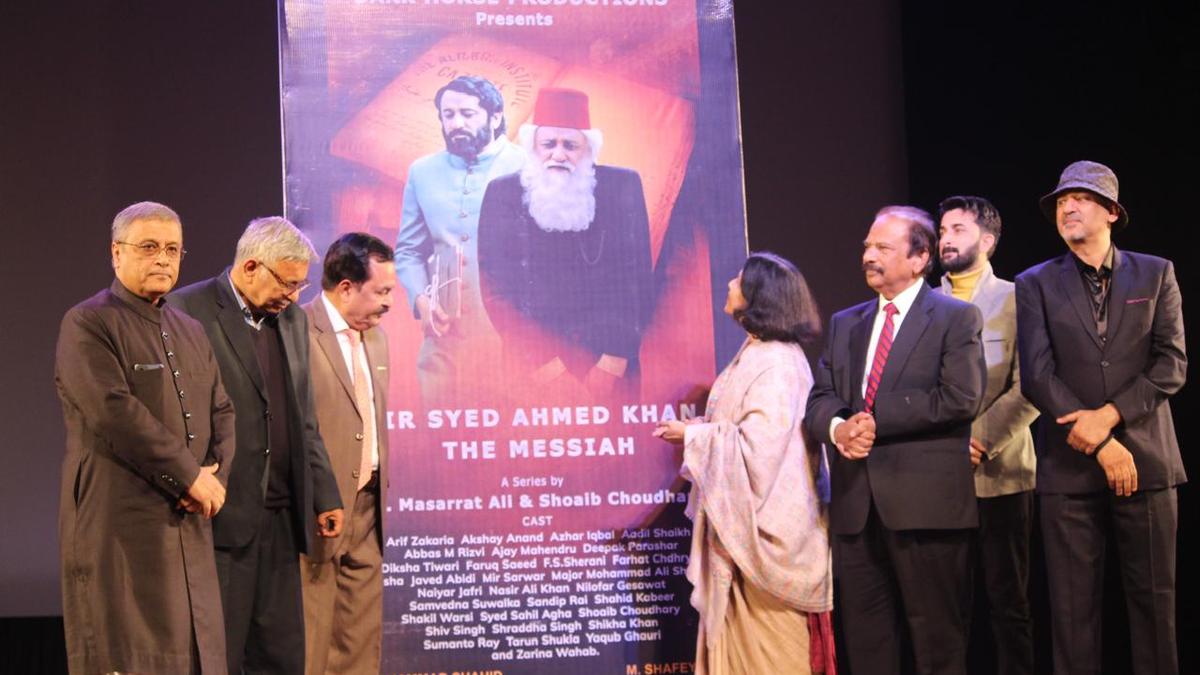
Syed Ahmed Khan biopic | Photo Credit: SPECIAL ARRANGEMENT
He is one of the architects of modern India or a proponent of the two-nation theory. However, moving away from easy binaries, the first biopic of Sir Syed Ahmed Khan attempts to find answers to the contested legacy of the founder of the Muhammedan Anglo-Oriental College that took the shape of Aligarh Muslim University (AMU). Long in the works, a two-hour cut of the OTT series, The Messiah premiered at the iconic Kennedy Auditorium in AMU on Monday, before the series streamed on Apple TV.
Coming at a time when the minority status of the Central University is being hotly debated in courts and society, the series details how Sir Syed confronted a section of the clergy and conservative elements within the Muslim community by creating a modern centre of learning to build bridges between the Muslims and the British government after the revolt of 1857, when the colonial power held the community largely responsible for the rebellion. “He held the ignorance as the primary reason behind the political decay of Muslims and thus pushed for modern education,” says Shoaib Hussain Chaudhary, who not only directed the series but also played the title role. “The role fell into my lap after big names declined to take up the challenge, perhaps because of the stigma attached to him.”
A known name in the television circuit, Chaudhary sees Sir Syed as an advocate of Hindu-Muslim unity, who was wrongly associated with the two-nation theory. “The theory came into being long after his demise in 1898. What he asked for was Muslim representation in legislative bodies and it remains relevant considering the political status of the community today.”
As someone who believed in answering a book with a book, Sir Syed responded to William Muir’s controversial commentary on Prophet Muhammad with a rational interpretation of Islamic tradition in Khutbat-e-Ahmadiya.
An adaptation of Hayat-e-Javed, Khwaja Altaf Hussain Hali’s biographical account of Sir Syed’s life, the series puts him in the league of reformists like Raja Ram Mohan Roy and Ishwar Chand Vidyasagar and argues that he was not a communal figure but a communitarian who was conscious of the fact that Hindus of Bengal were at least 50 years ahead of Muslims in taking up modern education.
Interestingly, the spark came from Mirza Ghalib. When Sir Syed approached the poet to write the preface of his translation of Ain-e-Akbari, he advised him to concentrate on the contemporary issues of the community and said there was no point in celebrating Akbar’s rule when the constitution of the world was being written in Calcutta.
‘Controversial ideas’
The series also critiques Sir Syed’s point of view on girls’ education and backward Muslims and debates whether he made a mistake by not joining hands with the Indian National Congress. It also explores his tumultuous relationship with his son Syed Mohammad, the first Muslim judge of a High Court during the British Raj, whose proclivity towards alcohol created problems in his personal and professional life. “Sir Syed’s character appears dichotomic but if you see him as a product of his times, things fall in place,” says screenwriter Mutyim Kamalee. “While Islam abhors slavery, he opted for pragmatism as after the revolt of 1857, the community was not in a position to take on the colonial power. Mahatma Gandhi also didn’t take the path of armed rebellion.” Kamalee says Sir Syed didn’t join the Congress but towards the end of his life he showed a change in his point of view and perhaps would have joined the Congress had he lived longer.”
Describing the series as an authentic portrayal of Sir Syed’s life and works, Prof. Shafey Kidwai, an authority on Sir Syed says, “Sir Syed views on women’s education and backward Muslims are widely misunderstood. The film tries to put the record straight in a convincing manner.”
Made on a tight budget, the series was shot on sets after AMU declined permission. “Filmmakers in the past didn’t live up to their promises, so the previous administration was circumspect about our intentions but I am glad now the university has embraced the film,” says Chaudhary.
Apart from Chaudhary, the series stars Akshay Anand, Zarina Wahab, Arif Zakaria, and Deepak Parashar in important roles.
source: http://www.thehindu.com / The Hindu / Home> News> India> Uttar Pradesh / by Anuj Kumar / December 20th, 2024
Budhana Town (Muzzaffarnagar) / Meerut, UTTAR PRADESH / NEW DELHI:
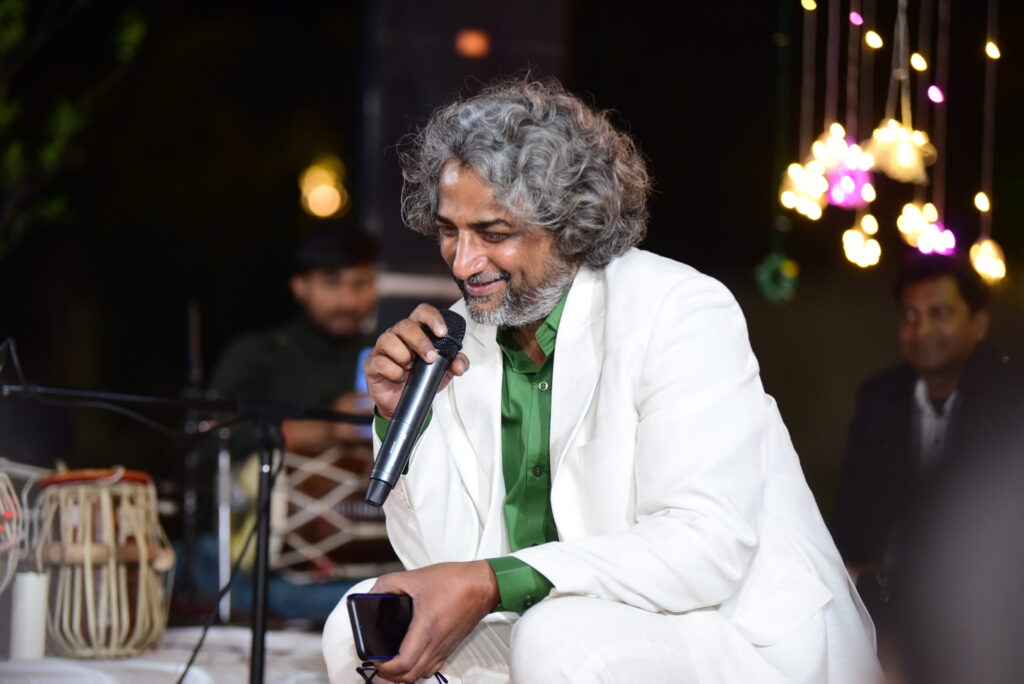
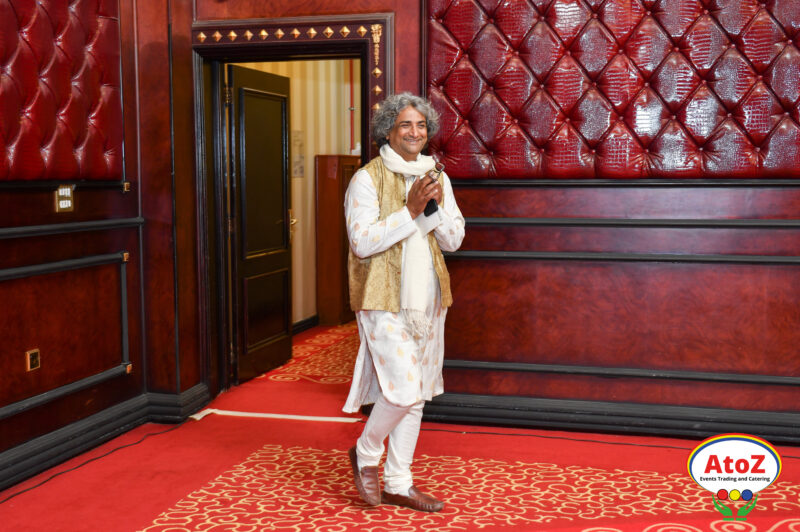
Poet Azhar Iqbal has gained prominence due to his use of simple Urdu language mixed with Hindi and his reach on social media.
QUICK RISE:
Azhar Iqbal has suddenly risen to fame in the last two years
Saying Urdu/Hindi couplets (shayri) in the language of the common man and usage of social media has raised Delhi’s Azhar Iqbal to a level he had never imagined.
The famous saying bhagwaan jab deta to chhappad phaad ke deta hai (when God decides to bestow His bounty, He showers it all) seems to have come true for Delhi’s Urdu poet (shayar), Azhar Iqbal.
He suddenly rose to fame in the last two years. He is seen in almost all domestic as well as prestigious mushairas (poetry sessions) in Europe, Middle East and Dubai. The limelight-hungry, from literary to television world, have suddenly started showing a sense of belonging to him and their pictures together adorn several social media accounts.
Those who had not even known him remotely, have started commenting on his posts, expecting few seconds of a shared fame! His recent claim to fame is his presence at the famous Kapil Sharma Show on Sony LIV television.
The shayar has to thank two factors that worked wonders for him, social media and couplets he wrote in simple Urdu projecting relatable truths of peoples’ life.
For instance, Ghutan si hone lagi uske paas jaate hue, main khud se rooth gaya hoon usey manate hue or Parindo ko shajar acchha laga hai, Bohot din baad ghar acchha lagta hai, Gale main hai teri bahon ka ghera, Ye bike ka safar acchha laga hai.
Iqbal is not new to shayri but to the fame. The 45-year-old is yet to sink it in.
He admits, “Social media’s wide reach is a magical reality. My seniors and buzurg shayars (experienced poets) would not have imagined reaching that far globally with their genius. I don’t think I do shayri as well as them. But I wouldn’t mind taking credit for the fact that I do shayri that common man understands. From students to youth, females to those battling crises of various kinds in their daily grind.”
Substance too
It not just the miracle of social media but a life of hard work, interest in shayri, taleem-o-tehzeeb and patience that Azhar’s poetry is made of. He isn’t a product of an aristocratic school or family either. Azhar, one among 11 siblings, is a father of two, and homemaker wife. His father, a literary person and an avid Urdu reader, had a tea shop in Meerut where he would go to help him in his holidays as a child and in his youth.
A fertile background plays the most significant role in the making of a poet. Azhar is no exception. Remarkably, in western UP, educated people in small towns like Budhana, Kairana, Gango, Jhinjhana, Nakod among others had immense affinity with literature and religion – adab and deen. Women would always find time to read good novels during the day and even narrate them to their children and siblings. Menfolk would find catharsis in nashist or baithak (poetic gatherings) almost every evening.
Azhar comes from Budhana town in Muzaffarnagar where such novel narrations and nashisht were regular.
“We were surrounded by these adab-loving people, qawwals and their mehfils (gatherings). The zauq (interest) for shayri was getting into the system automatically.”
Here, senior shayars would say a couplet and ask young boys to write the next on that analogy. The teenagers would spend much of their time in reading good poets and evolve themselves to do the task.
Azhar recalls famous shayar Dushyant Kumar’s sher (couplet) which was given to him for an analogy to create his own.
Vo mutmayeen hai ke paththar pighal nahi sakta, Main intezar main hoon awaz main asar ke liye.
(They are certain that the stone cannot melt away, Restless yet I am, for a voice to hold sway.)
Azhar could create one in bahar (rhythm). And it went like this
Vo phool banke mere pass hi mehakta raha,
Main sochta hi raha apne humsafar ke liye.
(It lingered like the scent of a flower beside me, Yet, I longed for my companion to be.)
This was his first couplet that showed his poetic pen at 13.
Alongside writing ghazals and studying, Azhar would help his father run his tea shop. In late 90s, to help the family financially, he joined as lab assistant at Noida, on a salary of Rs 3,000. He would go to the mushairas by spending from his own pocket.
“The mushairas wouldn’t pay young poets like me during those days.”
By 2013, he met famous dastango Mehmood Farooqui and soon wrote the poetic part of his classic dastans.
“I also used to host some of his dastan shows and mushairas at Delhi’s India Habitat Centre — a favourite haunt for arts and literary luminaries.
“The visits helped me expand my circle and meet geniuses in the creative arts.”
FAME:
Iqbal also featured in the Kapil Sharma show and often gets thronged at airports
The Almighty answered
Around the first Covid lockdown, Azhar got an invitation to go to Bahrain. “That was my first foreign trip. But the lockdown spoiled it. In pain, I complained to Allah that this was my first such prestigious trip and l can’t even go. As if Allah was free then. He heard me so well that I never looked back after that. It happened like that.
“Someone picked up a sher from one of my old videos and posted it on his Youtube channel. Within no time, it received 50 million views. Soon, people started finding my other ashaar (couplets), and did the same. Some 10 to 12 such couplets got so popular that billions of people watched them and I became famous instantly.”
The fame helped the poet not only with offers of mushairas at domestic but also international levels, and to preside over them too. Prestigious spaces like Sahitya Akademi, Sangeet Natak Akademi also started inviting him to host programmes.
The icing on the cake was an invitation from Kapil Sharma show which is viewed by crores of people. It changed his life completely. The mushaira venues have often got him standing ovation for long.
“Now at times it takes me over an hour to reach the venue as people gather for autographs at the airports. I often get shockingly surprised and think, ‘they have come for me?’”
Shared language
A creative person is known for diversifying, without which he risks his pen to boredom.
Azhar also decided to be a bit more creative and mix Urdu-Hindi to say couplets that would emanate fragrance of a shared co-existence.
Though use of Hindi words in Urdu shayri and Urdu words in Hindi kavita is not new but his initiative of a different kind was lapped up by “both Left and Right ideologists”. One of these goes as:
Maroosthal se jaise jungle ho gaye hain,
Tera sanidhya pa kar, hum mukammal ho gaye hain.
(With your proximity, I am metamorphosed from a desert to green) or
Nadi ke shaant tut par baith kar mann,
Teri yadain visarjan kar raha hai;
Bohot din ho gaye hain tumse bichhde,
Tumhe milne ko ab mann kar raha hai.
(On the silent banks of a river, immersing your memories; long alienated, my heart is aching to meet you).
The poet credits it to the gap that came after Dushyant Kumar’s demise in 1975 at a young age of 42.
“There was a gap in the Hindi poetic arena after Dushyantji. Most were doing lateefebazi (frivolity). Geet and nazm had suffered in the hands of mediocre writers. So, I decided to experiment the mix and it worked out, again, thanks to the social media.”
Breaking monopoly of seniors
Most creative domains have some authoritative forces who wouldn’t let their juniors grow, unless they belonged to their coterie. The world of shayri isn’t an exception. Some senior poets and known lyricists who are also a part of the film world, often started dominating the biggest mushairas.
“If you see the mushairas before 2000, you will notice that same 20-odd shayars would be seen in all mushairas in the country or even abroad. Aik poora giroh thaa jo kisi ko aage aane hi nahi deta thaa. (There was a gang of senior shayars who wouldn’t let any newcomer break their monopoly).”
The social media boom, however, did the needful, especially during Covid and subsequent lockdowns.
Those who were not in any reckoning, started making small videos of their own couplets, or other Youtubers would select couplets of any shayar and upload them for hits. This slowly opened vistas for several hidden talents. Azhar is one of them.
“If you scroll through social media, every second video is about a new shayar or his shayri uploaded by someone to get hits on his Youtube channel. The seniors who once ruled the game, have no role to play in promoting them.”
However, like any pros and cons of a boom, excessive use of social media also popularised mediocrity and exposed the difference between the great poets and weak writers, the originals and copy cats.
The “husn-parast” (esthete) Azhar is a new age craze for the generation which is turning towards simple shayri to understand the heavier later. “I think I have done my job if any youth has started taking interest in reading and creating couplets in simple Urdu.”
And one couldn’t agree more.
(The writer is Delhi-based senior journalist, co-author of ‘Muslims in Media’, poet, an art and music curator.)
source: http://www.thepatriot.in / The Patriot / Home> Profile / by Rana Siddiqui Zaman / August 12th, 2024