Tag Archives: Positive News of Muslims of Uttar Pradesh

‘Madinah’: Handwritten Urdu newspaper that spoke from Bijnor to subcontinent

Bijnor (former Northwest United Provinces) – presently (Moradabad Division), UTTAR PRADESH :
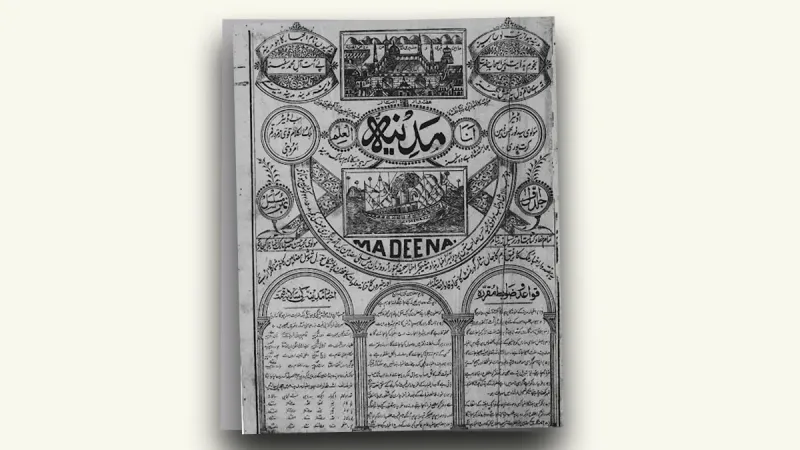
Started as a local bi-weekly newspaper, Madinah soon commanded a massive subcontinent-wide circulation. While most newspapers at the time focused on major colonial urban centres such as Lahore, Delhi or Calcutta, Madinah instrumentalised its place of inception—Bijnor—as a political shield.

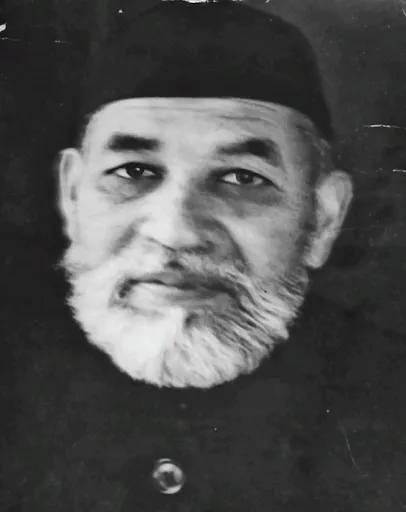
‘Madinah,’ a bi-weekly newspaper founded in 1912 by Mohammad Majeed Hasan, began in his courtyard in the small qasbah of Bijnor in the Northwest United Provinces (present-day Uttar Pradesh). Its inception is later recounted in a dream narrative published in Madinah’s silver jubilee edition in 1939, which describes how Hasan dreamt of “a bright moon shining in the sky, being eclipsed by another moon appearing from behind and drifting away from it, becoming brighter as the dream continued.”

Hasan had been working as a journalist in Lahore while also preparing for a career as a judge. He is said to have had the dream shortly after abandoning his training and returning to Bijnor to continue working for the family newspaper Sahifa, whose modest readership had already begun to dwindle. Hasan later interpreted the dream as a sign that he should start his own newspaper, symbolised by a new shining moon.
Hasan’s first wife, Muhtarma Kaneez Fatimah, whose altruistic nature and firm belief in his venture compelled her to help him start the paper, sold her jewellery to support it. She later proved to be an intelligent and capable assistant in the newspaper’s production, despite being unable to read or write.

It was she who inspired the newspaper to include a separate women’s section named Akhbar-i-Nisvan on one of its last pages. The section frequently appeared during the newspaper’s first three years, from 1912 to 1915, and was intended to serve the interests of Muslim women by including editorials and creative pieces written by both men and women.

Soon, the paper had distinctly identified itself among its audience by creating a space for Muslim women, with a special focus on mothers, to discuss their issues through genres such as poetry and fiction.

The unlikely epicentre: importance of the Qasbah

Started as a local bi-weekly newspaper, Madinah soon commanded a massive subcontinent-wide circulation. While most newspapers at the time focused on major colonial urban centres such as Lahore, Delhi or Calcutta, Madinah instrumentalised its place of inception—Bijnor—as a political shield. In the same year as Madinah’s inception, Maulana Azad, at the age of 23, started the paper Al-Hilal in Calcutta, which was lauded among the Muslim elite and others for its publishing style and genre, soon reaching a pinnacle of readership.

In contrast, Madinah’s unique approach, which embraced the values of the gentry while also appealing to a broad readership beyond the traditional urban elite, distinguished the paper from the incessant urban cynicism that was becoming a prevalent theme throughout the landscape of production. Due to better readership and the greater availability of resources in urban areas, similar endeavours to Madinah redirected themselves to these spaces.

In its founding years, Madinah also addressed British officials, adopting varying strategic and bargaining stances against surveillance and strict government policies through explicit deference to colonial authorities. For instance, Hasan, the proprietor of the newspaper, cited the Ijazat (permission) of the Magistrate and Collector of Bijnor in its inaugural issue. This attentiveness to British intelligence provided the necessary immunity required for the functioning of the newspaper, unlike Azad’s Al-Hilal, which came under heavy scrutiny from the colonial government and had to cease publication by the end of 1914.

Newspapers in urban centres, such as Awadh Akhbar, persisted in their efforts to speak to a broad audience delineated more by language and culture than by religion, while papers such as Madinah reinforced an already rich discursive tradition surrounding religion and identity in the social crevices known as qasbahs (small towns). They also engaged with contested political themes debated by scholars and leaders, including the shaping of early narratives of separatism and communalism among Indian Muslims.

The success of Madinah can be attributed to the spatio-temporal advantages of the qasbah, which can be defined as a place of bureaucratic and market significance where a Muslim minority or majority lived alongside populations from other communities, alongside an influential enclave of intellectual vivacity and economic and political importance for Muslims. Scholar M. Raisur Rahman described qasbahs as “an alternative site for contestation with strong autonomous networks of culture, literature and religion”, while simultaneously defining them as a ‘unique space’ and a ‘microcosm of larger idealized national life’.

These spaces have been significantly important sites in the history of South Asian culture, shaping identities and literary traditions while remaining distinct from the typologies of urban environments, where modernity had already seeped through the sutures of cultural exchanges with the outside world.

Madinah and its role in politics

The political trajectory of Madinah transformed profoundly during the period of World War I, following the Balkan Wars. The paper broadened its purview by juxtaposing the localised ethos and culture of the qasbah with larger international crises, particularly the imminent dismantling of the Ottoman Empire. 

Navigating the intricacies of a contested political landscape, Madinah supposedly guarded a global Islamic consciousness through its promotion of the Khilafat Movement and its shared affiliation with Jamiat Ulema-e-Hind. Consequently, its support for the Indian National Congress and its anti-separatist stance against Jinnah became apparent, aligning with Jamiat’s idea of Composite Nationalism, as Madinah continued to anchor itself in the secular, anti-colonial bedrock of Urdu journalism.

According to scholar Gyanendra Pandey, Madinah served as a vital barometer of Muslim public opinion across this shifting timescape. Driven by the ideological synergy of Hindu-Muslim unity during the Non-Cooperation and Khilafat movements, the publication commanded an astounding peak circulation of 12,500 copies by 1922. However, this radical nationalism invited severe repercussions from the colonial state, notably resulting in the paper being banned in Punjab following its courageous and explicit reporting on the 1919 Jallianwala Bagh massacre. Following the ban, the paper was relaunched in August 1919 under a new name—Yasrab (Madinah in Arabic)—as an act of strategic defiance against the colonial government, with a couplet from Iqbal:

Khāk-i Yasrab az do ‘ālam khūshtar ast,
Ā’e khunak shahre ke ānjā dilbar ast

(The dust of Madinah is better than both worlds,
How wonderful is the city where the beloved is.)

As the landscape of production became increasingly fragmented by communal cynicism and the mass political momentum of the early 1920s waned, the paper witnessed a decline in readership, with circulation dipping to 6,500 in 1927 and further to 6,000 by 1931.

Despite this dwindling circulation, Madinah remained a formidable and persistent critic of communal separatism throughout the 1930s and 1940s. Engaging with the contested political themes of the era, the paper sought to dismantle the early narratives of the All-India Muslim League. Pandey highlights a remarkably bold editorial from the 1930s that dismissed the League as being “neither dead nor alive”, asserting that its existence was confined merely to “the brain and mind of Mr. Jinnah”. 

By 1942, the newspaper had effectively transformed into an open town hall, enabling ordinary citizens to debate and largely resist the looming Pakistan movement from within the landscape of the qasbah.

The script and scripture

The prevalent Urdu script, Nastaliq, which had been used throughout South Asia for centuries and was imported from Persia, featured intricate details, ornamentation and a complex structural form forged through the meticulous amalgamation of the Naskh and Ta’liq calligraphic traditions. It became the most recognisable Urdu script and developed strong cultural and ideological ties with the Urdu language. However, due to the rise of globalisation and the growing demand to produce literature for the public, it became increasingly difficult to produce works in the script lithographically on a mass scale. By the end of the 1970s, Nastaliq began to advance with the help of Mirza Jamil Ahmad, who created more than 20,000 combinations to bring the script into the digital world under the name Noori Nastaliq.

By the time the digitisation process began, Madinah was already out of business, shutting down its press with its last issue in 1976. During the seven decades that the paper survived, its editors had no keys to the press and no screens to reflect upon. Instead, the issues of Madinah were produced solely by hand, by calligraphers and artists alike.

The Urdu script Nastaliq had been established as the standard for almost every copy of the holy book Quran in South Asia since the Mughal period. By the time Madinah began using the same script as its standard, it already carried connotations of purity, holiness and divinity within the cultural landscape. Combined with the organic practice of producing it by hand rather than by machine, the paper was considered by its readers to embody a deliberate resistance against illegitimate mechanisation and the rising industrialisation of the subcontinent, curating a new political discourse based on the cultural symbolism of the script.

By using and retaining lithographic practices in an era when other papers were increasingly relying on mechanical typography for efficiency, Nastaliq was perceived as a tactile and handcrafted discipline that preserved the inherent spirit of prose, shielding the paper’s contributions from the mechanical and indifferent processes of Western print capitalism.

The inevitable descent

By the 1940s, Madinah had begun engaging in intense print debates with the supporters and proponents of pro-Muslim League newspapers and writers, arguing in a polemical fashion that religion could not be the sole determinant of a nation’s survival. Despite the paper’s persistent efforts to resist the pro-League and separatist stance, it witnessed the partition of the Indian subcontinent into two parts. The social capital of Madinah was on the verge of collapse, as the paper saw affluent members of the Muslim community, who had constantly contributed to its production and editorials, leave for the other side of the border.

The Language Act of 1951 became a huge blow to the publishing house of Madinah, as Hindi was soon adopted as the state language in Uttar Pradesh, mandating officials and government offices to maintain all data in Hindi and extensively replacing Urdu in institutions under the newly formed Indian government. Although the apparent marginalisation of the paper’s foundational language and the loss of its social capital were significant blows in the paper’s history, they were unable to overshadow its continuing legacy.

Madinah, managing to survive, remained a prominent, albeit ageing, symbol of pre-Partition nationalist Muslim political identity, advocating for the preservation of Urdu heritage amid the growing socio-political shifts in Uttar Pradesh. At the same time, it continued to struggle against declining circulation as newer, faster-printed typographic dailies overtook the market. Its reports on the Indo-Pakistani War of 1971 and the creation of Bangladesh vindicated the paper’s historical assertion that religion alone could not hold a nation together, while it also continued reporting on rising communal tensions in the country.

The prodigious endeavour was about to culminate in the years following the Indo-Pakistani War. Near the end of its operational life, the paper’s traditional lithographic format and qasbah roots struggled to attract younger, urbanised readers. The deteriorating health of Hasan finally caught up with him, leading to his death in 1972. The handling of the newspaper remained in the hands of Hasan’s family until its last editor, Syed Hasan, finally ceased publication, quietly closing the press in 1975.

References

  • Jones, J. (2023). Megan Eaton Robb: Print and the Urdu Public: Muslims, Newspapers, and Urban Life in Colonial India. New York: Oxford University Press, 2021; pp. xi + 247. Journal of Religious History, 47, 151–153. https://doi.org/10.1111/1467-9809.12917
  • Abduhu, G. R. (1973). The Educational Ideas of Maulana Abul Kalam Azad. Sterling Publishers.
  • Rahman, M. Raisur. (2014). “Beyond Centre-Periphery: Qasbahs and Muslim Life in South Asia.” South Asian History and Culture, 5, 163–178. https://doi.org/10.1080/19472498.2014.883762.
  • Eaton Robb, M. (2016). “Women’s Voices, Men’s Lives: Masculinity in a North Indian Urdu Newspaper.” Modern Asian Studies. https://doi.org/10.1017/S0026749X15000335
  • Pandey, G. (1978). The Ascendancy of the Congress in Uttar Pradesh, 1926–34: A Study in Imperfect Mobilization. Oxford University Press.

source: http://www.maktoobmedia.com / Maktoob Media / Home> Features /by Mohammad Azim / August 30th, 2026
AMU Faculty of Medicine Mourns Demise of former Biochemistry faculty member – Dr Syed Wajid Ali Naqvi

Aligarh, UTTAR PRADESH :

Aligarh :

The Faculty of Medicine, Aligarh Muslim University (AMU), condoled the demise of Dr. Syed Wajid Ali Naqvi, former faculty member of the Department of Biochemistry, Jawaharlal Nehru Medical College (JNMC), who passed away Sunday last.

Expressing a deep sense of grief at a condolence meeting of the staff and students of the Faculty of Medicine, the Dean, Prof. Mohammad Khalid conveyed heartfelt sympathies to the bereaved family. Faculty members and students also prayed for eternal peace for the departed soul and strength and patience to the bereaved family to bear the irreparable loss.

A proud Aligarian, Dr. Naqvi had a close association with AMU spanning several decades. He joined the University as an undergraduate student in 1954 and obtained his B.Sc. in Biochemistry and Ph.D. in Biochemistry from AMU. He joined JNMC as a faculty member in 1965 and served until his retirement in 1996.

During his long association with the University, Dr. Naqvi held several academic and administrative responsibilities, including membership of the Academic Council, and served as Warden of Sir Syed Hall and Habib Hall, Acting Provost, Member of the Sports Council and President of the Gymnasium Club.

After his retirement from JNMC, he continued his academic association with medical education, serving on the faculty of ERA’s Lucknow Medical College & Hospital and Al Fateh Medical University, Tripoli, Libya.

The faculty members recalled Dr. Naqvi as a link between generations of Aligarians, having himself been an Aligarian and later becoming the father of four Aligarians. His long association with the University, both as a student and teacher, and his contributions to academic and residential life will be remembered with respect and affection.

source: http://www.amu.ac.in / Aligarh Muslim University / Home / by Public Relations Office / August 11th, 2026

AMU Professor Mohammad Mobin Receives Prestigious Professor B.P. Verma Memorial Award

Aligarh, UTTAR PRADESH / JAMMU & KASHMIR :

Aligarh :

Professor Mohammad Mobin, Department of Applied Chemistry, Faculty of Engineering and Technology, Aligarh Muslim University (AMU), has been conferred the prestigious Professor B.P. Verma Memorial Award for 2025 by the Indian Chemical Society (ICS), recognising his contributions to research, development and innovation in Chemical Sciences and Engineering.

The honour marks a significant achievement in Professor Mobin’s academic career and reflects his sustained efforts towards advancing scientific research and translating innovation into meaningful technological and societal applications.

In a communication dated August 14, 2026, Prof. G. D. Yadav, President, Indian Chemical Society, conveyed the Society’s appreciation of Professor Mobin’s distinguished professional accomplishments, which have enhanced the stature of Chemical Sciences and Engineering and contributed to the advancement of Indian chemical and allied industries and society.

As part of the recognition, Professor Mobin has been invited to deliver the Professor B.P. Verma Memorial Award Endowment Lecture at the 63rd Annual Convention of Chemists (ACC 2026) of the Indian Chemical Society from December 14–16 at Graphic Era University, Dehradun.

Professor Mobin is presently serving as Vice Chancellor of Cluster University of Srinagar on deputation from AMU. His academic and research contributions span Chemical Sciences and Engineering, with particular emphasis on Materials and Corrosion, research innovation and technological development.

The Indian Chemical Society, one of India’s leading professional bodies in chemical sciences, has played a vital role in promoting chemical research, technology and industry while fostering collaboration among academia, research institutions and industry.

The Professor B.P. Verma Memorial Award adds another distinguished recognition to Professor Mobin’s achievements and brings pride to AMU and the wider academic and scientific community.

source: http://www.indiaeducationdiary.in / India Education Diary / Home> Educational News> University News / by iednewsdesk / August 17th, 2026

Meet Dr. Azizuddin Khan: IIT Prof Recommended for J.C. Bose Fellowship

Mahinpura (Bahraich District) UTTAR PRADESH / Mumbai, MAHARASHTRA :

An Inspiring Journey of IIT Bombay Professor Dr. Azizuddin Khan from a Small Town in Bahraich to Global Recognition in Science and Research

In a landmark achievement for Indian Science and Research, Prof. Dr. Azizuddin Khan, eminent Psychologist, Neuroscientist and Psychophysiologist at the Indian Institute of Technology Bombay (IIT Bombay), has been recommended for the prestigious J.C. Bose Fellowship (ANRF J.C. Bose Grant).

The Anusandhan National Research Foundation (ANRF) recommended the honour in recognition of Dr. Azizuddin Khan’s outstanding scientific research, innovation and contributions aimed at improving human well-being in August 2026. 

The J.C. Bose Fellowship is one of India’s prestigious recognitions for active senior scientists and engineers who have made outstanding contributions to science, engineering, medicine and related fields. The fellowship provides research support to enable distinguished scientists to continue advanced research and mentor the next generation of researchers.

From a Small Town to IIT

Prof. Dr. Azizuddin Khan hails from Mahinpurwa, a small town in Bahraich district of Uttar Pradesh. After completing his early education at a local inter college, he chose psychology as his field of study despite family expectations.

He secured first position in his undergraduate studies at Aligarh Muslim University (AMU) & subsequently completed his M.A. in Clinical Psychology. He later earned his Ph.D. in Cognitive Psychology from IIT Kanpur, which laid the foundation for his distinguished research career.

Distinguished Research at IIT Bombay

Prof. Khan has been associated with IIT Bombay for nearly two decades and currently serves as an India Value Chair Professor. He is among the leading researchers associated with the Psychophysiology Laboratory.

He is also associated with important research initiatives including the Sunita Sanghi Centre for Ageing & Neurodegenerative Diseases (SCAN), Koita Centre for Digital Health (KCDH) and the IIT Bombay-FedEx ALFA Centre.

He has played an important role in developing an advanced Psychophysiology Laboratory at IIT Bombay, where researchers use technologies such as EEG, Eye Tracking, Event-Related Potentials (ERP), Neurofeedback and other modern neuroscientific techniques to study the human brain, cognition and behaviour.

Diverse and Human-Centred Research

Prof. Khan’s research is closely connected with real-life human challenges. His major areas of research include:

  • Dyslexia and Reading Disorders
  • Autism and ADHD
  • Memory and Prospective Memory
  • Attention, cognition and brain processes
  • Parkinson’s disease and Alzheimer’s disease
  • Psychological stress and depression
  • Brain activity during Urdu, Hindi and bilingual reading
  • Urdu script and its processing in the human brain
  • Artificial Intelligence and mental health
  • Human psychology under extreme environmental conditions

Through his multidisciplinary research, he has contributed significantly to the fields of psychology, psychophysiology and neuroscience. 

Technology-Based Research for Dyslexia

One of the most significant areas of Prof. Khan’s research is dyslexia. He has contributed to the development of ‘Brainu’, a screening application designed to facilitate the early identification of children who may have reading difficulties.

The application uses engaging, game-based activities to assess certain reading-related abilities and help identify children who may require further assessment or support.

He has also worked on innovative Haptic Belt/Bracelet technology, which uses specific vibrations to help children recognise and experience the correct sounds associated with letters and words.

Such technology has the potential to support children learning Urdu, Hindi, Marathi, Arabic and English, particularly those experiencing difficulties in reading and phonological processing.

Pioneering Research on the Urdu Script

Another distinctive area of Prof. Khan’s research is the neural processing of the Urdu script. His research examines how the human brain processes Urdu text written from right to left while simultaneously dealing with numbers written from left to right.

Using Eye Tracking and EEG technologies, he has investigated the cognitive and neural processes involved in Urdu and bilingual reading. His work has contributed to the scientific understanding of how multilingual readers process different writing systems. 

Research in Antarctica

Prof. Khan has also participated in India’s Antarctic research programme, where he studied human psychology under extremely cold and isolated environmental conditions.

His research examined aspects such as memory, mental health, emotional well-being and behavioural changes among people living and working in extreme environments. He has also undertaken research related to self-awareness in penguins, attracting attention within the scientific community.

Representing India on the Global Research Platform

Prof. Khan has represented India at numerous international academic and scientific forums. He has presented his research in countries including the United States, United Kingdom, Germany, France, Japan, Australia, Finland, Spain, Italy, South Korea, Turkey, Brazil, the United Arab Emirates and several other countries.

His academic contribution includes more than 200 research publications, several international book chapters, patents and research projects. He has also guided numerous Ph.D. scholars, many of whom are today working as professors and researchers at leading IITs, NITs and universities in India and abroad.

An Inspiring Message for Young Students

According to Prof. Dr. Azizuddin Khan, success depends not merely on intelligence but on hard work, curiosity, perseverance, patience and a continuous desire to learn. 

His own journey demonstrates that a student from a small town can achieve global recognition through education, determination and sustained research.

A Matter of Pride for the Nation

The recommendation of Prof. Dr. Azizuddin Khan for the J.C. Bose Fellowship is not only a personal achievement but also a matter of pride for the Indian scientific community, IIT Bombay, Aligarh Muslim University (AMU) and the residents of Bahraich.

His continuing work in psychology, neuroscience, education, mental health and artificial intelligence is expected to open new avenues of research and contribute to improving the lives of children, students and society at large.

[The writer, Akhlaq Shaikh, is a Career Counsellor, Mumbai. He alsow writes for Urdu Daily Inquilab.]

source: http://www.ummid.com / Ummid.com / Home> Education & Career / by Akhlaque (Akhlaq) Shaikh / August 18th, 2026

This Urdu newspaper was banned after criticising General Dyer. Here’s what it did next

Bijnor (former Northwest United Provinces) – presently (Moradabad Division), UTTAR PRADESH :

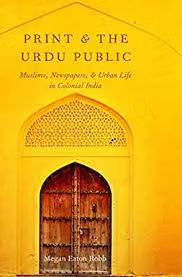
In ‘Print and the Urdu Public’, Megan Eaton Robb writes about the impact and role of popular Urdu newspaper Madinah and how it pushed back against censorship.

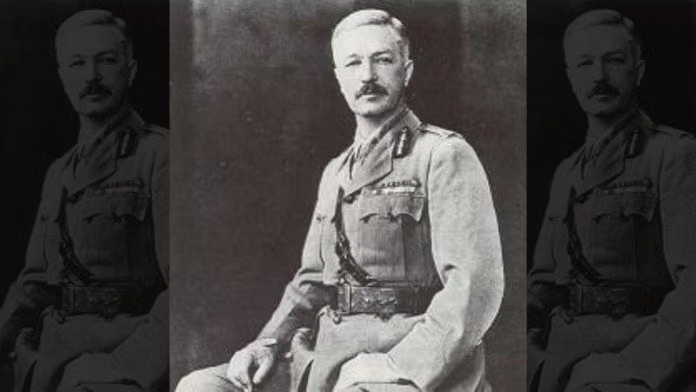
File photo | Gen. Reginald Dyer | Wikimedia Commons

Madīnah’s community of editors, subeditors, and proprietors illustrate the interconnected network of professionals working on newspapers across North India, with a shared commitment to confounding censorship laws. Editors of Madīnah were products of qasbahs and lived in Bijnor or nearby while employed by the publication. At least one assistant editor, Ḥamīd Ḥasan “Fakīr” Bijnorī (1903–1991), was a relative, having married Majīd Ḥasan’s daughter in the 1910s before he became the editor of Madinah Press’s children’s magazine Ghunchah after 1922. Ḥamīd Ḥasan would later be listed as an assistant editor from 1930 to 1935 and even take over as editor for several months when the need arose in 1945. When a new editor took over the work of Madīnah and was not already resident in Bijnor, he would move into the Ḥasan compound, which acted as the administrative office of the paper. Several small apartments attached to the main verandah, so editors could live in comfort with their families, remaining accessible to the newspaper office while maintaining privacy. Maulānā Majīd Ḥasan’s name, along with the name of the current chief editor, always appeared on the paper’s title page. At any given time there could be up to three editors of the paper, with the chief editor being referred to as “mudīr-i mas’ūl.”

Although Majīd Ḥasan’s proprietorship provided continuity for the newspaper, its different editors influenced the paper’s tone and focus. The turnover between editors could be rapid when legal troubles emerged. For instance, in 1924, when the editor Qāẓī Badrul Ḥasan Jalālī (1891–1956) was prosecuted by the British Raj for an article, he resigned his editorship, but he stepped back into his position once the dust of government scrutiny had settled. If Majīd Ḥasan attracted too much scrutiny from government surveillance, he could retreat from view behind the shadow of his prominent editors, continuing to exert the same influence behind the scenes. This allowed his outfit to survive draconian censorship measures while retaining the continuity essential to the newspaper’s success.

When he launched the newspaper in 1912, Majīd Ḥasan had little local influence. The only person of significance attached to the newspaper initially was a prominent journalist of the period, Nūr ul-Ḥasan Zahīn, who wrote for Ṣaḥīfa as well. Colonial censors initially dismissed Madīnah as a “bigoted Muhammadan organ, inclined to make trouble between Hindus and Muhammadans.” Madīnah first earned the ire of colonial administrators by criticizing the headmaster of Bijnor High School for complying with the British Educational Code. This was only the first of many encounters with censorship legislation.

April 1917 marked the beginning of Editor Mazh̤ ar ud-Dīn Shairkoṭī’s tenure, and the newspaper’s shift to publishing more explicitly political, anti-British stances. Shairkoṭī, a novelist as well as a journalist, was born in the Shairkoṭ qasbah of Bijnor in 1888. Initially educated by Maulānā ‘Abdul Qayūm Arshāq and Miyānji Sa‘ad Allah Sahib, he had attended Deoband as a pupil of Maulānā Mahmud ul-Ḥasan Asīr Mālṭā, known as Shaikh ul-Hind. After completing his education at Deoband, Mazh̤ ar ud- Dīn returned to Shairkot, where he worked on the newspaper Dastūr under the management of Ḥakīm Asrār ul-Nabī and on the newspaper Nagīnah.

Maulānā Majīd Ḥasan saw Maz̤har ud-Dīn’s affiliation with the newspaper as the beginning of a new period of commitment to the Muslim community and wrote an illustrious introduction for his new editor. Majīd Ḥasan’s message in his introduction was clear: he had brought in a power player to man the ship of Madīnah, a man who indubitably linked the paper to a network of powerful publications and individuals. The new editor transformed Madīnah into a more explicitly political entity. Maz̤har ud-Dīn associated with prominent political Muslims of the period, including Syed Ḥasan Imām, who presided over the Indian National Congress’s consideration of the Montagu-Chelmsford Reforms in Bombay in 1918. His other associates included Nawab Muḥammad Ismā’il Khān. He was, along with Khalīquzzamān, a key organizer of the UP Muslim League, and a prominent member until 1947; he remained in India after independence.

After the end of World War I in November 1918, discussions of independence and postwar reality in India began in earnest. The state of Islam, and the progress of both national and local branches of organizations such as the Muslim League and Congress, became matters of intense concern. Mohandas Karamchand “Mahātmā” Gāndhī (1869–1948) featured in several articles musing on the way forward for political Muslims. In addition, discussions of the fall out of World War I in Turkey and the caliphate took center stage. Under Mazh̤ ar ud-Dīn’s leadership, the newspaper emphasized the connection between the fate of Indian Muslims and of those in Turkey and other nations with significant ties to Islam.

Mazh̤ ar ud-Dīn presided over Madīnah’s publication of an article critical of the government’s role in the Jallianwallabagh massacre, which led to a dramatic conflict with the British Raj. In April 1919 Madīnah published an article criticizing Lieutenant Governor Sir Michael O’Dwyer’s (1864–1940) endorsement. Putting Madīnah on the Muslim Map of the actions of Colonel Reginald Dyer, who had overseen the disproportionate response at Jallianwallabagh. The article minced no words:

His honour O’Dwyer’s government of Panjab, from the very beginning, kept as the foundation of its policy a despotic course of action [ . . . ] This was his honor O’Dwyer’s last period of government; therefore it was necessary that he make amends for his past course of actions. This was the time when, instead of extinguishing the fire with the water Of gentleness and kindness, he inflamed the hearts of the ahl-i Punjab. Perhaps it could be said that he did not put out the fire with water, but instead doused it with oil. If that were not the case, then why would he at the conclusion of his reign, give orders that were so repellent, so far from resembling affection that they approximated hate?

It was actually illegal at this point in time to question the motives of the colonial government; thus, the final statement of the quotation accusing O’Dwyer of “hate” fell afoul of censorship laws. The government banned Madīnah from circulating in Punjab as a result of this piece. Mazh̤ arud-Dīn and Majīd Ḥasan’s response was defiant: in August 1919 they renamed the newspaper Yasrab, an Arabic synonym of Madīnah, as a bid to evade censorship.64 On the cover of each issue of Yasrab an Iqbal couplet appeared, a knowing wink to its readership base:

The dust of Madinah is better than both worlds. How wonderful is the city where the beloved is.

Khāk-i yas̱rab az do ‘ālam khūshtar ast Ā’e khunak shahre ke ānjā dilbar ast.

The couplet hinted at the paper Yasrab’s true identity, offered praise for the paper’s unpretentious popularity, and emphasized the link between the newspaper and the city Madīnah. Madīnah’s proprietor and editors were men who wore their few educational laurels lightly. More important than formal education was the ability to use that knowledge in the service of Indians generally and Muslims particularly. Unsurprisingly, the attempt at flouting the circulation ban was quickly detected. The paper reverted back to the title Madīnah after a few weeks, and the ban on circulation was lifted eventually.66 Madīnah was a space offering a figurative point of access to the community of Islam, the qaum, and it was a space increasingly under siege of colonial censorship laws.

Madīnah had been only one of many significant voices in the press commenting on the Jallianwallabagh fiasco. As the UP fortnightly report complained, “[The] occurrences in the Punjab [ . . . ] practically absorbed the entire attention of the press.” Along with Madīnah/Yasrab, the British excluded from Punjab al- Khalīl of Bijnor, The Independent of Allahabad (a Nehru paper), Hamdam and Akhuwat of Lucknow (Farangi Mahalli papers), Swadesh of Gorakhpur, and Amrita bazar patrika of Calcutta. The government demanded securities, or large sums of money as surety against future crimes of sedition, from papers in Bengal, Nagpur, Lucknow, and Madras. Madīnah’s inclusion in this censorship was a testament to its growing influence; its subterfuge demonstrated a growing sense of urgency in its mandate to reach readers and an emerging resolve to flout British restrictions.

In the 1920s, Madīnah focused on coverage of the Muslim League and the Indian National Congress, showing a preference for Congress.

It was per- haps Maz̤har ud-Dīn’s affection for the League that motivated him ultimately to resign from Madīnah in 1921. It is also possible that Mazh̤ ar ud-Dīn’s taste for politics pulled him closer to Delhi and toward the League after the political awakening accompanying the Khilafat Movement.

It was common for editors to move around among different qasbah-based newspapers, and after leaving Madīnah, Mazh̤ ar ud-Dīn joined Munshī Safīr Aḥmed’s Naginah-based paper Almān as its first editor; he was instrumental in relocating that paper to Delhi. He later became close to the leadership of the All-India Muslim League, including Muḥammad ‘Alī Jinnāh. In the 1930s he founded a paper entitled Vaḥdat (Unity) in order to assist the propagation of Muslim League ideals. When Maulānā Shabbīr Aḥmed ‘Usmānī, a Deobandi who supported the creation of Pakistan, resigned from the pro-Congress Jam‘īat ‘Ulamā and declared his allegiance to the Muslim League and Jinnah, he did so from Mazh̤ ar ud-Dīn’s office. This demonstrated Madīnah was one node in an important network of political power and publishing prestige in this period and had to make considered choices when it came to balancing shifting political alliances.

This excerpt from Print and the Urdu Public: Muslims, Newspapers, and Urban Life in Colonial India has been published with special permission from Oxford Univerity Press.

source: http://www.theprint.in / The Print / Home> Page Turner> Book Excerpts / by Megan Eaton Robb /May 15th, 2021

AMU Faculty Member Wins Best Paper Award at Int’l Conference in Oman

Aligarh, UTTAR PRADESH :

AMU Faculty Wins Best Paper Award at International Conference in Oman

Aligarh:

Dr. Lamay Bin Sabir, Assistant Professor, Department of Business Administration, Aligarh Muslim University (AMU), has been awarded the Best Paper Award at the International Conference on Intelligent Systems and Artificial Intelligence Applications (ISAA 2026) held at the University of Nizwa, Oman.

His award-winning paper, titled “Bridging Algorithmic Transparency and Managerial Trust: The Role of Explainable AI in Decision-Making – A Systematic Literature Review,” examines the challenges posed by limited transparency in AI-driven decision-making. The study highlights that AI systems are often perceived as “black boxes,” which affects managerial trust and decision effectiveness.

Dean, Faculty of Management Studies and Research, Prof. M. Naved Khan along with Chairperson, Department of Business Administration, Prof. Salma Ahmed congratulated Dr. Lamay on his achievement.

source: http://www.radiancenews.com / Radiance News / Home> Awards> Latest News> Science & Technology / by Radiance News Bureau / April 08th, 2026

Hafiz Doctor Mohammad Faisal Ansari Balances Medical Practice and Quranic Service in Pune

Bijnor, UTTAR PRADESH / Pune, MAHARASHTRA :

Mumbai:

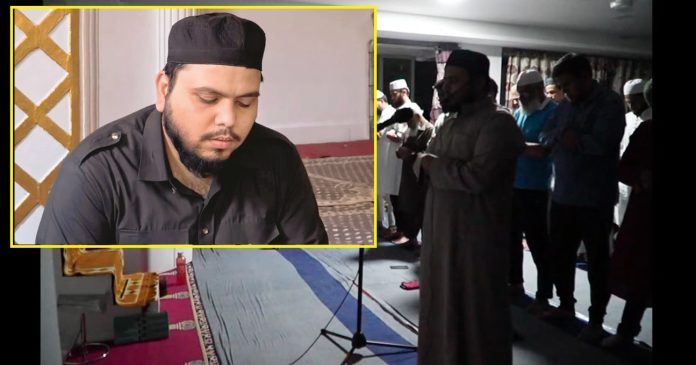
A young dentist from Maharashtra has drawn attention for balancing a professional career with dedicated service to the Quran. Dr. Mohammad Faisal Ansari, aged 26, has been leading Taraweeh prayers for the past six years while also working as a dental professional and online tutor.

Originally from Bijnor in Uttar Pradesh, Faisal grew up in Mira Road after his family moved there in 2000. He received both religious and modern education in the area. Under the guidance of Maulana Sirajuddin, he began learning Arabic and later started memorising the Quran on his own initiative. After completing three parts, his parents formally supported his journey. He completed his Hifz in December 2013 at Darul Uloom Aziziyah under Hafiz Wa Qari Hadis Ansari. Dr. Faisal is a member of the Students Islamic Organization (SIO) of India.

After passing his SSC in 2015 with 82 percent marks, he began leading Taraweeh prayers. He later completed HSC with 72 percent and qualified through NEET to secure admission at Mohammad Ali Rangoonwala Dental College in Pune. He completed his dental degree in 2025.

Since 2021, he has been leading 27-day Taraweeh prayers at the Islamic Information Centre in Pune. Alongside his profession, he teaches Quran memorisation, Tajweed and basic Arabic to students across India and abroad, including learners from Australia, the United States, Switzerland and the United Kingdom.

Speaking about his journey, Dr. Faisal said he gives priority to maintaining his connection with the Quran, especially during Ramadan. He said his teachers advised him to never lose focus on the importance of the Quran regardless of his profession.

He currently works at a dental clinic in Pune and plans to start his own clinic in Mira Road after Eid. Coming from a family deeply connected with Islamic learning, his siblings have also pursued both religious and professional education.

His journey reflects a consistent effort to balance faith, education and professional growth.

Story courtesy inquilab.com

source: http://www.radiancenews.com / Radiance News / Home> Features> Latest News> Markers of Excellence> Personality> Reports / by Radiance News Bureau / March 17th, 2026

AMU Research Scholar Wins Best Poster Award at ESTIC 2025

Aligarh, UTTAR PRADESH :

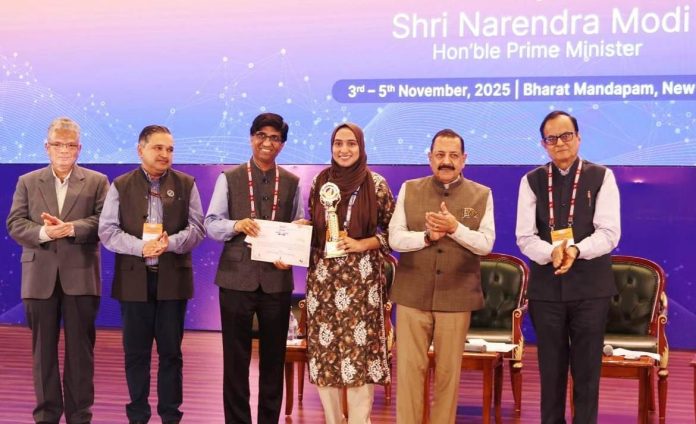
Adiba, a research scholar from the Department of Physics, AMU, receiving the Best Poster Award at the Emerging Science, Technology and Innovation Conclave (ESTIC) 2025

Aligarh:

Adiba, a research scholar from the Department of Physics, Aligarh Muslim University (AMU), has brought laurels to the University by winning the Best Poster Award at the Emerging Science, Technology and Innovation Conclave (ESTIC) 2025, organised by the Department of Science & Technology (DST), Government of India. The prestigious event was held at Bharat Mandapam, New Delhi.

The conclave, inaugurated by Prime Minister Narendra Modi, was supported by thirteen ministries and departments of the Government of India, showcasing the nation’s growing emphasis on innovation and scientific advancement.

Adiba received the award from Dr. Jitendra Singh, Union Minister of State (Independent Charge) for Science & Technology, and Prof. Abhay Karandikar, Secretary, DST, in the presence of Prof. Ajay Kumar Sood, Principal Scientific Adviser to the Government of India, along with several eminent scientists and leaders of India’s science and technology ecosystem.

Out of over 1,000 entries received from across the country, 100 were shortlisted for presentation at the conclave. From these, only five participants were selected for the top honours.

Adiba’s award-winning poster, titled “Bipolar Resistive Switching in Forming-Free, Flexible, and Transparent ReRAM Devices”, showcased her pioneering research on resistive switching mechanisms for neuromorphic and in-memory computing applications – a key area in next-generation electronic devices.

Expressing her gratitude, Adiba said, “It’s an honour to be recognised for my research on such a prestigious platform graced by leading scientists. I am deeply thankful to my supervisor, Prof. Tufail Ahmad, for his constant guidance and support.”

The achievement marks another proud moment for AMU, underscoring the university’s strong contribution to cutting-edge scientific research and innovation.

source: http://www.radiancenews.com / Radiance News / Home> Pride of the Nation> Awards>Latest News / by Radiance News Bureau / November 11th, 2025

Lal Mohammad Badshah’s unwavering devotion towards the clean Ganga

Bithoor (near Kanpur) , UTTAR PRADESH :

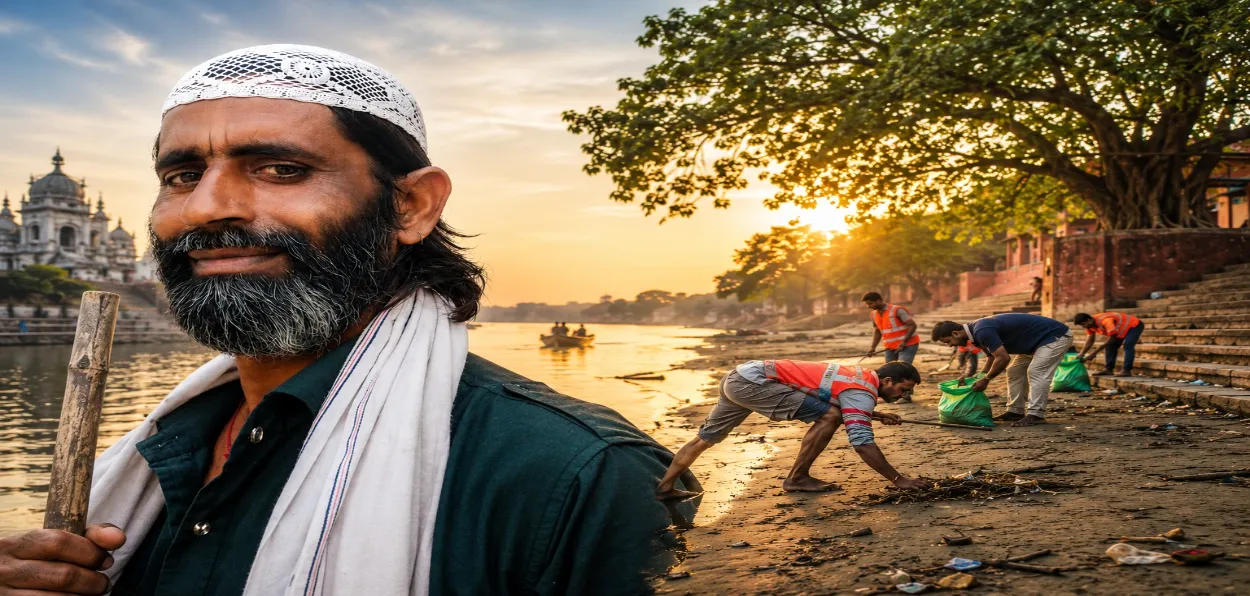
AI-generated image of Lal Mohammad Badshah and his volunteers

Every Sunday morning, a group of volunteers gathers on the banks of the Ganga in Bithoor, near Kanpur in Uttar Pradesh. Armed with bags and baskets, they pick up garbage, plastic waste, discarded offerings, and other debris from the river and its ghats.

Leading this weekly mission is Lal Mohammad Badshah, a man whose life has become synonymous with the protection of the sacred river. For the past 35 years, he has dedicated himself to keeping the Ganga clean. A Muslim by faith, Badshah gave up a well-paying government job, chose to remain unmarried, and devoted his life to serving the river he reveres as Mother Ganga. A few years ago, he even stopped wearing footwear as a mark of respect for the river.

Known locally as the “Guardian of the Ganga,” Lal Mohammad Badshah has broken religious stereotypes and emerged as a symbol of environmental conservation and communal harmony.

Bithoor occupies a special place in Hindu tradition. According to Sanatan beliefs, it is the birthplace of Luv and Kush, the sons of Lord Ram. It is also believed that Maharshi Valmiki composed the Ramayana here. The shrine of Mata Sita Ki Rasoi (Mother Sita’s Kitchen) continues to attract thousands of pilgrims and tourists from across the country.

The Ganga flows past 52 ghats in Bithoor, drawing a steady stream of devotees who come to take a holy dip in its waters. It is this sacred landscape that has become the centre of Lal Mohammad Badshah’s devotion and life’s work.

Sharing his journey with Awaz-The Voice, Badshah said, “I had a secure and well-paying job at a government fertiliser plant. Life was comfortable. But my attachment and reverence for Maa Ganga grew so strong that I decided to leave everything behind and dedicate my life to her service.”

After resigning from his job, he committed himself fully to the cleanliness and protection of the river.

To carry forward his mission, Badshah formed the Ganga Suraksha Dal (Ganga Protection Squad), a group of eight to ten local volunteers. Every Sunday, members of the squad gather at the ghats and undertake extensive cleanliness drives.

As news of their efforts spread, people from neighbouring districts, including Unnao, began joining the campaign. What started as a small initiative has gradually evolved into a community movement.

The group’s work extends beyond cleaning the river and its banks. Members also keep a vigil against poachers and work to protect fish and other aquatic life in the Ganga.

Despite the growing support, Lal Mohammad Badshah has never accepted donations for his mission.

A practising Muslim who is often seen wearing a skullcap, Badshah earns his livelihood by operating a small tourist boat on the Ganga. After leaving his government job, he turned to ferrying pilgrims and visitors along the river.

His boat, furnished with mattresses and cushions, offers tourists a comfortable ride while introducing them to the spiritual and historical significance of Bithoor. The modest income from these rides sustains both his personal needs and his environmental campaign.

Visitors are often surprised to hear him greet people with “Ganga Maiya Ki Jai” (Hail Mother Ganga).

When asked how fellow Muslims reacted to his devotion to the river, Badshah replied, “Faith and devotion are matters of personal conviction. I have a spiritual connection with the Ganga.”

He recalls that in the beginning, some people from his community mocked him and questioned his actions. However, as they witnessed his sincerity, selflessness, and dedication, attitudes began to change.

“Today,” he says, “people respect the work we are doing. Service to humanity and nature is above all divisions.”

Over the years, Badshah’s story has gained widespread attention on social media, where thousands of people have praised his commitment and spirit of service.

Among the many tributes, social media user F.S. Parmar described him as a “King of Kings.” Manoj Kumar wrote that while water cleanses the body, truth purifies the mind, knowledge refines the intellect, and righteousness elevates the soul.

Ashish Sharma commented that true strength lies in devotion and service, while Rajendra Chauhan described Badshah as a “Badshah” (King) not only in name but also in character.

Another user, Rajat, offered a heartfelt prayer: “May Allah grant you a long life, and may Mother Ganga always keep you safe in her embrace.”

Pankaj Thapliyal observed that the Ganga is not merely a religious symbol but a life-giving river for all humanity. Sunita Kumari compared Lal Mohammad Badshah to historical figures such as Raskhan and Rahim—Muslim poets who became celebrated devotees of Lord Krishna.

Today, the historic Rani Lakshmi Bai Ghat in Bithoor has become the Badshah’s permanent base. He spends most of his day there, overseeing cleanliness efforts, meeting visitors, and sharing his message of environmental stewardship and communal harmony.

For many who visit Bithoor, Lal Mohammad Badshah is no longer just a boatman or a volunteer. He has become a living example of how devotion, service, and love for nature can transcend religious boundaries and bring communities together.

source: http://www.awazthevoice.in / Awaz, The Voice / Home> Stories / by Malick Asghar Hashmi, New Delhi / June 10th, 2026

AMU researchers detect new multidrug-resistant bacterial genome in Aligarh drain

Aligarh, UTTAR PRADESH :

Image credit : PTI

Aligarh (UP) :

Researchers at the Interdisciplinary Biotechnology Unit of Aligarh Muslim University have identified a new multidrug-resistant bacterial genome in wastewater flowing through Aligarh city, raising concerns over the growing threat of antibiotic resistance in densely populated urban areas.

The findings, published in the April edition of the scientific journal ‘Molecular Biology Reports’, are based on a long-term study by a team of scientists led by Asad Ullah Khan, Shamsi Khalid and Absar Talat, who have been tracking the evolution of antibiotic resistance genes (ARGs) for over a decade.

According to the study, genome sequencing of a bacterial isolate, identified as ‘AK 633’ from a major city drain revealed the presence of a rare “mosaic plasmid” carrying the NDM-7 gene, which is associated with resistance to multiple antibiotics.

In microbiology, plasmids are small DNA molecules inside bacteria that can transfer genetic material, including drug-resistance traits, from one bacterium to another. A “mosaic plasmid” refers to a plasmid formed through genetic recombination, enabling it to carry resistance traits from different bacterial sources.

The researchers said the NDM-7 gene belongs to the New Delhi Metallo-beta-lactamase (NDM) family of resistance genes, which make bacteria resistant even to “last-resort antibiotics” such as carbapenems that are often used when other antibiotics fail.

The study noted that the sequencing of AK 633 pointed to the role of the plasmid ‘p1550’ in the possible global spread of high-risk antibiotic-resistant bacterial clones.

Talking to PTI, researcher Asad Ullah Khan said the findings underscore the urgent need for a wider national surveillance and awareness programme to monitor and contain the growing menace of drug-resistant bacterial genomes.

He said antibiotic resistance has emerged as a major public health challenge worldwide and pointed to untreated waste disposal, particularly hospital waste, and poor drainage management as important contributing factors.

Khan also stressed the need for vigilance during drain-cleaning operations in urban areas.

“Very often after drains are cleaned, the sludge is left on the roadside for long periods instead of being immediately removed. Such practices can contribute to the spread of resistant organisms,” he said.

According to the researchers, genotypic analysis — the study of the genetic composition of bacterial isolates — is essential to understand how resistance genes spread between bacteria in community and hospital settings.

Khan said at least 94 variants of NDM genes have so far been identified globally, many of which are increasingly being found both in hospitals and in the community.

“These are among the main causes of resistance against last-resort antibiotics,” he said.

The researchers noted that while similar work is being carried out in a limited number of laboratories in India, a much larger scientific and public health effort is needed to combat the growing threat posed by multidrug-resistant bacterial genomes.

source: http://www.english.varthabharati.in / Vartha Bharati / Home> India / by Musthafa / May 20th, 2026