Tag Archives: Emperor Humayun

Roshanara Begum: A Princess or a Powerhouse?

DELHI / INDIA :

The wider Indian audience, including many women in the 21st century believe that this is the most emancipated age of women and the women who proceeded them from centuries gone by were powerless dolls dressed in finery and painted and wooed by the men of the ancient and medieval world. 

Compared to most countries of the world, India has had a longer and a more complex story, where the fortunes of women advanced and regressed from time to time. India is the only country of the time where a Muslim woman was chosen by her father to be the heir of his throne, we are ofcourse referring to Razia Sultan and her father Iltutmish of the Delhi Sultanate period in the 13th century.

After Razia and into the Mughal period, we increasingly see the growing power of the Mughal women which was not just limited to women of the royal family. Many icons of Delhi, some of which are even part of the UNESCO World Heritage Sites have been built by women for their husbands.

Bega Begum was the senior wife of Emperor Humayun, who got his incredible mausoleum built. Similarly Fatehpuri Begum was one of the wives of Emperor Shah Jahan and she has left us with the iconic Fatehpuri Mosque situated at the heart of Chandani Chowk.  

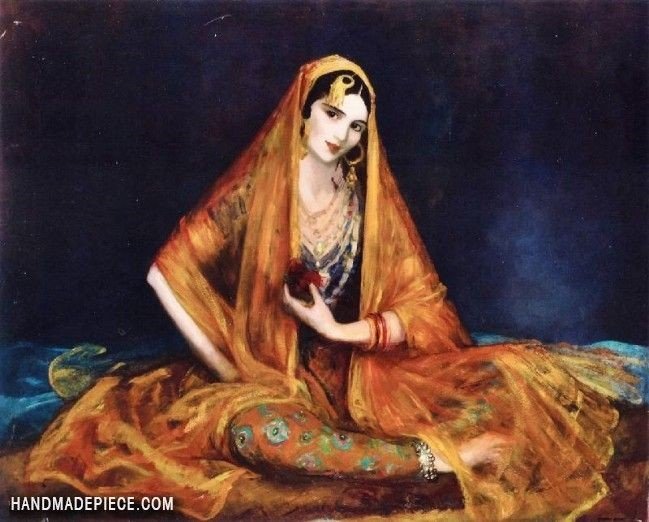
Born in 1617, Roshanara Begum was a Mughal princess and the second daughter of Emperor Shah Jahan and his wife, Mumtaz Mahal. Roshanara was a brilliant woman and a talented poet. She was a partisan of her younger brother Aurangzeb and supported him during the war of succession which took place after Shah Jahan’s illness in 1657. After Aurnagzeb’s accession to the throne in 1658, Roshanara was given the title of Padshah Begum by her brother and became the First Lady of the Mughal Empire. She became a powerful political figure.

Roshanara’s rise to power began when she successfully foiled a plot by her father and Dara Shikoh to kill Aurangzeb. According to history, Shah Jahan sent a letter of invitation to Aurangzeb to visit Delhi, in order to peacefully resolve the family crisis. In truth, however, Shah Jahan planned to capture, imprison and kill Aurangazeb in prison as he viewed his third son as a serious threat to the throne. When Roshanara got wind of her father’s plots, she sent a messenger to Aurangzeb, outlining their father’s true intentions, and warning Aurangazeb to stay away from Delhi.

Aurangazeb was extremely grateful to Roshanara for her timely warning. When the war of succession was resolved in favour of Aurangzeb, she quickly became a very powerful and effective figure at court. Fearing that Dara Shikoh would kill her for her role in the war of succession if he ever returned to power, Roshanara insisted that Aurangazeb order Dara’s execution. Legend has it that Dara was bound in chains, paraded around Chandni Chowk and beheaded. Roshanara then had his bloody head wrapped in a golden turban, packaged neatly and sent to her father as a gift from Aurangzeb and her. Shah Jahan, who opened the package just as he was sitting down to dinner, was so distressed by the sight of his favorite son’s head that he fell unconscious to the floor. He remained in a stupor for many days after the incident.

Eventually, however, Roshanara and Aurangzeb fell out with each other. Mughal princesses were obliged to remain single since the time of Akbar so their offspring would not make a challenge for the throne. Roshanara was rumoured to have taken on lovers, which was not viewed well by Aurangzeb.

After her fall from grace, she chose to leave the court at the Red Fort and built for herself the Roshanara Bagh complex which is about six kilometres from the Red Fort. She was a lover of the arts and music and didn’t prefer the austere lifestyle promoted by Aurangzeb. This is proven by the fact that when one visits Roshanara Bagh the remaining building itself is built in a very romantic style, a Baradari (open on all sides) built surrounded by a pool of water apart from the canals and gardens surrounding it. 

Even within the Baradari the main motif for decorations seems to be nature, one can see remnants of blooms on every wall, arch and even the capitals of the slender pillars. The fades blue, green and red colours gives us an idea as to how brilliant and bright the designs were when Roshanara herself was in residence. 

The main gate of entry into the gardens still has mosaics left on its upper parts, which show that a bright hue of yellow was used apart from the blue, green and red. One can imagine, how this gate shone in the brilliance of the sun with such a colour combination. 

The brief history that has remained about the life of Roshanara Begum shows us what a woman she was and more importantly how open Mughal society was at least for the women of the royal household and nobility. 

The fact that she was capable enough to understand the intrigues of Shah Jahan along with Dara Shikoh in order to get Aurangzeb eliminated shows us that she had a perfect understanding of such matters and how to play a role in it. 

Her warning to Aurangzeb guaranteed her power when he acceded to the throne and in return she became the most powerful woman in the Mughal Empire. The fact that such a rank existed in the first place showcases how Mughal princesses were considered an integral part in the proper functioning of the State. 

She had her own sources of income which no doubt increased after she was bestowed with the rank of Padsha Begum. The fact that she bought land, had a beautiful and very extensive garden complex built for herself and lived a life of luxury shows to us that she was a highly educated woman understanding the complexities of titles, deeds, interests, savings etc.

She even had the power to decide where she wanted to be buried. She didn’t choose a pious cemetery but rather had herself buried within the Baradari of her beautiful gardens, the gardens which we still get to enjoy after more than three centuries of her passing and have made her name immortal in annals of time. 

source: http://www.thewomb.in / The Womb / Home> Blog> Entertainment> Lifestyle / by Barun Ghosh / October 29th, 2020

Immortal grace

DELHI :

The Thin Edge | Revisiting the restored, resplendent Humayun’s tomb

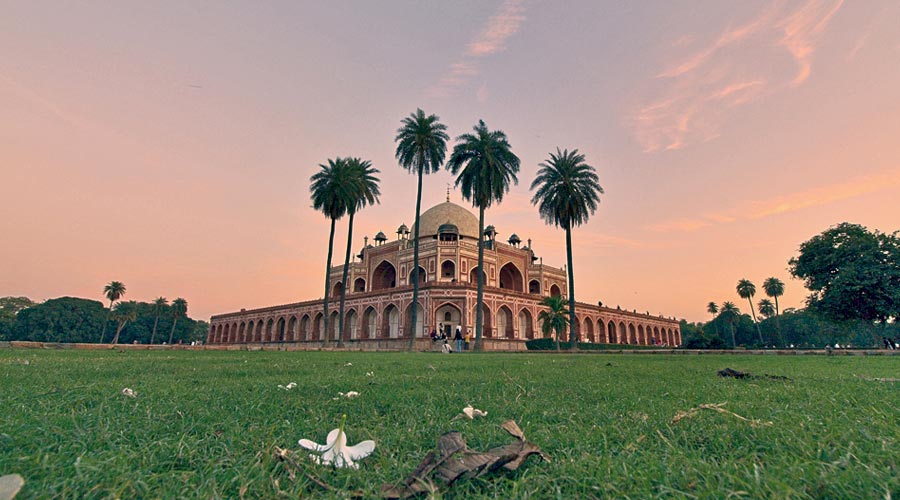
Humayun’s tomb / File picture

I have visited Humayun’s tomb several times, seeing it transform from its earlier decrepitude to the beautiful, sensitively restored monument-space it is today.

The tomb was one of my favourite old buildings even before the restoration — something about its clean lines, its proportions that manage to effortlessly mix intimacy with graceful grandeur, the restrained colour scheme of red sandstone interrupted by sparely deployed white marble, all of it has always nourished me more than the overwhelming, in-your-face beauty of many other Indian mausoleums and temples.

With the restoration now complete, the tomb itself and the ancillary buildings have also been given a context of green, well-tended gardens, which allow the other venerable monuments on the site — the trees and foliage — their own presence, their own visual Kabuki with the man-made masonry.

Recently, I went to see the tomb again, but this time with architect friends who were visiting the city. Like me, this couple had also visited earlier but they had not seen the finished restoration. Walking around the space with two pairs of somewhat differently-trained eyes was a lesson. Things I’d never noticed were pointed out: the exact alignment between the succeeding gateways; the ‘reveal’ as you cross the final threshold and can actually see the whole structure; and how different it was from what happens at, say, the Taj Mahal.

One of the friends spoke about how the white dome interacts with the sky, glowing sharply in the chiaroscuro of dawn and dusk, almost disappearing in muted top light, coming back into round vividity against dark clouds. Examined minutely were the almost invisible rain channels worked into the stone as well as the slope of the platform to coax away the monsoon water, none of which I’d noticed before. Explained was the way the sandstone slabs were placed with minimum mortar and the fact that they fronted a stuffing of lime and stone rubble.

To the east of the tomb stretched a tumult of trees, almost hiding the nearby gurdwara, with the railway line faint in the distance, while the north side had the view of the attendant water aqueducts and the lines of the water channels that must have inspired Louis Kahn and Luis Barragán in their design of the Salk Institute in California.  

The spring morning light changed around us as groups of youngsters pranced up and down the stairs and sashayed across the flagstone, moving in unspoken group-selfie choreography, freezing from time to time without tangible signal into Instagram-mudras. Inside the shadowy central chamber, boisterous groups of young men yelled and blew klaxon whistles, bathing in the amazing acoustics before guards chased them away. On the grounds, on the benches under the quartet of pilkhan trees, a couple sat in chaste-canoodle mode while schoolgirls prowled around politely, looking for victims to interview for their class assignment. The austere beauty of the building, the lush, basant authority of the trees and the celebratory clusters of young people together made a whole that transcended architecture, arbour and holiday ardour.    

The friends I accompanied are part of a loose movement of Indian architects drawing notice and accolades because of their alternative approach to building for our times.

This approach is defined by several things; a deep study of local grammar and traditions that inform any new design; a rigorous examination of the environmental impact of any new building, with innovative solutions to cooling and energy consumption becoming central to a project from the very beginning of conceptualization; an aim for genuine, non-grandiose beauty in the final design, all of this entirely subservient to who will use the building and how they will experience it in daily use. This movement is not confined just to India or to the subcontinent. A few days after my friends’ visit, came the welcome news that Diébédo Francis Kéré of Burkina Faso and Germany had won the Pritzker Prize, the most prestigious international recognition for architectural work.

This is not the place to detail Kéré’s work but what is important to note is that the architect has consistently built across some of the most deprived areas of Africa, working with local people, using the simplest local materials in the most inventive ways to produce buildings and projects which pair stunning design with amazing utility. Thus, a local school building may be made from compacted clay, with its ceiling and walls designed to cool the classrooms without any air-conditioning or glass cladding; a lighting scheme in another building may involve embedding into a ceiling traditional pots sliced into half; a Parliament building for Benin may echo a palaver tree under which people traditionally gather for meetings, while a proposed Parliament for Burkina Faso may be in the form of a ziggurat where the assembly is underground below a terraced public park, where the people are literally above the legislators. “I want people to take ownership over the parliament building,” Kéré has said and in that one sentence perhaps lies the core of his philosophy.

A few minutes drive from Humayun’s tomb brings you to the tin-sheet canyons that enclose the biggest heist of urban commons in the history of independent India. Here, at the Central Vista, the most pompously authoritarian, most ecologically damaging, most backward-looking glass and concrete office blocks, the prime minister’s mansion and the fortress-like new Parliament building are being constructed for a huge amount of public money at a time of grim scarcity. This area, for decades one of the few places where even the poorest of the city could walk in greenery, will now become a high-security showpiece for the bloated egos of those in power. In a city full of beautiful mausoleums, these future tombs for those ruling over us today will not stand any test or comparison. But meanwhile, whether in Kutch or Koudougou, in Dakar or Dhaka, human ingenuity, generosity and aesthetic grace will continue to produce architecture that re-affirms life and joy.

source: http://www.telegraphindia.com / The Telegraph Online / by Ruchir Joshi / March 22nd, 2022

Author Ira Mukhoty’s peek into the Mughal household

NEW DELHI :

Of History and Gastronomy: Ira Mukhoty at Jaypee Vasant Continental’s Paatra restaurant in New Delhi | Photo Credit: SHIV KUMAR PUSHPAKAR

From the resilience of Khanzada Begum to the food habits of Akbar, author Ira Mukhoty reveals many Mughal secrets over a lavish vegetarian meal

Those who suffer from colonial hangover or know their Mughals through movies have an exotic notion about the haramam or harem – a place where many women were housed to please the most important man in the empire. Author Ira Mukhoty, who scans history and mythology to find the status of women in India, counters the perception through a well-argued book, “Daughters Of The Sun” (Aleph). “This idea of ‘oriental harem’ came through the British historians because they had a long association with Islam right from the times of crusades. For them, the Mughals, the Sultans and the Tughlaqs were all the same – part of one Islamic marauding entity. The idea was completely false.”

The whole harem space, she says, evolved from the time of Babur, who wanted his women to be well-educated and was pragmatic about women who ‘fell’ to an enemy. “Over a period of time, when Mughals absorbed some elements of Rajput culture, it became a little different but even then it was completely alien to the oriental idea of a sexual space. Most of these women were in no way sexually available to the Padshah. The harem had relatives, other noble men’s wives; there were servants and attendants…there was a huge collection of women but not to please the emperor,” says Ira, as we settle for an elaborate lunch at Jaypee Vasant Continental’s Paatra restaurant.

The catalyst came from Ira’s previous book, Heroines, where she wrote about powerful women in myth and history. “One of them was Jahanara Begum. I was interested in finding more women like her associated with the Mughal empire.” She found many. But the one story that is most compelling is that of Khanzada Begam, the sister of Babur, whom he left behind with Shaybani Khan as war conquest when he escaped from Samarkand. She remained with Khan for ten years but remained true to her brother’s cause. And when she eventually returned to Babur’s household, her sacrifice and resilience was celebrated. “In fact, she went on to be anointed Padshah Begum of Hindustan during Humayun’s reign,” says Ira.

Powerful women

Women are a neglected lot in our history. Ira says this is not specific to our country. “Around the world, women stories are neglected to a smaller space – it is not just about Mughals or India. You first talk about the kings and and rajas. Women were treated like wallpapers. It is not that I have found something special here. The resources have been there but they have seldom been used to join the dots. For instance, Gulbadan Begum’s biography of her father Babur and brother Humayun was translated from Persian into English in 1907.” She reminds how Jahanara Begum wrote about her Sufi masters in two books. “Her lines are very powerful and erotically charged for Sufis believe in erotic love as means for union with the divine. A 17th Century Muslim woman writing such a powerful language is extraordinary.” Ira has tried to find out first hand information about these women who engaged in diplomacy and patronised the arts. “ I have written about Mughal women who were highly educated, who advised emperors and traded with foreigners. Babur saw them as symbols of Timur legacy. He wanted them to engage in verbal repartees and write poetry.”

Ira says her study of royal firmans reveal that Jahanara Begum asked for permission to go for Haj but it was denied. “Years before her, Gulbadan Begum had made the famous journey that lasted seven years. But by the time of Jahanara, royal women were not encouraged to take this hazardous journey. But she did make a request. I looked at the date and it was one month after her sister Roshanara Begum had died. I wondered that did something come over her.” It is her ability to join these dots that makes Ira’s work much more engaging and accessible than academic works by the likes of Prof Ruby Lal, whom Ira has extensively quoted.

“I try to find a thread between these stories to make fully-rounded characters. With women’s stories you get that sense. However, I tell the reader where I am not sure and am talking about possibilities.” Ira, who studied Immunology in Cambridge University, says her science background has always helped her in research. “It gives me patience. History brings subtlety and nuances which interest me much more. Science is no good for that,” she chuckles. Having said that, she doesn’t believe in speculating. “You should tell the reader where you are not sure even if it breaks the rhythm of the story. If I say it could have happened, I expect the reader to make his own mind.”

A vegetarian these days, Ira undertook ‘walks’ to the Walled City to understand the fragrances and the language of the time gone by. “They might not help you with facts, but they definitely help in writing about a past whose remains are very much part of our ecosystem.” As she appreciates the lavish spread at Paatra, she remembers the meal she had at the Nizamuddin dargah.

Introduction to ghee

Ira hasn’t written much about the Mughal kitchen but she has mentioned some instances which give us an idea of what was cooking. For instance, she captures Humayun’s exile in Persia with Hamida Banu Begum after the embarrassing defeat to Sher Shah Suri. “At one point they were actually cooking horsemeat to survive. But when they went to Persia, they were greeted as kings. Suddenly, the meal changed from fibrous, overcooked horsemeat to the amazing food that the Shah would offer them. When they were leaving, Shah Tahmasp wanted a banquet in Hindustani fashion prepared by his guests. What he liked the most was something called dal khuske which was like matar ka pulao. He tasted ghee for the first time as Persians used to cook in fat.”

Over the years, Mughal food became more and more refined. “There came a time when hens were massaged so that the chicken would be soft and tender. Akbar was a frugal eater who used to have just one meal a day but the time for it was not fixed. At any given time around 100 dishes were kept almost ready for him so that they could be served to the emperor at a short notice.”

Ira, who is now working on a biography of Akbar, says the emperor turned vegetarian under the influence of his Rajput wives. “Luckily for us, we have the Akbar’s biography of Bada’uni. He was a conservative person and his account is not glowing with praise like that of Abu’l-Fazl’s. He could not do what Akbar expected of him. He wrote the biography in secret and it was published during Jahangir’s rule. It is fascinating because it tells truthful things about Akbar. He writes that Akbar is so influenced by his Rajput wives that he gave up meat and indulged in Hindu rituals.” Similarly, she says, Gulbadan Begum’s account is very honest in comparison to a male biographer because she is not looking for building an image for posterity. “She writes very candidly like she explains why Humayun was very angry one day. He believed in astrology and always made the journey when the stars were in right alignment. One day he told the women in harem that they would go on an expedition at such and such time. Unfortunately, his new wife fell off the horse. It took her some time to get back. He got furious. He said he would need some opium to calm down. A male biographer would not have put all this but Gulbadan mentions all these intimate details so that we would know the man not just as a king and a conqueror but also as a father, a husband and a son.”

Ira has emerged at a time when Akbar’s legacy is being questioned and anecdotal history is gaining currency in mainstream discourse. She says hers is not a political book. “I am not trying to push any agenda. However, in this atmosphere, it is not unimportant to hear these stories also to clear many of the prejudices that we may have had. When things remain in anecdotal form, it is easy to manipulate them.”

source: http://www.thehindu.com / The Hindu / Home> Society> History & Culture / by Anuj Kumar / August 31st, 2018