Tag Archives: Fatehpuri Mosque

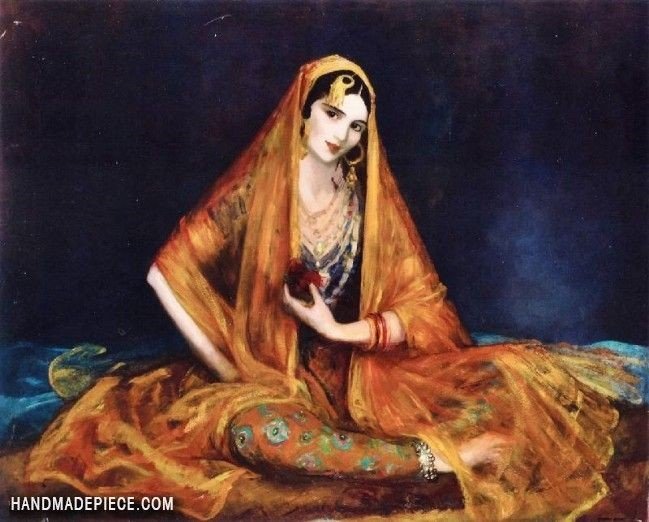
Roshanara Begum: A Princess or a Powerhouse?

DELHI / INDIA :

The wider Indian audience, including many women in the 21st century believe that this is the most emancipated age of women and the women who proceeded them from centuries gone by were powerless dolls dressed in finery and painted and wooed by the men of the ancient and medieval world. 

Compared to most countries of the world, India has had a longer and a more complex story, where the fortunes of women advanced and regressed from time to time. India is the only country of the time where a Muslim woman was chosen by her father to be the heir of his throne, we are ofcourse referring to Razia Sultan and her father Iltutmish of the Delhi Sultanate period in the 13th century.

After Razia and into the Mughal period, we increasingly see the growing power of the Mughal women which was not just limited to women of the royal family. Many icons of Delhi, some of which are even part of the UNESCO World Heritage Sites have been built by women for their husbands.

Bega Begum was the senior wife of Emperor Humayun, who got his incredible mausoleum built. Similarly Fatehpuri Begum was one of the wives of Emperor Shah Jahan and she has left us with the iconic Fatehpuri Mosque situated at the heart of Chandani Chowk.  

Born in 1617, Roshanara Begum was a Mughal princess and the second daughter of Emperor Shah Jahan and his wife, Mumtaz Mahal. Roshanara was a brilliant woman and a talented poet. She was a partisan of her younger brother Aurangzeb and supported him during the war of succession which took place after Shah Jahan’s illness in 1657. After Aurnagzeb’s accession to the throne in 1658, Roshanara was given the title of Padshah Begum by her brother and became the First Lady of the Mughal Empire. She became a powerful political figure.

Roshanara’s rise to power began when she successfully foiled a plot by her father and Dara Shikoh to kill Aurangzeb. According to history, Shah Jahan sent a letter of invitation to Aurangzeb to visit Delhi, in order to peacefully resolve the family crisis. In truth, however, Shah Jahan planned to capture, imprison and kill Aurangazeb in prison as he viewed his third son as a serious threat to the throne. When Roshanara got wind of her father’s plots, she sent a messenger to Aurangzeb, outlining their father’s true intentions, and warning Aurangazeb to stay away from Delhi.

Aurangazeb was extremely grateful to Roshanara for her timely warning. When the war of succession was resolved in favour of Aurangzeb, she quickly became a very powerful and effective figure at court. Fearing that Dara Shikoh would kill her for her role in the war of succession if he ever returned to power, Roshanara insisted that Aurangazeb order Dara’s execution. Legend has it that Dara was bound in chains, paraded around Chandni Chowk and beheaded. Roshanara then had his bloody head wrapped in a golden turban, packaged neatly and sent to her father as a gift from Aurangzeb and her. Shah Jahan, who opened the package just as he was sitting down to dinner, was so distressed by the sight of his favorite son’s head that he fell unconscious to the floor. He remained in a stupor for many days after the incident.

Eventually, however, Roshanara and Aurangzeb fell out with each other. Mughal princesses were obliged to remain single since the time of Akbar so their offspring would not make a challenge for the throne. Roshanara was rumoured to have taken on lovers, which was not viewed well by Aurangzeb.

After her fall from grace, she chose to leave the court at the Red Fort and built for herself the Roshanara Bagh complex which is about six kilometres from the Red Fort. She was a lover of the arts and music and didn’t prefer the austere lifestyle promoted by Aurangzeb. This is proven by the fact that when one visits Roshanara Bagh the remaining building itself is built in a very romantic style, a Baradari (open on all sides) built surrounded by a pool of water apart from the canals and gardens surrounding it. 

Even within the Baradari the main motif for decorations seems to be nature, one can see remnants of blooms on every wall, arch and even the capitals of the slender pillars. The fades blue, green and red colours gives us an idea as to how brilliant and bright the designs were when Roshanara herself was in residence. 

The main gate of entry into the gardens still has mosaics left on its upper parts, which show that a bright hue of yellow was used apart from the blue, green and red. One can imagine, how this gate shone in the brilliance of the sun with such a colour combination. 

The brief history that has remained about the life of Roshanara Begum shows us what a woman she was and more importantly how open Mughal society was at least for the women of the royal household and nobility. 

The fact that she was capable enough to understand the intrigues of Shah Jahan along with Dara Shikoh in order to get Aurangzeb eliminated shows us that she had a perfect understanding of such matters and how to play a role in it. 

Her warning to Aurangzeb guaranteed her power when he acceded to the throne and in return she became the most powerful woman in the Mughal Empire. The fact that such a rank existed in the first place showcases how Mughal princesses were considered an integral part in the proper functioning of the State. 

She had her own sources of income which no doubt increased after she was bestowed with the rank of Padsha Begum. The fact that she bought land, had a beautiful and very extensive garden complex built for herself and lived a life of luxury shows to us that she was a highly educated woman understanding the complexities of titles, deeds, interests, savings etc.

She even had the power to decide where she wanted to be buried. She didn’t choose a pious cemetery but rather had herself buried within the Baradari of her beautiful gardens, the gardens which we still get to enjoy after more than three centuries of her passing and have made her name immortal in annals of time. 

source: http://www.thewomb.in / The Womb / Home> Blog> Entertainment> Lifestyle / by Barun Ghosh / October 29th, 2020
Women who patronised Delhi

DELHI :

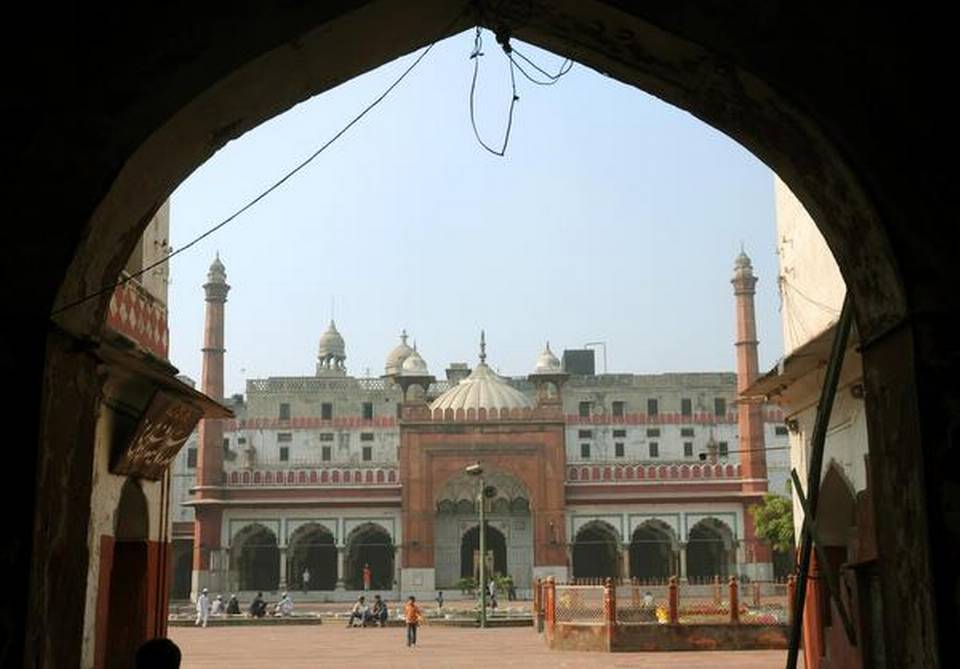
Grand design: A view of Fatehpuri Masjid | Photo Credit: V_V_Krishnan

From Haji Begum to Qudsia Begum, there is a a long list of women who contributed to the city’s grandeur

Women who patronised Delhi and converted it into a centre of art and culture, besides making it verdant and floral by laying parks and gardens, can be traced right from the time of Bega Begum or Haji Begum who built the beautiful tomb for her husband in Nizamuddin, which became the model for the Taj Mahal. After her, the daughters of Shah Jahan made it a paradisiacal city (just as Nur Jahan had done so earlier in Lahore and Kashmir). They were followed by Qudsia Begum and in recent times, in a small way though, by Lady Willingdon, Aruna Asaf Ali, Indira Gandhi and Sheila Dixit, among others. From the mid-17th century, the social and cultural fabric of Shahjahanabad has borne the stamp of women as during the Mughal era they acquired considerable wealth and influence. Much of what survives in Shahjahanabad reminds us of them and their contribution, compiled from different sources.

The imperial city was given overall shape under the supervision of Shah Jahan himself. His diktat determined the encircling of the city wall and the two main streets, running north-south and east-west, respectively at their junction of the palace complex (Red Fort) and the congregational Jama Masjid. “Within the limits of this centralised plan, it was mainly individual enterprise that led to the creation of commercial, religious, public spaces and homes.” Among the landmarks of the city were its mosques, three of which were commissioned by the wives of Shah Jahan after the death of Mumtaz Mahal – Akbarabadi, Fatehpuri and Sirhindi masjids named after the three. Akbarabadi Begum of Agra built a grand mosque to the south of Red Fort which was demolished by the British after the Revolt of 1857. Akbarabadi Begum was gifted a garden by Shah Jahan to the north-west of the city which came to be known as Aizzabad or Shalimar Bagh. The Begum then built a sarai within it. It was in this garden that the coronation of Aurangzeb took place on the July 31, 1658, after he had deposed Shah Jahan and also the place where Gen Ochterlony caught a chill that led to his death. Another wife of the emperor, Fatehpuri Begum built a mosque at the western end of the street that led from the Red Fort, which is known after her name. The Sirhindi Masjid, just outside the city wall, was built by the third wife, Sirhindi Begum.

Women of influence

Shah Jahan’s elder daughter, Jahanara commanded great influence and resources. She was well-educated and also had leanings towards Sufism. Jahanara’s wealth enabled her to patronise works of learning, like commentaries on Rumi’s Masnavi and for commissioning architectural projects, in which the pride of place was taken by the moonlight square, Chandni Chowk.

Mughal ladies who continued the tradition of Jahanara and Roshanara were Aurangzeb’s wife, Aurangabadi Begum who built a mosque near the Lahore Gate. The emperor’s two daughters, Zinat-un-Nissa and Zeb-un-Nissa, were also great patrons. Zeb-un-Nissa is the author of poems composed under the alias ‘Makhfi’. A skilled calligraphist, she patronised many writers, poets and learned men and commissioned several important books and tracts. She was buried in the Tees Hazari Bagh, inherited from Jahanara, but her tomb is hard to find.

Her sister Zinat-un-Nissa built a grand mosque beside the Yamuna in 1700 which is called Ghata Masjid now, her tomb, north of the mosque, was demolished in the aftermath of 1857 while the mosque was used as a bakery for British troops.

Story of Sunehri Masjid

Qudsia Begum laid Qudsia Bagh to the north of the city in 1748 whose grand buildings and a mosque were badly damaged during 1857. She also constructed Sunheri masjid near the southern gate of the Red Fort in 1751, whose dome were originally gilt-covered. A noted Shia, she constructed a number of buildings in Jorbagh, at the Dargah of Shah-e-Mardan, the shrine of the footprint of Hazrat Ali. Fakhr-ul-Masjid, near Kashmeri Gate, was built in 1728-29 by Kaniz Fatima in memory of her husband, Shujat Khan, a commander of Aurangzeb’s time who was killed during a military campaign in Kandhar.

Rabia Begum built a palatial house south of the Jama Masjid in the 18th Century. She was the wife of Muhammad Khan Bangash, the Governor of Farukkhabad, Agra and Allahabad. Rabia also commissioned a number of other structures, including Pul Bangash. Some buildings are named after unknown women such as Burhiyas’ (old women’s) mosques, two other anonymous ladies built Mir Afzal’s mosque in the Lal Kuan area in 1806. In fact, there were a large number of mosques and temples built by women at that time. These included three mosques, a Kali temple and several Shiva temples. Mubarak Begum, a dancing girl, built a mosque in Lal Kuan which came to be known as “Randi-ki-Maszid”. But now it is known after her name. She was the chief mistress of Gen Ochterlony. Better known than her and other 18th Century women was Begum Samru, a Kashmiri dancing girl of Chandni Chowk who had married the European military adventurer, Walter Reinhardt ‘Sombre’. His nick name, Sombre, or ‘dark’ was corrupted to Samru. After his death, his begum inherited the estate of Sardhana. She also successfully led military expectations and made astute political alliances.

Zinat Mahal was the wife of Bahadur Shah Zafar who became a powerful influence within the palace, and controlled a good deal of wealth. In 1846, she built a mansion in Lal Kuan Bazar. Her aim was to establish herself in the city, so that when the emperor died, her property and person would not be under the jurisdiction of the new emperor, who might be one of his older sons. So how can one overlook the contribution of women (royal or not) to Delhi’s grandeur?

source: http://www.thehindu.com / The Hindu / Home> Society> History & Culture /  by R.V. Smith / December 10th, 2018

In a masjid during a mutiny

NEW DELHI :

MasjidMPOs21sept2018

In 1857, the mosque built by Shah Jahan’s wife was confiscated by the British

When the city of Shahjahanabad was being built by Mughal emperor Shah Jahan, his wives and daughter were also involved — they built mosques, markets and sarais to embellish the city.

The emperor’s daughter, Jahanara Begum, was the most prolific, and is best known for building the famous Chandni Chowk (moonlit square), a sarai or inn for travellers, and a beautiful garden known as Begum Ka Bagh.

The road to the mosque

Shah Jahan’s wives — Akbarabadi Begum, Sirhindi Begum and Fatehpuri Begum — built mosques in 1650 CE. The Fatehpuri mosque built by Fatehpuri Begum was aligned to the Red Fort — more specifically, to the Diwan-e-Am via the Naqqar khana (drum house) and Lahori Gate. Nobles who came to the court of the public audience had to dismount here and walk up to the court. As this was inconvenient for them, Aurangzeb had a barbican built in front of the Fort’s Lahori Darwaza so that they could dismount closer to it. Shah Jahan, who was then under house arrest in Agra Fort, sent a note to his son saying that the beautiful bride (Qila) had now been veiled.

The road from Fatehpuri mosque to the Fort passed through Chandni Chowk and Urdu Bazar (the original Urdu Bazar was located in front of the Lahori Gate till part of present day Chandi Chowk) and was lined with trees and flowers. These were cut in the beginning of the 20th century. Basheeruddin Ahmed, the writer of Waqeat e Dar ul Hukumat Dehli (1919), lamented that “the trees on both sides of the road provided solace to the inhabitants in the severe Delhi heat with its summer wind, the loo, in which the eagle abandons the eggs and deer become dark.” Today, when you go from the Red Fort to Fatehpuri mosque at the end of Chandni Chowk, you have to navigate your way through the nightmarish traffic, carts with goods, rickshaw-pullers, e-rickshaws, salesmen calling out to passers-by, and busy shoppers.

Crowded outside, peaceful inside

The mosque is next to the Khari Baoli, or spice market, so the entrance is always crowded. However, once inside the masjid, you realise that you’re in a different world — a world in which you feel a sense of peace and which is in stark contrast to the scenes outside.

Apart from the main entrance in the east, there are two other doorways — one in the north and the other in the south. With their arched entrances and parapets, these doorways have obviously seen better days. Shops outside flank them.

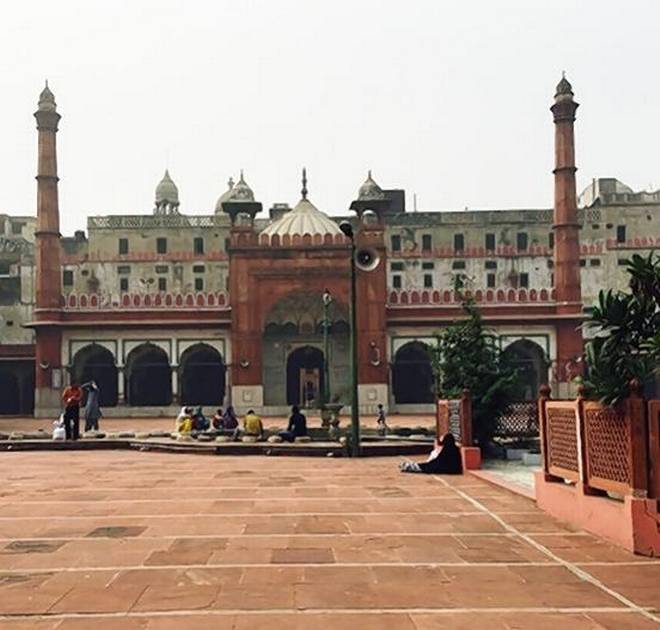
In the courtyard, the first thing that catches the eye is the lovely white dome with its longitudinal green stripes and green lotus finial. A masonry finial crowns it. Though the dome is made not of marble but red sandstone, it has been plastered so perfectly that it gives the impression of being made from marble when seen from afar. Red battlemented parapets run all along the roof in front of the dome.

The mosque, too, is built of red sandstone. Its unique feature is that it is the only medieval mosque with a single dome, flanked by two 80 ft tall minarets on both sides.

The mosque is built on a plinth of 3.5 ft. In the centre is a lofty archway with two wings which have three scalloped arches on each side. The central mihrab (in the direction of the qibla) is deep and high, and gives a beautiful appearance to the interior of the mosque. The pulpit next to the mihrab is the only piece of marble in the mosque. A mukabbir, or platform, was added in front of the main arch later, so that the imam’s words could be repeated from there and reach all those gathered in the courtyard.

There is a huge oblong tank for ablution in the courtyard that used to be fed by the famous Faiz Nahar (canal) in the Mughal era. A red sandstone enclosure next to it has graves of religious leaders who lived, prayed and taught in the mosque. There are galleries, with rooms on the ends on both sides.

From 1857 till today

The Indian sepoys, or ‘rebels’ as the British called them, who had risen up against the East India Company in 1857 had used this mosque. After the fall of Delhi in September that year, the mosque was confiscated by the British, and the courtyard, galleries and arcades on the three sides were put up for auction. As the dispossessed and displaced Muslims of Delhi post-1857 were in no position to buy it, Lala Chunnamal, a rich merchant of Delhi, bought it at the cost of ₹29,000.

In 1873, Anjuman Rashidin Sulah e Kul Islamia applied for return of the mosque. The British government agreed and tried to buy it back, but Lala Chunnamal refused. In 1877, the British offered an increased amount as well as four villages and bought it back from Lala Chunnamal’s son and restored it to the Muslims of the city. The masjid was brought back into use as a masjid, and remains so till today.

source: http://www.thehindu.com / The Hindu / Home> Opinion> Columns / by Rana Safvi / September 16th, 2018