Tag Archives: Razia Sultan

Roshanara Begum: A Princess or a Powerhouse?

DELHI / INDIA :

The wider Indian audience, including many women in the 21st century believe that this is the most emancipated age of women and the women who proceeded them from centuries gone by were powerless dolls dressed in finery and painted and wooed by the men of the ancient and medieval world. 

Compared to most countries of the world, India has had a longer and a more complex story, where the fortunes of women advanced and regressed from time to time. India is the only country of the time where a Muslim woman was chosen by her father to be the heir of his throne, we are ofcourse referring to Razia Sultan and her father Iltutmish of the Delhi Sultanate period in the 13th century.

After Razia and into the Mughal period, we increasingly see the growing power of the Mughal women which was not just limited to women of the royal family. Many icons of Delhi, some of which are even part of the UNESCO World Heritage Sites have been built by women for their husbands.

Bega Begum was the senior wife of Emperor Humayun, who got his incredible mausoleum built. Similarly Fatehpuri Begum was one of the wives of Emperor Shah Jahan and she has left us with the iconic Fatehpuri Mosque situated at the heart of Chandani Chowk.  

Born in 1617, Roshanara Begum was a Mughal princess and the second daughter of Emperor Shah Jahan and his wife, Mumtaz Mahal. Roshanara was a brilliant woman and a talented poet. She was a partisan of her younger brother Aurangzeb and supported him during the war of succession which took place after Shah Jahan’s illness in 1657. After Aurnagzeb’s accession to the throne in 1658, Roshanara was given the title of Padshah Begum by her brother and became the First Lady of the Mughal Empire. She became a powerful political figure.

Roshanara’s rise to power began when she successfully foiled a plot by her father and Dara Shikoh to kill Aurangzeb. According to history, Shah Jahan sent a letter of invitation to Aurangzeb to visit Delhi, in order to peacefully resolve the family crisis. In truth, however, Shah Jahan planned to capture, imprison and kill Aurangazeb in prison as he viewed his third son as a serious threat to the throne. When Roshanara got wind of her father’s plots, she sent a messenger to Aurangzeb, outlining their father’s true intentions, and warning Aurangazeb to stay away from Delhi.

Aurangazeb was extremely grateful to Roshanara for her timely warning. When the war of succession was resolved in favour of Aurangzeb, she quickly became a very powerful and effective figure at court. Fearing that Dara Shikoh would kill her for her role in the war of succession if he ever returned to power, Roshanara insisted that Aurangazeb order Dara’s execution. Legend has it that Dara was bound in chains, paraded around Chandni Chowk and beheaded. Roshanara then had his bloody head wrapped in a golden turban, packaged neatly and sent to her father as a gift from Aurangzeb and her. Shah Jahan, who opened the package just as he was sitting down to dinner, was so distressed by the sight of his favorite son’s head that he fell unconscious to the floor. He remained in a stupor for many days after the incident.

Eventually, however, Roshanara and Aurangzeb fell out with each other. Mughal princesses were obliged to remain single since the time of Akbar so their offspring would not make a challenge for the throne. Roshanara was rumoured to have taken on lovers, which was not viewed well by Aurangzeb.

After her fall from grace, she chose to leave the court at the Red Fort and built for herself the Roshanara Bagh complex which is about six kilometres from the Red Fort. She was a lover of the arts and music and didn’t prefer the austere lifestyle promoted by Aurangzeb. This is proven by the fact that when one visits Roshanara Bagh the remaining building itself is built in a very romantic style, a Baradari (open on all sides) built surrounded by a pool of water apart from the canals and gardens surrounding it. 

Even within the Baradari the main motif for decorations seems to be nature, one can see remnants of blooms on every wall, arch and even the capitals of the slender pillars. The fades blue, green and red colours gives us an idea as to how brilliant and bright the designs were when Roshanara herself was in residence. 

The main gate of entry into the gardens still has mosaics left on its upper parts, which show that a bright hue of yellow was used apart from the blue, green and red. One can imagine, how this gate shone in the brilliance of the sun with such a colour combination. 

The brief history that has remained about the life of Roshanara Begum shows us what a woman she was and more importantly how open Mughal society was at least for the women of the royal household and nobility. 

The fact that she was capable enough to understand the intrigues of Shah Jahan along with Dara Shikoh in order to get Aurangzeb eliminated shows us that she had a perfect understanding of such matters and how to play a role in it. 

Her warning to Aurangzeb guaranteed her power when he acceded to the throne and in return she became the most powerful woman in the Mughal Empire. The fact that such a rank existed in the first place showcases how Mughal princesses were considered an integral part in the proper functioning of the State. 

She had her own sources of income which no doubt increased after she was bestowed with the rank of Padsha Begum. The fact that she bought land, had a beautiful and very extensive garden complex built for herself and lived a life of luxury shows to us that she was a highly educated woman understanding the complexities of titles, deeds, interests, savings etc.

She even had the power to decide where she wanted to be buried. She didn’t choose a pious cemetery but rather had herself buried within the Baradari of her beautiful gardens, the gardens which we still get to enjoy after more than three centuries of her passing and have made her name immortal in annals of time. 

source: http://www.thewomb.in / The Womb / Home> Blog> Entertainment> Lifestyle / by Barun Ghosh / October 29th, 2020
Dr. Hussaini founder chancellor of Khaja Bandanawaz University conferred with “Mohsin-E-Millat Award”

Kalaburagi, KARNATAKA :

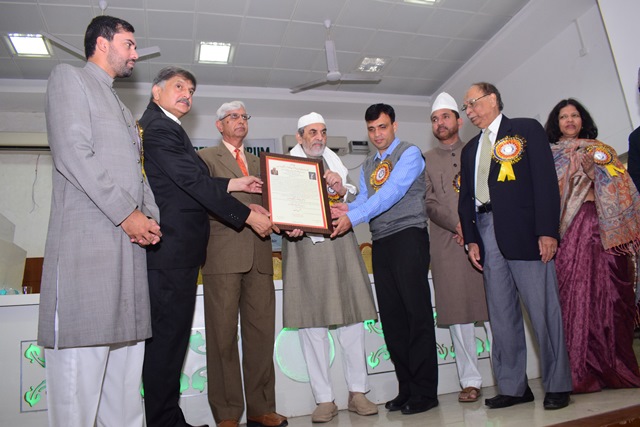
Mohsin E Millat Award being presented to Dr. Syed Shah Khusro Hussaini by Prof. Shakeel Samdani

Aligarh :  

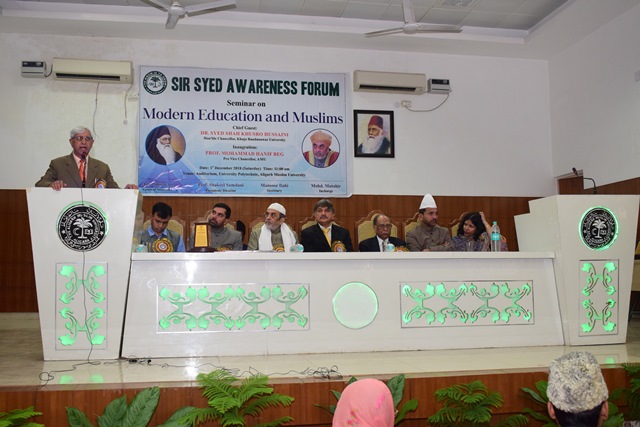
Dr. Syed Shah Khusro Hussaini, Founder and Chancellor, Khaja Bandanawaz University was conferred with  “Mohsin-E-Millat Award” by Sir Syed Awareness Forum (SAF) during a function which was attended by many prominent personalities from the field of education at  University Polytechnic Auditorium, Aligarh Muslim University (AMU).

During the occasion  a seminar on “Modern Education and Muslims” was also organised by the Forum.

Addressing the seminar  Dr. Syed Shah Khusro Hussaini said that education is necessary for Muslims throughout the world. He said that, Islam is a modern religion and if the principles of Islam are followed honestly, then everyone can achieve success in their lives. He further said that he is the admirer of Sir Syed Ahmad Khan and he is trying his best to carry forward the mission of Sir Syed by establishing a university. He appealed to the Muslims to focus on education as it is the key to success. In the last he said that division on the basis of school of thought is causing harm to the Muslims. It should be avoided by them.

Presiding over the seminar, Prof. Mohd. Hanif Beg, Pro Vice Chancellor, AMU said that in today’s world it is very important to discuss on the issues of education. He congratulated the SAF for organizing the seminar on modern education. He further said that Sir Syed has always given importance to modern education. At the end he requested the students to work hard for civil services and judicial examinations.

Prof. M H Beg, PVC, AMU delivering Speech sitting IPS Abdul Hamid, Dr. Khusro Hussaini, Prof. Shakeel Samdani, Prof. Pathan and others

Guest of Honor, Mr. Abdul Hamid, IPS and Registrar, AMU said that today Muslims are lagging behind in the field of modern education. Sachar Committee report has confirmed that the educational status of Muslims in India is lower than Scheduled Castes and Scheduled Tribes. He said that higher education is the only solution of this problem. He requested the students of AMU to focus on their education and keep themselves away from unnecessary activities. At the last he congratulated Prof. Shakeel Samdani, President SAF for organizing a wonderful seminar on a very important topic.

President of the forum, Prof. Shakeel Samdani, while delivering his speech, said that Muslims have dominated the world in the field of education, science, literature, etc for about 600 years and this was only possible because they focused more on education and research. He congratulated the South India for carrying forward the mission of Sir Syed Ahmad Khan. South Indian Muslims have established much more education institutions as compared to Muslims of North India. He further said that Dr. Khusro Hussaini has established 24 educational institutions and the most important among them is the Khaja Banda Nawaz University. He said that the work of Dr. Hussaini is appreciable as he has helped the poor sections of the society by establishing educational institutions. At the last he said that it is the pleasure of SAF that Dr. Hussaini has accepted the Mohsin-E-Millat Award.

Principal of Abdullah College, Prof. Naima Gulrez said that North India is lagging behind in establishing educational institutions as compared to South India. She gave the example of Parsis that although they are numerically less in population but they are one of the most prosperous community in the country. It is because they are educationally advanced and they focus very much over modern education. She expressed her sorrow about the condition of Muslim women in the society.

Vice Chancellor of Khaja Banda Nawaz University, Prof. Abdul Jaleel Khan Pathan congratulated SAF for conferring ‘Mohsin-E-Millat Award’ on Dr. Hussaini. He said that it is the need of hour to carry forward the mission of Sir Syed and to provide quality education to Muslims.

Dr. Mohib Ul Haque, said that the time has come for Muslims to focus on modern education if they want to succeed. He congratulated Prof. Shakeel Samdani and SAF for their contribution in establishing Tipu Sultan Block at AMU.

Anjum Tabassum Lashkri (Karnataka) and Mr. Tariq Hussain, AMU were felicitated with “SAF Excellence Award”. Ayesha Samdani conducted the seminar and Mansoor Ilahi proposed the vote of thanks. Sarah Samdani also spoke on this occasion. Poetess Rehana Shaheen recited a Nazm on Sir Syed.

Wajahat Jilani welcomed the guests and Aman highlighted the objectives of the Forum.

On this ocassion, Mr. Syed Ali Hussaini, Pro Chancellor of Khaja Banda Nawaz University, Mr. Haider Pasha Qadri, Sajjada Nasheen, Dr. Moinuddin, Superintendent, KBN Medical College, Gulbarga, and Maulana Syed Abdur Rasheed were present.

Seminar was made a great success with the tireless work and efforts of Adv. Shoeb Ali, General Secretary, SAF, Dr. Haider Ali, Abdullah Samdani, Mohd. Muthair, Hunain Khalid, Danish Iqbal, Sarim Ali, Hamza Noman Masood, Saad Asad, Pawan Varshney, Himanshu Singh, Ajay Singh, Hamda, Kashif Sultan, Ayesha Farheen, Razia Chauhan, Talat Anjum, Rubia, Fauzia, Faiz, Adeel Shervani, etc.

Many prominent figures who attended the program include  Prof. Tariq Chattari, Chairman, Dept. of Urdu, Prof. Humayun Murad, Dr. Iqbal Siddiqui, Prof. Zafar M. Nomani, Prof. Kamil, Prof. Khalid Azam, Prof. Ashar Ansari, Prof. Mujeeb Ansari, Prof. K. Khalil Ahmad, Prof. Shakeel Ahmed, Dr. Nazar Abbas, Dr. Ayesha Munira, Dr. Raihan Akhtar, Dr. Rahat Abrar, Dr. Masood Anwar (Shahjahanpur), Dr. Yameen Ansari (Delhi), Syed Ikram Ul Haq (Hapur), Dr. Raghib, Dr Wasim Ali, Mohd Nasir, Dr. Kalimullah, Dr. Rahmat Ullah, Dr. Qaiser Ansari, Dr. Obaid Iqbal Asim, Dr. Iqbal Hadi, Dr. Naseem Ahmad Khan, Dr. Ali Nawaz Zaidi, Dr. Zafar Ahmad, Dr. Mohsin Khan, Adv. Khan Wajahatullah, Rabab Khan, Dr Zeba Azmat, Dr  Tabassum Chaudhary, Huzaifa Amir, Secretary, AMUSU, Khalid Masood, Ex President, AMUSU, Raas Masood Khan, Court Member and a large number of students were also present in the seminar.

source: http://www.muslimmirror.com / Muslim Mirror / Home> Exclusive Reports> Indian Muslims / by Muslim Mirror Networks / December 10th, 2018

Muslim Women, Waqf, and the Power of Charitable Legacy: A Forgotten Force in the Shadows of Reform

INDIA :

A New Law, A Timeless Legacy

The Waqf Amendment Act 2025, recently passed by the Government of India, has stirred a wave of public discourse. Promising to regulate and modernize the administration of waqfproperties across the country, the law is being introduced as a means to improve transparency and benefit marginalized communities, especially Muslim women.

However, in this swirl of policy language, governance reform, and bureaucratic oversight, we must not forget a foundational truth: Muslim women have always been central to the waqftradition—not as passive recipients, but as active architects of community transformation.

Waqf as a Tool of Empowerment—Before the State Claimed It

Before governments created waqf boards, before institutional frameworks shaped their regulation, and long before women were officially recognized in policy narratives, Muslim women in India were shaping societies through charitable endowments.

They:

• Founded schools and madrasas for girls and boys alike

• Donated lands and properties for the construction of mosques, shrines, and Sufi lodges

• Built hospitals, water fountains, and orphanages

• Funded scholarships, welfare kitchens, and even public rest-houses for travelers.

This was not mere charity—it was strategic social intervention, embedded in Islamic ethics and guided by a vision of communal upliftment.

👑 Queens of Waqf: A Glimpse into Heroines of Charity and Community Leadership

🏛️ Razia Sultana (1205–1240, Delhi)

India’s only woman Sultan, Razia established educational and civic institutions supported by state waqf. Her leadership emphasized justice, learning, and infrastructure.

🏛️ Jahanara Begum (1614–1681, Delhi)

Daughter of Shah Jahan, she created waqf endowments for Sufi shrines, caravanserais, and public gardens. Her waqf documents are among the earliest female-authored ones preserved in India.

🏛️ Roshanara Begum (1617–1671, Delhi)

Sister to Jahanara, she built Roshanara Garden and a Sufi lodge. She maintained religious institutions through royal waqf.

🏛️ Sultan Jahan Begum (1858–1930, Bhopal)

The last Begum of Bhopal, she modernized education, built hospitals, supported madrasas, and legally registered many waqf properties to support her reforms.

🏛️ Begum Hazrat Mahal (1820–1879, Lucknow)

Regent of Awadh, she protected the city’s religious institutions and supported waqf-based welfare during the 1857 Rebellion.

🏛️ Khair-un-Nissa Begum (18th c., Hyderabad)

Established Khairtabad Mosque and other public works through her waqf. One of the early noblewomen to invest in education and water supply systems.

🏛️ Begum Rokeya Sakhawat Hossain (1880–1932, Kolkata)

A visionary educationist, she established the Sakhawat Memorial Girls’ School using her own resources and informal waqf practices. A true reformer of women’s rights.

🏛️ Begum Sughra Humayun Mirza (1884–1958, Hyderabad)

Urdu novelist and educationist who established the Safdariya Girls School through personal endowment. One of India’s earliest women school founders.

🏛️ Princess Durru Shehvar (1914–2006, Hyderabad)

Ottoman princess and daughter-in-law of the Nizam. Founded the Durru Shehvar Hospital, a major maternity and child-care waqf.

🏛️ Princess Niloufer (1916–1989, Hyderabad)

Ottoman royal by birth and philanthropist. Established Niloufer Hospital for women and children in response to maternal health tragedies.

🏛️ Dr. Uzma Naheed (Contemporary, Mumbai)

Thinker and leader who founded the IQRA International Women’s Alliance. Created vocational and educational centers for women through charitable trusts and waqf-like models.

🏛️ Begum Abadi Bano (Bi Amma) (1850–1924)

Mother of freedom fighters Maulana Mohammad Ali and Shaukat Ali, she supported the Khilafat movement and women’s education through charity and informal waqf support.

🏛️ Begum Qudsia Aizaz Rasul (1909–2001)

Only Muslim woman member of the Indian Constituent Assembly. Promoted educational waqfs and women’s legal rights in independent India.

🏛️ Hamida Habibullah (1916–2018, Lucknow)

Educator, politician, and philanthropist who helped establish Talimgah-e-Niswan, a leading girls’ school, partially supported by endowments and community waqf models.

🏛️ Tayyaba Begum (early 1900s, Hyderabad)

Co-founder of Anjuman-e-Khawateen-e-Deccan, she organized women’s welfare through educational trusts and neighborhood charities alongside Sughra Humayun Mirza.

These women are not anomalies in history. They are evidence of a forgotten mainstream—a rich legacy of Muslim women using waqf, education, and philanthropy to shape the public sphere.

What the Law Misses

The 2025 Amendment claims to create better access for women and transparency in waqfgovernance. Yet, many community members raise concerns about:

• Increased government control over waqf boards

• Reduced autonomy of local Muslim stakeholders

• Weak representation of women in decision-making roles

If reform is truly meant to benefit women, it must not just focus on current access. It must honor and preserve the legacy of those women who built the system through vision, sacrifice, and faith.

Reclaiming the Narrative

As students of history and as researchers in the contributions of Muslim women across disciplines—al-Muhaddithat, scholars, judges, educators, warriors, nurses, and philanthropists—we find it essential to reclaim and highlight this tradition in the current discourse.

This document delves into the intersections of gender, history, law, and social development, spotlighting women’s roles in charitable work and community building through waqf and related institutions.

Our goal is not just to preserve history, but to activate it: to inspire current and future generations to recognize the power of service, leadership, and waqf in reshaping communities. The struggle for recognition today stands on the shoulders of those who built with purpose and gave with dignity.

Conclusion: From Past to Future

Muslim women in India have been pioneers of welfare through the waqf system for centuries. Their work wasn’t performed for applause or public acclaim. It was done with quiet resolve, deep faith, and a vision for lasting impact.

As new policies reshape the landscape of waqf, let us not merely react—we must respond with wisdom, rooted in history and hope. Let the legacy of women like Razia, Jahanara, Durru Shehvar, Niloufer, Sughra, and Uzma guide us in reimagining waqf as a tool not only for preservation—but for progressive, inclusive development.


The author is a Social Worker, Student of History and Educator

source: http://www.muslimmirror.com / Muslim Mirror / Home> Education> Positive Story> Waqf> Women / by M A Lateef Atear / June 04th, 2025

Walking through history, learning from women of courage

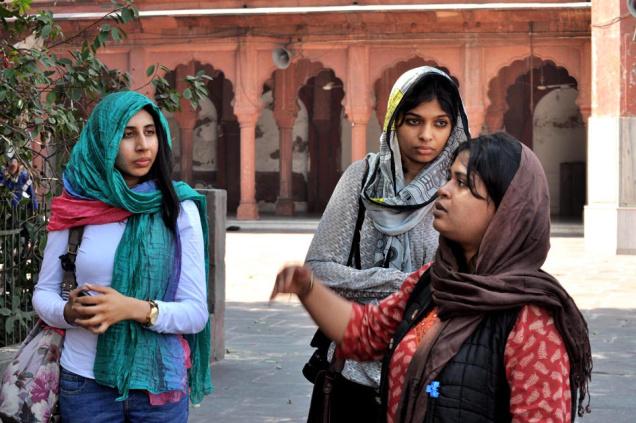
Participants interact at the heritage walk through the Walled City of Delhi on Saturday. / The Hindu

On International Women’s Day, a group of 23 heritage enthusiasts participated in a storytelling walk in the Walled City of Delhi. The walk created awareness about women who stood up for their rights and honour but have long been forgotten.

Barring two men, the rest of the participants were women who satiated their hunger for knowledge by frequently interrupting the host, an excellent raconteur.

Yuveka Singh, who conducted the walk and has experts on archaeology and history in her team, said the walk was conducted after methodical research work and interviewing women living in Old Delhi.

At 10 a.m., the group congregated at the Red Fort main gate. “The two-hour walk was an attempt to know a little more about some fascinating women who are more well known to some of the older residents of the Walled City. We spoke about Razia Sultana because she was far ahead of her times and involved in active politics even before she became the ruler. We wanted the participants, particularly women, to feel that they need to derive inspiration from women of the medieval period and speak up for their rights,” said Ms. Singh, a storytelling expert.

The first visit was to a dilapidated palace of an 18th Century nautch girl, who through her charisma and wit became the ruler of Sardhana.

The group had to pass through labyrinthine streets in the Bhagirath Palace area in Chandni Chowk but a look at the yellowish white edifice, which has nomenclature of erstwhile Lloyd’s Bank Ltd inscribed on it, made them scream with joy. The heritage building is one of the earliest colonial buildings with Greek pillars, which grace its front porch.

Begum Samru’s haveli was the first destination because she played a significant role in saving Delhiites from getting slaughtered by an invading force. “Our visit to Begum Samru’s haveli was a fruitful one as I was able to tell how this courtesan became a ruler of a principality near Meerut. And we also entered the haveli and saw the condition it is in,” said Ms. Singh.

The next destination was the famous Jain temple of Chandni Chowk. This was done to show the syncretic traditions of the Walled City, where Hindus and Muslims have lived peacefully for generations.

The walk concluded with a visit to the Fatehpuri Masjid.

During the walk, participants also learnt about the women in Shah Jahan’s life.

For history enthusiast Jahanara Rabia Raza, the walk gave her an insight into the lives of women who were brave, assertive and not willing to get subjugated by men. “Though I studied History at Delhi University and gave my papers on Razia Sultan, I did not know that the empress used to roam around after covering her countenance with a purdah and smoked hookah with men. She must have had guts to do all that during that period,” she said.

source: http://www.thehindu.com / The Hindu / Home> News> Cities> Delhi / by Madhur Tankha / New Delhi – March 09th, 2014