Tag Archives: Firoz Rozindar

Pages from Bahmani days

KARNATAKA :

Six more books from the period of Adil Shah have been released
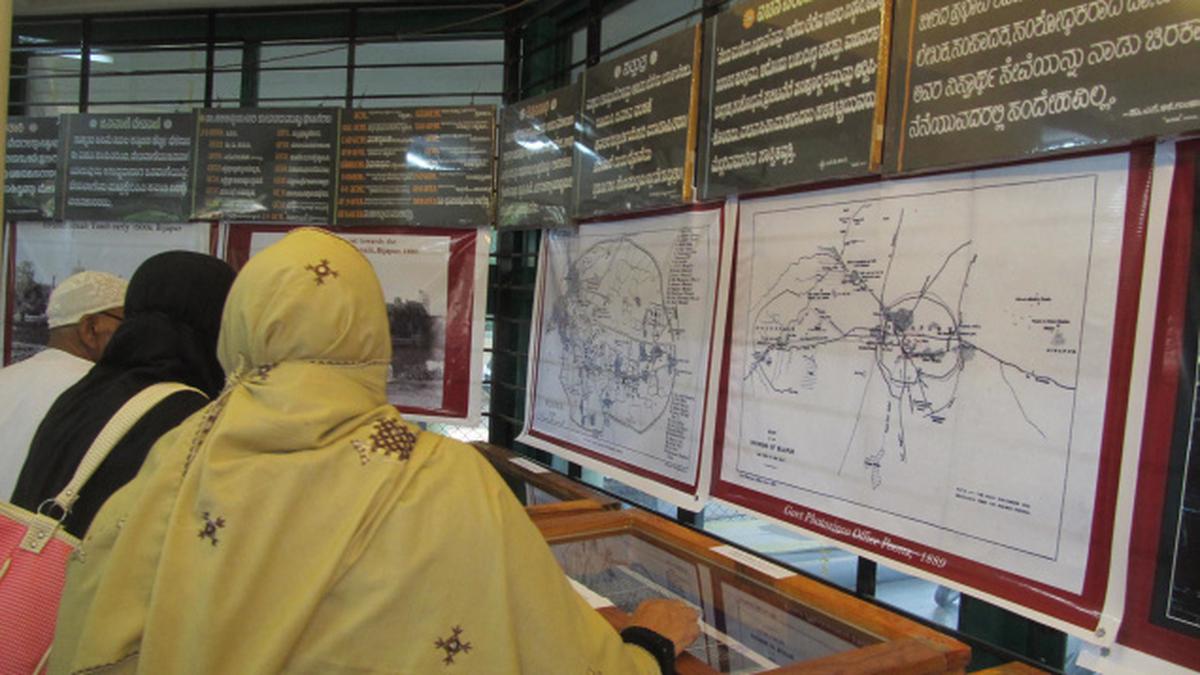
A GLIMPSE OF… the books, manuscripts and maps

The ambitious work of translating Adil Shahi literature in Kannada, has now achieved another milestone. Six more rare books of that era written in Persian and Dakhani Urdu have been released and are available for the readers.

The Adil Shahi Literature Translation Committee which was earlier headed by the late M. M. Kalburgi, is rapidly doing its work to complete the entire project by the end of this year.

Writer Krishna Kolhar Kulkarni, director of the committee, who now heads the project after the demise of Prof. Kalburgi, said that last year the committee came up with six books, this year, as the second instalment, the committee has released six more rare books after translating them into Kannada.

It was a difficult task to collect these books, since they are rare and hard to find. Names of the books that will be released and their brief description:

Mohammad Naama: The book written by Zahoor Bin Zahoori in Persian is gives demographic details of Karnataka and the expansion of Adil Shahi dynasty into southern parts of the country. The writer offers critical information about the life of Mohammad Adil Shah (1636-1656) who got the historic Gol Gumbaz built. The book has been translated by Dr. Mehnoor Zamani Begum, Prof. A.H. Masapati, Fakir Mohammad Katpadi and Moulana Rashid Al Khashmi.

Ali Naama and Tarikh-e- Sikandari: The books written in Dakhani Urdu by Mulla Nusrati, are primarily poems in which writer gives illustrated description of Ali Adil Shah-II (1656-1672) and Sikandar Adil Shah (1672-1686). The book meticulously writes about the historic Umarani war between Maratha King, Shivaji and Ali Adil Shah-II in which Shah humiliatingly sends Shivaji back from the battle field.

The books are translated by the late, Dr. Mohammad Sibkhatullah and Dr. Vithalrao Gaikwad.

Urus-e-Irfan: The book written by Hazrat Kazi Mehmood Behri in Persian, is about contemporary details of religious and historical moments. The book is translated by Bode Riyaz Ahmed Timmapuri.

Tazkirat-ul-Mulk: The book written by Rafiuddin Ibrahim Shirazi in Persian, is one of the best books on ancient Bijapur history of the famous Rakkasaki-Tandagi war in 1565.

The writer gives an eye-witness account of the war and mentions the fall of Vijayanagar Empire. The book is translated by Fakir Mohammed Katpadi.

Kitab-e-Nouras: Written by Ibrahim Adil Shah-II in Dakhani Urdu, who adored art and music. In his books, the king introduced Indian music to Persian people. The book is translated by Dr. Krishna Kolhar Kulkarni.

Rouzat-ul-Auliya: The book written by Mohammed Ibrahim Zuberi in Persian is about some 105 men and eight women Muslim Saints who lived in Bijapur district.

The writer visits each tomb and collects details of all the saints before compiling a book on their lives. The book is translated by Dr. Amiruddin Kazi.

While six book are translated now, previously, another six books that were translated and released are: Tareekh-e-Farishta, Basateen-e-Salateen, Guldasta-e-Bijapur, Ibrahim Naama, Tareekh-e-Haftakursi and Futuhat-e-Alamgeer .

Meanwhile, Dr. Kulkarni said that the team of experts is busy working on the final volume of eight books to be released by the end of this year.

“It is surely a painstaking and labour-intensive job. It has to be translated without distorting the originality,” he said.

Maps and manuscripts

He said that during their search of books, the team laid hands on some of the rare maps of ancient Bijapur district prepared between 1763 and 1909.

“This is no less than a treasure for us . We also got hundreds of manuscripts and ‘Farmaans’ (official correspondents between Kings and landlords).

We have decided to display them in a museum to be established in future,” he said.

source: http://www.thehindu.com / The Hindu / Home> Features> Friday Review / by Firoz Rozindar / October 18th, 2016

Bonded by blood

Vijayapura, KARNATAKA :

Ateeb Inamdar from Vijayapura believes that the best charity anyone can do is donating blood. And, he’s clearly on a life-saving mission…

A blood donor being honoured in Vijayapura

Vijayapura :

Here’s a noble cause born out of a tragedy.

The year was 2008 when Vijayapura resident Ateeb Inamdar’s life turned upside down. His nine-month-old niece died of dengue after not getting the required platelets. “The hospital in Vijayapura referred us to Solapur in Maharashtra for better treatment. But despite our best efforts, we failed to arrange the required platelets, and the baby died in the hospital after nine days,” says Ateeb, now 30 years old, adding that he felt helpless after failing to arrange platelets to save his niece.

That incident shook Ateeb so deeply that it inspired him and his friends to start a blood donors’ group. “I, with the support from my brother-in-law and 15 others, including my cousins and friends, started the movement in 2009. It kept growing over the years with the number of donors now standing at over 3,000. Today, we have the satisfaction of saving the lives of countless people in need of blood,” he says.

Ateeb registered the association as an NGO in 2013, called it Sultan Social Group and Welfare Society and expanded the network. Initially, the NGO was involved in not only blood donation, but also collecting charity to treat the poor. But over the years, the NGO has remained largely focused only on blood donation, as they realised that people were getting financial aid from many but not blood.

“With the emergence of social media, our network widened. We not only kept easily adding more donors, but started getting frequent calls and demand for blood from various parts of Vijayapura district. We also got in touch with similar organisations in Andhra Pradesh, Maharashtra, Goa and even Delhi,” he says, adding that before social media, they contacted donors only by phone, and this limited their numbers. “It is a job done only for the satisfaction of our soul and not for any monetary benefit,” Ateeb adds.

He proudly says that today, they are a part of at least a dozen different blood donors’ groups in Karnataka and other states. “This has helped us share details of patients who need blood in various groups. The minute the information is passed on, donors approach us in large numbers,” he adds.

Rare blood groups

Besides blood groups that are common, Ateeb says they keep a record of donors with rare blood groups, like all negative blood groups and AB+. The rarest among all is the ‘Bombay Blood Group,’ and the NGO has two donors registered with them in Vijayapura district. “We have five from Kalaburagi district with that blood group. In all, we have 12 people in this rare group. We have told them not to donate blood in any donation camps, and to donate it only when a patient needs it. This is because after donating blood, they cannot do it for at least three months, as lost blood cells need time to recoup in the body after losing it,” he adds.

Ateeb says that after the group gained a good name in the district, not just hospitals but almost all blood banks approach them for blood. “If the patient cannot afford it, we request the blood banks to waive off the amount, and we get a positive response from them,” he added.

Ateeb says that people must come forward to donate blood to save lives. “It is the best charity I believe a human can do to a fellow human. I believe only a few people are gifted to do that work, as not everyone can donate blood for various reasons. Those who are eligible should never miss the chance, irrespective of their caste, creed, or religion. Ultimately, humanity is the foundation of every religion,” he adds.

Ateeb emphasises that more people should come forward to donate blood. “Every life saved gives us a blissful feeling,” he concludes.

source: http://www.newindianexpress.com / The New Indian Express / Home> Good News / by Firoz Rozindar / September 15th, 2024