SP MLA Rais Shaikh counters BJP minister Nitesh Rane’s claim with historical evidence of Muslim chieftains in Shivaji’s forces.
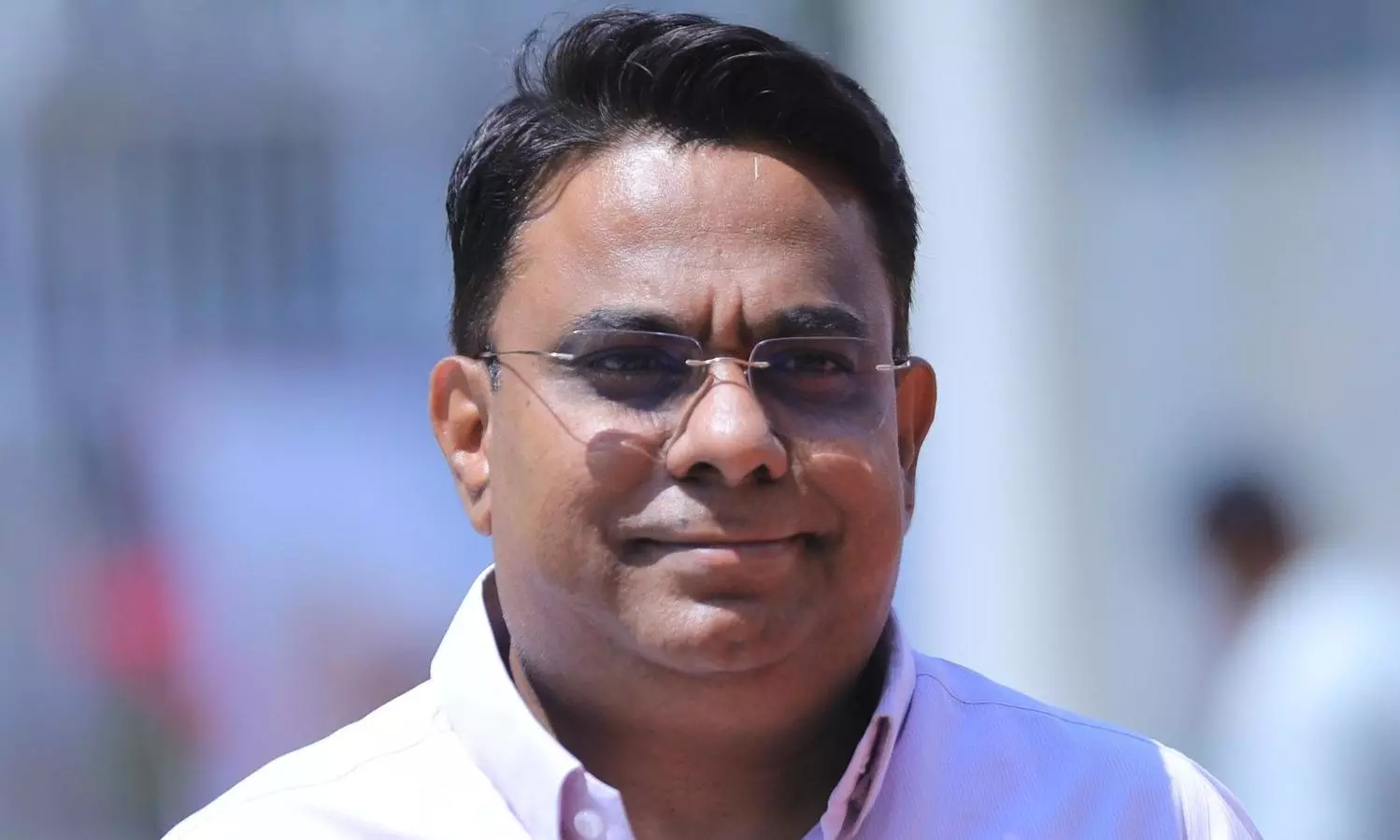
SP MLA Rais Shaikh presents historical records listing Muslim chieftains in Chhatrapati Shivaji Maharaj’s army, challenging BJP minister Nitesh Rane’s statement. (Image: Facebook)
Mumbai:
To counter BJP minister Nitesh Rane’s claims that Muslims were not part of Chhatrapati Shivaji Maharaj’s army, Samajwadi party MLA Rais Shaikh has dashed off a letter to the saffron party leader listing out 10 Muslim chieftains in the legendary Maratha king’s forces.
In the letter to Rane, the SP MLA has given the names of 10 Muslim chieftains of Chhatrapati Shivaji Maharaj. These are Siddi Hilal and his son Siddi Wahwah, who supported the Maratha king in the siege of Panhalgad, cavalry chief Noor Khan Beg, Sardar Shama Khan, navy chief Ibrahim Khan, bodyguard Siddi Ibrahim, navy official Daulat Khan, trusted servant Madari Mehtar and lawyer Qazi Haider. Shaikh has also added evidence of historical sources to back up the names of these chieftains.
“Like Saint Tukaram and Saint Ramdas, Shivaji Maharaj also respected the Muslim Saint Baba Yakut of Ratnagiri. Shivaji Maharaj’s rule was not a religious war. He continued the tradition of gifting Pir, Dargah, and Mosque, as is documented in historical sources. These references are also provided in the letter, along with details of primary historical sources,” said Shaikh.
The SP MLA has also gifted Rane two books ‘Chhatrapati Shivaji: Kaal Aani Kartrutva’ (Times and Achievements of Chhatrapati Shivaji) by the renowned historian Jadunath Sarkar and ‘Who Was Shivaji?’ by Govind Pansare. “Minister Nitesh Rane should read objective history so that he does not make prejudiced statements distorting history, which could further increase rifts between communities,” said Shaikh.
Rane, while speaking at a meeting in Sangameshwar, Ratnagiri, had claimed that Shivaji Maharaj never appointed a Muslim chieftain and his war was against Muslims.
When asked, Rane said he was yet to receive Shaikh’s letter and he will comment on it after reading it. “But whatever I have said is true. Muslims were never a part of Chhatrapati Shivaji Maharaj’s army,” he said.
source: http://www.deccanchronicle.com / Deccan Chronicle / Home> Nation / by Bhagwan Parab / March 24th, 2025
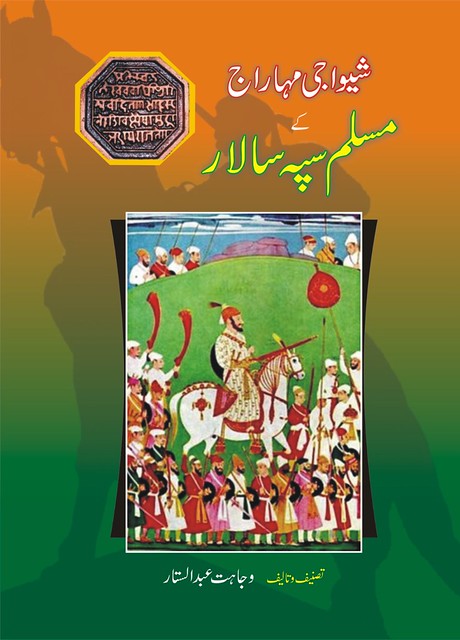
In an effort to portray Maratha warrior Shivaji as a secular king, a forty-page book has been released under the name “Shivaji’s Muslim Generals” by a school teacher here implying all communities to again unite under the syncretic traditions known as Ganga-Jamuni tehzeeb.
Wajahat Abdul Sattar, 42, Social Association Urdu High School teacher from Solapur authored the book on Muslim commanders in the army of Maratha warrior Shivaji and attempted to bring his secular mindset known.
The book focusing mainly on the contribution of Muslims in the army of Shivaji and his trust on Muslims to appoint them on the highest posts may act as a hindrance for such communal organization if the book attracts large number of readers.
Talking with TwoCircles.net Abdul Sattar told, “There were many Muslim generals who were trusted soldiers but I have tried to briefly profile lives of 13 Muslim warriors who were serving in Shivaji Maharaj’s army.”
He took one year in compiling the book and referred many other books on Shivaji written by various authors – Advocate Syed Gaziuddin, Suresh Patil, Purindare and Pansare.
Explaining the main motive behind writing of such a book, he told,” There is a dire need to make public secular life of Shivaji as communal forces and political parties are using religious emotions of Hindus to disturb social harmony in India especially in Maharashtra state. Through this book people will not fall prey to such instigation by anti-social elements.”
“Right wing people prompt Hindus by telling them that Shivaji was anti-Muslim and that he fought many battles against Mughals especially Adil Shah and Aurangzeb. This book tries to clear this misconception by explaining that the motive behind such battles was always ‘political’ and never ‘religious’”, he added.
The book is released in Urdu language but Maratha organization has expressed full resolve in translating the book in other languages.
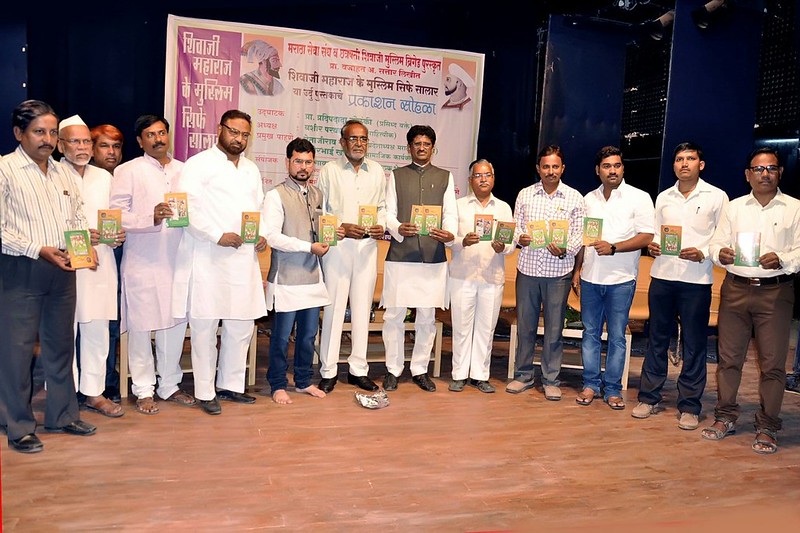
It was released on Tuesday evening in a program organized here at Chatrapati Bhavan that was presided over by Pradeep Solanki, President Maharashtra Unit of Sambhaji Brigade.
The program was also attended by Ram Gaekwad, President Maratha Seva Sangh and Farooq Shaikh, Chatrapati Shivaji Muslim Brigade of Solapur chapter.
Over the past few decades, RSS, Shivsena, VHP, Bajarang Dal and other right wing organizations are consistently using Shivaji’s popular name to attract the Hindu people towards them. They try to portray him as a strong Hindu King who was opposed to Islam and thereby try to Saffronize his image to polarize them against the Muslims.
Initial 10,000 copies of the book are published in Urdu language and Maratha Seva Sangh has announced it will publish book in many other languages so as to propagate the secular aspect of Shivaji.
The book claims that Shivaji and his fore fathers respected Muslim saint. Shivaji always respected Muslim saints Yakut Baba, a Sufi Muslim saint was one of the king’s spiritual guides whereas his grandfather used to regularly visit Saint Shah Shareef in Ahmednagar.
The role of some of the Muslim generals – Siddhi Hilal, Darya Sarang, Daulat Khan, Ibrahim Khan, Kazi Hyder, Siddi Ibrahim, Siddi Wahwah, Noorkhan Baig, Shyama Khan, Hussankhan Miyani, Siddi Mistri, Sultan Khan, Dawood Khan and Madari Mehetar is narrated in the book.
source: http://www.twocircles.net / TwoCircles.net / Home> India News> Indian Muslim> Literature> Top Stories / by A Mirsab, TwoCircles.net / August 21st, 2015
At the Battle of Malegaon, Muslim soldiers in the Maratha army defied the British army for a full month when they had no hope of victory as the Chhatrapati and Peshwa had already surrendered.
These battles, says Colonel Anil A Athale (retd), are in contrast to the colonial mindset driven narrative of Muslim separatism.
The current politics of both communities ensures that the heroes of Malegaon — or for that matter personalities like Ibrahim Khan, who led the Maratha artillery at the battle of Panipat in 1761 — are forgotten.
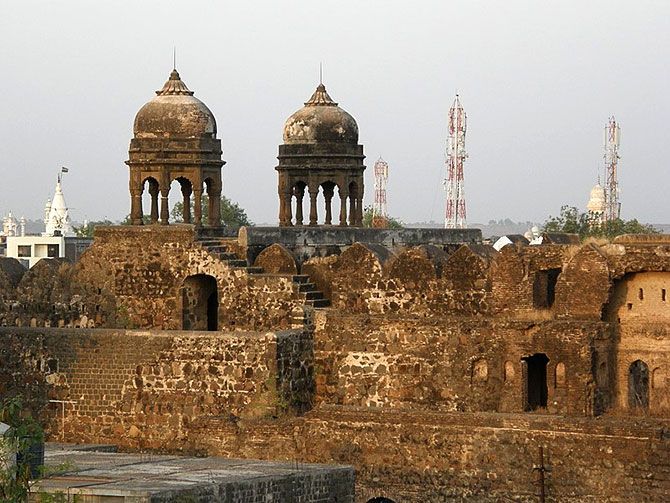
IMAGE: The Malegaon fort. Kind courtesy: Wikipedia
On January 1, 2018, the bicentenary of the defence of Koregaon by a small British force — that had a number of Mahar troops — was observed with great fanfare.
The British — the victors in the third Anglo-Maratha war — erected a pillar to commemorate the event.
During the same war, Muslim troops of the Marathas defied British forces for a full month from May 15, 1818 to June 13, 1818.
Since the Marathas were on the losing side, this saga of bravery was obliterated from history by the British.
As we approach the bicentenary of that event it is time to remember the brave soldiers of the Maratha army who continued to fight even when they had no hope since the Chhatrapati had already been captured by the British and Poona and Satara were under British occupation.
The loyalty to the Maratha flag by its Muslim soldiers even in a hopeless situation deserves to be remembered.
My own research in 1990 began with a question posed by the late Major General D K Palit, a military history scholar of repute.
The question he posed was this: How is it that the Marathas — who spiritedly fought a 22 year-long guerilla war against the mighty Mughal empire — succumbed to the British without a fight?
It is this quest for truth that led me to research the story of the Anglo-Maratha struggles of the 18th and 19th century.
The Battle of Malegaon fought in May-June 1818 was the last major attempt at resistance by the Marathas.
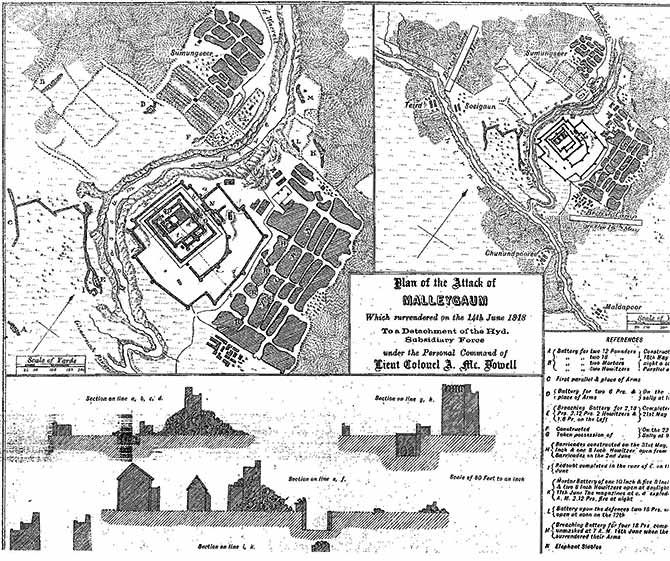
On May 15, 1818, a brigade strength force under Lieutenant Colonel A MacDowell reached the vicinity of Malegaon fort.
The British expected that this show of force would be sufficient to overawe the defenders of the Malegaon fort.
The British were in for a nasty surprise.
In response to summons to surrender, the defenders fired on the British camp leading to panic.
The quadrangular fort of Malegaon is located near the bend in the Musam river so as to cover two side of the fort, Malegaon town being on the other sides.
The fort had two lines of defence built of masonry surrounded by a seven feet wall and a 25 feet deep 16 feet wide ditch.
The outer wall had watch towers built of mud and stone. The inner fort or the citadel was 60 feet high with 16 feet wide ramparts.
On May 16, Colonel MacDowell reached the west bank of the river and began work to erect barriers of breastwork to deploy guns for the final assault.
At 8 am the British began bombardment of the fort with 20 guns, an assortment of 12 pounders (the biggest calibre gun then in India), 8 pounders and mortars.
The defending soldiers sortied out of the fort, destroyed the batteries and killed two British officers and several soldiers.
At the same time 7 guns from the fort opened devastating fire on the British lines on the west bank of the river.
The ding dong battle continued for six days.
On May 22, after particularly heavy shelling from the fort, the British were forced to abandon the breastwork for the guns and retreated.
On May 26, the British — through constant bombardment — succeeded in creating a breach in the inner wall of the fort.
The next day the British launched a three pronged attack after a bombardment lasting nearly two hours.
One column was led by Major Greenhill and consisted of a native battalion of 1,000 soldiers with 100 Europeans to directly go into the fort through the breach.
Another column of 800 sepoys under Lieutenant Colonel Stewart crossed the river downstream to outflank the fort from the west.
The third column consisting of 300 sepoys and 50 Europeans under Major Macbean went towards the river gate.
Each column had pioneers with tools, mines and ladders to tackle the fortification.
But the defenders of the Malegaon fort proved equal to the challenge.
The attacking British were met with a hail of bullets and gunfire. The attempt to scale the inner wall failed. Many of the engineer officers leading the attack suffered injuries.
Both the columns led by Majors Greenhill and Macbean were ordered to withdraw.
Only Lieutenant Colonel; Stewart’s column met with some success and he occupied part of the town.
The stalemate continued till June 4.
On that day another column under Major Watson arrived from Ahmednagar with a battalion of native infantry and a large number of siege guns.
For nine days, till June 13, the fort was subjected to heavy bombardment by the British guns.
On June 13, at 3 pm, the fort garrison accepted surrender and the Union Jack was hoisted in place of the Maratha saffron jari patka flag.
The next morning the garrison of 300 men marched out of the fort and surrendered their arms.
The British strength at Malegaon numbered over 2,000 troops. During the battle the British casualties numbered 11 officers and 220 soldiers (killed or wounded).
Thirty Maratha defenders died while 60 Maratha soldiers were wounded.
The British record states that in the end they used 36 guns, fired over 8,000 shells and used 35,500 pounds of gunpowder.
The British were so impressed with the valour and chivalry of the defenders that they permitted the surrendered soldiers to keep their daggers.
Historian N C Kelkar notes in his Marathi book Marathe ani Ingraj that at one stage the desperate British sent a message to the Muslim soldiers of the Maratha army that since the Chhatrapati had already surrendered, they should do likewise.
The doughty defenders replied that they were indeed aware that their king was in British captivity, but they were yet to receive instructions from him to surrender and therefore would keep fighting.
The devotion to duty and loyalty to their king was of the kind seen later only during World War II when many Japanese soldiers continued to fight even after Japan surrendered.
There is neither any victory pillar nor are the names of these brave soldiers engraved anywhere.
Even two hundred years after the event and the departure of British 70 years ago, the Muslim heroes of battle of Malegaon remain unknown, forgotten and unsung.
Two hundred years ago, the third Anglo-Maratha war fought in 1817 and 1818 ended in the Maratha Chhatrapati and Peshwa (prime minister) surrendering to the English.
After having defeated the Holkars and Shindias in early 1817, the British turned to the conquest of Maharashtra proper.
The full story of the Maratha struggle with the British has for long been swept under the carpet. In its place a modern myth of the British having directly taken over India from the Mughals or accidently acquired an empire has gained currency.
Ignoring the Marathas and their role in ruling most of north and central India was part of the grand colonial project of disinformation that sought to then play up Mughal-Rajput rule.
I recall an interesting news report some years ago, datelined Aligarh, where an Aligarh Muslim university ‘scholar’ had discovered that a major battle between the Marathas and the English had indeed taken place in Aligarh in 1803!
The worthy had, of course, never heard of the second Anglo-Maratha war that took place in 1803-1804 with battles at Delhi, Lassawari near Agra, Aligarh, Shekohabad etc.
The British had sound reasons to whitewash the Maratha period of our history.
Since the Marathas formed a formidable alliance with the Muslims, Jats and Sikhs in resisting the British, they posed a potential threat.
The distortions continued post-Independence as writing and teaching history was hijacked by the left-leaning Delhi elite. But those who ignore the Maratha or Sikh epoch fail to answer a simple question.
The Marathas fought three wars with the British, so did the Sikhs, the Gorkhas and Tipu Sultan in the south. Is there any mention of the Anglo-Mughal wars, even in the doctored historical narrative?
Note: The information about the Battle of Malegaon is based on a British Indian Army General Staff Publication (Simla 1910), Maratha and the Pindari War pages 89-91.
Colonel Anil A Athale (retd) is a military historian. This article is based on extracts from his forthcoming book, The Story of the Mighty Marathas and their Empire.
source: http://www.rediff.com / rediff.com / Home> News / by Colonel Anil A Athale (retd) / April 10th, 2018