Tag Archives: Imtiaz Qureshi

Garlic in kheer, narangi korma—a chef celebrates Awadhi cuisine, with a pinch of innovation

Lucknow, UTTAR PRADESH / DELHI :

Ishtiyaque, the eldest son of chef Imtiaz Qureshi, a Padma Shri awardee, has worked in various departments, from bakery to butchery.

Chef Ishtiyaque Qureshi preparing kebabs at the Jashn-e-Lucknow food festival in Delhi | Photo: Tina Das | ThePrint

New Delhi: 

When he offered his guests a bowl of kheer, a traditional dessert made with thickened milk, chef Ishtiyaque Qureshi had a wicked twinkle in his eyes. He knew he would leave them flabbergasted when he revealed the key ingredient—garlic. 

Not just the guests, but even other chefs had no clue that the pearly pods in the dessert were not almonds. The kheer was part of a delectable spread of Awadhi cuisine at the Jashn-e-Lucknow food festival at Delhi’s JW Marriott.

“When he (Ishtiyaque) asked me to taste it, I could never guess what it was. It has truly been quite the experience watching him work tirelessly from morning to night,” said Yashasvi Yadav, a management trainee at JW Marriott. 

Yadav had been working closely with Ishtiyaque to prepare 23 dishes using 20 ingredients for the festival held between 21-23 February. With rajanigandha in vases, lanterns, and roses, the tables were set to complement the Awadhi cuisine. 

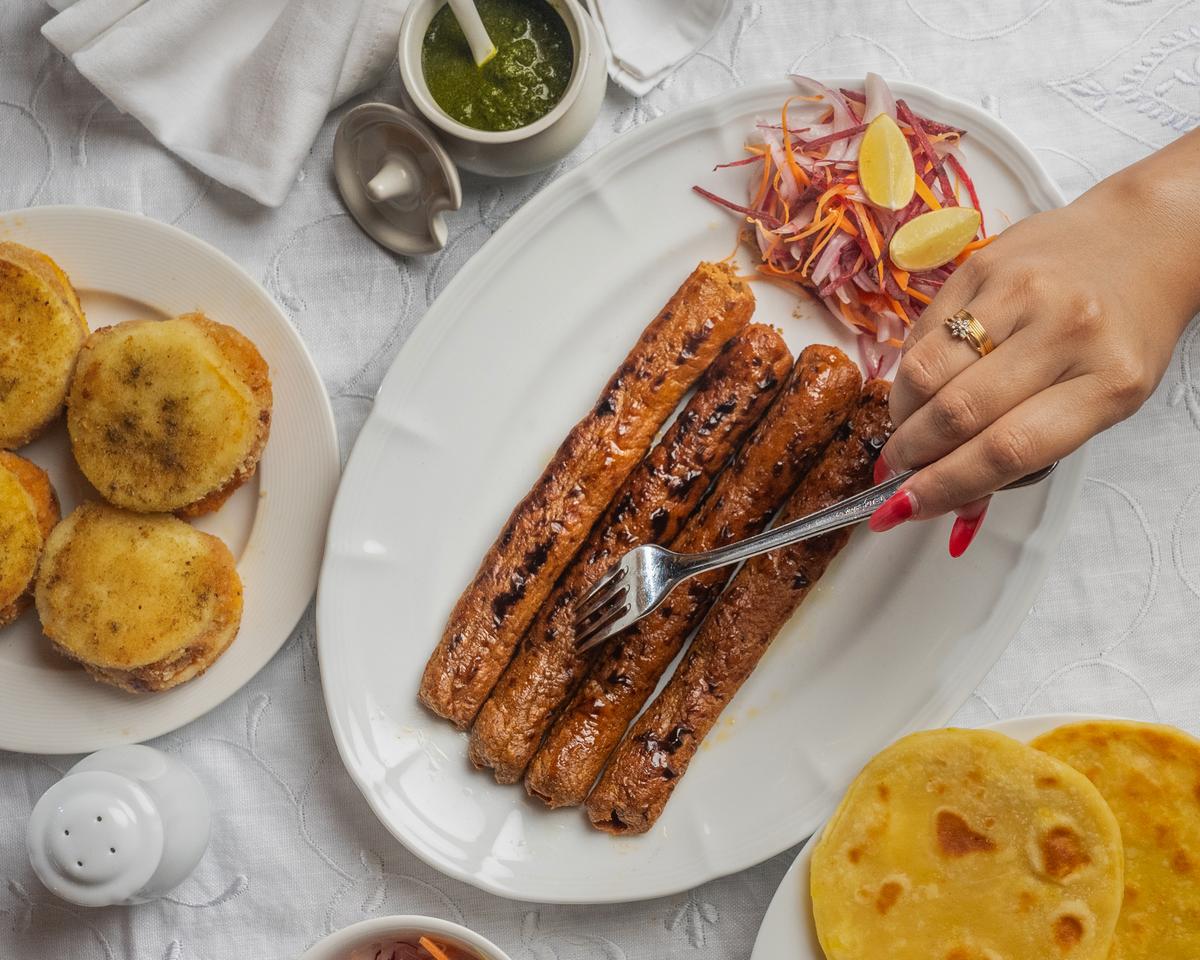
From melt-in-the-mouth Kakori kebabs to the rich dum gosht biryani, and the experimental narangi chicken korma, the slow-cooked dishes had people going for multiple servings.

These dishes reflected the artistry of Ishtiyaque, the eldest son of chef Imtiaz Qureshi, a Padma Shri awardee. Ishtiyaque has been carving out a niche for himself—from opening the Kakori House restaurant in Mumbai to working as a consultant for several popular hotels in India, dabbling with the frozen food industry, and now starting the restaurant Murgori, which serves chicken Kakori kebabs.

Ishtiyaque was on his feet for 14 hours on the first day of the festival, in a kitchen shared with another food pop–up. “We made 23 dishes in just three stoves,” he said, smiling, as he talked to guests in detail about the dishes. 

Deeply appreciative of his legacy, Ishtiyaque has, however, charted a course very different from his father, who spent his career with the ITC group. 

Ishtiyaque has worked with various brands like The Leela, Kempinski, and InterContinental. He has also been instrumental in the makeover of several brands, including Aafreen, a fine–dining Indian restaurant of JW Marriott Pune.

Ishtiyaque learned from the best—his father—while working through school. “When I was 12, during school holidays, my father skilfully lured me to the Maurya operations. With the temptation of swimming in the pool and eating at the bakery, he put me in the kitchen,” said Ishtiyaque.

He worked in various departments, from bakery to butchery, and credits that hands-on training for building a solid foundation for his career.

Culinary artistry

The young boy didn’t want to cook; he wanted to join college instead. But with a big family to support, another earning member was necessary. He initially worked at ITC Maurya during the day while attending classes at Delhi’s Ram Lal Anand College in the evening. 

Ishtiyaque later left for Jeddah, Saudi Arabia, in 1986 after his father helped him get a job there. Three years later, he returned home and interviewed with ITC’s then-chairman, YC Deveshwar, at ITC Maurya in Delhi. He soon found himself at the Dum Pukht restaurant in Mumbai, which was then part of the Sea Rock Hotel.

He also worked with legendary French chef Roger Moncourt, who was the executive chef at ITC Maurya in New Delhi. “I remember he removed beef and pork from the Indian restaurant,” said Ishtiyaque. This separation—which he also recently recommended at a new restaurant—helped increase the clientele for fine Indian dining.

This was around the time when Datta Samant’s trade union raised slogans like ‘Dilliwale murdabad’. Nevertheless, Ishtiyaque found his space, experimenting with slow-cooked delicacies and reviving age-old techniques that define Awadhi cuisine.

Over the years, he has also mastered techniques from the frozen food industry, blending science with culinary artistry—all while carrying forward his father’s legacy. 

Food innovations

The father-son duo often cooked together, especially after doctors advised both parents to stop consuming red meat. This led to one of Ishtiyaque’s innovations—the chicken Kakori kebab. 

“For three years, they never guessed it wasn’t made of mutton but chicken. That’s when I realised this is a great option for the market, for those who cannot or don’t want to consume red meat,” said Ishtiyaque.

His father always made sure to have dinner at home, where his mother would rustle up delicacies like aloo gosht, saag gosht, or meat cooked with seasonal vegetables. Ishtiyaque prefers home–cooked meals and staying in rather than travelling, even though work often keeps him on the move. 

One dish that had people queuing up for second and third helpings was the narangi chicken korma. “While making the list of ingredients, the chef asked me to get oranges. Even the person in charge of the hotel’s vegetable and meat stock was curious why Awadhi food might need oranges,” said Yadav.

The result of Ishtiyaque’s experiment was a refreshing, aromatic stew. “To me, that is fusion food—when you marry one ingredient with another, instead of overpowering the dish or just laying a few strands of microgreens on a plate. That is just scamming,” said Ishtiyaque.

According to him, training chefs today isn’t what it used to be, as people no longer want to invest the same time or energy. The way his father worked and taught now feels like part of a bygone era.

“I was lucky that we could spend his last years together. He was charismatic and an extrovert. Even till the end, he wanted good food and was joking with the nurses,” said Ishtiyaque.

“But I will always be there for my guests,” he added, pausing briefly to speak to someone dining alone.

Ishtiyaque often cooked for his parents and was always eager to hear his father’s feedback. “He would suggest improvements, and sometimes my mother would be like, ‘Your son has cooked, let it be.’ But that is who he was. And I think like him and have the same kind of passion that he did,” he said.

(Edited by Aamaan Alam Khan)

source: http://www.theprint.in / The Print / Home> Features> Around Town / by Tina Das / March 02nd, 2025
Chef of the Week : Chef Zoheb Qureshi

Lucknow, UTTAR PRADESH :

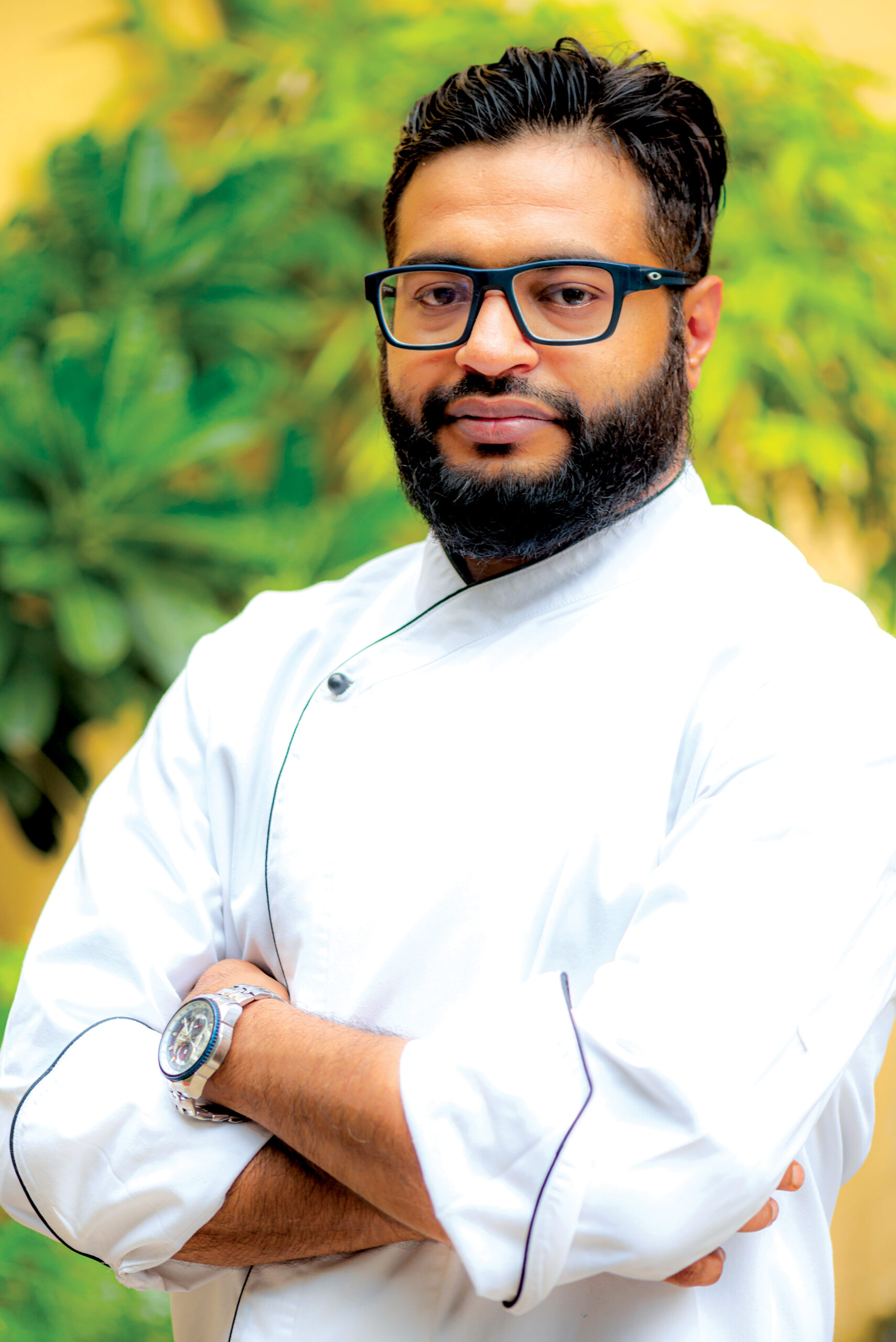
His grandfather taught Gordon Ramsay the secrets of dum cuisine. Chef Zoheb Qureshi hails from what is considered as the First Family of food in India. His grandfather, Chef Imtiaz Qureshi, is one of the two chefs to receive a Padma Shri honour and his father, Gulam Qureshi has been the brand custodian at Dum Pukht, ITC Maurya, Delhi for the last 15 years.

Zoheb’s preparations exemplify the philosophy of Giza-e-Khusus meaning cooking delicious food while retaining its nutritive value. He has taken upon himself the daunting task of running the first chef-led online food delivery format in the country, Cross Border Kitchens. He says, “I am on a mission to make people taste what authentic Nehari or Mirch Baigan ka Salan is or what an original dum biryani tastes like.”

In a candid conversation, he talks more about himself and his work:

Your philosophy of food?

It’s a common ground offering people a universal experience. It brings people together belonging to varied cultures and beliefs.

Your fav cuisine?

Awadhi

Your idol?

My father – Gulam Qureshi

Your fav spice?

Cardamom

Your hot selling dish?

Awadhi Gosht Biryani

Lessons learnt in the kitchen?

Every day is a new day in the kitchen that teaches you something new. However, my evergreen lesson that I stand by daily is to never go to the cooking range without all the ingredients.

How do you like to de-stress?

Listening to music calms me down.

How do you define yourself?

Someone who’s forever eager to learn & unlearn.

What are you passionate about?

About different techniques in cooking and travelling to new places to learn about its food culture.

Last meal on earth, what would you choose?

Phirnee

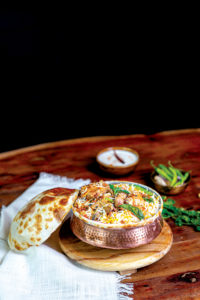
Recipe: Murgh Rampur Biryani

Ingredients:

Chicken (50 gm) piece        400 gm

Basmati rice                        250 gm

Brown onions                     25 gm

Desi ghee                           50 gm

Cloves                                4

Cinnamon sticks                 2

Bayleaf                                1

Green cardamom                 4-6

Cream                                 25 ml

Beaten curd                        75 gm

Salt                                     to taste

Yellow chilli powder            10 gm

Mace cardamom powder     15 gm

Ginger garlic paste              25 gm

Rose water                          5 ml

Kevda water                        5 ml

( screwpine)

Sweet ittar                          1 drop

Slit green chillies                25 gm

Mint leaves                          25 gm

Ginger julienne                   10 gm

Royal cumin seeds              2 gm

Lemon juice                        20 ml

Water                                  ½ litre

Whole wheat flour dough

(for lining the lid)      100 gm

Process:

Step 1 : Cooking of chicken

  • Marinate the chicken with Biryani masala powder, hung curd, rose water, red chilli powder and cook in tandoor
  • Cook the chicken with jhol, yellow chilli powder, mace cardamom powder, saffron, ittar, kewra and rose water.

Step 2 : Boiling rice

  • Wash, soak basmati rice for 10 minutes. Boil water in a pan and add the wholespices, salt to taste and lemon juice.
  • Add the rice and cook till 2/3rd done.

Step 3 : Cooking on Dum

  • Layer the chicken. Add a mixture of ghee and cream.
  • Garnish with mint leaves, ginger juliennes, brown onions and saffron dissolved in water.
  • Line the lid with flour dough and seal the vessel.
  • Put the vessel on an iron griddle and cook for 15 minutes.

Once the biryani is cooked, serve it with raw onions, lemon, chutney and raita.

source: http://www.thepatriot.in / The Patriot / Home> Specials / by Sharmila Chand / October 04th, 2019

Dum Pukht in Bengaluru embraces its Awadhi heritage with a revamped menu by Master Chef Ghulam Qureshi

Lucknow, UTTAR PRADESH / Bengaluru, KARNATAKA :

  • Restaurant : Dum Pukht
  • Cuisine : North Indian
  • Cost₹₹₹₹
  • Address : ITC Windsor hotel, Vasanth Nagar, SEE MAP

The restaurant is shedding its colonial hangover by dropping “Jolly Nabobs” from its title and focussing on biryanis and kebabs.

Master Chef Ghulam Qureshi | Photo Credit: Special Arrangement

ITC Hotels’ Dum Pukht restaurant is an institution with a storied legacy. At ITC Windsor in Bengaluru, the restaurant was called Dum Pukht Jolly Nabobs; for the past 25 years, it was known for its Anglo-Indian and colonial-era dishes. Think mulligatawny soup, pomegranate chops, and forest officer’s pulao. But now, with a menu curated by Master Chef Gulam M Qureshi, they are harking back to the brand’s Lucknowi roots. The restaurant is dropping “Jolly Nabobs” from its name and introducing some classic Awadhi dishes. Over a leisurely lunch, Qureshi treats me to the new menu, delighting me with tales of nawabs and begums. 

Chef Qureshi is the seventh generation chef from his family. He is the son-in-law of the pioneering chef Imtiaz Qureshi, who was awarded the Padma Shri for his contributions. The family has been cooking for the nawabs of Lucknow for 200 years. The chefs of Awadh invented the dum style of cooking and take great pride in their kebabs and biryanis.

The succulent Kakori kebabs

Our lunch begins with a selection of kebabs. The Kakori is, of course, legendary. Minced lamb, flavoured with cloves and cinnamon, are skewered and char grilled. Saffron completes the dish. The seekh nilofari kebabs are made of lotus stem and puffed lotus seeds. Spices like mace, green cardamom and herbs are used to add masala to the kebabs. We are also served the jumbo prawns cooked in the tandoor and then finished in a dum preparation. Flavoured with cheese and yoghurt, this dish is mild and delicate. 

The highlight of the meal is the murgh khushk purdah. The main chicken dish is brought to the table in a platter that is topped with the baked pastry, then carved at the table by the team of chefs.

“My forefathers have been making this dish since the 1820s. The nawabs used to farm the poultry at home, because they were very particular about the quality. On the day of the feast, the chicken was marinated for five or six hours. It was then cooked in the dum with the purdah,” Qureshi shares.

Jaitoon ka tel or olive oil, imported from West Asia, makes the dish light and silky. Under the pastry, succulent pieces of chicken, along with chunks of onions, tomatoes and pineapples, are enveloped in a gravy, which has notes of mace and star anise. It pairs very well with the warqi parantha. 

The specialty gucchi pulao

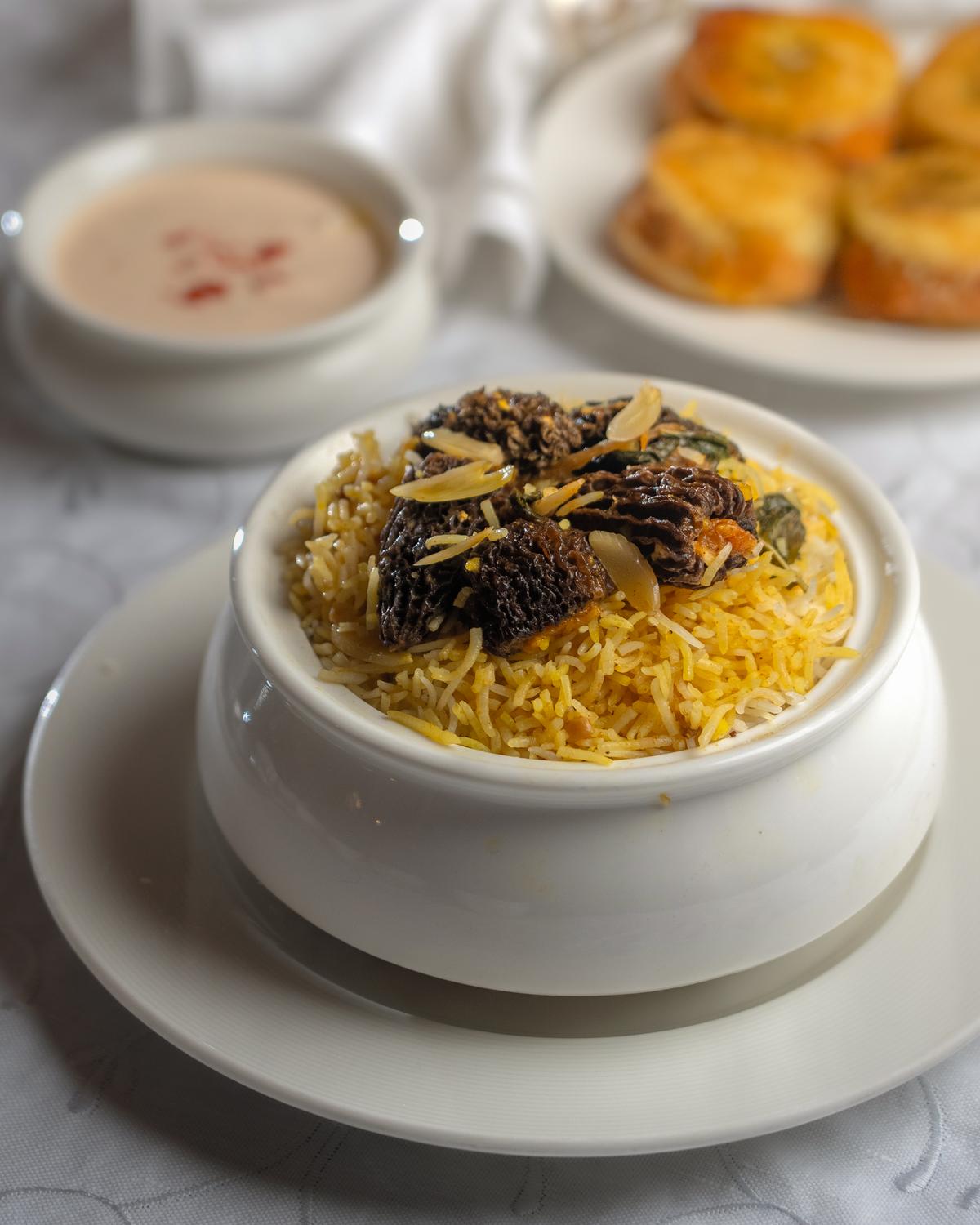
Try the gucchi pulao, made with morel mushrooms that are a delicacy from Kashmir. They are stuffed with cheese and cooked with basmati rice.

We end with shahi tukra and saffron rabri, topped with pistachios, almonds and a silver leaf. While the Anglo-Indian dishes may be missed, I won’t complain about the new direction taken by the restaurant because of the quality and authenticity of the dishes. 

Cost for two 6,000. At ITC Windsor. For details, call 8061402610

source: http://www.thehindu.com / The Hindu / Home> Food> Dining / by Anagha Maareesha / June 17th, 2024

Imtiaz Qureshi’s Extraordinary Stamp Collection Blends Art, Culture, and Innovation

Kasaragod, KERALA / Dubai, U.A.E. :

Dubai:

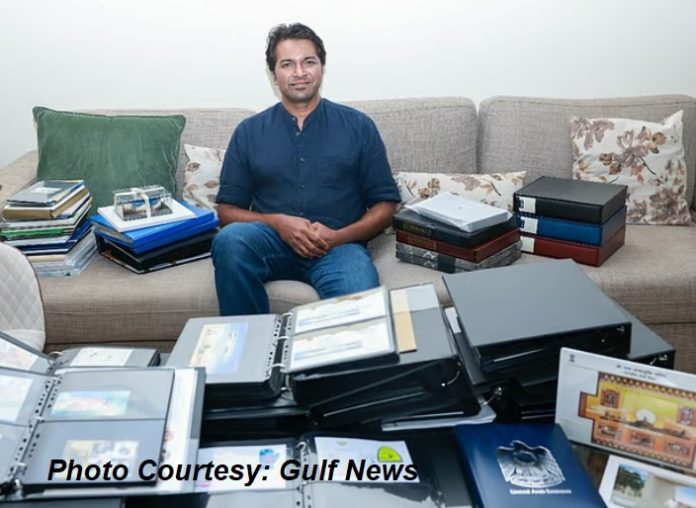
Indian expatriate and philatelist Imtiaz Qureshi has built a one-of-a-kind stamp collection that redefines the boundaries of design and material. With over 10,000 stamps gathered from more than 100 countries, Qureshi’s collection is a living archive of creativity and heritage.

His stamps go far beyond paper. Some are made from wood, silk, lace, metal, or even gold and diamonds. Others engage the senses through scents of coffee or chocolate. Qureshi’s favourites include a Bhutanese stamp embedded with a real seed, a Swiss lace stamp, a UAE stamp crafted with gold foil, and a diamond-studded edition from Dubai marking the UAE’s 50th anniversary.

Qureshi views each stamp as a storyteller capturing moments of history, culture, and technology. He says philately connects him to the evolution of human progress, from early postal systems to modern innovations in design. For him, collecting is not a hobby but a mission to preserve global narratives in miniature form.

He regularly exhibits his collection at cultural events and local forums across the UAE. His aim is to inspire young collectors and revive interest in philately, especially among students who are growing up in the digital era.

Qureshi’s journey reflects the spirit of patience, curiosity, and respect for craftsmanship. His stamps celebrate both cultural diversity and creative innovation, proving that even a small piece of paper—or lace, or gold—can carry the weight of history and imagination.

source: http://www.radiancenews.com / Radiance News / Home> Arts & Culture> Latest News / by Radiance News Bureau / October 10th, 2025