Tag Archives: Maruthanayagam Pillai

Maruthanayagam, alias Yusuf Khan, who equalled Clive and Hyder Ali in warfare

Panniyur (Ramanathapuram District) / Madurai, TAMIL NADU :

He was a servant of the British East India Company and the Nawab of the Arcot before turning against them.

He started his military career as Yusuf Khan, a Muslim convert, and fought in the early wars between the English and the French for the possession of southern India. It was through a conspiracy that the British captured him.
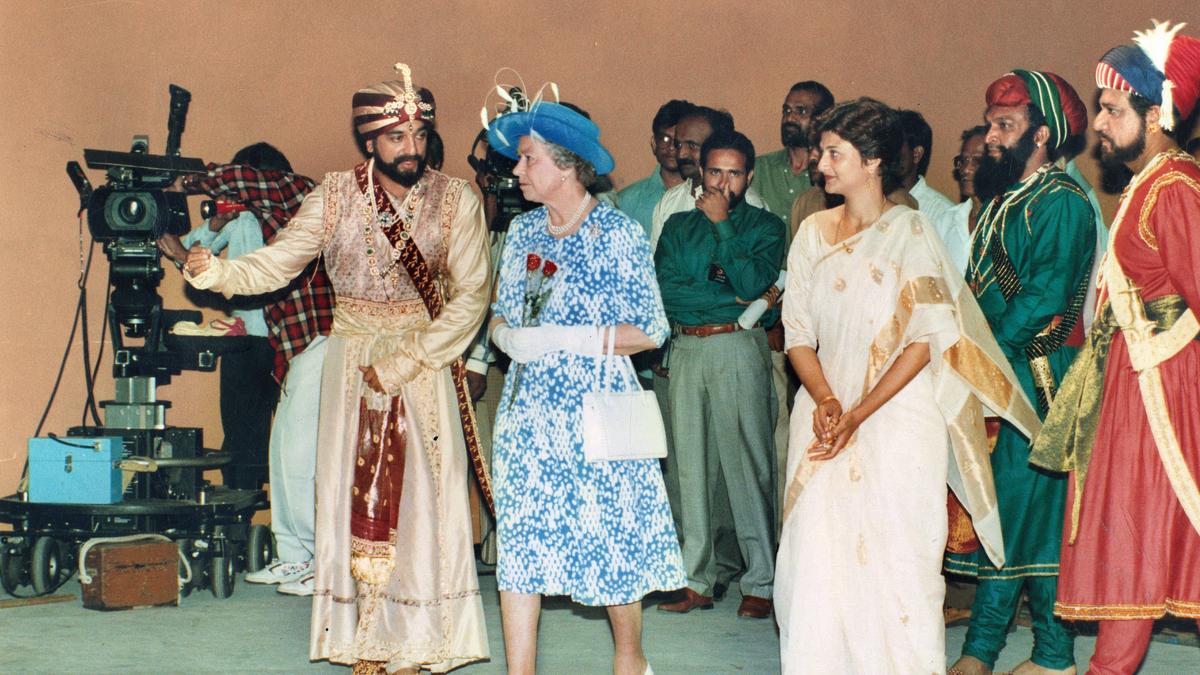
A surprise engagement: Kamal Haasan, director and actor of the film Marudhanayagam, explains a point to Queen Elizabeth on the sets on October 16, 1997. The Queen launched the shooting. | Photo Credit: THE HINDU ARCHIVES

Many were surprised when the visiting Queen Elizabeth launched actor Kamal Haasan’s dream film, Marudhanayagam, in 1997. It was a time when there was a demand for an apology for the Jallianwala Bagh massacre. But Maruthanayagam was a servant of the British East India Company and the Nawab of the Arcot before turning against them. It is a misnomer to call him Maruthanayagam as he built his military career as Yusuf Khan, a Muslim convert.

“Muhamed Yusuf — better known in his time as Yusuf Khan — was by far the ablest of the Indian soldiers who fought in the early wars between the English and the French for the possession of Southern India,” writes S.C. Hill, author of Yusuf Khan: The Rebel Commandant. Hill, an Indian Educational Service officer, was in charge of the records of the Government of India. Published in 1914, the book draws heavily on the Madras Records, the Orme Collection of Manuscripts in the India Office, The French and Dutch Archives, the Tamil poem, The War of the Khan Sahib, and documents at the British Museum.

A man of genius

“Yusuf Khan was, in fact, of the same type as Haidar Ali [Hyder Ali] — one of those men of genius who naturally comes to the front in times of great social and political unrest. Had he been left without outside interference to settle scores with his quarrel with his native suzerain, like Haidar Ali with the Raja of Mysore, there is absolutely no doubt that he would have succeeded in establishing his independence,” writes Hill. Historians depended on the memoirs of Ponnusami Tevan, manager of the Ramnad Zamindari, to trace the background of Maruthanayagam Pillai. The title, Pillai, became part of his name as he was born in the Vellala caste at Paniyur in Ramanathapuram district.

In his youth, he was wild and disobedient to his parents, and ran away to Pondicherry and served under a European for three years and a half. Then, he was dismissed for theft. According to the French account, his ears were cut off as a punishment. Hill, however, dismissed the accusation as groundless, saying it was never mentioned until after the death of Yusuf Khan and then only by those who, if not actually hostile, were certainly biased against him.

After leaving Pondicherry, he joined the army of the King of Thanjavur and subsequently Nawab Muhammed Ali of Arcot. According to another account, he joined another European, Brunton, after his dismissal. Brunton had him instructed in several languages. He entered the services of the British by joining a company of sepoys which he had raised himself in Nellore, under Robert Clive, shortly before the Battle of Kaveripakkam.

According to British officer Major-General Stringer Lawrence, Yusuf Khan was “brave and resolute but cool and sensible in action — in short, he is a born soldier and better of his colour I never saw in the country.”

Freed from trammels

It is not clear why he chose to become a Muslim, and Hill has a theory. Maruthanayagam Pillai wanted to avoid what befell Aryanatha Mudali, the great general of the 16th Century and founder of the Poligar (Palayakar) system in Madurai. J.H. Nelson, the author of The Madura Country Manual, says Aryanatha Mudali, despite being a great warrior and administrator, was dissuaded by his family from becoming the king because he was a Vellala. “For Yusuf Khan then to rise to the position to which he attained, it was necessary for him to be freed from whatever trammels might be imposed upon him by his religion. This was effected by conversion — voluntarily or by force is unknown — to Muhammadanism,” writes Hill. But the Nawab objected to the elevation of Yusuf Khan, though to a Muhammadan, the “lowly birth” was “no hindrance to his success”.

Appointed Governor

Yusuf Khan, however, was appointed a Governor by the British. He ensured peace in the provinces of Madurai and Tirunelveli, which belonged to the Nawab, but had been placed by him under the control of the Madras Council.

“The name of this hero, for such he was, occurs almost as often in the pages of the English historian (Robert Orme) as that of Lawrence of Clive,” Sir John Malcolm writes about Yusuf Khan, who later rebelled against the Nawab and declared his alliance to the French. This led to a war between Yusuf Khan and an alliance of the British and the Nawab, and the seizure of Madurai. The British captured Yusuf Khan through a conspiracy and one of the participants in the conspiracy was Srinivasa Rao, his diwan and chief adviser.

The British officer Marchand, who went with the conspirators, says he was seized in his darbar. But the Dutch account says the capture occurred in a private room. Bishop Caldwell, quoting a native account, says he was arrested at his prayers by Moossoo Marsan and his Hindu diwan Srinivasa Rao “He begged them to kill him there and then rather than deliver him to the Nawab. He was carried under guard to Marchand’s quarters,” says Hill.

On October 15, 1764, the Nawab wrote to Madras that the “Rebel was hung at five o’clock in the evening, which struck terror into the hearts of our enemies”. His body was dismembered. The head was sent to Tiruchi, the limbs were sent to Thanjavur, Palayamkottai, and Travancore. The trunk was buried at Sammatipuram, where the Khan Sahib’s ‘pallivasal’ still stands.

source: http://www.thehindu.com / The Hindu / Home> News> India> Tamil Nadu> In Focus / by B. Kolappan / August 09th, 2024
The ballad of the Khan Sahib

Madurai, TAMIL NADU :

KhanSahibMPOs07mar2018

One explanation for Kamal Haasan launching his political party in Madurai was that his hero was Maruthanayagam Pillai, soldier, rebel and valiant son of the district.

It was about this hero that he wanted to make a film extraordinaire several years ago.

I was on the fringe of the project as, coining a term, the factioneer, engineering fact with fiction.

Part of the fiction is the name Maruthanayagam. More factual is the name Yusuf Khan, and it’s as Yusuf Khan he’s a military hero of mine. Much has been written about this soldier of fortune, but the Tamil ballad Khan Saibu Sandai (The War of Khan Sahib) offers much more personal detail. In it Maruthanayagam finds no mention; who it sings of is “the hero who belongs to the Alim family”. Adding, “…let me sing the story of the brave warrior of Sikkandar Sahib”.

Whatever his lineage, it is agreed he ran away from Panaiyur in the Pandya heartland and worked with Jacques Law in Pondicherry c.1744, where, possibly, he learnt his soldiering.


Then we hear of him with a troop of Nellore lances-for-hire teaming with Chanda Sahib and the French to besiege Robert Clive in 1751 at Arcot. Seeing him in action, Clive bought over the Nellore Subedar, as he called Yusuf Khan, who the next year helped Clive win at Kaveripakkam. Later, after action near Srirangam, Clive was told by a friend, “Your Nellore sepoys are glorious fellows, their Subedar as good a man as ever breathed. He is my sole dependence.”

Next, when the French besieged Nawab Wallajah and his British protectors in Trichy, Yusuf Khan lost not one food convoy from Madras over three months. Stringer Lawrence, ‘The Father of the Indian Army’, wrote, “He is an excellent partisan… brave and resolute, but cool and sensible in action – in short, a born soldier, and better of his colour I never saw … He never spares himself, but is out on all parties…” All this led to Lawrence recommending Yusuf Khan being made “Commandant of all the Sepoys” in 1754 and for a gold medal from the Company.

With the Nawab and the Company unable to collect revenue from the southern districts they had won, Khan Saheb who had been responsible for the gains was appointed Governor of Madurai.

Over the next three years, he subdued the local chieftains, collected revenue and earned a reputation for outstanding administration. But Yusuf Khan could never get away from soldiering. When Lally besieged Madras in 1758-59, he failed, because Yusuf Khan, racing up from Madurai, cut almost daily over two months Lally’s supply lines. Lally was to say, “They were like the flies, no sooner beat off from one part, they came to another.” Yusuf Khan was a master of guerilla warfare.

With such praise, Yusuf Khan began growing more ambitious. When he found revenue he collected going mostly to Wallajah from the English, he decided to rebel. He hoped for support from Hyder Ali (which never came) and from the French, who supplied a few hundred mercenaries led by a Marchand.

From August to November 1763 the English besieged Madurai, constantly shelling it, but unable to breach Yusuf Khan’s defences. They then withdrew to regroup. In February 1764, they recommenced the siege, but without significant progress. Yusuf Khan sent them a message early in April 1764: “As long as I have a drop of blood in my body I shall never render the place to nobody.”

English attack after attack was beaten back, many a British officer, once his comrades, killed. A British officer wrote: “You’ll easily form an idea of Yusuf Khan’s abilities from his being able to keep together a body of men of different nations, who with cheerfulness undergo the greatest miseries on his account; wretches who have stood two severe sieges, one assault and a blockade of many months.”

By September 1764 Yusuf Khan was prepared to negotiate surrender terms. The English insisted on unconditional surrender. And Marchand and his ilk, impatient with the negotiations (or heavily bribed), acted, arresting Yusuf Khan and surrendering Madurai on October 15, 1764.

The Company wanted Khan Saheb brought to trial in Madras, but Lawrence ordered him given to the Nawab who immediately hanged him and desecrated the body. He was buried where he was executed, two miles west of Madurai, his tomb at Samattipuram a dargah to some, a pallivasal (mosque) to others, but venerated by all in the Pandya country.

Footnote: A dissertation by Dr Asadulla Khan, then of New College, discusses Yusuf Khan’s family. It would appear that he married a Christian girl, Maza, c.1759; father, very likely Portuguese or French, her mother, possibly, a Maravar, a community which she often interceded for with Khan Saheb. They had a son, Mohammed Sultan, born c.1762. As a young man he joined Hyder Ali’s army. Mother and son, it is suggested, sought refuge in Mysore after fleeing Madurai.

The boats on the Canal

It was a lively presentation that Manohar Devadoss made recently at the Madras Literary Society on his life with books, most he’d illustrated. One striking illustration at the presentation is what I feature today; a boat in full sail on the Buckingham Canal. Mano says he saw this long country boat near Pulicat in 1966 and thought it “an artist’s delight”. His sketch became the first subject of “our heritage greeting card project,” ‘our’ being wife Mahema, who used to write the text for the illustrations he did for greeting cards they sold for charities.

Mahema concluded that year: “These boats are very picturesque, with sails billowing in the breeze. When there is no breeze, the boats are sometimes dragged by the boatmen from along the banks, their bare bodies glistening in the sun. As the boats approach the city, the sails are lowered so that they could pass under the numerous bridges. The men then punt the boats in rhythm to their melodious folk songs.” Taken up as he was with them, Mano did his first oil painting that year, based on his sketch, and several water-colours in later years, one of which I feature.

The chronicler of Madras that is Chennai tells stories of people, places, and events from the years gone by, and sometimes from today.

source: http://www.thehindu.com / The Hindu / Home> Society> Madras Miscellany – History & Culture / by S. Muthiah / March 06th, 2018