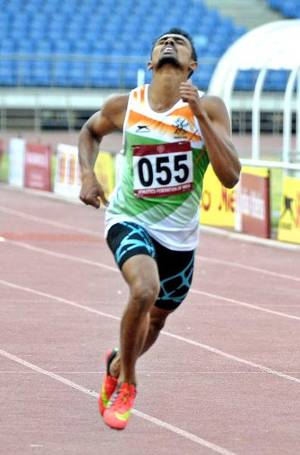
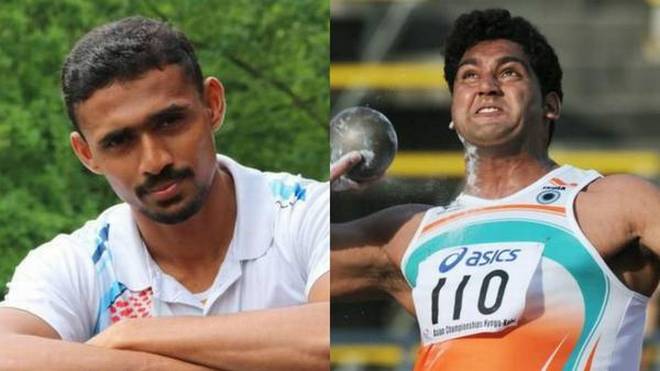
Tag Archives: Mohammed Anas

Madrasa with Jewish roots lights up a new path in western UP

Sambhal District, UTTAR PRADESH :

New Delhi : 

A family of Bani Israel (Sons of Israel), running one of the oldest madrasas in India may sound unbelievable. But in Sambhal district of West Uttar Pradesh, a nondescript locality, Hilali Sarai, boasts of such a seminary run by a family that has roots in ancient Israel.

Madrasa Sirajul Uloom, named after Maulana Siraj Ahmed Israili, who was a renowned aalim of his time and among few Islamic scholars who backed Sir Syed Ahmed Khan, the founder of a modern madrasa (later Aligarh Muslim University), is run by Mohammed Mian Israili Qasmi, the representative of living generation of his family.

The madrasa is affiliated to UP Madrasa Board and runs both traditional Dars-e-Nizami syllabus and modern curriculum prescribed by the board that includes compulsory study of maths, english, hindi and science. Such madrasas are also called ‘model madrasas’ as they are following the government model of madrasa modernisation.

The Israili family traces its lineage to the Jewish companion of Prophet Muhammed, Abdullah bin Salam, who had converted to Islam during the lifetime of the Prophet. Nevertheless, the family has been maintaining its Bani Israel cultural identity all through history.

“The historical records say that our ancestor Abu Ishaque Abul Aja’ib Shah Muhammad Hilali came to India during the time of Mughal Emperor Akbar when the latter started Deen-e-Ilahi and a horde of Islamic scholars descended from Arabia to guide the ‘misguided’ Emperor.

Historian Abdul Qadir Badayuni has mentioned Shah Hilali. He initially settled in Fatehpur Sikri near Agra and later on the insistence of Akbar himself, he moved to Sambhal. Thus, this place came to be known as Hilali Sarai. He had established his maktab (school) here, as was the tradition of the time that scholars used to start learning centres wherever they settled. Since then, our family has been running an educational house here,” says Mian Israili Qasmi, detailing the family history of the Israilis.

A research paper in the Interdisciplinary Journal of Jewish Studies by researcher on Jews in South Asia, Navras Jat Aafreedi, proves the authenticity of Mian Israili’s claim.

“There is a Sunni Muslim clan called Bani Israil in Sambhal (District Mo-radabad) and Aligarh in Uttar Pradesh, members of which consider themselves to be descendants of a Jewish sahaabi (companion of the prophet Muhammad) Hazrat Abdullah Ibn-i-Salaam. They claim that their ancestors settled in India a millennium ago to propagate Islam. Members of this clan generally use Israili as their last name. They reside, in both Sambhal and Aligarh, in a locality, each called Bani Israil Mohalla or Mohalla Bani Israilaan. Many from this clan migrated to Pakistan after its creation in 1947…” writes Aafreedi.

Similarly, one more scholar Joshua M. Benjamin, the author of The Mystery of Israel’s Ten Lost Tribes and the Legend of Jesus in India (2001), mentions having met an Aligarh Muslim University Professor with the Hebrew sounding name Shimoni Israili, a member of this clan.

Similarly classical historian Abdul Qadir Badayuni, writer of notable Muntakhab-ut-Tawarikh, the history of early Mughal period, mentions Shah Hilali Israili as a renowned Islamic scholar of Mughal period. Shah Hilali in Sambhal in fact taught him in the same maktab, which is today Sirajul Uloom.

Narrating more history of the madrasa, Mian Israeli says that as the Mughal rule went into sunset, the madrasa was patronised by Nawab of Hyderabad. The patronage lasted till the fall of Nawab’s Nizamat after the Partition of India.

“Meanwhile, one notable change took place. When Maulana Siraj Ahmed Israeli refused to sign a fatwa against Sir Syed Ahmed Khan, he became very pleased with Maulana and offered him to join as faculty in newly opened Mohammedan Anglo Oriental (MAO) College. Maulana didn’t go himself but sent his son Maulana Khalil Ahmed Israeli to join the college as Professor of Arabic. Maulana Khalil was later conferred the title of Shamsul Ulema (a coveted honour) by the Colonial British government for this contribution in the field of education. While at MAO college, Maulana established the madrasa in a formal registered body in 1902. Since then, it’s been running in a similar fashion,” says Mian Israeli.

Mian Israeli maintains that the madrasa has always maintained a progressive outlook and has guided the Muslim community in very practical way.

“The scholars and patrons of the madrasa have always taken the lead in advising Muslims of siding with rationality and minimising both personal and social conflict. That’s you will not find any controversy ever attached with this seminary. In fact, the stellar history of the madrasa has remained obscured because we haven’t chased limelight and few curious minds have cared to know the silsila (lineage) of scholarship,” says Mian Israili.

Mian Israili lists Moulana Muhammad Manzoor Nomani, Moulana Muhammad Hayat Sambhli, Ghazi Muhammad Aazam, and freedom fighter politician Maulana Ismail Sambhali, among others as part of the blood-line.

Maulana Ismail Sambhali was a noted figure of Jamiat Ulema- e Hind, a body of Indian Islamic scholars who were against division of India on religious lines. Maulana Ismail even fought 1946 election against Muslim League candidate and was among the chosen few who won on the Congress ticket from a reserved Muslim seat.

Maulana Manzoor Nomani, however, however, adopted a different way. He is credited to have turned Syed Abul Ala Maududi, who was a progressive and modern Muslim journalist-writer, into Maulana Maududi, a hardcore religious figure and both of them floated Jamaat- e-Islami. Manzoor Nomani also emerged as one of the tallest Islamic scholars of India in 20th century, and is regarded as an authority on Hadith. Unlike Maududi, he didn’t go to Pakistan and got himself attached with Lucknow-based seminary Nadwatul Ulema. In late 1970’s and 1980’s, his books on Ayatollah Khomeini and Islamic Revolution created a storm in the Indian Muslim community and they are said to be one of the causes of sectarian violence in Lucknow.

Mian Israili did not comment on Nomani’s views, as “they were personal to him”. “As I said, our seminary has always propagated the route of bridging gaps and persuading people to come closer rather than splitting apart. People can do anything in their individual capacity and scholarship,” says Mian Isarili.

He insists that the seminary must be viewed through his views on burning subjects such as triple talaq, halala, etc. So, what are his views? “I think the arbitrary manner of triple talaq is absolutely contrary to the spirit of Quran and is malignant. Halala is haram,” he stresses.

Coming back to the history of the madrasa, Mian Israili says that after the end of Hyderabad’s Nizamat, the madrasa was recognised by the government of India. “However, it was only in 1990’s that it was properly affiliated to the UP-Madrasa Board and it started getting government aid as slated for the seminaries,” says Mian Israil.

According to him, as part of the Madrasa Board, the seminary has to teach compulsory subjects like hindi, maths, english and science. “As part of the Board affiliation, the government also appoints 12 teachers for primary and junior high school level. All these teachers have to have knowledge of Urdu as compulsory as the medium of the madrasa is Urdu,” he says.

When reminded that how come the students taught in Urdu medium compete with those being taught in Hindi or English mediums, he says that keeping this in mind, the teachers are urged to teach Science and Maths in English so that students who want to pursue further studies in a science subject and they might join other schools. Only those who want to pursue religious studies and languages such as Arabic and Persian may stay in the seminary.

“Most of our students pass out after Class 8 and opt for mainstream education in regular government and private schools. Only those boys and girls who want to pursue Theology and languages go for further classes,” says Mian Israili.

According to Israili, there are around 800 students enrolled with the madrasa. Out of them, 250 are girls. The madrasa has residential facilities for 50 students.

“For a modern madrasa, the basic requirement is resources. As being a government-aided institution, we certainly get some teachers on government pay scale, but we don’t get other facilities like building, hostel, classroom, ground and other facilities. For that, we have to depend on chanda (collection and donation from the community),” says Mian Israili.

source: http://www.daijiworld.com / DaijiWorld.com / Home> National-World / by Mohammed Anas / March 15th, 2022
Asian Games: India Clinch Silver in Men’s 4x400m Relay

KERALA :

Jakarta, INDONESIA :

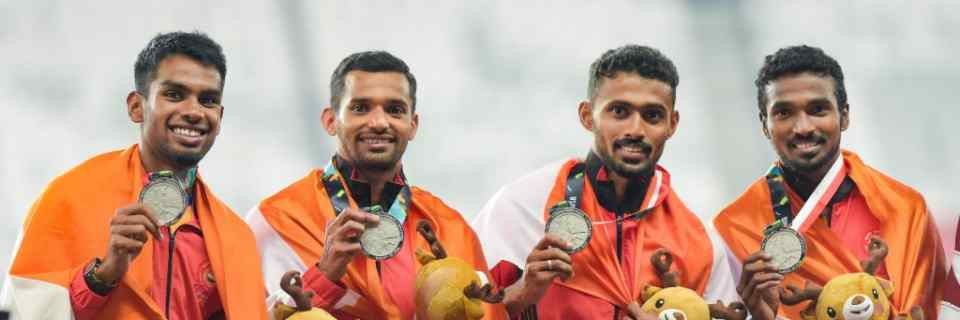
The Indian team, which comprised Kunhu Muhammed, Dharunn Ayyasamy, Mohd. Anas and Arokia Rajiv, clocked 3:01.85 minutes. (Photo: PTI)

Snapshot
  • India won silver in the men’s 4x400m relay event of athletics at the 18th Asian Games.
  • The Indian team, which comprised Kunhu Muhammed, Dharunn Ayyasamy, Mohd. Anas and Arokia Rajiv, clocked 3:01.85 minutes.
  • Qatar won gold in an Asian record time of 3:00.56.
  • Japan took the bronze with a timing of 3:01.94.

___________________________________________________________

India’s 4x400m men’s relay team bagged silver in the final event of athletics at the Asian Games in Jakarta on Thursday.

The Indian quartet of Kunhu Muhammed, Dharunn Ayyasamy, Mohd. Anas and Arokia Rajiv clocked 3:01.85 to finish behind Qatar who won gold in an Asian record time of 3:00.56.

Japan took the bronze after clocking 3:01.94.

Kunhu Muhammed ran the first lap, followed by Dharun Ayyasamy but by the time the baton reached Anas, Qatar was pulling away. The Indian team was placed fourth at that time but Anas pulled off a great run to pass two runners and Arokia Rajiv managed to maintain the second position

India had finished fourth in this event in the 2014 Asian Games.

(With inputs from PTI)

source: http://www.thequint.com / The Quint / Home> Asian Games / August 31st, 2018

22nd Asian Athletics C’ship: India’s Muhammed Anas grabs gold

Nilamel (Kollam District) KERALA :

MdAnasMPOs11jul2017

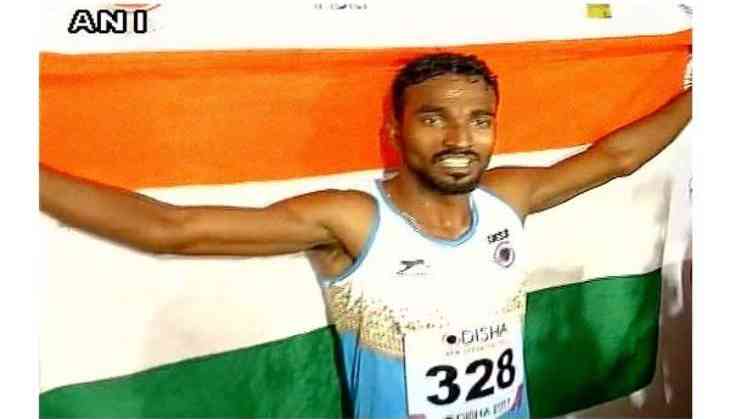
India’s Muhammed Anas won a Gold and Rajiv Arokia took a Silver in Men’s 400m event at the 22nd Asian Athletics Championship here.

“I am very happy, this medal win will further motivate us,” Anas said, after achieving the feat.

Indian sprinter Dutee Chand won Bronze medal in 100m Women’s finals, while Nirmala Sheoran won gold in women’s 400m.

Tejinder Pal won Silver in shot put category.

India’s Ajay Kumar Saroj won gold in Men’s 1500m event, while P.U. Chitra won gold in women’s 1500m event.

Unfortunately, Indian sprinter Amiya Mallick got disqualified from the 100m men’s semi-final for a false start.

The Asian Championships winner gets automatic berth for the World Championships to be held in 22ndWorld Championships

-ANI

source: http://www.catchnews.com / Catch News / Home> Other Sports News / by News Agencies / ANI / July 08th, 2017

Anas sets a new National mark

KERALA :

Peerless: Muhammed Anas proved he is the master of the one-lap race in the country, by winning in a record time on Monday.

New Delhi :

The 400m specialist qualifies for the World Championship

Muhammed Anas qualified for the World Championship in style by breaking his own National record with a time of 45.32 seconds in the men’s 400 metres in the third Indian Grand Prix athletics meet at the Nehru Stadium here on Monday.

The 22-year-old beat Arokia Rajiv by one second, as he erased his mark of 45.40 set in Poland last year, a time that helped him qualify for the Rio Olympics.

Like everyone, Anas was surprised by the time and record. He said that the hard work for the past few months back home in Kerala had helped him tune nicely. It is a nice progression in preparation for the Federation Cup and the Asian Championship scheduled over the next two months, before the World Championship in August in London.

It was also not exactly a surprise as Anas had clocked 45.69 in the Asian Grand Prix in Chinese Taipei, after having missed the first two meets in China owing to visa issues. He had clocked 45.89 in the first Indian Grand Prix in Patiala and had skipped the second in Delhi on May 11.

Jisna Mathew, a trainee of P.T. Usha, beat favourite M.R. Poovamma by eight-hundredth of a second with a time of 52.65 in the women’s race. The World Championship qualification standard of 52.10 was too stiff for her.

While Husandeep Singh of Chandigarh won the men’s 100 metres in 10.69 seconds, Dutee Chand could not work up any magic while beating Merlin Joseph with a time of 11.30 seconds in the women’s race.

In the absence of World junior champion Neeraj Chopra, Davinder Singh asserted his ability once again, after having clinched his sport for World Championship in Patiala, by winning the men’s javelin with a 81.53 metres in his fifth throw.

The results: Men: 100m: 1. Husandeep Singh 10.69s, 2. Safikul Mondal 10.76, 3. Mohammed Sadath 10.82. 400m: 1. Muhammad Anas 45.32 (NR, old: 45.40), 2. Arokia Rajiv 46.32, 3. Sachin Roby 47.18. 800m: 1. Ajay Saroj 1:52.91, 2. Arun Kumar 1:53.52, 3. Shashi Singh 1:54.21. 5000m: 1. Md. Yunus 14:50.93, 2. Man Singh 14:51.12, 3. Kalidas Hirve 14:51.76. 110m hurdles: 1. Akhil 14.44, 2. T. Balamurugan 14.58, 3. D. Sreekanth 14.82.

Long jump: 1. M. Sreeshankar 7.65m, 2. M. Silambarasan 7.42, 3. S.P. Laxman 7.33. Triple jump: 1. Arpinder Singh 16.23, 2. Rakesh Babu 15.09. Discus: 1. Baljinder Singh 53.03, 2. Parshant Mori 52.07, 3. Praveen Kumar Nehra 47.52. Shot put: 1. Jasdeep Singh 18.41, 2. Jaspal Singh 16.33. Javelin throw: 1. Davinder Singh Kang 81.53, 2. Vipin Kasana 77.08, 3. Shivpal Singh 74.98.

Women: 100m: 1. Dutee Chand 11.30s, 2. Merlin Joseph 11.72, 3. Himashree Roy 11.95. 400m: 1. Jisna Mathew 52.65, 2. M.R. Poovamma 52.73, 3. Debashree Mazumdar 53.69. 100m hurdles: 1. Purnima Hembram 13.79, 2. Liksy Joseph 14.69, 3. Niksy Joseph 14.83. Long jump: 1. Anjali Sahani 5.11, 2. Shiksha Singh 4.19. Discus: 1. M. Karuniya 41.06, 2. Sonal Goyal 37.97. Javelin throw: 1. Annu Rani 5.41, 2. K. Rashmi 50.65, 3. Priyanka 46.69.

source: http://www.thehindu.com / The Hindu / Home> Sports> Athletics / Kamesh Srinivasan / New Delhi – May 15th, 2017

Anas bags gold at Taipei City

KERALA :

Taipei City:

Muhammed Anas and Om Prakash Karhana.

India had won seven medals in the first leg on April 24 and six (1 gold, 4 silver, 1 bronze) in the second leg.

Muhammed Anas got over the disappointment of missing out on the first two legs of the Asian Grand Prix and won the 400m gold in the third leg here on Sunday with an impressive 45.69s, just 0.19s off the World Championships qualifying time.

This was the national record holder’s first race of the season after he and M.R. Poovamma were denied visas by China for the Asian GP’s two earlier legs in Jinhua and Jiaxing.

“I missed the qualification time narrowly but it will come soon,” the 22-year-old, whose national record of 45.40s in Poland last year earned him a Rio Olympics slot, told The Hindu over phone.

Om Prakash Karhana, also a National record holder, won the shot put gold with a 19.58m.

Jinson Johnson and Asian champion Tintu Luka were both beaten at the tape and had to settle for silver in the men’s and women’s 800m.

Dutee Chand in the 100m and National record holder in shot-put Manpreet Kaur were the others to win silver medals. Dutee’s 11.52s was her season’s best.

Neeraj Chopra, the under-20 World champion who qualified for the World Championships with an 82.32m at the second leg in Jiaxing three days ago, took the men’s javelin bronze while Asian Games bronze medallist Poovamma picked up the women’s 400m bronze in 53.11s.

The results: Men: 100m: 1. Haiyang Xu (Chn) 10.35s, 2. Yaspi Boby (Ina) 10.39, 3, Saad Hassan (Mdv) 10.40; 8. S. Vidyasagar (Ind) 11.18. 400m: Muhammed Anas (Ind) 45.69s, 2. Cong Lich Quach (Vie) 46.66, 3. Mikhail Litvin (Kaz) 47.03. 800m:1. Indunil M. Herath (Sri) 1:51.34s, 2. Jinson Johnson (Ind) 1:51.35, 3. Mostafa Ebrahimi (Iri) 1:52.66. Triple jump: 1. Shu Cao (Chn) 16.21m, 2. Pratchaya Tepparak (Tha) 15.89, 3. Kuei-Lung Li (Tpe) 15.85; 5. Rakesh Babu (Ind) 15.72. Javelin: 1. Huang Shih-Feng (Tpe) 80.77m, 2. Chao-Tsun Cheng (Tpe) 79.93, 3. Neeraj Chopra (Ind) 79.90; 5. Ravinder Singh Khaira (Ind) 73.81. Shot put: 1. Om Prakash Singh (Ind) 19.58m, 2. Jiaxing Wu (Chn) 19.21, 3. Ali Samari (Iri) 18.68.

Women: 100m: 1. Viktoriya Zyabkina (Kaz) 11.34s, 2. Dutee Chand (Ind) 11.52, 3. Tu Chinh Le (Vie) 11.74; 10. Reena George (Ind) 12.21. 400m: 1. Elina Mikhina (Kaz) 52.55s, 2. Thi Lan Quach (Vie) 52.96, 3. M.R. Poovamma (53.11). 800m: 1. Gayanthika Thushari (Sri) 2:03.87s, 2. Tintu Luka (Ind) 2:03.97, 3. Nimali Waliwarsha (Sri) 2:06.30. Long jump: 1. Thi Thu Thao Bui (Vie) 6.41m, 2. Xu Xiao Ling (Chn) 6.35, 3. Liou Ya-Jyun (Tpe) 6.30, 4. V. Neena (Ind) 6.24. Shot put: 1. Jia Yuan Song (Chn) 17.46m, 2. Manpreet Kaur (Ind) 17.38, 3. Eki Febri Ekawati (Ina) 15.16.

source: http://www.thehindu.com / The Hindu / Home> Sport> Athletics / by Sport Bureau / Taipei City – April 30th, 2017