Tag Archives: Mohammed Ayazuddin Patel

The Bahmani remains

KARNATAKA :

A short excursion through the towns of Bijapur, Gulbarga, Bidar and Yadgir in north-eastern Karnataka can turn into a marathon heritage walk with serendipitous sightings of monuments from the medieval era.
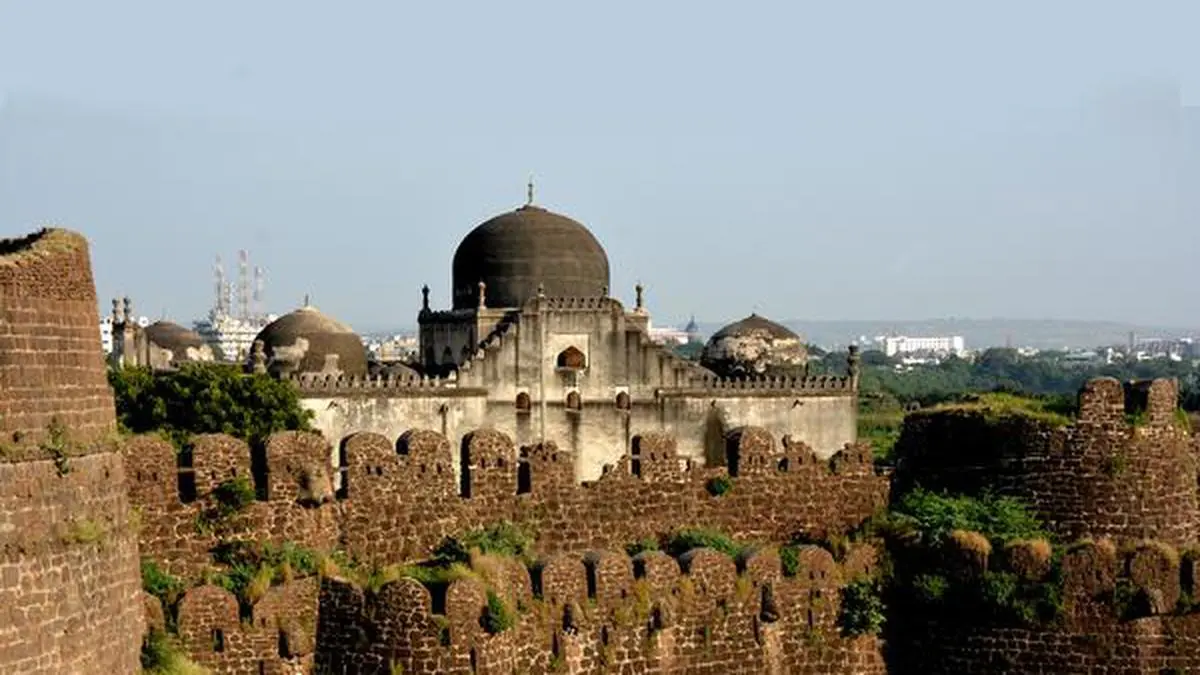
The Gulbarga fort and the Jama Masjid inside it.

SARMAST is said to have been the first Sufi to have come to the Deccan. He settled down in what is now the outskirts of Sagar village in Yadgir district of Karnataka. His grave is now venerated as a dargah. Rocky hillocks with generous splashes of greenery run along the road leading to Sagar from Gulbarga, a distance of 90 kilometres, belying the strong notion that all of the Hyderabad-Karnataka region is dry and dusty.

Tajuddin Dervish, the keeper of the holy grave, sat outside the arched entrance smoking a beedi. As we entered the dargah, we struck up a conversation with him about Sarmast. He recalled the legend, which must have got corroded by retellings over generation. In this tale, the necromancer Karmatgaar, who was up to mischief all the time, flew across the skies and disturbed the Sufi’s meditation. Enraged, Sarmast flung him across the Deccan plateau. In this fantastic tale, the goddess Yellamma (who is worshipped in the northern parts of Karnataka) also makes an appearance; her role is one of heroism. A temple supposedly dating back to the time of the incident is dedicated to her at Sagar.

If we link these hagiographical stories to actual events as the historian Richard M. Eaton has done in Sufis of Bijapur, 1300-1700: Social Roles of Sufis in Medieval India , it is certain that Sarmast was part of the raiding parties from the north sent by Alauddin Khalji (r. 1296-1316), who made forays into the Deccan and further south. The Deccan later became a part of the expanding Delhi Sultanate under the rule of the Tughlaqs. A bloody battle is supposed to have taken place at the site of Sarmast’s dargah, and many warriors were buried where they fell. The large circular area around the open grave of the saint is a medieval graveyard.

Unnamed tombs, locally called gumbad s, in various states of decrepitude and portions of walls with vestiges of fine carvings lie scattered around the area. Tomb raiders, probably lured by stories of treasures, have broken the graves inside these sepulchres. In the town of Sagar, there is a single-arched gateway so broad that an elephant can pass through it. A magnificent and well-maintained tomb on an imposing platform lies on the path a little ahead, next to a baoli (stepwell). None of these historical structures come under the purview of national or State-level archaeological conservation authorities.

The Bahmani sultanate

A few decades after the rulers from the north made forays into the Deccan, another Sufi saint, Sheikh Sirajuddin Junaydi (d. 1380), gained prominence. He blessed Alauddin Bahman Shah (r. 1347-1358), who broke away from the Tughlaq empire to establish the first independent Bahmani Sultanate in 1347, thereby inaugurating the rule of Muslim kings in the Deccan. While Junaydi’s tomb, marked by two imposing minarets, has flourished and is venerated to this day in Gulbarga, the tomb of Alauddin Bahman Shah is empty and the small compound in which it is situated is surrounded by illegal constructions.

Basavanappa, employed by the State Archaeological Department, guards the four Bahmani-era monuments. He said: “This is the man whose descendants built so many grand monuments. Guarding these gives us our daily bread and I have the responsibility of safeguarding his tomb.”

Alauddin Bahman Shah’s rule was brief. The moving of the capital from Daulatabad to Gulbarga, after severing links with the Delhi Sultanate, marked his reign. He also set up a dynasty that lasted two centuries (between 1347 and 1527) which, along with its legatee kingdoms, matched the Delhi Sultanate and later the Mughals in the splendour of their courts. At the centre of Gulbarga is the fort from where the Bahmanis ruled their vast empire which at its peak extended from Gujarat to Goa, all the way across modern-day Maharashtra, Karnataka, Telangana and Andhra Pradesh. While the Bahmanis constantly went to war with the Vijayanagara Empire, they also had deep cultural encounters with their neighbours.

The Bahmani kings ruled over a multi-ethnic and linguistically diverse empire whose citizens included indigenous residents, who spoke Marathi, Kannada and Telugu and other local languages, and migrants from north India. There was a regular stream of immigrants coming from Iran and Turkey to the royal cities via the sea route. African slaves, who rose up in the ranks, also played important roles in the matters of the Bahmani court.

The Bahmani Empire shifted its capital to Bidar in the 15th century, but an implosion was imminent because of differences between its ruling nobles. The waning empire gave birth to five independent sultanates that shone brilliantly in their maverick existences. They subsumed their differences and combined forces to defeat the Vijayanagara king at the Battle of Talikota (1565), but the sultanates were annexed by the Mughal Empire during the reign of Aurangzeb (r. 1658-1707), whose campaigns in the Deccan were to keep him occupied for half of his regnal period.

The Bahmani Sultanate and its splinter kingdoms have had a long impact on the culture and society of the Deccan. Magnificent architectural specimens of their reign can be seen in the entire region. Tombs, mosques, idgah s (prayer grounds), palaces and forts stud the entire area. These structures have a distinct style, which the architectural historian Helen Philon calls a “unique Deccan architectural vocabulary” in her book Gulbarga, Bidar, Bijapur . She says that this style is augmented by “building forms and decorative motifs introduced from Arabia and Persia, as well as from Turkey and Central Asia”.

A short excursion through Bijapur, Gulbarga and Bidar can turn into a heritage walk, marked by serendipitous sightings of monuments. While some of these edifices, such as the Gol Gumbaz, are fairly well known, there are others such as the royal necropolis of Ferozabad, around 30 kilometres from Gulbarga, which are known only to heritage enthusiasts.

One the most significant public works of the Bahmani kings was the karez system, in which water was supplied through tunnels from stepwells and other underground sources. Such tunnels supplied water to civilian settlements and the garrison inside the Bidar fort. The karez system is now being revived by Team Yuva, a Bidar-based non-governmental organisation led by Vinay Malge.

The Muslim kings also gave importance to landscape gardening and decorations. Local material such as basalt, granite and laterite have been used for buildings; lush gardens dominate the landscape around larger monuments. Vestiges of decorative motifs, murals and tile work can be seen in the monuments in Bidar.

A grand Jama Masjid is at the centre of the Gulbarga fort. It is a simple but imposing structure made even more stately because of the vacant space around it. There is a watchtower inside the fort on which a 29-foot cannon, said to be the longest in the world, is mounted.

Visitors are told that the Jama Masjid was the original congregational mosque of the Bahmani capital; actually, a large rectangular mosque in the crowded Shah Bazaar area of the city was the original Jama Masjid of Gulbarga. Prayers are held every Friday at this mosque, which is now known as the Shah Bazaar mosque. Visitors are allowed to go to the terrace, which is crowned with cupolas. This architectural style of domes on the terrace, mirroring the arches on the ceiling, can be found in prominent mosques from this era in the Deccan. Another historical site in Gulbarga that is worth seeing is the funerary complex, called the Haft Gumbad, of the Bahmani kings. Five rulers of the Bahmani dynasty until Feroz Shah Bahmani (r. 1397-1422) are buried at this site. The tombs, constructed over a period of a few decades, help one see the evolution of the architectural style. The early tombs have slightly sloping walls and are less distinguished, while the later tombs such as that of Feroz Shah, are larger, have a cleaner finish and are embellished with fine carvings.

Feroz Shah’s tomb reflects the king’s aesthetic sense as he was said to be a man of refined taste, was interested in local culture, and was also a polyglot who married the daughter of a Vijayanagara king. He built the city of Ferozabad. If one is visiting Ferozabad for the first time, one will get the feeling of discovering new things. The necropolis, which was inhabited briefly, can now be accessed only after passing through a village off the main road. The main entrance, which is through an arched gateway, is visible, although blocked. One must enter through an agricultural field. Ferozabad reveals itself little by little. It is a complete city with a fort, a palace, a mosque and royal residences, all of which are in ruins now. The apathy towards the upkeep of the architectural splendour of the region is evident from the poor maintenance of Ferozabad. Stone walls that formed part of the ramparts of the fort stand precariously on the ground. A tur dal field is being ploughed inside the premises of what was once the main mosque. The Bhima river glints some distance away. The city was abandoned towards the end of the 15th century after a deluge caused by the overflowing Bhima.

Shifting the capital to Bidar

A strange aspect of Feroz Shah’s tomb is that it has twin domes and separate chambers although only one of these was used for burial with the other lying vacant. Local legend has it that the second chamber was the designated burial space of Feroz Shah’s brother, Ahmed Shah (r. 1422-1436), who was not buried there. During the reign of Ahmed Shah, in 1432, the Bahmani capital shifted to Bidar, and Khwaja Hazrat Bandenawaz (d. 1422), the most well-known Sufi of the Deccan, is supposed to have been one of the causes for this. The Bahmani kings had close ties with Sufi saints, and Ahmed Shah continued the tradition but he was also considered a saint; the only king to be treated as such by his followers. His tomb in the funerary complex of Ashtur, just outside Bidar, is venerated by Muslims, who consider him to be a wali (friend of God), as well as by Hindus, who consider him to be an avatar of Allama Prabhu, a Vachana poet who lived before Basava. Ahmed Shah’s tomb has well-preserved murals and verses from the Quran. The resident caretaker at the tomb used a mirror to ingeniously cast splotches of reflected sunlight on the interior of the dome, which gave us an idea of the bright hues that are still intact.

The funerary complex of Ashtur is far more majestic than the Haft Gumbad. The tombs are bigger and more imposing and the well-maintained lawns add to the beauty of the location. Since the tombs must have been built at different times over a period spanning a century, each tomb has a different architectural style. One tomb that stands out is that of Humayun Shah (r. 1458-61). Lightning has damaged its dome, leaving only a portion of it intact. Visitors are told an apocryphal story of divine justice. Humayun Shah was such a cruel ruler that the word zaalim (tyrant) was affixed to his name. When this tyrant died, God in his infinite wisdom struck his tomb so that he would be exposed to sun and rain for eternity. As the influence of the dynasty waned and independent sultanates began to emerge, the tombs of its rulers also lost their magnificence. The tombs of the last two rulers remain poor cousins of the larger tombs at Ashtur, both in size and form.

From Ashtur, one can see the ramparts of the fort of Bidar, along the short drive to Bidar. This grand Bahmani era fort is surrounded by three moats and impressive bastions. The monuments of Bidar are in much better shape than those in Gulbarga. In the precincts of the fort, which has a massive gateway, are palaces and a mosque, an austere building with 16 arches crowned with a dome. Pathways run through gardens in the royal enclosure. Some of the best examples of exquisite woodwork (a hallmark of Hindu architecture) and mother-of-pearl inlays can be seen in Rangin Mahal, the palace inside the fort. Mahmud Gawan, a powerful prime minister in the Bahmani court, built a madrasa (theological school) bearing his name in 1472. The madrasa is located some distance away from the fort. There are remnants of turquoise tile work of Central Asian design on the tall minaret.

Adil Shahi dynasty

As the Bahmani Sultanate began to fall, it split into separate sultanates, the strongest of which was the Adil Shahi dynasty of Bijapur under Yusuf Adil Khan (r. 1490-1510).

“The period between accessions of Sultan Ali I (1558) to the death of Sultan Muhammad (1656) can be called the Golden Age of the Adil Shahis, as the kingdom flourished in all walks of life,” writes Abdul Gani Imaratwale, a historian based in Bijapur, in his book Studies in Medieval Bijapur . This is reflected by the grandeur of the monuments during this period.

Mohammed Adil Shah’s tomb, the Gol Gumbaz, is often featured on tourism brochures of the Karnataka Tourism Department. It would not be wrong to say that it is the grandest edifice in the modern State of Karnataka. The Gol Gumbaz is visible from many places in Bijapur and is overwhelming at close quarters because of its sheer size. Inside the large tomb, the cenotaph of Mohammed Adil Shah and his close family members can be seen, but these are replicas, with the original graves lying in an underground crypt. At the four corners of the room, steep and winding stairs that test the climber’s stamina lead up to the gallery. The vastness of this free-standing dome accentuates the acoustics within it. Schoolchildren can be seen clapping and yelling to hear the echo. Each burst of sound echoes several times making it difficult to stay there long enough to appreciate the engineering marvel.

The Ibrahim Rauza complex consisting of the tomb of Ibrahim II and a mosque is a delicately built structure and looks as if it has been laid out in front of visitors as they approach it from the garden. Bijapur has many other gems, such as the main congregational mosque, the Jama Masjid, which is an incomplete structure but is remarkable for its large and decorated mihrab (the prayer niche). The largest cannon in the world, the Malik-e-Maidan (lord of the field), which was truly a weapon of mass destruction in the medieval age, can also be found in Bijapur. A palace associated with the early Adil Shahis, the Chini Mahal, is now converted into a government office, and the throne room is now the treasury officer’s cabin.

The towns situated near Bijapur also have historical monuments. There is a 17th century mosque in Afzalpur built by Afzal Khan, a general who was killed by Chhatrapati Shivaji. This smart structure, ignored by archaeological authorities, is being maintained through the personal initiative of Maqsood Afzal, a descendant of the general.

This overview hardly does justice to the extensive architectural heritage in this part of Karnataka. These spectacular monuments do not figure in the itinerary of most tourists.

A wonderful monument like Ibrahim Rauza has only around 500 visitors in a day. In fact, some of the conservation authorities are not even aware of the necropolis of Ferozabad or the Afzal Khan mosque. Infrastructure essential for the growth of tourism is poor in the Hyderabad-Karnataka region. Information on the architectural sites in the region is limited. Efforts to get this heritage corridor recognised as a United Nations Educational, Scientific and Cultural Organisation (UNESCO) World Heritage Site have failed. Ayazuddin Patel, a Lalit Kala Akademi awardee based in Gulbarga, who has photographed the architecture of the region, laments: “We have been completely ignored and forgotten.” The Hyderabad-Karnataka region has been ignored by successive governments since Independence.

The Bahmani kingdom has receded into history although its rulers governed the Deccan for several centuries. This is partly due to the peripheral status of the Deccan and southern India in history writing in India. The long reign of the Bahmani Sultanate and its descendant sultanates has left behind another kind of legacy: a syncretic culture that is visible in harmonious communal relations, the participation of all communities at the shrines of various Sufi saints, and even during events that mark Muharram. The lingua franca of the region, Dakhni Urdu, is also a legacy of the Bahmanis. Many of these medieval rulers openly embraced non-Muslim practices and patronised local cultures, but a communal reading of history pits these kingdoms against the “Hindu” empire of Vijayanagara in a biased understanding of history.

Historians have often disproved this and have stressed aspects of mutual interpenetration and a fusion of cultures and practices (most recently in Power, Memory, Architecture: Contested Sites on India’s Deccan Plateau, 1300-1600 by Richard M. Eaton and Phillip B. Wagoner), but the religious reading of history continues in popular discourse. In February, a small attempt was made to celebrate the legacy of this regional history, with the district administration of Gulbarga deciding to hold a Bahmani and Rashtrakuta Utsav simultaneously. (The Rashtrakuta dynasty ruled this region between the eighth and 10th centuries.)

The Bharatiya Janata Party (BJP) instantly opposed this, with its Member of Parliament from Karnataka, Shobha Karandlaje, even tweeting: “Who is Bahamani Sulthans? Who killed lakhs of hindus, who burnt thousands of villages, who raped hindu women, who destroyed temples…. now congress celebrating thier festival… more dangerous” (sic). Considering that this was just a few months before elections to the Karnataka Assembly were to take place, the ruling Congress government quietly withdrew permission for the event. Needless to say, the inaugural edition of the Rashtrakuta Utsav was held in all its splendour. The BJP’s move of selectively opposing events on communal lines is part of its agenda. The partisan reading of history, where the history of Muslim rulers is ignored, will affect inter-religious relations.

Surreal experience

While Sarmast was the first Sufi of the Deccan, Bandenawaz, who was not averse to taking part occasionally in courtly intrigues, was the most well known. At his 15th century tomb in Gulbarga, the interiors of which have been garishly redecorated without any consideration to its architectural significance, Hindus and Muslims arrive in droves and bow in reverence before his grave.

Behind the tomb are a number of unmarked graves. A supplicant, his eyes closed, was ardently praying, with his head bent towards the direction of Bandenawaz’s tomb. Some things must not have changed at this place since the death of Bandenawaz in 1422. Walking through these lands where Sufis lived and kings ruled, where the detritus of empty tombs and unknown crypts can be found all over, one finds myth and fable combining with fact to create a surreal experience.

(In 2014, the names of Gulbarga and Bijapur were officially changed to Kalaburagi and Vijayapura respectively by the government of Karnataka. Yadgir, which was part of Gulbarga district, attained separate district status in 2009.)

source: http://www.frontline.thehindu.com / Frontline / Home> Arts & Culture> Heritage> Architecture / by Vikhar Ahmed Sayeed / Photographs Mohammed Ayazuddin Patel / October 20th, 2018
Calligraphy and a message deep within

Vijayapura (formerly Bijapur) / Kalaburagi (Gulbarga), KARNATAKA :

Around 40 artists from all faiths are on a campaign to preserve the Islamic art, and build communal harmony

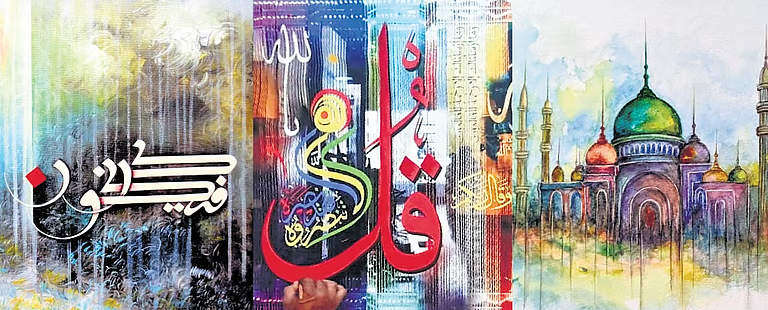
Calligraphy paintings created by various artists

Vijayapura :

When veteran artist Dr Subbayya Neela was invited to join a campaign to spread communal harmony through the ancient but fading art of Islamic calligraphy, he could not hide his delight. For him, the idea was not merely about preserving an art form, but about exploring the potential of art to transcend barriers of faith and culture.

“I have always believed that art knows no religion or boundaries. Art has the power to touch the hearts of people across communities. That is why, when I was approached to contribute to this unique initiative, I immediately agreed. I prepared a few pieces of Arabic calligraphy that were later exhibited in different places as part of the campaign,” recalled Dr Neela.

Among his works was a calligraphic representation of the Arabic phrase ‘Allahu Akbar’, which means ‘God is Great’. “I was given the liberty to interpret the phrase through my own artistic imagination, while maintaining the sanctity of the verse. It was both a responsibility and a joy,” he said.

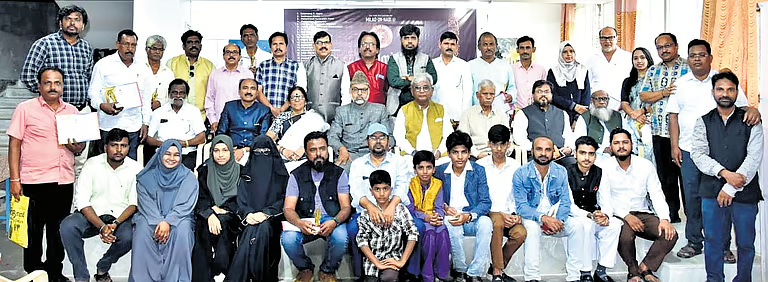
Dr Neela is among 40 artists from across Karnataka, both Hindus and Muslims, who have joined this movement that began in Kalaburagi in 2020. The campaign was conceived not only to preserve Islamic calligraphy, which has been steadily losing ground, but also to foster unity at a time when society is fractured along communal lines.

The group of artists who joined the campaign

The Initiative

It was the brainchild of noted artist Mohammed Ayazuddin Patel, a veteran painter from Kalaburagi and recipient of the Lalit Kala Akademi Award. “When hatred and intolerance seemed to be gaining ground in society, we felt the need to bring people together. We thought of reviving Arabic and Islamic calligraphy because it embodies both artistic beauty and deep spiritual messages. At the same time, it offered us a platform to involve artists of all faiths to work together for harmony,” he explained.

Ayazuddin was soon joined by another respected artist, Rehman Patel, and together they expanded the circle of participants. What started with around 15 artists, junior and senior, has now grown into a diverse collective of 40, half of whom are Hindus. These artists work closely with their Muslim counterparts to ensure accuracy in Arabic writing, while retaining artistic freedom.

The campaign, in many ways, draws inspiration from the history of the Deccan itself. Rehman Patel points out that after the decline of the Chalukyan dynasty, many local artisans and craftsmen found themselves unemployed. With the arrival of Muslim rulers in the region, particularly in erstwhile Bijapur and Gulbarga, these artisans were drawn into projects that fused Persian and Turkish influences with local Indian traditions.

“The architecture of that time was a collaboration. While designs came from foreign artists, the actual construction was executed by local Hindu craftsmen. The result was Indo-Persian art, a blend of Indian and Islamic architecture that still stands testament to cultural harmony,” he said. Arabic and Islamic calligraphy flourished during this period, adorning monuments and manuscripts, but over the centuries, as tastes and practices changed, the art form began to fade. “Our campaign is an attempt to not only revive this vanishing tradition but also to remind people of the harmony that once defined this land,” he added.

Preserving sacredness

A key aspect is the selection of verses from the Quran. The organizers have been deliberate in choosing verses that emphasize unity, peace and brotherhood, values that are not confined to one faith but resonate universally. “The artists are given complete freedom to use their imagination while ensuring that calligraphy remains the focal point. We guide them on the technicalities of Arabic script, but artistic interpretation is entirely theirs,” explained Ayazuddin. “This way, we safeguard the sacredness of the verses while allowing creativity to flourish.”

For many Hindu artists like Basavaraj Totad and Rajani Talwar who are involved in it, it has been a learning experience. Working with Arabic characters is not easy, and ensuring accuracy requires constant collaboration. Yet, this very collaboration has built bonds of trust and friendship. “It is heartening to see artists from different backgrounds sit together, discuss and create something so meaningful,” said Ashok Hiremath, an artist from Bidar.

To showcase their work and reach a wider audience, the collective has organized exhibitions, usually coinciding with Id-Milad, the birth anniversary of Prophet Mohammed. So far, five exhibitions have been held, each drawing large crowds from different faiths. “The response has been overwhelming,” Ayazuddin said. “We have seen people from all communities attend and appreciate the art. Many told us that such initiatives give them hope that religious harmony is still alive in our society, and voices of hate and division are not as strong as they seem.”

The exhibitions are not limited to calligraphy, but also feature paintings and photographs of ancient monuments from the Deccan region, tying the campaign to the cultural and architectural heritage of Karnataka. “This serves two purposes. It connects people with their shared history, and encourages them to protect and preserve monuments that are our national heritage,” said Rehman Patel.

Messages beyond borders

For the participating artists, the project is as much about personal conviction as it is about art. Dr Neela believes the messages of peace from saints and prophets have universal appeal. “Prophet Mohammed spread the message of peace, which can be accepted by anyone, anywhere in the world,” he said.

“If art can be used as a language of unity, it should not remain confined to one place. Art has always been a reflection of society. If society is fractured, art can heal and unite. That is what we are trying to do through this campaign,” Ayazuddin said.

source: http://www.newindianexpress.com / The New Indian Express / Home> Good News / by Firoz Rozindar / September 14th, 2025

Kalaburagi artist for Jordan

Kalaburagi, KARNATAKA :

Kalaburagi-based artist Mohammed Ayazuddin Patel will participate in a three-day International Art Festival titled Colours of the World organised in collaboration with Amman Greater Municipality and SMD Foundation at Ras Al Ain Art Gallery, Amman in Jordan.

The festival will be inaugurated under the patronage of Anwar Halim, Ambassador of India in Oman, on Saturday. 

Artists from the U.S., Jordan, Canada, Taiwan, India and other countries are taking part in the art festival.

Mr. Patel will display his digital painting works based on Indian culture.

source: http://www.thehindu.com / The Hindu / Home> News> National> Karnataka / by Staff Reporter / Kalaburagi – March 02nd, 2022

Deccan’s heritage on display

Kalaburagi (formerly Gulbarga), KARNATAKA :

Ayaz01MPOs27sept2019

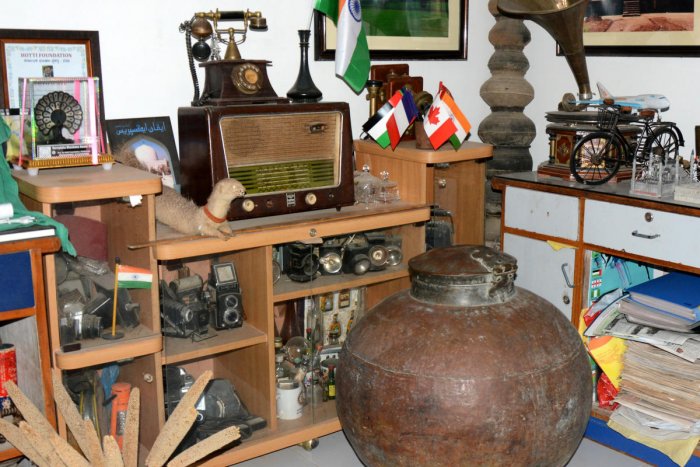
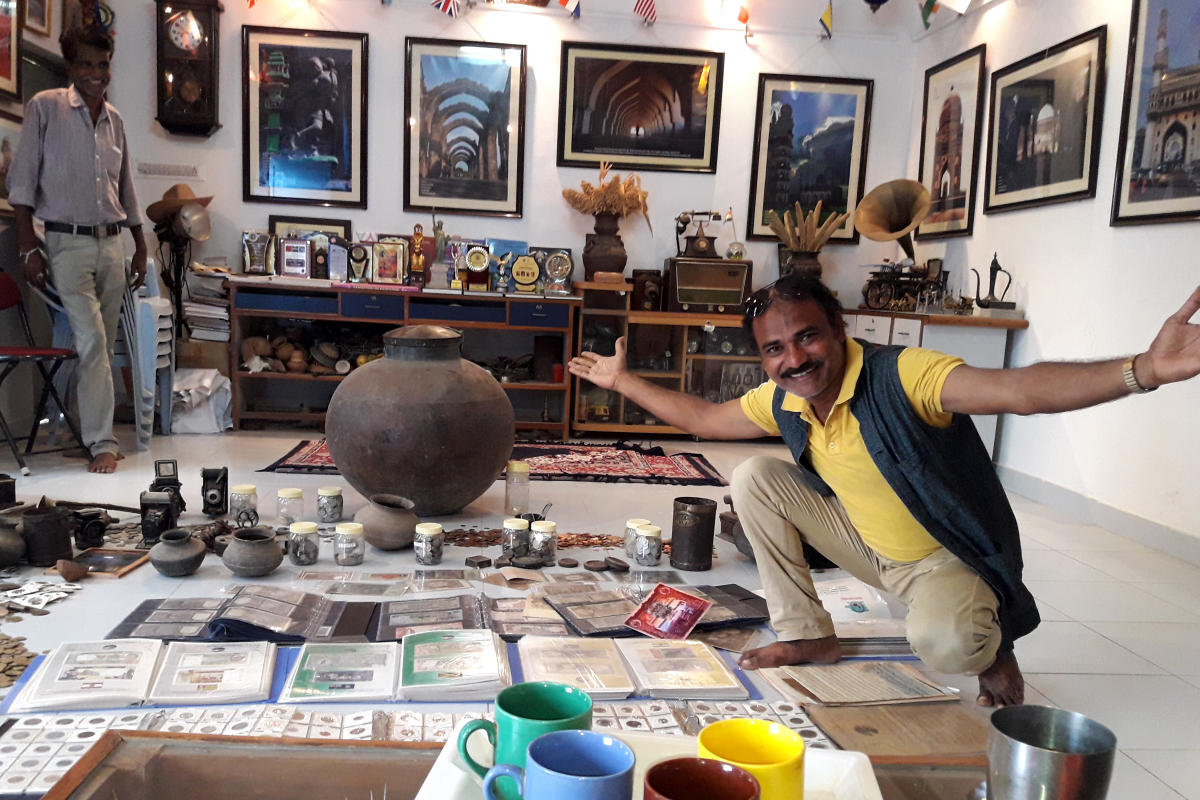
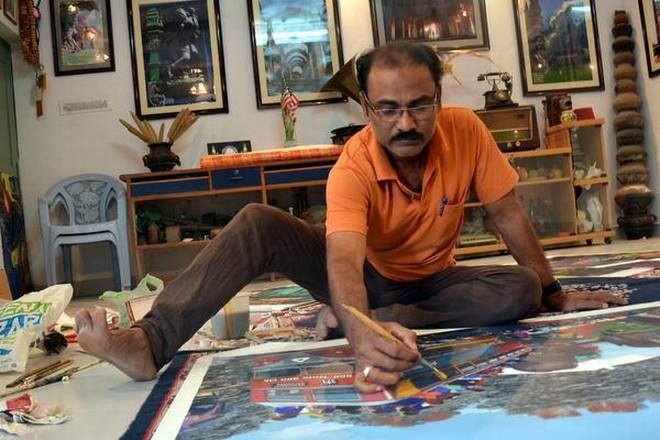
From coins to paper currency, books, radio, telephone, gramophone and old cameras, one can find a wide variety of antiquities at Ayaz Art Gallery in Kalaburagi. Detailed information about each item exhibited here makes this collection a heritage enthusiasts’ favourite. The credit for developing this intriguing collection goes to Mohammed Ayazuddin Patel, who is a photographer by profession.

After the completion of his education, Patel worked abroad for six years. In the meantime, he developed an interest in Deccan’s heritage. As a professional photographer, he has extensively documented the region’s ruined monuments.

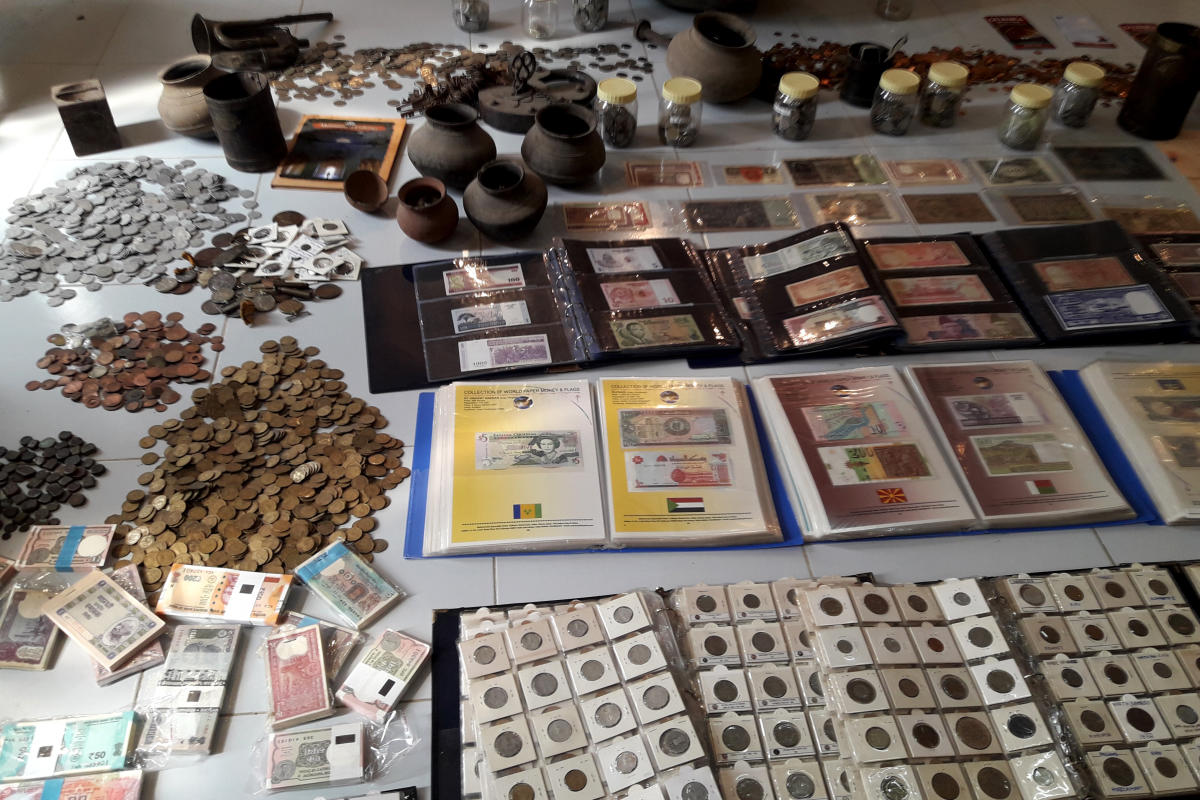
Collection of coins and currency at Ayaz Art Gallery in Kalaburagi.

Patel has collected the antiquities from various places, urban and rural. There are instances of him finding value in an item that others would discard as scrap. Apart from objects, he also has a good collection of rare books published during the British and Nizam rule. Some of them are printed at Oxford Press.

Coins and currency form a major part of the collection. The coins from Satavahana, Rashtrakuta, Chalukya, Hoysala, Nagas, Gandhara, Khilji, Lodhi, Tughluq, Mughals, Bahmani, Wadiyar, Kalachuri, Tipu, Qutb Shahi, Nizam Shahi, Adil Shahi, Barid Shahi,  Imad Shahi, Malwa, Kashmiri, British, and present coins and notes of Indian government are available with him.

Being an artist, he has exhibited the collection aesthetically, with all the details like the currency name, country, capital of country and country’s population on display. Presently, he is having about 275 countries currency notes in his collection which can be treated as the largest collection in Karnataka.

Many research scholars visit his art gallery to get information about the region’s history and heritage.

He has travelled to 26 countries to present the cultural beauty of the Hyderabad Karnataka region. While returning, he picks each country’s flag. Such flags are displayed neatly at the gallery.

Apart from this, he has exhibited his work of digital art, attended seminars, art camps and got honours for the same. Some of the unique pieces found in the gallery include an old lantern used in the ship; an ink bottle of 1855 AD used for fountain pens ; metal locks from Bahmani to Nizam period and terracotta plates and bowls of Nizam period.

Property and other agreement bonds written in Arabic, Parsi, Halegannada, Sanskrit and other languages find a place in his collection. The stamp papers of Jodhpur State and Bikaner State, Jaora State under the of Iftikhar Ali Khan Bahadur, Bhopal and Burma Government both, British India, Travancore and Dewas State, Rajgarh State, Government of Madras, Government of Mysore and Indian non judicial paper are in his collection.

After practicing photography for many years, he started digital art using his photos that portray the heritage of Hyderabad Karnataka.

Mohammed Ayazuddin Patel

He acknowledges the support extended by his parents. His mother used to collect coins and antiquities as a hobby. And his father, Mohammed Khaja Naveed Patel, was a Munsi and was an expert of history. “Kalaburagi has a rich history and heritage.  It is everyone’s responsibility to collect and preserve these objects,” Ayazuddin says.

source: http://www.deccanherald.com / Deccan Herald / Home> Spectrum> Spectrum Statescan / by Rehaman Patel / August 17th, 2019

The last Nizam’s indelible imprint on Kalaburagi

Hyderabad / Kalaburagi (formerly Gulbarga) , KARNATAKA :

AiyaneShahiMPOs17sept2019

The city has many structures built during the time of Nizam Mir Osman Ali Khan Bahadur

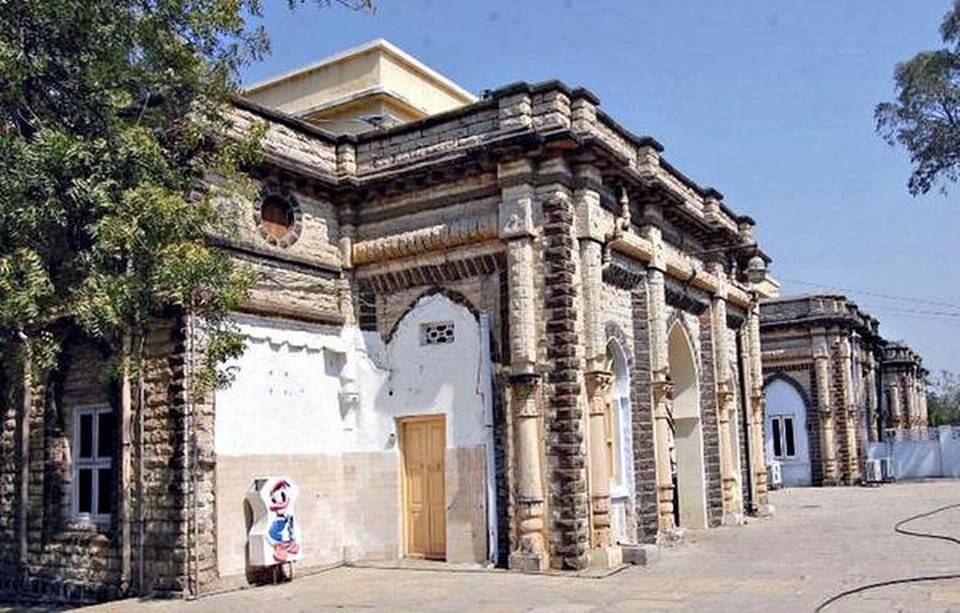
A kilometre away from Kalaburagi railway station is Aiwan-e-Shahi, a magnificent stone structure built in early 19th Century. For political leaders and bureaucrats visiting the city, it’s the most preferred accommodation.

Kalaburagi has several such architectural remnants of the times of the Nizam rule, uniquely Indo-Islamic in style, and still in use. Nizam Mir Osman Ali Khan Bahadur, the last monarch, who ruled the province between 1911 and 1948, stayed in Aiwan-e-Shahi when he visited the city and is today a government guest house. The Nizam used to travel in his own train from Hyderabad to reach the palace in Kalaburagi and a special railway track was laid up to the entrance of the complex for the purpose.

Like most buildings constructed during the Nizam’s rule, the Aiwan-e-Shahi portrays a rich and imposing architecture synthesising medieval and modern styles. It is constructed using local white stones, popularly known as Shahabad stones, abundantly available in the surrounding area. The front view of the palace was greatly inspired by Gothic style architecture.

Kalaburagi-based heritage collector and artiste Mohammed Ayazuddin Patel has copies of some rare photograph of Nizam. In one of them, he is the Nizam is seen playing tennis outside the Aiwan-e-Shahi palace complex. His train is also visible in the background. The picture was said to have been taken by Raja Deen Dayal, the official photographer at the Nizam’s court.

The Nizam, known as the architect of modern Hyderabad, left an impression on Kalaburagi too. The building now houses the tahsildar office, zilla panchayat and central library. The entrance arch gate of Vikas Bhavan, the mini Vidhana Soudha that has the district administrative complex and one of the entrances of Mahbub Gushan Garden in the heart of the city were built during his time. There are several private houses across the city that were built for the families of Deshpande, Deshmukh, Mali Patil, Police Patil, Jamadar, Mansafdar, Pattedar, Inamdar, Jagirdar, Kulkarni, Hawaldar – the official and administrative titles given by the Nizam.

“At least, the Aiwan-e-Shahi should be included in the protected monuments and converted into a museum to showcase the region’s cultural past,” says Rehaman Patel, Kalaburagi-based researcher and artiste. According to him, the Nizam had expanded public spaces such as parks, lakes, town hall, and gardens in the city engaging several engineers. Mahbub Sagar (now called Sharnbasweshwar lake) and Mahbub Gulshan Garden continued to be used by the public. The town hall is used by the Kalaburagi City Municipal Corporation as a conference hall.

The Filter Bed built for providing pure water to the residents continues to supply drinking water to parts of the city. The Mahbub Shahi Kapda Mill that produced high-quality cloth and supplied it not just to various cities across India, but to other countries as well, was in operation till the 1980s. The Nizam had also established Asif Gunj School and MPHS school, the oldest educational institutions of the city.

“In the early 1930s, he formed the Hyderabad Aero Club and built Begumpet Airport for his Deccan Airways, one of the earliest airlines in British India. He had the distinction of employing, perhaps, the world’s first woman commercial pilot, Captain Prema Mathur, during the late 1940s. The other airport built in Bidar in 1942 is now used by the Indian Air Force to train its pilots. The Nizam was also credited for renovating several monuments belong to Buddhists, Jains, Chalukyas, and Bahmanis. The renovation and excavation of the caves of Ajanta and Ellora was undertaken with the funds of the Nizam government and supervised by then archaeology director Ghulam Yazdani,” Mr. Rehaman said.

source: http://www.thehindu.com / The Hindu / Home> News> States> Karnataka / by Kumar Buradikatti / Kalaburagi – September 16th, 2019

Ayazuddin Patel only artist from Karnataka to participate in international art camp in Europe

KARNATAKA :

Lalit Kala Akademi Awardee Mohammad Ayazuddin Patel will be participating in the 5 th International Cultural-Artistic event from July 8. | Photo Credit: ARUN KULKARNI

National Lalit Kala Akademi Awardee and noted artist Mohammed Ayazuddin Patel will be participating in the 5th International Cultural-Artistic Event, a fortnight exhibition of painting and workshop-cum-art camp in Greece-Kosova-Balkan in Europe from July 8.

Mr. Patel is the only artist from Karnataka to attend the event which attracted 30 artists across the world. The event, which is jointly organised by Municipality of Suva-Reka and Department of Culture, Kosovo and Greece, provides a common platform for artists to exhibit their talent and get international exposure.

Speaking to The Hindu, Mr. Patel said that five of his digital art works were submitted online for the selection to the event. The 46-year-old artist has bagged 20 prestigious awards including 55 th National Lalit Kala Akademi Award, National Award for Photography and National Award for Digital Painting recognised by the Ministry of Culture.

Mr. Patel has also participated in international group exhibition in six countries and displayed his digital art works painting and photography during exhibitions at 34 different places and organised 20 solo exhibitions across the country.

Mr. Patel is known for digital painting and mixed media and his works adorn several walls in important State buildings.

As per the event schedule, the selected artists would be visiting famous museums, art galleries, historical monuments and old places in nine European cities including Istanbul in Turkey, Thessaloniki in Greece, Suva Reka in Kosovo, Budva in Montenegro, Mostar in Bosnia, Sarajevo in Herzegovina, Dubrovnik in southern Croatia, Tirana in Albania, Ohrid in Macedonia and Kavala in Greece during the 15 days camp.

source: http://www.thehindu.com / The Hindu / Home> News> States> Karnataka / by  Correspondent / Kalaburagi – June 27th, 2017

Discoverers worry for the ‘ World’s Longest Cannon ’

KARNATAKA :

Researchers hope the government will act to protect the cannon at Gulbarga Fort

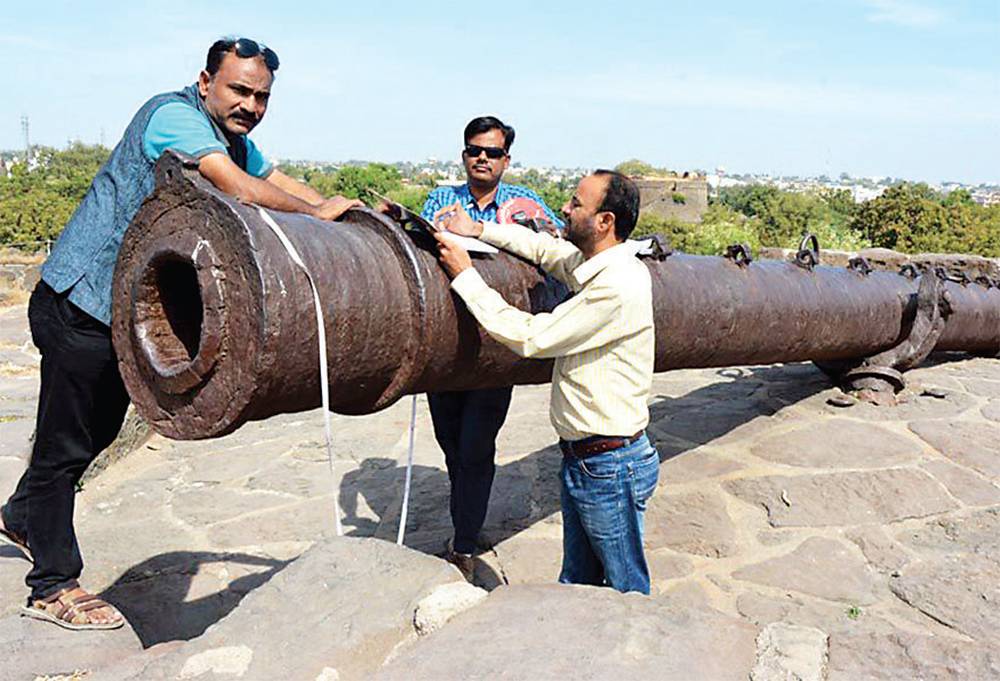
Mohammed Ayazuddin Patel, Dr Rehaman Patel and Mohammed Ismail measuring the Bara Gazi Toph

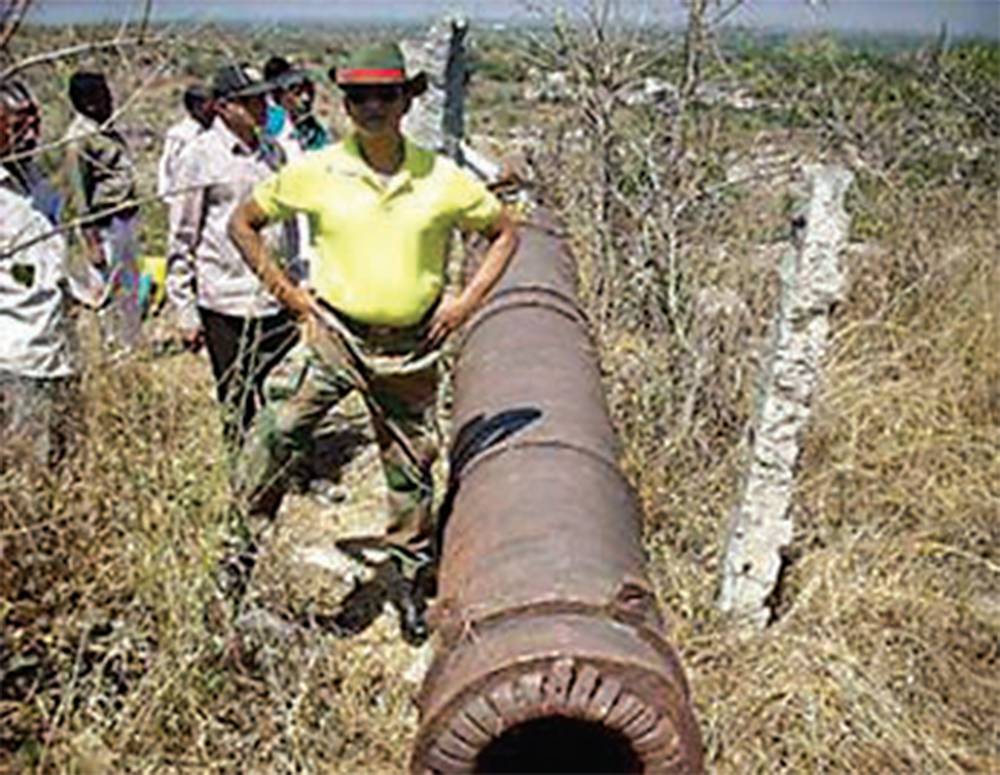
The three researchers, Mohammed Ayazuddin Patel, the national award winner, artist and photographer, Dr Rehaman Patel, artist and researcher at Indo-Islamic Art, Kalaburagi, and Mohammed Ismail, Bahmani researcher and coin collector who recently discovered a cannon in a fort in Kalaburagi, which they say is the longest in the world, are worried over its preservation.

It was their visit to Gulbarga Fort in search of the name of the first Bahmani sultan, Alauddin Hasan Bahaman Shah among the Persian inscriptions on the Jama Masjid that led to its discovery. Speaking of the cannon to Bangalore Mirror, Mohammed Ayazuddin Patel said, “Since 2010, I have been researching on the subject. The existing world record is in the name of Tsar Cannon that is 17.5 feet long and was built in the 15th century in Russia. The cannon has been named in Guinness Book of World Records, when the fact remains that the top three longest cannons exist in India. It is a matter of pride for the people of Kalaburagi and the Hyderabad-Karnataka region that the longest cannon in the world is located in Bahmani Fort and was manufactured during the reign of Bahmani Empire in the 14th century. It is made of the alloy Panch dhatu.”

The cannon is known as Bara Gazi Toph and measures about 29 feet in length. Its circumference is 7.6 feet and diameter 2 feet. The barrel is 7-inch thick. In India, the largest recorded cannon is about 23 feet long and is located in Koulas Fort in Nizamabad district of Andhra Pradesh. Asaf Jah-1 (first Nizam) granted the Koulas Fort to the Rajput king Raja Kunwar Gopal Singh Gaur in 1724 AD for his bravery in the battle of Balapur and Shakkar Keda. The biggest cannon on wheels, built by Raja Mansingh, is in Jaipur and measures 20.6 feet in length.

“The Jaipur cannon weighs about 50 tonnes. We assume that the weight of the Kalaburagi cannon could be around 70-75 tonnes. While, the firing range of the Jaipur cannon is about 35 kilometres, that of Bara Gazi Toph could be 50-55 kilometres,” Ayazuddin Patel said.

The Bahmani monarchs, who ruled from the present Kalaburagi (Ahasnabad), stand out among other rulers for their contribution to the city. The founder Alauddin Hasan Bahaman Shah (1347-1422) made Gulbarga the capital and before his death he became the master of a vast empire. Even as they extended their territory, the rulers made significant contribution to the fields of art, architecture and literature.

The Bahmani sultanate was the first independent Islamic state of the Deccan in South India and one of the larger medieval Indian kingdoms. They ruled for 191 years (1347-1538 AD). Their other capital was Bidar.

The Gulbarga Fort was significantly expanded in 1347 by Alauddin Hasan Bahmani after he cut off ties with the Delhi sultanate. Islamic monuments such as mosques,
palaces, tombs, and other structures were also built later within the refurbished fort. The Jama Masjid built within the fort in 1367, is a unique structure of Persian architectural. It is fully enclosed, and has elegant domes and arched columns, which is unlike any other mosque in India.

The biggest challenge about historic monuments in the state is their protection, a fact not going to be any easy with the region being a backward area. “The Archaeologi-cal Survey of India and state archaeology department should take steps to protect the cannon at the Bahmani Fort and it should be included in the world record list. It should be fenced. The cannon is filled with sand and pebbles, so should be properly cleaned. Also, a signboard stating its details as the longest cannon in the world is a must. The fort and Jama Masjid must be declared heritage centres,” added Ayazuddin.

The team submitted a memorandum with their pleas to the district in-charge minister Sharan-prakash Patil, the deputy commissioner, regional commissioner, as well as the departments concerned.


GIGANTIC CANNONS OF THE WORLD

Jagadamba Bhavani Tope: Located at the historic Koulas Fort in Andhra Pradesh is believed to be the largest cannon in the world. The cannon (left), which is 23 feet in length and weighs 70 tonnes, is predominantly made of iron. It has a 16-inch calibre with an explosive head of 150 kg.

cannon02mpos28dec2016
Jaivana: Recorded as the world’s largest cannon on wheels, Jaivana was manufactured during the reign of Maharaja Sawai Jai Singh II (1699–1743) at a foundry in Jaipur, Rajasthan. Jaivana’s barrel measures 20.19 feet in length and 11 inches in diameter. The 50-tonne cannon is mounted on four wheels. The rear wheels are mounted on roller pin bearings, to turn it 360° and fire in any direction. It was designed to fire a 50 kg cannon ball to a distance of 35 km. This cannon was never used in any battle as the Rajput rulers of Amber had friendly relations with the Mughals.

source: http://www.bangaloremirror.indiatimes.com / Bangalore Mirror / Home> News> State / by Deepthi Sanjiv, Bangalore Mirror Bureau / December 28th, 2016

A story in pictures

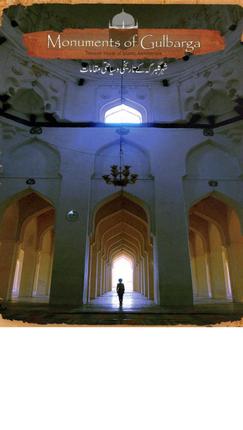
BOOK Monuments of Gulbarga is a book that captures ancient art and architecture through photographs.

Gulbarga01-31mar2014

Domes, tombs, minars , forts, moats and off-course masjids . Are you thinking of Delhi? Why travel thousands of kilometres to experience the reminiscences of the sultanate? Prefer going to Gulbarga, a night’s journey from Bangalore. Instead, feel every bit of Gulbarga’s history by just turning the pages of a book. “Monuments of Gulbarga, Treasure House of Islamic Architecture”, a photo-book authored by Mr. Mohammed Ayazuddin Patel gives you this experience.

Gulbarga, now a district headquarters in northern Karnataka, was the capital city of Bahamani Sultanate for two centuries. It was at its zenith in the 15{+t}{+h}century and was home to hundreds of monuments. The Sultanate was founded by Bahaman Shah or Allauddin Hasan Gangu. He shifted the capital from Daulatabad in the present-day Maharashtra to Gulbarga and laid the foundation for a magnificent city. The other great kings of the dynasty were Mohammed Shah and Mujahid Shah.

Resembles Spain`s Mezquita

The book provides a pictorial account of the history of the Bahamani kingdom. Beginning with a nostalgic photo of a tomb of Allauddin Hasan Gangu Bahamani, the founder of the dynasty, the book vividly portrays the beautiful Gulbarga fort, its ramparts, fine arches and abutments. The Jama Masjid, built within the fort, resembles the Great Mosque of Cordova (Mezquita) in Spain with grand corridors and lofty entrance. Various pictures of Shahi Jama masjid in the book unfurl a tableau in front of the onlooker. This masjid located in Shahbazaar was constructed for the members of the royal family. ‘It has a unique architectural style of Mughals and the Persian style’, the book says.

The mausoleums of Mujahid Shah, Daud Shah, Ghiyat-al-din Shah, and Shams-al-din resemble that of Hasan Gangu. Unique is the Tomb of Feroz Shah, with intricate jalis and twin domes. The pictures of 800-year-old Holkonda fort capture the Islamic culture and the simplicity of Tughlaq style aptly. This fort houses an idgah and a Dargah of Hazarath Mohamad Mashaq Sahib, a Sufi saint believed to have come to Gulbarga at the request of Bahamani Sultans.

Gulbarga is famous for the tombs of Sufi saints and Pirs . Noted among them is Dargah of Khaja Bande Nawaz Gesudaraz, built by Mohammad Shah Bahamani. It has a Bijapuri arch built by Afzal Khan, army general of the Ailshahis. Other Sufi tombs being Dargah Khabullah Hussaini with beautiful paintings and calligraphy, Dargah Hazarath Kamal-e-Mujarrad and Dargah Hazarath Shaik Sirajuddin Junaidi.

Majestic, but dilapidated is the Ferozabad fort, built by Feroze Shah Bahamani. He was known for his flair for fine-arts and architecture. This fort, on the banks of Bheema river, encompasses a huge mosque, Tosha khana , and palacial buildings. In spite of its beauty and historical significance, this fort is ill-maintained. Arrays of dung cakes adorn the walls of the sepulchral edifices. Weed-infested mahals are on the verge of collapse due to vagaries of nature. Crumbling structures like Kanchini Mahal, once magnificent and awe-inspiring narrate a story of wanton negligence.

The Chor Gumbad with floral designs, Chand Bibi Gumbad or Kali Gumbad with exquisite Chajjas andJalis , Upli Gumbad – incomplete, yet beautiful, the utterly neglected tomb of Jaccha Bibi, the Siddi Ambar Gumbad with a rectangular porch, are only a few identified among tens of such monuments wailing for attention.

Water conservation

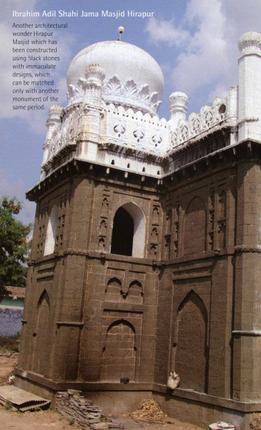
The photos of Hirapur form an interesting set. Hirapur, a suburb of Gulbarga has Ibrahim Adil Shahi Jama Masjid, built in black stone decorated with immaculate designs.

The town has wells, embedded with finely crafted staircases, jharokas and of all, ingenious technology of water conservation to avoid excessive evaporation in soaring temperatures. The wells are still seen as an evidence of splendour, but grossly uncared for.

Strewn inside the fort and atop the bastions are numerous canons, cast in brass and other alloys, weighing several tons, flaunting an intimidating appearance. Famous among these canons is Baragazi Toop atop the Burj in the fort.

Gulbarga is dotted with tombs and mausoleums lost in history, beckoning the curious eyes with their regality. This book displays a tableau of medieval Islamic culture and gives a splendid account of the forgotten monuments. The author also gives an account of Hindu and Jain monuments and pilgrim centres. Patel dedicates quite a bit to the revered Sharanabasaveshwara Temple, Sannati Chandralamba Temple, Ganagapura Dattatreya Temple, and Mallinatha Basadi at Malkhed, but, there is no reference to the nearly 700 year-old-shrine of the Madhwa saint Jayateertha on the banks of river Kagina at Malkhed, a major pilgrim centre.

BookGulbarga31mar2014

Patel, a national award winner, also records Aiwan-e-shahi, Osmania Intermediate College, MSK Mills established in 1884 by the Nizams. He is President of National Graduate Art and Photographers Association.

TAMRAPARNI R. RAGHAVENDRA

source: http://www.thehindu.com / The Hindu / Home> Features> Friday Review / by Tamraparni S. Raghavendra / March 28th, 2014