Tag Archives: Mughal Emperor Aurangazeb

How one act of defiance in Mughal India cemented Sikh-Muslim ties in Punjab’s Malerkotla

Malerkotla, PUNJAB :

Muslim-majority Malerkotla has been declared as the 23rd district of the state, with the Punjab government fulfilling a decade-long demand of its residents.
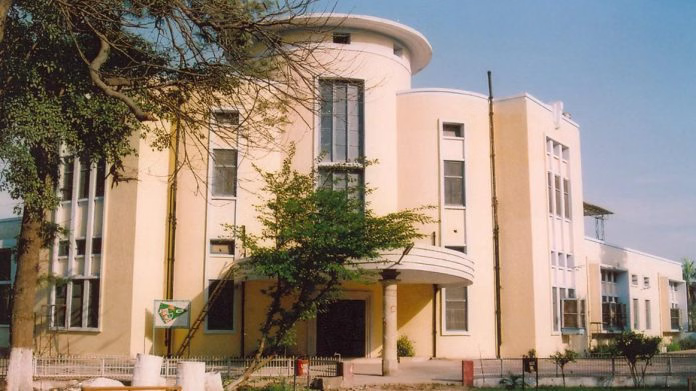
The government college in Malerkotla | Wikimedia commons

Chandigarh: 

On the occasion of Eid-ul-Fitr Friday, Punjab Chief Minister Captain Amarinder Singh declared the Muslim-majority Malerkotla as the 23rd district of the state, while announcing a slew of projects for the development of the historic city.

The move fulfils an at least decade-old demand in Malerkotla and a promise that the ruling Congress had made in its manifesto ahead of the 2017 assembly elections.

Punjab’s decision, however, hasn’t gone down well with the BJP, particularly Uttar Pradesh Chief Minister Yogi Adityanath.

Adityanath tweeted Saturday that the move was “proof of the Congress’ divisive politics”.

“Any distinction on the basis of religion is contrary to the basic spirit of the Constitution of India,” the Uttar Pradesh CM said. “Presently, the formation of Malerkotla (Punjab) is a reflection of the divisive policy of the Congress.”

Tarun Chugh, the BJP’s national secretary from Punjab, weighed in, saying the decision was clearly “communal” and that it was for the first time in the history of Punjab that an administrative decision was taken to further communal interests.

None of these charges, however, will find any resonance in Punjab, where Sikhs and Malerkotla’s Muslims share historically harmonious ties. So entrenched is this solidarity, that the Muslim-majority region saw no violence even as the rest of Punjab went up in flames during Partition in 1947.

The Punjab chief minister even alluded to this while responding to his UP counterpart.

“What does he (Yogi Adityanath) know of Punjab’s ethos or the history of Malerkotla, whose relationship with Sikhism and its Gurus is known to every Punjabi? And what does he understand of the Indian Constitution, which is being brazenly trampled every day by his own government in UP?” Amarinder asked in a statement issued Saturday evening.

A 300-year-old legacy

Punjab Sikhs’ reverence for the Muslims of Malerkotla dates back chiefly to one singular event in history.

According to Anna Bigelow, associate professor of Islamic Studies in the Department of Religious Studies at Stanford University, the Nawab of Malerkotla, Sher Muhammad Khan, had in 1705 opposed the death penalty handed out to nine-year-old Baba Zorawar Singh and seven-year-old Baba Fateh Singh — the sons of Guru Gobind Singh, the 10th Sikh Guru.

Bigelow, who has researched Malerkotla’s history, writes that despite Khan’s protests, the then Mughal governor of Sirhind, Wazir Khan, bricked alive the two children.

The Malerkotla nawab’s defiance, referred to as “ha da naara (cry for justice), however, earned him the respect and adoration of Sikhs.

“Guru Gobind Singhji blessed Sher Muhammad Khan and ever since Malerkotla has become an icon of Sikh-Muslim brotherhood,” said the Shiromani Akali Dal (SAD) general secretary Dr Daljeet Singh Cheema. “Even during Partition, this town remained completely peaceful.”

The new district will also have a government medical college in the name of Nawab Sher Muhammad Khan.

The Opposition SAD has backed Chief Minister Amarinder, with Cheema issuing a statement  that Adityanath’s tweet was in bad taste and symbolic of his complete lack of historical knowledge about Malerkotla town and its significance for Sikhs.

“Malerkotla town is a unique example of Sikh-Muslim communal harmony that has lasted for over 300 years,” Cheema said.

A Muslim-majority region

Malerkotla was part of a jagir of several villages that the then Delhi Sultan Behlol Lodhi granted as dowry to the Afghani Sufi Saint Sheikh Sadruddin-i-Jahan (also called Haider Sheikh) in 1454.

According to Bigelow, the original settlement was called “Maler” and it remains the name of the neighbourhood surrounding the Sheikh’s tomb.

Following the advent of Mughal rule in India, the descendants of the Sheikh became the nawabs of Malerkotla.

Bigelow writes that Kotla came to be in 1657 when Mughal emperor Aurangzeb granted permission to Bayazid Khan, the first ruler of Malerkotla, to build a fortified city.

Bigelow also states that during British rule, Malerkotla was as turbulent as the other smaller principalities of the time, marked by infighting and ever-changing loyalties. The last ruler of Malerkotla was Nawab Iftikhar Ali Khan.

During Partition in 1947, Malerkotla remained absolutely peaceful and when the princely state merged with India, Iftikhar Ali Khan was its first chief minister.

Malerkotla was later merged with other princely states of the region to form the Patiala and East Punjab States Union (PEPSU). During the reorganisation of states in 1956, Malerkotla became a part of Punjab.

Modern-day Malerkotla

With almost 70 per cent of its population comprising Muslims, the Malerkotla assembly constituency has always been represented by a Muslim.

Nawab Iftikhar Ali Khan served as MLA twice while his second wife Begum Yusuf Zamani and fourth wife Begum Sajida were legislators as well. All of them were part of the Congress party.

The Malerkotla seat has, in the last few decades, been alternating between the Congress and the Akali Dal.

Razia Sultana, the current Congress MLA from Malerkotla, is representing the constituency for the third time (2002, 2007 and 2017). She is the wife of former Punjab DGP Mohammad Mustafa. In 2012, however, Farsana Alam, the wife of another IPS officer, Izhar Alam, was elected as the Akali MLA from here.

The constituency’s politics has not been without its intrigue. In 1981, the last nawab divorced Sajida Begum. She then went on to marry Anwar Ahmed Khan of the Shiromani Akali Dal, against whom she had fought multiple elections.

The nawab died in 1982 and Sajida Begum in 2006. The legacy of the last nawab continues as an ugly family litigation for property and palaces.

On Friday, Chief Minister Amarinder Singh, himself the scion of the Patiala royal family, recalled his ties to the last nawab of Malerkotla, whom he fondly called Chachaji (Uncle) and who he said lovingly addressed him Bhateej (nephew).

Amarinder also said he had written to the Aga Khan Foundation to undertake conservation and restoration of Mubarak Manzil Palace, occupied by Begum Sahiba Munawwar ul-Nisa, the wife of the last nawab.

The Punjab government, the chief minister said, has acquired the Mubarak Manzil Palace, adding that “its restoration and upkeep would be a fitting tribute to the nawabs of Malerkotla”.

A decade-long demand

The demand for district-hood is not new.

Malerkotla falls on the Ludhiana-Sangrur road and is part of Sangrur district. It’s almost equidistant from the district headquarters of Ludhiana and Sangrur and for every administrative work residents had to go to Sangrur, which is over 40 km away.

The town is full of small steel units and is specially known for manufacturing badges and uniforms.

The Congress’ manifesto had also promised district status for Malerkotla.

According to the government’s order Friday, the subdivisions of Malerkotla and Ahmedgarh, as well as the sub-tehsil of Amargarh, would be included in the newly-created district. The process of bringing villages under the jurisdiction of Malerkotla district would begin later, after the conclusion of the census operations, the order said.

The chief minister has also directed the Sangrur deputy commissioner to find a suitable building to immediately start the functioning of the district administration office. The deputy commissioner for the newly-carved district would be appointed soon.

(Edited by Arun Prashanth)

source: http://www.theprint.in / The Print / Home> India / by Chitleen K Sethi / May 16th, 2021
Safe walls of Bijapur’s past

Vijayapura (formerly) Bijapur, KARNATAKA :

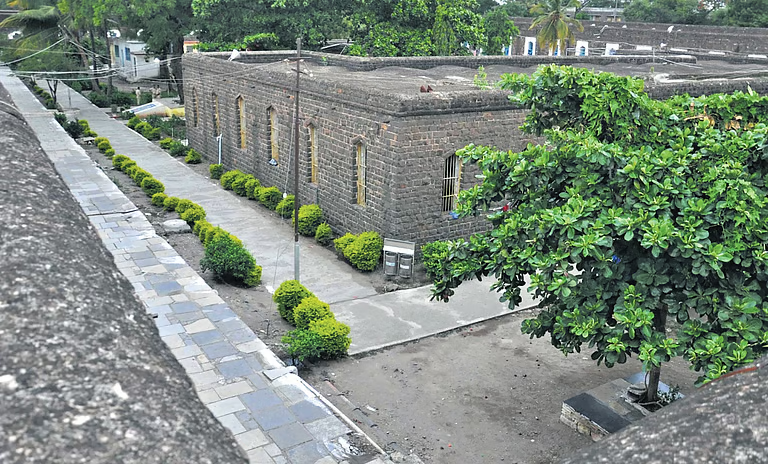
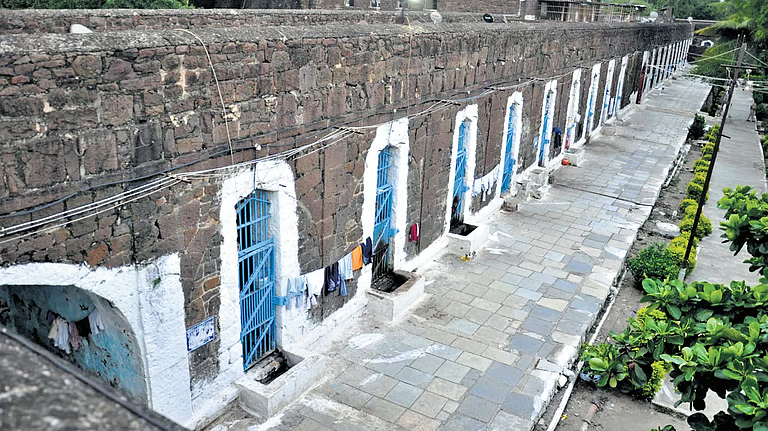
A secure inn for gem traders during the Adil Shahi era, Nawab Mustafa Khan Sarai houses prisoners today.

The interiors of the Nawab Mustafa Khan Sarai now known as Dargah Jail Photo | Express

Vijayapura :

Several historical remnants dot the landscape of Vijayapura, reflecting Bijapur’s glorious past. While Gol Gumbaz and Ibrahim Roza are some shining examples of Deccan Indo-Islamic architecture, there is another imposing structure of that bygone era, which is still alive and in use today.

With its formidable heightened walls built with large black stone over five acres of land; a narrow arched-entrance, flanked by small rooms for guards; and a grand courtyard, surrounded by rooms for accommodation, a large kitchen, and bathrooms, Nawab Mustafa Khan Sarai served as the most secure place of stay and rest for travellers and traders in precious gems for over four decades.

Nawab Mustafa Khan Sarai, translated as Nawab Mustafa Khan Inn, continues as a secure place of boarding even today, the only difference being that it’s no longer an inn. Located around 4 km from the central bus stand in Vijayapura city, this splendid monument houses hundreds of prisoners, since being converted into a jail during the British Raj.

Dargah Jail

Popularly known as Dargah Jail, owing to its proximity to the shrine (Dargah) of Sufi saint Hazrat Khwaja Ameen Chishti, the monument is a reminder of the architectural marvels sanctioned by the Adil Shahi dynasty that ruled the South-Western part of India during 1490-1686 CE. Specifically, the Bijapur Central Prison, which is historically Nawab Mustafa Khan Sarai, was built by Nawab Mustafa Khan in 1636 CE. Khan was appointed Commander-in-Chief during the reign of Sultan Mohammed Adil Shah, and proved himself to be an astute administrator.

Elucidating the need for such an inn or boarding house, historians cite the wealth and prestige of the Sultanate of Bijapur in the 17th century that called for such structures to be built.

“Since Bijapur had gained immense prosperity during the Adil Shahi period, hundreds of domestic and international travellers and traders started visiting it. At that time, a new suburb called Shahapur was commissioned, which had all modern facilities of the time. Since travellers traded in precious stones from across the globe, they needed a safe and secure place to stay in Bijapur. Considering the need, Mustafa Khan got the inn built in 1636 CE near Vijayapura city, which was located close to Shahapur then,” explains Dr Abdul Gani Imaratwale.

A painting Nawab Mustafa Khan

The veteran historian, who has written several books on Bijapur’s history, said the inn’s tall walls were designed to prevent intruders from entering the premises, protecting the resident traders and their priceless wares.

“To instil a sense of security among traders and travellers, Khan also got a verse of the Quran inscribed on a wall of the monument. The verse means – ‘Allah is assuring all those who have entered heaven they need not to be scared or carry any fear as they are now safe and secure because they are in the custody of Allah’. This verse is meant to reassure visitors that they are in a very safe and secure place,” Dr Imaratwale elaborates.

Further, he says the sultan had appointed guards, whose job was to keep the precious items of the traders in their custody and maintain a complete record. The visitors were charged some fee for the service.

Inn becomes prison

The inn continued to function for several years until the end of the Adil Shahi dynasty, and then it was captured by Mughal Emperor Aurangzeb in 1686 CE. Soon after, the traders stopped arriving, and the once bustling structure fell to ruin and disrepair, and remained deserted for another two centuries.

In 1885, the British, under whose control Bijapur was at that time as part of the Bombay Presidency, decided to convert the Sarai into a prison. Historical records suggest that the British wanted to build a prison, but first wished to explore the possibility of converting any monument into one, with some minor changes. The colonial authorities found the inn suitable, and decided to go ahead with turning it into a jail, allocating Rs 20,000. “The British found the monument best-suited for a prison, because of the high walls surrounding it. Also, it had rooms that could be converted into barracks for inmates,” Dr Imaratwale informs.

Today, the jail has 10 barracks, with each having a capacity to house around 40 inmates. There are around 500 prisoners (male and female, and convicts and undertrials) lodged here. In due course, more amenities have been added for the inmates. Security features such as CCTV cameras too have been installed.

In 1983, the jail was converted into a District Central Prison, where convicts began to be incarcerated. But over time, the authorities found the prison proving to be small to accommodate an increasing number of prisoners, prompting the government to construct a new high-tech jail on the city’s outskirts. Officials said that work on the new building is under way. Soon, the present jail will be shifted to a new facility. Till then, Dargah Jail will remain one of the oldest prisons in the country.

A symbol of piety

Besides constructing a ‘sarai’ or inn for travellers, Nawab Mustafa Khan also got a large mosque built in the central part of old Bijapur city. Located on Bari Kamaan (large arch) Road, the mosque is said to be built in 1639 CE, and later became popular as Nawab Masjid. It is still used regularly for prayers. Though a masjid committee is taking care of the Masjid, since it is listed as a ‘protected monument’ by the Archaeological Survey of India as it is an edifice of historical importance. Historians view the Masjid as a unique monument, constructed using only large stone slabs. Another striking feature is that it has no pillars, entirely standing on huge stone walls. The design of the inner arch, where the Imam leads the namaz, is said to have been derived from the historical Jama Masjid. The inner area can accommodate at least 200 worshippers, while an equal number of people can offer prayers in the outer area. The mosque also has a tank for ablution, which used to be full of water round the year in past, since it was connected via underground pipes to the Begum Talab, almost 3 km away.

source: http://www.newindianexpress.com / The New Indian Express / Home> Good News / by Firoz Rozindar / July 21st, 2024

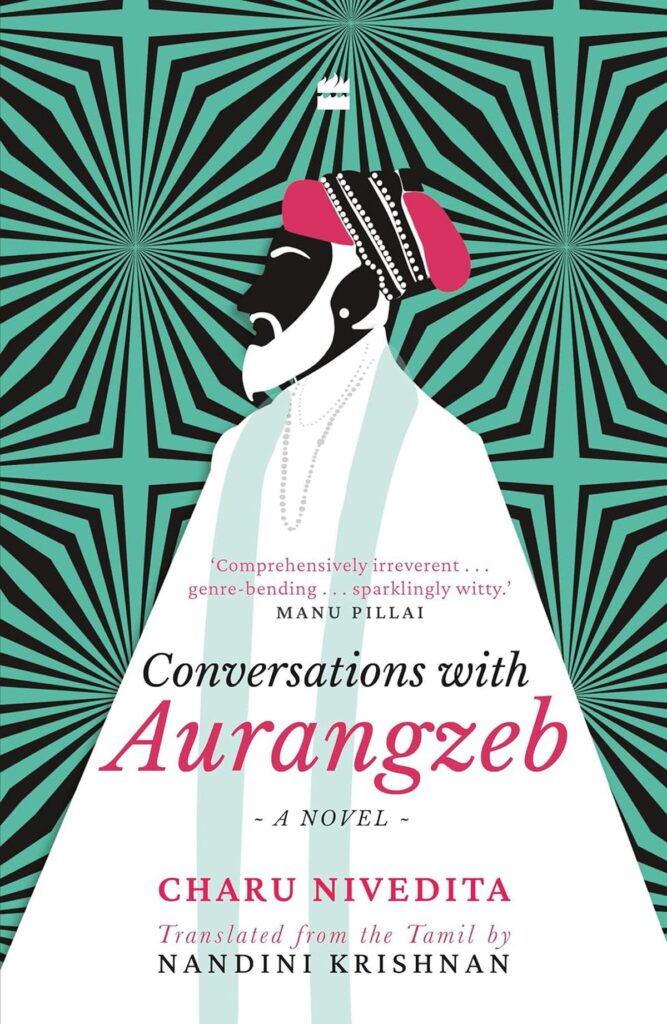
The Hindu Lit Fest 2024 | Author Charu Nivedita and translator Nandini Krishnan on their new book ‘Conversations with Aurangzeb’

INDIA:

‘Conversations with Aurangzeb’ reimagines the story of the most controversial Mughal emperor

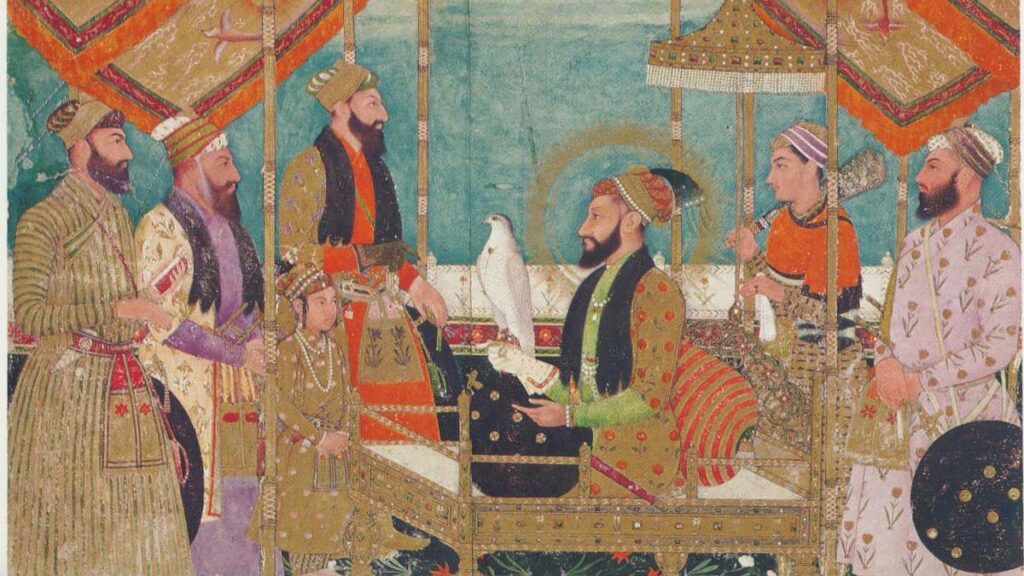
A 17th century painting of Aurangzeb in his ‘darbar’. | Photo Credit: Wiki Commons

Tamil writer Charu Nivedita’s Conversations with Aurangzeb, translated by Nandini Krishnan,is an unpredictable book. In it, a writer begins a novel with an idea but soon meets the spirit of Mughal emperor Aurangzeb, who decides to seize the opportunity to tell his side of the story. This is an irreverent, indignant Aurangzeb, most unlike the historical character we are familiar with.The writer and Aurangzeb speak of the past and present, of Mughals and Marxism, of satire and Sunny Leone, and a host of other contemporary subjects. Krishnan says the novel is “defiant of all genres”.

discuss the wildly imaginative book, their collaborative process, and the latest translation fad. Edited excerpts:

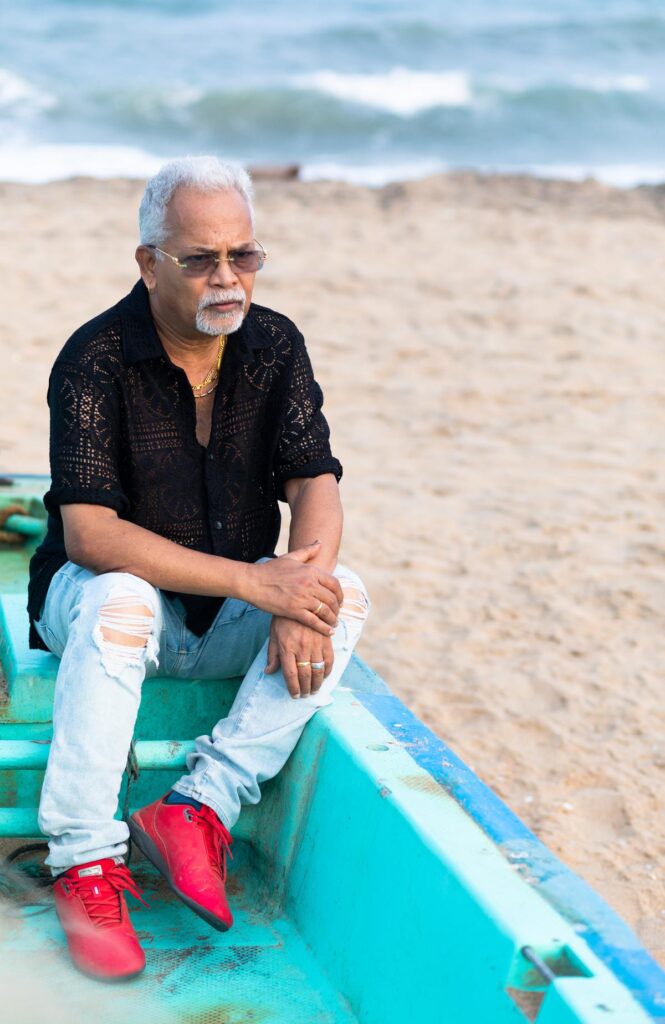
Author Charu Nivedita | Photo Credit: Backiaraj M.

You’ve given an unpopular historical figure a voice to defend his actions. In a country where satire is often lost on a lot of people, did you ever feel this book was a risky proposition?

Charu Nivedita: All my writing is risky because I always choose taboo topics. I have always been a misunderstood guy. In a historical perspective, Aurangzeb is also a misunderstood guy. So, I find some similarity between Aurangzeb and myself as a writer.

There are Tamil references throughout the novel. Why and how did you decide to weave these in?

CN: Even though I live in Tamil Nadu, I don’t agree with the culture here. My fellow writers don’t consider me a writer; I always feel like an outsider. Though I write in Tamil, I imagine a European, South American or an Arab readership. I mock the land in which I live. I feel sometimes that I live in a circus when I see the film industry, the paal abhishekam (a ritual of worship with milk)for the cut-outs of actors, or the happenings in the political arena. Self-mocking is important. One who is ready to parody himself or herself can do that with others.

Translator Nandini Krishnan | Photo Credit: Vinay Aravind

You have said in your translator’s note that some books are untranslatable. Why is that?

NK: I mean there are certain books that are extremely localised. For example, anyone in India who has watched Hindi films would find the line ‘Kitne aadmi the? (How many men were there?)’ funny in any context. But if you’re going to use that line with an American audience or with someone who doesn’t watch Hindi films, it would make no sense at all.

The history of Tamil cinema is as old as modern Tamil writing. There are constant references and cross-references to it in literature. Even in (Nivedita’s) Zero Degree, there is a reference to a scene from the film Chinna Gounder. Unless you get its context, it is not jarring or funny or discomfiting in any way. That’s why I felt Zero Degree was untranslatable.

There is a larger reach now of Tamil books for an English reading audience. What do you think of this translation boom?

NK: Right now, translations are sexy because Geetanjali Shree won the International Booker Prize in 2022. In the 90s, because of Vikram Seth’s enormous advance and later because of Arundhati Roy’s Booker win, Indian writing in English became sexy. This is just a fad. This has also given space to some very subpar translations because everyone is trying to get 20 books translated. We need to maintain the quality of someone like a Charu Nivedita or Ashokamitran or Perumal Murugan or Thamizhachi Thangapandian. Translations do have reach, but does the same quality of work reach an audience? I don’t know.

Also, there is a lot of focus on the writer’s story rather than the story that the writer is telling. And by that, I mean the writer’s gender, caste, their politics, and so on. Unless we go beyond these to the quality of their stories, we are in trouble.

CN: There is a translation boom. But unless there is a miracle, as in the case of Perumal Murugan or Vivek Shanbhag, one is unknown outside their own region. I am unknown outside Tamil Nadu or Kerala. There is no controversy or award because of which people might know me. This is the sad state of affairs.

radhika.s@thehindu.co.in

source: http://www.thehindu.com / The Hindu / Home> Litfest> Interview / by Radhika Santhanam / January 18th, 2024

Belgaum: 800-yr-old Shaikh Badruddin Dargah is a symbol of harmony

Belgaum, KARNATAKA :

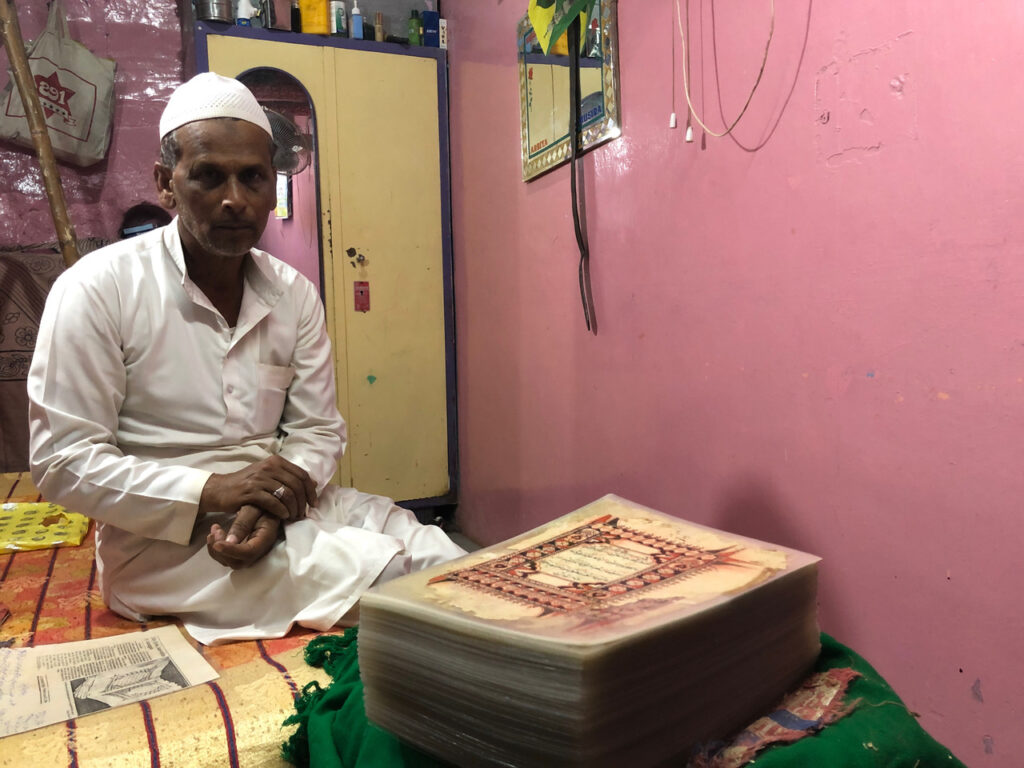
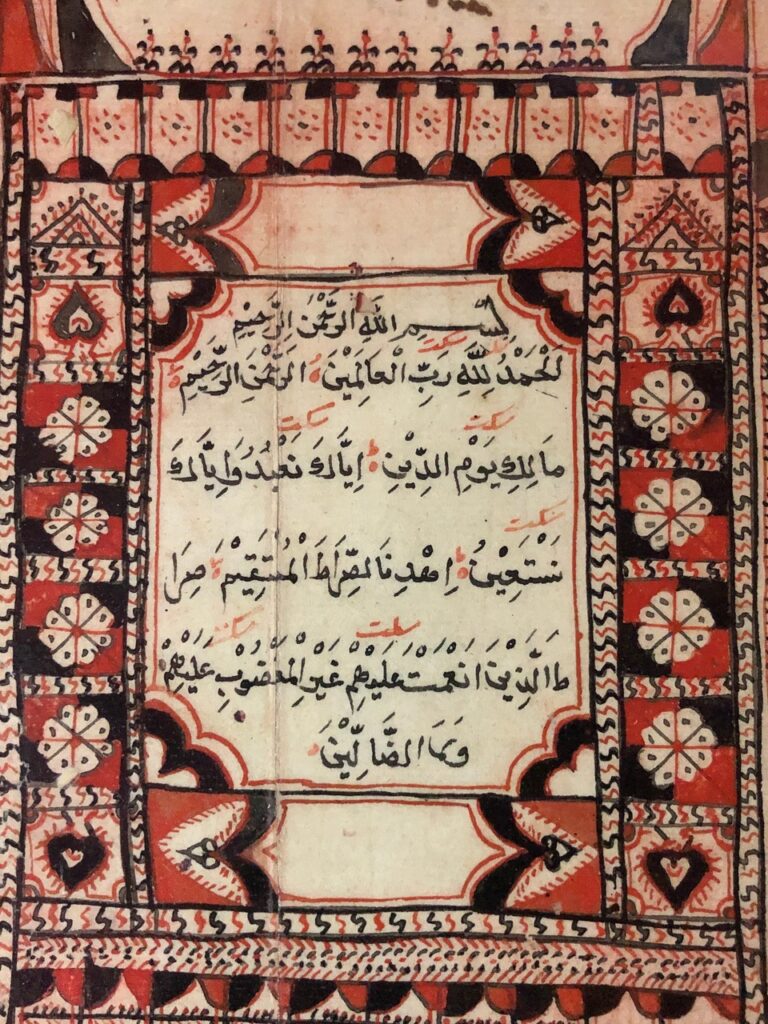
The dargah Hazrat Syedina Shaikh Badruddin Shah Arif Chishti is in possession of several archival records, but its real claim to fame is a copy of the Holy Quran calligraphed by Mughal Emperor Aurangzeb Alamgir.

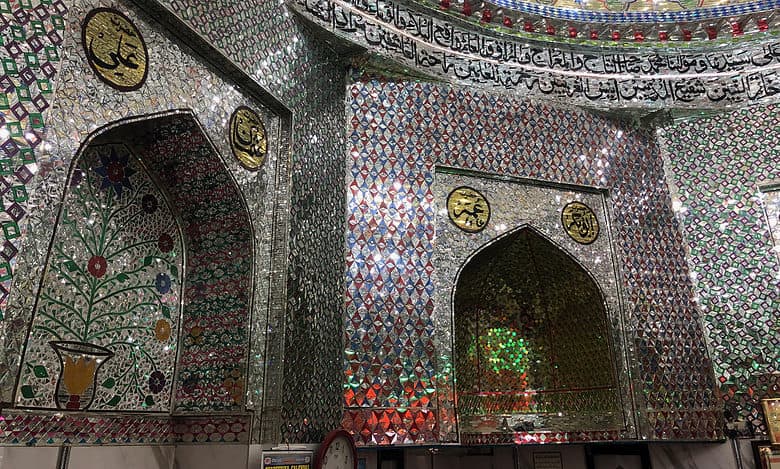
 The shrine of Shaikh Badruddin Chishti in Belgaum recently underwent renovation with some scintillating Persian glass work. (Image: Shafaat Shahbandari).

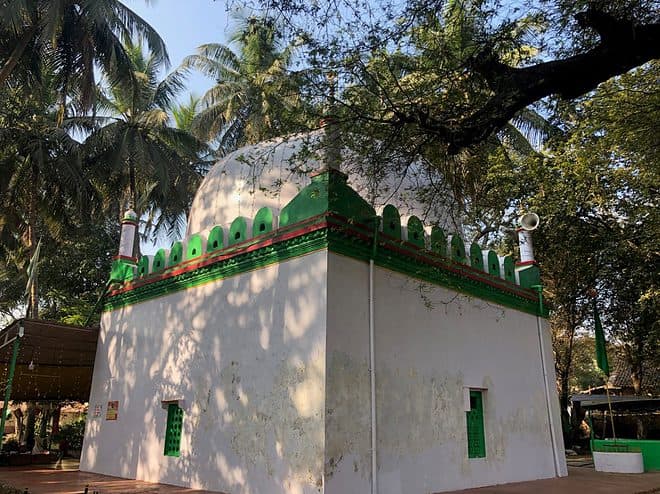
The historic town of Belgaum is home one of Karnataka’s oldest Dargahs. Located within the ancient fort of Belgaum, the dargah Hazrat Syedina Shaikh Badruddin Shah Arif Chishti is believed to be more than eight centuries of old.

Among the first sufi saints to settle in the region, Shaikh Badruddin travelled across south India spreading the message of peace and harmony. The historic tomb in Belgaum is still a great symbol of harmony in the city.

“Hazrat Syedina Shaikh Badruddin Shah Arif Chishti arrived in Deccan more than 800 years ago. He travelled extensively across southern India to spread the message of peace and love. He was among the first sufi saints to settle down in this region,” said Rafeeq Ahmed Ghawwas, caretaker of the Dargah in Belgaum.

Located in the historic Belgaum Fort, the mausoleum of Shaikh Badruddin Chishti was revered by rulers from various dynasties irrespective of their faith. (Shafaat Shahbandari)

Origins

Originally from Delhi, Shaikh Badruddin he was a disciple of Hazrat Shaikh Qutubuddin Bakhtiyar Kaki, who was a 12th century saint and scholar based in Delhi.  According to Ghawwas, Shaikh Badruddin migrated to the Deccan in Belgaum on the advice of his spiritual master. He was the one who introduced the Chishti order of the revered saint Khwaja Muinuddin Chishti in the south.

“Our ancestors were the disciples of Shaikh Badruddin and we have been in the service of this place since the earliest times. I took over as the caretaker of this dargah from my uncle Khattal Ahmed, who had taken over from my father Abdur Raheem Mujawar. Before him our grandfather Ebrahim Ahmed was the caretaker, who took over from his father Shaikh Jangu Mian,” said Ghawwas, who has been the caretaker of the dargah for more than 30 years.

Venerated by kings, ministers and commanders of all faiths, the dargah and the saints of this order have had close ties with several dynasties across its history of almost 800 years.

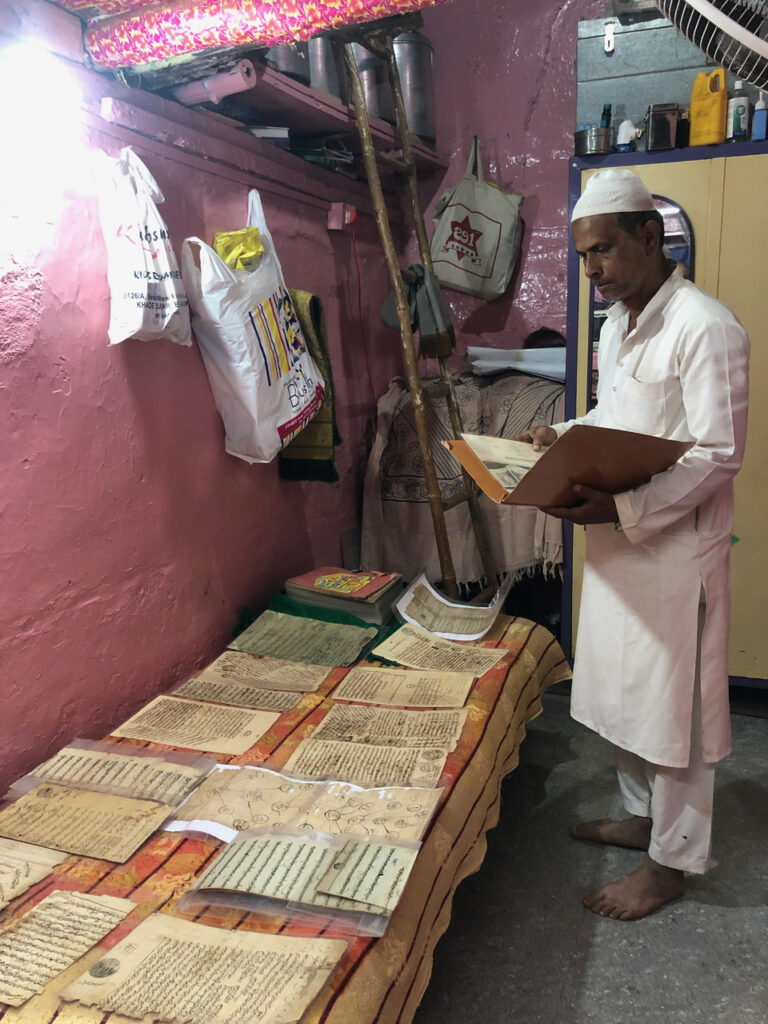
Ghawwas with some prized remnants of Maratha, Mughal and Adil Shahi heritage. (Shafaat Shahbandari)

The Aurangzeb connection and the Quran

More interestingly, the dargah Hazrat Syedina Shaikh Badruddin Shah Arif Chishti is in possession of several archival records that reflect its rich and vibrant history. And among its biggest inheritances is a 16th century copy of the Holy Quran that was calligraphed and gifted by the sixth Mughal Emperor Aurangzeb Alamgir.

Rafeeq Ahmed Ghawwas with his prized possession – a 17th century calligraphed copy of Quran. (image: Shafaat Shahbandari)

“The emperor had actually gifted the copy to the dargah of Khwaja Muinuddin Chishti in Ajmer, but we are not sure how and when it reached into the possession of our ancestors. We feel fortunate to have this blessed copy and we are doing our best to preserve it for posterity,” added Ghawwas, who has preserved the copy with great care.

According to local history, after his travels across South India, Shaikh Badruddin arrived in Belgaum and settled within the premises of the then newly built fort.  The fort was originally built in 1204 AD by Raja Jaya Raya of the Ratta Dynasty and Shaikh Badruddin lived here until his death in 1251 AD.

This mausoleum was built in the early 16th century by the Adil Shahi general and the then governor of Belgaum Asad Khan Lari.  The structure has been preserved with some renovation and restoration. Recently, the interiors of the dargah went through a facelift with Iranian glasswork adorning the walls, the dome and the ceilings.

Throughout its long history in Belgaum, the has received patronage from the rulers irrespective of their faith. The caretaker is in possession of several firmans and sanads issued by the Maratha rulers who venerated Shaikh Badruddin and offered their patronage.

The ornamented page of the calligraphed work representing the first chapter of the Holy Quran. (Image: Shafaat Shahbandari)

“This dargah has always been the abode of peace and harmony and we are continuing with our age-old motto of love for all,” added Ghawwas.

source: http://www.siasat.com / The Siasat Daily / Home> News> Bangalore / by Shafaat Shahbandari / December 13th, 2022

Emperor Aurangzeb’s 217.80 carat Shia amulet is world’s largest engraved emerald

DELHI :

Emperor Aurangzeb’s 217.80 carat Shia amulet is world’s largest engraved emerald

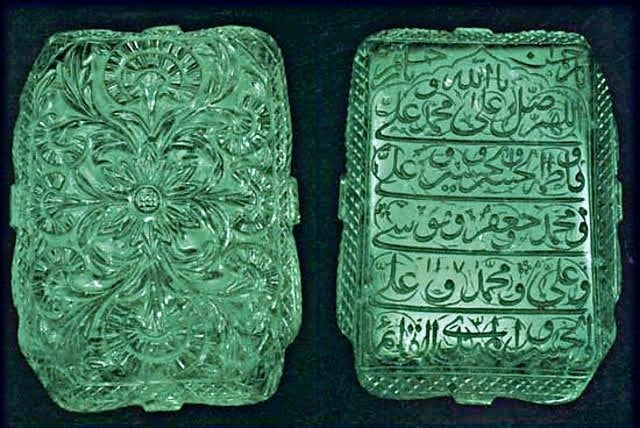
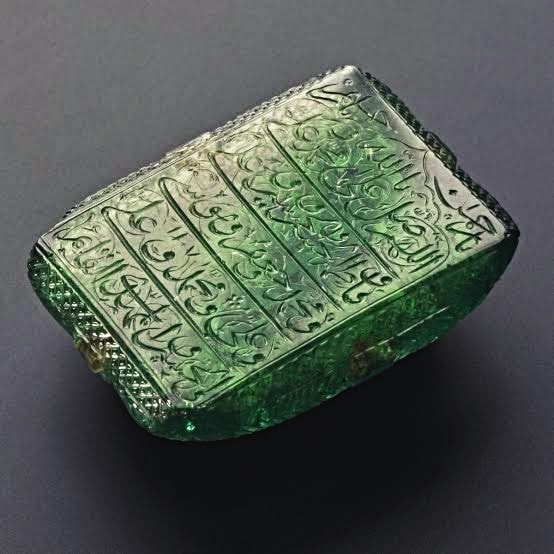
The largest engraved emerald gemstone in the world – The Mogul Mughal Emerald, weighing 217.80 carats.

This emerald tablet dates back to the year 1695. It belonged to the Mughal Emperor Aurangzeb who reigned between 1658-1707 and is adorned with the names of the Fourteen Infallible Guides: the Prophet Muhammad, Fatima al-Zahra and the Twelve Imams of Ahl al-Bayt ending with “wal-Mahdi al-Qaim.”

The gem is on display as part of the Al Thani Collection at the Museum of Islamic Art, Doha, Qatar, after it was acquired from Christie’s for $2.2 Million USD.

Emperor Aurangzeb’s 217.80 carat Shia amulet is world’s largest engraved emerald

The translation of the inscription reads: ‘O Merciful One, O Compassionate One, O God. God bless Muhammad and ‘Ali and Fatima and al-Husayn, and al-Hasan and ‘Ali, and Muhammad and Ja’far, and Musa and ‘Ali, and Muhammad and ‘Ali and al-Hasan and the Steadfast [al-Qaim] al-Mahdi.

source: http://www.therahnuma.com / The Rahnuma Daily / Home / August 19th, 2021

Little-known fact: Aurangzeb had more Rajput administrators than Akbar

DELHI , INDIA :

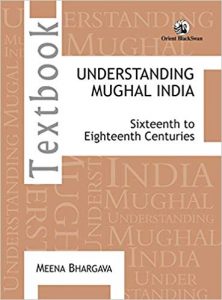
In ‘Understanding Mughal India’, Meena Bhargava writes about how Aurangzeb patronised several Hindu institutions & was supported in the war of succession by Rajputs.

A portrait of Mughal ruler Aurangzeb | Photo: collections.vam.ac.uk/

That Aurangzeb’s orthodoxy and his dedication to his beliefs was personal rather than a matter for political interference is evident in his reactions and responses during the war of succession of 1658, a quadrangular conflict between Dara, Shuja, Aurangzeb, and Murad. Throughout the struggle, Aurangzeb was concerned about Dara’s political manoeuvres. Their individual feelings and religious outlook—which stood in sharp contrast—remained confined to the personal level. Aurangzeb referred to Dara as mushrik (heretic) while Dara called Aurangzeb kotah pyjama (narrow pants), a symbolic attribute of orthodoxy. Both attempted to rally public opinion, but never on religious grounds. In fact, the support that largely came for Aurangzeb was from the Rajputs, notably Rana Raj Singh of Mewar, Raja Jai Singh Kachwaha of Amber, and later, Maharaja Jaswant Singh of Marwar. In this context may be related an interesting nishan that Aurangzeb sent to Rana Raj Singh of Mewar, condemning such kings who practised intolerance that could become the cause of dispute, conflict, and harm to the people, and could ‘devastate the prosperous creations of God and destroy the foundations of the God-created fabric’. Such attitudes of kings, Aurangzeb ordained, deserve ‘to be rejected and cast off’. This document from the Udaipur records is a clear revelation of what Aurangzeb intended as his public policy. It further confirmed that Aurangzeb, in the struggle for succession, did not raise the cry of jihad or Islam in danger, nor did he promulgate a new religious policy contrary to that of his predecessors; neither did Dara claim to be the champion of liberal forces. The issue was not religious or ideological, or whether orthodoxy would triumph or liberalism. It was a question of personal vested interest, political in nature but free from religious connotations, that is: Who would be the emperor of India, Dara or Aurangzeb? It is in such a context that Aurangzeb deserves to be assessed.

Debating Aurangzeb’s leanings—religious orthodoxy or political pragmatism—one needs to ask: Did Aurangzeb really intend, as Jadunath Sarkar suggested, the establishment of dar-ul-Islam or a truly Islamic State in India, the conversion of the entire population to Islam, and the annihilation of dissenters? Or, as Ishtiyaq Husain Qureshi argued, was it rigid adherence to the shari’a and undoing the damage caused by Akbar; or the triumph of Muslim theology, as Shri Ram Sharma asserted? If this was really the case, then the emperor’s personal valour, military skills, and single-minded commitment to achieving territorial expansion and consolidation would stand negated. The biased ideological portrayal of the emperor, regardless of historical accuracy, makes it difficult to explain the increase in the number of Rajput mansabdars in Aurangzeb’s administration as compared to Akbar’s period, and their rise from 24 per cent under Shahjahan to 33 per cent in 1689. Nor can Raghunath Ray Kayastha’s dominance as diwan-i kul be understood rationally. Raghunath Ray not only supported Aurangzeb but also participated in several expeditions of the period. Aurangzeb honoured him with the title of Raja and when Raghunath Ray died in 1664, the emperor, in his obituary written in Ruqa’at-i Alamgiri, remembered him as the greatest administrator he had ever known.

There are well-documented evidences of Aurangzeb’s patronage of various Hindu religious institutions, namely temples, maths, grants to Brahmins and pujaris:

  • Land grants were renewed to the temples at Mathura, Banaras, Gaya, Gauhati, and others, while the emperor is known to have donated ghee for the navadeep in a few temples, including the Mahabateshwar temple at Agra;
  • Gifts were offered to the Sikh gurudwara at Dehradun;
  • Madad-i ma’ash grants, as listed in the Rajasthan documents, were continued to a math of Nathpanthi yogis in pargana Didwana, sarkar Nagor;
  • Grants were also made to Ganesh Bharti faqir and his successors in pargana Siwana with the instructions that the faqir should not be disturbed so he could ‘pray for this sultanat’.
  • The Vrindavan document of 1704 referred to a parwana which sanctioned the rights of Chaitanya gosains who had founded Vrindavan and established pilgrimages in Braj Bhumi, and recognised the right of Brajanand Gosain to receive a fee from the followers of the sect on account of kharj sadir o warid, that is, expenses on guests and travellers from each village. In effect, it was a government levy for the benefit of Brajanand Gosain and his Vaishnavite followers.

From the above description, Aurangzeb’s patronage to temples appears without doubt. And yet some temples were attacked, while others were spared. This aberration in the emperor’s attitude can be explained by only one rationale: it was not iconoclasm, but reprisal for rebellion or political misconduct or disloyalty to the emperor. This exposition can be applied to understand the attack on the Vishwanath temple at Kashi, the Keshav Dev temple at Mathura, and several prominent temples in Rajasthan. In 1669, during a zamindar revolt in Banaras, it was suspected that some of them had assisted Shivaji in his escape from imperial detention. It was also believed that Shivaji’s escape was initially facilitated by Jai Singh, the great-grandson of Raja Man Singh, who had built the Vishwanath temple. It was against this background that Aurangzeb ordered the destruction of that temple in September 1669.

Around the same time, in a Jat rebellion that had erupted in the neighbouring regions of Mathura, a patron of the local congregational mosque was killed, leading to Aurangzeb’s order in 1670 to attack the Keshav Dev temple at Mathura. Temples in Marwar and Mewar were also attacked following the death of Maharaja Jaswant Singh to reprimand and crush the Rathor rebellion and the development of a Sisodia– Rathor alliance. These included temples in Khandela patronised by rebel chieftains; temples in Jodhpur maintained by a former supporter of Dara Shukoh; and the royal temples in Udaipur and Chittor patronised by Rana Raj Singh after the Rana entered into an alliance with the Rathors that signalled the withdrawal of loyalty to the Mughal State. It may be observed that the Rathor rebellion was not a reaction or a protest against the re-imposition of jizya. Instead, this re-imposition, as Abu’l Fazl Ma’muri observed in the context of the suppression of the Satnami revolt and prior to the emperor’s expedition to Ajmer, was meant for ‘the affliction of the rebellious unbelievers’.

MughalBookMPOs24feb2020

This excerpt from Understanding Mughal India: Sixteenth to Eighteenth Centuries by Meena Bhargava has been published with permission from Orient BlackSwan.

source: http://www.theprint.in / The Print / Home>  Page Turner> Book Excerpts / by Meena Bhargava / February 19th, 2020

Maratha blood and Persian veins

KARNATAKA :

A detail of the ‘House of Bijapur’ genealogical painting depicting most of the rulers of the Adil Shahi dynasty of Bijapur. (Photo: Wikimedia Commons)

  • Although the Adil Shahi dynasty of Bijapur was formally Muslim, it was influenced by multiple religions and different identities
  • Such complicated realities were not unusual in the subcontinent, from Vijayanagar in the south to further north in Kashmir

In 1680, a few years before emperor Aurangzeb swallowed up the sultanate of Bijapur, two court artists in that city produced a striking genealogical painting. Rich in quality, with ink, watercolours, as well as gold and silver generously employed, the picture shows all the rulers of the doomed Adil Shahi dynasty, save for one who was blinded and discarded for not being up to the mark.

In the centre, on the throne, for instance, sits Yusuf, the man who sailed from Persia and founded the house with his Maratha wife in the 15th century: In a mark of the kingdom’s allegiance to the Shah of Iran (as opposed to the Mughals), Yusuf is shown receiving a key of sovereignty from the Iranian emperor. Then there is Ali, who appears in armour—a symbol of the role he played in the defeat of Vijayanagar in 1565—just as there is the boy-king Sikander, the smallest figure in the group, who would spend much of his life as Aurangzeb’s dethroned prisoner.

Created on the eve of the kingdom’s demise, the painting is at once a family tree but also, as one scholar puts it, a “painted curtain call” for the extraordinary Adil Shahi dynasty.

But the portrait is significant also in another way, in that it depicts the contrasts that can develop in the same ruling house and in interpretations of its official ideology. The Adil Shahi state was formally Muslim. From the start, however, it was influenced not only by multiple religions but also by different identities. So, for instance, Ismail (reign 1510-34) chose to highlight the family’s Persian heritage—he made his troops wear Iranian uniforms and himself adopted the 12-pointed cap, a reference, as the scholar Deborah Hutton notes, to the 12 imams of Shia Muslims.

Ibrahim II (reign 1580-1627), on the other hand, was Sunni and is depicted in a style associated with the Indian faction at court, a reflection of his own attitudes. He was, for example, not only a lover of Marathi (much to the horror of a Mughal envoy, who found Ibrahim’s Persian weak) but also a great admirer of Hindu traditions. It was he who proclaimed himself son of Saraswati and Ganapati, studied Sanskrit, and went to the extent of renaming Bijapur “Vidyapur” to honour his favourite goddess.

Only two generations divided the orthodox Shia Ismail from Sunni Ibrahim (who was rumoured to be secretly Hindu) but there was a world of difference in their outlook.

The Adil Shahs certainly presented themselves as good Muslim rulers—indeed, even Ibrahim’s grave carries an inscription denying rumours that he was an apostate, affirming that he was a true believer of the Prophet’s message. But as this column showed previously in the case of Hindu Vijayanagar, official identity and self-image did not preclude the absorption of multiple influences, or even contradictory practice. The Adil Shahs, even as Muslims, alternated between Sunnism and Shiism, and it was their latter identity that often supplied the Mughals an excuse to invade in the name of religion—this when even Aurangzeb, who led the final charge against the “heretics”, was himself the son of a Shia mother. Add to this a give and take of culture from not only the Marathas (including Shivaji’s father, who served the Adil Shahs) but also Ottomans, Europeans and African grandees at court, and Bijapur was confirmed as an eclectic, mixed universe—one where the king had a formal identity that he could interpret strictly or with deliberate laxity, depending both on his predilections and official necessities.

But in this the Adil Shahs were hardly unique. The rayas of Vijayanagar shaped their self-image in Sanskritic terms and declared themselves consciously Hindu. And yet, one of them sought a marriage alliance with Catholic Portugal; many of them used the title “sultan”; and their sartorial tastes and everyday lives were influenced visibly by Persian culture. A raya might keep the Quran in court so that his Muslim nobles could prostrate before it, even as he destroyed mosques in enemy territory—policy depended on the context in which the king found himself. Further north, in Kashmir too, as Richard Eaton shows in his India In The Persianate Age, we witness such ironies.

Sultan Sikander (reign 1389-1413), for instance, was a destroyer of Hindu shrines and burner of Sanskrit books. But his son Zain al-Abdin (reign 1420-70), officially as devout a Muslim as his father, implemented the opposite policy: Not only did he resume temple grants, but under him the court also witnessed an unprecedented production of Sanskrit literature, as well as translation of Hindu texts into Persian for the ruler’s edification.

The greatest controversy, of course, arises in understanding Tipu Sultan of Mysore. To some, he is a giver of grants to Hindu temples and a protector of his non-Muslim subjects. Others cite his cruel conquest of Malabar, where Hindus were forced to renounce their religion, their temples demolished. But, simply put, the question is not one of either/or: The same king could act in opposite ways in different settings.

In Malabar, its chiefs and people were “infidels”, but in his settled territories in Mysore, Tipu had no qualms employing “infidel” Brahmins (including the celebrated Purniah) as officials. One was a land of conquest, where destruction of significant shrines was, to him, legitimate, while forced conversions were a method of flaunting to the Islamic world his commitment to their faith; but in his home territory, he was king in a broader sense, accepting of the land’s realities as well as its people. A villain in one reading, he could be a hero in another, employing his religious identity in different degrees, determined largely by the contingencies of politics.

It was this complicated reality that the painters of that Adil Shahi family portrait inadvertently conveyed in their work: a house of Muslim kings with Maratha blood, who cheerfully switched sects as they desired, and whose dynastic roster included all types—those whose faith guided them to extremes, and others for whom religion was more a formality, engaging as they did with a land of diverse realities.

Medium Rare is a column on society, politics and history. Manu S. Pillai is the author of The Ivory Throne (2015) and Rebel Sultans (2018).

Twitter – @UnamPillai

source: http://www.livemint.com / Live Mint / Home> Explore> Medium Rare / by Manu S. Pillai / September 05th, 2019

Jahanara Begum: The Forgotten Mughal Princess Who Designed Chandni Chowk

DELHI :

She was one of the most powerful women of medieval India, a Mughal princess like no other. And yet, her extraordinary story remains lost in the pages of history.

In an unassuming part of India’s capital city, amidst winding alleys lined with attar and chadar sellers, lies the 800-year-old dargah of Hazrat Nizamuddin Auliya—one of the most revered saints in Sufism. From dusk to dawn, thousands of devotees throng this bustling complex to pay their respects.

Yet, few know that Delhi’s most famous Sufi shrine is also home to the tomb of one of the most powerful women of medieval India, Jahanara Begum.

A writer, poet, painter and the architect of Delhi’s famous Chandni Chowk, Jahanara was a Mughal princess like no other.

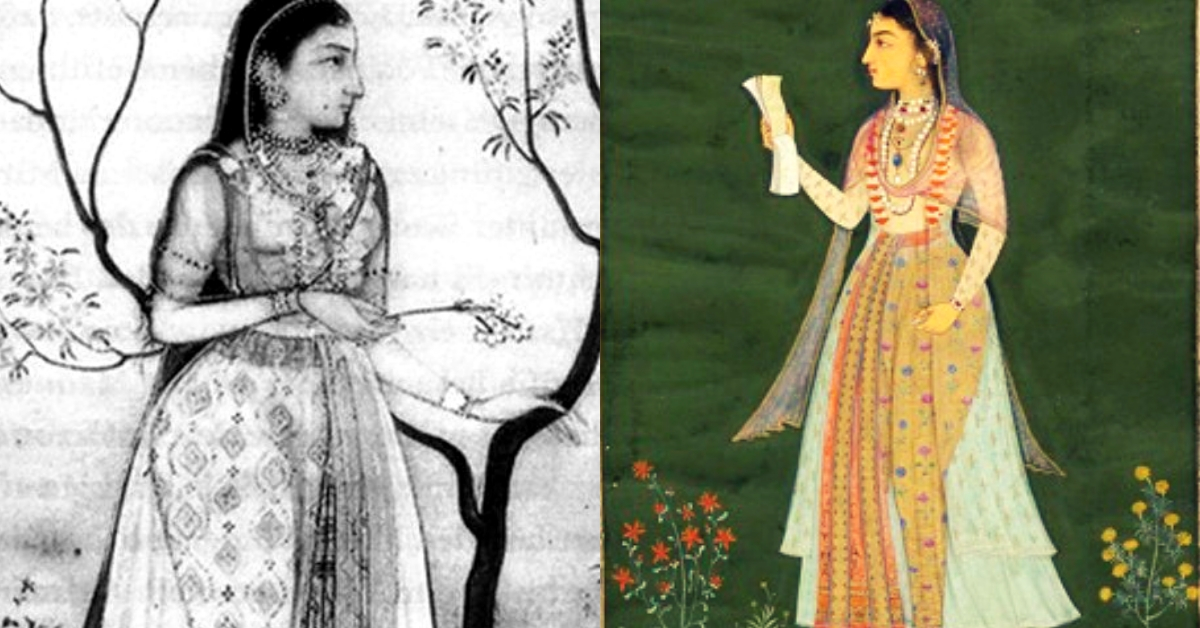
Portraits of Jahanara Begum. Source: Wikimedia Commons

This is her story.

The eldest child of Emperor Shah Jahan and his favourite wife, Mumtaz Mahal, Jahanara was born in Ajmer in 1614. Growing up in one of the richest and most splendid empires in the world, the young princess spent her childhood in opulent palaces, humming with family feuds, battle intrigues, royal bequests and harem politics.

As such, she was well-versed in statecraft by the time she was a teenager.

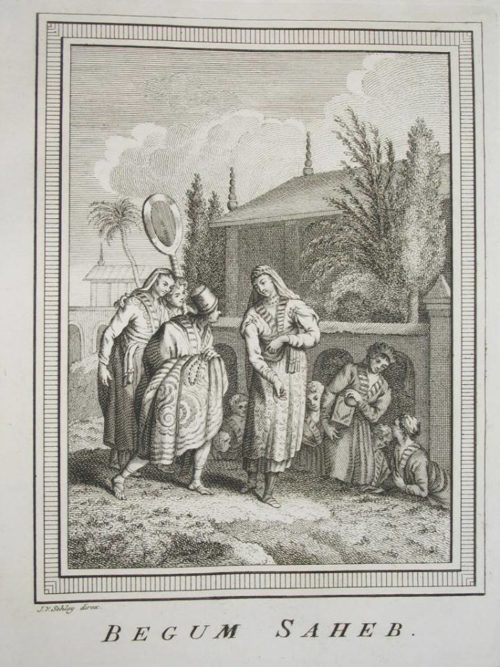
Soon after, Jahanara was appointed Begum Sahib (Princess of Princesses) by her doting parents. She would often spend her evenings playing chess with Shah Jahan, understanding the workings of the royal household, and helping her father plan the reconstruction of other palaces.

As French traveller and physician François Bernier writes in his memoirs, Travels in the Mogul Empire  ,

“Shah Jahan reposed unbounded confidence in his favourite child; she watched over his safety, and so cautiously observant, that no dish was permitted to appear upon the royal table which had not been prepared under her superintendence.”

Jahanara was also especially close to Dara Shikoh, Shah Jahan’s eldest son and her favourite brother. The two shared a love of poetry, painting, classic literature and Sufism.

In fact, she also wrote many books, including a biography of Ajmer’s Sufi saint Khwaja Moinuddin Chishti, displaying her flair for prose.

The Begum Sahib. Source: Royal India Families/Facebook

But tragedy struck the young princess’s life with the untimely demise of her beloved mother, Mumtaz, in 1631. At the tender age of 17, she was entrusted with the charge of the Imperial Seal and made Malika-e-Hindustan Padshah Begum—the First Lady of the Indian Empire—by the shattered Emperor, whose grief kept him away from his royal duties.

It was only on Jahanara’s behest that the inconsolable Shah Jahan came out of mourning.

In the years to follow, she became her father’s closest confidante and advisor. Highly educated and skilled in diplomatic dealings, her word became so powerful that it could change the fortunes of people. Her favour was much sought-after by foreign emissaries.

In 1654, Shah Jahan attacked Raja Prithvichand of Srinagar. Despairing of success in the battle, the Raja sent a plea for mercy to Jahanara. The Princess asked him to send his son, Medini Singh, as a sign of his loyalty to the Mughal Empire, thereby getting him a pardon from the Emperor.

The following year, when Aurangzeb was the viceroy of the Deccan, he was bent on annexing Golconda, ruled by Abdul Qutb Shah. The Golconda ruler wrote an arzdast(royal request) to the Princess, who intervened on his behalf. Qutb Shah was pardoned by Shah Jahan (against Aurangzeb’s wishes) and secured his safety on payment of tax.

Interestingly, Jahanara was also one of the few Mughal women who owned a ship and traded as an independent entity.

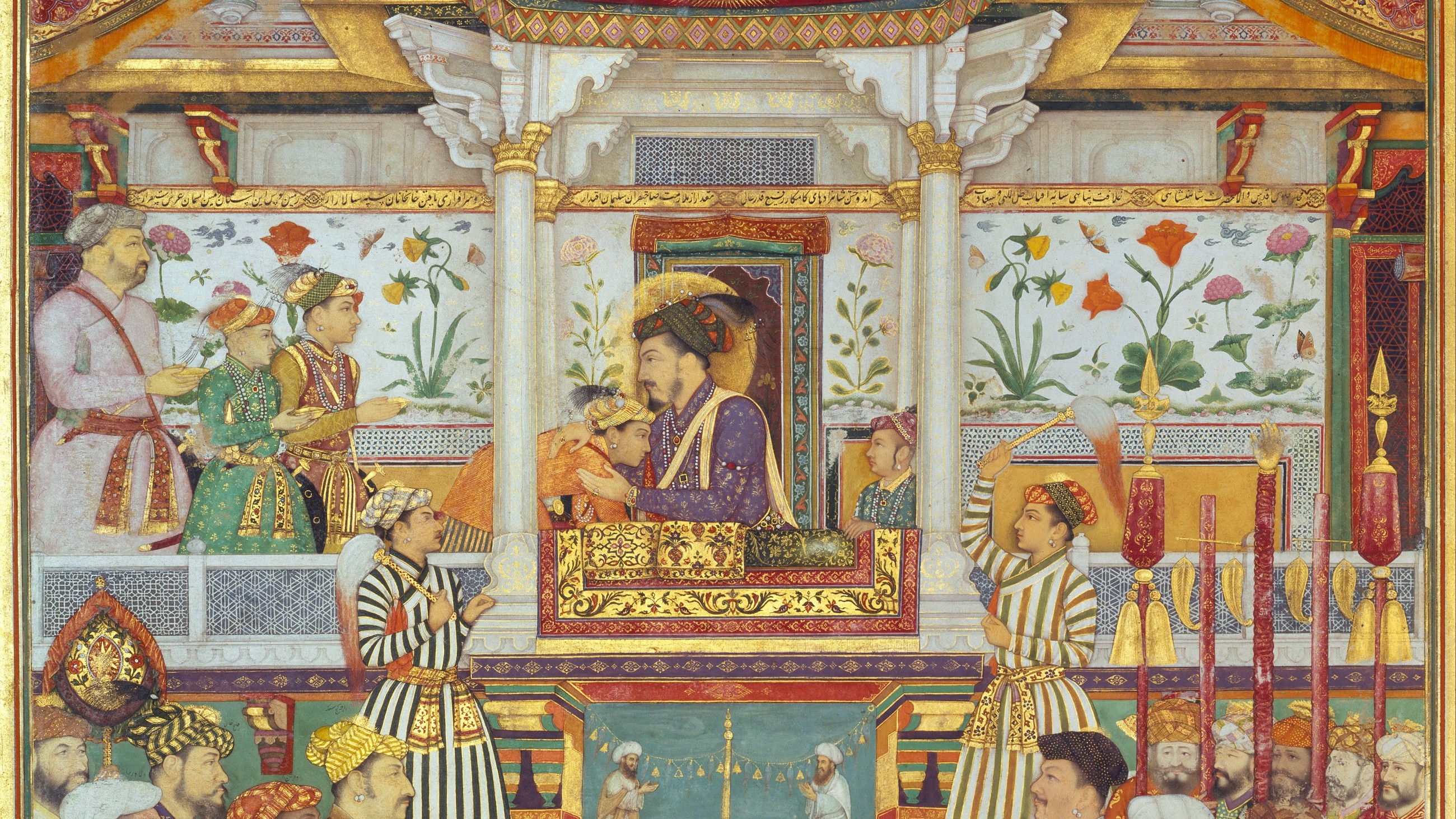
Padshahnama plate 10 : Shah Jahan receives his three eldest sons and Asaf Khan during his accession ceremonies (8 March 1628). Source: Wikimedia Commons

Named ‘Sahibi’ after its owner, Jahanara’s ship would carry the goods made at herkarkhanas (factories) and dock at her very own port in Surat; its revenue and the colossal profits she made via trade significantly boosted her annual income of three million rupees!

In his book Storia Do Mogor, Italian traveller Niccolao Manucci writes, “Jahanara was loved by all, and lived in a state of magnificence.” The book is considered to be one of the most detailed accounts of Shah Jahan’s court.

But Jahanara’s political and economic clout failed to have an impact on the bitter war of succession between her brothers, Dara Shikoh and Aurangzeb. She made several attempts to mediate between them, but as Ira Mukhoty writes in her book Daughters of The Sun , she had “underestimated the corrosive loathing that Aurangzeb has for Dara, whom he blames for his father’s cold criticism throughout his career”.

Aurangzeb ultimately killed Dara Shikoh and placed an ill Shah Jahan under house arrest in Agra Fort’s Muthamman Burj (Jasmine Tower). Faithful to her father, Jahanara set aside her lucrative trade and luxurious lifestyle to accompany him into imprisonment.

A constant presence beside Shah Jahan in his exile, she took care of him for eight years, till he breathed his last in 1666.

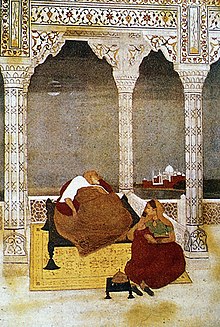
“The Passing of Shah Jahan” (1902), a painting by Abanindranath Tagore. At the foot of the bed is Jahanara Begum, the daughter of Shah Jahan; the Taj Mahal is in the background. Source: Wikimedia Commons

It says much for her stature in the Mughal court that after Shah Jahan’s death, Aurangzeb restored her title of Padshah Begum and gave her a pension along with the new title of Sahibat al-Zamani (Lady of the Age)—befitting for a woman who was ahead of her time.

Unlike other royal Mughal princesses, she was also allowed to live in her own mansion outside the confines of the Agra Fort.

“Jahanara establishes herself in the city as the most influential woman patron[s] of literature and poetry. She collects rare and beautiful book[s], and her library is peerless. She donates money to charity, especially Sufi dargahs, and carries on a genteel diplomacy with minor rajas who come to her with grievances and gifts,” writes Ira Mukhoty in her book.

Spending her last years in the pursuit of her artistic and humanitarian passions, Jahanara passed away in 1681 at the age of 67 but not before she etched her mark in the annals of history in a manner that would have made her father proud.

She commissioned several architectural spectacles, mosques, inns and public gardens across the Mughal empire.

But she is best remembered as the architect of Old Delhi’s legendary bazaar, Chandni Chowk—which translates to ‘Moonlit Intersection’.

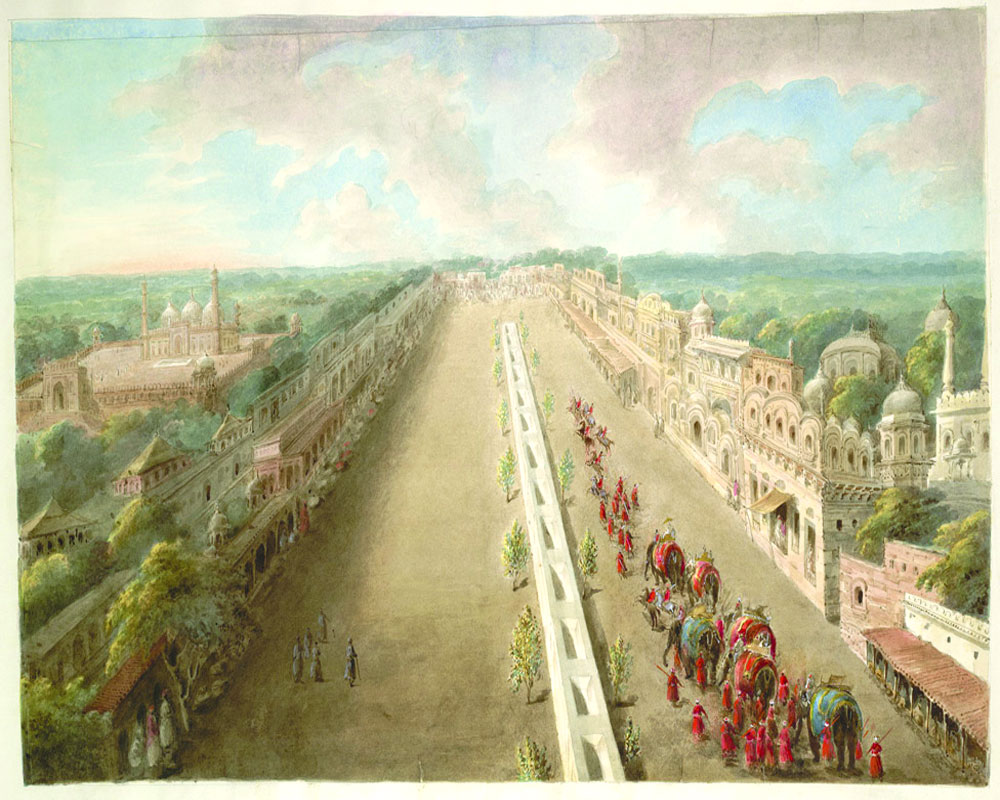
Water colour of Chandni Chowk in Delhi from ‘Views by Seeta Ram from Delhi to Tughlikabad Vol. VII’. Source: British Library

In his book  Shahjahanabad : The Soverign City in Mughal India , Stephen Blake writes,

“The chowk was an octagon with sides of one hundred yards and a large pool in its center. To the north, Jahanara built a caravansarai (roadside inn) and a garden and, to the south, a bath. On certain nights, the moonlight reflected pale and silvery from the central pool and gave to the area the name Chandni Chawk (Silver or Moonlight Square). This name slowly displaced all others until the entire bazaar, from the Lahori Gate to the Fatehpuri Masjid, became known as Chandni Chawk.”

Today, many of Chandni Chowk’s ancient buildings have been torn down, as its lanes brim with new shops and colliding crowds. And yet, somehow it manages to invoke the spirit with which Jahanara lived—the same spirit that helped her survive and thrive amidst betrayals and tragedies.

Interestingly, Jahanara’s resting place in the Nizamuddin Dargah is of her own choosing, just like her character.

Jahanara’s tomb at the Nizamuddin Dargah. Source

Unlike the giant mausoleums built for her parents, she rests in a simple marble tomb open to the sky, inscribed with her own couplet in Persian:

Baghair subza na poshad kase mazar mara, (Let no one cover my grave except with green grass,)
Ki qabr posh ghariban hamin gayah bas-ast. (For this very grass suffices as a tomb cover for the poor.

Perhaps it is poetic justice that green vines grow on the grave of this extraordinary princess of India.

(Edited by Shruti Singhal)

source: http://www.thebetterindia.com / The Better India / Home> History> Women / by Sanchari Pal / May 24th, 2019

Great dynasties of the world: The Mughals

INDIA :

Ian Sansom on a clan whose empire became synonymous with India

Shah Jahan, who built the Taj Mahal. / Photograph: dbimages/Alamy

In the month of Ramadan of the year 899,” writes the great Babur (1483-1530) in his autobiography, The Baburnama, “and in the 12th year of my age, I became ruler in the country of Fergana.” Babur – his name means “tiger” – inherited the tiny kingdom of Fergana, in what is now Uzbekistan, from his father. The family was descended from Genghis Khan and Tamerlane the Great; Babur the boy-king became the first of the Mughal emperors, a family of Turko-Mongol rulers who, according to the historian Abraham Eraly, “so decisively stamped their personalities on India that the Mughal Empire became, in the public perception, synonymous with India.”

Babur established his empire through conquest, successfully invading India in 1526. His son, Humayun (1508-1556), who succeeded him, came close to losing everything that his father had achieved. It wasn’t until the rule of Akbar (1542-1605), Humayun’s son, that the Mughal Empire was consolidated. Akbar, like Margaret Thatcher, slept only four hours a night. When he was awake, which was most of the time, he set about expanding the Mughal territories abroad and reforming the government at home. He ended the tax imposed on non-Muslims. He invited Jesuit missionaries into his court. And he formed his own religion. Above all, he knew how to make friends as well as enemies. According to his court historian, Abul Fazl, “His majesty forms matrimonial alliances with princes of Hindustan and of other countries; and secures by these ties of harmony the peace of the world.”

Jahangir (1569-1627) succeeded his father, Akbar, in 1605. He preferred to drink and carouse rather than to rule, and his wife, Nur Jahan, took on the responsibility of the state. The fifth Mughal emperor, Shah Jahan (1592-1666), was more like his grandfather Akbar and his great-great-grandfather Babur: a schemer, a man of grand plans and ideas. When his wife, Mumtaz, died in 1631, Shah Jahan was grief-stricken, so much so that, according to one observer, he “gave up the practice of plucking out grey hair from his beard”. He also decided to build his wife a memorial. The English travel writer Peter Mundy described the construction: “The building is begun and goes on with excessive labour and cost, prosecuted with extraordinary dilligence, Gold silver esteemed common Mettal, and Marble but as ordinarie stones.” According to Rudyard Kipling, the place was “the embodiment of all things pure, all things holy, and all things unhappy”. It was the Taj Mahal.

Shah Jahan’s rule ended with a war of succession between his sons, in which Aurangzeb (1618-1707) emerged triumphant. Having killed his brothers, he imprisoned his father. After Aurangzeb the decline of the Mughals began. In 1738, India was invaded by the forces of Nadir Shah, ruler of Iran. Territories were divided. Then the British East India Company moved in.

The last of the long line of Mughal emperors was Bahadur Shah II, known as Zafar. “Personally, he was one of the most talented, tolerant and likeable of his dynasty,” writes William Dalrymple in The Last Mughal  (2006). The first emperor, Babur, had been a warrior. Zafar was an aesthete – a poet and an architect. Alas, empires tend not to survive under aesthetes. “While the British progressively took over more and more of the Mughal Emperor’s power,” writes Dalrymple, “the court busied itself in the obsessive pursuit of the most cleverly turned ghazal, the most perfect Urdu couplet.”

Zafar died in exile in Rangoon in 1862. His courtiers were hanged and much of Mughal Delhi was destroyed. “The death of the ex-King may be said to have had no effect on the Mahomedan part of the populace,” wrote the British commissioner at the time, “except for a few fanatics who watch and pray for the final triumph of Islam.”

source: http://www.theguardian.com / The Guardian – International Edition / Home> Family> Great Dynasties of the World / by Ian Sansom / July 16th, 2019

The haveli of Mughal fireworks in Chandni Chowk

Chandni Chowk, DELHI :

Delhi did have fire-crackers much more than 200 years ago and Haider Quli, the artillery chief, made good use of them at his haveli, now lying deserted.

The cluttered entrance to Haveli Haider Quli in Chandni Chowk

Delhi did have fire-crackers much more than 200 years ago and Haider Quli, the artillery chief, made good use of them at his haveli, now lying deserted. In Chandni Chowk is Haveli Haider Quli, whose inhabitant till February 2016 was the nonagenarian Narain Prasad. The double-story apartment he lived in was only a part of the original mansion, where now houses and shops have mushroomed and the garden that was one of its attractions has disappeared in the ensuing rabbit of a warren locality.

Haider Quli was the chief of the artillery during the reign of Mohammad Shah Rangila (1719-1748) in whose reign Nadir Shah invaded Delhi and took away the Peacock Throne and Kohinoor, along with other fabulous treasure.

Haider Quli got his exalted post because of his patron Hussein Ali, but later turned against his mentor and got him murdered while he was on his way home in Chandni Chowk. A boy related to him fired at one of the assailants, killing him on the spot but the others hacked the boy to pieces with their swords. It is said that Mohd Shah was also involved in the conspiracy, along with his mother as he had become wary of Hussein Ali.

It was Haider Quli who organized the first fireworks in 18th century Delhi some 260 years ago under his supervision as Mir Atish, whose descendants had fireworks shops behind the Jama Masjid.

The Mughal emperors preceding Mohd Shah celebrated Diwali with illuminations but there were no fireworks as such. Possibly the only cracker was a ball of gunpowder exploded by the Mir Atish and a crude kind of Phuljhari (sparkler) for the amusement of the ladies of the harem when the Seths of Chandni Chowk were worshipping Lakshmi in their shops.

It is pertinent to remember that Babur brought guns with him when he invaded India in 1526 and on whose firepower he won the First Battle of Panipat against Ibrahim Lodi-the Sultan’s elephants running amuck at the sound of the blazing cannon and the fireballs they ejected.

Gunpowder was invented or discovered in China in the ninth century and India was practically devoid of it till AD 1250. The Mughals’ ancestor, Changez Khan had made use of gunpowder during his Mongol raids because of which it made its way into parts of Russia. Evidence of this found in the story of Alibaba and the Forty Thieves, in which the chief of the robbers Abu Hassan used gunpowder (Shaitani Rait or Devil’s Sand) to overawe his victims. Then after depositing the loot in his treasure-house Simsim, he retired to the fort, where he resided as the seemingly pious Imam Sahib, to whom people went with their complaints against Abu Hassan. The hypocrite, with his lust for the slave girl Marjina, would then march out with troops in a mock campaign to nab the robber chief.

History shows that before the Mughals some sort of atishbazi was introduced into Delhi during the reign of Nasiruddin Mahmud, Chirag Delhi. But he and other Slave kings are not known to have celebrated Diwali, which was first patronised by Mohmmad bin Tughlak. The succeeding Sayyids and Lodhis may also have willy-nilly followed the custom. Babur and Humayun had their Nauroz celebrations, but Akbar did celebrate Diwali on a grand scale because of his Rajput wives. Jahangir and Shah Jahan had an even more elaborate Diwali, with the latter emperor being bathed in waters collected from seven rivers and pandits chanting mantras while the Maulvis looked askance. However, his daughter Jahanara was not burnt during Diwali celebrations but one evening at the daily lamp-lighting. Aurangzeb, despite his orthodoxy, did observe Diwali with the Rajput chiefs coming to him with sweets and gifts. Gossip would have us believe that his first Diwali was celebrated with his beloved Hira Bai Zainabadi in his arms and offering him a cup of wine to prove his love for her. But when Aurangzeb moved as if to sip it, Zainabadi (appreciating the gesture) took away the cup from his hand. No wonder when she died an early death. Aurangzeb was devastated Jahander Shah, his grandson, celebrated Diwali with concubine Lal Kanwar in Lahore (1712), when he bought all the oil available in the city for illuminations, though fireworks were absent till Mohd Shah took over after the death of Farrukhseyar and some puppet kings.

Historians, however, fix the date when Diwali crackers became popular as 200 years from now, though the British were enjoying fireworks on Guy Fawkes Night in observance of the Gunpowder Plot of 1605 (the year Akbar died). Mirza Ghalib was one of those who were present at the Diwali celebrations of Bahadur Shah Zafar, who released the bluejay or Neelkanth bird as a sign that Durga was on her way home after Dussehra. But Prof Ram Nath observes that it was actually Shah Jahan who first did so. For the later Mughals fireworks were also the main observance during Shabhe-Barat, heralding the approach of Ramzan.

This display of crackers was extended to Diwali. As a matter of fact, during Mohd Shah Rangila’s reign it was a cracker thrown at the palanquin of the emperor’s jeweller, Sukh Karan that led to the March 8, 1729, shoesellers’ riot in which Rangila Piya’s favourite concubine Nur Bai, on her way back home in Chawri Bazar from the Red Fort, lost a tooth when she was hit by a stone thrown by the rioters. So Delhi did have crackers much more than 200 years ago and Haider Quli, the artillery chief, made good use of them at his haveli-now lying deserted as even the last occupant, Narain Prasad’s 94-year-old sister has left it after her brother’s death. But whenever you see the place you instinctively think of fireworks as happened during Guru Nanak’s birthday celebrations amid a crescendo of crackers despite the ban on them.

source: http://www.thestatesman.com / The Statesman / Home> Supplements> Section 2 / The Statesman News Service / New Delhi – February 09th, 2019