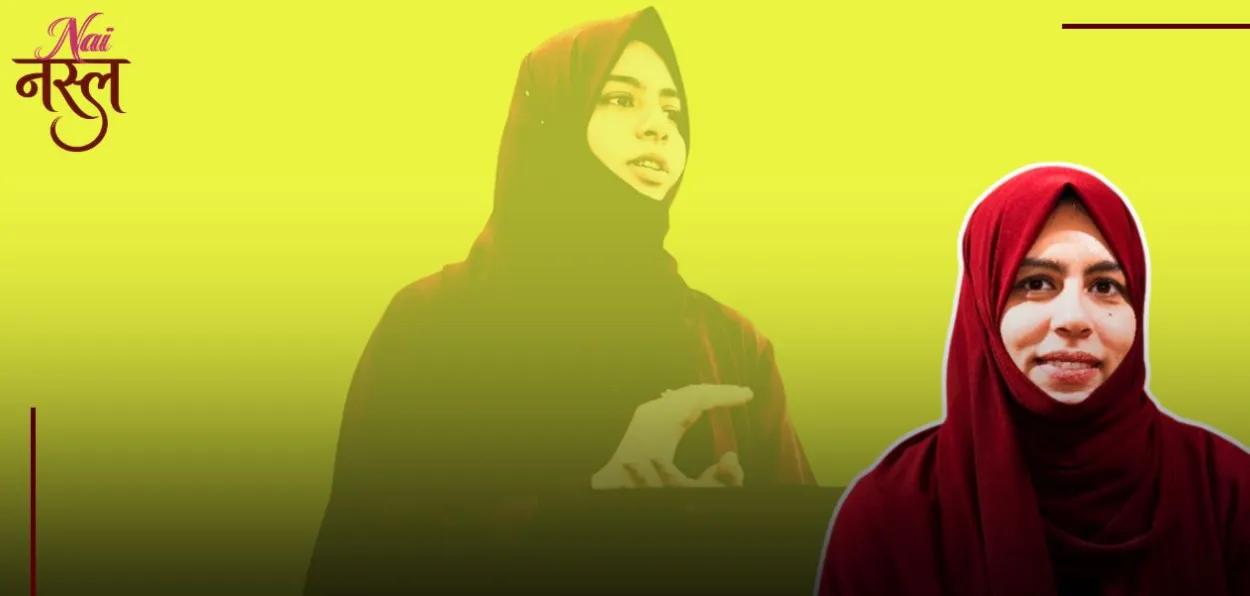
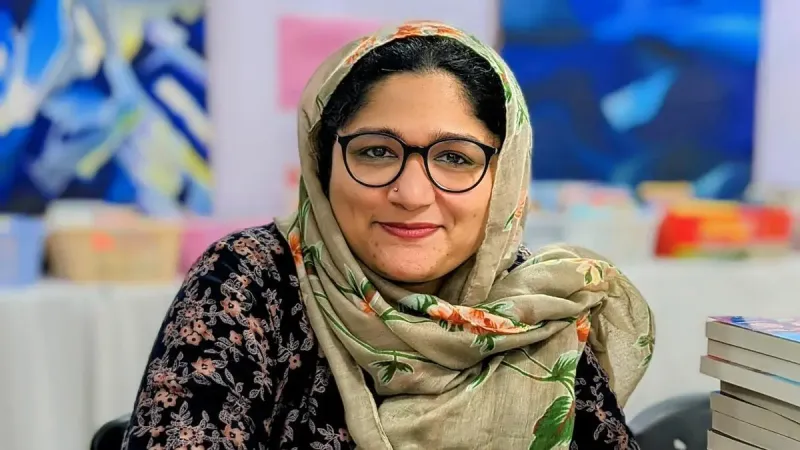
Sarah Mehmood began as a reader. Today she writes fiction rooted in the lives of young Indian Muslims.
She found an online platform where young writers worldwide published novels chapter by chapter. She noticed a gap. Muslim fiction set in India, especially about young Muslim women, was hard to find.
“I stumbled upon writing by chance,” she recalls.
Curiosity became a wish to write the missing stories. She wanted authentic, positive representation and relatable characters for young women.
Her characters dress modestly, stay devoted to their Creator and hold ambitions for their futures. They follow their faith without being defined by it alone. They also face a universal tension between who society expects them to be and who they want to become.
This tension drives her book ‘Bowled Over by the Broken’. Sarah wrote it after readers dismissed events in novels as things found only in stories. She wanted to prove otherwise.
She drew on experiences familiar to many young South Asian women. Some hear taunts about a brown complexion. Others face pressure to marry soon after finishing their education. Some hear the assumption compatibility will grow after the wedding.
Sarah refuses to treat the wedding as the finish line. “Most stories end at the wedding,” she says. “In this book, the most eventful part begins after it.”
Her three self-published books share one idea. Faith and dreams belong together. “You do not have to abandon your religion while seeking to accomplish your dreams,” she says.
Sarah works as an Assistant Professor with a background in Food Science and Nutrition. Her training teaches her to question, analyse and look beyond the obvious.
She balances teaching, research and writing. Writing helps her cope with the load. “On days when I think I’m too busy for anything apart from work,” she says, “those happen to be the same days when I find myself scrambling to pen down my thoughts as a means of destressing.” She sums it up in one line: “Painters paint, bakers bake, and writers write.”
Her path from online reader to self-published author and academic followed no fixed plan. It began when she noticed a gap and decided to fill it. Her stories ask young Muslim women to keep their identity whole. They leave room for dreams alongside devotion and ambition alongside values.
Zulekha Shakoor Rajani, Head of the Department of Islamic Psychology at Ummeed
The average scroll lasts seconds. The average craving wants an answer now. We have built a culture around instant gratification and then wondered why patience, self-understanding, and emotional regulation feel so difficult. Zulekha Shakoor Rajani wants to slow down that conversation.
A Counselling and Spiritual Psychologist, Clinical Director, and Head of the Department of Islamic Psychology at Ummeed Counselling Centre in Bengaluru, Rajani works at an unusual but increasingly relevant intersection: psychology and faith. With more than 8,000 hours of clinical practice, she works across counselling, psychoeducation, mentoring and professional training, while exploring what it means to understand the human being through an Islamic psychological framework.
Her message to young people is simple: before trying to fix your life, understand yourself.
For Rajani, the journey towards psychology and Islamic Psychology was not the result of a single defining moment. It grew from two interests that had been present since childhood.
Raised in an Islamic environment and surrounded by scholars through her family, she developed an interest in Islam alongside her fascination with psychology. She describes her abilities and opportunities through the concept of salahiyah, the capacities Allah gives a person, and believes her path was shaped by the opportunities that followed.
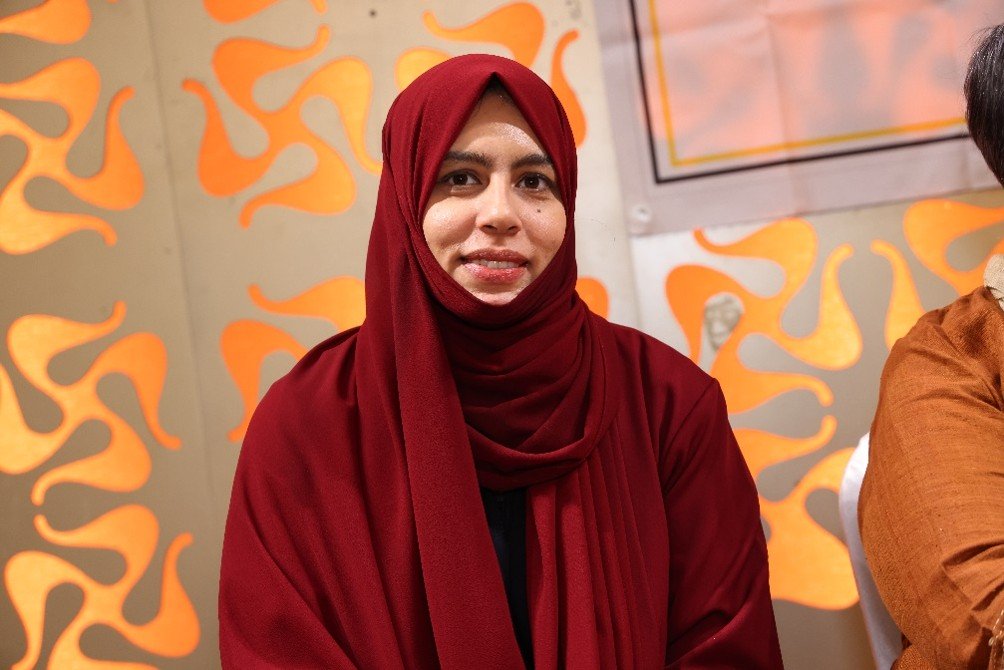
Zulekha Shakoor Rajani
Those opportunities eventually took her beyond India. At Cambridge Muslim College, she studied Islamic Psychology, gaining exposure to both theory and practice alongside a select international cohort.
She later trained through the Khalil Centre, including clinical Islamic psychology experiences in Chicago and Istanbul, while also pursuing specialised training in Tazkiyah Therapy, Islamic Psychology, and Marital Counselling.
Her professional journey in Islamic Psychology began taking a more definite shape six years ago. Today, her work spans clinical practice, research, supervision and training. She also serves as a facilitator and teacher at Al Balagh Academy and as an Executive Advisory Member of International Students of Islamic Psychology India.
But for Rajani, the growing need for this field is inseparable from the state of mental health awareness in India.
“The concept of mental health has been very weak in India,” she says.
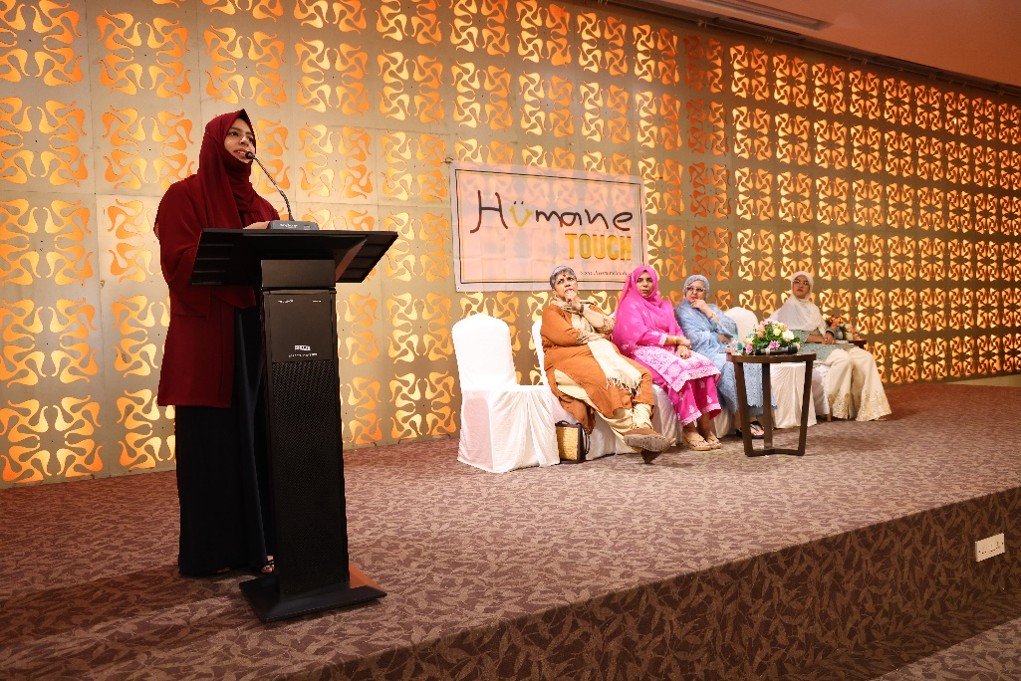
Zulekha Shakoor Rajani speaking in a function
Although psychological discourse has expanded significantly, she believes India still has considerable ground to cover when it comes to recognition, acceptance and understanding of mental health care.
Within Muslim communities, she sees an additional opportunity to explore the relationship between psychology and iman in a way that is culturally and spiritually meaningful.
“There is a lot around psychology and iman,” she says, pointing to the scope for developing approaches that speak to the lived realities of Muslim communities.
Yet awareness can easily be distorted. Rajani believes the media has a significant role in shaping how society understands mental health and sometimes in creating misconceptions around it.
“The media plays a very important role in misconceptions regarding mental health,” she says.
Zulekha Shakoor Rajani with her colleagues
One of the biggest challenges, she believes, is that people often wait too long before seeking professional support. There are stages in life when seeking help can prevent a concern from becoming much more difficult, but recognising that need remains uncommon.
Her clinical work has shown her what meaningful change can look like. Some of the moments she finds most rewarding are deeply human ones: seeing a couple reconcile after working through their differences, or watching someone move beyond patterns of early repression and begin coping in healthier ways.
For a relatively young field in India, however, there is another obstacle: a shortage of adequately trained professionals. Rajani believes expanding the field responsibly through both clinical work and research is essential.
Her concern becomes particularly urgent when she talks about young people.
Gen Z has grown up in an ecosystem designed around immediacy. Social media offers constant comparison; entertainment is available on demand; food, shopping and communication are increasingly built around convenience. Rajani sees the psychological consequences in what she describes as a growing “urgency” among young people.
“There is a lot of urgency in this generation,” she observes, linking it to reduced patience and what she calls “dopamine hijack.”
Her answer is not to reject technology or modern life, but to develop greater awareness of self. Young people, she believes, need to understand their insecurities, their attachments and the ways their nafs, their inner drives and tendencies, shape their behaviour.
Zulekha Shakoor Rajani (Right) with an unidentified person
Social comparison is another serious concern. Constantly measuring one’s appearance, achievements, relationships or lifestyle against carefully curated online versions of other people’s lives can quietly erode self-esteem and satisfaction.
Relationships, too, are changing. Rajani points to attachment issues involving spouses and children, parenting concerns, shifting family roles and struggles around boundaries. These changes, she says, are creating difficult questions about identity and the place of women in society.
This is where her understanding of Islamic Psychology moves beyond simply adding religious language to conventional therapy. Her work explores the human being through a broader bio-psycho-social-spiritual lens, bringing together psychological understanding, physical and social realities and spiritual dimensions.
That philosophy also informs her extensive work outside the clinic. Rajani has conducted more than 100 workshops, retreats and seminars addressing youth development, parenting, marital enrichment, addictions, emotional regulation, women’s psychology, resilience and the nafs. She has also presented at national and international forums on spirituality, psychology, counselling and psychosocial rehabilitation. Her work has increasingly focused on developing culturally rooted approaches to mental health and strengthening the research base of Islamic Psychology.
Her recent academic work reflects that direction. In 2026, she presented research on “Retraining the Nafs in the Age of the Screen: A TIIP Framework for Behavioural Addiction in Muslim Youth,” bringing together clinical learning, supervision and questions about technology’s influence on young Muslims.
In 2025, she was also recognised as one of the “40 Under 40 Leaders” by the All India Muslim Development Council, adding another milestone to a career increasingly focused on making mental health conversations more accessible and culturally grounded.
Yet perhaps her most important advice is the simplest.
“Don’t wait for things to get very bad,” she says. “One consultation would be helpful.”
For Rajani, seeking help is not a sign of failure. It can be the beginning of understanding what is happening within.
And in a generation constantly encouraged to optimise everything, from productivity to appearance to relationships, perhaps her most radical suggestion is to pause and look inward.
Because mental health, in her view, is not only about learning how to cope. It is also about intellectual stimulation, personal growth, understanding the nafs, reconnecting with one’s deeper sense of purpose, and asking a question that no algorithm can answer for us:Who are we becoming?
source: http://www.awazthevoice.in / Awaz,TheVoice / Home> Stories / by Saniya Anjum / September 25th, 2026
In an interview with Maktoob, author Andaleeb Wajid reflects on writing young lives, Muslim women and ordinary Muslim worlds, while discussing her latest novel Have You Met Me?, her memoir on grief and a writing career spanning more than 50 books.
In an interview with Ashikha N for Maktoob, writer Andaleeb Wajid discusses her latest novel Have You Met Me?, her enduring engagement with young adult fiction, writing across genres, the experience of writing her memoir Learning to Make Tea for One, and the complexities of writing Muslim women and ordinary Muslim lives.
Andaleeb Wajid has built a distinctive place for herself in Indian popular fiction by writing stories that find drama the familiar — in families, friendships, love, food, growing up and the small negotiations of everyday life. A prolific writer, she has published nearly 50 novels across genres, with young adult fiction and romance forming an important part of her body of work. Her books have found a devoted readership for their accessible, warm and deeply relatable characters. Her YA novel The Henna Start-Up won the Neev Literature Festival Award and the Crossword Book Award in 2024, while Asmara’s Summer was adapted into the Amazon Prime series Dil, Dosti, Dilemma. She has also written about grief and loss in her memoir Learning to Make Tea for One. Her latest book, Have You Met Me?, returns to young readers with a story of family, memory and belonging. Across her work, Wajid has remained interested in the lives women and young people lead beyond the usual binaries of rebellion and conformity — and in giving ordinary lives the space to become stories worth reading.
Andaleeb Wajid’s latest novel, Have You Met Me?, is also her 52nd novel. For Wajid, the book carries a strong connection to her childhood, particularly the summers she spent with her cousins at her grandmother’s home in Vellore. Recalling what made the book special to her, she says, “It’s special in many ways. Growing up, my siblings and I met my cousins in my grandmother’s home in Vellore. We actually had an old jhoola, like the one you see on the cover, and those summer holidays were some of the best times of my life. Time had a different quality to it, there was no homework or tuition and the day could just be spent doing nothing, lazing around on the jhoola, playing card games with my cousins. I wanted to relive that, recapture that but also focus on what it means to grow up and become distant. And I wanted to put that in a contemporary context and see how that story would flow.”
The book adds to a body of work that spans romance, YA, horror, mystery and children’s fiction. Asked about moving between genres, Wajid acknowledges the variety is intentional: “I don’t like to be boxed into just one genre, and that’s why I write across them. I also get bored if I have to write in the same genre over and over again. Switching genres is a way for me to keep my writing exciting and fresh, especially because every genre has its own rules and I have to be alert enough to know what I’m working on.”
Young adult fiction, however, remains particularly important to her. Explaining what draws her to the genre, Wajid tells us, “It’s not so much young readers but the themes that I like exploring in YA novels. It’s a different level of seriousness when you look at a young adult book. What might seem ordinary to an adult might be a life-changing moment for someone younger and I like to focus on those moments and draw them out. A good YA book for me is one that gets the young generation without trying too hard, but is also not preachy and trying to tell them how to live. A good YA novel is a good book, and it’s just the characters who are younger.”
Her approach to fiction is markedly different from the experience of writing Learning to Make Tea for One, her memoir about grief. Speaking about the difficulty of turning her own experience into a book, Wajid notes, “Writing this was one of the most difficult things I’ve done but I felt like it was something I needed to do. Grief fades over time and changes as we grow older, which is a good thing. But I also wanted to hold on to it and remember how it felt, which is a bit strange since I haven’t read it from start to finish even once, after it was published. I think it was a way of catharsis for me, and as a writer, writing is how I process everything, including my wounds. Fiction always comes easily. Creating imaginary lives where everything works out for everyone in the end is fun. Writing about my life felt starkly different in comparison.”
Wajid also writes romance under the pen name Inaara Sheikh. Explaining the decision behind the pseudonym, she says it was not primarily about artistic freedom. “The pen name is very new, just a year old, and I’ve written plenty of romances under my own name already and will also continue to do so in future. Inaara was more of an experiment to see how things would work on Amazon KDP where I self-publish these books. The reason for moving to Inaara wasn’t about creative freedom, but more a marketing move. When I self-publish more and more books under my name, I feel it gives a certain message to publishers which probably deters them from wanting to take my books. This is the main reason why I decided to self-publish on Amazon with a pen name.”
The sheer scale of her bibliography has also brought with it labels such as “prolific woman writer” and “Muslim woman writer”. Wajid points out that her response to these descriptions has changed over time. “Well, it used to irritate me at first but now I don’t bother myself with it. I can’t help the way others think about me, but what I can do is be consistent in writing and publishing. Eventually, I think people will see me as just a writer and not a Muslim writer. In any case, I don’t mind any longer. All women writers face this in different ways because they’re already being called ‘women’ writers. You don’t hear of any male writers being called ‘men writers’, do you?”
At the same time, her Muslim identity has inevitably shaped the way readers encounter her work. Her Muslim characters are often allowed to exist beyond their religious identity, and Wajid elaborates this was not initially a deliberate representational strategy. “I didn’t think so deeply about it at first. I was writing stories about people like me, people I knew, the kind of life I was familiar with, if a little fantastical. However, readers felt like this was such a refreshing change to read about ‘normal’ Muslim lives and it really made me wonder, how much things have changed that a depiction of normalcy seems so out of the ordinary.”
Family is similarly central to her fiction, something Wajid connects directly to her own upbringing. “While families are supposed to be a safe space, this isn’t something that always happens and I like to see how characters evolve inside families that are not regular, that are fractured in their own ways.” Her female characters, meanwhile, have become increasingly assertive over the course of her career. Reflecting on that evolution, Wajid observes, “It probably has to do with my own evolution as a person, not just a woman. Also, I have this understanding that women are conditioned from a young age to settle, to adjust and to make do with whatever they are given. I think writing characters with more agency than women might have in real life is my way of making them aspirational.”
That agency does not necessarily require her female characters to reject their families. In Everything Sucks, for instance, the women negotiate family expectations without necessarily turning away from family itself. Wajid sees this less as rebellion than as a process of finding one’s place. “I think women are beginning to understand which battles to fight and which to not waste their time with. It isn’t so much as rebellion as finding one’s place in the world. Many women see themselves in relation to others and I think it’s important that they see themselves on their own too.” She sees a similar gendered distinction in the way ambition is perceived. Speaking about Abir, the protagonist of The Henna Start-Up, Wajid observes, “Ambition in women is considered unbecoming, no matter the context. There’s always a hushed sense of ‘oh, that one’s a hustler’, but this doesn’t apply to men. If a man hustles, he’s considered worldly-wise. For a woman, she’s considered to be aiming too high. Abir’s ambition in The Henna Start-up doesn’t care about how she is perceived, which is something I find inspiring.”
When asked which stereotype about Muslim women she would most like to see disappear, Wajid does not hesitate. “Just one? Sorry. It has to be the whole hijab/abaya perception as being oppressed and that we need someone who doesn’t subscribe to these so they can ‘come and save us” Her understanding of Muslim womanhood has also been part of her development as a writer. Looking back at the early stages of her career, Wajid recalls, “I think early on, I focused on my identity as a Muslim woman in India and I did not shy away from it in my writing. Understanding who I am goes a huge way in making my books the way they are.”
Even after 52 novels, Wajid is already working on what comes next. She adds, “I’m currently working on a Young Adult novel, as that’s one of my favourite genres. I would love to write crime fiction but I feel that it’s too realistic and also requires the sort of research I might not be able to do.”
With more than five decades of writing still ahead of her in spirit, Wajid’s work continues to find significance in lives that are often considered too ordinary to become stories. For Wajid, perhaps, there will always be another ordinary life, another relationship or another moment of growing up waiting to be turned into a story.
source: http://www.maktoobmedia.com / Maktooob Media / Home> Literature> Bookshelf / by Ashikha N / September 06th, 2026
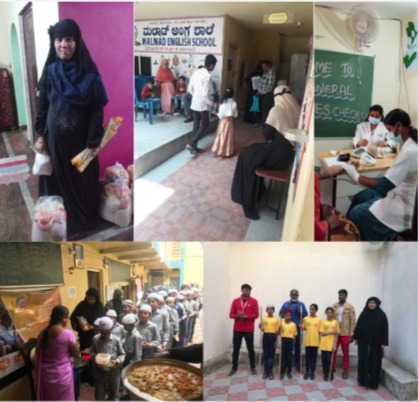
Dr. Shakila Banu N, a stalwart in the field of education, boasting over three decades of experience, is not only shaping young minds but also uplifting the marginalized through her altruistic endeavors. In her role as Principal at Malnad English School in Rajivnagar, Bengaluru, she exemplifies the essence of compassionate leadership.
Partnering with Major Bari’s team, Dr. Shakila Banu extends a lifeline to orphaned children, ensuring they not only receive an education but also have the necessary resources for their holistic development. From covering school fees to providing basic essentials like school bags, water bottles, uniforms, shoes, and even mattresses, she leaves no stone unturned in her mission to provide a nurturing environment for these vulnerable youths. Her commitment extends beyond the classroom, as she also extends support to widows and their families, offering monthly groceries and special provisions for festive occasions like Eid.
Dr. Banu’s compassion extends further to elderly widows, whom she ensures receive regular access to vital medications, underscoring her holistic approach to community welfare. Her tireless efforts serve as a beacon of hope, inspiring others to join in the noble pursuit of serving the less fortunate. Through her selfless dedication, Dr. Banu sets a shining example of empathy and altruism, enriching the lives of those she touches and leaving an indelible mark on her community.
source: http://www.radiancenews.com / Radiance News / Home> Focus> Social Service / by Muarrah Nisar / May 09th, 2024
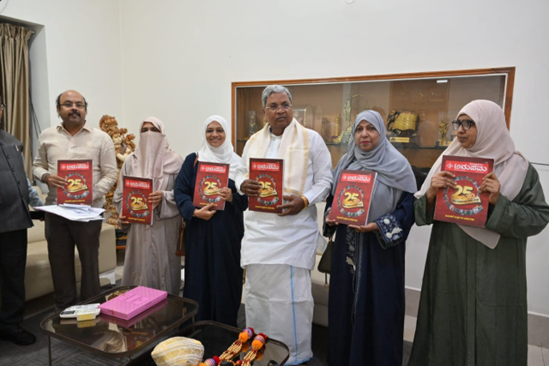
Anupama, the state’s only women’s monthly Kannada magazine run entirely by Muslim women, has completed 25 years. To mark this milestone, Chief Minister Siddaramaiah released a special silver jubilee issue, reflecting on its 25-year journey of success, in Bengaluru on Thursday.
Speaking at the event, the Chief Minister congratulated the team, saying, “There are only a handful of Muslim women in journalism. In such a scenario, it is highly commendable that the Anupama Women’s Monthly, run by women from the Muslim community and has successfully completed 25 years.”
Shahnaz M., the editor of Anupama, also spoke at the occasion. “The implementation of the ‘Guarantee’ schemes for women in the state has brought about significant changes in their lives. On behalf of the Anupama team and all women, I extend my gratitude to the government led by CM Siddaramaiah for their commitment to women’s development,” she stated.
The event was attended by Naseer Ahmed (Political Secretary to the CM), MLA Dr. Yathindra Siddaramaiah, BMTC Vice-Chairman Niket Raj Maurya, and Anupama’s sub-editors Samina Uppinangady, Sajida Momin, and Kulsum Abubakkar. Other notable attendees included S.M. Muthalib, Faisal Ismail, and Saleem Bolangadi.
source: http://www.radiancenews.com / Radiance News / Home> Latest News> Report/ by Radiance News Bureau / January 10th, 2026
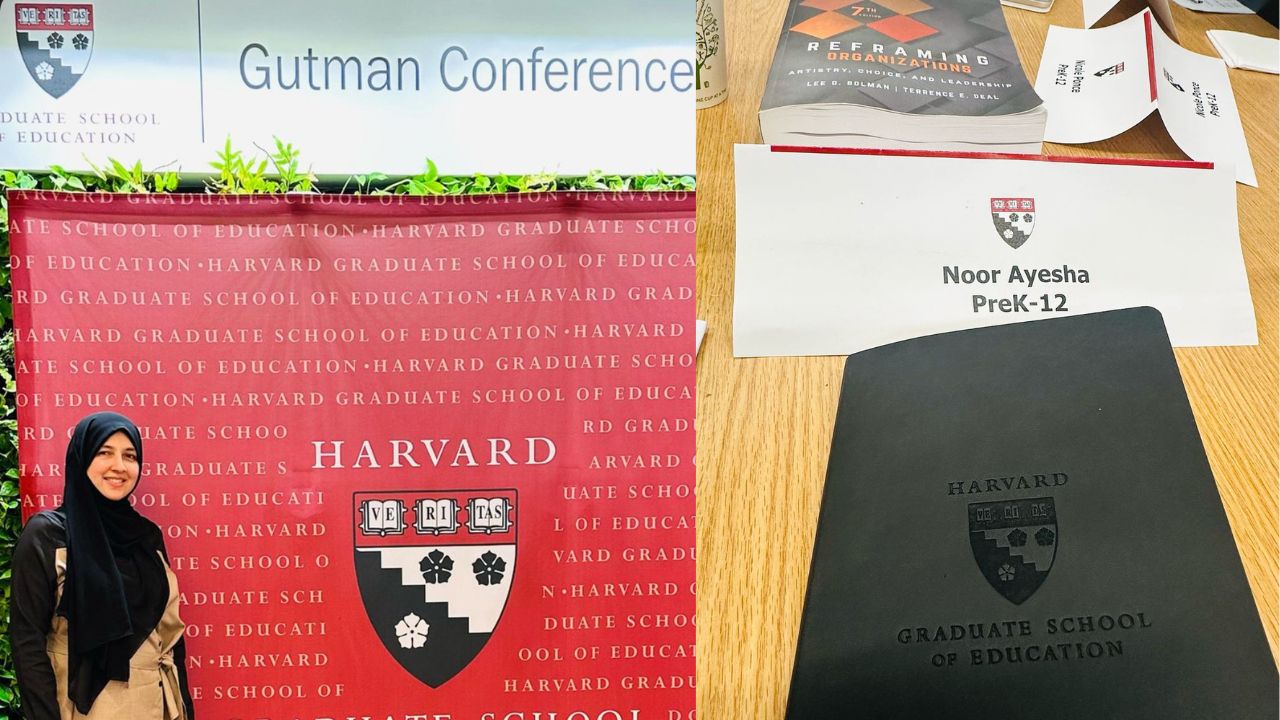
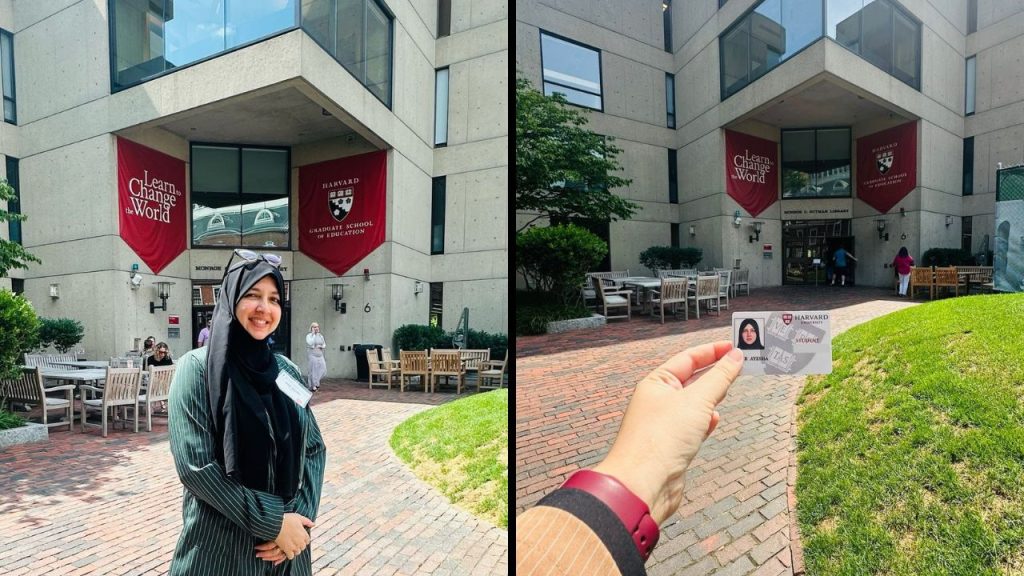
Bangalore’s own Noor Ayesha, an award-winning educator and visionary school leader, has been admitted to Harvard University for advanced postgraduate studies in Education Leadership. She joins the globally renowned Harvard Graduate School of Education to further her lifelong mission of transforming education through value-based learning and holistic child development.
Founder, Vice-Chairperson, and Managing Director of the Iqra Group of Schools in Bangalore, Karnataka, India, which includes Iqra International School, Iqra Juniors, and Iqra British Academy. For over a decade, her schools have redefined education by blending academic excellence with character formation, nurturing young minds to become not only successful learners but also compassionate, ethical citizens.
Her admission to Harvard marks a historic milestone, not just for her but for the entire region, as it highlights the global recognition of her impactful work in education. Noor’s leadership journey continues to inspire educators, parents, and youth, especially young women leaders striving to create change through education.
Quoting the famous line from the Spider-Man movie, Noor often reminds her team: “With great power comes great responsibility,” and she adds her powerful extension: “With great responsibility comes even greater accountability.” She believes educators carry the moral responsibility of shaping future generations and must be held accountable for the world they help create.
“As educators, we hold the power to shape the future,” says Noor. “My goal is to establish value-based schools across the world that nurture responsible, purpose-driven individuals who will lead with integrity and compassion.”
Her selection by Harvard is a proud moment for Bangalore, and a testament to the power of purpose-driven leadership in education.
source: http://www.thecognate.com / The Cognate / Home> Education / by The Cognate News Desk / August 11th, 2025
When she joined the Indian Combat Academy (ICSA) on Bannerghatta Road to learn Jujitsu and self-defence, little did Nabila Birjis (29), know that this would be a turning point in her life.
Bengaluru :
When she joined the Indian Combat Academy (ICSA) on Bannerghatta Road to learn Jujitsu and self-defence, little did Nabila Birjis (29), know that this would be a turning point in her life. On April 2, she turned out to be the only girl selected from Karnataka to compete in the South Asia Open Jujitsu Championship 2019, in Chennai.
Born and brought up in Mysuru, she moved to Bengaluru seven years ago to work for an architecture firm. At the age of 25, after undergoing rigorous training under coach Jitesh Banjan, she started competing seriously. So far, she has won six golds at the national-level JAI Jiu Jitsu events under 68kg and 70 kg categories; two silver medals at South Asian Championships; and gold at Body power Expo Open Weight.
She is also the only Indian woman to have secured two silver medals at South Asia Open Jujitsu Championship 2019. “I always wanted to achieve something in sports. My mother Noor Fathima Khan, HOD and professor at Maharanis Science College, Mysuru wanted me to complete my graduation before pursuing sports. I started my sporting career only at 25.”
It was not easy for Birjis in the field. She has quit her job, moved cities, so she could be able to devote more time for training. “I remember when I travelled for three hours just to be able to train for an hour. After struggling for years, I now seem to have struck some sort of balance between being an architect and an athlete,” she added.
Jujitsu is a team sport, and the biggest challenge she finds is to keep up with the energy levels of younger athletes. To stay fighting fit, she follows a strict sports diet. For Birjis, losing teaches more than winning. “My loss at the South Asia Championship has taught me how to move forward. My teammates have always encouraged me to do better. I will learn from my previous experiences,” she added.
source: http://www.newindianexpress.com / The New Indian Express / Home> Bengaluru / by K Rathna / August 20th, 2019
In the bustling city of Bangalore, where the convergence of tradition and modernity creates a unique educational landscape, Dr Nafeesa Ahmed stands as a beacon of transformative leadership in the field of education. Dr Nafeesa has carved out a unique path for herself as the Director of the Presidency Group of Institutions while also carrying on her father, Dr Nissar Ahmed’s legacy of excellence and innovation.
Dr Nafeesa Ahmed, Director, Presidency Group of Institutions, Bengaluru, Karnataka
Dr Nafeesa’s educational journey is nothing short of impressive. A graduate of Mount Carmel College, Bangalore, she holds a Bachelor of Business Management (BBM) degree and pursued postgraduate studies in English literature at Bangalore University. Her commitment to education led her to earn a bachelor’s degree in education from IGNOU. Venturing beyond Indian shores, Dr Nafeesa enriched her perspective with a Master’s in International Management from Royal Holloway, University of London. This international exposure was instrumental in shaping her understanding of global education trends.
Her dedication to continuous learning took her to the prestigious Harvard School, where she honed her skills in management and leadership. Dr Nafeesa’s academic prowess is underscored by her diverse qualifications, including a BBM, a B.Ed., an MA in English Literature, and a Master’s in International Management. Her educational journey serves as an inspiration, reflecting the importance of a broad and holistic approach to learning.
Leadership at the Presidency Group of Institutions
Taking the reins as the Director of the Presidency Group of Institutions, Dr Nafeesa has led the K-12 chain of elite institutions with a commitment to “Equal Opportunity in Diversity.” Her vision is to provide high-quality, affordable education to students from diverse backgrounds. Focusing on aspects like course structure, pedagogical innovation, and outcome-based evaluation, she has fostered a conducive teaching and learning environment.
During the challenging times of the pandemic, Dr Nafeesa displayed exemplary leadership by seamlessly transitioning the education system from physical to virtual and eventually to a mixed classroom approach. Her leadership has been pivotal in ensuring that the team of highly-qualified educators delivers the finest education to students.
Accolades and Achievements: A Trailblazer in Education
Dr Nafeesa’s journey is adorned with prestigious awards and recognitions, attesting to her significant contributions to the field of education. Notably, she received the Economic Times Power Icon Award for “Exceptional Contribution in Education” in 2020 and was honoured as “The Education Icon of the Year 2021” by Education Today. Her recognition as a ‘Speaker’ at the “APAC 5th Global Education & Skill Conclave” and features in Women Entrepreneurs and Education World India showcase her as a thought leader in the education domain.
A crowning achievement in her illustrious career is the conferral of a Ph.D., Philosophiae Doctor Honoris Causa (HC) in Education Management by Ecole Superieure Robert De Sorbon (ESRDS), France, Europe. The recognition, awarded at The House of Lords, London, is a testament to Dr Nafeesa’s global impact and commitment to educational excellence.
As Dr Nafeesa Ahmed continues to shape the future of education, her journey stands as an inspiration, showcasing the transformative power of visionary leadership in the realm of academia. In the words of Dr Nafeesa, “My loved ones have been my rock through thick and thin. Having their back has been crucial to my success.” Indeed, her success radiates not only through personal accolades but also through the positive impact she has had on the lives of countless students and educators.
source: http://www.outlookindia.com / Outlook / Home> Brand Studio / by The Outlook Bureau / March 08th, 2024
Tasneem Fathima Khaleel has had a successful career in academia. However, quite remarkably, she came back to where she started – teaching. M A Siraj reports.
Few people end their careers where they first began; Professor Tasneem Fathima Khaleel is among those few. “I am excited about the opportunity to finish my career in the classroom. And, with a little help, I will be teaching in a new state-of-the-art…facility,” says Tasneem, the first-ever woman to have obtained a doctorate in the State of Mysore in 1970. Prior to returning as a professor of Botany, she served as the dean of faculty at College of Arts & Sciences for a decade at the Montana State University at Billings (MUSB).
Paving a new path
Tasneem has been teaching Botany in the United States for over 40 years and has received many awards for her teaching and research. She has headed, or has been a member on as many as 23 different academic bodies or advisory councils in the US. For her contribution to research, with nearly 50 research publications on subjects ranging from cyto-embriology to plant reproduction, she was awarded the ‘Outstanding Research Award’ in 1995 by the Montana Research Academy and has also won the Faculty Excellence Award five times.
The year 2014 was a special year for Tasneem – she had the rare honour of an award being named after her, for mentoring at the MUSB. Reno Charette, director for American-Indian Education, was adjudged the winner of the first ‘Prof Tasneem Fathima Khaleel Award for Mentoring’.
Tasneem studied in Bengaluru, before heading to the US in 1975 after marriage. An alumna of Central College, Bengaluru, she has coveted every opportunity to visit her ‘City of Gardens’ – which she ruefully admits is more a part of nostalgia rather than reality.
A passionate researcher, she recalls that very few women could be seen in higher studies in those days. Only a couple of them were pursuing PhD while she was registered in Bangalore University as well as teaching biology as an assistant professor at the University of Agricultural Sciences at Hebbal between 1968 and 1975. Her study of ‘Flora at the GKVK Campus’ and ‘Weeds in Karnataka’ are still quoted as seminal works.
Writing her own destiny
Tasneem had finished her BSc and MSc by the time she was barely 19 years old. Wanting to be a teacher, she had put in her application, but was rejected, as the dean told her, “You look like a school girl, how would the students take you seriously?”
Instead, he directed her to register for a PhD programme, which had just been started in the Bangalore University. The Doctorate took longer than usual to complete because there was lack of guidance and direction, and the programme had several fits and starts.
Finally, at 26 when she got her her doctorate, she was being looked as ‘a confirmed spinster’ in her own cultural surroundings. Marriage was nowhere on her mental radar. It took her brother several sittings to convince her of getting married.
Tasneem travelled a long and twisted path – one shaped by her culture and her drive to excel, to become the distinguished professor that she is today. For most Americans who had only preliminary idea of Islam, a woman with covered head and such drive for excellence and perseverance was a combination of incongruities. “Women have rights in Islam. Muslim women didn’t even have to fight for those rights. The religion has given them those rights,” she says.
Dr Stn Waitr, her successor, says, “Dean Khaleel has raised the level of rigour, excellence and success in the College of Arts & Sciences to a standard that should serve as a model for the entire institution.” Interestingly, Tasneem even built a herbarium at the MUSB, which has around 17,000 specimens and is currently engaged in digitising it. She recalls with pride that she was the most productive member on the faculty of science at the MSU, which has nearly 22,000 students today in two campuses. Tasneem’s most significant discovery was the finding of mammalian steroids in plants, which she says, are responsible for sex expression in plants.
Author of four books, 10 external and 17 internal grants at the MSUB, Tasneem is excited about beginning her teaching career once again. “It had never ended. I had maintained a room in my department building, even while I headed the faculty,” she says.
source: http://www.deccanherald.com / Deccan Herald / Home> Content / by M.A. Siraj / June 26th, 2015
After teaching for over 40 years, Dr. Tasneem Khaleel is retiring
MSUB readies to part with long-time Professor Dr. Khaleel
Retirement party in honor of Dr. Khaleel set for 2 p.m., April 26 in the Beartooth Room in the Student Union Building. Food and refreshments will be served.
MSU BILLINGS NEWS SERVICES — Hanging on the wall in Dr. Tasneem Khaleel’s office are the many awards and accolades marking the dedication and service she has given to Montana State University Billings over the past several decades.
Khaleel is retiring at the end of this semester and her presence and legacy will be with the science department and University for years to come.
Dr. Christine Shearer, dean of the College of Arts and Sciences, said that without the dedication and perseverance of Khaleel, the College and its students would not be where it is today.
“Dr. Khaleel has devoted her professional career to Montana State University Billings in a variety of capacities. She has been a tireless researcher and developer of the internationally-renowned Herbarium, a deeply committed advocate for the sciences and science education, a leader of a complex and diverse unit, and has been a staunch supporter and mentor of female scientists and academic professionals in all disciplines,” Shearer said. “Her tenacity and resilience advanced the College of Arts and Sciences and its programs, including the establishment of the Women’s and Gender Studies Center, which serves the university and the community. Her involvement in Girls-n-Science impacted hundreds of young women planning STEM careers.”
Khaleel has been paving the way for women in STEM since the beginning of her career. She has the honor of being the first woman recipient of a Ph.D from Bangalore University, India, where she graduated with a degree in Botany in 1970.
In 1976, Khaleel would begin her tenure with MSUB, as would her signature project: the establishment, maintenance, and management of the internationally known MSUB Herbarium.
“The Herbarium is one of my professional accomplishments that I am most proud of,” Khaleel said.
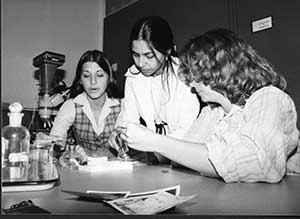
Dr. Tasneem Khaleel, center, assists Heidi Carter, left, and an unknown student during a lab experiment. (Photo circa 1980)
Post-retirement, she will continue being involved in the herbarium, which includes some 16,000 vascular plant specimens, some of which date back to the late 1800s and early 1900s. The Herbarium serves as a tool for basic research in plant systematics, ecology, phytogeography, and evolution.
While Khaleel’s career is highlighted by the 11 years she served as dean for the College of Arts and Sciences, from 2004 to 2014, she has no regrets to returning to the classroom before retirement.
Throughout her time on campus, she moved up from an assistant professor to department chair and says coming full circle made her last two years with students, “the best.”
“I wanted to retire as a faculty member,” Khaleel said. “Having that time as Dean allowed me to hear so many perspectives that my focus shifted when I returned to the classroom. My focus shifted from teaching to learning, to becoming a mentor and being more supportive.
For the last eight years the Tasneem and Shafiq Khaleel Endowment for Scholarships to Science has provided $1,000 awards to two students.
source: http://www.msubillings.edu/ucam/releases.2017/2017apr19Khaleel.htm / University Communications and Marketing / April 19th, 2017 / Montana State Univeristy Billings