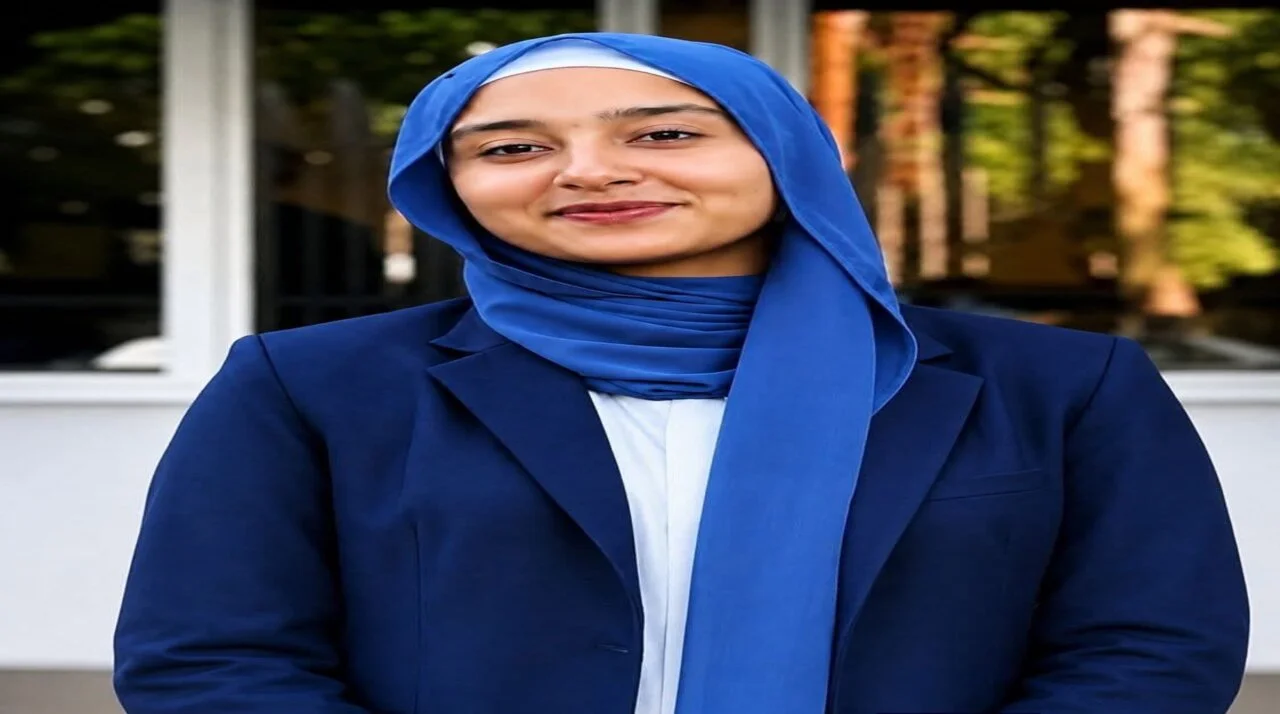
Meer Sehrish from Kupwara district of Jammu & Kashmir has brought pride to the Union Territory by clearing the prestigious National Defence Academy (NDA) examination and securing a place among the only 24 girls selected across India.
Her achievement is being hailed as a major milestone for the region and an inspiration for young girls aspiring to join the armed forces. Residents, teachers and local officials congratulated Meer Sehrish for her dedication and hard work in cracking one of the country’s most competitive defence entrance examinations.
The NDA examination, conducted by the Union Public Service Commission (UPSC), is the gateway for entry into the Indian Army, Navy and Air Force. Since the inclusion of women candidates in NDA, the competition among aspirants has remained extremely high.
Meer Sehrish’s success highlights the growing participation of girls from Jammu & Kashmir in national-level competitive examinations and defence services. People across Kupwara expressed hope that her accomplishment would motivate more students, especially from remote areas, to pursue careers in the armed forces.
Her selection is also being viewed as a positive sign of changing aspirations among the youth in Kashmir, where students are increasingly excelling in academics, sports and national competitive platforms.
source: http://www.kashmirahead.com / Kashmir Ahead / Home / by News Desk Kashmir Ahead / May 09th, 2026
* On the list are 14 Muslim zoologists and scientists
* To date, India has identified 102,718 animal species
* Work is underway to discover new species in ecosystems
* 15 million living species still to be discovered
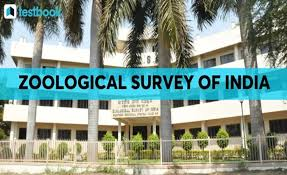
THE Kolkata-headquartered Zoological Survey of India (ZSI), whose scientists and field staff are engaged in exploring, naming, describing, classifying, and documenting animals from all over the world’s most populous country, has a miserably low number of Muslims – 23 – on its rolls that has a total of 591 officers, administration and field staffers, according to Mohammed Abdul Mannan’s new book, At the Bottom of the Ladder: State Of The Indian Muslims – https://www.amazon.in/dp/B0GF1Q9R25. The book quantifies Muslim presence in 150 key organisations, including Union ministries, departments, and organisations.
The Muslim scientists and zoologists at the ZSI are – Sarfraz Ul Islam Kazmi, Shaikh Rehnuma Sultana, Mohammed Hafiz, Imran Alam, Shabnam Nizamuddin Ansari, Jalil Ahmed, Mohammed Rasmanjani Ali, Anjum Nasreen Rizvi, Rifat Hussain Raina, Jafer Palat, Mohammed Ethtesham Ul Hassan, Ruqiya Bano, and K Bakh Mollah. There are seven Field Assistants from the largest minority community.
Among 82 ZSI scientists are two Muslims – Dr M E Hassan, a Scientist ‘E’ at the Gangetic Plains Regional Centre in Patna, and S R Sultana, Assistant Zoologist at the Freshwater Biology Regional Centre in Hyderabad. Among 98 officials at 15 Regional Centres, eight are Muslims, including two NRCs in Dehradun – Dr. Anjum Nasreen Rizvi, a scientist in Nematology, Helminthology and Molecular Systematics, and Dr S I Kazmi, a scientist in Hymenoptera. The Western Regional Centre in Pune’s four staff members include Dr Muhamed Jafer Palot, a scientist in animal taxonomy with a special interest in birds, reptiles, and butterflies. Dr Anjum Rizvi is the Managing Editor of the Journal of Indian Zoology.
The 108-year-old organisation has been working to understand and investigate the faunal diversity for scientific use and equitable sharing of the benefits of animal resources of the country. Formed in July 1916, it conducts surveys, exploration, and research that lead to the advancement of zoological knowledge. ZSI originated from the establishment of the Zoological Section of the Indian Museum at Calcutta in 1875.
It gradually expanded in terms of its manpower and research programme. Today, India is among the 17 mega-diversity countries of the world, with four biodiversity hotspots, including the Western Ghats/Sri Lanka, Indo-Burma, and the Himalayas. Currently, there are about 1.7 million living species described from all over the world, and another 15 million species are waiting to be discovered. To date, India has been able to describe 102,718 species of animals, and work continues to discover and explain new species, especially from the lower invertebrate groups occurring in various ecosystems. Also, the status of the higher group of animals is studied before their habitats disappeared on the planet Earth.
The country’s custodian of the animal resources has broadened its work in line with the Articles of the UN Convention on Biological Diversity (UNCBD), a multilateral treaty focused on conserving biodiversity, promoting its sustainable use, and ensuring the fair and equitable sharing of benefits from genetic resources. As many as 157 countries signed it, like the United Nations Framework Convention on Climate Change (UNFCCC) and the United Nations Convention to Combat Desertification (UNCCD), at the UN Conference on Environment and Development in Rio de Janeiro in 1992. The CBD now has 196 countries as signatories, including India.
To take the agenda further up, India also enacted the Biological Diversity Act in 2002 to implement the provisions of CBD, which covers biodiversity at all levels: ecosystems, species, and genetic resources. To support the implementation of its objectives, two internationally binding agreements were adopted within the framework of the CBD. The Cartagena Protocol, adopted in 2000 and entered into force three years later, regulates the transboundary movement of living modified organisms (LMOs).
The Nagoya Protocol, adopted in 2010 in Japan and entered into force four years later, establishes a legally-binding framework for access to genetic resources and the fair and equitable sharing of the benefits arising from their use. Experts say considerably less is done to assess the degree and value of biodiversity without knowing the species involved. The ecosystem’s health also cannot be monitored without recognizing the presence of the individual organisms crucial for the indication of ecological processes.
The ZSI has made extensive surveys across the country, and a large number of specimens have been collected. Of these collections, only about 65 percent have been taxonomically studied. These include the major groups of vertebrates. The organization provides information and vital data for the in-situ conservation of various species in different ecosystems, both within and outside the protected areas. The ZSI provides regular services with regard to permissible limits of legal trading of faunal resources or derivatives thereof, monitoring services on population status of commercially important species, and providing inputs for underutilised, culturable species, both from terrestrial and aquatic systems.
A part of the Union Ministry of Environment, Forest and Climate Change, it also undertakes Environmental Impact Assessment (EIA) with special reference to ecology and wildlife. Zoological surveys worldwide are crucial for understanding and managing biodiversity. These surveys involve various methods to collect data on animal populations, behaviour, and habitats, including field observations, monitoring programs, and advanced techniques like DNA analysis and satellite tracking.
There are about 1.7 million living species described from all over the world and another 15 million species are waiting to be discovered. Based on the largest dataset to date, the global Living Planet Index (LPI) shows an average 73 percent decline in monitored wildlife populations between 1970 and 2020. It reports that there has been a large average decline across more than 34,000 animal populations. In 2024, ZSI set up a pilot project to use eDNA (environmental DNA) to study and monitor wildlife.
Data analysis of the 2010-2020 decade reveals that a total of 4,112 species — 2,800 new species and 1,312 new records in 2020, India added 557 new species to its fauna, which included 407 new species and 150 new records, according to a document by the ZSI. The number of faunal species in India has climbed to 1,02,718 species with the discovery of the new species. There is no definitive, universally agreed-upon number for the total number of animal species in the world.
Estimates range from three million to 100 million. However, the most common estimates fall between seven and 10 million. About 1.5 million animal species have been formally described and named by scientists. The ZSI publishes the Red Data Book on Indian Animals, which was first published in 1983 and is similar to the Red Data Book published by the International Union for Conservation of Nature (IUCN), the world’s largest and most diverse environmental network known for producing authoritative reports, standards, and tools for conservation.
Some victories are seen with the eyes, but Jaseela’s is one that truly fills the heart. Defying all odds and turning her personal challenge into an inspiration for differently-abled UPSC aspirants, visually impaired 30-year-old Jaseela Jannath P from Vadakara, Calicut, has secured the 397th rank in the UPSC Civil Services Examination.
This marks Jaseela’s fourth attempt at the exam. Her optional subject, Sociology, reflects her deep passion for social issues, honed through her M.A. in Social Work with a Women-Centred Practice specialisation from the Tata Institute of Social Sciences (TISS), Mumbai. Prior to focusing on her UPSC preparation, Jaseela worked as a Project Associate at Prajaahita Foundation in Kozhikode from July 2021 to March 2022, contributing to community development initiatives.
Jaseela credits much of her success to the one-year UPSC preparation journey covering Prelims, Mains, and interview guidance at Xylem IAS, where she joined the civil services batch in March 2025. Speaking about her learning approach, Jaseela relied on audio-based learning methods, voice-to-text tools, and peer-led discussions to navigate and master the vast syllabus.
“Blindness tested me, but it never defined me. With the right support, including personalised mentorship, innovative tech-aided learning modules, and a supportive community, I was able to crack it,” she said. Looking ahead, Jaseela aspires to serve and empower people facing challenges similar to her own.
Apart from her academic pursuits, she has also established herself as an eloquent public speaker and secured A grades in Mimicry, Vanchippattu (boat song), Folk Song, and Malayalam Recitation at school youth festivals.
Jaseela is the daughter of the late Kunhabdulla P and homemaker Sainaba.
Including Jaseela, a total of 29 students from Xylem IAS have secured ranks in the examination.
source: http://www.businessnewsthisweek.com / Business News This Week / Home> Education / by Neel Achary / March 06th, 2026
Angadipuram Village (Perinthalmann Taluk, Malappuram District), KERALA :
Fathima Shehza K has topped the ICAI CA Intermediate January 2026 exam the result of which has been declared on Sunday March 08, 2026.
CA Inter Topper January 2026:
Fathima Shehza K has topped the ICAI CA Intermediate January 2026 exam the result of which has been declared on Sunday March 08, 2026.
As per the results announced by Institute of Chartered Accountants of India (ICAI), Fathima Shehza K secured the All India Rank 2 (AIR 2) in the Chartered Accountancy (CA) Intermediate examination held in January 2026.
Fathima Shehza scored a percentage of 84 per cent with a score of 504 out of the total 600 marks. Fathima Shehza missed the Top Rank by just 4 marks which went to Kanhiya Lal.
Kanhiya Lal bagged 508 out of the total 600 marks and secured the All India Rank 1 (AIR 1) in CA Inter January 2026 exam.
Fathima Shehza is a resident of Perintalmann, Kerala whereas Kanhiya Lal hails from Ellenabad, Haryana.
Faridabad’s Vanya Bansal has secured the 3rd rank with 83 per cent and 498 marks.
Who is Fathima Shehza?
The CA Inter January 2026 Topper, Fathima Shehza is a resident of Angadipuram – a small village of Perintalmann Talka in the Muslim dominated Malappuram district of Kerala.
Fathima had earlier also topped the ICAI CA Foundation exam in January 2025. She had scored 356 marks in CA Foundation exam held for January 2025 session, and had emerged All Kerala Topper.
Talking to media after topping the CA Foundation Exam last year, Fathima had said her target was even higher. “Topping Kerala state is not my target. My dream is to secure the top rank at all India level”, she had said last year.
She is a student of Profinz College – also called Profinz Perinthalmanna, a prominent Commerce (CA, CMA, ACCA, CS) coaching institute in Perinthalmanna, Malappuram district.
After clearing CA Foundation and Intermediate exams, Fathima is is now eligible to start her articleship (practical training) while preparing for CA Final.
ICAI CA Intermediate Result January 2026
Institute of Chartered Accountants of India (ICAI) declared the CA Inter Jan 2026 result on Sunday March 8, 2026.
A total of 1,05,526 candidates had appeared in the CA Inter Jan 2026 Group 1 exams. Out of them, 14,733 candidates cleared the exam, registering a pass percentage of 13.96. CA Inter Group II exam saw a pass percentage of 15.54, with 10,798 candidates clearing the exam out of 69,477 who appeared.
ICAI conducts these exams twice a year, in January and July.
The CA Intermediate January 2026 examinations were conducted in multiple shifts across centres in India and abroad. As per the official schedule, Group I exams were held on January 6, 8 and 10, while Group II exams were conducted on January 15, 17 and 19, 2026.
Candidates who appeared for the exam can check their results on the official websites at icai.nic.in and icai.org.
source: http://www.ummid.com / Ummid.com / Home> Education & Career / by ummid.com news network / March 09th, 2026
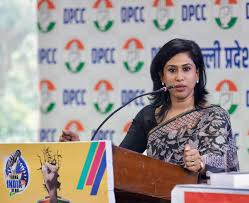
Shama Mohammad, AICC spokesperson and now over a decade in politics, knows all too well the obstacles women face in Indian politics. The numbers speak for themselves: despite the passage of the Women’s Reservation Bill, no Muslim woman from Congress was given a Lok Sabha ticket in 2024, and only two serve as MLAs nationally.
“The biggest obstacles for a woman to progress or survive in politics, especially in Kerala, are men,” she says bluntly. “When I started my journey in Kerala district politics, men in the party felt I can’t make it. And when I started making it, they didn’t like it.”
Shama lists three roadblocks on her way: “First, I am not a dynast, second, I am a woman, and third, I’m a Muslim.”
Unlike Congress, Muslim women like Sofia Firdous in Odisha or Kaneez Fatima in Karnataka, both backed by political families, Shama has no dynastic support. “You won’t find a single Muslim woman in politics who is fighting her way ahead on her own,” she says.
While a party like the Trinamul Congress has actively promoted women — with three out of its five MPs in West Bengal being women — Congress continues to lag,” she adds. (Trinamul Congress has the highest representation of women in Lok Sabha at 38 per cent compared to 13 per cent women by Congress and BJP.)
Her journey into politics didn’t happen overnight. A dentist and then a reporter with ZEE News, Shama grew up in Kuwait, watching debates on BBC, Al Jazeera and other channels with her father, who was passionate about world affairs. “The interest I have today is inherent, as politics is ingrained in my family,” she says.
Known today as a feisty and articulate spokesperson, she developed her political voice over years of actively taking an interest in national and international news, watching and then taking part in media debates, and later, hands-on work in Kerala district politics.
Her media career eventually brought her closer to politics. “I remember watching Manish Sharma, Abhishek Manu Singhvi — my colleagues in AICC now — fighting it out in a war of words on TV evening after evening,” she recalls.
While her job at ZEE News didn’t give her much chance to cover politics, her colleagues recognised her passion, and one of them sent her to meet Randeep Surjewala in the Congress media department. She was soon working for the party, travelling between Pune, where her husband and children were, and Delhi for television debates. “There was no Zoom or Skype then; one had to be physically present for the debates,” she says.
Amidst her work in the media department, she also decided to start working at the district level for the party in her home state of Kerala. But that came with its own challenges. “All this took a huge toll on my children,” she admits. Her elder son was just 14, and her younger was 11 at the time. “But work meant leaving them even as my husband was away in Abu Dhabi again.” Balancing family and political ambitions was a struggle, yet she persisted.
Despite the hurdles, Shama’s commitment to change pushed her on. “I came to politics because I saw rapists, extortionists, and other anti-social elements in Parliament, and we only complain without doing anything about it. So, I wanted to be part of the change,” she says. As a Muslim, she has faced criticism for her faith and assumptions about her patriotism. But this has only made her more resilient: “Because I’m a Muslim, I have to go to Pakistan, I’m a jihadi, I’m anti-national… and I have to take all this,” she adds.
While her progress within the party remains limited due to patriarchy, Shama has turned her energy to grassroots work in Kannur, Kerala, through her Zoya Charitable Trust. “Why I came to politics was to help people, and my trust is in doing precisely that,” she says.
The trust, started in 2018, initially focused on renovating schools, especially following the floods of 2019. It has recently launched a sports school in the district, best known for athlete PT Usha, and another sports school is coming up with funding from the Panchsheel Group, a real estate group. Beyond sports, the trust works on healthcare, education, and women’s empowerment.
Asked what she would like to change about Congress, Shama doesn’t hold back: “Give more tickets to women. Give capable and hardworking women representation as the TMC does.” She knows change is slow, but remains undeterred. “Kerala has 51 per cent women, and if I’m sidelined, I take it as a challenge,” she says. For Shama, being a Muslim and a woman in politics is not just a struggle; it’s a motivation for her to keep pushing, both within her party and through her work at the grassroots.
With Kerala heading once again into election mode, the left-led coalition and the Congress-led coalition will be pitted against each other. Whether her words and vision for women’s representation in politics will become reality remains to be seen, but Shama Mohammad continues her journey, determined to make a difference.
#WATCH | Delhi | On 'Jai Hind Yatra' in all Pradesh Congress Committee (PCC) units today, Congress leader Shama Mohamed says, "We are standing with the army. We are with the country and supporting whatever the government and the army decide. We are showing our support for the… pic.twitter.com/t83hjLe2PG
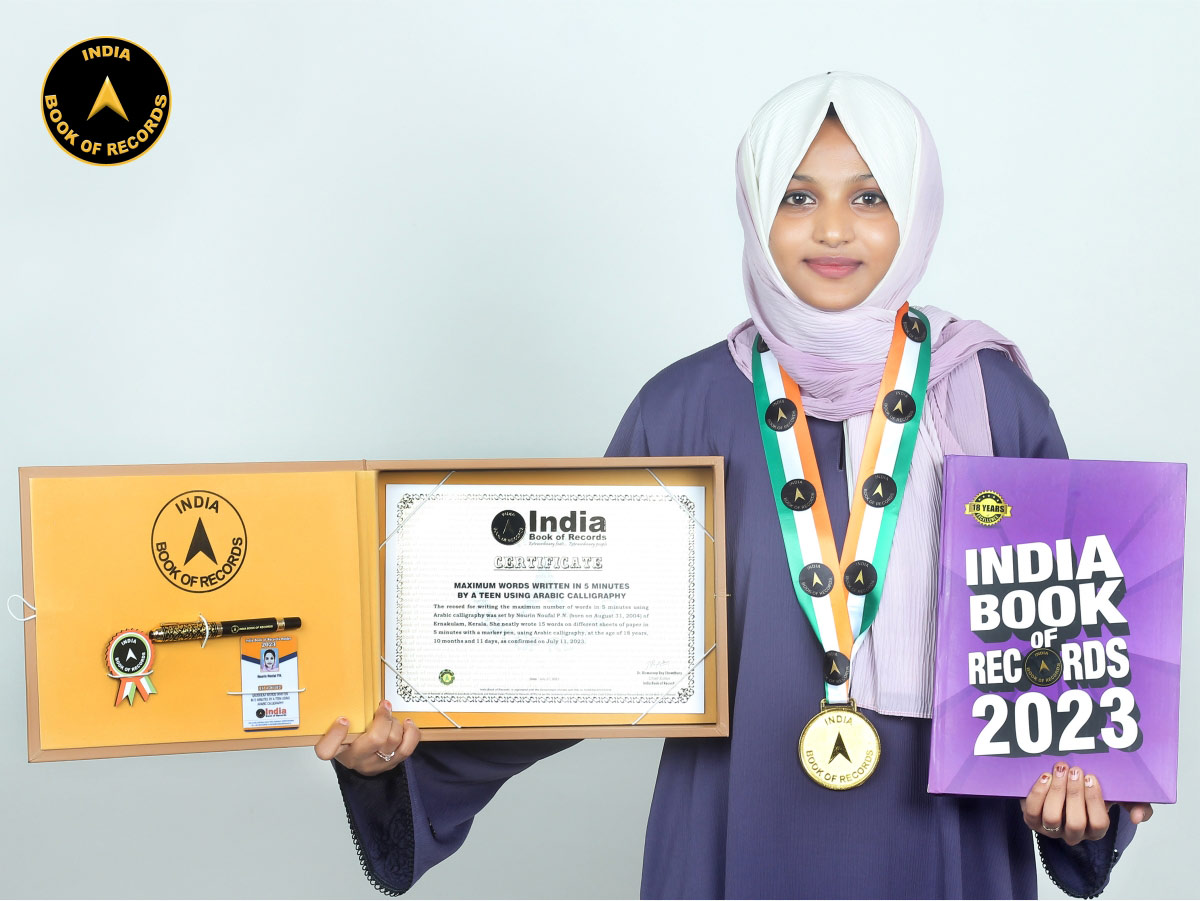
The record for writing the maximum number of words in 5 minutes using Arabic calligraphy was set by Nourin Noufal P.N. (born on August 31, 2004) of Ernakulam, Kerala.
She neatly wrote 15 words on different sheets of paper in 5 minutes with a marker pen, using Arabic calligraphy, at the age of 18 years, 10 months and 11 days, as confirmed on July 11, 2023.
source: http://www.indiabookofrecords.in / India Book of Records / Home> Human Story / by IBR Team / August 18th, 2023
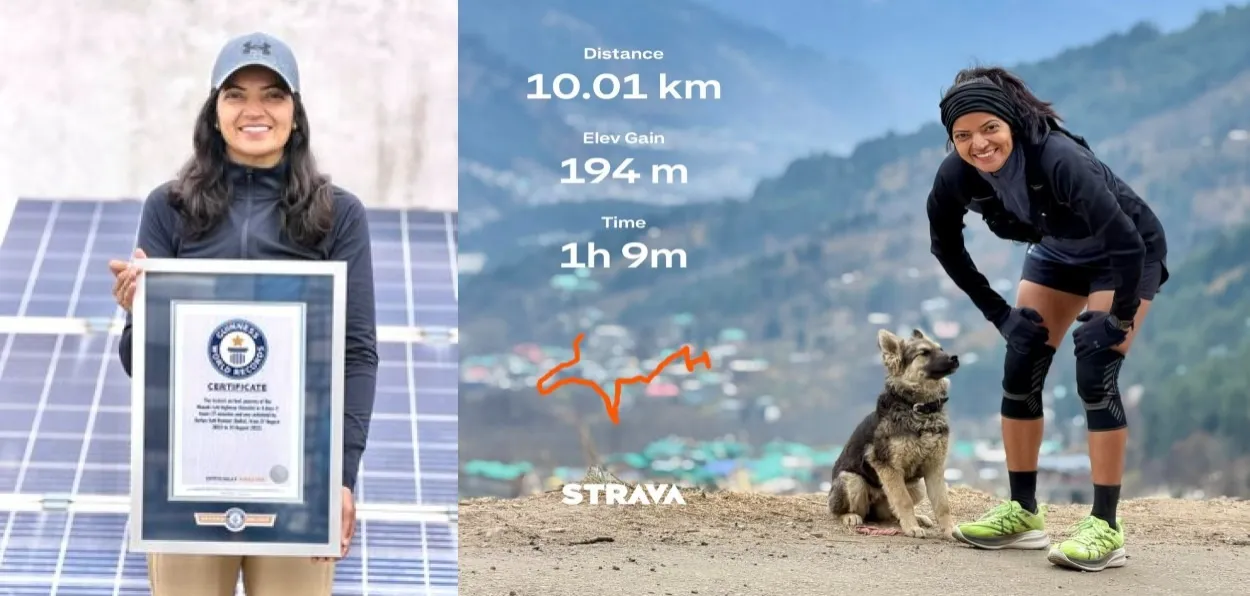
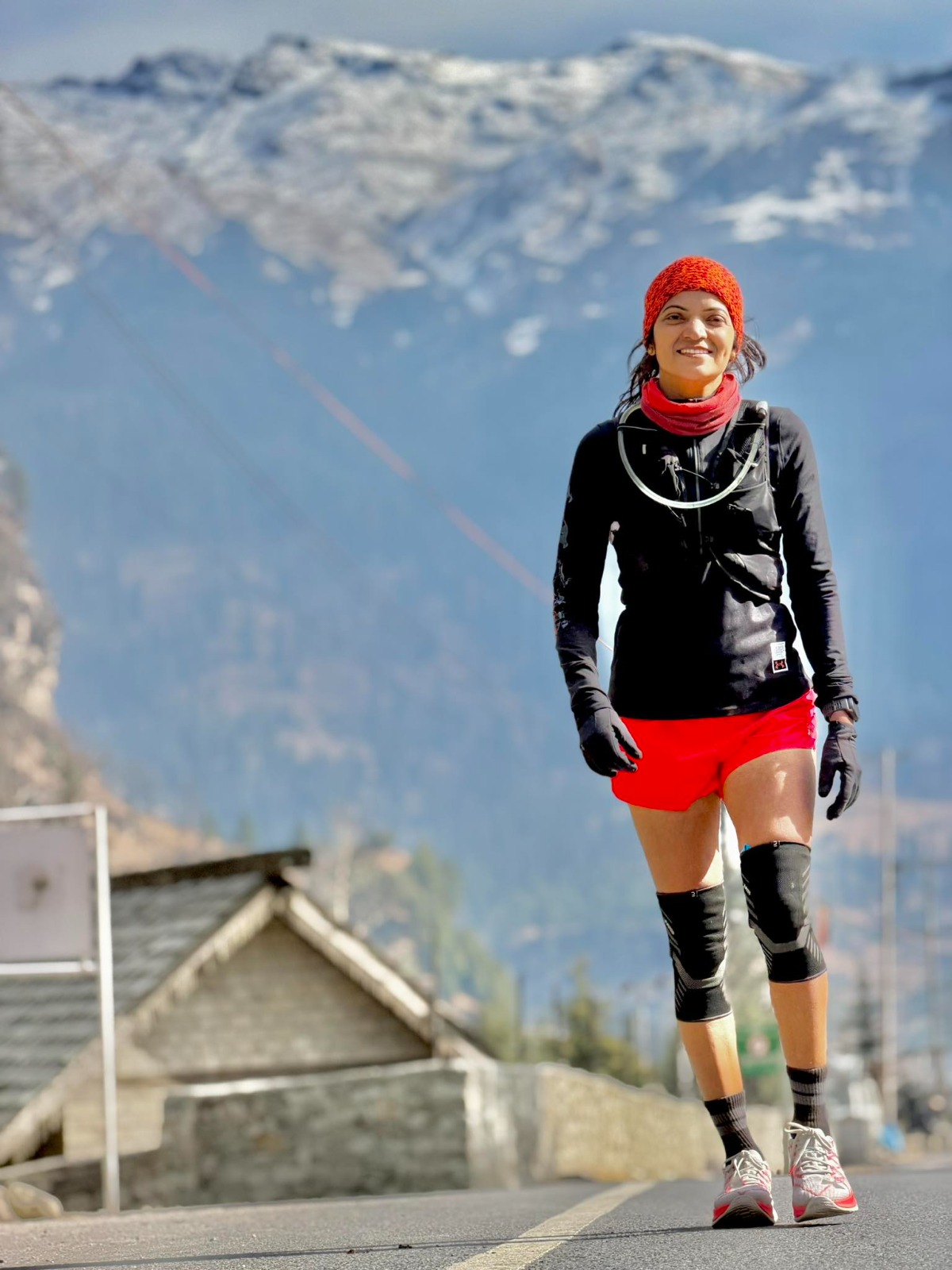
Indian ultra-distance runner Sufiya Sufi, 38, from Ajmer, Rajasthan, has officially received her Guinness World Record certificate for completing the formidable Manali–Leh high-altitude run in 98 hours and 27 minutes, a feat no woman in the world has accomplished before.
The record, formally approved by Guinness World Records in 2023, spans nearly 480 kilometres across some of the most treacherous terrain in the Himalayas. The route crosses five high mountain passes, involves a cumulative elevation gain of over 8,500 metres, and exposes runners to freezing temperatures and dangerously low oxygen levels. The challenge is widely regarded as one of the toughest endurance runs on the planet.
Although the achievement was validated in 2023, the physical certificate reached Sufi only in early 2026, following prolonged delays related to international delivery logistics and customs clearance. Once the certificate arrived, her accomplishment drew renewed admiration from the global running community, sponsors, and the wider public. Supporters celebrated the milestone as another defining moment in an already extraordinary athletic journey.
Sufiya Sufi on Manali-Leh run
Sufiya Sufi’s record-setting run on the Manali–Leh route represents a remarkable benchmark in endurance sports. The challenge begins in Manali, a Himalayan hill town in Himachal Pradesh, and winds its way through rugged, unforgiving landscapes before culminating in Leh, Ladakh. Along the way, runners cross legendary high-altitude passes such as Rohtang Pass and Tanglang La, where temperatures often plunge well below zero and oxygen levels drop dramatically.
At such extreme altitudes, even the most experienced athletes struggle to breathe, recover, and maintain pace. Completing this journey on foot in under 100 hours is considered exceptional. By finishing in 98 hours and 27 minutes, Sufi not only met the challenge but surpassed it, becoming the fastest woman ever* to traverse this Himalayan stretch on foot.
Despite the physical run being completed and officially recognised in 2023, the nearly two-year delay in receiving the certificate became a story in itself. Sufi later spoke about the delay publicly, addressing it with humour and gratitude rather than frustration.
In a post on the social media platform *X*, she described her accomplishment as the fastest-ever run from Manali to Leh across all five high passes. She also expressed heartfelt thanks to her sponsors, support crew, and well-wishers who stood by her throughout months of preparation and recovery. Members of the running community and followers on social media responded with admiration, highlighting the sheer brutality of the terrain and the mental toughness required to succeed.
Day 03 done with 03 KM.
01 to 100 Km Running Challenge.
No Speed, No pace, Just showing up everyday with 01 Km stronger mindset.
Daily effort. Daily discipline. Daily belief. This is how 1% turns into something unimaginable. pic.twitter.com/mYSxRTZJIu
Sufiya Sufi’s journey is as compelling as the record itself. Born in *1987 in Ajmer, she spent nearly 10 years working in the aviation industry. Running initially entered her life as a way to stay fit and break free from the monotony of a demanding job. Over time, what began as a fitness routine evolved into a deep passion for endurance sports, eventually redefining her professional and personal identity.
Her rise as an ultra-runner has been marked by a series of achievements. In 2018, she earned her first Guinness World Record for running the most marathons by a woman in a single calendar year*. This milestone established her as a serious force in long-distance running.
She went on to complete the Kashmir to Kanyakumari run, covering approximately 4,000 kilometres in 87 days, another Guinness-certified feat. Shortly thereafter, she conquered the Golden Quadrilateral, a 6,002-kilometre route linking India’s major highways, in just 110 days, securing yet another world record.
Sufiya Sufi’s journey is as compelling as the record itself. Born in *1987 in Ajmer, she spent nearly 10 years working in the aviation industry. Running initially entered her life as a way to stay fit and break free from the monotony of a demanding job. Over time, what began as a fitness routine evolved into a deep passion for endurance sports, eventually redefining her professional and personal identity.
Her rise as an ultra-runner has been marked by a series of achievements. In 2018, she earned her first Guinness World Record for running the most marathons by a woman in a single calendar year*. This milestone established her as a serious force in long-distance running.
She went on to complete the Kashmir to Kanyakumari run, covering approximately 4,000 kilometres in 87 days, another Guinness-certified feat. Shortly thereafter, she conquered the Golden Quadrilateral, a 6,002-kilometre route linking India’s major highways, in just 110 days, securing yet another world record.
Each of these runs required not only exceptional physical endurance but also rigorous mental conditioning, logistical planning, and resilience. Sufi has often credited her family for their unwavering support, especially her partner, who frequently serves as part of her on-ground support crew.
She has spoken about the challenges of acclimatising to high altitudes, training in extreme conditions, and preparing her body for prolonged exposure to thin air and severe cold.
Sufi’s expanding list of accomplishments has drawn the attention of corporate partners as well. In October 2024, Hindustan Zinc Limited appointed her as a brand ambassador, reflecting growing corporate confidence in her ability to inspire communities and promote fitness as a sustainable lifestyle choice.
Looking beyond national records, Sufi has set her sights on even larger international goals. According to previous interviews and public statements, she plans to undertake a “Run Around the Globe” expedition, covering tens of thousands of kilometres across multiple continents. She envisions the project not merely as an athletic challenge, but as a global mission promoting *Humanity, Oneness, Peace, and Equality, collectively referred to as HOPE.
Sufiya Sufi’s journey stands as a powerful testament to human resilience, courage, and the transformative power of unwavering determination. Her transition from a stable career in aviation to pushing the limits of endurance in the harshest Himalayan conditions reflects a profound belief in personal growth and self-discovery.
In a world often dominated by narratives of division and despair, her story offers a rare and uplifting reminder of what is possible through perseverance, discipline, and purpose. Her achievements celebrate not only athletic excellence, but also the boundless potential of the human spirit.
source: http://www.awazthevoice.in / Awaz, The Voice / Home> Stories / by Aasha Khosa / February 03rd, 2026
The Malegaon Secular Front of ISLAM Party and the Samajwadi Party, secured the mayor and deputy mayor posts in the civic body, while AIMIM and BJP stayed away from voting
Malegaon :
Malegaon in Maharashtra has entered a new phase in local politics after the mayor and deputy mayor elections brought a clear win for the ISLAM Party–Samajwadi Party alliance, known as the Malegaon Secular Front. Sheikh Nasreen Khalid was elected mayor, while Shan-e-Hind Nihal Ahmed was chosen as deputy mayor on Saturday.
The election took place in the 84-member Malegaon Municipal Corporation, where 43 votes were needed to secure a majority. With the backing of the Congress, the Malegaon Secular Front reached the required number and took control of the civic body.
Sheikh Nasreen Khalid received 43 votes in the mayoral election. These included 35 councillors from the ISLAM Party, five from the Samajwadi Party, and three from the Congress. Her nearest rival, Shiv Sena candidate Lata Ghodke from the Eknath Shinde group, managed to secure only 18 votes.
All India Majlis Ittehad-ul Muslimeen’s (AIMIM) 21 councillors and the BJP’s two councillors stayed away from the voting process. The BJP, which is part of the ruling alliance at the Centre and in Maharashtra, did not vote in support of the Shiv Sena candidate, dealing a setback to the Shinde faction in Malegaon.
Speaking after her election, Mayor Sheikh Nasreen Khalid said, “This victory belongs to the people of Malegaon. We will work for justice, development, and equal respect for every section of society.”
In the deputy mayor election, Samajwadi Party councillor Shan-e-Hind Nihal Ahmed defeated Shiv Sena’s Advocate Nilesh Kakade by the same margin. Nihal Ahmed secured 43 votes, while Kakade received 18. AIMIM again stayed away, and the BJP did not take part in the vote.
After her win, Deputy Mayor Nihal Ahmed said, “Malegaon has shown faith in secular values. Our duty is to serve the city honestly and listen to the voice of the common people.”
The municipal elections were held on 15 January. Results showed the ISLAM Party emerging as the single largest party with 35 seats. AIMIM won 21 seats, Shiv Sena secured 18, the Samajwadi Party five, Congress three, and the BJP two.
The ISLAM Party was founded by former Congress MLA Sheikh Asif Sheikh Rashid on 20 October 2024. In its first civic election, the party succeeded in winning the mayor’s post, marking a strong start in local politics.
District Collector Ayush Prasad conducted the election as the presiding officer. He said, “The mayor and deputy mayor elections were completed in a peaceful and orderly manner.”
For many residents, the result reflects the political strength and unity of Malegaon’s Muslim-majority population and reinforces their role in shaping the city’s democratic future through the ballot box.
source: http://www.clarionindia.net / Clarion India / Home> Editor’s Pick> India> Indian Muslims / by Team Clarion / February 08th, 2026
KUWAIT / Raigarh District (MAHARASHTRA) / New Jersey (U.S.A) :
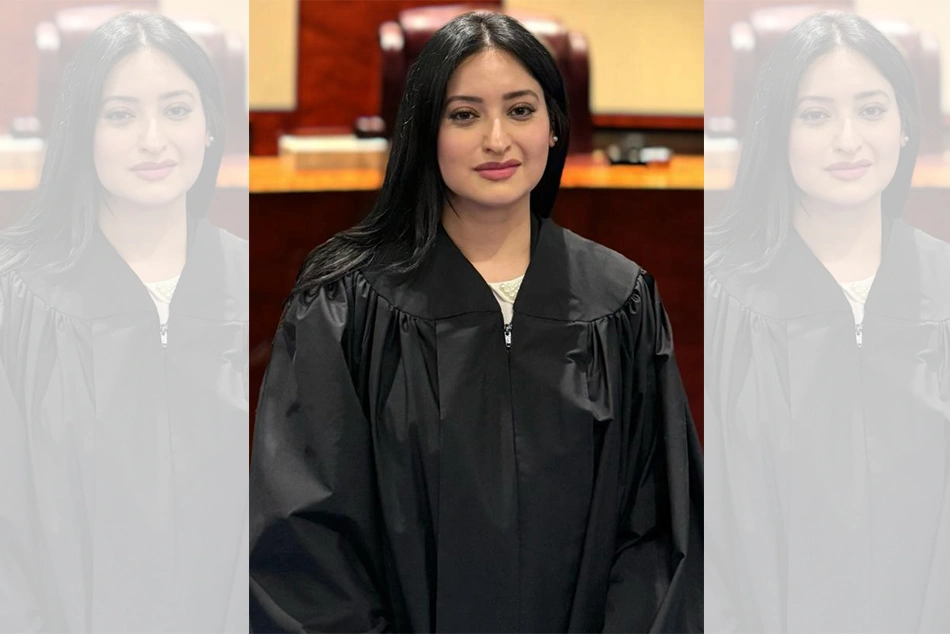
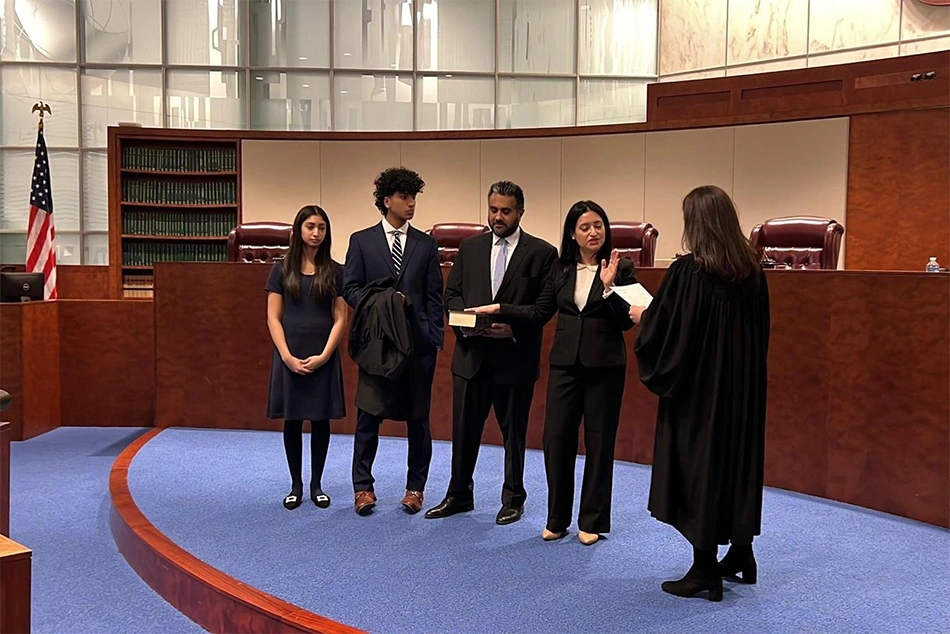
Kokan’s daughter Lubna Qazi Chaudhry took the oath as Administrative Law Judge in New Jersey with her hand placed on The Holy Quran, pledging to uphold constitutional responsibilities.
Mumbai:
Lubna Qazi, a lawyer originally from Maharashtra’s Raigad district, has created history by taking oath as an Administrative Law Judge (ALJ) in the US state of New Jersey, becoming the first Muslim woman to be appointed to this position in the state. The appointment is being widely regarded as a significant milestone for minority representation in the American judiciary.
The oath-taking ceremony was held recently, where Associate Justice Rachel Wainer Apter of the New Jersey Supreme Court administered the oath. On the occasion, Lubna Qazi placed her hand on the Holy Quran and pledged to faithfully discharge her constitutional duties.
The position of Administrative Law Judge holds considerable importance within the American judicial system. ALJs preside over cases involving decisions of government agencies, administrative disputes and public grievances, delivering rulings based on established legal principles.
Lubna Qazi’s Life Journey
Lubna Qazi’s life journey spans multiple countries and cultures. She was born in Kuwait, where she spent her early childhood with her parents. In 1990, during a school vacation, she travelled to the United States. However, following the outbreak of the Gulf War, the family decided to settle there permanently.
Lubna later pursued her education in California, completed her graduation from the University of California, and earned her law degree from Western State University College of Law.
After marrying Ahsan Chaudhry in 2005, Lubna moved to New Jersey, where she served in various government legal positions for nearly two decades. Recognising her extensive legal experience and professional competence, the Governor of New Jersey nominated her for the post of Administrative Law Judge in 2025.
Lubna Qazi is also distinguished for her linguistic abilities. In addition to English, she is fluent in Urdu, Hindi and Konkani, and has working knowledge of Arabic. Committed to preserving cultural and linguistic heritage, she is personally teaching Urdu and Arabic to her two children at home.
Family Feels Honoured
Expressing his pride, Lubna’s father Inayatullah Qazi said that the entire family feels honoured by her achievement. He described the appointment not merely as a position, but the result of years of hard work, sacrifice and prayers.
Speaking to the correspondent, Inayatullah Qazi said that his family hails from Tala taluka of Raigad district in the Konkan region. He completed his education up to Class VI at Jamia Millia Islamia School, Delhi, and his high school education at Anjuman Islam, Mumbai.
After obtaining a degree in Mechanical Engineering from Government College of Engineering, Aurangabad, in 1975, he moved to Kuwait for employment, beginning his career with an air-conditioning company. After working there for fifteen years, he migrated to the United States with a single suitcase following Iraq’s invasion of Kuwait after the Gulf War, as his children were already in the US at the time. He later ensured higher education for all four of his children.
Inayatullah Qazi said that the family’s roots are deeply embedded in Islamic tradition and that Urdu is spoken with pride at home. He added that Lubna completed recitation of the Holy Quran at the age of seven.
He further shared that around five to six generations ago, their ancestors were sent to the Konkan region as Qazis (judicial authorities) to administer justice without discrimination based on religion, caste or race. Although the profession discontinued a few generations ago, he expressed happiness that his daughter has now proudly revived the family’s judicial legacy.
Lubna Qazi is also the granddaughter of Dr Rehana Ahmed, a noted educationist and Executive Chairperson of the Girls’ Board of Anjuman Islam, Mumbai. Dr Ahmed expressed joy over Lubna’s achievement, stating that it serves as a shining example for young women across the community and will inspire girls to pursue higher education and professional careers. She is widely recognised for her dedicated efforts toward the promotion of girls’ education, particularly within the Muslim community.
Meanwhile, several social and legal organisations, including the Asian Pacific American Lawyers Association of New Jersey, have congratulated Lubna Qazi on her appointment. Observers believe that this development marks a significant step forward in strengthening Muslim and minority representation within the American judicial system.
source: http://www.ummid.com / Ummid.com / Home> United States / by Mohiyuddin Altamash / January 30th, 2026
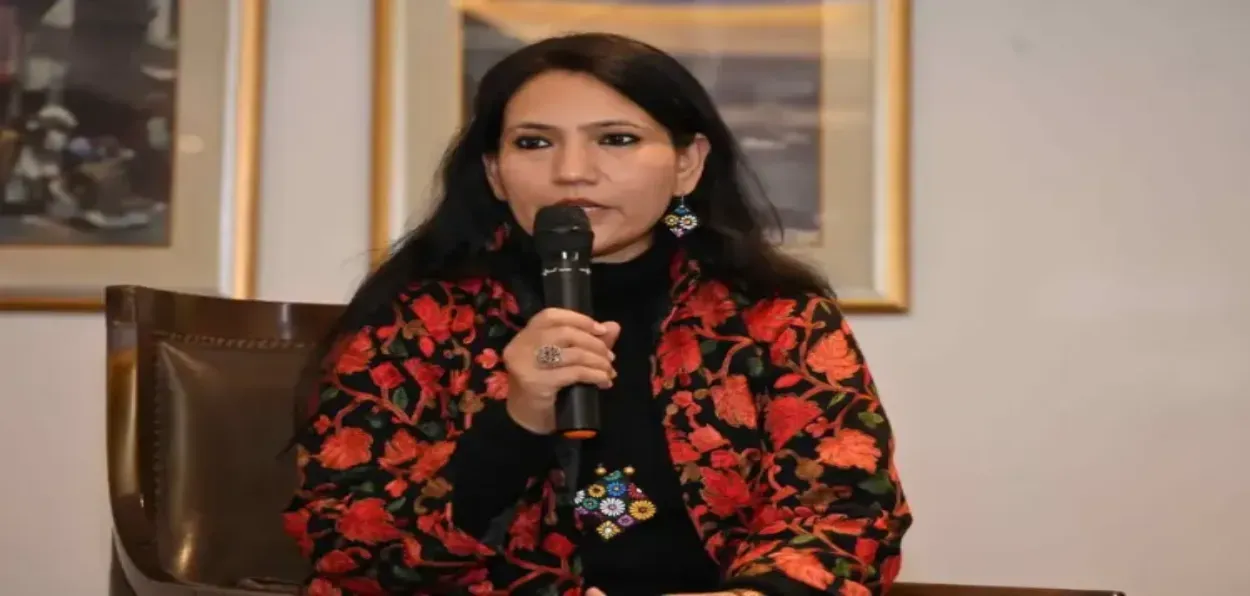
Coming from a small town and making a mark on the national scene, writer-journalist Tasneem Khan brings women’s concerns to the forefront through her journalism and literature. Her narratives are sensitive, clear, and attempt to offer solutions. Her writing and television programmes do more than narrate women’s struggles; they challenge social mindsets and inspire change.
Here are excerpts from an exclusive conversation with her:
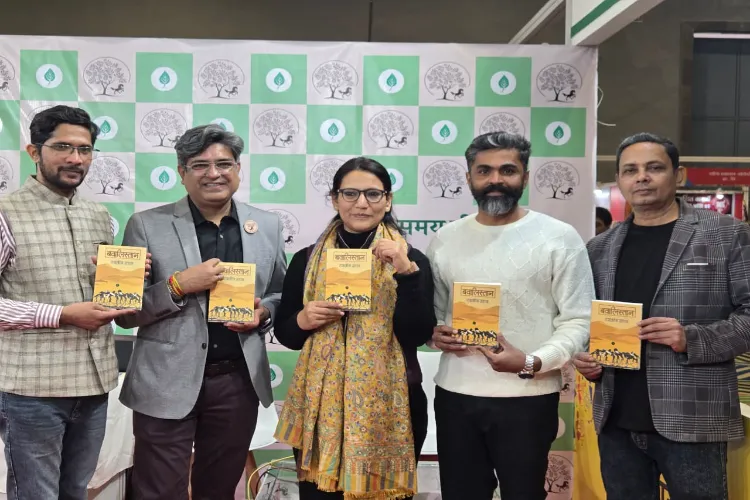
Let’s begin with Bwalistan. What is it about?
Bwalistan is a collection of stories rooted in Rajasthan, particularly its desert life. These stories belong to a distinct literary tradition that deeply portrays the complexities and struggles of life in the Thar Desert. Rajasthan’s desert is not just a physical landscape—it is defined by its people, culture, traditions, and way of life, all of which give it a unique identity.
Coming from a small town, it isn’t easy to make a mark in journalism and literature. How did your journey begin?
A: It’s true that paths have never been easy for women. I come from Didwana tehsil in Rajasthan’s Nagaur district. Though I grew up in a small town, my parents were educated, and our home had a culture of reading and learning. My mother’s love for books shaped me deeply. Growing up among books sharpened my ability to think, debate, and reason. I also won several awards during my school and college years.
When did you choose journalism as a career?
I formally entered journalism in 2005. From the very beginning, I was drawn to women-centric issues. I consistently wrote on gender sensitivity, domestic violence, and women’s social rights. For me, journalism is not just about reporting news; it is about engaging in dialogue with society.
Your television programmes gained special recognition. Could you tell us about them?
A: I hosted a programme called Samar Shesh Hai, which discussed women’s social and political concerns. Later, my regular show on Patrika TV, Aadhi Duniya, Poori Baat – with Tasneem Khan, became quite popular. The aim was to present women not merely as victims, but as thinking, reasoning individuals.
For which report did you recently receive the Ladli Media Award?
I received the award for my show “When Will Domestic Violence Go into Lockdown?”, presented by Population First and UNFPA. The jury felt the report exposed a harsh truththat during lockdown, women faced another terrifying pandemic inside their homes: domestic violence.
Your writing focuses less on complaints and more on solutions. How did this approach develop?
I don’t want to merely describe women’s pain. I believe writing should point toward solutions. If even one woman finds a way forward through my work, I would consider my life meaningful.
You began novel writing in 2015. How special is Mere Rehnuma to you?
A: Mere Rehnuma is extremely close to my heart. Published by the Jnanpith Trust, it was selected in a young writers’ competition. I became the second woman writer from Rajasthan whose debut novel was published by Jnanpith. Through this novel, I tried to establish that women’s empowerment cannot come through financial independence alone without a change in social mindset, empowerment remains incomplete.
Research has been conducted on this novel. How did that feel?
A: It was a matter of great pride that Mere Rehnuma became the subject of PhD and MPhil research. It reaffirmed my belief that my writing has connected at both academic and social levels.
Could you tell us about your other works and awards?
A: My short story collection Dastaan-e-Hazrat Mahal was published in 2019 and earned me the Chandrabai Award. In 2021, I received the Shakuntalam Award from the Rajasthan Progressive Writers’ Association. My stories have been translated into several languages. Rukh-e-Gulzar was translated by the Indian Translation Council, while The Blue of Silence was published in a Pakistani Urdu magazine and won the Mirror Award. My story My Share of Moonlight will soon appear in a collection by Oxford University Press.
What is your writing process like?
I observe people around me very closely their characters, pain, and struggles shake me from within. Until that restlessness finds words, I find no peace. That unrest gives birth to my stories.
What role did your parents play in your life?
My parents have been my greatest support. At difficult turns, they always encouraged me. I firmly believe parents’ education plays a decisive role in shaping a child’s future. I have seen many girls unable to move ahead simply because their parents did not value education.
The heroine of Mere Rehnuma is in search of liberation. How do you view this liberation?
A: For me, liberation is not just personal; it is social. Until society learns to accept strong women, their freedom will remain incomplete. If my writing can guide even one woman in this direction, that will be my greatest achievement.
You recently interacted with readers during the ‘Chaturang #LockdownLive’ session on Facebook. How was that experience?
The Rajasthan Forum organised the session. I spoke openly about my education, career, and literary journey. I emphasised that becoming a writer requires years of preparation, deep reading, and psychological analysis of society. I also read excerpts from my novel Ai Mere Rehnuma. The interaction was deeply personal and immensely inspiring for me.
Tasneem Khan’s journey shows how words, when driven by empathy and purpose, can challenge patriarchy, reshape thought, and quietly spark a revolution, one story at a time.
source: http://www.awazthevoice.in / Awaz, The Voice / Home> Stories / by Onika Maheshwari, New Delhi / January 19th, 2026