Tag Archives: Muslim Women of India

Where There Are No Religious Walls: The Story of ‘Ila Foundation’ Making Healthcare More Human

Kuttippuram (Tirur Taluk , Malappuram District), KERALA :
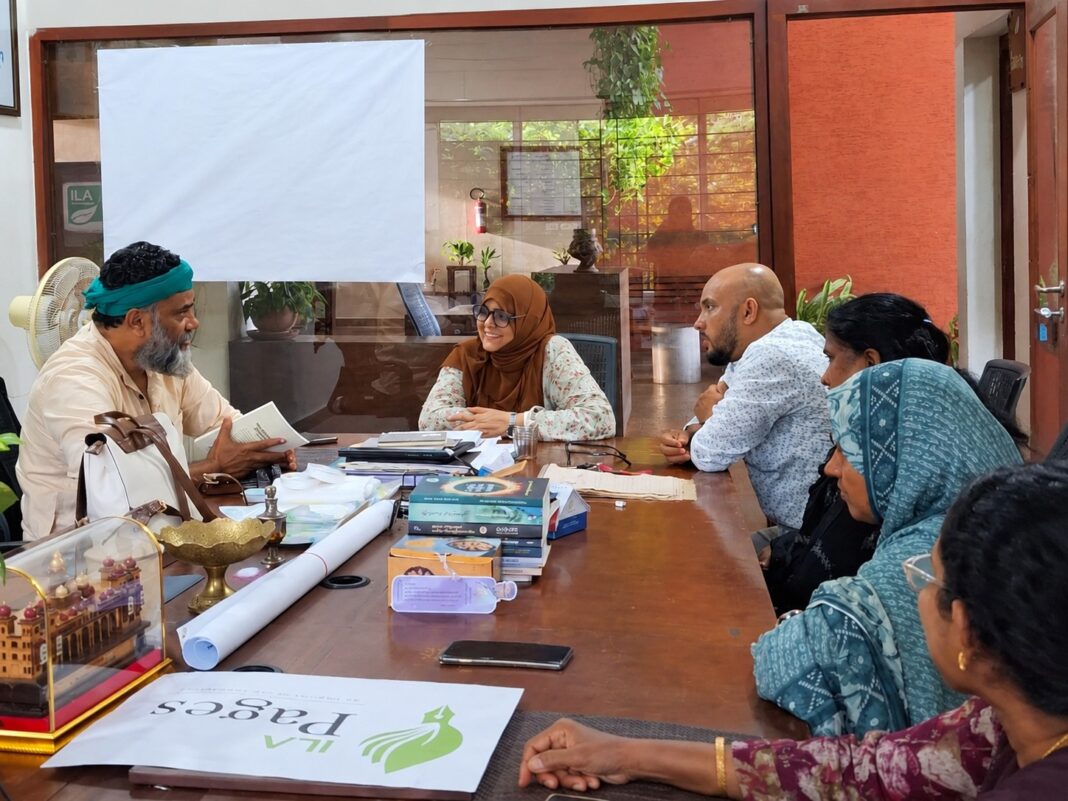
Author Sajida A Zubair with volunteers and members of the Ila Foundation during a discussion at its centre in Kerala.

“We human beings have started living in compartments. Muslims go to the masjid, Hindus go to the temple, Christians visit the church, and Sikhs go to the gurudwara. But where are the spaces for human beings, for all of us to visit simply as human beings?” –Ila Foundation’s Mohammed Najeeb.

Kuttipuram (Kerala) :

Travelling to Kuttipuram in Kerala was not merely a journey I had planned. It was a journey that carried with it a deep sense of emotion and transition. When I boarded the flight to Thiruvananthapuram earlier this month, I was setting out to leave my youngest daughter to follow her own choice of college and take the next step towards her higher education. As a parent, it was a moment filled with conflicting emotions: Pride in watching her move towards her dreams, and a quiet ache in letting her take those steps away from home.

After completing all the formalities and spending some cherished time with friends during the Onam holidays, I set out once again, this time by train. It was my first train journey in 22 years. A small journey in distance, perhaps, but one that felt significant in ways I had not anticipated. I finally reached Kuttipuram, carrying with me a sense of gratitude and anticipation, to meet Mohammed Najeeb Kuttipuram and thank him personally for the remarkable work he has been doing.

Though I went straight to their home from Tirur railway station, I met him only the following morning. I was told that Najeebka is a man who is deeply disciplined when it comes to time. There was no exception to that rule.

That morning, I was not simply meeting Najeebka. I was about to be introduced to a dream he had nurtured with conviction and purpose- the Ila Foundation.

The first question I asked him was perhaps the most natural one: “Why Ila?”

Najeebka, as he is fondly called by those around him, paused for a moment before answering.

“Life is a lesson,” he said. “We spend this journey going to school, finding a job, getting married, raising children, and then focusing on their education and building a house. We spend much of our lives fulfilling these responsibilities. But what’s next? What comes after all these responsibilities are fulfilled? That thought gave me the push to do something beyond these responsibilities.”

Here are excerpts from my conversations with the founder and volunteers of the Ila Foundation, recorded during my visit.

Sajida A Zubair (SAZ): What is Ila?

Najeebka: Ila which means leaf, comes from the fable of the ‘Ant & Leaf.’ Ila is a breathing space We human beings celebrate the first breath of life, and we mourn the last. In between those two moments, we breathe every single day, every single moment, yet we rarely pause to think about those breaths. We take them for granted. Ila is a space that allows us to pause- to breathe, to reflect and simply be. We human beings have started living in compartments. Muslims go to the masjid, Hindus go to the temple, Christians visit the church, and Sikhs go to the gurudwara. But where are the spaces for human beings, for all of us simply as human beings?  Ila is that space. It belongs to everyone. That is why Ila has no doors. It is open to everyone. There are no compartments at Ila Foundation that differentiate among human beings.

SAZ: How is Ila’s palliative care initiative different from other such center?

Najeebka: I felt that there was very little change or evolution in the way palliative care was being provided in many centres. Many of them remained where they were when they first began. The focus was largely on medicines, injections, catheter changes and other forms of medical support.  But Ila was conceived as something beyond medical care. We wanted to provide emotional support as well, to create a space where people could feel heard, cared for and valued.

SAZ: What makes Ila different from other organisations? What does it mean to be a volunteer at Ila?

Every volunteer who comes here is first made to understand one thing: before anything else, we are human beings. Learning how to be a human being is the first lesson we give to anyone who comes here to contribute.  Our volunteers come from different religions, castes, races and creeds. But the understanding that we are human beings first is what brings us together and makes us a family. That is also why Ila does not have the usual hierarchy. We don’t have board members, a president or a secretary. We simply have volunteers. We come together because we believe in the same purpose.

We need to realise that the health we have is one of the greatest blessings we receive in life. The moment we truly understand that, we should feel the responsibility to reach out to those who are struggling with their health. At Ila, we try to see ourselves simply as human beings, and to see the people we care for in the same way.

 Ila foundation is not just to care for those who are suffering, but to make all of us a little more human in the process.

SAZ: What is Ila doing to prepare the next generation with this same idea?

Najeebka: One of our important initiatives is the CEEP- Capital Exploration and Enhancement Programme, which begins with children from the eighth standard onwards.

We want to encourage these children to ask themselves some fundamental questions: Who am I? What am I capable of? What do I want to achieve in my life? We train them to discover their strengths, develop a sense of purpose and build a mission for their lives. More importantly, we help them understand how to face and overcome the challenges that life will inevitably bring.

We give special attention to the training of female students as well. So far, 24 training sessions have been conducted.  These children will, in another ten years, become part of different sections of society- some may enter politics, some may become professionals, teachers or take up other roles. Wherever they go, Ila hopes they will carry with them the values they have learned here and contribute to a positive and compassionate transformation of society. Our dream is not simply to train children for successful careers. It is to nurture human beings who can make a meaningful difference wherever life takes them.

SAZ: How would you describe your association with the idea behind Ila?

Sulfikhar, Volunteer, Ila Foundation: Najeebka is my childhood friend and an elder brother for me. I have known him for many years. He is a traveller, and during his journeys across North India, particularly through villages, he spent a great deal of time doing social work and reaching out to people in need.

For more than 25 years, these travels became a part of his life. It was through these experiences, and the people he encountered along the way, that the idea of the Ila Foundation gradually took shape.

But Ila is much more than a charity or a place that simply provides assistance. It offers care and compassion to people dealing with health challenges, but its purpose extends beyond those who are unwell.

Ila is also a space for those who are healthy. It’s a place where they can look within themselves and work towards cleansing their inner selves. We all carry our own diseases of the soul- ego, jealousy, anger and many other negative emotions. Ila encourages people to recognise these within themselves and try to overcome them.

That, for me, is what makes Ila different. It is not only about caring for a person’s physical suffering; it is also about helping people become better human beings.

SAZ: What kind of care and support does Ila Foundation provide?

Fasina, who coordinates the palliative care volunteers: Ila provides support to people with a range of health needs. The Drug Bank provides medicines, particularly for psychiatric patients. Those requiring rehabilitation support are registered, and the medicines they need are provided to them. We also have a dialysis unit with 10 machines, operating in two shifts. At present, 34 patients are receiving dialysis care through Ila.

Our palliative care programme extends beyond the walls of the Foundation. We have four home-care units that visit patients at their homes every 15 days. The visits include checking their vital signs, wound dressing and attending to other medical needs.

But medical care is only one part of what we do. Just as important is the time we spend with them, sitting beside them, listening to them and offering emotional and moral support. Sometimes, simply knowing that someone is there for you can make a great difference to a person who is suffering.

During my visit to the Ila Foundation, I had the opportunity to accompany one of its home-care units. We set out at 9 in the morning, travelling from one home to another and meeting families who, despite the immense difficulties they face, continue to hold on to hope and remain remarkably positive about life.

What struck me most was the way many of them spoke about Ila, not merely as a source of medical care, but as an institution  that had brought a sense of confidence, dignity and hope back into their lives.

One such story is that of Shabiri Girish, 45, who lives with his wife and two school-going children. A construction worker by profession, his life changed dramatically when he fell from the fourth floor of a building and suffered a serious head injury.

For nearly three years, his family explored every available avenue of treatment, hoping that he would one day regain the ability to walk. But despite their efforts, he eventually lost movement in his legs.

It was then that Shabiri Girish registered for palliative care with the Ila Foundation.

When Ila’s care began, it offered him something that went beyond medical assistance. The emotional and moral support he received gradually helped him regain confidence and look at life with renewed hope. In time, Ila provided him with an electric wheelchair and helped him set up a small shop beside his home.

Today, Shabiri Girish has regained a measure of independence that once seemed almost impossible. His journey is not simply a story of overcoming physical limitations; it is also a story of dignity, resilience and the power of being supported when life seems to have taken everything away.

He and his family now speak of Ila with deep gratitude. More than recipients of its care, they hope to remain connected with the Foundation and contribute as volunteers, sharing their own journey to inspire others who may be going through similar struggles.

I was also given the opportunity to spend some time with a group of specially abled beneficiaries of Ila. We sang, played games and shared moments of laughter. They welcomed me into their circle with such warmth and innocence that, for those few hours, there seemed to be no sense of difference-only the simple joy of being together.

One of the children smiled and told me, “We love coming here every week. We wait eagerly for Tuesdays for these sessions.”

The excitement in those words said more about what Ila means to them than any explanation could. For these children, Tuesday is not just another day of the week. It is a day they look forward to- a day of friendship, play, laughter and belonging.

And that’s when I knew Ila Foundation is indeed a space to breathe freely and perhaps that is the most powerful aspect of Ila’s work-the transformation of those who once needed support into people who themselves want to become a source of strength for others.

If you are in Kerala, Ila Foundation deserves to be on your itinerary.

source: http://www.indiatomorrow.net / India Tomorrow / Home>Health / by Sajida A Zubair /edited in headlines / September 14th, 2026
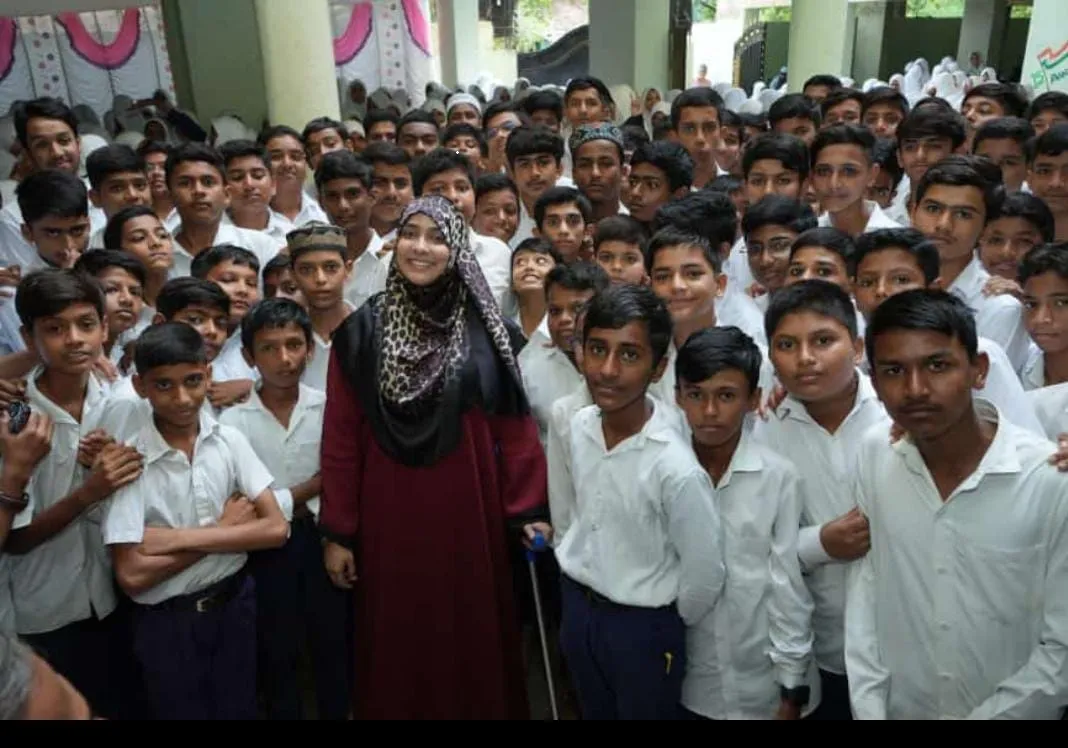
Dr. Roshan Jahan Sheikh: Turning Adversity into an Extraordinary Journey of Courage

Mumbai, MAHARASHTRA:

Dr.Roshan Shaikh’s extraordinary journey from double amputation,a financially struggling family to becoming an MBBS doctor, MD Pathologist, motivational speaker, award-winning personality.

Dr. Roshan  Sheikh is now the eminent name of the field of education and source of inspiration for thousands of students.She specially invited to Moulana Ajmal’s education institute,Assam, Shaheen group of Institutions, Bidar, Karnataka, Anjuman E Islam Mumbai ,and other dozens of prestigious institutes of Maharashtra and Uttar Pradesh.

Born in Mumbai to a family where her father worked as a vegetable vendor, Roshan Jahan dreamed of becoming a doctor. Her life changed dramatically when she was in XIth grade a tragic train accident resulted in the amputation of both her legs. She remained bedridden for more than three months, but the tragedy could not break her determination.

Her mother, who had studied only up to the fourth standard, became her strongest pillar of support. She took Roshan to school in a wheelchair whenever practical classes and examinations required her presence. Despite severe physical and financial difficulties, Roshan completed Class 12 with impressive marks and secured third rank in the handicapped category in the state medical entrance examination.

However, her struggle continued when she was denied medical admission because her disability was assessed at 96 percent, while prevailing regulations restricted admission for candidates considered more than 70 per cent disabled. Determined to realise her dream, she approached the Bombay High Court in 2011 with the support of orthopaedic surgeon Dr. Sanjay Kotharia and advocate P.B. Patil, who fought her case without charging a fee. The court recognised her capabilities and allowed her to pursue medical education.

Roshan subsequently secured admission to KEM Medical College, Mumbai. Medical education was challenging, involving practical work, emergencies, movement between buildings and long working hours. Yet she completed her MBBS in 2016 and later earned her MD in Pathology in 2021 from Mumbai.

Several people also supported her during this journey. Congress MLA Amin Patel helped finance her medical education, while BJP MP Kirit Somaiya supported her when she faced difficulties in pursuing postgraduate studies. Her case also contributed to changes that enabled her to continue her higher medical education.

After completing her MD, Roshan worked as a Consultant Pathologist and Cytopathologist. On 28 October 2022 she married to Mumbai based Buisnessman Salman Abdul Latif and became mother in 2026.

She also became a motivational speaker, travelling to educational institutions in Maharashtra, Karnataka and other states and inspiring thousands of students with her life story. She is currently at home, taking care of her three-month-old baby girl, while remaining socially active and sharing her old and new posts and videos.

Her achievements have earned her several prestigious honours, including the Hindustan Times Women of the Year Award (2018) at the national level. Other recognitions include the Shoorveer Award, Bharat Prerna Award, Award for Bravery and Courage from the Bombay High Court, Inqulab Award, Galli News Griffin Award for Women Impact, Cavinkare Ability Award, Dr. A.P.J. Abdul Kalam Award, Sahas Ability Award, Microsoft Bravery Award and SABAL Award from Tata, among others.

Her personal life has also entered a new chapter. Around three years ago, she married Mumbai-based handsome businessman Salman Abdul Latif. Despite her high level of disability, she successfully went through pregnancy and became a mother to a baby girl three months ago.

Dr. Roshan Jahan Sheikh has transformed adversity into purpose. Her life stands as a powerful message that physical limitations need not limit human dreams, and that courage, education and determination can turn seemingly impossible goals into reality.

Speaking to Muslim Mirror Roshan says, “Life may knock you down and may even try to break you, but getting back on your feet is in your hands. If I can overcome such a great storm and become an MD doctor, then you too can fulfil every dream you have. Keep faith in Allah and move forward,” Dr. Roshan Jahan Jawwad Sheikh said.

She further advised people not to dwell on what they have lost or what they do not have. “Do not focus on what is gone or what you do not have. Instead, put all your strength into what remains and into what you can become,” she said.

source: http://www.muslimmirror.com / Muslim Mirror / Home> Positive Story / by Imran Inamdar / September 08th, 2026

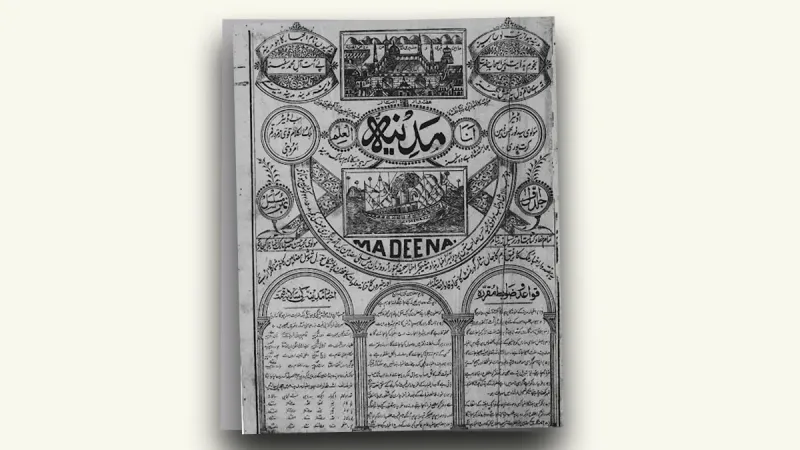
‘Madinah’: Handwritten Urdu newspaper that spoke from Bijnor to subcontinent

Bijnor (former Northwest United Provinces) – presently (Moradabad Division), UTTAR PRADESH :

Started as a local bi-weekly newspaper, Madinah soon commanded a massive subcontinent-wide circulation. While most newspapers at the time focused on major colonial urban centres such as Lahore, Delhi or Calcutta, Madinah instrumentalised its place of inception—Bijnor—as a political shield.

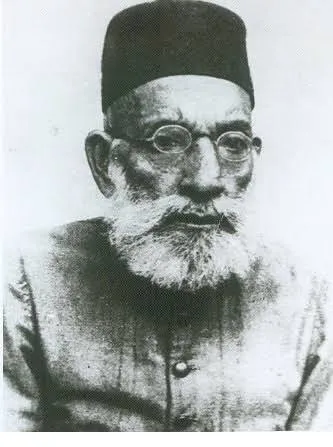
‘Madinah,’ a bi-weekly newspaper founded in 1912 by Mohammad Majeed Hasan, began in his courtyard in the small qasbah of Bijnor in the Northwest United Provinces (present-day Uttar Pradesh). Its inception is later recounted in a dream narrative published in Madinah’s silver jubilee edition in 1939, which describes how Hasan dreamt of “a bright moon shining in the sky, being eclipsed by another moon appearing from behind and drifting away from it, becoming brighter as the dream continued.”

Hasan had been working as a journalist in Lahore while also preparing for a career as a judge. He is said to have had the dream shortly after abandoning his training and returning to Bijnor to continue working for the family newspaper Sahifa, whose modest readership had already begun to dwindle. Hasan later interpreted the dream as a sign that he should start his own newspaper, symbolised by a new shining moon.

Hasan’s first wife, Muhtarma Kaneez Fatimah, whose altruistic nature and firm belief in his venture compelled her to help him start the paper, sold her jewellery to support it. She later proved to be an intelligent and capable assistant in the newspaper’s production, despite being unable to read or write.

It was she who inspired the newspaper to include a separate women’s section named Akhbar-i-Nisvan on one of its last pages. The section frequently appeared during the newspaper’s first three years, from 1912 to 1915, and was intended to serve the interests of Muslim women by including editorials and creative pieces written by both men and women.

Soon, the paper had distinctly identified itself among its audience by creating a space for Muslim women, with a special focus on mothers, to discuss their issues through genres such as poetry and fiction.

The unlikely epicentre: importance of the Qasbah

Started as a local bi-weekly newspaper, Madinah soon commanded a massive subcontinent-wide circulation. While most newspapers at the time focused on major colonial urban centres such as Lahore, Delhi or Calcutta, Madinah instrumentalised its place of inception—Bijnor—as a political shield. In the same year as Madinah’s inception, Maulana Azad, at the age of 23, started the paper Al-Hilal in Calcutta, which was lauded among the Muslim elite and others for its publishing style and genre, soon reaching a pinnacle of readership.

In contrast, Madinah’s unique approach, which embraced the values of the gentry while also appealing to a broad readership beyond the traditional urban elite, distinguished the paper from the incessant urban cynicism that was becoming a prevalent theme throughout the landscape of production. Due to better readership and the greater availability of resources in urban areas, similar endeavours to Madinah redirected themselves to these spaces.

In its founding years, Madinah also addressed British officials, adopting varying strategic and bargaining stances against surveillance and strict government policies through explicit deference to colonial authorities. For instance, Hasan, the proprietor of the newspaper, cited the Ijazat (permission) of the Magistrate and Collector of Bijnor in its inaugural issue. This attentiveness to British intelligence provided the necessary immunity required for the functioning of the newspaper, unlike Azad’s Al-Hilal, which came under heavy scrutiny from the colonial government and had to cease publication by the end of 1914.

Newspapers in urban centres, such as Awadh Akhbar, persisted in their efforts to speak to a broad audience delineated more by language and culture than by religion, while papers such as Madinah reinforced an already rich discursive tradition surrounding religion and identity in the social crevices known as qasbahs (small towns). They also engaged with contested political themes debated by scholars and leaders, including the shaping of early narratives of separatism and communalism among Indian Muslims.

The success of Madinah can be attributed to the spatio-temporal advantages of the qasbah, which can be defined as a place of bureaucratic and market significance where a Muslim minority or majority lived alongside populations from other communities, alongside an influential enclave of intellectual vivacity and economic and political importance for Muslims. Scholar M. Raisur Rahman described qasbahs as “an alternative site for contestation with strong autonomous networks of culture, literature and religion”, while simultaneously defining them as a ‘unique space’ and a ‘microcosm of larger idealized national life’.

These spaces have been significantly important sites in the history of South Asian culture, shaping identities and literary traditions while remaining distinct from the typologies of urban environments, where modernity had already seeped through the sutures of cultural exchanges with the outside world.

Madinah and its role in politics

The political trajectory of Madinah transformed profoundly during the period of World War I, following the Balkan Wars. The paper broadened its purview by juxtaposing the localised ethos and culture of the qasbah with larger international crises, particularly the imminent dismantling of the Ottoman Empire. 

Navigating the intricacies of a contested political landscape, Madinah supposedly guarded a global Islamic consciousness through its promotion of the Khilafat Movement and its shared affiliation with Jamiat Ulema-e-Hind. Consequently, its support for the Indian National Congress and its anti-separatist stance against Jinnah became apparent, aligning with Jamiat’s idea of Composite Nationalism, as Madinah continued to anchor itself in the secular, anti-colonial bedrock of Urdu journalism.

According to scholar Gyanendra Pandey, Madinah served as a vital barometer of Muslim public opinion across this shifting timescape. Driven by the ideological synergy of Hindu-Muslim unity during the Non-Cooperation and Khilafat movements, the publication commanded an astounding peak circulation of 12,500 copies by 1922. However, this radical nationalism invited severe repercussions from the colonial state, notably resulting in the paper being banned in Punjab following its courageous and explicit reporting on the 1919 Jallianwala Bagh massacre. Following the ban, the paper was relaunched in August 1919 under a new name—Yasrab (Madinah in Arabic)—as an act of strategic defiance against the colonial government, with a couplet from Iqbal:

Khāk-i Yasrab az do ‘ālam khūshtar ast,
Ā’e khunak shahre ke ānjā dilbar ast

(The dust of Madinah is better than both worlds,
How wonderful is the city where the beloved is.)

As the landscape of production became increasingly fragmented by communal cynicism and the mass political momentum of the early 1920s waned, the paper witnessed a decline in readership, with circulation dipping to 6,500 in 1927 and further to 6,000 by 1931.

Despite this dwindling circulation, Madinah remained a formidable and persistent critic of communal separatism throughout the 1930s and 1940s. Engaging with the contested political themes of the era, the paper sought to dismantle the early narratives of the All-India Muslim League. Pandey highlights a remarkably bold editorial from the 1930s that dismissed the League as being “neither dead nor alive”, asserting that its existence was confined merely to “the brain and mind of Mr. Jinnah”. 

By 1942, the newspaper had effectively transformed into an open town hall, enabling ordinary citizens to debate and largely resist the looming Pakistan movement from within the landscape of the qasbah.

The script and scripture

The prevalent Urdu script, Nastaliq, which had been used throughout South Asia for centuries and was imported from Persia, featured intricate details, ornamentation and a complex structural form forged through the meticulous amalgamation of the Naskh and Ta’liq calligraphic traditions. It became the most recognisable Urdu script and developed strong cultural and ideological ties with the Urdu language. However, due to the rise of globalisation and the growing demand to produce literature for the public, it became increasingly difficult to produce works in the script lithographically on a mass scale. By the end of the 1970s, Nastaliq began to advance with the help of Mirza Jamil Ahmad, who created more than 20,000 combinations to bring the script into the digital world under the name Noori Nastaliq.

By the time the digitisation process began, Madinah was already out of business, shutting down its press with its last issue in 1976. During the seven decades that the paper survived, its editors had no keys to the press and no screens to reflect upon. Instead, the issues of Madinah were produced solely by hand, by calligraphers and artists alike.

The Urdu script Nastaliq had been established as the standard for almost every copy of the holy book Quran in South Asia since the Mughal period. By the time Madinah began using the same script as its standard, it already carried connotations of purity, holiness and divinity within the cultural landscape. Combined with the organic practice of producing it by hand rather than by machine, the paper was considered by its readers to embody a deliberate resistance against illegitimate mechanisation and the rising industrialisation of the subcontinent, curating a new political discourse based on the cultural symbolism of the script.

By using and retaining lithographic practices in an era when other papers were increasingly relying on mechanical typography for efficiency, Nastaliq was perceived as a tactile and handcrafted discipline that preserved the inherent spirit of prose, shielding the paper’s contributions from the mechanical and indifferent processes of Western print capitalism.

The inevitable descent

By the 1940s, Madinah had begun engaging in intense print debates with the supporters and proponents of pro-Muslim League newspapers and writers, arguing in a polemical fashion that religion could not be the sole determinant of a nation’s survival. Despite the paper’s persistent efforts to resist the pro-League and separatist stance, it witnessed the partition of the Indian subcontinent into two parts. The social capital of Madinah was on the verge of collapse, as the paper saw affluent members of the Muslim community, who had constantly contributed to its production and editorials, leave for the other side of the border.

The Language Act of 1951 became a huge blow to the publishing house of Madinah, as Hindi was soon adopted as the state language in Uttar Pradesh, mandating officials and government offices to maintain all data in Hindi and extensively replacing Urdu in institutions under the newly formed Indian government. Although the apparent marginalisation of the paper’s foundational language and the loss of its social capital were significant blows in the paper’s history, they were unable to overshadow its continuing legacy.

Madinah, managing to survive, remained a prominent, albeit ageing, symbol of pre-Partition nationalist Muslim political identity, advocating for the preservation of Urdu heritage amid the growing socio-political shifts in Uttar Pradesh. At the same time, it continued to struggle against declining circulation as newer, faster-printed typographic dailies overtook the market. Its reports on the Indo-Pakistani War of 1971 and the creation of Bangladesh vindicated the paper’s historical assertion that religion alone could not hold a nation together, while it also continued reporting on rising communal tensions in the country.

The prodigious endeavour was about to culminate in the years following the Indo-Pakistani War. Near the end of its operational life, the paper’s traditional lithographic format and qasbah roots struggled to attract younger, urbanised readers. The deteriorating health of Hasan finally caught up with him, leading to his death in 1972. The handling of the newspaper remained in the hands of Hasan’s family until its last editor, Syed Hasan, finally ceased publication, quietly closing the press in 1975.

References

  • Jones, J. (2023). Megan Eaton Robb: Print and the Urdu Public: Muslims, Newspapers, and Urban Life in Colonial India. New York: Oxford University Press, 2021; pp. xi + 247. Journal of Religious History, 47, 151–153. https://doi.org/10.1111/1467-9809.12917
  • Abduhu, G. R. (1973). The Educational Ideas of Maulana Abul Kalam Azad. Sterling Publishers.
  • Rahman, M. Raisur. (2014). “Beyond Centre-Periphery: Qasbahs and Muslim Life in South Asia.” South Asian History and Culture, 5, 163–178. https://doi.org/10.1080/19472498.2014.883762.
  • Eaton Robb, M. (2016). “Women’s Voices, Men’s Lives: Masculinity in a North Indian Urdu Newspaper.” Modern Asian Studies. https://doi.org/10.1017/S0026749X15000335
  • Pandey, G. (1978). The Ascendancy of the Congress in Uttar Pradesh, 1926–34: A Study in Imperfect Mobilization. Oxford University Press.

source: http://www.maktoobmedia.com / Maktoob Media / Home> Features /by Mohammad Azim / August 30th, 2026

Shehnaz Rahman gives up lucrative legal practise for love of classroom

Guwahati, ASSAM :

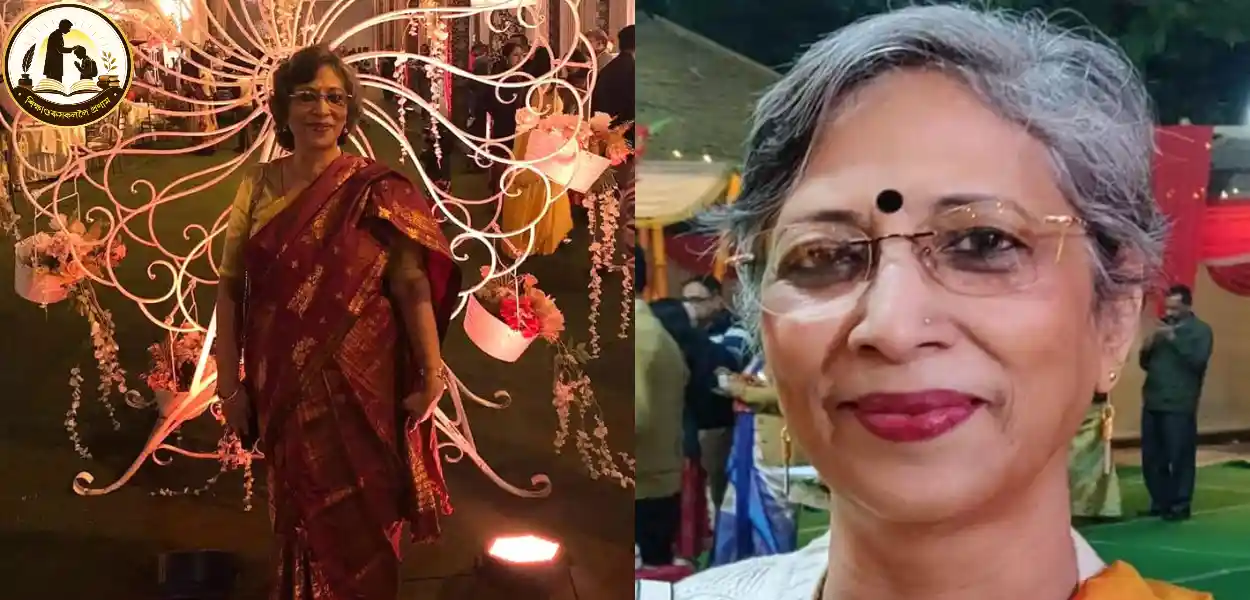
Shehnaz Rahman

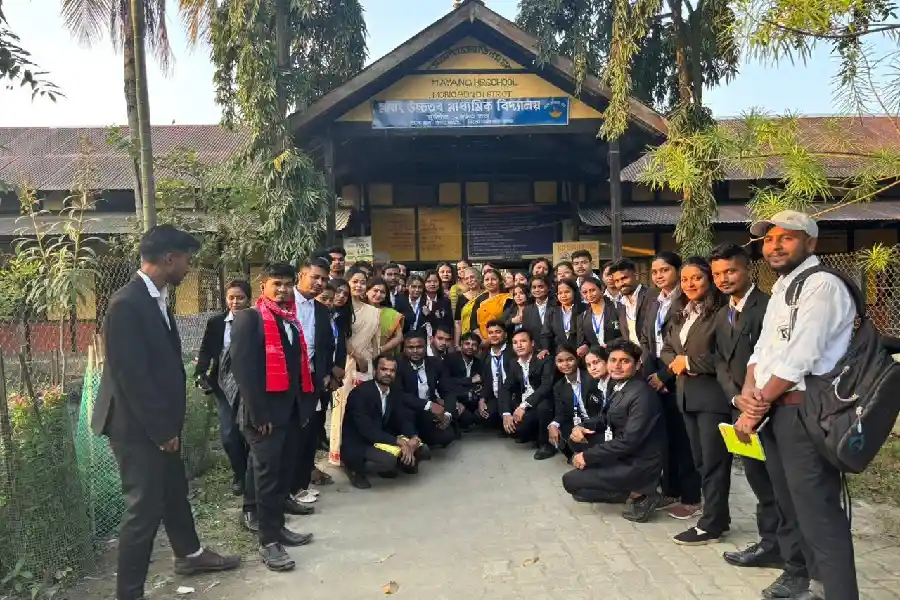
Shehnaz Rahman, a senior advocate from Guwahati who once fought legal battles in the court room has taken to full time teaching. While her legal career gave her an identity, it was in teaching that she found her life’s purpose.

For Shehnaz Rahman, lecturer at the Bishnuram Medhi Government Law College in Panjabari, Guwahati, teaching is not merely a job but an integral part of her existence. Life led her to the courtroom and placed the law books in her hands; yet, she eventually returned to teaching to seek fulfilment of her sense of belonging.

For her, teaching is not just a chapter in her professional life; it is a call of the heart.

Shehnaz Rahman says even as a child, she had wanted to be a teacher. After completing her honours graduation in political science from Cotton College (now Cotton University), she enrolled at Delhi University and completed her doctorate.

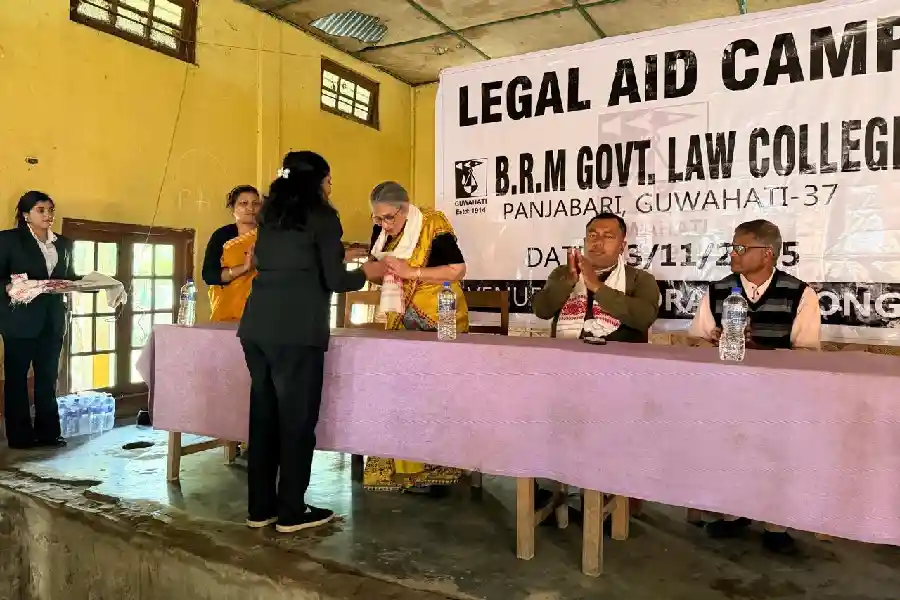
Shehnaz Rahman , lecturer and senior advocate of Bishnuram Medhi Government Law College  at a function 

The primary purpose of earning her doctorate was to enable her to adopt teaching as a profession in the future. During that period, Shehnaz also obtained her law degree.

However, life does not always follow a planned course. Due to the lack of teaching opportunities during her doctoral studies, she began practicing law in court. Gradually, Shehnaz established herself in the legal profession. Yet, even amidst the demanding job of a advocate, she had kept her dream of becoming a teacher alive.

In a conversation with Awaz-The Voice, Shehnaz Rahman said: “In 1988, I had the opportunity to work as a part-time lecturer at B Barooah College. Shortly after, the then principal of the Government Law College located in Panbazar at that time, Mr Haren Kalita, invited me to teach as a guest lecturer. As soon as I got this opportunity, I accepted his invitation without a second thought. That is how my new journey began. From guest lecturer to part-time lecturer, and finally, in 1995, I joined the Government Law College as a full-time guest lecturer.”

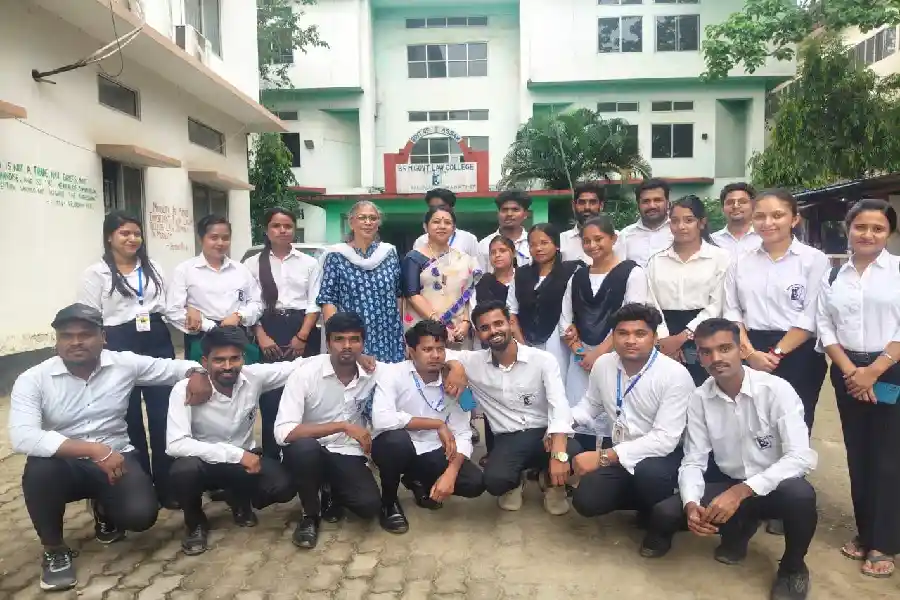
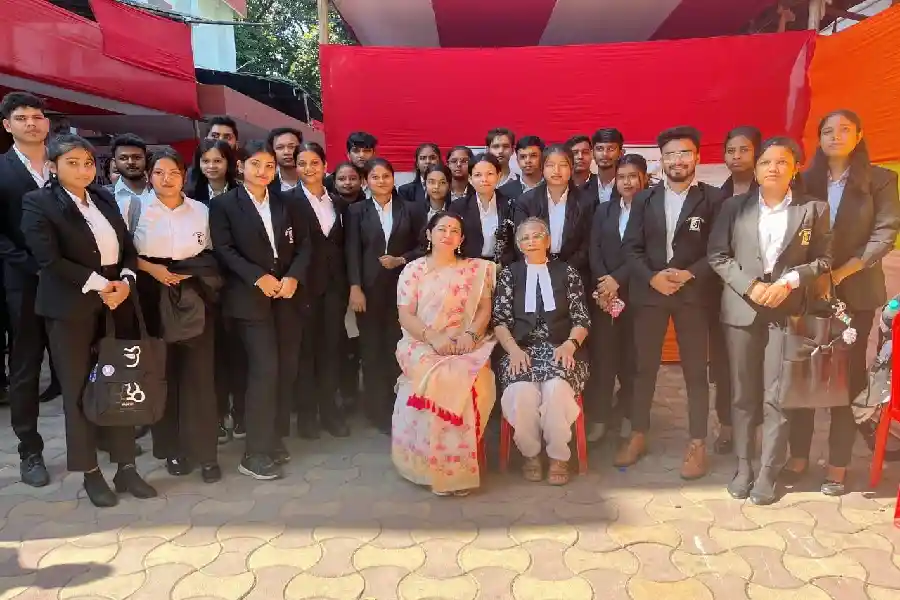
Lecturer and Senior Advocate  Shehnaz Rahman with the students 

Balancing her legal practice in court during the day and teaching in the evening, Shehnaz realised that she was doing well as an advocate, her heart pinned for a role as a teacher.

She said, “The legal profession has its own appeal, but the satisfaction I derive from teaching is entirely different. Gradually, I understood that I could never give up teaching.”

This dual experience of teaching and legal practice shaped Shehnaz Rahman into a unique educator. With her courtroom experience, she has been able to introduce students to the world beyond textbooks.

Through court visits, legal awareness camps, practical learning or real-life case management experience, she explained all these aspects to students based on her own experiences. She says, “Students understand the subject more deeply when they engage with real-life situations rather than just reading from books.”

Lecturer and Senior Advocate  Shehnaz Rahman with the students 

However, the most emotional chapter of Shehnaz Rahman’s relationship with teaching lies hidden in a very difficult period of her personal life. While she was serving as a government advocate for the Meghalaya government, her husband suddenly passed away following a cardiac arrest. Within just an hour, Shehnaz’s life seemed to change completely.

She was deeply shattered. It was then that teaching seemed to bring her back to life. Gradually, going to the classroom, talking with students, listening to their questions and teaching them helped ease her sorrow and unrest.

She felt that teaching had become a mental strength for her.

Shehnaz said, “After my husband’s death, I was mentally devastated. But the work of teaching gave me the courage to live like a mother, a healer, a friend and a family member, and it helped me. Among the students, I could forget my sorrow for some time. This gave me new inspiration and enthusiasm to live. It provided new strength to face life. That is why I also call teaching a kind of therapy of my life.”

Today, many of Shehnaz Rahman’s students are lawyers, judicial officers and professionals in various fields. She said, “When any former student comes to me in court and says, ‘Madam, I was your student,’ the pride and satisfaction I feel at that moment cannot be compared to any professional success.”

Shehnaz Rahman believes that a teacher’s true success is not reflected in their own position or personal achievements, but in the success of their students.

“I always advise the new generation of law students to work honestly and with dedication.

Lecturer and Senior Advocate  Shehnaz Rahman with the students 

Shehnaz Rahman says that there is no substitute for fundamental books, laws, research and analysis in this era of digital resources. Therefore, both teachers and students must keep enriching themselves with new knowledge in tune with the times.

She does not support complete dependence on technology. That is why, the habit of reading, thinking and working independently should never be abandoned. She encourages students to read books, research journals and primary laws, to conduct research, to write themselves and to improve their skills in preparing legal documents. In her view, we must adopt new technology, but technology can never be a substitute for fundamental knowledge, reading, and analysis.

Shehnaz Rahman says she will never give up teaching.

She said, “For me, whether I will teach or not? This is not a question. Because I have already made my decision. Now the question is, where and how I will continue teaching. If tomorrow I cannot continue working at this college, I will still not give up teaching. I will continue teaching through training centers, private universities, law universities or any other medium. In whatever way I can, wherever I can, I will keep teaching students.”

The legal profession has given Shehnaz Rahman experience, identity, and professional success. But teaching has given her something even more valuable — ‘life’s purpose’. When life had deeply broken her, teaching helped her stand up again. And when the strength to move life forward was diminishing, she gained a new strength to live from among her students. That is why Shehnaz Rahman’s life can perhaps be summarised in one sentence: The court taught her law, but the classroom taught her life.

source: http://www.awazthevoice.in / Awaz, The Voice / Home> Stories / by Munni Begum, Guwahati / September 01st, 2026

There is no history of India’s freedom without its Muslims

INDIA :

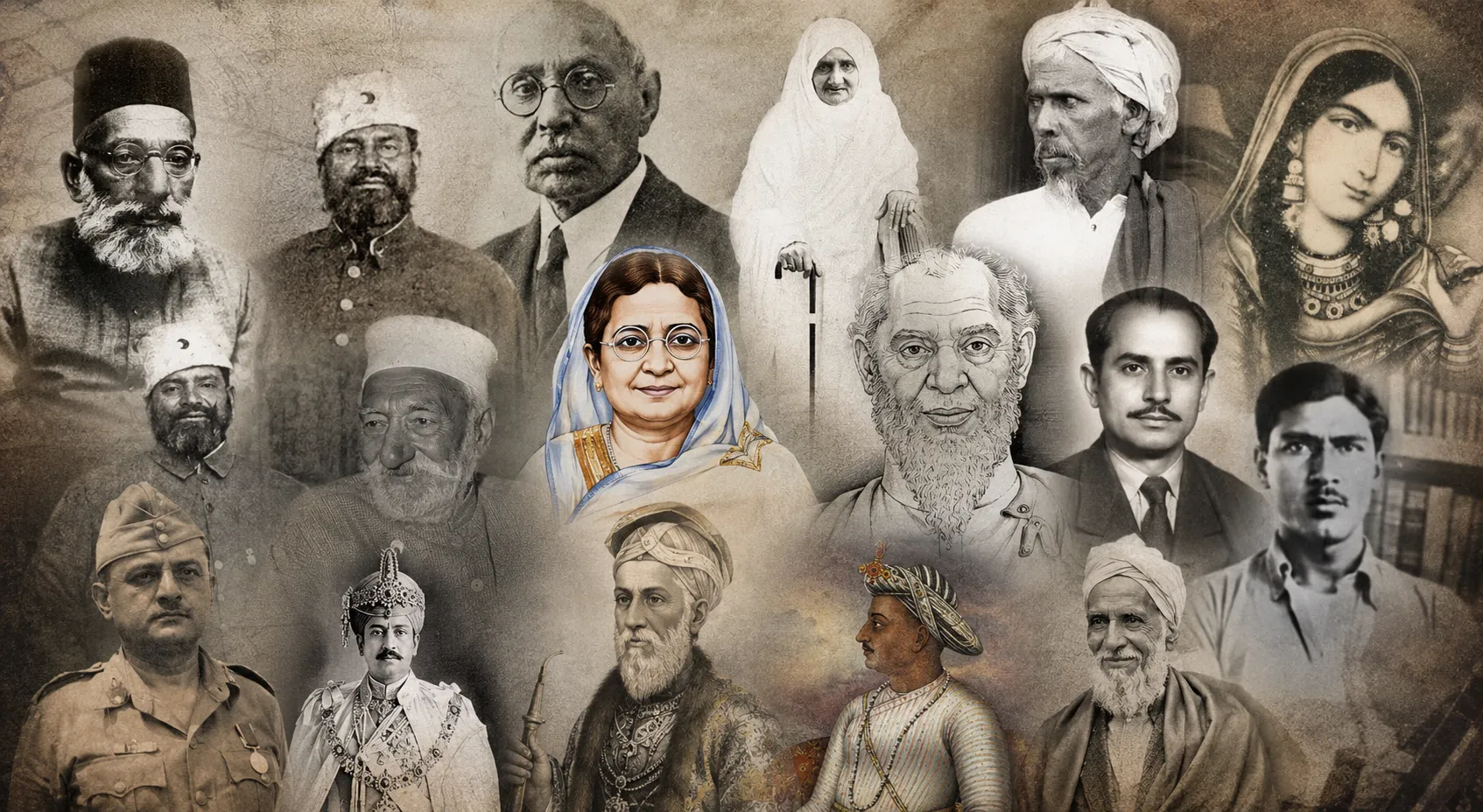
At 80, revisiting the Muslim lives, movements and sacrifices that shaped India’s struggle for freedom, and the politics of forgetting them.

Stroll through the pages of India’s history, because academia has failed to acknowledge some names and contributions in the Indian freedom struggle. From the Taj Mahal, Red Fort, Qutub Minar, Humayun’s Tomb, Gol Gumbaz, Charminar, to Fatehpur Sikri and the bustling lanes of Chandni Chowk, they all speak volumes louder. But the cultural pattern of ‘selectively remembering’ and ‘selectively forgetting’ has downplayed nation’s history into one-dimensional narratives , while external sources of learning like cinemas, textbooks, public places re-branding, etc,  are getting colored with contemporary political dynamics, to legitimize their plans and policies. 

To fathom India’s past sincerely, we must be willing not only to learn but also to unlearn. Learning involves discovering forgotten contributions, while unlearning requires shedding inherited biases, political narratives, and simplified versions of history. Because, as eminent historians have speculated, the past is constantly reinterpreted in the light of new evidence and new questions. Consequently, the framing of our past will affect the present, which will further be read as a past in the future, thus entrusting us with sheer responsibility of weaving a lineage of conscience, not insidious storytelling.

The lost dots of the Indian freedom movements

Revisit in Indian history afresh because erasure never happens all at once, it happens slowly and systematically.

Independence Movements did not count from the very battles fought, but from the conditions laid down before and after to formulate and fixate Indian society and culture altogether. Resistance to the economization, politicisation, and, ultimately, colonization by the Britishers was confronted by the collective plurality which our country possessed with pride. Testifying that resistance was not always born on the battlefield, often it began with communities refusing to harbor animosity for one another. 

Hindu sanyasis and Muslim fakirs whom the British Company wanted to fragmentalise, chose each other instead. Naga ascetics of the Dashnami order like Pandit Bhabani Charan Pathak stood beside Muslim fakirs of the Madari and Burhana sects, Majnu Shah Fakir, Chirag Ali, Musa Shah, and together resisted the oppressive taxation and economic exploitation the Company had imposed. It was one of the earliest organized rebellions against British rule in India, and yet how many of us have even heard these names?

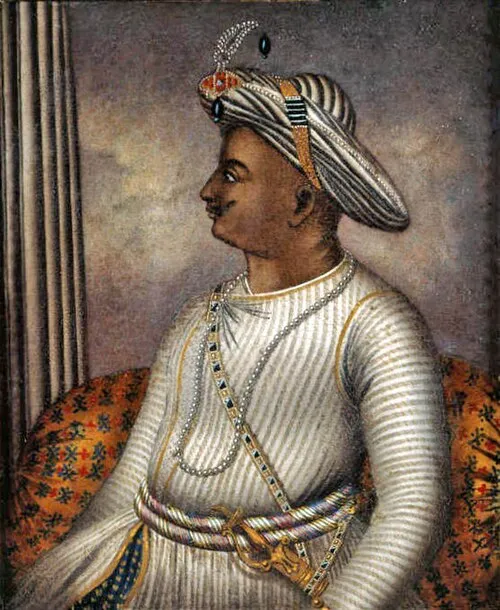
Tipu Sultan

That same defiance carried into Mysore, Tipu Sultan, a name antagonized in recent years that people even slipped away from the fact that he is the man who invented Missiles in India, a ruler who terrified the British. He built iron-cased rockets before most of the world imagined such a weapon, and fought the British across four wars, refusing again and again to let his kingdom bow. And what do we do with that legacy today? 

Islamic gallantry didn’t halt there. Moulvi Ahmadullah Shah, one of the key leaders of the First War of Indian Independence in 1857 was called the lighthouse of rebellion in Awadh, an epitome of the Ganga-Jamuna culture of Faizabad. The rebel army of Awadh was led by Barkat Ahmad and Maulvi Ahmadullah Shah, with Barkat Ahmad declared Chief Army Officer of the rebels after the Battle of Chinhat. ​​​​​​

Moulvi Ahmadullah Shah

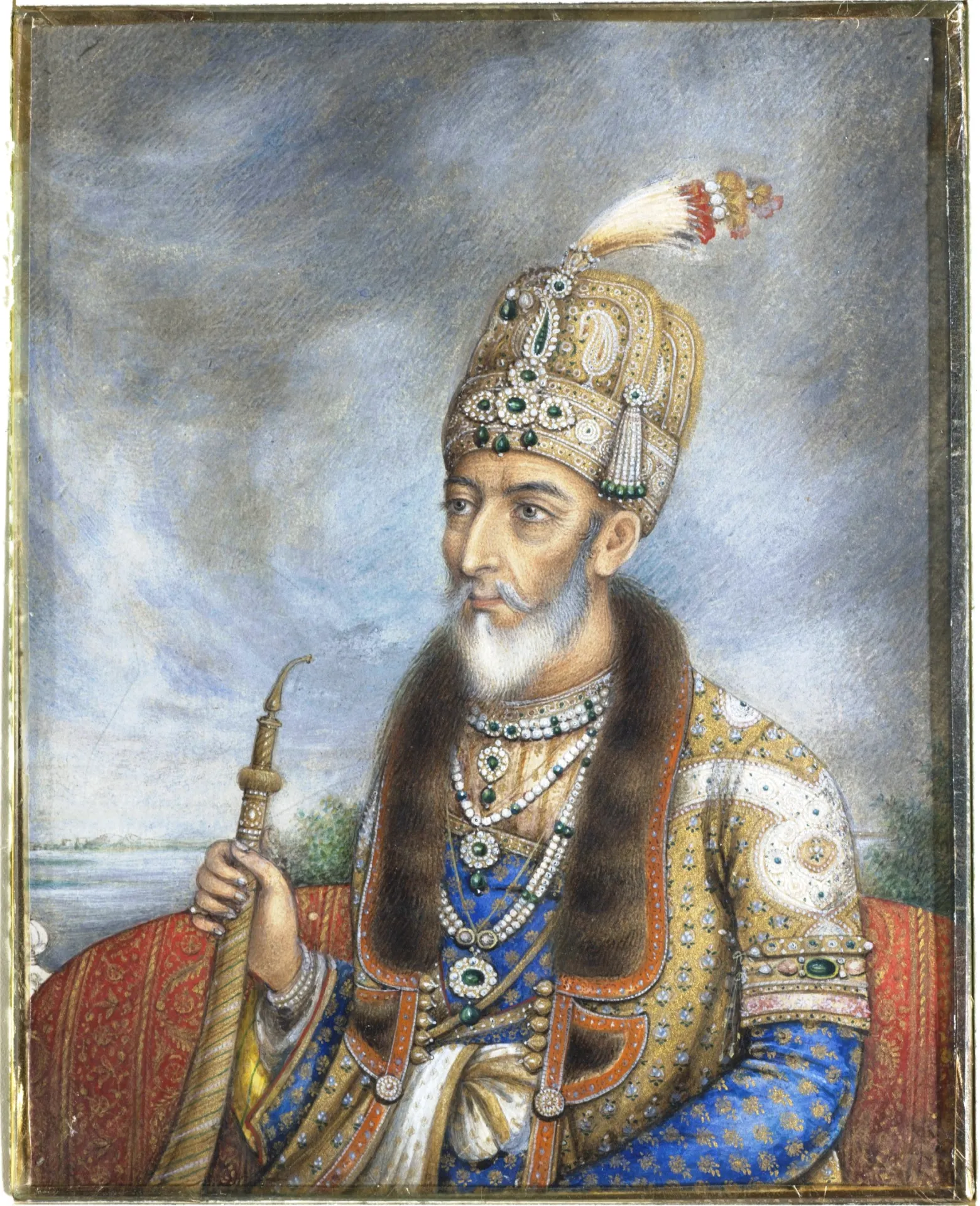
At the head of that same uprising stood Bahadur Shah Zafar, lending his name and his throne to the rebellion we call the Sepoy Mutiny. He gave everything a king could give, and the British broke him in the cruelest way. After his surrender, his sons Mirza Mughal and Mirza Khizr Sultan, and his grandson Mirza Abu Bakr, were stripped and shot in cold blood by Major William Hodson at what is now called Khooni Darwaza, and their severed heads were brought before their own father as a trophy. So many lives were lost in that struggle, so many families broken, and it is widely said that nearly 5 lakh Muslims were martyred, close to 50,000 of them ullema who chose the battlefield over silence. After rotating around 79 years of India’s independence, we are still cynical over the contributions carved by Indian Muslims.

Bahadur Shah Zafar

Another buried name is of, Ashfaquallah Khan, was hanged on 19th December 1927, at just 27 years old, along with other Kakori comrades who were sent to the gallows. This Kakori robbery was to pull back the wealth of Indian soil to channelize it for the national struggle. Khan revolutionized nationalist movement with his participation in Hindustan Republican Association (HRA), founded by Ram Prasad Bismil along with two others. Like Kakori robbery, many other raids were rolled out to confront with required force rather than abstracting the notion of peace towards the gruesome tortures.   Have we ever lent an ear to these lines of Khan’s  ‘Hasrat’ poem- “Kuch aarzoo naheen hai, hai aarzoo to yeh hai, Rakh de koi zara si Khaak-e-watan kafan men” who as his last whim, recited this poem soaked in patriotism. Are we made to remember these lines by a Muslim freedom fighter when we are reminded about the terrified misapplication of the divine slogan “Allah-u-Akbar” to polarize the Islam?

Ashfaqullah Khan

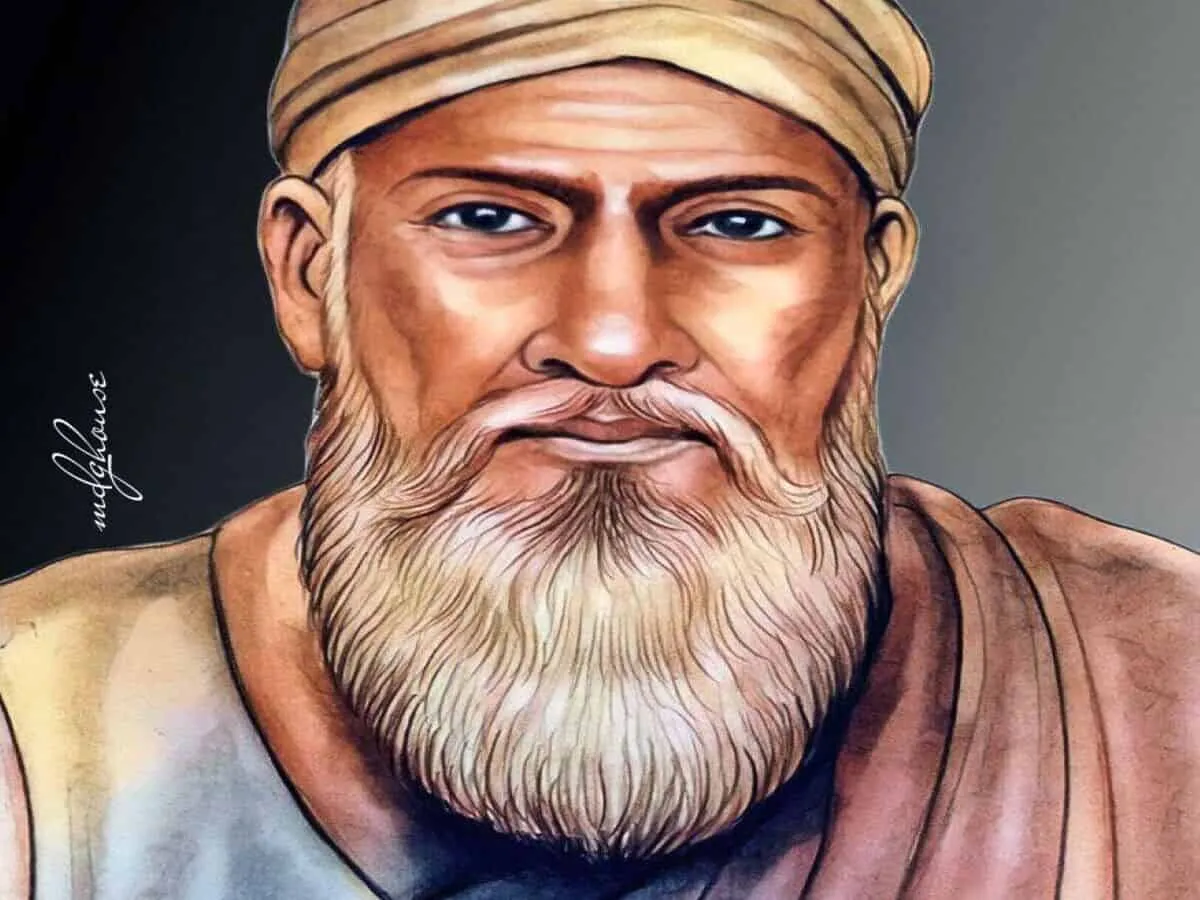
Walking further, Abdul Habeeb Yusuf Marfani, gave away his entire estate for a freedom he’d never see honoured. His courage was never separate from the cause, it was central to it, and it’s long overdue we remember it that way.

Abdul Habeeb Yusuf Marfani

Muslim participation in India’s freedom struggle was not boxed in a specific time or way, it encompassed armed resistance, societal reforms, mass mobilization, revolutionary events, and non-violent protests. The hurls on the invasions done by Muslims are widely made, but onlookers of the contributions by very same people, are tactfully airbrushed.

Sacrifices for the Indian motherland were proven on silent or loud battlefields,  not by the mere recital of ‘Patriotic Songs’ such as Vande Mataram as a contemporary reference. That is turned down by Indian Muslims lyrically, not soulfully, because of the religiosity which the Indian Constitution guarantees them. When did the recital of patriotic songs begin to outweigh the very acts of sacrifice they were meant to spring up?

Freedom fighters such as Maulvi Ahmadullah Shah, Begum Hazrat Mahal, Fazl-e-Haq Khairabadi (clarified the Jihad term through his war against the British), and Azimullah Khan were also important in the 1857 uprising. Barely, we learn or are made to learn about them? While vilifying other names of this very same community. 

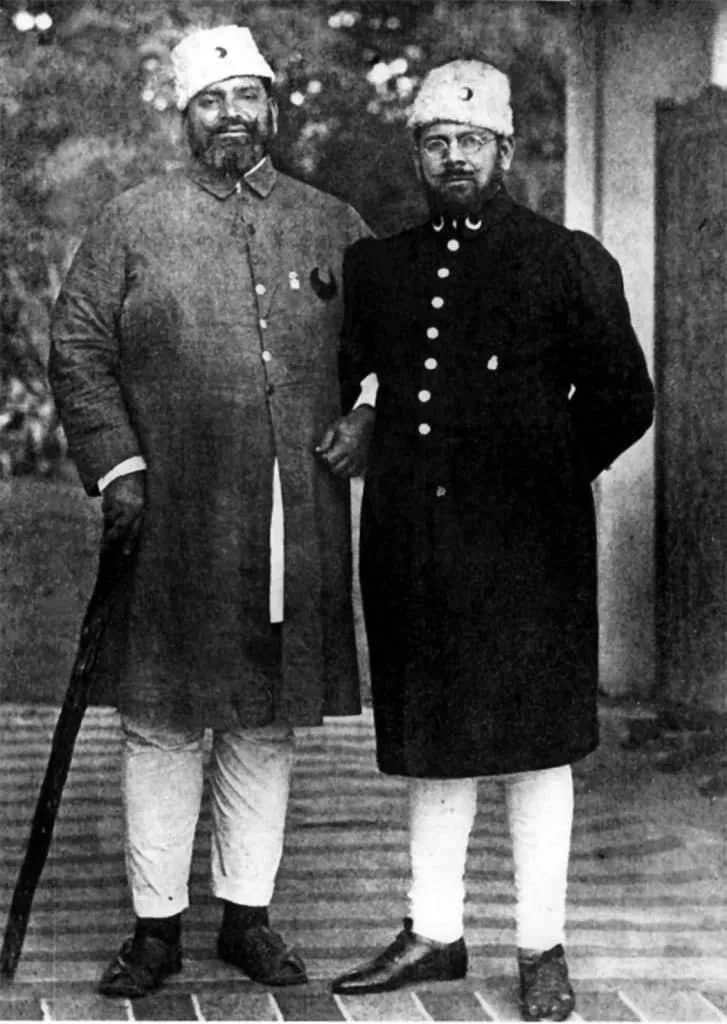
The Ali brothers, Shaukat Ali (1873-1938) and Mohamed Ali Jauhar (1878-1931)

Even the popular moments like the non-cooperation movement and the Khilafat Movement were helmed by some unheeded names: Mohammad Ali Jauhar and Shaukat Ali. Erected on the former’s name, there stands a university in Rampur, U.P. which recently has fallen prey to the communal politics, staking Indian youth’s future at darker stage, thus disregarding the blood of these freedom fighters.

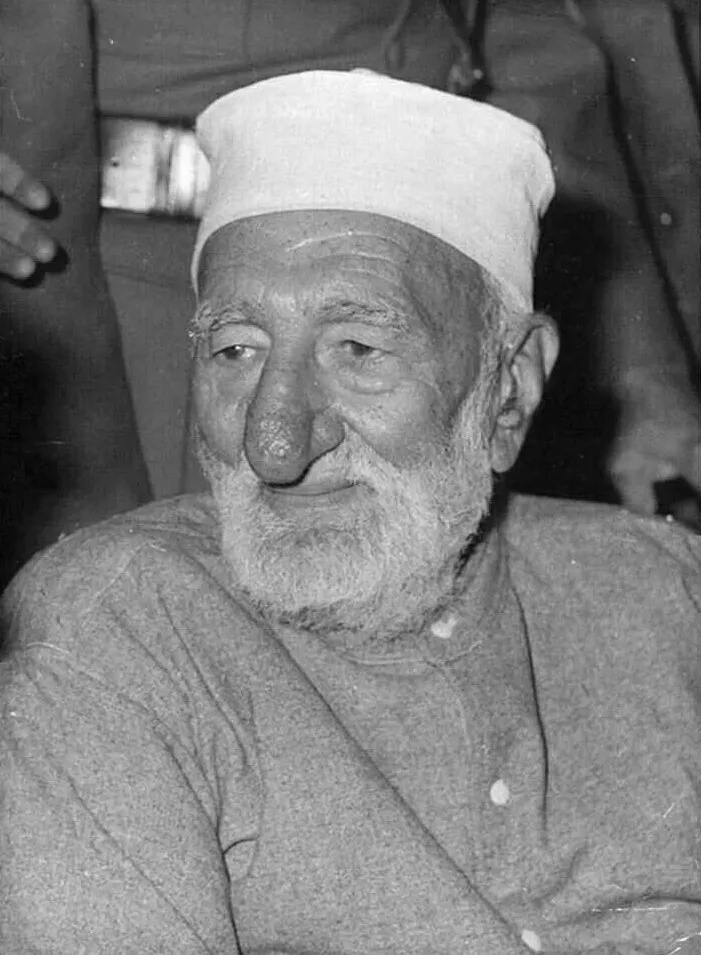
Khan Abdul Ghaffar Khan

Khan Abdul Ghaffar Khan who spent three decades in prison and headed the non-violent Khudai Khidmatgar Movement among Pashtuns against British rule, wherein he combined social reform, service, and discipline. His demise took place during his house arrest in Peshawar. 

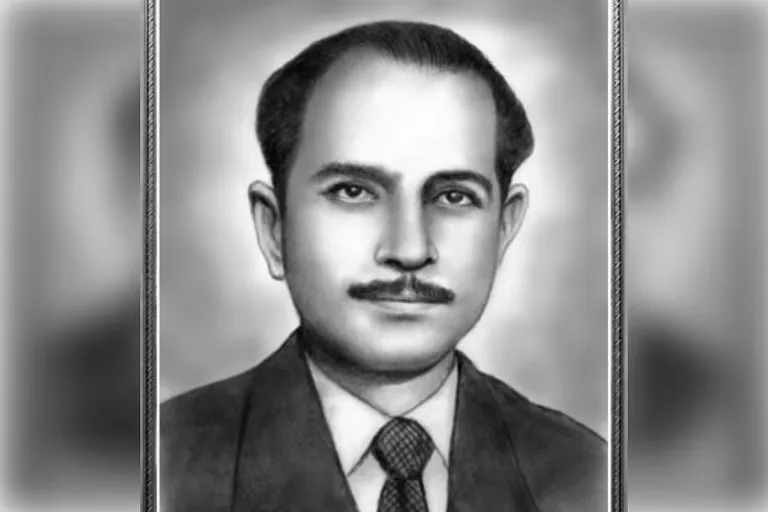
Abid Hasan Safrani

Without a single community-led leader, ideologies often find a loose hand to wrestle for their individual existence rather than collective results. Abid Hasan Safrani,  prominent INA member, mobilized the Muslim youth and committed to Subhas Chandra Bose’s movement (Azad Hind Fauj), which underpinned armed resistance in the Indian Freedom Struggle rather than non-violent means, brewing the unity for winning back the motherland.

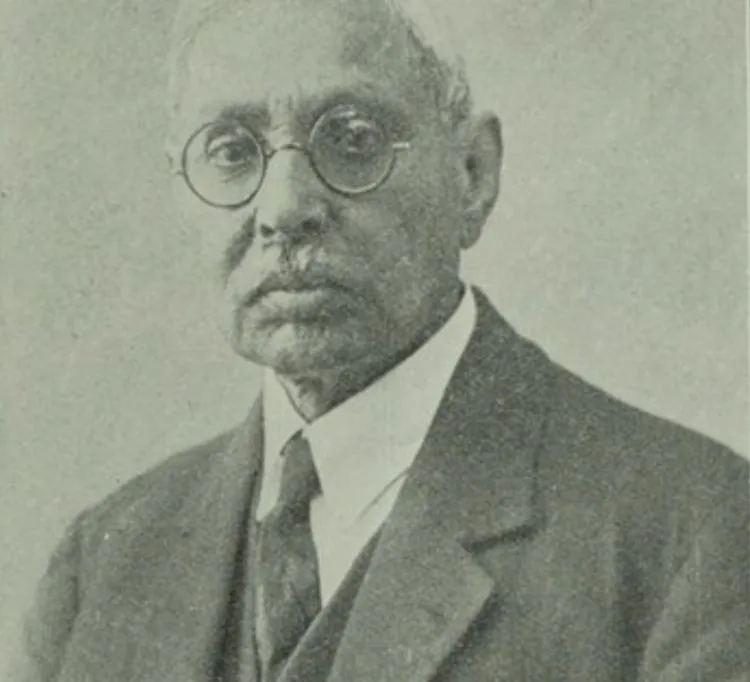
Having said that, the famous Ghadar Party, founded in 1913, was pioneered by one more buried name- Maulana Barkatullah Bhopali. He was the first Prime Minister of the Provisional Government of India (Government-in-Exile), which was established in Kabul in 1915. He traversed across Europe, Asia, and North America to usher in the momentum for the Indian freedom struggle. His death took place in the US, leaving him deprived of bidding adieu to his motherland one last time.

Maulana Barkatullah Bhopali

Then, “Inquilab Zindabad”, the popular hymn echoed at Jantar Mantar very recently, was originally coined by Urdu poet-politician Hasrat Mohani at the Congress’ Ahmedabad session, while Bhagat Singh solely made it popularized. Mohani had been a soulful Krishna Bhakt, leaving him writing eulogies for ‘Hazrat Krishna’ (Hazrat is not a religious tag; it is an honorary title).  He, being the co-prisoner of Gandhi ji, presented him with the USSR idea of federalism for empowering the localized and regional pockets of the agglomerate India. His courage and values proved his patriotism in the debates of the Constituent Assembly and confrontations with the Britishers. 

Hasrat Mohani

We remember Mahatma Gandhi more than any other freedom fighter, but are we mindful of the fact that the man who saved him was Batak Mian Ansari during the Champaran Satyagraha in 1917? He was the cook deployed by the Britishers, who then ordered Batak Mian Ansari to serve venomous milk to Gandhi ji. His integrity made him stake his life to save Gandhi ji. He sneakily warned Gandhi ji, and, as anticipated, he was kicked out of his job by the Britishers, further leaving him battered by the villagers and ousting him and his family from his residence. To date, his family couldn’t receive what was promised for his courage by India’s first president, Rajendra Prasad. Questioning how much we have honoured the honorable personalities on the ground?

Batak Mian Ansari

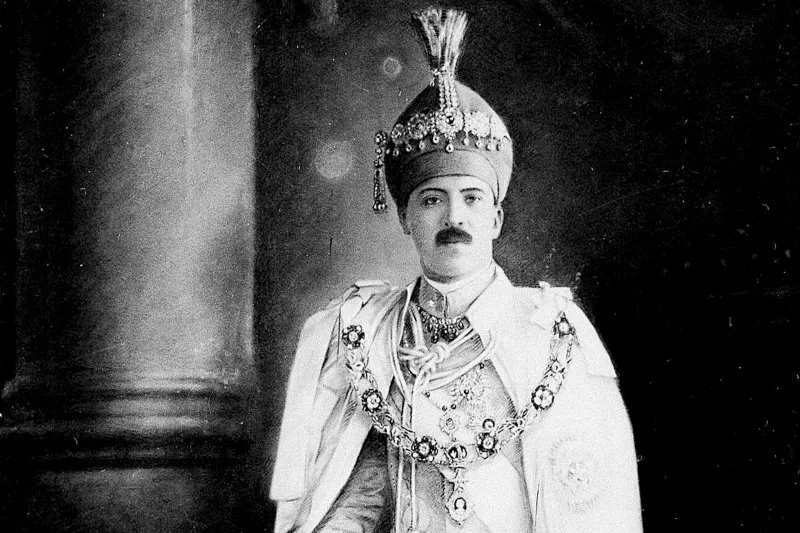
The last Nizam of Hyderabad, Mir Osman Ali Khan, is also in this queue of the buried names. Independence movement is not merely the swing between direct confrontation with colonial regime, it too laps over the pre and post period that either nudged the movements or repaired the damages caused to India. He has reportedly granted mammoth donations across educational and religious institutions. From BHU, AMU, IISc, publication of critical editions of Mahabharata, Golden Temple, Amritsar and many more places . We rewind through cruel rulers who demolished Indian structures, to attack their community and make them accountable in the present, but are we awakened with these submerged realities as well? One-sided history or evolving history, rationality comes with the choices citizens make to discern their roots.

Mir Osman Ali Khan

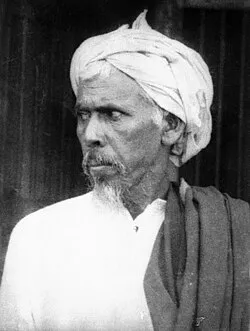
The history of Muslim resistance to British colonial rule also travelled deep into Malabar in Kerala, where Variyankunnath Kunjahammad Haji, Ali Musliyar , and Sayyid Fazal Pookoya Thangal emerged as formidable names in a long tradition of anti-colonial mobilisation. Fazal Pookoya Thangal, the 19th-century Mappila spiritual leader of Malabar, became an influential voice against British authority and the oppressive agrarian order sustained under colonial rule, eventually being forced into exile in 1852. Decades later, that inheritance of resistance found powerful expression in the 1921 Malabar uprising, with Ali Musliyar, a religious scholar and Khilafat leader, and Variyankunnath Kunjahammad Haji becoming among its most prominent leaders. Haji challenged British authority in parts of Malabar and established a parallel administration in areas under rebel control, while Ali Musliyar mobilised people against colonial rule before being captured and executed by the British. Haji, too, was eventually captured and executed by firing squad in January 1922.

Ali Musliyar

Culture can marginalise women, but religion pours courage 

“Khoob Ladi Mardani thi, Wo Jhansi Wali Rani thi”, Whenever we speak of women who took up arms for this land, Rani Lakshmibai of Jhansi is the name that comes to every tongue, and she deserves every bit of that memory. But here’s what gnaws: she was not alone. There were other women just as fearless, standing in the same fire, and history simply didn’t bother to write their names down. 

Begum Hazrat Mahal

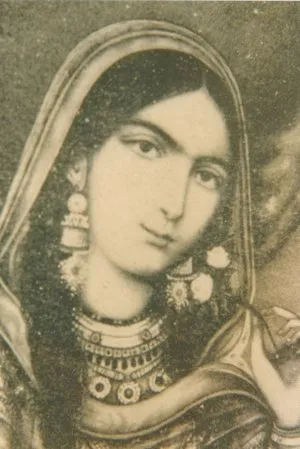
Begum Hazrat Mahal was one of them, and she wasn’t a side character, she was one of the rebellion’s most formidable forces. Even William Howard Russell, a British correspondent writing for his own side, couldn’t deny her fire. In his My Indian Mutiny Dairy, describing her as a woman of remarkable energy who had stirred all of Oudh into rising for her son’s cause and had herself declared undying war against the British. At Musa Bagh in Lucknow, she didn’t issue orders from a distance, she personally fought alongside and rallied nearly 9,000 rebel soldiers, moving from camp to camp, lifting morale with speeches that set entire camps on fire.

Abadi Bano Begum

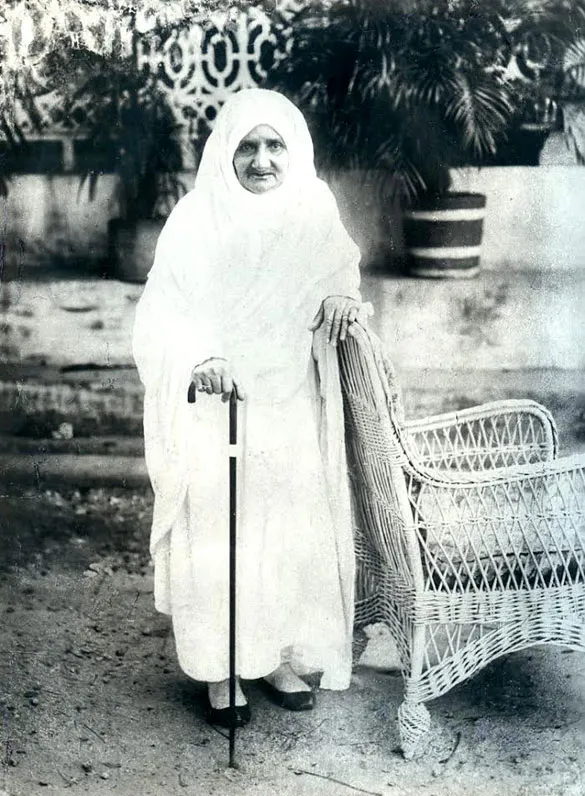
And then there’s Abadi Bano Begum- the woman history remembers, if at all, only as “Bi Amma.” A widow with six children, one of the sons Maulana Shaukat Ali, and the other Mohammad Ali Jauhar, above-mentioned together known as the Ali Brothers. She could have used every excuse the world hands a woman to stay silent. widowhood, motherhood, the weight of raising children alone. She used none of them. When the country needed people brave enough to stand up to the British, she stood up too. She became the first woman to address a political rally while wearing a burqa and let that sink in for a moment. She didn’t have to remove a part of her identity to be taken seriously in public life; she broke the idea that a veiled woman couldn’t also be a fighter, a leader, or a voice loud enough to move a crowd. She urged women to stop hiding at home and join the struggle, organizing funds and meetings where they were addressed as political beings for the first time, and taught why boycotting foreign goods mattered. She convinced them to donate to the Tilak Swaraj Fund, set up by Bal Gangadhar Tilak to finance India’s freedom struggle.

Kulsum Sayani

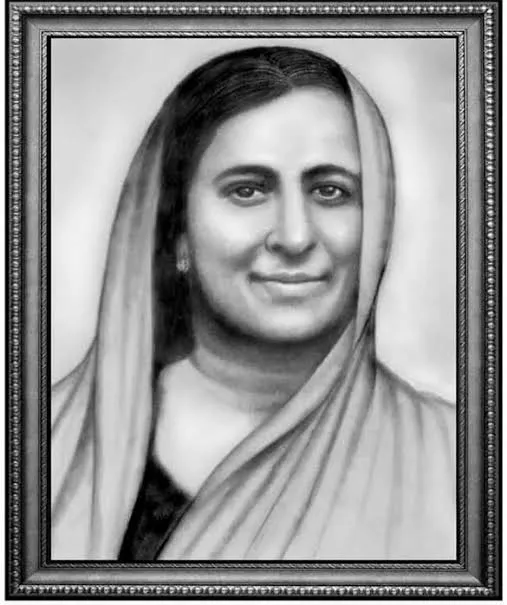
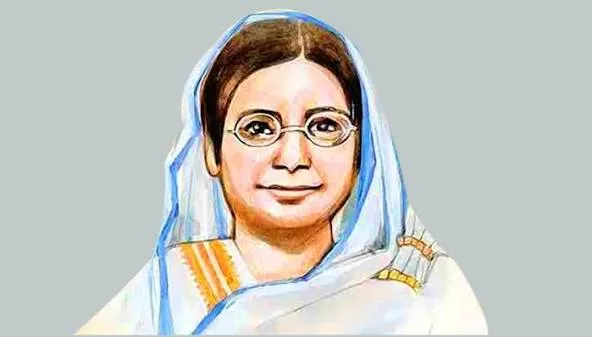
Not every battle was fought with a sword, some were fought with pen and paper. Kulsum Sayani, awarded the Padma Shri in 1960, waged her own war against illiteracy through the Jan Jagran movement, teaching under “each one, teach one” and leading centres for Muslim women that grew from 50 to 600 by sheer will. Begum Rokeya, a fiercely prolific feminist writer at a time when a woman dreaming was seen as rebellion, imagined a world turned upside down in Sultana’s Dream, then built that vision into reality, founding a girls’ school in 1909 and the Muslim Women’s Association in 1916, giving women space to learn and speak.

Begum Rokeya

80th Indian Independence Day’s call to unwind the narratives 

As the author of ‘Sare Jahan Sai Achcha, Hindustan Humara’– Allama Iqbal penned- “The freedom lovers of the nation stepped forward with such dignity that even those long imprisoned by deprivation watched in admiration.” It has been shouldered on the present generations to soak in the evolving history to sanitize the present from groans of hatred, rotting the Indian society. 

These lost chapters from Indian history wouldn’t have been possible to muster without the effulgent works of Salim Khan, Romila Thapar, Ramachandra Guha, S. Irfan Habib, Mushirul Hasan, A. G. Noorani, Rana Safvi, etc. Grinning us with the fact that the pluralistic framework of India is not only designed by the constituent makers, but it is also originally earned by all the freedom fighters, from pre- to post-independence.

Adeena Navaid is a law student and writer covering legal, social, and feminist issues, with work published in Maktoob, Bar & Bench, The Quint, Siasat, SheThePeople, and other platforms. Aiman Tabassum is a final-year LL.B. student at the University of Mumbai who writes on constitutional law, legal history, and socio-political issues, with work published in Bar & Bench.

source: http://www.maktoobmedia.com / Maktoob Media / Home> Opinion / by Adeena Navaid & Aiman Tabassum / August 14th, 2026
Muslim Girls’ Participation in Higher Studies Rises Sharply in Kanpur Region

Kanpur, UTTAR PRADESH :

A survey covering more than 30 colleges across seven districts linked with Chhatrapati Shahu Ji Maharaj University shows a significant rise in female Muslim students

New Delhi :

The number of Muslim girls pursuing higher education in Kanpur and nearby districts in Uttar Pradesh has increased significantly over the past five years, according to a survey conducted by a senior academic. The study shows that the share of Muslim female students in colleges has risen from around five per cent in 2021 to more than 21 per cent during the current admission process.

The survey was prepared by Prof B D Pandey, a senior teacher at PPN College and president of the Kanpur University Teachers’ Association (KUTA). The study was based on admission data collected from more than 30 colleges spread across seven districts of Uttar Pradesh.

The colleges included in the survey are located in Kanpur Nagar, Kanpur Dehat, Unnao, Kannauj, Farrukhabad, Etawah and Auraiya. All these colleges are affiliated with Chhatrapati Shahu Ji Maharaj University (CSJMU), Kanpur.

Prof Pandey said the data was collected from admission coordinators appointed in different colleges during the ongoing admission process. The survey looked at students enrolling in undergraduate courses such as Bachelor of Arts (BA), Bachelor of Science (BSc), Bachelor of Commerce (BCom) and other professional programmes.

According to the findings, Muslim girls accounted for around five per cent of female students enrolled in colleges in 2021. This figure increased to nearly 12 per cent in 2023 and has now crossed 21 per cent during the latest admission cycle.

The rise indicates a growing interest among Muslim families in sending their daughters for higher education. The survey also highlights that many of these students come from economically weaker sections of society.

Prof Pandey said one of the notable findings was that a large number of Muslim girls entering higher education belong to families with limited financial resources. In many such families, sons are also present, but instead of continuing studies after school, they often move towards employment or skill-based work.

“Many Muslim girls who are entering graduation and postgraduate courses belong to families where their brothers have studied only up to high school or intermediate level and then started working according to their skills,” Prof Pandey said.

The data suggests a changing attitude among some Muslim families towards women’s education. While economic challenges continue to remain a concern, more families are now supporting their daughters’ efforts to continue their studies beyond school.

The increase has been visible across different courses, including traditional degree programmes and professional courses. Teachers associated with these colleges believe that awareness about education, career opportunities and financial independence may be among the reasons behind the rise.

The trend also reflects a wider change in the participation of women from minority communities in higher education. More young women are seeking college education to improve their career opportunities and become financially independent.

Prof Pandey said the increase in Muslim girls’ admissions is a positive development and shows that educational aspirations among families are changing.

The survey, however, does not represent all colleges across Uttar Pradesh or the entire Muslim community. It is based only on admission figures from selected colleges affiliated with CSJMU.

Education experts say that continued support through scholarships, better awareness programmes and improved access to colleges will be important to maintain this growth.

The increasing presence of Muslim girls in colleges in the Kanpur region shows a gradual shift in educational choices, with more young women from the community moving towards higher education despite economic and social challenges.

source: http://www.clarionindia.net / Clarion India / Home> Big Story> India>Indian Muslims / by Mohammad Alamullah / August 04th, 2026
Mumbai Founder Sarah Sham Lost Clients to Protect Her Team’s Evenings. She Has No Regrets

Mumbai, MAHARASHTRA / Dubai, U.A.E :

Mumbai:

Sarah Sham, a fourth-generation Muslim entrepreneur from Mumbai and co-founder of Dubai-based luxury interior design firm Jea, has sparked widespread praise after sharing how she enforces strict work-life boundaries at her company, even at the cost of losing clients.

Sham, whose family business Essajees traces its roots back 130 years to her great-grandfather Abdul Kadir Essajee Sham, a trader of fine Iranian art tapestries, took to LinkedIn to outline the firm rules she applies across her design operations spanning 18 cities.

“We start at nine and close by six, five days a week. No weekend calls. No Sunday deadlines,” she wrote. “When a project runs behind, I hire another designer instead of asking my team to give up their weekend.”

Sham, a graduate of Art History from Duke and Oxford universities, admitted she once believed that good design required working through the night. Over time, she changed her approach after noticing that the best creative output came from well-rested designers, not exhausted ones.

“I started comparing creativity to a well instead of a tap,” she wrote. “Push too hard without rest, and it runs dry, no matter how skilled the person is.”

She acknowledged that the policy carried a real financial cost. Several clients left her firm in favour of teams willing to answer calls on weekends or work late nights. Sham chose to let them go rather than compromise her team’s working conditions.

“A tired designer does not run out of ideas all at once. The work slowly gets less interesting, and nobody notices until a client points it out,” she added.

Sham comes from a storied Muslim business family. Her ancestor Abdul Kadir Essajee Sham opened his Mumbai store in 1890, building a clientele that included Maharajas and royal families from India, Qatar, the UAE, Oman, Kuwait and Saudi Arabia. Today, Essajees serves a new generation of buyers including venture capitalists, consultants and young couples.

Her LinkedIn post drew strong responses from professionals across industries. Many praised her for holding firm on boundaries when revenue was on the line, calling her approach a model for sustainable creative work.

Sham co-founded Jea after serving as principal designer at Essajees Atelier for 12 years, carrying forward a family legacy built on craftsmanship, honesty and respect for the people behind the work.

source: http://www.radiancenews.com / Radiance News / Home> Features / by Radiance News Bureau / August 11th, 2026
22 personnel to receive service medals in Karnataka

KARNATAKA :

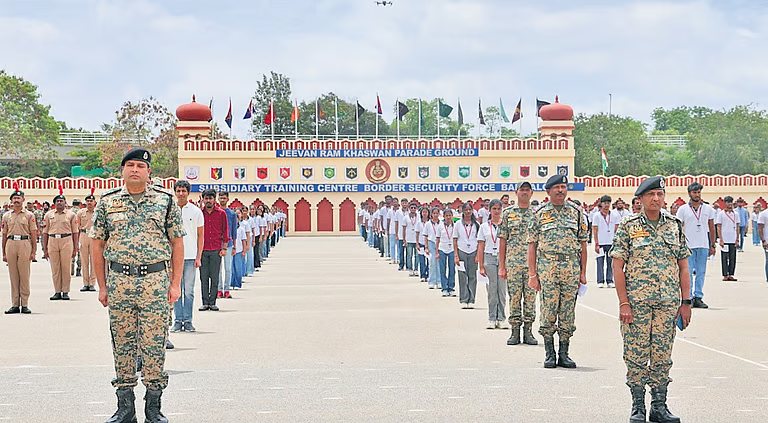
A mass singing of Vande Mataram was organised on Friday at the Subsidiary Training Centre (STC) at Border Security Force (BSF) Bengaluru as part of the nationwide commemoration of 150 years of the national song. The programme was organised under the directions of the union Ministry of Home Affairs and the BSF headquarters Photo | Express

Bengaluru :

The list includes 18 police personnel: one selected for the President’s Medal for Distinguished Service and 17 for Meritorious Service.

 The government will honour 22 personnel from Karnataka Police, Fire and Emergency Services and Home Guards and Civil Defence departments with service medals on the occasion of the 80th Independence Day.

The list includes 18 police personnel, of whom one has been selected for the President’s Medal for Distinguished Service (PSM) and 17 for the Medal for Meritorious Service (MMS).

Assistant Commissioner of Police (Central Crime Branch) HN Dharmendra has been selected for the President’s Medal for Distinguished Service. Two personnel from the Fire and Emergency Services – Regional Fire Officer Shivakumar Swamy H M and Assistant Fire Station Officer Basavaraju M – have been selected for the MSM.

Similarly, two Home Guards and Civil Defence personnel – Senior Platoon Commander Meerasab Maboob Sabmulla and Platoon Commander Raghavendram – have been selected for the MMS.

17 cops to get MMS

Sara Fathima, SP, Railways, Bengaluru

Thomas Mathew PM, Commandant, 9th Battalion, KSRP, Bengaluru,

T Mahadev, ACP, Southeast Traffic Sub-Division, Bengaluru City.

Pramanand P Ghodke, DySP , Raichur District

K Shanmuga Varma, Inspector, Police Training School, Mysuru

Bavuddin Rukmuddin Gaddekhar, Inspector, Malmaruti PS, Belagavi City

Guruprasad Gopal Nayak, Inspector, CID, Bengaluru

Nayeem M, Reserve Police Inspector, Lok Bhavan, Bengaluru

Srinivasa M, SI, KP Agrahara Police Station,

Mahadevaswamy, Head Constable, Vidhana Soudha Security

Mariya Joseph Dinesh Kumar, Head Constable, KSRP

Jnanadev Naval Tarase, Special ARSI, 3rd Battalion, KSRP, Bengaluru

Chandrashekar G Chikkanavar, SRHC, 4th Battalion, B’luru

Abdul Kamal Abdul Hameed, Head Constable, Tarikere Sub-Division, C’magaluru

Nagesh Manchayya, APC, CID, Bengaluru

SA Manohar, Police Constable, Hunsur Town Police Station, Mysuru District

Abdul Rabbani, Armed Police Constable, Chikkamagaluru

source: http://www.newindianexpress.com / The New Indian Express / Home> Karnataka / by Express News Service / August 15th, 2026

Hyderabad’s MS Junior College Student Tops Telangana Minority Merit List in NEET 2026

Hyderabad, TELANGANA :

Mohammad Taqi Ahmed Ali Shams secured the highest rank among minority students in Telangana with 666 out of 720 marks and an All India Rank of 652.

Hyderabad :

Mohammad Taqi Ahmed Ali Shams, a student of MS Junior College of the city, has secured the first rank among minority students in the Telangana NEET 2026 State Merit List, delivering another major achievement for MS Education Academy.

Taqi Ahmed scored 666 marks out of 720 in the NEET 2026 examination and secured an All India Rank (AIR) of 652, making him the highest-ranked minority student in Telangana.

The academy also announced that 34 students scored 500 marks or more in NEET 2026, describing the result as another reflection of its consistent academic performance and quality teaching.

Several other students from MS Junior College also secured prominent positions in the Telangana Minority Merit List.

The successful students include:

  • Daniya Mirza – 23rd State Minority Rank
  • Mohammad Misbah Ali – 27th
  • Asid Tabish Antule – 28th
  • Shafia Begum – 43rd
  • Kausar Fatima – 48th
  • Liza Hussain – 57th
  • Zeba Rouheen – 68th
  • Sana Fatima – 73rd
  • Kausar Mirza – 75th
  • Fauzia Khanam – 98th
  • Sadia Sanobar – 102nd
  • Fakhra Tasneem – 105th
  • Bilal Shaikh – 106th
  • Sidra Jabeen – 108th
  • Syeda Amina – 109th

Congratulating the successful candidates, the management of MS Education Academy extended its best wishes to the students, their parents and teachers for their contribution to the outstanding performance.

The academy said the results reflected the dedication of students and the continued support of parents and faculty members.

The institution also expressed confidence that more than 200 students from the academy would secure free MBBS seats in leading government and private medical colleges across Telangana and other parts of the country through the NEET 2026 admission process.

The latest results further strengthen MS Education Academy’s record of producing successful medical aspirants and maintaining a strong presence in the Telangana State Merit List year after year.

source: http://www.clarionindia.net / Clarion India/ Home> Editor’s Pick> India> Indian Muslims/ by Team Clarion / August 03rd, 2026

AMU Faculty Member Dr Fahmida Zeenat Contributes to National Curriculum Development in Unani Gynaecology and Obstetrics

Aligarh, UTTAR PRADESH :

Dr. Fahmeeda Zeenat, Department of Niswan wa Qabalat, Faculty of Unani Medicine, Aligarh Muslim University

Aligarh:

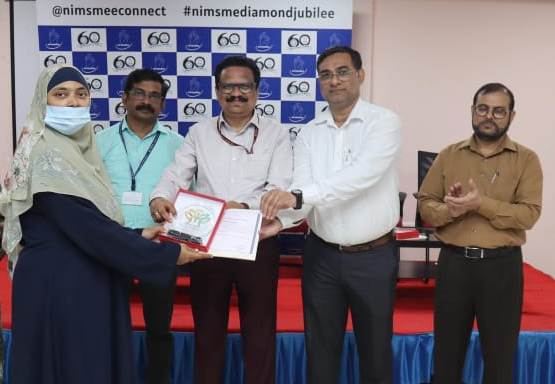
Dr. Fahmeeda Zeenat, Department of Niswan wa Qabalat, Faculty of Unani Medicine, Aligarh Muslim University (AMU), has been recognised for her significant contributions to the development of a competency-based postgraduate curriculum in Gynaecology and Obstetrics under the Unani system of medicine.

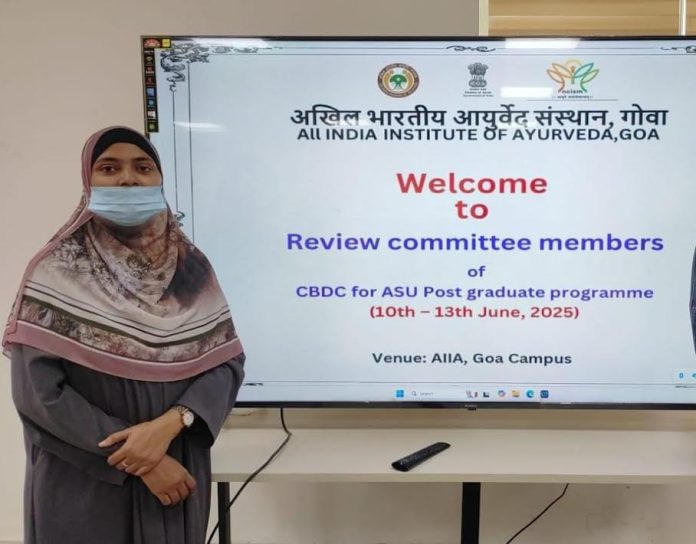
Dr. Zeenat was recently selected as an expert for the framing, reviewing, and finalisation of the curriculum. She participated in a three-day national workshop organised at the All India Institute of Ayurveda, Goa, held from June 11 to 13, 2025. This event marked a key milestone in the ongoing effort to align Unani medical education with outcome-driven academic standards.

Earlier, she played a pivotal role in the final curriculum framing workshop held at the National Institute for Micro, Small and Medium Enterprises (Ni-MSME), Hyderabad, from November 14 to 16, 2024.

She also actively participated in the two-day curriculum review workshop conducted by the National Commission for Indian System of Medicine (NCISM) in New Delhi on April 4 and 5, 2025.

source: http://www.radiancenews.com / Radiance News / Home> Latest News> Markers of Excellence / by Radiance News Bureau / June 17th, 2025