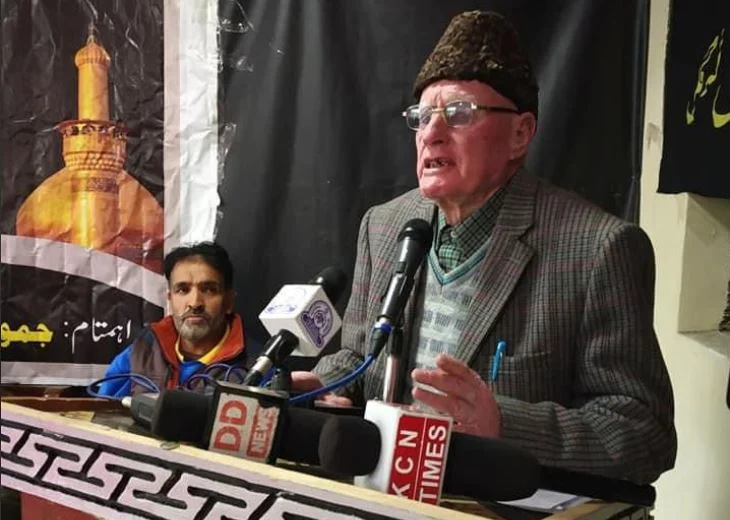
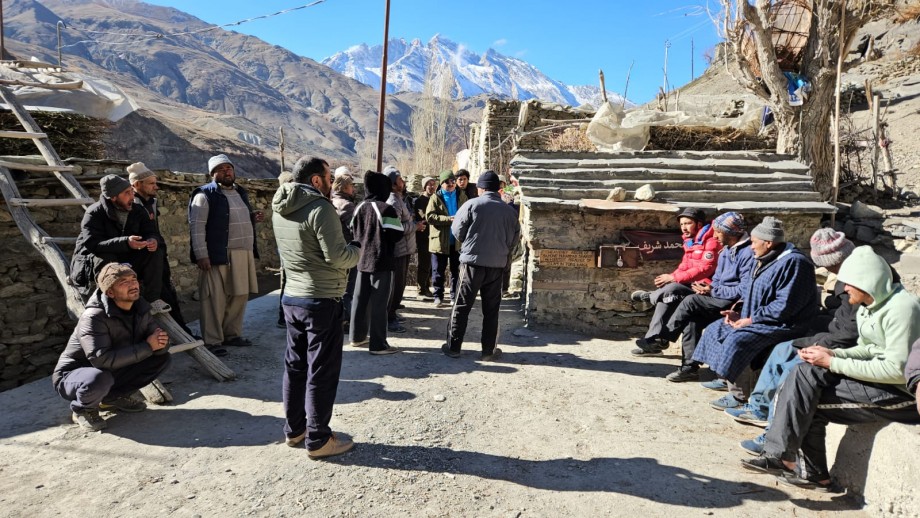
A heartfelt Condolence Meeting in memory of the late Haji Khawaja Abdul Hamid Tanveer, the eminent scholar, writer, and poet of Kargil, Ladakh, was held today at the Ladakh Cultural Academy Hall, Kargil.
This gathering brought together the literary and cultural community of Kargil, including esteemed writers, poets, and cultural activists, who paid their deepest respects and expressed heartfelt condolences for the loss of this iconic literary figure.
Haji Khawaja Abdul Hamid Tanveer, who passed away today morning in Srinagar, Kashmir, was remembered for his immense contributions to literature and culture. Known as an “ocean of knowledge,” his prose and poetry were celebrated for their depth, wisdom, and literary craftsmanship. His work left a lasting impact on Kargil’s cultural identity, inspiring both his contemporaries and the younger generations.
The attendees honored the late scholar’s memory with a solemn two-minute silence, and “Surah-e-Fatiha” was recited to pray for his departed soul’s peace. His legacy as a guiding light in Kargil’s literary circles was acknowledged by all, with deep admiration for his significant contributions to the region’s literary heritage.
Distinguished individuals present at the meeting included Padmashree Dr. Akhoon Asgar Ali Basharat, State Awardee Ghulam Ahmed Jawan, Alhaj Aga Sayed Hadi Shah, Muhammad Hussain Rehnuma, Muhammad Hussain Fayaz, Nazir Hussain (Deputy Secretary, LAACL), Muhammad Ali Tak (OSD/Under Secretary), Department of Tourism & Culture, UT Ladakh, Zakir Hussain (HA, LAACL), Gulzar Hussain Mendoktsar, Shafaqat Ali, and others.
In his speech, Alhaj Aga Sayed Hadi Shah highlighted that the late Haji Khawaja Abdul Hamid Tanveer was not only a respected literary scholar but also his personal mentor and a guiding influence in the field of literature. He was closely associated with All India Radio (AIR) Kargil, the J&K Cultural Academy, and the Ladakh Cultural Academy, leaving behind a rich legacy of cultural contributions.
On this occasion, both Padmashree Dr. Akhoon Asgar Ali Basharat and Muhammad Hussain Rehnuma paid tribute to the late poet by reciting a special poem dedicated to his memory and achievements.
The entire region of Ladakh grieves the loss of this legendary writer and poet. His wisdom, knowledge, and literary legacy will forever be cherished, serving as a source of inspiration for generations to come. His contributions to the field of education, particularly his role as Zonal Education Officer (ZEO) in Kargil, were also acknowledged with deep respect, reflecting his unwavering dedication to the community he served with passion and commitment.
source: http://www.boldnewsonline.com / Bold News / Home> Art & Culture / by Bold News Online Desk / November 16th, 2024
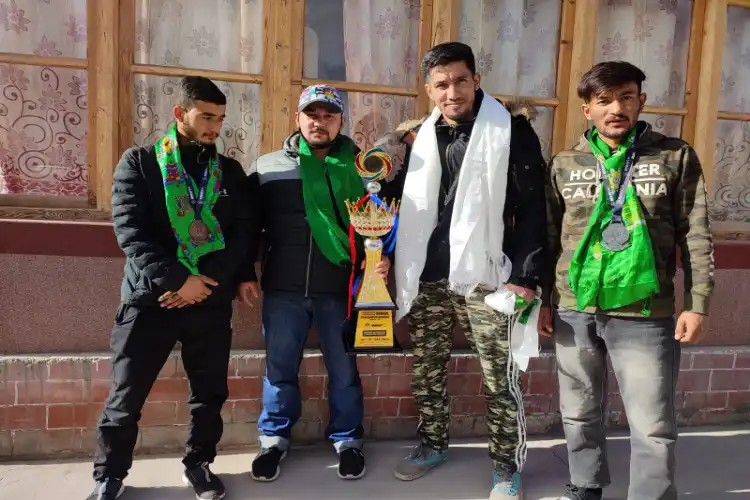
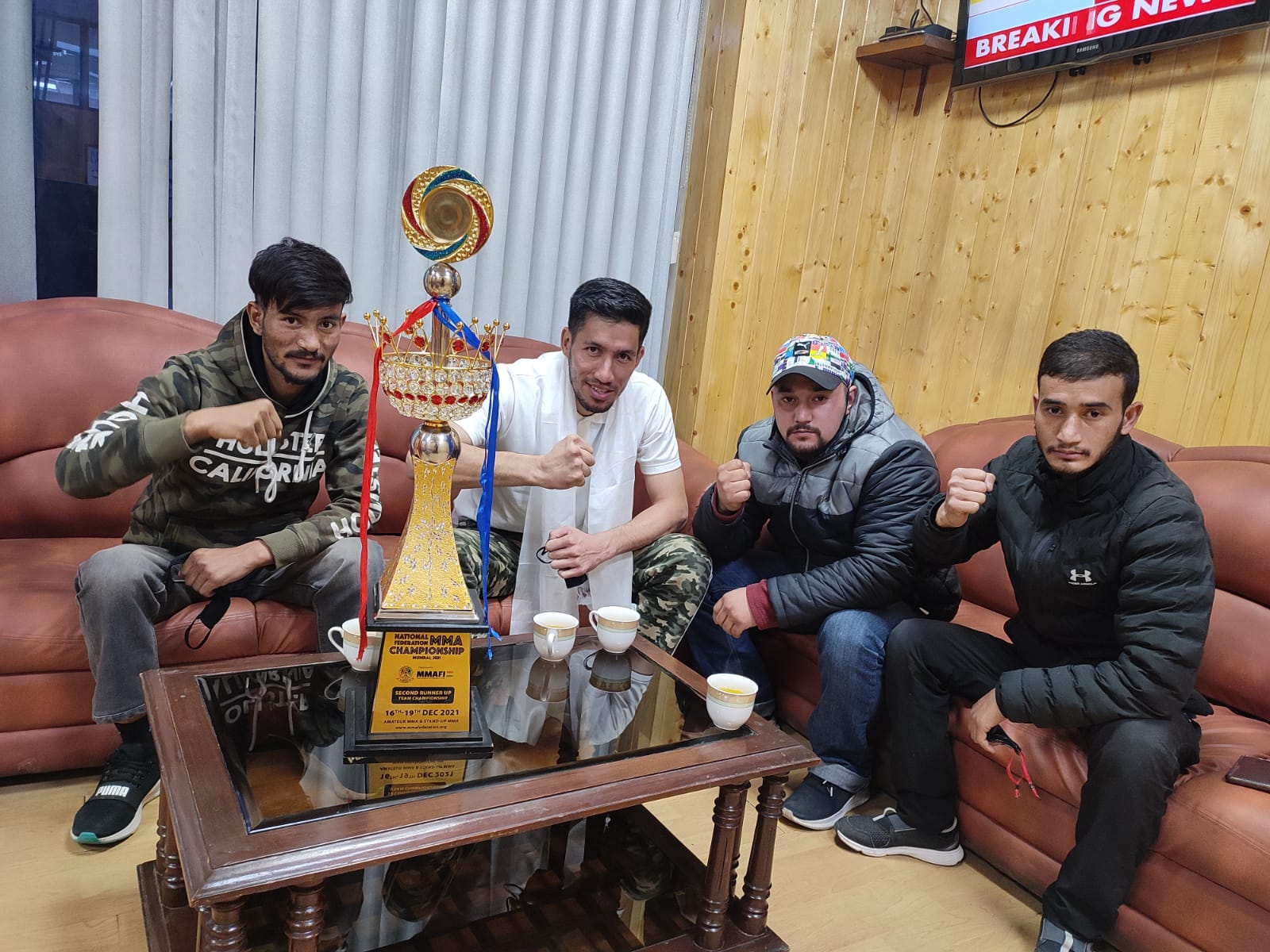
Coach Mahdi Nasiri (In the center) flanked by Murtaza Ali Khuddam, Ali Akbar and Mohammed Hasnain.
Ladakh, now the Union Territory, has registered its name on the national stage for reasons other than the Kashmir conflict and continued Line of Actual Control (LAC) standoff with China. A three-member team from the UT has gained the third position at the National Mixed Martial Arts Championship held in Mumbai this week. The team won a total of four medals — one gold, one silver, and two bronzes.
Murtaza Ali Khuddam has won the Gold Medal in the 79 kg category by knocking down his opponent in the 1st round of the final match. Other medalists are Ali Akbar and Mohammed Hasnain.
Their success is due to their grit, determination, and willpower. This reporter spoke with the Gold medalist Murtaza Ali Khuddam and his coach Mahdi Nasiri on their journey.
The Winners and the coach with their trophy and medals
Nasiri and Khuddam hail from the Kargil district. Mahdi said that he has been a UFC Mixed Martial Arts fighter for long and now coaches and mentors youth who are attracted to the sport. “I developed a passion for this game by watching and reading about international stars and started to self-train in my teenage years. Slowly, I gained confidence and got in touch with known sportsmen of my region.
“They were impressed with my skills and coached me further. Then, on someone’s advice, I went to Iran and spent five years learning and participating in various competitions there,” said Nasiri.
He added that when Bollywood personalities, Raj Kundra and Shilpa Shetty, organised Super Fight League in 2012, he participated in it and won a gold medal. “Besides, I also won medals in some other events, but my life didn’t change as this sport is not widely played and promoted in India. Plus, the required facilities are scarce. I used to practice alone in a makeshift arena and by watching videos. There was no support from the government or a private organisation. Yes, some individuals used to lend support,” said Mahdi.
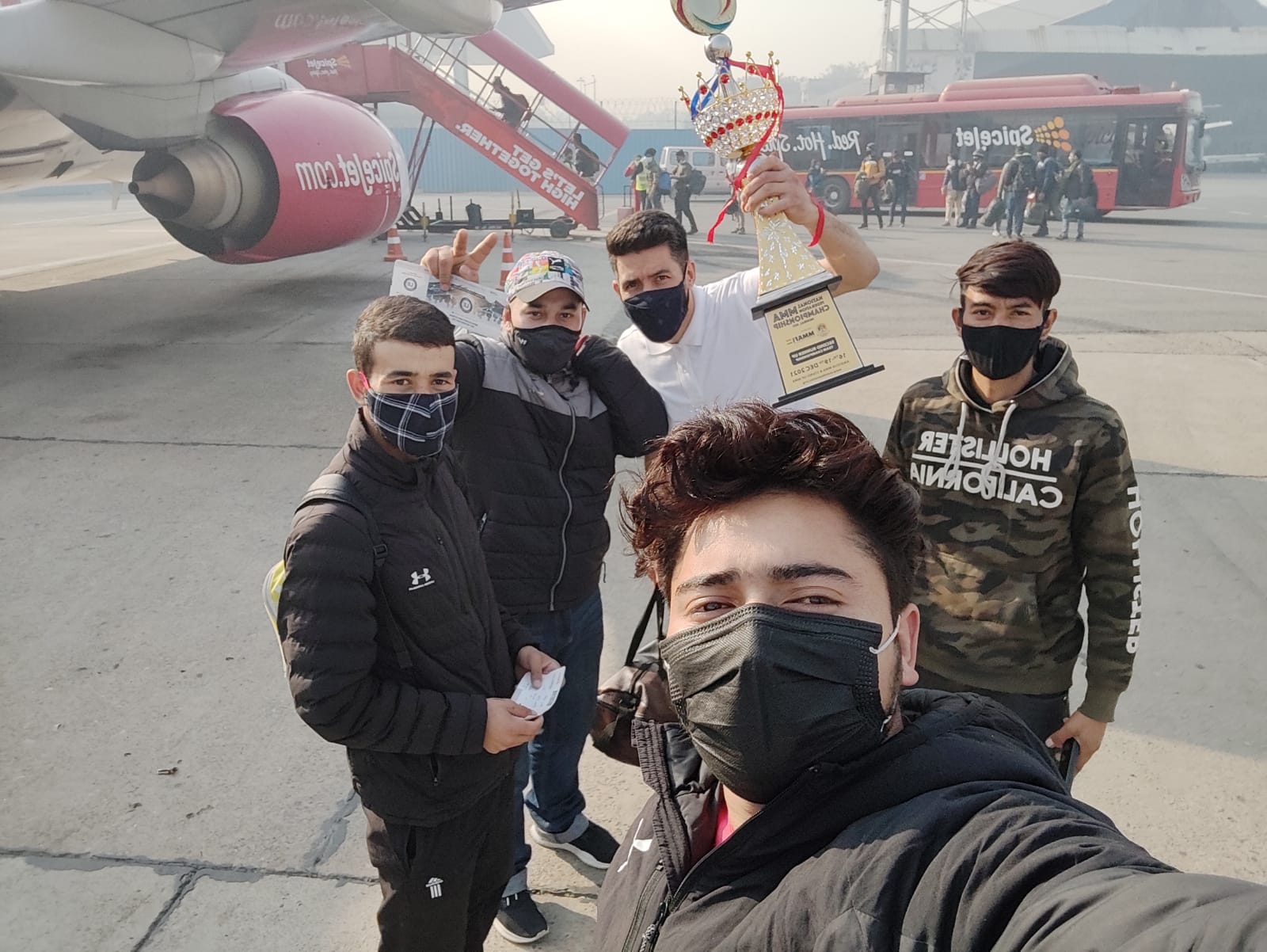
The winning team being received at Airport
Mahdi shared with us some videos that showed him practicing and training in a makeshift arena covered with polyethylene sheets to secure players against cold.
Mahdi has become a professional coach. “I hope our performance in MMAFI would improve things. It has already caught the attention of the government.
“Lieutenant Governor RK Mathur in a tweet has appreciated the team for the brilliant performance, particularly of Murtaza Ali Khuddam. Local federation for MMA too is upbeat and would help in uplifting the game and lives of players,” said Mahdi.
Murtaza Ali Khuddam, the gold-medallist, and star of the tournament said, “We grew up watching international star Khabib and Mahdi Bhai playing this very difficult sport. They have been our inspiration. Whatever know about fighting, I have learned from Mahdi Bhai, whether it is elbow strike, ground, and pound, back control, armbar, sprawl, etc.
The team waiting to fly – at the airport
“We had nothing in the name of facilities except a makeshift arena but, we had a lot of determination to prove our mettle. We knew that once we make our mark, our path will be illuminated. See, today as we returned to our hometown, around 200 vehicles had come to receive us. We hope this euphoria will earn attention for MMA in our country too,” Khuddam said.
He also said that for becoming an MMA fighter, the most important is physical strength. “I had built that by following a certain diet regime suggested by Mahdi Bhai,” he said.
The Mixed Martial Arts championship was organised by the Mixed Martial Arts Federation of India (MMAFI).
Khuddam, who is the youngest of his three siblings, said he or the other MMA players from Kargil did not receive any support from the Ladakh Sports authorities. “But, we were not hopeless. Our medal-earning performance will pave the way for a better future. The government will wake up too,” he said.
source: http://www.awazthevoice.in / Awaz, The Voice / Home> Stories / by M Anas, New Delhi / December 25th, 2021
An inspirational example of how tourism can be a force for good, Roots Ladakh is empowering local communities and preserving the cultural and natural heritage of Kargil.
Roots Ladakh aims to change the preconceived notion of Kargil as a war zone and bring it to the world map as a responsible tourism destination
Against the rugged mountains of the north, Kargil’s troubled history shines bright even today. The town, which has much to offer to discerning travellers, is often overshadowed by the tourist hotspot of Leh and remains mired in its past. Nonetheless, shrugging off its bloody war-torn memories, Kargil is trying to reinvent itself as a tourist destination. And help has come from the people that call it home.
Laying Down Roots
It is undeniable that there is much more to Kargil than is perceived. And this is precisely what Muzammil Hussain and Tafazzul Hussain—founders of Roots Ladakh, a travel social enterprise —are trying to achieve. As youngsters, they witnessed the Indo-Pak conflict of 1999 and were sent away to complete their education. But love and belief in their beloved land brought them back home.
Tafazzul Hussain(left) and Muzammil Hussain(right) organise treks through Roots Ladakh
“At the time (of war), I was in 7th, and my brother was in 2nd Grade. We spent many years away from home, only visiting during summer breaks. During that period, I always used to get asked where I was from, and my answer would always stir awe. It would then be followed up by questions that I used to find very bothersome at that time. I used to get very bothered by the fact that people had a very narrow and skewed understanding of Kargil. Most people thought it was a garrison town in Kashmir; few even thought it was in Pakistan. For me, it became a question of identity. I always struggled to define who I am and where I am from,” expresses Muzammil. Perturbed by these miserable notions of his hometown, the brothers decided there was only one way to change the perception: to bring people to Kargil.
Roots Ladakh
Founded in 2013, Roots Ladakh had a simple vision: to change the preconceived notion of Kargil as a war zone and bring it to the world map as a responsible tourism destination.
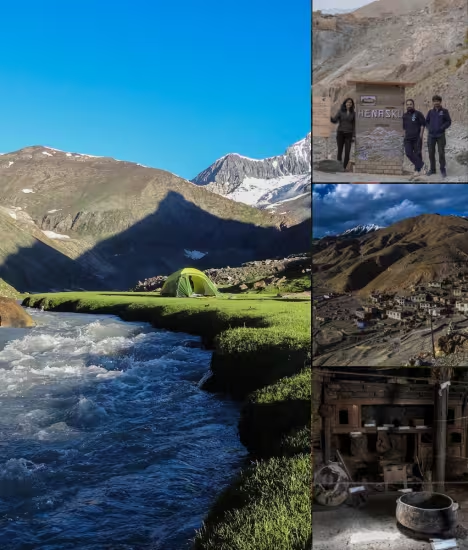
The community-run cultural heritage museum in Henasku, Kargil
Through the enterprise, the Hussain brothers promote the lesser-known part of Ladakh, i.e. Kargil and Zanskar. Since its inception, they have taken up various initiatives to document Kargil’s natural and cultural landscape extensively.
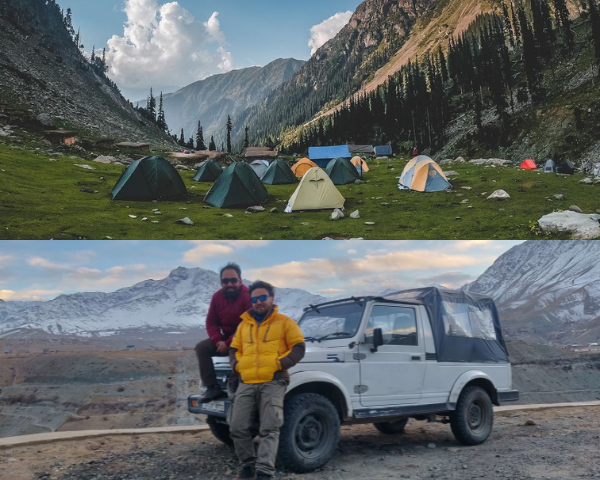
They offer travel products such as treks and hikes, climbing, wildlife tours, travel-based design and architectural workshops, rural experiences, homestays and luxury getaways, catering to a broad segment of travellers.
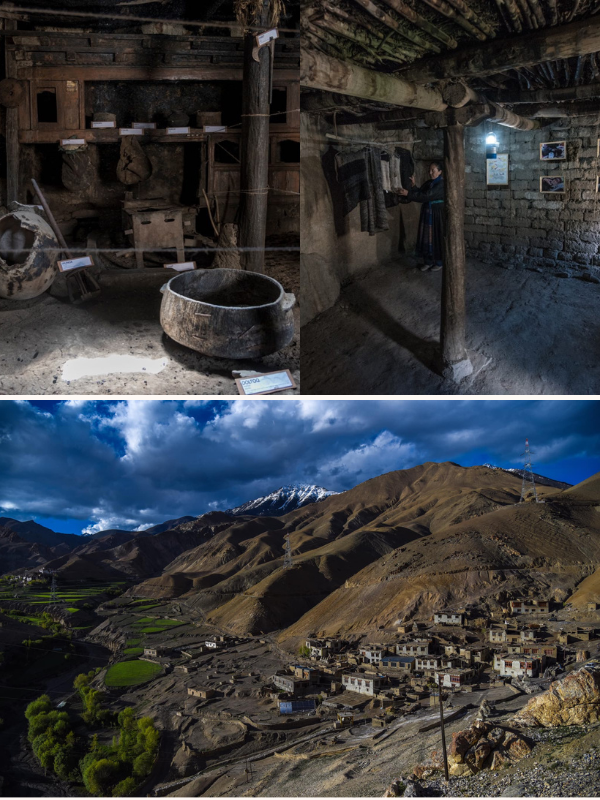
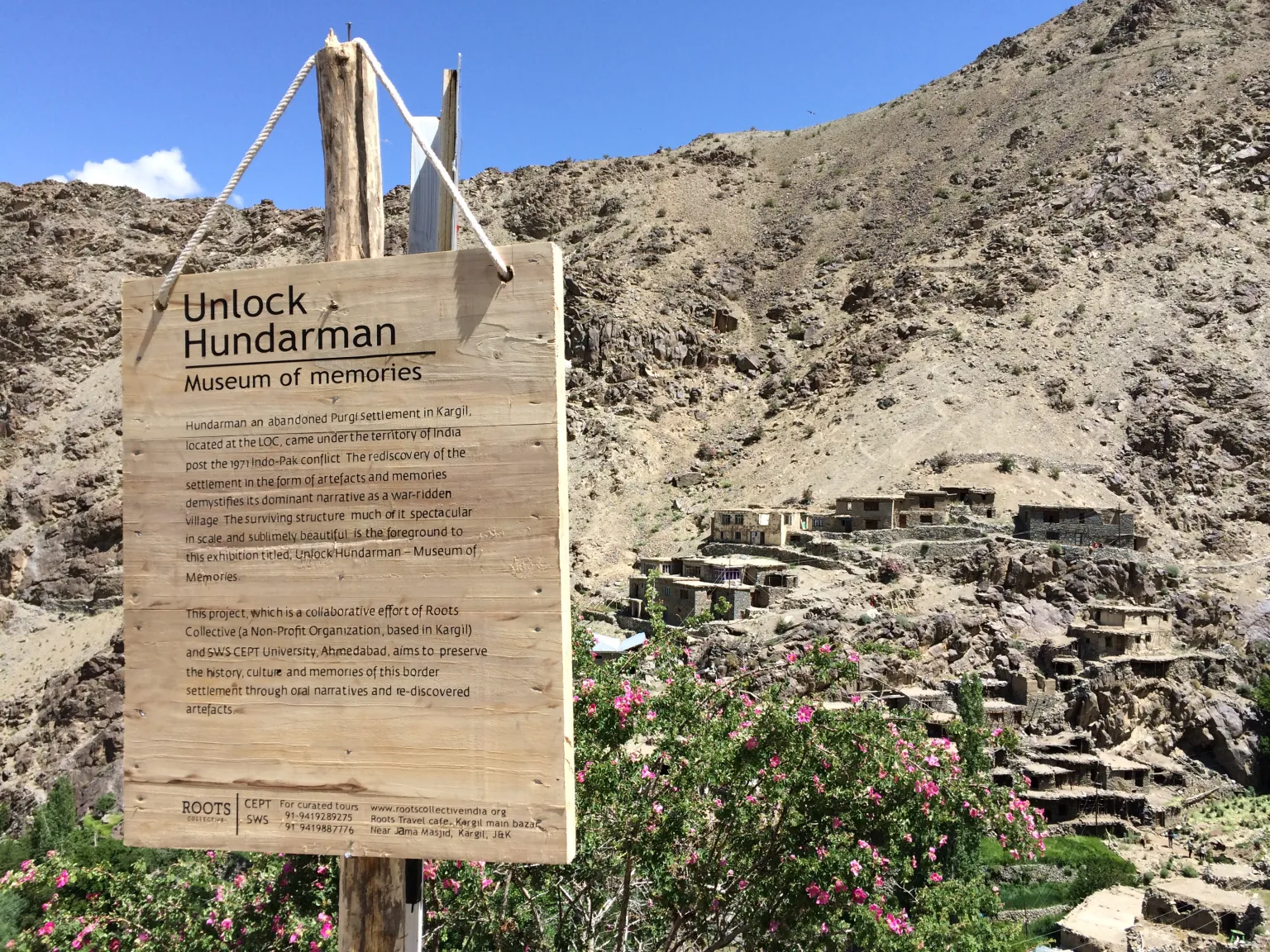
Hunderman is a small village where the Museum of Memories showcases the long forgotten stories of the region
But why focus on Ladakh? Muzammil has a simple explanation. “Ladakh is a well-known destination worldwide, and in the last decade, it has also become a very popular destination amongst domestic travellers. The tourism business is currently highly seasonal and only focuses mainly on popular destinations like Leh, Nubra and Pangong. This not only creates an inequitable income distribution from tourism but also puts a lot of strain on the ecology. Water scarcity and waste management are real threats,” he says. Hence, the bouquet of their travel offerings brings value to the communities living in Ladakh’s remote and lesser-known corners.
Experiences Galore
Perhaps, the most essential aspect of Roots Ladakh’s work is its commitment to sustainability. If you head to Ladakh with Roots, you can trust that your trip will be sustainable and immersed in natural and cultural heritage. One of their highlight projects is Unlock Hundurman – Museum of Memories, a community-run museum in a 300-year-old abandoned settlement along the Indo-Pak LoC in Kargil. These homes were opened to unfold the lives and stories of the people living here through the narratives of war, arts and crafts, lifestyle and culture.
Roots Ladakh organises treks and hikes, wildlife tours, travel-based design and architectural workshops
Another initiative, Project Drenmo, focuses on wildlife conservation activities for Himalayan Brown Bear. “We wish to address the issue of the Human-Himalayan Brown Bear conflict in the region through a sustainable conflict mitigation and conservation model through community engagement. We focus on outreach, sensitisation, capacity building and wildlife tourism promotion within the community,” Muzammil shares.
One of the most popular programs Roots Ladakh offers is the homestay program, which allows visitors to stay with local families in traditional Ladakhi homes. This not only provides visitors with a unique and authentic cultural experience but also provides income to the families and helps to preserve the local way of life. An extension of that program is Black Sheep, a boutique bed and breakfast in the heart of Kargil, with a view of the beautiful Suru River as it snakes along the city. Here, you can immerse yourself in the culture and heritage of the region as you learn more about the city and its people.
Moreover, the enterprise promotes voluntarism and offers volunteer opportunities for individuals and groups in various parts of Ladakh to promote sustainability and responsible tourism. The road to success, much like the meandering roads of Ladakh, is challenging to navigate, but the brothers are committed to their cause. “Our vision is to set a road map for the coming generations to appreciate and embrace our local heritage, ethics and values. We want to inspire businesses to be conscious about creating shared value,” he says.
source: http://www.indianexpress.con / The Indian Express – Express et.al / Home> Responsible Tourism / by Mallika Bhagat / by IE Online Media Services
In the aftermath of the Kargil War, Muzzamil Hussain’s family unearthed a treasure of Silk Road artefacts in their ancestral property near Kargil’s bazaar.
At the request of Hussain’s ailing grandfather, the family inspected an old property near Kargil’s bazaar.(Pixabay)
In 1999, during the violent onset of the Kargil War, Muzzamil Hussain and his family fled their hometown in Ladakh and sought refuge in the remote Suru Valley. The conflict, which left a lasting imprint on the region, marked a turning point in Hussain’s life. Upon returning to Kargil after India claimed victory, a significant discovery awaited the family, changing their lives forever.
At the request of Hussain’s ailing grandfather, the family inspected an old property near Kargil’s bazaar, originally built by his great-grandfather, Munshi Aziz Bhat. Behind hand-carved wooden doors sealed with a rusty latch, they discovered a trove of artefacts, including silks from China, Persian rugs, silver cookware from Afghanistan, Tibetan turquoise, and luxury items from London and New York. The collection would later be recognised as one of India’s finest private Silk Road relics.
Preserving the past
Initially unsure how to handle the artefacts, the family received guidance from anthropologists Dr. Jacqueline Fewkes and Nasir Khan from Florida Atlantic University in 2002. Recognising the collection’s historical significance, they encouraged its preservation, according to the BBC.
This advice led to the establishment of the Munshi Aziz Bhat Museum in central Kargil, overseen by Hussain’s uncles. The museum showcases hundreds of Silk Road artefacts, such as 18th-century Ladakhi sheep-horn bows and 19th-century Chinese copper pipes.
“The Munshi Aziz Bhat [museum] doesn’t have to, and should not, be the British Museum or the Smithsonian because it offers its own perspective that is invaluable to both local and global audiences,” Dr. Fewkes stated. “The stories are focused on identities that are significant to the descendants … family and local histories provide an alternative understanding about the past.”
Carrying forward a legacy
While his uncles manage the museum’s daily operations, Hussain dedicates his efforts to researching and tracing his family’s Silk Road heritage. He believes these initiatives help reconnect the local community with its roots.
“In places impacted by war, like Kargil, there is often an identity crisis and lack of pride,” Hussain remarked. “Tourism can be a powerful tool for healing. When visitors appreciate your history and heritage, it fosters a sense of pride.”
Born in Leh in 1866, Munshi Aziz Bhat—Hussain’s great-grandfather—studied in Skardu, now in Pakistan. He later established a thriving trade hub in Kargil, featuring shops, an inn, and stables for long-distance traders arriving from places such as Lhasa and Yarkand.
At its peak, this hub connected Central Asia, mainland India, China, Europe, and the Americas. However, the 1948 partition between India and Pakistan shut down trade routes, effectively ending Bhat’s prosperous business. The property remained locked for nearly half a century.
In 2013, Hussain and his brother Tafazzul launched Roots Ladakh, a travel company promoting the region’s cultural and natural heritage. While most tourists visit Leh, Hussain aims to highlight Kargil’s historical significance.
“Our vision is to change the preconceived notion of Kargil as a warzone through the lens of heritage,” Hussain explained.
Hussain frequently travels along the perilous Zoji La pass, connecting Kashmir to Ladakh—a route still considered one of the world’s most dangerous.
A new chapter for Kargil
The family’s efforts continue to reshape Kargil’s image. Hussain’s engagement with visitors mirrors the legacy of his ancestors, who once hosted traders from across the globe.
“I reminisce a lot about my ancestors and the interesting people they must have met. Kargil today is still a transit location, just like in the past, and I feel like I am continuing that legacy by hosting travelers and guests,” Hussain shared.
source: http://www.hindustantimes.com / Hindustan Times / Home / by Simran Singh / January 30th, 2025
Styangkung village, (Kargil) Ladakh , JAMMU KASHMIR & LADAKH :
Abdul Gaffar Zargar, Chief Executive Officer of the Kargil Development Authority at Akhone Muhammad Shareef shrine at Styangkung village.
Kargil :
Embracing the preservation of cultural heritage and community empowerment, a significant initiative has been revealed for the revered shrine of Islamic preacher Akhone Muhammad Shareef in Styangkung village on December 26.
Abdul Gaffar Zargar, Chief Executive Officer of the Kargil Development Authority, announced the inclusion of the shrine in the Sustainable Development Program (SDP) for restoration, recognizing its status as a heritage site.
During his recent visit to the shrine, Zargar pledged comprehensive efforts to revive the shrine’s original essence, drawing from available historical records.
Historian Mohd Sadiq Hardassi expounded on Akhone Muhammad Shareef’s legacy and the profound contributions made by him and his descendants to Purig’s rich history. The briefing emphasised their historical influence on the region’s cultural, religious, and social dimensions.
Zargar emphasised that the village’s development will pave the way for sustainable progress among the local community. His commitment reflects a holistic approach aimed at improving livelihoods, fortifying infrastructure, and nurturing the overall well-being of the villagers, aligning with the broader vision of sustainable community growth.
The officials’ visit and subsequent commitments signify a promising stride toward safeguarding this priceless cultural legacy while nurturing comprehensive development within the Styangkung village community.
source: http://www.reachladakh.com / Reach Ladakh Bulletin / Home / by Reach Ladakh Correspondent (headline edited) / Kargil – December 27th, 2023