Srinagar, JAMMU & KASHMIR :
Pandit was the then state’s director-general of police (DGP) from 1987 to 1989, the years during which Kashmir began its descent into turmoil.
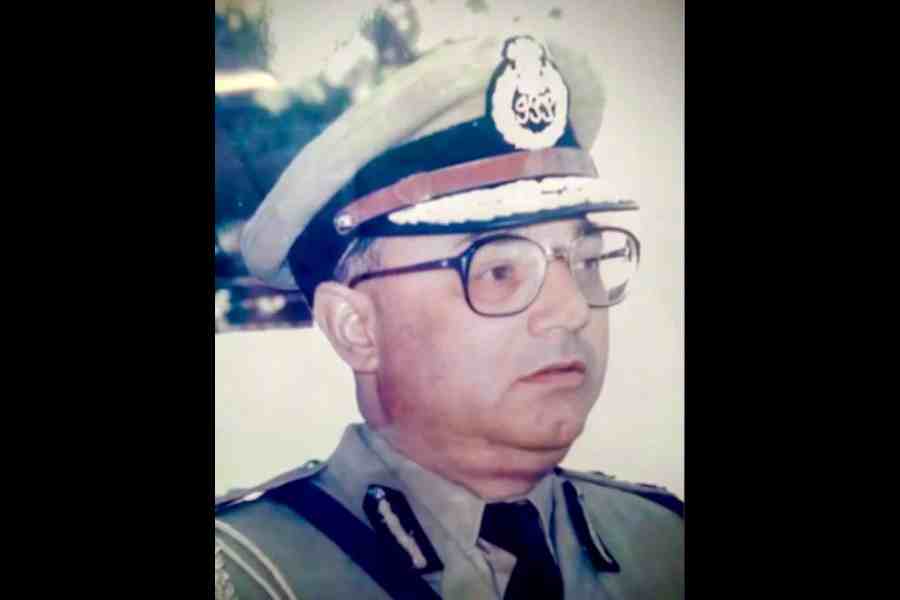
Ghulam Jeelani Pandit / sourced by the Telegraph
Ghulam Jeelani Pandit, the last Kashmiri Muslim to head Jammu and Kashmir police and whose tenure saw the rise of militancy in 1988, died on Sunday evening nearly three-and-a-half decades after his retirement. He was 92.
Pandit was the then state’s director-general of police (DGP) from 1987 to 1989, the years during which Kashmir began its descent into turmoil. He was laid to rest at his ancestral graveyard in Jamalata in Srinagar’s old city.
On October 12, 1988, Pandit had dropped a bombshell saying that around 100 Kashmiris had returned after receiving arms training across the Line of Control, and that a weeklong crackdown had nabbed 72 of them.
Pandit’s tenure as the DGP witnessed low-key insurgency. It was after his removal on December 20, 1989 — as part of a new hard line pursued by the V.P. Singh government at the Centre — that Kashmir erupted into mass uprising.
The trigger for the protests was the large-scale killings of civilians, beginning with the Gaw Kadal massacre of January 21, 1990.
A series of electrifying events had preceded Gaw Kadal. Pandit helmed the police when Rubaiyya Sayeed, daughter of then Union home minister Mufti Mohammad Sayeed, was kidnapped on December 8, 1989.
Delhi reportedly prodded the Farooq Abdullah government to release five top JKLF militants in exchange for her release, giving the militants their first major success.
Pandit became a casualty and was replaced by the hardliner J.N. Saxena, a non-local. A month later, on January 19, Delhi appointed Jagmohan as governor, plunging the region into chaos. The Farooq Abdullah government resigned in protest a day before Jagmohan took the oath of office.
The killings at Gaw Kadal and other places led to mass protests and prompted thousands of Kashmiris to cross the Line of Control to secure arms training.
Current DGP Nilin Prabhat mourned Pandit’s death and offered “tribute and heartfelt condolences to the bereaved family”. Pandit is survived by his wife, son and two daughters.
Born on February 22, 1933, in Srinagar, Pandit joined the police and rose through ranks to take over as DGP on May 21, 1987.
“Ghulam Jeelani Pandit was only the second and the last local Muslim ever to head the state police in its over 100-year history,” People’s Democratic Party leader and former minister Naeem Akhtar wrote on X.
The other Kashmiri Muslim to have headed Jammu and Kashmir police was Peer Hassan Shah, who became the force’s first DGP in 1982. Till then, an inspector-general of police would head the force. Shah is still alive.
Ali Mohammad Watali, who was Srinagar police chief in 1988 and became the target of an unsuccessful militant assassination attempt that year, said Pandit was a good officer.
“It was Delhi that replaced him with Saxena. The Farooq Abdullah government had no say in (such big decisions). At that time, Mufti Sahab was the (Union) home minister,” Watali told TheTelegraph.
“He (Pandit) lived a quiet life after retirement and stayed away from controversies.”
The attack on Watali took place on September 17, 1988. It woke up the administration to the lurking danger of militancy.
In July that year, the Valley was rocked by two bomb blasts in Srinagar but there were no casualties. According to the grapevine, Khalistani militants were behind the explosions.
After Pandit, the only Kashmiri to become DGP was Kuldeep Khoda, but he was a Hindu. While most of the DGPs during the last 36 years have been non-local, two were from Jammu. They were A.K. Suri and S.P. Vaid.
source: http://www.telegraphindia.com / The Telegraph Online / Home> India / by Muzaffar Raina / September 23rd, 2025