Kolkata, WEST BENGAL :
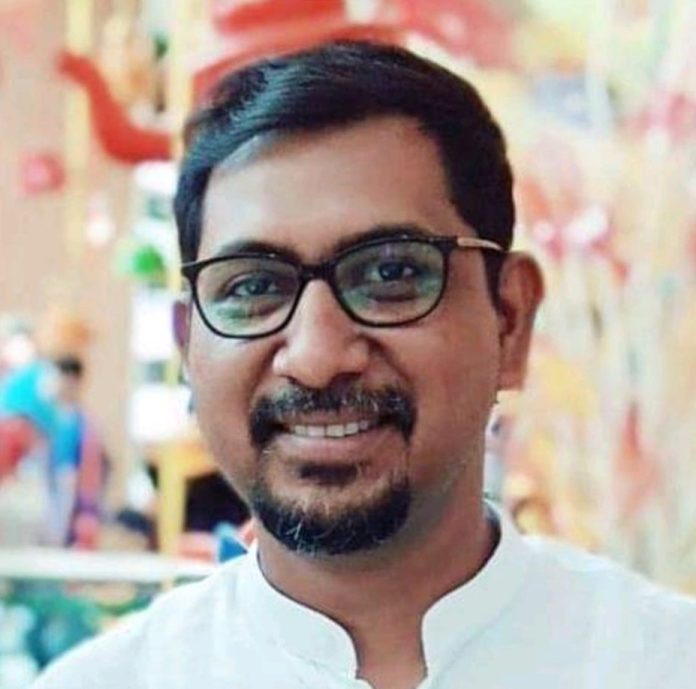
Sabir Ahamed, Programme Director at Pratichi Institute, Pratichi (India) Trust, and Founder Director of the Sabar Institute
Sabir Ahamed is the Programme Director at Pratichi Institute, and Founder Director of the Sabar Institute. His research spans the socio-economic status of Muslims in India, child protection, and education. He is proficient in analysing official datasets (NSS, Census, DISE, AISHS) using tools like Stata and R. Sabir has led largescale research and evaluation projects for the Government of West Bengal, including assessments of Kanyashree Prakalpa, Sabooj Sathi, Duare Sarkar, Lakshmir Bhandar, and the PM Poshan School Nutrition Garden Survey. He is currently leading the Human Development Report 2025 for West Bengal and directed the Second Human Development Report for Tripura.
His experience includes work with international organisations like Railway Children UK on projects supported by the European Union and UNICEF.
He served as the West Bengal State Lead for a UNICEF-commissioned study on secondary education transitions and was awarded the Just Transition Writing and Research Fellowship at IIT Kanpur (2022–2023).
He actively promotes the RTI Act (2005) in West Bengal and is a core member of the Know Your Neighbour campaign. He contributes op-eds to national dailies and has co-edited publications on development issues.
Excerpts from his interview with Mohd. Naushad Khan:
Q: How was the idea Know Your Neighbour conceptualised, when and how did it start, and what was the basic objective of this campaign?
We started the initiative because we noticed a deep division between different communities in our city. The immediate context was the publication of a report titled ‘Living Reality of Muslims in West Bengal’ in 2013. The findings shed lights on the deplorable condition of Muslims in West Bengal, yet a large section of people was unaware the status of Muslims. Many academics and Journalists were surprised to see those facts, especially they were educationally and economically backward. Secondly, historically different communities are living in the city for generations, Partition has created some chasm between Hindus and Muslims. The worst outcome is the spatial segregation – this led to the concept call ‘living together separately’. This gave birth of a plethora of myth and misconception about the Muslims.
We found that even well-meaning and educated people in Kolkata knew very little about the city’s Muslim community, even though it makes up 20% of the population.
We learned that most people didn’t visit Muslim-majority neighbourhoods because they didn’t have friends there or, in some cases, they believed the areas were unsafe.
To break the misinformation about Muslims and its neighbourhood, Know Your Neighbour (KYN) started neighbourhood walk in 2026. Till then, thousands of young people had participated in the walks and discussion.
The main goal is to build familiarity between communities that live close to each other but knew little about the other. The campaign aims to break down stereotypes and overcome the ignorance and distrust that can grow from different religious identities. This ignorance and distrust are the biggest barriers to communal harmony.
Q: Since its inception, how do you see the journey of KYN, and what were the challenges faced so far?
The journey of KYN involves actively bringing people from different backgrounds together. The main way it does this is by organising walks or visits to:
- Areas with large Muslim populations, like Metiabruz and Rajabazar, Kidderpore, etc.
- Places with shared, syncretic histories, like the Daptaripada area near College Street, where book-binding communities have co-existed.
- Sites that remind people of the legacy of past communal violence, such as Selimpada.
- Areas facing common problems that affect everyone, like pollution in the Rajapur canal, where both Hindus and Muslims use the water.
The campaign also organises events like Dosti ki Iftar (Friendship Iftar) and joint Durga Puja celebrations, allowing people to learn about and join in each other’s religious festivals.
The main challenge the campaign faces is ignorance, stereotypes, and fear that keep communities separated from each other.
Q: What has been the impact of KYN in Bengal, and how have people responded to this campaign?
Over the years, neighbourhood walks conducted by KYN have made a lasting impression on young minds, promoting peace, social cohesion, and pluralism. Around 1,500 students have joined us in exploring overlooked neighbourhoods across Kolkata through these immersive walks.
The initiative aims to instil core constitutional values – secularism, pluralism, and fraternity – through lived experiences and encounters with historical memory embedded in the urban fabric. These walks offer students a unique opportunity to engage with diverse communities, reflect on shared histories, and foster a deeper understanding of inclusive citizenship.
In collaboration with Maulana Azad College, our language course in Arabic, Persian, and Bengali enabled about 90 students to learn the basic reading of these languages. These programmes strengthen cultural roots and encourage appreciation for linguistic plurality.
We run a WhatsApp support network of over 850 students from marginalised areas, offering career counselling, peer mentoring, job opportunities, and regular workshops to help them navigate academic and professional spaces. We have trained more than 250 students on career counselling.
In partnership with Swayam and Azad Foundation, we’ve held group counselling sessions for children affected by communal tension, providing psychological support and nurturing safe spaces for recovery.
We conducted a hands-on RTI (Right to Information) workshop for students and professionals, teaching them how to use RTI to uncover critical datasets and hold government institutions accountable. Many participants have since used RTI to pursue issues of social relevance.
We host regular book reading and discussion sessions with acclaimed writers and scholars. Sabar Institute’s data for better lives initiative regularly post data on discrimination, lack of opportunity among the disadvantaged communities.
People, including college students, have started visiting Muslim-majority areas, even without our facilitation. The response from students has been particularly rewarding. These students, who had often been told by their parents not to go into minority areas, visited them and reported that they do not feel unsafe.
Q: Why do you think such campaigns are necessary in Bengal and elsewhere in the country?
Campaigns like KYN are necessary to repair growing divisions in our society. They are needed to address the loss of camaraderie between communities. The goal is to stop ignorance and indifference from turning into alienation.
Even among the educated city-dwellers, there is often a lack of friendship and familiarity with people from other communities. Campaigns are necessary to remove the distrust and ignorance that come from religious differences, calling this the biggest barrier to communal harmony. In a time of divisive politics and attacks on secular values, new ways of building unity are needed. Campaigns like KYN are important because they build social solidarity and brotherly or sisterly bonds directly between citizens.
Q: Finally, how can such a campaign add to the concept of a value-based society?
These campaigns are a key part of building a value-based society, as they focus on human connection.
The campaign helps build fraternity, which is a core value in the Indian Constitution. This means it focuses on building strong relationships and bonds of trust among citizens.
Instead of just using rational intellectual arguments for equality, these campaigns use shared cultures, local histories, and neighbourhood connections. This has a broad emotional appeal and helps trigger empathy in people.
By creating deeper emotional solidarity, the campaign helps people connect based on the shared value of equality. Ultimately, by creating new friendships and shared celebrations, these campaigns help to repair and restore the social fabric and build a more inclusive and united society.
source: http://www.radiancenews.com / Radiance News / Home> Face To Face> Focus / by Radiance News Bureau / November 20th, 2025
