Tag Archives: Mohd Naushad Khan

Muslim Students Shine Nationwide in 2025–26 Exams, Scaling New Academic Heights

INDIA :

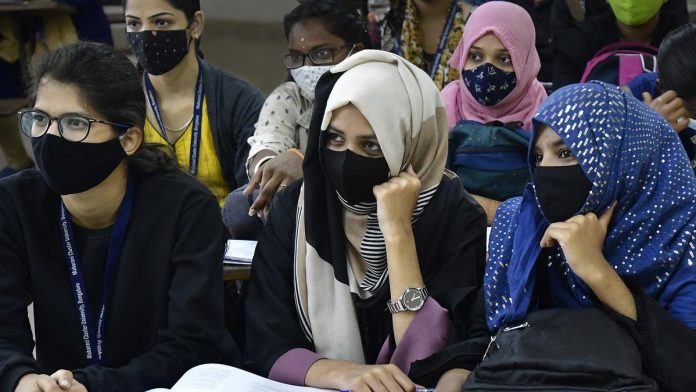
Photo Credit: The Hindu

A quiet but significant academic shift is unfolding across India, as Muslim students register notable successes in some of the country’s most competitive examinations. From civil services and national-level entrance tests to state and central board results, the 2025-26 academic year has emerged as a milestone, reflecting both individual perseverance and gradual systemic improvements in access to education.

One of the clearest indicators of this progress is visible in the Union Public Service Commission (UPSC) Civil Services Examination 2025 results. A total of 53 Muslim candidates successfully cleared the exam, the highest number in nearly a decade. Out of 958 successful candidates, this represents approximately 5.5%, marking a steady increase compared to previous years. While still below the community’s population share of 14-15%, the rise signals a growing presence in India’s administrative framework.

Several candidates secured top ranks, underscoring the depth of talent emerging from the community. A.R. Rajah Mohaideen secured Rank 7, placing him among the top 10 achievers, while Ifra Shams Ansari (Rank 24), Nabiya Parvez (Rank 29), and Hassan Khan (Rank 95) featured within the top 100. These achievements highlight a shift in a field historically marked by underrepresentation, offering new role models for aspiring civil servants.

Parallel success stories have emerged in engineering entrance examinations. Majid Mujahid Hussain from Madhya Pradesh secured an exceptional All India Rank 3 in JEE Advanced 2025, one of the most challenging engineering entrance exams globally. His accomplishment stands out not only for its academic merit but also for challenging the perception that top ranks are reserved for students from elite urban coaching ecosystems. Majid’s journey, built on disciplined self-study and determination, reflects a broader democratisation of opportunity in competitive education.

In the medical field, Muslim students have also demonstrated competitive strength. Umaid Khan from Maharashtra secured All India Rank 21 in NEET-UG 2025, contributing to the state’s strong overall performance. While comprehensive nationwide data on religious representation in NEET remains limited, individual achievements such as these point to increasing participation in high-stakes medical admissions.

At the school level, Muslim students have consistently excelled in both central and state board examinations. The CBSE Class 10 and 12 results for 2025 recorded an overall pass percentage of 88.39%, within which minority students have shown increasing competitiveness. Across states such as Uttar Pradesh, Kerala, Telangana, and West Bengal, Muslim students have frequently appeared among district and state toppers, particularly in science and commerce streams.

Regional trends further underline the importance of educational ecosystems. Southern states like Kerala and Telangana, known for their robust literacy rates and institutional support, continue to produce high-performing Muslim students. In several districts, pass percentages among Muslim students have reportedly exceeded 85-90%, particularly where access to coaching and academic resources is more developed.

Among the standout individual stories this year is that of 15-year-old Syed Zaid Sadiq from Nashik, who topped JEE Main 2026 with an impressive percentile of 99.927. A Hafiz who has memorised the Qur’an, Zaid successfully balanced madrasa education with mainstream academic studies, scoring above 99% in both sessions of the examination. His achievement challenges common stereotypes surrounding religious education and highlights the potential for integrated learning approaches. He now aims to clear JEE Advanced and secure admission to an Indian Institute of Technology (IIT).

In Bihar, Sabreen Parveen emerged as a joint topper in the Class 10 board examinations, scoring 492 out of 500 (98.4%). A student from Vaishali district and the daughter of a tyre shop owner, Sabreen’s achievement exemplifies how determination and family support can overcome financial constraints. Aspiring to become a doctor, her success has inspired students in her community and beyond.

Equally inspiring is the story of Zainab Bilal from Srinagar, who scored 95% in her CBSE examinations despite being visually impaired. Relying on auditory learning, memory techniques, and assistive technology, she independently prepared for her exams. Her journey underscores the role of resilience and innovation in overcoming physical challenges, offering a powerful message about inclusivity in education.

From Jamia Millia Islamia schools, Md Fauzan topped JMI Class 10 2026 exams with 98.71%. Mohammad Ali and Mohammad Arham shared second place scoring 98.43%, from Syed Abid Hussain Senior Secondary School. Atiqua Zia and Ansari Zeenat Fatima secured third with 98.29%, representing Syed Abid Hussain Senior Secondary School and Jamia Girls Senior Secondary School.

Another noteworthy development is the increasing participation and success of Muslim women. In the UPSC 2025 results, 13 of the 53 successful Muslim candidates were women, indicating a positive shift toward gender inclusion. Notably, 38 students from Jamia Millia Islamia qualified UPSC this year thus setting example before all major universities. This trend also is mirrored in school-level examinations, where girls consistently outperform boys across communities. Initiatives encouraging girls’ education are also gaining momentum at the grassroots level.

In Rajasthan’s Sikar district, a unique initiative by philanthropist Adil Khan recognised the achievements of top-performing girls from government schools, irrespective of religion. Rewards included a car for one student and cash prizes of ₹1 lakh for others. The initiative not only celebrates academic excellence but also promotes awareness about the importance of girls’ education, particularly among underrepresented communities.

Experts attribute these encouraging trends to multiple factors. Increased awareness about the importance of education, greater parental support, and the expansion of coaching facilities into smaller towns have all contributed. Additionally, digital learning platforms and scholarship programs have made quality resources more accessible to students from economically weaker backgrounds.

Mentorship initiatives by non-governmental organisations and community groups have also played a critical role. By providing guidance for competitive exams such as UPSC, JEE, and NEET, these programmes have helped bridge long-standing gaps in access to information and preparation strategies.

However, challenges remain. Despite the visible progress, Muslim representation in elite institutions and services still lags behind proportional levels. Socio-economic barriers, disparities in school infrastructure, and limited awareness in certain regions continue to affect outcomes. Addressing these issues will require sustained policy efforts, community engagement, and investment in education at the grassroots level.

Educationists emphasise that the current momentum must be nurtured. “The improvement is real, but it needs continuity,” said one academic expert. “Access, affordability, and awareness are the three pillars that must be strengthened to ensure long-term change.”

The achievements of 2025-26 collectively tell a story of aspiration and gradual transformation. Whether it is a civil services aspirant securing a top rank, a student from a modest background topping a state board, or a visually impaired learner excelling against the odds, each success contributes to a larger narrative of empowerment.

As India continues to evolve as an educational hub, the rising performance of Muslim students reflects not only community progress but also the broader democratisation of opportunity. While the journey toward equitable representation is far from complete, the trajectory is unmistakably upward.

In classrooms, coaching centres, and homes across the country, a new generation of students is quietly rewriting expectations – one exam, one rank, and one success story at a time.

source: http://www.radiancenews.com / Radiance News / Home> Education> Focus / by Mohd Naushad Khan / May 08th, 2026
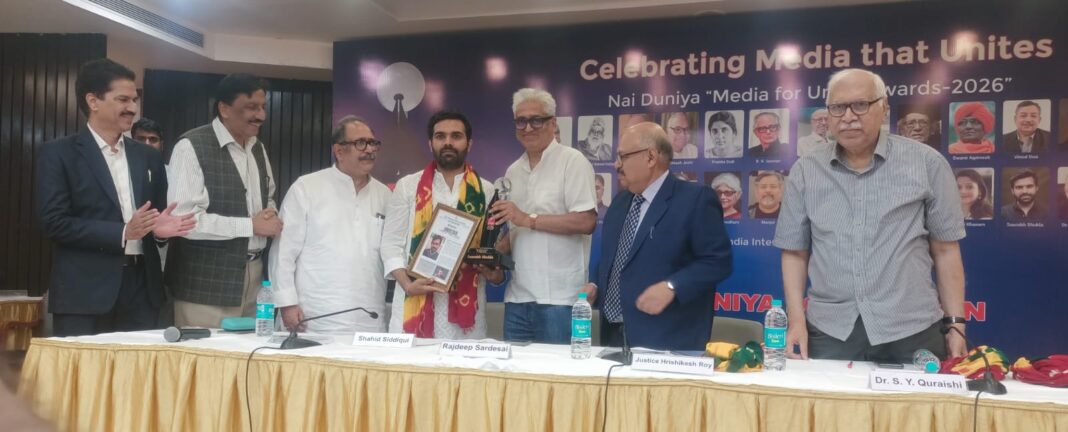
Media for Unity Awards 2026: Voices of Courage Highlight Role of Journalism in Safeguarding Democracy

INDIA :

New Delhi :

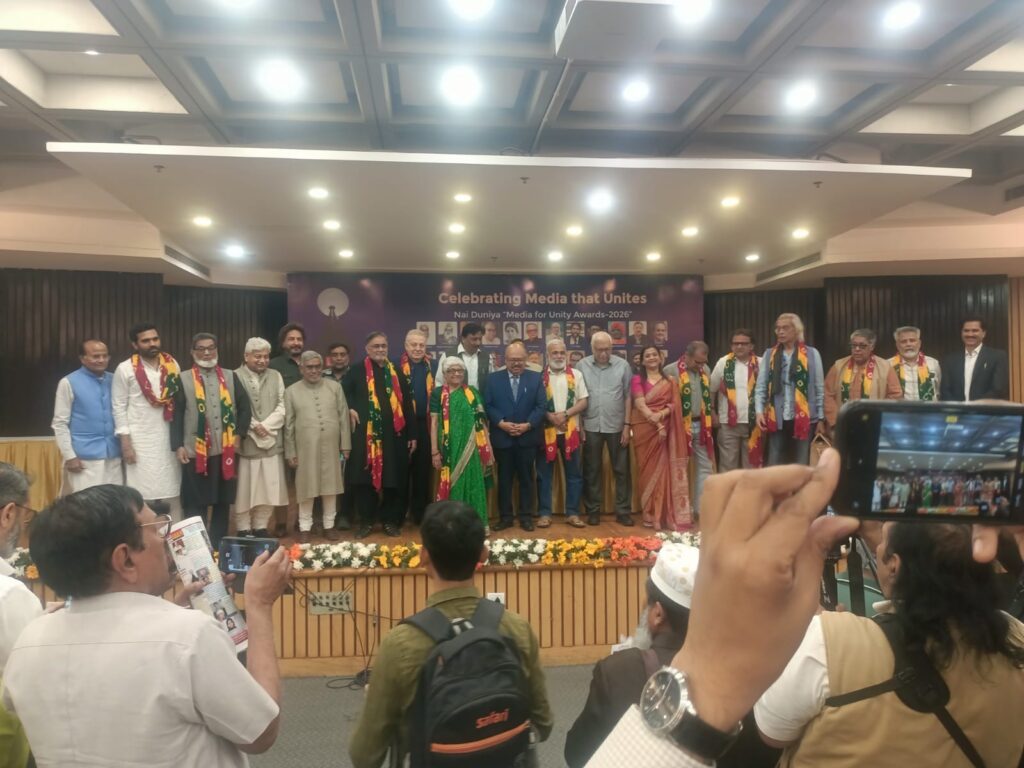
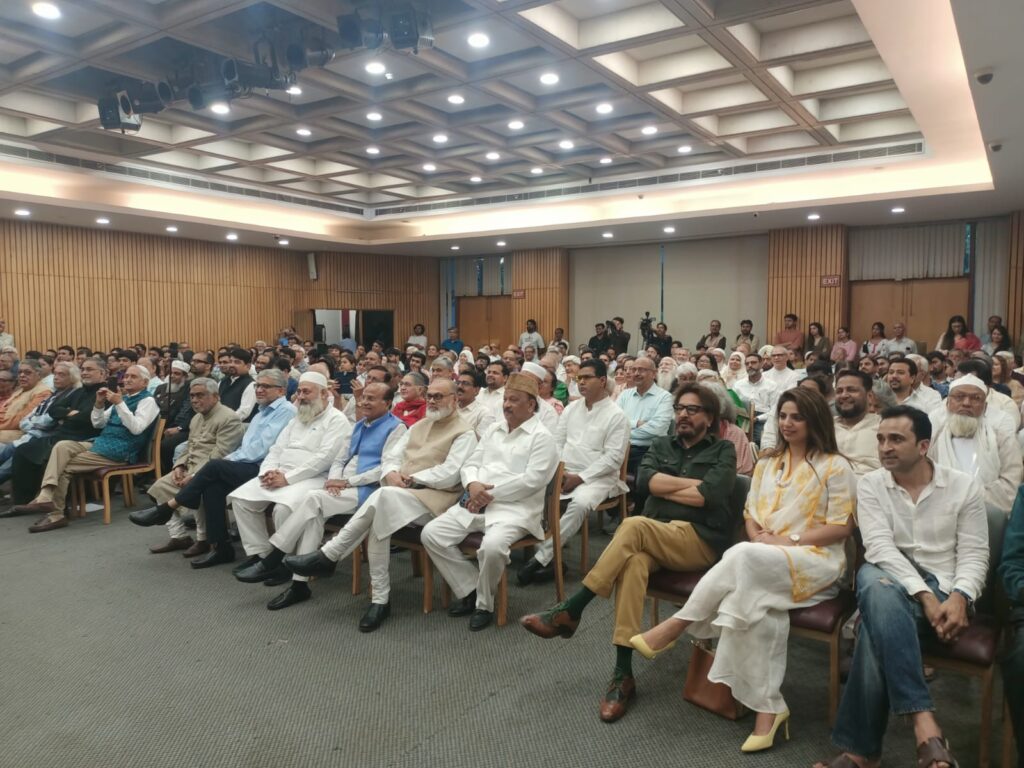
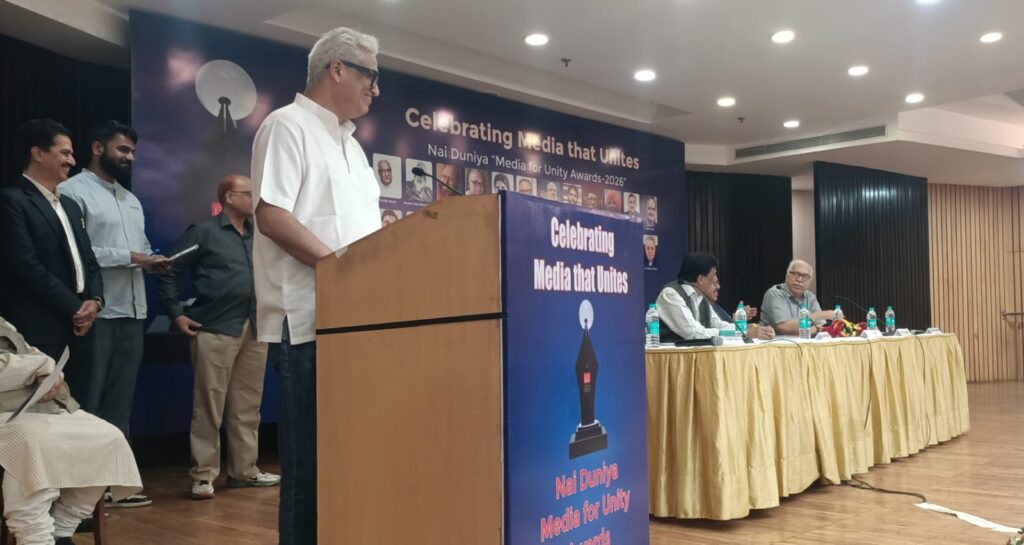
The Nai Duniya Foundation honoured leading journalists, authors, writers and filmmakers at the Media for Unity Awards 2026, held at the India International Centre on Saturday evening. The event celebrated individuals who have demonstrated courage in “speaking truth to power” during what many speakers described as challenging times for Indian media and democracy.

Senior journalist Rajdeep Sardesai, consulting editor and anchor of India Today Television, reflected on the evolving role of journalism amid what he termed a period of “darkness.” He emphasized that even small efforts, “a spark or a candle”, can help keep truth alive. Recalling his early career, Sardesai spoke about the discipline and dedication he learned from legendary cartoonist R. K. Laxman, whose name is correctly spelled as R. K. Laxman. He noted that Laxman’s insistence on constant improvement shaped his approach to journalism.

Senior journalist Rajdeep Sardesai speaking at the Nai Duniya “Media for Unity Awards 2026” at the India International Centre in New Delhi on April 18, 2026.

Drawing parallels between past and present, Sardesai remarked that many political realities remain unchanged, pointing to Laxman’s decades-old cartoons that continue to resonate with contemporary audiences. With over three decades of experience, he expressed concern that some voices which once illuminated public discourse are now contributing to its decline. Addressing criticism surrounding “Godi media,” Sardesai maintained that perseverance and faith in eventual change remain essential.

He also highlighted India’s resilience, stressing that no individual or authority is permanent. Sharing an anecdote about a hardworking woman named Elizabeth from Kerala, he underscored the strength of ordinary citizens who sustain the nation through their efforts. Concluding on an optimistic note, Sardesai praised India’s diversity and encouraged young journalists to continue their pursuit of truth despite adversity.

Senior Congress leader Shashi Tharoor, emphasized the media’s vital role in preserving democracy and national unity. He described the current era as a paradox, marked by unprecedented connectivity alongside deep social fragmentation, and argued that the media serves as the “soul of democracy.”

Reflecting on his upbringing as the son of a journalist, Tharoor spoke about the traditional trust placed in media as a reliable source of truth, a trust he believes is now under strain. He warned against the growing trend of sensationalism in television and social media, where debates often devolve into confrontational spectacles rather than meaningful discussions. Such practices, he cautioned, risk reducing complex issues to simplistic binaries and eroding public trust.

Using his well-known “thali” metaphor, Tharoor highlighted India’s pluralistic identity and stressed that the media must provide a fair platform representing all voices. He reiterated that a free and impartial press is essential to democracy, acting as a watchdog that holds power accountable. He concluded by urging journalists to reclaim their core mission, to inform without inflaming and to unite rather than divide, while praising the awardees for embodying these ideals.

Justice Hrishikesh Roy, who was the chief guest, spoke about the emotional resonance of the awardees’ remarks, stating that such voices are crucial in today’s India. He commended the Nai Duniya Foundation for inspiring individuals and acknowledged the contributions of Shahid Siddiqui, Zubair, and Atul Tiwari in organizing the event. Referring to figures like R. K. Laxman and other speakers, he noted that their words left a deep impact on the audience.

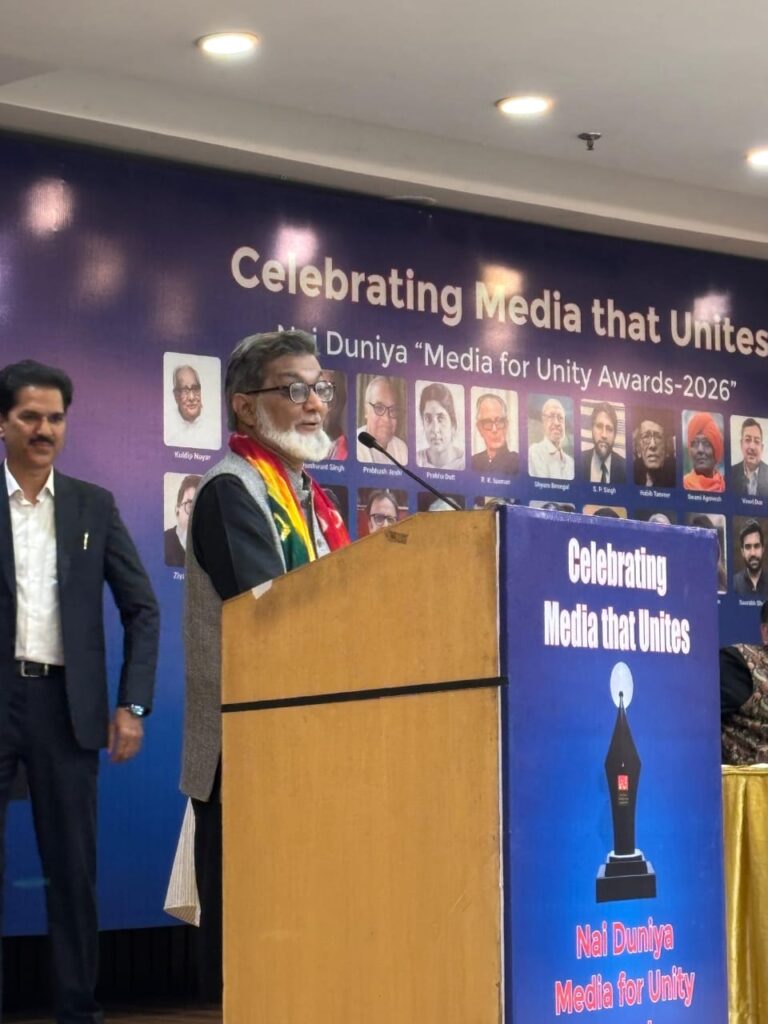
Senior journalist Zia-us-Salam speaking at the Nai Duniya “Media for Unity Awards 2026” at the India International Centre in New Delhi on April 18, 2026.

Justice Roy also highlighted the fairness of the selection process, praising the jury led by S. Y. Quraishi for making thoughtful choices that left little room for dissatisfaction. He concluded with a message of optimism, urging attendees to remain hopeful and appreciative of such initiatives.

Former Chief Election Commissioner S. Y. Quraishi reflected on his long association with the media, recalling his early career in public relations. While acknowledging journalism’s strengths, he expressed concern about its current state in India, particularly the country’s low ranking in global press freedom indices. Although he noted slight improvements recently, he argued that the media has often failed to question those in power, instead focusing disproportionately on the opposition.

Quraishi lamented what he described as a shift from the media’s role as the “fourth estate” to a “fifth column.” Despite this, he expressed hope in journalists like Rajdeep Sardesai and others who continue to uphold democratic values, as well as citizens committed to defending secularism and pluralism. He concluded by appreciating the jury’s careful selection of awardees and thanking the organizers.

Senior journalist Neerja Chowdhury, after receiving the lifetime achievement award, reflected on her early career and the influence of pioneering journalist Prabha Dutt. She recalled Dutt’s fearless reporting, including her coverage of the 1978 Sanjay and Geeta Chopra case, war reporting, and her landmark Supreme Court petition advocating press freedom.

Chowdhury emphasized that today’s journalists face more complex challenges in a polarized society shaped by religious, regional, and political divisions. She stressed that the media must not act as government propaganda but instead hold power accountable and reflect diverse perspectives. Highlighting the importance of dissent, she argued that diversity is essential for creativity and progress. She concluded by reaffirming her commitment to journalism and nation-building.

Senior journalist Saurabh Shukla spoke about the difficulties faced by independent reporters, including arrests, legal harassment, and limited access to timely justice. He pointed out that many journalists struggle to secure bail due to financial and legal constraints and called for the establishment of fast-track tribunals to address such cases promptly.

Shukla also raised concerns about social media trials, surveillance, and professional blacklisting, which he said further complicate the work of journalists. Reflecting on his departure from NDTV, he emphasized the importance of maintaining independence in journalism. He additionally highlighted systemic bias, alleging that Muslim journalists are disproportionately targeted, while noting that his own identity has sometimes shielded him from similar scrutiny.

Despite these challenges, Shukla reaffirmed his commitment to ground reporting and amplifying marginalized voices. The event concluded with a shared sense of concern and hope, as speakers collectively underscored the enduring importance of independent journalism in strengthening democracy and fostering unity in India.

Ziya Us Salam, Associate Editor of The Hindu, Fazil Hussain Parvez, Editor of Gawah, Prof. Purushottam Agarwal, Writer, Vivek Shukla, Journalist, Neerja Chowdhury, Journalist, Manjul, Cartoonist, Sudhir Mishra, Filmmaker, Sandeep Chaudhary, Senior Journalist and Anchor of ABP News, Arvind Gaur, Theatre Director, Rani Khanam, Artistic Director Aamad and Choreographer, Saurabh Shukla, Journalist and Co-founder of The Red Mike and Dr. Waiel Awaad, Senior Journalist and Middle East Analyst were given the Nai Duniya Media for Unity Awards 2026.

1. Kuldip Nayyar Award for English journalism, Ziya-us-Salam, Associate Editor, The Hindu

2. ⁠Khushwant Singh Award for the most inspiring book,  ‘Mazbooti ka naam Mahatma Gandhi’, by Prof. Purshottam Aggarwal

3. ⁠Prabha Dutt Lifetime Achievement Award Neerja Chowdhry

4. ⁠Maulana Abdul Waheed Siddiqui Award for Urdu Journalism Fazil Hussain Pervaiz, Editor Gawah

5. ⁠Prabhash Joshi Award for Hindi Journalism Vivek Shukla

6. ⁠S P Singh Award for Electronic Media Sandeep Chowdhry

7. ⁠Swami Agnivesh Award for Social Causes Rani Khanam

8. ⁠Shyam Benegal Award for Visual Media Sudhir Mishra

9. ⁠Habib Tanvir Award for Theatre Arvind Gaud

10. ⁠Vinod Dua Digital Media Award Saurabh Shukla

11. ⁠RK Laxman Award for Satire Alok Nirantar

12. ⁠Mark Tully Award for a Foreign Correspondent Dr Waeil Awwad

source: http://www.indiatomorrow.net / India Tomorrow / Home> Human Rights > Communalism / by Mohd Naushad Khan / April 19th, 2026

Bridging Divides, Building Bonds: How ‘Know Your Neighbour’ Is Redefining Harmony in Kolkata

Kolkata, WEST BENGAL :

Sabir Ahamed, Programme Director at Pratichi Institute, Pratichi (India) Trust, and Founder Director of the Sabar Institute

Sabir Ahamed is the Programme Director at Pratichi Institute, and Founder Director of the Sabar Institute. His research spans the socio-economic status of Muslims in India, child protection, and education. He is proficient in analysing official datasets (NSS, Census, DISE, AISHS) using tools like Stata and R. Sabir has led largescale research and evaluation projects for the Government of West Bengal, including assessments of Kanyashree Prakalpa, Sabooj Sathi, Duare Sarkar, Lakshmir Bhandar, and the PM Poshan School Nutrition Garden Survey. He is currently leading the Human Development Report 2025 for West Bengal and directed the Second Human Development Report for Tripura.

His experience includes work with international organisations like Railway Children UK on projects supported by the European Union and UNICEF.

He served as the West Bengal State Lead for a UNICEF-commissioned study on secondary education transitions and was awarded the Just Transition Writing and Research Fellowship at IIT Kanpur (2022–2023).

He actively promotes the RTI Act (2005) in West Bengal and is a core member of the Know Your Neighbour campaign. He contributes op-eds to national dailies and has co-edited publications on development issues.

Excerpts from his interview with Mohd. Naushad Khan:

Q: How was the idea Know Your Neighbour conceptualised, when and how did it start, and what was the basic objective of this campaign?

We started the initiative because we noticed a deep division between different communities in our city.  The immediate context was the publication of a report titled ‘Living Reality of Muslims in West Bengal’ in 2013. The findings shed lights on the deplorable condition of Muslims in West Bengal, yet a large section of people was unaware the status of Muslims. Many academics and Journalists were surprised to see those facts, especially they were educationally and economically backward. Secondly, historically different communities are living in the city for generations, Partition has created some chasm between Hindus and Muslims. The worst outcome is the spatial segregation – this led to the concept call ‘living together separately’. This gave birth of a plethora of myth and misconception about the Muslims.

We found that even well-meaning and educated people in Kolkata knew very little about the city’s Muslim community, even though it makes up 20% of the population.

We learned that most people didn’t visit Muslim-majority neighbourhoods because they didn’t have friends there or, in some cases, they believed the areas were unsafe.

To break the misinformation about Muslims and its neighbourhood, Know Your Neighbour (KYN) started neighbourhood walk in 2026. Till then, thousands of young people had participated in the walks and discussion.

The main goal is to build familiarity between communities that live close to each other but knew little about the other. The campaign aims to break down stereotypes and overcome the ignorance and distrust that can grow from different religious identities. This ignorance and distrust are the biggest barriers to communal harmony.

Q: Since its inception, how do you see the journey of KYN, and what were the challenges faced so far?

The journey of KYN involves actively bringing people from different backgrounds together. The main way it does this is by organising walks or visits to:

  1. Areas with large Muslim populations, like Metiabruz and Rajabazar, Kidderpore, etc.
  2. Places with shared, syncretic histories, like the Daptaripada area near College Street, where book-binding communities have co-existed.
  3. Sites that remind people of the legacy of past communal violence, such as Selimpada.
  4. Areas facing common problems that affect everyone, like pollution in the Rajapur canal, where both Hindus and Muslims use the water.

The campaign also organises events like Dosti ki Iftar (Friendship Iftar) and joint Durga Puja celebrations, allowing people to learn about and join in each other’s religious festivals.

The main challenge the campaign faces is ignorance, stereotypes, and fear that keep communities separated from each other.

Q: What has been the impact of KYN in Bengal, and how have people responded to this campaign?

Over the years, neighbourhood walks conducted by KYN have made a lasting impression on young minds, promoting peace, social cohesion, and pluralism. Around 1,500 students have joined us in exploring overlooked neighbourhoods across Kolkata through these immersive walks.

The initiative aims to instil core constitutional values – secularism, pluralism, and fraternity – through lived experiences and encounters with historical memory embedded in the urban fabric. These walks offer students a unique opportunity to engage with diverse communities, reflect on shared histories, and foster a deeper understanding of inclusive citizenship.

In collaboration with Maulana Azad College, our language course in Arabic, Persian, and Bengali enabled about 90 students to learn the basic reading of these languages. These programmes strengthen cultural roots and encourage appreciation for linguistic plurality.

We run a WhatsApp support network of over 850 students from marginalised areas, offering career counselling, peer mentoring, job opportunities, and regular workshops to help them navigate academic and professional spaces. We have trained more than 250 students on career counselling.

In partnership with Swayam and Azad Foundation, we’ve held group counselling sessions for children affected by communal tension, providing psychological support and nurturing safe spaces for recovery.

We conducted a hands-on RTI (Right to Information) workshop for students and professionals, teaching them how to use RTI to uncover critical datasets and hold government institutions accountable. Many participants have since used RTI to pursue issues of social relevance.

We host regular book reading and discussion sessions with acclaimed writers and scholars. Sabar Institute’s data for better lives initiative regularly post data on discrimination, lack of opportunity among the disadvantaged communities.

People, including college students, have started visiting Muslim-majority areas, even without our facilitation. The response from students has been particularly rewarding. These students, who had often been told by their parents not to go into minority areas, visited them and reported that they do not feel unsafe.

Q: Why do you think such campaigns are necessary in Bengal and elsewhere in the country?

Campaigns like KYN are necessary to repair growing divisions in our society. They are needed to address the loss of camaraderie between communities. The goal is to stop ignorance and indifference from turning into alienation.

Even among the educated city-dwellers, there is often a lack of friendship and familiarity with people from other communities. Campaigns are necessary to remove the distrust and ignorance that come from religious differences, calling this the biggest barrier to communal harmony. In a time of divisive politics and attacks on secular values, new ways of building unity are needed. Campaigns like KYN are important because they build social solidarity and brotherly or sisterly bonds directly between citizens.

Q: Finally, how can such a campaign add to the concept of a value-based society?

These campaigns are a key part of building a value-based society, as they focus on human connection.

The campaign helps build fraternity, which is a core value in the Indian Constitution. This means it focuses on building strong relationships and bonds of trust among citizens.

Instead of just using rational intellectual arguments for equality, these campaigns use shared cultures, local histories, and neighbourhood connections. This has a broad emotional appeal and helps trigger empathy in people.

By creating deeper emotional solidarity, the campaign helps people connect based on the shared value of equality. Ultimately, by creating new friendships and shared celebrations, these campaigns help to repair and restore the social fabric and build a more inclusive and united society.

source: http://www.radiancenews.com / Radiance News / Home> Face To Face> Focus / by Radiance News Bureau / November 20th, 2025

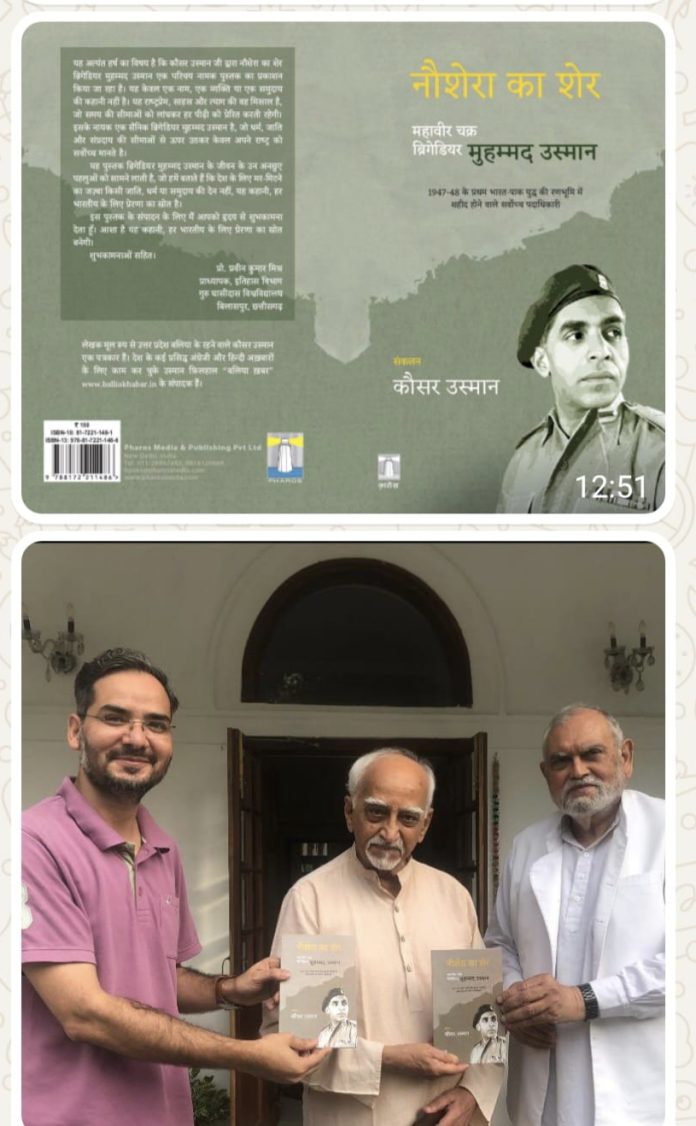
Grand Launch of ‘Naushera ka Sher’ Honouring Brigadier Mohammad Usman : Former Vice President Hamid Ansari Releases the Book

Azamgarh / Naushera, UTTAR PRADESH :

New Delhi:

A grand launch event was held in the capital today for the book “Naushera ka Sher — Brigadier Mohammad Usman”, celebrating the life of the 1947–48 war hero. Authored by senior journalist Kauser Usman from Ballia, Uttar Pradesh, the book honours Brigadier Usman, famously known as the “Hero of Heroes.”

The book was officially released by former Vice President of India, Mr. Hamid Ansari, who is also a family member of Brigadier Usman. Speaking at the event, Mr. Ansari said,

“Brigadier Usman was more than a soldier — he symbolised patriotism, courage, and sacrifice. Kauser Usman’s book is a fitting tribute and an inspiration for future generations.”

Brigadier Mohammad Usman was one of the few Indian Army officers who laid down his life during the India-Pakistan war of 1947–48, without retreating. He was posthumously awarded the Maha Vir Chakra, India’s second-highest wartime gallantry honour.

Author Kauser Usman said,

“This book is my humble tribute to a national hero. Brigadier Usman’s life, simplicity, and service to the nation continue to guide us.”

Dr. Zafarul Islam Khan, former Chairman of the Delhi Minorities Commission, also attended the event.

The book is published by Pharos Media Publishing Pvt. Ltd., New Delhi.

source: http://www.radiancenews.com / Radiance News / Home> Art & Culture / by Mohd Naushad Khan / July 11th, 2025

We Wish To Make India the “Land Of Peace” through 1000 Sadbhavana Manchs: Professor Salim Engineer

 Sawai Madhopur District, RAJASTHAN / NEW DELHI :

JIH vice-president Prof Salim Engineer (left).

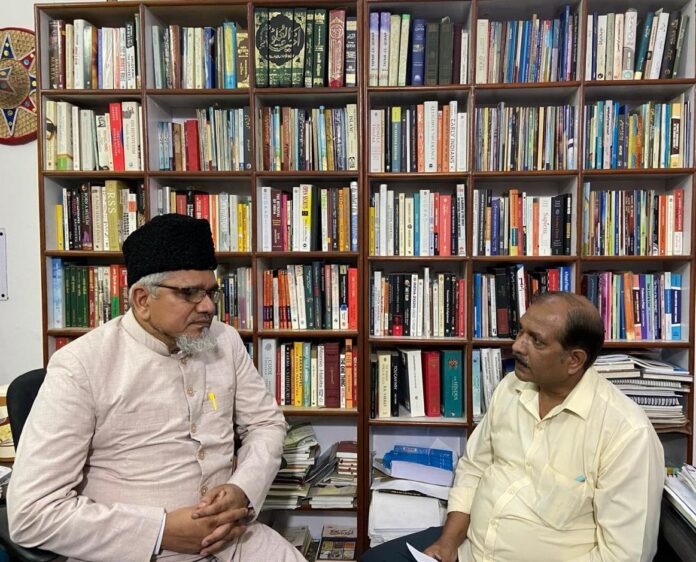
Jamaat-e-Islami Hind vice-president PROF SALIM ENGINEER is an interfaith leader promoting communal harmony and mutual understanding among members of different faith groups. He is also General Secretary of the Forum for Democracy and Communal Amity (FDCA) and national convenor of the Kendriya Dharmik Jan Morcha, a joint national forum of religious leaders.

In an interview with MOHD NAUSHAD KHAN, he talks about Sadbhavana Manchs floated at the local level across India to promote communal harmony and to create an India where there is peace and communal harmony. Here are the excerpts from the interview.

Question: To inform our readers, please let us know what is Sadbhavna Manch and what are its objectives. And why was it necessary to launch Sabhavna Manches all over the country?

Answer: India is a land of diversity and plurality. People follow different religions and speak different languages. In the last 10 years, communal harmony, unity, brotherhood, and fraternity have become the worst victims in India. Hate and divisive politics have dominated the political discourse. Political parties with vested interests promote their ideology, aiming to shape India into a nation dominated by a single culture and belief system. Discrimination has become their identity; they suppress one community and patronize others who support their ideology. They blatantly try to impose their culture and ideology on all others. All these efforts have badly hit communal harmony, togetherness, and fraternity.

In such a scenario, Jamaat-e-Islami Hind (JIH) felt the need to make people aware of the challenges before the nation. It, therefore, decided to set up Sadbhavna Manches, or what could be called Goodwill Forums in the English language. The objective of the establishment of the Manch was to promote community amity and brotherhood, with representation from different faiths to make India a land of peace in the real sense. The response has been very encouraging and we are moving fast toward achieving our aims. We wish to make India into a “land of peace” through Sadbhavna Manchs across the country.

Question: What should the Sadbhavna Mach do under the current political atmosphere to achieve its basic objectives?

Answer: The Constitution is the foundation of our country. Constitutional values of freedom, liberty, equality, and fraternity should be our guiding principle. The State should not treat any community as superior or inferior, nor should there be any discrimination towards anyone. There must be justice for all. In the present atmosphere, promoting fraternity and brotherhood is highly significant. important. As hate and politics of polarisation have become the core agenda of some political outfits, the role of Sadbhavana Manch has become even more important. We need to politically weaken the divisive forces. At the same time, we also need to work for social transformation through Sadbhjavna Manchs to instill a sense of fraternity, togetherness, mutual trust, and respect to achieve the goal of communal harmony. Without peace and communal harmony,, India’s growth story will remain incomplete; therefore, such forums become very important.

Question: What do you think are the challenges before people or organizations working towards promoting peace and communal harmony?

Answer: During the process of formation of Sadbhavana Manch in different parts of India, we have also formed platforms for religious leaders under the banner of Dharmik Jan Morcha. There is a perception, and baseless propaganda is made, that religion is the root cause of many problems like division in society, hate, and violence. To me, it is a false belief and has no basis. These problems are not because of religion but because of the misuse of religion. The idea behind the formation of Dahrmik Jan Morcha is to dispel the myth against religion and religious leaders. Every religion talks of unity and therefore religion unites and never divides. To keep these challenges in mind, Jamaat-e-Islami Hind has established Dharmik Jan Morcha at the state and central levels comprising notable and respected religious figures from different religions to serve the purpose. Dharmik Jan Morcha is active in a dozen states while Sadbhavana Manch is at the local level and in the coming years around 1000 Sadbhavana Manch will be established across India. We have also decided to have Sadbhavana Manch for women and youth.

With these platforms, we wish to create an atmosphere of peace and communal harmony in the entire society across the nation as a nationwide campaign. At a time when there is an aggressive campaign for hate going on we wish to counter it through love and peace.

Question: In India, more than 85 percent of people want to live in peace. They believe in togetherness, mutual respect, and mutual co-existence. They are tolerant. Yet, the biggest threat India faces is communal harmony. What do you think is the reason?

Answer: Yes, it is true. Those who are trying to spread negativity in society, disturb the peace, and propagate hate and intolerance are few but they are organized and receive political patronage. They believe that they can do anything and get away; they think themselves above the law. They are being praised and even garlanded for their act of crime and violence. Those who want peace are no doubt in large numbers but they are not organized. Most of them are mute spectators, they are not vocal and they don’t raise their voice as and when required. We are trying to make our society proactive through these Sadbhavana Manch and Dharmik Jan Morcha. Unless and until the majority of the people rise and raise their voices against violence, injustice, atrocities, and discrimination, it will be difficult to achieve communal harmony as desired. We are trying to create awareness among those 85 percent to ensure peace and communal harmony. The silence of the vast majority will be tantamount to crime and detrimental to society and the nation at large. We can see that our efforts have a positive impact on society gradually.

Question: After the 2024 Lok Sabha elections, it was believed that the new government will not be as aggressive as before but there is no respite in hate and divisive agenda. How would you like to respond?

Answer: Yes, it is true to some extent but the message of the verdict from the people was loud and clear. It was a verdict against communalism, hate, and divisive politics. The people by and large rejected hate and divisive politics. People voted against where there was hate speech, efforts were made to polarize the people and divide them along communal lines. The message was clear that people won’t tolerate the divisive agenda and hate polity. People want peace and desire to live in mutual co-existence. But there has indeed been no change in the governance despite the clear message of the people against hate and divisive politics. The poison of hate has penetrated deep into the society and it will take years to fade out. It is the duty and responsibility of the government to ensure that the perpetrators of hate and violence are not encouraged but punished. Things will change if we continuously work to promote communal harmony.

Question: Recently, efforts were made in Karnataka to strengthen Sadbhavana Manch and to make it more effective and meaningful. Could you elaborate on it?

Answer: Promoting communal harmony is a core policy of the Jamaat, and efforts were made in the previous term as well. In this term, we are focusing on further strengthening these initiatives. I have travelled across several states to establish new Sadbhavana Manch units and to strengthen the existing ones.

The presidents and secretaries of JIH in various states are actively working toward similar goals. Recently, during my two-week visit to Karnataka, I travelled extensively across more than 20 districts and over 10 cities. We engaged with the local communities, held programmes where Sadbhavana Manch was already established, and created new units. The atmosphere in Karnataka was very positive, and people were eager to embrace and spread the message of Sadbhavana Manch to promote communal harmony.

The Lingayat community, which holds significant influence in Karnataka, was a key focus during our visit. We visited several of their mutts, including the mutt of Basava, the founder of the Lingayat community. In many places, religious leaders themselves organized programs within their mutts, demonstrating a strong commitment to bringing different communities together to foster peace.

source: http://www.indiatomorrow.net / India Tomorrow / Home> News> Society / by Mohd Naushad Khan / August 17th, 2024

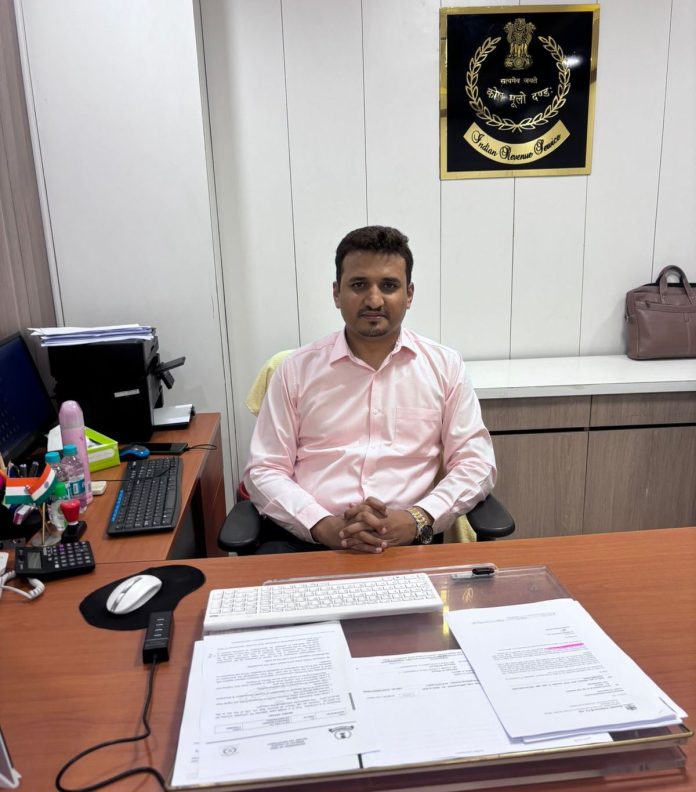
Deputy Commissioner Nooh Siddiqui Reflects on UPSC Triumph and Role of Urdu as Optional Subject

Aurangabad, MAHARASHTRA / Bhopal, MADHYA PRADESH :

In an enlightening conversation with Mohd Naushad Khan, Deputy Commissioner Nooh Siddiqui shares profound insights into his UPSC journey, highlighting the significance of Urdu as an optional subject.

Here’s a deeper exploration of the dialogue:

Q: Can you share how your life has evolved post-UPSC success and elaborate on your current role and location?

Siddiqui: The journey post-UPSC success has been a transformative one. Clearing the exam brought a sense of stability and purpose to my life. Currently serving as the Deputy Commissioner of Income Tax in Bhopal, I find myself navigating new challenges while contributing to the betterment of the community.

Q: Could you shed some light on the challenges and advantages of choosing Urdu as an optional subject, and offer guidance for students opting for the same?

Siddiqui: Opting for Urdu as my optional subject felt like a natural choice, given my educational background and familiarity with the language. However, I encountered initial challenges in accessing comprehensive study material tailored to UPSC requirements. Through diligent effort, I compiled comprehensive study material, including the books “Kawish” and “Ummeed,” which have since become invaluable resources for Urdu aspirants. Urdu, with its rich literary tradition, offers unique insights and opportunities for personal growth. My advice to students opting for Urdu is to embrace the subject’s richness and seek guidance to excel in the exam.

Q: Beyond UPSC success, what are your aspirations in life moving forward?

Siddiqui: While qualifying UPSC was a significant milestone, I view it as a stepping stone to further endeavors. I aspire to pursue a master’s degree in public policy and administration, deepening my understanding of governance and policy frameworks. Concurrently, I remain committed to mentoring aspiring candidates, guiding them on their journey to success.

Q: What words of wisdom do you have for Muslim students preparing for UPSC, as well as students in general?

Siddiqui: I urge all students, particularly those from the Muslim community, to approach preparation with dedication and diligence. UPSC is not just about acquiring knowledge but also about personal growth and transformation. Embrace the journey, seize opportunities, and pursue your goals with sincerity and focus. Your journey has the potential to inspire others and lead to meaningful contributions to society.

Nooh Siddiqui’s journey, securing AIR 326, illustrates the transformative power of dedication and perseverance. He emphasizes Urdu’s significance as an optional subject, with average scores ranging between 240 and 265, and mentions the highest score recorded at 296. Through his mentorship and contributions, Siddiqui continues to shape the future of UPSC aspirants, leaving an indelible mark on the landscape of competitive exams.

source: http://www.radiancenews.com / Radiance News / Home> Focus / by Mohd Naushad Khan, Radiance News Bureau / May 06th, 2024