Tag Archives: Shahid Siddiqui

Team Led by Shahid Siddiqui and Syed Abrar Hasan Honoured as Recipient of 2019 Advancing Photodynamic Therapy In Rising Nations Award at the 17th World Congress of the International Photodynamic Association

Aligarh, UTTAR PRADESH / INDIA :

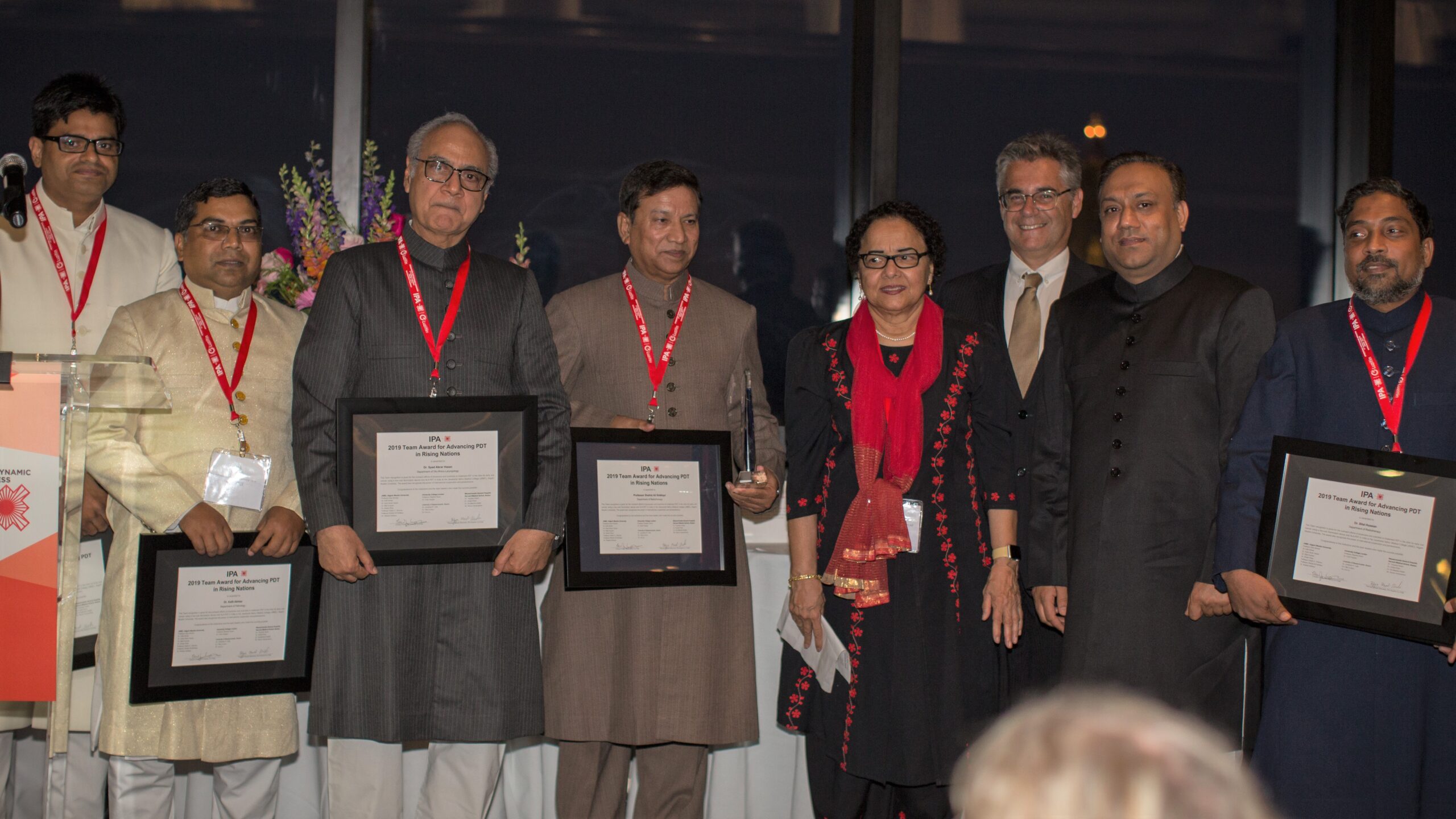
Professors Syed Abrar Hasan (center-left) and Shahid Siddiqui (center) receiving the 2019 Advancing Photodynamic Therapy In Rising Nations Award from Dr. Lothar Lilge (left), IPA Past-President, Dr. Tayyaba Hassan (center-right), and IPA President, Dr. Luis Arnaut (right).

Boston, USA :

At the 17th International Photodynamic Association World Congress in Boston, Massachusetts, Professors Shahid Siddiqui and Syed Abrar Hasan, leading an Indian and international team of PDT clinicians and researchers, were honoured as the 2019 recipients of the IPA award for Advancing Photodynamic Therapy (PDT) in Rising Nations.

The IPA recognizes the joint and considerable efforts of the team over the past three years to establish photodynamic therapy sustainably in the large and growing Indian market. The ‘PDT in India’ initiative is the direct result of the personal efforts, resources and perseverance of Indian Professor Shahid Siddiqui and Professor Syed Abrar Hasan to address the large unmet medical need relating to oral cancer in India. Oral cancer has a high death rate in India, as many people are undiagnosed and do not have access to adequate treatments or healthcare facilities.  The Indian contingent of the team include the following clinicians from Jawaharlal Nehru Medical College, Aligarh Muslim University:

  • Professor Ibne Ahmad
  • Dr. Kafil Akhtar
  • Dr. Syed Abrar Hasan
  • Dr. Bilal Hussain
  • Dr. Shakir Khan
  • Professor Satish C. Sharma
  • Professor Shahid Ali Siddiqui
  • Dr. Shaista Siddiqui

pix02

From left to right: Dr. Shakir Khan, Dr. Kafil Akhtar, Professor Syed Abrar Hasan, Professor Shahid Siddiqui, Dr. Tayyaba Hassan (IPA Past-President), Dr. Luis Arnaut (IPA President), Dr. Amjad Khan, Dr. Bilal Hussain.

Supporting the Indian clinicians on the team with international PDT expertise are representatives from the University College London, the University of Massachusetts, the Wellman Center for Photomedicine, Massachusetts General Hospital and Harvard Medical School. The international contingent of the team includes the following PDT researchers and clinicians:

  • Dr. Colin Hopper, University College London
  • Professor Stephen Bown, University College London
  • Dr. Jonathan P. Celli, University of Massachusetts, Boston
  • Dr. Filip Cuckov, University of Massachusetts, Boston
  • Dr. Hui Liu, University of Massachusetts, Boston
  • Dr. Tayyaba Hasan, Massachusetts General Hospital, Harvard Medical School, Boston
  • Dr. Amjad Khan, Massachusetts General Hospital, Harvard Medical School, Boston
  • Dr. Srivalleesha Mallid, Massachusetts General Hospital, Harvard Medical School, Boston
  • Mr. Marvin Xavierselvan, Massachusetts General Hospital, Harvard Medical School, Boston

As a result of this international team effort spanning three years, a robust infrastructure for photodynamic treatment has been built and is being maintained at the Jawaharlal Nehru Medical College, Aligarh University, India. Along with the development of PDT infrastructure, PDT equipment/supplier access, and extensive clinician training, patient recruitment processes have been successfully established leading to the ability to better meet the large unmet medical needs in the region.  Patients treated to date with PDT have experienced excellent outcomes facilitating accelerating patient acceptance and recruitment rates.

IPA World Congress

The Boston World Congress was the 17th conference held by the International Photodynamic Association, marking 34 years of this global meeting. The IPA World Congresses, held every two years, are the leading PDT meetings bringing together members of the global photodynamic community to advance scientific and clinical research relating to photodiagnosis and photodynamic therapies. The Boston World Congress was led by Congress Chair and IPA President Dr. Tayyaba Hasan, Professor of Dermatology at the Wellman Center for Photomedicine, Harvard Medical School (HMS) and a Professor of Health Sciences and Technology (Harvard-MIT) and had record attendance with representatives from 33 countries.  The 2021 IPA World Congress will be hosted in Moscow, Russia and the 2023 IPA World Congress will be held in Shanghai, China.

About Photodynamic Therapy

Photodynamic Therapy (PDT) is a combination therapy involving light activated photosensitizers to diagnose and treat various types and stages of cancers and pre-cancers, macular degeneration and multidrug-resistant infections involving bacteria, viruses and fungi. First developed in the 1980s, PDT has demonstrated superior patient outcomes with considerable cost savings. Over the past 30 years, millions of patients globally have been successfully treated with PDT.

About the International Photodynamic Association

The International Photodynamic Association (IPA) was founded in 1986 to support and endorse the scientific advancement and clinical development of photodynamic therapy and photodiagnosis. With members and associates from over 30 countries, the IPA represents a truly global community consisting of prominent international scientists, clinicians and translational researchers, healthcare professionals and students across academic, hospital, government and private sector organizations. The IPA promotes the study of diagnosis and treatment using light-activated photosensitizers and disseminates scientific information to its members, the research community, and to the community at large. The IPA organizes a biennial World Congress around the world, providing members and non-members a unique opportunity to share and learn more about global developments relating specifically to photodynamic therapy and photodiagnosis. 

For further information: ipasecretary@internationalphotodynamic.com

source: http://www.globenewswire.com / GlobeNewsWire / Home / by IPA – International Photodynamic Association / July 11th, 2019
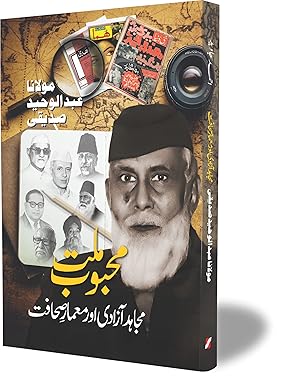
Maulana Abdul Waheed Siddiqui Mujahide-Azadi aur Meyma’re-Sahafat

DELHI :

The alternative historiography and discovery of real heroes of the society is always important in any age or any society.

The compilation and publication of “Maulana Abdul Waheed Siddiqui: Mujahide-Azadi Aur Meyma’re-Sahafat” is the result of this realisation.

The book and authors have tried to explore his personality and achievements in the broader context of history and developments of his times.

The contents of the book are documentary in nature.

The commentaries of Maulana Imdad Sabri are the personal observations and experiences of an eminent scholar and historian of Urdu journalism.

Similarly, the articles by Maulana Anzar Shah Kashmiri of Daryl Ulum Deoband, Mr. Parwana Rudaulavi , a senior journalist, Maulana S M Wali Rahmani, Dr. Khalique Anjum, Mr. G D Chandan, Mr. Shariful Hasan Naqvi, Sardar Rachpal Singh, Maulana A M Siddiqui Rahi, Ms. Surayya Siddiqui and Mr. Shahid Siddiqui are observations and experiences of those who saw and experienced him closely. These are also opinions of eminent critics and experts of language, literature, journalism, politics and history.

History and biographies open the windows of experiences and observations to human beings, and gives them the ability to discover themselves, understand their surroundings, see the impact of situations and events, look inside them and build future paths. History is the name of the waves and splashes of water in the river of time from which people emerge and nations are formed.

Maulana Abdul Waheed Siddiqui, the journalist and freedom fighter is a milestone, a bridge and a delicate and difficult chapter of modern Indian history, which holds many lessons, for present and future generations.

Maulana was a visionary, a man with deep roots in Muslim culture and religious ethos but with a very modern and enlightened outlook.

He laid the foundations of free press in post independence India. He gave the confidence to Indian Muslims to stand up and fight for their rights under the Constitution and not.

source: http://www.amazon.in

Ahmed Bhai, a friend and one of the few political leaders who inspired respect

GUJARAT / NEW DELHI :

Obituary

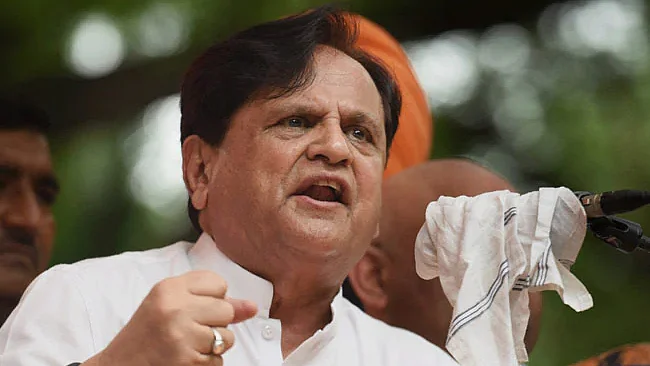
A man of few words, he would listen more and speak less. He was not known for dropping names, loose talk or gossip. No wonder he had friends across the political spectrum, recalls Shahid Siddiqui.

I met Ahmed Patel in 1980 for the first time as a journalist.

He mostly preferred to remain away from lime light but I persuaded him to give an interview to my weekly Nai Duniya. Even then I was impressed by his very precise responses to the most provocative questions. I came to know him in last thirty-five years both as a politician and friend. What held him above other politicians in Delhi was his honesty and dedication not only to the Congress Party but to basic moral values of public life. While many leaders protected their personal interests at the cost of the party, Ahmed Bhai did everything rising above his own political and personal interests.

Ahmed Patel was one of the finest Congressman in modern times, especially after the demise of the generation of leaders groomed by Indira Gandhi. Congress was in shambles in the post-Narsimha Rao period and with the emergence of NDA, future seemed to be bleak for Congress. It was pragmatic, realistic, dedicated hard work of Ahmed Patel and few others, which allowed UPA, led by Indian National Congress to form a government in Delhi in 2004. His networking abilities, his humble demeanor, his ability to listen to everyone and then give a sane and practical advice to the Congress President Sonia Gandhi and Prime Minister Manmohan Singh was what kept UPA together and allowed it to come back to power with larger numbers in 2009.

There came many occasions when this twenty-four or more parties’ ragtag alliance would have collapsed, but for the persuasive abilities of Ahmed Bhai. Political analysts call him troubleshooter for Sonia Gandhi, in my view he was Sankat Mochak and firefighter for the Congress Party.

On 7th December 1992, a day after the demolition of Babri Masjid, I sent my resignation from the Congress Party. I was an AICC member and part of a Committee with Shri Pranab Mukherjee, Manmohan Singh ji, K. R. Narayanan Saheb, called, ‘Pamphlet Committee’. Ahmed Bhai immediately rushed to my house and said if you resign I will also resign, and if we Muslims resign from Congress in large numbers, would we be helping the cause of Secularism or damaging it? Ultimately a call from Harkishan Singh Surjeet, who in a way was my political Guru, persuaded me to withdraw my resignation. Much later I learned that Ahmed Bhai had requested Comrade Surjeet to call me and desist from resigning from the Congress Party.

Ahmed Bhai was famous for his nighttime politics when he would call friends and opponents for advice and information. He was fond of good food and would suddenly ring me up at night saying, ‘Yaar can I come to have a few kebabs at your house’. He used to come alone without fanfare at midnight and chat. He was a political animal, who breathed Congress politics twenty-four-seven, but never tried to harm even his worst opponents.

Ahmed Bhai was ears and eyes to Sonia Ji in the most crucial days of her Presidentship. Her ability to take everyone along and keep the party together made Congress a force again, but no less was the contribution of Ahmed Bhai, who didn’t hesitate in sacrificing even his close friends if the party’s interest demanded it and advised Sonia Ji accordingly. He was one Congressman who had hundreds of critics and opponents but no enemies. Even most bitter enemies of the Congress Party could speak to Ahmed Bhai in confidence, knowing that their faith will never be betrayed.

Congress has no replacement for Ahmed Patel, at a juncture when he is required most. His contribution to Indian democracy and Secularism is immense. At a time when politicians of all hues and parties are losing respect in the eyes of the common man, Ahmed Patel will be missed much more for his cool, unemotional, positive attitude.

source: http://www.nationalheraldindia.com / National Herald / Home> States360 > Obituary / by Shahid Siddiqui / November 25th, 2020

Rich tributes paid to founder of Jamia Hamdard Hakeem Abdul Hameed

NEW DELHI :

HakeemAbdulHameedMPOs24oct2018

New Delhi:

Birth anniversary of noted Hakeem Padma Bhushan Hakeem Abdul Hameed was celebrated on September 14, 2018. Former Rajya Sabha MP and noted journalist Shahid Siddiqui delivered the lecture on ‘Hakeem Abdul Hamed, a great thinker, philosopher and his role in the construction of the nation’ as Chief Guest. The programme was presided over by Prof Syed Ihtesham Hasnain Vice Chancellor Jamia Hamdard. Prof Ihtesham Hasnain said late Hakeem Abdul Hameed was ‘Hamdard’ in the real sense.

Pro Vice-Chancellor Prof Ahmed Kamal, registrar Saud Akhtar, relatives of Hakeem Abdul Hameed from India and Pakistan, a large number of teachers, officers and students were present on the occasion.

Late Hakeem Abdul Hameed, a renowned physician, was the Founder-Chancellor of Jamia Hamdard, which he established with his own resources. A great philanthropist, thinker and visionary, he set up several institutions with the funds of Hamdard Wakf Laboratories. Some of the esteemed institutions established by him include Hamdard National Foundation, Hamdard Education Society, Hamdard Study Circle, Hamdard Public School, Hamdard Institute of Historical Research, Ghalib Academy, Centre for South Asian Studies and Business & Employment Bureau.

Hakeem Abdul Hameed was honoured by several national and international awards including the Avicenna Award presented by the erstwhile USSR in 1983. He was conferred with Padma Shri and Padma Bhushan by the Government of India. He was also an honorary member of the Academy of Medical Science of the Islamic Republic of Iran and Chancellor of Aligarh Muslim University, Aligarh. In October 2000, the Research Centre for Islamic History, Art and Culture (IRCICA) Istanbul, Turkey, presented IRCICA Award for Patronage in Preservation of Cultural Heritage & Promotion of Scholarship to Hakeem Saheb posthumously.

source: http://www.siasat.com / The Siasat Daily / Home> India> News  / by Rasia / September 15th, 2018