Tag Archives: Syed Abdullah

Celebrating a Century of Educational Book House: An Enduring Legacy of Literature and Learning in Aligarh

Meerut / Aligarh, UTTAR PRADESH :

Responding to this need, Abdul Shaheed Khan, an alumnus of MAO College Aligarh from Meerut, opened a small stationery shop in 1925, named this establishment “Educational Book House”, marking the beginning of a new chapter in Aligarh’s literary landscape.

Aligarh Muslim University, renowned as a beacon of knowledge and service to the nation, has nurtured multiple institutions dedicated to education and culture since its inception. Among these, the Educational Book House (EBH) stands out as a distinguished establishment, symbolizing a century of dedication to the dissemination of literature and learning.
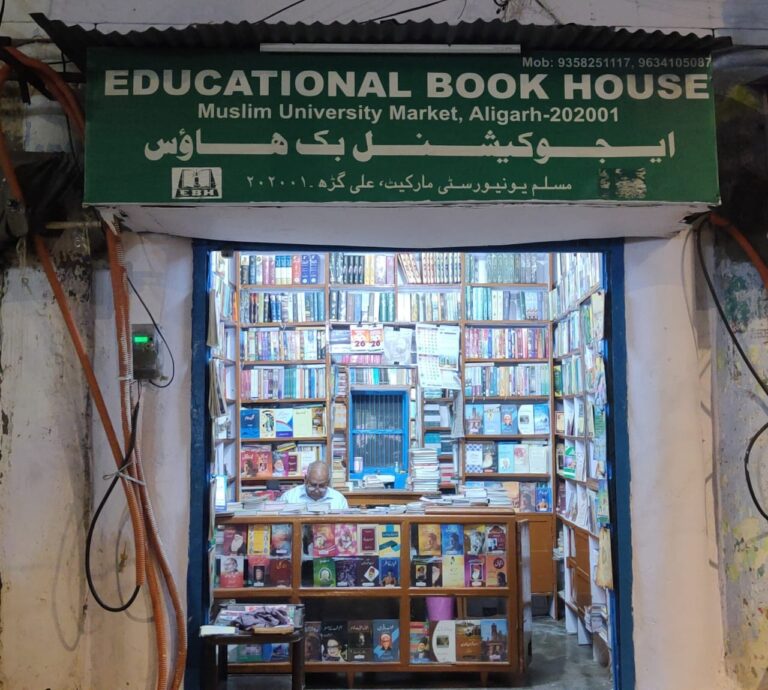
Established in 1925, EBH is more than an ordinary bookstore; it holds a revered position among bibliophiles, scholars, and literary circles both nationally and internationally. Over the past hundred years, EBH has played a pivotal role in spreading the literary and academic works of Aligarh across a broad audience, ensuring its legacy endures today. Its contribution to the development and promotion of Urdu language and literature is of profound importance in the history of book publishing

Historical Roots of Book House at Aligarh:

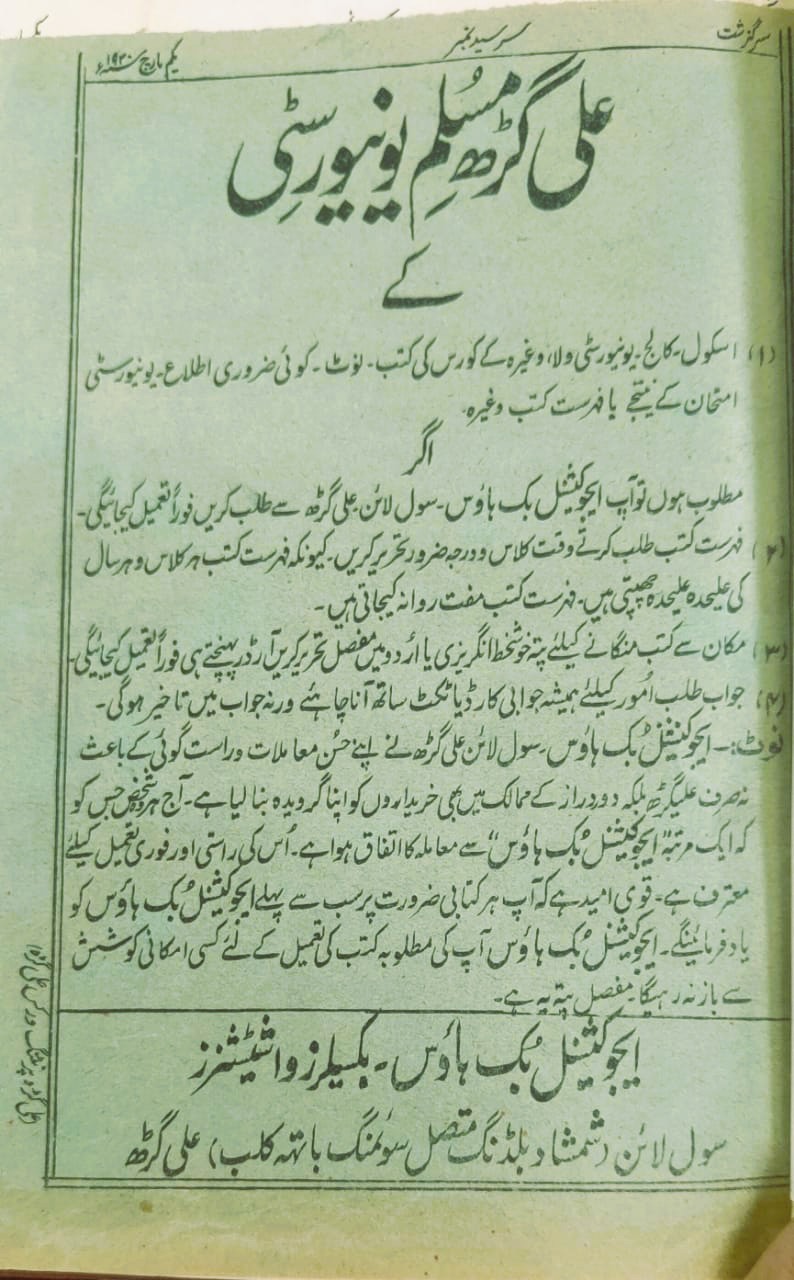
The story of Book house in Aligarh is intertwined with the visionary efforts of Sir Syed Ahmad Khan (1817-1898) and his pioneering movement to elevate Muslim education in India. As early as 1888, Sir Syed aimed to establish a bookstore in Aligarh to serve the students and teachers of his educational institutions.  He launched a campaign to establish a bookstore in Aligarh and even raised funds for this purpose.  An advertisement in the Aligarh Institute Gazette dated 7th July 1888 announced the opening of a bookshop: “Aik Tijarti Dukan Kitabon aur Stationary yani Saman Nosht wa Khwand Kay Farokht Ke Aligarh Mein” – a commercial shop for books and stationery in Aligarh. (see AIG, 7th July 1888)

This initial venture was called the “College Book Depot” which quickly became a vital hub for literature, academic materials, and stationary. It functioned as a bridge connecting scholars, students, and the wider community, fostering a culture of learning and intellectual curiosity in Aligarh. The original depot thrived under the stewardship of Mir Wilayat Hussain (1862-1949) but faced decline after his retirement in 1920, eventually closing down. (see Aap Beeti ya MAO College Ke Kahani, Mir Wilayat Hussain Ki Zubani, Sir Syed Academy, Aligarh, 2024, p.126).

The Birth of EBH

The establishment of Aligarh Muslim University in 1920 created a renewed demand for a dedicated bookstore that could cater to the needs of students and faculty alike. Responding to this need, Abdul Shaheed Khan (1898-1968), an alumnus of MAO College Aligarh from Meerut, opened a small stationery shop in 1925 near Fuller Road, close to Tasweer Mahal. He named this establishment “Educational Book House”, marking the beginning of a new chapter in Aligarh’s literary landscape. His vision was to provide affordable and accessible academic books and stationery, supporting the educational aspirations of students and teachers.

Abdul Shaheed Khan, Founder EBH

Moving to Shamshad Market:

In 1928, Sahibzada Shamshad Ahmed Khan (1888-1954), son of eminent educationist and vice-chancellor of AMU, Sahibzada Aftab Ahmed Khan (1867-1930), built a bustling commercial complex known as “Shamshad Building” in civil line Aligarh near AMU. This market was designed to serve the needs of the university community and local residents, housing shops for tailoring, groceries, milk, bread, bicycle repairs, and more. A mosque was also constructed within the complex, serving as a spiritual and community center.

Recognizing the importance of proximity and accessibility, Sahibzada Shamshad Ahmed Khan requested Abdul Shaheed Khan to relocate EBH to this new marketplace. The bookstore shifted there in 1929, anchoring itself within a vibrant hub of activity. This move significantly increased EBH’s visibility and accessibility, making it a central point for students and scholars seeking academic and literary materials.

The Aligarh Magazine (1929-30) praised Shamshad Market as a vital institution, emphasizing how it simplified the lives of students by providing essential books and stationery close to their place of study. In an editorial note, editor write:

“The Shamshad building has undoubtedly rendered an invaluable service to the student community of the University, for all the requirements of the students are to be found in the shops contained in the building and they have no more to worry themselves by running down to the city to fetch even the most ordinary things of everyday use. Sahibzada Shamshad Ahmad Khan deserves the thanks of all those whose life has been made easy and pleasant by the erection of this splendid building and we most cordially congratulate him on this.” (see Editorial Notes, Aligarh Magazine, 1929-30, p.11)
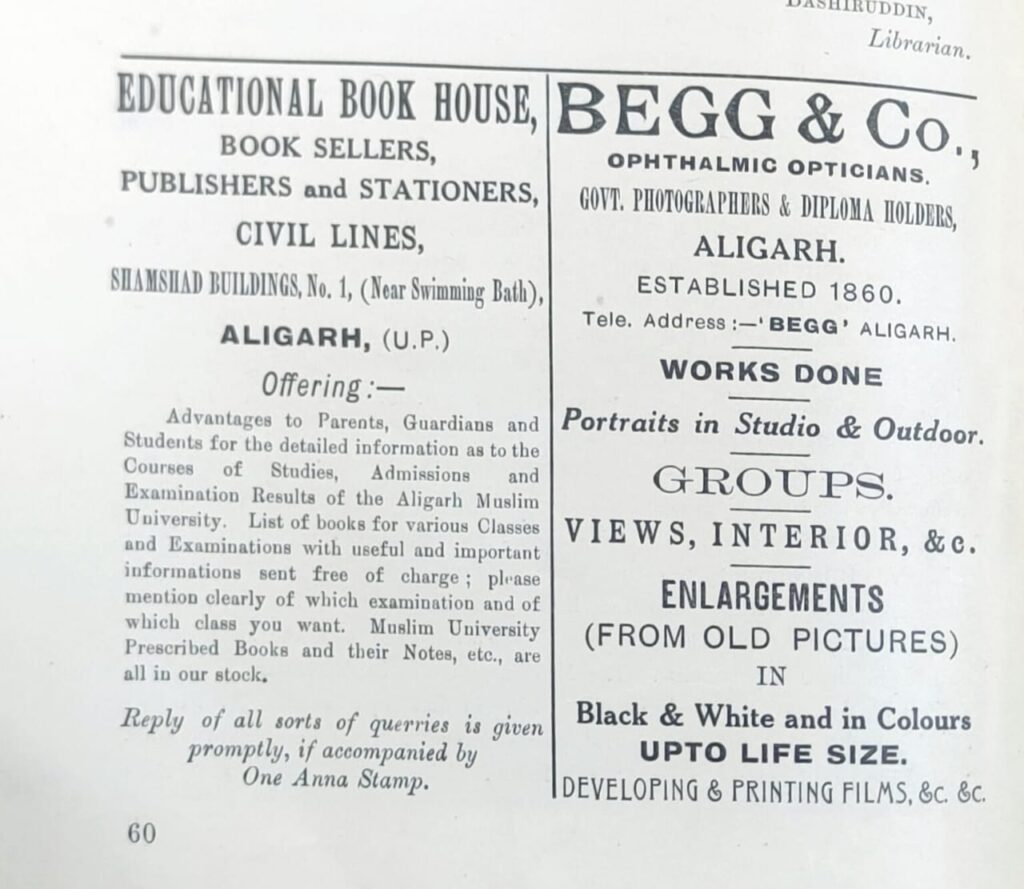
According to renowned historian Prof. Iftikhar Alam Khan, in his authoritative work “Muslim University Ki Kahani, Imarton Ke Zubani 1920 to 1947”, the Shamshad Building was constructed in 1929 at a cost of Rs. 30,000, financed by Sahibzada Shamshad Ahmed Khan’s mother. The building housed 18 shops, including EBH, and was a bustling center of commercial and cultural activity.

EBH’s shop within this complex charged the highest rent—Rs. 31—indicating its prominence and importance in the market. Its strategic location made it an essential resource for students, teachers, and literary enthusiasts, solidifying its reputation as a hub of education and culture. (See “Muslim University Ki Kahani, Imarton Ke Zubani 1920 to 1947”, EBH, Aligarh, 2006, pp. 161-165)

Early Contributions to Literature and Publishing:

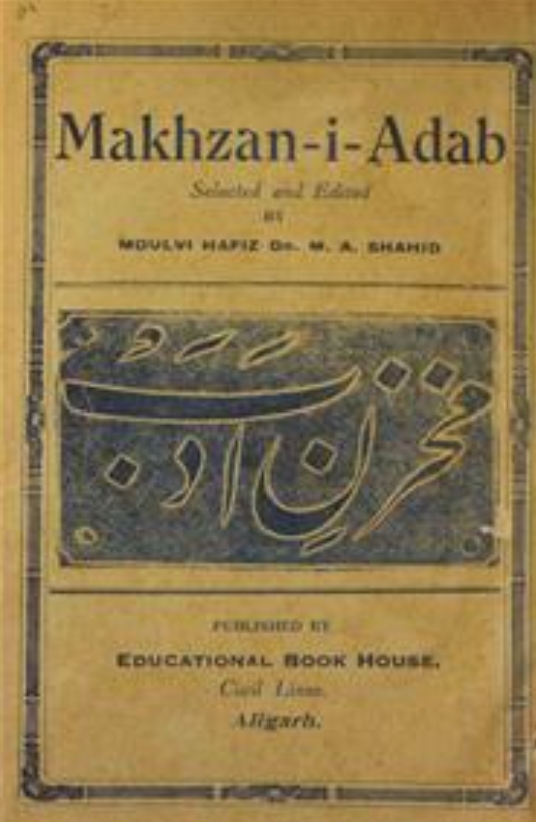
Even before India’s independence, EBH distinguished itself as a publisher committed to a broad spectrum of subjects. Unlike many publishers focused solely on literature or religion, EBH ventured into publishing works on children’s psychology, social sciences, philosophy, history, linguistics, and sciences. Its publications catered to the academic community and the general public, fostering a culture of knowledge dissemination. Notable early publications included: “Kainat Adab” by M. A. Hameed Alig (1935) editor Nazara Meerut,  “Ahsan-ul-Intikhab’’ by Ahsan Marehrawi, “Makhzan Adab” by M. A. Shahid, “Sukhna Nau”“Husn-e-Intikhab’’ by Abdul Jaleel Kidwai,  “Delhi Ka Ek Madar Akhiri Mushaira” by Mirza Farhatullah Beg, “Dastan Rani Ketki Aur Kanwar Uday Bhan Ki” by Syed Inshallah Khan Insha, “Bachhon Ki Tarbiyyah” by Musarrat Zamani, “Al-Aqeedah Al-Hasna” by Molvi Sham and Maulana Abdussalam etc.
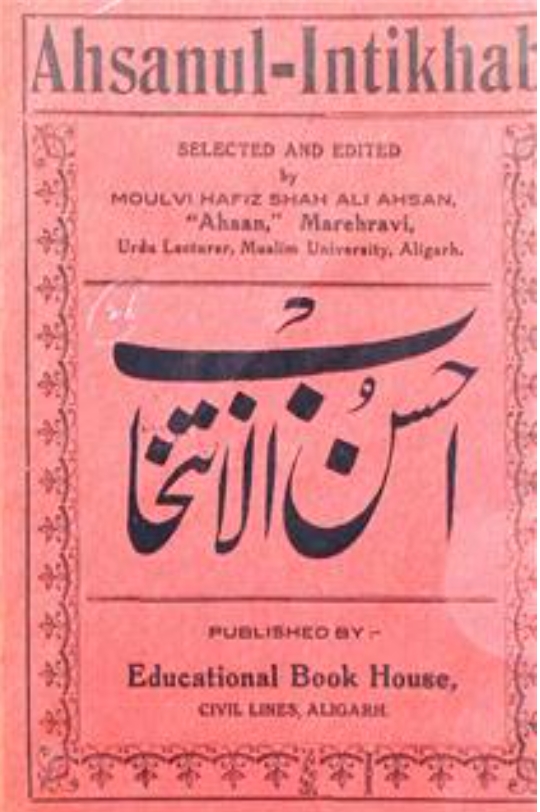
These works reflected EBH’s commitment to educational and literary growth, providing resources that supported scholarly pursuits and cultural development.

Post-Independence Challenges and Resilience:

The partition of India in 1947 was a tumultuous period that resulted in massive migrations and upheavals. Many families left their ancestral homes, but Abdul Shaheed Khan chose to remain in Aligarh. His son Asad Yar Khan says that just after independence many of his father’s relatives and friends asked him, he also migrate to Pakistan, but Professor Rashid Ahmed Siddiqui and Dr. Aale Ahmad Suroor advised him to continue his work from here, thus his father put this idea out of his mind.

His dedication ensured that EBH continued serving the community, moving from Shamshad Market to the Conference Market in 1951 to accommodate expanding operations.

In this period, EBH expanded its publishing activities further. It published influential titles on Indian politics and governance, including Dr. Hashim Kidwai’s “Jhamooriya Hind” (1951), which analyzed India’s political system and constitution. Apart from Jhamooriya Hind, some of his titles are: Mubadiat Ilm Madniat (1951), Duniya Ke Hukoomatain(1961), Mubadi Siyasiyat (1971), Tareekh-e-Afkar siyasi (1982), Usool-e-Tammaddun, Usool-e-Siyasiyat (1988).
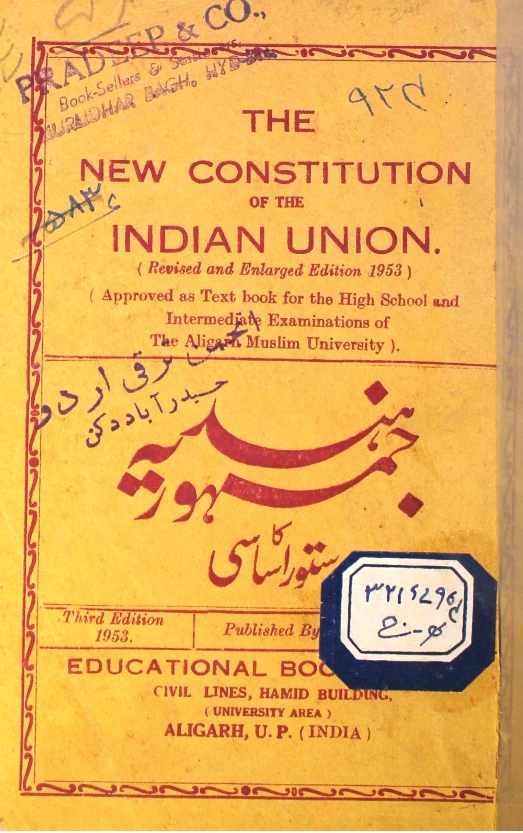
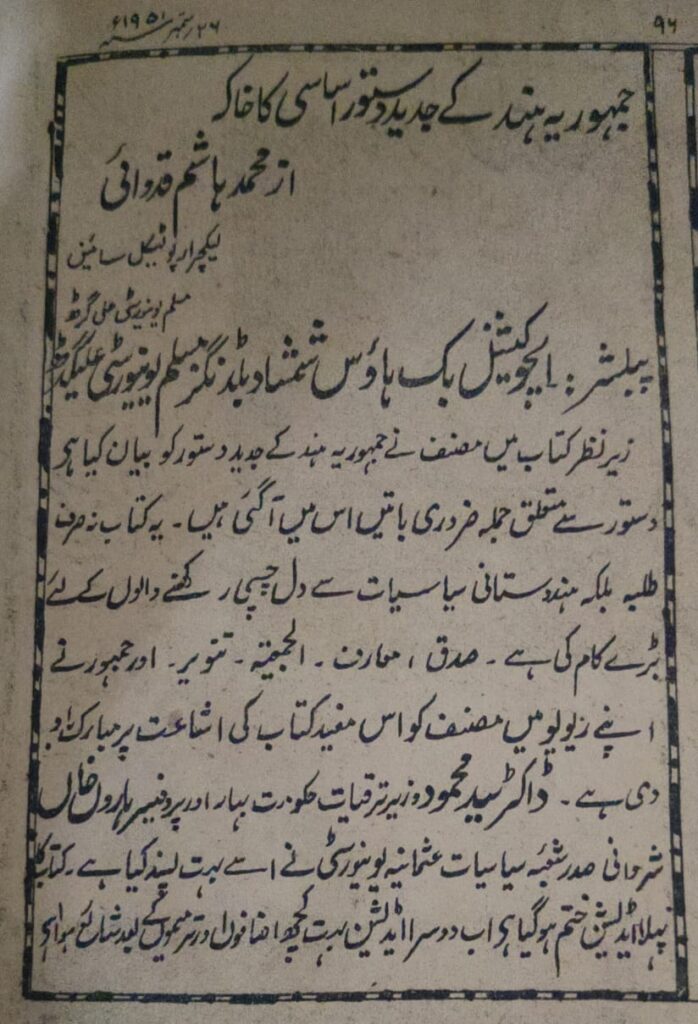
An Advertisements of book highlighted the importance of such works for students, scholars, and policymakers appeared in Weekly Jhamoor Aligarh dated 26th December 1955 states:

“In the book under consideration, the author has described the modern constitution of the Republic of India, all the essential things related to the constitution have been included in it. This book has done a great job not only for students but also for those interested in Indian political science. Sadq, Maarif, Jamiyat, Tanveer and Jamhur in their reviews congratulated the author for publishing this useful book.  Dr. Syed Mahmood, Minister for Development, Government of Bihar, and Professor Haroon Khan Sherwani, Head of the Department of Political Science, Osmania University, have liked it very much.”

Supporting Urdu Education and Literature:

A vital aspect of EBH’s mission was promoting Urdu language and education. The bookstore provided textbooks for institutions such as Jamia Osmania, Hyderabad, Aligarh Muslim University and Jamia Urdu, Aligarh and collaborated with teachers from Aligarh Muslim University to develop curricula that emphasized Urdu literature and linguistics.

This support helped to sustain and foster Urdu’s growth as a language of scholarship and culture across the region.
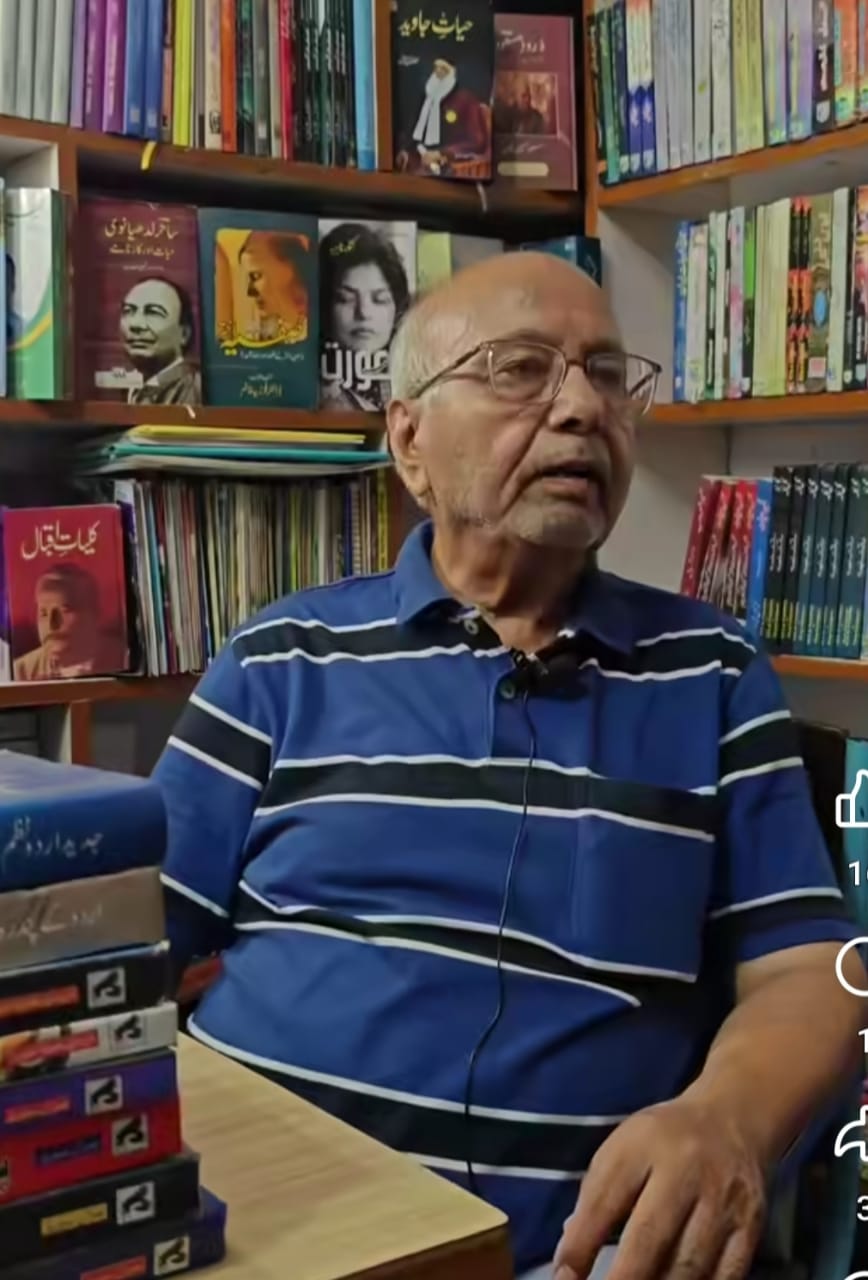
Asad Yar Khan

Following the death of Abdul Shaheed Khan in 1968, his sons, Asad Yar Khan (b. 1941, famously known as Kaptan Sb. as he served the Captain of Horse Riding in AMU several years) and Ahmed Saeed Khan (b.1948, affectionately Bhayya of all known people), inherited the legacy. Under their leadership, EBH grew into one of the most respected Urdu publishing houses in the subcontinent. They enhanced the quality of printing, expanded their catalog to include works of eminent poets, scholars, and political thinkers.
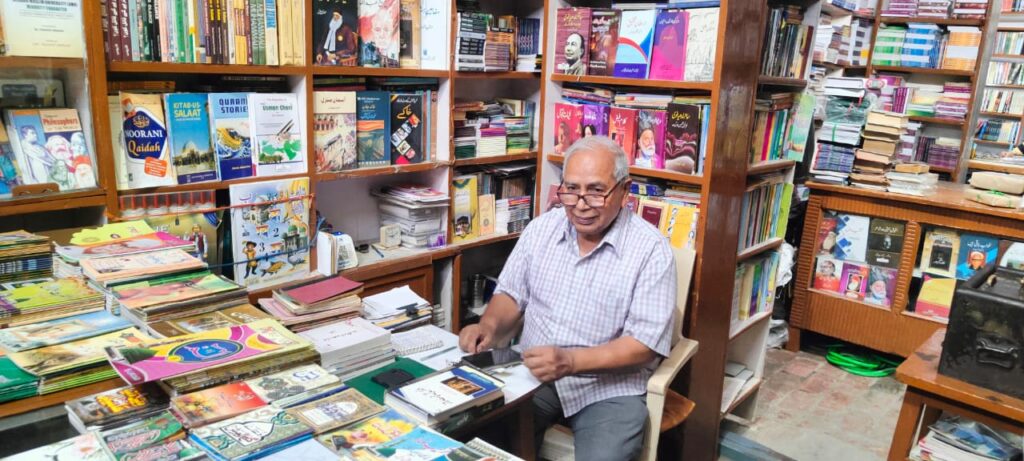
Ahmed Saeed Khan

Works of Prominent literary figures such as Iqbal, Faiz Ahmed Faiz, Khalifa Abdul Hakeem, and Ghulam Sarwar published and promoted through EBH, significantly contributing to the Urdu literary renaissance.

It also published works of  Wazir Agha, Abu Lais Siddiqui, Hassan Askari, Masood Hussain Khan, Akhtar Ansari, Syed Abdullah, Khaliq Ahmed Nizami, Muhammad Hashim Kidwai, Vaqar Azeem,  Majnoon Gorakhpur,  Ateeq Ahmad Siddiqui, Ibadat Barelvi, Raza Ali Abidi, Qurratul ain Haidar, Aal-e-Ahmad Suroor, Khurshid-ul-Islam,  Abdul Qadir Sarwari, Waheed Quraishi, Athar Parvez, Zaheer Ahmad Siddiqui, Khadeeja Mastoor, Ziauddin Alvi, Abdul Mughni, A.A. Hashmi, Rasheed Hasan Khan, Masood Hasan Khan, Masood Hassan Rizvi, Shaharyar,  Manzar Abbass Naqvi,  Mirza Khalil Beg, Abul Kalam Qasmi, Iftikhar Alam Khan, Asghar Abbas, Surraya Hussain, Sagheer Afrahim etc.

The Literary Magazine “Alfaaz”: A Cultural Milestone:

In 1975, Asad Yar Khan launched “Alfaaz”, a literary magazine dedicated to Urdu literature. Edited initially by Abul Kalam QasmiAlfaaz became a vital platform for poetry, literary criticism, and cultural dialogue. It provided a space for emerging writers and established intellectuals to exchange ideas, debate, and showcase their work.    
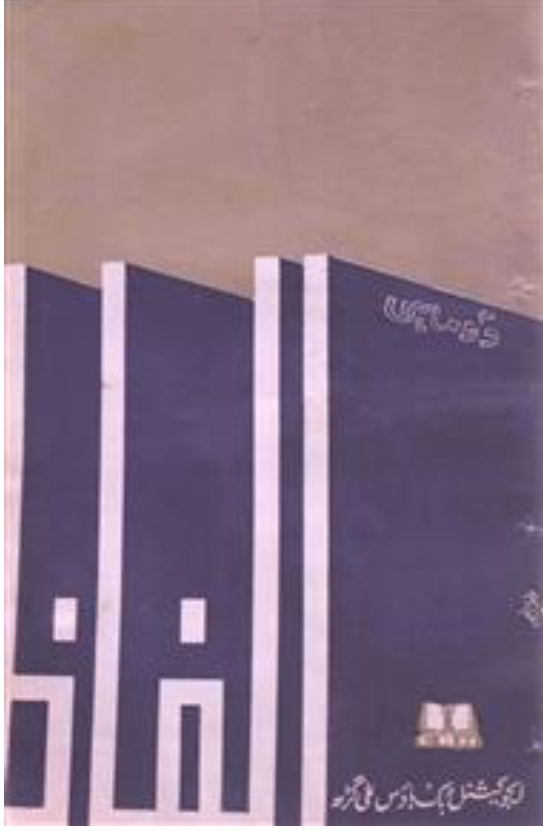
The magazine’s editorial board included notable scholars such as Khurshid-ul-Islam, Khalil-ur-Rehman Azmi, and Naseem Qureshi. Over nearly two decades, Alfaaz played an essential role in nurturing Urdu literature, fostering new talent, and preserving the cultural heritage of Urdu language and thought.

Personal Reflections:

The author’s personal association with EBH began in 1995, when as a seventh-grade student, he first visited the bookstore to buy storybooks and magazines. Over the years, this relationship deepened, leading to interactions with notable scholars, poets, and literary figures, including Professor Hashim Kidwai, Professor Mushir-ul-Hasan, Professor Qazi Abdul Sattar, Manzoor Hashmi, Professor Abul Kalam Qasmi, Qurban Ali (BBC Hindi), Tariq Hasan (Prominent Journalist), Mirza Masood Beg (Prominent Linguists) and many others.

In 2016, EBH published the author’s book on Aligarh’s journalism, “Aligarh Ke Urdu Sahafat”, a testament to their ongoing support for young writers and scholars.

Celebrating a Century of Service:

Today, as EBH celebrates its hundred years of existence, it stands as an integral part of Aligarh’s intellectual and cultural heritage. The dedication and honesty of Late Abdul Shaheed Khan and later his sons have made EBH a symbol of Urdu literature’s resilience and growth. Their efforts to promote Urdu, support education, and foster literary excellence have left an indelible mark on the Urdu circle.

A Legacy for the Future:

It is hoped that EBH continues to serve as a beacon of literary and educational excellence, nurturing new talents, publishing significant works, and promoting the Urdu language. As it celebrates a century of remarkable service, the entire community extends heartfelt congratulations and best wishes for its future endeavours.

The Educational Book House’s journey over the past hundred years stands as a shining example of dedication to knowledge, culture, and language. Its legacy is a reflection of the enduring power of literature to unite, educate, and inspire. May EBH continue to flourish and illuminate the path of learning for many more generations to come.

source: http://www.heritagetimes.in / Heritage Times / Home / by Dr Asad Faisal Farooqui / July 27th, 2025
Kashmir’s Amir-e-Kabir Days

JAMMU & KASHMIR :

The period between 1371 and 1405, during the initial days of the Shahmiri Sultanate, was extremely crucial in Kashmir’s transition to Islam. It witnessed the arrival of Amir-e-Kabir, his son and their 1000-odd followers who joined a more than 200-year old campaign for Islam in a Hindu state. How these 33 years changed Kashmir forever is one of the fascinating stories of Kashmir’s quantum jump in faith and mobility, reports Masood Hussain

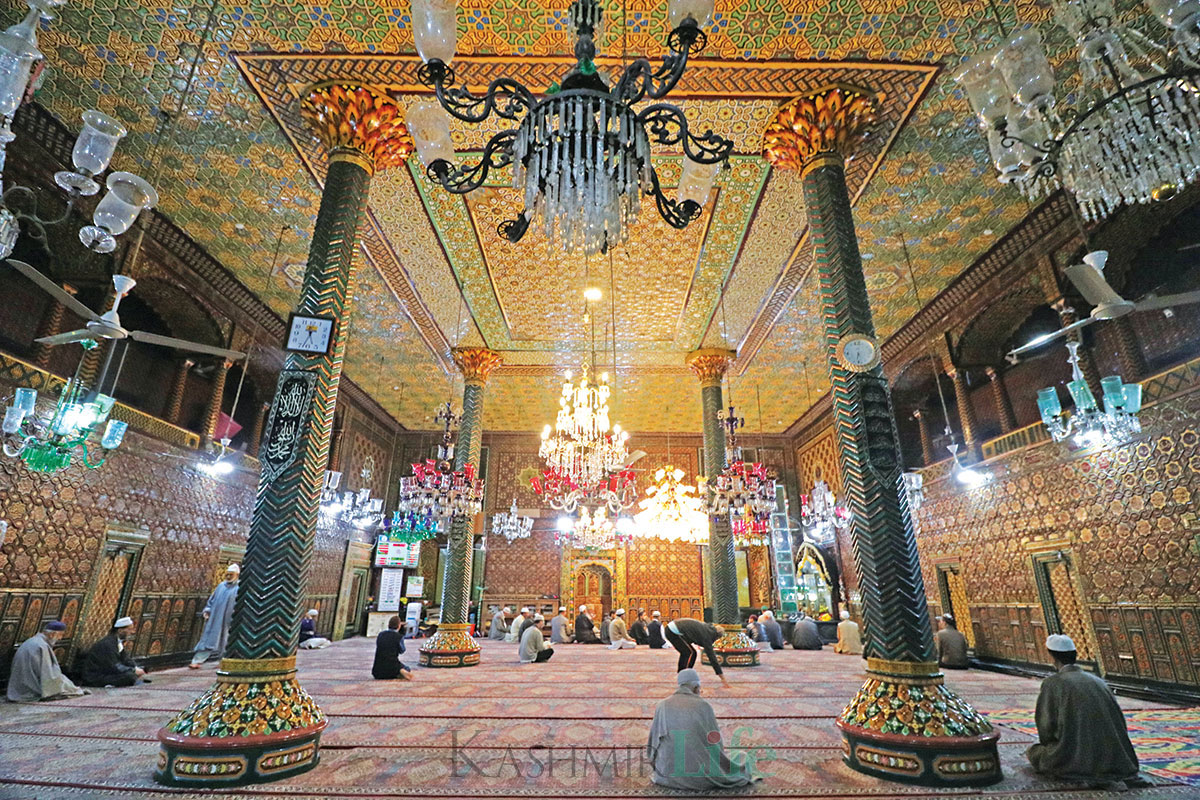
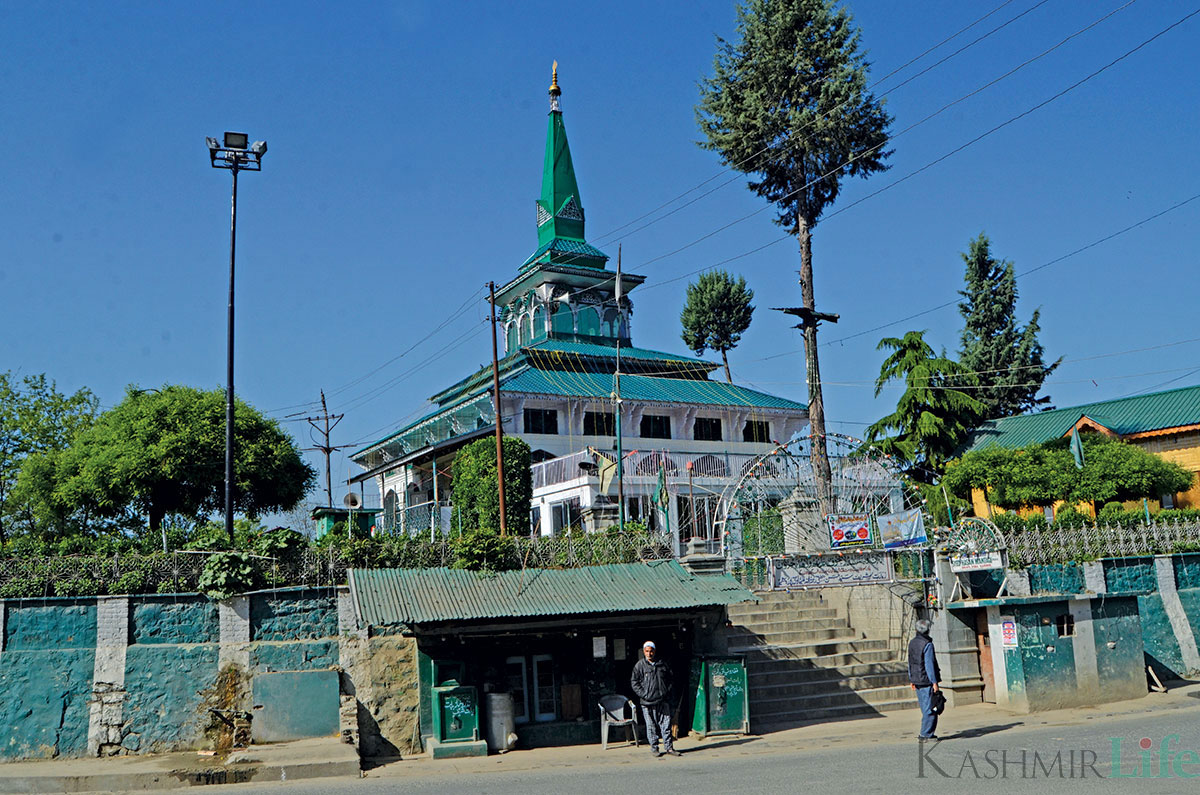
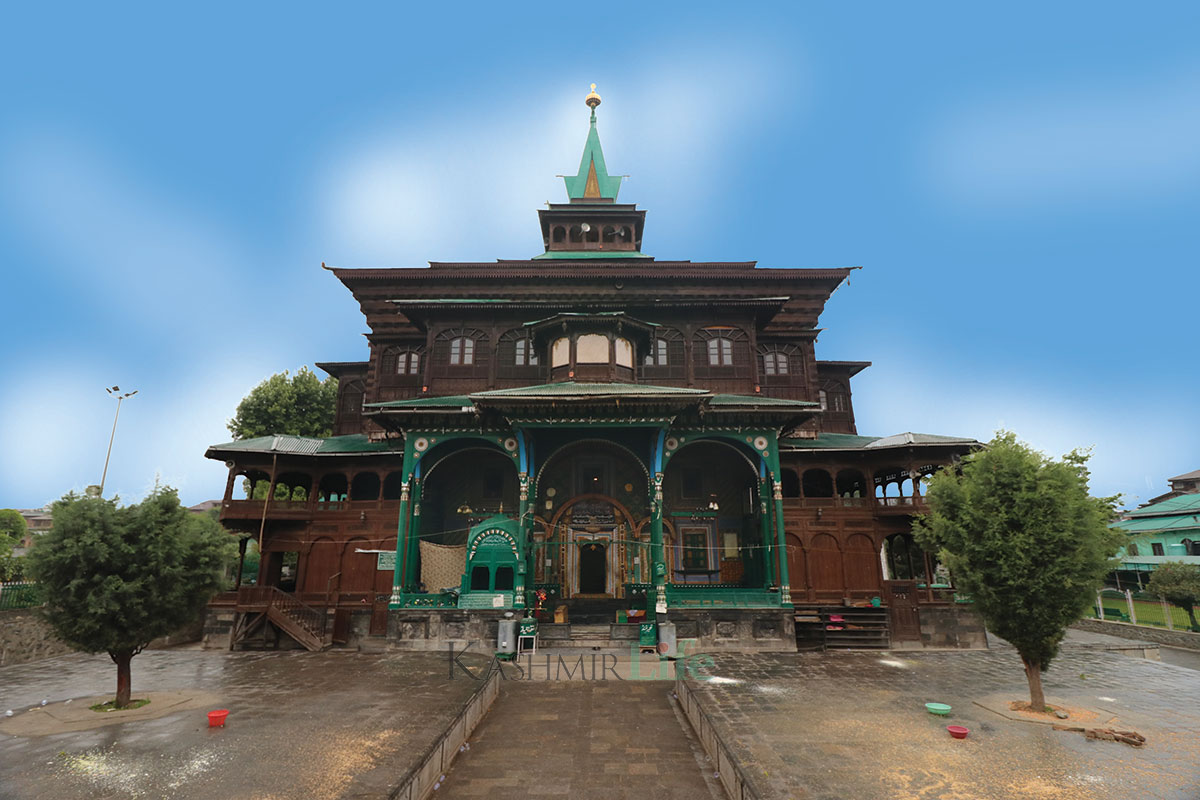
Khanqah Moula. KL Image: Bilal Bahadur

Noble of nobles, commander of Persia;
whose hand is the architect of the nations;
Ghazali himself learned the lesson of Allah is He;
and drew meditation and thought from his stock;
Guide he of that emerald land, counsellor of princes, dervishes, and Salatin;
A king ocean-munificent, to that vale, he gave sciences, crafts, education, religion;
That man created a miniature Iran, with rare and heart-ravishing arts,
With one glance, he unravels a hundred knots
rise, and let his arrow transfix your heart.”

Allama Iqbal on Shah-e-Hamadan in Javid Nama

Involving the reign of four Sultans, the history of Islam in Kashmir had a vital three decades that went into shaping the society as it is known today. This period begins with Shah-e-Hamadan visiting Kashmir in 1371, and concludes with the emigration of his son Mir Mohammed Hamadani from Kashmir in 1405. This period also witnessed the emergence of Sheikh Noorruddin Noorani, Kashmir’s bearer saint, and Lal Ded, one of Kashmir’s most popular woman ascetics, whose campaign against idolatry is unprecedented in Kashmir history.

This period falls in the first phase of Kashmir Sultanate that Shahmir built in 1339 over the ruins of a Hindu empire. The Sultanate lasted around 191 years till 1530. Muslim rule was actually established by Ladakhi prince Rinchan, who effortlessly took over a headless, mourning Kashmir in 1320 after Dulchu wrecked the Vale. Three years later, a Hindu king succeeded him for five years but the administration was controlled by Shahmir family, who eventually founded the Sultanate.

What makes this period distinct is that faith started interrupting the power politics at a time when Kashmir was still a Hindu majority state with Muslim chunks in army and administration. Mir Syed Ali Hamadani and his son Mir Mohammad Hamadani were the two major players behind these interventions. This was perhaps because Shah-e-Hamadan, the most respected Islamic scholar of his time, came from Hamadan’s ruling family. His father was the city governor.

Even though the number of visits Amir-e-Kabir made to Kashmir has divided historians, it is generally believed that he came for four months in September 1372 and then left for Mecca. He then returned in 1379 to stay for almost two and a half years. His last visit to Kashmir was in 1383 and he stayed for almost a year.

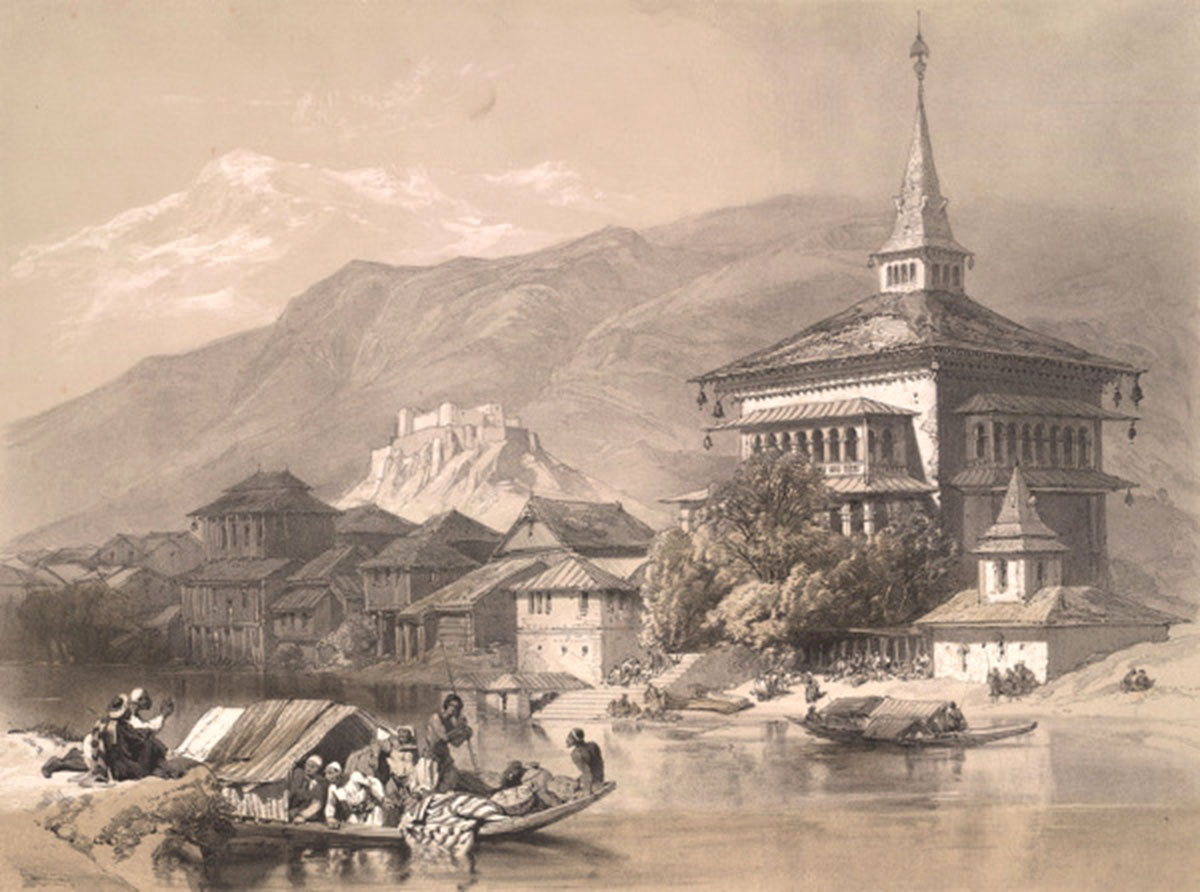
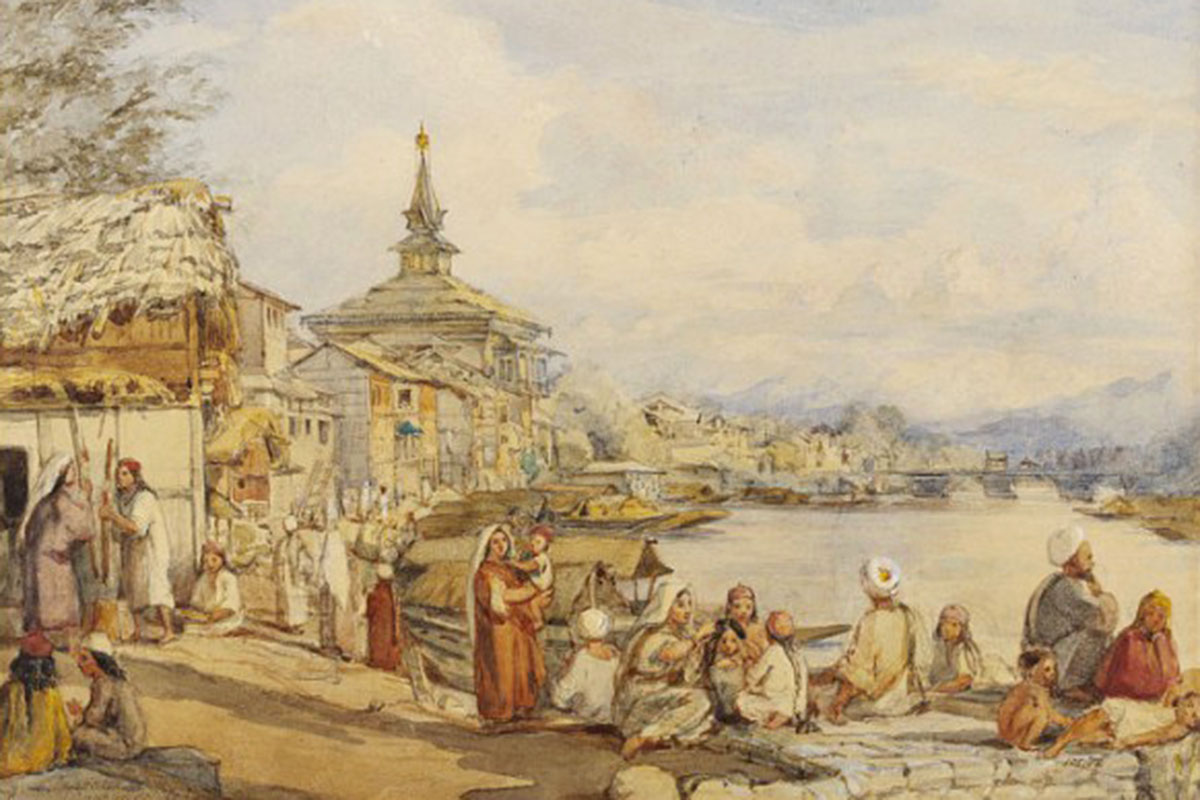
Near Khanqah-e-Moala British colourist William Carpenter Junior (1818-1899) has drawn this picture during one of his three visits to Kashmir. the most Known was in 1853.

“The most credible sources of the particular era talk of only one visit of the Amir,” Prof M Ashraf Wani, the author of Islam in Kashmir. “There is, however, a dispute over the duration of the visit between 80 days and six months.”

Historians perceive his last visit as the most consequential one since he led 700 people from Hamadan to Kashmir who eventually began working as missionaries and preachers, after settling in the valley. More than faith, they spearheaded a socio-cultural transformation of Kashmir.

Amir’s Migration

Amir-e-Kabir belonged to Alawi Sayyids who were facing problems due to Timur’s Iran takeover. Timur disliked the Sayyids who knew that circumstances may force them to migrate. In anticipation of his visit, Amir sent his cousins to Kashmir to explore if it was hospitable for missionary work, and possibly migration. The first cousin was Sayyid Tajuddin, who came in the reign of Sultan Shahabuddin (1354-73). The king built a Khanqah for him in Shahabuddin Pora in Srinagar and, according to historians, assigned revenues from Nagam village for the hospice’s maintenance. The Sultan visited him frequently. On his insistence, Tajuddin opened a  few Darsgahs where Hadith and Fiqah were taught.

Later, Tajuddin invited his brother, Syed Hussain Simnani, who had already migrated to Delhi, to Kashmir along with his family and they settled in Kulgam. On his hand, Salat Sanz, Sheikh Noooruddin Noorani’s father converted to Islam. Syed Tajuddin is buried in Awantipore.

Amir followed his cousins to Kashmir. It was September 1372 and Shihabuddin was ruling Kashmir. But the Sultan was out, probably on an expedition against king of Ohind (now Attock Khurd), and Qutubuddin, in-charge ruler, writes Muhib-ul Hasan in his Kashmir Under the Sultans, went out with his chief officials and received the Amir with great warmth and respect, and brought him and his followers to the city. He started living in Alauddin Pora where a Suffa, a raised floor, was built for his prayers, which the Sultan would usually attend.

After staying in Kashmir for four months, the Amir left, and, according to G M D Sufi, the author of Kashir – Being a History of Kashmir, he visited the battleground and brought reconciliation between the two Muslim rulers.

It was his next visit in 1379 when Sultan Qutubuddin personally received him. Amir stayed for two and a half years, the longest of his three sojourns in Kashmir.

This lithograph drawn by James Duffield Harding (1798-1863) was an English landscape painter somewhere in 1847, shortly after Kashmir was sold under Treaty of Amritsar.

Then, kings were Muslims but the majority of the subjects were Hindus. Beliefs had changed but the customs and the traditions of the neo-converts were rooted in Hindu culture. Qutubuddin would wear the typical Hindu elite dress; perform a yagna to avert a famine, go to the Alaudin Pora temple every morning along with Muslims and had two sisters in his harem. Amir intervened. The Sultan divorced the older of the two sisters he had married, remarried the younger one in Islamic tradition, and started using the Muslim nobles dress.

Limited Intervention

A great scholar, Amir-e-Kabir would write in Persian and Arabic on a variety of subjects. He has authored nearly 170 books in his life. The manuscripts of around 20 of his Rasails are preserved in Oriental Research Department, Srinagar, according to Mohammad Hayat, who has extensively worked on Hamadani’s religious thought as part of his doctorate.

Historians have specially mentioned his Zakhirat-ul-Malook, a collection of his thoughts about routine life, politics, governance and the statecraft. Amir’s idea of Muslim rulers was that they should not be pleasing-all, dishonest, haughty rulers who would appoint cruel tax collectors or draw peoples’ attention by force and ignore ulema. He wanted them to be just and benevolent rulers who would address the needs of the Muslims before offering prayers, follow the Caliphs in dress and food, are polite with subjects, have a strong sense of good and bad, keep promises, and respect elders.

The Amir put the subjects into Muslims and Kafirs and gave the Muslim subjects 20 rights. Listed by Darakhshan Abdullah in Religious Policy of the Sultans of Kashmir (1320-1586), the Amir disliked the Muslim ruler listening trivial things against Muslim subjects or unnecessarily peeping into their faults. He wanted the ruler to pardon smaller offenders, avoid entering into Muslim homes without permission, not treat a wicked and civilised at par, encourage the rich to send poor on Haj on their behalf, take care of the poor, set up robber-free roads, lay bridges, build mosques, appoint Imam’s and pay them for their services, and implement lawful and prevent unlawful.

The book included a set of 20 rules about how the Sultan should handle zimins. Invoking an agreement of the Caliph Omar bin Khatab, the Amir wanted the Muslim ruler must disallow non-Muslims construction and repairing of temples, living near Muslims, burying their dead in Muslim graveyards, mourning loudly over a death, imitating Muslim dress, taking Muslim names, riding any house with saddles and bridles, putting swords, arrows and bows, exhibiting their rituals to Muslims, or using signet rings. Hindus, according to this doctrine, required a distinct dress, could not take a Muslim slave, or disrespect Muslims.

Not Delinked From Politics

“One of the significant contributions of Hamadani was, despite being a Sufi, he did not set himself aloof from politics or the government,” Mohammad Iqbal Rather writes in his doctoral thesis A Study of Islamic Political Thought of Mir Syed Ali Hamadani (1314-84). “He, apart from writing on political affairs of state, personally established contacts and wrote letters to the rulers of Kashmir for enlightening them with Islamic teachings and Shariah rulings, particularly regarding state affairs.”

Sultan Qutubuddin would routinely attend his sermons in Srinagar. Still, he received a letter from the Amir, possibly from Pakhli. “If the tempters lead the unbelievers towards evil, it is not surprising. What is surprising is that Muslims are running away from the true path in spite of God’s warning,” the Persian letter translated by A Q Rafiqui in his Letters of Mir Syed Ali Hamadani, reads. “Out of sheer love, I advice you that the worldly glamour is like a fast wind and the worldly favour is like an unfulfilled dream; He alone is wise who neither gets fascinated by dreams, not feels proud of any notion but learns a lesson from the experiences of bygone people, believing firmly in the axiom that ‘one who does not learn the examples of others, himself becomes an example for others’”.

“Hamadani, uniquely opines that a just ruler must be accompanied by a ‘Sufi reformer’ who would keep a check on the rulers,” writes Rather. “He suggests that the Sufi reformer should assist the ruler to keep the society free from injustice and rebellion and should always guide him in implementing the laws of Shariah. At the same time, Hamadani lays stress on the economic autonomy of the Ulama so that they may not work under the influence of the ruler and dictate the laws according to the wishes and whims of the rulers.”

“Anxious not to antagonise his non-Muslim subjects, Qutubuddin did not follow every advice of the Sayyid, but he held him in great reverence, and visited him every day,” Muhibul Hassan writes. “Sayyid Ali gave him a cap, which, out of respect, the Sultan always wore under his crown.” The Amir has not accepted any monetary help or royal gifts and is recorded to have earned his livelihood by making Kullah caps, one of which he had gifted to the king. He had stayed in a Saraie and not the palace. In his Sufism in Kashmir (14th to 16th Century), historian Dr Abdul Qayoom Rifiqui concludes: “Sayyid Ali’s political thought was altogether theoretical and had no bearing upon actual practice.”

Facilitating Faith

Sultans had the power at the core of their priorities. So they disagreed with the preachers on many counts. But they never stopped facilitating the preachers in spreading Islam. Many think that the thousand-odd Sayyids came as a sort of state-supported intervention in the spread of Islam in Kashmir that, till then, was organic. Every single migrant-preacher deployed on ground by the Amir was extended some sort of support by the Sultanate in Srinagar. Various Khanqahs were set-up and revenues from specific villages were assigned to their upkeep.

Some of the most prominent of the Amir’s followers were Sayyid Kamaluddin, the preacher whom Sultanate retained for guidance when the Amir decided to leave Kashmir. There was Sayyid Muhammad Kazim, aka Sayyid Qazi, Amir’s librarian (Lethpora), Sayyid Kabir Baihaqi (Srinagar), Sayyid Muhammad Balkhi aka Pir Haji Mohammad Qari, the scholar who would teach the royal family, lived and is buried in the Khanqah that history knows as Langherhat (Srinagar), Sayyid Mohammad Qureshi and Syed Abdullah, who were stationed in Vijayesvara (now Bejbehara), Sayyid Fakhruddin and Sayyid Rukunuddin (Avantipore).

An inside view of Khanqah Moula. KL Image: Bilal Bahadur

The Sayyids’ entry came at a time when the ground had slipped away from Hinduism, and the situation was ripe for a change. Lal Ded, Kashmir’s most known acetic was Amir’s contemporary. She is recorded to have met his cousin in Kulgam.

“Men were intolerant, depraved and vicious, and women were no better than they could make of them,” Dr R K Parmu writes in A History of Muslim Rule in Kashmir (1320-1819) explaining how Lal Ded’s poetry ripped the society apart. “The people were generally made to believe in occultism, in magic, in stocks and stones, in springs, in rivers, in fact, in all the primitive forms of worship.” Parmu has written that the ascetic openly preached against this kind of worship. “The stone in the temple, she says, is no better than a millstone or the stone in a pavement,” Parmu wrote. “The idol is but a lump of stone and the temple the house of this lump.”

The rebellion within the caste-ridden society opened the doors for Islam.

“She preached harmony between Hindu Vedantism and Sufism,” Fehmida Wani writes in her excellent study The Search for Shared History of Mankind: A Case Study of the Technological and Cultural Transmission from Persia and Central Asia to Kashmir. “It benefited in the process of conversion.”

Sayyid Impact

With the state apparatus supportive and the society willing to change, how the immigrant Sayyids used the situation for Islam’s spread is something that historian may have to find answers for. So far, the narratives that have emerged in the last more than 600 years revolve more around ‘miracles’ and legends of the privileged preachers.

Islam, it needs to be mentioned, existed in Kashmir more than 200 years before the Ladakhi prince converted at the hand of Hazrat Sayyid Sharfuddin Abdur Rahman, the Bulbul Shah, in 1320. However, what was visible was that converts were rooted in the culture they had come from. That is perhaps why Tarikhi Kashmir insists that the Amir “cleaned the mirrors of the hearts of the converts of Kashmir from the rust of darkness by showing them the right path.”

Written by Sayyid Ali in 1579, historians see Tarikh-i Kashmir as the first Persian chronicle that details the migrations of the father and son along with 1000-odd murids who contributed in Islamising Kashmir culture.

Amir’s followers and disciples had come from the cradle of Muslim civilisation. Men of letters, they came with improved crafts and a sense of politics and history. Amir himself was a master Sozan Kar, a poet, an impressive prose writer and thinker. With access to the ruling structure, having some sort of economic tools in hand and logical explanations to the issues of faith, Sayyids obviously had an impact on the ground. They changed the culture forever.

The Aurad

Prof Mohammad Ishaq Khan, however, sees the situation differently. “It seems that Sayyid Ali’s stay in Kashmir was brief, not extending beyond one year. During this period, he remained the royal guest and, as such, his activities remained mainly confined to royal circles. He imparted lessons to the Sultan on God’s commands about the good works and evil,” Khan assesses in his magnum opus Kashmir’s Transition to Islam. “Besides engaging in some missionary activities in Alauddinpura and around the capital, he does not seem to have established any mass contacts. One wonders how, in view of the language barrier, a Sufi scholar like Sayyid Ali, would have made the esoteric as well as the exoteric version of Islam, as given by him in a plethora of works, intelligible to the Kashmiri masses.”

Syed Hassan Mantaqi shrine, Awantipora. KL Image: Bilal Bahadur

Khan, however, sees Hamadani’s major contribution in the Aurad-i-Fatḥiyyah. A grand mix of prayers, the praises for God, excerpts from the Quran, this Aurad has been an essential morning recitation in mosques for nearly 700 years now. It was Amir’s response to the pleas of neo-converts that the temple rings disrupt their morning prayers and they need something for loud joint recitation, something they had been doing for ages as Hindus. Khan sees it as “local influence” and “assimilation of the local mode of worship in the Islam of Kashmiris”.

“Islam, in no small measure, owes its success to his remarkable role which was distinguished by his tolerance towards the Kashmiris’ penchant for singing hymns aloud in temples,” Khan wrote. “The sight of a small number of people professing faith in Islam and simultaneously going to temples must have caused a great deal of concern to Sayyid Ali. But it goes to his credit that instead of taking a narrow view of the religious situation in Kashmir, he showed an acute discernment and a keen practical sense in grasping the essential elements of popular Kashmiri religious culture and ethos, and gave creative expression to these in enjoining his followers in the Valley to recite Aurad-i Fathiyya aloud in a chorus in mosques”

As the neo-converts chanted the Aurad, even the Hindu court historian Srivara was impressed: “It was here that the yavanas (Muslims) chanted mantras and looked graceful like the thousand lotuses with humming bees.”

But Ashraf insists that Amir’s contribution was in laying the foundations for the institutions of Islam in Kashmir. “Islam was spreading gradually before him and took a long time after him as well,” Ashraf said. “But the institutions of faith in Sufi systems were set up by him and his disciples.”

Departure

“After Sayyid had been for about a year in the Valley, he decided to leave,” Hassan writes about Amir’s eventual departure in 1383. “The sultan tried to persuade him to postpone his departure, but Sayyid refused, and departed with some of his followers, leaving behind Moulana Mohammad Bulkhi commonly called Mir Haji Mohammad, at the request of the sultan, to give him guidance in matters relating to the Sharia.”

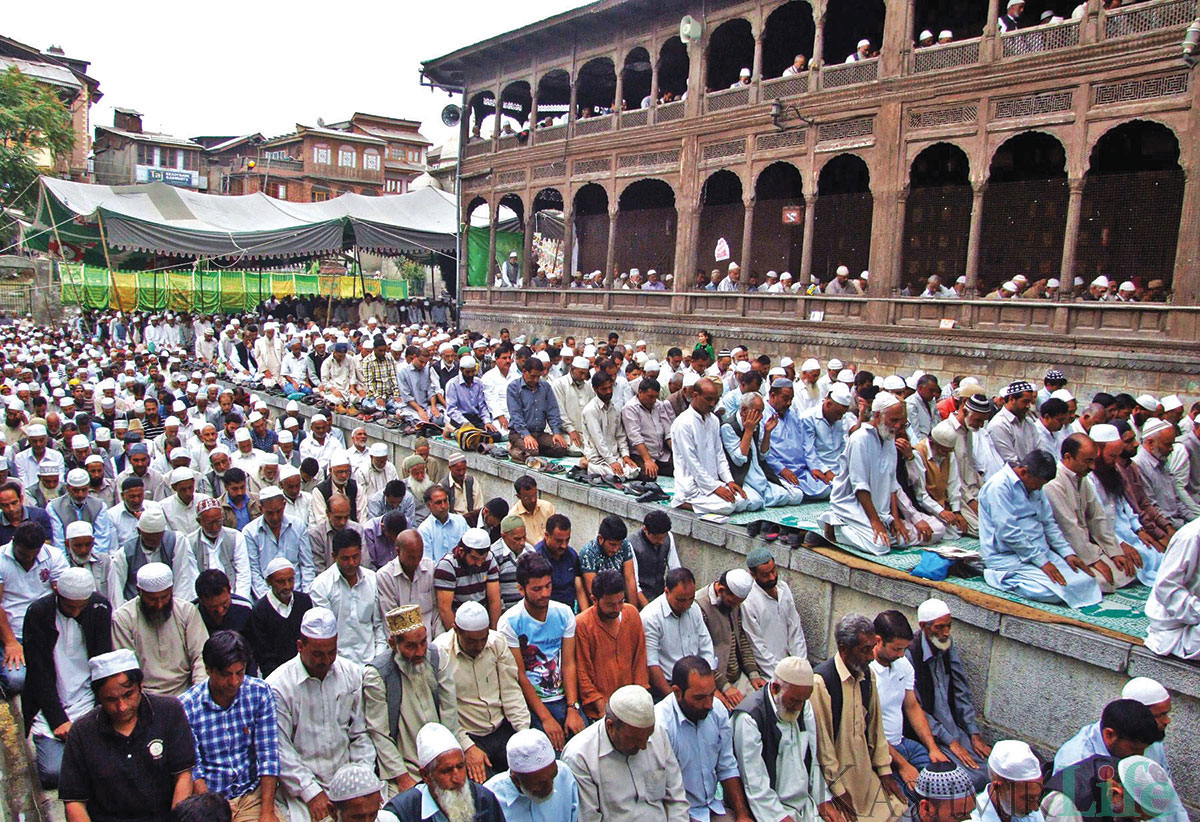
People offering prayers outside Khanqah Moula. KL Image by Bilal Bahadur

Did the Amir leave because he was unhappy with the Sultan, who would still go to the temple and meet the Brahmins. “As chronicler Sayyid Ali (Tarikhi Kashmir) points out “a large majority of his subjects were kafir and most of his officials were polytheists” so for maintaining a cordial relation, he considered it necessary to follow such a policy,” writes Darakhshan. “It was on this ground that Qutubuddin did not follow every advice of Sayyid Ali regarding state matters. Dissatisfied with Sultan’s response to his directives, Sayyid Ali decided to leave Kashmir. He left via Baramulla with the intention of performing the pilgrimage.” Another contemporary history, Baharistan-e-Shahi also points out that Sultan could not oblige the Amir by implementing the Shariah.

Ishaq Khan, however, says that his departure was not the outcome of the alleged conflict with the Sultan. Amir had written favourably to the king, even after his departure. “Notwithstanding Sayyid Ali’s emphasis on following the Sharia, he seems to have allowed practical wisdom and expediency to guide him in his attitude towards the Sultan’s non-Muslim subjects in Kashmir rather than the model he had chosen in his general work for a Muslim Sultan to follow,” writes Khan. He continued writing letters to the Sultan. In one, he praised a devote Brahmin. “In another letter sent to the Sultan from Pakhli, Sayyid Ali urged him to leave no stone unturned in popularizing the Sharia, but only within the possible limits.”

But, at the same time, it was also a fact that Amir’s letter indicated the spread of Islam in Kashmir was still a work in progress. “Our souls can never live in peace and tranquillity even if all (our) ambitions get fulfilled,” the Amir wrote to Muhammad Khawarazim, who he had left in Kashmir. “But it is really surprising that how can one ever live peacefully in the land of infidels or feel contended where the wicked flourish and are provided support!”

(This is first of the three-part series on the socio-economic impact of the immigration of more than 1000 preachers and professionals that Amir-e-Kabir Mir Syed Ali Hamadani led to Kashmir during the initial years of the Kashmir Sultanate.)

source: http://www.kashmirlife.net / Kashmir Life / Home> Cover Story> Faith / by Masood Hussain / May 22nd, 2019