Monthly Archives: July 2023

Forgotten role of Saudi Arabia in the Indian Freedom Struggle

SAUDI ARABIA / INDIA:
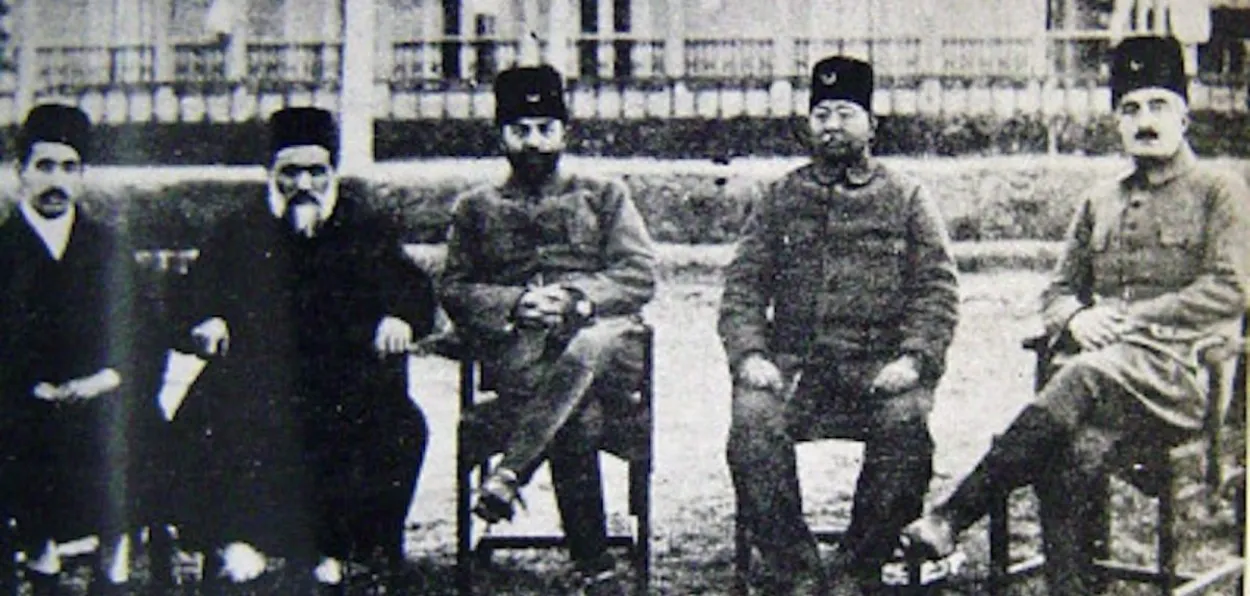
Maulana Obdaiullah Sindhi (Second from left) in Turkey

It’s a little-known fact that Saudi Arabia played an important role in the Indian Freedom Struggle. This country was the only one outside British India to provide support to the Indian revolutionaries during the 150 years of freedom struggle.

At the outset of the Second World War, Netaji Subhas Chandra Bose planned to send his men for Haj, and under that cover, they were to recruit anti-British people in Azad Hind Fauj. At that time Indian revolutionaries were operating from Hejaz (now Saudi Arabia).

Before announcing his fight against the British during World War II, Bose met Maulana Ubaidullah Sindhi in 1939. Sindhi was an Indian revolutionary who had formed a Free India Government in exile with Raja Mahendra Pratap and Barkatullah at Kabul in 1915. After World War I he toured countries like Russia, Germany, Italy, etc to create an alliance for the next war of Indian independence. In the 1930s, Sindhi settled down at Makkah after being granted asylum. However, British intelligence alleged that he was preaching Indian Nationalism among Muslim pilgrims visiting the holy city.

A grand plan was prepared at Makkah. The city provided one of the best communication channels to other parts of the world because of Haj. Sindhi returned to India in 1938. According to a letter written by Maulana Abul Kalam Azad to Maulvi Zahirul Haque, Sindhi had told him that he wanted to send Bose abroad for a final battle against the British. Azad wrote that Bose and Sindhi met in Delhi to talk about the future of the Indian Freedom Struggle. They again met in Calcutta (Kolkata) after a few months. Ubaidullah handed over important letters of reference and documents to be given to the Japanese authorities.

Sindhi wasn’t the first Indian revolutionary to use Saudi as his ground of action. The government he formed in 1915 in Kabul was part of a larger plan known as the Silk Letter Movement. This was a collaboration of Ulema, Ghadarites, Bengali revolutionaries, and others to free India by an armed revolution. The leader of the movement was Maulana Mahmood Hasan. He was arrested in 1916 from Hejaz along with  Maulana Husain Ahmad Madani, Anzer Gul, Wahid Ahmad, Hakim Nasrat Husain, and others.

Hasan and Madani were teaching at Makkah and Medina and also influencing pilgrims. They were sent to Malta as Prisoners of War because the British believed,  “if they were kept in confinement in the Hedjaz for a long period they might become interesting and exciting objects of pilgrimage or schemes for help or rescue to many fanatical Muhammadans in India and Afghanistan”.

Maulana Mahmood Hasan, the head of Darul Uloom, Deoband, was also a member of this group. Deoband considers Haji Imdadullah as its spiritual head; Imdadullah’s disciples founded the Madrasa at Deoband after 1857 to prepare revolutionaries.

Imdadullah went for Haj in 1845, where another Indian Shah Muhammad Ishaq directed him to fight the British. Imdadullah wrote, “The conditions of India are not hidden as India is my motherland” and returned to India in 1846. In the districts of Muzaffarnagar, Saharanpur, and Shamli, he started raising an army with the help of his students like Hafiz Muhammad Zamin, Maulana Qasim Nanautvi, Maulana Rashid Ahmad Gangohi, Maulana Mazahar, Maulana Munir Nanautvi.

This army led by Imdadullah fought the British forces in 1857 and liberated Shamli. A civil government governed the town for a few days before the British recaptured it. Thousands of people were killed, and Imdadullah took refuge in Makkah. He reached Makkah in 1859 and used it as a ground to preach anti-colonial ideas among the pilgrims.

Why did Ishaq, who lived in Makkah, ask Imdadullah to fight for Indian independence? In 1821, Syed Ahmad Shahid undertook a journey to Makkah and Medina. He was an Islamic scholar and soldier in Maratha forces. When Marathas signed a treaty with the British, Syed left their army and left for Makkah with a group of people. On his return from Haj, he attained martyrdom while fighting the British.

In the 1920s, 30s, and 40s, British intelligence raised several alarms with the Saudi authority to check Indian revolutionaries in Makkah, Medina, and Jeddah. Indian revolutionaries in the name of Haj visited Saudi Arabia to meet each other freely. British intelligence kept an eye on them. Memoirs of all these revolutionaries show that the local Arabs fully supported their cause and mission.

source: http://www.awazthevoice.com / Awaz, The Voice / Home> Stories / by Saquib Salim / July 10th, 2023
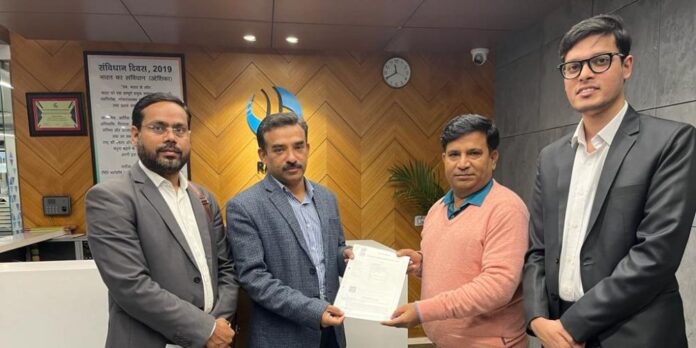

Human Welfare Foundation & Railtel Corporation Of India Join Hands To Implement CSR Projects

NEW DELHI :

New Delhi:

Human Welfare Foundation (HWF), in collaboration with RailTel Corporation of India Limited, has signed a Memorandum of Understanding (MoU) to carry out a corporate social responsibility (CSR) project aimed at promoting healthcare and women’s empowerment in selected villages of the Jalna District of Maharashtra.

The project will include two interconnected initiatives. The first will address menstrual hygiene in a few selected villages in Jalna District, while the second will run a mobile unit staffed by healthcare professionals to facilitate special online consultations and offline solutions for common people in selected villages.

RailTel Corporation of India Limited will provide funding support for the project, which will be implemented over a period of one year in six villages in the Jalna District, namely Chikali, Dalegaon, Kedarkheda, Loangaon, Chandai, and Rajur.

The project’s activities will include the formation of two self-help groups comprising 60 women who will be responsible for the distribution of sanitary napkins in the villages. The project will also create a source of livelihood for the women, sensitizing and raising awareness among young girls and women in these villages about the health benefits of the use of sanitary napkins, menstrual hygiene, and health-related issues.

The project’s goal is to empower people in the selected villages to address health and nutrition issues and set up income-generating plants for women. The project will focus on two areas of activity, namely self-help group formation for menstrual hygiene management (MHM) and tele-health medicine.

The project aims to provide infrastructure, training, health, and medical facilities in Jalna District villages, promote hygienic menstrual practices among rural women and adolescent girls, eliminate stigmas and taboos related to menstruation, facilitate authentic information and guidance to reduce hospitalization, empower girls by addressing gender issues, provide comprehensive mobile health care services, and enhance the physical and psychological well-being of rural women. The project also offers free tele-consultations by an expert panel of doctors to all beneficiaries.

source: http://www.indiatomorrow.net / India Tomorrow / Home> Economy / by admin India Tomorrow / March 08th, 2023

PAI Academy of Pune becomes a beacon of hope for thousands of underprivileged children

Pune, MAHARASHTRA :

Sawleha Shaikh, a PAI Academy student playing the role of a news reporter

The PAI Academy of Spoken English, founded in 2007 by noted educationalist Dr. P.A. Inamdar, is making a profound impact on the lives of underprivileged students. Driven by a deep commitment to education, Dr. Inamdar recognized the need to address the educational disparities faced by students in Pune Municipal Corporation schools, where English and computer education opportunities were limited compared to their peers.

PAI Academy of Spoken English

The primary objective of the academy is to provide a life-changing opportunity for students from economically disadvantaged backgrounds. By equipping them with essential English communication skills, the academy aims to empower these marginalized students and level the playing field for their growth and development.

Teacher’s Day function of  PAI Academy of Spoken English.

Dr. Inamdar shared his vision for the project, stating, “Through this initiative, we aspire to instill hope and self-confidence in students belonging to the most deprived sections of society.” He emphasized the transformative power of computer education, not only boosting the students’ confidence but also inspiring their families and nurturing their dreams.

Since its establishment, the PAI Academy has successfully set up over 80 centers across Maharashtra and beyond. These centers cater to students studying in Marathi, Hindi, and Urdu mediums, ensuring that language barriers do not hinder their educational progress.

“While teaching these students, I experience immense pleasure and satisfaction. It fills me with joy to see these students, who may not have many resources, still eager to learn and succeed in life. I feel a strong sense of responsibility towards them, as I recognize that without our intervention, their circumstances may not improve. Above all, I am inspired by the hope and determination that shines on their faces. Teaching these students is truly a life-changing experience for me, ” said Sama Sayyed, the project’s leader.

Impressively, the Academy has provided training to more than 45,000 students through its Spoken English program, without any financial burden on the Pune Municipal Corporation schools administration. The academy takes pride in its selection and training of dedicated teachers who share the vision of empowering underprivileged students.

The tireless efforts of the PAI Academy in raising hope and transforming the lives of underprivileged students through education serve as a beacon of inspiration. By bridging educational gaps and offering equal opportunities, the academy is paving the way for a brighter future for these deserving students, empowering them to overcome obstacles and achieve their aspirations.

source: http://www.muslimmirror.com / Muslim Mirror / Home> Education> Indian Muslim> Positive Story / by Muslim Mirror Special Correspondent / July 06th, 2023

Meet Amrudeen Sheik who built Taj Mahal in TN village for mother

Thiruvarur, TAMIL NADU:

The mini Taj Mahal constructed at a cost of Rs 5 crore at Tiruvarur in Tamil Nadu which is the hometown of the businessman is drawing crowds from across the state.

Chennai: 

In a unique love for his mother, a Chennai-based businessman has constructed a mini Taj Mahal in memory of his mother.

The mini Taj Mahal constructed at a cost of Rs 5 crore at Tiruvarur in Tamil Nadu which is the hometown of the businessman is drawing crowds from across the state.

Family History

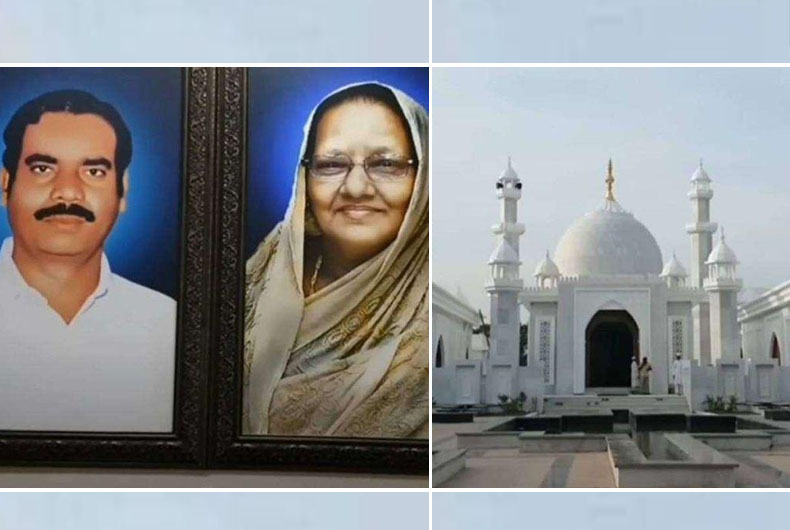
Amrudeen Sheik Dawood Sahib is a hardware businessman in Chennai and the only male member among the five siblings. His father Abdul Kader Sheik Dawood was a businessman in Chennai and dealt with leather goods.

However, Abdul Kader Sheik passed away while his children were very young. His wife, Jailani Beevi was a person who did not give up easily and struggled hard to run the business and to bring up the five children, including four girls. All the children grew up and after the four sisters were married off, Amrudeen Sheik also got married.

In 2020 Jailani Beevi passed away, which was a major shock to Amarudeen, as he was the one who had helped his mother from a very tender age in the shop and was always moving around with her. She passed away on a new moon day and Amarudeen decided to feast 1,000 people on every new moon day with biryani.

However, Amarudeen thought that this was not enough and later came across the idea of constructing a mini Taj Mahal for his mother. He bought one acre land at his ancestral village, Ammayiappan, and with the support of a builder friend started constructing the monument.

What’s inside this Taj Mahal?

He bought marble from Rajasthan and made pathways and walkways around the monument just like in the Taj Mahal at Agra and on June 2, the monument was opened to the public.

It has meditation centres where people of all faiths can meditate and a madrasa where 10 students are presently staying.

Amarudeen, however, did not give publicity to the Taj Mahal of the South and people came to know of this through word of mouth.

source: http://www.ummid.com / Ummid.com / Home> Life & Style / by IANS / June 11th, 2023

My Journey From Small Industrial Town To G20 Action Council And Taskforce

Ambur, TAMIL NADU:

The story of a girl from a small town who goes out to make her place on a global map voicing out the importance of the equality, inclusion and economic empowerment of women.

My Journey From Small Industrial Town To G20 Action Council And Taskforce
A survival story of a girl from an industrial town with an SSLC graduation who goes out to make her place on a global map voicing out the importance of the equality, inclusion and economic empowerment of women.

How I became an entrepreneur

I was born and brought up in a very well-reputed, broad-minded family of people involved in the leather business. I got married at the early age of 16 to the only son of the leather industry’s biggest names. My parents found the best for me. However, life isn’t a bed of roses and i and my spouse had our struggles.

The sudden demise of my father-in-law had shattered my husband and then I decided to accompany him in his business. It was very much unheard of and extremely novel in the industrial town of Ambur to see a woman come out and shoulder financial responsibilities with their husband in business.

What was the turning point?

The formation of ‘Ammara’ a footwear manufacturing factory is unique with its idea of the implementation of United Nations Sustainable Development Goals and its individuality stands alone as it’s the only women-owned factory in the whole industrial belt of Ambur, Vaniyambadi, Ranipet, Vellore, Gudiyatham, etc are the industrial towns completely male-oriented businesses where “Ammara” stands unique with the only female-run business where I had always strongly stood for women empowerment actively volunteering with the Government and International organisations like Tamilnadu State Planning Commission, NITI AAYOG, UNDP, United Nations for the awareness of entrepreneurship development in women by organising Awareness programs in villages and rural areas for the same.

What was the lesson I learnt

“Believe in yourself…If you believe it then you can Achieve it”

When I entered into the business of footwear manufacturing in a male-oriented industry, it was very tough for me to survive as there was no encouragement or positive energy. I had to face a lot of criticism and abuse. I was targeted for the wrong reasons and there were constant blame games on my name. I had to overcome hurdles and obstacles until I found my place in the business and the industry. I am a firm believer in destiny and have always had a positive outlook on things.

I have always believed that these were tests and are nothing but a process of learning and grooming on the road to success. I started small with the pure motive of the economic empowerment and growth of women. I named my factory ‘Ammara’ meaning ‘Eternal’ which I believed will InshaAllah, like its meaning last forever against all odds and will triumph towards the Implementation of United Nations Sustainable Development Goals 5 and 8.

Coming from an orthodox conservative Muslim society, I chose the path less travelled, and that made all the difference in my life.

Why financial independence for women is key

Each and Every woman should be financially independent as everyone is born with gifts by birth but aren’t aware of what to find in them and I believe that girls and women in my home town Ambur are very intelligent and smart but they lack the right support and the correct guidance in the areas of knowledge on skill development, capacity building, mentoring, financial assistance that make a woman strong. I believe that these skills made me strong enough to voice out my opinions louder about the need for knowledge and education on life skills. I had always felt that it was the need for the hour and the cry of society on the road to women’s empowerment & entrepreneurship.

How a women’s health platform is needed to ensure more women join the workforce

Awareness/Advocacy/Action/Accountability is the key to ensuring that we make more women join the workforce. The only idea is to see ‘women in a leadership role’ which keeps me motivated and inspired. I have always believed that women are driven, courageous, brave and strong. Women can achieve anything and everything they set their minds to. I’ve always wanted women to be honoured in my industrial town in leadership decision-making roles. I second the opinion that the world needs more and more women in the board rooms, in the courtrooms, in academia and in civil service. I am inspired by women achieving in many areas and it keeps me motivated.

What’s next for Aysha

‘Inclusion & Equality’

Progress is impossible without change and those who cannot change their minds cannot change anything it’s high time that we believe Inclusion is a must to see the growth in the GDP and the economic progress of a country will be made possible by empowering more women and Seeing is Believing and Believing is Achieving and she has always strongly believed in herself and her instincts which kept her moving forward. She has witnessed herself and the organisation progressing towards our vision & goal from the day she started. From the scratches till today, she considers each day is a new lesson and new development in the areas of manpower, product, technology, fashion, manufacturing and empowerment. Her husband and her fellow workers and staff of her factory have come a long way by understanding the process of standing together throughout the journey and she has always seen herself getting closer to the light at the end of the tunnel. She has been growing since Day 1 and each day is a new day with a new opportunity and a new idea.

I’m now moving towards my next endeavour and all set for my first in-person meeting of the Action Council in Delhi on March 15 as an integral part of the G20 Action Council & Taskforce.

source: http://www.shethepeople.tv / She The People / Home> Personal Stories> Drafts / by Aysha Sanober / March 08th, 2023

J-K’s Shaista Khan wins ‘Sahitya Akademi Yuva Puraskar’ in 2022, becomes 9th Kashmiri to bag award

Srinagar, JAMMU & KASHMIR:

J-K's Shaista Khan wins 'Sahitya Akademi Yuva Puraskar' in 2022, becomes 9th Kashmiri to bag award
J-K’s Shaista Khan wins ‘Sahitya Akademi Yuva Puraskar’ in 2022

New Delhi [India], (ANI):

‘Sahitya Akademi Yuva Puraskar’, initiated in 2011 to promote language and literature, has served as an inspiration in the lives of youth in Jammu and Kashmir, leading to the rise of their interest in the Kashmiri language.

Sahitya Akademi New Delhi had started this award in 24 languages. Nine writers have received this award for the Kashmiri languages so far, according to a report.

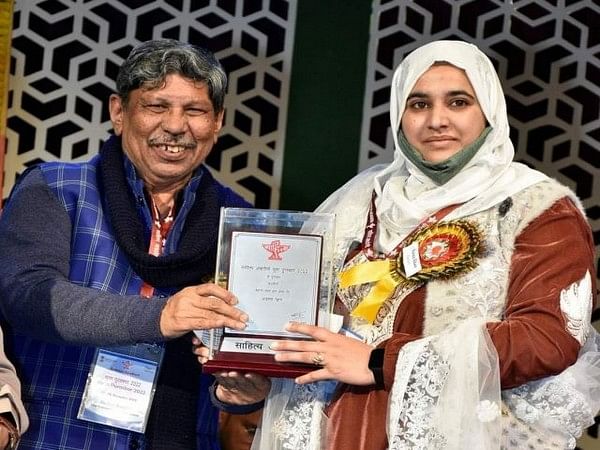
The latest in the list is a Srinagar-based young writer Shaista Khan who won the award for her fictional collection “Brand Birs Peeth” in 2022.

“It has been observed that due to this award, other novice writers are also getting inspiration and they are getting interested in Kashmiri language and literature,” the report said.

According to the report, the previous recipients of this award in the field of fiction, poetry, and criticism in the Kashmiri language include Nishad Azam, Farooq Shaheen, Adil Mohiuddin, Nighat Sahiba, Diba Nazir, Sagar Nazir, Muzaffar Ahmad Pare, and Razi Tahir Baghat.

A young writer, Nisar Azam, was the first one to receive this award in 2011 for his poetry collection ‘Pathalej Zone Dars’.

Farooq Shaheen was awarded this award in the year 2012 for his literary criticism book “Gash Miller”. Adil Mohiuddin received this award for criticism in his book “Zol Dith Sardars” in 2016. Nighat Sahiba was awarded the Yuva Praskar in 2015 for her poetry collection “Zardpankh Dear” while Diba Nazir won the award for her fictional collection “Zarin Zhom” in 2018.

Sagar Nazir won the award for his poetry collection “Thar Anganch”. Awarded in 2019 for Uva Proscar while the 2020 Yuva Proscar was won by Muzaffar Ahmed Pray for his poetry collection “Wauch Baath” and the 2021 Uva Proscar recipient in the Kashmiri language is Razi Tahir Bhagat who received this honour for his fictional collection “Yela”. Awarded for “Ain Phath”, the report said.

A certificate of Rs 50,000 is given to writers up to 35 years of age in a grand ceremony.

“This is a welcome step by the Sahitya Akademi to encourage young writers. It gives more inspiration to the writers and encourages them to produce quality literature,” the report quoted researcher Mohammad Salim Salik as saying. (ANI)

This report is auto-generated from ANI news service. ThePrint holds no responsibility for its content.

source: http://www.theprint.in / The Print / Home> India / by ANI / January 01st, 2023

“Muslim youth need to dream big,” say founders of Misaal initiative

INDIA:

Screenshot of the website Misaal

Misaal is a platform committed to inspire and influence young Indian Muslims by sharing success stories of people from the community who achieved incredible milestones and emerged as pioneers and champions in various fields.

At a time when Covid-19 lockdown forced all of us to stay indoors and positive stories were in short supply, three Muslim youth came up with an initiative called Misaal to highlight success stories from the Muslim community. Three youth Aman Mansuri (25), a consultant at BCG, Amim Fatmi (25), associate manager at TCS and Shaista Khan (25), a venture capital associate who are alumni of India’s premier institutes like IIT Roorkee, IIM Ahmedabad, XLRI Jamshedpur, NIFT Delhi and NIFTEM started Misaal.

Misaal is a platform committed to inspire and influence young Indian Muslims by sharing success stories of people from the community who achieved incredible milestones and emerged as pioneers and champions in various fields.

Aman Mansuri

Misaal in Urdu means ‘a good example.’ We wanted to find out the Misaals of our community and share their experiences to hone the self-confidence of the youths and introduce them to the world of possibilities,” Aman told TwoCircles.net.

The trio acknowledged the privilege they had in getting into institutes of national importance, however, they say that they were perplexed by the lesser ratio of the Muslim students in such institutions. “I had only two female Muslim students as my batchmate,” said Shaista. “If I made it to the list, so can others, and this is what the initiative is about,” she added.

Misaal believes that the first step to achieving something is to dream big.

“Muslim youth need to develop big aspirations and not restrict themselves. Currently, the major focus among the community’s youth is on quick income generation. This, coupled with a widespread lack of awareness about the opportunities leads many to drop out and overall poor education levels,” said Amim.

“While there are many reasons for lack of aspiration, the most important one is the lack of visible role models who can serve as positive examples to the youth,” added Aman.

Amim Fatmi

Aman shared an anecdote wherein the only prominent Muslim figures that his friends knew of were late Indian president Dr A. P. J Abdul Kalam and the first Minister of Education of independent India, Abdul Kalam Azad. “This obliviousness about the contemporary prominent Muslim figures was alarming,” the trio said.

Misaal has posted a total of 14 episodes starting August 16, 2020, to date. Each episode is of 25 – 30 minutes long entailing relatable lived experiences in which successful people from the Muslim community share their inspirational stories. Some of the prominent figures featured on their You Tube channel are Shahrukh Alam, a lawyer at the Supreme Court of India, Quaiser Khalid, IGP, Maharastra Police, Shabina Akhtar, founder of eNewsroom, Talha Abdul Rahman, an Advocate on Record, Supreme Court, and Dr Mohammad Hussain, founder of Baroda Muslim Doctors Association.

“I am very glad that I was contacted by Misaal to share my story as an inspiration. I am more than happy to contribute in whatever way I can in this endeavour,” commented Parveen Khanam, Assistant Vice President, Genpact, who had shared her story on the platform.

The trio identified the lack of guidance and inspiration among the Muslim youths as a problem and have set out to provide a solution through Misaal. To make a positive difference among their community’s youngsters, they want to create an efficient system working on three levels, “To inspire the Muslim youths by sharing the stories of high-achieving Indian Muslims and to provide mentorship and scholarships, and to upskill them through workshops.”

Shaista Khan

“We are in the initial phase where we are trying to create a fraternity. So far it’s been only a one-way communication but going forward we want to engage on a personal level with our audience and address their needs,” said Aman. “As things start to settle well, we will gain grounds and start conducting mentorship programs and workshops extensively,” added Amim.

The trio believes that educated Muslims can build a progressive society and eventually help build a better and stronger nation. The trio says in unison, “Padhega Muslaman, tab hi badhega Muslaman aur phir badhega Hindustan” (Only an educated Muslim can make for a progressive Muslim community and in turn making a better India).

The Misaal episodes are available to watch on their YouTube channel and they can be approached through other platforms on FacebookInstagram and Twitter.

www.misaal.co.in

source: http://www.twocircles.net / TwoCircles.net / Home> India News / by Shalini S , TwoCircles.net / March 01st, 2021

Omar Khalidi’s Personal Library Finds A Home At MANUU, Hyderabad

Hyderabad, TELANGANA / Boston (Massachusetts), U.S.A.:

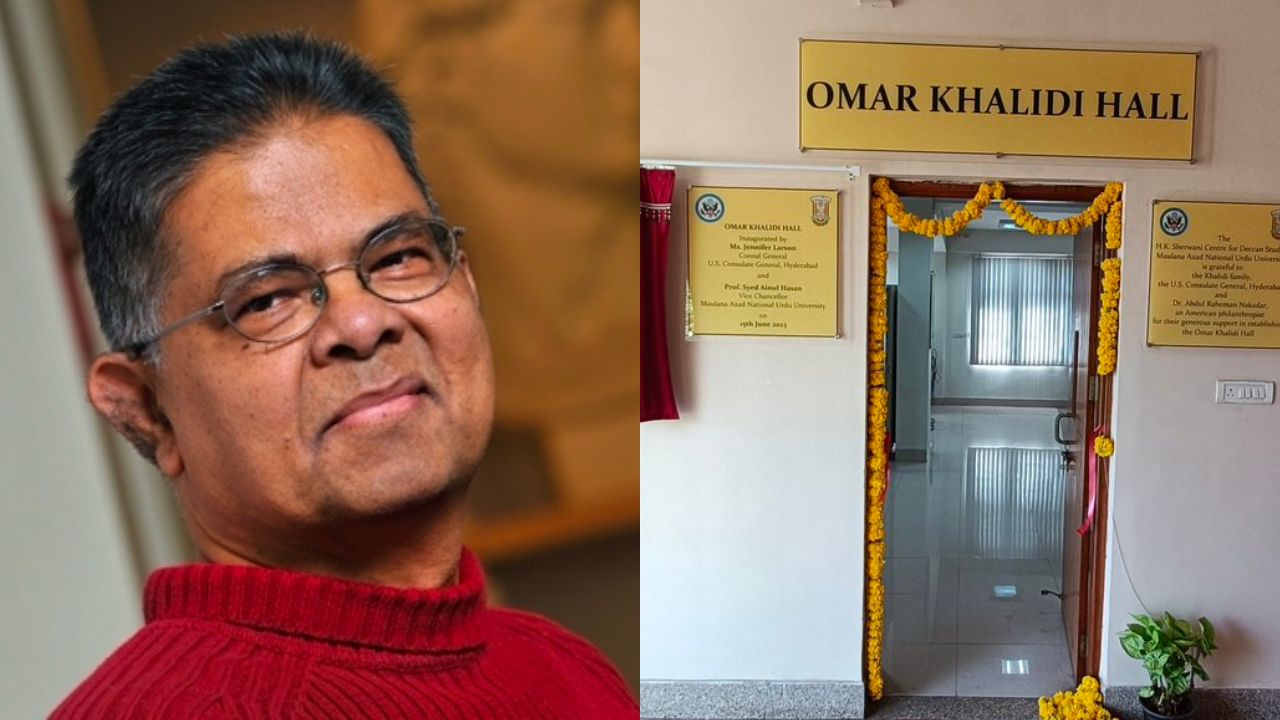
Photo: twitter.com/swachhhyd/

Omar Khalidi Hall, named after the late renowned Hyderabadi scholar, was inaugurated at Maulana Azad National Urdu University (MANUU) on Thursday. The hall, which now houses Khalidi’s personal library comprising scores of rare books, marks a significant milestone for the university.

The collaborative efforts of Khalidi’s daughter Aliya Khalidi, his wife Nigar Sultana Khalidi, historian Prof Salma Farooqui leading MANUU’s H.K. Sherwani Centre for Deccan Studies, the United States Consulate General in Hyderabad, and admirers of the Hyderabad scholar based in the USA made it possible to bring his personal library back to his hometown of Hyderabad.

Khalidi’s library is an impressive collection with over 1,000 Urdu, English, Persian, French, German, and French titles. It covers a wide range of subjects including the history, culture, and administration of the Deccan, Hyderabad State, Golconda, religion, Sufis and Sufism, heritage, and numerous journals. Notably, the collection includes rare books such as L’Inde Anglaise, published in 1845, The Hindu reported.

Khalidi’s strong connection with his hometown led him to compile an exhaustive list of books on Hyderabad’s history, culture, and archaeology. Many of these books were either unknown or had faded from public memory due to the passage of time.

Apart from his personal library, Khalidi was also renowned for his authored works. His book Khaki and Ethnic Violence in India explored the complexities of religious composition within the armed forces and police, as well as the Muslim community. L.K. Advani had verbally attacked Khalidi for the book and reportedly acknowledged that the book provided “inspiration to the Sachar Committee to seek a communal census in the Armed forces.”

Among his other important works were Muslims in Indian Economy and Hyderabad: After the Fall, a collection of essays edited by Khalidi.

Khalidi, who worked at the Massachusetts Institute of Technology as part of the Aga Khan Programme for Islamic Architecture, passed away on November 29, 2010, leaving behind a significant intellectual legacy.

The inauguration of Omar Khalidi Hall at MANUU on Thursday not only celebrates the life and work of this distinguished scholar but also provides a valuable resource for students and researchers. The inclusion of Khalidi’s personal library in the hall will serve as a source of inspiration, enabling a deeper understanding of Hyderabad’s history, culture, and heritage.

source: http://www.thecognate.com / The Cognate / Home> Culture / by The Cognate News Desk / June 16th, 2023

Renowned Islamic Scholar And Translator, Maulana Muhammad Farooq Khan Passes Away, Leaves A Profound Legacy

Karpi Village (Sultanpur), UTTAR PRADESH:

Renowned Islamic Scholar and Senior Member of Jamaat-e-Islami Hind, Maulana Muhammad Farooq Khan, has passed away, leaving behind a legacy of exceptional contributions to the Islamic literary world. Known for his profound knowledge and expertise in translating and explaining the Holy Quran, Maulana Muhammad Farooq Khan was a highly respected figure within the Islamic community.

Born in Karpi village in Sultanpur, Uttar Pradesh, in 1932, Maulana Muhammad Farooq Khan pursued a Masters in Hindi Literature. Although he initially began his career as a teacher in Azamgarh, his passion for writing and disseminating Islamic knowledge soon took precedence.

Maulana Muhammad Farooq Khan gained recognition with his Hindi translation of the Holy Quran, which marked a significant milestone in his career. His translation made the sacred text accessible to a wider audience, bridging the gap between Arabic and Hindi literature. The clarity and precision with which he conveyed the Quranic teachings garnered him immense respect and established him as a prominent figure in the field.

Expanding his literary endeavours, Maulana Muhammad Farooq Khan authored a notable four-volume collection of Hadith commentary called Kalameh Nabuwat. This work, too, received widespread acclaim and further solidified his position as an authority on Islamic literature. His insightful explanations and interpretations of the hadiths provided valuable guidance to scholars and practitioners alike.

In addition to his translations and commentaries, Maulana Muhammad Farooq Khan penned numerous books on various subjects, including da’wah (Islamic propagation), guidance, personality development, and comparative study of religions. These works not only enriched the Islamic literary landscape but also reached a broader audience through his Hindi translations. Maulana Muhammad Farooq Khan’s dedication to promoting Islamic teachings and his efforts in making them accessible to people of diverse linguistic backgrounds were unparalleled.

The passing of Maulana Muhammad Farooq Khan is an irreplaceable loss to the Islamic literary world. His extensive contributions and profound understanding of religious texts have left an indelible mark on the community. The impact of his work will continue to guide and inspire generations to come.

As the news of his demise spreads throughout the Islamic community, heartfelt tributes pour in, acknowledging the significant role Maulana Muhammad Farooq Khan played in disseminating knowledge and fostering a deeper understanding of Islam. Scholars, students, and devotees express their gratitude for his contributions and remember him as a beacon of wisdom and enlightenment.

Maulana Muhammad Farooq Khan’s funeral prayers were held today, attended by a multitude of mourners who came to pay their respects. His passing leaves a void in the hearts of those who admired his scholarship, but his legacy will live on through his writings, translations, and the countless lives he touched.

The Islamic world mourns the loss of Maulana Muhammad Farooq Khan, and his memory will forever remain as a testament to his outstanding contributions and unwavering dedication to spreading Islamic knowledge.

source: http://www.thecognate.com / The Cognate / Home> News / by The Cognate News Desk / June 30th, 2023

Dr. Shabana Kesar first woman President of MANUUTA, newly elected office bearers took oath

Hyderabad, TELANGANA:

All the office bearers except Vice President were elected unopposed. Prof. Syed Ainul Hasan, Vice Chancellor and Prof. Ishtiaque Ahmed, Registrar were the guests of the oath taking ceremony.

Dr. Shabana Kesar first woman President of MANUUTA, Newly elected office bearers took oath

Hyderabad: 

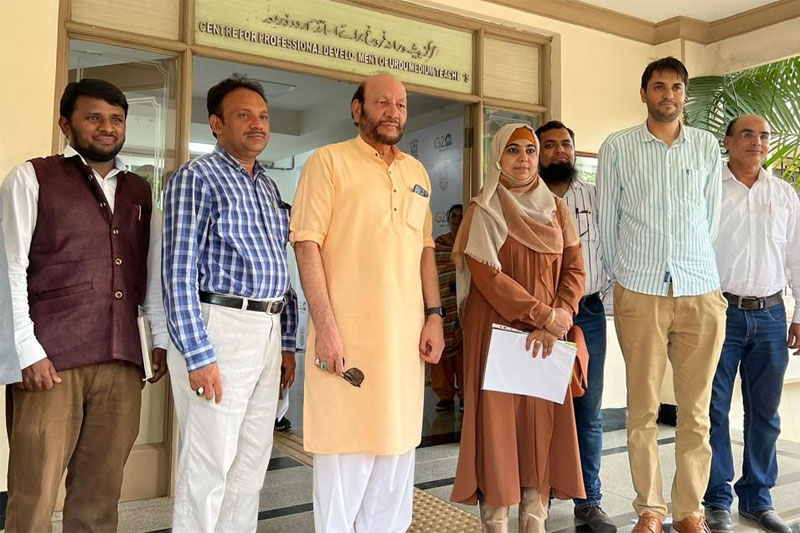
The newly elected members of Maulana Azad National Urdu University Teachers’ Association (MANUUTA) took oath in the investiture ceremony held at CPDUMT Auditorium Tuesday evening.

All the office bearers except Vice President were elected unopposed. Prof. Syed Ainul Hasan, Vice Chancellor and Prof. Ishtiaque Ahmed, Registrar were the guests of the oath taking ceremony.

Prof. Badiuddin Ahmed, Chairperson Election Committee, administered the oath to Dr. Shabana Kesar as the President of MANUUTA along with other office bearers. Dr. Salahuddin Syed, Vice President; Dr. Jameel Ahamad, General Secretary; Dr. Majid Ali Choudhary, Joint Secretary (organizing); Mr. Ahmad Talha Siddiqui, Joint Secretary (Publicity) and Mr. Chavala Mutyala Rao, Treasurer also took charge.

Dr. Shabana Kesar from the Department of Women Education is the first women President of MANUUTA.

Speaking as the Chief Guest, Prof. Syed Ainul Hasan congratulated the newly elected office bearers and emphasized upon work for the welfare of the teaching community of MANUU. He also distributed certificates among office bearers.

Prof. Ishtiaque Ahmed, Guest of Honour welcomed the new members and assured his full support for the overall development of the University.

Election officers – Dr. Syed Khaja Safiuddin convened the program and Mr. Mohd Omar proposed vote of thanks. Dr. Faheemuddin Ahmed, Dr. Z. Abdul Rahim, Dr. Khaja Moinuddin and Dr. Muqeem Ahmed also served as Election officers.

source: http://www.munsifdaily.com / The Munsif Daily / Home> News> Regional> Hyderabad / June 22nd, 2023