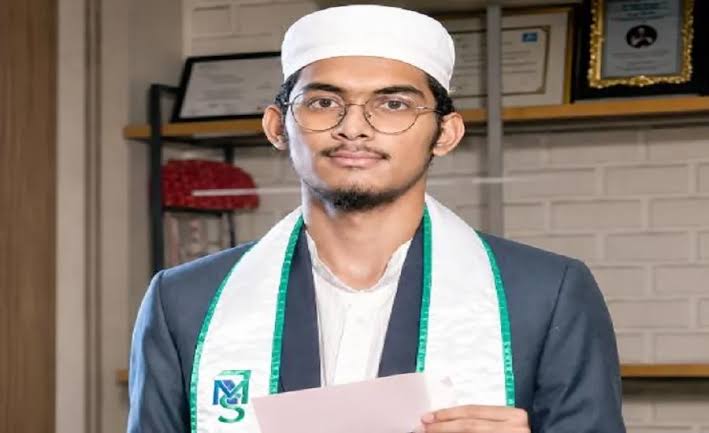
Mohammad Taqi Ahmed Ali Shams secured the highest rank among minority students in Telangana with 666 out of 720 marks and an All India Rank of 652.
Hyderabad :
Mohammad Taqi Ahmed Ali Shams, a student of MS Junior College of the city, has secured the first rank among minority students in the Telangana NEET 2026 State Merit List, delivering another major achievement for MS Education Academy.
Taqi Ahmed scored 666 marks out of 720 in the NEET 2026 examination and secured an All India Rank (AIR) of 652, making him the highest-ranked minority student in Telangana.
The academy also announced that 34 students scored 500 marks or more in NEET 2026, describing the result as another reflection of its consistent academic performance and quality teaching.
Several other students from MS Junior College also secured prominent positions in the Telangana Minority Merit List.
The successful students include:
Daniya Mirza – 23rd State Minority Rank
Mohammad Misbah Ali – 27th
Asid Tabish Antule – 28th
Shafia Begum – 43rd
Kausar Fatima – 48th
Liza Hussain – 57th
Zeba Rouheen – 68th
Sana Fatima – 73rd
Kausar Mirza – 75th
Fauzia Khanam – 98th
Sadia Sanobar – 102nd
Fakhra Tasneem – 105th
Bilal Shaikh – 106th
Sidra Jabeen – 108th
Syeda Amina – 109th
Congratulating the successful candidates, the management of MS Education Academy extended its best wishes to the students, their parents and teachers for their contribution to the outstanding performance.
The academy said the results reflected the dedication of students and the continued support of parents and faculty members.
The institution also expressed confidence that more than 200 students from the academy would secure free MBBS seats in leading government and private medical colleges across Telangana and other parts of the country through the NEET 2026 admission process.
The latest results further strengthen MS Education Academy’s record of producing successful medical aspirants and maintaining a strong presence in the Telangana State Merit List year after year.
source: http://www.clarionindia.net / Clarion India/ Home> Editor’s Pick> India> Indian Muslims/ by Team Clarion / August 03rd, 2026
The Telangana government has announced Fire Services Pathakams for 20 personnel of the Telangana Disaster Response and Fire Services Department in recognition of distinguished, outstanding and meritorious service, they will be conferred on the award winners at the Telangana Formation Day programme on June 2.
The awards are being conferred on police, vigilance and enforcement, anti-corruption bureau, special protection force and fire services personnel for their contributions in their respective fields.
Two personnel have been selected for the Telangana Fire Services Shourya Pathakam — Fire Fighter at Mancherial Fire Station P. Rajender and Leading Fire Fighter at Chandrayangutta Fire Station Nisar Ahmed Khan. The Telangana Fire Services Mahonnatha Pathakam has been awarded to District Fire Officer of Warangal A. Yagnanarayana.
Three personnel have been selected for the Telangana Fire Services Uttama Seva Pathakam — Vikarabad District Fire Officer T. Purna Chandar, Nagarkurnool District Fire Officer P. Giridhar Reddy and Leading Fire Fighter at Cantonment Fire Station K. Balaiah.
The Telangana Fire Services Seva Pathakam has been awarded to 14 personnel. The recipients are J. Govardhan Reddy, Madhapur Fire Station; A. Shravan, Shadnagar Fire Station; G. Venkateshwar, Malkajgiri Fire Station-I; G. Srinivasa Reddy, Gajwel Fire Station; B. Bhimaiah, Kagaznagar Fire Station; P. Rami Reddy, Hayathnagar Fire Station; Mohd. Gulam Yezdani, Adilabad Fire Station; B. Sampath, Chennur Fire Station; E. Ravi Prakash, Alampur Fire Station; Qadeer Ahmed Khan, Khanpur Fire Station; Ch. Jitender Kumar, Miryalguda Fire Station; V. Rambabu, Khammam Fire Station; P. Bhaskar Rao, Khammam Fire Station; and P. Sreenivasu, Yadagirigutta Fire Station.
Recipients of the Telangana Fire Services Shourya Pathakam are entitled to a recurring monthly grant of ₹500 and a one-time grant of ₹10,000. Recipients of the Mahonnatha Pathakam will receive a one-time grant of ₹40,000, while those awarded the Uttama Seva Pathakam and Seva Pathakam will receive ₹30,000 and ₹20,000 respectively.
source: http://www.thehindu.com / The Hindu / Home> News> India> Telangana / by The Hindu Bureau / June 01st, 2026
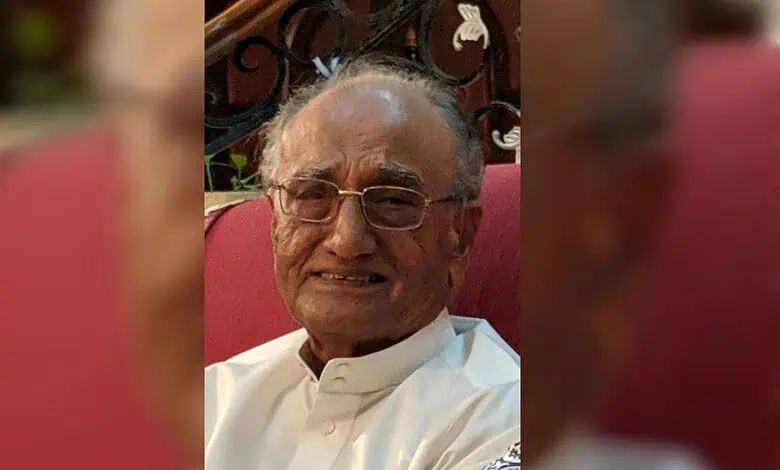
Cardiologist Dr Mohammad Iqbal Sanai served King Khaled bin Abdulaziz and prominent Saudi families for decades.
Dr Mohammad Iqbal Sanai.
Hyderabad:
Renowned cardiologist Dr Mohammad Iqbal Sanai, who served the Saudi royal family and several prominent families in the Kingdom, passed away in Hyderabad on May 14, 2026. He was 95.
According to his son, who spoke to Siasat.com, Dr Sanai is survived by his wife, Bader Babu Khan, daughter of late Khan Bahadur Abdul Kareem Babu Khan, and their four children.
Born in 1931, Dr Sanai completed his MBBS in 1955 before moving to Scotland for higher studies. He earned his MRCP in Cardiology from the University of Edinburgh in 1960.
He began his medical career as a government doctor in Warangal and later worked at Osmania Hospital in Hyderabad.
Career in Saudi Arabia
Dr Sanai moved to Jeddah in 1965, where he emerged as one of the city’s earliest specialist cardiologists. He became closely associated with several well-known business families, including the Bin Mahfouz, Binladin, Bugshan, Sharbatly, Ali Reza, Zainal and Gabel families.
In the early 1970s, he started attending to then Crown Prince Khaled bin Abdulaziz and later became his family physician.
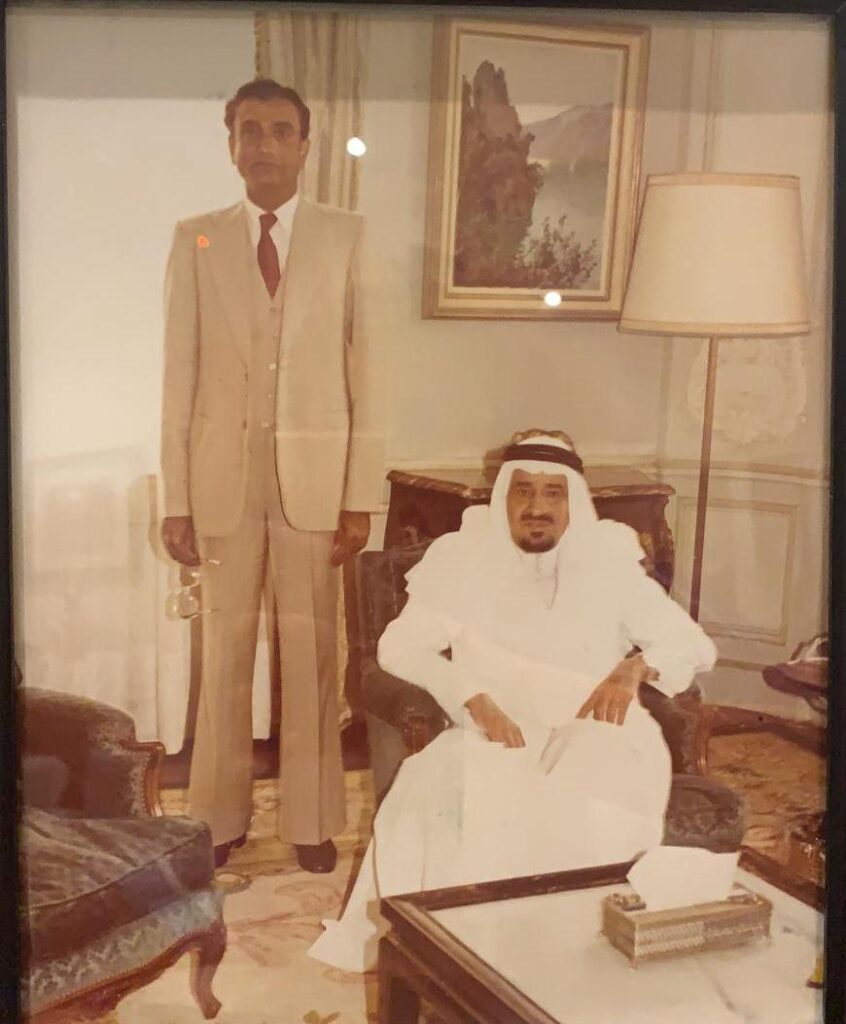
In 1978, Dr Sanai was appointed full-time physician to King Khaled bin Abdulaziz and remained in the role until the monarch’s death in 1982.
Dr Mohammad Iqbal Sanai with King Khaled bin Abdulaziz.
Recognition and retirement
The Saudi government granted Dr Sanai citizenship in 1976 in recognition of his contribution to healthcare services in the Kingdom.
Following a medical career spanning over five decades, he retired in 2007. He was widely respected for his professionalism, dedication and compassionate care.
source: http://www.siasat.com / The Siasat Daily / Home> News> Hyderabad / by Sakina Fatima / May 19th, 2026
Renowned Islamic scholar, writer, and editor Syed Iqbal Zaheer passed away on Thursday, April 2, 2026, in the United Arab Emirates.
He was widely regarded as a significant contemporary voice in Islamic scholarship, known for his extensive writings, intellectual depth, and commitment to presenting Islam in an accessible yet authentic manner. His passing marks the end of a decades-long contribution to Islamic literature, education, and thought.
Born in 1944 in Hyderabad, India, Syed Iqbal Zaheer was trained as an engineer but went on to establish himself as a prolific author and researcher in Islamic studies. Over the years, he became particularly known for his ability to bridge classical Islamic scholarship with modern intellectual inquiry.
Among his most notable works is Tafsir Ishraq al-Ma‘ani, a fourteen-volume English commentary on the Qur’an, considered one of the most comprehensive original English tafsir works. He was also the author of An Educational Encyclopedia of Islam, a widely regarded reference work aimed at making Islamic knowledge accessible to both adults and children.
In addition to his books, he served for over three decades as the editor of Young Muslim Digest, an English-language Islamic monthly that reached readers across several countries. More than just a magazine, it became a formative intellectual space for generations of young Muslims, many of whom encountered Islamic thought, identity, and contemporary issues through its pages. Its widely read “Letters to the Editor” section, in particular, stood out for its candid, thoughtful, and often deeply nuanced responses, addressing complex personal and theological questions with clarity and balance. Through his editorials, Syed Iqbal Zaheer demonstrated remarkable intellectual depth, engaging with modern challenges while remaining firmly rooted in classical scholarship. For many readers, the magazine was not merely informative but transformative.
Despite his influence, Syed Iqbal Zaheer was known for maintaining a low public profile. He rarely appeared in public or media, preferring to focus on writing, research, and teaching. Those who knew him often highlighted his humility and his emphasis on sincerity in seeking knowledge.
Throughout his life, he remained dedicated to the study of the Qur’an, Arabic language, and Islamic sciences, encouraging generations of readers to pursue knowledge with depth and discipline.
His death has prompted an outpouring of condolences from students, readers, and members of the wider Muslim community, many of whom credit his works for shaping their understanding of Islam.
Syed Iqbal Zaheer is survived by his family and leaves behind a rich intellectual legacy that continues to benefit readers around the world.
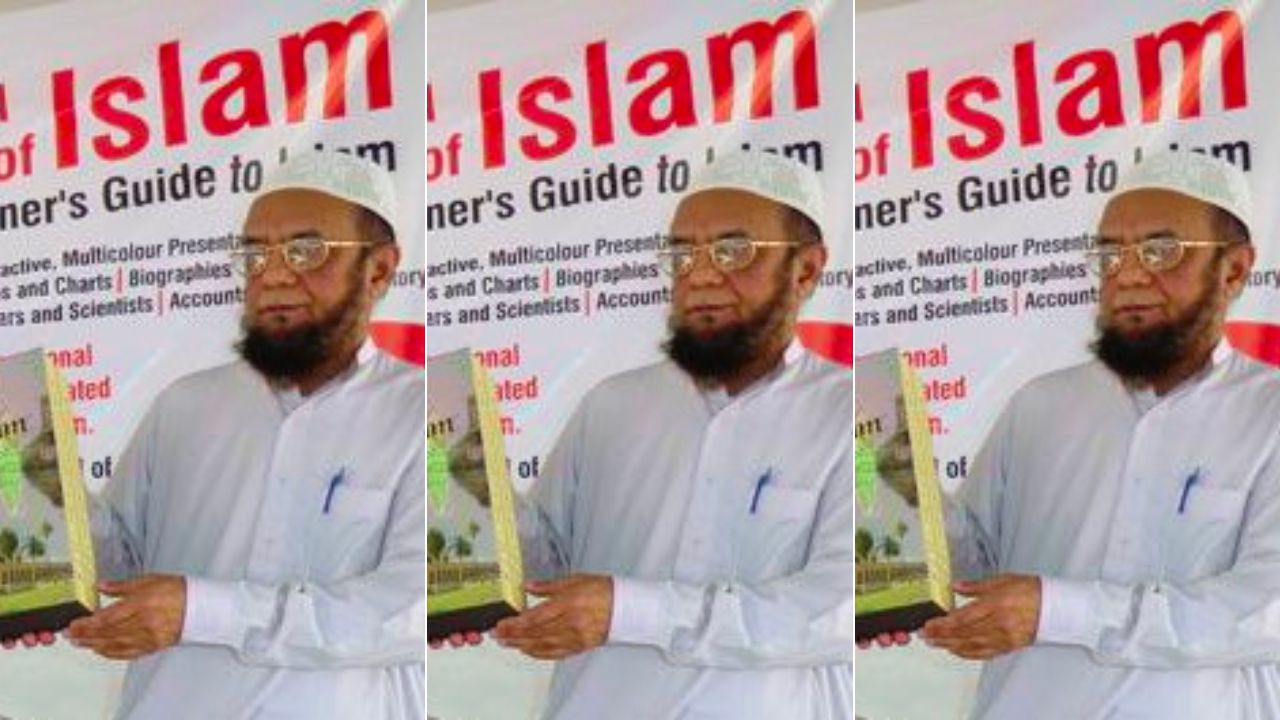
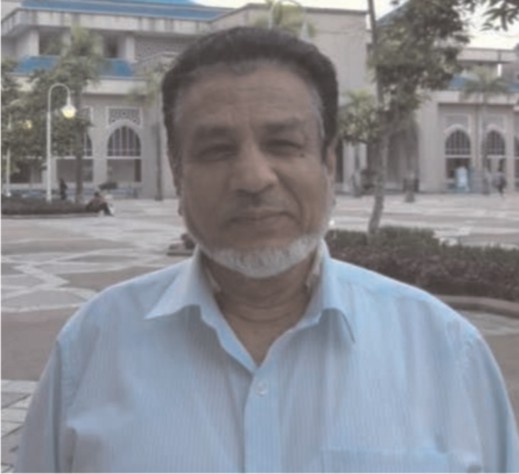
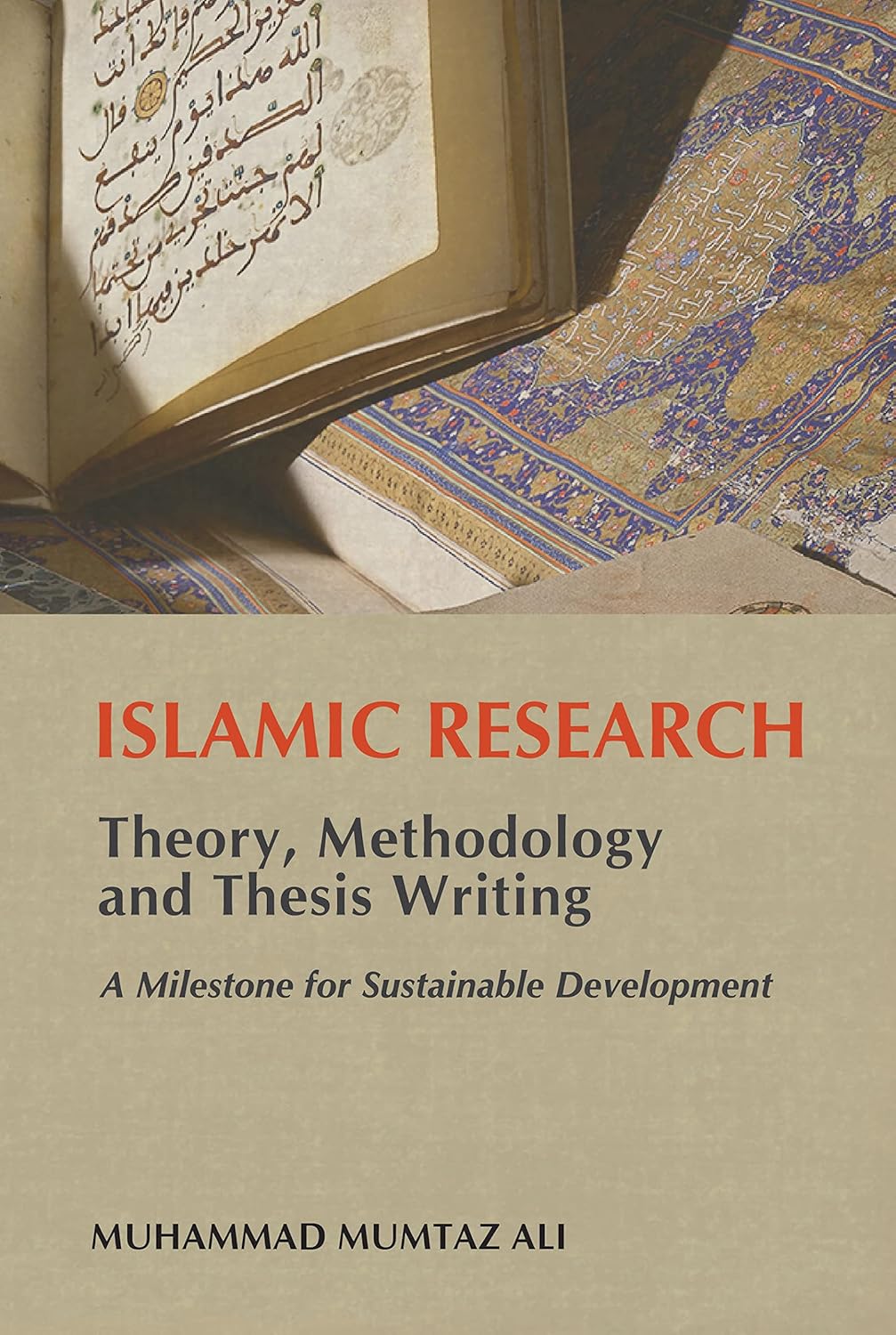
In a significant achievement, Professor (Dr.) Muhammad Mumtaz Ali, hailing from Hyderabad, India, has been honored with Malaysia’s National Book Award for the third time. Currently teaching at the International Islamic University Malaysia (IIUM) in Kuala Lumpur, Prof. Ali was recognized for his outstanding contribution through his latest work, “Islamic Research: Theory, Methodology, and Thesis Writing,” published in 2022.
pix: amazon.in
The prestigious National Book Award 2023 and Certificate for the year 2023 were presented to Prof. Ali in a grand ceremony held on December 22, 2023. The certificate carries the signatures of Prime Minister Dato Seri Anwar Ibrahim and Minister Dato Seri Zambry Abdul Qadir.
Born in Hyderabad in 1955, Prof. Ali holds a doctorate in philosophy in Islamic studies from Aligarh Muslim University. He began his academic journey by completing his master’s degree in Islamic studies at Aligarh Muslim University and a bachelor’s degree in modern western political thought from Osmania University.
Joining IIUM in 1987 as an assistant professor, Prof. Ali has been a dedicated member of the university ever since. Currently, he leads the Abdulhamid Abusulayman Kulliyyah of Islamic Revealed Knowledge and Human Sciences in the Department of Usul al-Din and Comparative Religion.
His award-winning book, “Islamic Research: Theory, Methodology, and Thesis Writing,” advocates for the transcendence of Islamic research beyond religious topics, emphasizing its relevance to all aspects of life and society. The book distinguishes Islamic research from conventional methods, emphasizing the need for a comprehensive theory and methodology.
Prof. Ali’s contributions extend to various branches of Islamic theology, including developmental studies, modernization, epistemological and methodological studies, critical thinking, philosophy of science, and modernity. His books, especially those on the Islamization of Knowledge, are widely regarded as bestsellers on campus.
In 2014, Prof. Ali received the National Book Award for his book, ‘Issues in Islamization of Human Knowledge: Civilization Building Discourse of Contemporary Muslim Thinkers.’ His consistent recognition reflects his commitment to advancing Islamic research and knowledge.
source: http://www.islamicvoice.com / Islamic Voice / Home> National News and Affairs / pix of book added – amazon.in / by Islamic Voice / February 24th, 2024.
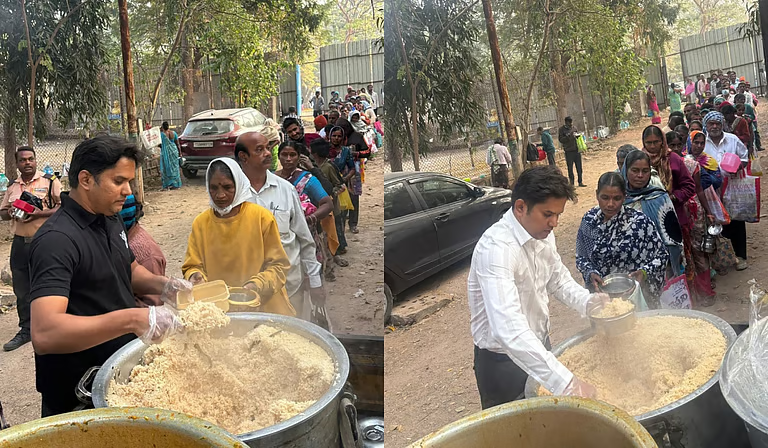
The idea took shape after Aziz read about a food bank in Chennai. Moved by the concept, he decided to start something similar in Hyderabad.
The menu remains simple — usually rice, bagara rice and dal — ensuring freshly cooked, nutritious food for those who need it most.Photo | EPS
Hyderabad :
Hyderabad is a city synonymous with food — from the aroma of biryani to bustling night markets. But for Mohammed Aziz, the city’s most important meal is not served in its famous restaurants. It is handed out at dawn outside hospitals to patients and families who often go hungry after exhausting their savings on treatment. What began in 2015 with 34 packets cooked in his mother’s kitchen has grown into a daily effort feeding nearly 300 people across the city.
The idea took shape after Aziz read about a food bank in Chennai. Moved by the concept, he decided to start something similar in Hyderabad. With help from his mother and four friends, he prepared the first batch of meals and distributed them on the streets. “There was no big plan; just a Facebook page and the belief that if people saw the need, they would come forward,” Aziz, 38, a corporate professional, tells TNIE.
Today, much of the distribution happens near Nizam’s Institute of Medical Sciences, where many patients and caregivers struggle to afford even a basic meal. “My parents always told me that doing good eventually finds its way back to you,” Aziz says. “Hyderabad is known for its food, but seeing eople starving outside government hospitals felt like a personal insult.”
For the past decade, his days have followed a steady rhythm. Early mornings are spent distributing meals to patients, caregivers and migrant workers sleeping on pavements. After the last packet is handed out, he heads to his corporate job. “We serve around 300 to 400 people every morning — patients and their families who have nothing left after paying for medicines,” he says.
Over the years, the initiative has grown into a volunteer network of students, professionals and homemakers. Meals are distributed near major government hospitals such as Niloufer Hospital, Gandhi Hospital and Osmania General Hospital, where the need is often most visible. “You see cancer patients and migrant workers who have not had a hot meal in days. Giving them food is not just about nutrition; it is about ensuring they do not lose their dignity while they are suffering,” Aziz says.
Interestingly, the initiative does not accept monetary donations. For the past decade, the group has followed a zero-cash policy. Those who wish to contribute either cook food at home, sponsor raw materials or volunteer during distribution. As the effort expanded, the team set up a small kitchen in King Koti to manage the daily cooking. Preparations begin at about 5.30 am, and by 7.30 am the meals are ready for distribution.
The menu remains simple — usually rice, bagara rice and dal — ensuring freshly cooked, nutritious food for those who need it most.
What started with four friends has now grown into a citywide volunteer network, with over 40 active members helping with cooking, packing and distribution. After a decade of work, Aziz says the mission remains unchanged. “I want to reach every major hospital in Hyderabad,” he says. “No one waiting for treatment should have to worry about their next meal.”
source: http://www.newindianexpress.com / The New Indian Express / Home> Good News / by Megha Nath / March 15th, 2026
An interview with Nazia Akhtar, the author of ‘Bibi’s Room: Hyderabadi Women and Twentieth-Century Urdu Prose.’
Translator Nazia Akhtar.
‘Bibi’s room’ refers to the space of a woman which purportedly belongs to her but is never hers. Bibi (an affectionate form of address for a woman in Urdu) represents all women whose identity is often ignored in lieu of her duties to her home.
A new book, Bibi’s Room : Hyderabadi Women and Twentieth-Century Urdu Prose studies the lives and works of three Hyderabad Urdu writers, Zeenath Sajida (1924-2009), Najma Nikhat (1936-1997), and Jeelani Bano (b. 1936). The title of the book emerges from an essay by Sajida and is an insightful giveaway into the tone and tenor of the book.
Nazia Akhtar, an Assistant Professor of Literature at the Indian Institute of Information Technology, Hyderabad had no formal education in Urdu or substantial training in literary translation. She learnt Urdu by reading Nikhat’s work and gradually acquired the confidence to expand the scope of her project. Over three years, she delved into the writings and lives of these three writers and studied their milieu and read and wrote about them. The narrative style is informative and educative: it outlines the writer’s personal lives, provides translation of some of their works, and an assessment of what they wrote about.
Akhtar manages to bring to life the stories in all their complexities. Sajida wrote on themes as diverse as gender, the follies and foibles of the Indian middle-class, the literary culture of Urdu circles, and the urban and natural landscapes of her beloved Hyderabad. Nikhat wrote short stories, and Akhtar says she was struck by her poignant depictions of the lives of both working-class and upper-class women in deodis, the urban mansions of the feudal elite of Hyderabad. Meanwhile, Bano, is critically acclaimed and is the recipient of many awards, including the Padma Shri in 2001. Apart from the versatility and longevity of her career as a writer of short stories on gender, class, and communalism, Bano has also written two novels.
Expertly weaving in the lives and stories of these oft neglected writers, Akhtar’s writing is seamless and observes, interprets and reports the cultural practices, status of women and socio-economic conditions of Hyderabad in a newly Independent India. In a conversation with Scroll.in, Akhtar discusses the writers and their expansive oeuvre.
Excerpts from the conversation:
When and why did you start working on the book? What was the idea behind writing a book on Urdu women writers of Hyderabad? The idea for this book came to me in around 2015. I had been working on literary texts in the context of Hyderabad for some time already. Over the years, I had noticed that there were many texts in Urdu that were written by women. As I began to read them and learn more about the writers and the world they lived in, I realised that there was a long tradition of women’s writing in Urdu in Hyderabad that we did not seem to know much about. I started working on this book in earnest when I received a New India Foundation fellowship in 2017. The fellowship made it possible for me to devote all my time to this project.
What made you zero in on these three Urdu writers, what was it about their work that drew them to you? I simply stumbled across two of these writers. The writings of Zeenath Sajida and Najma Nikhat were gifted to me by their respective children, who knew that I was interested in Hyderabad and the literature that was created here in the 20th century. I chose Jeelani Bano because of the longevity of her literary career, and the currency and relevance of her work to the present day.
I also came across other writers, of course, and many books can be written about them too. I chose these three in particular because, first and foremost, I liked them and wanted to write about them. Secondly, I wanted to represent a range of women’s Urdu prose from Hyderabad. These three writers wrote on a variety of themes across different genres but yet had enough in common between them to justify inclusion in one book.
You use the phrase, “thrice marginalised” which I found striking to describe these women writers. What do you mean by this? There is a triple neglect at work behind our forgetting of these Hyderabadi women writers of Urdu. First, they are neglected in the canonical literary historiography of Urdu, which gives short shrift to women’s writing. Apart from the excellent work of Nasiruddin Hashmi and Amena Tahseen, there is little engagement with this hundred-and-fifty-year-old tradition of women’s writing in Hyderabad.
Second, Urdu literary historiography (in both Urdu- and English-language texts) also overlooks Urdu literary traditions in the south, which is ironic given the crucial role the Deccan played in the development of Urdu as a literary language.
Finally, colonial attitudes have persisted in research, so that until recently, the assumption was that princely states were static, medieval entities, where nothing much happened by way of social and cultural progress. Recent research by scholars such as Siobhan Lambert-Hurley, Janaki Nair, and Razak Khan proves otherwise. Bibi’s Room is a part of this shift in perspective.
The themes and characters employed by these writers are inherently plural. They celebrate Hindu festivals, some have written in Telugu and use local character. This syncretic pluralism is fast vanishing today. Do you think that such thinking and writing has space in today’s India? There are still women writers and scholars of Urdu in Hyderabad and other parts of the country who hold on to plural and inclusive values in their journalism and scholarship. But yes, as a country, we are rapidly forgetting the shared, inclusive pasts on which our civilisation is based.
All these writers dispel the notion of a meek submissive Muslim women. You write how Zeenat Sajida’s classes were much sought after and celebrated by students. So in a way these women defy stereotypes. While reading, translating, and writing about them, what is the sense you get of them?
It is not necessary that a piece of writing will demonstrate a writer’s personality. Of course, literature depicts the worldview and priorities of writers, and that is visible in the writings of the three women profiled in this book. All three wrote about women’s lives and concerns, their specific gendered experiences and problems. They wrote about mothers and daughters and about the relationships between women and men, and certainly, they drew from their lived experiences to write about these. They wrote about their city and their country and the politics, society, history, and culture of these places. The context of their lives and location is implicit in their work.
But to find easy equivalences between their lives and writings is difficult. There are a couple of short stories by Nikhat which are clearly drawn from her life. We know this from the diary entries she left behind and from other sources of her life. Scholars have also pointed out that the witty and endearing narrator of Zeenath Sajida’s essays is clearly modelled on her own vivacious and irrepressible self.
All three writers were women with distinct and different personalities. While Sajida was outgoing and vivacious, Bano kept more to herself and was part of a close personal and social circle. Nikhat was a mother who gave up everything to raise her step-daughters. All three writers had to struggle with social and financial circumstances and restrictions and fought hard to achieve what they did, while at the same time, attempting to protect and care for their families and maintain their social and professional relationships and networks.
What has been the influence of these writers on Urdu writing and Hyderabad? Each of these writers has shaped Urdu literary culture in distinct ways. Zeenath Sajida is a prominent figure in a long history of women’s humorous writing, which has received some institutional support in Hyderabad but has been mostly ignored by scholars and translators of the wider world of Urdu literature.
Najma Nikhat held firmly to her Progressive ideals and continued to write in this idiom long after the Progressive Writers’ Movement had waned. She remained an important figure in the Progressive Writers’ Association of Hyderabad till the day she died in 1997.
Jeelani Bano’s skillful deployment of the ideals and principles of at least three schools of literature – Progressive writing, modernism, and abstractism (tajreediyat) – is an education in itself, both for other writers as well as literary scholars. Her two novels take on momentous and difficult chapters of Hyderabad’s history and depict the lives of people and the way these collective and public histories affect their individual and private lives.
How are these stories relevant in today’s India and Hyderabad? Thematically, these stories, essays, and novels deal with many issues associated with identity that are relevant to our country today. They remind us that there are old historical precedents for many of the questions and issues that are being raised today by women – all women in general, and Muslim women in particular. These texts give us an insight into how this generation of women thought and approached these things in the mid-twentieth century and what the environment – that is, the literary circles and socio-cultural networks of their time – were like.
They are also part of a long tradition of women’s writing in Urdu from Hyderabad that fictionally documents the history, landscapes, society, and culture of Hyderabad. These texts give us a sense of the specific history and identity of Urdu in the Deccan and help us to trace the history of specific modes of writing, thought, and engagement in Urdu in this region. The literary essays of Zeenath Sajida, for instance, are an example of a rich but relatively neglected tradition of non-fiction writing by Hyderabadi women on a diverse range of topics that also demonstrates experimentation and skilful use of existing or new literary genres.
source: http://www.scroll.in / Scroll.in / Home> Meet the Translators / by Mallik Thatipalli / November 26th, 2022
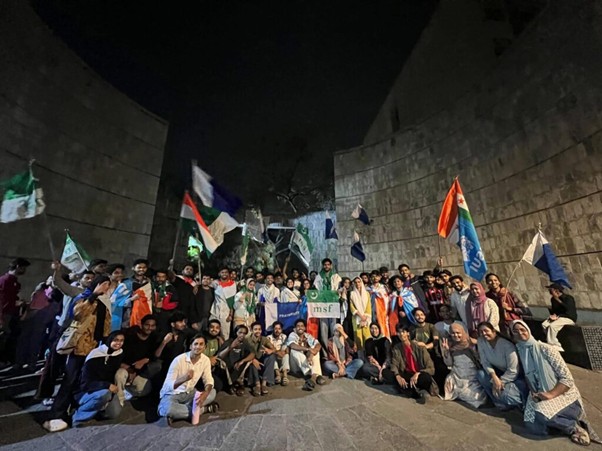
The Awaaz Alliance—comprising the Fraternity Movement, Muslim Students Federation (MSF), and the National Students’ Union of India (NSUI)—has won all Central Panel posts in the English and Foreign Languages University (EFLU) Students’ Union elections, defeating the right-wing student group Akhil Bharatiya Vidyarthi Parishad (ABVP).
Harshad Shibin NK a PhD student from the Fraternity Movement has been elected as the new Students’ Union president.
Irfan Shajudheen from MSF a student of BA (digital communication) won the post of general secretary, while NSUI’s Sonu Raj 2year BA (English) student was elected vice-president. Other winners include MSF’s Haleemathu SS Adiya studying BA Arabic (Joint Secretary), Fraternity Movement’s Ayisha Neha (Cultural Secretary), and NSUI’s Udita Purkait (Sports Secretary).
ABVP finished second in all seats, while the Left student group Students’ Federation of India (SFI) emerged a distant third across all positions.
“This historic victory demonstrates the growing unity of democratic student forces committed to safeguarding campus diversity, social justice, and students’ rights. The mandate clearly rejects the politics of hatred and polarisation and affirms the students’ aspiration for an inclusive, egalitarian, and vibrant campus culture,” the Fraternity Movement said in a statement.
The newly elected panel members said they are committed to working tirelessly for academic welfare, gender justice, minority rights and democratisation of campuses.
source: http://www.radiancenews.com / Radiance News / Home> Latest News> Report / by Radiance News Bureau / February 07th, 2026
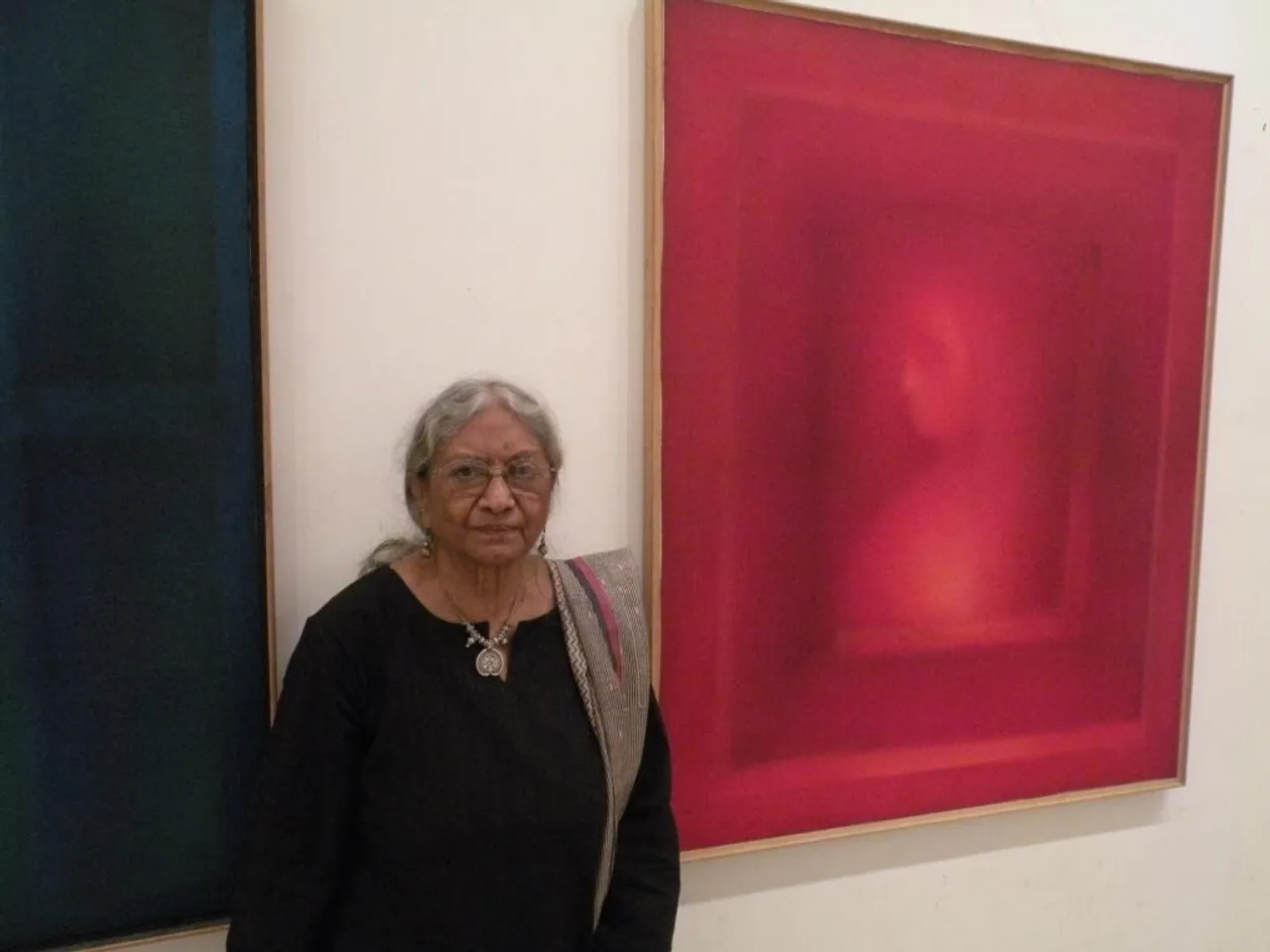
Belonging to a conservative Muslim family, it was hard for Fatima Ahmed to break the shackles but she made sure to follow her dreams and do all that she ever wanted. From travelling the world to living like a “gypsy” and creating her very own niche in the world of art, Ahmed has lived her life on her terms. Read about this feisty and inspiring artist.
Legendary rebel artist and writer Fatima Ahmed, who is nearing 80, is a picture of contrasts. While she is fun-loving and full of life, her paintings are still and silent. (Credit: Surekha Kadapa- Bose\WFS)
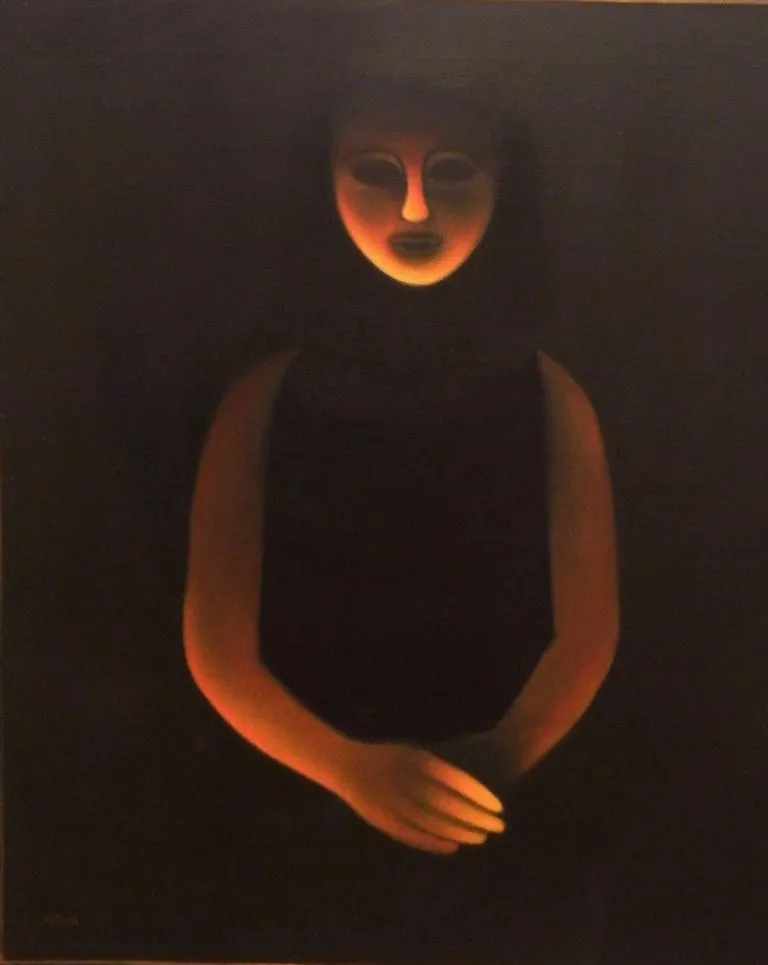
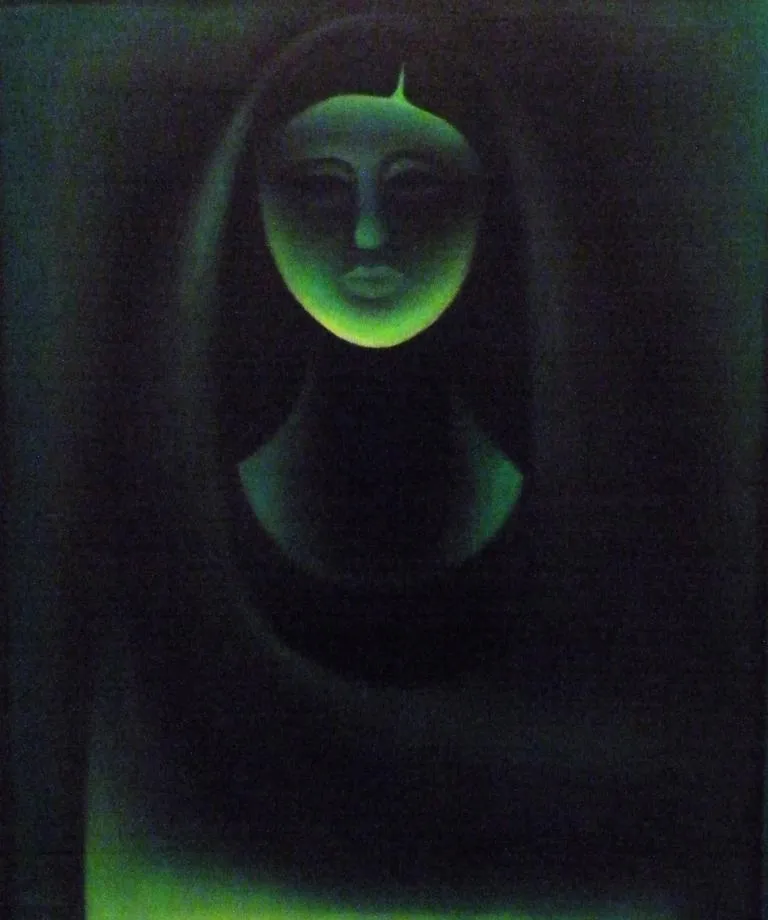
‘If only silence could speak’ goes the adage. Well, here silence does speak – and how! Soft, hazy, elusive images of women gaze steadily from the confines of their canvas making the much-mesmerised onlooker feel as though they would simply vanish if s/he so much as blinked. The women in red, pink, beige oil paints look ethereal, delicate and yet they convey power, strength – much like the woman who has created them.
“Space and light are very important to any work of art, especially paintings,” explains legendary rebel artist and writer Fatima Ahmed, whose latest oil canvases were on display in Mumbai recently. She continues, “In life, there has to be some mystery. Everything shouldn’t be very obvious and spoken out loud. In my works I don’t like clutter, loud colours or screaming. I like my paintings to be as subtle as a whisper.”
“Let me start by saying I simply love to eat the crisp crust of a samosa,” she says, with twinkle in her eyes, before adding, “Now as far as the silence in my work is concerned, throughout my life I have been more of an observer. I was a recluse during my childhood as I didn’t have anyone to share my thoughts and feelings with. I was a rebel for everyone around me and way back in the middle of last century it wasn’t a good sign.”
Coming from a conservative Muslim family in Hyderabad, Ahmed never really fit in because she was a free spirit who believed in equality. Her father was a Collector under Nizam Osman Ali Khan, Asif Jah VII, the last Nizam of Hyderabad.
In her joint family, daughters were married off in their early teens within the extended family. Moreover, as the Ahmed family was very highly placed within the Nizam’s palace, its members, too, were treated as royalty, which was never acceptable to her.
“I just couldn’t tolerate treating those employed in our household as slaves. Besides, women in that era didn’t have any say in any sphere of life and were forced to blindly follow all the dictates of men without questioning them. I certainly wasn’t going to do that,” she says emphatically, her voice betraying the anger she still feels towards the strict patriarchal rules they were made to adhere to in that period.
The women in red, pink, beige oil paints look ethereal, delicate and yet they convey power, strength. (Credit: Surekha Kadapa-Bose\WFS)
So Ahmed grew up with vivid visions of freeing everyone who was treated as a lesser human being. “Quite unknowingly, I was influenced by socialism,” she remarks. And at that age she had also made up her mind that she would rather die than marry one of her cousins. According to her, the one good thing her father did was to enrol her in the Government Mahaboobia Girls School, the foremost learning institution at that time. “Our teachers taught us out of syllabus and gave us the freedom to think. I didn’t like Hyderabad then but I loved my school,” says the artist, who is nearing 80.
It was there that she developed a deep love for drawing, painting and the classical Indian dance form Kathak, all of which she learnt without the approval of the family elders. The dance classes came to an end as soon as her father came to know.
“Unfortunately, my mother had a stroke at the time. And though I did have a large family of sisters, brothers, cousins and aunts, I could never really converse with any of them or share my true feelings,” she elaborates.
After school, as Ahmed refused marriage outright, she was grudgingly allowed to join college. But there again she met with another hurdle. She wasn’t interested in any of the usual subjects of science and wanted to join College of Fine Arts, which, of course, wasn’t permitted. So she found a way to get in. Mischievously she narrates, “I forged my father’s signature on the application form but the principal detected my lie and quizzed me. When he understood that I was really interested in the arts and saw a painting I had done of a litter of puppies, he relented.”
The demise of her parents made her leave home and Hyderabad for good. “I certainly didn’t want to stay back and be bossed around by my brothers and other family members,” she says about her escape to Bombay in early 1960s.
Admitting that the Hyderabad of today has changed considerably, the ageing artist nonetheless doesn’t think there is much difference still in the way girls from poor Muslim families are treated, “While girls from well-to-do homes get an education, are fashionable, go abroad, mingle with the rest of the world, this is not true of the low income Muslim families. They still live in a very male dominated society and this is not only restricted to Hyderabad or India but all over the world.”
Her arrival in Bombay and the “gypsy lifestyle” she led for the next two decades saw her engage closely with the world of art and writing. “I really didn’t exploit the kind of opportunities that came my way. I just took life one day at a time by living it on my own terms,” recalls Ahmed especially referring to her two-year stint in London where she painted, went through a financial crisis and then discovered spiritualism.
Fatima Ahmed, whose latest works were part of a recent exhibition, ‘If only silence could speak’, likes her paintings to be as subtle as a whisper. (Credit: Surekha Kadapa- Bose\WFS)
Despite those struggles, great success has come to her. She has held innumerable exhibitions in Mumbai, Delhi, Chennai, Hyderabad, Bhopal, London, Mauritius, Dubai, Hong Kong, Russia and South Africa, among many other places. Her works have been auctioned by Christies and are part of several private collections and state galleries, including the National Gallery of Modern Art (NGMA) in Delhi, Birla Art Akademi, Kolkata, the Stuttgart State Library and Masanori Fukuoka Museum in Japan.
What or who has influenced her art over the years? Initially, Ahmed says she was influenced by Gauguin, Cezanne, Van Gogh and Modigliani. But she consciously stayed away from those influences, as she felt “there was no fun in copying others”, and developed her own style.
Once she got back from London to Mumbai she caught up with many of her journalist friends. One of them was late Khushwant Singh, with whom she argued, fought and enjoyed interacting. It was he who encouraged her to get into writing. She started by translating works of Ismat Chugtai, Saadat Hassan Manto, Kaifi Azmi and other Urdu literary greats into English. This paved the way for to her write the semi-autobiographical, ‘In Haleema’s Words’. It was on one of her reporting assignments that she visited the Rajneesh Ashram in Pune, which has become her permanent home now.
Personally, Ahmed may be less of a rebel these days but her works more than make up – though still and silent they exude the quiet strength of women.
Written by Surekha Kadapa-Bose for Women’s Feature Service (WFS) and republished here in arrangement with WFS.
source: http://www.thebetterindia.com / The Better India / Home> Art / by Surekha Kadapa-Bose / December 14th, 2014
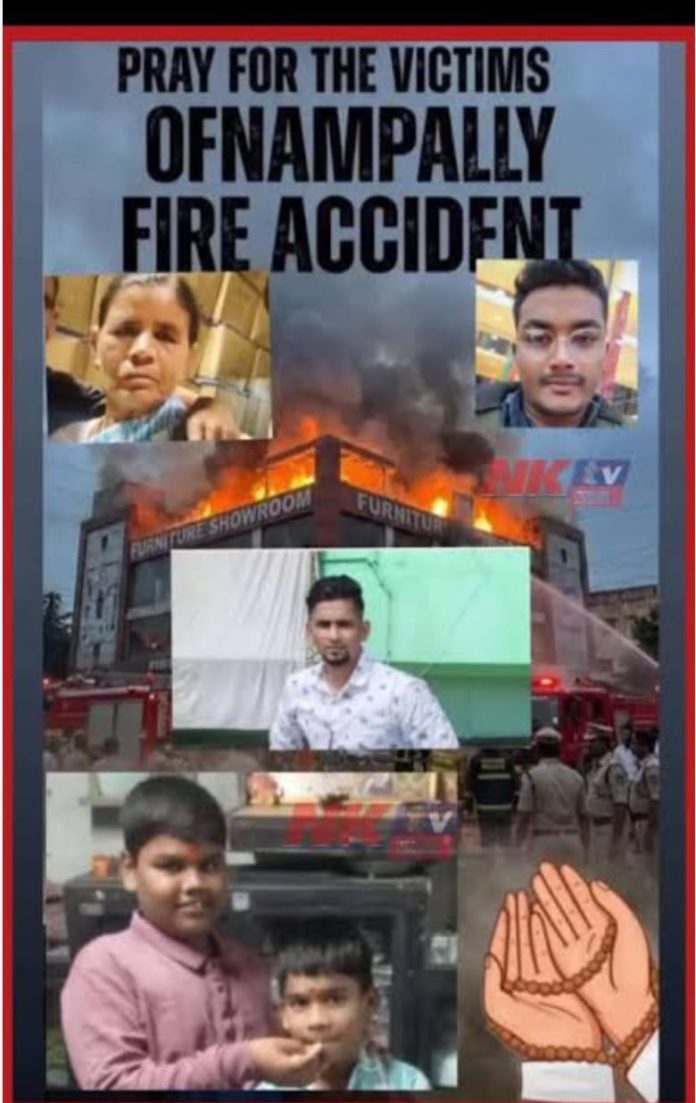
In a world increasingly fragmented by invisible walls and bitter divides, two young men from Nampally recently proved that the pulse of humanity beats stronger than the fear of death. Mohammad Imtiaz and Habib didn’t just save lives; they offered the world a profound lesson written in soot and sacrifice: “Humanity is the greatest religion of all.”
The Dance of Death
The day began like any other, but it quickly turned into a nightmare as a ferocious fire broke out in the narrow lanes of Nampally. As the sky turned black with smoke and the screams of trapped children pierced the air, a crowd gathered. Many watched in horror, paralysed by the spectacle of the “dance of death.”
But Imtiaz and Habib did not hesitate. They didn’t stop to ask the names of the children or the faith of their parents. To them, they weren’t “someone else’s children”; they were simply young lives on the verge of being extinguished.
A Sacrifice for the “Tender Buds”
Driven by a singular, frantic urge to protect the innocent, the duo plunged into the inferno. Witnesses describe a scene of pure heroism: two shadows moving through the orange glow, determined to pluck “tender buds” from the jaws of a fiery end.
They succeeded in their mission – the children were brought to safety. But in a cruel twist of fate, the fire that failed to claim the little ones took the lives of their saviours. Imtiaz and Habib breathed their last, leaving behind grieving families and a city in mourning.
The Message in the Blood
These were young men with dreams, parents waiting at home, and a future ahead of them. Yet, in that defining moment, they chose “the other” over themselves. Their sacrifice sends a stinging rebuke to a society often blinded by communal friction. Through their actions, they declared that their faith was one that gives life, not one that takes it.
As the saying goes, “It is better to light a candle than to curse the darkness.” Imtiaz and Habib became those candles. They burned out, but in doing so, they ignited a flame of empathy in thousands of hearts.
Our Debt to the Martyrs
The question now remains: How do we honour such a colossal sacrifice?
State Recognition: It is imperative that the government supports their families and recognises their bravery with posthumous gallantry awards.
A Living Tribute: The truest monument we can build for them is not made of marble, but of mindsets. To truly salute Imtiaz and Habib, we must purge the religious prejudice from our hearts and learn to see the human before the creed.
In the ashes of Nampally, a grim tragedy occurred. But from those same ashes, a story of immortal love has risen – one that Hyderabad, and the nation, must never forget.
source: http://www.radiancenews.com / Radiance News / Home> Features > Focus / by Radiance News Bureau / January 29th, 2026