His fort at Kurnool was turned into an ordnance factory
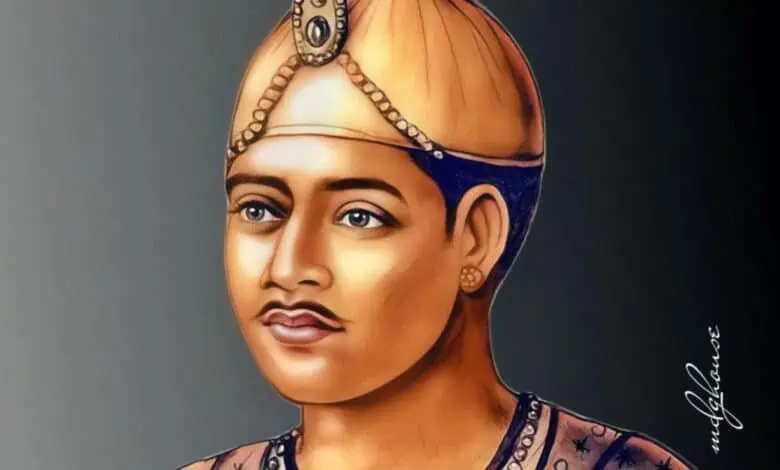
Ghulam Rasool Khan, the Nawab of Kurnool in Andhra Pradesh, who created terror among the officials of the East India Company, came to power in 1823.
Since his childhood, Ghulam Rasool Khan never cared foreign rulers. After coming into power, he took every care to protect his state from the British. He was sure that he had to fight against the British, and was prepared for the same. He befriended Gohar Ali Khan alias Mubariz-ud-Doula, a prince of Nizam state. He turned his fort at Kurnool into an ordnance factory.
The jealous cousins of Nawab Ghulam Rasool, who wished to capture power, colluded with the English and hatched conspiracies against him. They informed General Fraser, who was the British Resident, about the preparedness of Ghulam Rasool for war on 23 August 1839.
Alarmed at this, the East India Company appointed Edward Armstrong to probe into the matter and report it immediately. Edward wrote a letter to General Fraser stating that ‘the armoury of the Nawab of Kurnool is enormous. His preparedness for war is hard to describe. He turned the gardens and the royal palaces into ordnance factories.’ This information sent shivers down the spine of General Fraser, who sent the East India Company forces immediately under the command of Colonel A .B. Dyce to capture the fort of Kurnool and arrest Nawab Ghulam Rasool Khan.
East India Company troops attacked and rounded the Kurnool fort on 12 October, 1839. After six days of fierce fighting, the enemy was able to detain Ghulam Rasool Khan, on 18 October, 1839 at Joharapuram, a village near Kurnool.
Later on, they took him to Tiruchinapalli and imprisoned Rasool Khan in Tiruchinapalli Jail. The British rulers wished to eliminate the Nawab of Kurnool. So they bribed his personal servant into serving poisoned food to Nawab, due to which Nawab Ghulam Rasool Khan died on 12 July, 1840.
The Company charged the servant of murder and sentenced him to death. The British rulers tried their level best to hide this conspiracy, but history revealed the fact in course of time.
Ghulam Rasool Khan is still remembered by the people of Rayalaseema region of Andhra pradesh, where they still eulogize him singing the ballad titled ‘Kandanavolu Nawabu Katha’ (Story of Kurnool Nawab).
Syed Naseer Ahamad is a Telugu writer and journalist who has written several books on the role of Muslims in the struggle for the freedom of India. Many of his books have been translated into other languages. He can be contacted at naseerahamedsyed@gmail.com and cellphone number 91-9440241727.
source: http://www.siasat.com / The Siasat Daily / Home> Opinion / by Sued Naseer Ahamed / September 04th, 2022
Artisans, who have inherited the legacy of handmade chain stitch work, express concern over the various challenges that threaten the continuity of this unique craft.
Srinagar:
The intricate artistry of handmade chain stitch work is witnessing a decline, posing challenges for artisans who have mastered this meticulous craft through generations.
The demand for such traditional craftsmanship is diminishing, overshadowed by the allure of mass-produced alternatives.
Artisans, who have inherited the legacy of handmade chain stitch work, express concern over the various challenges that threaten the continuity of this unique craft.
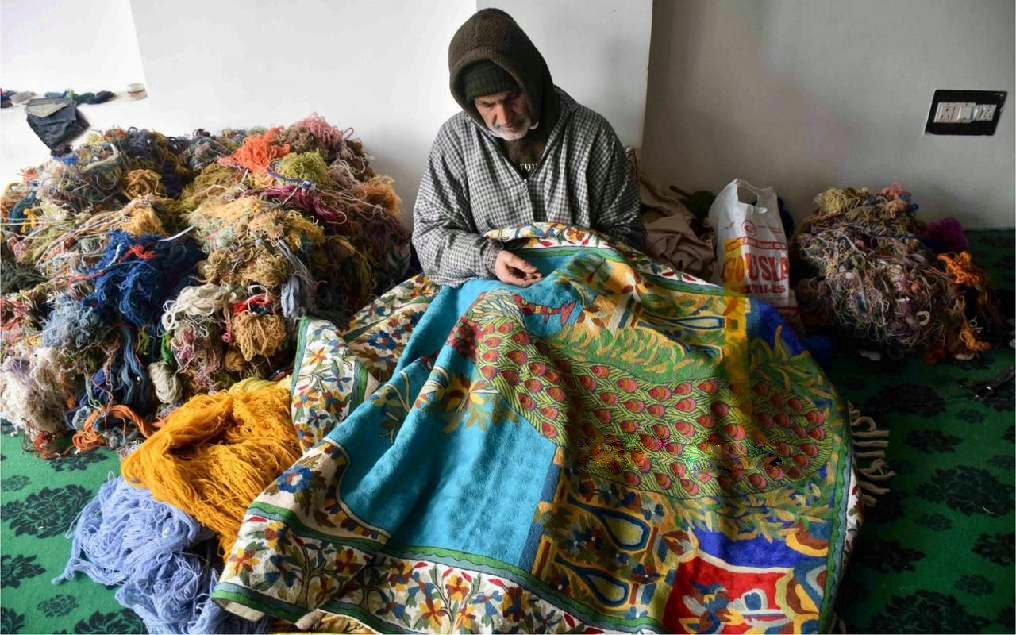
Abdul Rasheed Bhat, a 60-year-old chain stitch master from Tengpora Nawa Kadal, lamented the decline of this art form despite his family running a Kashmir Crewel Chain stitch factory in the area for the past century.
“I have been associated with this craft for the last 40 years. Earlier, there were good returns but a person who works dawn to dusk on a handmade chain stitch doesn’t even earn Rs 100 per day and sustaining a livelihood on such earnings is impossible in today’s era,” he said.
With each passing day, this craft is sinking towards decline, Bhat said, adding that the shift towards mass production and the prevalence of mechanised alternatives led to the dwindling demand for handmade chain stitch work.
With such little earnings, how can young people take up this craft, he questioned.
Artisans said the intricate detailing and personalised touch of handmade chain stitch work have been overshadowed by the allure of machine-produced alternatives, which offer quicker and more cost-effective solutions.
Despite claims of a tourism boon in recent years, artisans said there was a minimal positive impact on their craft. “It is brokers who manage this craft and are responsible for low demand of handmade chain stitch work as they sell machine-made products at the cost of handmade items,” they said.
The artisans who have honed their skills over the years said they find themselves grappling with economic pressures as the demand for their craft is dwindling with each passing day. “People associated with this craft are leaving, opting for some other work,” they said, adding that with the technological advancements, youth prefer digital careers over mastering time-honoured artisanal techniques.
While the government claims to be making efforts to revive and preserve this cultural heritage, artisans said there has been no positive impact on the ground. They urged authorities to address the matter and take effective steps to safeguard this centuries-old art form from fading away in the face of modern trends. (KNO)
Abdul Ahad’s nuanced book explores Kashmir’s artisans’ legacy, offering profound insights on resilience amid enduring turmoil.
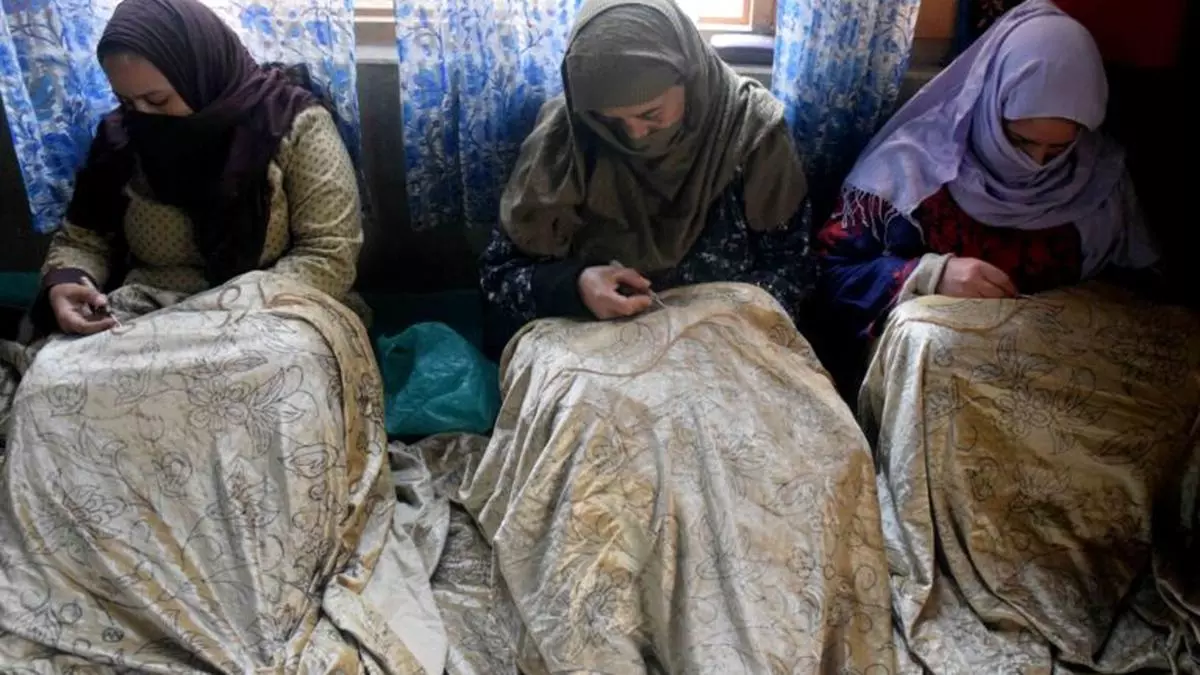
Kashmiri women at work on crewel embroidery. | Photo Credit: Jaspreet Kaur
In the annals of Kashmir’s tumultuous history, the Zaldagar agitation of 1865 is a watershed moment. On April 29, 1865, the community of Shawlbafs (traditional weavers of the famed Kashmiri shawl) hit the streets of Zaldagar in Srinagar in a peaceful protest against the high taxes levied upon them by the Dogra rulers. In the mayhem and stampede that ensued when the Dogra Army attacked the unarmed protesters, as many as 28 Shawlbafs drowned and scores were injured.
The Zaldagar rebellion, as it came to be known, was not just a revolt against immediate grievances. It was the first indigenous political movement of modern South Asia, a precursor to the broader struggles against colonial and feudal oppression. Though the Shawlbafs are often relegated to the shadows of history, their defiance at Zaldagar lit a flame that would ignite countless hearts, shaping the resistance ethos of Kashmir for generations to come.
Who are these unsung heroes? How does the painstaking labour of these artisans elevate the Kashmiri shawl to a symbol of global prestige? In what ways does a labour uprising from the 19th century continue to resonate within the veins of Kashmir’s political discourse today?
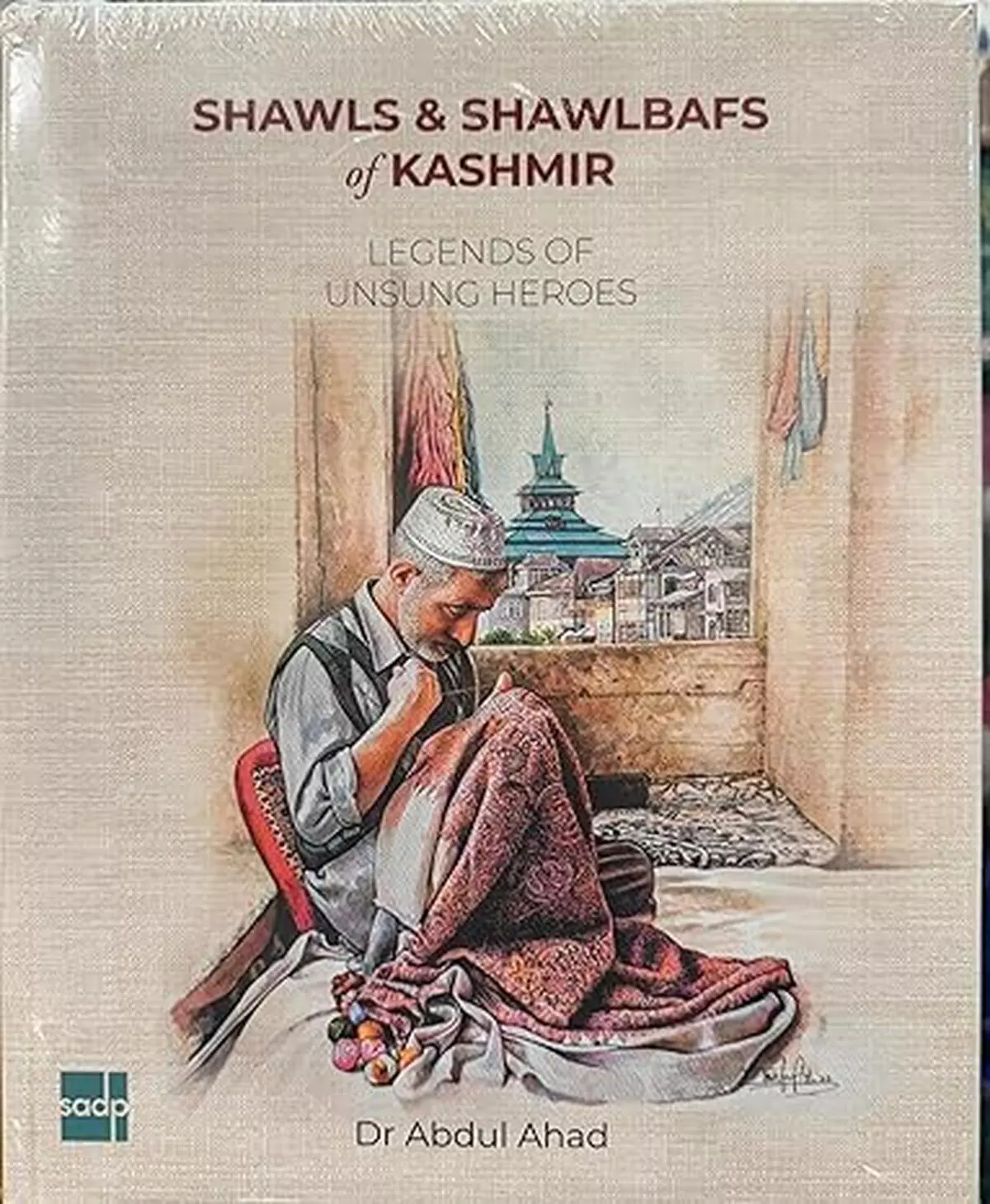
The former bureaucrat-turned-historian Dr Abdul Ahad deftly navigates these questions in his most recent book Shawls and Shawlbafs of Kashmir: Legends of Unsung Heroes,which sheds light on the enduring legacy of these artisans and the historical events that continue to shape the cultural and political fabric of Kashmir. Well-researched and richly embellished, this book is a painstaking exploration of the origin of the Kashmiri shawl as an indigenous product and the commitment and craftsmanship of its makers, the Shawlbafs.
Embedded within Kashmir’s cultural tapestry, this cottage industry, now on the precipice of oblivion, finds a voice in these pages, as the text meticulously chronicles its decline and the indelible mark it has left upon the region’s historical and socio-cultural landscape. The book serves not merely as a chronicle but as a poignant requiem for an artisanal legacy that teeters on the brink of extinction.
The shawl as an emblem of Kashmiri identity
Dr Ahad’s groundbreaking work fundamentally challenges the narrative that positions the Kashmiri shawl as an exotic import, alien to the indigenous cultural and artistic milieu of Kashmir. In Chapter One titled “Birth of an Occupation”, while departing from the perspectives presented in earlier works like Frank Ames’ The Kashmir Shawl and Its Indo French Influence and Parviz Nemati’s Shawls of the East: From Kerman to Kashmir, both of which suggested a foreign origin for this craft, Dr Ahad argues that the shawl is not merely a fabric but a profound articulation of Kashmiri artistic identity, deeply interwoven with the region’s socio-cultural fabric from its inception.
Shawls and Shawlbafs of Kashmir: Legends of Unsung Heroes / By Dr Abdul Ahad / South Asia Distributors and Publishers, 2024 / Pages: 100 / Price:Rs.6,250
Archaeological evidence shows that the art of shawl-weaving in Kashmir began in Burzahom, Srinagar, over 5,000 years ago. Tiles found in Harwan, Srinagar, and Hutmur, Anantnag, suggest that people in Kashmir at that time were highly skilled in weaving fine, transparent cloth. These discoveries highlight the long and rich tradition of weaving in the region. The shawl, Dr Ahad asserts, is emblematic of the Kashmiri ethos, reflecting the intricate interplay of history, tradition, and artistry that defines the region, thereby reasserting its rightful place as an indigenous craft that is not a derivative of Central Asian influences.
In the chapters “Shawl Karkhanas: Avenues of Employment” and “Shawl Trade: A Lucrative Business”, Dr Ahad provides a comprehensive analysis of the wool industry in Kashmir, presenting it as a cornerstone of both economic and social development. He elucidates how shawl karkhanas (woollen weaving workshops) functioned as traditional special economic zones, providing extensive employment opportunities and facilitating the socio-economic upliftment of rural and urban Kashmir. Dr Ahad’s documentation highlights how the integration of these industries into broader economic frameworks not only spurred local development but also positioned the shawl trade as a significant contributor to the region’s prosperity.
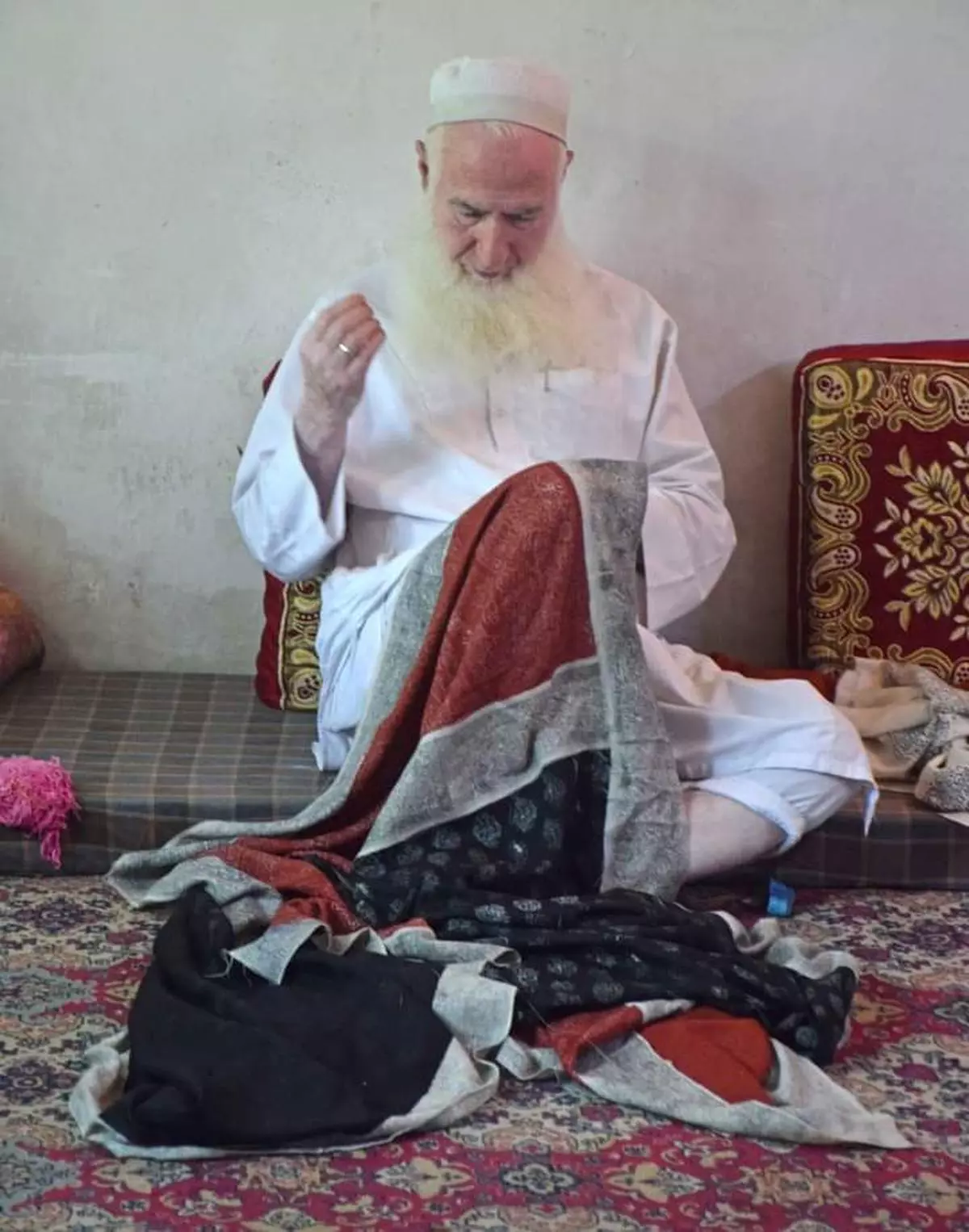
Haji Ghulam Rasool Khan, a master craftsman from Srinagar who was awarded the Padma Shri for reviving the art of Jamawar patchwork. | Photo Credit: Jaspreet Kaur
The unsung Shawlbafs
In the forthcoming chapters, Dr Ahad unveils the tribulations of Kashmir’s artisans—its weavers, embroiderers, designers, spinners, and craftsmen. Through a comprehensive analysis, he shows us how their labour not only influences the socio-economic fabric of Kashmir but also feeds into the region’s political discourse of dissent. In this way, he highlights the historiographical neglect of the shawlbafs, whose lived experiences and socio-economic struggles have been conspicuously absent from historical narratives. He writes: “The productive and creative activities of Shawlbafs—who have carried them out against heavy odds to eke out their existence, improvise their skills, increase the quality of shawl products, and, thereby, build the edifice of Kashmiri society and the soul of its cultural stockpile—have regrettably been denied (and are being denied even today) the space they deserve in the history of Kashmir.”
Dr Ahad posits that the significant surge in population, coupled with the expansion of the commodity economy, catalysed a profound disjunction between industry and agriculture, as well as a bifurcation of artisans from the agrarian populace. This transformation, driven by the burgeoning bazaar economy, engendered a reliance of artisans on intermediaries and merchants, thereby undermining the autonomy of production.
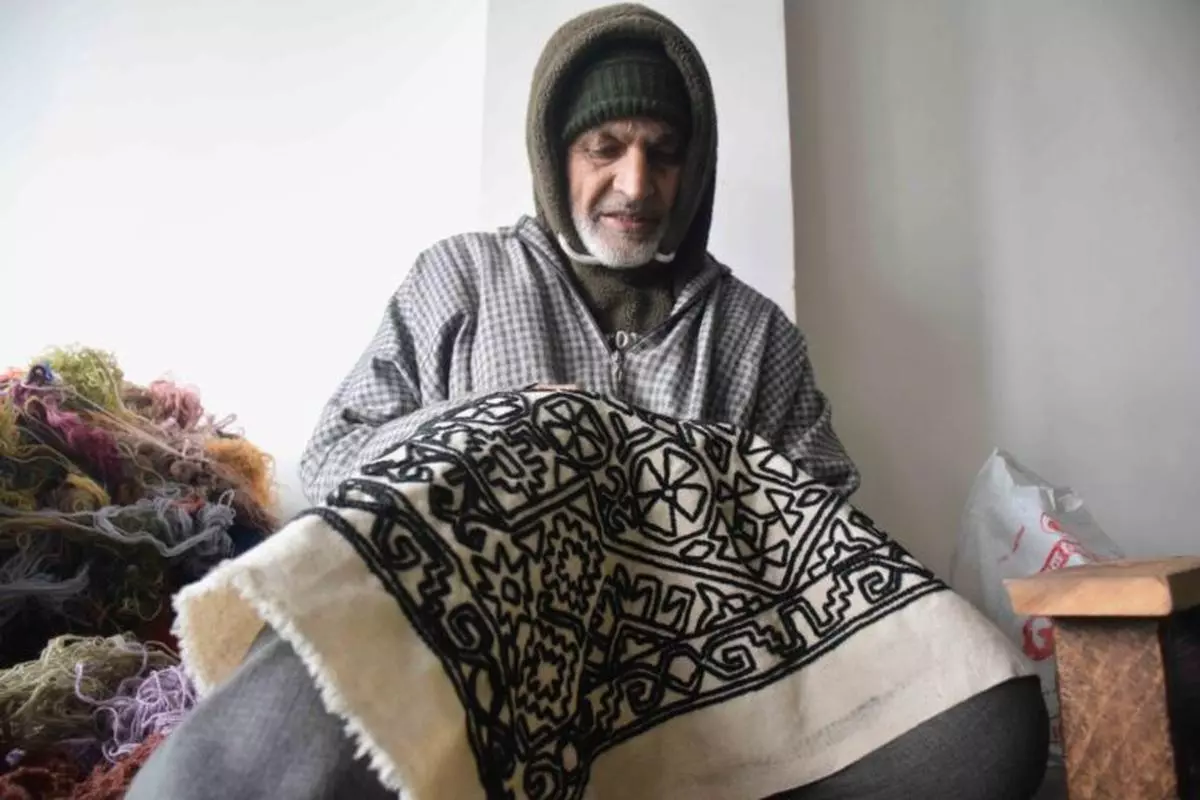
Abdul Rashid Bhat, the famed “chain-stitch master” from Tengpora, Srinagar. | Photo Credit: Jaspreet Kaur
The shawl industry languished under the weight of relentless taxation imposed by successive regimes. Except the benevolent reign of Zain-ul-Abideen, the Mughal, Sikh, and Afghan dynasties exacted crippling levies upon the shawlbafs, driving these artisans, the very lifeblood of the craft, to the brink of destitution. Their impoverishment and subsequent migration to alternate livelihoods marked the slow erosion of a once-flourishing tradition. A Persian couplet in the book poignantly captures the tragedy of Kashmir and its workforce during the Afghan rule:
“Purseedum az khadabiye gulshan zi baghban Afghan kasheed, guft ki Afghan khadabiye kardd (When the poet asked the gardener who laid waste to his garden/ Drawing a deep sigh, he replied: ‘Afghan’)”
This book, ostensibly a treatise on Kashmiri craftsmanship, is also a poignant memoir chronicling the region’s turbulent politics. It dissects how labour strife and uprisings laid bare the yearning for Kashmiri sovereignty, a yearning tragically marred by the relentless machinations of political expediency, which plunged the Valley into perennial turmoil. The narrative captures the essence of the Zaldagar Rebellion of 1865 which ignited a wave of cooperative movements that reverberated far beyond Kashmir’s borders, their ideological ripples echoing across distant geographies.
It also meticulously charts the region’s descent from a bastion of cultural and historical significance into a landscape marred by chaos, anarchy, and oppressive foreign occupations. Through a nuanced exploration of centuries of political resistance and agitation, the book captures Kashmir’s relentless struggle to reclaim its lost identity and agency, offering a profound commentary on the resilience of a people amid enduring turmoil.
This book sheds light on the often-overlooked artisans whose skilled hands have brought international fame to the humble shawl, from gracing the shoulders of VVIPs at events like the FIFA World Cup to driving an industry worth Rs.5,000 crores annually. It is a poignant call to recognise the quiet resilience of these unsung heroes, whose craftsmanship speaks louder than their voices, yet remains largely unheard. Shawls and Shawlbafs of Kashmir is a remarkable ode to Kashmiri culture, seamlessly weaving history, artistry, and tradition into a compelling narrative.
Bilal Ahmad Wagay teaches Politics at Government College, Beerwah.
source: http://www.frontline.thehindu.com / Frontline / Home> Books> Book Review / by Bilal Ahmad Wagay / September 20th, 2024
Haidry, who has written songs for films like Mukkabaaz and Dobaara, talks about his Delhi connection, poem Hindustani Musalmaan and industry experience.
MOVING PLACES: Hussain Haidry moved to Delhi to understand the city before writing for films
Film lyricist Hussain Haidry has said that aspiring lyricists should opt for independent music to establish themselves in Bollywood.
“If you check Spotify’s top 100 list, all are not Bollywood songs there and if you want to make it big, I think you should go for independent music. There is a lot of space for independent artists in India nowadays,” Haidry told Patriot.
“Once you gain recognition through independent music, you can then approach different music and film directors,” said Haidry who has written the songs like Tu Chale Toh, Tanha Begum, Bahut Hua Samman, Haathapai, Bandar Baant, Waqt Ke Jungle, Dariya Hai, Pari among others.
Haidry mentioned that he has an old connection with Delhi.
“When I decided to leave my job and pursue writing, a random thought came to my mind that I would have to understand Delhi first if I want to write for films. Then I shifted to Delhi with my friend for some time to understand the city,” he said.
“When my poem Hindustani Musalmaan went viral, I was invited to different events to recite it in the city. I made new friends in Delhi also,” he said before adding, “Almost every restaurant in the national capital offers the best quality of food. I love to have Chana Kulcha, Chhole Bhature whenever I visit the city.”
Regarding his much talked about poem Hindustani Musalmaan, Haidry, who is also a dialogue writer, said he wrote it while travelling to Bhutan in 2015.
“I had written it in my diary but I lost it. Since I remember its initial lines, I started rewriting it in 2016. It came out in a new form and incorporated a few of my past experiences,” Haidry said.
“The thought behind the poem was that Muslims also have a religious, political, and linguistic identity,” said Haidry, a huge fan of late film lyricist Sahir Ludhianvi.
The 38-year-old lyricist said that initially he had no interest in becoming a writer.
“I was working in a corporate house. However, I used to ponder what I would do with my life apart from my job. I used to read and write a lot of poetry and became friends with lyricist Varun Grover and screenwriter Gazal Dhaliwal. We used to recite our poetry in Mumbai in open mic sessions and Varun asked me to shift to Mumbai and write songs in films. When I shifted to Mumbai, I also learned about dialogue writing and Varun introduced me to film director Anurag Kashyap,” said Haidry who has written songs for films like Gurgaon, Qarib Qarib Single, Mukkabaaz, Sherni, Dobaara among others.
Reflecting his collaboration with filmmaker Anurag Kashyap on his two films — Mukkabaaz and Dobaara, he said, “There was no restriction while writing songs for Mukabaaz as Anurag Sir told me to write a song. He does not give you too many briefs, instead will tell you to write a song and give a situation. If you write a fabulous song, he will use it in the film.”
He called Qarib Qarib Single film director Tanuja Chandra her first mentor.
“When I worked on her film, she trained me very well to write the lyrics. She told me that one has to write simple and beautifully,” said Haidry who reads poets like Nida Fazli, Munawwar Rana and Rahat Indori.
Haidry believes that a lyricist has to face various challenges while penning a song.
In poems, a poet is free to write whatever he wants. He has complete authority to edit whatever he wants. But in songs, you are given a situation and the language has to be according to the character-Hussain Haidry
“Sometimes you are given a confusing situation and you wonder what to write and sometimes the tune of the song is challenging. As a lyricist, one has to maintain the metre of writing and say things beautifully in a limited composition. Revision and changes are also a challenge,” said Haidry who has written the screenplay of web series Laakhon Mein Ek Season 2.
The poet differentiates between writing a poem and lyrics.
“In poems, a poet is free to write whatever he wants. He has complete authority to edit whatever he wants. But in songs, you are given a situation and the language has to be according to the character. A music and film director takes a call on what to keep and what to edit. Lyricist is just a part of a product,” said Haidry who hails from Indore.
When asked to comment on the new lyricists in the industry, he said, “If they are trained, their work will be visible.”
source: http://www.thepatriot.in / Patriot / Home> Music / by Idrees Bakhtiyar / July 22nd, 2024
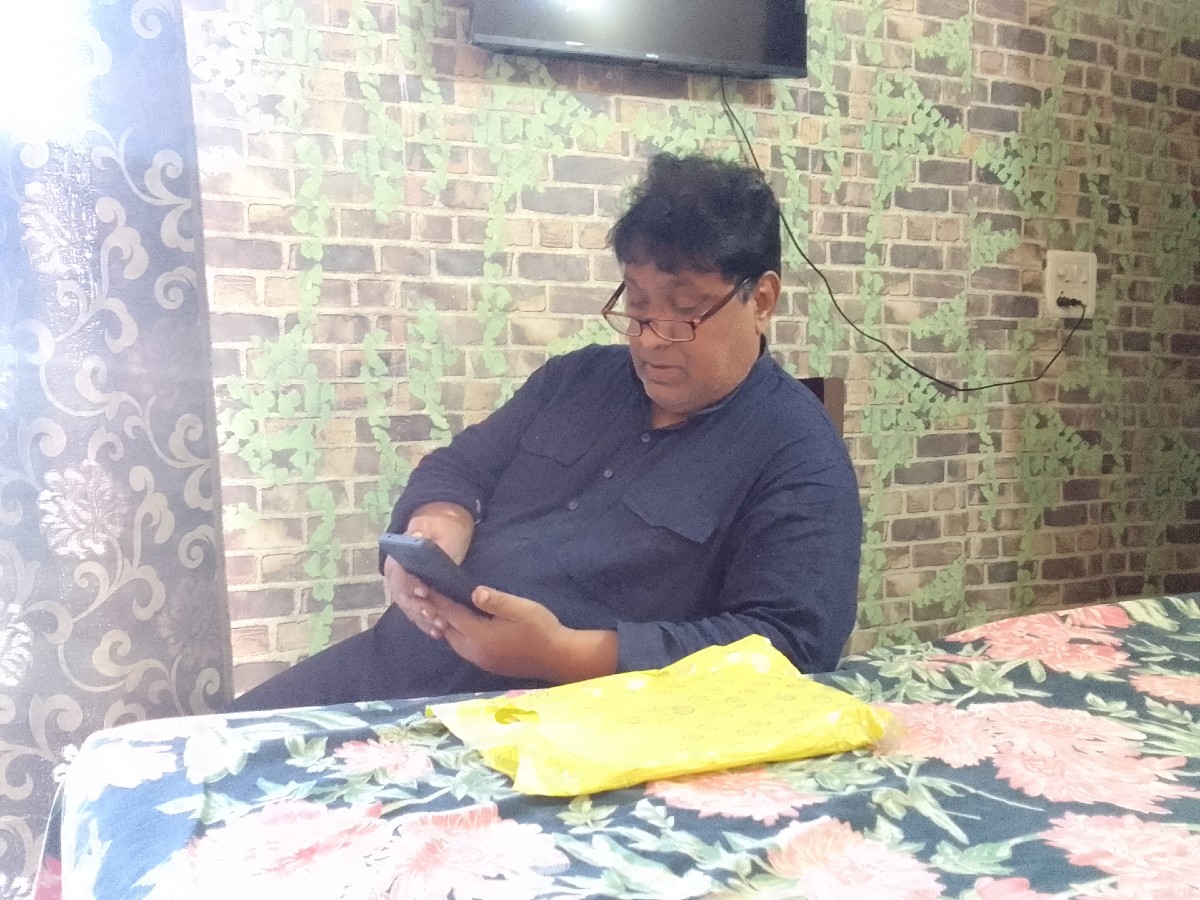
Saleem Baig has spent 18 years filing 20,000 applications under RTI to root out corruption. His efforts have earned him the wrath of many but resulted in correcting a few wrongs.
RESILIENT: Saleem Baig has file 20,000 applications under the RTI Act.
Saleem Baig has been using the RTI (Right to Information) Act as a sword against corruption and irregularities for the last 18 years. He has filed around 20,000 applications in states and Union Territory departments, as well as, the Prime Minister’s Office (PMO).
While his applications have often resulted in forcing authorities to change their decisions, and punishing the officers, Baig’s journey as an RTI activist has hardly been ‘a bed of roses’.
He has paid a heavy price for it as his life has turned private and he is hardly seen in public, living in complete secrecy nowadays.
“I have faced different kinds of problems [as an RTI activist]. I have been harassed for asking questions to police and anti-social elements. I was underground for around three and half years, jailed for 20 days and changed residence many times due to fear of arrest, fear or threat,” says Baig, who hails from Uttar Pradesh’s Moradabad district.
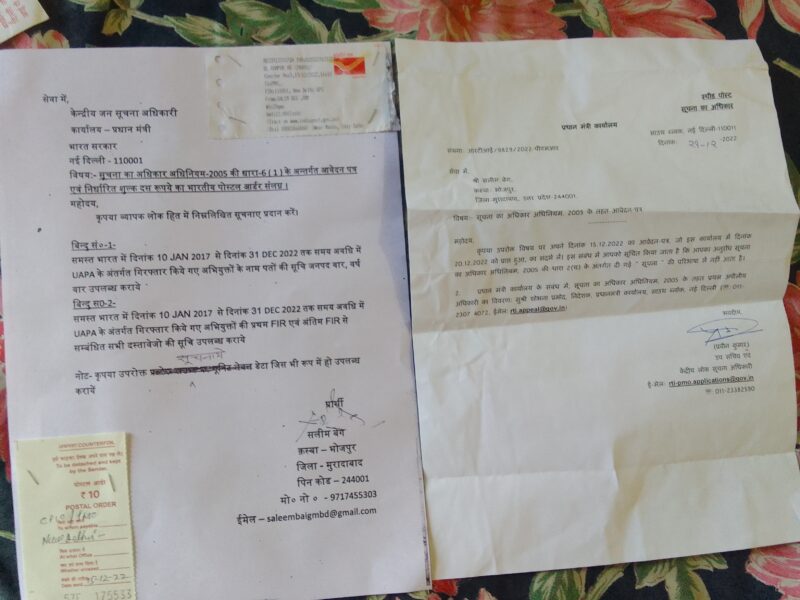
BIG RESPONSE: The reply from the Prime Minister’s Office
But peace of mind isn’t the only thing affecting him adversely.
“I have lost my earnings, business and have had to leave my hometown too.”
Earlier, he owned a business dealing with brass products and also practiced Ayurveda medicine in his hometown of Moradabad, which is famous for its intricate brass-work and is called Peetal Nagri (city of brass). But his dispensary and business shut down and his newspaper became defunct after he was sent to jail in 2008.
Although Saleem started filing RTI immediately after the act came into force in 2005, harassment started in 2007 when he filed an RTI seeking to unearth caste-based recruitment in Moradabad police.
“In February, 2007, I had filed an RTI application at the Moradabad Police office seeking details about recruitment of police constables in the district. I suspected that the jobs had been sold. We challenged it to the RTI watchdog body UP State Information Commission, which found an illegal process in this recruitment and slapped a fine of Rs 25,000 on SP, rural Moradabad.”
The order put him in the bad books of police and others associated with them.
“This order was enough for the police officials to start harassing me and my family. I was pressured and threatened too not just by the police but also by acquaintances who were affected by it, as well as brokers. They wanted me to withdraw the case. But I didn’t and informed it to the commission,” he says.
He says he had to pay a heavy price for it.
“The SO (Station Officer) Police implicated me in fake cases of theft and extortion, among others. So, I went underground for six months,” reveals Saleem.
“When I returned after six months, the police first arrested me in June, 2008, in connection with fake cases and then filed an FIR before sending me to jail. I was released after 18 days. After my release, the police filed a fake FIR against me again.
“Finally, I left my hometown and moved to Lucknow and remained underground for two and a half years. My lawyer told me that the police wanted to impose NSA (National Security Act) and arrest me. They are all bogus cases, which have been quashed by the court now,” said Baig.
The RTI is an act of the Parliament of India which sets rules and procedures regarding citizens’ right to information. Right to Information Act, 2005, mandates timely response to citizens’ requests for government information and empowers every citizen to seek any information from the government, inspect any government document and seek certified photocopies thereof.
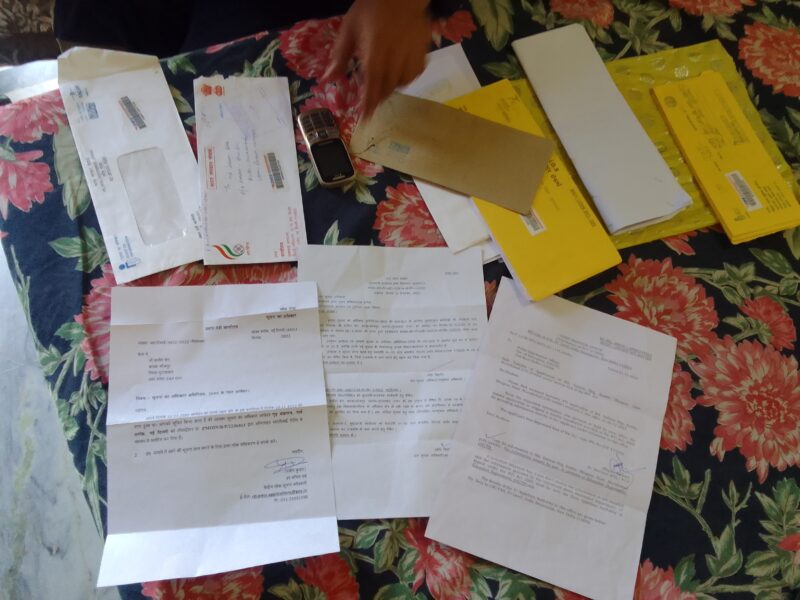
FRUITS OF LABOUR: Some of the responses that Baig has got from his applications
During this entire period, Saleem’s personal life has been badly affected. Not only Baig, but his family has also paid a huge cost.
“I am unable to complete my regular work — related to authorities — easily. For example, if I want to admit my child to school and if there is any requirement or difficulty, I cannot even approach any politician, Member of Legislative Assembly (MLA) or a Member of Parliament (MP). Other people can do, but I can’t because of the bad rap due to our RTI queries,” he adds.
“If we ask for any information like road, water, electricity from local, state or central government-level officers, then we enter their ‘bad book’. When we reveal information, politicians and officers feel upset. So, our general work from block level to Centre, which is our right, anyway, doesn’t happen easily,” he complains.
Baig feels that the lives of most of the RTI activists are at risk.
“I have personally faced this. People need to realise that while filing applications under RTI, we are helping the state and Centre by bringing in awareness. But RTI activists are being killed in the country because no government or officer wants to back them.”
Commonwealth Human Rights Initiative data shows that 28 activists have been threatened, assaulted, or killed every year on an average since the Right to Information Act came into effect in 2005 in India.
“When I went underground for over three years, everything – my brass goods business and ayurvedic shop — was crushed. Sab chopat ho gaya (Everything ended).We barely survived. I was not as rich. My earnings got reduced drastically but expenses increased due to travel or lawyer’s fees. Our belongings were sold. My children’s education had come to a halt for two years. So, I had to shift them to my father-in-law’s home,” Baig says before breaking down.
“My younger son often asks his mother, ‘Ammi (Mother), why do the police come to our home again and again’. My heart would tremble when my wife would tell me over phone that our son is asking, ‘Ammi hum school kab jayenge (Mother, when would we go to school). I faced a lot of problems, which I can’t explain,” he says.
Some relief had come in the form of some Non-Governmental Organisations (NGOs), which helped Baig.
“Some big NGOs offered me fellowships after that. In 2011-12 ‘Dalit Foundation’ gave me a fellowship of Rs 7,000 per month for highlighting atrocities on Dalits and minorities. In 2012, another funding agency gave me a fellowship of Rs 15,000. That was a big support for me to survive that time.”
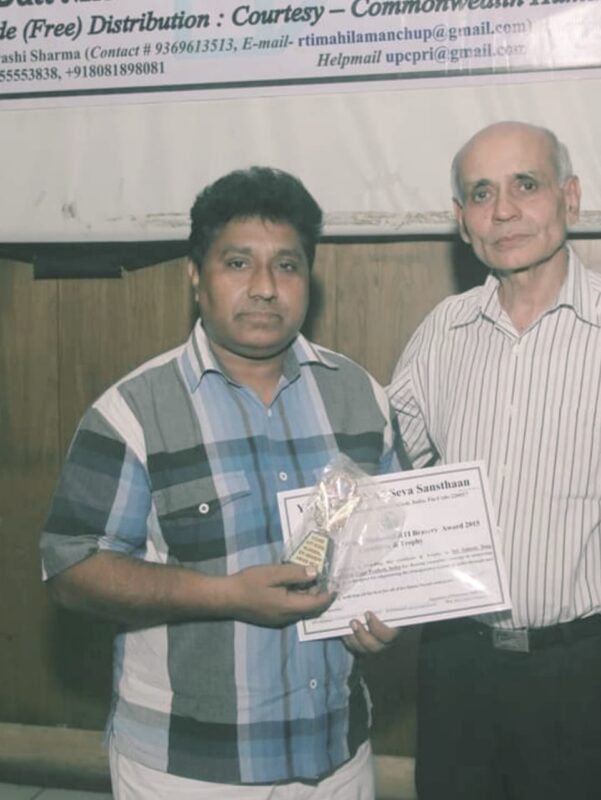
Baig has won many awards for his courageous work, including a lifetime achievement award by the Delhi State Minorities Commission. Also, his RTI reference was used by the court and published in international media. He was a member of the fact-finding team of the 2020 North-East Delhi riots too.
“Presently, I work as a RTI trainer. Some NGOs invite me to train their people and also, I work as a researcher with a prestigious organisation. Currently, these two are the only sources of my income. But during Covid, my condition went bad again, because my job as a trainer came to a halt. Then I went into debt, which I haven’t been able to pay as yet,” he says further.
For the last 5-6 years, Baig has been living in Delhi with his family.
“I want to appeal to the citizens to use the RTI Act for public’s benefit. The usage of RTI is very low at present because many state and even Central governments have shrunk power of this act. Especially since 2014,it has gone from bad to worse. But we can use this act as a tool or sword to stop corruption. We should fight for our rights. If we don’t have awareness, then we are like dead people. Aap mare hue hain, aur mara hua aadmi hi harkat nahi karta (You are a dead man, as it is only a dead man who doesn’t react).”
source: http://www.thepatriot.in / Patriot / Home> Community / by Muhammad Tahir / March 06th, 2023
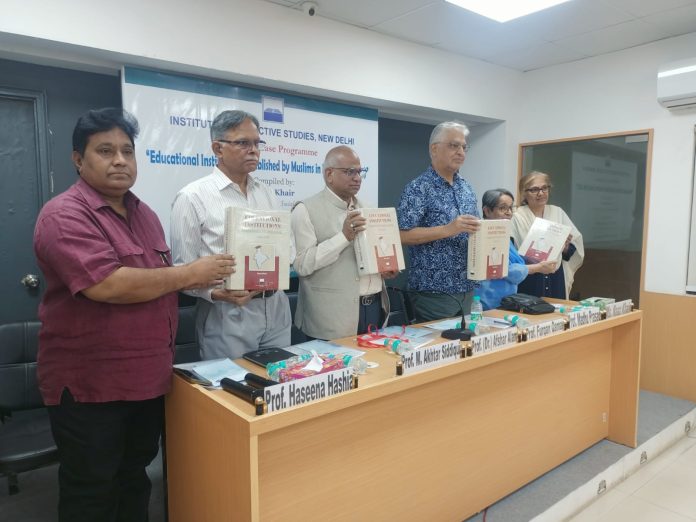
A new book titled “Educational Institutions Established by Muslims in India (1986-2016),” authored by Naaz Khair and commissioned by Institute of Objective Studies, was unveiled by Professor Afshar Alam, Vice Chancellor of Jamia Hamdard, at the IOS auditorium here Saturday.
While releasing the book, Professor Alam highlighted its comprehensive examination of educational institutions founded by Muslims in India over a thirty-year period.
He noted, “The book offers insightful analysis of how these institutions have contributed to the educational and social progress of the Muslim minority, focusing on both the challenges faced and the achievements made. It also underscores the significant role of institutions like Aligarh Muslim University and Jamia Millia Islamia in providing access to higher education for Muslim students, who are often marginalized in India’s broader educational landscape.”
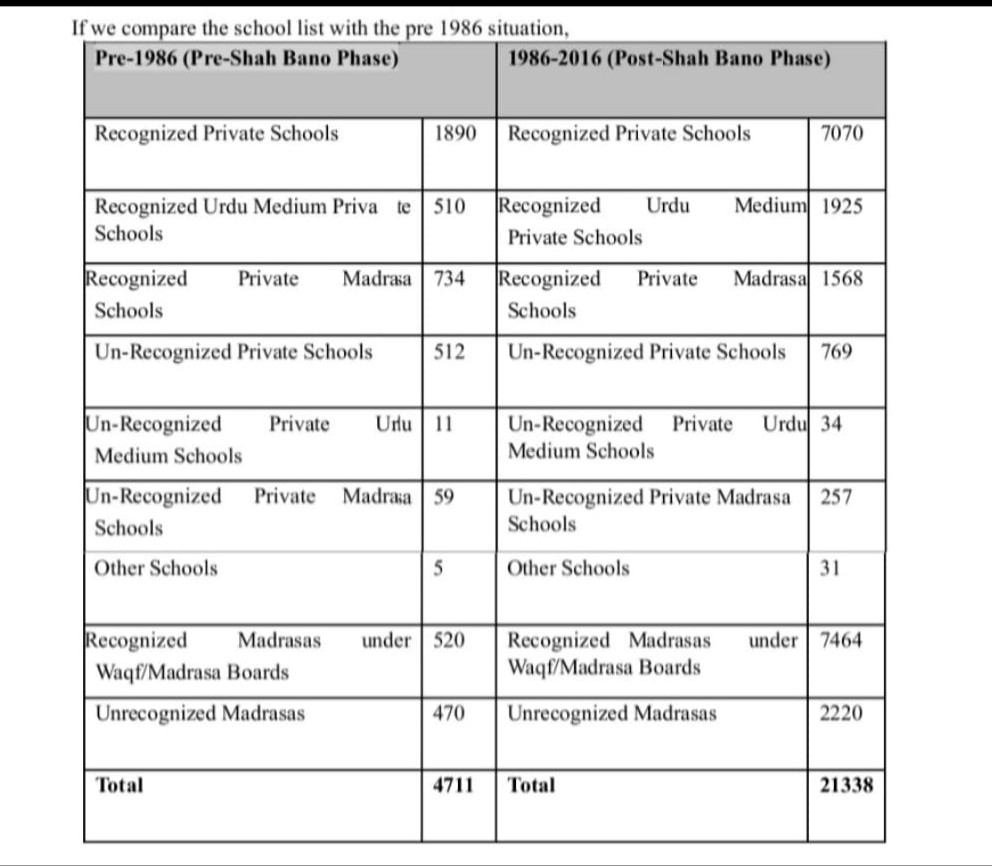
Naaz Khair, the author and an independent consultant in education and social sector, shared key findings from the book. She revealed that, between 1986 and 2016, Muslims established 21,338 recognized and unrecognized private schools, including madrasas, as well as seven UGC-approved private universities, 111 UGC-approved private colleges, 3,660 minority-run private schools, colleges, and universities, and 226 minority-run technical institutions.
Professor Furqan Qamar from JMI’s Department of Management Studies praised the publication, noting, “This is an excellent starting point, but it’s crucial to continue updating this data. The creation and regular updating of a comprehensive database of Muslim-established institutions will benefit researchers both nationally and internationally.”
Professor M. Akhtar Siddiqui, a retired faculty member from JMI’s Faculty of Education, remarked, “This study firmly establishes that Muslims have made significant contributions to nation-building, despite criticisms to the contrary. It shows that the community values education and is committed to the nation’s progress.”
Professor Madhu Prasad, a retired professor from Zakir Hussain College, reflected on her own experience, stating, “I come from an institution, Zakir Hussain College (formerly Madrasa Ghaziuddin), which represents the rich history of Muslim education in India. For over 300 years, it has been a leading institution for higher education in North India, and its legacy is a testament to the Muslim community’s enduring contribution to the country’s educational landscape.”
RTI activist and researcher Saleem Baig discussed the difficulties encountered in gathering data for the book, noting the reluctance of stakeholders and government bodies to share information about Muslim-established institutions.
source: http://www.radiancenews.com / Radiance News / Home> Focus> Report / by Radiance News Bureau / October 20th, 2024
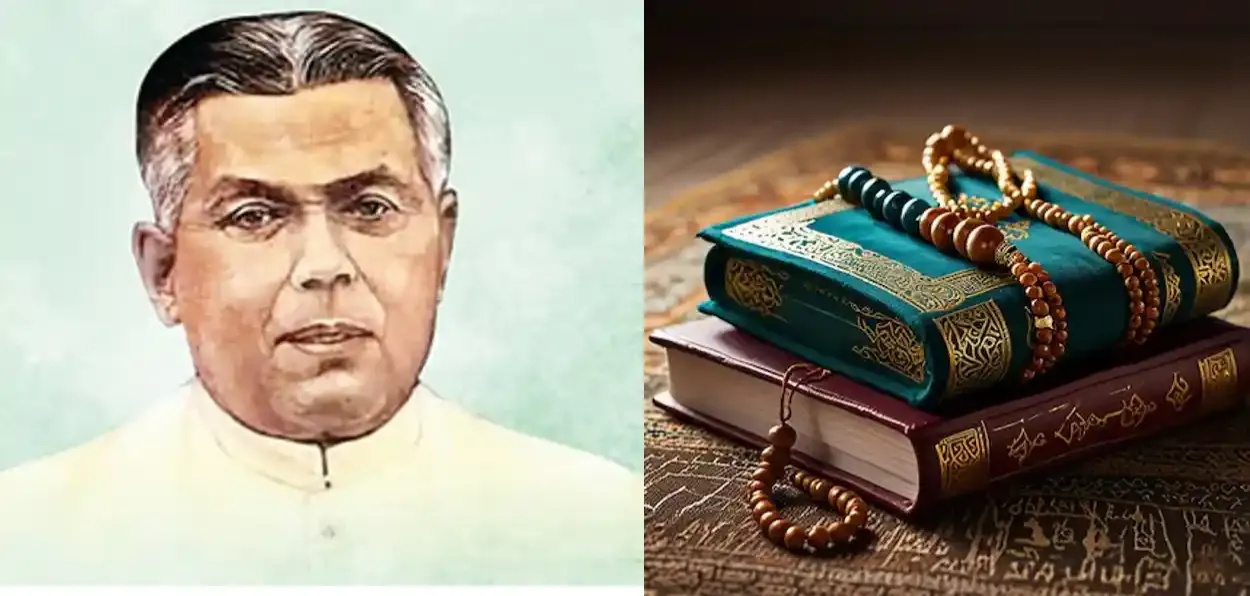
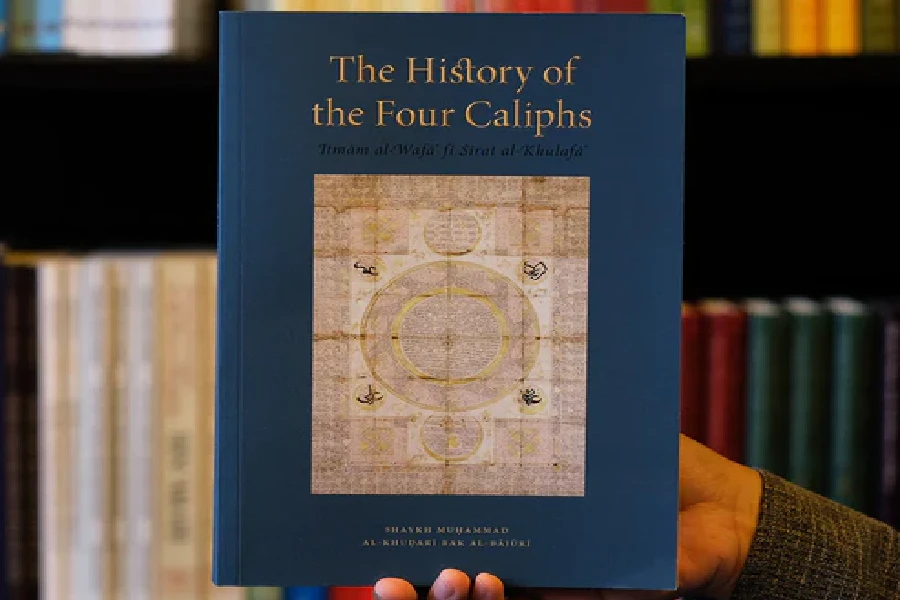
The Assamese biographical literature is rich. A large part of this literature is Islamic biographies, primarily those of Prophet Muhammad and his four Caliphs. These books have enriched the Assamese language. Assam’s first Chief Minister Bharat Ratna Gopinath Bordoloi wrote the first biography of the Prophet Muhammad in Assamese.
During the Quit India Movement in 1942 when Gopinath Bordoloi was in jail, he wrote several biographies for children. One of them was Hazrat Muhammad. Thus Gopinath Bordoloi’s book is the first biography of the founder of Islam in the Assamese language. Bordoloi in all his biographies began by addressing his readers (children) with ‘Dear Son’ or ‘Son’. In the case of the biography of Prophet Muhammad too he begins, “Son, now I will tell you briefly about the biography of the Prophet Muhammad, the preacher of Islam”.
Before this book, Bordoloi wrote biographies of Sri Ramachandra, Buddha, and Jesus Christ. At the beginning of the biography of the Prophet Muhammad, Bordoloi says that the biographies of other saints contain many supernatural and wonderful things. Some people have added similar elements to the biography of the Prophet Muhammad but Bordoloi admits that Prophet Muhammad’s biography is more historical than that of others.
Representative picture of Islamic Biography
The biography covers all aspects of the Prophet’s life – from his birth to his preaching, ruling the country and death. Bordoloi beautifully describes how the Prophet was humiliated from the time he began preaching until he left for Medina. He says Prophet Muhammad was patient throughout. He tells his readers that humans can learn a lesson in patience from him.
Bordloi writes in his book that Prophet Muhammad never used sarcastic and harsh words against his enemies. “Even more admirable is his (Prophet) treatment of his contrarians and enemies. You have read how the sinful Quraysh treated him (Prophet) cruelly. But he never spoke harshly to these enemies. There was absolutely no place for coercion in the rule of the Prophet Muhammad. He ruled through negotiations, agreements, and trials. This kingdom was run by treaty negotiation and judgment. There was no place for coercion,” Bordoloi writes.
The Prophet Mohammad’s kingdom provided security for all. However, he had to abandon the policy of non-violence to maintain law and order in his kingdom. Gopinath Bordoloi mentions the quotes of the Father of the Nation Mahatma Gandhi on Prophet Mohammad.
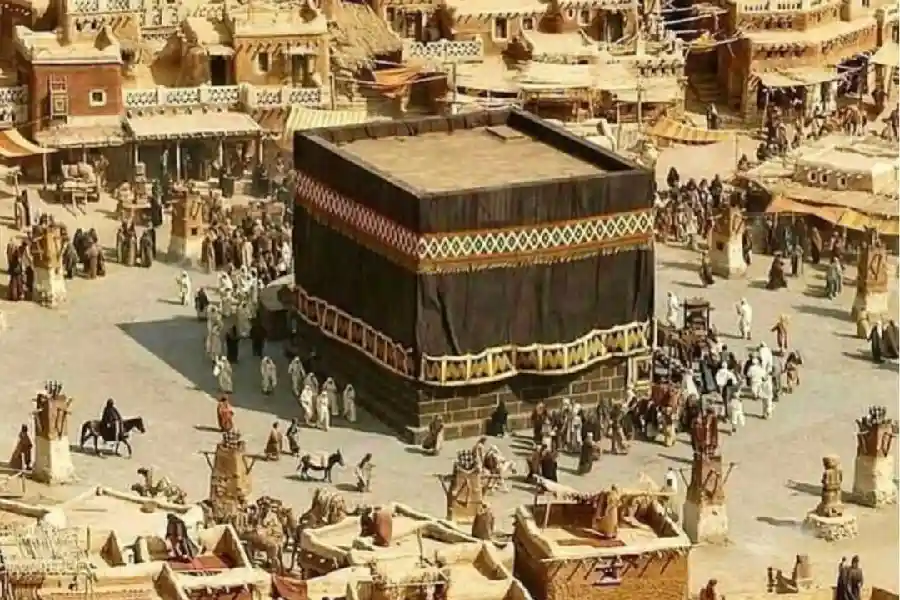
An old picture of the Holy Kaba
“I am now more convinced than ever that it was not the power of the sword that brought victory to Islam in the world arena, but rather it was the very simple life of the Prophet of Islam, his selflessness, promise-keeping, and fearlessness, his love for his friends and followers and his trust in God. It was not the power of the sword, but rather these qualities and virtues that removed all obstacles and enabled you to conquer all difficulties. Someone told me that the Europeans living in South Africa are trembling at the spread of Islam, the same Islam that spread light in Morocco and gave the pleasant message of becoming brothers to the people of the world,” Bordoloi quotes Mahatma Gandhi.
Towards the end of the biography, Bordoloi talks about the oppression he had seen and the oppression committed against others in the name of Islam. He had seen the Muslims resort to violence in their hostility towards people of other faiths. In the context of this completely anti-Islamic act, Bardoli wrote, “In fact, the root of this paradox is selfishness. There can never be quarrels between people who follow religion and people who believe in religion. In every country, there are some clerics and religious leaders who try to make other religions and people of other religions look down on and hate to make their religion look great.”
Like his other biographies, Hazrat Muhammad is written in simple and child-friendly language.
Prophet Muhammad should be read by every Assamese. Not only they will come to know about the life of Prophet Muhammad, but it will also introduce them to the literary talent of Bharat Ratna Gopinath Bardoli and his secular attitude.
(The writer is a teacher at Anandaram Sr. Basic School, North Guwahati)
source: http://www.awazthevoice.in / Awaz, The Voice / Home> Story / by Abdur Rashid Choudhury / October 18th, 2024
Amidst the joy of the Durga Puja festival, the news of an Assamese young researcher in the United States hitting a major success had doubled the happiness of the people across the State.
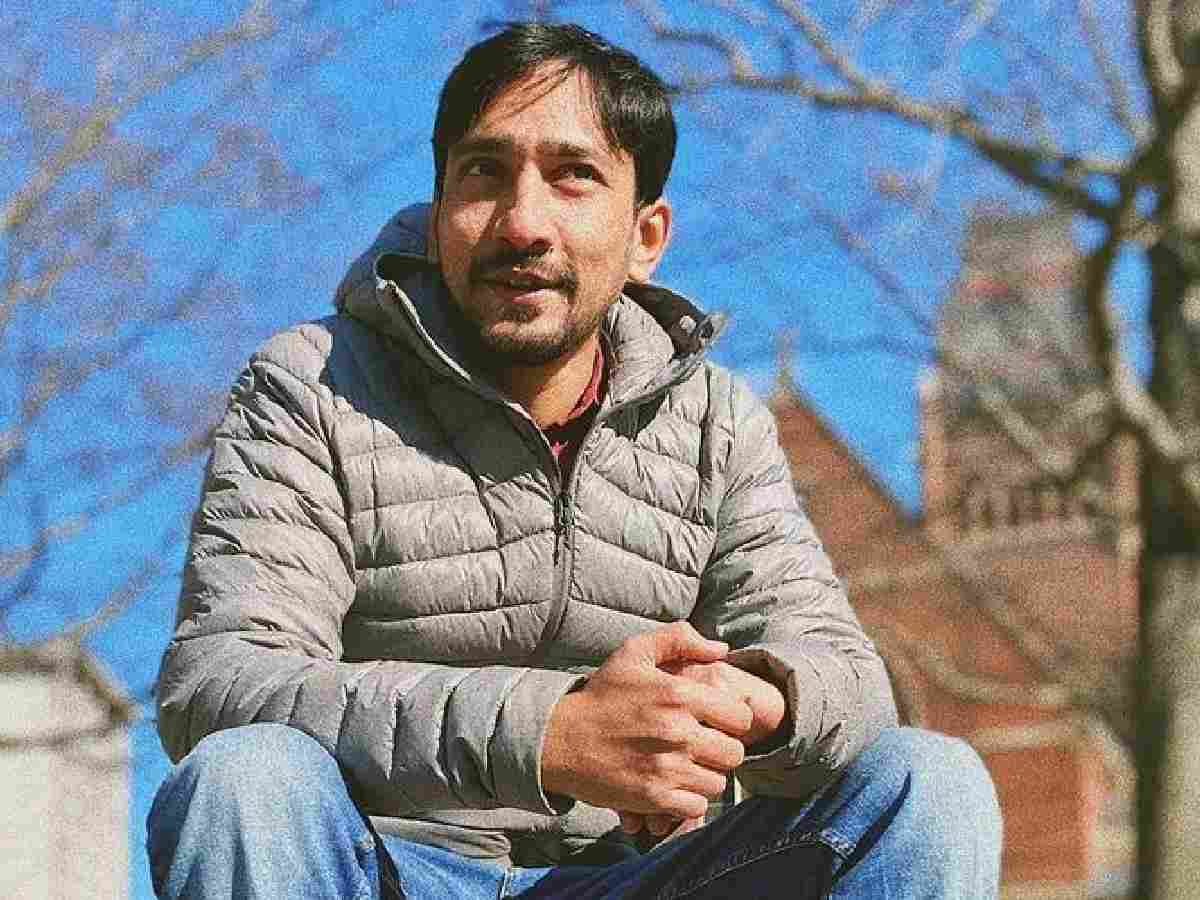
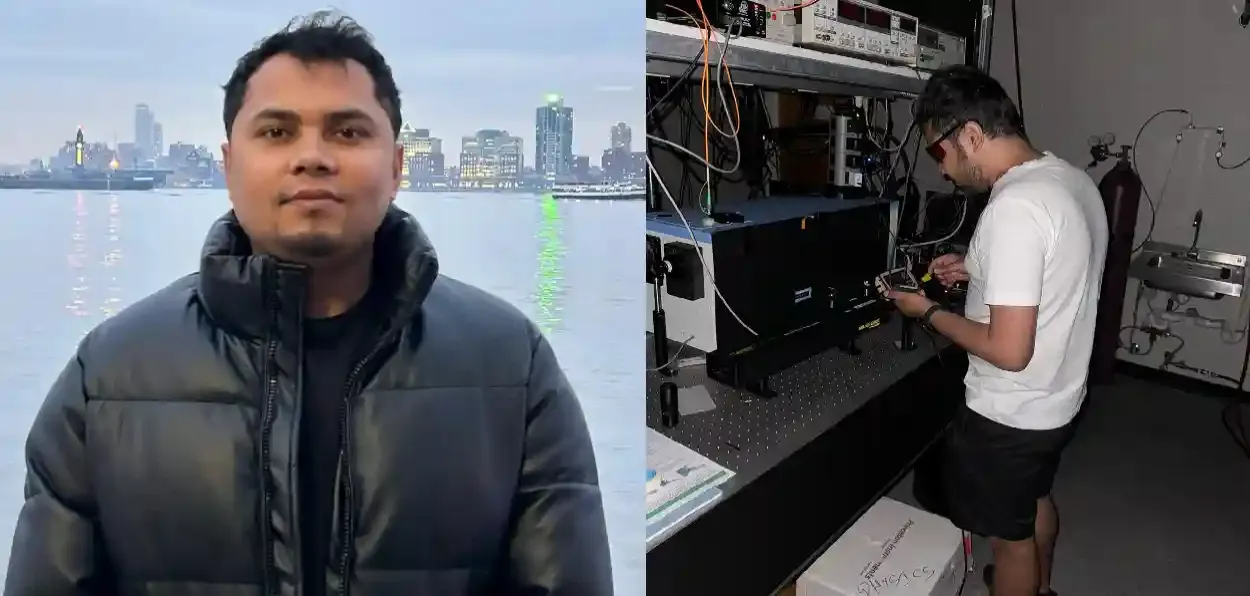
Rahul Islam a researcher at the Stevens Institute of Technology in Hoboken, New Jersey, has developed a mobile app that can identify people suffering from depression. The app can scan a person’s face and eyes to decode the state of his brain.
Rahul Islam, a native of Assam, is an important part of the research led by a senior professor at the university. He hails from the Radhakuchi village in the Karra area of Baihata Chariali in the Kamrup district.
Rahul Islam graduated in Computer Science Engineering from the Indian Institute of Information Technology (IIT), Guwahati, and left for the USA. received a scholarship to fulfill his dream of pursuing higher studies. Rahul Islam is researching under Senior Professor Sang Won Bae at one of the oldest universities in the United States established in the 1870s.
Rahul Islam, son of Golmahmud Ali and Sulema Begum, spent his childhood and adolescence outside the home.
Golmahmood Ali was a Central Reserve Police Force (CRPF) soldier.
Rahul attended several Kendriya Vidyalayas in India till higher secondary due to his father’s job that took the family across India. Rahul Islam passed his matriculation and higher secondary examinations from Dimapur Kendriya Vidyalaya.
Rahul topped the North East with 97% marks in the 2010 High School Leaving Certificate Examination.
In an interview with Awaz-The Voice, Rahul Islam’s father Golmahmood Ali said; “Rahul was a keen reader since childhood. He spent most of the day reading books. As a father, I am very happy and proud today. I have a daughter. Rahul is older, my daughter is younger Every year, Rahul comes home in December and returns to the United States in January.”
It is worth mentioning that depression is currently recognized as a silent killer of human society and a serious threat to mental stability. Identifying depressed people at an early stage is essential to free them. This can be done to identify such patients at an early stage. However, in reality, it is difficult to identify such patients in the early stages.
This is because people who suffer from depression do not want their inner turmoil to be expressed and do not allow it to be reflected on their faces.
Researchers at the Stevens Institute of Technology have developed two mobile apps that can scan a person’s face and eyes to detect depression. Both apps use artificial intelligence (AI). The first app detects brain functioning by scanning subtle changes in the size of the eyeballs that happensto a patient suffering from depression.
A second app, FacePsy, identifies such patients by studying the person’s emotional state through changes in facial muscle movement and brain posture. The innovative discovery of the son of Assam has already been published in various scientific journals in the United States as well as in the national media of India.
source: http://www.awazthevoice.in / Awaz, The Voice / Home> Story / by Ariful Islam, Guwahati / October 19th, 2024
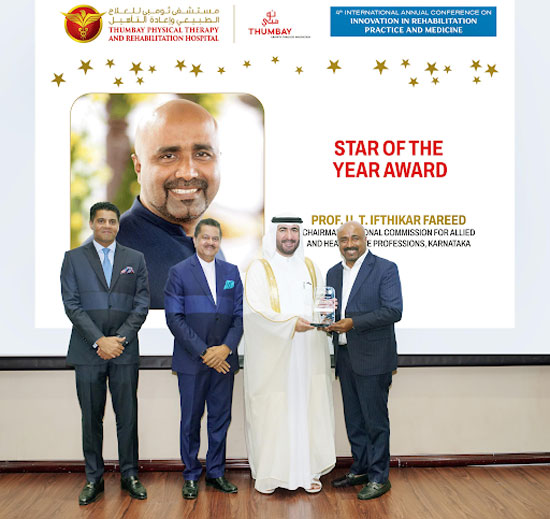
Thumbay Physical Therapy & Rehabilitation Hospital honoured Prof Dr U T Ifthikar Ali, chairman of the Allied & Healthcare Council Karnataka, with the prestigious “Star of the Year” award during the 4th International annual conference on “Innovation in Rehabilitation Practice and Medicine” held at Thumbay Medicity in Ajman.
Dr Ifthikar, a distinguished educationist, healthcare professional, sports enthusiast, and social activist, has played a vital role in overseeing allied and paramedical colleges across Karnataka. His remarkable efforts during the Covid-19 pandemic, where he tirelessly worked for the welfare of the people, were particularly highlighted during the ceremony.
Dr Thumbay Moideen, founder president of Thumbay Group, commended Dr Ifthikar for his unwavering commitment to the fields of education and healthcare. He stated, “Dr. Ifthikar Ali embodies the spirit of hard work and compassion, especially during challenging times like the pandemic. His contributions have not only enriched the education sector but have also significantly improved healthcare delivery in Karnataka. We are confident that he will continue to be a catalyst for positive change in society.”
The felicitation ceremony was made even more special by the presence of Sheikh Dr Majid Bin Saeed Al Nuaimi, chairman of the ruler’s court, Ajman, further emphasising the importance of the occasion.
In his acceptance speech, Dr Ifthikar expressed his gratitude, stating, “I am deeply honoured to receive this recognition. It serves as a motivation to continue my efforts in enhancing healthcare and education in our community. Together, we can create a better future for the next generation.”
The 4th international annual conference on “Innovation in Rehabilitation Practice and Medicine”, held at Thumbay Medicity in Ajman, served as a pivotal platform for discussing advancements in rehabilitation and healthcare. Esteemed healthcare professionals, researchers, and industry leaders gathered to share insights and explore innovative practices that enhance patient care.
The conference featured talks focused on emerging therapies and technologies, including the integration of holistic approaches in rehabilitation. This year’s event highlighted Thumbay Healthcare’s commitment to leading the way in healthcare innovation, emphasising the importance of collaboration in addressing the evolving needs of patients, particularly the elderly population.
The conference not only celebrated achievements in the field but also nurtured networking and knowledge-sharing among participants dedicated to improving rehabilitation practices.
source: http://www.daijiworld.com / Daijiworld.com / Home> Karnataka / by Media Release / October 19th, 2024
A total seventeen soldiers hailing from Dhanori, have attained martyrdom for the country.
At present, more than 550 from the village are serving the Indian Army, while many are enjoying their post retirement life back in their hamlet. There is not a single house in the village, from where a family member has not served the army.
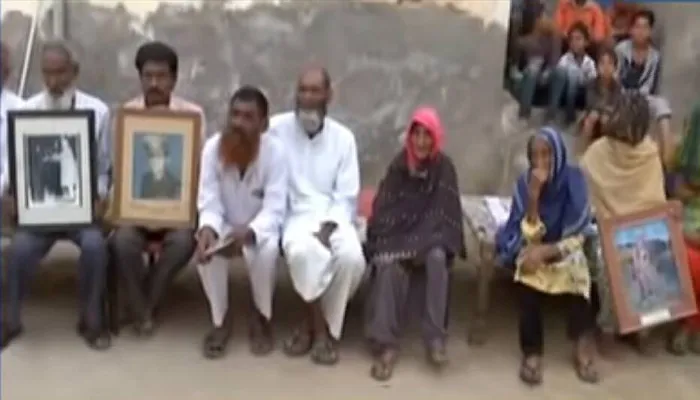
Dhanori’s war widows with the pictures of their husbands
Jhunjhunu:
A common thread binds Sayera Bano, Hasan Bano, Anwar Bano, Mumtaj Bano and Alhamdo Bano, of Jhunjhunu’s Dhanori village. They are all war widows. This village in Rajasthan, has given Indian army, soldiers who have given their lives to serve the interest of the nation right from the First and Second World Wars to Sino-India war to Indo-Pak war and the Kargil war. Name a war, and the village will have a martyr for it, and the war widows.
Sayera’s husband, Azimuddin Khan had been martyred in World War II, Hasan and Anwar had lost their husband Saifi Muhammad and Nizamuddin Khan in 1962, Indo-China war. Mumtaz’s husband Zafar Ali Khan had martyred in 1971 and Alhamdo’s husband Ramzan Khan gave his life, while protecting the Indian soil during the Kargil war. However, the widows of World War I from the village are no longer alive, but there were six army men from Dhanori had attained martyrdom, in the war.
A total seventeen soldiers hailing from Dhanori, have attained martyrdom for the country.
At present, more than 550 from the village are serving the Indian Army, while many are enjoying their post retirement life back in their hamlet. There is not a single house in the village, from where a family member has not served the army.
“I have fought against Pakistan during the Indp-Pak war of 1971,” said retired Captain, Ali Hassan to eNewsroom. The war was not easy for our village, as we lost three of our sons, during this war. The village has also a Veer Chakra recipient. “Major MH Khan was from our village, I was under him. He was martyred in the war, later awarded the Veer Chakra,” recalled the retired captain.
MH Khan, whose father was an IAS officer, is the only army man from the village, to have made it to the rank of a Major in the Indian army. He, back then had pursued his education in Hyderabad.
Ali Hassan’s family has been protecting the Indian borders, fighting wars for safety of the nation for four generations now. Hassan takes immense pride in this and said with an air, “My grandfather and father were in the Indian army, so, I too joined it and now my son is serving our nation.”
Dhanori, is only 15 kilometers away from Jhunjhunu, and has a population of over 10000, of which a little over 70 percent comprises Muslims. They are mostly, Kayamkhani Muslims and have played a vital role in motivating people from every community to send at least one of their sons to serve the nation.
“We guided our friends from other community to join the Indian army,” Perwez Khan, who just retired after serving 17 years. He was youngest to be recruited from the village to Indian Army. He started serving the nation at a tender age of 16 only.
Despite, Dhanori sending so many men to fight for the nation, the government seems to be a little hesitant in acknowledging its contribution towards safeguarding India. “Dhanori has no senior secondary school. The Primary Health Center (PHC) shuts down soon after 4pm; there is no full-fledged hospital here. The roads are also not good. We also need a bank and an ATM,” rued Perwez.
“We also do not understand, why our village has not been adopted by any MP, since there will be no such place in India from where so many people have attained martyrdom,” said Alhamdo, the widow of Kargil war.
source: http://www.enewsroom.in / eNewsRoom India / Home> Freshly Brewed> Rajasthan / by Shahnawaz Akhtar / May 11th, 2017