In central Delhi’s Jor Bagh, lies a holy place that provides a spiritual sanctuary to those unable to visit holy shrines in distant lands
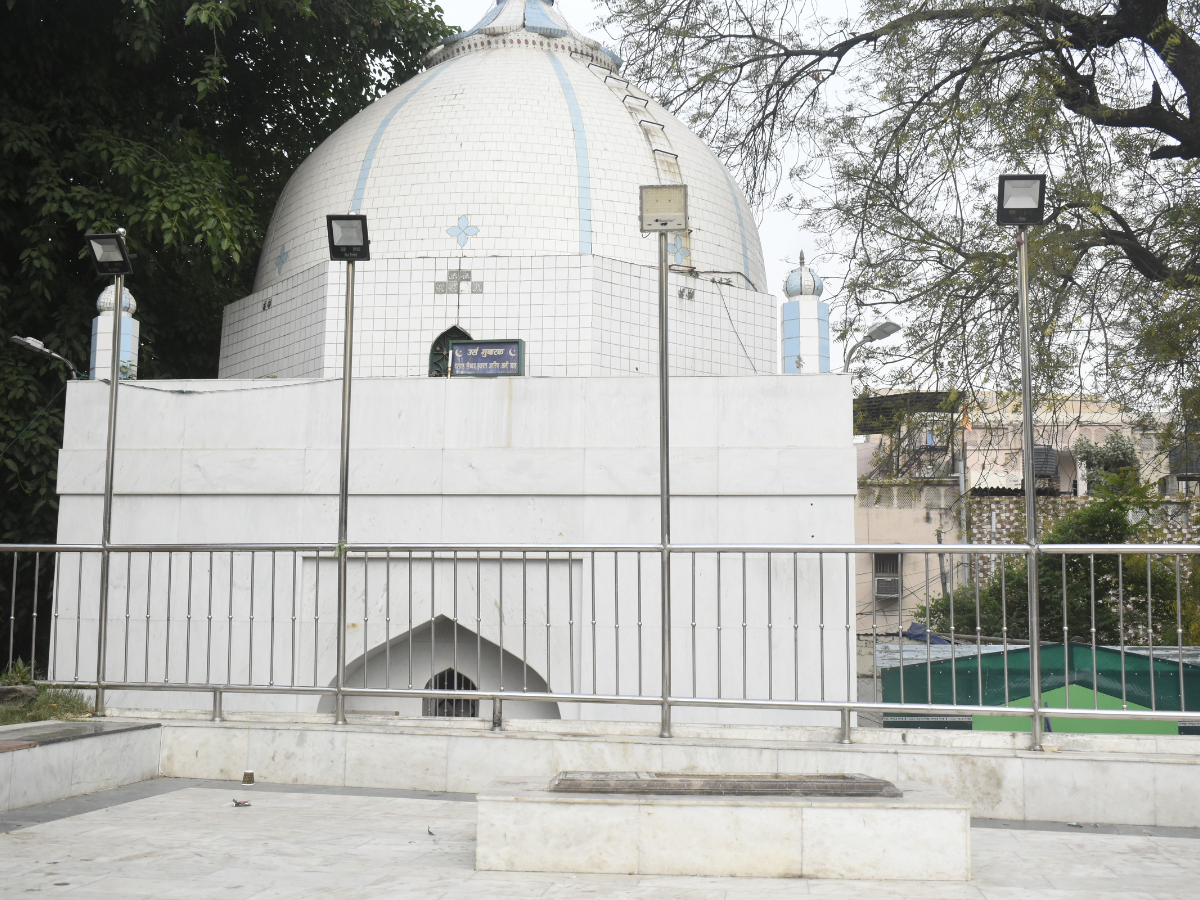
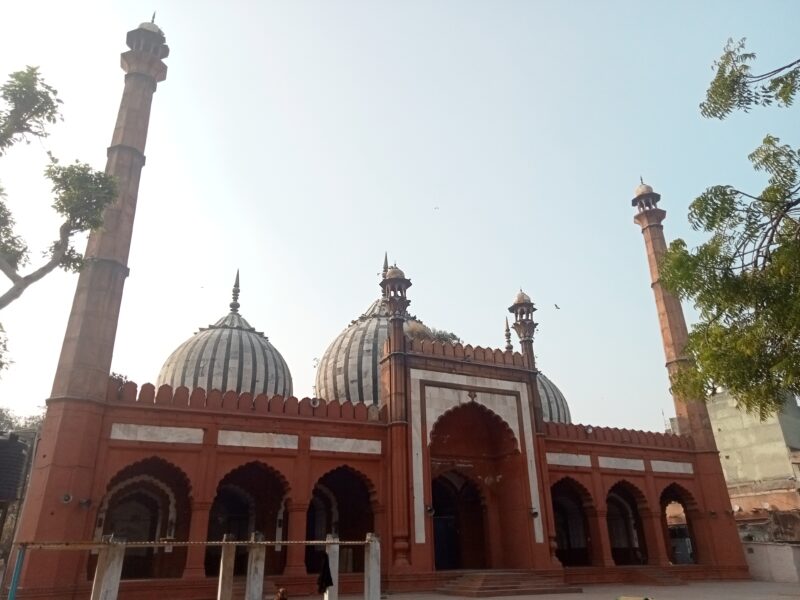
MODEL FOR DEVOTEES: A replica of shrine of Ali in Najaf, Iraq, at the Shah-e-Mardan dargah in Jor Bagh
Moinuddin meticulously sweeps the dusty floors surrounding a grave, his lips moving in silent prayer. With a handkerchief covering his head out of reverence for the “greats”, as he affectionately calls them, he speaks of his steadfast faith in the dargah.
“I have been coming to Dargah Shah-e-Mardan for the last seven to eight years,” he says, a glint of devotion shining in his eyes.
This 700-year-old dargah, nestled in Delhi’s Jor Bagh, holds the distinction of being one of India’s oldest. It attracts people from all walks of life, irrespective of religion, caste, or creed, each hoping for their wishes to be granted within its hallowed grounds.
According to historian Rana Safvi, the dargah’s origins are steeped in legend. It is believed that in the 15th or 16th century, a Shia Muslim man named Arif Shah sought refuge at the spot where the dargah now stands, invoking the name of Imam Ali. Legend has it that Imam Ali himself appeared before Arif Shah, saving him from harm and prompting the construction of the dargah.
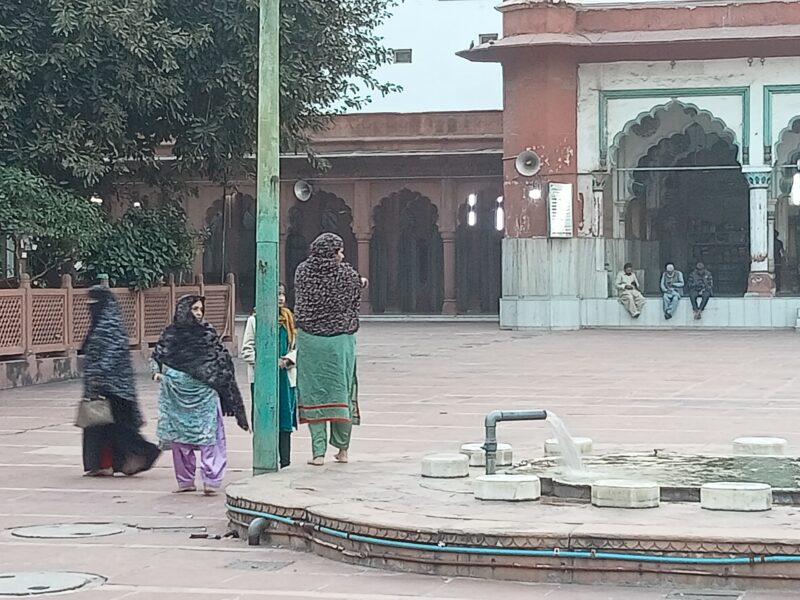
ENTRE POINT: The Shah-e-Mardan dargah attracts processions from all over the city during Muharram
Named after Imam Ali, also known as Shah-e-Mardan, meaning ‘King Of Heroes’, the dargah holds immense significance for the Shia Muslim community.
Syed Bahadur Abbas Naqvi, General Secretary of Anjuman-e-Haideri, which oversees the dargah complex, emphasises its importance not only to Delhi’s Shia community but also to those living in neighbouring states like Uttar Pradesh and Haryana.
“Tazias from all over the city are buried on our Karbala ground,” asserts Abbas, referring to the commemorative processions marking the Battle of Karbala, a pivotal event in Shia Islam.
Karbala, a city in modern day Iraq is famous as the field of battle between forces of Umayyad Caliph Yazid and Husayn Ibn Ali, son of Imam Ali in 680 AD.
The papier mache replicas, known as Tazias, are carried by mourners during the month of Muharram to honour Imam Husayn Ibn Ali’s sacrifice.
Reflecting on the dargah’s rich history, Abbas notes the impact of the 1947 Partition. The area was initially known as Karbala Colony. Today, it is known as BK Dutt Colony and is surrounded by structures commissioned by Qudsia Begum, grandmother of the last Mughal emperor Bahadur Shah Zaffar.
Renowned filmmaker and heritage activist, Sohail Hashmi praises Qudsia Begum’s contributions, highlighting structures like Qudsia Begum Mosque and Bibi ki Chakki within the dargah complex.
“She was a powerful regent and administrator in her own right,” he says.
While both shrines draw devotees daily, only women are permitted entry into Bibi ki Chakki.
Devotees flock to Bibi ki Chakki to pray before a millstone believed to have been used by Fatima, daughter of Prophet Muhammad.
Hashmi reveals historical accounts of Timur’s visit to the dargah in 1399 AD, during which a Tazia was buried, marking one of the earliest such burials in the world.
RESTING: The grave of Saiyid Fazl Ali, a former judge of Supreme Court who served as Governor of two states as well as head of States Reorganisation Commission
The regal begum now rests peacefully alongside an odd 111 graves at her mazar (mausoleum) in Karbala Ground.
“It is a great honour to be able to witness and pray to the very footprint of our Shah-e-Mardan,” says a devotee who did not wish to be named.
“Qudsia Begum was very spiritual in her own right and she was the one who brought this important stone to the land,” claims Abbas.
The dargah has also hosted eminent figures like India’s first prime minister, Jawaharlal Nehru, and Rajiv Gandhi, attesting to its enduring significance.
With lakhs of devotees visiting during Muharram and Chhehlum, the dargah’s complex, adorned with centuries-old graves, serves as a site of spiritual solace for many.
For devotees like Mahfooz Ali from Moradabad, Uttar Pradesh, the dargah offers a sacred refuge.
“We don’t have many dargahs to turn to, hence I make it a point to visit here every once in a while,” he shares.
Abbas emphasises the dargah’s role in providing a spiritual sanctuary for those unable to visit holy shrines in distant lands.
“With important religious symbols enshrined here, people get an opportunity to observe their religious practices,” he explains.
As devotees continue to stream into the dargah, seeking solace and blessings, Moinuddin reflects on its inclusive nature.
“Dargahs are an essential feature of the Sufi doctrine,” remarks Hashmi, underscoring their enduring appeal.
“The great Imam will keep inspiring future generations,” adds Abbas, his voice filled with pride.
source: http://www.thepatriot.in / Patriot / Home> Heritage / by Monish Upadhyay / April 11th, 2024
Chathiramanai village (Perambalur district) /Tiruchi, TAMIL NADU :
A. Basheer Khan, right, and his son Mohamed Imran, of Tiruchi demonstrate the oil spill filtration device that they have designed and obtained a patent. / | Photo Credit: SPECIAL ARRANGEMENT
A. Basheer Khan, 62, and his son B. Mohamed Imran, 28, of Tiruchi recently received a patent for a device that they designed to remove oil spill from seawater through filtration along coastal areas.
The recognition was given on September 24 by the Patent Office and is valid for 20 years from the date of filing.
“At present, the technology to deal with oil spill on land is limited. Our device uses a low-energy method to draw out the oil contaminated water from a targeted area, and after filtering, pumps cleaned water back into the sea. The filtered sediment has to be processed further for eco-friendly usage,” Mr. Khan told The Hindu.
Mr. Khan, who retired as a machinist at the Ordnance Factory Tiruchi (OFT) in 2023, was interested in engineering from a young age while growing up at Chathiramanai village, Perambalur district. “ I studied at an Industrial Training Institute in the 1980s and apprenticed at Bharat Heavy Electricals Limited (BHEL). I used to be inspired by mechanical objects and science concepts to invent my own machines. In 2017, when an outbound empty tanker collided with an inbound loaded oil tanker in Ennore, Chennai, the crude oil was spread all over the coastal areas. I decided to design something to deal with such situations, and started working on the concept from 2018,” he said.
A prototype of the device is available at his home. It consists of a metal tank with two sections for polluted and clean water. The inlet pipe is lined with fine nylon mesh and sieved sand to allow free movement of water contaminated with oil.
During a demonstration on Saturday, Mr. Khan mixed machine oil into water in one section of the device and created ‘waves’ in it with the help of a small steel snack plate fitted to a pulley and sewing machine motor. To guide the water into the filtering inlet pipe, a manually operated shutter fixed with multiple springs is placed at the mouth of the targeted area. In a matter of minutes, the oil and grease were separated from water.
Mr. Imran, who helped his father in research and trials, said the prototype had potential for commercial development. “In the event of an oil spill, our machine can help not only save the environment, but also keep salvage workers safe from direct exposure to harmful chemicals,” he said.
source: http://www.tartv.in / TARTV / Home / by admin / October 19th, 2024
While debate on Jama Masjid’s decision to disallow women from visiting the premises for non-praying activities rages on, it is time to look at some of Capital’s mosques built by women.
All photos: Mohd Shehwaaz Khan
Women may have been restricted from entering Jama Masjid for non-prayer activities due to a recent decision by the committee of the Mughal-era mosque that was seemingly miffed by those making social media videos, but there is no denying the contribution of women in many mosques across the country.
Even in the Capital, some of the old iconic mosques have been built – rather commissioned to be built — by women. Patriot takes you through some of these iconic monuments.
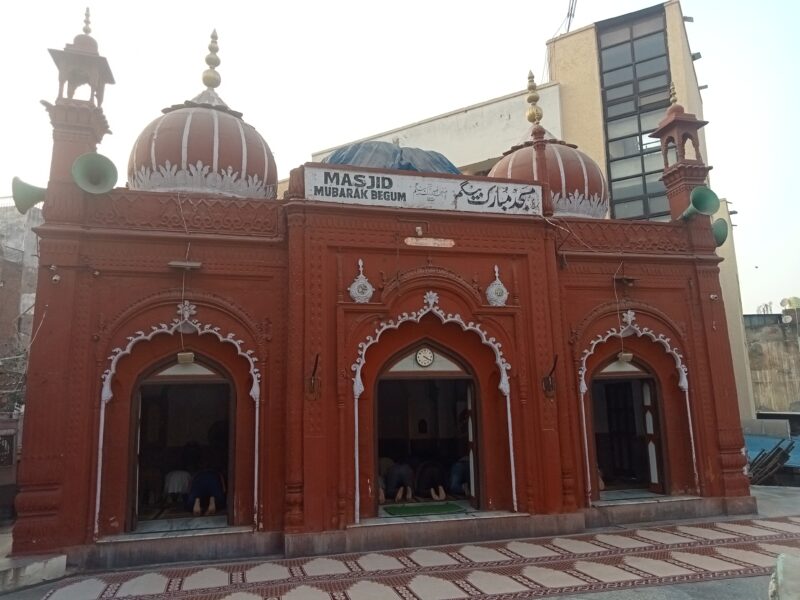
Mubarak Begum Masjid (Randi Ki Masjid)
Lying among tall buildings, shops of machine parts as well as clusters of electric wires running from one pole to another, the double-storeyed Mubarak Begum Masjid – also known as Randi ki Masjid (courtesan’s mosque) – serves as a reminder to a more peaceful and simpler time. The honking of vehicles and the shouting of vendors and labourers on the street that faces the mosque and runs from Hauz Qazi to Lal Kuan comprise the hustle-bustle of old Delhi. The mosque, however, reminds one of a different era.
The upper floor consists of a prayer chamber and the ground floor has toilets. The central one of the three red-and-white striped domes, which collapsed in 2020, is covered by black canvas.
Even in the Capital, some of the old iconic mosques have been built – rather commissioned to be built — by women. Patriot takes you through some of these iconic monuments.
Mubarak Begum Masjid (Randi Ki Masjid)
Lying among tall buildings, shops of machine parts as well as clusters of electric wires running from one pole to another, the double-storeyed Mubarak Begum Masjid – also known as Randi ki Masjid (courtesan’s mosque) – serves as a reminder to a more peaceful and simpler time. The honking of vehicles and the shouting of vendors and labourers on the street that faces the mosque and runs from Hauz Qazi to Lal Kuan comprise the hustle-bustle of old Delhi. The mosque, however, reminds one of a different era.
The upper floor consists of a prayer chamber and the ground floor has toilets. The central one of the three red-and-white striped domes, which collapsed in 2020, is covered by black canvas.
COURTESAN’S LEGACY: Masjid Mubarak Begum is famously known as Randi Ki Masjid
“A lot of people come here for the first time and say that they feel as if they have been here for years,” says the Imam of the mosque after the prayer, smiling in admiration. The imam has been looking after the mosque for the last 17 years.
The mosque was constructed in 1823 by Bibi Mahru Tun Mubarak-ul-Nisa Begum (Mubarak Begum), a nautch girl from Pune, who came from a Brahmin family and converted to Islam after she married General David Ochterlony, who was the British Resident in Delhi during the time of Emperor Akbar Shah II.
Ochterlony was a ‘white mughal’ who was known for his lavish lifestyle, his love for hookahs and mistresses. Mubarak Begum was one of the 13 wives of the British official. After the death of Ochterlony in 1825, Mubarak Begum married a Mughal nobleman who fought in the 1857 mutiny against the British.
According to Scottish scholar William Dalrymple, the Begum’s house was famous for Mughal culture where the Mughal prince Mirza Farhatullah Baig organised the last Urdu mushaira before the Mughal empire was overthrown by the British.
Due to the early profession of the Begum, the mosque is famously known as Randi Ki Masjid. The randis or courtesans, during the Mughal period, were highest in the order of women entertainers, who were skilled not only in dance, but also singing, conversation and poetry. It is said that young nawabs were sent to learn the art of conversation with randis. They were called city’s divas who were visited by the rich and powerful – who often shared with them the secret of the city and society.
Asked about how the mosque is perceived by the visitors and people in the area, the caretaker says: “The courtesans at that time were not as we understand them today. They were respectable and influential women. Many tourists come here and ask if the mosque was built by a prostitute. All of this is best left in history books. All I know is that whoever built, must have built it with good intention and halal (legitimate) money.”
People in the area were embarrassed by the infamous name of the mosque. When one asked them where Randi Ki Masjid was located, they chuckled and laughed, before hastily pointing at the Mubarak Begum Masjid.
During the Mughal era, so many Mughal princesses built mosques. In Bengal, mosques had side corridors with lattice walls for women.
– Ziya Us Salam, journalist and author of Women in Masjid
Sunehri Masjid
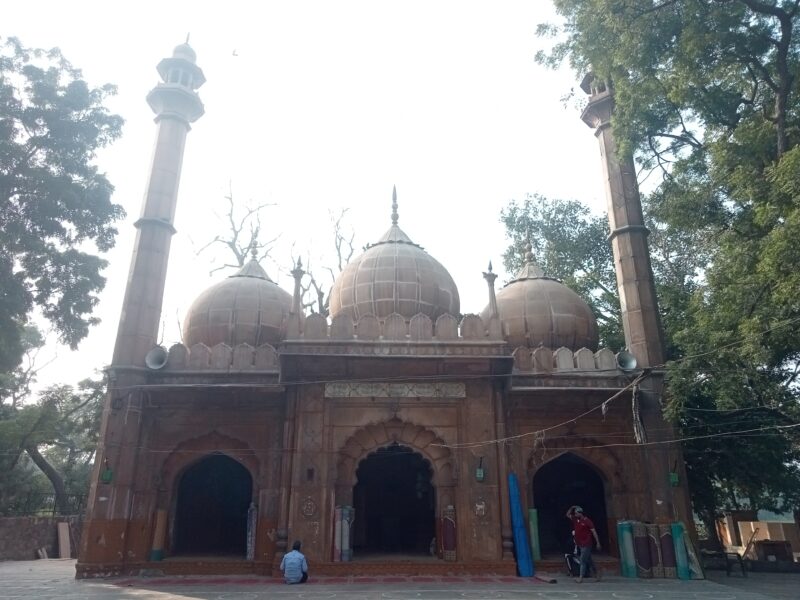
A couple of kilometres away from Mubarak Begum Masjid, stands a mosque built in 1747 by khwajasara (eunuch) Jawed Khan and emperor Ahmad Shah Bahadur’s mother Qudsiya Begum. It is located in a corner, just opposite the busy Nishad Raj Marg and Red Fort parking. This mosque is often confused with the Sunehri Masjid of Chandni Chowk, which was built a few decades earlier – in early 1720s – by a Mughal noble, Raushan-ud-Daulah, during the reign of Mughal emperor Mohammad Shah Rangila.
However, the one at the Red Fort is often called the Parking Waali Sunehri Masjid.
Qudsiya Begum, whose real name was Udham Bai, was introduced to the Mughal court as a nautch girl. In the court, she met Muhammad Shah Rangila who became fond of her and eventually married her. With time, she became influential in the court: even appointing the mansabdars (high rank holder such as civil or military officers) who would enforce the rule of the Emperor.
After the death of her husband, she served as a regent to her son Ahmad Shah Bahadur from 1748 to 1754. Known for her generosity and influence, Qudsia provided the Begums and the late emperor’s children with pensions using both her personal money and government finances.
GOLDEN TIMES: Sunehri Masjid was built by Qudsiya Begum for Jawed Khan khwajasara (eunuch)
It is believed that Qudsia had an affair with Jawed Khan khwajasara, who was also the Darogha (police chief) under Mohammad Shah Rangila and a eunuch-superintendent of the zenana (women) quarters. This proximity between the two led to the construction of the Sunehri Masjid. It was built by the efforts of Jawed Khan and commissioned by Qudsiya Begum, as written on its epitaph:
‘sayi-e-nawab-bahadur sahib-e-lutf-o-karam
saakht tameer-e-haseen jawed aali dastgaah’
(By efforts of Nawab Bahadur, the bestower of rewards and grants,
Jawed of high reach and commands, was constructed this beautiful structure)
As expected, those who came for prayers were unaware of the history of the mosque despite an inscription outside the mosque. The grave of Qudsiya Begum lies in the backyard of the mosque.
Khairul Manazil Masjid
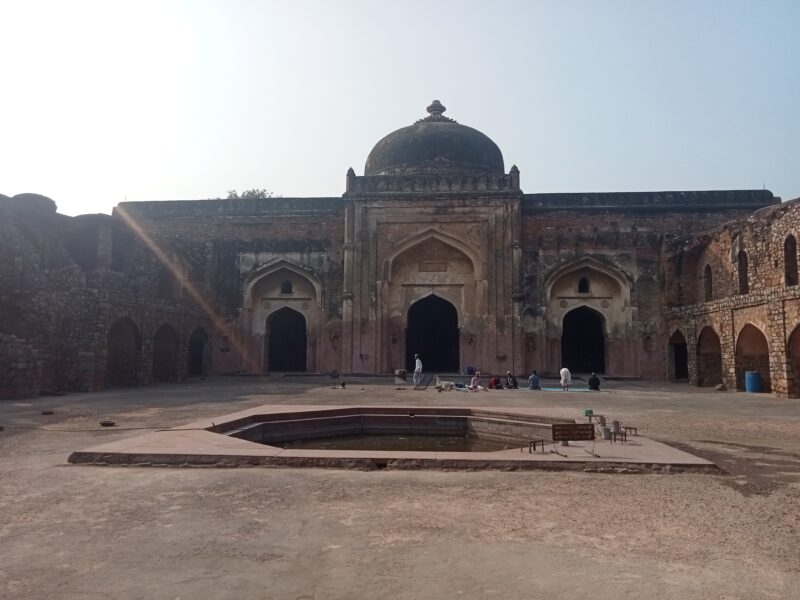
Situated just opposite to Purana Quila (Old Fort), the Khairul Manazil Masjid is often confused by the visitors to be a part of the Quila. Many tourists enter the mosque thinking they are visiting the monument and are surprised when the caretaker of the mosque asks them to remove their shoes as they move into the prayer chamber.
The confusion stands valid as the mosque is in complete ruins, just like the monument opposite to it. The hauz (ablution tank) is not functional and there is no electricity in the premises. The prayer chamber serves as a permanent abode for pigeons and the inscription on the walls is hard to make sense of.
There were many mosques built by women in regular spaces in the past. The bigger ones, such as Fatehpuri Masjid and Khairul Manazil mosque, stand as a testament to this.
– Rana Safvi, author and historian
The three walls with small rooms – which were once part of the madrasah – also lie in dilapidated state. It is currently protected and maintained by the Archaeological Survey of India.
“We just offer prayers three times a day here, that is Asr (afternoon), Zuhr (midday) and Maghrib (sunset) – along with the Friday prayers. It is because the mosque is a heritage sight,” says the caretaker of the masjid.
Khairul Manazil, which literally translates to ‘best of houses’, has a numerical value that corresponds to the year of the construction of the building, 969 hijri as per Islamic calendar or 1561–1562 AD.
IN RUINS: Prayers at Khairul Manazil mosque are offered three times a day
It was commissioned by Maham Anga, the wet-nurse of the Mughal emperor Akbar, and is believed to be the first mosque in Delhi commissioned by a woman. Anga served as the de facto regent and the young emperor’s political advisor. The inscription on the central arch of the mosque reads that Shihabuddin Ahmad Khan assisted in its erection.
The ASI attempted to ban Islamic prayers in the mosque in 1992 but without success.
Zeenat-ul-Masajid
Zeenat-ul-Masajid was built by Zeenat-un-Nisa, the second daughter of the Mughal emperor Aurangzeb, in 1700 AD. The mosque is famously known as Ghata Masjid, which may perhaps be derived from its proximity to a bank (ghat) of the river Yamuna back then or the tall minarets that touch the clouds (ghata).
While a mosque can be a place of prayer for men, it isn’t quite so for women. It is a place of dignity, safety, protection, and aid. A woman’s mosque, that which focuses on preserving all these things, is the solution to most of our problems.
– Huda Ahsan, architect and independent researcher
The locals in the area dearly call the mosque Ghata Masjid and are unaware of its real name.
The part of Daryaganj, where the mosque is located, is also known by the name of Ghata because of the presence of the mosque.
The caretaker of the masjid says that the mosque is rarely visited by tourists and only attended by the men who come to pray. The Jama Masjid at opposite Urdu Bazaar, constructed by Zeenat-un-Nisa’s famed and adored grandfather, Shah Jahan, is thought to have served as an inspiration for the mosque.
OLD TREASURE: Zeenat-ul-Masajid, famously known as Ghata Masjid, is inspired by Jama Masjid in old Delhi
Like in many mosques in the Capital, the hauz (or ablution tank) is not functional but the mosque remains in good condition despite some signs of decay. The mosque is constructed on a plinth. It has three marble domes and seven arched entrances opening to the prayer chamber. Two towering minarets flank the mosque’s front and support an octagonal pavilion made of white marble. In the quaint campus of the mosque, there is no one present except the caretakers.
During the first war of independence, when the Mughal emperor in Delhi joined the uprising against the British in 1857, the mosque experienced some dark times. After the Mughals and the British sepoys lost the war, the mosque was first used by the British as a barrack and later converted into a bakery.
The grave of Zeenat-un-Nisa was also destroyed. However, on the southern corner of the mosque, a tomb for the princesses has been rebuilt as a memorial. The mosque is surrounded by plants of a variety of flowers, especially roses.
Fatehpuri Masjid
Of all the mosques Patriot visited, only Fatehpuri Masjid had visitors flocking in numbers. The hauz of the mosque is full with tap water – which in the past was fed with water directly from Yamuna – and tourists often sit by its side. The mosque is the second largest in Delhi after Jama Masjid and it was built in 1650 by Fatehpuri Begum, one of emperor Shah Jahan’s wives who was from Fatehpur Sikri.
“The number of visitors to this mosque are just a tad lesser in number than Jama Masjid,” said one of the caretakers of the mosque.
Surprisingly, one found as many women in the mosque as men.
VISITING HISTORY: Women visitors at the Fatehpuri mosque
The mosque has a fluted dome made of red sandstone with a kalash (inverted lotus) on top.
The mosque has a conventional design with seven-arched entrances in the prayer hall and is surrounded by minarets. One of the minarets is under construction.
The Shahi Imam of the mosque attends visitors who come to tell him their dukh-takleef (complaints) and seek his blessings as well as medicines.
The room of the Imam is occupied mainly by women who had come to pay him a courtesy call and seek his blessings and prayers. Interestingly, the women sitting with the Imam were unaware that the mosque was built by a woman.
GRAND WELCOME: One of the three main gates of Fatehpuri Masjid that opens to Lal Quan
The mosque has three main gates, one of which opens to Chandni Chowk and the other two to Lal Kuan and Old Delhi Railway Station.
source: http://www.thepatriot.in / Patriot / Home / by Mohd Shehwaaz Khan / Delhi NCR / December 08th, 2022
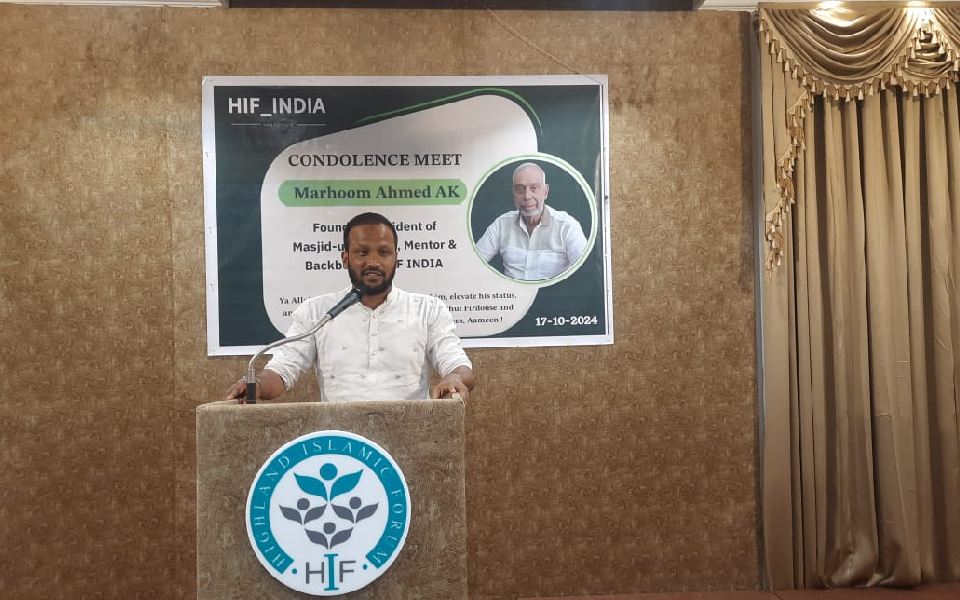
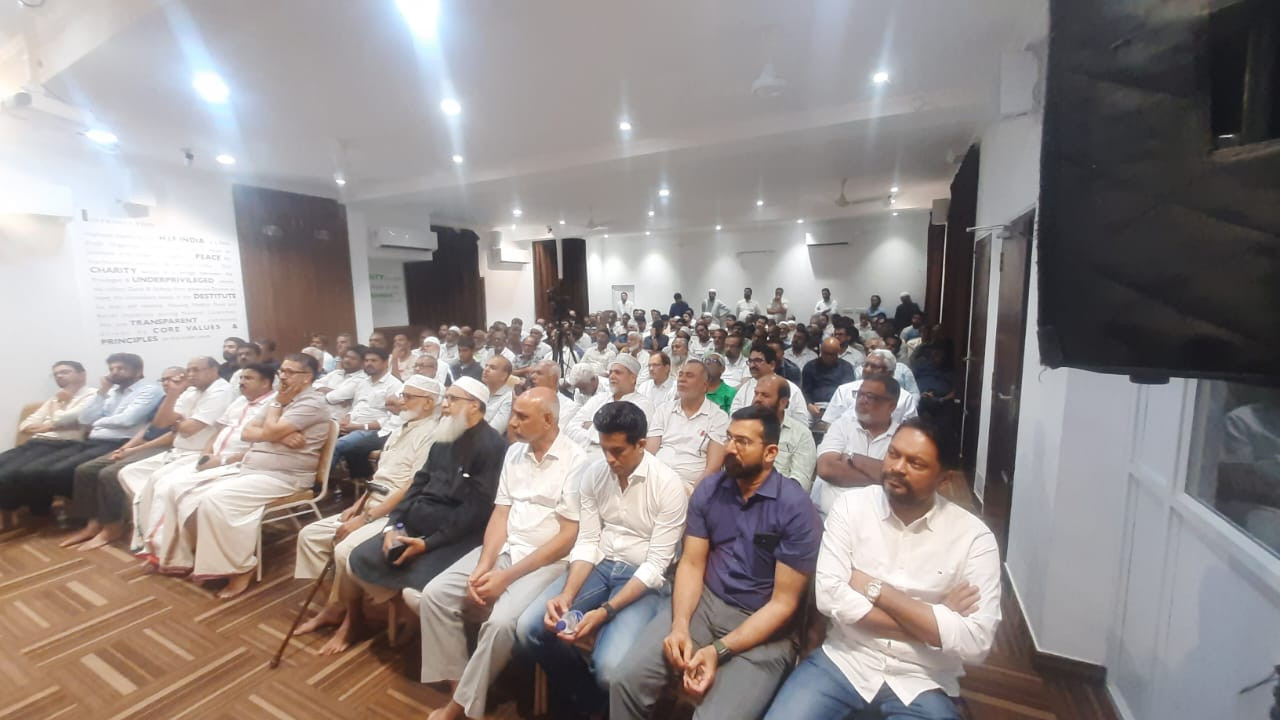
In a tribute to Late Ahmed AK, the Founder Chairman of Ehsaan Masjid and a key figure behind HIF India, a Condolence Program was held on Thursday, 17th October 2024, at the HIF Auditorium (Masjid-ul-Ehsaan) in Vaslane, Mangalore. The event, which began after Isha prayers, saw a gathering of distinguished community members, businessmen, professionals, and leaders who came together to honour the contributions of Ahmed AK to the community.
The speakers at the event, including prominent figures like Nasir Luckystar, Yusuf KLP (Chairman of Tube Care and Amber Group Dubai), and Dr. Roshan (Director of City Hospital), expressed their deep admiration for the values that Ahmed AK embodied throughout his life. They lauded his discipline, commitment to punctuality, and his humility in always remaining behind the scenes, never seeking the spotlight. Other respected figures like Dr. Mohammed Ismail H, Dr. ZK Misri, Corporators Navin, Lateef, and Rauf, as well as Jaidev Kudva, Associate Director of Cognizant, and Anup Nair, Global Human Resources Manager in Abu Dhabi, were also present and echoed similar sentiments.
In their addresses, they praised his ethical approach to business, describing him as a true and just businessman who was always ready to extend a helping hand to those in need, without any discrimination based on religion or background. His selfless service to the community was a key theme throughout the evening, as speakers shared personal anecdotes and reflections on how he had positively impacted countless lives.
The event was presided over by HIF President, Adil Parvez, while Rizwan Pandeshwar served as the host. A beautiful Qirath recitation by Bilal Raif set the tone for the evening. The event was also attended by several other well-known individuals, including Saud Mohtisham, Arshad Mohtisham, Hassanair Pandeshwar, Mohiddin Usman, Latif Kandak, and Mohammed Kunhi from Shanti Prakashan, among others.
Speakers reflected on his role in establishing Ehsaan Masjid, which stands as a symbol of his commitment to unity and service. His ability to provide support without seeking recognition was a recurring theme, as was his dedication to promoting peace and harmony within the community.
The event concluded with a sense of gratitude for Ahmed AK’s life and work, with attendees expressing their determination to carry forward his mission of helping others and building an inclusive and compassionate community.
Association of Muslims Professionals (AMP) will be conducting their 5th Annual National Talent Search Exam (AMP-NTS 2024), for School & College students on Saturday, 7th December 2024.
The National Talent Search Exam is organized with the intention of increasing and rewarding the students’ general awareness and competitive spirit and identifying the best and brightest students to support and nurture for the forthcoming national competitive exams.
The specially designed poster of AMP-NTS 2024 was launched at a grand function in the auditorium, Arcade Business College auditorium in Patna on October 19, where more than 200 influential people like social and community leaders, professionals, policy makers, retired bureaucrats, and others were present.
Farooq Siddiqui, Head of AMP National Coordination Team, welcomed the dignitaries, guests and students. He said that the purpose of AMP NTS is to create achievers from smaller cities and informed the audience that in NTS 2023, 90% of top rankers were from tier 2 and 3 cities. He further informed that this year, the AMP NTS 2024 intends to reach out to 1000 Blocks in all the minority-concentrated districts of India and is bound to achieve many milestones.
Dr. Syed Shah Shamimuddin Ahmad Munemi, Sr. Professor & HOD Arabic Department, Oriental College, Patna, was the guest of honour at the event. He said, “The Association of Muslim Professionals has brought about a revolution in the country in the field of education. Their commitment and focus are exemplary. They have touched innumerable underprivileged lives through their many activities and I wish them well for the 5th edition of their National Talent Search 2024 competition.”
Mohammad Ashfaq Sir, Director-Gravity Classes & Lead partner – AMP NTS, said “When AMP approached us to support them for their National Talent Search exam, we wholeheartedly agreed as we believed in their vision. We all need to create awareness regarding this talent search all over the country especially in smaller cities and towns so they can benefit, as their students’ IQ level is the same as in bigger cities, and those who start the training from 9th Standard onwards have a higher ratio of success.”
Dr. Abdul Qadeer, Director & Founder – Shaheen Education Foundation said, “AMP is known all over India for its excellent work in education and we decided to collaborate with them for the National Talent Search. This year we will be selecting students for the Common University Entrance Test (CUET) as well, which is for 450 Universities, through AMP NTS 2024.”
Mohammad Reyaz Alam, AMP State Head, Bihar and the driving force for this programme hosted the event very successfully and explained to the audience the purpose of the event, which was to launch the promotion and students’ registration of AMP NTS – 2024.
The AMP NTS 2024 exam will be held for 3-Categories of students:
* Senior/Degree Colleges (Undergraduates)
* Junior Colleges (11th & 12th Std)
* Schools (8th, 9th & 10th Std)
This year 2.5 lakh-plus students from over 8,000 schools and 2,000-plus colleges from 600-plus districts across India are expected to participate. This year, this competition will be held offline in a physical mode in 1000 exam centres of over 400 districts across the country. There will also be an online version available on the AMP World mobile app for those who are unable to appear in person.
The top 500 students will be given IIT-JEE/NEET coaching scholarships worth Rs. 10 Crores ranging from 50% to 100% by AMP’s top 20 training partners. Also to encourage the students to participate in the NTS 2024, AMP is giving out cash rewards worth ₹ 5 lakhs+. Other than these, academic scholarships worth over ₹ 20 lakhs will also be given to deserving underprivileged students through IndiaZakat.com, their Zakat-based crowd-funding platform, plus a whole lot of additional support for the students.
The uniqueness of this competition is, that along with school, college, NIOS, ITI, and Diploma students; even Madrasa students between the ages of 13 to 15 years can also participate in the National Talent Search.
This examination will be conducted simultaneously across the country on December 7, 2024 from 11 am onwards. The last date for registration in this competition is November 26, 2024.
More details about the NTS 2024 exam are available at: www.ampindia.org/National_talent_search
The AMP NTS 2024 promotion launch event ended on a positive note with all present affirming that they will try to reach the maximum number of institutions and students to become exam centres and register for the exam. The local AMP Bihar team and the respective chapter executive team members all worked relentlessly for the success of the launch event.
source: http://www.indiatomorrow.net / India Tomorrow / Home> Education / by admin India Tomorrow.net / October 21st, 2024
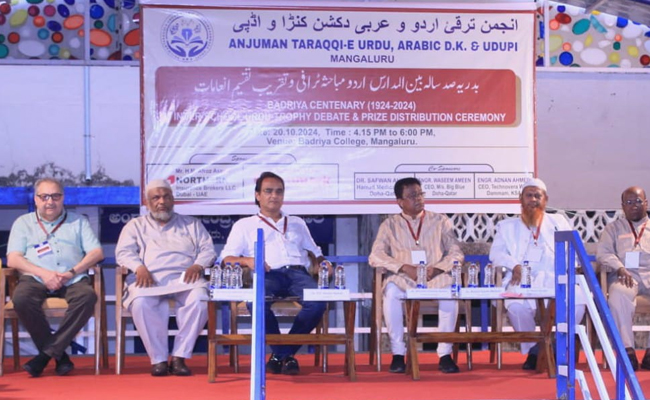
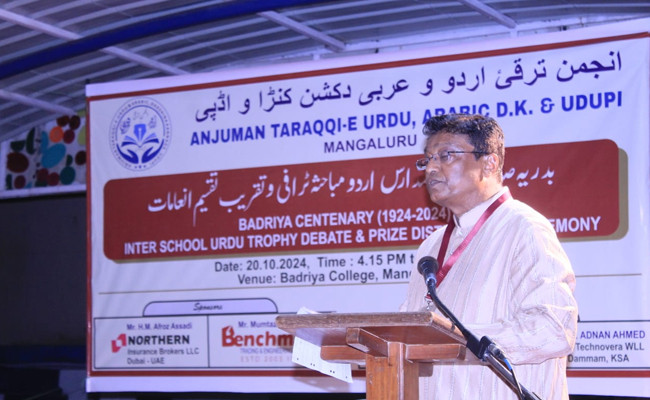
Anjuman Taraqqi E Urdu, an NGO promoting the Urdu language in Dakshina Kannada and Udupi districts, organised a debate competition on 20th October at the Badria College campus as part of the Badria Centenary celebrations (1924–2024). The competition featured the Badria Centenary Urdu Debate Trophy.
The event, divided into morning and evening sessions, saw a debate competition in the morning followed by a trophy award ceremony. Chief Guest P.C. Hashir, Managing Director of Peecy Group of Companies and Correspondent of Badria Institution, alongside Keynote Speaker Abid Ulla Athahar Shimogavi, a retired principal and president of the State Organization, Secretary of Urdu Taraqqi Hind and H. M. Afroz Assadi, Managing Director of Northern Insurance LLC, Dubai, who sponsored the event, were present at the event Mumtaz Hussain, an NRI entrepreneur from Qatar, chaired the proceedings.
Both sessions commenced with a recitation from the Holy Quran. In his address, P.C. Hashir highlighted the role of debates and educational activities in fostering intellectual growth among students, suggesting that such competitions could help shape future lawmakers. Keynote Speaker Abid Ulla Athahar stressed the importance of primary education in one’s mother tongue, citing the example of countries like Japan, Germany, and France, which educate children in their native languages. He noted that studying in the mother tongue allows for better comprehension compared to learning in foreign languages like English.
Mumtaz Hussain, an alumnus of Badria Institution, shared the brief history of the institution, founded in 1924 by Marhoom C. Mehmud as AL MADRASATHUL BADRIA, initially offering religious education to local children in Bunder and Kudroli. The relationship between Badria and the Urdu language is profound; it was the first school to offer Urdu studies in the undivided Dakshina Kannada and Udupi districts since 1947. After C. Mehmud’s passing, various presidents led the organization, with Marhoom Thumbe Ahmed Hajee serving the longest from 1975 to 2020. Hussain recounted that, in the past, students were required to speak Urdu within the institution or face punishment for using other languages.
The junior-level debate competition saw participation from seven higher primary schools in Dakshina Kannada. Mohammed Ghouse from Higher Primary School Kandatpalli won first place, with Rifa and Fathima Suzana from Government Urdu Higher Primary School, Kawalkatte (Bantwal Taluk), securing second and third places, respectively. At the senior level, five high schools from Dakshina Kannada and Udupi districts participated. Abdul Baari and Abdur Rahman from Thouheed English Medium High School, Gangolli, Udupi district, took first and second places, while Khadeejatul Farzana from Sayyed Madani Urdu High School, Ullal Taluk, D.K., came third.
The junior-level Badria Centenary Championship Trophy was awarded to Government Urdu Higher Primary School, Kawalkatte (Bantwal Taluk), and the senior trophy went to Thouheed English Medium High School, Gangolli, Udupi district. Twenty other participants received consolation certificates.
Five 10th standard students, Mohammed Meraj Khan, Fouzia Banu, Moulana Mohammed Uzaim, Sabiya Naaz, and Aysha Ruha were also felicitated for excelling in Urdu in the Karnataka State Board Examinations (2023–24).
The event began with a welcome address by Mohammed Hanif Master, Secretary of Anjuman. A.S. Madani, President of the organisation, outlined its objectives and future plans for promoting the Urdu language. Engineer Khaleel, Assistant Secretary, provided logistical support, and Rahmathulla, an active member of the Anjuman, gave the vote of thanks. The event was hosted by Badria alumnus and international emcee, Sahill Zahir.
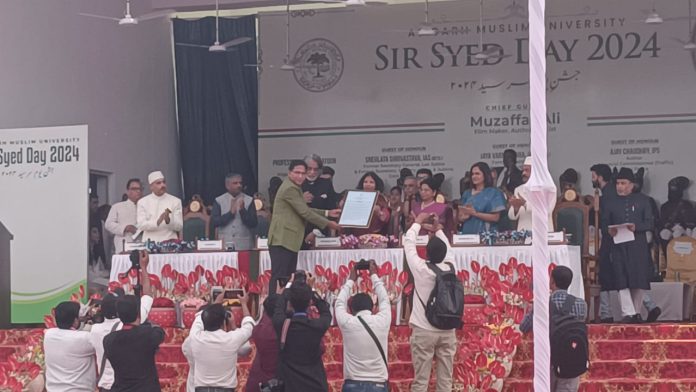
On the occasion of Sir Syed Day 2024, organized by Aligarh Muslim University (AMU), the Ghalib Institute was conferred the National Sir Syed Excellence Award.
The Vice Chancellor of AMU, Professor Naeema Khatoon, presented the award, along with a memento and certificate, to the Director of the Ghalib Institute, Dr. Idrees Ahmed, in recognition of the institute’s outstanding contributions.
Expressing his gratitude, Dr. Ahmed remarked, “It is a moment of pride for me and the entire Urdu-speaking world that a respected institution, which has produced exemplary individuals serving the nation in various fields, is honoring Ghalib Institute.
“Every year, the Ghalib Institute itself acknowledges six distinguished individuals for their contributions to literature and cultural services. This is the first time we are receiving such a tribute from a prestigious institution. On behalf of myself and the institute, I sincerely thank Vice Chancellor Professor Naeema Khatoon, Director of Sir Syed Academy Professor Shafey Kidwai, the jury members, and the entire university staff. This recognition will further motivate the Ghalib Institute to continue its work.”
The ceremony celebrated the enduring legacy of Sir Syed Ahmad Khan and his contributions to education, with AMU recognizing institutions that carry forward his vision of cultural and intellectual excellence.
source: http://www.radiancenews.com / Radiance News / Home> Awards> Latest News / by Radiance News Bureau / October 18th, 2024
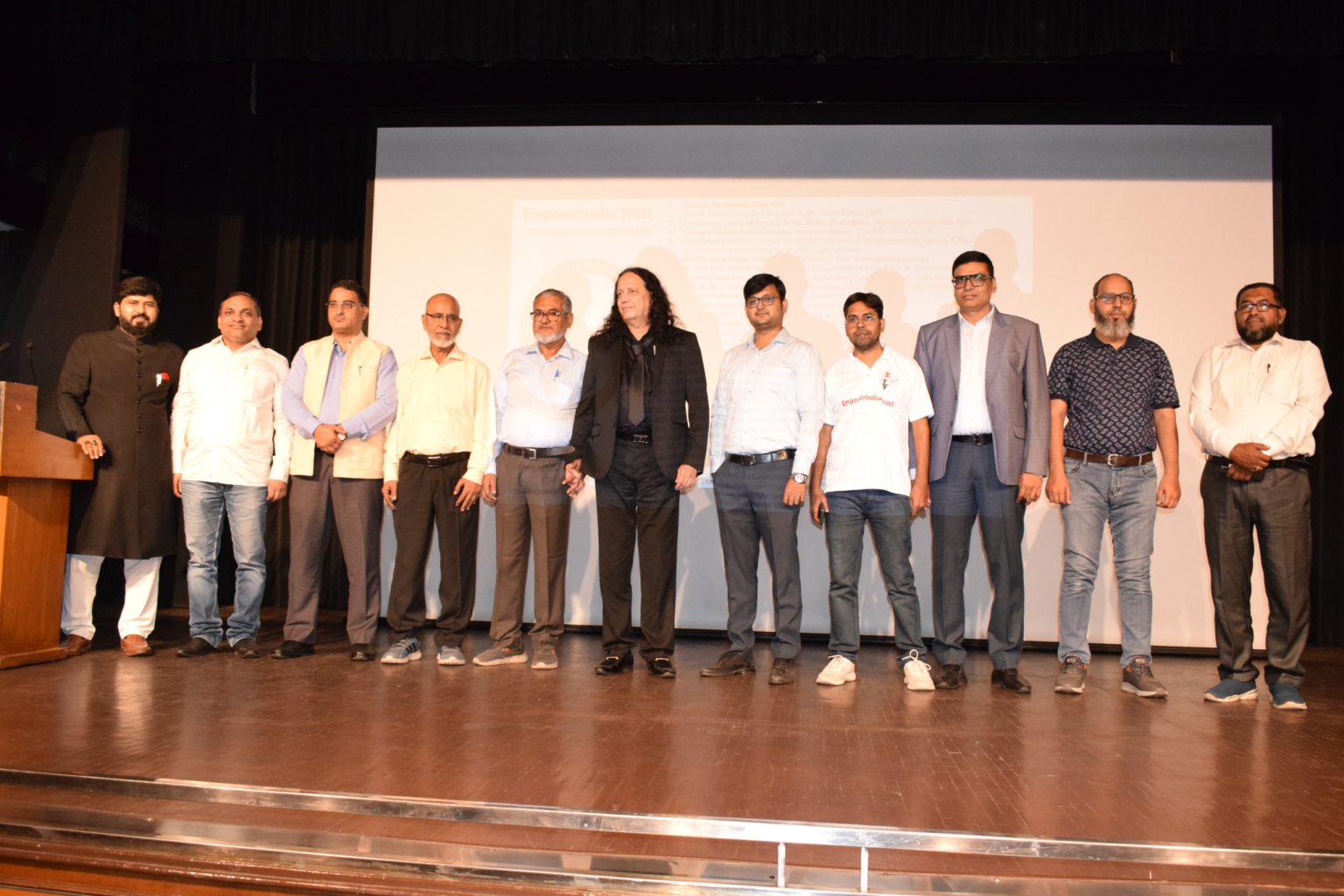
EmpowerIndia Trust organized a national convention titled “Strategies and Planning for Educational Renaissance” at India Islamic Cultural Centre on Saturday evening.
Mohammed Khalid Khan, Founder Trustee and Chairman of EmpowerIndia, emphasized the transformative power of education, stating that it elevates, develops, and enlightens individuals while empowering them to fight for their rights, honour, and survival. He expressed concern that India is not ranked among the top 10 most educated countries in the world, and highlighted the need to prioritise education to empower both the community and the nation.
As part of its efforts, EmpowerIndia Trust has launched a pilot project, establishing a vocational training centre offering various paramedical courses such as Diplomas in Hospital Nursing and Midwifery, Medical Lab Technology, Operation Theatre Technology, Radiology and Imaging Technology, Physiotherapy, Electrocardiogram, and Emergency Treatment. The trust also aims to establish a Law College of excellence.
The conference was chaired by Dr. Syed Zafar Mahmood, Chairman of Zakat Foundation of India, who urged the utilisation of state and central government schemes, noting that many students are unaware of these beneficial programmes. He stressed the importance of making students aware of such schemes through proper counselling and information sharing.
Prof. Rehan Khan Suri, Director of Centre for Innovation and Entrepreneurship at Jamia Millia Islamia, highlighted that education is not a charity but a responsibility. He pointed out that Right to Education Act, 2009 provides for free and compulsory education for children aged 6-14, yet the educational attainment among minorities remains below 6%. He called for focused collaboration and support from organisations at the district level to improve educational outcomes.
Acharya Yeshi Phuntsok, former Deputy Speaker of the Exile Government of Tibet, emphasized the importance of a learning environment at home, blending classical and modern holistic education to cultivate kindness and enlightenment in children.
Dr. Shakeel Ahmed Qureshi, Senior Advisor at Ministry of Education, stressed that education brings global recognition and reiterated the adage that “the pen is mightier than the sword.” Dr. MM Ansari, a scholar and former interlocutor for J&K, raised concerns about the Muslims’ lag in educational attainment, falling 10 years behind the national average. He advocated for affordable education, teacher training programmes, and a collaborative approach to address high dropout rates in higher education.
Mohammad Talha Hanfi, Group Chairman of FuGen Group of Companies, highlighted the need to address core issues at the grassroots level for the underprivileged. He emphasized capacity building and shared his vision of converting beneficiaries into benefactors by using profits from IT sector projects and donations to support education for needy students.
The event also featured addresses from several prominent figures, including Prof. Dr. Vipin Kumar Tripathi of IIT, Moulana Ghulam Rasool Baliyawi, a JDU leader, social activist and educationist Sameen Adeeb, Supreme Court advocate ZK Faizan, and other notable scholars and educators.
Naushad Ahmed Khan, Advocate at Supreme Court and Joint Secretary of EmpowerIndia Trust, extended a vote of thanks.
source: http://www.radiancenews.com / Radiance News / Home> Education / by Radiance News Bureau / October 20th, 2024
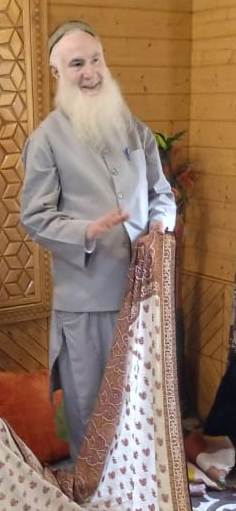
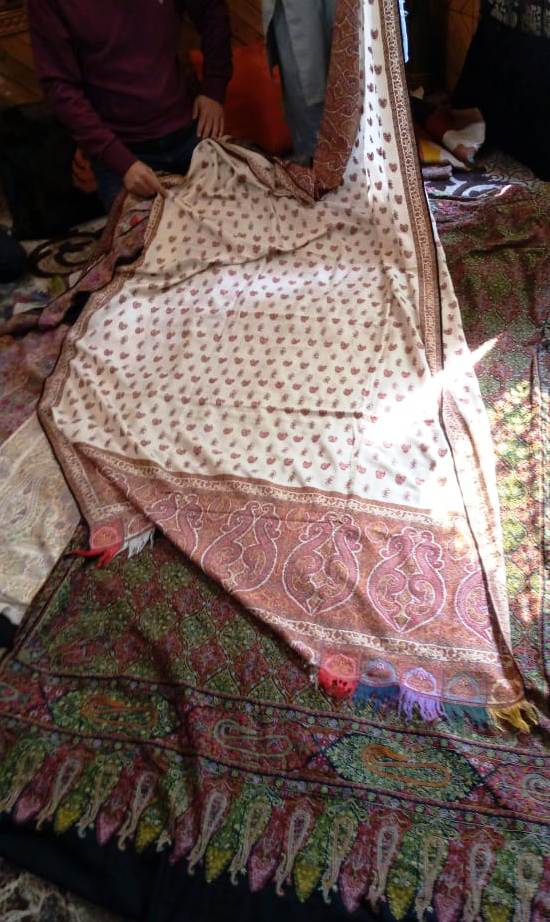
Master-craftsman Ghulam Rasool Khan had once made a shawl using 360 individual pieces of ‘jamawar’. He has produced several other priceless jamawar designs for which he has received several state and national level awards including the prestigious Padmashree (2021).
Though Khan has not lost passion for this work, he regrets that the new generation does not take much interest in the craft and says the machine-made cheap varieties posed a great threat to the sector.
“Now, we have machine-made shawls that sell for Rs. 5000 and are no match for the original jamawar. This is the biggest threat to this craft as there is no match for a hand-made piece. This art requires a lot of hard work and patience but nowadays artisans do not have the patience,” Khan told reporters during a Craft Safari to Amda Kadal area of the old city on Saturday.
The safaris had been started in the wake of Srinagar making it to the coveted list of the United Nations Educational, Scientific & Cultural Organisation (UNESCO) in Crafts and Folk Arts Category for the year 2021.
Khan said they also used to receive orders worth Rs. 100 cr for ‘Arabi Rumal’ annually but due to entry of fakes, they had stopped receiving the same.
“There was a time when there was a great demand for Arabi rumal. The ones we make have different and intricate artwork that is not usually available in the market. There was a time when we used to receive orders to the tune of Rs. 100 cr annually from the elite Arabs. Unfortunately, the same has stopped now,” he said.
An official of the Handicrafts Department said the master craftsman had received several awards in recognition of his hard work.
“Though many artisans have received Padmashree, Ghulam Rasool Khan is the only one who has received it for his jamawar works. He has also received several other awards at the state and national level. His enthusiasm, patience, and knowledge of the colours and designs enabled him to bring out the extraordinary work. He also made a shawl using 360 individual pieces of jamwar to make the pattern,” the official said.
source: http://www.thekashmirmonitor.net / The Kashmir Monitor / Home> Kashmir> Latest News / by M Aamir Khan / October 22nd, 2022
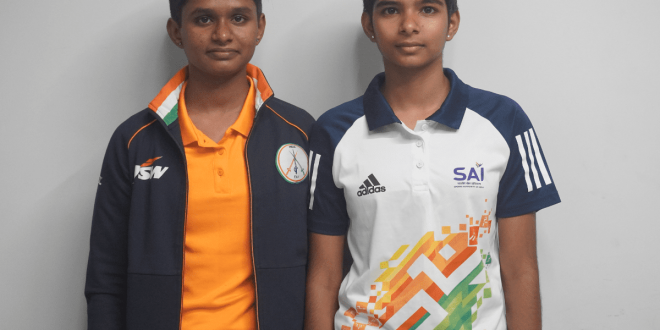
Sheikh Fouzia and Sheikh Naziya are two city teenagers who are working hard toward the sports of fencing, a summer Olympics game, to fulfil their dream of one day representing India at the International level.
Fencing is a combat game, also the first sport to be played in Olympics. Based on the traditional skills of swordsmanship, the modern sport arose at the end of the 19th century. Competitive fencing is one of the five activities which have been featured in every modern Olympic Games, the other four being athletics, cycling, swimming, and gymnastics.
Fouzia and Naziya are daughters of an RTC bus driver who has worked hard to make his daughters achieve their dreams. Natives of Nalagonda, the family of five (the girls have a younger brother who is also an active fencing player), have dedicated their lives to playing world-class fencing.
Nineteen-year-old Fouzia and 17-year-old Naziya have been training for the last eight and six years respectively. After getting selected at the district level, they got admission to the prestigious Telangana state Sports School in Hakkimpet, known for its sports coaching.
When Siasat.com asked about their choice, both the girls admitted that they were attracted to the way in which the game was played. The uniform, the sword shifting, the techniques of the game, studying the opponent; all this really got them interested.
When your whole day goes into sports coaching, one can lose track of studies. But for the girls, nothing has changed. In fact, both of them were toppers in their respective tenth class batch, thus balancing the study-sports pendulum.
Our father is a strong man:
Giving full credit to their father, the girls regard him as their biggest inspiration. “Our father wanted to join the Indian defence forces but due to family pressure, he could not. But he is a strong man. He taught us everything to ensure we get admission to the sports school,” said Fouzia.
She goes on to add, “My father faces much criticism from family and our village. Being girls everybody keeps questioning him why are they in such a sport, why is their hair so short, why can’t put them in regular school and then marry them off, all that. But he does not care about anyone’s opinion and does what he thinks is best for us.”
About Fencing:
The traditional game is divided into three parts depending on the speed – Epee, Foil, Sabre.
Epee – The epeeis considered the original dueling sword. The whole body is considered a target.
Foil – The foil evolved from the short court sword of the 17th and 18th centuries. The front and back of the torsos are considered targets.
Sabre- In sabre, the target includes heads, arms and a button. It is the fastest out of the three weapons.
While Fouzia is a foil player, Naziya is an epee player and has competed at the international level.
When asked about her experience in playing international, Naziya said, “It was very difficult. I was scared. There were many big players. I have played Asian Championship at Tashkent where my team fetched a silver medal. I have also participated in World Championship in Dubai where I got 76th rank. I realised I had to work really hard if I need to get a seat at the international level.”
The Biggest Sacrifice:
“Family has been our biggest sacrifice to achieve our dreams,” echoed the girls. “Many a time we want to share our wins and loses with our parents but since they live in the village we cant afford to bring them here. We stay in a hostel. We miss them immensely,” the girls said.
While Fouzia wants to get into the Indian Army or the Air force and represent fencing through them the defence force, Nazyia’s only dream is to fetch an Olympic medal. The hope is that their dreams come true and that fencing, which is relatively unknown in the country, soon becomes a beloved sport.
source: http://www.alhaqeeqa.org / Al Haqeeqa / Home> Education> News> Personalities> Sports / by admin , (headline edited) / May 25th, 2022