Monthly Archives: September 2025

Glowing Tributes Paid To MESCO Secretary Late Dr. Fakhruddin

Hyderabad, TELANGANA :
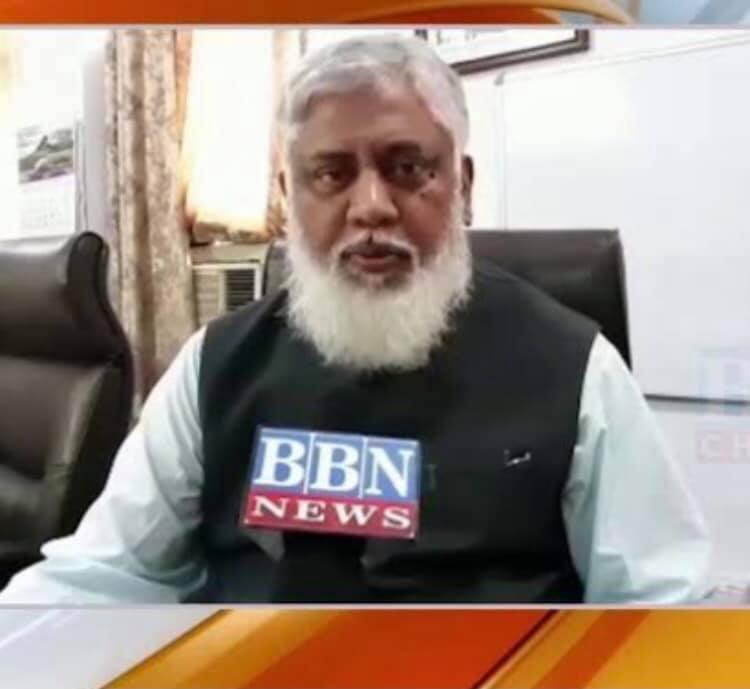
Dr. Fakhruddin Mohammed, secretary, MESCO, Hyderabad.

Bhopal :

The head and heart qualities of Dr. Fakhruddin Mohammed, secretary of Hyderabad-based MESCO (Muslim Educational Social & Cultural Organization) were recalled in ample measure in an online condolence meeting which was held on Friday.

Dignitaries paid glowing tributes to the departed soul while recalling his contributions in multiple fields with special reference to health and education sectors. Everyone recalled his memories with Dr. Fakhruddin and prayed for his ‘maghfirat’. The meeting was presided over by Arif Mohammad Khan, Governor of Kerala.

Dr. Fakhruddin Mohammed, 61, passed away on May 5, 2021. He breathed his last at AIG Hospital in Hyderabad after a brief illness. He is survived by his wife, two sons and two daughters. He was a noted philanthropist and son of Dr. Shamsuddin, a leading practitioner and superintendent of Government Fever Hospital. There are more than 55 doctors in his family.

Earlier, the condolence meeting started with Tilawat-e-Qur’an and was attended by the family members of Dr. Fakhruddin, friends and former cabinet ministers & head of the institutions like Salman Khursheed, K. Rehman Khan, Sirajuddin Qureshi, SM Khan, Dr. Abdul Qadeer, Naved Hamid, Kamal Faruqui, Khwaja Shahid, Prof. Akhtarul Wasey, Prof. Iqbal Hasnain, Feroz Bakht Ahmed, Quaiser Mehmood, Dr. Salman Asad, Mohammad Naushad, Dr. Rihan Khan Suri, Dr. Mohammad Iftekharuddin and many more dignitaries.

The condolence meeting was organised by architect, writer, and social activist Kaleemul Hafeez, who was a close associate of late Dr. Fakhruddin.

In the meeting, it was collectively felt that Dr. Fakhruddin’s legacy must go on. On this note, five things were decided which included: 1. Scholarship in his name (proposed by Kaleemul Hafeez); 2. Award in his name (proposed by Mohammad Naushad, (president-Lok Seva Samiti); 3. Dr. FM Memorial lecture in IICC (proposed by SM Khan, Vice President-IICC); 4. Biography (proposed by Sirajuddin Qureshi, president, IICC) & 5. Centre in his name in MANUU (proposed by Feroz Bakht Ahmed, Chancellor, Maulana Azad National Urdu University, Hyderabad).

PFI Condoles The Demise Of Dr. Fakhruddin

Meanwhile, Popular Front of India (PFI) chairman OMA Salam has expressed his condolences on the demise of Dr. Fakhruddin Mohammed.

“It is with heavy heart that we received the news of demise of Dr. Fakhruddin Mohammed, renowned educationalist, philanthropist, community leader and secretary of MESCO”, Salam said.

His death, PFI, in a statement, said, will leave an irreparable loss to the Muslim community in Hyderabad and across the country. A physician by profession and a pious servant of the community, Dr. Fakhruddin spent most of his life in efforts for empowering Muslim community. He contributed remarkably by promoting education, community development, religious training and poverty alleviation among the Muslim community. He played instrumental role in the South India Council, a community empowerment initiative that later gave way to the formation of Popular Front of India.

Popular Front expressed its heartfelt condolences to the bereaved family and friends. May Allah Almighty accept his virtuous deeds and reward him with Jannah.

Meanwhile, it may be mentioned here that MESCO was founded in 1983 by Dr. Fakhruddin along with his team and he was instrumental in bringing Muslim doctors around the world on a common platform. He flagged off ambulance and relief aid services during the first wave of Covid in 2020 in collaboration with the Al Hamd Foundation. He transformed MESCO from a Diagnostic Centre to a group of educational institutions from KG to PG level.

source: http://www.indiatomorrow.net / India Tomorrow / Home> News> Society / by Pervez Bari / May 08th, 2021

Kulsum Sayani: Inspiring India’s Freedom and Learning Revolution

GUJARAT :

Kulsum Sayani

Kulsum Sayani, born in 1900, was a freedom fighter, social reformer, and educator. Inspired by Mahatma Gandhi, she joined independence movements, promoted literacy among Muslim women, and edited the magazine Rahbar. Leading education initiatives, she empowered millions. Awarded Padma Shri in 1960, she passed away in 1987, leaving a lasting legacy.

Main Point:

1.    Freedom fighter inspired by Mahatma Gandhi.

2.    Promoted literacy, especially among Muslim women.

3.    Edited “Rahbar” magazine to educate in simple Hindustani.

4.    Led education initiatives, making millions literate.

5.    Awarded Padma Shri (1960) and Nehru Literacy Award (1969).

———-

15 August 2025, India will complete 78 years of independence. The contribution of Muslim women in India’s independence has its own history which is often marginalized, this month we will remember those freedom fighter Muslim women whose contribution cannot be ignored.

An important name in this series is “Kulsum Sayani” who was the mother of famous radio announcer Amin Sayani.

Apart from being the mother of Amin Sayani, she was also a freedom fighter, social reformer and a great educational worker.

Kulsum Sayani was born on 21 October 1900 in the state of Gujarat, India. Her father Rajbali Patel, a doctor by profession, was the personal physician of Mahatma Gandhi and Maulana Abul Kalam Azad. In 1917, she got the opportunity to meet Mahatma Gandhi along with her father. After meeting Mahatma Gandhi, she was very impressed by him and vowed to follow the path shown by Mahatma Gandhi.

At the age of 18, Kulsum Sayani got married to Jan Mohammad Sayani, who was also a freedom fighter.

With the encouragement received from her husband, Kulsum Sayani used to participate openly in the movements run for independence.

In 1921, when the Prince of Wales visited Bombay, protests started in many places against him. Soon, unrest spread in the city. Lathicharge and arrests started in the city and martial law was imposed. Many people were seriously injured in this lath charge.

Recalling that time, Kulsum Sayani said that

“A new Congress Hospital was established to take care of the injured. My late husband Jan Mohammad Sayani was the first doctor to be in charge of it. We had a small Saxon car on which the Red Cross badge was clearly visible. My husband used to go to the hospital every day, on almost completely deserted roads, with policemen posted on both sides. I would sit by the phone until he called from the hospital and informed me of his safe arrival.”

At that time, along with the struggle for freedom, many programs were being conducted to eradicate the evils and illiteracy prevalent in the society. “Jan Jagran” programs were started to create awareness about social evils. Kulsum Sayani represented Mumbai city and its suburbs in these programs.

Kulsum joined the “Charkha Class” and started teaching the illiterate. “Each person, teach one” was a very effective method in adult education and Kulsum Sayani was the one who started this method.

In 1938, she appointed 2 teachers out of 100 at her own expense and started going to Muslim areas to convince Muslim girls and women to get educated. She went from house to house and convinced people to send their women and girls to classes but it was not that easy. According to Kulsum Sayani, many times people would shut the door on her face and say, “Why should women learn to read?” Even in such difficult circumstances, Kulsum Sayani did not give up but intensified her efforts.

To make her efforts stronger, she joined many committees formed for adult literacy.

Kulsum Sayani joined the first National Planning Committee established by the Congress in 1938 itself. Kulsum Sayani was given the responsibility of taking charge of 50 centres for Muslim women by the Bombay City Social Education Committee formed in 1939. Under Kulsum Sayani’s able leadership, this number soon reached 600. In 1944 she was also appointed General Secretary of the All India Women’s Conference and worked for women’s empowerment.

Noting her dedication and tireless efforts for education, The Times of India’s New Delhi edition (March 10, 1970) wrote, “Since she (Kulsum Sayani) took charge of the Bombay City Social Education Committee in 1939, five lakh adults have become literate in one of the five languages – Urdu, Hindi, Gujarati, Marathi and Telugu. Her days are spent running from school to school to encourage children to teach adults and her nights are spent dreaming up new literacy schemes.”

Kulsum Sayani used to visit many schools and encourage young students to spend at least 15 minutes of their day teaching an illiterate adult a new alphabet every day.

Kulsum Sayani once said, “Lower middle class women, who are forced to work, have no choice but to leave their children on the streets after school, while fashionable women have no time for children after bridge and mah-jong parties.”

In a later interview, Sayani revealed:

The quota of 25 students per teacher could not be gathered in one individual group, hence the teachers had to go from building to building. It was an uphill task. The interest of the women students was difficult to sustain, so dogged perseverance and close personal contact was needed to make the scheme successful….I used to roam from house to house and lane to lane collecting women, persuading them to read and write.

In 1940, Kulsum Sayani, under the guidance of Mahatma Gandhi and along with her son Amin Sayani, started publishing and editing the bi-weekly magazine “Rahbar”. The magazine was published in Hindi, Urdu and Gujarati.

The main objective of the magazine was to educate the newly literate in simple Hindustani language (a mixture of Hindi and Urdu).

In a letter dated June 16, 1945, Gandhiji addressed Kulsum Sayani as ‘Daughter Kulsum’ and wrote: “I like the mission of ‘Rahbar’ to unite Hindi and Urdu. May it succeed.” Rahbar magazine was very popular among the political prisoners in jails. They used to read it aloud and improve their language”.

Rustomji Faridoonji in her letter to Sayani noted about her Rahbar Magazine (1945):

”My heartfelt congratulations on your great and solid work. It’s a wonderful paper & may you live long to increase its activities a hundred fold & may your noble example be followed by hundreds of others in every large town. What a place adult education would take if even half a dozen persons in every town would work on your lines. You are after my own heart as you are doing practical work without talking”.

Kulsum Sayani’s fame as a social worker gave her the opportunity to represent India on many international platforms. In 1953, at the UNESCO conference in Paris, Kulsum Sayani met representatives of many countries and exchanged views.

In 1960, Kulsum Sayani had to stop editing her magazine Rahbar. The red tape that arose after independence forced her to take this step.

Kulsum Sayani was also awarded the Padma Shri in 1960 and the Nehru Literacy Award in 1969 for her unique work and contribution.

Kulsum Sayani passed away in 1987. A strong-willed woman who selflessly dedicated her life to education and development of society said goodbye to this world and left behind an inspiration “to do something for the society and bring about a change in the society”.

—–

Afroz Khan is a teacher by profession, focusing on writings about women and Islam. She holds a Bachelor’s degree in Education.

source: http://www.newageislam.com / New Age Islam / Home> Islamic Personalities / by Afroz Khan / August 05th, 2025

Freedom, She Ruled

Mahmudabad (Sitapur District), UTTAR PRADESH :

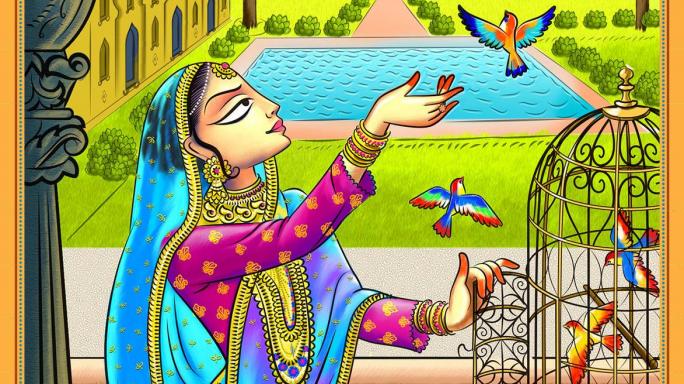
The Rani of Bilehra was an unlikely champion of emancipation

Illustration by Atri

White light fills the room  as I open my eyes and stare groggily at the unfamiliar surroundings—a huge room with lime-washed walls, high ceilings with ornate arches and my bed, which sags a bit in the middle because it is a palang—with cloth strips stretched across and wound tightly at the edges. And then I remember: I am inside the mahalsara, the women’s palace, in the heart of the Qila of Mahmudabad, a living fort in the Sitapur district of Uttar Pradesh.

My family and I are guests of Raja Mohammad Amir Mohammad Khan. We will be spending two days here, participating in the mourning rituals of Muharram, one of the most prominent, and sacred, cultural observances by Mahmudabad’s royal family.

The palace is divided into two distinct sections—the zenana, the women’s section, and the mardana, the men’s area. In pre- and newly independent India, the women of the Raja’s family were confined within the zenana, where no men except close family members were allowed. The wings still remain distinct—my six-year-old son, Hasan, and I have been given a room inside the zenana, while my husband is in the mardana. Women walk freely in and out of the zenana, but men, other than the family, still cannot enter.

I get ready, leave my room and walk past the huge courtyard of the mahalsara, flanked by large imambaras. On one end of the courtyard are the chambers of the erstwhile Rani of Mahmudabad, the present Raja’s mother.

***

Rani Kaniz Abid was the queen of the estate of Bilehra, a royal in her own right. A strong, self-possessed woman, the Rani had depth of character and a sharp intellect. She had named the zenana, the usaara, which means ‘prison’. This is the place where humans are kept as prisoners, she would say. Once, someone brought a few colourful caged birds as pets for the young crown prince. But the Rani would not hear of it. She walked up to the cage and opened the gate, setting the birds free. This was her silent protest against the invisible cages of the world that women lived in.

At the far edge, to the right of the mahalsara, stands a lush green garden that has at its centre a large rectangular, glimmering pool flaunting a curved bridge over it. Known as the phulwari, this space was once the garden of the royal ladies. Within this very garden was a small menagerie that the late Raja built for his son. This zoo housed a myriad birds and animals for the amusement of the young prince, but it made the Rani uncomfortable. She would, one day, request her husband that as much as she would like her son to look at them and be happy, these creatures should be set free. You cannot cage living beings, was the lesson she instilled in her son.

Rani Kaniz Abid’s longing for freedom also stemmed, perhaps, from traumas of her early childhood, when she faced confinement at the hands of the British. Her brother, who was the heir-apparent, passed away at a very young age, and her father, heartbroken and overcome by grief, followed just three months later. Eight months on, her mother too passed on, leaving her and her three sisters orphaned. As the eldest, Kaniz Abid was to become the next Rani according to the rules of primogeniture, but she was still a Rani-in-waiting until she came of age. During this time she and her sisters were confined to a house where a British collector supervised every aspect of their lives. For her, that was the beginning of life in the usaara. A life of virtual imprisonment. That was also the beginning of her realization of what it meant to long for freedom, which she never lost even as the Rani of Bilehra.

***

Reminiscing, the Raja speaks of his mother’s deep religious convictions. But her spirituality was not in conflict with her championing of freedom. As a Rani who commanded power and respect, her life, she felt, remained cloistered in the usaara by patriarchy. And yet, she voluntarily chose never to reveal her face in public. The Raja recalls that for most of her life, his mother would insist on remaining purdah nashin [A woman who remains veiled in public in accordance with the practice of purdah]. In fact, her first passport had no photograph for identification, only a note saying purdah nashin! It was only much later that she agreed, when her daughter-in-law, with whom she was very close, “persuaded her and took her to England”.

Rani Kaniz Abid’s daughter-in-law Vijaya Khan, the present Rani of Mahmudabad, hails from a renowned family of Udaipur—the daughter of former foreign secretary Jagat Singh Mehta. Interestingly, in spite of the difference in religion, the cultural context of both places was surprisingly similar. Rama Mehta, the present Rani’s mother, in her book Inside The Haveli, has described vividly the separate zenana and mardana sections, and the various regulations within her marital home in Udaipur. Although the book is a fictionalized account based on her own life, it depicts real places and the real culture of the times.

Restrictions upon women existed uniformly across religions and geographies. And it was considered a way of ‘honouring’ the women of the nobility, by not letting a commoner have the privilege of setting eyes upon them. In practice, however, it became oppressive. But Rani Kaniz Abid, the queen who couldn’t stand cages, subtly and gently unlocked the gates of the usaara as well. She never asked her daughter-in-law to observe the restrictions of segregation, reflecting her firm belief that, in time, even the most entrenched systems would slowly but surely transform. 

 ***

Back in the zenana, I am now in front of the Bara Imambara, participating in one of the processions that begin inside the mahalsara. This procession is accompanied by a horse that is decked up in ceremonial regalia to represent the steed of Imam Husain, the Prophet’s grandson, martyred in the battle of Karbala. The horse is a Mewari stallion, gifted to the Mahmudabad family by the royals of Udaipur. A caretaker leads the handsome animal into the zenana, and as they walk by, I take full notice of the man, and suddenly find myself struggling to suppress a wave of laughter in the middle of this sombre mourning procession.

The caretaker is wearing a ghoonghat, a chequered cloth drawn over his head. This veil will prevent him from resting his eyes upon the women inside the zenana. I mull over, with some amusement, this far superior solution for men who complain of being ‘lured’ by the mere sight of women.

He holds the reigns of the horse, while the ladies chant elegies, led by a distinguished woman—the Raja’s first cousin. Gazing at her as she recites, I wonder if the erstwhile Rani resembled her—silver hair, pale skin, almond eyes and a look of utter serenity. I am suddenly overwhelmed by a sense of solidarity and admiration for Rani Kaniz Abid, who may have accepted purdah, but dreamt of freedom, both for herself and for others in her care. Who valued the need for mobility and opportunity, and believed in setting free all living creatures from all sorts of cages—the visible and the invisible.

source: http://www.readersdigest.in / Readers Digest / Home> Features / by Zehra Naqvi / July 16th, 2019

AMU Alumna Asiya Islam Appointed Assistant Professor at The London School of Economics

Aligarh, UTTAR PRADESH / London, U.K :

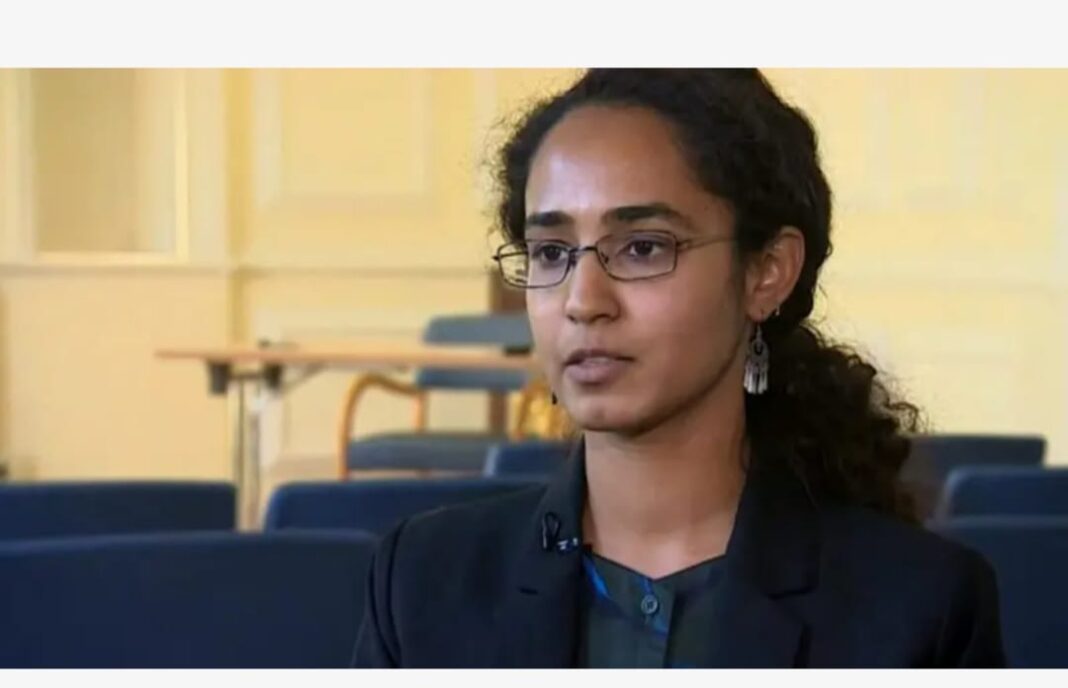
Asiya Islam

New Delhi : 

In a significant development, Dr Asiya Islam, an alumna of Women’s College, Aligarh Muslim University, has been appointed Assistant Professor as a permanent faculty at the Department of Gender Studies, London School of Economics and Political Science (LSE), London.

Retd. Professor Kaniz Khwaja Ahmed, who had taught Asiya Islam, Communicative English at Women’s College, told India Tomorrow, “I remember her as an ideal student as I taught her long back. Of all the students, I have taught so far, she stands out as the most ideal student. Although the subject I used to teach her was elementary, used in our daily life conversation, she always took it very seriously. She was very regular, attentive and punctual. In her, I saw the spark to achieve something in her life. I hope she still remembers me. We all are proud of her achievement and wish all the best for her career ahead.”

Before joining LSE Gender Studies, she was a Lecturer in Gender and Work at the University of Leeds. Before that, I was a Junior Research Fellow at Newnham College, University of Cambridge. In these positions, I taught on feminist global political economy, Black feminist theory, and intersectionality.

Asiya completed her PhD in Sociology at the University of Cambridge, her MSc in Gender, Media and Culture at the London School of Economics, and her BA(Hons) in Communicative English at Aligarh Muslim University.

Another teacher Professor Nikhat Taj, who also taught Asiya, said, “Asiya, indeed has made us very proud. Her achievement comes as no surprise for she had been a meritorious/promising student. She excelled not only in academics but was an ace performer in extra-curricular activities as well. She won the Zakir Hussain Medal for Academic Excellence at the undergraduate level, and that was just the beginning of her success story. I recall her as a diligent and committed worker, who would fulfil (most satisfactorily) any task, or project either given to her or taken up by herself.”

Professor Nikhat added, “Her appointment as an associate professor at the London School of Economics is just another step for many other achievements to come her way in the future. I see her as an inspiration and a role model for all the students of AMU – her alma mater.”

 AMU Vice-Chancellor Prof Naima Khatoon, who was earlier Principal of Women’s College, while congratulating Dr. Asiya Islam on her achievement, said, “Asiya’s appointment at the London School of Economics will encourage our students to pursue higher studies abroad and work hard to make an academic career in prestigious foreign universities.”

source: http://www.indiatomorrow.net / India Tomorrow / Home> Education / by Mohammed Naushad Khan / September 16th, 2024

Press Club of India remembers Maulvi Mohammed Baqar, the doyen of India’s investigative journalism

DELHI :

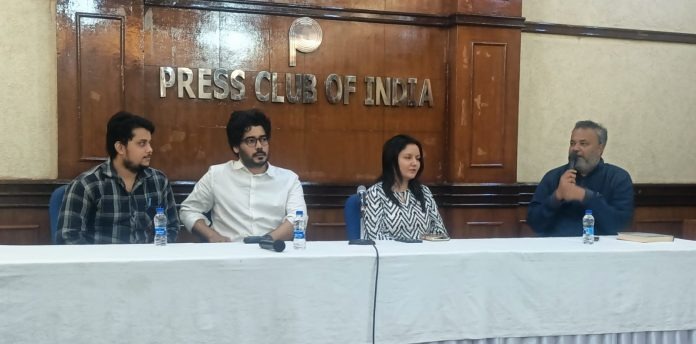
Press Club of India remembers Maulvi Mohammed Baqar on his 167th birthday on September 15, 2024.

New Delhi :

The Press Club of India (PCI) that has remained the last bastion to hold the flag of media’s independence high in the country, organised a programme on Sunday to remember the contributions of Maulvi Mohammed Baqar who used the power of his pen to challenge the Britishers who had brought a law to gag the press in India in the middle of 18th century.

Organized on the 167th martyrdom anniversary of Maulvi Baqar, the programme was attended by a host of writers, journalists, historians, academicians and intellectuals.

Shedding light on the contributions of Maulvi Baqar considered to be the founder of “spot” and investigative journalism in India, noted historian Dr. Swapna Liddle, author of The Broken Script, recalled Maulvi Baqar’s bold reporting of the events in Delhi’s 1857 revolt popularly known as India’s First War of Independence. It was when the press did not have facilities as available today, but Maulvi Baqar used to collect news stories from the field and print them in his newspaper published in the Urdu language.

The Britishers felt disturbed by the investigative reporting of Maulvi Baqar that became the reason for his martyrdom. British Army tied Maulvi Baqar to the mouth of a large gun and blew him into pieces.

Liddle emphasized how Moulvi Baqar became the voice of resistance against British rule, making him a significant figure in both the 1857Revolt and in the annals of Indian journalism.

According to Dr. Liddle, Moulvi Baqar’s work offers invaluable lessons for journalists today. His views on British governance, racial discrimination, job inequalities, and the exploitation of India’s wealth laid a foundation that remains relevant. Baqar’s sharp critique of British policies, combined with his unwavering call for unity among the people of Delhi, positioned him as a crucial figure in the anti-colonial struggle.

Presiding over the event, Gautam Lahiri, PCI President, hailed Moulvi Baqar as a pioneer of Indian journalism. Lahiri reflected on the state of modern journalism, pointing out that Baqar’s dedication and principles serve as a stark contrast to the current state of media, as reflected in India’s declining position on the World Media Freedom Index.

“It’s unfortunate that instead of rising to the level of journalism Baqar practiced, we seem to have regressed,” Lahiri noted, calling for introspection within the media industry.

Lahiri also stressed the importance of protecting institutions like the PCI, which he described as a cornerstone of Indian politics and modern history. “This land was given to us by our first prime minister, and it even served as the residence of former Prime Minister Indira Gandhi for a time. We must protect both the building and the institution, while upholding the constitutional values that it stands for.”

Senior journalist AU Asif, former member of PCI management committee, praised Baqar for his trailblazing work in investigative and field reporting. He underscored how Baqar’s journalistic integrity set a lasting example for future generations.

A panel discussion followed, focusing on Baqar’s legacy and the challenges faced by Urdu journalism today. Panelists included independent multimedia journalist Suhail Akhter, News18 Urdu anchor and author Munazah Shah, and Tasleem Raja, reporter for Siyasi Taqdeer and Qauwmi Aawaz. They discussed how Baqir’s newspaper, Delhi Urdu Akhbar, became a vital voice despite having a modest circulation of just 80 copies. The panel emphasized that the publication’s influence stemmed from its powerful content, which resonated with readers during a time of great political upheaval.

The discussion also touched on the difficulties Urdu journalism faces today, including issues of subscription, funding, and content creation. The panel drew parallels between the courage Moulvi Baqar exhibited in standing up to the British and the challenges modern journalists face in dissenting against the ruling establishment. The event was moderated by Mahtab Alam, journalist and PCI Joint Secretary.

source: http://www.indiatomorrow.net / India Tomorrow / Home> News / by Mohammed Naushad Khan / September 16th, 2024

Vision Academic City Inaugurated in Mewat: A Blessing for the Region, Says MLA Mamman Khan

Maroda Village, (Mewat District), HARYANA :

New Delhi :

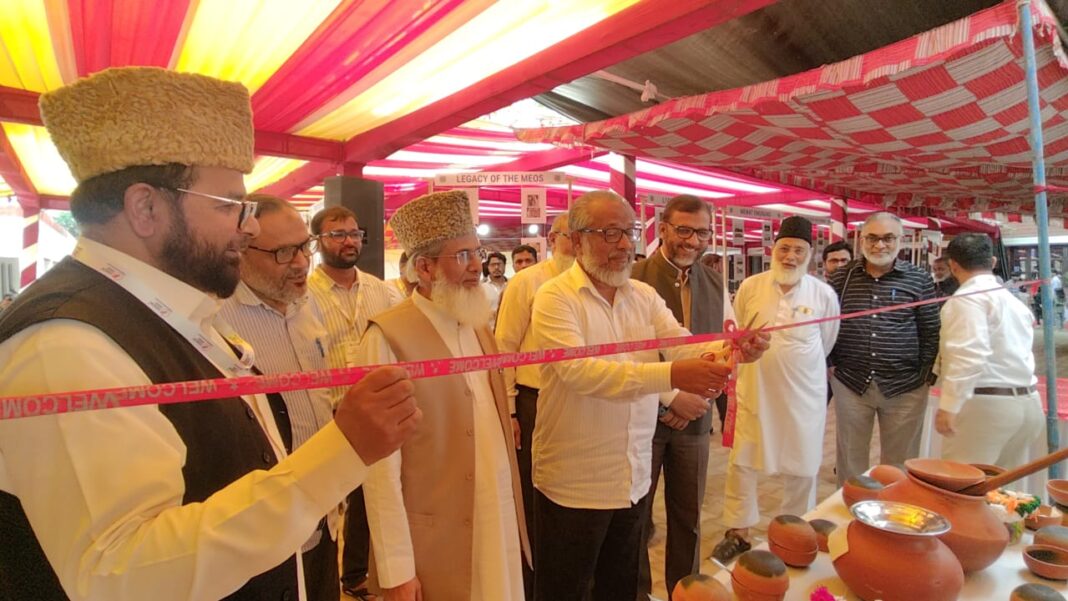
Human Welfare Foundation inaugurated the ambitious Vision Academic City” project in Mewat, one of Haryana’s most backward districts. Spread across 24 acres in Maroda village, the campus aims to transform the socio-economic landscape of the region by providing quality and affordable education, healthcare, and community services.

Speaking on the occasion, local MLA Mamman Khan described the campus as a “blessing” for the people of Mewat and assured full support to strengthen its educational initiatives.

P. Mohammed Ali Gulfar, Patron of Human Welfare Foundation and founder of the Gulfar Group, recalled that the dream of Vision 2026 was envisioned in 2005 and is now becoming a reality. “We will continue working for the educational and social upliftment of this region,” he said.

Adding to this, T. Arif Ali, Chairman of Vision 2026, emphasized that the sacrifices of Mewat’s people are deeply rooted in India’s soil, and the time has come to turn the dreams of their forefathers into reality.

Mewat is counted among the most underdeveloped districts of the country, grappling with poor education levels, lack of healthcare facilities, and inadequate sanitation. To address these challenges, the Vision Academic City has been developed under the Vision 2026 Programme.

During the inauguration, several institutions within the campus were formally opened, including Al Jamia Islamia Mewat Off-Campus, an undergraduate college building, separate hostels for boys and girls, and Chirag Middle School. The foundation stones of Scholar School and a Skill Development Centre were also laid.

The event also highlighted Mewat’s rich cultural heritage through Tarang Cultural Fest, Mewat Kitchen, and the Mewat Heritage Wall, showcasing the region’s traditions and identity.

Prominent guests included Engineer Mamman Khan (MLA, Ferozepur Jhirka), P. Mohammed Ali (Founder, Gulfar Group of Companies), and Maqbool Ahmed Anarwala (Retd. IPS Officer). Educationists, community leaders, and several eminent personalities also graced the occasion.

Speakers stressed the urgent need for quality education and skill development in Mewat, noting that Vision Academic City would not only provide modern infrastructure but also open pathways for higher education and research.

Among those present were M. Sajid (General Secretary, Human Welfare Foundation), Shibli Arslan (Academic Director, Al Jamia Mewat Campus), and many local dignitaries.

The inaugural ceremony concluded with a commitment to make Vision Academic City a hub of learning, development, and cultural pride for Mewat.

source: http://www.indiatomorrow.net / India Tomorrow / Home> Society / by Mohammed Naushad Khan / September 08th, 2025

Syed Sadath to Represent Karnataka in 31st Sub-Junior National Netball Championship 2025-26

Alur (Hasan District), KARNATAKA :

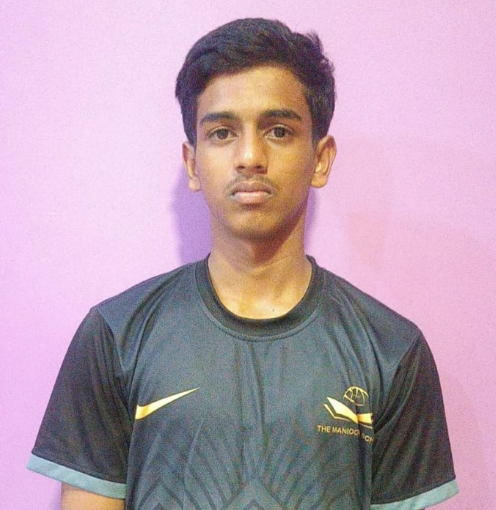
Syed Sadath, a Grade 10 student of The Mansoora School, Alur, Hassan, has been selected for the Karnataka team in the 31st Sub-Junior National Netball Championship 2025-26

Alur, Hassan:

Syed Sadath, a Grade 10 student of The Mansoora School, Alur, Hassan, has been selected for the Karnataka team in the 31st Sub-Junior National Netball Championship 2025-26. The championship will take place from May 25-28, 2025, at Alpine Academy in Indore, Madhya Pradesh. This event is being hosted by the Netball Federation of India in collaboration with the Netball Sports Association Madhya Pradesh.

The entire Mansoora School community, including management, principal, teachers, and students, extends best wishes to Syed Sadath and the whole Karnataka netball team for championship success, made possible under the exceptional guidance of PE Teacher Mr. Syed Touqeer Ahamed.

source: http://www.radiancenews.com / Radiance News / Home> Latest News> Sports / by Radiance News Bureau / May 23rd, 2025

M. Nurul Islam Honoured With Prestigious Al-Ameen All India Community Leadership Award in Bengaluru

Bengaluru, KARNATAKA / WEST BENGAL :

Bengaluru:

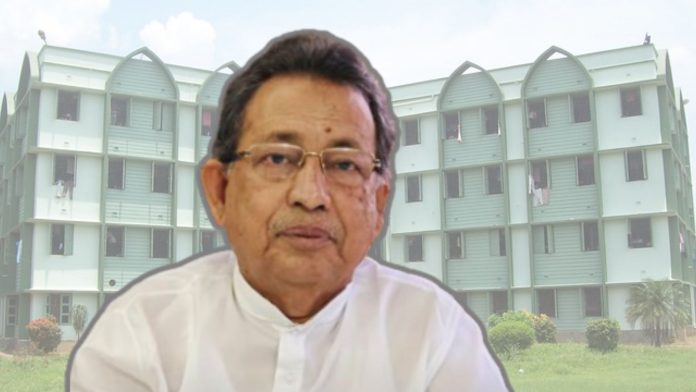
On the occasion of its Founder’s Day, the Al-Ameen Educational Society felicitated M. Nurul Islam, Founder and General Secretary of Al-Ameen Mission, West Bengal, with the prestigious “Al-Ameen All India Community Leadership Award 2025” for his remarkable contributions to education and community empowerment, reported the MPositive.

The annual event, held in memory of the Society’s visionary founder, the late Dr. Mumtaz Ahmed Khan, brought together members and supporters of the Al-Ameen movement. Nurul Islam was invited as the chief guest and was honoured for his tireless efforts in transforming the educational landscape, particularly for underprivileged students in West Bengal.

Islam began the Al-Ameen Mission in 1986 by establishing a hostel and the Institute of Islamic Culture in Khalatpur through community donations—famously collected as a fistful of rice from every household. In 1987, he renamed the initiative Al-Ameen Mission, inspired by the title Al-Ameen (the trustworthy), given to Prophet Muhammad ﷺ.

Since its inception, the Mission has achieved phenomenal success. With 77 residential branches, it currently houses more than 22,000 students, boasts a strong network of 50,000 alumni, and has produced over 2,400 doctors, 2,500 engineers, and numerous other professionals. In 2022 alone, nearly 500 students secured admissions in MBBS and BDS courses.

The late Dr. Mumtaz Ahmed Khan, who founded the Al-Ameen Educational Society in 1966 at the age of 30, is remembered as a renowned educationist, humanitarian, and reformer who dedicated his life to uplifting marginalized communities through education. His legacy continues to inspire the movement’s expansion across India.

source: http://www.radiancenews.com / Radiance News / Home> Education> Latest News> Report / by Radiance News Bureau / September 08th, 2025

Mohsin Ali Wins District Best Teacher Award

Alur (Hassan District), KARNATAKA :

On the occasion of Teacher’s Day, Mr. Mohsin Ali, a dedicated Urdu teacher at The Mansoora School, Alur, has been honoured with the District Best Teacher Award by the Deputy Commissioner.

Mr. Mohsin Ali has been serving The Mansoora School, Alur, for over 35 years, inspiring and motivating students through his teaching and active participation in cultural activities. Despite opportunities for government jobs, he has chosen to dedicate his service to the welfare of his students.

Under his guidance, many students have achieved exceptional marks in Urdu and gone on to secure high positions in their careers. This award is a testament to his teaching excellence and commitment to education.

The Mansoora family congratulates Mr. Mohsin Ali on this prestigious achievement and wishes him continued success in his endeavours.

“Mr. Mohsin Ali’s dedication and passion for teaching have made a significant impact on the lives of his students. We are proud to recognise his outstanding contribution to education.”

source: http://www.radiancenews.com / Radiance News / Home> Awards>Latest News / by Radiance News Bureau / September 07th, 2025

Exclusive | Author Nizar Ilthumish Shares Thoughts On His Books, Life And Society

KERALA :

Acknowledging that he is from a well-settled family and did not encounter with much hardships in life, Nizar says he has heard stories of hardship and struggle from older generations, forming the crex of his books.

Nizar Ilthumish, author and assistant professor, says he draws all his characters as reflections of the people around him and the language he uses in his books also reflects their dialects .

In an exclusive conversation with Timeline Daily, Nizar explains that all his characters speak in the language he envisions, which can be challenging for readers from southern Kerala to understand, and despite this, he incorporates those dialects and usages.

A recipient of the SK Pottekkatt Award 2024 and Camel International Award, Nizar is famous for his works like Noorul Muneerul and Poornnananda. When asked about depicting bygone eras, although he is relatively from the younger generation, Nizar describes, “Though I didn’t experience those times, stories passed down through generations shape my writing. “I gather tales from my parents and grandparents, storing them in my mind to weave into my stories.”

Acknowledging that he is from a well-settled family and did not encounter with much hardships in life, Nizar says he has heard stories of hardship and struggle from older generations. He says their stories, combined with the writer’s imagination, form the crux of his narratives.

Nizar also addresses caste differences within society, including in the Muslim community. He points out that people criticized him for opening up that society still chooses marriage partners based on occupation and family status. The Osan community, for instance, faces challenges in finding partners due to societal prejudices. He claims that caste differences exist not only among Hindus but also within Islam, despite claims of equality.

The author during the interview also discussed his books, their plots, and the reflection of social realities. He stresses the importance of marketing for writers in today’s social media-driven world. “I have learned to establish myself as an author through Instagram Reels,” Nizar said, adding that he challenges the thinking that digitalization harms reading habits, citing the selling rate of his books.

source: http://www.timelinedaily.com / Timeline. / Home> Exclusive / Author Nizar Ilthumishi / edited by Fazal Rahman Chembulangad / June 22nd, 2025