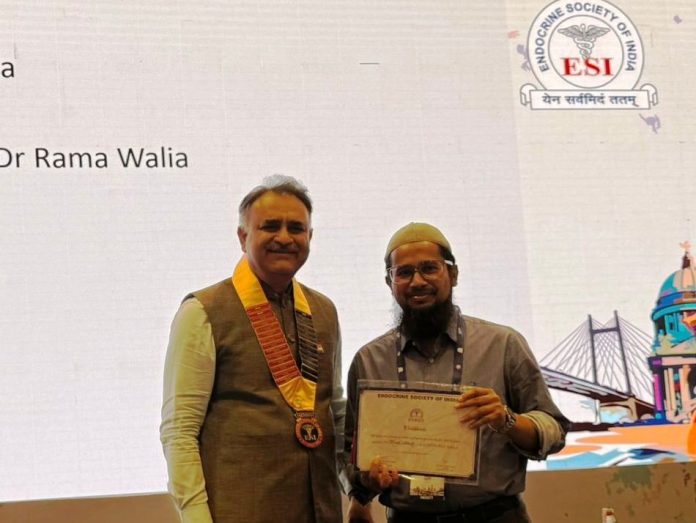
Dr Hamid Ashraf receives the Prestigious A.R. Seth Award for Research on Gestational Diabetes at the 54th Annual Conference of the Endocrine Society of India (ESI), held in Kolkata
Aligarh:
Dr Hamid Ashraf, a distinguished faculty member at the Rajiv Gandhi Centre for Diabetes and Endocrinology, Aligarh Muslim University (AMU), has been honoured with the prestigious A.R. Seth Award at the 54th Annual Conference of the Endocrine Society of India (ESI), held in Kolkata.
The A.R. Seth Award, among the highest recognitions in Indian endocrinology, is conferred annually on researchers and clinicians for outstanding contributions to the understanding and treatment of hormonal and metabolic disorders.
Dr. Ashraf received the award for his pioneering research on maternal health, particularly on identifying early metabolic markers of gestational diabetes mellitus (GDM). His study revealed an alarming trend of dysglycemia in over 40 percent of pregnant women in the region, highlighting the urgent need for reliable predictive markers to ensure early detection and better fetomaternal outcomes.
“This recognition is not mine alone but belongs to the entire team that made this research possible,” Dr. Ashraf said, acknowledging the support of colleagues from the Departments of Obstetrics and Gynecology, and Pediatrics at AMU, along with the contributions of students and patients who participated in the study.
Experts at the conference lauded his findings as a significant step in addressing one of India’s most pressing public health challenges.
source: http://www.radiancenews.com / Radiance News / Home> Pride of the Nation> Awards / by Radiance News Bureau / September 10th, 2025
Senior writer, multilingual scholar and progressive thinker Prof. M. Karimuddin (95) passed away at his home in Ganjam, Srirangapatna on Saturday morning due to age-related illness.
Karimuddin, who was unmarried, had served as a Kannada professor and later as a principal in government degree colleges in Mysore, Mandya, Madikeri and elsewhere before retiring.
A student of Kuvempu, he had studied Kannada, English, Urdu, Persian, Arabic and Sanskrit.
He had written many works including Orphan Muslims, Sanchita Chintana, and Baalu Baddu. Many of his thought-provoking speeches on All India Radio were popular. ‘Prof. Karimuddin’s Life and Literature’ was the text for students of class 9 who were studying Kannada as a second language in Urdu medium.
A good orator, Karimuddin was actively involved in farmer, Dalit, pro-Kannada, progressive, and anti-idiotic movements even in his later years. His ancestors were relatives of Tipu Sultan.
Karimuddin, who retired as a Kannada professor at Maharaja’s College, Mysore, was well-versed in Kannada grammar, Old Kannada and New Kannada literature.
He had also done a lot of research on Tipu Sultan. It is said that he had written many collected works on the history of Tipu Sultan.
His friend Prof. Nanjaraja Urs expressed his condolences, saying that his death is a huge loss to the Kannada nation.
Chief Minister’s condolences
“I am saddened to hear the news of the death of senior writer and popular professor Prof. M. Karimuddin. A simple gentleman, Prof. Karimuddin used to help educate the children of the poor. I also share in the grief of his family. I pray that God may grant peace to his soul.”
– Chief Minister Siddaramaiah
ಹಿರಿಯ ಸಾಹಿತಿ ಮತ್ತು ಜನಪ್ರಿಯ ಪ್ರಾಧ್ಯಾಪಕರಾಗಿದ್ದ ಪ್ರೊ.ಎಂ.ಕರಿಮುದ್ದೀನ್ ಅವರ ಸಾವಿನ ಸುದ್ದಿ ತಿಳಿದು ದು:ಖವಾಯಿತು.
ಸರಳ ಸಜ್ಜನರಾಗಿದ್ದ ಪ್ರೊ. ಕರಿಮುದ್ದೀನ್ ಅವರು ಬಡವರ ಮಕ್ಕಳ ಶಿಕ್ಷಣಕ್ಕೆ ನೆರವಾಗುತ್ತಿದ್ದರು. ಅವರ ಕುಟುಂಬ ವರ್ಗದ ದು:ಖದಲ್ಲಿ ನಾನೂ ಭಾಗಿಯಾಗಿದ್ದೇನೆ.
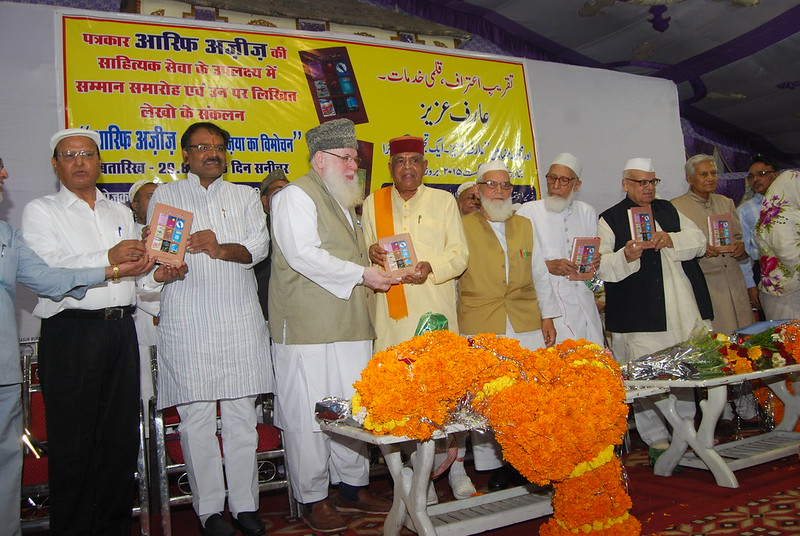
When a journalist is eulogized in a function by speakers after speakers wherein a book critically analysing his works and personality is being released then it is but natural that tears of joy start rolling down the journalist’s cheeks.
Such was the case with the well-known Urdu journalist Arif Aziz of Bhopal when at the fag end of the function of releasing the book on him entitled “Arif Aziz – Ek Tajzia” (Arif Aziz – An Analysis) here he was asked to speak after the dignitaries on the dais one by one lauded his journalistic and literary services spanning over 40 years. He was overwhelmed by the occasion as the cup of love was brimming or even overflowing. When he rose to address the assemblage he found his voice virtually chocked and eyes welled up with tears. He was seen sobbing involuntarily while standing mute for a minute or two as volunteers ran helter-skelter to fetch water so that he could wet his parched throat. Another volunteer fetched a tissue paper to help him wipe off his tears and gain composure to be able to speak a few words on the occasion.
Arif Aziz, the “Son of the Soil”, struggling for words told the jam-packed Hindi Bhavan auditorium in a chocked voice that whatever has been said about his works and personality is an exaggeration. He is not an iconic figure to be showered such praises upon him by his well-wishers.
“Whatever I did in my life as a journalist I did it with all my honesty and sincerity and saw to it that the profession to which he belonged does not get blotted by his actions”, he added.
He gave credit for his success to his journalist colleague Ashfaque Mashhadi Nadwi. The book concept on him is the brain child of Ashfaque Mashhadi and Urdu litterateur Dr. Akhlaque Asar. It was brought into reality by another journalist colleague Inamullah Khan Lodhi and Arif Aziz’s daughter Mardia Arif, who is also a writer in her own right, as they painstakingly compiled the write-ups and essays on him, he revealed.
“Hajji Mohammad Haroon, president of Jamiat-e-Ulma-e-Hind, Madhya Pradesh unit, placed the icing on the cake by organising such a grand function for me that I did not deserve”, he remarked.
Without any doubt the book releasing function was a glamorous and glittering with eminent writers, columnists cutting across language barriers, and famed personalities who graced the occasion.
Arif Aziz’s friends, well-wishers and relatives also thronged the venue in large numbers to make it a most memorable occasion. Not only this outstation relatives, fans and Urdu lovers in large numbers too made it a point to attend the function to make it a memorable one. Apart from Delhi people from Indore, Sagar, Vidisha, Ashta, Sironj, Sehore etc. participated in the function. The representatives of a number of literary organisations and individuals poured out their love for Arif Aziz on the occasion and mobbed him with bouquets, garlands and gifts. Congress MLA Arif Aqueel draped him with a shawl around his shoulders to honour him. About a dozen tiny-tots also did not lag behind and felicitated him with flowers.
It is noteworthy that as the function was moving along telephonic congratulatory messages of Arif Aziz’s friends and fans from across the border poured in hailing his exemplary journalistic journey.
It has been seen that one’s services are usually extolled after one’s death but Arif Aziz is fortunate enough that his untiring efforts were recognized in his lifetime and he saw this all with his own eyes.
The 384 pages book “Arif Aziz — Ek Tajzia” is a voluminous bunch of essays on the personality, services and dedication of authentic, revered writer and Urdu journalist Arif Aziz. It has been compiled by journalist Inamullah Lodhi and Mrs. Mardiya Arif.
The function of the release of the book was organised under the aegis of Maulana Barkatullah Bhopali Education and Social Welfare Society, Bhopal with its president Hajji Mohammad Haroon and his team leaving no stone unturned to make the occasion of the book release a big and a grand success.
Arif Aziz is Special Correspondent of “Nadeem”, the oldest Urdu daily of Bhopal. He is a voracious writer and has authored nine books on various subjects. Daily columns written by him are reproduced by over a dozen national and international Urdu newspapers. He has written over 20,000 articles in the last 40 years of his journalistic life. He has been decorated with All India Hakeem Syed Qamarul Hasan Award of Madhya Pradesh Urdu Academy and 30 other national and state level awards.
The books authored by Arif Aziz include: 1. Nabz-e-Dauran — Anthology of more than 70 essays on Political, Social & Current topics (1994); 2. Zikr-e-Jameel — Comprising of 38 Bio-Sketches published by Madhya Pradesh Urdu Academy, Bhopal (1995); 3. Qadr-o-Qeemat — Anthology of more than 45 critical essays and research papers (1997); 4. Talash-o-Ta’assur — 19 Critical and research papers (1999); 5. Masajid-e-Bhopal — Historical facts of the mosques of world & especially of Bhopal (2003); 6. Had-de-Nigah — An Anthology of 51 Essays on political science & current topics ((2004); 7. Suraj, Chand, Sitare — comprising of 47 Bio-Sketches published by M.P. Urdu Academy, Bhopal (2004); 8. Musafir-e-Haram — Hajj Pilgrimage description (2006) and 9. Azad Hind Mein Urdu Sahafat — from 1947 to 2006 under the project of Makhanlal Chaturvedi Patrkarita Vishvidhayalaya, Bhopal (2010).
The function was presided over by renowned theologian (Aalim-e-Deen), Hazarat Maulana Mohammad Saeed Mujaddadi (popularly known as Peer Saeed Miyan), Rector Dar-ul-Uloom, Taj-ul-Masajid, Bhopal while the chief guest on the occasion was Aziz Qureshi, ex-Governor of Uttrakhand, Uttar Pradesh and Mizoram.
Other guests and dignitaries who participated in the function included: BJP-ruled Madhya Pradesh Home Minister Babulal Gaur; BJP Lok Sabha member from Bhopal Alok Sanjar; Congress MLA Arif Aqueel; Urdu litterateur Prof. Afaq Ahmad; Dr. Tariq Zafar, Vice Chancellor Bhoj Open University, Bhopal; Dr. Khalid Mehmood, ex-Head of Urdu Department, Jamia Millia Islamia, Delhi; Barkatullah University Arabic Prof. Hassan Khan; Maulana (Dr.) Iqbal Masood Nadwi (Islamic Centre, Canada); Senior journalists Masoom Moradabadi (Editor, Urdu daily Jadid Khabar, & fortnightly Khabardaar Jadid, Delhi); Siraj Naqvi, (Rashtriya Sahara, Delhi) and Rajkumar Keswani (Bhopal). Introduction about the book was presented by Prof. Afaq Hasan Siddiqui.
Hazarat Maulana Mohammad Saeed Mujaddadi, Aziz Qureshi, Babulal Gaur, Alok Sanjar, Prof. Afaq Ahmad, Dr. Khalid Mehmood, Alok Sanjar, Dr. Tariq Zafar, and Hajji Mohammad Haroon released the book amidst thunderous applause.
Masoom Moradabadi, Editor of Urdu daily Jadid Khabar & fortnightly Khabardaar Jadid, Delhi, while lauding Arif Aziz and his works strongly pleaded that the veteran journalist be honoured with the Padam Shree award for his yeoman services in the field of Urdu journalism for the last 40 years. He compared him with legendry India’s Freedom Struggle’s first journalist martyr Moulvi Muhammad Baqir, who was editor of Delhi Urdu Akhbar and a great advocate of Hindu Muslim unity. Freedom Fighter Maulvi Baqir was arrested for revolt and without being tried, on September 16, 1957 was tied to the mouth of a canon and was publicly blown up in front of the Khooni Darwaza in Delhi.
Siraj Naqvi, another senior journalist of Rashtriya Sahara, Delhi, also urged that Arif Aziz must be decorated with the Padam Shree award in recognition of his services by the government of the day.
Dr. Tariq Zafar, Vice Chancellor of Bhoj Open University, read out a citation in recognition of Arif Aziz’s services and presented it to him.
Speaking as a chief guest on the occasion Aziz Qureshi while extolling the contribution of Arif Aziz in Urdu journalism and literature lamented that after India’s Independence in 1947 Urdu language has languished due to government’s apathy which history will never forgive. Without batting an eye lid he said that in a calculated move after Independence a campaign was launched to wipe out Urdu. He revealed the campaign was started by the then Union Home Minister Pandit Govind Ballabh Pant, who was responsible for the establishment of Hindi as an official language of the Central government and a few states while dumping Urdu into oblivion. The process started from Uttar Pradesh and is still continuing despite court’s order declaring Urdu as second official language in the state.
In another revelation on the occasion Qureshi informed that after the first war of independence in 1857 the ruler of Bhopal Begum Sikandar Jahan had declared Urdu, in place of Persian, as the official language of her government for the convenience of her Hindu subjects. In the development of Urdu language the contributions of Hindus cannot be ignored, he added.
Maulana Saeed Mujaddadi while presiding over the function blessed Arif Aziz for fulfilling his responsibilities with all sincerity. He prayed he would continue to strive to serve the Muslim community through his journalistic efforts and the Almighty Allah (S) will guide him in all his endeavours.
Home Minister Babulal Gaur, special guest on the occasion, also lauded Arif Aziz’s simple life, his write-ups on social issues and dedication to Urdu journalism. He said he never indulged in yellow journalism for material gains.
At the outset Hafiz Qari Hashim Ansari recited verses from the Holy Quran. Urdu poets Iqbal Baidaar and Zafar Naseemi rendered poetic tributes in praise of Arif Aziz which was applauded by the audience. Khalique Siddiqui and jeweller Sheetal Bhai Soni presented gifts to him on the occasion. In the end Adv. Mohammad Kaleem proposed a vote thanks.
source: http://www.twocircles.net / TwoCircles.net / Home> India News> Indian Muslim> Literature> Top Story / by Pervez Bari, TwoCircles.net / September 04th, 2015
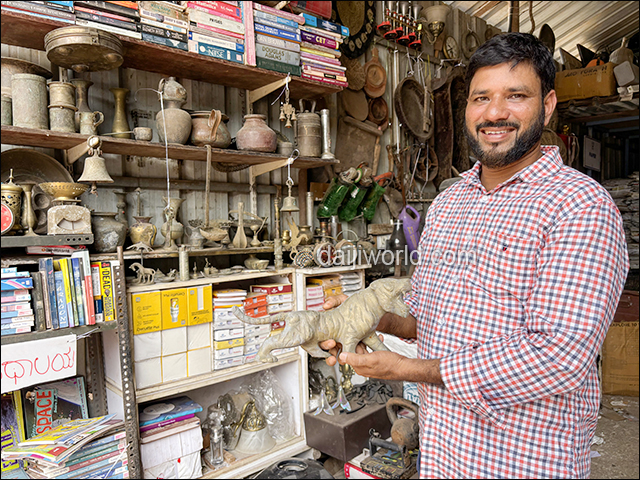
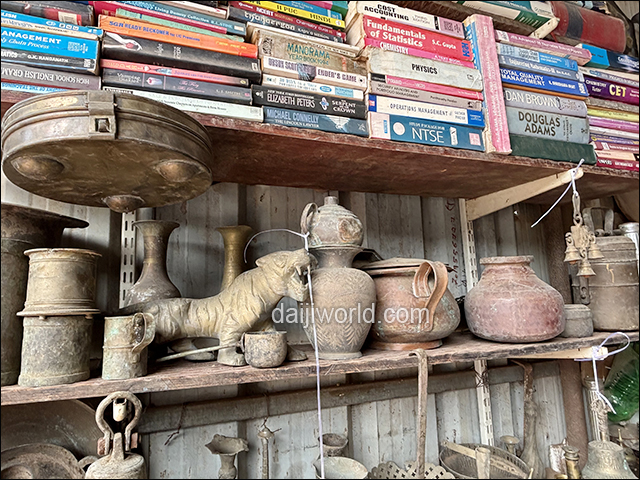
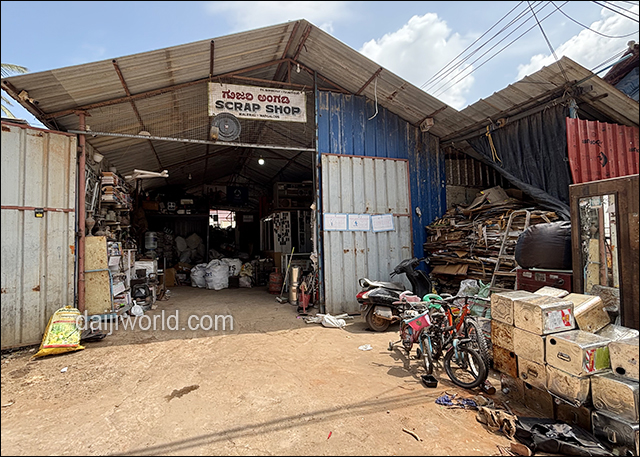
In the heart of Malemar stands a unique museum that has become a treasure trove of memories for the community. What began as a small scrap business two decades ago, and later transformed into a distinctive museum eight years ago, is today capturing the attention of visitors with its fascinating collection of vintage artefacts — all thanks to the dedication of Ibrahim Khaleel.
Originally hailing from Kulur, Khaleel developed the idea of converting his scrap shop into a museum when he noticed antique and traditional pieces entering scrap shops.
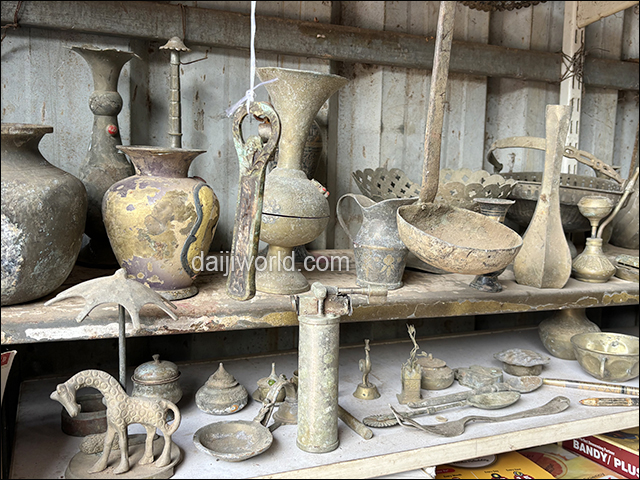
Determined to preserve them for future generations, he began collecting items not only from his own shop but also from households and other scrap dealers. Over the years, his efforts have turned discarded objects into priceless memorabilia — truly creating ‘wealth out of waste’.
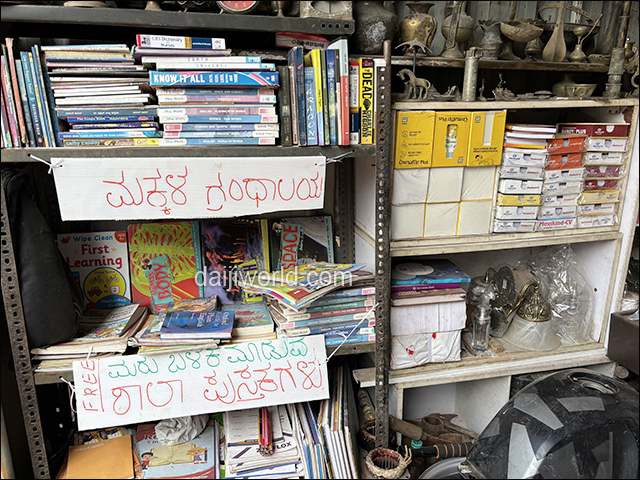
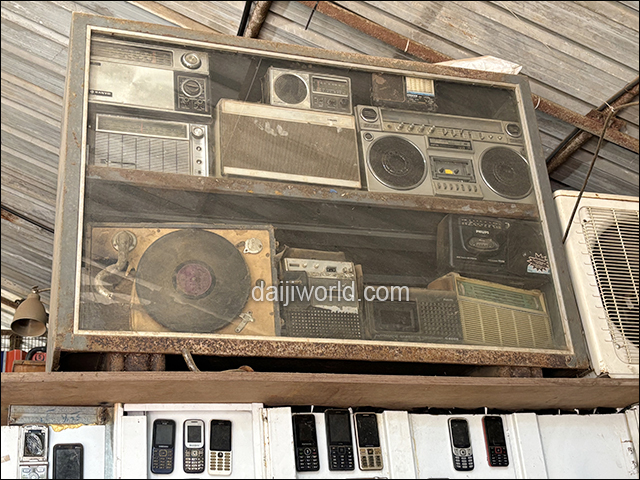
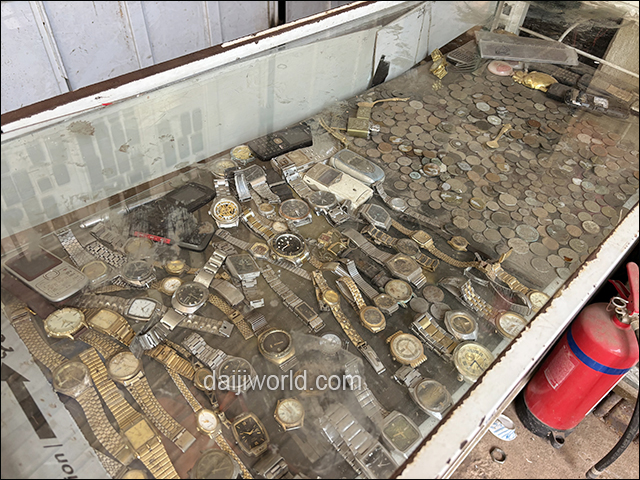
Khaleel’s museum now showcases a wide array of antiques, including coins, watches, tape recorders, gramophones, vintage telephones, lanterns, and traditional household items. He has also created a small library within the museum, where children and students can access books free of cost, making his initiative both nostalgic and educational.
His work has received valuable support from organisations such as Plastic for Change, which helped him organise the scrap shop into different sections. Khaleel has also invested in machines to shred waste paper, ensuring sensitive documents are not misused, and to separate cable wires from copper for effective recycling.
Looking ahead, Khaleel hopes to create a separate, larger space for his museum so that more people can visit, relive memories, and appreciate the craftsmanship and design of a bygone era.
Khaleel’s scrap museum is not just a collection of old objects; it is a space where history lives on, nostalgia is rekindled, and generosity flourishes. For anyone visiting Malemar, it is undoubtedly a must-see destination.
Scrap Shop Turns Museum in Mangalore | Creativity of Ibrahim Khaleel / source: youtube.com
source: http://www.daijiworld.com / Daijiworld / Home> Top Stories / by Daijiworld Media Network – Mangaluru / pics: Dayanand Kukkaje / September 11th, 2025
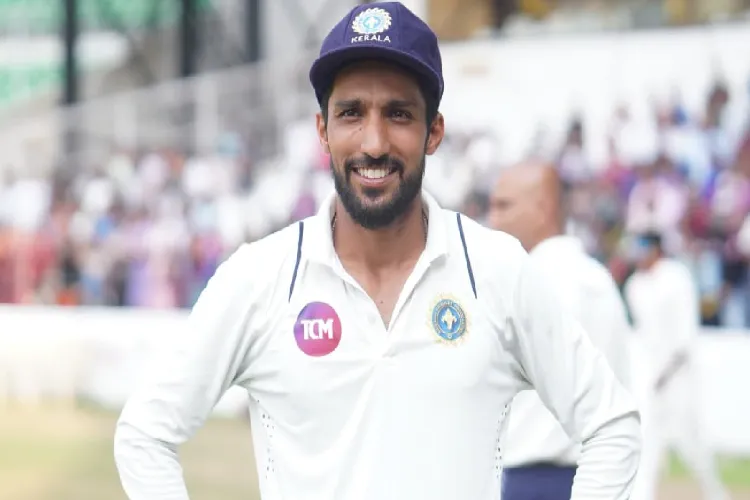
Kerala batter Mohammed Azharuddeen on Sunday replaced Tilak Varma as the South Zone captain for the Duleep Trophy semifinal against North Zone, starting at the BCCI Centre of Excellence on September 4.
Tilak Varma, who was originally named the South skipper, will not be playing the Duleep Trophy after he was named in the India squad for the upcoming Asia Cup.
Azharuddeen was the vice-captain of the side, and now that role has been handed to Tamil Nadu’s N Jagadeesan.
Tamil Nadu left-arm spinner R Sai Kishore too will not be playing in the semifinal for South Zone as he is still recuperating from a hand injury that forced him to skip the recent Buchi Babu Trophy.
Ankit Sharma of Puducherry and Shaikh Rasheed of Andhra have been added to the South squad for the Duleep Trophy last four match.
Both the players were already named in the standbys.
Ankit is a left-arm spinner who has taken 168 wickets from 68 First-Class matches, while Rasheed is a 20-year-old top-order batter who has made 1204 runs from 19 Ranji Trophy games.
He was drafted in by Chennai Super Kings during IPL 2025.
Dr. Hasan Haris presenting his paper at the International College of Surgeons (FICS) at ICS Conference
Aligarh:
Dr. Syed Hasan Haris, Reader at the Department of Surgery in J.N. Medical College of Aligarh Muslim University (AMU) got prestigious fellowship of the International College of Surgeons (ICS) Chicago, USA. He was awarded with the fellowship at ICS conference held recently in Pune, Maharashtra.
Dr. Haris was selected for this fellowship on the basis of his work in the field of Laparoscopy and Endoscopy and numerous presentations at various conferences and publication of his research papers both in international and national journals.
The committee appointed by the ICS recommended his name for the fellowship. He was invited to the conference to receive the fellowship. At the conference he presented his recent work entitled ‘Comparative Evaluation of Laparoscopic and Open Ventral Hernia Repair’.
Dr. Hasan Haris receiving the fellowship of the International College of Surgeons (FICS)
Prof. Abrar Hasan, Dean, Faculty of Medicine, Prof. Ashraf Malik, CMS and Principal, J. N. Medical College and Hospital, Prof. Imran Ghani, Chairman Department of Surgery and other faculty members have congratulated Dr. Haris on receiving the prestigious fellowship.
source: http://www.twocircles.net / TwoCircles.net / Home> Indian Muslim / by TCN News / December 08th, 2010
Dr. Mohammad Aslam Parvaiz delivering presidential remarks. (L-R) Dr. Qazi Siraj Azhar, Dr. Qaiser Jameel, Prof. Syed Najamul Hasan are also seen
MANUU organizes Third National Urdu Science Congress
Hyderabad (Maxim News):
People who do not invent either vanish or go into obscurity. These were the thoughts expressed by Dr. Qazi Siraj Azhar, Associate Professor, Michigan University, USA at the inaugural session of the Two-day National Urdu Science Congress 2019 organized by the Maulana Azad National Urdu University (MANUU), Hyderabad on National Science Day. Prof. Azhar was speaking as the chief guest on this occasion.
The two-day congress is being attended by participants from as far away as Lucknow, Delhi and Maharashtra, besides faculty and students of MANUU. The participants include practitioners of science, academicians, students, Urdu writers with interest in science and other stakeholders. Vice Chancellor, MANUU, Dr. Aslam Parvaiz, who presided over the inaugural once again emphasised the university’s efforts to provide textbook material in Urdu to the students of MANUU.
Dr. Qaisar Jameel, Head of the Department, Genetics, Bhagwan Mahavir Medical Research Centre, Hyderabad who has also been the former president of the Organisation for Women in Science in the Developing World, exhorted the students to have faith in their culture, traditions, and ethics if they want to succeed in life.
On this occasion, several books written in Urdu on different topics of science were also released.
Prizes were also distributed among students who participated in elocution, essay writing and other competitions on the topic “Science for people, and people of science” held in connection with National Science Day.
The congress is being jointly organised by the Centre for Promotion of Knowledge in Urdu and the School of Sciences. Prof. Zahid Hussain Khan, retired professor of physics from Jamia Millia Islamia, and Dr. Qaisar Jameel, Head of the Department, Genetics, Bhagwan Mahavir Medical Research Centre, Hyderabad were the guests of honour on this occasion.
Dr. Abid Moiz, Consultant, Centre for Promotion of Knowledge in Urdu & Convener of the congress welcomed the guest & delivered introductory remarks. Prof. S. Najmul Hasan, Dean School of Sciences presented a report on Science competitions and announced the winners. Dr. Ameena Tahseen conducted the proceedings. Later, in the afternoon a special session was held to commemorate 25 years of publication of Urdu monthly “Science”. Dr. Mohammad Aslam Parvaiz it’s Founder Editor was felicitated by Bazm-e-Khawateen, a renowned Women’s Organization from Hyderabad. (Maxim News)
source: http://www.indtoday.com / Ind Today / Home> Telangana / by Ind Gog / February 28th, 2019
Residents Zahra Khumri and her husband Mufaddal have created a template of success for little people. And much of it entails looking within
Photos: Shihab
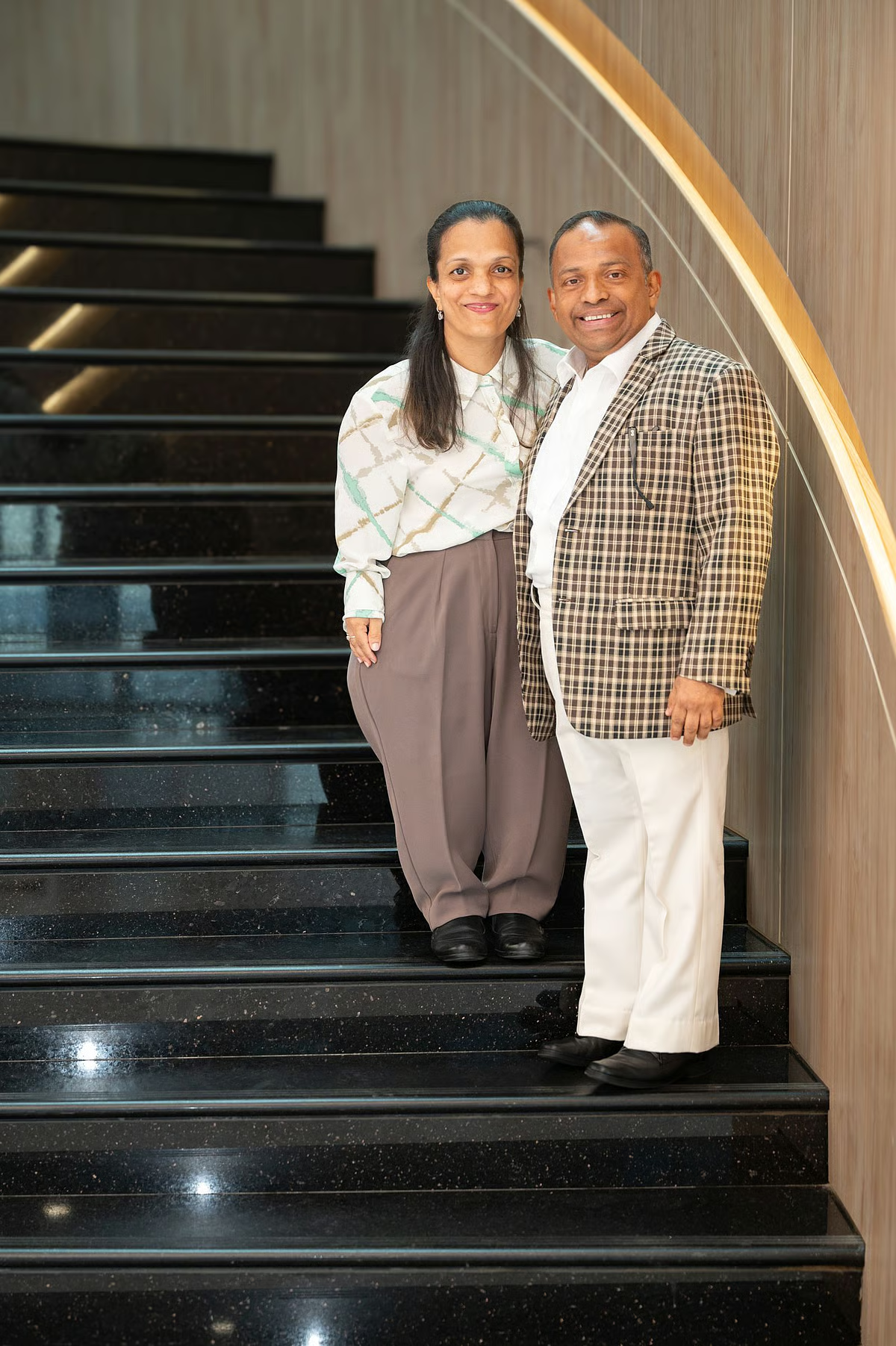
Beauty is in the eyes of the beholder. As is the notion of the ‘normal’. At 127cm and 138cm respectively, Dubai residents Zahra and Mufaddal Khumri may not fit into what is deemed normal by society. Not until you start speaking to them and peel off layers of what has been an extraordinary life. Zahra says she was born into a “normal” family (“My mother is 6ft tall,” she says).
And yet, it was in her childhood that she was diagnosed with dwarfism. Mufaddal, on the other hand, had induced dwarfism, which means his limbs were not proportionate to his body. It’s a diagnosis that tends to snatch hope away from people’s lives. But Mufaddal and Zahra have been, in every way, an embodiment of what human determination can achieve.
Growing up in Mumbai, neither Zahra nor Mufaddal had ever imagined companionship for themselves because we do not create templates of hope for those who are different than us. As Mufaddal says, “The world has been structured and ergonomically, it is meant for people of a certain height. I don’t blame the world for it. When you travel in a plane or train, you need to carry a foot rest so that your legs are comfortable and you don’t get pain in your thighs or lower part of your limbs,” says Mufaddal.
Zahra has had her own share of struggles. “Travelling in public places, particularly overcrowded spaces, has been a nightmare because there are no separate facilities and when we stand, we are at the height of a normal person’s buttock area, which is not very pleasant,” she says.
When everyday living is more challenging than others, how do you make room for hope? The daily jibes and amused stares are enough to break your spirit every day, every moment.
Take, for instance, the time when Zahra and Mufaddal were in their respective colleges. It’s not that they never liked others who are “normal” but the fear of rejection was enough to suppress any desire they ever had. “I began to channelise my pent-up frustration in books and music. I felt if I spouted poetry or recited ghazals, girls would get attracted to me. And none of them got attracted because for them, even a poet had to be a tall, dark and handsome man, right?” says Mufaddal. “And then there is the possibility of the offspring being short that often frightens people.” Zahra agrees that when the love part leaves a void, you tend to make up for it by excelling in education because there are fewer substitutes to knowledge.
Or take, for instance, the time when Mufaddal was told of Zahra by a cousin and they decided to meet on a date in Bandra, Mumbai. What was otherwise a memorable evening at a Chinese restaurant was also marred by curious onlookers staring at the couple. And then came their nikaah (wedding) ceremony. “The crowd was like, ‘Please go and have a look at this couple’. They were amused to see us,” recalls Zahra.
And the time when the couple thought of having a family. As Zahra decided to go for genetic counselling, the doctors advised that there was 50 per cent chance that her daughter would inherit the condition. “We were prepared,” says Zahra. “We told the doctor that we had led our whole lives as little persons, so we were really okay if our child had it.” Mufaddal and Zahra’s daughter Zoya did get bullied a lot as a result of which she had to change three schools.
“My daughter asks us to not accompany her to the mall because then people tend to laugh at us. When she is with her friends, she is calmer,” says Zahra. Mufaddal adds that Zoya feels the need to outshine others in order to get noticed. “But why does a person of short stature have to outshine beyond his or her capacity to get noticed? And once noticed, s/he again has to continue to do the outshining in order to be accepted. How is that fair?”
If everyday life is challenging for us all, imagine how challenging it is for those with short stature. What makes Zahra and Mufaddal’s story inspiring is how they have found their own happiness and fought their way to success instead of letting their condition define who they are. Today, Mufaddal is the CEO of Maldives Islamic Bank while Zahra works with people of determination in the UAE. Zahra is highly indebted to Gulshan Kavarana, the founder of SFS who also gave her an opportunity to work with famous Emirati artist Abdulla Lutfi.
“How many times have you seen CEOs of companies being short? Within organisations, you need to be heard louder than the rest and perform better than the rest. There is always going to be a prejudice that can come in many forms when it comes to increments and opportunities. When I shifted to my last job as the CEO of Maldives Islamic Bank, I thanked the board for taking a ‘short man’ as the CEO. I could not get that in some of my earlier banks, I could not rise to a level that I thought I would achieve,” says Mufaddal.
Inclusivity, he says, is not about gender alone, it is about giving people of “different abilities” the opportunity. Something that did not come easily to Zahra in her prime years. Zahra, who had studied engineering, was passionate about animation. But after her marriage to Mufaddal, she never got a chance to re-establish that career. It was years later that she began working closely with people of determination.
“The reality of becoming financially independent hit very late in life. Now I feel it’s important to be so. That’s what we keep telling our daughter. She wants to be a veterinarian. Thankfully, there is a precedent for that with one little person being a veterinarian.” The duo admits that living in the UAE has shaped their present and future and both are grateful for the facilities the country provides to people of determination.
Today, the couple is in a long distance marriage with Mufaddal’s work keeping him in the Maldives and Zahra’s keeping her in Dubai. Their daughter Zoya is 16, and the couple maintains that all they have taught her is to be confident “to look into the mirror and love each part of her body”. “I tell her that do not at any point feel that you are entitled to anything because you are a person of short stature. The moment you have that feeling of entitlement, you invite pity. You have to create a name for yourself. Let people see value in you,” says Mufaddal. “Even if you are discriminated against, the fire in you will burn much more.”
anamika@khaleejtimes.com
source: http://www.khaleejtimes.com / Khaleej Times / Home> Lifestyle / by Anamika Chatterjee / July 04th, 2025
An enjoyable history of Delhi and the Mughal dynasty that negotiates the end of an old world and the creeping advent of a new, unfriendly one.
The trading post established by the British East India Company at Surat, India, c.1680. From British Merchant Adventurers, published 1942. | Photo Credit: Universal History Archive/Universal Images Group via Getty Images
When the Bishop of Calcutta came to Delhi in 1824, he had a meeting with Akbar II, the penultimate Mughal emperor. It was a tragic affair. The royal audience hall was “full of lumber of all descriptions, broken palanquins and empty boxes”. The throne, meanwhile, was covered in pigeon’s dung. The king of kings, descended from another Akbar of legendary fame, himself lived in “pitiable” conditions, at the mercy of the East India Company. “I heartily hope,” the Bishop wrote, “that [the British] Government will reverence the ruins of fallen greatness, and that, at least, no fresh degradation” would be inflicted on this “poor old man”.
The Broken Script: Delhi Under the East India Company and the Fall of the Mughal Dynasty
Delhi in the age of this old man and his heir—specifically from 1803 until the Great Rebellion of 1857—is the focus of Swapna Liddle’s The Broken Script: Delhi Under the East India Company and the Fall of the Mughal Dynasty. Though the book, especially its second half, contains a good deal about literary culture, education, general life, and institutions under Company rule, its soul and principal substance lies in the tale of the imperial dynasty and their negotiation of decline. In theory, the Mughals remained sovereigns of India. In practice, however, these years witnessed the British chipping away at their claims, subjecting the emperor precisely to the “degradation” the Bishop feared.
It is surprising how many people think that the Mughals vanished somewhere in the 18th century; The Broken Script sketches skilfully the dynasty’s battle for survival in the period that followed, when, as Akbar II’s successor would lament, “nothing was left but the bare name instead of wealth, power and country”. Liddle’s research in resurrecting this time is solid: she utilises palace records, Company documents, files concerning the “mutiny” in 1857, (its chaos marking the end of the book), newspapers, and a host of private accounts. Every second page offers a detail, episode, or anecdote of the variety that makes researchers scribble notes. The writing itself flows with ease, making the text accessible (and enjoyable) to the lay reader.
Politics and control
At one level, Liddle’s book is a study of politics and control. When the British took Delhi from the Marathas in 1803, the Mughal emperor was already weak. Yet, he was still the fount of political legitimacy in the Indian subcontinent. As I discovered in my own research, as far south as Travancore, in present-day Kerala, rulers sought the emperor’s endorsement for their titles and position. Lord Wellesley, the imperialist Governor-General, was fully conscious that custody of the emperor was a political asset. And if the British didn’t take charge of him, a hostile power might exploit the Mughals’ symbolic appeal to unite anti-Company factions. The padshah had no teeth, that is, but even his shadow could be transformed into something potent.
At first, as Liddle shows, the British were courteous: honours were paid, and the Company took a ceremonially subservient pose with the imperial family. But no sooner was control established than the hacking away began. Before long, Company men wanted to assert superiority—one Governor-General in 1815 refused to visit Delhi, for the idea of having to stand in the emperor’s presence was grating. Akbar II possessed de jure sovereignty, but the British were, de facto, his masters. Slowly, the Company took control of the Red Fort, citing security. They meddled in the allocation of stipends to junior princes, exiled those of the royal house who were seen as dangerous, and introduced themselves even into the emperor’s domestic life. These were all political acts, oriented towards ejecting the Mughals from public consciousness. The Red Fort was a living reminder of their erstwhile greatness; so, Company officers began to urge the imperial family to move out and vacate their ancestors’ seat. Similarly, many were the painful negotiations over the dynasty’s pension. Though much was put down on paper, t The padshah was often reduced to pleading, at one time even seeking legal representation in London. The Company conceded certain claims, but only after extracting an advantage or benefit for themselves—it did not matter that he was in the right; they had the power to defy every treaty. Additionally, the British cut off the emperor’s ceremonial links with other Indian courts—the Company, not he, were hereon positioned as India’s supreme authority.
Highlights
Delhi from 1803 until the Great Rebellion of 1857 is the focus of Swapna Liddle’s The Broken Script.
Liddle’s research in resurrecting this time is solid.
She utilises palace records, Company documents, files concerning the “mutiny” in 1857, (its chaos marking the end of the book), newspapers, and a host of private accounts.
Interesting dynamics
Delhi itself, meanwhile, saw interesting transformations. The fall of its Muslim ruling elite, more and more on the margins under Company rule, saw also the corresponding rise of Hindu and Jain mercantile classes; this at times sparked religious animosities. The city was home to heaps of newspapers that reported enthusiastically on palace dynamics, bazaar gossip, speculated on British policy, and more. A degree of anglicisation was also in the air.: elites might serve oyster pate to Western guests, while shops obtained signboards in English. But equally, there were furious debates on whether English or “Oriental” learning should be patronised, and to what extent. To the more conservative, the city’s culture too seemed to be under siege.
Liddle’s study is illuminating, and reflective of how complex even a relatively narrow historical canvas and geographical space can prove. She reminds us that colonialism and empire were not merely about territory and battles, but also more intricate matters of ritual, protocol, and meanings. The book has a rich cast of figures—Anglo-Indian families related to the Mughals by marriage; corrupt British officers who might be manipulated by “natives”; professors and poets—some of whom deserve their own detailed studies. It is a gratifying read, about a dynasty and a city navigating the end of an old world, and the creeping advent of a new, unfriendly one.
Manu S. Pillai is a historian and writer.
source: http://www.frontline.thehindu.com / Frontline / Home> Books> Book Review / by Manu S Pillai / June 02nd, 2023
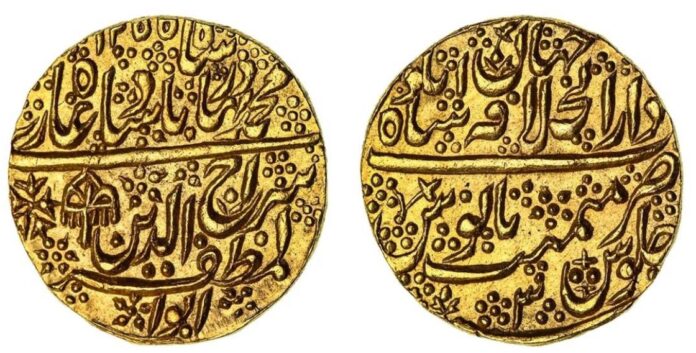
The last Mughal Emperor, Bahadur Shah II, might have been completely forgotten by his country and his people, but the interest in everything associated with him among numismatists and history enthusiasts around the world is soaring high. On August 28 numismatists and historians gaped in amazement when a Nazarana Gold Mohur of Bahadur Shah Zafar from the year 1839 was sold for an astounding sum of £571,500. This amount comes to around Rs 6.8 crore. The auction was conducted by Spink Auction, one of the most credible auction houses with a history of more than 350 years.
Not many are surprised at the interest shown in the nazrana mohur of the last Mughal emperor as everything associated with the doomed emperor is still very attractive to historians and numismatists. Bahadur Shah Zafar, or Bahadur Shah II (24 October 1775 – 7 November 1862) the last Mughal emperor of India was not just a vestige of past, he was a very popular leader, poet, sufi and a great freedom fighter who rose with his people against the tyrannical and brutal rule of the British East India Company. While the mutiny was defeated in a matter of months, Bahadur Shah Zafar lost badly, sacrificing his sons who were butchered by a British officer, faced sham trial where there was no hope of justice and the judge was doing all to punish the King and then faced the worst humiliation possible for any human to endure, let alone the king.
Bahadur Shah II was the 20th and the last Mughal emperor. Born Mirza Abu Zafar Sirajuddin Muhammad he succeeded his father, Akbar II, upon his death on 28 September 1837. His rule ended on 21 September 1857 when the mutineers lost the battle and the Emperor was arrested in Delhi, near Humayun’s Tomb by Major William Hodson. Bahadur Shah II was a titular emperor, or a namesake king as the Mughal Empire existed in name when he ascended to the throne as the authority of the empire had shrunk only to the walled city of Old Delhi or Shahjahanbad.
The country or the community haven’t done justice to the poet king, whose sacrifices for the nation and his opposition to the colonial rule have completely been ignored. Several of his sons and even grandsons were mercilessly massacred by the rampaging colonial officiers in the wake of Bahadur Shah Zafar’s defeat and his eventual arrests. He was also packed off to a faraway Rangoon, Burma where the last Mughal emperor spent his life in extreme penury and helplessness. Merely four years into his crushing and degrading imprisonment in the year 1862, at the age of 87, the last Mughal emperor developed some illness. Due to utter lack of healthcare facilities for the octogenarian emperor and his family, his condition deteriorated and became serious. There was only a farce treatment given to Bahadur Shah Zafar, but he couldn’t survive the humiliation heaped upon him over the last four years by brutal and wicked colonial rulers. The Emperor breathed his last on Friday, 7 November 1862 at 5 am. Instead of allowing the family to mourn the death of the emperor the Raj was more intent to force the king perpetual obscurity by keeping his grave away from the eyes of the world. He was buried at 4 pm and only two male members with a moulwi were allowed to offer truncated funeral prayer.
It should be noted that Nazarana coins struck in the name of last Mughal emperor Bahadur Shah II and minted at Shahjahanabad are extremely rare. For long, British used their coins for transactions in Delhi and other parts of India under their control, though the minting of nazrana coins in small quantities occurred sometimes under the direct supervision of the British officials.
source: http://www.muslimmirror.com / Muslim Mirror / Home> Art & Culture> Indian Muslim / by Muslim Mirror Special Correspondent / September 07th, 2025