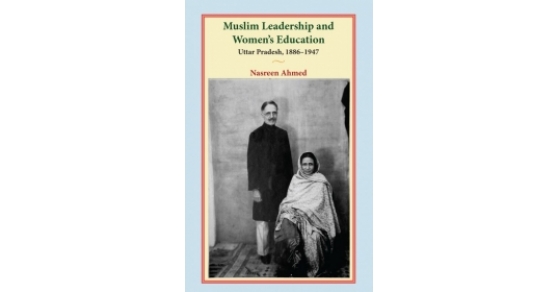
By Nasreen Ahmed / First Edition Pub. October 2012, x+190 pages, 8.5 x 5.5 in. / ISBNs: 978-81-88789-82-5
This is a broad study of the efforts at modern education for Muslim women, especially with reference to the Aligarh Movement and the initiatives inspired by it in other parts of UP, namely Lucknow, Allahabad, Rampur and Agra. The role of Muslim leaders, both male and female, the nature of the problems they encountered and the manner in which they countered them is the major thrust of this study. In the process we are introduced to the major debates on women and education during the course of late nineteenth and the first half of the twentieth century.
The author breaks many stereotypes as we learn that it was the more traditional among the Muslim leadership, rather than the ‘modernisers’, who pioneered women’s education and that Muslim women themselves played a major role in nurturing the first institutions under their personal care.
Based on an extensive range of primary sources and contemporary writings in English, Urdu, Hindi and Persian, this is a definitive work in many ways, gives food for thought on developments other than its main theme and will be useful to those concerned with women’s studies, social reform, education and modernity in colonial India, particularly with reference to Muslims.
CONTENTS
Muslim Women’s Education in the Nineteenth Century: A Study of the Traditionalist Attitudes
Efforts for the Education of Muslim Women, 1857-1885
Aligarh Movement and Muslim Women’s Education, 1875-1902
Female Education Section: Early Discussions, 1896-1904
A School for Muslim Girls at Aligarh
From Female Normal School to Muhammadan Girls’ School, 1906-1910
A Degree College Managed by the University
Establishment of Schools by Other Indigenous Efforts: Lucknow, Allahabad, Rampur and Agra.
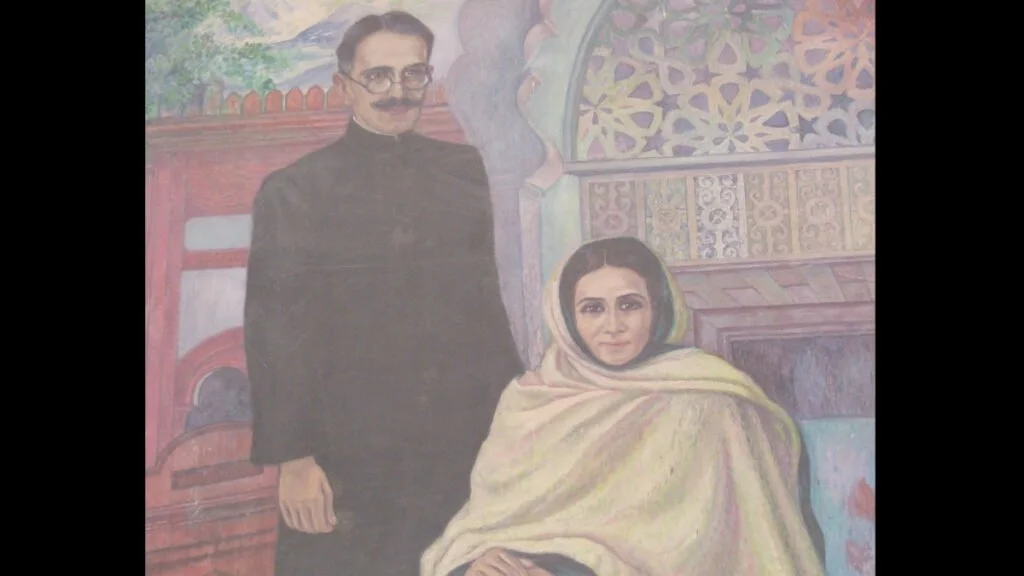
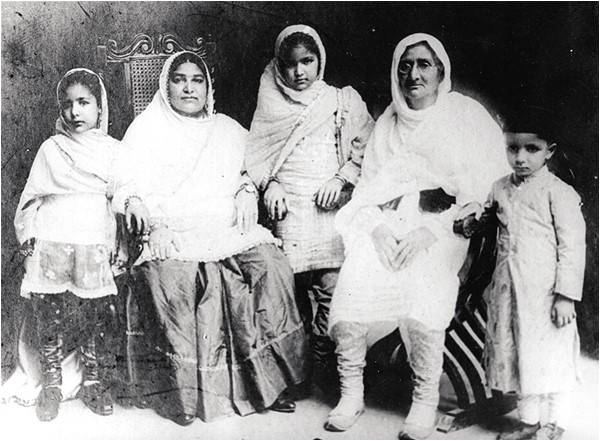
Cover photo: Papa Mian (Sheikh Abdullah, 1864-1965) and Waheed Jahan Begum (1884-1939), founders of the first school for Muslim girls in Aligarh. Back cover: Carriage used to bring girls to school, accompanied by a female escort. (1923)
Nasreen Ahmed
Nasreen Ahmed (1954-2009) studied at the Aligarh Muslim University and later taught at the Karamat Husain College, Lucknow.
She is a pioneer among historians on concerns of Muslim women’s education, as her early essays on the theme published in the late 1970s show. Thereafter she presented her work at various national conferences and seminars. Her studies are rich in sociological data: she records a great deal that feminist scholars writing on Muslim women today have missed. She is author of many research articles published in the Proceedings of the Indian History Congress, a journal of frontier scholarship in history.
source: http://www.threeessays.com / Three Essays Collective
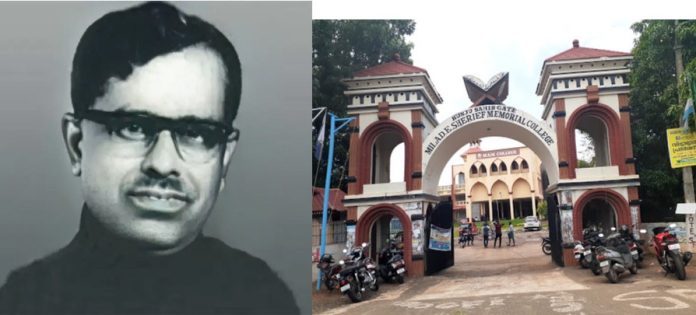
A college has been named after Prophet Muhammad’s ﷺ birthday celebrated as Seerat-un-Nabi across the globe. The 60-year old Muslim institution – Milad-E-Sherief Memorial College – stands tall at Kayamkulam in Alappuzha district in God’s Own Country. Thanks to the visionary Alhaj P K Kunju Sahib, a former Finance Minister in Kerala between 1967-69, who was instrumental in establishing the institution.
Perhaps in a first of its kind, a Muslim minority institution in Kayamkulam situated in Alappuzha district in God’s Own Country has been named ‘Milad-E-Sherief Memorial College’ (MSM) reminiscing the birthday of Prophet Muhammad ﷺ celebrated as Seerat-un-Nabi across the globe.
The timely info was shared by journalist Colachet Azheem in his Facebook page which sheds light on the munificence of Alhaj P K Kunju Sahib, a former Finance Minister in Kerala between 1967-69, who established the institution.
Flipping through the pages of MSM College portal, it revealed that late Alhaj P.K. Kunju Sahib as a realisation of his long-cherished dream of cultural advancement of the uneducated people of central Travancore named the college as Milad-E-Sherief Memorial College.
Interestingly, it stands as a monument speaking volumes about Prophet Muhammad’s teachings and preachings and his way of life. A veritable champion of the masses, he envisioned that the progress of the poor and the downtrodden is possible only through education. Hence he undertook the great mission of imparting the radiance of knowledge to all, especially to the marginalised, to whom the college was established in 1964. The unseen but domineering presence of his social commitment, continues to enthuse the MSM fraternity for relentless pursuits to scale heights of excellence.
Notably, the MSM College is a symbol of empowerment and education located in the centre of Kayamkulam. It is a monument to his visionary leadership and commitment to helping the underprivileged and worthy minorities in society.
Managed by the MSM Trust, MSM College is more than just a college, it has served as a beacon of knowledge and hope for many generations. Not to be left behind, the institution grew from a modest beginning to become the region’s centre of academic achievement over time. The institution is proud of its highly effective faculty members who are committed to developing students’ potential and encouraging critical thinking. Over its history, MSM College has had a significant impact on establishing the cultural ethos of the community as well as the academic environment of Kayamkulam.
Noted alumni members included Mollywood’s Rasul Pookutty, Oscar award recipient, T P Srinivasan, former Ambassador of India, Permanent representative of India to UN, Justice K Harilal, former Kerala High Court, Brigadier Suresh G, Indian Army, Dr P Sujatha Devi, chief scientist, CSTD, NIIST, Thiruvananthapuram, C S Sujatha, former MP.
For well over six decades, MSM College played a key role in catering socially backwards through enlightenment. In consonance with the vision of the founder, this shrine of letters looks forward to the heydays of a classless society. The programmes launched by the institution as part of this mission focus on academic excellence of global dimension, value-based personality development and training for leadership, and soft skill development. The college has produced many professionals for the industry and is one of the leading colleges in the region.
[The author is former Indian Express and Deccan Chronicle chief]
source: http://www.radiancenews.com / Radiance News / Home> Features> Focus / by M Rafi Ahmed / by Radiance News Bureau / August 28th, 2025
Seeds of Change Muslim Women from Dharwad Who Won the UN’s Biodiversity Prize / source: youtube.com/Radiance News
Awardee of the prestigious UNDP Equator Prize 2025 – often called the “Nobel Prize for Biodiversity.”
A Global Recognition for Rural Women: In a small corner of Karnataka, far from the corridors of power and the glare of television studios, a quiet revolution has been taking place. In Teertha village of Dharwad district, a group of Muslim women farmers have done what many thought impossible: they have revived traditional agriculture, empowered women, and built a sustainable rural economy – earning them global recognition.
Earlier this year, the Bibi Fathima Self-Help Group (SHG) was named one of the 10 winners of the UNDP Equator Prize 2025. Often described as the “Nobel Prize for Biodiversity,” the award recognises outstanding local initiatives that offer nature-based solutions to climate change and development challenges. Out of 700 nominations from 103 countries, these women stood out.
From Small Beginnings to a Wider Network
The journey began in 2019, when the SHG was formed under the guidance of the NGO Sambhvida. What started as a modest effort soon grew into a larger movement. Today, the Bibi Fathima SHG is part of a federation of 83 self-help groups, linking together nearly 300 women across Dharwad.
At the forefront is Bibi Fathima, a graduate in Arts, whose vision and determination have inspired women from different backgrounds to participate. Under her leadership, the SHG has become more than just an economic unit – it has become a space for learning, cooperation, and social change.
Millet: From Margins to the Mainstream
At the heart of their work lies a humble but powerful grain: millet. Once a staple of Karnataka’s fields and kitchens, millets were pushed to the margins by the Green Revolution’s focus on rice and wheat. The result was water scarcity, soil exhaustion, and loss of dietary diversity.
Their focus on millets also resonates globally. In fact, the United Nations declared 2023 as the International Year of Millets, recognising the grain’s role in ensuring food security and combating climate change. Governments, scientists, and nutritionists around the world are now looking at millets as the “crops of the future.” What the world is beginning to rediscover, the women of Dharwad have been practising for years – placing millets back at the heart of farming and household nutrition.
The women of Teertha decided to turn back to their roots. Through the SHG, they revived millet-based mixed cropping systems, promoting traditional practices that require less water, restore soil health, and provide nutritious food. They did not stop at farming – they built a movement around biodiversity.
The Seed Bank: A Living Library
One of their most significant achievements is the establishment of a community seed bank, where dozens of indigenous varieties of millets and pulses are preserved in earthen jars and carefully catalogued. The seed bank is more than a storage system – it is a lifeline. It ensures that farmers do not have to depend on costly hybrid seeds from outside markets.
The shelves lined with jars of foxtail, little millet, kodo, and pulses symbolise something larger: the preservation of biodiversity for future generations. As one member put it, “Every jar holds not just seeds, but the story of our ancestors and the hope of our children.”
Voices from the Ground
Speaking to Radiance News, Bibi Fathima explained how cooperation has been the backbone of their success.
“No single group can do this alone. We work together – sharing seeds, knowledge, and experiences. The seed bank has become our lifeline. It is not just a storehouse of grains, it is a storehouse of trust,” she told Radiance correspondent Mushtaq.
Her words capture the essence of the movement: solidarity across communities, generations, and villages.
From Seed to Market
The SHG’s innovation extends beyond cultivation. Recognising the need for value addition, they established a solar-powered millet processing unit, managed entirely by women. This unit transforms raw millet into flour, snacks, and packaged products that are finding markets in both rural and urban areas.
Partnerships have been crucial in this journey:
With Sahaja Samruddha, the SHG built marketing and certification channels.
With the Indian Institute of Millets Research, they accessed technical expertise.
With the Devadhanya Farmer Producer Company, they entered wider markets.
This blend of grassroots energy and institutional cooperation has turned a local SHG into a regional model for sustainable farming.
Breaking Stereotypes in a Polarised Society
In today’s climate, Muslims are often asked – sometimes with suspicion – what they contribute to the nation. Muslim women, in particular, are portrayed as silent or confined to the margins.
The Bibi Fathima SHG challenges these stereotypes powerfully. Here are Muslim women, in a rural corner of Karnataka, who are not just participating but leading. They are reviving biodiversity, protecting food security, and building rural enterprises. Their work proves that Muslim women are at the heart of India’s agricultural and social transformation.
Building Bridges: Hindu and Muslim Women Together
Perhaps the most inspiring part of this story is its inclusivity. The network of 83 SHGs is not confined to one community. Hindu and Muslim women farm together, share seeds, and manage enterprises as equal partners.
In an age when some try to inflame communal divisions for political purposes, these women are building bridges of unity through the soil itself. Their fields are places of cooperation, not conflict; of shared harvests, not suspicion. Biodiversity conservation here is not just ecological – it is social.
Faith and Social Service
Their commitment is also rooted in a broader moral principle of service. Prophet Muhammad ﷺ said:
“The best among you are those who are best for society.”
Through farming, seed conservation, and entrepreneurship, the women of Teertha embody this ethos. Their contribution benefits not only Muslims but the entire community, from farmers and consumers to future generations.
A Long History of Muslim Contributions to Agriculture
This achievement is not an isolated story. For centuries, Muslims have enriched India’s agricultural landscape:
Irrigation systems built by engineers in medieval India turned barren land fertile.
New crops such as guava, pomegranate, and certain citrus varieties spread through trade routes maintained by Muslim communities.
Orchards and gardens in the Deccan and Mughal India reflected a philosophy of harmony between beauty and utility.
Women in rural households played critical roles in livestock, kitchen gardens, and seed saving – long before these terms became development jargon.
The women of Teertha stand in this tradition, carrying forward a legacy of stewardship and innovation.
Global Recognition, Local Pride
The Equator Prize 2025 is more than a trophy. It comes with a cash award of USD 10,000, but its symbolic value is greater. It tells the world that solutions to climate change and food insecurity are not found only in international conferences, but also in the daily work of rural women.
Later this year, representatives of the SHG will be virtually honoured at the UN Climate Conference (COP30) in Brazil. Their story will stand alongside other grassroots champions from Africa, Latin America, and Asia – proof that local action has global relevance.
Seeds of Hope for Plural India
The journey of the Bibi Fathima SHG is more than a story of millet farming. It is a story of agency, dignity, and unity. It shows that Muslim women are not passive observers but active leaders – biodiversity promoters, community builders, and entrepreneurs.
Their fields are not just producing crops – they are producing harmony, resilience, and hope. At a time when divisions are deepened for political gain, these women remind us that India’s real strength lies in cooperation across communities and in valuing every contribution, no matter how small.
The seeds planted in Teertha are not only for Karnataka’s soil. They are seeds for India’s future.
source: http://www.radiancenews.com / Radiance News / Home> Features> Focus / by Mohammed Talha Siddi Bapa / Radiance News Bureau / September 09th, 2025
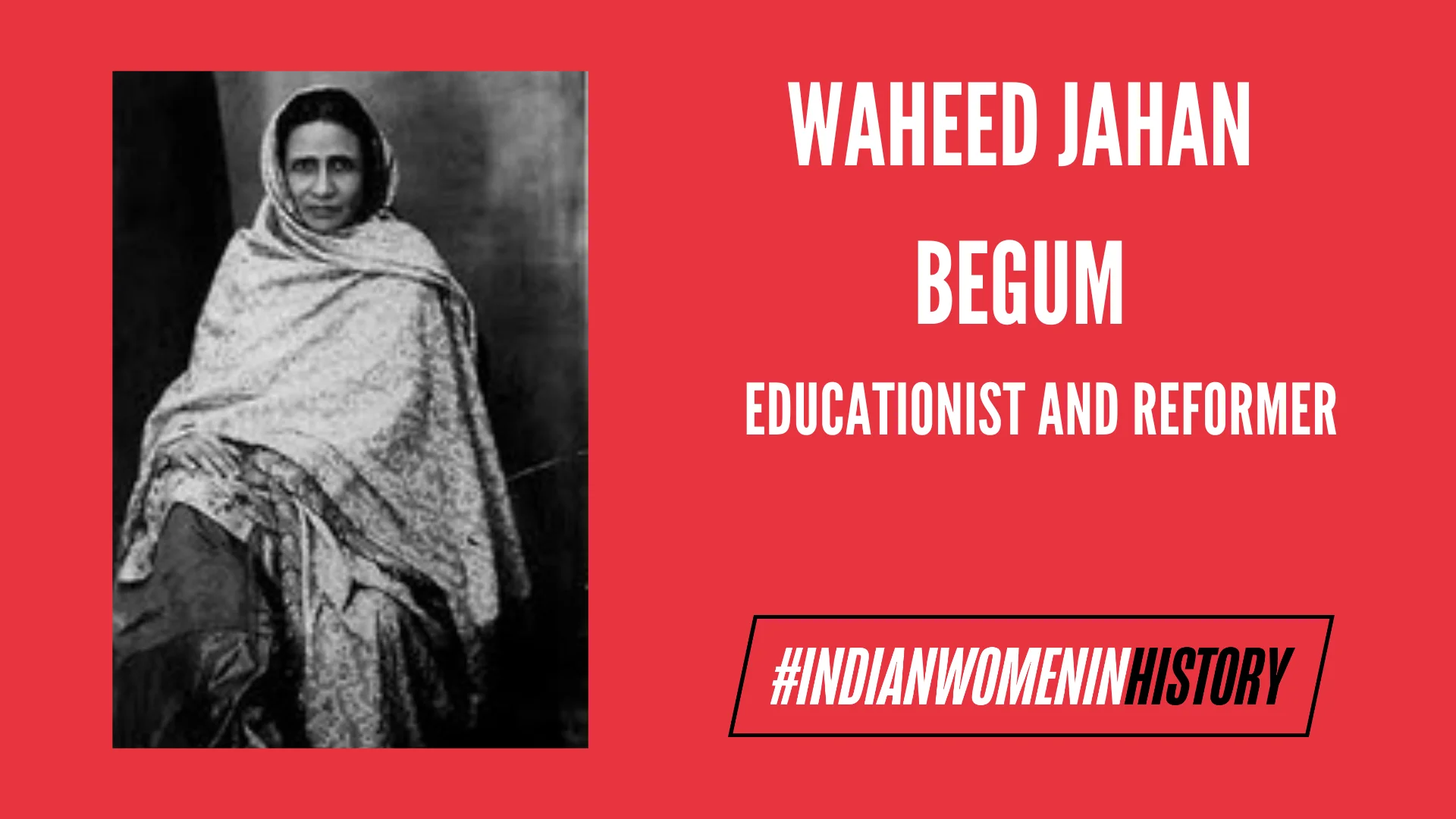
In a time when women were relegated to the home and the hearth, and their dreams resigned to those of little other than a committed marriage and devout motherhood, Waheed Jahan Begum proved that women could want more for themselves.
Throughout India’s modern history in the struggle for women’s rights, many Indian reformers have gravitated towards upholding the crusade for women’s education as their foremost priority. For the everyday individual, the topic of women’s education tends to bring to mind a few notable Indian reformers who fought for women’s rights to pursue an education, albeit the large majority of these names are of men.
Throughout India’s modern history in the struggle for women’s rights, many Indian reformers have gravitated towards upholding the crusade for women’s education as their foremost priority. For the everyday individual, the topic of women’s education tends to bring to mind a few notable Indian reformers who fought for women’s rights to pursue an education, albeit the large majority of these names are of men.
Jyotirao Phule’s wife, Savitribai, was responsible for opening the first school for girls in the Indian subcontinent, yet her contributions and accomplishments are often accredited to their union than to her alone, and she is often overlooked for her importance to the movement while her husband is remembered by history as one of the leading reformers for it.
Similarly, in the union between Sheikh Abdullah and Waheed Jahan Begum, we see an identical dichotomy emerge as the husband rises to prominence for his contributions to women’s rights movements, while the wife is remembered only as his counterpart, or inspiration.
Source: Book Women Education by Dr Nasreen Ahmad
Today we understand the importance of education in the lives of modern women, as a means to achieve financial independence in a patriarchal set-up that favours women as being financially dependent on their fathers, and later, their husbands. But despite the well-established variety of schools and colleges for women we have in India today, it was not always as such and the story of the path to women’s education would be incomplete without the role played by Waheed Jahan Begum.
An early educator
Waheed Jahan Begum was the youngest daughter born to Mirza Mohammad Ibrahim Beg, a minor municipal official, in a landholding family from Delhi in 1874. Though she did not have the means to pursue formal schooling, her father personally ensured she would be fluent in Urdu and Persian, while also hiring English tutors to provide her with an understanding of arithmetic and elementary English.
She subtly began to implement her lifelong dream to start a school for girls in her surroundings growing up, by gathering up the houseworkers’ children and teaching them. Through this method, she succeeded at establishing one of the first concerted efforts at providing girls with an education in a group setting, akin to a school. She attempted to make education accessible to girls within her locality, regardless of their background, at a time when few others were able to say the same.
In one simple gesture, she managed to lay down the foundations upon which she built her career from the ground up.
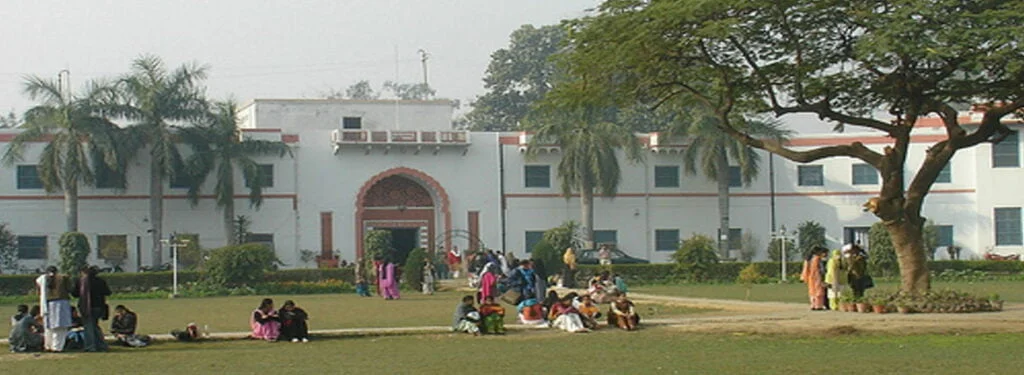
Source: Aligarh Muslim University
But as a single Muslim woman in the Indian subcontinent, it would have been nearly impossible to single-handedly bring about concrete change.
Sheikh Abdullah, however, was a Kashmiri lawyer who was a prominent leader in the Aligarh Movement, which encouraged the Muslim youth to pursue a modern English education. Though many in the movement rejected Muslim women’s right to an education as well, Sheikh Abdullah represented one of the few men in the movement who was outspoken regarding the need to educate girls and women. This made him a suitable candidate for Waheed Jahan Begum to partner with in her pursuit of fighting the cause for women’s education. They also later had five daughters and a son together.
Creating a class of well educated muslim women
On marrying Sheikh Abdullah, Waheed Jahan Begum encouraged him in his quest to appeal to the issue of women’s education to the masses. Together, the couple concluded that female teachers needed to be trained to impart education to young girls.
While Sheikh Abdullah took up the matter of women’s education in front of the Muslim Education Conference and was subsequently elected secretary of the Female Education Section, Waheed Jahan Begum became editor of an Urdu monthly, Khatoon, that the couple began publishing in 1904 to further the cause of women’s education. Additionally, they opened a primary school for the elite populace of Muslim girls.
Waheed Jahan Begum also hosted meetings among educated Muslim women from across the country to champion the advantages and benefits of women’s education in the country, consequently securing funding for establishing a girls’ school.
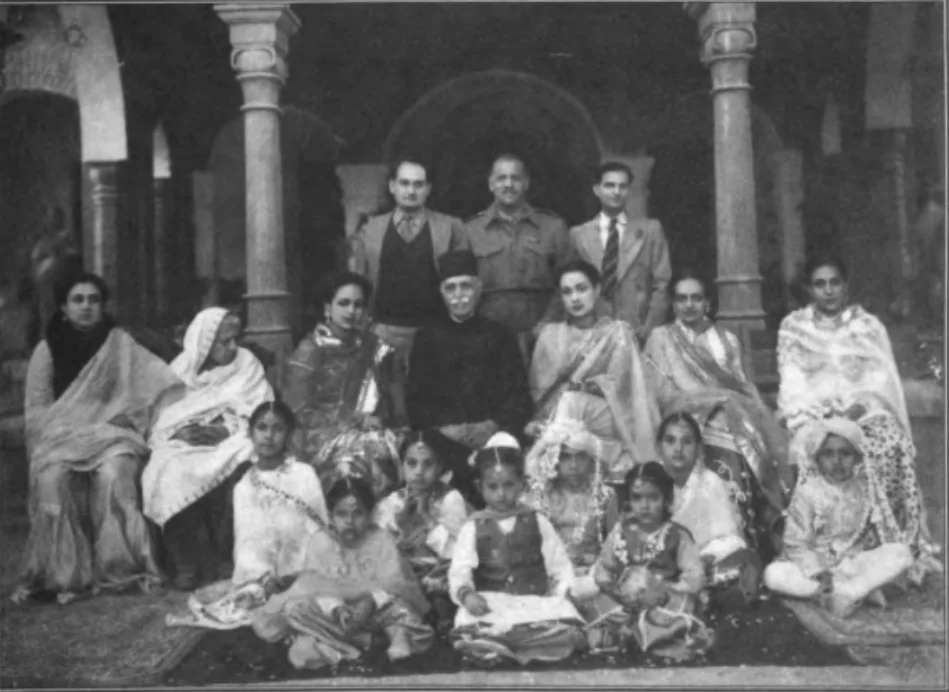
Sheikh Abdullah with his daughters, son-in-law and grandchildren
However, Waheed Jahan Begum’s secular approach to women’s education growing up proved to be difficult to maintain going forward into her professional life as her lifelong goal to establish a school for girls proved to be a challenge amongst those in charge.
As when the couple then moved on to start a primary school for girls on various disciplines relevant to the education of Muslim women, including Urdu, the Quran, arithmetic, and needlework, it was restricted to the daughters of elite families who could afford to educate their girls. Additionally, though the school opened with only seven students in 1906, it grew over the years to accommodate around a hundred students in 1909.
This, however, did not come without its societal dangers, as the girls enrolled in the school faced harassment from the local boys and men in the process of travelling from their homes to the school in curtained carriages. This led to their families pulling them out of school once they reached puberty.
To counteract the threats posed to the girls in their travels, the couple then proceeded with, and succeeded at, pushing for the opening of a boarding school for girls. Leaving her children to be overseen by houseworkers’, Waheed Jahan Begum committed herself to establish the boarding school within the paradigm of a family structure, taking care of each of the girls enrolled in the boarding school as though they were her daughter.
From personally overseeing each aspect of the daily lives of her pupils regarding housekeeping, laundry, and shopping, she would even go as far as inviting the families of the girls to stay in the hostels for a few days to assure them of the safety of the boarding school and to secure their trust.
In addition to such measures, strict purdah was enforced in the form of walls built around the facility to garner social acceptance from the Muslim elite, though both husband and wife agreed on the restrictive nature of purdah. Their battle for women’s education was riddled with compromises and concessions made which reveal the complexities of the arena of women’s education within the given historical context, as families would assign greater value to their daughters’ “honour” than their education as the former kept them marriageable. The latter held little weightage to their prospects in the market.
A legacy to look upto
By the time Waheed Jahan Begum passed away in 1939, the boarding school had developed into a women’s college which offered several degree courses.
Waheed Jahan Begum turned her dreams into reality, by handing down the gift of education to a new generation of Muslim women, with the women’s college she opened with her husband now boasting a strength of around 40,000 students and counting. Students travel from across the world to study at the college she opened back in the days when even moderately educated women were few and far between.
Source: Aligarh Muslim University
To have achieved such a lasting change in the sphere of women’s education is no small feat, and while it is bleak to confront how little ability women have to bring forth a change within their material reality without the support of the progressive men in their lives, such as their husbands or fathers, it would altogether be impossible to bring to fruition without the hard work of inspiring women such as Waheed Jahan Begum.
She paved the way for the first steps to be taken in the emancipation of Muslim women in the Indian subcontinent, she believed in the power of education as a stepping stone to liberation from traditionalism which would have women confined to the knowledge of the four walls of their husband’s home and little of the vast world that lay beyond.
As a woman who sacrificed so much of her freedom to dedicate her life to striving for the progress of future generations of Muslim women, she is deserving of recognition beyond her role as a supportive and ingenious partner to Sheikh Abdullah as he set the wheels in motion for women’s education within Muslim society at large.
In a time when women were relegated to the home and the hearth, and their dreams resigned to those of little other than a committed marriage and devout motherhood, Waheed Jahan Begum proved that women could want more for themselves, and for women at large, by leaving their mark on history in their words and actions, to inspire and leave room for future generations of women to add on to their legacy and change the world we live in, bit by bit.
source: http://www.feminisminindia.com / Feminism in India – FII / Home / by Tanya Roy / January 13th, 2023
Unlike a lot of well-known female social reformers of her time, Begum Khedive Jung spent most of her life in the city of Hyderabad where she was born.
Tayeba Begum Khedive Jung (initially Tayeba Begum Bilgrami) was born to Abbasi Begum Bilgrami and Imad-ul-Mulk Syed Hussain in 1873. Unlike a lot of well-known female social reformers of her time, Begum Khedive Jung spent most of her life in the city of Hyderabad where she was born. While this did impact the overall reach of her writings and social work, she still managed to bring about a significant social impact in the various cities where she spent her life.
While growing up in Hyderabad, Begum Khedive Jung attended school with Sarojini Naidu who eventually went on to become a popular political activist. After her schooling, she completed her bachelor’s degree from the University of Madras in 1894 and became the first-ever Muslim woman graduate. However, she got married to Dr Mirza Karim Khan (Khedive Jung Bahadur) soon after and had to give up her education as a result of the same.
Nonetheless, even after her marriage, Begum’s proficiency in English and Urdu languages and her continued efforts to perfect her Arabic and Persian ensured her intellectual growth. Her academic knowledge further enabled her to engage in numerous debates and discussions with men of great calibre during her time. This led her to form close bonds of friendship with Sir Ali Imam, the Prime Minister of Hyderabad state.
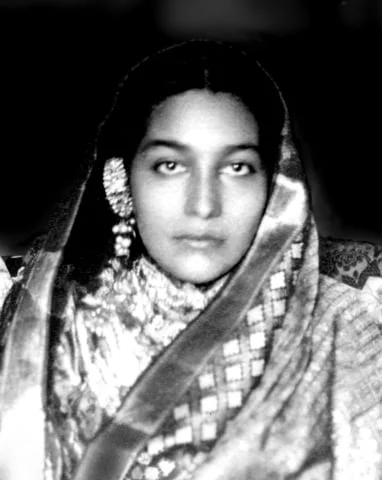
Source: Geni
Jung’s role in advocating women’s education
Begum Khedive Jung strongly advocated for the education of all women throughout her lifetime. She set up eight schools for girls in Hyderabad, but only two of them remain functional in today’s time. As a social activist, she chaired the annual women’s conference within the Brahmo Samaj. She also took charge of Anjuman-e-Khawatin-e-Islam which was started by Begum Rokeya Sakhawat Hossain to emancipate women by helping them acquire knowledge and skills.
In 1907, Begum Khedive Jung, along with women like Sarojini Naidu and Lady Amina Hydari, played a significant role in persuading the Nizam of Hyderabad to allow them to set up the Mahboobia Girls School in Hyderabad.
Her years of social activism
Begum Khedive Jung and Lady Hydari carried out numerous social works together. In addition to their involvement in the establishment of Mahboobia Girls School, the two had also started the Lady Hydari Club. Even though the club was primarily known as a space for the elite women of Hyderabad, the less-known fact about it remained that it managed a school meant for the poor alongside running a library for them.
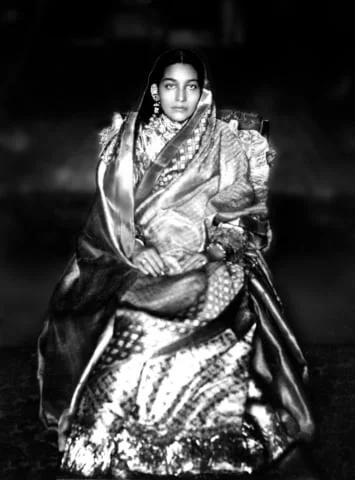
Source: Geni
During the Great Musi Flood in 1908, Begum Khedive Jung and Lady Hydari took up relief work to support those who had been affected. The two women, despite being pregnant during the floods, spent a significant amount of their time at the banks of the Musi river to support those in need.
A long legacy left behind
Begum wrote and published folklore with Indian Magazine, London. During the year 1905, she finished writing a novel titled Anwari Begum which was initially published in 1909. However, the official publication of her writing took place after her death in 1922. The novel focused on the lives of women in the households of Hyderabad and was aimed at supporting the social reforms that Begum Khedive Jung wanted to bring about. It also tried to explore the intersections between the themes of elitism and seclusion within Hyderabad’s aristocracy. Additionally, Begum is also known to have worked on Indian folk songs during her lifetime.
Source: Geni
Multiple women in Hyderabad derived strength from Begum’s work and carried her vision to educate Muslim women forward. One such female reformer was Sughra Humayun Mirza who established the Safdaria School in Hyderabad.
Even a century after Begum Khedive Jung’s death, she continues to be remembered by the people of Hyderabad for the relief work she carried out during the Musi floods and the educational institutions she founded for young girls.
source: http://www.feminisminindia.com / Feminism in India – FII / Home / by Upasana Dandona / January 18th, 2023
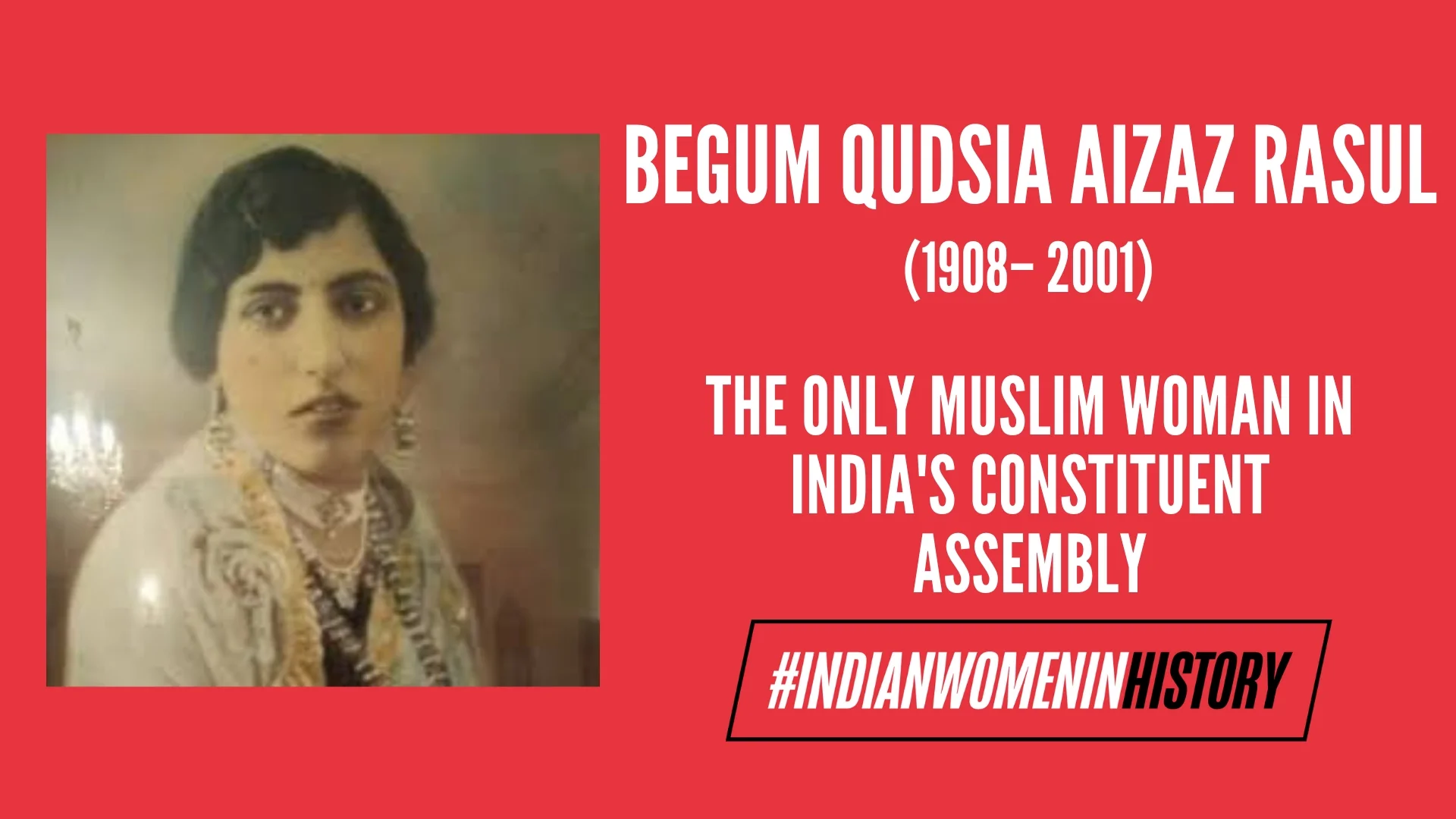
Begum Qudsia Aizaz Rasul was one of the 28 Muslim League members to join the Constituent Assembly of undivided India, and she was the only Muslim woman to be a part of the assembly.
Begum Qudsia Aizaz Rasul was born to the royal family of Malerkotla (situated in erstwhile united Punjab) on 4th April, 1908. Her father was Nawab Zulfiqar Ali Khan. Qudsia had a progressive upbringing and was encouraged from a very early age to lead a modern life, as opposed to several stringent restrictions imposed upon other contemporary Muslim women, such as that of the purdah.
She got married at quite an early age to Nawaab Aizaz Rasul from the erstwhile province of Awadh. Her husband held the position of a taluqdar, or a landowner. Qudsia had political exposure both before and after marriage, and her formal political participation took place after she got married.
Qudsia, along with her husband, joined the Muslim League in mid-1930s, soon after the passing of theGovernment of India Act in 1935. This was also her official entry into electoral politics, as she contested in the elections of 1937 from the U.P. legislative assembly, where she successfully held her seat till 1952. Aizaz was one of the very few female candidates to have contested and won from a non-reserved constituency during the pre-independent times.
“
She was the first Indian woman to achieve such feats, and this was truly commendable and noteworthy at a time when most formal political positions were almost implicitly reserved for men.
“
As an MLA, she also held several important posts, such as the Leader of Opposition (1950 to 1952) and the Deputy President of the Council (1937 to 1940). She was the first Indian woman to achieve such feats, and this was truly commendable and noteworthy at a time when most formal political positions were almost implicitly reserved for men. Moreover, to rise to prominence at a politically significant province such as the U.P. indeed made Qudsia Aizaz Rasul a trailblazer.
She is well known for her progressive, anti-feudal stances, such as the abolition of the zamindari system. Qudsia was a strong advocate for the abolition of communal electorates as well, as she believed it divided the society more than it united – which was counterproductive for the Indian electoral candidates at a time when there was an urgent need of a united Indian front to oppose the colonial rulers. She went on to create a strong and convincing case for the abolition of electoral reservations for religious minorities during her tenure as a member of the Constituent Assembly.
Qudsia was one of the 28 Muslim League members to join the Constituent Assembly of undivided India, and she was the only Muslim woman to be a part of the assembly. Her contributions in the assembly debates remain monumental till date and have been recorded in many official sources.
“
Her contributions in the assembly debates remain monumental till date, and have been recorded in many official sources.
“
After the dissolution of the League, she joined the Indian National Congress, and served as a member of the Rajya Sabha from 1952 to 1958. Later, she became a member of the legislative assembly of Uttar Pradesh from 1969 to 1989.
Other Achievements
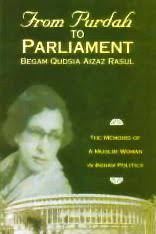
Begum Qudsia Aizaz Rasul is also well known for her autobiography, titled From Purdah to Parliament: A Muslim Woman in Indian Politics. It provides excellent insights into the intersectional aspects of organised politics as it functions in our country. Other than this, she also wrote a travelogue titled Three Weeks in Japan.
Besides her literary prowess, Qudsia had also served as the President of the Indian Women Hockey Federation for over fifteen years, and went on to become the President of the Asian Women’s Hockey Federation.
Begum Qudsia Aizaz Rasul was awarded the Padma Bhushan in 2000 for immense, invaluable contributions to the field of social work.
Sultana Saleem was one of the officers of Azad Hind Fauj, or INA, of Subhas Chandra Bose.
It is a concise compilation of a few of less known Muslim women who took part in the Indian Freedom Struggle.
Begum Mahboob Fatima: On 13 April 1932, two women were arrested at Chandni Chowk in Delhi by the police for commemorating the anniversary of the massacre at Jallianwala Bagh. These two were Begum Mahboob Fatima and Satyawati. On 21 April 1932, Begum Mahboob was sentenced for six months of Rigorous Imprisonment and Rupees 50 of fine. With this she became the first Muslim woman to have been sentenced during the freedom struggle in Delhi.
Sultana Saleem: Sultana Saleem was one of the officers of Azad Hind Fauj, or INA, of Subhas Chandra Bose. Her husband Colonel Saleem, whom she met during the war, also served the INA and Sultana was an officer of Rani Jhansi Regiment. Sultana reached India as part of the first contingent of captured soldiers of Rani of Jhansi Regiment in February 1946. The Indian Express reported on 22 February 1946, “Mrs Sleem felt that there was only one country for her- Hindusthan – and only one nation – Hindustani. She did not believe in either communalism or provincialism. It was the oneness of India that appealed to her most. In East Asia, she said there was no consciousness at all of religious or provincial differences and no untouchability problem. She believed that if India had freedom her many problems could be solved without much difficulty.”
Asghuri Begum: In 1857, when somewhere else Rani of Jhansi and Begum Hazrat Mahal were fighting against the colonial army of the English East India Company, in Muzaffarnagar and Shamli, peasant women had organised themselves in armed bands. The leader was Asghuri Begum. The region had been liberated by the Indian revolutionaries where the women contingent was being led by Asghuri. When Major Sawyer conquered Thana Bhawan, a town in Shamli, in October 1857, Asghuri was also captured. British troops tied her to a pole at a public place and set fire to her alive.
Nishat-un-Nisa: “I appeal to the youth of this country that they sit at the feet of this goddess (Nishat un Nisa Begum) to learn the lessons of independence and perseverance.” These were the words of famous Urdu poet Pandit Brij Narayan Chakbast. Nishat was the first Muslim woman to address a Congress Session and that too without a purdah. Hasrat Mohani, who coined Inquilab Zinadabad, was her husband. Nishat attended the public political meetings without her husband. She wrote articles, led delegations to Viceroy, participated in strikes and was the first woman to move a resolution for complete independence at a Congress session.
Saadat Bano: Saadat Bano whose husband Saifuddin Kitchlew is known as the hero of Jallianwala Bagh was a writer, poet and political activist much before her marriage. She wrote extensively for women rights, patriotism and education. It is a well known fact that people gathered at Jallianwala on 13 April 1919 to protest the arrest of Saifuddin but it is often overlooked that they came to listen to a public address by Saadat. Saifuddin was in jail but Saadat did not sit at home in those times. She used to address meetings, meet political leaders, attend Congress sessions, write in papers and take part in All India Women Conference activities. She was considered orator par excellence.
Amjadi Begum: How important a person would be if Gandhi himself wrote in one of his articles that this ‘brave woman’ led the ‘fundraising campaigns’ from the front ? Almost no history student in India knows Amjadi Begum. They know her as the wife of Maulana Muhammad Ali Jauhar. Gandhi in one of his articles wondered whether she could teach her husband the art of public oratory, where one impressed upon the hearts of the audience in a few words. She is believed to have single handedly led the fundraising campaigns and managed affairs of Jamia Millia Islamia when her husband was in prison.
Moondar: Rani of Jhansi’s movement had an important Muslim woman, viz. Moondar. She was a close aide and assisted her during battles. Robert Hamilton, agent of Governor General to Central India, informed the British government on 30 October 1858, “Rani was riding a horse. There was another Muslim woman riding with her, who used to be her servant as well as companion since many years. Both fell down from the horse with the bullet wounds simultaneously.” Another British officer John Venables Sturt claimed that the body recovered by the British was not of Rani but Moondar’s.
Nani Hakko: Nani Hakko was a jolaha (weaver) woman from Panipat who was impressed by Mahatma Gandhi’s idea of boycott and swadeshi. The she first heard him, Hakko started weaving her own shroud. She willed to be buried in a khadi shroud. When someone asked her what she was weaving, she would reply, ““I am weaving a kafan (shroud) for myself”.
Hakko left this world only the day after completing this khaddar ka kafan. She asked people to bury her in this handwoven shroud (khaddar ka kafan) and boycotted the foreign made cloth even in her death. According to Khwaja Ahmad Abbas, she was the first person to have been buried in khaddar ka kafan as a result of Gandhi’s call to charkha. Khwaja wrote, “she was the first one to be buried in a khaddar ka kafan — a patriot unto death!”
source: http://www.heritagetimes.in / Heritage Times / Home / by Saquib Salim / March 08th, 2025
Arshad Shaikh digs into some amazing facts about the Mewat region in the Indian state of Haryana, which was recently in the news for the wrong reasons. Meo-Muslims have been targeted by cow-vigilantes and anti-social elements. Communal violence rocked the region last week. Six people lost their lives, scores were seriously injured, thousands were arrested and many houses were controversially demolished. The Hindu-Muslim violence in the Mewat region was extensively covered by the media, however, not many know about some of the amazing facts of this region and how it is emblematic of the denial and deprivation that Muslims have suffered in post-Independence India.
Mewat (now officially re-named as Nuh) is a Muslim-majority district in the state of Haryana. The Mewat district was established in 2005, through the incorporation of regions from Gurgaon district and the Hathin Block of Faridabad district.
Nonetheless, in 2008, the Hathin sub-division underwent restructuring with the formation of Palwal district. In 2016, Mewat district’s name was changed to Nuh, given that Mewat represents a cultural area that extends across Haryana, Rajasthan, and Uttar Pradesh states. Mewat (Nuh) is located in the southern part of Haryana. It is one of the 22 districts of Haryana.
The region is bordered by the Aravalli Range to the north, the Gurgaon district to the northeast, the Alwar district of Rajasthan to the south, the Bharatpur district of Rajasthan to the southwest, and the Palwal district of Haryana to the west.
The following Table compares the district of Mewat (now known as Nuh) with the entire state of Haryana:
Variable
Haryana
Nuh district
Comparison
Area
44,212 sq km (17,070 sq miles)
1,860 sq km (720 sq miles)
4.2% of the state
Population
25,351,462
1,089,263
4.2% of the state
% of Rural population
65.12%
95.36%
Shows the degree of neglect by successive governments
% of Urban population
34.88%
4.64%
Sex ratio (number of females per 1000 males)
926/1000
907/1000
19 less than state sex ratio (this is surprising, given that Mewat is a Muslim-majority district and Islam strictly prohibits any preference for male children)
Literacy
75.55%
54.08%
21% behind the state, again highlights a problem that poses a challenge to both the government and the community
Hindu versus Muslim population
Hindu (87.46%)Muslim (7.06%)
Hindu (20.3%) Muslim (79.2%)
Mewat is one of the few districts in India with a Muslim population close to 80%
Legislature: Mewat has three Haryana Vidhan Sabha constituencies: Nuh, Ferozepur Jhirka and Punhana. All three are parts of the Gurgaon Lok Sabha constituency.
Roads: There are currently 5 national highways in the Mewat region of Haryana. The Delhi Mumbai Expressway will pass through the Mewat region. This expressway will connect Delhi and Mumbai via Manesar, Gurugram, Sohna, Nuh, and Palwal.
History: Mewat was once a princely state, ruled by the Meo Rajputs. The Meos are a Muslim Rajput tribe who are believed to have migrated to the region from Rajasthan in the 12th century. In the 16th century, Mewat was conquered by the Mughal Empire. The Mughals ruled Mewat for over 300 years, until the decline of the Mughal Empire in the 18th century.
In the 18th century, Mewat was conquered by the Maratha Empire. The Marathas ruled Mewat for about 50 years, until the British East India Company conquered Mewat in 1803. The British ruled Mewat until Indian Independence in 1947. After Independence, Mewat became a part of the state of Haryana.
Here are some not-so-well-known facts and “figures” from the Mewat region in India:
Raja Hasan Khan Mewati, a Khanzada Rajput ruler, held dominion over Mewat as a Muslim leader. He succeeded his father, Raja Alawal Khan, in a dynasty that had governed the Mewat State for approximately two centuries. He undertook the reconstruction of the Alwar Fort during the 15th century. In a significant historical event, he allied himself with 5,000 compatriots from the Rajput Confederation and participated in the Battle of Khanwa. Tragically, he met his demise on the battlefield, confronting the Mughal forces commanded by Babur.
Firuz Khan Mewati was a Mughal commander who served under the emperor Bahadur Shah I. He was born in Mewat in the 17th century and is known for his bravery and military prowess. He was also a skilled diplomat and administrator.
The Tablighi Jamaat was established in 1926 by Maulana Muhammad Ilyas al-Kandhlawi, in the Mewat region. According to community historian Siddique Ahmed Meo (as reported in the Hindustan Times) – “People from Mewat would travel to Delhi for work and halt for lunch near the masjid in Nizamuddin, before proceeding ahead with the journey. Maulana Ilyas took notice of the labourers and enquired about them one day. Through conversations with the Meos, he realised that while they were Muslims, they did not have a good understanding of Islamic practices.
“Driven by his interactions with Meos in Nizamuddin, Maulana Ilyas visited Ferozepur Namak in Mewat for the first time in 1925. He started surveying the region and over subsequent visits, he came to the understanding that Meo-Muslims needed to be introduced to Islamic practices and brought back into the fold. A panchayat was called in Nuh and a charter consisting of names of 103 people was shared. Some 31 proposals aimed at laying the groundwork for the Jamaat were passed in that panchayat. Finally, in 1926, the Jamaat started undertaking trips to reach out to people and spread the message of Islam.”
The Mewati Gharana is a Hindustani classical music tradition that was founded in the late 19th century by Ustad Ghagge Nazir Khan. The gharana is named after the Mewat region of India, where Ustad Ghagge Nazir Khan was born and raised. The Mewati Gharana is known for its emphasis on purity of tone, intricate taans, and expressive singing.
The gharana also has a unique style of khayal singing, which is characterised by its use of subtle ornamentation and its focus on the emotional content of the lyrics. Some of the most famous vocalists of the Mewati Gharana include Pandit Jasraj, Pandit Maniram, and Pandit Pratapnarayan. Pandit Jasraj is considered one of the greatest khayal singers of all time, and he helped to popularise the Mewati Gharana around the world.
Mewati Martial Art is a traditional martial art that originated in the Mewat region of India. It is a combination of wrestling, boxing, and stick fighting. Mewati martial arts are known for its emphasis on self-defence and its focus on using the opponent’s strength against them. Mewati martial art was further developed in the 17th century, when the Mewat region was ruled by the Mughals. This led to a fusion of Mewati martial arts with Mughal martial arts, which resulted in the development of the modern form of Mewati martial arts.
source: http://www.radiancenews.com / Radiance News / Home> Amazing Facts / by Arshad Shaikh / Radiance News Bureau / September 01st, 2023
The wider Indian audience, including many women in the 21st century believe that this is the most emancipated age of women and the women who proceeded them from centuries gone by were powerless dolls dressed in finery and painted and wooed by the men of the ancient and medieval world.
Compared to most countries of the world, India has had a longer and a more complex story, where the fortunes of women advanced and regressed from time to time. India is the only country of the time where a Muslim woman was chosen by her father to be the heir of his throne, we are ofcourse referring to Razia Sultan and her father Iltutmish of the Delhi Sultanate period in the 13th century.
After Razia and into the Mughal period, we increasingly see the growing power of the Mughal women which was not just limited to women of the royal family. Many icons of Delhi, some of which are even part of the UNESCO World Heritage Sites have been built by women for their husbands.
Bega Begum was the senior wife of Emperor Humayun, who got his incredible mausoleum built. Similarly Fatehpuri Begum was one of the wives of Emperor Shah Jahan and she has left us with the iconic Fatehpuri Mosque situated at the heart of Chandani Chowk.
Born in 1617, Roshanara Begum was a Mughal princess and the second daughter of Emperor Shah Jahan and his wife, Mumtaz Mahal. Roshanara was a brilliant woman and a talented poet. She was a partisan of her younger brother Aurangzeb and supported him during the war of succession which took place after Shah Jahan’s illness in 1657. After Aurnagzeb’s accession to the throne in 1658, Roshanara was given the title of Padshah Begum by her brother and became the First Lady of the Mughal Empire. She became a powerful political figure.
Roshanara’s rise to power began when she successfully foiled a plot by her father and Dara Shikoh to kill Aurangzeb. According to history, Shah Jahan sent a letter of invitation to Aurangzeb to visit Delhi, in order to peacefully resolve the family crisis. In truth, however, Shah Jahan planned to capture, imprison and kill Aurangazeb in prison as he viewed his third son as a serious threat to the throne. When Roshanara got wind of her father’s plots, she sent a messenger to Aurangzeb, outlining their father’s true intentions, and warning Aurangazeb to stay away from Delhi.
Aurangazeb was extremely grateful to Roshanara for her timely warning. When the war of succession was resolved in favour of Aurangzeb, she quickly became a very powerful and effective figure at court. Fearing that Dara Shikoh would kill her for her role in the war of succession if he ever returned to power, Roshanara insisted that Aurangazeb order Dara’s execution. Legend has it that Dara was bound in chains, paraded around Chandni Chowk and beheaded. Roshanara then had his bloody head wrapped in a golden turban, packaged neatly and sent to her father as a gift from Aurangzeb and her. Shah Jahan, who opened the package just as he was sitting down to dinner, was so distressed by the sight of his favorite son’s head that he fell unconscious to the floor. He remained in a stupor for many days after the incident.
Eventually, however, Roshanara and Aurangzeb fell out with each other. Mughal princesses were obliged to remain single since the time of Akbar so their offspring would not make a challenge for the throne. Roshanara was rumoured to have taken on lovers, which was not viewed well by Aurangzeb.
After her fall from grace, she chose to leave the court at the Red Fort and built for herself the Roshanara Bagh complex which is about six kilometres from the Red Fort. She was a lover of the arts and music and didn’t prefer the austere lifestyle promoted by Aurangzeb. This is proven by the fact that when one visits Roshanara Bagh the remaining building itself is built in a very romantic style, a Baradari (open on all sides) built surrounded by a pool of water apart from the canals and gardens surrounding it.
Even within the Baradari the main motif for decorations seems to be nature, one can see remnants of blooms on every wall, arch and even the capitals of the slender pillars. The fades blue, green and red colours gives us an idea as to how brilliant and bright the designs were when Roshanara herself was in residence.
The main gate of entry into the gardens still has mosaics left on its upper parts, which show that a bright hue of yellow was used apart from the blue, green and red. One can imagine, how this gate shone in the brilliance of the sun with such a colour combination.
The brief history that has remained about the life of Roshanara Begum shows us what a woman she was and more importantly how open Mughal society was at least for the women of the royal household and nobility.
The fact that she was capable enough to understand the intrigues of Shah Jahan along with Dara Shikoh in order to get Aurangzeb eliminated shows us that she had a perfect understanding of such matters and how to play a role in it.
Her warning to Aurangzeb guaranteed her power when he acceded to the throne and in return she became the most powerful woman in the Mughal Empire. The fact that such a rank existed in the first place showcases how Mughal princesses were considered an integral part in the proper functioning of the State.
She had her own sources of income which no doubt increased after she was bestowed with the rank of Padsha Begum. The fact that she bought land, had a beautiful and very extensive garden complex built for herself and lived a life of luxury shows to us that she was a highly educated woman understanding the complexities of titles, deeds, interests, savings etc.
She even had the power to decide where she wanted to be buried. She didn’t choose a pious cemetery but rather had herself buried within the Baradari of her beautiful gardens, the gardens which we still get to enjoy after more than three centuries of her passing and have made her name immortal in annals of time.
source: http://www.thewomb.in / The Womb / Home> Blog> Entertainment> Lifestyle / by Barun Ghosh / October 29th, 2020
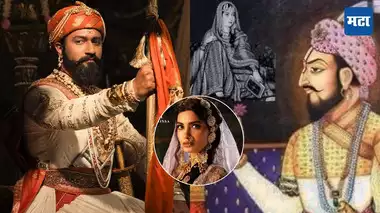
Marathi actor Kiran Mane has sparked widespread discussion with a social media post highlighting an overlooked aspect of history—the compassion of Mughal emperor Aurangzeb’s daughter, Zeenat-un-Nissa, towards Chhatrapati Shahu Maharaj.
Mane revealed that Zeenat-un-Nissa played a crucial role in raising Shahu Maharaj and ensuring the well-being of his mother, Maharani Yesubai, during their captivity, reported the INN.
According to Mane, after Chhatrapati Sambhaji Maharaj was executed, his five-year-old son, Shahu Maharaj, was taken prisoner by the Mughals. Despite the captivity, Zeenat-un-Nissa treated Shahu Maharaj like her own son and cared for Maharani Yesubai as a sister. This humane side of Aurangzeb’s daughter, often ignored in historical narratives, is now being recognized through Mane’s revelations.
Mane further shared that, in gratitude for her kindness, Shahu Maharaj later constructed the historic Begum Mosque in Satara, naming it after Zeenat-un-Nissa. The mosque stands as a testament to her generosity and the bond that transcended political hostilities.
His post has ignited debate on social media, with many expressing surprise at this lesser-known chapter of history. Mane also criticized historians who have misrepresented Zeenat-un-Nissa’s role, urging people to acknowledge historical truths backed by evidence.
Zeenat-un-Nissa was known for her compassion toward the poor and underprivileged, which even influenced her father, Aurangzeb, to grant her the title of Padshahi Begum. Her charitable works and humane nature set her apart, making her an inspiring figure in an era marked by conflicts.
At the time of Chhatrapati Sambhaji’s death, Shahu Maharaj was still a child, and his mother was held captive. Despite the circumstances, Zeenat-un-Nissa’s care left a lasting impact, prompting Shahu Maharaj to honor her memory through the construction of Begum Mosque, which still stands in Satara today.
source: http://www.radiancenews.com / Radiance News / Home> Latest News> Report / by Radiance News Bureau / March 09th, 2025