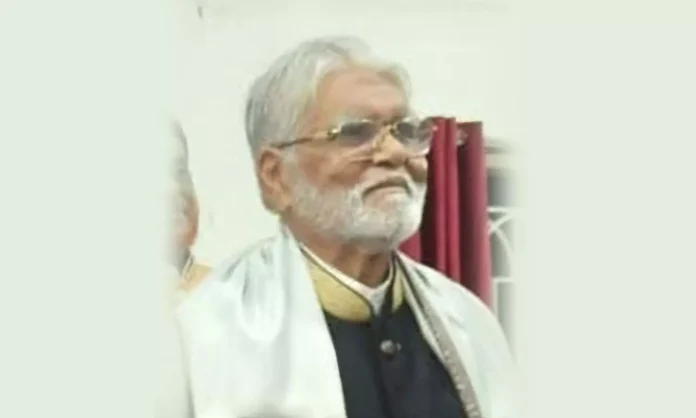
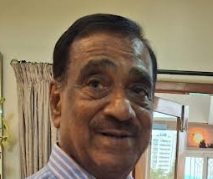
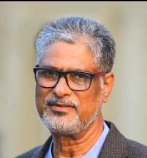
The Urdu literary world mourns the demise of one of its gentle giants, Azizuddin Aziz Belgaumi, the celebrated Na’at poet, ghazal writer, teacher, and literary guide, who returned to his Lord on the morning of Friday, November 28, shortly after the Fajr prayer in Bengaluru.
Azizuddin Aziz was not merely a poet; he was a custodian of spiritual emotion, a voice that blended devotion, beauty, and sincerity in every syllable.
He was renowned for his Na’ats – soulful, tender, and overflowing with love for Prophet Muhammad ﷺ. His unique style of recitation, coupled with his soothing voice, made his poetry beloved among Urdu lovers across the region and beyond.
His iconic Na’ats, including:
اہلِ ستم کے پتھر کھا کر گل برسانے والے ہم
دعوتِ ہدایت کی ایک حسیں شفق لے کر میرے مصطفیٰ آئے
had gone viral among Urdu audiences, each line steeped in deep reverence and spiritual longing.
On his final night in this world, he once again recited “Dawat-e-Hidayat ki ek haseen shafaq lekar mere Mustafa aaye” on special request at a mushaira organized by Idara-e-Adab-e-Islami Hind, Karnataka. The audience responded with extraordinary affection, as if witnessing a sacred farewell.
By the next morning, he left this world – a departure many lovingly regard as a sign of divine acceptance.
Azizuddin Aziz’s published works reflect his emotional depth and mastery of language. His poetry collections include:
حرف و صوت
سکون کے لمحوں کی تازگی
دل کے دامن پر
نقد و انتقاد
زنجیرِ دست و پا
ذکر میرے حبیب کا
These works capture the freshness of spiritual experience, the fragrance of emotion, and the honesty of a heart in constant remembrance.
Azizuddin Aziz worked with Doordarshan Bangalore Urdu, where he interviewed prominent literary personalities. His conversations reflected both scholarship and humility, making him a respected voice representing Urdu culture on national media.
He served for a time as a teacher and later as the Principal of Zubaida College, Shikaripur, shaping young minds with the same warmth and refinement that characterised his poetry.
As an educator, he was loved for his gentle discipline, cultured manner, and his ability to ignite a love for language among students.
He also served as editor of several literary magazines, contributing significantly to Karnataka’s Urdu literary landscape. His editorial vision was marked by sincerity, high standards, and a deep respect for classical tradition.
Early on November 28, he experienced severe chest pain at his residence in Bengaluru. Despite attempts to rush him to the hospital, he breathed his last at home. He leaves behind his wife, three sons, two daughters, and a large community of admirers, students, and peers.
May Allah accept every word of love he wrote for His Beloved Prophet ﷺ. May He grant Azizuddin Aziz a lofty place in Jannat-ul-Firdous, and grant patience, strength, and peace to his grieving family. His voice has returned to silence – but his Na’ats will continue to illuminate gatherings, his ghazals will continue to warm hearts, and his legacy will remain a torch of devotion and grace.
Inna lillahi wa inna ilayhi raji’un. Most certainly we belong to Allah, and most certainly we will return to Him.
source: http://www.radiancenews.com / Radiance News / Home> Focus> Obituary / by Radiance News Bureau / by Mohammed Talha Siddi Bapa / November 29th, 2025
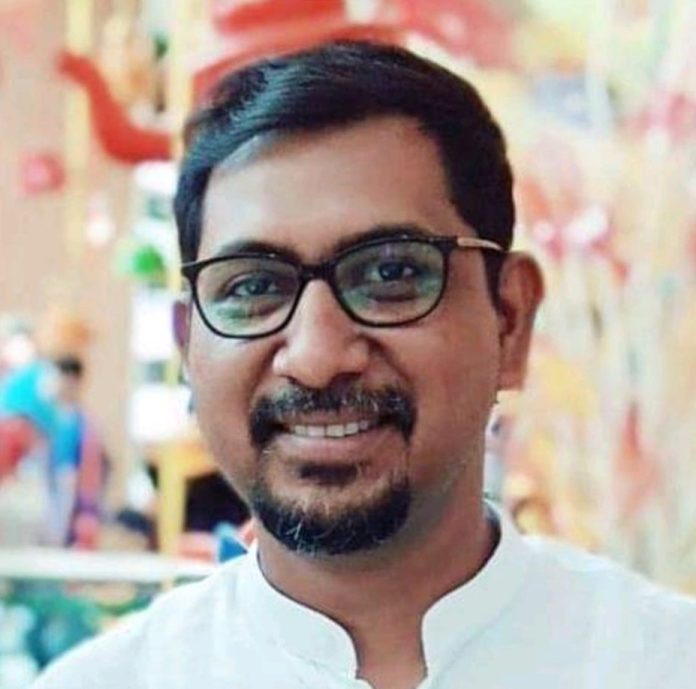
Sabir Ahamed, Programme Director at Pratichi Institute, Pratichi (India) Trust, and Founder Director of the Sabar Institute
Sabir Ahamed is the Programme Director at Pratichi Institute, and Founder Director of the Sabar Institute. His research spans the socio-economic status of Muslims in India, child protection, and education. He is proficient in analysing official datasets (NSS, Census, DISE, AISHS) using tools like Stata and R. Sabir has led largescale research and evaluation projects for the Government of West Bengal, including assessments of Kanyashree Prakalpa, Sabooj Sathi, Duare Sarkar, Lakshmir Bhandar, and the PM Poshan School Nutrition Garden Survey. He is currently leading the Human Development Report 2025 for West Bengal and directed the Second Human Development Report for Tripura.
His experience includes work with international organisations like Railway Children UK on projects supported by the European Union and UNICEF.
He served as the West Bengal State Lead for a UNICEF-commissioned study on secondary education transitions and was awarded the Just Transition Writing and Research Fellowship at IIT Kanpur (2022–2023).
He actively promotes the RTI Act (2005) in West Bengal and is a core member of the Know Your Neighbour campaign. He contributes op-eds to national dailies and has co-edited publications on development issues.
Excerpts from his interview with Mohd. Naushad Khan:
Q: How was the idea Know Your Neighbour conceptualised, when and how did it start, and what was the basic objective of this campaign?
We started the initiative because we noticed a deep division between different communities in our city. The immediate context was the publication of a report titled ‘Living Reality of Muslims in West Bengal’ in 2013. The findings shed lights on the deplorable condition of Muslims in West Bengal, yet a large section of people was unaware the status of Muslims. Many academics and Journalists were surprised to see those facts, especially they were educationally and economically backward. Secondly, historically different communities are living in the city for generations, Partition has created some chasm between Hindus and Muslims. The worst outcome is the spatial segregation – this led to the concept call ‘living together separately’. This gave birth of a plethora of myth and misconception about the Muslims.
We found that even well-meaning and educated people in Kolkata knew very little about the city’s Muslim community, even though it makes up 20% of the population.
We learned that most people didn’t visit Muslim-majority neighbourhoods because they didn’t have friends there or, in some cases, they believed the areas were unsafe.
To break the misinformation about Muslims and its neighbourhood, Know Your Neighbour (KYN) started neighbourhood walk in 2026. Till then, thousands of young people had participated in the walks and discussion.
The main goal is to build familiarity between communities that live close to each other but knew little about the other. The campaign aims to break down stereotypes and overcome the ignorance and distrust that can grow from different religious identities. This ignorance and distrust are the biggest barriers to communal harmony.
Q: Since its inception, how do you see the journey of KYN, and what were the challenges faced so far?
The journey of KYN involves actively bringing people from different backgrounds together. The main way it does this is by organising walks or visits to:
Areas with large Muslim populations, like Metiabruz and Rajabazar, Kidderpore, etc.
Places with shared, syncretic histories, like the Daptaripada area near College Street, where book-binding communities have co-existed.
Sites that remind people of the legacy of past communal violence, such as Selimpada.
Areas facing common problems that affect everyone, like pollution in the Rajapur canal, where both Hindus and Muslims use the water.
The campaign also organises events like Dosti ki Iftar (Friendship Iftar) and joint Durga Puja celebrations, allowing people to learn about and join in each other’s religious festivals.
The main challenge the campaign faces is ignorance, stereotypes, and fear that keep communities separated from each other.
Q: What has been the impact of KYN in Bengal, and how have people responded to this campaign?
Over the years, neighbourhood walks conducted by KYN have made a lasting impression on young minds, promoting peace, social cohesion, and pluralism. Around 1,500 students have joined us in exploring overlooked neighbourhoods across Kolkata through these immersive walks.
The initiative aims to instil core constitutional values – secularism, pluralism, and fraternity – through lived experiences and encounters with historical memory embedded in the urban fabric. These walks offer students a unique opportunity to engage with diverse communities, reflect on shared histories, and foster a deeper understanding of inclusive citizenship.
In collaboration with Maulana Azad College, our language course in Arabic, Persian, and Bengali enabled about 90 students to learn the basic reading of these languages. These programmes strengthen cultural roots and encourage appreciation for linguistic plurality.
We run a WhatsApp support network of over 850 students from marginalised areas, offering career counselling, peer mentoring, job opportunities, and regular workshops to help them navigate academic and professional spaces. We have trained more than 250 students on career counselling.
In partnership with Swayam and Azad Foundation, we’ve held group counselling sessions for children affected by communal tension, providing psychological support and nurturing safe spaces for recovery.
We conducted a hands-on RTI (Right to Information) workshop for students and professionals, teaching them how to use RTI to uncover critical datasets and hold government institutions accountable. Many participants have since used RTI to pursue issues of social relevance.
We host regular book reading and discussion sessions with acclaimed writers and scholars. Sabar Institute’s data for better lives initiative regularly post data on discrimination, lack of opportunity among the disadvantaged communities.
People, including college students, have started visiting Muslim-majority areas, even without our facilitation. The response from students has been particularly rewarding. These students, who had often been told by their parents not to go into minority areas, visited them and reported that they do not feel unsafe.
Q: Why do you think such campaigns are necessary in Bengal and elsewhere in the country?
Campaigns like KYN are necessary to repair growing divisions in our society. They are needed to address the loss of camaraderie between communities. The goal is to stop ignorance and indifference from turning into alienation.
Even among the educated city-dwellers, there is often a lack of friendship and familiarity with people from other communities. Campaigns are necessary to remove the distrust and ignorance that come from religious differences, calling this the biggest barrier to communal harmony. In a time of divisive politics and attacks on secular values, new ways of building unity are needed. Campaigns like KYN are important because they build social solidarity and brotherly or sisterly bonds directly between citizens.
Q: Finally, how can such a campaign add to the concept of a value-based society?
These campaigns are a key part of building a value-based society, as they focus on human connection.
The campaign helps build fraternity, which is a core value in the Indian Constitution. This means it focuses on building strong relationships and bonds of trust among citizens.
Instead of just using rational intellectual arguments for equality, these campaigns use shared cultures, local histories, and neighbourhood connections. This has a broad emotional appeal and helps trigger empathy in people.
By creating deeper emotional solidarity, the campaign helps people connect based on the shared value of equality. Ultimately, by creating new friendships and shared celebrations, these campaigns help to repair and restore the social fabric and build a more inclusive and united society.
source: http://www.radiancenews.com / Radiance News / Home> Face To Face> Focus / by Radiance News Bureau / November 20th, 2025
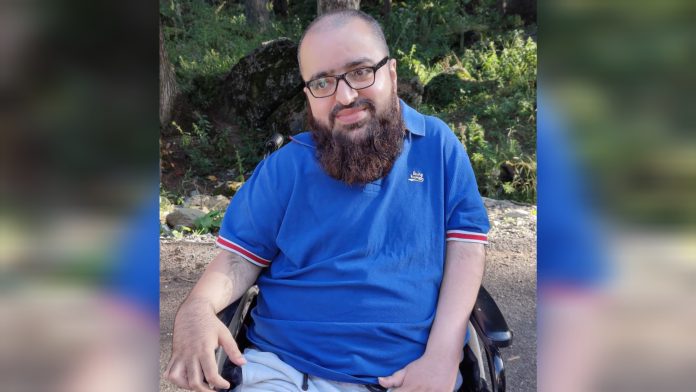
In Kashmir, a short Instagram reel posted last year unexpectedly drew significant attention. The video showed a man in a wheelchair presenting traditional Kashmiri clothing from his home. Its simplicity and warmth resonated widely, resulting in thousands of views within a short span. Behind this viral moment is Shahid, a 36-year-old resident of Gopalpora in Mattan, Anantnag, who now runs an online apparel venture he calls Adorn by Shahid.
Shahid’s life took a difficult turn early in childhood. He remembers being an energetic eight-year-old before sudden pain led doctors to diagnose him with a brain tumor. Although the surgery was successful, it left the left side of his body paralysed, forcing him to pause his studies. He recalls the aftermath as a period marked by long recovery and growing isolation. Many of the friends who once visited gradually stopped coming, which motivated him to pursue his education independently. Over several years, he completed his graduation privately.
As he grew older, Shahid hoped to find stability through a government job. He applied repeatedly, but because of his physical condition, his applications were consistently rejected. These setbacks eventually convinced him to look for a path he could shape himself.
Social media became that path. After observing others promote their work online, he decided to try something similar. With emotional and financial support from his family—especially his parents, siblings, and extended relatives—he launched his online business a year ago. What began as a small initiative gradually developed into a promising venture.
His Instagram account now showcases a variety of Kashmiri garments, including pherans, embroidered suits, shawls, and other traditional pieces. The viral reel that drew widespread attention introduced him to a much larger audience. Shahid says the feedback has been overwhelmingly positive. Since he works from home, managing orders and responding to messages online suits him well. Although he oversees the entire operation, his cousins and niece frequently help him film videos and create reels.
Despite limited mobility, Shahid’s outlook remains grounded and optimistic. He believes that difficulties can affect anyone, but what truly matters is having support and encouragement. For him, running this business represents independence, dignity, and the chance to express himself creatively. The same home where he once spent years recovering is now a workspace where he engages with customers from within and outside Kashmir.
Encouraged by continued online support, Shahid hopes to expand. He plans to open a physical store in the future so customers can visit and interact with him directly. Social media, he says, has given him opportunities he once couldn’t imagine, and he is determined to build on this momentum.
Shahid’s journey reflects resilience shaped by experience and determination. Rather than focusing on the limitations imposed by his childhood illness, he has chosen to rebuild his life through entrepreneurship, family support, and steady persistence.
source: http://www.muslimmirror.com / Muslim Mirror / Home> Positive Story / by Babra Wani / November 30th, 2025
At the India AI Impact Summit, which will be hosted by New Delhi in Feb. 2026, global tech leaders will also address issues surrounding the fear of job losses and equipping job-seekers to meet the needs of the changing job market, says the director, IndiaAI Mission.
The India AI Impact Summit to be held in New Delhi in February 2026 will witness deliberations between world leaders and top global tech leaders, leading to a formal declaration on ways to balance innovation and safety and the areas to be focussed for artificial intelligence innovation, Mohammed Y. Safirulla K., Director, IndiaAI Mission under the Union Ministry of Electronics and Information Technology, has said.
In an interview to The Hindu on the sidelines of a pre-summit conference here on Thursday, Mr. Safirulla said India can take pride in that it is the first country in the Global South to host the summit. New Delhi is hosting the fourth edition of the summit.
Objectives of summit
The objectives of the AI Impact Summit include democratisation of AI and bridging the AI divide, development of indigenous and local AI, aligning global standards and models for AI governance and innovation to needs of the developing world, harnessing AI for social good and development, and positioning India as a leading voice of the Global South on AI. The deliberations will take place across seven working groups, in which experts from over hundred countries will participate.
“We can see that there is a concentration of AI resources in certain countries in the Global North, especially when it comes to high-end data centres. There are biases which are coming out of algorithms because it is developed only from situations focussing on certain countries. We can also notice a language-wise divide since much of it is in English. One of our focusses will be on democratising AI so that no country in the Global South is left behind,” says Mr. Safirulla.
The summit will also address issues surrounding the fear of job losses and equipping job-seekers to meet the needs of the changing job market.
Training for youth
“We will look at how to train the youth coming into the job markets to be ready for AI-related jobs. Also, we need to see how we can use AI to increase the efficiency of the people who are already in the job markets working in various domains or how do we reposition them. We also have to nurture this intentionally in society so that we achieve economic growth,” he says.
Earlier this year, the IndiaAI Mission had opened up the MyGov platform to collect innovative ideas across sectors from researchers, startups, and students. Some of the innovation will be focussed on developing tools to authenticate AI-generated content, ensuring it’s traceable, secure, and free of harmful materials. Deepfake detection tools will also be developed to enable real-time identification and mitigation of deepfakes.
source: http://www.thehindu.com / The Hindu / Home> News> India> Kerala / by S R Praveen / November 20th, 2025
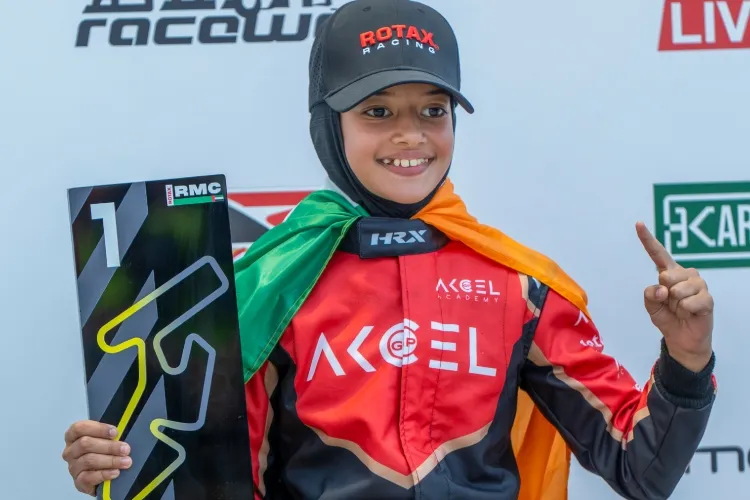
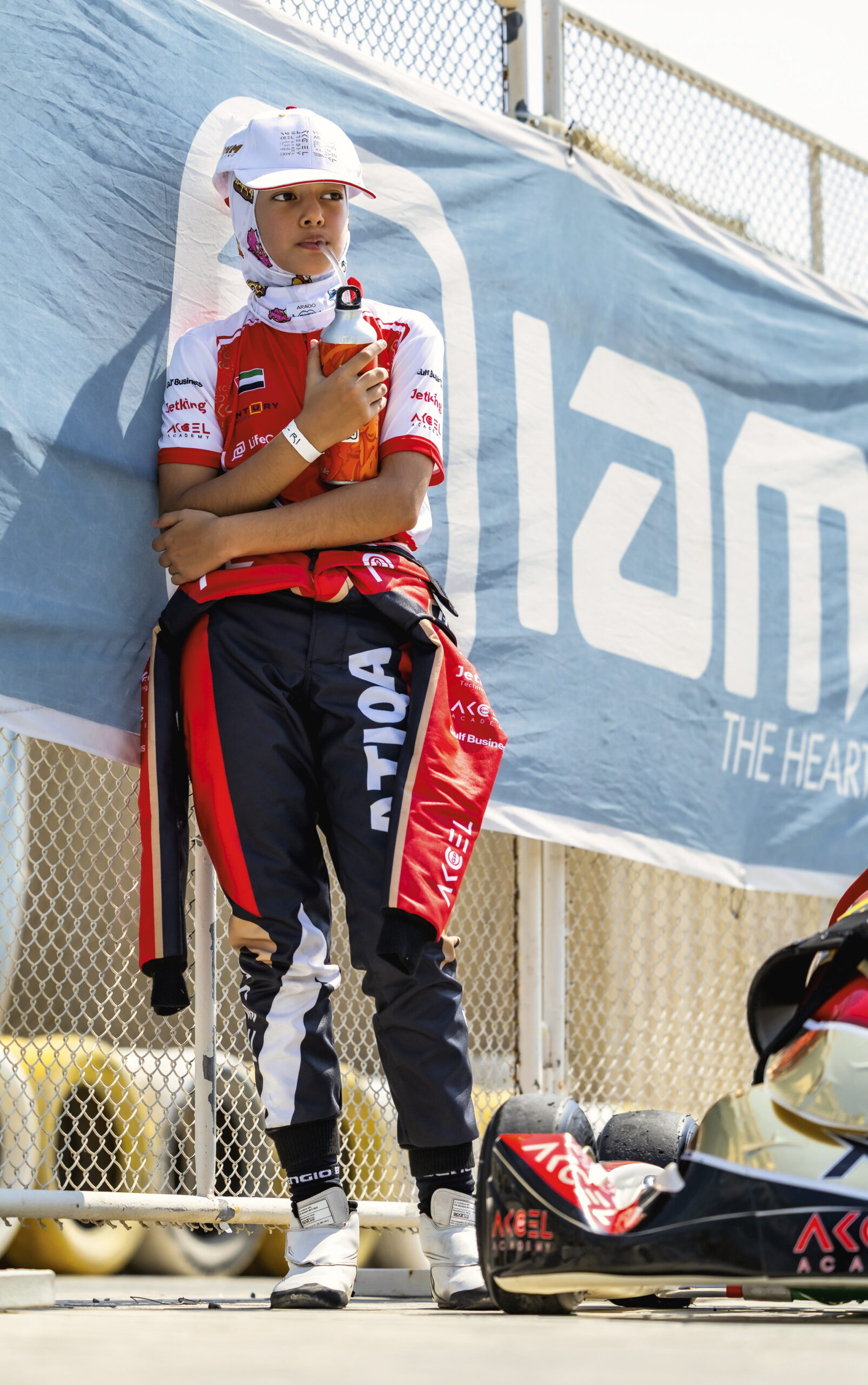
Formula 1 Academy-backed Indian racer Atiqa Mir showed scorching speed for her second pole position in as many weeks before picking up a Heat win in Round 2 of the RMC UAE Karting Championship here.
After a pole and podium finish in the Formula 1-backed COTFA series last week, Atiqa switched seamlessly into different equipment to set a blistering pace at the Al Forsan Circuit. She is the first Indian to be supported by Formula 1.
In the Official Practice sessions, Atiqa topped three out of the four sessions and clocked the fastest time of the day in a highly competitive field of international drivers. She was the only female.
Dubai: Indian racer Atiqa Mir during round one of IAME UAE Karting Championship, in Dubai. (PTI Photo)
Atiqa, who turned 11 last week, carried that form into qualifying, clinching pole position in the dying minutes of the session with a sizzling time of 60.686 seconds.
Representing Akcel GP, she led from the front in the Heat race for a deserving victory. She lost the lead briefly on Lap 1 before regaining it soon after and pulling away from the field of 18 drivers.
In the pre-final race, Atiqa suffered a big crash while fighting for the lead on the last lap, injuring her elbow.
Her determination and fighting spirit came to the fore when she drove the final lap with the injury and a broken kart. After making up five places on the opening lap, Atiqa’s kart developed a technical problem, forcing an early retirement.
”What could have been a dominant weekend ended back in the pits. But that is racing, we are racing so close to each other at such high speeds that crashes are bound to happen.
“I got a hard hit on my elbow, and it is bruised quite badly. I wanted to fight and get back to the front in the final, but it wasn’t meant to be as my panel broke and due to that I couldn’t drive,” said Atiqa.
Her father and former Formula Asia Vice Champion Asif Mir said luck was not on her daughter’s side this weekend, but at the same time, he called the collision part of racing.
“A dominant show by her, a slight touch with another kart changed her entire weekend. She deserved a better result, but that is how it goes sometimes in sport. She is driving at a high level week in and week out in different karting championships.
“She has to switch engines, tyres almost every weekend, and she can adjust well,” said Asif.
source: http://www.awazthevoice.in / Awaz, The Voice / Home> Sports / by PTI / November 18th, 2025
Indian Muslims can play a vital role in making a strong India by actively participating in the country’s development and progress. Here are the seven ways that can make Muslims, about 15 percent of India’s population, participate as equal citizens in making India a peaceful and prosperous nation.
1. Education: Education is the key to empowerment and progress. Indian Muslims should focus on getting a good education, particularly in science, technology, engineering, and mathematics (STEM). This will benefit them individually and make them contribute to the country’s growth. The literacy rate of Muslims is 68.5%, much below the national average. Madrassa education needs to be complemented by regular education. In recent years there has been a lot of activity within the community for better educational outcomes.
2. Entrepreneurship: Indian Muslims should explore entrepreneurship opportunities and start their businesses. The community has produced renowned entrepreneurs who are an important part of India’s growth story like Azim Premji (Chairman, Wipro), M. A. Yusuff Ali, Chairman of LuLu Group and Yusuf Khwaja Hamied (Chairman, Cipla) Entrepreneurship is the most effective antidote against joblessness within the community.
3. Community Development: Indian Muslims should actively participate in the development of their communities. They can contribute to social welfare projects, health initiatives, and education programs to uplift their communities. Faith-based organizations play an important role to fill the gap between government and NGOs.
4. Political Participation: Indian Muslims should actively participate in the political process by voting and running for public office. This will enable them to have a voice in the country’s decision-making process and help shape policies that benefit all communities. They must put development and progress above everything else and benefit from the fruits of democracy. India has seen Muslims holding the highest offices in the Country, like the President of India, Vice President of India, Chief Justice of India, Chief Election Commissioner of India, and the Director of the most sensitive Intelligence Bureau. India is a land of equal opportunity for all communities.
5. Interfaith Harmony: Indian Muslims should promote interfaith harmony and work towards building bridges with other communities. This can be done by organizing cultural exchanges, community events, and dialogues to foster understanding and respect among different religions and cultures. There are a lot of misunderstandings within the community about other faiths and there are also a lot of wrong ideas prevalent in other communities about Islam. It is only through dialogue and search for common ground that these fault lines can be bridged.
6. Patriotism: Indian Muslims should take pride in their country and work towards its development and progress. They can participate in initiatives such as Swachh Bharat Abhiyan, Digital India, and Skill India to contribute to the country’s growth. Confusion is spread that Islam is a transnational faith and there is no scope for patriotism in it. However, scholars like Javed Ahmad Ghamidi have argued that nationalism can be a positive force if used to protect the rights and interests of Muslims and promote their welfare. In his book Mizan, Ghamidi writes that “The Quran and the Sunnah do not prohibit nationalism, but they do prohibit the use of nationalism to justify aggression and oppression against other people or groups.
7. Muslim women and marginalized Muslims: Indian Muslim community needs to fast-track various reform initiatives that can help Muslim women in realizing their rights and develop to full human potential. There has been a lot of resistance to accepting new ideas on this front and Muslim women and trans-people, Pasmanda Muslims, Shia, Ahmadi, and other divergent schools of thought within Islam need to be tolerated and respected. India’s syncretic traditions are all about a sense of community between people of different denominations. And by promoting ideas of tolerance and acceptance, Indian Muslims will be doing a great service to the idea of India.
Dr Shomaila Warsi teaches in the Department of Political Science and International Relations, Maharaja Agrasen College, Delhi University.
source: http://www.awazthevoice.in / Awaz, The Voice / Home> Heritage / by Dr Shomaila Warsi / February27th, 2023
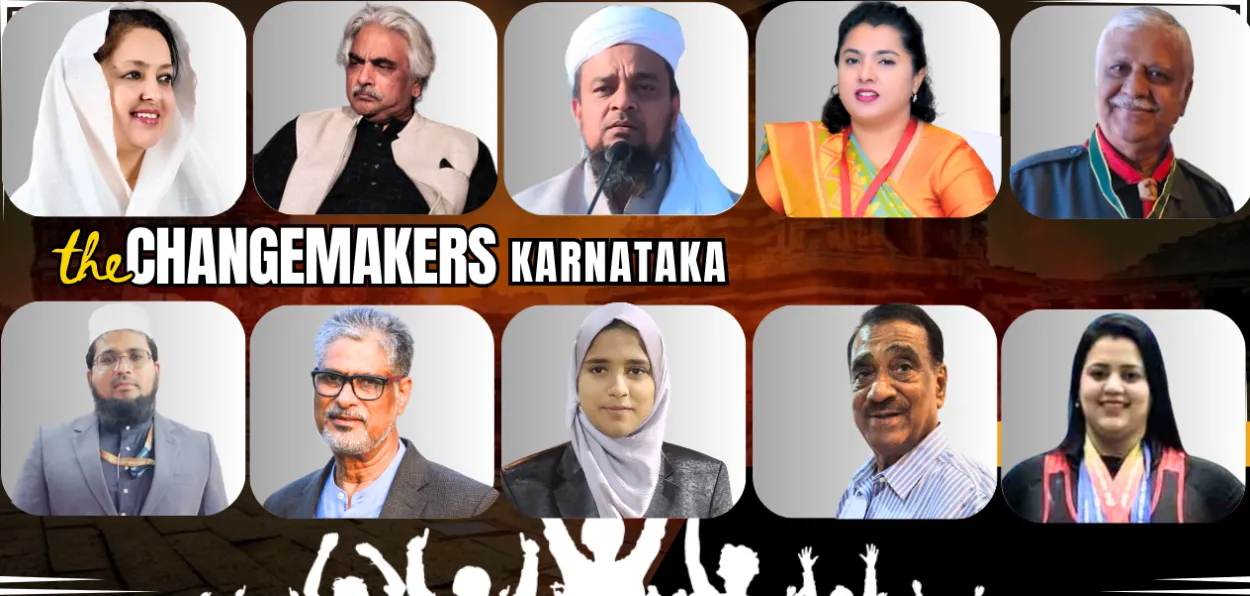
From the tech labs of Bengaluru to the coffee plantations of Coorg, from the ancient ruins of Hampi to the bustling streets of Mysore, Karnataka exudes energy. This is where India’s IT revolution was born, where classical arts thrive alongside cutting-edge innovations, and where every district tells a story of transformation.
Many Kannadigas have built empires and earned acclaim—but some went further. They didn’t just succeed; they became the Changemakers—individuals who shattered barriers, rewrote destinies, and ignited revolutions that ripple far beyond their own lives. Here are ten personalities of Karnataka whose courage and vision are reshaping the future:
Rifah Taskeen
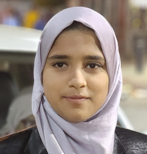
A 15-year-old firecracker from Mysore started racing at age three in a custom car built by her ex-racer father, Tajuddin. By five, she was driving Mysore to Bengaluru; by seven, she was drifting in school shows and stealing Republic Day parades.
Fighting red tape and disbelief, she stormed past every “too young” barrier to claim seven world records (Golden, Elite, High Range, India, Asia, Worldwide & Wonder Books), mastering bikes, JCBs, cranes, buses, tippers, road rollers, and even flying a plane at eight.
Mysore’s cleanliness ambassador for five years and tuberculosis state warrior for four, she’s also a state-level boxing medalist and karate fighter. She’s drifted for Rahul Gandhi, flown with Sonia Gandhi’s blessings, and left global crowds speechless.
Self-funded, unstoppable, and dreaming of IAS wings after SSLC, Rifah doesn’t just break records; she rewrites what “impossible” means. Age is just a number.
Mushtaq Ahmed
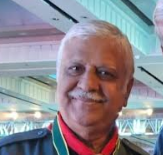
A Bengaluru-born visionary landed in Dubai when it was still sand dunes and a dream. For 41 years as head of Dubai Police photography (until 2018), the retired 1st Warrant Officer framed an entire nation’s rise—capturing the Burj Khalifa’s skeleton, the Kaaba from a crane, Sheikh Mohammed’s 1979 wedding, and sacred Medina in rare reverence.
From helicopter shots above a bridgeless Dubai to standing beside Sheikh Zayed and global icons like Lata Mangeshkar and Mohammed Rafi, the 79-year-old chronicler turned fleeting moments into eternity. Honoured, hugged, and kissed on the forehead by Dubai Police upon retirement, Mushtaq’s lens didn’t just document history—it built it. His quiet mantra: “The best shot is yet to come.”
Tazaiyun Oomer
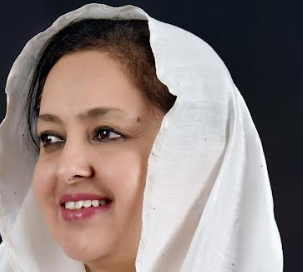
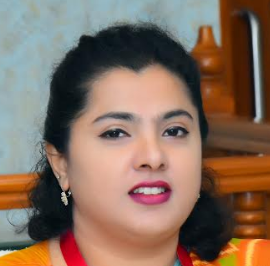
Tazaiyun Oomer was 13 when she fought through a crowd in Parliament House and got Indira Gandhi’s autograph, an electric moment that taught her leadership has no gender.
From a Kutchi Memon girl helping in her father’s textile shop, she grew into Bengaluru’s quiet revolution. In 1999, she founded Humane Touch Trust: 100+ corrective surgeries for disabled children, Al-Azhar School, 1,750 dignified mass weddings, 2,000+ Muslim women turned entrepreneurs, and yearly scholarships lifting nearly 300 girls into tech careers.
Recipient of the Sulthan Nari Shakti and Karnataka’s Rising Beyond the Ceiling awards, she proved compassion can shatter centuries-old barriers. Where tradition once whispered “a woman’s place,” Tazaiyun built schools, businesses, and futures. Her mantra: “Change begins the moment you decide to act.”
Mohammed Ali Khalid
Mohammed Ali Khalid, India’s Bronze Wolf Award recipient —the highest global honour in Scouting—has lived the Scout promise for over four decades with breathtaking sacrifice and impact.
Mohammed Ali Khalid stands as one of India’s most influential Scout leaders, a visionary whose four decades of service have shaped millions of young lives. From volunteering at the 1980s National Jamboree to becoming Additional Chief National Commissioner of Bharat Scouts and Guides, he has built global partnerships, led landmark events like the 2017 National Jamboree and the 2022 International Cultural Jamboree, and strengthened Scouting across the Asia-Pacific Region. A strategic thinker behind Vision 2013 and a respected global diplomat, Khalid’s selfless leadership, mentorship, and bridge-building continue to inspire generations—earning him the Bronze Wolf and global admiration.
Architect of Vision 2013 for Asia-Pacific, broker of WOSM’s global fee consensus, founder of SAANSO, and mentor to countless young leaders, Khalid turned India into Scouting’s most connected powerhouse. At 70, he still pushes for 20% membership growth and 50% youth representation worldwide.
Rahmath Tarikere
Rahmath Tarikere, born in 1959 in Tarikere’s syncretic lanes, grew up where Hindus and Muslims shared the same street and stories. The 1992 Babri demolition jolted him into action: he left pure literary criticism to unearth Karnataka’s living pluralistic traditions—Sufi saints, Nathpanthis, Shakta poets, and folk Moharram rituals that united communities for centuries.
Author of 30 books—including four Karnataka Sahitya Academy winners and the 2010 Kendra Sahitya Akademi winner Kattiyanchina Daari—he returned the national award in 2015 protesting intolerance and the murder of M.M. Kalburgi. A humble professor who insists “I am not a changemaker,” Tarikere quietly weaves pluralism into Karnataka’s soul, proving unity is not uniformity but a vibrant mosaic of differences.
Khudsiya Nazeer
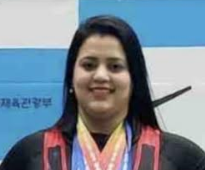
Khudsiya Nazeer, the “Iron Lady of India,” was born 1987 in Bangarpet and lost her wrestler father at two. Raised in a conservative Muslim family amid depression and mockery, she turned pain into power.
Post-Caesarean, she deadlifted 300 kg to set a world record (2022), then stormed the global stage: three golds at Asia Pacific Masters 2023 (South Korea), silver in Athens, golds in Commonwealth (Australia) and Germany. The first Indian Muslim woman to win international weightlifting medals, she lifts drug-free while working full-time at KSRTC.
From burqa-clad walks guarded by police to Harvard’s stage, Khudsiya proves motherhood multiplies strength. Her mantra: educate, play sport, write your own destiny. This Iron Lady doesn’t just break records; she shatters every ceiling for women.
Fouzia Tarannum
Fouzia Tarannum, 2015-batch IAS (AIR 31), cracked UPSC on her first attempt from Bengaluru’s public libraries—no coaching, pure grit. From IRS gold-medallist to Karnataka cadre, she turned arid Kalaburagi into a national millet powerhouse with “Kalaburagi Rotti,” empowered thousands of SHG women, lifted districts to top SSLC ranks, revived gram panchayat libraries, and delivered India’s cleanest electoral rolls—earning the President’s Best Electoral Practices Award in 2025.
At 36, this quiet DC faced Islamophobic slurs yet answered only with work. Unfazed, empathetic, and fiercely people-centric, Fouzia proves bureaucracy can have a heart and a steel spine. She doesn’t shout change—she builds it, one roti, one vote, one woman at a time.
Zafer Mohiuddin
pix09
Zafer Mohiuddin, Raichur’s radio-struck boy who once ghostwrote love letters in school, turned a bus-ride compliment from R. Nagesh into a lifetime on stage. He quit UPSC and Air Force postings to found Kathputaliyaan Theatre Group (1988), wielding puppets and plays as weapons against taboo.
From translating Girish Karnad’s Tipu Sultan ke Khwaab (Theatre Olympics 2018) to shattering Urdu myths with Zaban Mili Hai Magar, his raw, Amitabh-like voice has roared in ten languages, narrated Swaraj Namah, and defended Urdu’s secular soul alongside Karnad.
In November 2025, Karnataka crowned him with the Rajyotsava Award—its highest honour—for four decades pulling society’s strings toward truth and harmony. The puppet master still refuses to cut his own.
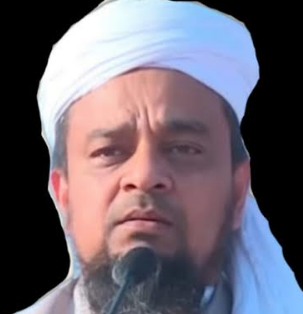
Moulana Dr. Mohamed Maqsood Imran Rashadi
Moulana Dr. Mohamed Maqsood Imran Rashadi, Principal and Chief Imam of Bengaluru’s iconic Jamia Masjid, memorised the Quran in 18 months, earned a PhD in Urdu literature, and turned a struggling madrasa into a 100%-pass powerhouse for 400 underprivileged students.
From quietly removing provocative meat thrown to spark riots to defusing the 2025 “I Love Mohammed” banner crisis with one calm sermon, he prevents violence before it begins. He negotiates fair loudspeaker rules across faiths, hosts Hindu swamis for iftar, and, after the Pahalgam terror attack, thundered “Terror has no religion—we love Hindustan.”
A scholar who preaches in Tehran, meets Saudi royals, and still walks the KR Market uniting traders, Moulana Maqsood proves that unity is built by deeds, not banners. Bengaluru’s heartbeat of harmony beats in his voice.
Syed Nawaz Miftahi
Syed Nawaz Miftahi, fully sighted yet forever changed by the tear-filled Quranic recitations of blind children in Mumbai in 2011, vowed to become their light.
He mastered Braille, invented the “broken-rice touch” technique to awaken ageing fingers, and turned Sultan Shah Markaz, Madrasa-e-Noor (70 students), and daily phone classes into sanctuaries where the visually impaired recite flawless tajweed and complete multiple khatms every Ramazan.
From Hyderabad to Kashmir, his model now trains teachers who were once his students. In November 2025, he launched Umang Foundations—a residential beacon run by seven blind trustees and one fearless young sighted woman—where every visually impaired soul, of any faith, learns Quran, computers, and independence.
Nawaz doesn’t give sight; he proves the heart’s vision is brighter.
source: http://www.awazthevoice.in / Awaz, The Voice / Home> The Changemakers of Karnataka / by ATV / posted by Aasha Khosa / November 22nd, 2025
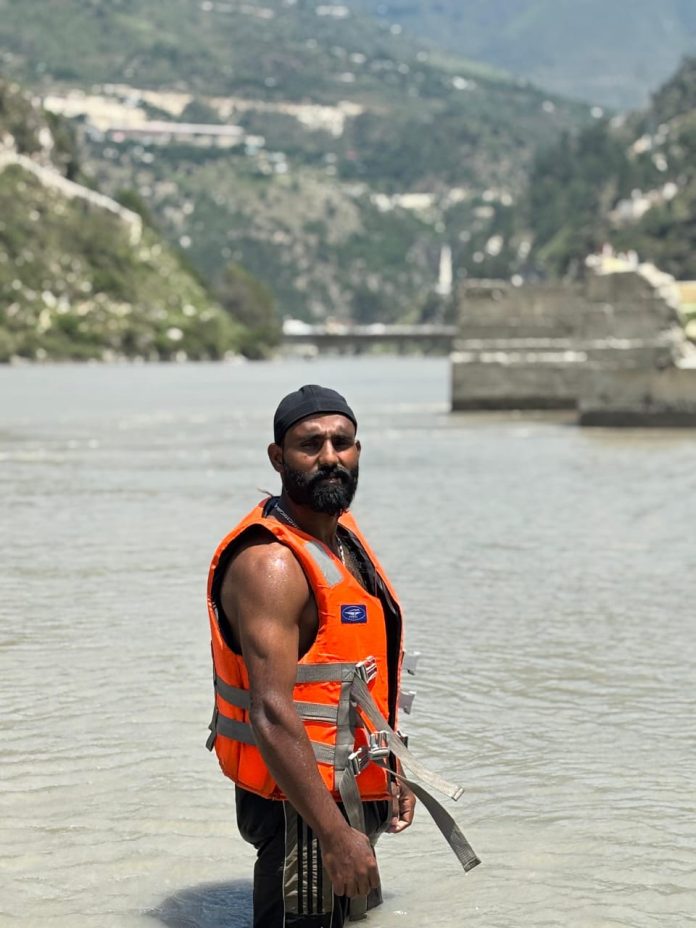
On the jagged banks of the Chenab, where the river churns like a living force and the sound of its roar rises above the valley’s silence, one man stands as the last hope for those it swallows. He is neither a government employee nor a trained professional in the formal sense. He has no salary, no official title, and no protective gear. Yet for more than fifteen years, Hamza Sheikh has been the first to dive in when someone disappears beneath the grey water.
He is soft in voice, and almost shy in demeanour. But behind that calmness lies a kind of courage that borders on the extraordinary. In his own estimate, he has pulled “more than four to five hundred” bodies from the Chenab. And astonishingly, “in my 15-year journey, at least three hundred alive I have brought out.”
There are few stories like Hamza’s today—stories of a single man whose work is stitched into community memory, whose bravery is understood more by the grieving families he has helped than by any government record. His entire training, he says, comes from growing up near the river.
“This is Chenab,” he explains, gesturing towards its violent surface. “We have been living here since childhood. This is our training.”
A River That Became a Graveyard
The Chenab was not always a death trap. Hamza recalls a time when accidents were rare, when the banks were bustling with a small city called Pul Doda.
“There used to be a market here earlier… at least 450 shops,” he says. “The dam destroyed everything.”
When the dam collapsed during the 2008 earthquake, the river changed forever. What was once shallow and predictable became deep, erratic, and unforgiving. Entire markets and neighbourhoods were consumed by water. People promised rehabilitation never received land. The river became in parts a silent grave, in parts a raging beast.
It was around this time that Hamza’s role became essential. His family had lost their land and livelihood; he found purpose in saving others from what had taken so much from his own.
He still remembers the first dead body he pulled out. “I was about 10–11 years old… a body came running. I caught it. His condition was very bad. He had worms.”
That moment, shocking as it was, shaped his life. Since then, the river has rarely let him rest.
Inside the Mind of a Man Who Jumps In
The Chenab is deceptive. From afar, it looks like any fierce river. Up close, it is a trap. The water is icy, visibility is zero, the current can drag down cars, and the depth changes unpredictably.
“Many people run away after hearing the noise of Chenab,” Hamza says. “But for us, it is very common.”
He describes rescue attempts that sound superhuman. In many cases he dives blind, because “we close our eyes, because there is sand. We can’t see anything. We go 15–20 feet without oxygen.”
The riverbed is lined with boulders sharp enough to slice flesh. Some sections are calm for a few metres and then suddenly erupt in turbulence strong enough to flip a vehicle. Somewhere in the river’s deepest pockets, Hamza says, lie bodies that never surfaced.
“Imagine a chopper went here 15 years ago,” he says. “We didn’t find it. Neither the body nor the chopper.”
And yet, he returns each time.
When asked if he is ever scared, he shrugs. “Chenab is like our home.”
A Body in the River Is Only the Beginning
The most difficult part of Hamza’s job is not the water—it is what the water does to the dead.
He recounts incidents that would break most people. One case remains etched in him: a woman whose remains had been in the river for days.
“When I pulled her, her skin came out,” he says quietly. “There were worms. Her hands were full of worms.”
There are other stories—bodies broken by rocks, faces eaten away by the river’s minerals, limbs separated, the smell of decay rising even from the coldest water. But Hamza refuses to turn away.
“Emotions come,” he admits. “Because if someone’s family reaches their house, then it is a matter of reward. We don’t take money. We do it with the intention of reward.”
For families waiting on the bank, Hamza is not a rescuer; he is closure.
The Line Between Saving and Being Pulled Under
The living, Hamza says, are far more dangerous to rescue than the dead.
“A living person can drown you too,” he explains. “He will take a slap from you… he will take him too if you are not trained.”
He recalls one incident from 2017: a woman who had jumped in during the fast flow of mid-summer.
“I jumped without a jacket emotionally. I was in the water for half an hour. Sometimes she was drowning me and sometimes I was saving her.”
Both survived—but the memory remains a reminder of how narrow the margin is between life and death in the Chenab.
Some rescues haunt him differently. In Katra, a college girl jumped; her body surfaced only two months later. “At that time,” he says, “I was very sad.”
He remembers another scene—two girls swept away in a torrent so strong it resembled the sea.
“No one dared to go down,” he recalls. “I went into the water.”
Injuries That Tell a Story
Hamza lifts his cap to show a scar running diagonally across his head. It is long, thick, and uneven—evidence of how much he has risked.
“My head was cut from here,” he says softly. “There were 60 stitches inside. The blood was flowing and I came out. I didn’t know that my face was bleeding.”
It happened during a car rescue, when he was pushed beneath a rock and had to “adjust without any equipment.”
There are other injuries—bruises, cuts, nights spent shivering after hours of diving, the long-term damage cold water inflicts on the body—but Hamza doesn’t dwell on them. The river has taken more from others, he says, than it has from him.
Hamza’s work is made all the more remarkable by the fact that he does it with almost nothing.
“We have a boat, but we don’t have it,” he says with a faint, ironic smile. Their earlier boat, gifted years ago, “died in the water the next day.” Now he must request one from Doda each time there is an emergency.
He has no oxygen tank, no wetsuit, no underwater torch, no sonar, no rope strong enough to withstand Chenab currents.
“It takes four days to call an NDRF officer,” he says. “The dead body is in the water and rots. Even NDRF officers are not able to get into the water.”
He tells of one such officer whose rope snapped. “He had just got married… I saved him from the side without any equipment.”
The irony is bitter: the man who rescues even trained personnel is himself unprotected.
No official has offered him financial aid, let alone a salary. “I only got praise and nothing else,” he says.
Each time the phone rings, Hamza says, he thinks of the family waiting on the bank.
“We think and we get a phone call. We have to go… we get emotional.”
He recalls the day two of his classmates drowned. He watched their parents crying helplessly.
“I couldn’t bear it,” he says. No one else dared to enter the water that day. He went alone.
He has not always succeeded. “There were 11 people… I found only one,” he says. “Till date, I haven’t found any of the others.”
But it does not stop him.
“Whoever we went to save, we brought him alive,” he insists. It is his source of pride—and perhaps also his armour against grief.
The Man the River Has Not Defeated
As Hamza talks, the Chenab roars behind him—its sound too steady, too relentless. It is a reminder of how small one man is compared to a river that has eaten cities, choppers, buses, families.
And yet, when someone goes missing, people do not call the authorities first. They call Hamza.
Not because he is invincible. Not because he is paid. But because for fifteen years, whether at midnight or dawn, whether in winter cold enough to freeze blood or monsoon floods that turn the valley into a bowl of water, he has shown up.
“This is our training,” he says again. “Wherever Chenab goes, wherever there is someone, we go.”
It is perhaps the simplest explanation for what he does—but not nearly enough to describe the magnitude of it.
In a valley full of quiet resilience, Hamza remains its quietest hero: anonymous, unrecognised, and yet carrying within him the memories of hundreds of tragedies, hundreds of families, and hundreds of lives he pulled—sometimes limp, sometimes breathing—from a river that never gives anything back.
source: http://www.muslimmirror.com / Muslim Mirror / Home> Indian Muslim> Positive Story / by Babra Wani / November 18th, 2025
The Faculty of Asian and Middle Eastern Studies at the University of Oxford is proud to announce the winners of the Frere Exhibition for Indian Studies 2023: Shireen Azam and Aftab Mallick.
Shireen Azam
Shireen Azam is a DPhil researcher at the Faculty of Theology and Religion, University of Oxford (St Antony’s College). Her research is centred on the uncomfortable fit between caste and secularism, and specifically on the invisibilisation of caste among Muslims. She was formerly Assistant Editor at the journal Economic & Political Weekly, where she founded the digital platform EPW Engage – which opened a new digital chapter for the 7-decade-old journal and reimagined the possibilities offered by the digital medium for visualising and communicating research. She regularly writes in the media, with articles in the Caravan Magazine, Indian Express, Mint Lounge, Wire, etc.
I will use the Frere Exhibition Grant to be able to complete the final part of my DPhil thesis on ‘The Invisibilisation and Assertion of Muslim Caste in India’. Caste is one of the key organisational principles of South Asian society. However, caste has largely been seen as a ‘Hindu’ phenomenon, rendering its impact on other communities in India, especially the Muslims, invisible. Even as Muslims are constantly studied in intellectual discourse and spoken of in public and political discourse in India, they are understood within the frameworks of religious politics alone: secularism, communalism, nationalism, or in terms of their religiosity.
My thesis looks at two intersecting phenomena of caste among Muslims—its invisibilisation by state and policy discourse and its assertion by lower caste Muslim organisations and politics. It also grapples with what the entity of Muslim caste is, and what it means for persons from an ‘egalitarian’ religion to have a caste. Political discourse of 20th century India constructed the ‘Muslim’ solely as a religious minority. However, different Muslim castes carry their historical and present predicaments differently. Muslims carry caste in their occupations, the locations of their homes, the ability with which they can say the names of their communities and make jokes about each other. My thesis probes the entity of Muslim caste in three intersecting sites: (a) in policy discourses in colonial and Independent India, (b) in Muslim caste organisations (c) in ‘lower’ caste selves. In relating the histories of several backward caste Muslim organisations and the negotiations they have been making with state and policy at various levels – I contest standard trajectories of how ‘Muslim politics’ in India has been chronicled by historians and political scientists alike. Ultimately, the thesis thinks through what changes in how we understand India’s religious politics when we acknowledge caste in Muslims.
Aftab Mallick
I work on the construction of identity (ethnic and cultural origin, sectarian affiliation, genealogy and kinship) among élite social collectives, its relationship to status, and the representation thereof in pre-modern historiographic and ethnographic texts. My DPhil concentrates on the circulation of Iranian and Turco-Mongol élite groups and individuals across transregional networks between Transoxiana, Iran and Mughal India, and the emergence of a distinct status culture at the Mughal court in the 17th century. I am more generally interested in the interaction between state formation, commercial activity, and military-bureaucratic success, and situate my work within broader scholarship on political, cultural, and commercial integration in Early Modern Eurasia.
I am grateful for the generosity of the Frere Exhibition in supporting my work as a social and cultural historian of the early modern Persianate world. Thanks to the Exhibition’s support, I will endeavour to complete my work on the re-conceptualisation of the Mughal nobility’s memory and legacy in the 18th century as its descendants sought to adapt to a changing sociopolitical landscape. I will demonstrate how this historiographic moment led to the formation of ashrāf identity among the Indo-Muslim gentry as a status group in subsequent generations.
I approach my work as a kind of posthumous ethnography of now non-extant élite groups, and to recreate their world and worldview through study of the literary and historiographic texts they produced. There is a widespread dearth of research on social élites, whether due to contemporary sensibilities or the lack of survival of relevant materials. However, in the absence of an adequate understanding of these social collectives, our understanding of stratified, complex pre-modern states and societies as well as of their self-perception and scales of moral and political value will necessarily remain incomplete and defective.
source: http://www.ames.ox.ac.uk / Faculty of Asian & Middle Eastern Studies, University of Oxford / November 21st, 2023
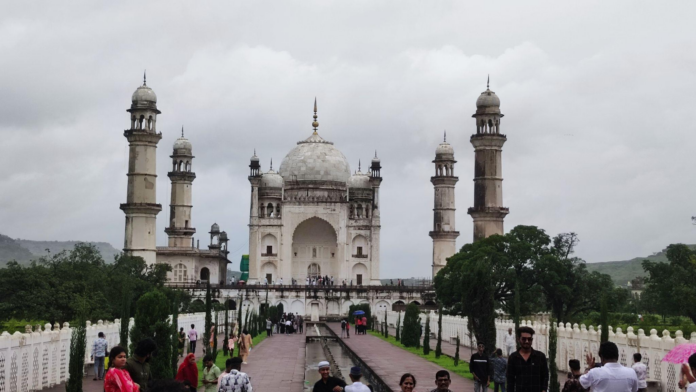
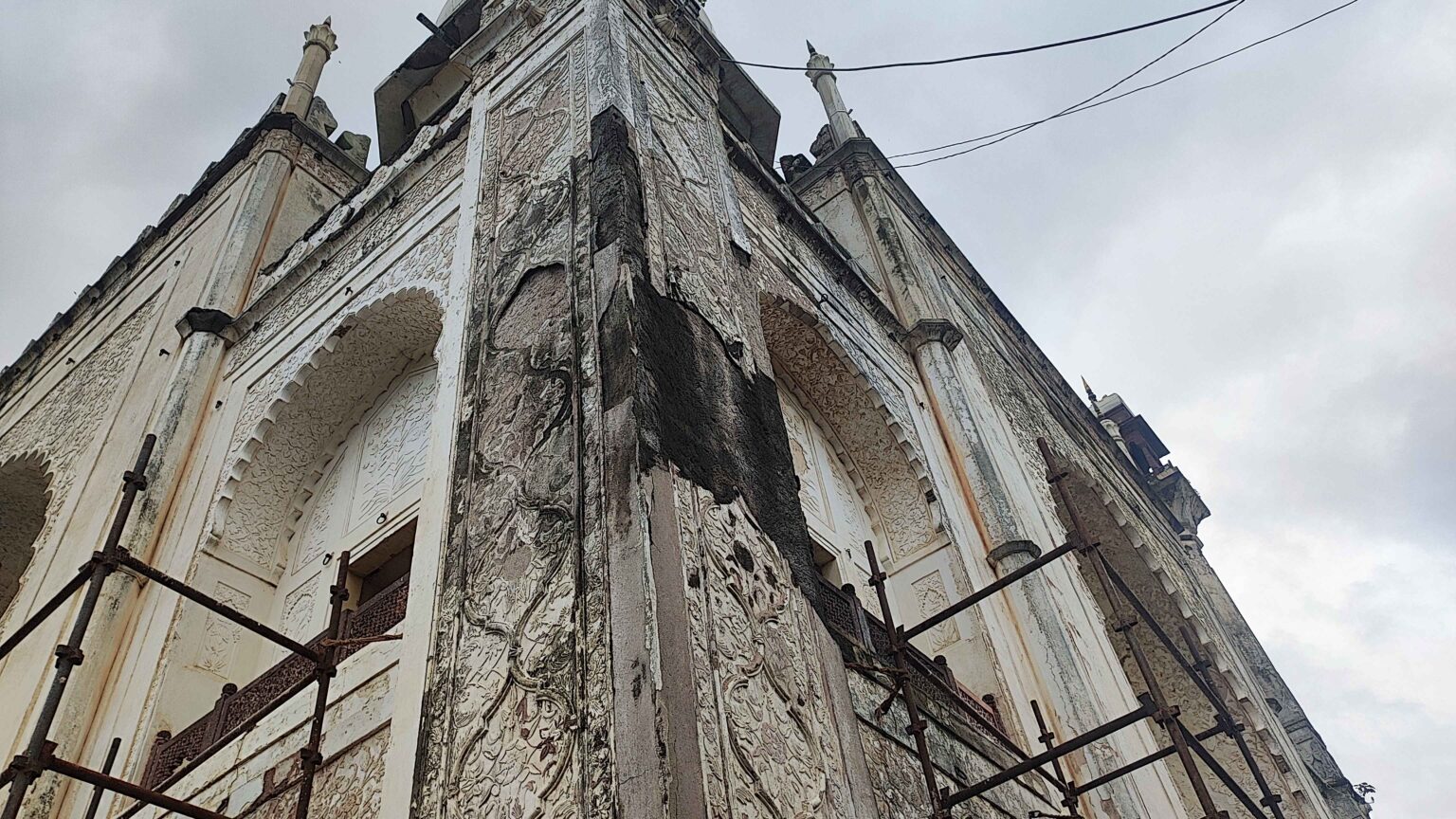
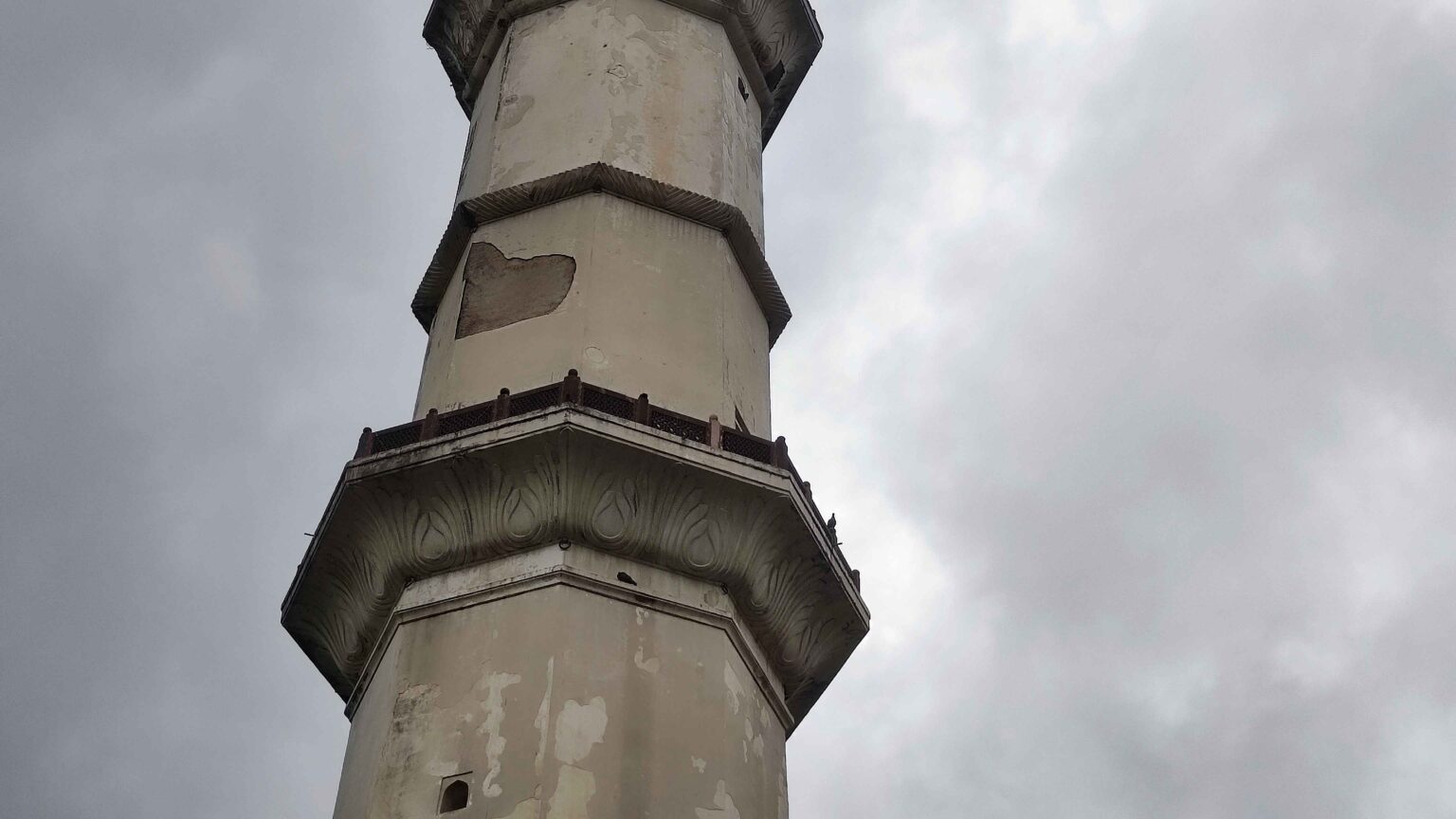
The Archaeological Survey of India, which manages the site, seems to have turned its gaze elsewhere, leaving the Maqbara to weather time’s relentless assault. (Courtesy: Aditya Porwal)
Aurangabad (Maharashtra):
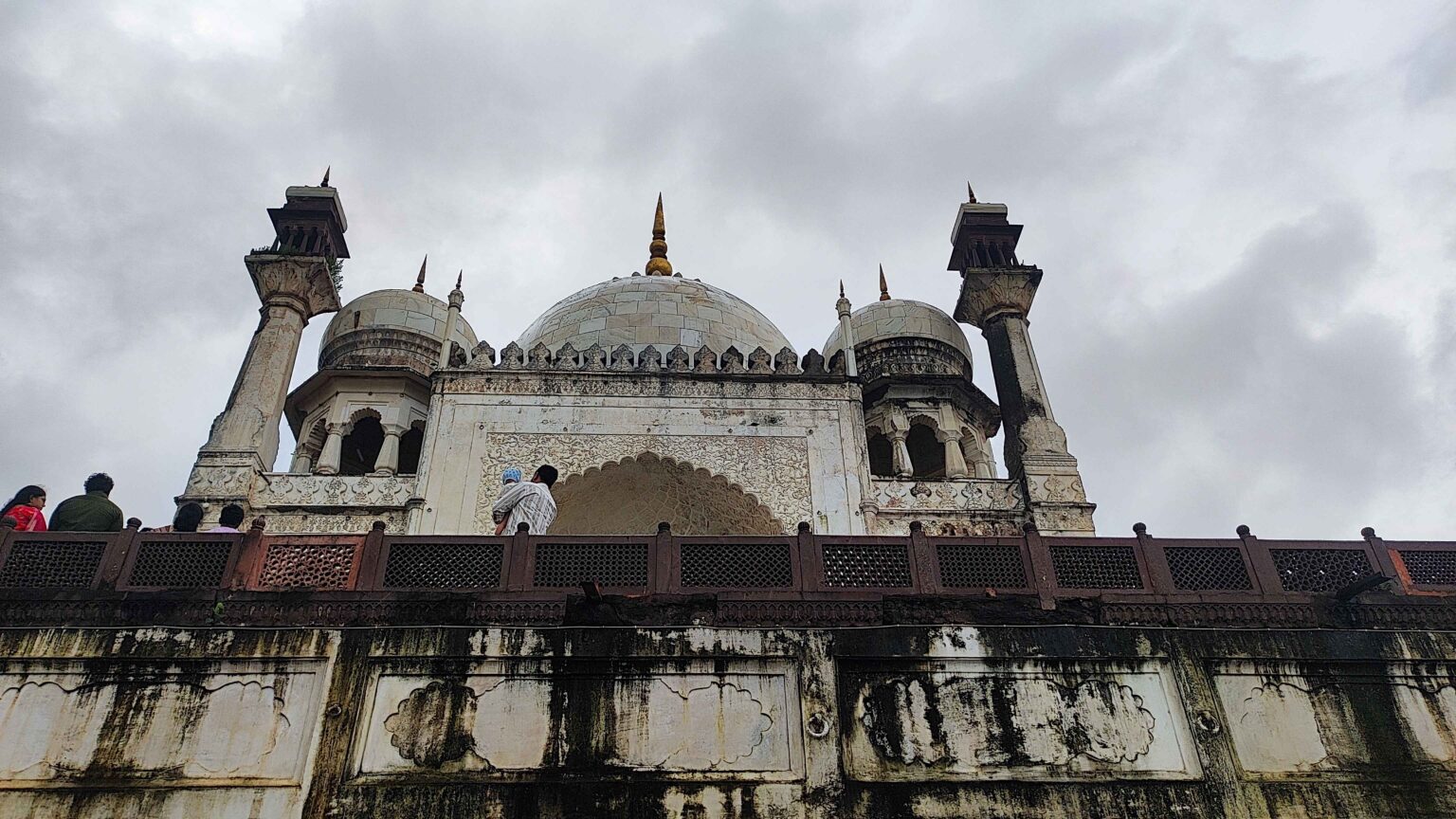
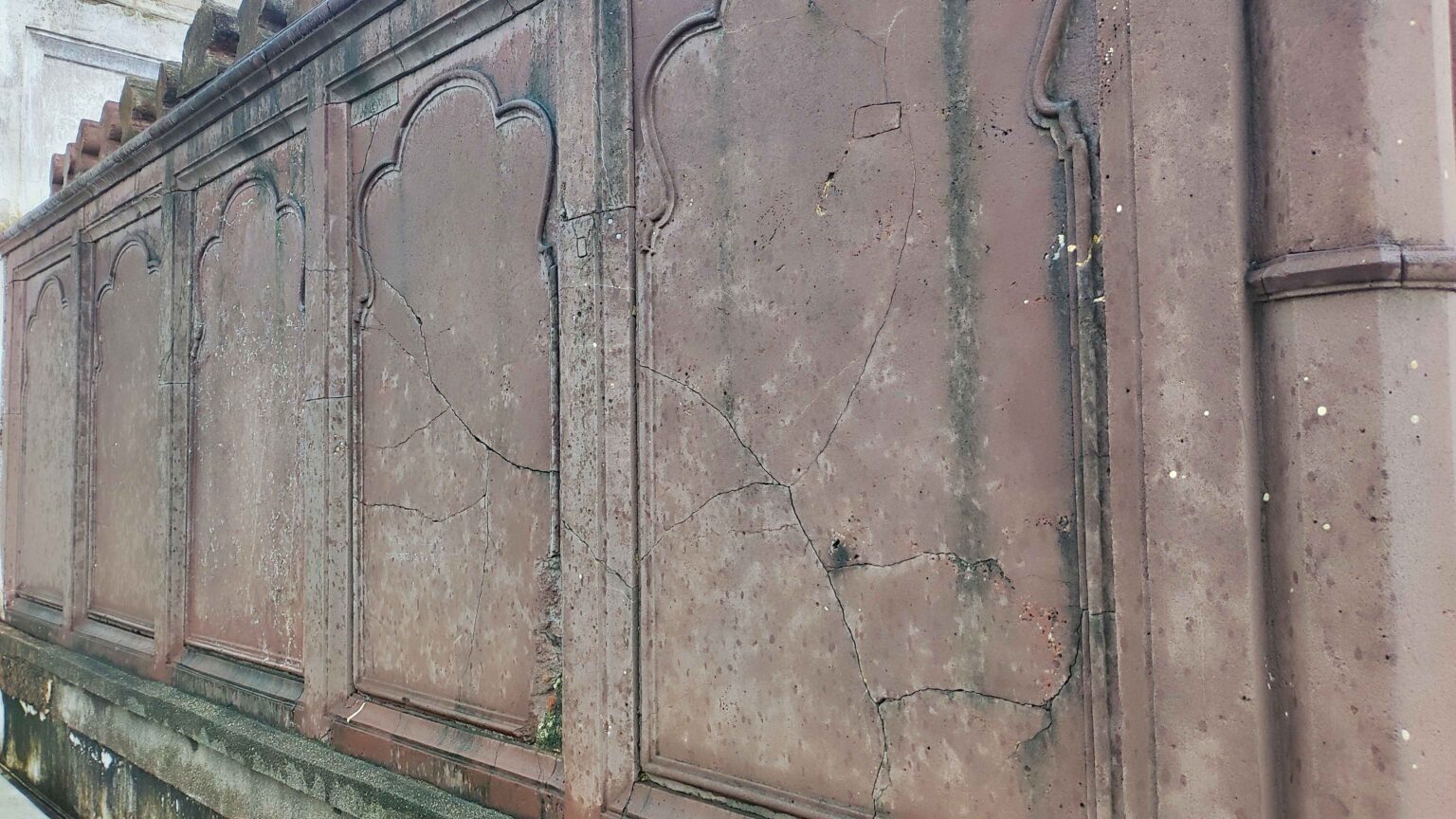
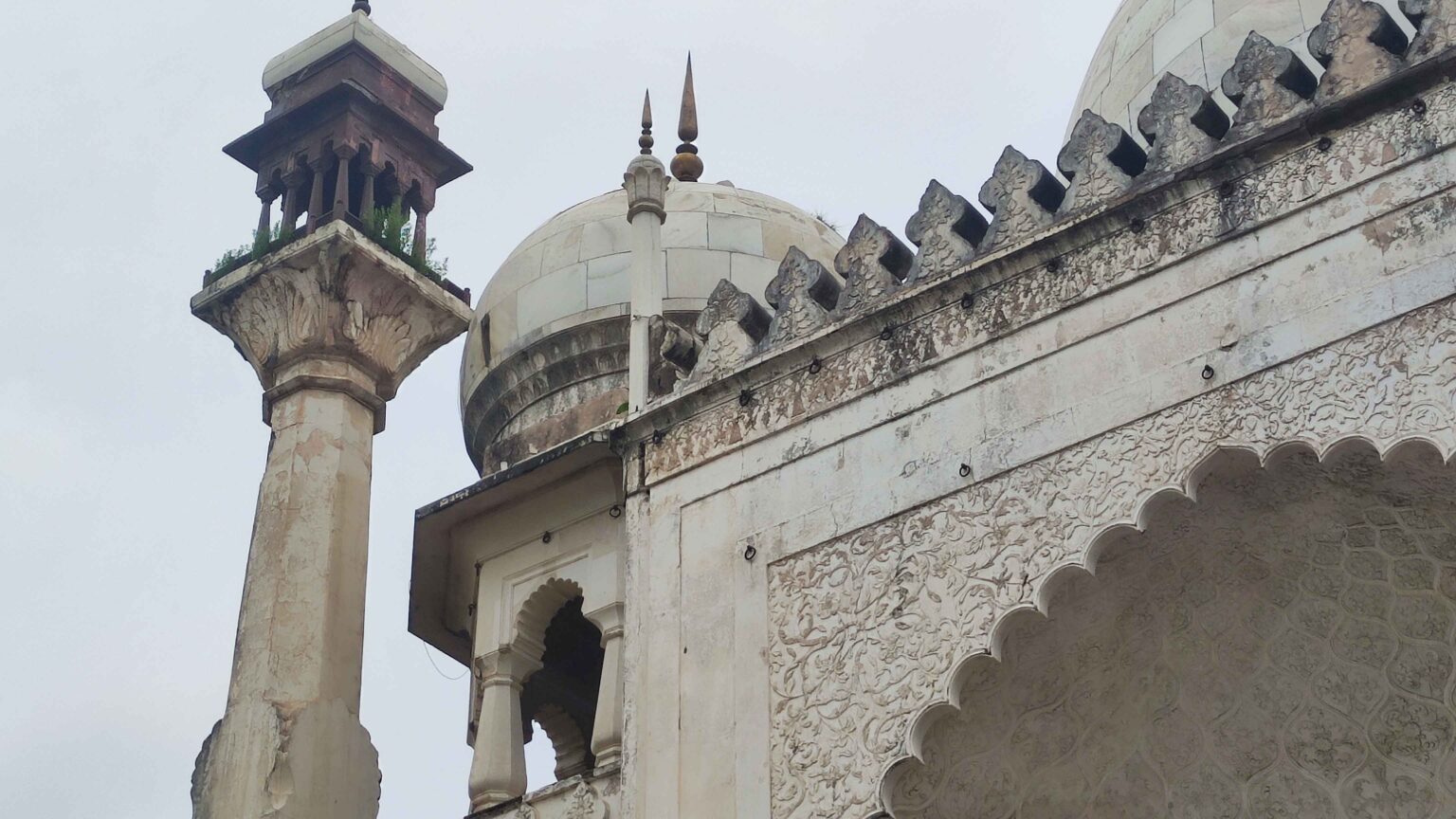
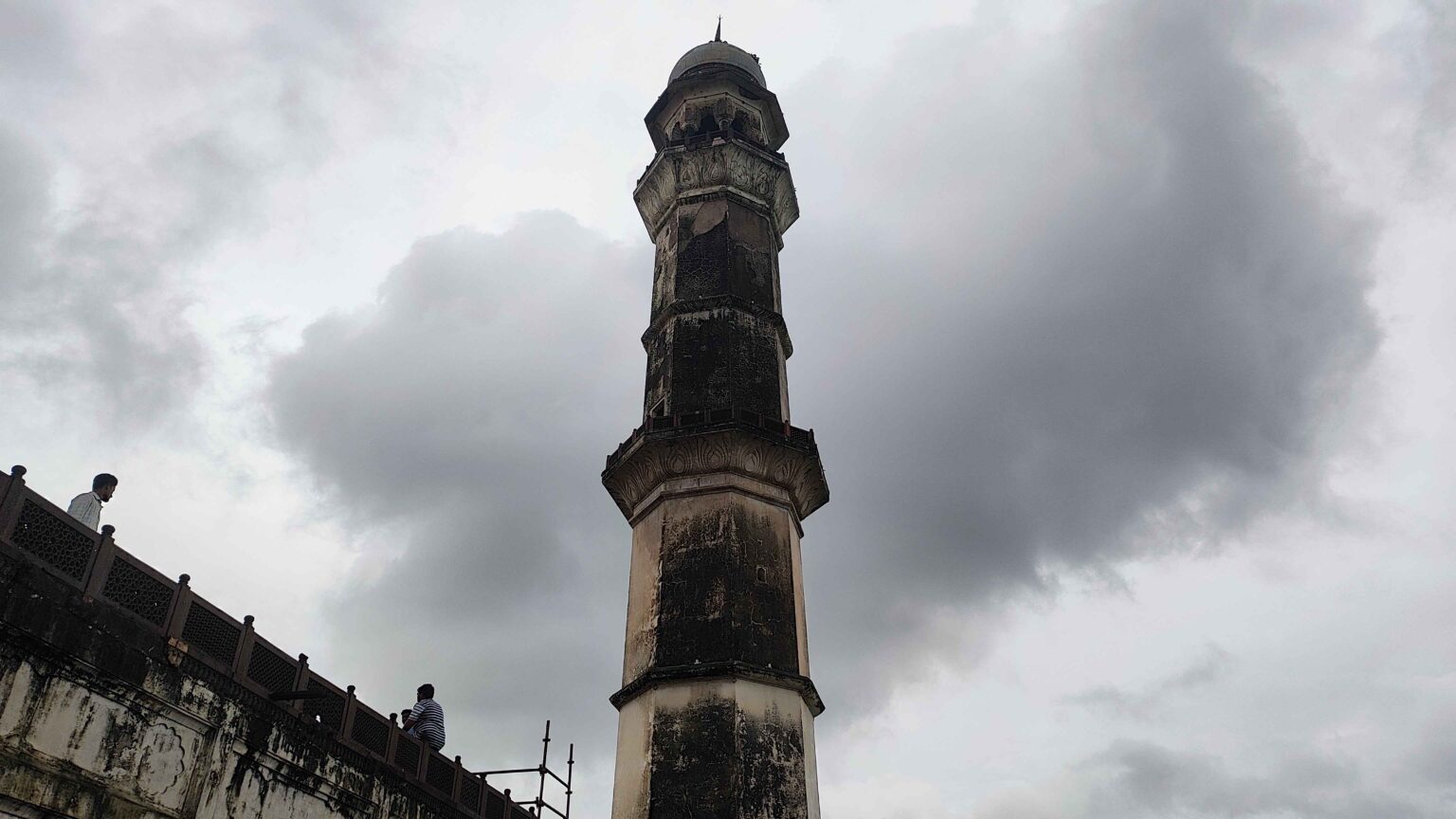
Bibi Ka Maqbara, the 17th-century Mughal monument in Maharashtra’s Chhatrapati Sambhajinagar, is slipping into ruin. Known as the “Taj of the Deccan”, its blackened marble, cracked walls and fading engravings reveal a neglect.
Built in 1651 by Aurangzeb in memory of his wife Dilras Banu Begum (Rabia Durrani), the mausoleum was completed over nine years, later repaired by his son, Prince Azam Shah, in 1676. It was meant to echo the Taj Mahal’s splendour, but today it looks worn and abandoned, with its story of love hiding beneath layers of neglect.
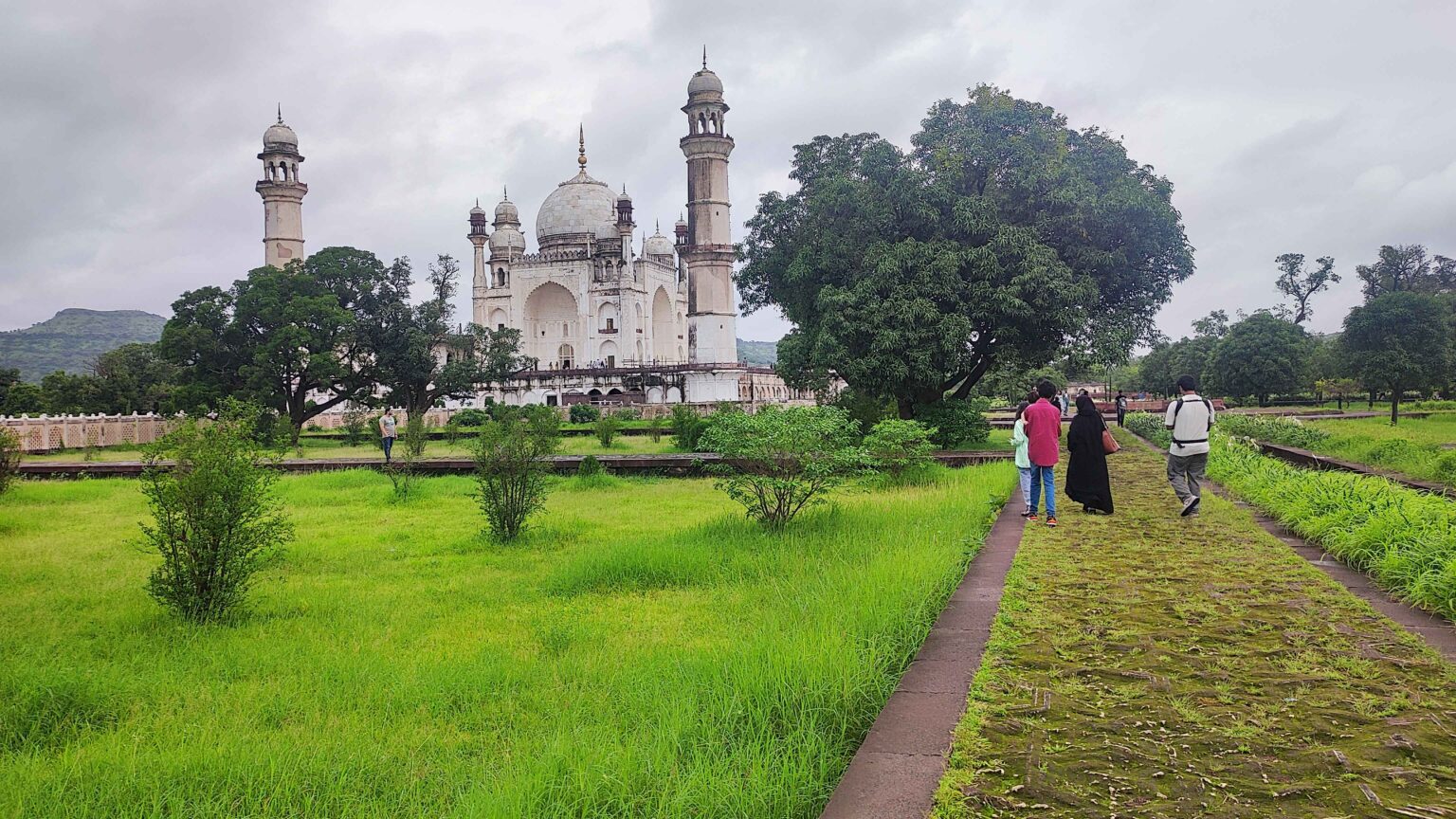
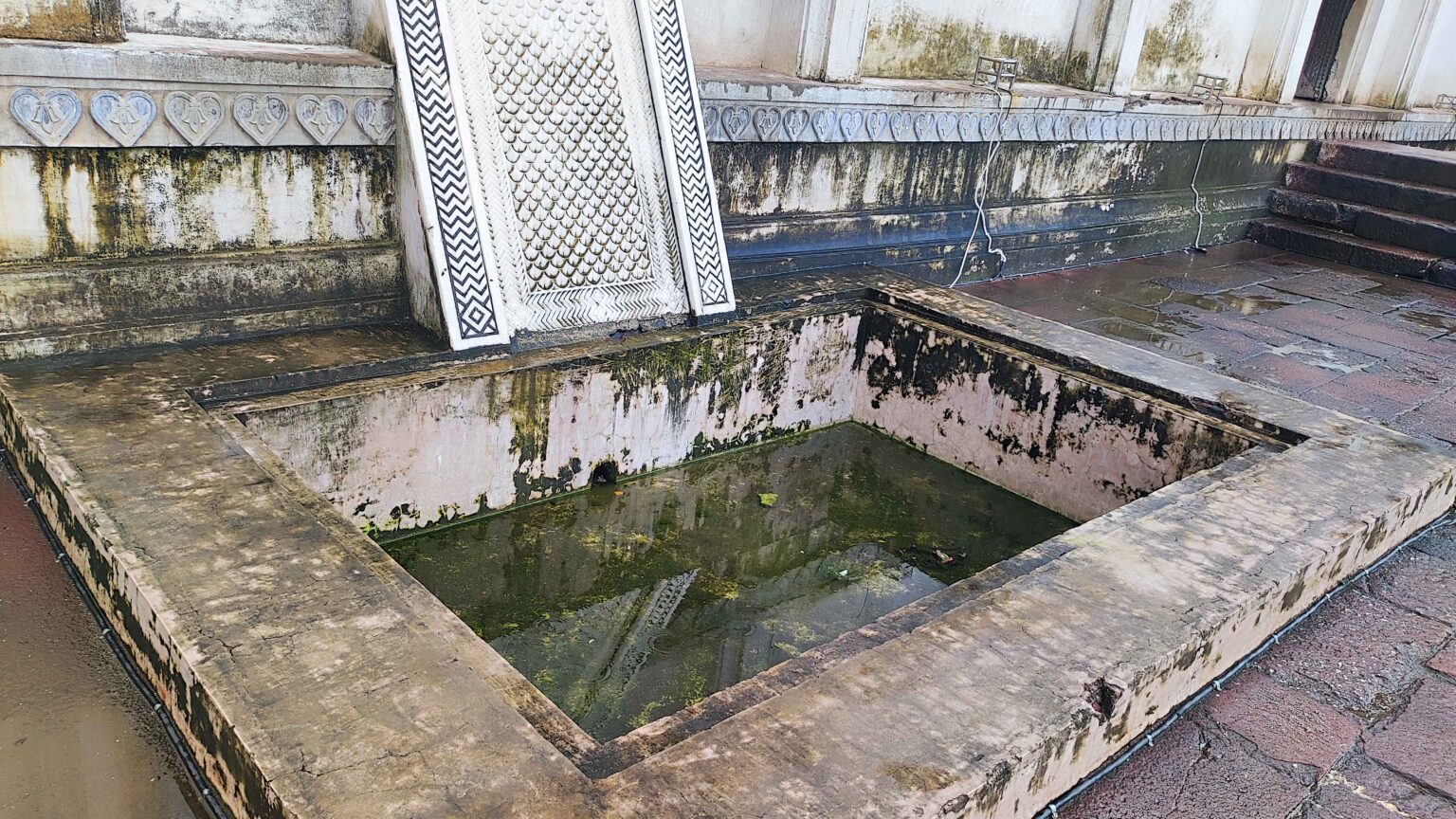
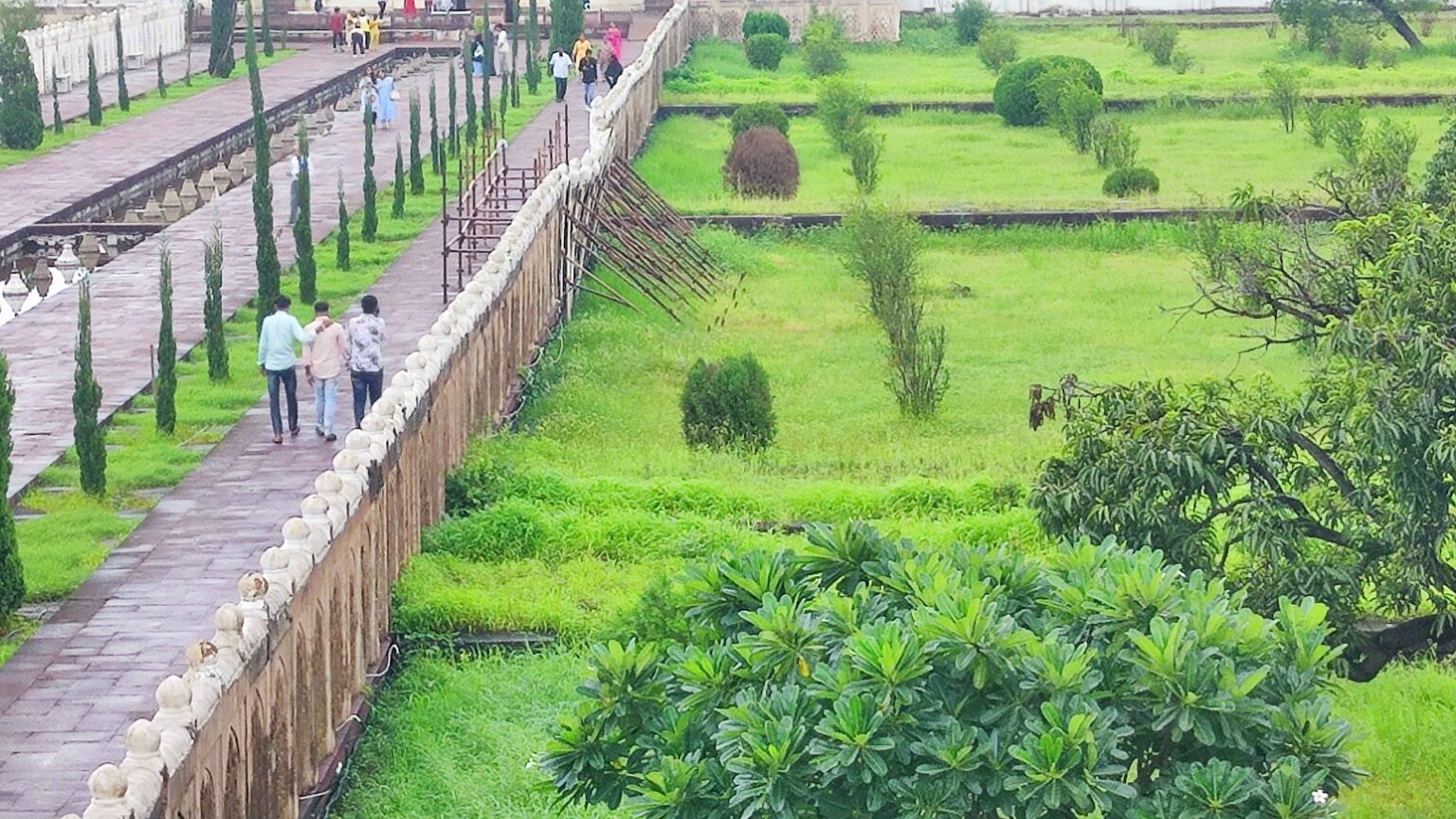
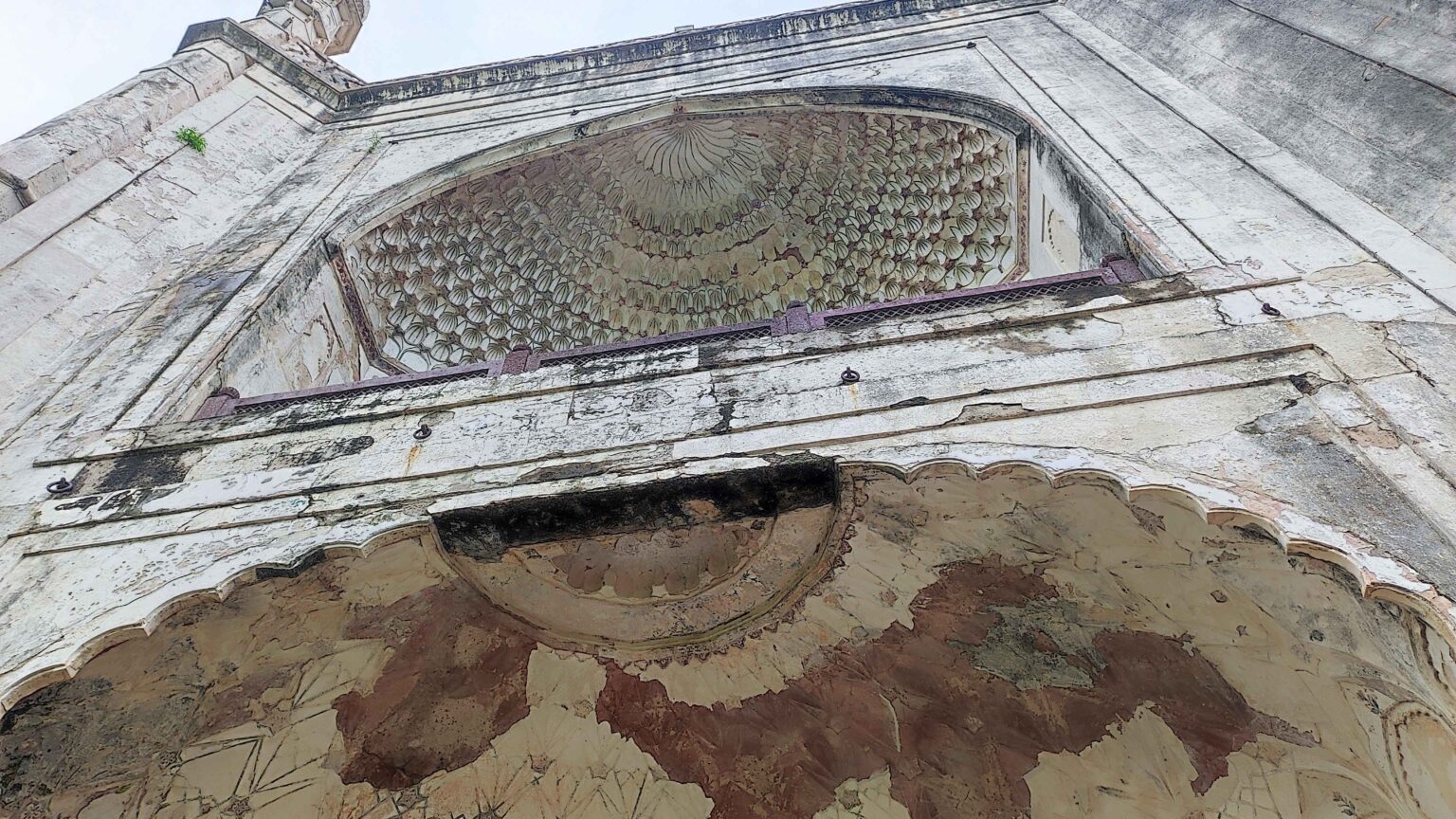
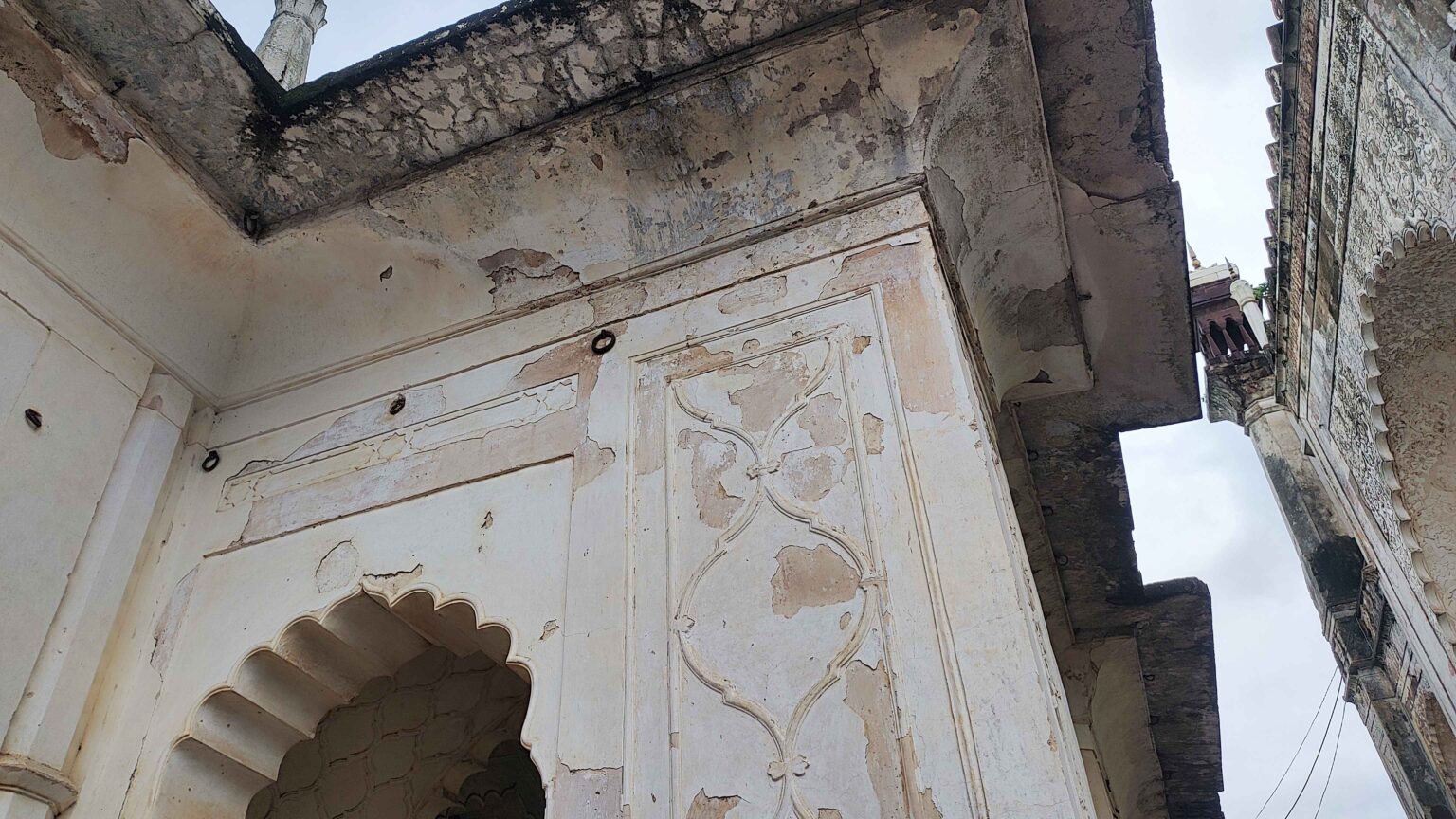
The monument shows its wear as the light fades in the evening. The paths are broken, weeds have spread across the gardens, the carvings have almost disappeared into the stone and water stains have dimmed the marble dome. Once built to rival the Taj, the so-called jewel of the Deccan now slips further into neglect while those meant to protect it look away.
The Archaeological Survey of India (ASI) manages the site, but signs of care are faint. Despite being a major tourist draw and revenue earner, the Maqbara’s decline speaks of how India chooses which parts of its heritage to protect.
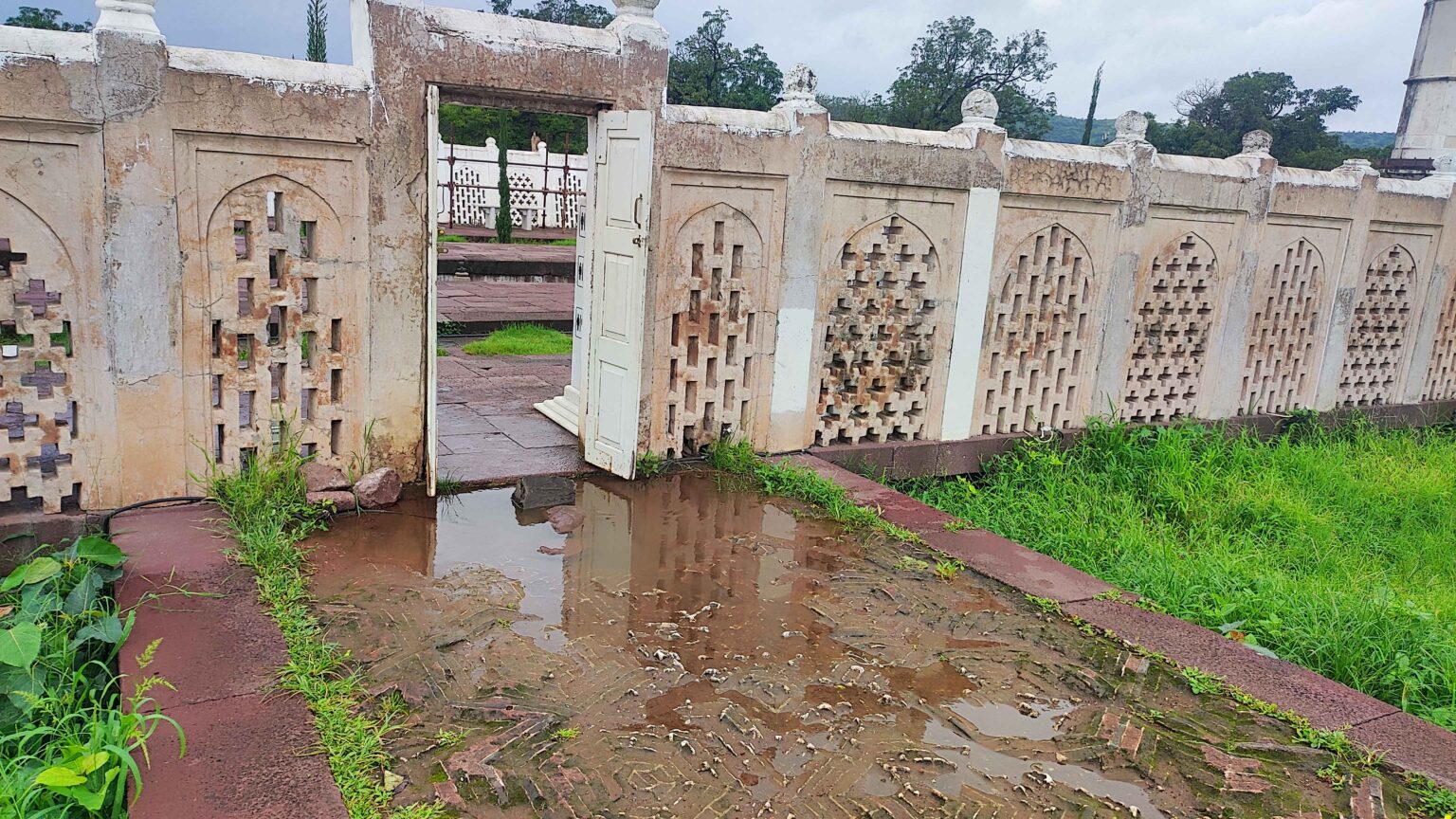
In the Charbagh garden, the symmetry has given way to uneven paths and missing tiles. The stucco floral motifs crumble, waterlogging eats at the marble and monsoon rains pool at the base of the tomb.
“It is very sad to see the monument in this condition. This is our pride. This is our history. But every year, its situation is deteriorating. The tourists come, they take pictures, but they also ask why it is in such bad shape. I do not know what to tell them, “Says Anil Patil, a tourist guide for more than two decades.
Designed by Ataullah, son of Ahmad Lahauri, the architect of the Taj Mahal, Bibi Ka Maqbara carries its own narrative. The marble brought from Jaipur, hauled by 300 ox-drawn carts, still glimmers faintly, though plaster patches betray incompleteness.
“It is not just a poor man’s Taj. Bibi Ka Maqbara has its own character and its own story. It is a love letter from a son to his mother, and that emotional depth deserves respect,” says Dr. Meera Singh, historian of Mughal architecture.
The monument still languishes. In 2023, it welcomed over 350,000 visitors and raised nearly Rs 8 crore in revenue. But the site remains underfunded. Drainage systems are broken, and parts of the outer wall lean on bamboo scaffolds for survival.
“The ASI patches things up after complaints, but it is like putting a bandage on a broken leg. We need proper drainage systems, not quick fixes. The water eats away at the marble, and no one seems to care,” says Rukhsana Begum, a local resident.
The neglect of the Maqbara feels more pronounced when compared with the political spotlight on Aurangzeb’s tomb in nearby Khuldabad. Protests and debates swirl around the emperor’s grave, while his wife’s mausoleum, which is larger and historically significant, too remains ignored.
“It is ironic. Aurangzeb’s tomb, which he wanted simple, gets all the noise, while Bibi Ka Maqbara, a monument of architectural and emotional significance, is ignored. It is like we are punishing the monument for its association with Aurangzeb,” says historian Sanjay Sonawani.
This shadow of politics lingers over heritage. Locals suggest that the emperor’s “divisive” legacy influences the lack of care. Tourism suffers too. A 2024 report shows only 10% of visitors found facilities “satisfactory” compared to 65% at the Taj Mahal.
Though the Marathwada Tourism Development Chamber organises an annual October fair at the Maqbara, yet funding remains meagre. In 2023, Ajanta and Ellora received Rs 15 crore for conservation. Bibi Ka Maqbara got Rs 2 crore, which was barely enough for basic upkeep.
A total of 3,600 monuments across India are under ASI protection, but most receive little attention. A 2022 audit highlighted 40% in disrepair, with Bibi Ka Maqbara among them. The small archaeological museum beside the tomb is often locked and its exhibits are forgotten.
“I came here because I heard it is the ‘Mini Taj’. But it feels abandoned. There is no information board and no proper guides. What is there is just a few signs. It is such a shame for a place this beautiful,” says Priya Sharma, a tourist from Delhi.
Proposals for restoration that include new drainage, reinforced walls and revived gardens remain buried in files. Approvals move slowly and promises vanish.
The Maqbara reflects a cultural amnesia. Its Mughal-Deccani blend once celebrated India’s syncretic past. Even the Marathas, despite their wars with Aurangzeb, respected his monuments. Chhatrapati Shahu I’s visit to Aurangzeb’s grave in 1710 is still remembered as an act of dignity.
Now, the Maqbara’s minarates rise against the Aurangabad sky, graceful but fragile. Its stones seem to call out for attention, for care and for repair before the years of neglect erase what remains.
For now, the “Taj of the Deccan” waits.
source: http://www.twocircles.net / TwoCircles.net / Home> Art-Culture> Historical Facts> Indian Muslim> Lead Story / by Aditya Porwal & Sumit Singh / September 25th, 2025