Monthly Archives: November 2025

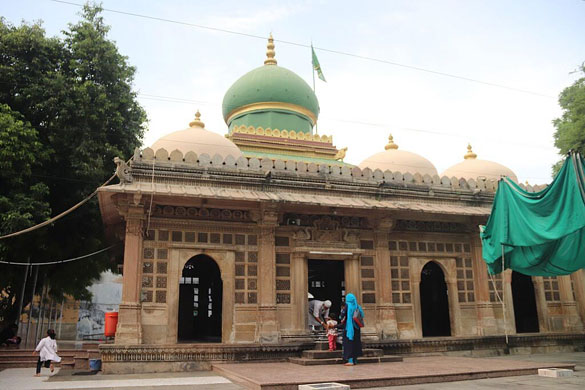
Hazrat Wajihuddin Alvi: Gujarat’s Mujaddid and Torchbearer of Shattariya Wisdom

GUJARAT :

Born in 902 or 910 Hijri, Hazrat Wajihuddin Alvi, son of Qazi Syed Nasrullah Alvi, belonged to the Hashmi family and Alvi Sadat

Main Points:

1.    A key figure in the ancient Shattariya Silsila, linked to Shaykh Sirajuddin Abdullah Sattar and Hazrat Khwaja Bayazid Bastami, he helped spread Islam in India.

2.    Received direct knowledge from Hazrat Prophet Muhammad (Sallallahu Alaihi Wasallam) in a dream, earning the title Ali Us-Sani for his profound wisdom.

3.    Mastered over 60 Islamic disciplines by age 24, founded Madrasa Alia Alvia, and educated 80,000 students, earning the title of Mufti in Gujarat.

4.    Transformed by Pir-Murshid Khwaja Ghaus Muhammad Gwaliori, he became a Wali-e-Kamil and Mujaddid, with his Gujarat Astana inspiring generations.


Hazrat Wajihuddin Alvi, a revered figure in the annals of Islamic history in India, is celebrated as a towering spiritual and scholarly personality. Known as the Mujaddid, Qutub, and Wali-e-Kamil, his life is a testament to unparalleled devotion, intellectual brilliance, and spiritual excellence. His contributions to the propagation of Islamic knowledge and the Silsila-e-Shattariya have left an indelible mark on the subcontinent’s religious landscape. This article delves into his life, lineage, spiritual journey, and enduring legacy.

According to historical traditions, Hazrat Wajihuddin Alvi was born either in 902 Hijri or 910 Hijri, a matter of scholarly debate. His father, Syed Nasrullah Alvi, served as the Qazi of Gujarat, a prestigious position that underscored the family’s deep-rooted connection to Islamic scholarship and jurisprudence. His name, Wajihuddin, meaning “leader of the religion-serving community,” aptly reflected his destined role as a guiding light for the faithful.

Hazrat Wajihuddin belonged to the illustrious Hashmi family, tracing his lineage to the noble Alvi Sadat. Despite his exalted ancestry, he maintained remarkable humility, never publicly revealing his status as an Alvi Sadat. This modesty only enhanced his stature as a true servant of Allah, whose life was dedicated to the pursuit of divine truth and the upliftment of humanity.

Hazrat Wajihuddin Alvi is intrinsically linked to the Silsila-e-Shattariya, a lesser-known but profoundly significant Sufi order in India. While the general populace is more familiar with the four prominent Sufi Silsilas, Chishtiya, Qadriya, Naqshbandiya, and Soharwardiya, the Shattariya Silsila boasts a rich and ancient heritage. Known as Bistamia in some regions, Ishqiya in Iran, and Shattariya in India, this Silsila traces its origins to Shaykh Sirajuddin Abdullah Sattar, a descendant of Shaykh Umar Sahabuddin Sohrawardy and a caliph of the revered Sultanul Arifeen, Hazrat Khwaja Bayazid Bastami.

Shaykh Sirajuddin Abdullah Sattar, the founder of the Shattariya silsila, arrived in India with a mission to spread the message of Islam. Known for playing the Nakkara (a traditional drum), he would attract crowds with its captivating sound and invite them to seek Allah. His powerful call, “Come, if someone is seeking to meet Allah, let me introduce him to Allah,” resonated deeply, drawing countless souls to the path of righteousness. As the son of Shaykh Sahabuddin Sohrawardy and a caliph of Hazrat Bayazid Bustami, Shaykh Sirajuddin’s spiritual stature was immense, and his legacy laid the foundation for the Shattariya silsila’s prominence in India.

The Shattariya Silsila, alongside Qadriya, Chishtiya, Naqshbandiya, Soharwardiya, and Owaisiya, played a pivotal role in disseminating Islam across the Indian subcontinent. These six Silsilas, through the sacrifices and efforts of their saints, transformed the spiritual landscape of the region, guiding millions towards the light of faith.

Hazrat Wajihuddin Alvi’s spiritual eminence earned him the title of Ali Us-Sani (the second Ali), a reference to the unparalleled status of Hazrat Ali Karamallahu Wajhul Kareem. This title was not merely honorific but a reflection of the divine knowledge bestowed upon him. Like Hazrat Ali, who received direct knowledge from the Hazrat Prophet Muhammad (Sallallahu Alaihi Wasallam), Hazrat Wajihuddin was blessed with divine wisdom in a remarkable incident.

During his education, when his teacher Allama Ilamuddin passed away, Hazrat Wajihuddin was consumed by worry about the knowledge he had yet to acquire. One night, the Hazrat Prophet Muhammad (Sallallahu Alaihi Wasallam) appeared in his dream, addressing him as “Nawase Wajihuddin” and assuring him, “Don’t worry, we have given you the knowledge of everything that even you and your teachers did not know.” The Prophet handed him a paper, instructing him to refer to it when questioned about his knowledge. This divine encounter transformed Hazrat Wajihuddin into an ocean of wisdom, earning him the epithet Ali Us-Sani for receiving knowledge directly from the Hazrat Prophet, much like Hazrat Ali.

Hazrat Wajihuddin’s family hailed from Yemen, a land the Hazrat Prophet Muhammad (Sallallahu Alaihi Wasallam) described as a “city of angels.” His ancestor, Hazrat Syed Bahauddin, migrated from Yemen to Mecca, where he preached Islam before receiving divine guidance to settle in India. This marked the beginning of the family’s illustrious journey in the subcontinent.

His grandfather, a Qazi in the court, exemplified the family’s tradition of combining religious scholarship with judicial authority. This legacy continued through his father, Syed Nasrullah Alvi, and his forefathers, Syed Atauddin Alvi and Syed Imamuddin Alvi, who served as imams and Qazis. The family’s intellectual and spiritual influence was profound, shaping Hazrat Wajihuddin’s upbringing and his commitment to the Shariah.

Hazrat Wajihuddin’s education began at the tender age of four with the Bismillah ceremony, marking the start of his formal learning. By the age of 19, he had memorized the Quran Majeed, a feat that underscored his prodigious intellect. Raised in a Persian-speaking household, he pursued higher education under the guidance of his uncle, Hazrat Allama Syed Shamshuddin Ahmed, and other family scholars. By the age of 24, he had mastered over 60 disciplines of Islamic knowledge, earning him widespread acclaim.

Recognizing his scholarly prowess, the ulema of Gujarat conferred upon him the title of Mufti at the remarkably young age of 24. This was no small achievement, as a Mufti in those times was a figure of immense respect, commanding authority over religious rulings across the region. Hazrat Wajihuddin established the Madrasa Alia Alvia on his own land, where he educated over 80,000 students, transforming them into Alims and hafiz of the Quran. His dedication to teaching reflected the Hazrat Prophet’s saying, “The best of you is the one who learns the Quran and teaches it to others.”

Remarkably, Hazrat Wajihuddin left the madrasa only four times in his lifetime, such was his commitment to education. His institution attracted scholars and students from far-off places like Lahore, cementing his reputation as a beacon of knowledge.

No account of a Wali-e-Kamil is complete without acknowledging the pivotal role of a Pir-Murshid (spiritual guide). For Hazrat Wajihuddin, this guide was Hazrat Khwaja Ghaus Muhammad Gwaliori Sattari. In 948 Hijri, when controversy arose over Khwaja Ghaus’s work Merajnama, with Hazrat Shaikh Ali Muttaqi declaring it un-Islamic, Hazrat Wajihuddin intervened. He met Khwaja Ghaus in Gujarat, spending an entire night in his company. This meeting was transformative, as Hazrat Wajihuddin later remarked that without it, he would not have truly become a Muslim. This underscores the profound impact of a spiritual guide, even on a scholar of his stature.

When presented with a fatwa against Khwaja Ghaus, Hazrat Wajihuddin tore it apart, declaring, “We are the people of the past, and they are Arabs.” His decisive action nullified the controversy, earning him the title of Mujaddid from Shaikh Ali Muttaqi. This incident highlighted his ability to balance Shariah with spiritual insight, a hallmark of his legacy.

Hazrat Wajihuddin’s piety was evident from childhood. As an infant, he refused to drink his mother’s milk unless she performed wudu, a testament to his innate spiritual purity. This incident earned him immense respect within his family, who recognized his extraordinary connection with Allah.

His adherence to Shariah was uncompromising. For two months, he abstained from eating home-cooked food, fearing that his father’s position as Qazi might lead to inadvertently consuming haram provisions. Instead, he sustained himself on grass and leaves from the forest. When his father inquired about his weakened state, Hazrat Wajihuddin explained his concerns, prompting his father to reassure him of the family’s commitment to halal. This incident reflects his meticulous observance of Shariah and his fear of Allah.

In his later years, weakened by age, Hazrat Wajihuddin considered retiring from teaching Hadith. However, the Hazrat Prophet (Sallallahu Alaihi Wasallam) appeared in a dream, saying, “O Nawase, when you recite Hadith, we sit and listen to you.” Moved to tears, he continued teaching with renewed devotion until his passing. His death sent shockwaves through Gujarat, with millions attending his funeral, yearning to carry the bier of the Naib-e-Gaus-e-Azam and Aashiq-e-Rasool.

Hazrat Wajihuddin Alvi’s legacy endures through his contributions to Islamic scholarship and the Shattariya Silsila. His Astana in Gujarat remains a source of spiritual strength, and his teachings continue to inspire generations. Muhaddis Abdul Haq Dehlvi noted Hazrat Wajihuddin was a Wali-e-Kamil who lived a life of rigorous spiritual discipline. Mulla Abdul Qadir Badayuni wrote that no book was beyond his knowledge, and his prayers could bring divine favour to any endeavour.

In summary, Hazrat Wajihuddin Alvi was a shining light of the Hashmi family, a Mujaddid, Qutub, and Wali-e-Kamil whose life exemplified the perfect blend of knowledge, piety, and spirituality. His contributions to Islamic education, his role in the Shattariya Silsila, and his unwavering devotion to Allah and Hazrat Prophet (Sallallahu Alaihi Wasallam) ensure that his legacy will remain alive until the end of time.

—–

A regular contributor to New Age Islam, Sahil Razvi is a research scholar specialising in Sufism and Islamic History. He is an alumnus of Jamia Millia Islamia.

source: http://www.newageislam.com / New Age Islam / Home> Islamic Perspectives / by Sahil Razvi / July 17th, 2025
Muhammad, the Prophet of Islam: The Pen of a Soldier, the Story of the Prophet ﷺ

xxxx

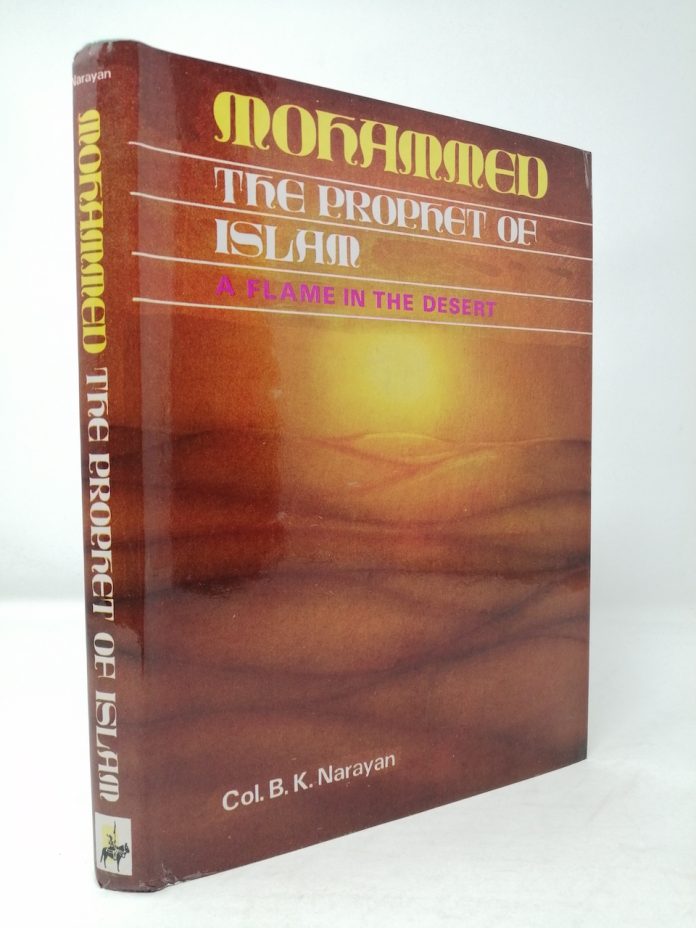
Muhammad: The Prophet of Islam, authored by Colonel B.K. Narayan

In 1978, a rare and remarkable book was published in Delhi – Muhammad: The Prophet of Islam, authored by Colonel B.K. Narayan, a retired officer of the Indian Army and former military attaché at the Indian Embassy. Known for his distinguished service during the 1971-72 India-Pakistan war as an infantry commander, he was also a man of deep intellectual curiosity and cultural sensitivity. Muhammad: The Prophet of Islam, published by Lancers Publishers, Delhi, stands as one of his most significant contributions beyond his military career – a comprehensive English-language biography of the Prophet Muhammad ﷺ.

More than a mere historical account, the book presents a deep and insightful reflection on the life and legacy of the Prophet Muhammad ﷺ, highlighting the enduring relevance of his moral and spiritual example.

Colonel Narayan’s profound admiration for the Prophet’s ﷺ character and achievements moved him to write a full-length English-language biography – a rare undertaking for a non-Muslim author, particularly one from a military background. His unique perspective offers readers a fresh and unbiased narrative rooted in historical context, moral analysis, and intellectual sincerity. His work stands as a bridge between cultures, illuminating the universal values embodied by the Prophet ﷺ.

In addition to this work, Colonel Narayan authored several other important books on the Arab world and geopolitical events of his time, including: The Fourth Arab-Israeli War (1974), Anwar al-Sadat: Man with a Mission (1977), Lessons and Consequences of the October War (1977), General J.N. Chaudhry: An Autobiography (1978, as narrated to him).

Spanning 205 pages, Muhammad: The Prophet of Islam is thoughtfully organised into three distinct sections, each offering a deeper understanding of the Prophet’s ﷺ life, message, and lasting influence.

Section One explores the life and mission of the Prophet Muhammad ﷺ, presented across 12 well-structured chapters. Colonel Narayan opens with an insightful overview of the socio-political conditions in Arabia before the Prophet’s birth. The narrative then follows key events and milestones throughout the Prophet’s life, offering a clear and compelling account of his journey and legacy. Topics covered include:

  • The state of Arabia before the advent of Islam,
  • The commercial significance of Makkah,
  • The Prophet’s ﷺbirth, early life, and journey to Syria,
  • His marriage to Hazrat Khadijah (RA),
  • The commencement of Prophethood, and
  • The Hijrah (migration) to Madinah.

Colonel Narayan meticulously discusses Key milestones such as the first revelation, the Prophet’s ﷺ interactions with Jews, Christians, polytheists, and hypocrites following his migration. The section also covers major expeditions and battles, the opposition from Jewish tribes, and strategic responses led by the Prophet ﷺ. Further discussions include the Kaaba’s history, types of revelation, and miracles of the Prophet ﷺ by the will of Allah. The book also examines the Prophet’s ﷺ battles, diplomacy, and social reforms.

This section concludes with the passing (Wafat) of the Prophet Muhammad ﷺ. A unique feature of this section is its inclusion of illustrative materials – historical photographs and maps, such as Jeddah Airport, the Black Stone (Hajr-e-Aswad), Bab-e- Kaaba, the mountainous terrain surrounding Makkah, and pilgrims clothed in the traditional white garments of Ihram. These visuals not only enhance the reader’s understanding but also offer a deeper emotional connection to the sacred geography of Islam. This part of the book extends from page 1 to 146.

Part Two focuses on the Sayings of the Prophet – the Hadith. Spanning pages 149 to 174, this section features English translations of over 100 carefully selected Hadiths, offering insight into the Prophet’s guidance across various aspects of life. The Hadiths are thoughtfully arranged under a wide range of themes, including belief and worship, justice and business ethics, the management of anger, responses to illness and poverty, the importance of guarding one’s tongue, the virtues of patience, mercy, repentance, and the sanctity of human life. Together, they reflect the profound moral and spiritual wisdom that continues to inspire and guide countless lives. Colonel Narayan expresses deep admiration for the enduring relevance and lucidity of these teachings, noting their ability to convey profound truths with striking simplicity. He writes:

“They are capsules of wisdom, simple, direct, and effective.”

Part Three centres on the noble wives and esteemed companions of the Prophet Muhammad ﷺ. The final section introduces the 11 noble wives of the Prophet Muhammad ﷺ – Khadijah, Aisha, Hafsa, Zainab, Zainab bint Jahsh, Safiyyah, Umm Habiba, Juwayriya, Rayhana, Maymunah, and Maria (may Allah be pleased with them all). The author praises their outstanding virtues – piety, sincerity, and loyalty – and he underscores the profound influence each of these noble women had on shaping the moral, spiritual, and social foundations of the early Islamic community. The author emphasises the social and moral significance of these marriages. He writes:

“The text reveals the circumstances under which these marriages were contracted and the benefits which accrued to society through them. All the wives of the Prophet made a distinct impact on society, by virtue of their piety, devotion, and dedication to the Prophet and the faith.”

In addition, this section offers concise biographies of the four Rightly Guided Caliphs – Abu Bakr, Umar, Uthman, and Ali (may Allah be pleased with them all) – highlighting their pivotal roles and contributions in the development of the early Muslim community.

A standout feature of this book is the author’s consistent focus on the humanistic portrayal of the Prophet Muhammad’s ﷺ humanity. Narayan emphasises that the Prophet ﷺ never laid claim to supernatural powers, yet through his character, wisdom, and unwavering commitment to justice, he transformed a fragmented, tribal society into a cohesive and ethically grounded civilization. He observes:

“To judge the greatness of his actions appropriately, one has to transport oneself to those days, and judge what Meccan society was before him and what it became after him.”

Commenting on the Prophet’s eloquence, Narayan writes:

“The Prophet was brief in his conversation and every word which he used had a specific purpose. Nothing could be added to his speech and nothing could be deleted from it.”

Colonel Narayan also notes the significance of the Prophet’s ﷺ oratory in an age when eloquence was revered. Drawing parallels with earlier prophets, he writes that while prophet Moses was given miraculous powers suited to his time; Jesus was given healing abilities, the Prophet Muhammad ﷺ, who lived in an age of eloquence and oratory, was gifted with unparalleled eloquence – a form of divine expression perfectly attuned to his time.

The book ends with a well-curated bibliography, citing sources such as Majmu‘ah Sirat al-Rasul by Ahmad Baraniq, Mishkat al-MasabihMohammedanism by  H.A.R. Gibb, and Muhammad by Maxime Rodinson.

What distinguishes this book from many other Seerahs (biographies of the Prophet) is its remarkably balanced tone – reverent yet scholarly, empathetic yet analytical. At the same time, his deep respect for the Prophet Muhammad ﷺ and the Islamic worldview imbues the narrative with sincerity and insight.

Colonel B.K. Narayan’s Muhammad: The Prophet of Islam stands as an exceptional work – one that bridges faith, history, and scholarship. It offers a rich, respectful portrayal of the Prophet’s ﷺ life. In his portrayal of the Prophet’s ﷺ virtues – honesty, compassion, eloquence, restraint, and humility – the author invites readers of all backgrounds to reflect on timeless values. His unbiased presentation serves as a bridge between cultures, beliefs, and histories.

At a time when interfaith dialogue is more important than ever, Muhammad: The Prophet of Islam serves as a remarkable testament to respectful dialogue across religious and cultural lines. Written by a decorated Hindu military officer, the book represents not only a literary and historical contribution but also a moral undertaking – one that resonates far beyond its pages.

For those seeking a thoughtful, accessible, and historically rich account of the life of Prophet Muhammad ﷺ, Colonel B.K. Narayan’s biography remains a valuable and rare contribution.

source: www.radiancenews.com / Radiance News / Home> Features> Focus / by Dr Syed Wahauddinj Hashmi, Hyderabad / October 31st, 2025

Kashmiri Man Who Saved BJP Worker’s Family in Pahalgam Attack Honoured in Chhattisgarh

JAMMU & KASHMIR :

Raipur:

Kashmiri local guide Nazakat Ahmed Shah, who saved the family of a BJP youth worker during the April Pahalgam terror attack, received a warm welcome in Chhattisgarh nearly six months after the incident. The attack in South Kashmir had left 26 people dead and several injured.

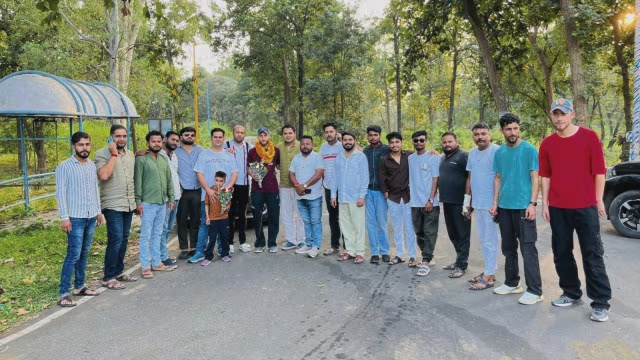
Shah, who has been visiting Chhattisgarh for over three decades to sell clothes, became a hero after rescuing the family of BJP youth wing worker Arvind Agrawal. During his first visit to the state since the attack, Shah was felicitated by Agrawal and around 50 residents in Chirmiri, Manendragarh-Chirmiri-Bharatpur district. The group expressed their gratitude with garlands, flowers, and a shared lunch.

Agrawal recalled that Shah’s quick thinking saved his wife and four-year-old daughter. “When the firing began, he asked us to lie down and shielded my daughter and my friend’s son. He took them to safety and returned to rescue my wife,” Agrawal said.

Speaking to reporters after the ceremony, Shah said he felt emotional meeting the families he had saved. “Chhattisgarh feels like home to us. We come here for three months every year for business, and people here have always treated us like family,” he said.

Shah’s act of courage has been widely praised across communities, highlighting the enduring human bonds that transcend politics and geography.

source: www.radiancenews.com / Radiance News / Home> Latest News> Reports / by Radiance News Bureau / November 01st, 2025

Dr. Mohammad Manzoor Alam: The Visionary Behind IOS and the Unfulfilled Dream of Empowering India’s Marginalized

Ranipur (Madhubani District), UTTAR PRADESH / DELHI :

SONY DSC

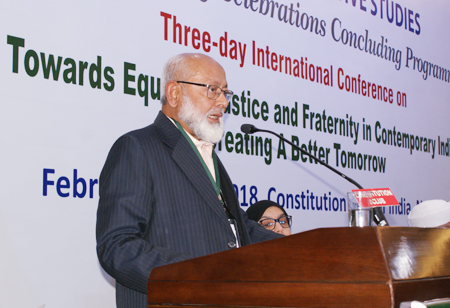
Dr. Mohammad Manzoor Alam, the founder of the Institute of Objective Studies (IOS), stands as one of the most prominent leaders of the Indian Muslim community. Recently, his biography “Dr. Manzoor Alam: Empowering the Marginalized” written by senior multilingual journalist A. U. Asif, was released at the Constitution Club of India in New Delhi. The event was attended by several distinguished personalities from politics, academia, the judiciary, and the media.

The biography reveals many unknown aspects of Dr. Manzoor Alam’s life, his contributions, and his wide national and international connections — from Dr. Manmohan Singh to Ahmed Patel, from cabinet ministers to chief ministers and governors. His close friendships extended to Malaysian Prime Minister Anwar Ibrahim and several prominent personalities across the Gulf Cooperation Council (GCC), including ministers and academicians. Among his international associates were Prof. Omar Hasan Kasule, Secretary General of the International Institute of Islamic Thought (IIIT), USA; Dr. Ahmad Muhammad Ali, the first President of the Islamic Development Bank (IDB); Dr. Ahmed Tutunji, General Secretary of the International Islamic Federation of Student Organizations (IIFSO); and Professor Ismail Raji al-Faruqi, co-founder of IIIT, Dr. Abdullah Al-Maatouq, Chairman of the International Islamic Charity Organization (IICO) Kuwait etc.

The Institute of Objective Studies: A Pioneering Muslim Think Tank

Undoubtedly, the IOS — the first Muslim-run think tank in India — has played an unparalleled role in academic and intellectual engagement. Over the past four decades, it has organized more than 1,230 conferences, seminars, symposia, and workshops on diverse issues affecting Muslims and Indian society at large. It has completed over 410 research projects and produced around 405 publications focusing on socio-economic, educational, and cultural challenges.

Through its data-based research, collection, and presentation, IOS provided valuable insights into the conditions of marginalized communities. The institution succeeded in building a network of more than 500 research scholars, social scientists, academicians, judges, lawyers, and politicians. Its studies and deliberations form a crucial body of work on the socio-economic conditions of Indian Muslims.

However, despite its achievements, the IOS has failed to evolve a sustainable mechanism for implementing the findings of its research. After nearly four decades of existence, the impact of its ideas on the ground remains negligible. The think tank, while rich in intellect and intent, fell short of translating its research into practical policies for the empowerment of marginalized communities. When one examines the ground realities, the absence of tangible transformation makes this collective effort appear more like an academic exercise than a movement for social change.

The Promise and the Reality

The Institute of Objective Studies was established in 1986 with the vision of empowering the 200 million-strong Indian Muslim community — a group that, even today, lags behind many other marginalized sections, including Dalits, on multiple socio-economic parameters. While IOS produced a wealth of research and data, it failed to create models of empowerment or tangible change on the ground.

It would be unfair to assume that Dr. Manzoor Alam’s vision was limited to research and conferences alone. He unsuccessfully attempted to extend his work into education, media, and healthcare. Unfortunately, many of those initiatives remained unrealized.

Dr. Alam had conceived numerous projects, including a dream university and  television channels Al-Hind and  Falak TV — both designed to serve as platforms for education and social awareness. He presented these projects at several events in India and abroad, yet they never materialized beyond the planning stage. Why these ideas remained confined to files is a question that only Dr. Alam himself can answer.

Dr. Manzoor Alam’s Tryst with Education and Development

In the 1990s, Dr. Alam invited Mohammad Yunus Saleem, then Governor of Bihar, to lay the foundation stone of an educational institution in his native village, Ranipur, in Madhubani district. Decades later, that very school continues to function from a thatched hut.

Similarly, he invited another Governor, Akhlaqur Rahman Kidwai, to lay the foundation of a hospital in the same village. However, there is no trace of that foundation today, and the land has reverted to agriculture. It is said that even a few delegations of Arab dignitaries visited the site to explore funding possibilities for these projects. Yet, despite such visits and promises, Ranipur remains a mirror reflecting the unfulfilled dreams of Dr. Alam’s vision for grassroots empowerment.

Akhlaq Ur Rehman Kidwai, then Governor of Bihar, during his visit to Ranipur — the native village of Dr. Manzoor Alam — for the foundation stone-laying ceremony of a school.

The Unfulfilled Dream of an Islamic University in India

Following the model of the International Islamic University Malaysia (IIUM), the International Islamic University Islamabad, and the International Islamic University Dhaka, it is said that funds were once earmarked for a similar university in India. The responsibility for establishing it reportedly rested with Dr. Manzoor Alam. A 25 acres  of land were even purchased in Palwal district, Haryana, under the Taawun Trust which was formed in 1980s for the same purpose. However, the project never moved forward, and its current status remains unknown.

Under the same trust, a clinic in Zakir Nagar, New Delhi, was inaugurated by the then Chief Minister, Sheila Dikshit. But today, little remains of that initiative — its fate is known only to its former manager, Mohammad Alam, son of Dr Manzoor Alam. Likewise, a valuable piece of land (D-16 worth over 10 crores) in Abul Fazal Enclave, earmarked for the Taawun Trust office, was later developed into a five-storey building. The ownership and purpose of this property are known only to Dr. Alam and other trustees.

Other Institutions and Initiatives

Along with the late Qazi Mujahidul Islam Qasmi, Dr. Manzoor Alam co-founded several organizations, including the All India Milli Council, Islamic Fiqh Academy (IFA), Qazi Publications, Universal Peace Foundation (UPF), Featured and News Analysis (FANA), United Mass Media Association (UMMA), Indo-Arab Economic Cooperation Forum, and the Taawun Trust. Except for IOS and IFA, most of these institutions are now nearly defunct.

In earlier years, FANA and UMMA operated from 166 Zakir Bagh but were later shifted to the IFA premises at Zakir Nagar. The present status of the Zakir Bagh flat remains unclear. Similarly, behind the IOS office once stood the premises of the Universal Peace Foundation (UPF), which was closed many years ago.

A Malaysian organization once sponsored Bharat Offset Press, located at 2035 Mumtaz Building, Gali Kasim Jan, Ballimaran, Delhi. The press was set up under Dr. Manzoor Alam’s patronage to provide financial support to widows and orphans. One can only hope it continues to serve that noble purpose today.

Interestingly, most of the important publications of the Institute of Objective Studies are now being published and marketed by Genuine Publications and Media Pvt. Ltd., where Dr. Alam’s younger son, Ibrahim Alam, serves as the Executive Director.

Now, his elder son Mohammad Alam has taken over as the General Secretary of the IOS. It is hoped that the unfulfilled dreams of Dr. Manzoor Alam will be realized and a university will be established on the proposed land in Palwal

The Unasked Questions

A serious question arises: Why has no one from among Dr. Manzoor Alam’s large circle of associates — including intellectuals, professors, writers, and bureaucrats — ever raised concerns or sought accountability? Why has there been such silence around the unrealized projects and abandoned initiatives?

Dr. Alam is a man of extraordinary connections and resources, with access to national and international leaders, institutions, and philanthropists. Yet, despite such privilege and goodwill, he could not establish even a modest school or clinic in his own native village — a village that once saw two governors visit to inaugurate his projects.

Dr. Manzoor Alam’s journey represents a paradox: a leader of vision and intellect who created one of India’s most influential Muslim think tanks, yet whose dreams for practical empowerment of the marginalized remain largely unrealized. His ideas, no doubt, inspired a generation of scholars and activists. But without concrete implementation, the towering edifice of research and conferences risks standing as a monument to missed opportunities.

source: http://www.muslimmirror.com / Muslim Mirror / Home> Exclusive Reports / by Syed Zubair Ahmad / October 30th, 2025

USTM Chancellor Mahbubul Hoque Named Among India’s Top 25 Inspiring Education Leaders

Shillong, MEGHALAYA :

Shillong/New Delhi: 

The Academic Insights Magazine, a prominent Indian monthly publication, has selected Mahbubul Hoque, Honourable Chancellor of the University of Science and Technology Meghalaya (USTM), as one of India’s 25 Most Inspiring Education Leaders.

This recognition celebrates the transformative changes Chancellor Hoque has brought to the educational landscape of North East India while empowering youth across the region and beyond. Responding to the honour, Chancellor Hoque said, “I deeply appreciate The Academic Insight’s honourable recognition. I am a great admirer of this monthly powerhouse. My motto to move forward positively in a competitive world is simple — keep trying, don’t look back; if you pick up ten things and only four work, move forward with them, and success will eventually materialise.”

Over the past 23 years, Chancellor Mahbubul Hoque has built a robust educational ecosystem under the Education Research and Development Foundation (ERDF), establishing fourteen institutions that span from kindergarten to PhD levels. What began with just four students has now grown to over 10,000 learners, making ERDF one of the most impactful educational networks in the region.

The honour goes beyond individual achievement — it signifies the North East’s growing prominence on India’s national education map and stands as a testament to Hoque’s vision of perseverance, inclusivity, and people-centric leadership.

The University of Science and Technology Meghalaya, the first state private university dedicated to science and technology in the North East, earned an ‘A’ Grade accreditation from NAAC in its very first assessment cycle in 2021. It continues to hold a top position nationally, being the only private university from the North East to feature in the NIRF Rankings for four consecutive years, including 2025.

The Academic Insights, launched over a decade ago, today guides more than 450,000 readers monthly through the evolving landscape of school and higher education across India.

source: http://www.muslimmirror.com / Muslim Mirror / Home> Education> Positive Story / by Muslim Mirror Desk / November 02nd, 2025

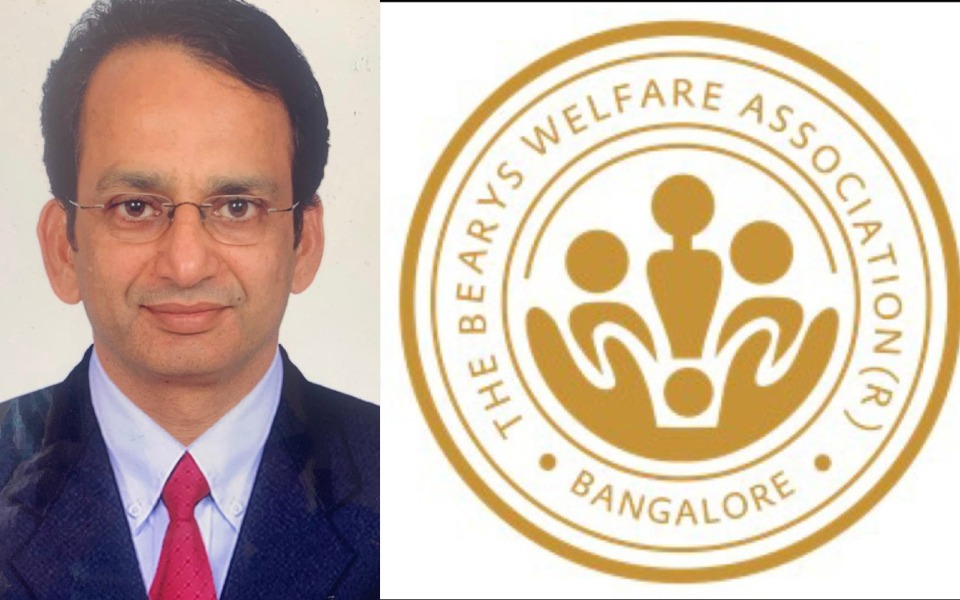
Shamsudhin Adoor elected president of Bearys Welfare Association Bangalore

Bengaluru, KARNATAKA :

Bengaluru: 

The Bearys Welfare Association, Bangalore, has announced its newly elected office bearers for the upcoming term, following a unanimous selection process. The appointments aim to strengthen the association’s ongoing welfare initiatives and community engagement activities.

Shamsudhin Adoor has been unanimously selected as the President, while Umar Haji B.M will serve as the Vice President. Waaheid Kayrkhan has been appointed as the General Secretary, with Mohammed Tasleel taking charge as the Joint Secretary. Mohammed Ashraf Kuchoor will serve as the Treasurer.

Ten individuals have been named as Executive Committee Members. They are: Ahmed Bava Bajal, Yusuf Perody, B.M. Haneef, Yusuf Mani, Abdul Khader Mustaq, Athuru Chaiyabba, Ashraf Kodi, Tanveer Ahmed, Mohammed Haneif, and Junaid P.K. The outgoing secretary, Mohammed Shareef T.K, will continue to serve as the Ex officio member of the committee.

Additionally, four senior members have been co-opted into the Executive Committee. These include G.A. Bawa, Ibrahim Goonadka, Siddiq Beary, and Hamzathullah Kuvenda.

In a structural update, the association has also incorporated a Governing Council into its bylaws. This council is intended to offer guidance and ensure the smooth functioning of the association. The members of the newly formed Governing Council are Syed Mohamed Beary, B.M. Farookh, Umar Teekay, Iqbal Ahmed, and Dr. Maqsood Ahmed.

source: http://www.english.varthabharati.in / Vartha Bharati / Home> Karnataka / by Vartha Bharati / August 03rd, 2025

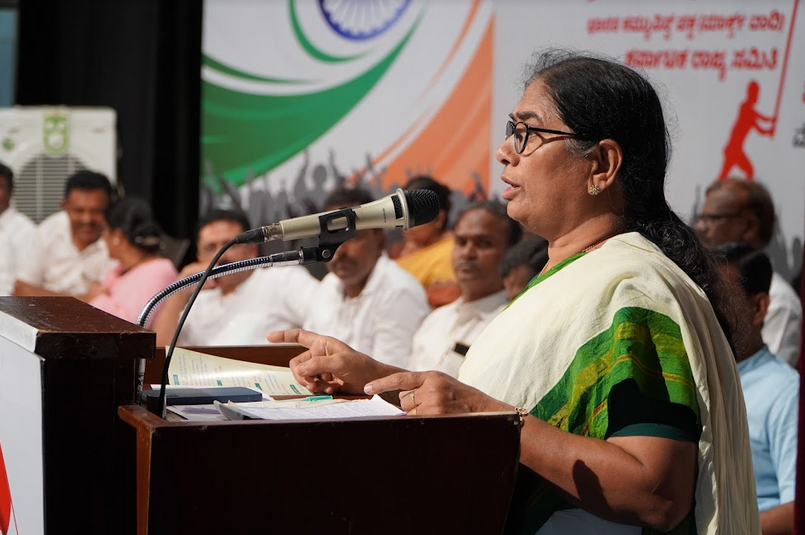
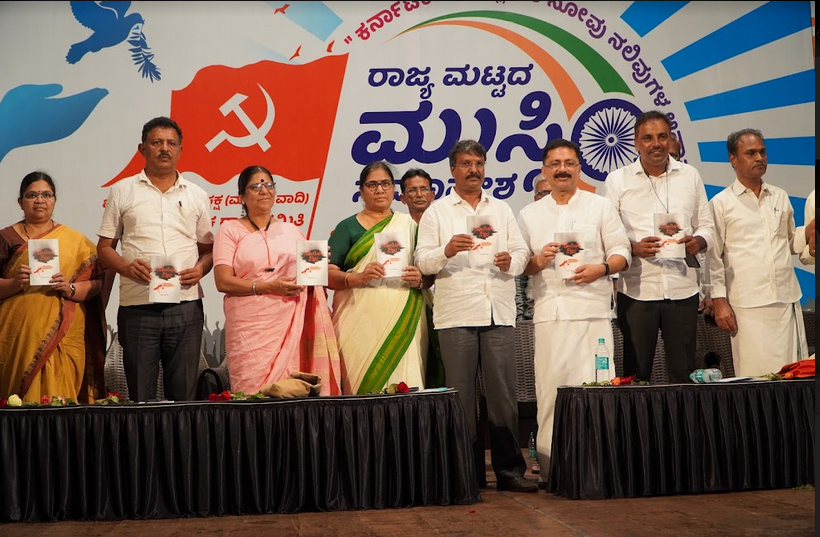
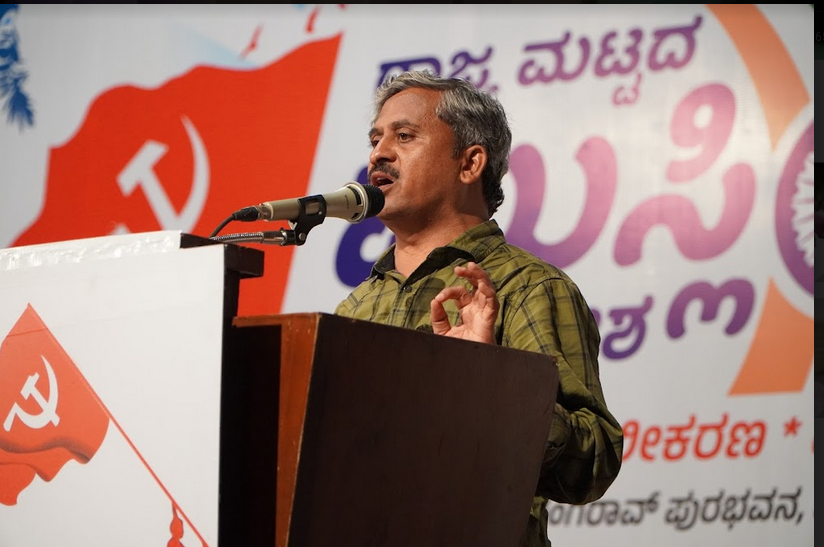
CPI(M) Hosts Conference to Address Socioeconomic Issues Faced by Karnataka Muslims

KERALA / Mangaluru, KARNATAKA :

The speakers addressed the marginalisation of Muslims along with self-criticism on the mistakes made by the community.

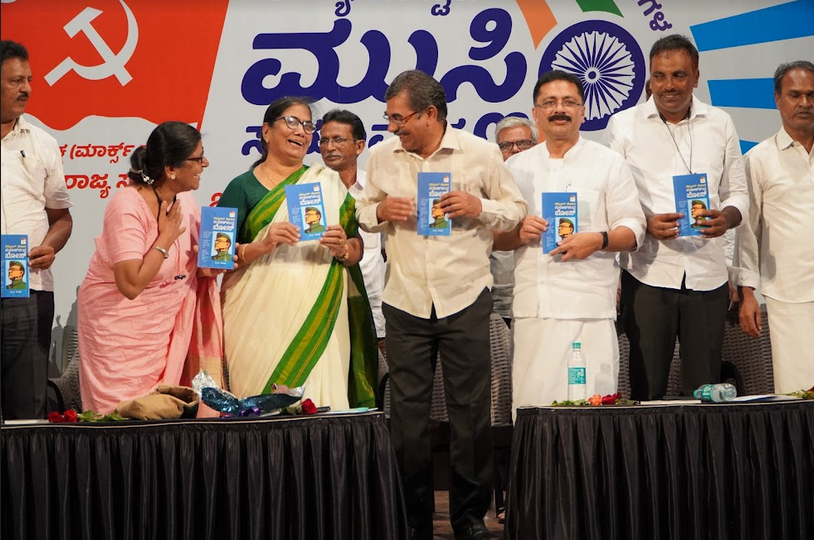
Starting May 31, 2022, CPI(M) hosted a 2-day conference on the issues faced by Muslims. The program was held in Mangaluru, Karnataka and saw over a 1000 delegates in attendance. The chief guest was KT Jaleel, former Minister for Higher Education in Kerala. Pictures by Nikhil Cariappa.

On May 31, the Communist Party of India (Marxist) hosted a two-day conference in Mangaluru on the issues faced by the Muslim community in Karnataka. The event was attended by more than one thousand Muslim delegates from across the state. The chief guest at the event was KT Jaleel, former Minister of Higher Education and member of the Legislative Assembly in Kerala. Other notable guests included Dr K Shareefa, a poet; Mavalli Shankar, state convenor of Dalit Sangarsha Samiti (Ambedkar Vada); BM Haneef, senior journalist; B Peer Basha and K Neela, noted writers; several teachers and activists. In the audience was Nabisab Killedar, the fruit vendor whose cart was vandalised by members of a Hindu extremist group in Dharwad.

KT Jaleel spoke about India’s history. He said, “The leader of the first war of independence was none other than Bahadur Shah Zafar. Until the moment he was exiled to Burma, he fought for the country’s freedom. After independence, Jawaharlal Nehru didn’t allow India to turn into a religious state. For instance, when he was inaugurating the Bhakra Nangal dam, he proclaimed that these dams were the temples of modern India because they were feeding crores of farmers. Subsequent governments also worked to keep India a secular state. Even Atal Bihari Vajpayee condemned the Gujarat riots in Parliament. But the present BJP (Bharatiya Janata Party) government is relentlessly oppressing minorities on the basis of religion, caste and even mode of dress.”

Writer K Shareefa also recalled incidents from the past. She said, “Muslims have shown remarkable patience in the face of persecution. However, religious organisations have not opposed anti-women ways. Oppression of women is happening within the community as well as from outside the community.” She continued, “Thirty years back, there was an incident in Bijapur. This is the story of Najma. She had gone to the cinema to watch a film. Men in the community tried to stop her from entering and decided that watching movies would corrupt women. The name of the film was ‘Khuda Gawah’. When she was stopped from going to the movie, she protested against it, saying that it was her right to watch it. Infuriated, the men picked up swords and threatened to kill her. She ran into a police station for protection. But the man came there and threatened to burn down the station. These were Muslim fundamentalists. We went there and ensured police protection for Najma. There are violent acts within our community as well. That too we have to confront.”

Some of the speakers referenced to the Sachar committee report, which notes how Muslims are in a worse economic state than even Dalits in various regions of the country. It was noted that Muslims require state assistance, and instead they receive state oppression. Muneer Katipalla, CPI(M) state committee member, noted, “Representation of Muslims is abysmal in education, government jobs, judiciary and legislature. For example, yesterday, a list of IAS and IPS officers was released. Out of 675 successful candidates, there were only 28 Muslims. A community which makes up 15% of the country has only 3% representation.”

Senior journalist BM Haneef introspected on the mistakes made by Muslims in failing to acknowledge fundamentalism within the community, especially during the Hijab row. He said, “By protesting for the hijab in educational institutions, we (muslims) gave the Sangh Parivar what they wanted, on a platter.”

He also spoke about the diversity within the Muslim community, which is largely ignored. He said, “All communities should get equal representation in every state. Among muslims in Karnataka, various commissions have identified at least 17 sub groups based on profession. It is known that Dalits are made to clean toilets. However, if you go to Bijapur, you will find Muslim women cleaning toilets. That community is called Band. There are many other communities – Chaparband, Darvesh, Vakil, Nalband and more. These are the oppressed groups within an already oppressed community. They can be considered as castes. They are in need of help and facilities from the government. However, the government has created development commissions for Brahmins and other dominant castes.”

The most fiery speech was arguably delivered by writer K Neela. She acknowledged growing communalism among the minorities, however, she also warned that one should not equate it to the danger of majoritarian communalism. She said, “Everybody knows how the hijab issue in Udupi became so big. We know which organisation (referring to PFI) made it so big. Similarly, where the BJP is likely to lose, which party goes there to contest? Doesn’t AIMIM contest there? The threats of these organisations cannot be compared to the communalisation of the majority. However, communalisation of the minorities cannot liberate us. This message has to be taken to the people. During the NRC, CAA protests, when you felt the ruling class was conspiring to take away your voting rights and remove your citizenship, you allowed women to come out and protest in large numbers. Once that issue came to an end, you sent them back to the kitchen. This is not going to bring any change or liberation for us.”

The program was concluded by songs and dances performanced by young boys of the beary Muslim community. The songs were sung in Kannada and Beary languages. Their songs were in praise of the nation as well as the almighty.

On Day two of the conference, a resolution was passed demanding that the government allocate funds in the budget for education, housing and social welfare to Muslims, in proportion to their population.

source: http://www.newsclick.in / NewsClick / Home> India> Politics / by Nikhil Cariappa / June 02nd, 2022

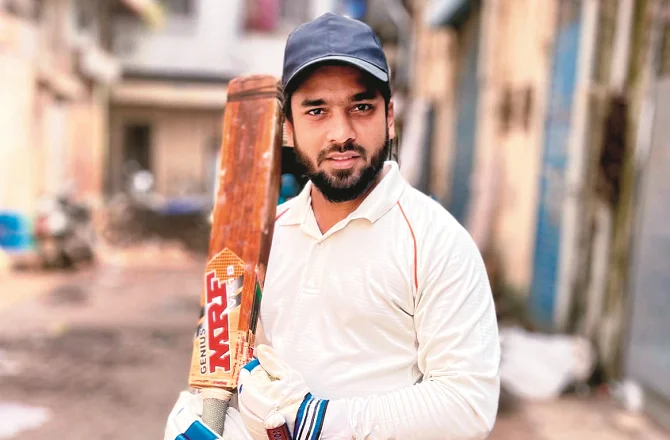
Mumbai Cricketer Sahel Hashmi Selected for International Para Event in Sri Lanka

Mumbai, MAHARASHTRA :

Turning pain into purpose: The son of an auto rickshaw driver, Sahel Hashmi, now a chemistry lecturer and researcher, proves that courage and hard work can defeat adversity

Mumbai :

Life’s challenges may stop many, but those with courage never give up. Sahel Hashmi, known officially as Shahla Hashmi in government records, has proved this through his remarkable journey from injury to international recognition.

Selected to represent India in the upcoming International Para Cricket Tournament in Sri Lanka, Sahel’s story is one of extraordinary willpower, faith, and hard work. Born on 19 September 1996 in Mumbai, Sahel was only nine years old when the devastating floods of 26 July 2005 changed his life forever. During the chaos, an accident left him 45 per cent disabled, affecting his right hand permanently.

Recalling the incident, he said, “I was injured during the floods. My right hand was badly hurt. Two or three operations were done, but the hand never recovered.

“During the surgeries, doctors had to cut all the muscles of my right hand, and skin from my legs and thighs was used for grafting. It was extremely painful. Since childhood, I was right-handed — I used to write and bat with my right hand. But after the injury, I had to learn everything with my left hand. Now I can write with both hands, and my batting style has also changed,” he explained with quiet pride.

Despite his physical challenges, Sahel never let disability define his limits. “I kept playing cricket and continued performing well for my team,” he said. “My family and friends supported me at every step, and their encouragement helped me reach where I am today.”

Sahel’s father drives an auto-rickshaw in Mumbai. As the eldest of three brothers, he has carried his family’s hopes with humility and strength.

A passionate student, Sahel completed his BSc in Chemistry from RJ College, Mumbai, scoring 63.93%, followed by an MSc in Organic Chemistry from Ismail Yusuf College with 63.58% marks.

In 2021, he cleared the SET (State Eligibility Test) and began teaching as an Assistant Professor at Rizvi College, Bandra, while also lecturing in several other Mumbai colleges. Currently, he is pursuing a PhD in Chemistry at Mithibai College, University of Mumbai, with his research focused on “Synthesis of Nanoparticles from Plant Extracts.”

Sahel’s selection for the Sri Lanka Para Cricket Tournament marks a new milestone in his inspiring journey. He will play alongside some of the best para cricketers from across the globe, representing not only India but also the spirit of resilience and determination.

“I still love cricket as much as I did in childhood,” Sahel said. “This opportunity means a lot to me. I want to show that physical challenges can never stop someone who has faith and hard work.”

Sahel’s story serves as a beacon of hope for many who face difficulties in life. His message is simple but powerful: “Difficulties come in life, but those who have courage never stop.”

From surviving one of Mumbai’s worst natural disasters to becoming an international sportsman and scholar, Sahel Hashmi’s journey stands as proof that strength, faith, and family support can turn even pain into purpose.

source: http://www.clarionindia.net / Clarion India / Home> Editor’s Pick> India / by Team Clarion / October 22nd, 2025

Rajyotsava Award for Writer Rahmat Tarikere

Samatala (Chikkamagaluru District) KARNATAKA :

———————————————————————————–

Summary

Chikkamagaluru, Senior litterateur of the district, Rahmat Tarikere, has been awarded the 2025 Rajyotsava Award. Born in 1959 in Samatala, Chikkamagaluru district, Rahmat Tarikere did his primary education in Samatala, Tarikere, Shivamogga, and Mysore.

————————————————————————————-

Kannada Prabha News, Chikkamagaluru

Senior writer of the district, Rahmat Tarikere, has been awarded the 2025 Rajyotsava Award.

Born in 1959 in Samatala, Chikkamagaluru district, Rahmat Tarikere completed his primary education in Samatala and later studied in Tarikere, Shivamogga, and Mysore.He secured first position in BA and received the Teenamsree Gold Medal, M.A. First rank and 7 gold medals. He pursued a teaching career and worked at Sahyadri and DVS College in Shivamogga, and Kannada Universities in Hampi from around 1984 to 2021.

He also served as a visiting professor at Stanford University, California (2023); and the University of Mysore. He has published several publications including Counterculture, The Path of the Sword, The Bloody Sutaka, Doormat, and Thought Path.

He has written research works on literary criticism, metaphysics, and cultural studies such as Karnataka Sufis, Karnataka Nath Panth, Karnataka Shakta Panth, Karnataka Moharram, Rajdharma, and Karnataka Guru Panth.

Apart from this, Rehmat Tarikere, who is a skilled craftsman in many genres such as Anuva and travelogue, has written Marudhogna Kicchu, Dharmaparikshe, Bahutva Karnataka (Thoughts); Andaman Dream, Kadali Hokku Bande, Jerusalem (Travelogue); Kadatsattu Nadu, Sanasangati, Hasuhokku (Column); With the Worldly Opponents, With the Law-abiding (Interview); Hitalajagattu (Essay); Furnace (Autobiography); Amirbai Karnataka (Biography): Colonial Consciousness and Liberation (Googi Thiango’s ”

For his literary cultivation, from Karnataka Sahitya Akademi, Kendra Sahitya Akademi (2010), GS Shivrudrappa, Hama Nayaka, P. Lankesh, Vasudeva Bhupalam, Sunithishetti, Veechikkaweeraiah, SG Sannaguddaiah, Kukke Subrahmanyashastri, Pradeep, Sandesh, Patil Puttappa, Prof. Karimuddin Memorial Awards.

He has created excellent works of travel in many places. Among them, his travels to Palestine, Turkey, Jordan, Israel, Egypt, Germany, Croatia, Estonia, Netherlands, Italy, Bhutan, Nepal, America, Iraq, Iran, and Saudi Arabia are notable.

————————————————————————

— Box–

I am very happy to have received the award. This award came with the cooperation of everyone, and this honor goes to Tarikere – Rahmat Tarikere

— 30 KCKM 5


source: http://www.kannadaprabha.in / Kannada Prabha / Home> Karnataka News / by Kannada Prabha News Network / October 31st, 2025

Watch a slapstick Hindi comedy

Raichur / Bengaluru, KARNATAKA :

Theatre group Kathputliyan’s latest production is based on a Marathi play

Zafer Mohiuddin

Zafer Mohiuddin, founder of Kathputliyan theatre group, is known for his signature Urdu and Hindi plays. Most plays directed by him deal with serious subjects including the Partition and complicated human relationships.

This time Zafer has directed a Hindi slapstick comedy, Pyaari Padosan. The play was originally written by a Marathi playwright, Suresh Khare. “It deals with the relationship between a husband, wife, and a new neighbour, which leads to misunderstandings and confusion between these characters, when the wife goes to visit her parents,” says Zafer. “We chose this play as it lends itself to comic situations.”

The architect-turned-playwright and director says, “I had not done a comedy for 20 years. This time, I decided to come up with a rib-tickler.”

The director has been a part of the theatre scene for over two decades and directed and acted in many plays. Besides this, he has also been part of Bikhre Bimbh with Arundhati Nag and written dialogues for the series Malgudi Days.

A still from the play

Zafer is thrilled that the theatre scene has come alive once again. “We were being suffocated within our four walls during the pandemic. Theatre groups have become active and people too have started venturing out to watch plays.”

Zafer says, “Most of us theatre practitioners, put in our own money into the production. We are still struggling for sponsorships. So, many of us work during the day so we can follow our passion for theatre during our free time. I only hope people and corporates will encourage theatre, classical music and dance. Without the right support, these arts will not be able to sustain themselves.”

Pyaari Padosan, will be staged on November 27 at 3.30pm and 7.30pm at Ranga Shankara. Tickets, ₹250, available on BookMyShow

source: http://www.thehindu.com / The Hindu / Home> Entertainment> Theatre / by Shilpa Anandraj / November 25th, 2022