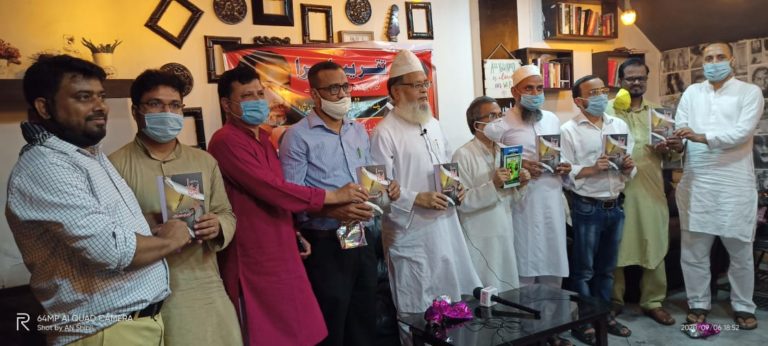
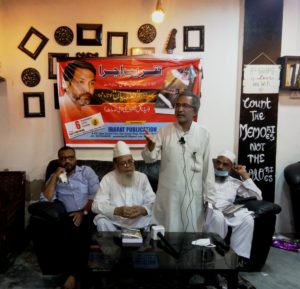
Andaz-e-Bayan is the outcome of my passion, a passion which I did not allow to die even during unemployment and the pandemic. These views were expressed by renowned Urdu critic and writer Haqqani Al-Qasmi.
He was speaking at the launch of the third book of his famous single-theme Andaze-e-Bayan series at a cafe in Shaheen Bagh, New Delhi on Sunday, 6 September, 2020.
The present journal, which in fact, is part of a series of books, “discusses about those poets, litterateurs, authors and novelists, who, despite being in the medical profession, are serving Urdu in areas of research and criticism”, said Haqqani.
Speaking on this occasion Maulana Ajaz Urfi Qasmi, president of All India Tanzeem Ulama-e-Haq, who chaired the session, lauded the author for his powerful, creative style of writing which had won him global acclaim.
Haqqani Al-Qasmi is an accomplished and distinguished litterateur and critic serving Urdu with great sincerity and humbleness. There is an unusual amount of literary taste in his works which can be felt by the reader. He further said that Haqqani is not unaware of the social world. “From above the literary firmament, Haqqani surveys the mundane world”, Mualana Urfi said adding that one can see that in his literary journal series Andaz-e-Bayan as well.
Abid Anwar, a senior journalist with UNI remarked that to say anything about Haqqani would amount to explaining the obvious.
Urdu critic and Post-Doctoral Research Fellow, Dr Noman Qaisar presented an overview of the author’s literary journey mentioning about some of his well-received and critically acclaimed books like Philisteen Ke Chaar Mumtaz Shu’ara, Tawaaf-e-Dasht-e-Junoon, La Takhaf, Takalluf Bar Taraf, etc which are full of literary aesthetics, creative imagination and academic insights.
It should be noted that the first issue of this book series (Andaz-e-Bayan-1, May-July 2016) was dedicated to literary contributions of women, especially of women from marginalized sections of society, with reference to biographical writings and their analysis.
The second one was dedicated to the creative facets of the police while the latest is an effort to unmasking the unrevealed literary contributions of doctors and medical professionals not just in Urdu literature but in English and Hindi literature as well.
Persons from media and different Urdu literary circles present on this occasion included Shahidul Islam, A N Shibli, Dr Khan Mohammad Asif, Ashraf Bastawi, Zubair Khan Saeedi, Majid Khan, Manzar Imam, Mohammad Alamullah, Nayab Hasan, Maulana Firoz Akhtar Qasmi, Shams Tabrez Qasmi, Ahsan Mehtab, Anwarul Haq, Abdul Bari Qasmi.
The launch programme was coordinated by T M Ziaul Haque. Salam Khan, head of Ibarat Publication which has published the book, presented the vote of thanks.
source: http://www.millattimes.com / Millat Times / Home> Education> National / by Md Irshad Ayub / Manzar Imam / September 11th, 2020
REST IN PEACE Akbar and Mariam’s tomb are in close proximity at Sikandra
With a Goan professor claiming her to be a Portuguese lady, the contentious issue of Jodha Bai’s existence refuses to fade away
The controversy over Jodha Bai never seems to die down. After the film Jodhaa Akbar, a Goan Professor of History, Luis de Assis Correia has claimed in his new book “Portuguese India and Mughal Relations 1510-1735” that she was actually a Portuguese lady, Dona Maria Mascarenhas. She and her sister Juliana were rescued from pirates by the Portuguese and handed over to Bahadur Shah of Gujarat who presented them to the court of Akbar.
According to the book, Akbar, then 18 married Maria (17) but the Portuguese were loathe to admit that one of their own was living in the harem. The Mughals on the other hand could not accept that a firangi had wed the Emperor. “Hence the myth of Jodha Bai was created.” However the “myth” did have some substance. As the name suggests, she was the bai from Jodhpur, “daughter of Mota Raja Uday Singh”.
Mughal records pre-dating the book say that Maria and Juliana were honoured ladies of the harem. Juliana was in charge of the Seragilo as harem physician while Maria occupied the position of Akbar’s confidante and companion. Juliana’s was married off by Akbar to the fugitive French prince, Jean Philippe de Bourbon and both died in Agra, leaving behind the Indian branch of Bourbons.
In the old Agra cemetery is the grave of Juliana’s so-called niece, Bibi Ammiana while that of Maria (no longer traceable) was in the graveyard behind Akbar’s Church, a mile or so away. Imagine a Portuguese lady giving birth to the Great Moghul’s heir apparent at the wilderness abode of Sheikh Salim Chisti! Sounds implausible.
Dr Ram Nath, former Head of the History Department of Rajasthan University, tends to agree that there is no mention in history of Akbar having wed Jodha Bai, though she is sometimes referred to as one of Jahangir’s wives, with a Mahal in Fatehpur Sikri adorned with the Star of David (also representing the six Ritus). Dr Shireen Moosvi of Aligarh Muslim University also emphasises that there is no mention of Jodha Bai in the “Akbarnama”. The Rajput princess Akbar married was the daughter of Raja Baarmal of Amber, the aunt of Maharaja Man Singh I, and she is only referred to by her title of Mariam-uz-Zamani, mother of Salim (which prompted some to aver that she was the Emperor’s Christian wife as Mariam corresponds to the name of the Virgin Mary, mother of Christ).
Dr Nath says, Akbar was 20 when he married his fourth wife in 1562. He contracted three other marriages thereafter. The names of all the wives are faithfully recorded and Maria is not among them. “Noteworthy is the fact that the so-called daughter of Raja Baarmal was only 10 or 12 years of age when she was married to Akbar. She lived for 61 years thereafter, and died in 1623, as her son Jahangir has recorded. That Raja Baarmal had a 10 or 12 years’ old daughter in 1562, when even his grandson Mansingh was 12, is neither a historical record, nor is warranted by circumstances as a reasonable proposition,” says Dr Nath. Incidentally, this Rajput princess is commemorated in a mausoleum built near Akbar’s tomb at Sikandra and known as Mariam’s maqbara (in keeping with her title of Mariam-uz-Zamani). This monument housed Sindhi refugees in Agra after Partition and suffered some damage as a result. Even now it is in urgent need of repairs.
Sarai and baoli
“Mariam Zamani (elaborates Dr Nath) is recorded to have built a large sarai (inn) with a monumental gate, a baoli (step-well) and a garden at Barah, a village situated 5 km from Bayana (Rajasthan) in 1613. Jahangir, her son, noted these buildings in his memoirs. The baoli and its Persian inscription have survived. It is surprising, nay, intriguing that she did not raise any building at Agra and Fatehpur Sikri where she mostly lived. She appears to have been more sentimentally attached to this village, than to Amber or any other place. This raises the question: why did the Queen of Akbar and mother of Jahangir prefer this remote obscure hamlet to large metropolitan Mughal towns as Agra, Delhi, Ajmer and Lahore, for this purpose, and how was she connected with this place ? Was she born there? It is all very mysterious as were, in fact, the secrets of the medieval Rajput raniwas and the Mughal ḥarem.”
Facts, however, suggest that Mariam belonged more to Barah than to Amber, asserts Dr Nath, though film-maker Gowarikar has tried to show Akbar’s wife in the form of Aishwarya Rai Bachchan, “an incarnation of feminine beauty who looks more like the mythical Menaka or Urvashi, rather than an ethnic Rajput lady from Rajasthan.” Authenticity, says Dr Nath, “is in fact the most tragic casualty of the Jodhaa Akbar film, an anti-thesis of Mughal-e-Azam where history has been distorted.” As for Dona Maria Mascarhenas, Prof Correia’s claim will add to the riddle of Jodha Bai, who also had a palace and temple in the Agra Fort, not known as Maria Mahal or Firangi Mahal but Jahangiri Mahal.
The Mughals did keep their secrets close to their heart, among them (sic) the mystery of “Akbar’s Christian wife”. After all he had 3,000-odd zenana , including a Turkish Sultana. Maria was one of them but certainly not Salim’s mother, whom the prince called “Jagat-Gosain”.
source: http://www.thehindu.com / The Hindu / Home> Society> History & Culture> Down Memory Lane / by R.V. Smith / April 17th, 2017
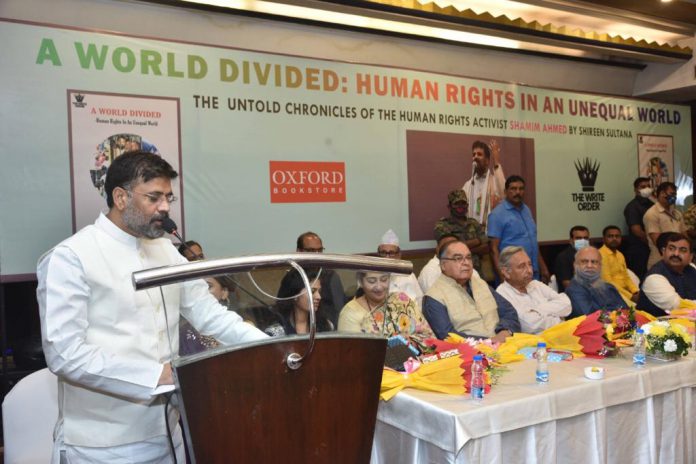
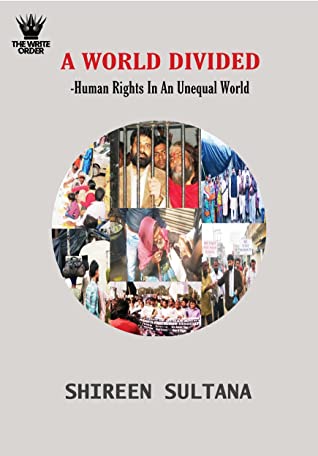
A book titled ‘A world Divided: Human Rights in an Unequal World’ written on the 25-year struggle of famous social activist Shamim Ahmed was launched on September 25 at a grand ceremony held at the Five Star Ruff Hotel The Park in the West Bengal Capital.
Former minister and congress leader Mani Shankar Iyer paid tributes to Shamim as he said there are very few people in the country who do great service for the restoration of human rights and to put a smile on the face of the people of the country.
He congratulated the author of the book and said that the author has researched the life of Shamim Ahmed and brought a book before us.
The book sheds light on the life of Shamim Ahmed and his work in promotion of Urdu language.
Shankar said that he had the opportunity to read a book, adding that he was very much impressed with his “Food for All” campaign.
“Rights and opportunities have not been found. Even today, people on the streets are longing for food.” Mani Shankar Aiyar said that India is a multi-religious country. “The destiny of this country lies in national unity.”
pix: goodreads.com
Former Member of Parliament and renowned intellectual Mohammad Adib, while acknowledging the services of Shamim Ahmed, said that coming from Bihar to Bengal and launching a movement to make Urdu the second official language is nothing short of a feat.
He said, “it is unfortunate that after India’s independence Later, Urdu was treated leniently. There was injustice with Urdu in Bengal as well. Shamim Ahmed raised his voice against this injustice.
Expressing his views on the occasion, Adib said that the 25-year journey of Shamim was full of difficulties, trials and tribulations.
On the occasion, renowned international artist and Bengali intellectual Shubha Parsna said that Shamim Ahmed is the pride of Bengal. “We are happy that there are people in Bengal who speak of humanity and deal with people on humanitarian grounds. That I have known Shamim Ahmed for the last many years. He had compassion for humanity in his heart.
Prasana urged books should be written on such personalities so that the new generation is aware of him. The event was attended by important personalities from different sections of the society.
source: http://www.millattimes.com / Millat Times / Home> National / by Millat Times Staff / October 05th, 2021
The former scribe’s recent Telugu translations include anthologies of Saadat Hasan Manto’s Urdu works
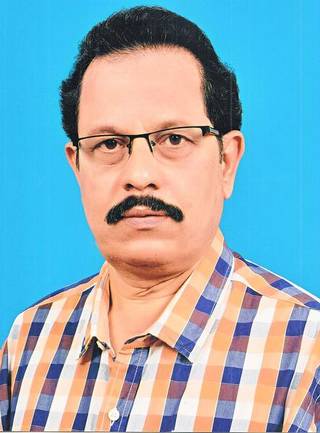
Padullaparthy Venkata Suryanarayana Murthy, known by his pseudonym Mehak Hyderabadi to readers, has been bridging the cultural gap through translations. The former senior journalist with 35 years of experience in Telugu print media has been enriching readers with the ease and simplicity of his translations of Urdu stories into Telugu.
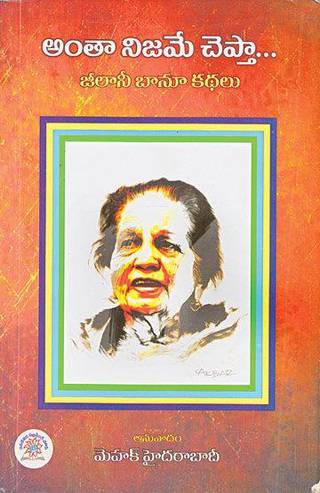
In a span of six years (2016-2021), Mehak has brought out six books – translations of two volumes of Jeelani Bano’s Urdu stories (with Telugu titles Guppita Jaare Isuka, Antaa Nijame Chepta), and Jeelani Bano’s autobiography Main Kaun Hoon as Terichina Pustakam.
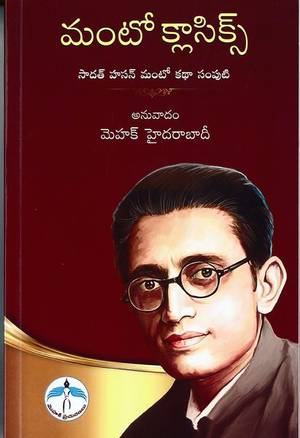
What made Mehak’s journey as a translator gratifying yet sapping, both emotionally and mentally, were the two recent anthologies of celebrated Urdu writer-playwright Saadat Hasan Manto’s stories — Saadat Hasan Manto Kathalu (Volume 1, 27 stories) and Manto’s Classics, and Amrita Pritam’s much-acclaimed novel Pinjar’ into Telugu
The Telugu stories Toba Tek Singh (Toba Tek Singh), Teetwal kukka, (Teetwaal ka kutta), Challani Maansam (Thanda Gosht) and Sukhaantam (Anjaam Bakhair) from Manto’s second volume deal with the horrors of Partition. “It is hard not to be gripped by Manto’s narration of the dark times. People from this part of India (South) were not so impacted by Partition but the narrative leaves you distressed. One feels shattered and hopeless and I was no exception,” shares Mehak.
While there have been translations of Manto’s works into Telugu, they have been translated from English or Hindi. Mehak claims, “I am the first writer to translate Manto stories from Urdu, the language they were originally written in.”
Tryst with Urdu
Mehak was transferred to Hyderabad in ’90 from Vijayawada. Hoping to get a State government job, he began learning Urdu from MA Malve, a retired DSP. He did not get the job but continued to learn for two years, cleared Urdu exams and translated Urdu articles from Siyasat and Munsif into Telugu. “Urdu is poetic and its expressions are unmatchable.”
Translations are a lot of labour, observes Mehak. “Being aware of the atma (soul) of the original writer, what he/she wants to convey, the language’s history and culture helps in the translation process. One has to be careful of the idiom and dialect used.” The key Mehak points out is not imitating the writer’s style while ensuring the gist does not get diluted.
Mehak rues the fading away of mushaira culture in Hyderabad as well as the fact that youngsters are not finding learning Urdu rewarding. “Urdu has many admirers but its position as medium of instruction in educational institutions is vulnerable. The link between Urdu learning and employment opportunities is fragile and many students with Urdu as mother tongue are not inclined to study in it.”
Trained under poet Rehman Jami, Mehak is also an Urdu shayar (poet)and has written ghazals on religious intolerance, the Telangana agitation and other contemporary topics. Currently he is translating Hyderabad-based popular Urdu fiction writer (late) professor Baig Ehsas’s anthology, Dakhma.
Revealing the story behind his takhallus (pseudonym), he says, “Mehak means fragrance and also touchstone to check the quality or genuineness of gold. Renowned Urdu scholar Muztaz Majaz who gave me the name felt it will be unique in the literary world.”
source: http://www.thehindu.com / The Hindu / Home> Books> Interview> Author / by Neeraja Murthy / January 27th, 2022
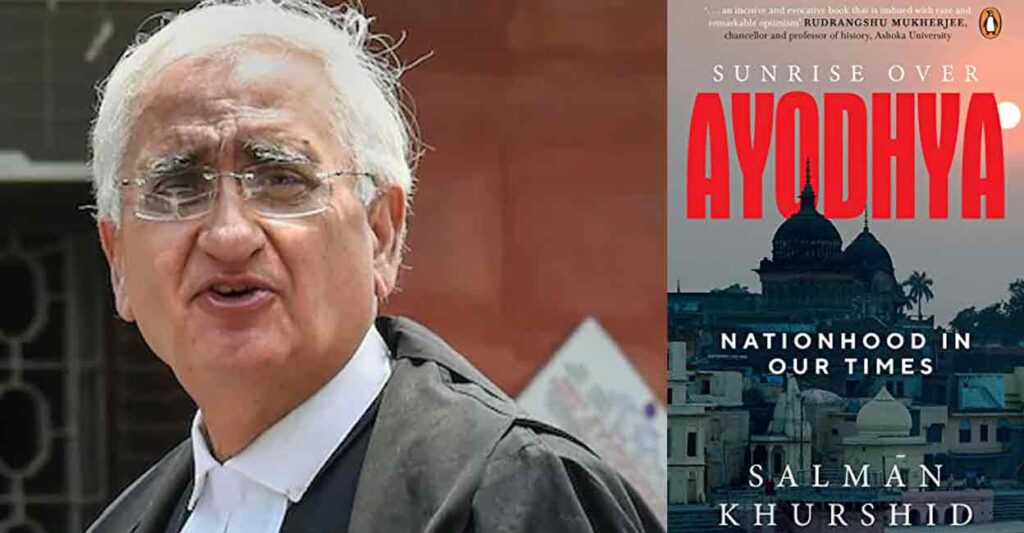
The petitioner alleged that Khurshid has misused his fundamental right to freedom of expression in a very complex manner as it is not absolute.
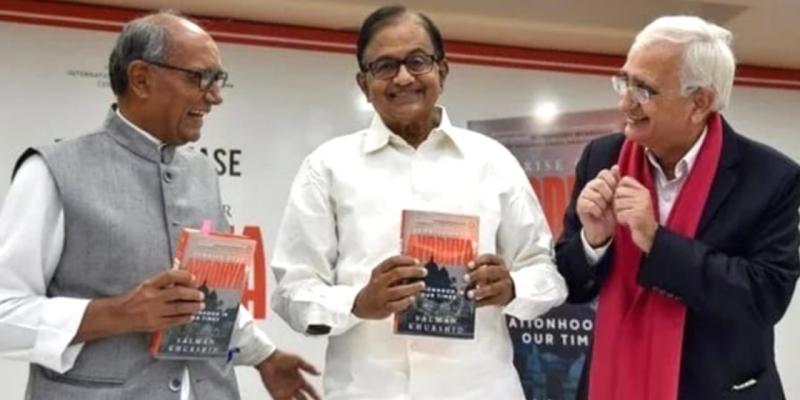
Congress leaders Digvijay Singh, P. Chidambaram and Salman Khurshid at the launch of ‘Sunrise over Ayodhya’ book on November 10. Photo: Facebook.
New Delhi:
The Delhi high court Tuesday refused to entertain a plea seeking direction to the Centre and Delhi government to ban the sale and publication of Congress leader Salman Khurshid’s book Sunrise Over Ayodhya: Nationhood In Our Times.
A bench of chief justice D.N. Patel and Justice Jyoti Singh pulled up the petitioner for not impleading the author of the book or publication house as a party to the plea, saying he was a chance taking petitioner who has filed the plea for publicity.
“You want a complete ban on the book but you have not made the author a party. You may ask any heaven or sky. We may dismiss it with costs. You are not joining the author as a party. Stop doing this activity in court. Why are you feeling so shy and not joining the author as a party. We will not give you any chance, this is a deliberate move. These are all chance-taking petitioners. It is for publicity,” the bench said.
After some time, the petitioner’s counsel sought permission to withdraw the petition and file a fresh one with proper averments, annexures and joining proper persons as parties.
The court allowed him to withdraw the petition and disposed it of as withdrawn.
“He has no courage to join Salman Kurshid as a party, what type of PIL (Public Interest Litigation) he will argue. If you are so much worried about the name of the author or the senior advocate, you should not have filed the PIL. These are blackmailing or publicity petitions. This is a waste of time PIL,” the bench said.
Petitioner Rakesh, in his plea through advocates A.K. Dubey and Pawan Kumar, alleged that Khurshid has misused his fundamental right to freedom of expression in a very complex manner as it is not absolute and carries with it special duties and responsibilities towards public interest.
It said there are 90 crore Hindus in the country and if anyone takes offence of such statements made in the book, it could become a law and order problem in society.
“Salman Khurshid has written in the chapter that Sanatan Dharma and classical Hinduism known to sages and saints was being pushed aside by a robust version of Hindutva, by all standards a political version similar to the jihadist Islam of groups like ISIS (Islamic State of Iraq and Syria) and Boko Haram of recent years,” it said.
Khurshid’s new book on the Ayodhya dispute was released recently.
On November 17, an additional civil judge here had refused to grant an ex-parte injunction on a lawsuit by Hindu Sena president Vishnu Gupta to stop the publication, circulation, and sale of the book for allegedly hurting sentiments of a large section of society.
While declining interim relief, the trial court had said the author and publisher had the right to write and publish the book.
(PTI)
source: http://www.thewire.in / The Wire / Home> English> Books> Government> Law / by PTI / November 30th, 2021
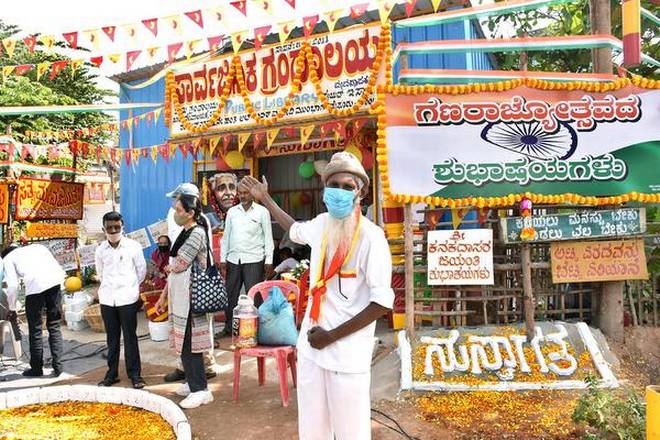
The decorated public library rebuilt by Syed Ishaq. | Photo Credit: M.A. Sriram
It offers more than 1,300 books in various languages
More than nine months after the public library he started in Rajiv Nagar in Mysuru was destroyed in a fire accident, Syed Ishaq, the 64-year-old daily wager, has managed to put in place a makeshift structure in the same place to house his collection of books.
The public library rebuilt with corrugated metal sheets was inaugurated on the occasion of Republic Day in the presence of seer of Suttur Mutt Shivarathri Deshikendra Swamiji, Mysuru MP Pratap Simha, former Mayor Ayub and representatives of various Kannada organisations on Wednesday.
Though Mysuru City Corporation (MCC) and the Department of Libraries, Government of Karnataka, had promised to rebuild the library, the promise had remained unfulfilled for various reasons, forcing Mr. Ishaq to take up the construction of the library through the funds he had received from people’s representatives including former Minister Zameer Ahmed Khan, Mr. Pratap Simha, Minister for Cooperation S.T. Somashekar and others.
The rebuilt library now offers the reading public not only more than 1,300 books in various languages particularly Kannada, but also daily newspapers in Kannada, English and Urdu. Mr. Ishaq is hoping to accommodate hundreds of more books that had already been collected and donated to the library by various people and organisations.
After the library was destroyed in an accidental fire in April last year, MCC, Department of Libraries and Mysuru Urban Development Authority (MUDA) had jointly decided to take up the responsibility of constructing a full-fledged library. While the MUDA offered the plot of land for construction of library, the process of construction of the building continued to be delayed, much to the disappointment of Mr. Ishaq.
Mr. Ishaq, who professes his love for Kannada and passion for spreading knowledge among the locals, continued to subscribe for a total of 18 newspapers, besides bringing a small collection of books from his house nearby to the library every day and taking them back.
But, during the rainy season, he used to struggle to keep the books and newspapers dry. As the construction of the full-fledged library by the government continued to be delayed, he decided to put up a shelter and took up the construction of a makeshift structure using the funds donated by the people’s representatives and others.
“About 100 to 120 people come to the library every day to read the newspapers and books. With the new structure in place, I expect the numbers to go up to 170 to 180 every day”, he said.
While he had spent around ₹4 lakh for the makeshift structure, Mr. Ishaq said the donations amounted to around ₹3.5 lakh. “I raised the remaining money by cleaning drainages, painting and doing other odd jobs”, he told reporters after the inauguration of the make-shift structure on Wednesday. Mr. Ishaq said he would like to appeal to the government authorities against making “false promises”.
source: http://www.thehindu.com / The Hindu / Home> News> States> Karnataka / by Special Correspondent / Mysuru – January 26th, 2022
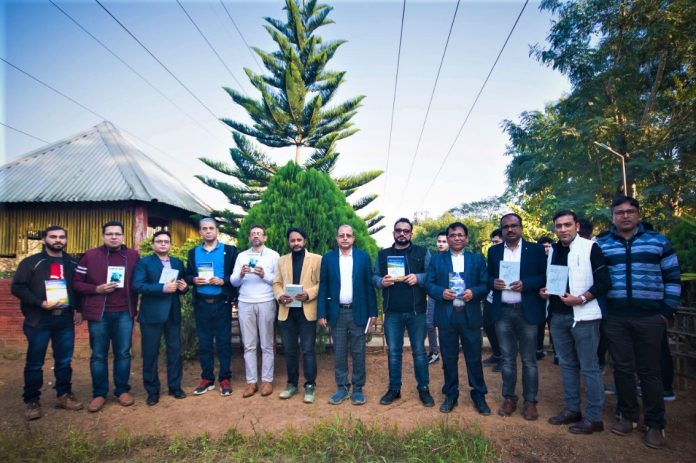
Books authored by three eminent personalities were launched at a conclave organised by HaFSA Foundation & Progressive Peoples Foundation in the outskirts of Guwahati on Sunday.
Guwahati :
A new year conclave of the office bearers and members of two frontline NGOs of Assam viz HaFSA Foundation (HF) and Progressive Peoples Foundation (PPF) was held at Tepesia, on the outskirts of Guwahati, on Sunday.
Families of the office bearers and members also attended the event in large numbers.
HF is an NGO working towards promoting education and social uplift of the people of Barak Valley, with primary focus on Bam region, the southernmost part of Cachar, for creating an enlightened, cohesive and resilient community. Under the umbrella of HF, four organisations viz HaFSA Academy, HaFSA Centre for Social Welfare, HaFSA Institute of Barak Valley Studies, and HaFSA Rural Library & Information Centre function to fulfil the aims and objectives of the Foundation.
Sayeeda Tasnim, Chairperson of HF, welcomed the guests and participants at the outset of the conclave and gave a glimpse of the different activities taken up by the Foundation during the last year.
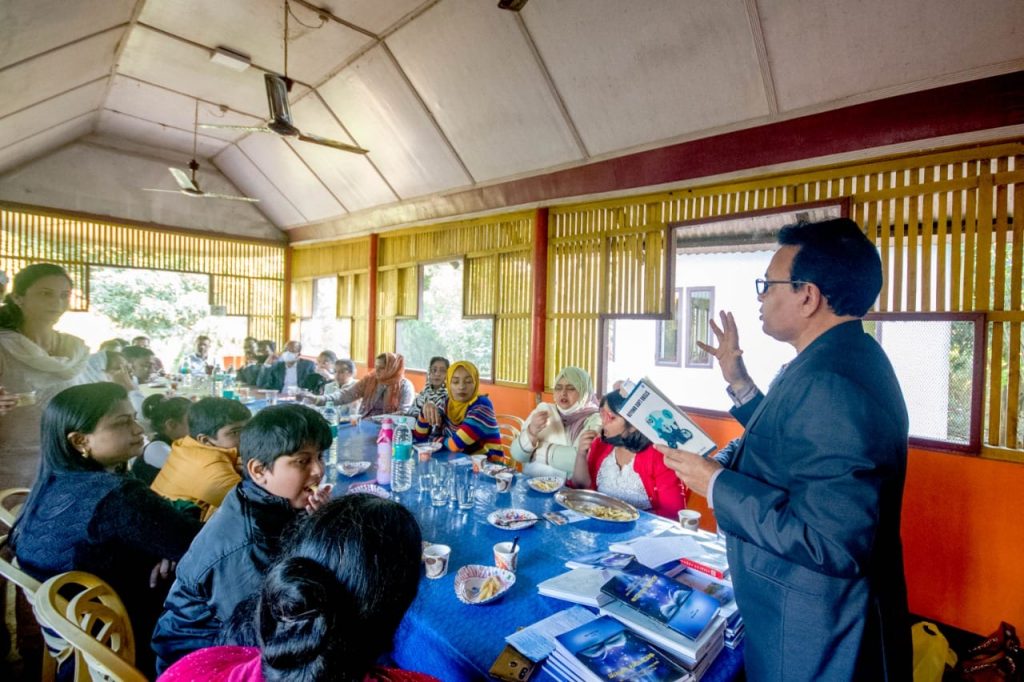
Sultanuddin Ahmed, former executive at The Hindustan Times, reading out from “Beyond Soft Skills” authored by Nurul Islam Laskar, at a conclave held in the outskirts of Guwahati on Sunday.
Rafique Ahmed Laskar, Vice Chairperson, PPF informed the audience that PPF is engaged in developmental and social welfare activities across Assam. Its main thrust is on helping the poor and downtrodden in becoming self-reliant. PPF is also supporting a large number of poor students for pursuing higher and technical studies besides extending support to promising young athletes to achieve their dreams. Recently, they donated 100 blankets for the poor indoor patients at Cachar Caner Hospital, Silchar.
At the Sunday conclave organised at the initiative of HaFSA Foundation, it was resolved that the two NGOs – HF & PPF – will explore areas of collaboration in the sphere of educational development in the rural areas with special focus on Barak Valley. The two NGOs also decided to explore possibilities of working together for imparting coaching for Navodaya Vidyalaya entrance test and other recruitments in State & Central Government jobs.
One unique item of the conclave was the book reading session in which four books were released, one authored by Sabir Ahmed Choudhury and brought out by HF; two books on the history of Lakhipur authored by Abid Raja Majumder; and another book on motivation and personality development authored by Nurul Islam Laskar. Sultanuddin Ahmed, former executive of The Hindustan Times, read out a few chapters from Laskar’s book, “Beyond Soft Skills.”
The conclave recorded its appreciation for Jiauddin Choudhury, Chief Adviser, HF for initiating the process through which the NGOs were brought together to work hand in hand for the development of the society.
source: http://www.muslimmirror.com / Muslim Mirror / Home> Book Review> Indian Muslim> Positive Story / by Special Correspondent / January 03rd, 2022
Bengaluru, KARNATAKA / La Jolla California, U.S.A :
Nasir is the man behind Discrete Cosine Transform – the technology which makes it possible to share photos & videos.
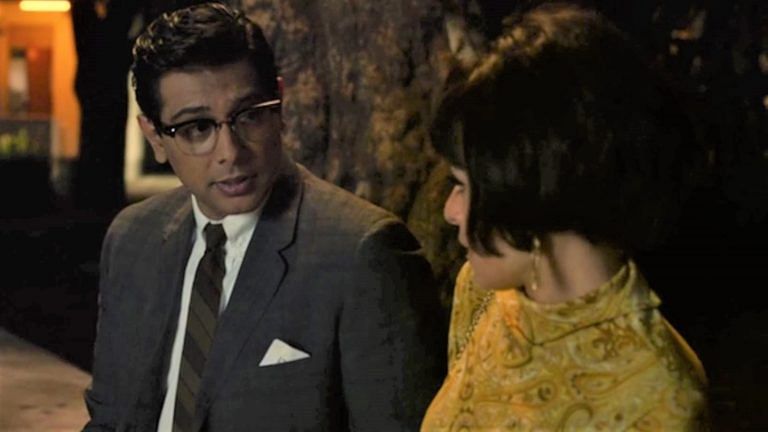
If you’ve been following the Pearson family closely, you must have watched episode 8 from the fifth season of ‘This is Us’ introducing two new characters to the show – Nasir and Esther Ahmed.
The first time we see the pair, it’s circa 1963 in Albuquerque, New Mexico, where a man introduces himself as “I’m Nasir from India” as a young Esther is seen walking up to him, asking for a light.
The next time we see the couple, Nasir is cradling their son in his arms. Shortly after, another scene reveals their relevance.
As Esther is seen getting annoyed at Nasir for having returned late from work, Nasir replies, “When your mother wants a picture of you, what do we have to do? What if instead of waiting for the mail, she could see it instantly? They will be able to share images… Imagine if you could talk to someone on the screen but with a video.”
These lines from the show piece the puzzle together as viewers learn by the end of the episode that Nasir is the man behind the video-calling technology we use today. He’s the reason the Pearsons are able to stay connected using FaceTime amid the raging coronavirus pandemic .
From Bengaluru to USA
Nasir Ahmed hails from the southern city of Bengaluru, in India. He was born in 1940, and subsequently completed his schooling from Bishop Cotton Boys School. He earned his Bachelors in electrical engineering from the University College of Engineering in Bengaluru in 1961. Thereafter, he moved to the US for his higher studies and pursued both his MS and Ph.D at the University of New Mexico in Albuquerque.
After his graduation, Ahmed worked as the Principal Research Engineer at Honeywell in St Paul, Minnesota from 1966 to 1968. He then took on the role of a professor at the Kansas State University and taught there till 1983, following which he joined the University of New Mexico and retired in 2001. He is currently Professor Emeritus of electrical and computer engineering at the University of New Mexico.
What is DCT?
In the 1970s, Nasir led a research team that developed the Discrete Cosine Transform (DCT), which makes it possible to share photos and videos.
In a paper on how he built the technology, Nasir says he had written a proposal to the National Science Foundation to study the cosine transform using two distinct polynomials. “Much to my disappointment, NSF did not fund the proposal,” he lamented, adding that a reviewer had deemed his proposal “too simple”. Not one to give up, Nasir kept at it through his P.hD until he finally cracked the DCT.
Today, Nasir and his team’s work on DCT is used in high-definition digital TVs, teleconferencing, and other image-sharing platforms, among numerous other commercial applications.
He is also credited with having invented the .jpg file format for photos, according to Bustle.
Finding Love
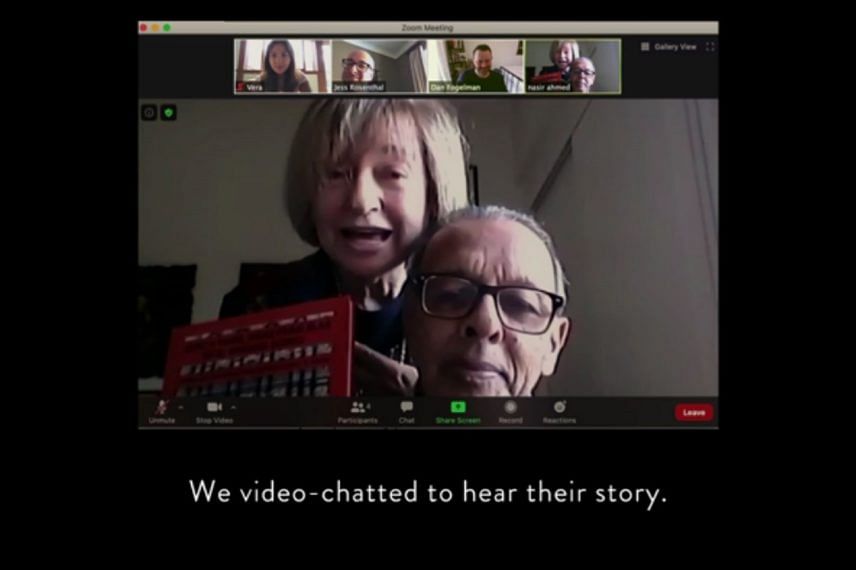
The real Nasir and Esther. /(Photo Courtesy: A still from the episode) /Esther and Nasir Ahmed video conferencing with This Is Us show creator Dan Fogelman and executive producers Vera Herbert and Jess Rosenthal in August of 2020. NBC
Nasir met Esther Pariente, an Argentinian, at the University of New Mexico. According to the College of Graduates in Economic Sciences of Tucumán, Esther holds a master’s degree in English from Kansas State University and a Ph.D in Spanish and Latin American Literature. Their son, Michael Pariente, is a well-known criminal defence attorney based in Las Vegas.
The makers of ‘This is Us’ caught up with the couple over a video chat to know their story, before paying a fitting tribute to the couple in the eighth episode.
According to Bustle, Nasir and his wife Esther released a limited-edition book about their lives called Parallel Lives In Curved Space in 2018. The couple celebrated their 56th anniversary recently.
source: http://www.thequint.com / The Quint / Home> The Indian American / by Rinki Sanyal / February 19th, 2021
The book is a harrowing tale of a doctor’s ordeal and gives a compelling account of the tragic deaths of several children and the disturbing events that ensued.
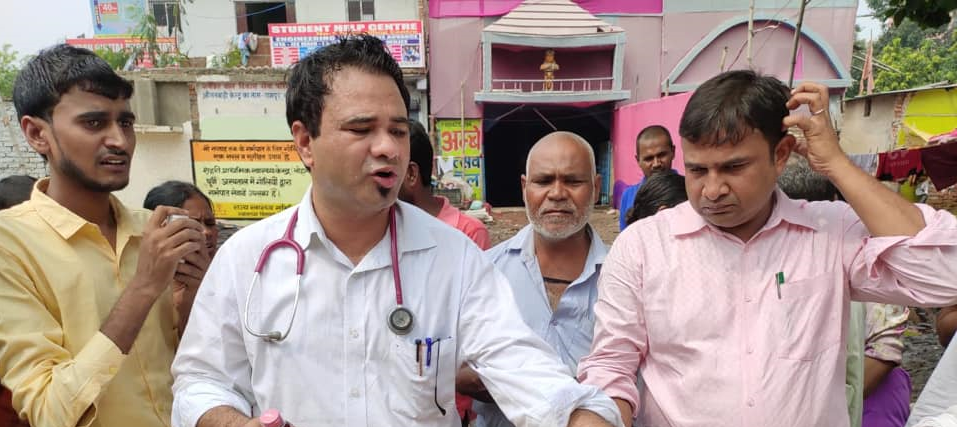
Dr Kafeel Khan at a medical camp. Photo: Facebook/drkafeelkhanofficial
Gorakhpur:
The 2017 oxygen shortage tragedy at Gorakhpur’s BRD Medical College that led to the deaths of more than a hundred children was not a random accident but the outcome of the administration’s apathetic and insensitive attitude towards government hospitals. The aftermath of the incident also exposed how the government machinery, instead of learning from such horrific accidents, works to suppress the truth, protect the culprits and punish those who try to expose the reality.
The reportage on the oxygen fiasco meanwhile rendered it synonymous with the identity of Dr Kafeel Khan, who was then an assistant professor in the hospital’s Department of Paediatrics. The incident and the ensuing fate of Khan was widely reported in the media.
But what actually happened and who were the real culprits? Were they shielded by the powers that be? Those who knew the truth have either kept mum on the issue or have sided with the government’s narrative. The government has made claims like, “The hospital did have an oxygen crisis but that’s not what killed the children”, “The children died because they were gravely ill”, “Children die of encephalitis in July and August every year” and that the government and its ministers or senior officials cannot to be blamed for the deaths as the college administration was negligent. Khan, the government said, was solely responsible because he failed to inform his seniors about the oxygen crisis and had committed medical negligence and used to practice privately.
Khan was sacked last month , four years following the incident. Two doctors and four employees of BRD Medical College, who were also accused of negligence, have been reinstated. R.K. Mishra, who was the principal of the college at the time of the deaths, and Ppharmacist Gajanand Jaiswal have retired after being reinstated. Little is known of the whereabouts of Manish Bhandari, the owner of Pushpa Sales, the oxygen supplier, ever since he was released from jail.
The government did not compensate the families of the children who died in the tragedy, claiming that their deaths were not caused by oxygen shortage.
The terrible incident is no longer talked about, except when it is brought up in conjunction with news related to Dr Kafeel Khan.
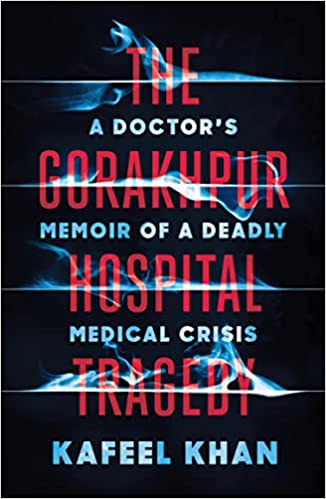
Kafeel Khan The Gorakhpur Hospital Tragedy: A Doctor’s Memoir of a Deadly Medical Crisis Pan Macmillan (December 2021)
Recently, Khan’s 300-page book titled The Gorakhpur Hospital Tragedy: A Doctor’s Memoir of a Deadly Medical Crisis was published by Pan Macmillan India, reinvigatoring a discussion on the deaths.
In the book, Khan describes a series of incidents beginning on the dreadful night when the hospital ran out of oxygen to the day of his arrest, subsequent imprisonment and his dismissal from service more than four years later. The book not only weaves together the scattered strands of information surrounding the oxygen shortage tragedy of the BRD Medical College on August 10, 2017 but also brings to the fore many new facts which remained unknown till now.
The oxygen fiasco was reported in both national and international media. While it is true that the incident remained in the news a long time afterwards, most of these speculations only went on to further mystify and blur the facts instead of providing clarity. The book tries to blow the lid off the attempts to conceal the truth behind the incident in a ‘calculated manner’ and uncovers the system’s attempts to make a doctor the scapegoat to cover up its failure.
The book also highlights various aspects of Khan’s personal life. We come to know that his father was an engineer in the irrigation department. Kafeel Khan was brought up in an open-minded atmosphere and spent his early days in a locality where residents hailed from different religious backgrounds. They celebrated Holi as zealously as Eid. On Diwali, he narrates, his family received many sweets from their Hindu neighbours which he would carry in his school tiffin for an entire week.
From his family, the story quickly progresses to the events of August 10, 2017. On the fateful night, Khan received a WhatsApp message on his mobile about depleting oxygen levels in the encephalitis ward. He was on leave that day as his sister was visiting the family from Oman and he wanted to spend time with her. But when he received the message, he decided to immediately go to the hospital. On his way, he kept calling his superiors at the medical college. While most of his calls went unanswered, those who did pick up failed to grasp the gravity of the situation and tried to pass the buck.
In his book, Khan gives telling details of the situation he witnessed in the ward that night and how he handled it. He describes the wailing and pleading parents while their children battled for life and the utter helplessness of the doctors, nurses and ward boys. There were 313 children admitted in the hospital’s pediatric and neonatal intensive care units that night. At 7:30 pm, the oxygen plant had run out of oxygen and the ventilators began sounding the warning beeps. As a contingency arrangement, 52 jumbo cylinders kept in the hospital reserve were installed, which were exhausted within four hours and the oxygen supply was completely cut off to the wards, including the encephalitis ward. By the time Khan reached the hospital, eight children had already died.
He and his colleagues immediately started giving oxygen from Ambu bags to the children on ventilator support. The condition of all the children in the ward was assessed and oxygen from Ambu bags was given to those who needed oxygen the most. A three-year-old girl’s condition deteriorated and despite the staff’s best efforts, could not be saved. The NICU witnessed similar chaotic scenes. The relatives of the patients, who had been informed about the lack of oxygen, were either yelling at the hospital staff or begging them to save their children.
Meanwhile Khan was faced with the dual challenge of treating the deteriorating condition of the children, on one hand, and arranging for oxygen cylinders on the other. A truck carrying a jumbo cylinder was on its way from Imperial Gas Limited in Faizabad but there was no sign of it until 1 am. Till then, no senior officer of the BRD Medical College had reached the hospital. In their absence, Khan decided to fetch three jumbo cylinders from a nearby hospital in his private vehicle. He then approached eight more hospitals for help, ferried as many cylinders as he could arrange and tried to replenish the oxygen supply. But it was not enough. The encephalitis ward was consuming 16 jumbo cylinders every 45 minutes. The truck that arrived from IGL Faizabad at 2 am brought only 50 cylinders. Kafeel arranged for a truck with the help of central oxygen operator Balwant, and sent an outsourced worker to the Khalilabad plant paying Rs 20,000 from his own pocket. The oxygen plant had agreed to supply jumbo cylinders at Rs 350 per cylinder.
Despite being informed of the urgent need for oxygen, a plant in Gida refused to supply oxygen saying that its contract with the college had been terminated and handed over to IGL Faizabad. It would supply oxygen only after the contract has been renewed, the plant said.
Despite Khan and his team’s night-long efforts to save the children and arrange cylinders, 23 children in the PICU and NICU and 18 adult patients in the medicine ward had succumbed by 10 am the next day.
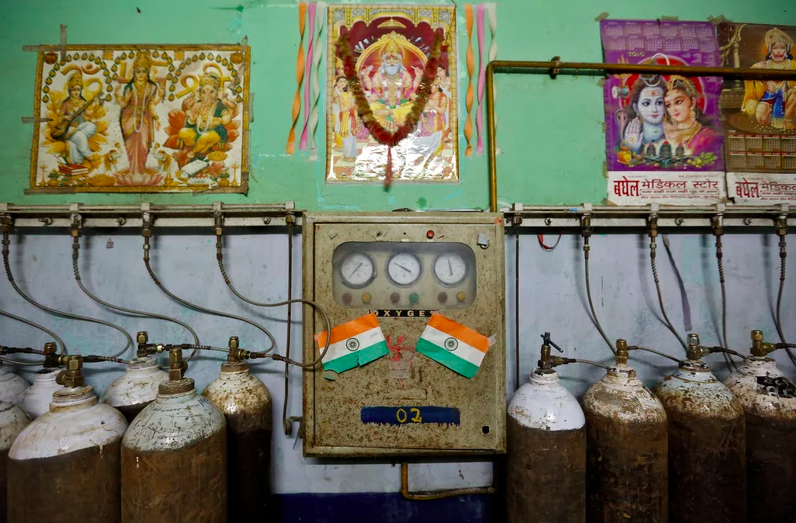
A room containing oxygen tanks is seen in the BRD Medical College and Hospital in Gorakhpur. Photo: Reuters
When there was a shortage of vehicles to cart the jumbo cylinders, Khan reached out to the Sashastra Seema Bal (SSB) stationed in the Fertilizer Campus on the morning of August 11 and contacted the DIG to provide a truck and cylinders. The SSB did not have jumbo cylinders, but they provided a truck and 12 jawans so that cylinders could be swiftly transported from the plant to the medical college.
According to the details in the book, on the afternoon of August 11, the then district magistrate Rajiv Rautela contacted Khan and after being apprised of the whole situation assured that oxygen would be provided. He asked the Gida plant, which had earlier refused to entertain Kafeel’s request, to supply oxygen. Later, 50 jumbo cylinders arrived from IGL Faizabad in two trips. Kafeel also contacted the chief medical officer and the additional director (health), urging them to help solve the crisis. One said he was in a meeting and the other asked Khan to contact the chief medical superintendent regarding the arrangement of cylinders. One of these officers later became part of the committee that was formed to investigate the tragedy.
In the afternoon, a professor from the Department of Paediatrics reached the ward followed by the head of the department and the chief medical superintendent of the Nehru Hospital. Together, they wrote a letter to the principal of the BRD Medical College, urging him to arrange medical oxygen.
By the evening of August 11, the news of children dying due to oxygen shortage had spread like wildfire and media persons began pouring in at the BRD Medical College. By then, a few local journalists and photographers had already reached the College and began reporting on the crisis. The district magistrate issued the first official statement about the incident in a press conference at 7:30 pm that day and announced the formation of a committee to investigate the deaths. This committee was asked to submit its report within 24 hours.
Initially, the reports in media and on social media hailed Kafeel as a hero for his efforts to muster up oxygen cylinders using his personal resources and save the lives of children. On August 12, the state health minister Siddharth Nath Singh and medical education minister Ashutosh Tandon reached the college. Singh, in a press conference, denied the death of any child due to lack of oxygen and made the insensitive ‘children die every year in August‘ remark. The statement was widely condemned.
On August 13, a tanker of liquid oxygen arrived at the hospital at 1 am and the supply was restored. Kafeel, who had tirelessly spent 48 hours on rigorous duty since August 10, finally returned home only to wake up to a fresh twist the next morning. A new tale had been spun and a fresh narrative was played out in the media.
In the morning, J.P. Nadda and chief minister Yogi Adityanath arrived at the BRD Medical College and Khan was summoned. He reached the hospital hoping to receive a pat on the back for his efforts but he was in for a rude shock and suddenly found himself in the crosshairs.
According to Khan, the moment he appeared before the chief minister, he said in a reprimanding tone, “Tu hai Dr Kafeel Khan?” (So, you are Dr Kafeel Khan?)
“Yes, Sir.”
“Tune cylinder ka arrangement kiya tha?” (Are you the one who arranged cylinders?)
“Yes, Sir.”
“Ye 4-5 cylinder la kar tu ne kitni jaan bacha li? Tu sochta hai cylinders ki vyvastha kar ke tu bohot bara hero ban gaya; dekhta hoon tujhe.” (How many lives did you save with a few cylinders? Do you think by arranging cylinders you became a hero? I will take care of you.)”
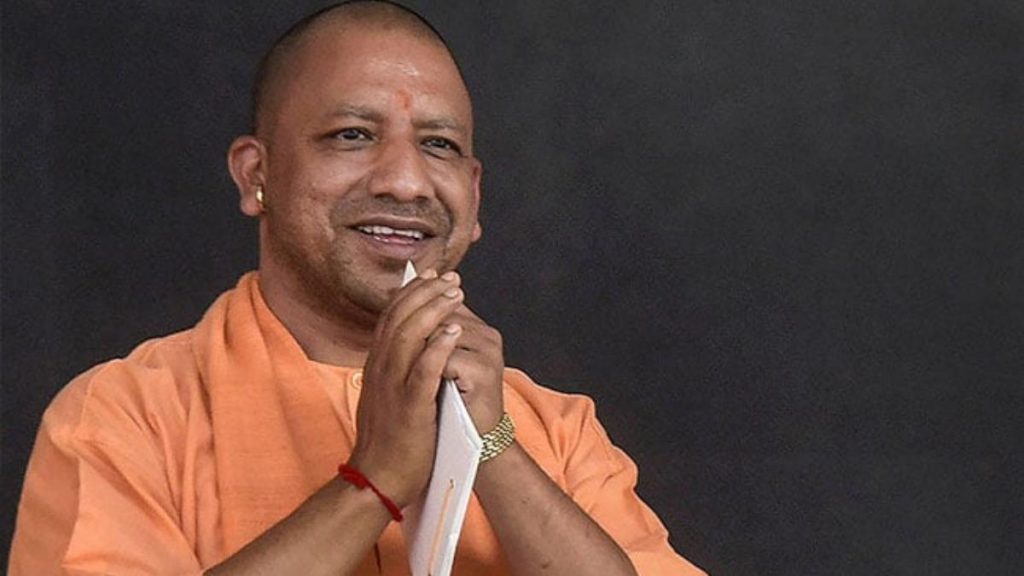
Uttar Pradesh chief minister Yogi Adityanath. Photo: PTI
Khan was suddenly the villain, accused of leaking the news of oxygen shortage to the media. However, when he tried to speak up and provide a clarification, senior officers stopped him from doing so.
In the press conference, the chief minister dismissed the claim that the children died owing to a dearth of oxygen. He announced the formation of a committee headed by the chief secretary to probe the incident and said that its report would be submitted in a week.
As soon as the press conference was over, media persons flocked the hospital of Khan’s wife. A mob also attacked the hospital and a showroom owned by Khan’s brother, pelting stones and vandalising them. On social media, Khan was vilified as an ‘oxygen thief’, and a ‘pawn of the opposition leaders’. The TV news channels began referring to him as the head of the paediatric department, the deputy principal, the superintendent of the hospital, blaming him entirely for the disaster.
Khan was advised to take leave until the turmoil subsided. On August 16, the report of the committee constituted by the DM was submitted, which did not fix the responsibility on Khan but also failed to mention, let alone laud Khan’s efforts to arrange oxygen cylinders at such a critical time.
Finally, on August 21, the report of the committee headed by the chief secretary came out and an FIR was lodged against nine people, including Khan and everyone was gradually arrested.
The police began raiding his house daily, making searches and harassing the family members. His sister’s house in Lucknow was also raided and his brother was taken into custody. He decided to surrender and finally did so at the Special Task Force office in Lucknow. The STF brought him to Gorakhpur and handed him over to the Gorakhpur police, who put him in jail.
The next few pages of the book record a horrendous account of Khan’s seven-month long stay in jail – an 800-prisoner facility with 1,897 prisoners in it.
In jail, he met several high-profile prisoners – Kaka, D. Ram, V. Singh, Shailesh, Vishwa and also ‘Mantriji’ who is serving a life sentence for the murder of a poetess. Most of them showed Khan kindness. Despite all the media propaganda, they treated him with respect for being a good Samaritan and responsible doctor who tried to save the lives of children. Khan writes that most of the undertrial prisoners spend long periods in jail in the hope of being freed or granted bail but 99% of them are met with disappointment as cases remain in limbo for years.
Khan also details a first-hand account of corruption inside the prison walls. Any prisoner can avail the facilities that he can afford. Under this covert system, rates are fixed for kachchi baithki and pakki baithki – levels of evading laborious chores in jail. Then there are rates of bidi, cigarette, vegetables, eggs, bottled water as well as meeting with relatives. To avail such luxuries, one has to keep one’s mouth shut – besides abiding by the other rules. Based on hierarchy of caste, religion, connections and nature of crime, the dark underbelly of the prison is governed by a handful prisoners.
While awaiting bail, Khan tried to piece together the episodes of the oxygen tragedy. From jail, he contacted everyone including Manish Bhandari, the director of Pushpa Sales, the college principal Mishra, and Dr Satish. Finally, he saw the whole picture. He learnt that both the Gida gas plant, which had refused to supply oxygen to the hospital despite being aware of the deaths of children, as well as IGL Faizabad with which the hospital had signed a contract in 2017, had close relations with the ruling party leaders. Also, Khan claims, Pushpa Sales had not only failed to pay the dues to the top officials of health and administration but also to line the pockets of various ministers, a matter which was brought up in several official meetings. Hence, the authorities behaved in a lackadaisical manner while the children were gasping for breath. Later, a hunt was launched for ‘a neck to fit the noose’ and a communal government found Khan as the perfect scapegoat, he says.
Dr Kafeel Khan, after his release from jail. Photo: @Saurabhsherry/Irfan Ghazi.
The final section of the book describes Khan’s ordeal after his release from jail, various charges levelled against him and his re-arrest. He was arrested from the Bahraich district hospital, where he had gone to investigate the death of children admitted for encephalitis. Later, charges under the National Security Act were slapped on him for a speech he had delivered during an anti-CAA-NRC protest at the Aligarh Muslim University. He was released after the Allahabad high court quashed the NSA charges.
However, despite getting a clean chit on two key charges in the departmental inquiry of the oxygen shortage incident, he was sacked. The book has several more details. An entire chapter is dedicated to his rural health campaign, under which he organised medical camps, especially creating awareness about encephalitis, locally known as chamki fever, in various flood-affected parts of Bihar and Assam.
source: http://www.thewire.in / The Wire / Home> Book> Rights / by Manoj Singh / December 19th, 2021
Peter Gottschalk in his book Beyond Hindu and Muslim: Multiple identity in Narratives from Village India (2000) took a methodological leap to understand the multiple identities people carry in everyday lives. He carefully listened to the people talking about their local narratives regarding a fort; a temple dedicated to the ghost of a local Brahmin and a tomb that was probably associated with Bakhtiyar Khilji. While gathering the narratives of villagers of former Shahabad district of Western Bihar (during his fieldwork conducted in 1994-95) he tried to understand the significance of temporality and contextuality in assertion of identities.
Far beyond the monolithic religious binary of Hindus and Muslims, the identities get complicated with the presence of intertwined factors like class, caste, language, region, gender and nation. Not only that, the memory, context and existing narratives also shape the contemporary identities. For example, Gottschalk found lower caste Chamars claiming Hindu identity to establish their indigeneity against the Muslims, mostly considered as outsiders. But, similarly in the context of their exclusion from the upper caste village rituals, they assert their Chamar identity as opposed to both the religious groups.
Such assertion of identity becomes politically loaded through different means- mostly with the struggles for legitimate rights and in a few instances for establishing empathetic connection with the broader community. While working on Muslims’ presence in Jharkhand Andolon, what we encountered with is the assertion of a separate ‘Jharkhandi Muslim’ identity- sometimes it came as ‘Adivasi Muslim’, sometimes as ‘Moolvasi Muslims’. Whatever the lingual expressions be, the base of this identity assertion veers around their claims of being different from their North Indian coreligionists. Through the narratives and life sketch of different Andolonkaris, we learnt how this identity has shaped the presence of Muslims in Jharkhand Andolon. Jharkhandi Muslims in this context becomes both a constitutive and a derivative component of the broader statehood movement. To look into one without the other amounts to deliberate silencing of a politically effective assertion that had set forth the routes of the movement. This essay is thus an effort to find out the impact of this identity assertion in the Jharkhand statehood movement.
Muslims Kahan hai Jharkhand pe? – Story of A Composite Identity
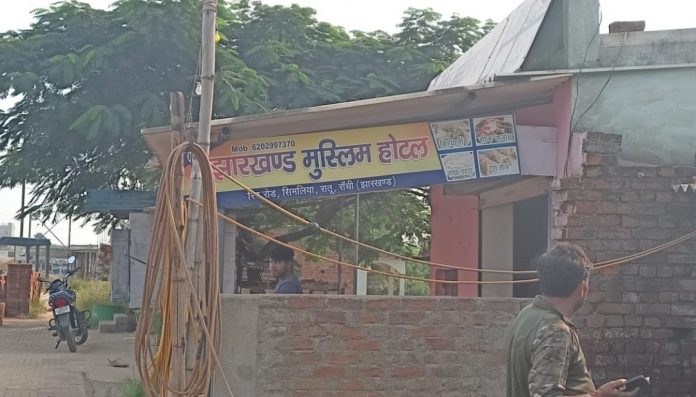
Jharkhand Muslim Hotel, Simlia village, near Ranchi
Around 20 kms west from Ranchi, as we reached Simalia to meet Padmashree awardee folk singer and poet Madhu Mansoori Hasmukh, we found a place named, “Jharkhandi Muslim Hotel”. Though it didn’t come as a surprise as the complexities of Muslim identities in Jharkhand have been our companion throughout, what unfolded gradually made us literally silent. Barely we entered Madhu Mansoori’s house, we met Masi Zama, a social activist who use to come to his place for mundane cordial visits. On being asked what my research focuses on, I casually said, “It’s mostly on the Muslims in Ranchi, their silencing… participation…and…”. I was immediately stopped. His displeasure was though not reflected through his voice, the words he chose were enough to make us understand that we made a statement that we were ought not to. “Muslims? Muslims kahan hai Jharkhand pe? (Where are Muslims in Jharkhand?)”- for a moment I felt my whole research purpose, its objectives are dismantled to the core. “Ye aap logo ke tarah jo log hai uske liye yahan pe Muslims ka aaj ye haal hai (It is the people like you who are responsible for the conditions of Muslims in Jharkhand). When constituent assembly debates were going on why nobody spoke of giving Adivasi status to the Muslims of this region? Yahan pe Muslims nahi hai (There is no Muslim in this region) We are Jharkhandi Muslims, Adivasi Muslims… Moolvasi Muslims”, we were told.
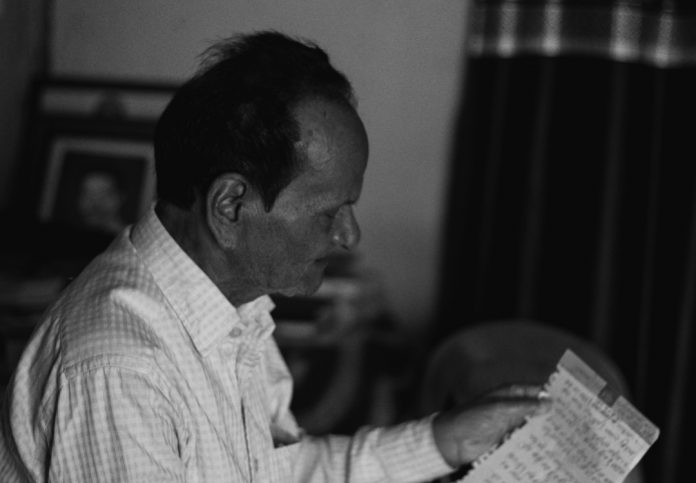
Understanding the gravity of the mistake as we were about to apologize, Madhu Mansoori, in his mid-70s entered the room. Without any ‘Salam-dua’ (Islamic ways of greetings like Assalam Aleikum Wa Rahamatullahi Wa Berakatahu) what he welcomed us with was a humble ‘Namaskar’. Already ashamed enough of our misconceptions, we greeted him back with a ‘Namaste’ and our conversation started. Madhu Mansoori claims himself as an Oraon Muslim. His ancestors, as he says perhaps got converted generations back. But it is the Oraon culture that drives his everyday lives. Throughout the interview whenever he referred to Muslims, he spoke off how the Munda-Oraon culture is intact within them. Islam has no conflict and doesn’t contradict their existing way of lives- rather it is a spiritual addition to the everyday beliefs and faiths.
These fundamental similarities rather embeddedness of faiths and practices into one another were explained to us later by Dr. Eliyas Majid, a Professor of History in Maulana Azad College, Ranchi. Explaining the Jharkhandi culture, he told us, “We have a ritual namely Madeikki Byebastha. It means helping one another in different things.” While in a capitalist set up, hiring laborers for mundane works is the norm, in Jharkhandi culture, as Dr. Majid said people come together to do neighbors’ works – whatever the nature of the work may be.
Another significant concept that Jharkhandi culture entails is of ‘Sahiya’ (friendship between any being or thing). “Koi bhi kisika Sahiya ho sakta hai. Ye zaroori nahi ke usko Insaan hona hai. Bachpan se jo aam, jamun ke paer pe hum khelte the wo bhi humara sahiya ho sakta hai. Hum logo me bahut sara ladki paer ke niche ghanto beithe rehte hai aur pooche to bolte hai Sahiya pass thi. (Anybody can become friend in our culture. It needs not to be human being. The mango, Jamun trees that we played underneath in our childhood could be our Sahiya. In our culture, women sometimes are found sitting beneath the tree for hours and on being asked where they have been- they respond- I was with my Sahiya)”, Dr. Majid continued.
The third and most interesting cultural attribute that he told us is called Gotiya’ (means brotherhood). For being brother in Jharkhandi culture, people need not to have blood relations. Any Oraon, Munda, Santhal can be Gotiya of a Muslim. All these three ideas explained to us by Dr. Majid significantly goes with the fundamentals of Islam. Helping others whereas is considered as Sunnat (Prophet’s (SWAS) way of life), the idea of recognizing every living being is in consonance with the belief of Islam that each and every being is created by Allah (SWT) and humans must behave with them in compassionate and empathetic manner. The idea of universal brotherhood (Gotiya) is also part and parcel of Islamic scriptures and commands. This comparison though is not intended to portray the similarities between Jharkhandi culture and Islamic fundamentals, rather it is just to show how Islamic fundamentals got melted into the Jharkhandi culture and paved the way for the construction of the identity known as ‘Jharkhandi Muslims’.
The cultural assertion of Jharkhandi Muslim identity whereas is rooted into the cultures of the land, the political assertion got its shape and voice through Jharkhand Andolon. Our encounter with Mohd. Faizi, a readymade garment seller near Upper Baazar took us through the terrains of this identity formation. Faizi made us walk in the roads where ‘Jharkhandi Manasikata (Jharkhandi Mentality)’ of Muslim foot-soldiers had to cross the paths of external political efforts and influences that were gathered to dismantle the ‘ekta’ (unity) of Jharkhandi Muslims.
Asghar Ali Engineer in his 1991 EPW paper ‘Remaking Indian Muslim Identity’ pointed out how ‘the assertion of religious identity’ could be a method for the ‘deprived communities in a backward society to obtain a greater share of power, government jobs and economic resources’. Similarly, assertion of Jharkhandi Muslim identity in the context of Jharkhand Andolon became a path to achieve the desired goals of statehood, to secure the rights of Minorities in the newly formed state and to ensure that ‘pehchan’ (recognition) of Jharkhandi Muslims remain intact without the imposition of homogenizing laws and regulations.
Personal is Political- Jharkhandi Manashikata & Instilled Mijaj
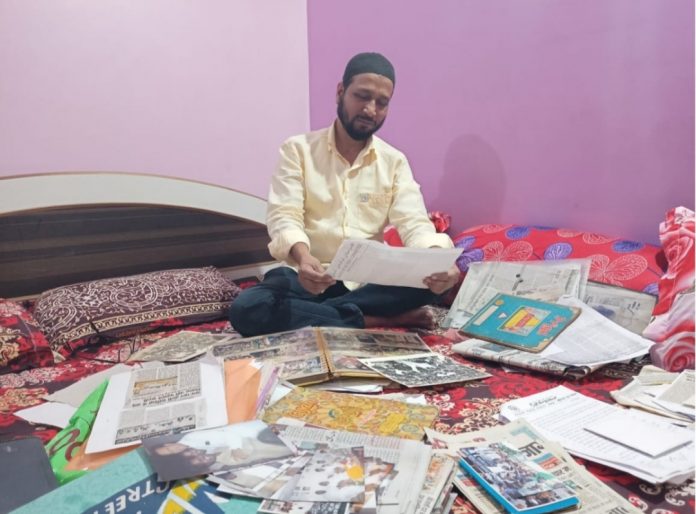
Mohd. Faizi looking back through the pages of own Archives
Mohd. Faizi was born in March, 1966 at Rain Mohalla, Tewari Street near Ranchi Main Road. Since childhood besides poverty another constant feature of Faizi’s life has been instilled ‘Jharkhandi Manasikta’ (Jharkhandi Mentality). Faizi’s father had a small (5ft/10ft) ‘Kapde ka gumti’ (an apparel stall) at footpath near Urdu Library. His childhood was filled with the stories of Jharkhand Andolon. Shared by his uncles, these stories instilled the dreams of separate Jharkhand in little Faizi’s mind. One of the stories was of an old woman who used to stay behind the Gel church (Evangelical) during the British Raj. Every day, ignoring the scorching heat, unbearable rain and all other obstacles she marched through the main road alone with a flag raising the slogan of ‘Jai Jharkhand, Jharkhand Prant Alag Karo’. The flag was nothing but a stick wrapped in a green cloth that became the bearer of Jharkhandi identity. She marched up to the Commissioner’s office and spending some time used to come back. Though there was no crowd behind her, the visual of her intermittent desire to have a separate state got reverberated through all those like Faizi’s uncles who later joined the movement in numbers.As people mocked at her, Faizi’s grandfather told them- “Yaad rakho ye mang jayes hai, aur ye aaj akeli nazar aarahai hai lekin ek waqt ayega jab iske peeche jan sailab hoge” (Keep it in mind that her claims her legit. Today, she is alone but day will come when hundreds will join her for the demands). Faizi not only witnessed the ‘Jan Sailab’ (Public uprising), rather he led it from the front and embraced it as a ‘farz’ (duty, mostly used for religious obligations) against all the odds coming in between him and his pledge to the separate state.
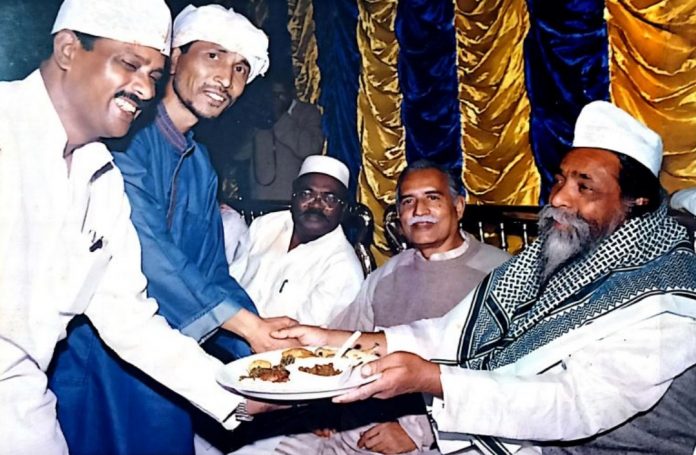
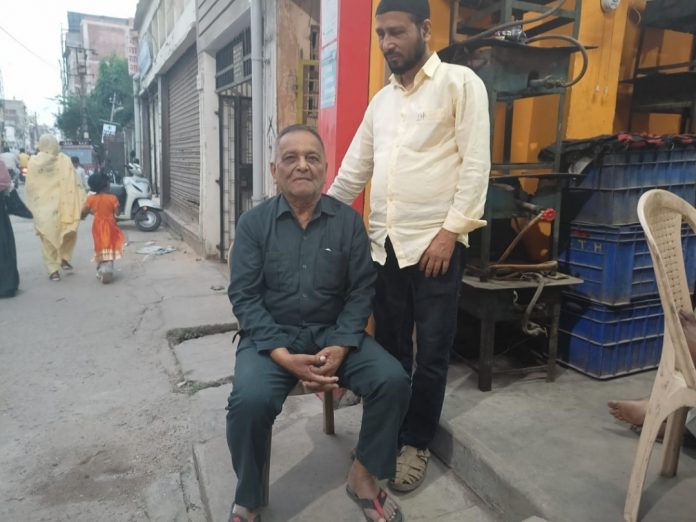
Mohd. Faizi with his uncle and undisputed Muslim leader of Jharkhand Andolon Tako Ansari (Sitting on the Chair)
In his early age only, Faizi saw his uncles Tako Ansari, Mohd. Farooq joining the statehood struggle through N E Horo’s Jharkhand Party. In Faizi’s words, ‘Mijaj to thaa hi (Mood was always there). Along with that the devotion of family members to the cause of Jharkhand made these aspirations grow”.
Faizi had few friends like Shamim and Saajid with whom he started attending the meetings of Sadan Vikas Parishad (SVP). At that time, Prof. Shahid Hasan was the general secretary of SVP. It was very early stage of his engagement into the movement. However, two specific incidents changed the way he looked into the world thereafter. Due to his father’s deteriorating health condition he had to leave his education at an early stage. Still, in 1985, he appeared for the board exam. Though he scored good numbers in subjects like English, Arabi and Farsi, his marks in science and mathematics didn’t let him qualify the boards. He got only 2 marks less than required to pass the exams. There were other students as well with whom similar things happened and they decided to go to Patna Examination Board office.
The reality of blatant discrimination had hit him in an inexplicable way. While he and his ‘Jharkhandi saathis’ (friends from Jharkhand) were told that nothing could be done and they started preparing for the next year, students from Bihar started filling the forms of colleges. Faizi then got to know that his ‘Bihari Saathis’ (Friends from Bihar) were told by the officials to apply for reviewing their copies and got the required grace marks whereas they were told, “Yahan pe kuch nahi ho sakta (Nothing can be done here)’. This instance not only made huge impact on Faizi’s mind rather it made him further believe that ‘Ye maang Jaees hai, aur inse in Bihario se chutkara milna chahiye’ (The claims of statehood are legitimate and we must get rid of Bihari officials).
While referring to the second incident Faizi was red in rage. Sipping a bit of water from the glass that was kept near his bed, he continued- “It was 1987. For the first time, anti-encroachment drive was going on in Ranchi. Police forces and officers came to our small Gumti and asked us to immediately vacate it. They threatened us that if we don’t move, they would trample it on and would even charge fine. We didn’t have money- so we started dismantling out only source of earning. And as I was putting down the asbestos, a small piece of brick fell near an Officer’s feet. It didn’t touch him at all but he started abusing me with ‘Maa ki gaali’ (Slangs referring to mother). I felt like immediately hitting them. But no, I couldn’t. My ailing father was standing there along with my little brothers. I silently listened to them but pledged that I would take revenge. If not from them at least from their viradari (their kind). It was our time to get rid of all these brutal Bihari officers and polices- We had to achieve statehood- We must- for the sake of our existence- for the sake of having a dignified life”- Faizi was trembling- silence clouded the moment- tears were visible with the determination that led him to become one of the most committed soldiers of Jharkhand Andolon.
During this phase, he led a group of 10-15 youths who participated in different social works. Meanwhile All Jharkhand Students’ Union (AJSU) had already been formed and movement got its required momentum. One day, when they were sitting near Urdu library, Ranchi Main Road, Zubair Ahmed (then the Ranchi town secretary of AJSU) came and asked them to join AJSU. Zubair even brought the founder president Prabhakar Tirkey and arranged a meeting with Faizi and his friends.
Within days, for his oratory skills and determination, he became very close to Tirkey and other CC members of the party. “Kyun ki itne sare adviasio me ek Muslim chehra, upar se accha bakta (Among so many Adivasis, a Muslim figure with good oratory skills)” made people like him and Zubair stand apart. Along with Zubair and other Muslim leaders/members they started gathering Muslim support for the movement. Though Muslims’ presence had always been there since the very early days of Jharkhand Andolon, its further expansion and visibility became their objective.
Political Assertion of Identity- Jharkhandi Muslims and Foundation of JMC
Since then, what drive Faizi throughout was his desire to achieve statehood and the recognition of ‘Jharkhandi Muslim’ identity. The assertion of this ‘Jharkhandi Muslim Identity’ led people like Faizi or Zubair to invest their lives for the cause of separate statehood where they would be considered in same manner as their ‘Adivasi saathis’, instead of their religious brethren of the other states.
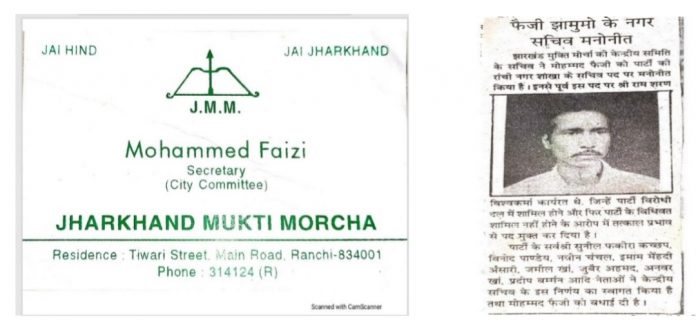
The JMM Visiting card of Faizi and News Cutout of Faizi inducted as Town Secretary, JMM
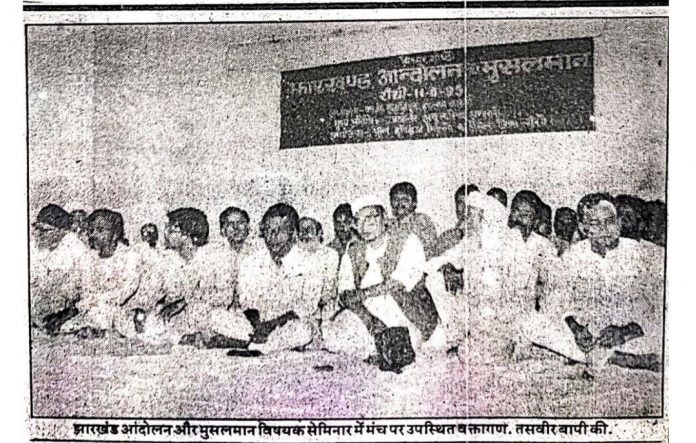
As soon as Faizi joined Jharkhand Mukti Morcha (JMM) in 1992 after a meeting with Prabhakar Tirkey and other leaders of AJSU (Tirkey faction) at Suleiman hotel, Lake Road, Ranchi, he got the chance to further work both for the statehood movement and the cause of separate Jharkhandi Muslim identity. The very next year in 1993, with the objectives of working for the social causes he founded Muslim Youth Forum. The organization though was not politically active, it could be called a social reform wing of the broader struggles for the Muslims in the state.Already Jharkhand Minority Front of Jharkhand Party was formed in 1988 and consequently in the next year Jharkhand Quami Tehrique (JQT) was founded. The founder president of All Jharkhand Students’ Union Prabhakar Tirkey in one of his articles in Prabhat Khabar titled ‘Jharkhandi Pehchan KeL iye Sanjida Rahe Musalman’ talked about the enormous participations of Muslims in the statehood struggle. His article even reflects what Mohd. Faizi has to say- “Jaise aapko pata hai Musalman bahut pehle se ye andolon me hai. lekin Musalman jo jude, kisi na kisi party se jude, aapna identity le kar ken ahi aye…Ab musalman ye tahriue ko aapne haat me bhi lenge aur tehrique chalayenge. (As you know Muslims have been part of this movement since very initial days. However, Muslims joined different parties and never came with their own identity. Now, it was the time for Muslims to lead the movement, to play the role of leaders not only the participants).On being questioned that why the Muslim identity became important at that stage, Faizi was more clear and vocal- “We have seen what has been the role of Muslims in Indian Independence. Even after that today Muslims are called ‘Gaddar’. Our histories have been deliberately eliminated. If we don’t create our own identity in this statehood struggle, people in coming days would definitely say that we had no role in the movement. We apprehended that in very early stage”. This was the reason why they not only fought rather as Faizi said, “We kept the documents as the evidence to prove that Muslims were no less in this movement and we made ‘barabar ki qurbani’ (equivalent sacrifices) like other communities”. Referring to ‘shahadat’ (martyrdom) of several Muslim leaders who died for the movement including Abdul Wahab Ansari, Qutubuddin Ansari, Murtuza Ansari, Mohd Zubair, Mohd Sayeed and Ashraf Khan, he implied, “Ye cheese Tarikh me jaana chahiye. Logo ko pata hona chahiye ki Musalman ye alag rajya ke liye kya kiye hai (It must be written in pages of histories. People must know what Muslims have done for the separate state).A Dr. Eliyas Majid had even mentioned in his book “Jharkhand Andolon aur Jharkhand Gomke Horo Saheb” that Muslims in the late 80’s needed their identities to be reflected on the grounds of the movements. On May 25, 1988 while presenting the working paper in the foundational Conference of Jharkhand Muslim Front (JMF), Dr. Majid said despite their participation and martyrdom, “Muslims utna hi cchipa hua hai, jitna Jharkhand Andolon ubhra hua hai” (Muslims are as much silenced as much the movement is vocal). His address majorly focused on two parts- firstly, the individual identity of Muslims and the political indifference toward their demands and secondly, the separate identity of Jharkhandi Muslims that share more cultural values with the Adivasi ‘saathis’ than their North Indian coreligionists. In words of Dr. Majid, “Jharkhand humara andolon hai, Jharkhand humare wajood se jura sawala hai” (Jharkhand is our movement, it is connected to our Entirety- our Entity).Even after this eternal connection with the movement, as Faizi says that Muslims were denied proper position in the histories of the struggle. “While writing the history of AJSU, people would talk about Suraj Singh Besra, Prabhakar Tirkey, Lalit Mahato, Mangal Singh Bobonga but nobody would mention Nazm Ansari, Farooq Azam, Zubair Ahmed or Mohd. Faizi. When JMM’s history would be drafted people would remember Shibu Soren, Suraj Mandal and Sailander Mahato but Prof. Abu Talib Ansari or Hazi Hussain Ansari would not be named”. His concerns later proved to be right as most of the accounts of Jharkhand movement hardly spoke of Muslim participation. They understood the fact that if only they would come up with separate organizations for Jharkhandi Muslims, it would be recorded in the pages of history.It was in early 1995 that the decision regarding the formation of Jharkhand Area Autonomous Council (JAAC) was taken. On the eve of it, Muslims of different Jharkhand ‘naamdhari’ (Jharkhand-named) parties came together to plan the formation of a specifically Jharkhandi Muslim platform that would talk about the condition of Muslims- that would ensure the constitutional rights of the community in the newly proposed state. During this period Qazi Mujahidul Islam of Imrat-e-Shariya was about to come to Ranchi. Hussain Qasim Kacchi, who used to be a keen patron of the movement asked Mohd. Faizi and his friends to meet Mujahidul Sahab. They planned a seminar on June 11, 1995 at Anjuman Plaza Hall, Ranchi Main Road to welcome Qazi Sahab. As there was no properly functioning Muslim front, they decided to use the banner of Qazi Sahab’s organization All India Milli Council.In Faizi’s words, “Banner didn’t matter to us, we had to do something to bring Jharkhandi Muslims together”. The title of the seminar was ‘Jharkhand Andolon aur Musalman’ (Jharkhand Movement and Muslims). Qazi Sahab while was the chief guest of the seminar, Prof. Abu Talib Ansari had presided over it. It was for the first time in the history of Jharkhand andolon that discussions happened in a public forum on participation of Muslims. Qazi Mujahidul Islam referred to the anti-racial movement in South Africa where Muslims stood by the colored people. This anecdote further worked as a spark as it not only echoes the ideals of Jharkhandi Muslims, rather it speaks directly to the fundamental tenets of Islam that commands its followers to join hands with the oppressed people of the world. He also called for an ‘umbrella’ organization that would accommodate all Jharkhandi Muslims.
Seminar at Anjuman Hall Plaza on Jharkhand Andolon aur Musalman
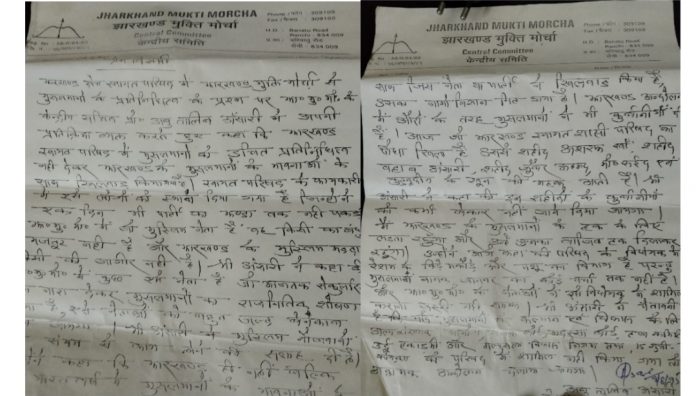
Following Qazi Sahab’s advice Muslim leaders of different Jharkhandi Parties called for a meeting on June 27, 1995 at Mohd. Faizi’s place. Around 252 representatives of different panchayats, social organizations and political parties attended the meeting and formed the Jharkhand Milli Council (JMC). As per the reports of Prabhat Khabar June 28, 1995, most of the leaders agreed to the contention that despite huge presence of Muslims in different Jharkhandi parties, they were not given due importance in decision making amounting to political silencing of Jharkhandi Muslims. So, the major objectives of JMC were to gain the recognition of Jharkhandi Muslim Identity (Moolvasi Muslim) along with claiming the legitimate political, economic, social and educational rights. To avoid the risk of catapulting another cult figure that the Jharkhandi parties had been the overwhelmed with, JMC decided to form a presidential council. Prof. Abu Talib Ansari whereas was declared the chief of the council, Farooq Alam, Mumtaz Khan, Prof. Khalik Ahmed and Salik Ahmed were the elected members. Nazm Ansari was projected as the Chief Secretary of the party and Mohd. Faizi, Sarfaraz Ahmed, Rafat Hussain, Abdul Moin Rizvi, Jameel Khan, Samnur Ansari, Mustaq Alam and Prof. Amin Ahmed became members of the secretariat. JMC pledged to not have any relation with the All India Milli Council, rather it decided to become a frontal organization for the Jharkhandi Muslims. Formation of JAAC- ‘Yahan Pe Muslim naam ka janwaar ka koi zikr nahi hai’Meanwhile, on July 30, 1995, Jharkhand Area Autonomous Council (JAAC) was formed and Shibu Soren became the chairman of the council. As anticipated earlier, almost negligible representations of Muslims in JAAC clearly made the fears of elimination legitimate. Protesting against the deliberate omissions of both Muslims and their causes Prof. Abu Talib Ansari wrote a press release on August 9, 1995. The release, however, could not see the light of the publication as Mohd. Faizi and other comrades restrained him from sending it to the press. As per Faizi, this declaration would have been considered as resignation of Prof. Ansari from JAAC leaving not even a single member in the council to voice the concerns of the Muslims. In the press release (collected from Mohd. Faizi) what we found was acute disgruntlement of Jharkhandi Muslims regarding the formation of JAAC. Prof. Ansari (then the Central Committee Secretary, JMM & Chief of Presidential Council, JMC) in the release said, “JAAC has played with the emotions of Jharkhandi Muslims by not giving them proportionate representations. There are few people in the council who didn’t even hold the party flag ever”.
Unpublished Press release of Prof. Abu Talib Ansari after the formation of JAAC in 1995
Mentioning that the Muslim leaders of JMM are not ‘kisi ka bandhua mazdoor’ (bonded laborers), he continued, “Jharkhand is nobody’s paternal property. There are leaders in JMM who have used the slogans of secularism to undermine the cause of Muslims. JAAC is the by-products of martyrdoms of leaders like Ashraf Khan, Wahab Ansari, Zubair Ahmed, Mohd. Sayeed and Qutubuddin. These ‘shahadat’ should not be forgotten if an inclusive Jharkhand state is to be imagined.
Though there were references to Silk, Animal Husbandry and other departments in the JAAC bill, there was no mention of Muslims (Yahan pe Muslim naam ka janwaar ka koi zikr nahi hai). Prof. Ansari categorically warned that if Minority Welfare & Development Council, Minority Commission, Waqf Board, Haj Committee, Madrassa Board, Urdu Academy and implementation of 15 points program are not considered in the council, there would be parallel movement of Jharkhandi Muslims across the territories of JAAC.
Claiming Adivasi Status- Kohl Jolha Bhai Bhai
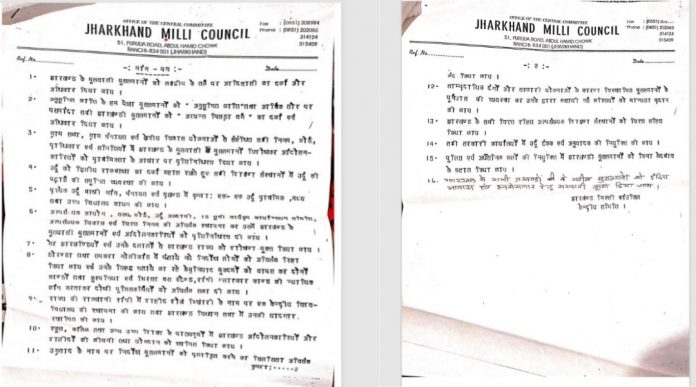
While JMC’s movements, processions and meetings across the territory of the proposed state continued with vigor, the major step of claiming their separate identity of Jharkhandi Muslims came on October 24, 1998 when the party leaders reached Delhi to submit petition to the then Prime Minister Atal Vihari Bajpayee. At Tal Katora stadium, New Delhi, JMC gave a protest call and was presided by Prof. Abu Talib Ansari. After the demonstrations, they submitted the petition containing the following key points-
First Draft of JMC Petition submitted to then the Prime Minister Atal Behari Bajpayee in 1998
1. The Moolvasi Muslims of Jharkhand must be given the Adivasi status and rights as available in Lakshadweep (As per Article 342 of Indian Constitution)
2. Like the Scheduled Caste and Scheduled Tribes, Pasmanda Jharkhandi Muslims must be given Economic and Political Rights
3. Jharkhandi/ Moolvasi Muslims and specifically those who have been part of Jharkhand Andolon must be given priorities in Gram Sabha, Gram Panchayats and any other developmental commissions and boards
4. Urdu must be retained as the second language and all of the educational institutions must have Urdu in its curriculum
5. In villages and towns Urdu schools must be opened for the development and retention of the language
6. Minority Welfare Commission, Waqf Board, Madrassa board, Haj committee, Urdu Academy need to be formed and Andolonkaris should be prioritized in these committees
7. Jharkhand should be free from the coercion of Non-Jharkhandis
8. A University under the name of revolutionary Sheikh Bhikhari must be founded in Ranchi. Jharkhand Legislative assembly also must have memorials of Bhikhari
9. In school curriculum, the lives and sacrifices of Jharkhand Andolonaris must be included
10. The trials of Muslim youths in the name of terrorism must be stopped
11. Places where the Muslim families had to resettle due to communal disturbances and riots must be given residential legitimacy
12. All the Government offices must recruit Urdu translators
13. Jharkhandi Muslims must be recruited in Security and Police forces without any discrimination
14. All the poor Jharkhandi Muslims should be given residential facilities through Indira Awas Yojana.
These claims clearly indicate the significance of ‘Moolvasi Muslim identity’. On one hand, it claims the status of Adivasis, on the other it demands to secure the rights of Minorities enshrined in the constitution. During our conversation, several times we found Faizi referring to incidents that show how Jharkhandi Muslims had been treated by Muslims of the other states. While being asked what was the positions of Muslims of other states (Northern India) vis-à-vis their struggles, Faizi lamented, “Koi samarthan nahi- birodh, birodh. Ye log nafrat kiya karte thee. Ye log yehi bat failaya karte the ki sara jo ye log Kohl ho geya hai. Ye log bolte the ki ye julus jalsa karke hariya daru kha ke so jaya karte hai. In logo ka hukumat karne ka mijaj ban gaya thaa. Aaj bhi ye log Jahan pe basenge chahenge ki wahan ki hakim hum ban jaye. (They never supported us. They told us that we have become Kohls. They have the perception that after Processions and meetings, we take hariya [a specific form of alcoholic drink made out of rice] and sleep. They got used to rule over us. Even now wherever they settle in, they want to become the owner of the place)”.
‘Arab ke sarjameen pe jaye toh hum jaye humari Jharkhandi Pehchan se’
Such emotion was reflected in actions of JMC even after the state of Jharkhand was formed. The demand of separate Haj Committee as mentioned earlier though was there since the formation of different Muslim Forums during Jharkhand Andolon, several Ulemas from Bihar said that for the first year (i.e. 2001) let the Jharkhandis be sent through Bihar Haj committee. Faizi and his comrades were not ready under any circumstances to have some compromises. “Itne jaddo-jehad ke baad jab alag rajya mila tabhi bhi hum jaye Haj karne Bihari pehchan se? Nahi! Hum chahte hai ki hum jab Arab ke sarjameen pe jaye toh hum jaye humara Jharkhandi Pehchan se (After so many struggles and fights we have got the separate state and still are we expected to go for Haj with Bihari identity? No! Never! We want when we will touch the land of Arab, we will have our Jharkhandi identity)”, Faizi’s words were reverberating in the room- the only thing that we could hear was the aspiration for separate Jharkhandi Muslim identity- even in the holy land of Islam where all other identities are subsumed by the broader identity of ‘ummat’.
On April 28, 2001, JMC submitted memorandum to then Minority Welfare Minister of Jharkhand Arjun Munda and asked him to form separate Haj Committee immediately. Under pressure the newly formed Jharkhand Government on July 2 declared the formation of separate Haj Committee in Jharkhand and Arjun Munda was made the president of 14 members’ council.
Faizi referred to another meeting of Momin Conference in late 90s in Irba where he further understood how Muslims of other states looked down upon them. The chief guest was from Bihar who not only continued comparing Jharkhandi Muslims with Kohl tribes rather he continued saying that Muslims in this state didn’t have manners of clothing and speaking. Only after the ‘Yalgar’ (attack) from the people of Bihar that they started learning the Islamic ethos. This savior complex of North Indian Muslims is what the Jharkhandi Muslims fought against.
Their opposition to the Ulemas from Bihar and Uttar Pradesh got reflected in the meeting of JMC on October 11, 2001. Under the chairmanship of Haji Akhtar Ansari, district president, JMC, this meeting unanimously took the decision of not letting the Muslim leaders of North to divide the unified Jharkhandi Muslim community. Such idea of united Jharkhandi Muslim identity though stands in contrast to the caste panchayats working at the mohalla level, it came several times in the words of Mohd. Faizi, Zubair Ahmed and other leaders as well that without the external interventions such ‘firqahs (sects and divisions)’ wouldn’t have much fodder to grow.
JMC continued its struggle for the rights of Jharkhandi Muslims and emphasized on the proper upholding of Article 29 & 30 of the Indian constitution. On one hand, the fight was against any sort of discrimination, on the other it was for gaining the recognition of a separate identity. Considering the backwardness of Muslims in terms of economic and educational qualifications, JMC submitted its petition to Arjun Munda, then the Minority Welfare Commission, on June 5, 2001 to provide the Jharkhandi Muslims with 20% reservation. JMC used the analogy of Karnataka’s Muslims as in late 90s they used to have 6% reservation within the cap of OBCs. However, the reservation of Muslims in Karnataka has different historical trajectories. Qazi Arshad Ali in his book ‘Karnataka Muslims & Electoral Politics’ mentioned that Muslims were given reservation as backward class back in 1921, according to the recommendations of Justice Miller committee that was appointed by Maharaja of Mysore. The context of Jharkhand was though totally different, the analogy of Karnataka was a point for them to show the possibility of using Other Backward Classes quota for overall development of Jharkhandi Muslims.
Against the Grains of Homogeneity
Till the date, though in an overwhelmingly communally polarizing situation, JMC is still working for the rights of the Jharkhandi Muslims. The lynching of Tabrez Ansari was the latest that made them sit together further to contemplate for what actually they devoted their lives- Is it the Jharkhand they hoped for? While we were about to wrap up the interview, Faizi asked his daughters to meet us. At a glance, we recognized Shireen Faizi who was one of the leading women faces during Anti-CAA movement in Ranchi. Faizi smiled at us- “Humara pura khandan hi Andolon se juda hua hai… Abhi bhi Jharkhandi Muslims ka koi bhi issue me pehla insaan jo raste pe ayega wo mere ghar se hi niklega…(My whole family is connected to movements. Still now, whenever Jharkhandi Muslims will fight for anything, the first person to come out of the house will be from our place)”- there was reflection of just pride that still helps him to sustain the struggles for existence.
At a time when Hinduization of Adivasis has become one of the major propagandas of the ruling Hindu rights, the nuanced ‘Adivasi Muslim’ identity must be further interrogated. Against the grain of religious homogenization where Muslims and Hindus, Muslims and Adivasis, Muslims and Dalits are pitted against each other as singular blocks, the assertion of ‘Jharkhandi Muslim’ identity becomes imperative at least to reclaim the Adivasi-Muslim unity in Jharkhand. For the survival of Indian democracy perhaps what we need the most is the recognition of heterogenous identities that have not been products of some decade-old propagated conflicts, rather have history of century old collaborations and bonhomie.
Authors:
Abhik Bhattacharya is a Doctoral Research Fellow, School of Liberal Studies, Ambedkar University, Delhi. He works on Silencing and Spatial segregation of Muslims in Ranchi
Arshad Raza Khan is the admin of Facebook page Muslims of Ranchi. He is also currently pursuing his M. Tech from Central University of Jharkhand
Ayan Tanweer is a Freelance photographer based in Ranchi. He is pursuing his M.B.A from ISB&M, Pune
source: http://www.muslimmirror.com / Muslim Mirror / Home> Must Read / by Abhik Bhattacharya, Arshad Raza Khan & Ayan Tasveer / October 28th, 2021