A recent collection of his radio talks point to the stellar role birds play in preserving our environment
Sálim Ali could reach out to a cross-section of society, telling them about birds and the stellar role they play in preserving our environment. (Source: Black Kite)
From busting myths about fireflies lighting up the homes of weaver birds to explaining the whys and hows of the spectacular phenomenon of bird migrations, there has been, perhaps, no one better than Sálim Ali, India’s best-known ornithologist, to demystify the avian world. To Ali’s already formidable list of works, comes another: a collection of his radio talks. Edited by Tara Gandhi, Words for Birds (Black Kite), the book shows him doing what he did best — reaching out to a cross-section of society on birds and the stellar role they play in preserving our environment.
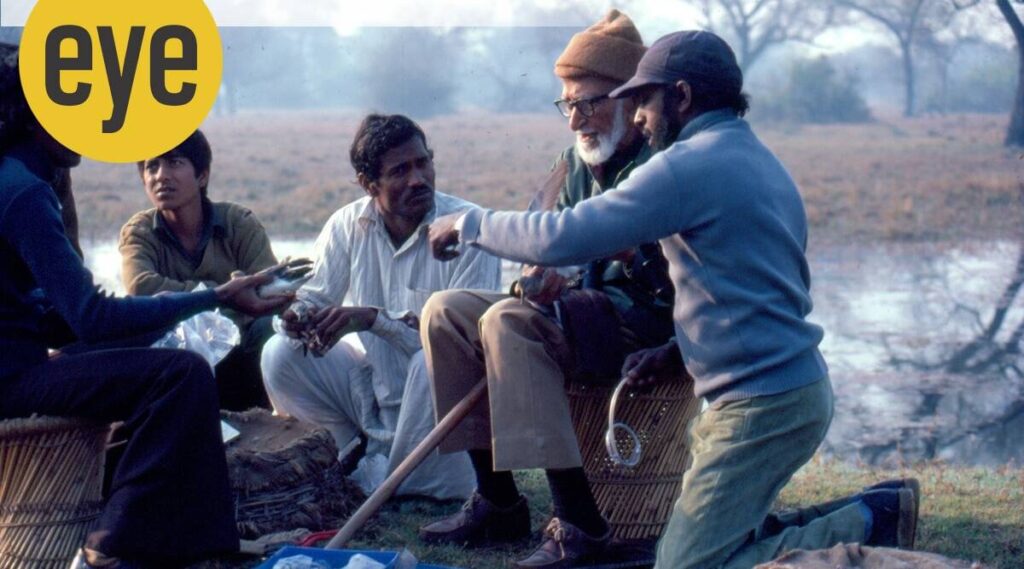
“He was an excellent communicator. He gave a number of lectures and he communicated to people of different professions. For instance, while speaking to mountaineers, he would say — ‘since you go to great heights, to places that ornithologists are not able to go to, look out for nesting sites, for Lammergeiers, the big vultures that are seen in high altitudes. Look around and if you see any birds, let us know, take down notes’. He would talk to people to get out of their own turf or specialisation and become interested in the wider picture,” says Gandhi, who was guided by Ali for her MSc. in field ornithology shortly before he passed away in 1987, at the age of 90.
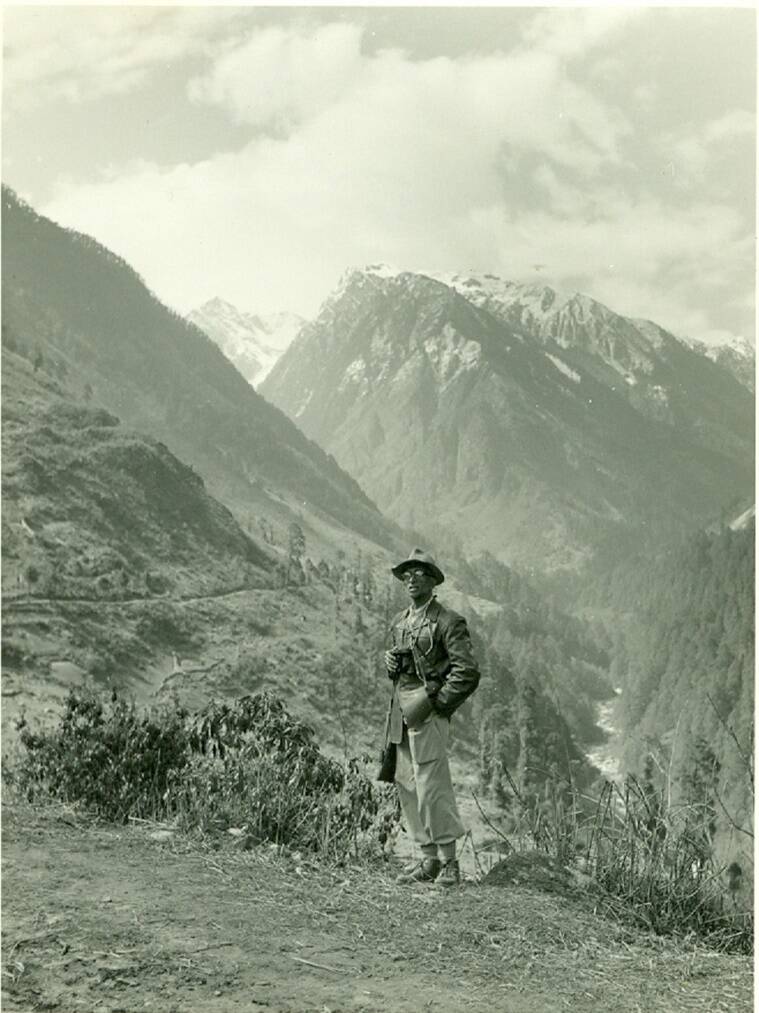
India’s birdman, Sálim Ali. (Source: Black Kite)
He was, as she says, ahead of his times in understanding the importance of involving people in conservation. “You will come across one of his talks where he tells his listeners that if you see any unusual birds on the seashore, write to us. This struck me. Nowadays, we talk about citizen science, lay people’s involvement in scientific documentation. A number of bird watchers are specially involved in citizen science — doctors, teachers and people from many other disciplines are making bird lists and sending them to be compiled. A lot of important material comes out of analysing this data . Those days, nearly 60 to 70 years ago, Sálim Ali would urge his readers and listeners to write to the Bombay Natural History Society (BNHS) to record the information.”
Ali who took over the BNHS after Independence and remained with it for decades, was key in keeping the organisation going and in initiating a systematic study of birds. “He had a vision, which was much ahead of his time and very contemporary,” says Gandhi, who has previously edited A Bird’s Eye View: The Collected Essays and Shorter Writings of Sálim Ali (II Volumes, Permanent Black, 2018) and is the author of Birds, Wild Animals and Agriculture: Conflict and Coexistence in India (The Orient Blackswan; 2015).
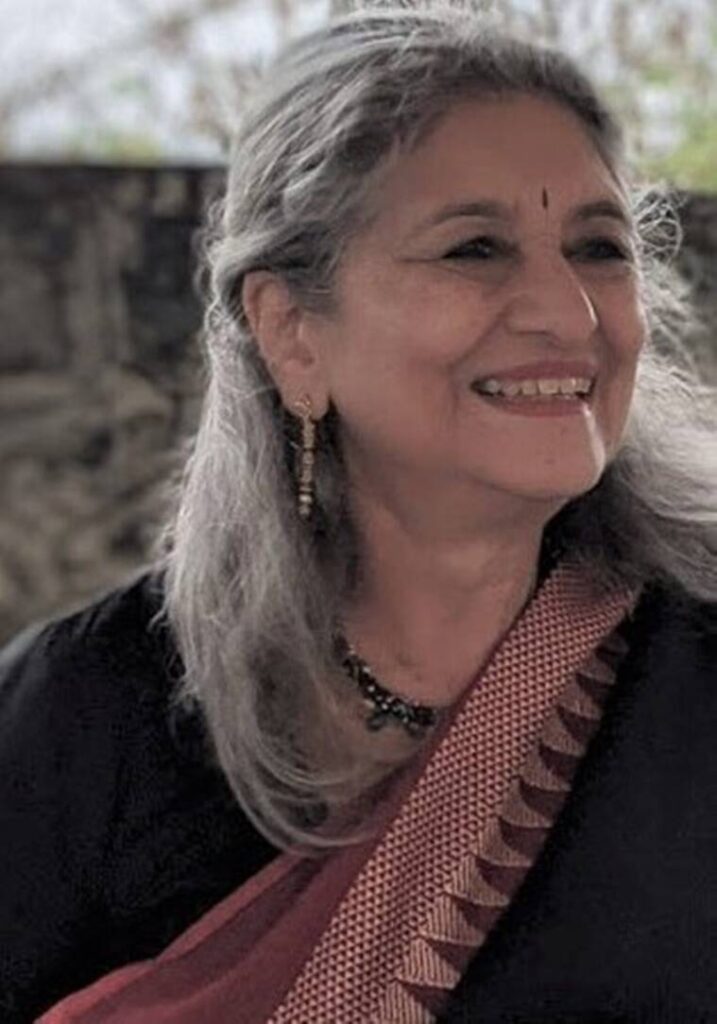
Tara Gandhi, who has edited ‘Words for Birds’.(Source: Black Kite)
Delivered between 1941 and 1985, Ali’s talks were recorded mainly at the All India Radio (AIR) station in Mumbai and range from one on trends in bird study to talking about bird life for a school broadcast, in conversational Hindustani titled Chand Hairat Angez Parandon aur Janwaron ke Ghar, speaking to children who didn’t speak English. In his autobiography, The Fall of a Sparrow (Oxford University Press, 1985), he recounts his days as a guide lecturer in the Natural History Section of the Prince of Wales Museum in Mumbai, where he remembers particularly enjoying “talking to pupils from the School for the Blind, because of the lively interest they showed.” Gandhi says, “He made an effort to reach out to children to make them understand more about birds and nature in an easy way.”
After his stint at the Museum, Ali spent a year in Germany, training under Erwin Stresemann at the Berlin University Zoological Museum, returning to India in 1930 and launching on a series of bird surveys across the country. Beginning at a time when ornithology, in his own words, was the “Cinderella of Indian Zoology”, Ali can be credited for taking the discipline outside museums and collections and out in the natural habitat and widening its scope. “The kind of projects he undertook later on from the ’60s onwards were extremely important and absolutely pragmatic. He took on a project on birds in the aviation sector, that is bird hazards in aviation. It was a huge project and it was entirely for saving human lives, for preventing huge losses. The study tried to find methods to avoid bird hits on aircraft — observing the time of the day, the trajectory of the birds, which species were involved and how to prevent them from congregating in the airports. Earlier, his surveys were about collections which became a valuable and permanent resource , but later, he moved away completely from the whole idea of merely collecting specimens when he became the head of BNHS,” says Gandhi.
But being dubbed India’ birdman sometimes shadowed his role as a conservationist. “He would say repeatedly that everything is interlinked in nature. It is not just the birds themselves, it is the habitat of the birds and different ecosystems in India he wanted conserved for the sake of all the flora and fauna within them. He spoke about conservation of endangered species and regretted that so many species had died out. Ali was instrumental in getting a number of national parks and protected areas established. Through his communication skills he was even able to persuade royal families to set aside their hunting reserves for conserving the species within them,” says Gandhi.
source: http://www.indianexpress.com / Indian Express / Home> Books and Literature / by Devyani Onial, New Delhi / April 03rd, 2022
The women’s writings and paintings collected here pose fundamental questions about the relation between art and marginality
When tongues run dry but hearts remain fearless — can there be a plight direr than this tearing apart of body and mind? The drought on the tongue is the silence of fear, hiding a heart that rails against terror, pledging to shatter the quiet. Reema Ahmad and Semeen Ali have come up with a dream title for their edited collection of poetry, prose and painting by women, many of them newer voices, some unheard before, published by a daring and often-experimental publisher of poetry, Red River.
This jagged collection poses fundamental questions about the relation between art, passion, marginality, and the vagaries of everyday life. With close to 150 contributions combining verse, narrative, reflections and images, the heart of this book is filled with courage, and tongues remain dry no more — they spill rivulets of passion, anger, love, protest, and triumphant celebrations of the quotidian.
Hope is a lie
The sheer range reimagines the relation between creativity and passionate selfhood through a spectrum where the accomplishments of craft are uneven. But the honesty never is, and since in the end, honesty occupies the true heart of artistic craft, it also invites us to broaden our understanding of technical finesse beyond the usual and the expected.
Early in the collection, Debolina Dey confesses that “These poets have taught me/ to be a ruthless hunter of metaphors/ as if your body/ could be something else.” The body returns in its quotidian oppression in Sukla Singha’s story, ‘That ‘90’s Show: Blood, Shit and Other Things’, chronicling the daily humiliation, of body and labour, of a mother, experienced and narrated by a young daughter, but ending with the strange billowing of the heart: “A storm of jet-black hair in the air. A Meitei woman’s boisterous laughter. Nobody had the guts to ruin that magic.”
The vernacular is not only the name of reality here, but also of synergy between languages. Namita Bhatia’s Hindi poem, ‘Cactus’, opening with the eloquent grunt, “Mai cactus hun — cactus”, ends, in Reema Ahmad’s translation, with the “chaste hope” “That if my skin be peeled off/ I may bleed only milk”. But in her engrossing short story, ‘An Obscure Life’, Ketaki Datta reminds us that often hope is a lie — that her friend Swapna who claimed to a hotel singer had died without ever becoming one, after a life of prostitution known only to her mother.
In this dry-tongued world, poetry, as Sneha Roy knows, is a forever transgression: “Like a pillar of ‘shameless poetry’ standing tall/ in Plato’s failed and banished world.” Poetry lies in the humble and the mundane, not in flamboyance, as in Aratrika Das’s dream that her son grows up to cook in a kitchen of daily, soiled labour, not in the TV kitchen with glamorous aprons and hi-tech gadgets.
Haunted by sensation
Bodies are real and unruly in this collection. In her poem, ‘On Carving a Watermelon’, Yashasvi Vachhani voices a woman whose lover tells her: “you have a pretty face, if only you lost some of it/ some of the meat that calls your bones home”. As that “piece of art inedible”, she watches as “you hand me a knife/ and say begin”. Zehra Naqvi, in a poem of visual experimentation, reclaims the female body away from male desire and maternal nourishment: “Because our breasts belong to us. Not to the men who desire us. Not to the children who feed on us.” Dipali Taneja writes about the ageing body haunted by memories of sensation: “You hear that your uterus is senile!/ It may well be, but your skin is not.”
The lines face Teena Gill’s painting, Dancing Woman, and the meditative trance on her face strangely intensifies the bodily sensation in Taneja’s poem. Ikilily of Pink Lips, in Neha Chaturvedi’s ominous fairy tale of that name, nurses a curse — she can have sex, but if “so much as a thought of love entered her mind about the man or the woman she was with, the person would die.”
The myth contrasts sharply with the sculpted realism of Shamayita Sen’s poem, ‘Consent’, which states: “The birdcage in your chest/ will have to ask for consent/ for mine to respond.” Till the very end, the ineluctable violence of desire shapes the paradox of Khushk Zubaan, Bebaak Jigar.
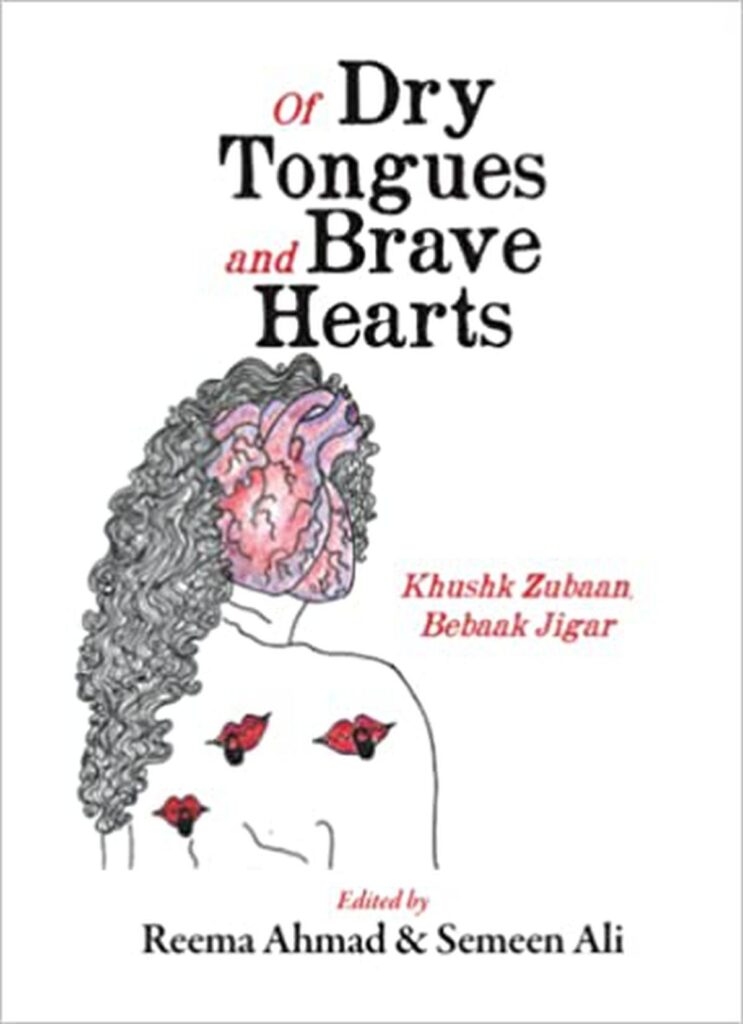
Of Dry Tongues and Brave Hearts; Edited by Reema Ahmad & Semeen Ali, Red River,₹599
The reviewer’s most recent book is The Middle Finger, a campus novel about poetry, performance, and mentorship.
source: http://www.thehindu.com / The Hindu / Home> Books> Mixed Collection / by Saikar Majumdar / April 02nd, 2022
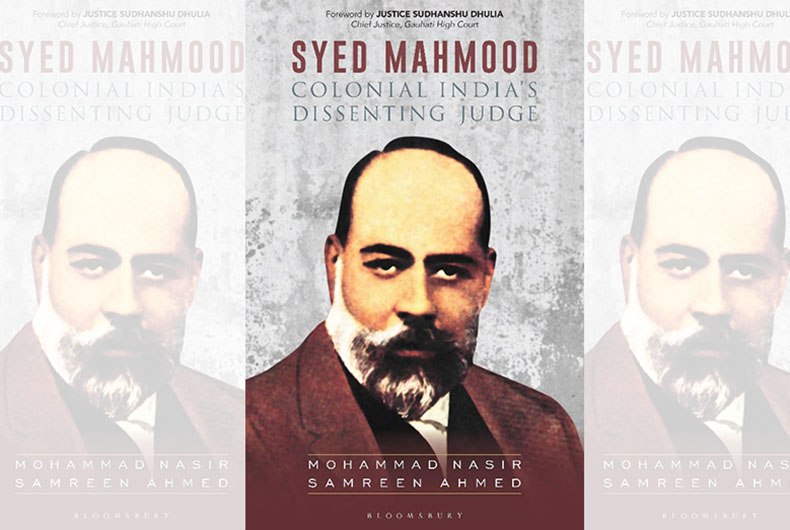
Appointed to the High Court at the remarkably young age of 32, Justice Syed Mahmood displayed during a tenure of just six years that law without conscience was merely a facade for the perpetration of injustice
New Delhi:
In the late 19th century, Justice Syed Mahmood, son of the great social reformer Sir Syed Ahmad Khan , and the first Indian judge of the Allahabad High Court, became an icon of judicial resistance to British colonialism at the apex of British power across the world.
Appointed to the High Court at the remarkably young age of 32, he displayed during a tenure of just six years that law without conscience was merely a facade for the perpetration of injustice.
A number of his dissenting judgments became a template for reference by future generations, Mohammad Nasir and Samreen Ahmed write in “Syed Mahmood: Colonial India’s Dissenting Judge” (Bloomsbury).
Outside of law, his largely invisible but wide-ranging intellectual corpus engages with questions related to colonial transformation of education and its reconciliation with Muslim identity, national integration and religious tolerance.
His role in the making of Aligarh Muslim University (AMU), presently celebrating its centenary, was notable, but survives only as a footnote in history.
This book chronicles the triumphs and tragedies of Syed Mahmood’s life, and his contribution to shaping the consciousness of modern India. It succeeds in exhuming a seminal figure from the dust of history and demonstrates how the past continues to speak in the present.
Mohammad Nasir is Assistant Professor in the Department of Law, Aligarh Muslim University (AMU). He has written on legal and socio-political issues for Hindustan Times, Indian Express, The Wire and OPEN. He co-edited the Special Centenary Issue of the Aligarh Institute Gazette, a periodical started by AMU founder Sir Syed in 1866.
Samreen Ahmed is a legal researcher and writer based at the Aligarh Muslim University. Her academic writings have been published in the Economic & Political Weekly.
source: http://www.ummid.com / Ummid.com / Home> India / by IANS / March 29th, 2022
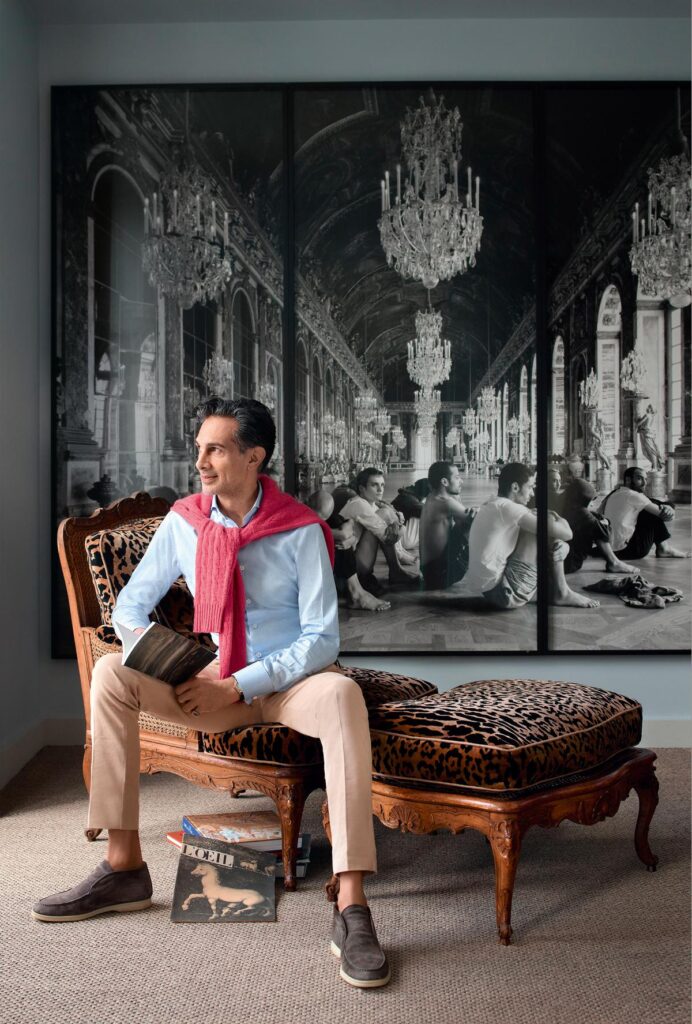
Amin Jaffer in his library dining room, standing in front of Yuntao Zhang’s painting of Cellini’s Medusa | Photo Credit: Architectural Digest / Antonio Martinelli
The Rwanda-born Indian curator, who has made the French capital his home, on the Al Thani collection’s first museum, his new book, and the importance of private collections
Writer, curator, collaborator, colonial furniture specialist: Amin Jaffer wears his titles effortlessly. And in the last couple of years, he’s added another one — that of Paris denizen — after he uprooted his English life of 25 years to move into a hôtel particulier (a grand townhouse) on Quai Voltaire along the Seine.
The move made sense. An “éminence grise of the international art world”, as an Architectural Digest article calls him (Jaffer is on the cover of the magazine’s 10th anniversary issue this month), he was “spending a lot of time in Venice, and the commute to London was becoming taxing”. But more importantly, his newest project, a private museum for the Al Thani Collection, is in the city, at Place de la Concorde’s Hôtel de la Marine.
“Sheikh Hamad bin Abdullah Al Thani was looking for a more permanent place to house the treasures of his collection,” says Jaffer, recalling how at the time, the French government body Centre des Monuments Nationaux was thinking of converting the former storage space for royal tapestries at the Hôtel — a four-year, €132 million restoration project. “They proposed that the Al Thani Collection could exhibit its masterpieces there.” With a 20-year agreement in place, acquiring a Parisian pin code thus gave him a twofold advantage, both with work and keeping up his continental way of life. (The last few weeks alone have seen Jaffer travel to Seville and Carmona in Spain and Parma and Venice in Italy.)
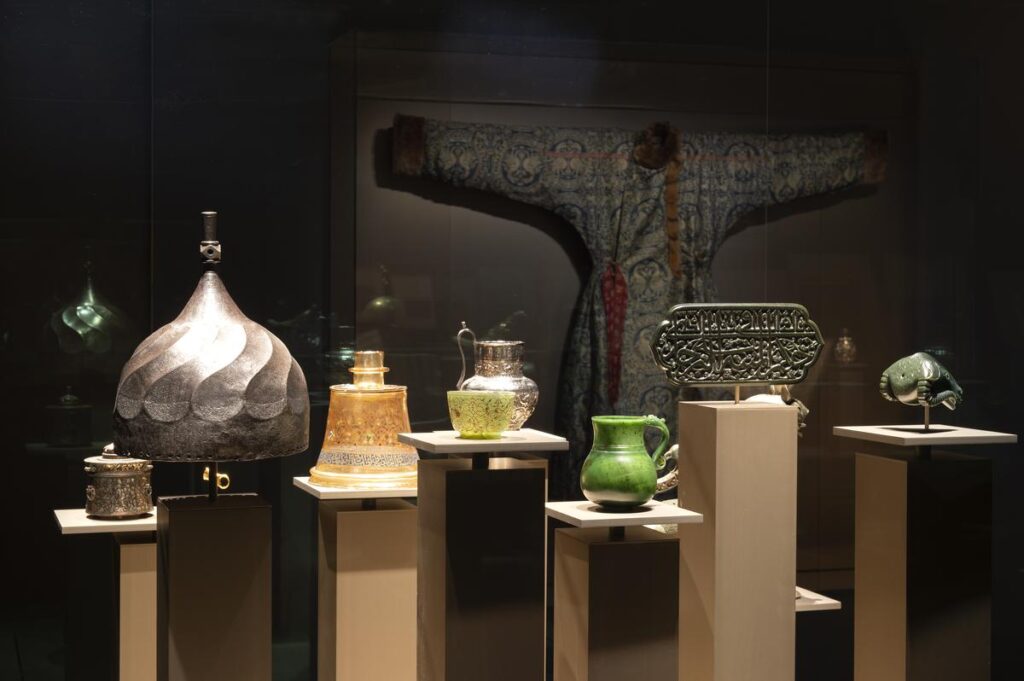
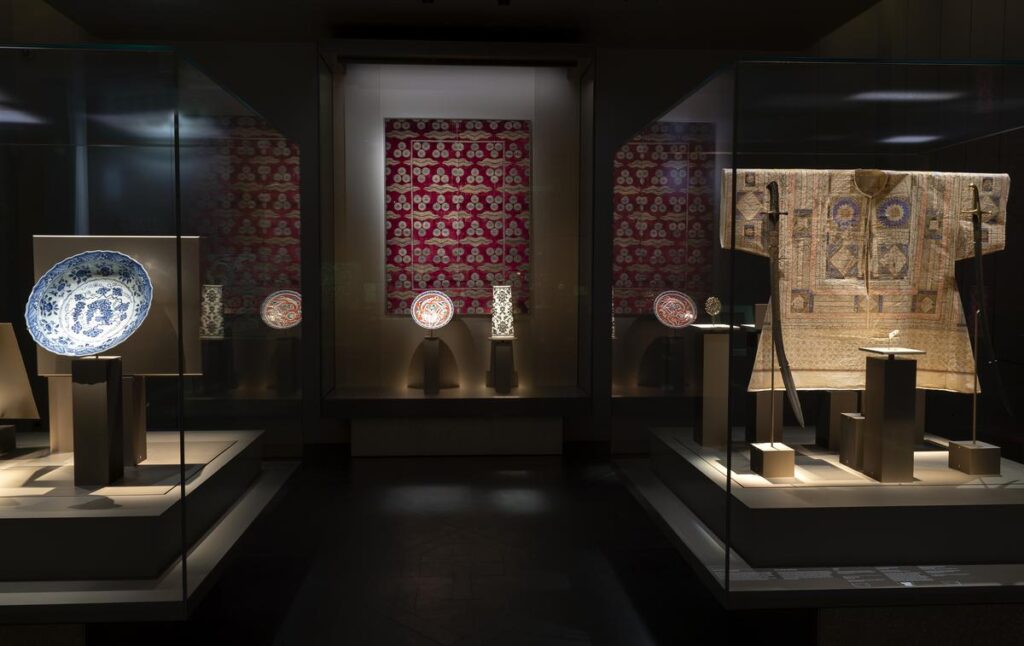
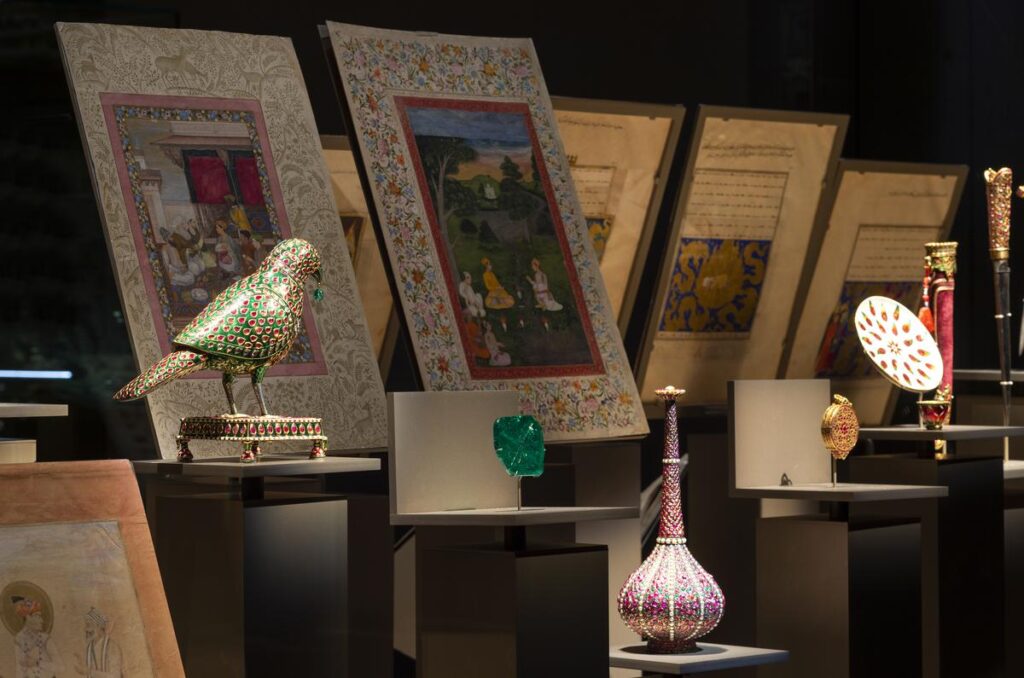
The Al Thani Collection at Hôtel de la Marine | Photo Credit: Marc Domage
Polaroid and a passion for art
The view of the Louvre from his third floor flat definitely tipped the scales in its favour. (The photos he shares on his Instagram, @aminjaffer_curator, are proof enough.) And the fact that Vivant Denon, the first director of the museum, had once been a resident in the 17th century building. Moreover, as he explains in an email that he squeezes in between flights, he’s always had a special connection with the Louvre. As a six-year-old, he had visited the museum with his mum, spending an entire day exploring its rooms, a Polaroid camera clutched tightly in his hands. He still has the photographs. “The adrenalin rush of seeing a great work of art inspired me then — as it does now,” he says, adding how by the time he turned 10 he had visited most of the major museums in Europe. “Other seminal moments include an early visit to the Musée des Beaux-Arts in Brussels and a trip to Rome to see the Vatican collections.”
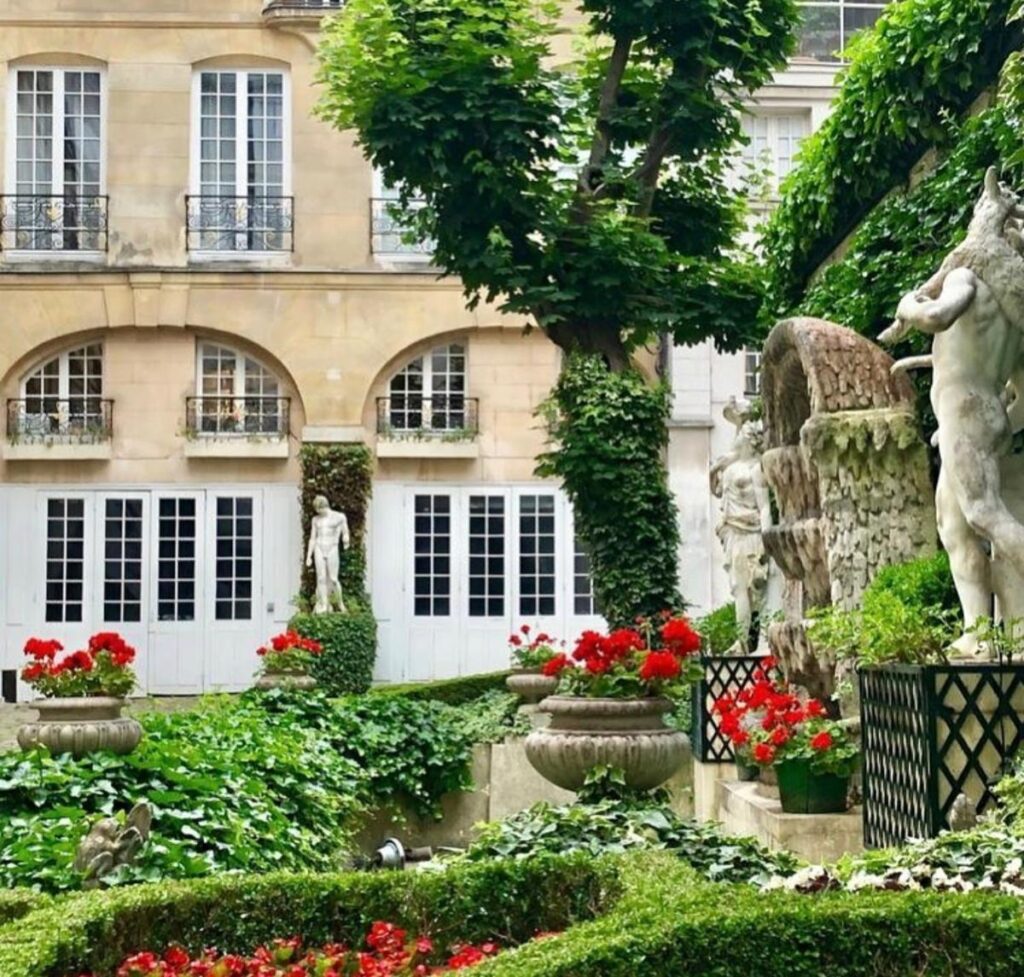
The courtyard at L’Hôtel de Beuvron with its Rococo fountain | Photo Credit: @aminjaffer_curato
But he nearly missed his calling. Born into an Indian business family in Kigali, Rwanda, a career in art wasn’t an option growing up. His subjects in university were economics and commerce! That is, until he chose the history of French opera and French Renaissance châteaux as his first year electives and reignited his love affair with the arts.
Today, Jaffer, who is in his early 50s, is not only the chief curator of the Al Thani Collection, but also works with leading museums around the world in a “curatorial role, focussed on public projects, exhibition programming and producing catalogues”. His resume includes long stints at the V&A Museum in London as curator and as the International Director of Asian Art at Christie’s.
Amin Jaffer in his home office, sitting in front of a triptych by Reza Aramesh | Photo Credit: Architectural Digest / Antonio Martinelli
The perks of a private collection
“Born in central Africa, educated in Europe and America, I do feel something of a hybrid and I am drawn by works of art that are born from the encounter of two — or more — civilisations,” says Jaffer, who has recently “been fascinated by the fusion of Spanish and Amerindian culture, particularly in the domain of painting”. This ties in beautifully with the Al Thani Collection and its catalogue of more than 5,000 works of art drawn from across world civilisations.
It makes us wonder, how important are such private collections in the art world? “Pioneer collectors have vision and resources that compliment the public art offering,” he says, explaining how such collections play a significant role in the programming of national institutions. “Recent examples in Paris [besides the Al Thani Collection] includes the Bourse de Commerce and the Fondation Louis Vuitton. In India, Kiran Nadar has developed a programme of exhibitions around her collection that makes an essential contribution to the art scene,” adds the Indian art expert who played a key part in launching Christie’s first auction in Mumbai in 2013.
At Hôtel de la Marine | Photo Credit: Marc Domage
On board with digital
Jaffer’s personal collection is equally varied. A triptych by Iranian photographer Raza Aramesh, of Afghan refugees sitting in the Versailles’ Hall of Mirrors, takes pride of place in his home office, while a painting of Italian sculptor Benvenuto Cellini’s Medusa by Chinese contemporary artist Yuntao Zhang hangs in the library dining room. Elsewhere, Qing period armchairs, Louis XVI commodes, and Bouke De Vries’ Memory Jars are tucked into corners and under tables. “My most recent passions are French 18th century silver and hardstones from late Antiquity, especially objects in porphyry. I am learning more about Symbolist painting, too,” he says.
His days of confinement (as the French called the lockdown) helped broaden his base. When not watching life on the river, he was visiting digital museums and “researching parallel institutions” around the world. “What’s certain,” he says, “is that technology will play a greater role in the way we enjoy works of art — whether through the presence of more immersive, digitally-led exhibitions [such as the RMN Grand Palais’ immersive Venice show opening in autumn] or the sharing of information about works of art through digital platforms [like the one for the Palazzo Pilotta collection in Parma, which he experienced last weekend].” Does this mean he’s also on board with NFTs? “Of course, the phenomenon interests me,” he says, “but I do not yet have sufficient expertise to comment on anything in this new domain.”
The Al Thani Collection | Photo Credit: Marc Domage
Left Bank to the Concorde
For now, he’s back at his home at L’Hôtel de Beuvron, listening to Wagner and Mahler, and updating his Instagram. V&A’s new exhibition, Fashioning masculinities — on the male dress and its influences — has caught his eye, though he admits his personal wardrobe is rather formulaic. Tailored clothes in a limited palette of colours is the ‘uniform’, accented by pocket squares and ties that reflect the season or his mood. “Cufflinks are a weakness,” he shares, “and the best ones are by [Indian jeweller] Viren Bhagat, without doubt.”
Even as Jaffer immerses himself in life on the Left Bank, work at the museum is keeping up its momentum. “Some substantial pieces have been added to the collection in the past two years, which reflect the diversity of interests [of Sheikh Al Thani]. These will be shared with the public through displays at the Hôtel de la Marine,” he concludes.
source: http://www.thehindu.com / The Hindu / Home> Entertainment> Art / by Surya Praphulla Kumar / March 19th, 2022
Eight poets of the past capture Delhi’s joys and sorrows
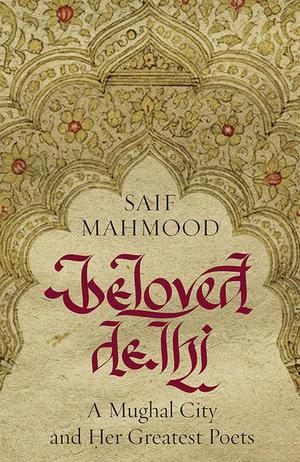
Saif Mahmood’s Beloved Delhi: A Mughal City and Her Greatest Poets offers offers a window into the life, times, and poetry of Delhi’s greatest Urdu poets from the 18th and 19th centuries, with witty and critical insight, in a conversational style that has become Saif’s hallmark in many a literary gathering.
Focusing on eight poets, he allows us to touch Delhi’s past and rethink its present through Urdu. Each chapter on a poet is divided into two sections — the first is biographical and provides the reader with insight into Delhi’s material conditions through the vicissitudes of the poet’s life. Thus, the 18th century poets are nomadic because of the post-Nadir Shah instabilities of Delhi.
The 19th century poets lead more sedentary lives, as the British Residency of Delhi provides the military support, at least until the cleavage of 1857. This upsets the tradition of the classical Urdu ghazal, and so the last poet analysed is Daagh Dehlvi, already writing in 1857, and a step-grandson of the last Mughal King, Bahadur Shah Zafar. The book also records this decline visually through Anant Raina’s photographs of the current gravesites of these poets, exhibiting the absolute lack of public or state support toward heritage maintenance.
The second part gives an excellent commentary on their poetry.
Saif’s familiarity with the tradition and his capacities for literary criticism shine through, as the raconteur in him narrates the stories of these poets’ poetry with coherence, complexity, and lucidity. The book highlights Urdu poets who are well known to Urdu readers, but not to listeners of ghazals or those interested in the literature from the outside.
Apart from Ghalib (described by Saif as ‘Master of Masters’), and Mir Taqi Mir (‘the Incurable Romancer of Delhi’), poets such as Sauda (‘the Great Satirist’), Mir Dard (‘Urdu’s Dancing Dervish’), Ustad Ibrahim Zauq (‘The Poet Laureate’), Bahadur Shah Zafar (the ‘Emperor’ who has an ‘Affair with Urdu’), and Daagh (‘the Last Casanova of Delhi’) get the attention they deserve.
The collection also brings out the specificities of their poetry including the great licence, often through satire, that many of these commanded with the ruling powers as dissenters. Tolerance for such criticism today rests uneasy with the crown. The poets extol the city of Delhi as picturesque, showing colours unimaginable, but also to be lamented after each violent tragedy, with a sense of loss, sometimes in a dedicated genre, the shahr-ashob or city-lament.
Beloved Delhi is for keeps and must be read by all with the remotest of interests in Urdu, Delhi, or poetry and poets.
Beloved Delhi: A Mughal City and Her Greatest Poets ; Saif Mahmood, Speaking Tiger, ₹599.
source: http://www.thehindu.com / The Hindu / Home> Books> Reviews / by Maaz Bin Bilal / November 03rd, 2018
As Urdu Day approaches, Hyderabad-based author Jeelani Bano speaks about her bond with the language.
Jeelani Bano(Photo | R Satish Babu)
Jeelani Bano, 80, looks frail in her sea green sari with that mop of pepper-and-salt hair. Her demeanour is genteel, but only a talk about her stories on bonded labour, her aapa Ismat Chughtai and Progressive Writers’ Movement lights up her eyes. The decades pass on her soft wrinkled face as she turns pages of her autobiographical book Main Kaun Hoon and takes you back to an era gone by that’s still alive in her Banjara Hills house in Hyderabad, serenely tucked in another time-frame.
As Urdu Day approaches on November 9, she speaks about her association with the language. Many of her stories appear to be of our time. Jagirdari may have gone but capitalistic clutches don’t let go of the bonded slavery. Her story Paththaron ki Barish is heart-wrenching. Bano, who has authored 22 books, says, “A lot of writers of our time revolted against this inhuman system. Something also sparked in me and I wrote such stories. But today also, the situation of daily labourers is the same.”
Her book Aiwan-e-Ghazal, which tells the tales of feudal landlords in Hyderabad, has been translated into 14 languages. She then talks about her dear aapa—Ismat Chughtai—the firebrand writer.
“She was also from Badayun in Hyderabad, where I was born. She was friends with my mother and supported me a lot in writing,” says the 2016 NTR National Literary Award winner showing the letters Chughtai sent to her. Ismat wrote to her, “After marriage, respect your writing as much as you would respect your husband and in-laws.” In ’70s, when Jeelani Bano and her husband Anwar Moazzam, poet and writer, went to Pakistan, famous poets and scholars came to meet them at the border. She shares, “Nobody wants to understand what people of both the nations want. Sarhadein dilon ko nahin baant saktin (Borders can’t divide hearts).”
When once she went to the US, a scholar asked her, “You’re a Muslim woman. How did you get permission to write?” To this, she replied, “Nobody has stopped me from writing. Perhaps you haven’t been to India or else you wouldn’t have asked me this.”
Renowned poets and scholars such as Shakeel Badayuni, Makhdoom Mohiuddin, Jigar Muradabadi and Kaifi Azmi were hosted at her Mallepally home. But, she along with other children weren’t allowed to go to the baithaks. The young Bano would watch these poets, while playing in the courtyard.
source: http://www.newindianexpress.com / The New Indian Express / Home> Magazine / by Saima Afreen / November 05t, 2016
Muzaffar Alam’s ‘The Mughals and the Sufis’ is a remarkable and original work of scholarship.
Mughal emperor Jahangir chooses the Sufis. | Public Domain
The literature on the precepts of Sufism and the chronicles of its saints across various orders has a deep and prodigious lineage: from the great Kashf al-Mahjub of al-Hujwiri and the Risala of al-Qushayri, through Abdul Rahman Jaami’s Nufahat-ul-Uns, the wonderfully lucid Sakinat ul Auliya and Safinat ul Auliya, written by the 17th century Mughal Crown Prince Dara Shukoh, to the monumental compendium, A History of Sufism, by Saiyid Athar Abbas Rizvi, in our own times. The examination of the subtle and complicated interplay between religious doctrine, political influence, legitimacy and kingship throughout the Islamic period in India, though, is more recent.
Muzaffar Alam’s earlier book, The Languages of Political Islam in India c 1200-1800, published in 2004, was an important contribution to this discourse. It offered a fresh perspective by decoding the political vocabulary of those times to reveal the calibrations in theology, injunction and juridical practice, as Islam gradually became more “Indianised”.
In his new book, The Mughals and the Sufis – Islam and Political Imagination in India: 1500–1750, Alam once again breaks new ground, this time by harmonising two major domains of scholarship – Mughal History and Indian Islam – honed with painstaking care over a lifetime of study. What emerges is a highly nuanced and complex examination of the relationship between Mughal political culture and the two dominant strains of Islam’s Sufi traditions in South Asia: one centred around orthodoxy, the other focusing on a more inclusive and mystical spirituality.
The Sufi trajectory
The constituent chapters in the book, which can also be studied as stand-alone essays, chart the trajectory of the various Sufi silsilas and their principal actors, from the early, tenuous days of Babur and Humayun, through the 16th and 17th centuries, as the imperial position shifted from the more liberal outlook of Emperor Akbar (r 1556–1605) to the rigid attitudes of his great-grandson, Aurangzeb ’Alamgir (r 1658–1701).
Alam premises his critical study on a large number of contemporary Persian texts, court chronicles, epistolary collections, and biographies of Sufi mystics. Interestingly, the Maktubat-i Khwaja Muhammad Saif al-Din, compiled by Muhammad A’zam, Khwaja Muhammad Nasib Andalib’s Nala-i’ Andalib, and Muhammad Akram bin Shaikh Muhammad Ali’s Sawati‘al-Anwar are accorded no less importance than the staple Akbarnama or Badauni’s Muntakhab al-Tawarikh, known to every student of Mughal history.
This particular approach to Alam’s programme of study for his latest book serves two functions. First, his focus on relatively lesser-known figures and their writings, as well as many rare manuscripts, automatically inducts these long-underutilised texts into the bibliographical repertoire of mainstream historical research. Second, his own investigations enable Alam to challenge popular notions about the Sufis, upend unitonal hagiographic narratives of Sufi silsilas, and provide an alternate system of coordinates through which to view our cultural and religious history, in the process, reorienting our understanding of political Islam during the Mughal period.
A fundamental aspect of reappraisal is the relationship of a Sufi leader with the Mughal emperor. The usual perception is that the sole function of a Sufi saint was to be a spiritual pir (preceptor) for his murids (disciples), including those of royal blood. Alam cites numerous instances to the contrary, following a tradition that harked back to the Naqshbandi Sufis of Timurid times.
One of the key figures to emerge in this context is Khwaja ’Ubaid-Allah Ahrar, whose disciples included Timurid rulers and a number of their vassals throughout Central Asia. He and several of his descendants claimed they were not spiritual masters alone, but also the source of strength and assistance in the dispensation of politics as well as power struggles.
Although Khwaja Ahrar had died several years before Babur appeared at the threshold of Hindustan, the latter nevertheless ascribed many of his military achievements to the benediction of the pir. Most famously, at the Battle of Panipat against Ibrahim Lodhi in 1526, Babur, facing an enemy force that vastly outnumbered his own, is said to have meditated upon the image of the Khwaja, who then appeared as a horseman dressed in white, routing the Afghans.
Breaking myths
The Mughals and the Sufis also dispels some lingering stereotypes around the positions of the pirs in the Chishti and Naqshbandi orders. For instance, the Chishti pirs didn’t necessarily find ready disciples in the early Mughals and winning their allegiance was no trivial matter. A case in point is Shaikh ’Abd al-Quddus Gangohi, a member of the Sabiri branch of the Chishti order.
Khwaja Gangohi was a prominent preceptor of the Afghan elite at the Lodhi court, in fact, very nearly – the official royal pir. But as Babur established his supremacy in northern India through a series of brilliant, swift military campaigns, it took all of the Khwaja’s wisdom, tact and diplomacy, to reconcile himself to the rapidly changing realities. For his very vocal support of the Afghans, he had to suffer humiliation at the hands of the Mughals.
A similar stereotype concerns the perception of the non-inclusive, intransigent position of the Naqshandis throughout their history, as something of a monolith. Alam shows that the fervour of orthodoxy did sustain itself, from the pirs who were contemporaries of Amir Timur, to the Ahraris in the 15th and 16th centuries, through to the strident conservatism of Shaikh Ahmad Sirhindi and his followers in the 17th century. Aurangzeb’s unwavering support of the Naqshbandis ensured that the family of Shaikh Sirhindi enjoyed a favoured position at the imperial court.
Not only did this influence continue well after Alamgir’s reign, evidence is sighted of its influence outside the court in Delhi, for instance in literary circles, and beyond the capital, making inroads among sections of the civil society in Awadh, hitherto firmly entrenched in the Chishti-Sabiri tradition.
Through the following two centuries, however, Alam explains how a more muted and inclusive tenor of discourse developed within the Naqshbandi order, their change in position underscored by the triple forces of reformism, revivalism and modernism or Westernisation. Certainly, challenges from the West played a material role in changing the approach of modern Muslim intellectuals to Sufism.
Underlying many of the discussions are themes of influence, rivalry and conflict. Documentary evidence points to Sufis playing a role in informing and modulating imperial policy. Likewise, it is shown how the struggle for supremacy among rival princes (and princesses) was mirrored in the rise and fall of imperial allegiance to various silsilas.
Thus, when Akbar, at the peak of his religious innovations, is confronted by the outraged Naqshabandis, it is the latter who have to recant. And not long after Aurangzeb ascends the throne as the emperor Alamgir, Dara Shukoh’s Qadiri pir, Mullah Shah, is summoned to the imperial court and interrogated by the ’ulama. When it comes to a deeply critical and iconoclastic element of the Sufis, such as Sarmad Kashani, nothing less than execution would satisfy the emperor and conservative clergy. Viewed through this prism, the narrative of political Islam appears as a glazed mirror of the vicissitudes of princely wars of succession, and the leanings and idiosyncrasies of successive emperors.
What the women did
One of the criticisms that is often levelled against the academic patriarchy of medieval history is its scant attention to the women of the imperial household, their role and influence in contemporary politics and decisions that morphed and changed the empire. In this regard, the chapter-essay, “Piety, Poetry, and the Contested Loyalties of Mughal Princesses, c 1635-1700”, is a welcome inclusion in the present volume.
The legend of Jahanara, as the other-worldly princess who eschewed imperial titles in favour of the sobriquet of al Fakira, is well known. What is less well-known, though, are her allegiances to specific Sufi pirs and silsilas, and those of her sister, Roshanara, and her niece, Aurangzeb’s daughter, Zebunissa. This essay juxtaposes the contrasting religious beliefs and mystical leanings of these three ladies of the imperial household, despite their common upbringing.
Jahanara, even though she was initiated into the Qadiri sect, continued to retain a close spiritual affinity for the Chishti saints, in particular, Nizamuddin Auliya. Her choice is both a continuation of the pluralistic ethos instituted as imperial policy by Akbar, and a reflection of the deeply syncretic views of her favourite brother, Dara Shukoh – views that she wholeheartedly shared with him.
Roshanara played a far less public role than her sister, although she was a shrewd political observer, and increasingly, a key player in the filial strife that led to the War of Succession in 1657, ending with Aurangzeb’s ascendancy to the throne. Her close connection with the Naqshbandi-Mujaddidi order saw her acting as a mediator, during the attempts made by the sect to expand their influence over the entire imperial zenana.
Their sustained efforts to maintain dealings with the princess Zebunissa notwithstanding, the latter was far more inclined towards the practice and patronage of literary pursuits, than to the encouragement of the Mujaddidi brand of Islamic revival.
In a volume that offers much new perspective, the most insightful and striking essay is the penultimate chapter, “In Search of a Sacred King, Dara Shukoh and the Yogavsisthas of Mughal India”. In the author’s estimate, the Mughal Empire finds its intellectual and spiritual apotheosis not in the figure of Akbar, but Dara Shukoh, who, he boldly asserts, “is a step ahead of his great grandfather, Akbar”.
With this, Alam breaks with an unbroken line of rather uncritical adulation as regards Akbar that has stretched across generations of historians. For all his astute matrimonial alliances with Rajput chieftains, within the pecking order of the Hindu caste system, Akbar could only aspire to the status of a Kshatriya, Alam points out. Dara’s quest was far loftier – like Visvamitra, he sought to synthesise and embody the dual powers of the Kshatriya Raja and the Brahmin Rishi.
Akbar’s interest in Hindu scriptures, mythology and epics such as the Mahabharata reflect his curiosity about India’s political culture, but there was no great imperative for him to imbibe Indic norms of governance. In contrast, Dara’s project of translating the Yogavasistha goes well beyond intellectual curiosity or the inclination to recognise alternative formulations of spirituality. He becomes deeply immersed in the text, to the point of inhabiting it.
For Dara, the book is not only a philosophical treatise, worthy of study for a syncretic practicing Sufi – but a political manifesto – as the Crown Prince grapples with the eternal conflict between spiritual truth and temporal power. Rama Chandra is not the indigenous god from a hoary past but, in Dara’s dream, Lord Rama is a fellow-seeker of Truth, an elder brother.
In his quest for mystical and spiritual learning, Dara had perused the texts of several religious cultures, including his own. But it is only in the Yogavasistha, Alam proposes, that Dara finally found his model for the saint-king, one on which he wished to build the moral foundations of his own reign.
In a refracted light, The Mughals and the Sufis can perhaps be seen as an intellectual self-portrait, painted in the hues of scholarship, investigation and analysis. Now approaching his mid-70s, Alam remains as indefatigable as ever, poring over forgotten texts and rare manuscripts, to reveal the haqa’iq wa ma’arif (realities and truths) hidden within them.
The Mughals and the Sufis – Islam and Political Imagination in India: 1500-1750, Muzaffar Alam, Permanent Black.
source: http://www.scroll.in / Scroll.in / Home> Book Review / by Avik Chanda / April 28th, 2021
Only a comprehensive, all-encompassing dialogue can resolve this situation and that is best-presented in a fast-paced drama.
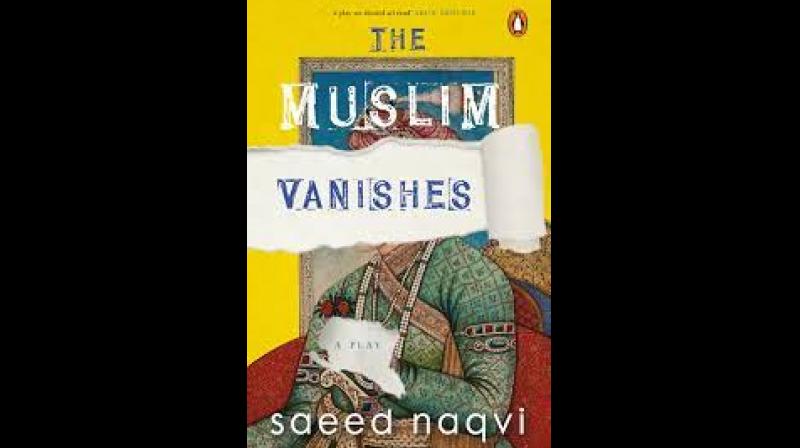
Cover Image of the book ‘The Muslim Vanishes: A Play’ by Saeed Naqvi. (By arrangement)
“If we take the Muslim out of India, what becomes of the country?” This is the central question that veteran journalist Saeed Naqvi’s recent three-act play The Muslim Vanishes seeks to answer.
In a crisp preface he first explains the premise of his plot and then the choice of “play” as his genre: Politicians hold two interlocking triangles in their hands, both feeding on each other. The first is the caste pyramid, the second has three intrinsically intertwined sides — “India-Pakistan, New Delhi-Srinagar, Hindu Muslim”. Without the second, the Hindu Right will not be able to manage the first. Combine the two triangles with the deliberately misunderstood complications of Partition and you have the perfect recipe for hate. Only a comprehensive, all-encompassing dialogue can resolve this situation and that is best-presented in a fast-paced drama. Standing on this brief but compelling introduction, Naqvi dives straight into Act 1, Scene 1: a distraught and excited junior journalist rushes into a busy news studio telling two primetime anchors that all Muslims have vanished from India overnight and, along with them, has vanished the Qutab Minar. It seems they have “taken it back”. Much as this opening seems to lay the ground for what the reader can expect later, not one of the next 150 pages is monotonous.
As the scene progresses, the characters debate among themselves — What else did, or can, the Muslims take back? Writings of great poets — Mir, Ghalib, Josh. But what about Hindu poets of the ghazal — Brij Narain Chakbast, Raghupati Sahai Firaq? Can they take them back, too? And those exquisite terms used in our courts — munsif, farraash — will they also disappear? And what about our great musical repertoire, the gharanas? And food? Can they also reclaim nihari and kabab and the rista and gushtaba? Perhaps Hussain’s paintings will also magically vanish. But for those who think that the Muslim vanishing will only be about the loss of literature, art and culture, Naqvi has news. It will have far deeper socio-political consequences. It will change the power equation in a way few realise. In an early scene, a dalit, who had never dared to enter the main gate of a Hindu Brahmin leader’s house without being summoned, not only enters uninvited but also sits on the sofa without permission. The leader’s son, one of the two primetime anchors to whom the news of the vanishing Muslims was first broken, explains. “Today, without the Muslims, the battlelines have been redrawn. It is Savarnas versus Avarnas, upper castes versus lower castes”.
The problem has become so serious that a special court has been set up on the issue of the Muslim vanishing. And, this is where Naqvi shows his prowess as an eclectic thinker. To assist the court, an 11-member jury has been constituted. On the recommendation of the great Sufi saint of Barabanki, Shah Abdul Razaq, who has a deep mystical link with the Hindu court at Maihar, the jury is chaired by Urdu poet and Constituent Assembly member, Maulana Hasrat Mohani. Best known as the author of the romantic ghazal “chupke chupke raat din aansu bahaana yaad hai”, it was the Maulana who coined the slogan ‘Inquilab zindabad’. He is accompanied by the social activist Mahatma Phule, poets Raskhan, Salbeg, Abdul Rahim Khan-e-Khana, Mohsin Kakorvi and Chunnalal Dilgeer, Classical singer Alladiya Khan, Kabir, Tulsi Das, an anonymous nominee of Guru Nanak and Amir Khusro.
The lawyer in me applauds Naqvi’s jury-selection skills — four Muslim poets who are devotees of Hindu dieties (Maulana and Raskhan of Krishna, Salbeg of Jagannath and Khan-e-Khana of Ram), one Muslim Urdu poet who uses Hindu imagery in praise of the Prophet (Kakorvi), one Muslim proponent of Marathi Natya sangeet (Alladiya), one Hindu poet known for his poetry on Karbala (Dilgeer), two mystic poets whose philosophy cuts across religion (Kabir and Tulsidas) and one anti-caste reformer (Phule).
The jury chooses Amir Khusrau as its spokesperson. Again, an incredible choice. Khusrau is one of the most influential figures in the cultural history of the subcontinent and perhaps the most transformational part of the “long tradition of eclectic liberalism” that Naqvi alludes to. Who better than him, then, to speak for a composite India?
The judicial proceedings that follow through an entangled web of examination and cross-examination, unravel the rich and diverse history of the Hindustan that was. From complexities of the partition to the making of the Constitution, from mystic syncretism to the politics of conversion, from the special status of Kashmir to urban Naxalism and from cultural renaissance to quelling free speech, Naqvi steers through Hindustan’s intricate landscape with a masterly hand. Riding on his vast knowledge of politics, society, history, literature, art and culture, he moves between time and space with tremendous poise. I wish he had occasionally interspersed his scenes with some Mir and Ghalib, like he does when he speaks, but this wish arises more out of my constant greed for ‘Saeed Naqviesque’ narratives than by any insufficiency in the script.
The expression “Ganga Jamuni tehzeeb” must be one of the most misused ones in recent times. In their bid to buy an imprimatur of approval from the majority, Muslim apologists have abused the idea to such an extent that it has now entered the realm of the ridculous: “Oh, but we are secular Muslims. We celebrate Raksha Bandhan and participate in Diwali puja.” Though the very foundation on which Naqvi’s play stands is “Ganga Jamuni tehzeeb”, he does not tom-tom it as a saleble commodity to barter acceptance with. Instead, he forcefully situates the followers of this tehzeeb as equal participants in the making of a secular, democratic republic, demanding their indispensability in all decision-making processes in the present. This, to me, is his biggest win.
Sociopolitical writing has immense potential to exhaust the reader. But Naqvi’s satirical tone and terrific sense of humour compel the reader to go on, and expect something exciting every now and then. To quote Asghar Gondvi: Sunta hoon bade ghaur se afsaana-e-hasti Kuchh khvaab hai, kuchh asl hai, kuchh tarz e ada hai.
[Intently I listen to his life-story. It’s part dream, part reality and part style.] The play has immense potential to be performed on stage and I hope that, when it is performed, none other than its author is persuaded to direct.
source: http://www.asianage.com / The Asian Age / Home> Books / by Saif Mahmood, The Asian Age / Februrary 13th, 2022
The earliest Persian and Arabic inscriptions are seen on the tombstones and walls in the olden graveyards of Kashmir
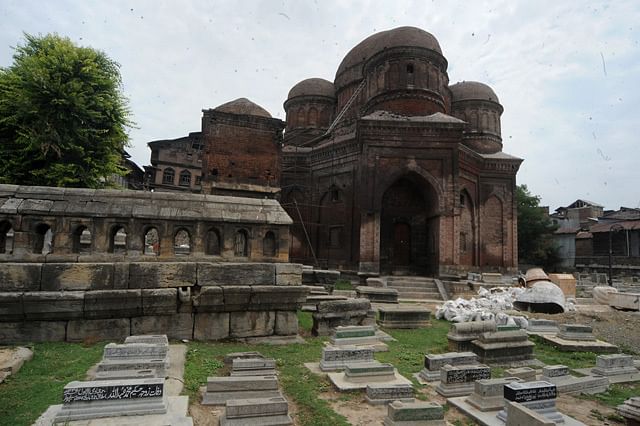
The historic tombs of the most famous Shahmiri period sultans and nobles, which included Sultan Sikander and Sultan Zain ul Abideen are also in this historic cemetery. [Tomb of Zain ul Abideen in Srinagar’s old city–Representational Image]File/ GK
With the establishment of Muslim sultanate in Kashmir, in late fourteenth century, the Sanskrit language and Sharda alphabet were also taken over by Persian and Arabic alphabet. The tradition of Sharda epigraphic culture also declined considerably and it gave way to Persian and Arabic inscriptions.
The earliest Persian and Arabic inscription are seen on the tomb stones and walls, in the olden graveyards, Khanqahs and mosques of Kashmir. Number of such inscriptions are documented in my book titled, Kashmir inscriptions of Kashmir, which was published in the year 2013 by Gulshan Books, Srinagar.
Persian inscription on a stone slab at the historic graveyard of Khanqah-e-mu’llah old Srinagar.
Epigraphs of royal graveyard at Mazari Kalan
Mazari Kalan popularly known to public as “Mazari Shiekh Bahau-ud-Din Ganj Baksh (RA)” lies in the foot of Kohi Maran to the west of Malkah. The history of the Mazar reveals that the site originally was proposed by Zain-ul-Abideen Badshah in 1421 AD for housing the only burial of her beloved wife called Ashama Bibi who belonged to a noble family of Bahaqi lineage. But when Sheikh Baha-ud-Din (RA), the reputed saint and Murshid of the Sultan left for heavenly abode in December 11, 1439 AD, he was laid to rest in this proposed site. Over the resting-place a shrine was also then erected.
Stone inscription in a dilapidated condition
The shrine looks to have been renovated, but it has lost most of its interesting architectural features. Adjacent to the shrine is seen the grave of a poet, Mir Illahi, who is saidto be the court poet of the Budshah. A beautiful inscription bearing few lines of his lyric is erected over the grave.
The grave of Asaha Bibi lies near the gate of the Mazar. The other burials it houses of the reputed saints and nobles of their times include; the grave of Solman, Sayyied Habib Shah Kashani, Moullana Mohammed Anie, Baba Qayim, Khwaja Mohammed Kakroo, Moullana Mohammed Balkhji, Sheikh Mohammed Trabali, Mulla Sarf-ud-Din Farhat, Mulla Nurullah Kath, Molvi Amir-ud-Din, Molvi Qulam-ud-Din Jami, Sayyied Mohammed Kermaniand others.
These all graves are very old and are crowned with gravestones, which are brilliantly carved in beautiful Arabic and Persian inscriptions.
Epigraphs of royal graveyard at Zain kadal
The royal graveyard of Zainkadal, locally called Mazari Salateen, enshrines the final resting places of Shahmeri Sultans. The historic tombs of the most famous Shahmiri period sultans and nobles, which included Sultan Sikander and Sultan Zain ul Abideen are also in this historic cemetery.
The tomb of Mirza Haider Dauglat, who administrated Kashmir as a Mughal governor for about 11 years during 1540-1552 AD, is also found in this historic graveyard.
There is a brilliant epigraph in Persian characters laid over his grave which is believed to have been installed by Moorcraft a British traveler during his vest of Kashmir in 19th century.
Persians inscription stone slab on the tomb of Mirza Haider Daughlat, Zainakadal Srinagar.
Zaindeep Epigraph
Persian stone inscription of Zain ul Abideen, SPS Museum Srinagar
Although there is no evidence of any standing Budshah’s Palace found anywhere in Kashmir valley but there is a magnificent stones slab inscription housed in the SPS museum at Lalmandi Srinagar which the experts claim provides vital information about Zaindeep, one of the famous Palaces of the Budshah’s period. Experts claim that this stone slab inscription, besides other details, has also provided the date of construction of this highest palace.
This inscription is Persian Nashk style. It is learnt that the inscription way back has been recovered from the Zianlank island of world famous Wullar lake in Bandipura district and later was shifted to this museum for its proper preservation. The inscription gives AH 841 as the date of construction of this world famous Zaindeep.
While providing description of this stone slab inscription experts say that this inscription is in Persian characters and is divided in four panels. The first two lines mentions the majesty, strength and the name of the Palace as Zaindeep and also describes it as the world famous, while as the date of foundation in Muslim calendar is mentioned in the last two lines in Persian words, which is calculated as 841.
Inscription of the palace
Ene bakha chun faluk muhakum bad
Mashoor ba zain deep dar alam bad
Shah Zain ibad ke daru jashin kunand
Pai vasta Chun tareekh khurdesh kahrum bad.
84l the inscription dates to 841 AH.
(The fort built by Shah Zain ul Abieein is so high and strong as the sky; and it is famous by the name of Zain deep. The king was very happy and celebrated the event when this palace was built)
Broken Stone inscription at Mazare Salateen old Srinagar
Besides these royal graveyards, the other historic and royal graveyards also carried brilliant epigraphs either engraved on tomb stones or on stone walls, these included Mazari Kalan, Mazari Salateen, Mazari Khanqah Mu’llah, Mazari Madine Sahib, Mazari Malik Sahib, Mazari Safakadal, Mazari Malkah and Mazari Bijbehra,.
But these human records are not preserved anywhere in these historic cementers. These inscribed records have fallen prey to the unchecked weathering and human vandalism.
Most of their inscriptions have defaced and it is very difficult to identify and decipher their epigraphs; steps are required to be taken to conserve this unprotected and unconcerned epigraphic heritage.
Disclaimer: The views and opinions expressed in this article are the personal opinions of the author.
The facts, analysis, assumptions and perspective appearing in the article do not reflect the views of GK
source: http://www.greaterkashmir.com / Greater Kashmir / Home> Op-Ed / by Iqbal Ahmad / February 20th, 2022
Indian-born South African writer Shubnum Khan’s new book is about the hope and magic we can find in life if we are brave enough to push for it.
Apart from ideas of hope and courage, Shubnum Khan explores the theme of walking in her book. (iStockphoto)
What does it mean to be a young, Muslim, desi woman walking the streets of Shanghai alone, sometimes in a hijab? What’s it like going off on your own to the mountains to teach children in a remote village in Kashmir when you have never travelled alone? And most importantly, what happens when you decide to be brave and do those things and, in a sense, “step off the edge”?
“You think you are going to fall, but you actually fly,” says Shubnum Khan, the South African writer of How I Accidentally Became A Global Stock Photo, a collection of odd and funny stories of her travels around the world, and of learning to be soft and vulnerable, particularly to herself.
In this breezy, delightful read, Khan packs in descriptions of experiencing travel and living abroad with a good dose of earnest reflections that tap into being a Muslim woman in the modern world, with bearings rooted in faith and family. The stories are resonant not because they are common or relatable (they are, rather, strange and wonderful) but because she contextualises them by revealing something of her life and herself.
For instance, Khan takes us through her life as the fourth of four sisters in an Indian Muslim family in Durban, where, at a point in her life, she had started feeling trapped and frustrated. So when an opportunity to go to Kashmir in 2013, to teach village children, came along, she took it up. “I immediately saw that this was the first step towards doing something different with my life as compared to everyone telling me to get married and have children,” says the 36-year-old on Zoom.
That experience and move away from a sheltered life catalysed other events and happenings, travels and sometimes bizarre incidents. Her new book straddles genres in that it’s as much a memoir as it is a travelogue and, together, transcends both. While it started as a collection of her experiences during travels—from turning into a “bride” on a rooftop in Shanghai to being trapped in a house in Delhi during an earthquake—it grew into much more. “As I was writing the book, I realised I was also telling the story of my life,” she says.
Shubnum Khan.
Khan is vulnerable in her stories and, in contrast to trope-filled memoirs and travelogues that spotlight strength and bravery, owns up to her less-than-brave feelings. She describes being anxious and nervous throughout most of her trips. But vulnerability and sharing one’s life (whether in a book or on social media, where Khan first found an audience for her stories) can involve treading a fine line. How does she decide what to share and what to keep to herself?
“Distance and space give you a clearer idea of the bigger picture,” she says. “You are sharing so you don’t feel lonely but you are also sharing so that other people don’t feel lonely,” she says. “I really wanted to share who I am but I also wanted to protect who I am.” When Khan says “anything could happen” if you step off the edge, she’s also aware that this doesn’t only mean good things. Neither does she ignore the presence of threat or danger. Instead, she confronts it with humour.
Even as Khan grapples with ideas such as living and travelling as a Muslim woman, she tells her stories with charm and wit. “In the book, I talk about being interrogated about my secret marriage. At the time I was so scared, it was such a serious situation. Now when I look back at it, I find it ridiculous,” Khan says. She doesn’t think of herself as a funny person but does believe that you can only laugh at certain situations in life to get through them. “Once you start seeing how ridiculous those are, you can pull out the humour from them,” she adds.
Apart from ideas of hope and courage, the book explores the theme of walking. It seems to be Khan’s primary way of experiencing any place she is visiting, especially because South Africa itself doesn’t allow her that freedom. She writes about how, in her home country, she has to watch what she wears even when going out to jog, how she can’t even carry her phone with her, and how she has to be hyper-aware of her surroundings, no matter where she goes.
How I Accidentally Became A Global Stock Photo: By Shubnum Khan, Pan Macmillan India, 256 pages, ₹650.
Her travel stories detail experiences and encounters of walking and getting lost in the streets of Istanbul, Casablanca, Seoul and Shanghai. A chance meeting with a weeping woman. Going down out-of-sight alleys full of possibilities. Discovering a mosque. “There’s such beauty in being able to get lost, and I can’t do that in South Africa,” she rues.
It’s an arresting vision, to imagine a young Muslim woman walking in cities of the world alone, and Khan is aware of it. “We have so many books about men walking in cities, and books about white women walking,” she says. “We don’t have too much about the Muslim woman walking.” Given the many places she has visited, it’s not unfair to think about Khan’s privilege, which she acknowledges. Does it mean adventures are possible only if certain things are aligned? “You should keep pursuing what you need to do and try to make it happen in whatever way possible,” she says. She had to fight her father to be able to travel, for instance. Some of her trips had some expenses covered. “You have to dream big but you also have to follow them with practical steps,” she says.
It’s a curious book to have been written in 2020, when the pandemic was blazing and travel was far from our minds. And yet, it was also the perfect time for the book, which has been as much influenced by the pandemic as it is a product of it. Khan says that were it not for that strange, isolating, terrifying time, she might not have come to some of the conclusions and reflections she did in her book.
“It started making me think intensely about who I am and my role, the kind of experiences I have,” she says. “In my stories I am talking about travelling by myself, being by myself, being single, doing things alone. And then, when I was writing this book (during the pandemic), I was by myself, and I was missing everyone. I felt isolated. I think it helped tell a more intense story.”
That time in 2020 was also a period when, amid the despair and grief, we were all looking for hope. Because it wasn’t around her while she was writing, Khan says she tried to write that hope into her book. “Everything felt hopeless and writing the stories felt like I was trying to inject that magic back into life,” she says.
That is the book’s mainstay: the idea that there is hope and magic to be had from life, for anyone who wants it and is brave enough to push for it. Khan calls her book “part memoir, part travelogue, part love letter to anyone who has been afraid”. It’s essentially about choosing your own path in the face of conventionality but it is the heart and humour with which she tells her tales that make the smile already on your face linger a little longer.
I ask her what advice she would give to someone who carries the weight of dreams in her heart—and it’s usually a her—except that she’s afraid. Khan’s reply is tender and full of warmth. “It will be scary and hard but you should never stop dreaming. People will always be telling women how to be, how to act and what to do. But you have to follow what you want to do because you are living your life,” she says. “You are going to be on the journey with you. No one else will live your life.”
Tasneem Pocketwala writes on culture, identity, gender, cities and books. She is based in Mumbai.
source: http://www.lifestyle.livemint.com / Mint Lounge / Home> News> Big Story / by Tasneem Pocketwala / November 04th, 2021