Category Archives: Books (incl.Biographies – w.e.f.01 jan 2018 )

Book review | ‘Labour and Migration among Indian Muslim Artisans’: A limited but sensitive look at work-from-home outside urban, corporate India

Sahranpur, UTTAR PRADESH :

Chambers’ research on how women’s labour is devalued and underpaid lays the ground for future researchers on how women offer care and strength to each other within patriarchal settings.

In Saharanpur, Uttar Pradesh, Chambers' research showed, job opportunities for female wood workers are still curtailed. Most women are restricted to the home, and many of those who work in factories, are concerned about sexual predators.

In Saharanpur, Uttar Pradesh, Chambers’ research showed, job opportunities for female wood workers are still curtailed. Most women are restricted to the home, and many of those who work in factories, are concerned about sexual predators.

Whose stories are centred when ‘working from home’ is seen as ‘the new normal’? How does one account for the labour of women who have always worked from home because of the patriarchal structures in their lives? Thomas Chambers’ book Networks, Labour and Migration among Indian Muslim Artisans (2020) will make you think about these questions.

Book Review | 'Labour And Migration Among Indian Muslim Artisans': A Limited  But Sensitive Look At Work-from-home Outside Urban, Corporate India

The author is a senior lecturer in anthropology at the Oxford Brookes University. His book is based on ethnographic fieldwork with woodworkers in Saharanpur, Uttar Pradesh.

Chambers notes that migration to the Gulf Cooperation Council (GCC) from Uttar Pradesh now exceeds that from Kerala, Andhra Pradesh and Tamil Nadu. He writes, “The state registered 191,341 emigrants to the Gulf in 2012, compared with 27,428 in 2004. Figures for 2013 and 2015 suggest that numbers exceeded 200,000 in these years.”

The book examines how local friendship groups and apprenticeship networks open up opportunities for men to migrate to the GCC whereas women’s engagement with the labour market keeps them mostly confined to the home. The book will help readers appreciate how ‘working from home’ is experienced outside corporate India, and how this experience is shaped by gender. Chambers tries to explain this using the concept of ‘chal-chalan’ in local parlance.

He writes, “The term articulates a complex assemblage of gendered moral and ethical circulations that regulate women’s sexualities, bodies and subjectivities. It was also at the forefront of women’s discourses about participation in paid labour within and beyond the home.” His book will deepen your understanding of workplace sexual harassment, a big reason for women woodworkers to prefer working from home rather than in factories.

Unlike men who are able to withdraw their labour and seek work elsewhere within India or outside, women’s mobility is restricted. They are expected to look after children, and the sick and elderly. Their economic independence is also curtailed by employers who justify low wages by insisting that their labour is unskilled, and that their income is meant to supplement the earnings of the men in the house who are supposed to be the real breadwinners.

The book shows how this reasoning is flawed. Chambers found that women with husbands who were either unemployed or alcoholic had to bear all the responsibility for running their households. Women who were divorced or widowed were also in a precarious situation. Working in factories would pay them a lot better but it would make them more vulnerable to sexual predators who saw them as easy prey as “they lack(ed) the ‘protection’ of a husband.”

Chambers writes, “My involvement with the mohallas has always been mediated in a highly gendered context. Narrating the lives, experiences and subjectivities of women is therefore one of the more challenging aspects of this book.” He adds, “Gradually, curtains fell away, and over the years I have developed many close relationships with women in the mohallas.”

Earning the trust of one’s respondents is key to producing ethical scholarship. Researchers need to care not only about their research questions but also the human beings who help them generate knowledge by sharing their time, lived experiences and personal insights.

Chambers has quoted some of the women he interviewed. One of them, named Sabra, says, “Sometimes in the factories the men are really very rude. Some men address me like a dog…I never talk to men in the factory as I know they are shameless…They say, ‘If you are pak daman, then go to your home. If you belong to a respectable family, you would not come to the factory.’ I have to bear this blame silently. If I did not, my job would be finished.”

Acknowledging the particularities of his social location as a white, non-Muslim man from the UK entering a gender-segregated environment in north India for his research, he attempts to listen and understand with sincerity. This is refreshing because the trope of white men trying to save brown women from brown men is not only patronizing but has also been overdone.

Chambers writes, “My male positionality imposed limitations that did not arise in my relationships with men. The experiences of women who labour in wood production are so distinct from those of their male counterparts that any attempt to interlace the narratives runs the risk of obscuring these distinctions.” To overcome these limitations, he draws on Ayesha Ansari’s work to contextualize Muslim women’s experiences in the Indian workforce.

It can be rewarding to read Chambers’ book alongside Devaki Jain’s recent memoir The Brass Notebook (2020). As a feminist economist, she is deeply invested in pointing out that women in households marked as being below the poverty line are neither sitting idle nor occupied exclusively with household chores and childcare. They roll bidis, sell cow dung cakes, or earn money for their family in other ways. This is economic activity, and it requires skill acquisition.

Though Chambers’ analysis is largely heteronormativehe subtly points out the relationship between homosociality and same-sex desire in Saharanpur’s gullies, expressed through the religious rhetoric of brotherhood. You might find it useful to read Gayatri Gopinath’s book Unruly Visions: The Aesthetic Practices of Queer Diaspora (2018), which suggests that the “Gulf dreams” of migrants may “extend beyond limited heteronormative framings.”

She writes, “If working-class migrants are viewed as heterogeneous, desiring subjects rather than reductively defined simply through their labour, what other longings and forms of relationality come into view in the homosocial, regional and diasporic spaces they inhabit?”

This question could also be posed in relation to the desires and aspirations of women woodworkers in Saharanpur, involved in “polishing, sanding and touching up on defects on items such as boxes, incense holders and rehals (folding stands for holding the Quran).”Are these women’s lives defined only by their income and status as woodworkers? Chambers’ limited access to them keeps him from offering insights into the friendships, solidarities and intimacies that might be forged between them. However, his research on how women’s labour is devalued and underpaid lays the ground for future researchers to explore how women offer care, joy and strength to each other within patriarchal settings.

source: http://www.moneycontrol.com / Money Control / Home> News> Trends> Features / by Chintan Girish Modi / July 24th, 2021

Ebrahim Alkazi’s legacy bears testimony to cultural links between Saudi Arabia, India

Pune / Mumbai, MAHARASHTRA / NEW DELHI :

Ebrahim Alkazi will continue to live in the hearts of Saudis and Indians who are on the quest to deepen the friendship and cultural heritage they share.

Ebrahim Alkazi (1925-2020)

Last week, we lost Ebrahim Alkazi, a legend of Indian theatre with Saudi Arabian roots. I fondly remember my first experience of meeting him in the spring of 2014 at his house in New Delhi. I was touched by his unique character and his passion for the arts. He greeted me with a few words spoken in the distinct Qassimi dialect. Alkazi was also a noted art connoisseur and collector, credited for fundamentally transforming Indian theatre and having etched a name for Indian theatre worldwide. His legacy will forever remain a testament to the rich intellectual and cultural links between Saudi Arabia and India.

Alkazi’s father, Hamad, was a trader from Unaiza in Saudi Arabia’s Qassim region, who subsequently settled in Pune where Ebrahim was born in 1925. Despite his early immersion in theatre, he gradually pursued his love for visual arts. He showcased the avant-garde artist in him throughout India, the US and Europe through his path-breaking work before becoming the director of the National School of Drama in Delhi and the Asian Theatre Institute in 1962. He will always be remembered for his contributions in the field of arts that resonate with our cultural bonds. The strings that bind Saudi Arabia and India are many and have become stronger and more diverse over time. However, the cultural ties that the two countries share are perhaps the deepest. Pre-Islamic Arab poetry has many references to Indian swords and several other Indian goods.

The two countries have a fascinating history of intellectual exchanges. Science, arts, literature, and languages – the mutual influence has indeed been profound. For instance, many Indian texts in the field of medicine, mathematics and astronomy were translated over the centuries into Arabic. The father of Indology is none other than the Arab scholar Al-Biruni. His monumental work Ta’rikh al-Hind is undoubtedly the most comprehensive pre-modern encyclopaedic work on India.

Another notable text, the Panchatantra, was translated by the Arabs who took it to Europe and the rest of the world, as were Hitopadesha and Chanakya’s Arthashastra. India’s famous medical treatises such as Charaka and Susruta were translated into Arabic as well.

The Arab travellers were also prolific writers and wrote extensively on India, its people and diverse cultures. Writers such as Sulaiman, Ibn-ul-Faquih, Al-Masudi and Al-Idrisi documented in great detail their impressions of south India, its people, customs and traditions. The world-famous Arabian Nights also called Alf Laila in Arabic and Adventures of Sindbad the Sailor too describe southern India. According to Ibn Nadeem, a 16th-century Arab writer, Sindbad was written in India.

These deeply-rooted cultural ties have continued to grow. For instance, Yoga has become an increasingly popular sport in Saudi Arabia. Since November 2017, the International Yoga Day is celebrated in an open area in the centre of Riyadh. In 2018, India was a guest of honour at our annual cultural festival of Al Janadriyah. The theme of the Indian pavilion at the festival was “Saudi ka Dost Bharat” (India is a friend of Saudi Arabia). This last decade has been seminal in expanding our friendship into a strategic partnership.

A most significant milestone in our ties with India was the visit of His Royal Highness Crown Prince to India in February 2019, which re-affirmed the deep commitment of the two nations to strengthen their strategic engagement.

Our shared cultural bonds are also deepened by the religious ties between our peoples. The annual pilgrimage to Makkah has facilitated the exchange of cultures and traditions as well. But above all, our ties have been strengthened by pioneers like Ebrahim Alkazi. He will continue to live in the hearts of Saudis and Indians who are on the quest to deepen the friendship and cultural heritage they share.

This article first appeared in the print edition on August 12 under the title “A symbol of friendship”. The writer is the ambassador of the Kingdom of Saudi Arabia to India

source: http://www.indianexpress.com / The Indian Express / Home> Opinion> Columns / by Saud Bin Mohammed Al Sati, Ambassador Kingdom of Saudi Arabia to India / August 12th, 2020

Hyderabad: Prof Ainul Hasan new MANUU Vice-Chancellor

Allahabad, UTTAR PRADESH / Hyderabad, TELANGANA :

Gachibowli: 

Noted Persian scholar Prof Syed Ainul Hasan is the new Vice-Chancellor of Maulana Azad National Urdu University. According to a communication received from the Union Education Ministry to the varsity, the President in his capacity as the Visitor of MANUU appointed Prof Hasan, as the fifth VC of MANUU for a five-year term.

Prof Ainul Hasan is a professor, Persian & Central Asian Studies, Jawaharlal Nehru University, New Delhi. Earlier, he also served as the Dean, School of Language, Literature and Culture Studies, JNU. He is also the president, All-India Persian Scholars’ Association. He has more than 34 years of teaching experience and produced 87 research scholars.

A visiting professor of Rutgers State University, New Jersey (US) under Fulbright, Prof Hasan authored 13 books. He is a specialist in Indo-Iran, Indo-Arab relations and comparative literature.

Prof S M Rahmatullah, In-charge VC and Prof Siddiqui Mohd Mahmood, Registrar I/c, congratulated Prof Hasan on his appointment. They hoped that under his leadership MANUU will attain new heights of academic excellence.

source: http://www.telanganatribune.com / Telangana Tribune / Home> Hyderabad / by Telangana Tribune / July 24th, 2021

Remembering Mir Syed Ali Hamdani (R.A)

IRAN / KASHMIR (J&K) :

Syedus Saadat Salaar’e Ajam: Dast’e ou Maemar’e Taqdeer’e Ummam

(Syed of Syeds and a leader of Iran; who shaped the destiny of nations) (Allama Iqbal)

Many great saints, sages, and savants came to Kashmir for promoting and propagating ‘Islam’. Among these personages, ‘Syed Ali Hamdani (R.A)’ is the most prominent and is considered as the founder of Islam in the valley.

Syed Ali Hamdani enjoys the prestige of being Najeeb-ur-Tarafaen Syed- ( a true Syed whose lineage has never seen non- Syed) with his father Syed Shaha-bu-deen Hamdani, a decedent of Imam Hussein (A.S) and his mother Syeda Fatima, a decedent of Imam Hassan (A.S). Born on 12 Rajab-ul-Murajab 714 AH (12 October 1314 A.D) in Hamadan (Iran), and died on 6th Zilhujjah 786 AH (19 January 1384 A.D) in Kunar (a province in Afghanistan), Syed Ali Hamdani was Sufi Saint of Kubravi order, a scholar, a theologian, a socialist, a writer, a poet, and a preacher par excellence.

Having several titles, ‘Ali Sani’, Amir-I- Kabeer, Shah-e-Hamdan, Qutub-ul-Aktaab, etc. Syed Ali Hamdani belonged to an educated family and received basic education under the supervision of his maternal uncle Ala-ud-Daula Semnani for thirteen years. For Spiritual training, Syed Ali Hamdani proceeded to Sheikh Shrafuddin Mahmud Mazdigani who instructed him to set out on a journey, meet the saints, get guidance from them, and spread the message of Islam. He traveled frequently, spent the better part of his life traveling, and contributed enormously to the dissemination of the Islamic message.

According to tradition, he toured around the world three times and carried teachings of Islam to many countries, which include China, Afghanistan, Uzbekistan, Pakistan, etc. He also chose the valley of Kashmir and sowed here the seeds of love, peace, and harmony that influenced masses to accept the message of Prophet (PBUH), that is – ‘There is no God but Allah. Muhammad (PBUH) is the messenger of the God.’

The valley of Kashmir is blessed in the sense that Syed Ali Hamdani came here thrice and made it the center of his activities. He came to Kashmir for the first time during the reign of Sultan Shihab-ud-din in 774 A.H (1372 B.C) and stayed here for a brief period of four months.

Sultan Qutubudin (brother of Sultan Shahabuddin) welcomed the second visit of Hamdani in 781 AH (1379 A.D). This time Hamdani was accompanied by 700 missionaries who assisted him in establishing mosques, seminaries, and centers of preaching across the length and breadth of the valley. This visit was thus, a landmark in the growth of Islam. After spending 2years, he went back to Turkistan via Ladakh.

He visited the valley again in 785AH (1383 A.D) but had to return earlier on account of illness. On return from this visit, he reached Kunar and after few days bade adieu to materialistic life (on 6th Zilhujjah 786 AH). His earthly remains were taken to Kolab in Khitlan (Tajikistan) and buried there.

Before leaving Kashmir, he deputed his son Mir Muhammad Hamdani (r.a) to take forward the sacred mission of enlightening the hearts of people with the faith of Islam. Mir Muhammad Hamdani later institutionalized the Islamic mission in Kashmir. He supervised the construction of famous institutions like, Khankah e Maula (Srinagar), Khankah e Faizpanah (Tral), Khankah-I-Aala (Pulwama), Khanqah, (Wachi Shopian), etc, which played an important role in spiritual, social, and educational reforms throughout the history of Kashmir. Even at present, these institutions continue to be the fountainheads of excellence and spirituality.

Hamdani’s economic impact on Kashmir is incredibly profound. His role in the economic upliftment of the Kashmiri nation is historic and crucial. He aimed to make Kashmiri self-sufficient by imparting skills. Thus, along with religious preachers, he brought with him numerous artists and artisans who settled down in Kashmir and taught the craft of Pashmina textile and carpet making to the local population. The establishment of the shawl industry and its subsequent prevalence in this part of the world has been possible because of him. The introduction of the craft, handicraft, calligraphy, Copper-work, and Silverwork in Kashmir is also the benevolence of Hamdani on the Kashmiri people. He familiarized people with trade and commerce on the pattern prevailing in central Asia that boosted them economically. In addition, he revived agricultural, irrigational, and industrial systems by suggesting new techniques. In this way, Hamdani changed the life patterns of the Kashmiri people and shaped the destiny of Kashmir. Apart from appreciating Hamdani’s role in Kashmir’s Islamic revolution, Allama Iqbal immortalized his socio-economic, and cultural contribution as- Khitah ra ‘aan shah’e darya aasteen; Daad ilm wa sannat wa tehzeeb wa deen (Shah Hamdan provided (to Kashmiris) knowledge, industry, culture, and religion through his inclusive approach and oceanic vision).

Hamdani was a man of letters and despite having a busy schedule, he proved to be a great poet and writer. In poetry, he used pen names; ‘Ulai’ and ‘Ali’ and Chihli-Asrar is one of his anthologies consisting of 40 poems mostly based on spirituality. He wrote hundreds of pamphlets in Arabic and Persian to reach the maximum audience and to preserve his ideas, philosophy, and message (which include guidance for Kings and rulers) for the future generation. Abdul Wahab Noori, author of the book Fatuhaati Kubraviyah quotes Syed Ali Hamdani saying; ‘I have not been appreciated in this world but hundred years after my death, people will start benefiting from my writings and appreciate my value’. And without any doubt, these pamphlets exist as documents of guidance for all. These writings are scattered in different libraries of the world and scholars in particular and people, in general, are benefited from them.

Among these writing, Awrad-Fathiyah is one of the great Arabic works of Syed Ali Hamdani. It is a reflection of Hamdani’s concern for Muslims of Kashmir. Syed Ali Hamdani on noticing unsure faith and witnessing the plight of Kashmiri Muslims asked them to recite Awrad loudly to reinforce the belief and to get rid of sufferings by invoking Almighty Allah.

So immense is the contribution of Syed Ali Hamdani that one column will not suffice to cover it. A detailed account of his role in the preaching of Islam and influence on different aspects of the lives of Kashmiris has brought forth many books. Nevertheless, what is important for us is to understand his message, imbibe his teachings, and practice them in everyday life besides bearing in mind his multi-dimensional role.

source: http://www.muslimmirror.com / Muslim Mirror / by Zeeshan Rasool Khan / July 17th, 2021

South African-Indian Islamic Scholar Mufti Ebrahim Desai Passes Away

INDIA / Durban, SOUTH AFRICA :

Mufti Ebrahim Desai, the world-renowned South-African-Indian Islamic scholar, and jurist, who established the Darul Iftaa Mahmudiyyah in Durban, South Africa where he trained students to become muftis passed away Thursday 15 July in Durban. He was 58.

Mufti Ebrahim Desai had been issuing fatwas in various fields for more than 25 years, mainly through the askimam.org website.

Born on 16 January 1963 in Richmond, South Africa, Mufti Desai memorized the Quran at the Waterval Islamic Institute and studied traditional Dars-i Nizami course at the Jamia Islamia Talimuddin in Gujarat, India. He specialized in fiqh (Islamic jurisprudence) under Mufti Ahmed Khanpuri and also studied with the former Grand Mufti of Darul Uloom Deoband, Mahmood Hasan Gangohi, the author of the multi-volume Fatawa Mahmudiyyah.

Mufti Saheb taught Fiqh, Principles of Fiqh, Tafsir, Hadith at Madrasah Ta῾limuddin, Isipingo Beach, South Africa for 10 years. He also headed the Fatwa Department at Jamiatul Ulama, KwaZulu-Natal. He was a senior Sheikhul Hadith at Madrasah In’aamiyyah, Camperdown for another 10 years. In 2011, Mufti Ebrahim Desai Saheb moved to Durban permanently and laid the foundation for Darul Iftaa Mahmudiyyah, Sherwood, Durban. In the early 1990s, he started Ask Imam Fatawa Portal, an online Islamic questions and answers database of Darul Iftaa Mahmudiyyah.

Mufti Desai was an Islamic finance expert who served as sharia advisor to various Islamic financial institutions.

He was featured among The 500 Most Influential Muslims compiled by the Royal Islamic Strategic Studies Centre and referred to as the “South African Grand Mufti of Indian descent.”

Mufti Ebrahim Desai had authored two books, “Introduction to Hadith: A general introduction to Hadith and its sciences” and “Introductions to Islamic Commerce”. His fatawa have been compiled in a book titled “Al-Mahmood”. Another compilation of his talks at the Shariah Compliant Business Campaign is also available titled “Shariah Compliant Business Campaign”. The latest compilation of contemporary verdicts is also available titled “Contemporary Fatawa”.

Muslims around the world expressed their sadness over his death.

Final Bequest: A Plea from the Grave of a Deceased Parent by Mufti Ebrahim Desai

source: http://www.thecognate.com / The Cognate / Home> News / by Shaik Zakeer Hussain / July 16th, 2021

‘UAE 50’ number plate set to fetch record price

Hyderabad, TELANGANA / U.A.E. :

UAE-based motoring historian and author Mohammed Luqman Ali Khan with the ‘UAE 50’ number plates in Abu Dhabi. — Photo by Ashwani Kumar

The special plate was first released in January 1955 by Bristol County Borough Council.

Since it’s the Emirates’ golden jubilee year, it will be quite a sight to see an Emirati or a UAE resident driving around London with a ‘UAE 50’ number plate.

Such a unique number plate actually exists and it is grabbing the attention of bidders globally, said UAE-based motoring historian and author Mohammed Luqman Ali Khan, who has seen the registered plate and the official documents.

The UK-registered number plate is up for grabs through an online auction — and the bid is expected to break the world record for the most expensive plate.

The special plate was first released in January 1955 by Bristol County Borough Council. Currently, it is owned by a private British collector in the UK, who is a serial investor. Khan is now coordinating with the owner and looking for potential bidders in the UAE.

“This is the Year of the 50th and the Expo 2020 Dubai (is kicking off soon). There is no bigger occasion and a better opportunity to acquire this historic British number plate,” said Khan, while flaunting a copy of the number plates in white and yellow colours.

The UK is a popular destination for UAE nationals and residents, with some of them shipping their supercars when they travel abroad. Now, imagine an Emirati or a resident taking a luxury car bearing the ‘UAE 50’ plate to the streets of London.

“It will be a majestic sight. I hope the number plate is bought by someone from the UAE,” said Khan, who has been a resident of the country for more than 10 years.

The UAE holds the most world records when it comes to number plate prices. ‘UAE 50’ is being sold on www.specialnumberplates.com, and Khan is hopeful of finding a potential bidder before the auction ends closer to the Expo opening date.

The Indian expat has curated events such as the UAE and the British International Concours d’Elegance. In 2018, he discovered the first official state motor car — Rolls Royce Phantom V in Vienna, Austria — and is documenting the story through a pictorial book titled ‘Sheikh Zayed’s Rolls-Royce 5VE15’. He has written ‘Automobiles of the Nizams’ and is working on ‘Automobiles of Sheikh Zayed’‘Rolls-Royce in Arabia’ and ‘Nizam’s Throne Rolls-Royce 2117’.

ashwani@khaleejtimes.com

source: http://www.khaleejtimes.com / Khaleej Times / Home> Year of the 50th / by Ashwani Kumar, Abu Dhabi / July 06th, 2021

Acquitted Of False Terror Charges, 2006 Mumbai Train Blasts Accused Authors Book On Police Tactics On Implicating Innocent People

Mumbai, MAHARASHTRA :
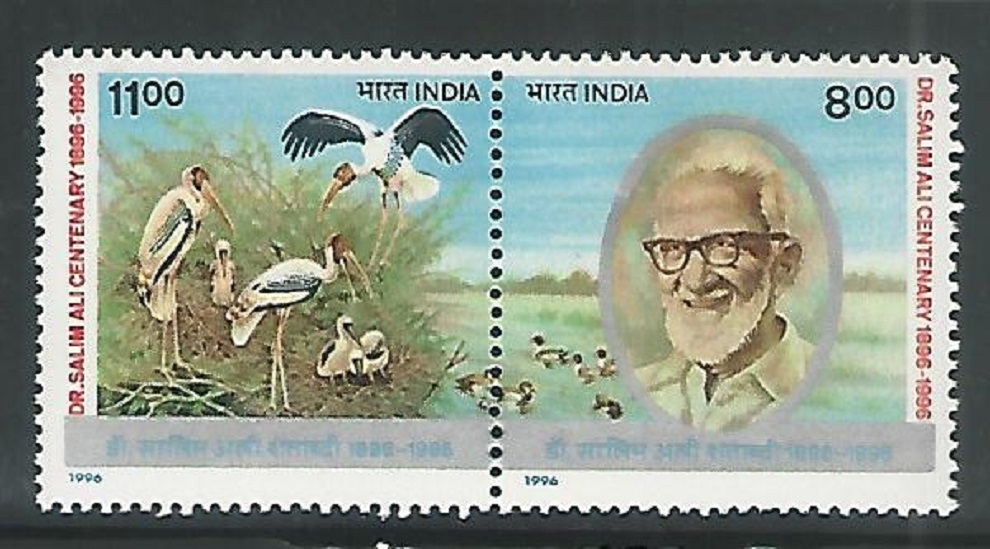
11th July is remembered in India’s at 7/11 because of Mumbai Train blasts in 2006. New Delhi-based publisher Pharos Media has brought out “Innocent Prisoners”, the English version of Begunah Qaidi authored by Abdul Wahid Shaikh, himself victim of a fake terror plot by agencies. The book, written while the author was incarcerated in Mumbai’s Arthur Road jail, was originally published in Urdu and later translated into Hindi.

Now available in English, it is a massive work of 504 pages on the tactics agencies and police use to ensnare innocents in fake terror cases to justify government policies and influence citizens of the country to accept the emergence of a security state in India.

The author himself was a victim of this ensnaring tactic who was acquitted by the Special MOCA & NIA Court Mumbai while his co-accused rot in jail and their appeal is pending for the last six years in Bombay High Court.

Shaikh offers first-hand information about agencies and police tactics on implicating innocent people, fabricating false evidence against them, and use torture of victims and the immoral pressure on their relatives to force them to confess to crimes they never committed or implicate other innocents.

The book is basically about the 7/11 Mumbai train blasts case but also covers German Bakery Blasts 2010, Malegaon Blasts 2006, Aurangabad Arms Haul Case 2006, Akshardham Attack 2002, and the “Indian Mujahideen” plank used by agencies to fabricate cases. It also extensively covers police torture, fabrication tactics, and various strategies police and agencies employ to implicate innocents and force them to make false confessions to prove stories concocted by the agencies and police.

This exposé offers startling details of the heinous games played in India by the State through police and agencies for decades in the name of “terrorism”. This book unveils the ugly face of government and agencies, modus operandi of police, ATS and investigation agencies, their inhumane tortures, legal tactics employed, and the secrets of court cases. Innocents implicated in terror cases will find the courage to fight their legal battles through this book. The reality of the blast cases and the tall claims made by police and media are exposed in great detail in this book. 

The author himself was a victim of torture and tactics of police and investigation agencies. He has narrated first-hand experiences of himself and some other innocent prisoners at the hands of police, investigation agencies, and officials of the jail system. 

This book is not just a testimony of the innocence of a person acquitted of all charges in an infamous “terror” case, it also showcases his unmoved resolve to fight the legal battle for his and other victims’ freedom. It also is a manual on how not to get yourself entangled in the vicious web of false implication in the first place and how to secure freedom from the clutches of heartless people in uniform, if arrested.

The author, Abdul Wahid Shaikh is a teacher at a Mumbai school. He was the only person to be acquitted out of the 13 accused in the 11 July 2006 Mumbai train bombings case because till the end he refused to sign a false confessional statement while his other co-accused succumbed to pressures and signed their false confessions which were used in court to sentence them to death and life imprisonment. 

Shaikh completed his post-graduation and studied law during his nine years in jail. Keeping his promise to his co-accused, he frequently travels around the country talking about the truth.

A Hindi feature film based on his life will soon be released. Even years after his acquittal, cops continue to harass him. Priced at Rs 495, this book as well as its Urdu and Hindi versions are available on Amazon and Pharos Media.

source: http://www.thecognate.com / The Cognate / Home> News / by The Cognate News Desk / July 12th, 2021

Sheikh Noor Alam Khalil Amini: Chief Editor of Arabic Monthly Al-Daie

Deoband, UTTAR PRADESH :

Sheikh Amini started his services as the Chief Editor of Al-Daie and the teacher of Arabic literature at Darul Uloom Deoband from 15th Shawwal 1402 AH (6th August 1982).

Sheikh Waheeduz-Zaman Kairanavi (1930-1995) was one of the few exemplary teachers of Arabic language and literature whom the 20th century witnessed in India. During his long teaching services at Darul Uloom Deoband, not only he trained his students how to speak and write eloquent Arabic language but he also trained them how to live an ideal life in the society as a good human being. He educated them in the way that wherever they went, they became the cause to enhance the glory and reputation for him and for their seat of learning, i.e. Darul Uloom Deoband.

Waheeduz-Zaman Kairanavi always encouraged his students and wished to see them at the peak of success. Whenever an opportunity of exposure and publicity came to him, he always pushed his students forward to let them prove their mettles.

In 1982, when there was a vacancy for Chief Editorship of Arabic Islamic fortnightly Magazine, Al-Daie, published from Darul Uloom Deoband, he preferred one of his capable and qualified students, Sheikh Noor Alam Khalil Amini (1952-2021), then the teacher of Darul Uloom Nadwatul Ulama, Lucknow to take this important responsibility. Later, the scholars of Arabic language and literature witnessed how ideal this choice was!

“Early days as Editor”

Sheikh Amini started his services as the Chief Editor of Al-Daie and the teacher of Arabic literature at Darul Uloom Deoband from 15th Shawwal 1402 AH (6th August 1982). As the Chief Editor, he published the first issue of the magazine on 7th Muharram 1403 – 25th October 1982 and went on to work tirelessly for 40 years (1403-1442 AH) as Chief Editor of the magazine. His standard Islamic, academic, literal and thoughtful write-ups for Al-Daie, in a well-expressed and eloquent Arabic language, enhanced the beauty of the magazine.

Moreover, collecting the standard and thoughtful articles by Arab writers and the excellent publication of Al-Daie in accordance with his amazing fervor, the magazine took no time to reach the peak of its success. Not only the Indian sub-continent scholars, but also the Arab scholars, poets and the men of letters welcomed the magazine with open arms.

Thus, the magazine played a key role, as a mouthpiece of Darul Uloom Deoband, in introducing Deobandi thought (Which is strictly following the path of Ahlus-Sunnah Wa-Al-Jamah) and presenting the institution’s academic activities in the Arab world.

“Columns on important subjects”

Sheikh Amini had fixed several columns in Al-Daie such as Kalimatul-Muharrir, Kalimatul-Adad, Al-Fikr Al-Islami, Dirasaat-Islamiyyah, Ilaa-Rahmatillah, Mahalliyat, Anba’aul-Jamiah, Ishraqah etc.

Besides these columns, there were also some other columns like Isdaratun-Hadithah, Al-Adabul-Islami, Al-Aalamul-Islami etc. in Al-Daie, if articles on such topics were included for publication.

Sheikh Amini used to write for the columns like Kalimatul-Muharrir, Kalimatu-lAdad, Al-Fikr Al-Islami, Ilaa-Rahmatillah, Isdaratun-Hadithah and Ishraqah in an eloquent Arabic language in the light of reliable references and accurate statistics. For the Kalimatul-Muharrir, it was his practice to write a brief article on current issues related to India or the Muslim world containing one or two pages sometimes. At the end of the article, there used to be written [Al-Tahreer] in the brackets. Next to it, the time and date were noted to let the readers know at what time and date the article was written. It was his practice to write the time and date at the end of his any write-up.

For the second column: Kalimatul-Adad, mostly he wrote a detailed article on social, political or Islamic burning issue. The article sometimes was on virtues of the month of Ramadan and fasting -Sawm, greatness of the migration of the prophet Muhammad (SAWS), need and importance of prayer etc. Article of this column sometimes revealed the cunningness of America and its illegitimate child, Israel.

He also used to show up the positive and negative aspects of the steps taken by the leaders of the Muslim and Arab world. He never hesitated to express his opinion about the stand and the decisions of the Indian government on any grave issue. The article would consist of 5/6 pages and sometimes even more pages than that. The Urdu translation of some of the articles written for this column is now part of his Urdu book “Kiya Islam Paspa Ho Raha Hai?

“Al-Fikrul-Islami”

He had great love for the scholars of Deobandi school of thought as they were true flag bearers of Islam. It was his mission to introduce their academic works and prominent services for Islam in Arab world. For this purpose, he translated Urdu books of those prominent scholars and published on the pages of Al-Daie in parts under the column of Al-Fikrul-Islami. This series continued for many years.

In this way, he translated dozens of books into Arabic language. The books are published from Darul Uloom Deoband and its Sheikhul Hind Academy. For few years, he had stopped writing for the aforesaid column. For this column, Abu Aaidh Al-Qasmi Al-Mubarakpuri (the patronymic of the famous Islamic scholar and teacher of Darul Uloom Deoband, Sheikh Muhammad Arif Jameel Qasmi Mubarakpuri, who is Assistant Editor of Al-Daie too) is translating “Tafseere Usmani” nowadays. This is a great and well-known Quranic commentary (Tafseer book) of Allamah Shabbir Ahmad Usmani (May Allah grant him Jannah!). As of Shaban 1442, the translation of the first 4 parts has been published under this column.

“Obituaries”

Sheikh Amini also wrote hundreds of articles for the column, “Ilaa-Rahmatillah”. Under this column, he wrote on famous scholars, thinkers, preachers, poets, men of letters and social and political personalities who had passed away in the near past from the Indian sub-continent as well as Arab world. In this article, he used to write the account of the deceased’s life, his services and the scholarly works etc. Like his other articles, the article of this column also had distinctive method as well as uniqueness and singularity of expression. The article would encompass all the features of the life of the diseased. The article used to be very lengthy. Sometimes, it was like a short biography of the diseased. He wrote on almost three hundred personalities as of March 2010.

Some articles written for the said columns were translated into Urdu language by the author and by some of his students and got them published in various Urdu magazines and newspapers. The readers liked them very much. They showed their desire that these Urdu articles should be compiled in the form of a book. Considering the sentiments of the readers, the author published the collection of 37 articles namely “Pase Marg Zindah” in 932 pages in May 2010. Of the same series, another collection of 24 articles namely “Raftagane Naa-Raftah” is soon to be published.

“Book Reviews”

Under the column of “Isdaratun-Hadithah”, he used to write a review on newly published books. His review too was very inclusive, comprehensive and lengthy. In this column, he used to elaborate the value of the reviewing book, its publication, introduction of author and his works in detail. As an example, the review of “Tohfatul-Alma’aee Commentary of Sunan Al-Tirmidhi” of Mufti Sa’eed Ahmad Palanpuri (Rahimahullah) can be read. This review is published with Tohfatul-Alma’aee, at the end of the 8th volume of the book.

The column: “Ishraqah” was on the last page of the magazine. Its remainder part used to be published on the last pages just back to the last one. For this column, Sheikh Amini used to write a well-grounded and demonstrative article, be on academic, religious, social or political topic, in the light of his thought, knowledge, experiences and observations or some situations and incidents influencing him. It was decorated with applicable idioms, appropriate synonyms, and beautiful similes. This article used to be the sample and model of an eloquent Arabic literature. It was highly valued and appreciated not only by the Indian readers of Al-Daie, but also by Arab scholars. It is pleasing that the hundreds of articles written for this column have been compiled and published this year namely: “Min Wahyil-Khaatir” in five huge volumes. It consists of 2600 pages as a whole. It was published just few weeks before the sad demise of Sheikh Amini. It is a precious and valuable gift for those who have interest in Arabic language and literature to read.

It is appropriate to record here that before the publication of Al-Daie, Darul Uloom published a quarterly magazine namely “Dawatul-Haq” as its mouthpiece, under the editorship of Sheikh Waheeduz-Zaman Kairanavi. After abolishing its publication, “Al-Daie”, a fortnightly magazine, was launched. Its first issue was published on 11th Rajab 1396 (10th July 1976), under the editorship of Sheikh Mufti Badrul Hasan Qasmi (ex-teacher of Darul Uloom Deoband and currently resident in Kuwait). Following his resignation, Sheikh Amini was appointed as its Chief Editor and the teacher of Arabic literature at Darul Uloom Deoband as stated above. Previously Al-Daie was published as a fortnightly magazine; but the governing body of Darul Uloom decided to convert it into monthly. Then from Safar-Rabiul Awwal 1414 AH (August 1993), it is regularly published as a monthly magazine.

May Allah accept the efforts of Sheikh Amini and grant him His choicest place in Jannah! Aameen!

[The writer, Khursheed Alam Dawood Qasmi, works at Moon Rays Trust School in Zambia, Africa. Sheikh Noor Alam Khalil Amini died on May 3, 2021 in Deoband.]

source: http://www.ummid.com / Ummid.com / Home> Life & Style / by Khursheed Alam Dawood Qasmi / June 11th, 2021

HarperCollins presents ‘Riding Free An Olympic Journey’ by Imtiaz Anees

Nargol, GUJARAT :

HarperCollins is proud to present the story of an Indian equestrian rider and his Olympic dream ‘RIDING FREE: MY OLYMPIC JOURNEY’ by Imtiaz Anees.

“The story of a true sportsman whose heart beats for his country. The pulse and emotion of this book are totally relatable. A beautiful real-life story of struggle, relationships, dreams and how Imtiaz overcame all hurdles to reach his goal.” – Sania Mirza, Indian Tennis Player, Olympian, Arjuna Awardee.

“A gentleman’s gentleman, Imtiaz’s cool and clam disposition hides the grit and determination – the dedication and discipline that built the foundation for him to compete with the best at an international level.” – Karan Johar, Film Director.

“It’s one thing to have a dream. It’s entirely another thing to follow your dream with passion and courage. Don’t miss this story of Imtiaz in his quest towards his Olympic dream.” – Viren Rasquinha, Former Indian Hockey Captain, Olympian, Arjuna Awardee.

“Imtiaz’s story is as heart-warming as it is inspiring. It’s so much more than sports – it’s about the power of dreams, self-belief, teamwork and perseverance. I must admit I have a soft spot for any story with animals in it. The bond between man and horse makes this story truly special.” – Alia Bhatt, Film Actor.

“The gap between the impossible and possible is your commitment to do what you want to achieve and enjoy the journey. Think unreasonable, believe, work hard and see how the universe comes together to make it happen. My memoir is about achieving the impossible and I truly hope it inspires you enough to ‘Never give in’.”- Imtiaz Anees.

“Imtiaz’s single-minded pursuit of his Olympic dream, the challenges he counters, the people who offer support to him and the milestones he achieves reads like a work of fiction. Riding Free proves that nothing is impossible if you dare to dream and match it with hard work. We are excited to be publishing this incredible story on the eve of the Tokyo Olympics.” – Sachin Sharma, Senior Commissioning Editor, HarperCollins India.

Here is an extract from the book:

My heart was pounding as the starter began the countdown: ’10-9-8-7-‘

This was the most exciting moment of my life-the realization of my boyhood dream and the culmination of many hours of hard work, figuring out how to tackle whatever obstacles the course threw at me.

I was where thousands of eventing riders around the world dreamt of being. At the greatest sporting event in the world-the 2000 Sydney Olympics-and ready to start the cross-country event.

‘6-5-4-3-‘ the countdown continued, and then it was ‘2-1’ and off we went! Spring Invader, my horse, leapt forward on cue and we were thundering down the course, while I had thoughts for nothing but the first jump coming up and getting the take-off and landing right.

About the book

‘My heart was pounding … yet I was sitting still! This was the most exciting moment in my life and the culmination of my boyhood dream. I was where thousands of eventing riders around the world had dreamt of being-the Olympics.’

This is the story of a young boy with an impossible dream-competing at the Olympics. From the age of four, Imtiaz Anees took to horse-riding like fish to water. It soon became a passion, one that continued through his life, beginning with his first competitive win at the age of six, eventually winning multiple equestrian events both nationally and internationally. Imtiaz is the only Indian rider to complete an equestrian three-day event at the Olympics, in Sydney in 2000, at the age of thirty, in an elite sport long associated with royalty and wealth and primarily the army in India.

In Riding Free, Imtiaz re-traces the major milestones of his riveting twenty-year-long journey. The stories he tells are heartfelt, emotional and inspirational for the next generation of dreamers-a way to ‘give back’, in small measure, the enormous goodwill and help he received from all kinds of people in his Olympics journey. Behind Imtiaz’s success are also the struggles and setbacks that pushed him to work harder and achieve peak performance. In a sport where the result depends on both man and animal, the deep bond Imtiaz shares with his horses will leave animal lovers spellbound. Here is a story that will inspire every athlete to ‘never give in’

Pre-order now: https://www.amazon.in/dp/9354227481

About the author

Imtiaz Anees is an equestrian Olympian, trainer, competitor, NBC commentator, qualified Level 2 instructor and coach educator. As the only equestrian Olympian in India, he wants to share his knowledge and experience with all other riders and offers internship programmes to teach equine management. He runs an equestrian training centre-Seahorse Equestrian, a boutique stable with sixteen horses, located on a beautiful beach in a small fishing village in Nargol, Gujarat.

source: http://www.theweek.in / The Week / Home / by PTI / by PR Newswire prnewswire.com / July 12th, 2021

A family repertory: The contribution of the Alkazi and Padamsee clans to Indian theatre

Pune, MAHARASHTRA / NEW DELHI :

The Padamsee extended family with Ebrahim Alkazi and Alyque Padamsee standing second and fourth from left, respectively   | Photo Credit: From ‘Enter Stage Right – The Alkazi/Padamsee Family Memoir’ . courtesy the Alkazi Theatre Archives

The Alkazi and Padamsee clans have played, and continue to play, an extraordinary role in the history of modern Indian theatre

“Oh god, it’s a page turner!” That was the cry from various family members on reading the first draft of Feisal Alkazi’s family memoirs published earlier this year. Titled Enter Stage Right — The Alkazi/Padamsee Family Memoir (Speaking Tiger, 2021), it is an irresistible, exciting read. The narrative details are gripping, the pace exciting, and viewing the times described in the book of the two families in pre- and post-Independence India through the lens of Feisal allows us to enter a world that we can relate to from stories that our parents and grandparents told us of the times they lived through.

Legendary names

Both names are legendary; the Alkazi and Padamsee clans contributed hugely to the formation and recognition of modernism in both Indian theatre and art. It all started when Bobby, or Sultan, Padamsee, the eldest Padamsee brother — the two families had 17 siblings between them, several of whom would distinguish themselves in theatre and the arts — had to return to Bombay after just six months as a student at Oxford due to the outbreak of World War II. What followed was a period of creative efflorescence as

E. Alkazi weds Roshen, October 1946   | Photo Credit: Photo Credit: From ‘Enter Stage Right – The Alkazi/Padamsee Family Memoir’ . courtesy the Alkazi Theatre Archives  

Bobby penned more than 100 poems, drew, painted watercolours and, one day in 1943, gathered a group of keen college students around his mother, the Padamsee matriarch Kulsumbai’s, horseshoe-shaped dinner table weighed down with mouth-watering Khoja cuisine. Bobby announced a plan to launch their own theatre group, the aptly named Theatre Group, as an alternative to commercial theatre, inspired by the group theatre movement of 1930s’ New York. One of those in attendance at that dinner was the young Ebrahim Alkazi.

Human angle

The group would flourish over the next few years, and court controversy with productions like an adaptation of Oscar Wilde’s Salomé, in which Bobby’s 19-year-old sister, Roshen, performed the risqué dance of the seven veils. Bobby would die by suicide aged just 24 in 1946, but the group went on, reaching its zenith in the coming decades, and three of his disciples married his sisters to found a cosmopolitan clan — including Ebrahim, who married Roshen. These were heady times of enormous intermingling, set in the dying days of the Raj and the dawn of Nehruvian India. The search for a new way of living creatively through a rich cultural life that was looking for a unique national identity drew in a very intense and close-knit community and family theatre with a galaxy of close friendships between authors, poets, painters, musicians and actors. As Feisal comments in the memoir, “Going to London together in 1947, there was a Roman Catholic like [F.N.] Souza, a Muslim like my dad, a Jew like Nissim Ezekiel, great friends like Krishna Paigankar and Akbar Padamsee, the idea that they were from different communities was not in anybody’s mind at all… we were always in and out of each other’s houses as well, in my family it was all the artists as well as the theatre people. We grew up with that — it gives a human angle to all these great giants that art historians write about.”

The cover of ‘Enter Stage Right — The Alkazi/Padamsee Family Memoir’  

After training at the Royal Academy of Dramatic Art in London in 1947, Ebrahim returned home and rejoined Theatre Group. However, following a rift with others in the group, he left and founded his own Theatre Unit company at the Bhulabhai Desai Memorial Institute in the 1950s. The Institute played an important role in nurturing modern Indian art and drama, and Ebrahim

found a space for uninhibited creativity there, before he moved to Delhi in 1962 to head the National School of Drama for 15 years. Over the years, his contribution to widening the scope, subject matter and audience for Indian theatre would be extraordinary, as would those of his brother-in-law Alyque Padamsee, Mahesh Elkunchwar, and Safdar Hashmi. Alyque, known for directing productions ranging from the English version of Girish Karnad’s Tughlaq to Jesus Christ Superstar, has also been called the father of Indian advertising, and played Jinnah in Richard Attenborough’s Gandhi. His first wife was Pearl Padamsee, a stage and film actor, director — her oeuvre included Godspell, the first big musical produced in Mumbai — and producer. Their daughter, Raell Padamsee, runs her own production house, ACE, in Mumbai.

Home to stage

The rich family legacy also continues through Ebrahim’s son Feisal, who started devising plays with friends in Barry John’s Music Theatre Workshop in the early 80s. Although theatre is his first love, Feisal wears many hats — theatre and television director, author, educationist, counsellor, filmmaker and founder of Ruchika Theatre. His works include Noor, a sympathetic, gendered lens on Noor Jahan and Mumtaz Mahal; A Quiet Desire, the story of Rabindranath Tagore and of his brother and sister-in-law Kadambari; the adaptation of Kipling’s The Jungle Book into a coming-of-age story, retitled Yeh Bhi Jungle, Woh Bhi Jungle, in which the character Mowgli epitomises every important transition of adolescence in his search for identity.

E. Alkazi as Macbeth in a production directed by him   | Photo Credit: From ‘Enter Stage Right – The Alkazi/Padamsee Family Memoir’ . courtesy the Alkazi Theatre Archives

Along with his sister, Amal Allana, and her husband, Nissar Allana, Feisal has strongly believed in the mixing of generations in creative work. “I make it a point that the infusion of the next generation in all the years of Ruchika is so crucial. All our kids are there and the people who started it… to keep the generations going and learning from each other.” Radhika, Feisal’s wife, an accomplished actress and arts educator, says, “It was so new to me, this world — in the family, in the home, in the drawing room — your furniture would be on stage, your clothes would be on the stage.” When Zohra Sehgal worked with Feisal in the Ruskin Bond serial Rusty, she found herself wearing a costume that was from Radhika’s trousseau. Feisal recalls her saying, “Hamare gharon mein aise hi chalta hai” (This is how it is in our homes).

The story of these two families, who played such a vital role in the history of theatre and art, is an imperative chapter in the country’s socio-cultural history.

The writer is a Delhi-based artist, arts educator, curator and researcher.

source: http://www.thehindu.com / The Hindu / Home> Society> Spotlight / by Kristine Michael / July 10th, 2021