Tracking soldiers from the subcontinent who fought on the battlefields of Europe
Whether it’s Dunkirk or Iwo Jima, we tend to associate World War II with other countries. India, of course, was in the midst of the struggle for independence during the years of the war. But, since the country was a British colony, it was also dragged into the war not just in terms of materials being shipped. A crucial factor were the soldiers from India who fought on the battlefields of Europe but remain unknown.
Multiple threads
Of late, we have had books on the Indian participation in World War II and here is another which looks at soldiers from undivided Punjab who arrived in France in 1939 and returned to find their country on the verge of Partition.
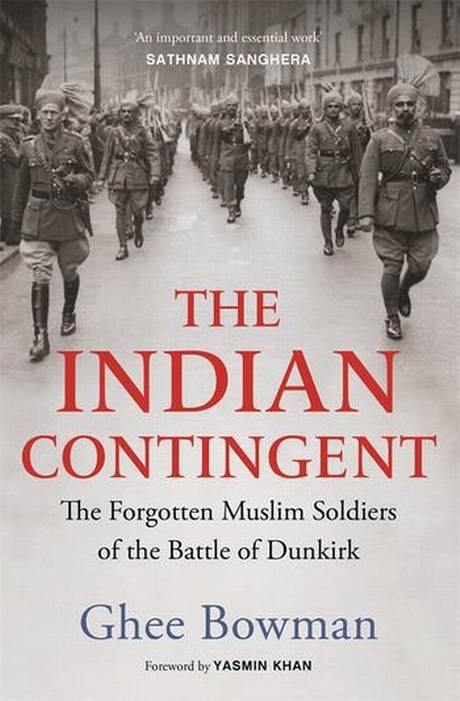
Ghee Bowman’s The Indian Contingent: The Forgotten Muslim Soldiers of the Battle of Dunkirk focuses on a group called Force K6, who were largely from the northwest provinces, now in Pakistan. They were part of the mule transport companies, which helped the British army transport supplies in areas where trucks could not reach. During the Battle of Dunkirk, some of these men were captured but many escaped to Britain and were relocated to various parts of the U.K. where they helped in the infantry training.
Bowman doesn’t lump all the individuals together into one unit. Each person has a story and he unravels the multiple threads till the reader gets a complete picture of the “poets and musicians, cooks and carpenters and a veterinarian… writers, cinema lovers, boyfriends and parents” — as author Yasmin Khan puts it in the Foreword — who comprised the Force K6.
On the one end you have poetry-writing Aurangzeb who died as an 18-year-old in Wales and is still remembered in his village in Pakistan; at the other is mule driver Mahmud Khan who is captured by the Germans, forced to join the Indian Legion, seduces his German officer’s daughter and a male orderly and escapes to Switzerland.
Forming bonds
Bowman also tracks the lives of the men in “obscure corners of the British Isles” where they “formed strong bonds with farmers, children and women”. Some of these bonds resulted in children and the story of Jeff Shapland who finds out about his father Jamal Khan much later in life is moving. Shapland recounts being singled out for his dark looks — at Leeds University South Asian men would talk to him in Hindi or Urdu and his landlady in Bristol wouldn’t let him eat in the common dining room, he was abused and punched by students at his school in Leicester —and how he came to accept himself.
There is a lovely little nugget of jemadar Malik Mohammed Khan visiting a school to hear Welsh folk songs and teaching the children a Punjabi lullaby that went ‘Sunate Sunate Sunate Krishna’. There are also anecdotes from those who were children at that time about their interactions with these soldiers.
In his Prologue, Bowman writes, “This book aims to reclaim them from the backwater and reinstate them in the mainstream: part of the current of recognition of Commonwealth and global contributions to the Second World War.” He has, indeed, succeeded in this.
The Indian Contingent: The Forgotten Muslim Soldiers of the Battle of Dunkirk; Ghee Bowman, Pan Macmillan, ₹699.
krithika.r@thehindu.co.in
source: http://www.thehindu.com / The Hindu / Home> Books> Review / by R. Krithika / October 02nd, 2021
The 221 pages book released by SIO briefly introduces all the 387 Mappula leaders who fought British and Hindu feudal lords.
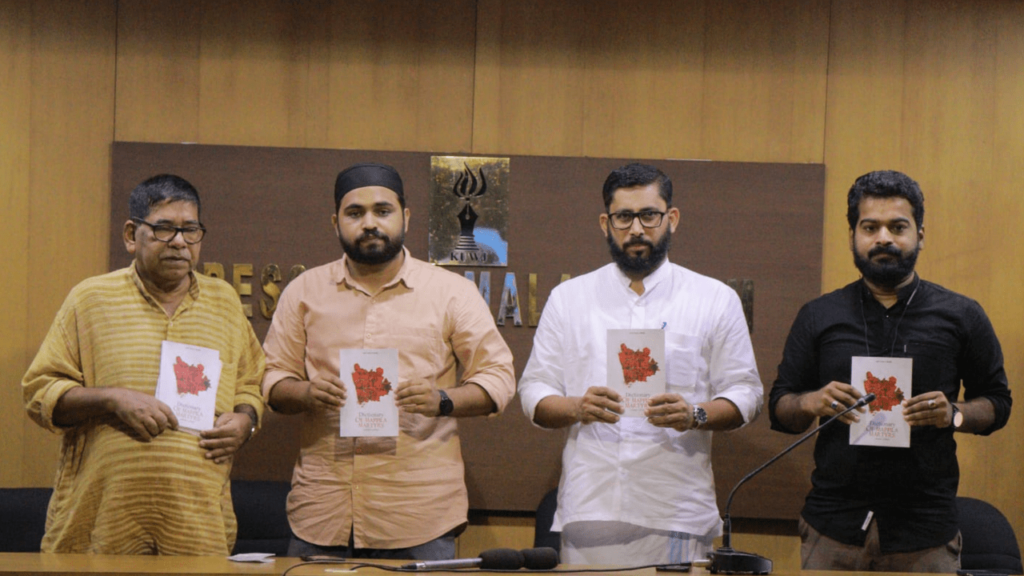
Following the Indian Council of Historical Research’s (ICHR) decision to remove the names of Mappila or Moplah leaders from the ‘Dictionary of Martyrs: India’s Freedom Struggle 1857-1947‘, the Students Islamic Organisation of India (SIO) Kerala unit released the ‘Dictionary Of Mappila Martyrs’ compiling the names of all the 387 martyrs.
The book “Dictionary of Mappila Martyrs” was handed over by Amjad Ali E M, State President of SIO Kerala to Alavi Kakkadan, a prominent historian and chairman of Variyamkunnath Kunjahammad Haji Foundation of India. Abdul Hakeem Nadwi, State secretary of Jama’athe Islami Kerala, Rashad V P, State secretary of SIO Kerala, and Sahel Bas Joint Secretary of SIO Malappuram were present at the launch of the event at Press Club Malappuram on Monday.
Amjad Ali EM said that the Malabar Uprising of 1921, which is described by historians as the first mass-scale uprising against the British in southern India, discomforts Hindutva politics and therefore the dictionary released by the governing Sangh Parivar can’t include Malabar martyrs.
A three-member panel, which reviewed the entries in the fifth volume of the Dictionary of Martyrs: India’s Freedom Struggle 1857-1947, brought out by the ICHR, recommended the deletion of the names of Mappila martyrs, saying that the 1921 uprising against the British was never part of the independence struggle but a fundamentalist movement focused on religious conversion.
“The greatness of Variyan Kunnathu and Ali Musliyar lies in not getting into the good list of Sangh Parivar. And history will remember them for getting omitted from Sangh distorted history, therefore, to mention the names of the Mappila martyrs who were cut off by the ICHR is to express a strong stand against the Hindutva regime,” Amjad Ali said. Alavi Kakkadan, Abdul Hakeem Nadwi, Rashad V P, and Sahel Bas also expressed their opinions in the meet.
The 221 pages book released by SIO briefly introduces all the 387 Mappula leaders who fought British and Hindu feudal lords.
Was The Moplah Uprising Part Of Indian Freedom Struggle And Was It Anti-Hindu? / video source: thecognate.com
source: http://www.thecognate.com / The Cognate / Home> News / by The Cognate News Desk / September 14th, 2021
Masoom Muradabadi’s book was launched at the Press Club on Thursday by eminent journalists
The event was organised to launch the Hindi translation of journalist Masoom Muradabadi’s book on Maulvi Baqar.
New Delhi :
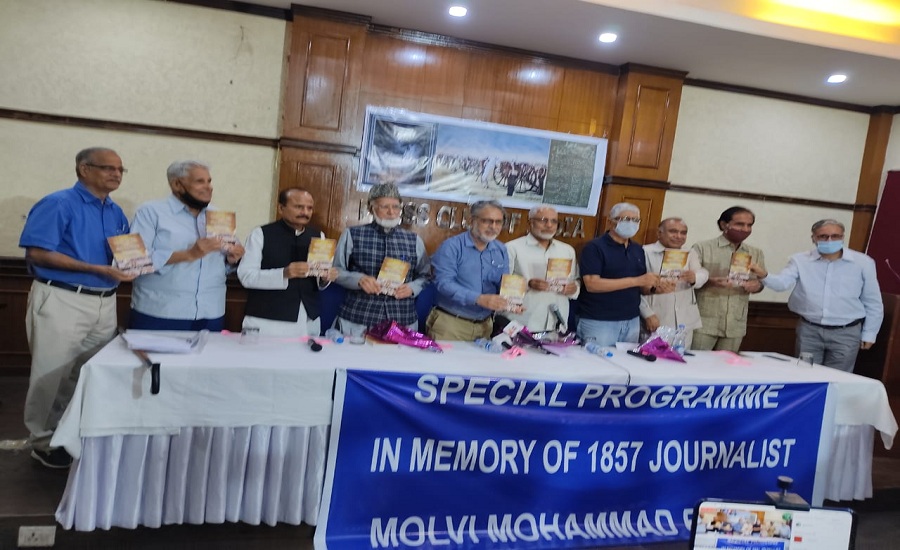
The Press Club of India on Thursday held a seminar to commemorate the death anniversary of Maulvi Mohammad Baqar, the first journalist who was executed by the British following the rebellion of 1857.
A Hindi translation of the book titled ‘1857 Ki Kranti Aur Urdu Patrkarita’ (The Revolution of 1957 and Urdu Journalism) authored by journalist Masoom Muradabadi was released at the seminar.
It chronicles the life of Baqar as a journalist and freedom fighter. Moreover, two journalists — Swati Mathur, a reporter with The Times of India, and Shams Tabrez Qasmi, the editor of popular news portal Millat Times — were also felicitated with an award named after Baqar.
A number of veteran journalists and writers spoke on the occasion paying tributes to the ‘first martyr journalist’. They described Baqar as an icon of Hindu-Muslim unity whose ideals are increasingly relevant in the present times.”
“Maulvi Muhammad Baqir was one of the great journalists who preferred martyrdom to collaboration with Britishers.” A U Asif, a senior journalist and member of Press Club’s managing committee, said. “He is the ideal and role model for the new generation of journalists.
Satish Jacob, a BBC veteran, said Baqar was a journalist who sacrificed his life for the sake of the nation. He described him a proponent of Hindu-Muslim unity.
Jacob said he is proud of the fact that he hails from old Delhi which gave birth to a person like Baqar. He said that Baqar had started an Imam Barah in the Kashmere gate area which is still functioning. The Imam Barah was built with the expressed goal of communal harmony, he added.
Noted journalist Meem Afzal, who has been a member of Parliament and India’s ambassador in four countries, lashed out at the current government for communal divide and accused it of obliterating the contributions of people like Baqar. He said that Baqar used his pen to fight for the idea of India.
Maroof Raza, another journalist, appealed for steps to find the original source and preserve the archives of ‘Delhi Urdu Akhbar’, the newspaper Baqar used to publish.
Jai Shanakar Gupta, senior journalist and a member of the Press Council of India, urged the government to get copies of the newspaper that Baqar edited from Britain where they are lying in a museum.
SQR Ilyas, journalist and president of the Welfare Party of India, said that the sacrifice of Baqar should inspire the present-day journalists to speak truth to power. He lauded the Press Club for commemorating Baqar.
Similar sentiments were echoed by Syed Aijaz Aslam, editor of Radiance Viewsweekly.
Mathur and Qasmi expressed their gratitude to the Press Club for felicitating them with the award. “This recognition in the form of an award in Maulvi Baqar’s name is a big thing for me, ” said Mathur.
Qasmi credited his whole team of Millat Times for the work that earned him the award.
source: http://www.clarionindia.net / Clarion / Home> Editor’ Pick / by Zafar Aafaq, Clarion India / September 16th, 2021
THE Muslims-stirred to the acknowledgment of their actual situation in India especially after the Mutiny of 1857. The exit of the last Mughal monarch from the throne of Delhi was not only a symbol of their downfall but also an end to their existence as a separate and dominant group in Indian political life. A new phase in India’s history opened after the 1857 rebellion and the consequent dissolution of the East India Company. The era of the colonial Raj began with Queen Victoria’s proclamation of 1 November 1858. This benign document set a new tone of authority and conciliation. The post-Great Revolt period was probably the gloomiest period in the history of the Muslim community in the Indian Subcontinent. Muslims had created and taken an unmistakable part in the events of 1857, in the British eyes, whereas Hindus kept a low profile. Therefore, the Muslims were to bear, alone, the fault. Two factors influenced the creation of this image: the first was, of course, the nature of the movements led by Shariatullah and Syed Ahmad decades before the Mutiny; and second was the lingering imagery in the West of Muslims authored by European Christian perseveres during the Crusades (1095-1291). Quick and savage responses were to be incurred by the British administration, which would bring about a cruel reality for the Muslim people group. They lost their moorings, their confidence, their hope. And, for the first time, they realized with the anguish of bitterness that they were nothing but a weak, powerless, supine minority. This was the first casting of the seeds of nationalism, the first kindling of a feeling of loneliness and prostration, the first awakening to the need of solidarity. It was a period of gigantic political, social, economic, and social change that stirred a feeling of nationalism in the people groups of India. It was a period when a modernized Muslim scholarly and political initiative came to characterize and explain fundamental Muslim community and political necessities under the Raj, simultaneously as a beginning nationalist development was being fashioned by a more extensive working-class tip-top challenging British absolutism. The pressure among Hindus and Muslims started to arise in this period. At the point when it turned out to be extraordinarily disturbed after the mid-1920s, a practically unrecoverable hole opened up between what we may call Indian nationalism and Muslim rebellion, prompting the decisive division of Pakistan from the remainder of India in 1947.
It was a period when questions began emerging among the Ashraf classes about how Muslims could approach obliging western social impacts without negating the religious statutes of Islam. It was an issue stacked with subtleties, owing more to singular inclinations than a communitarian agreement. There were tones and layers of dark in trades between Muslims of various leanings on the suitable Islamic reaction toward the western experience. Modernity itself was a challenging thought, open to many fluctuated understandings. One of the main courses through which modernity contacted the Muslim people group of India was through the press. Also, it was one of the main channels through which educated Muslims aired their perspectives on the degree to which a social system informed by Islam could serenely get the inundation of western thoughts and innovation.
It was also a time when an extremely important character came into the frame, which went by the name of Sir Syed Ahmad Khan. The founder and intellectual pioneer of Muslim nationalism. And it was this nationalism that evolved into becoming a movement that strived to carve out a separate Muslim-majority country in the subcontinent, and then further evolve to become Pakistani nationalism. Sir Syed is the one who acted with the tide of functions and established the Aligarh’s framework in the unfriendly, undoubtedly threatening milieu of the 1880s. Sir Syed, though by no means consciously made possible the emergence of two most outstanding Muslim leaders who had enthusiastically started out as staunch Indian nationalists, ended up finally at the threshold of Muslim nationalism. Belonging to a family which had roots in the old Muslim nobility, Sir Syed’s prolific authorship on the Muslim condition in India (during British rule) and his activism in the field of education, helped formulate nationalist ideas in the Muslims of the region. These ideas went on to impact and influence a plethora of Muslim intellectuals, scholars, politicians, poets, writers and journalists who then helped evolve Syed’s concept of Muslim nationalism into becoming the ideological doctrine and soul of the very idea of Pakistan. It was Sir Syed that had initiated the educational, intellectual, ideological, cultural and political trends and engendered tendencies that laid the groundwork for a Muslim renaissance in India. It is certainly true to say that Sir Syed was too much impressed by western rationalism and wanted to show that every doctrine of Islam could measure up to all principles of science, reason, and common science. In doing this, he was trying to be both rationalist and a good Muslim. He was one of the first Muslim scholars to offer a point by point answer to British authors who were presenting and introducing the tradition of Islam as something which was damaging and retrogressive. Sir Syed reminded the British that Islam was inalienably a progressive and modern religion, and it had empowered and encouraged the study of philosophy and the sciences. He actively campaigned for the adoption of modern Western education in India, particularly for Muslims. He both started and joined a number of organizations whose purpose was to make European knowledge accessible to young Muslims and other Indians in Urdu vernacular. In 1870 the appearance of Sayyid Ahmad Khan’s Tahzib-ul-Ikhlaq exhorting Muslims to reform their religious worldview had a catalytic effect on the newspaper business. Sir Syed reprimanded ulema for compelling the Muslims to dismiss science. He composed that Muslims needed new religious philosophy of Islam, which was discerning and dismissed all doctrinal ideas that were in conflict with good judgment and reason. Threatened by Sayyid Ahmad’s bold forays into the domain of Islam, many of his co-religionists ventilated their outrage by resorting to the print medium, colonial modernity’s most attractive gift for instantaneous self-promotion. The response to Sayyid Ahmad’s arguments on the compatibility of Islamic teachings and modern ideas was similarly sharp in the North-Western Provinces and Punjab. While in the North-Western Provinces numerous new names arose on the guide of Urdu journalism as pundits of the Aligarh school, Sayyid Ahmad’s religious thoughts were given an extreme dressing down in Punjab by the Ahl-I-Hadith’s Ishaat ul Sunnat. Sayyid Ahmad’s way to deal with Islamic religious philosophy and statute acquired him the gashing maltreatment of “orthodox” Muslim ulema. His advancement of ijtihad or free-thinking and dissatisfaction with regards to taqlid or adherence to the four definitive schools of Islamic statute set him at loggerheads with the ulema who effectively found in it a scarcely masked attack on their pre-famous status as the strict watchmen of the Muslim people group. His support of western knowledge and culture as well as loyally to the raj drew astringent remarks from Muslims joined to their cultural moorings and the ideal of an all-inclusive Muslim ummah. Among Sayyid Ahmad’s fiercest critics was the Persian scholar Jamaluddin al-Afghani who lived in India somewhere in the range of 1879 and 1882 and called for Hindu-Muslim solidarity as the initial step to dislodging British imperialism.
Jamal Al-Din Al-Afghani — a bright young political activist, journalist, reformer, and Afghan ideologist who showed up in India in 1855. He one of the most prescient of modern Muslim thinkers, who had travelled and preached across British India. In contrast to the conventional ulema, Afghani didn’t perceive any great in turning inwards and drastically dismissing the modernity associated with British rule. His belief in the potency of a revived Islamic civilization in the face of European domination fundamentally impacted the development of Muslim thought in the nineteenth and early twentieth centuries. He recognized the matchless quality of Western education, however, accentuated that Muslims should grasp it to improve their parcel and afterward reverse the situation against Western imperialism by ousting it and setting up a worldwide Islamic caliphate. Al-Afghani held that Hindus and Muslims should work together to overthrow British rule in India. He worked to transform Islam into a lever against western imperialism. Afghani was the prototype of the modern fundamentalist. Like Sir Syed, he also had been influenced by western rationalism and the ideological mode of western thought. Afghani welded a traditional religious hostility towards unbelievers to a modern critique of western imperialism and an appeal for the unity of Islam, and while he inveighed against the west, he urged the adoption of those western sciences and institutions that might strengthen Islam. Afghani saw Western innovation as a solution to recover regenerate the Muslims, not as an approach to assist them in discovering a spot inside colonial settings yet to completely comprehend and afterward eradicate imperialism. Afghani was rather progressive and modernistic in his thinking. A contemporary English admirer described Afghani as the leader of Islam’s liberal religious reform movement. The pan-Islamist thought which he spearheaded esteemed the significance of changing and reforming the Muslim mentality through modern scholarly methods, and afterward utilizing the transformed as a weapon against the political incomparability of Western imperialism.
Another prominent sage of the modern Muslim intellectual movements of the time was Justice Ameer Ali. His History of the Saracens and Spirit of Islam enjoyed a wide readership both in India and Britain, but his target audience was the Western public. He wished to familiarize this public with the history and religion of Islam, and he was successful at that. He accepted that there were issues that made it problematic for his Western contemporaries to appreciate Islam as a religion suited to the needs of the modern world, but he remained unapologetic on central Islamic beliefs. Chiragh Ali (1844–95), a lawyer from Hyderabad, argued for the reform of Muslim civil law and the establishment of a humane Islamic law based on the Quran rather than on later accretions and interpretations. Altaf Husain Hali’s The Musaddas described the drama of Islam, its glories and its tragedies, in simple, sensuous, and passionate poetry; and, at the same time, he highlighted the need for the reform of Muslim society. The Musaddas became a best-seller in Urdu-speaking India, and it is still read and enjoyed by thousands even today. The scope and spirit of Urdu literature augmented during this period. Akbar Allahabadi (1846–1921), acclaimed for his gnawing parody, censured Sir Sayyid Ahmad Khan’s zing for Western culture and analyzed Muslims aping Western ways of life as ‘playing out monkeys’ for their British coaches. The Urdu weekly by Agra Akhbar, distributed by Khwajah Asif Ali denounced the Muslim Anglo-Oriental University conspire at Aligarh as ‘eccentric and illusory’. Much good Urdu prose was being written in this period; however, three specific improvements significantly advanced its reach and quality. The first one was the development of journalism. Despite the fact that the Urdu press returns to the late eighteenth century, it started genuinely to thrive and flourish from the 1870s onwards. Papers like Akhbar-e Am in Lahore (1870), Oudh Punch in Lucknow (1877–1936), and Paisa Akhbar in Delhi (1888) revolutionized journalism by receiving new patterns, for example, eye-getting features, notices, modest value, newspaper design, alongside the publication aptitudes of ironical composition, spontaneous extemporization, and powerful questioning. Hostile to British assessments were regularly communicated in such political papers as the Zamindar of Lahore, the Al-Hilal, and Al-Balagh, began by Maulana Abul Kalam Azad in 1912 and 1915, and the Hamdard edited by Muhammad Ali. The second significant advancement in Urdu writing was the introduction of the novel. Finally, we must record the rise of Urdu drama in this period.
To sum up, Sir Syed received harsh criticism. His religious naysayers remained positioned in their mosques and madrassahs. Thus, the greater part of his religious adversaries couldn’t discover a spot in the school that he set up in Aligarh. This school evolved into becoming a college and then an institution which began to produce a specific Muslim world-class and metropolitan bourgeoisie who might go on to dominate Muslim nationalist thought in India and eventually decide the course in 1906 when the consciousness of Muslim nationalism took practical form when a deputation of Indian Muslims – Shimla Deputation – held a meeting with the Governor-General Lord Minto in Shimla and secured the viceroy’s consent in respect of separate electorate for Muslims.
The views expressed in this article are the author’s own and do not necessarily reflect the editorial stance of Kashmir Observer
The author is a student at University of Hyderabad
source: http://www.kashmirobserver.com / Kashmir Observer / Home / by Inayathullah Din, Guest Author / December 18th, 2020
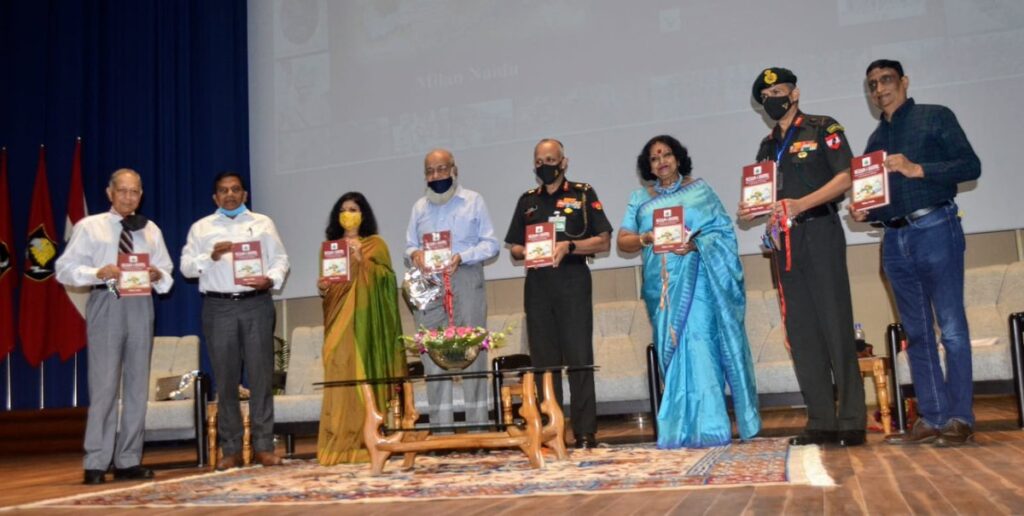
A book entitled “Nizaam-I-Bhopal”, highlighting the forgotten facets of Bhopal’s military history, penned by Lt. Gen. (Retd.) Milan Lalit Kumar Naidu, PVSM, AVSM YSM, the former Vice-Chief of Army Staff, was recently released.
The book was released by current Vice-Chief of Army Staff Lt. Gen. C. P. Mohanty at Dronachal, the headquarters of Sudarshan Chakra Corps, in Bhopal.
Lt. Gen. Naidu’s untiring efforts gave shape to his book “Nizaam-I-Bhopal”. It took five years of research, poring through Farsi (Persian) and Urdu records that led to the book.
It is only befitting that this wistful narrative is brought out by Bhopal’s very own son, Milan Naidu, who personifies that gentility, sophistication and aesthetic refinement to do justice to any literature to do with Bhopal. As a thoroughbred officer-and-a-gentleman with the highest military credentials and an illustrious career behind him only could have produced such an exquisite and masterful body of work “Nizaam-I-Bhopal”. The unforgiving ravages of time, circumstances and dominant instincts that governed its leadership from time-to-time, have been minutely analysed, explained and postulated for posterity. The rich, unsung and often unknown facets and tapestry of Bhopal’s military traditions, legacy and its continuing imprints are generously captured, documented and brought alive in this book.
In the book “Nizaam-I-Bhopal” Lt. Gen. Milan Naidu (Retd.) has charted the transformation story of rag-tag forces of the Indian princely states, from the 18th century to that modern Army. He has lucidly described the socio-economic-politico environment which existed in those times and analysed the evolution, rules, service conditions, ceremonials and battles fought by state forces, with special reference to Bhopal State.
The Book is a historical analysis of the Militaries of the Bhopal Princely State. Bhopal had the singular position in the comity of Princely States in British India, with a 175 years’ continuous line of Begums rulers. They were visionaries, educated and erudite. They displayed tremendous administrative ability, leadership qualities and diplomatic acumen, coupled with comparable skill at horse riding and arms. These Rulers set the tone of the Militaries and its motivation. The Bhopal Battalion, as part of the Indian Expeditionary Force, was the first non-Europeans to have disembarked at Marseilles in France to fight the War on foreign shores battling the weather and enemy alike.
A Bhopal battalion was even awarded one of only nine Victoria Crosses given out to Indian soldiers in Mesopotamia in the Great War. That same unit is part of Pakistan now. In the 1965 India-Pak war this battalion was awarded “Nishan-e-Haider”. The icing on the cake was that its Militaries were demobilized in a peaceful and a placid manner, to be absorbed by the Civvy Street in a symbiotic equation.
With such historical genesis and background of the State Forces, Lt. Gen. Naidu (Retd.) helps us to understand how much of our present Army developed its traditions, values and ethos; the singular character which it win the Kargil war despite the severe adversities.
This book is of true historical value, especially of the painstaking research, much from many primary sources, obtaining information from abroad (including Pakistan), interviewing progeny of the soldiers, and finally putting all of it in order.
The author’s observations on the governance and policies of the rulers help us to trace the developmental process of the state. How these issues impinged at various times on the States Forces is reflected subtly. Some of the anecdotes narrated in the book are hilarious and some quite poignant.
Kalim Akhtar, a historian and researcher says: “It is interesting to read how the Bhopal army collaborated with the British and fought the World Wars as well. It presents a true picture of history after years of research of Farsi (Persian) and Urdu records maintained in libraries, as far as the UK. It will be of great interest to lovers of history and especially those who love Bhopal.”
While Iram Khan, a housewife, in her comments about the book says: “It is well researched and attention grasping and would recommend it to anyone who has even a slight curiosity about the old world charm that the city of Bhopal still exudes”.
Meanwhile, the author of the book, Milan Naidu joined the National Defence Academy and was commissioned into the famed Rajput Regiment in 1967. He served for 41 years, holding several key positions – including worked as Military Attaché in Germany; Commanded 5th Battalion the Rajput Regiment in Sri Lanka; Commander of the Corps in Ladakh and GOC-in-C Army Training and Doctrine Command at Shimla before being made the Army Vice-Chief. He attended Canadian Forces Command and Staff College Course in Toronto. After retirement, he was appointed a member of the Armed Forces Tribunal at New Delhi.
His other assignments include: Working Chairperson of the Organising Committee for the Military World Games 2007; Member of the Executive Council of the Indian Golf Union; Chairperson of the Centre for Land Warfare Studies; Member of the Executive Council of the United Service Institution of India.
Lt. Gen. Naidu (Retd.) was born and brought up in Bhopal, the state capital of Madhya Pradesh. He did his schooling from Bhopal passing out X Class (Matric) from St Josephs Higher Secondary School, Bhopal in 1963. I may mention here that he was seven years senior to me in the school where I too studied in the sixties.
He did his M.Sc. in Defence Studies from Madras University in1984-85. Later on he did M. Phil in Defence Management in 1989-90. He completed Post Graduate Diploma in Environment and Ecology, Barkatullah University, Bhopal in 1996-97.
He won the Junior Small Bore in the National Shooting Championship in 1963. He was awarded ‘Shooting Blue’ in NDA.
source: http://www.maeeshat.in / maeeshat.in / Home> Books> Business / by Pervez Bari / August 02nd, 2021
Khan says that the story her grandmother told stayed with her for years and when she started researching the Rampur culture, it kept coming back to haunt her while she walked through the old settlement of Rampur city.
New Delhi :
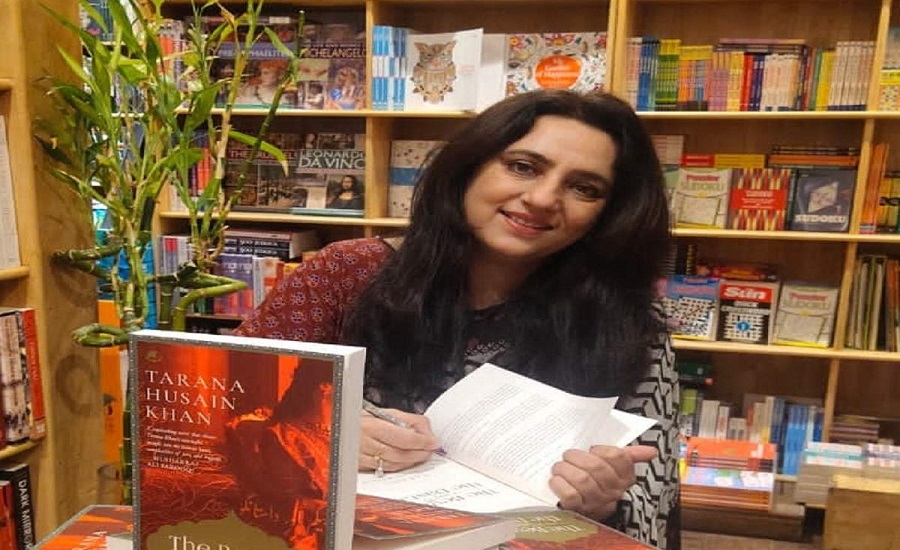
She doesn’t really remember when she heard the story of the woman she named Feroza Begum in her book. Perhaps it was one of those tales her grandmother narrated when the children gathered around in the courtyard of their rambling home. “We loved to listen to the stories of bygone years as they had an immediacy, a reference point – about some relative or friend we knew,” she recalls.
Author Tarana Husain Khan, whose book ‘The Begum and the Dastan’ (Tranquebar) recently hit the shelves goes back to the year 1897 where in the princely state of Sherpur, Feroza Begum, beautiful and wilful, defies her family to attend the sawani celebrations at Nawab Shams Ali Khan’s Benazir Palace. Feroza is kidnapped and detained in the Nawab’s glittering harem, her husband is forced to divorce her, and her family disowns her. Reluctantly, Feroza marries the Nawab, and is compelled to negotiate the glamour and sordidness of the harem.
Khan says that the story her grandmother told stayed with her for years and when she started researching the Rampur culture, it kept coming back to haunt her while she walked through the old settlement of Rampur city.
“I wanted to know how Feroza lived her life, her thoughts and aspirations and her death. I was surprised by my emotional investment in the ancient tale. It made me feel suffocated and vulnerable at the same time maybe because it was a sort of cautionary tale for young girls,” she tells IANS.
Talk to her about the metamorphosis of Feroza’s character — how she starts to ‘accept’ the circumstances with the Nawab, and if a modern reader would be comfortable with that, and Khan asserts that the protagonist’s options were limited by her predicament.
“She was confined in the Nawab’s harem and her family had abandoned her. How did a woman in the late nineteenth century deal with such circumstances? It might be difficult for the ‘modern’ or ‘feminist’ person to understand her actions. I didn’t want Feroza to be a modern woman dressed in ancient clothes. I didn’t want to project these sensibilities to Feroza’s character. In fact, I had to restrain myself from putting my words and thoughts into her persona. She belonged to a certain time in history and her actions and thoughts had to mirror those times.”
The author, who has weaved two timelines in the book, insists that at the core of ‘The Begum and the Dastan’ is the question of patriarchy. “I began with writing Feroza Begum’s story but the question of the state of the girl child in small town India had been troubling me because of my first hand experience teaching young children. Ameera who lives in modern times poses the question — has anything changed for the young girls today. I wanted my readers to think beyond Feroza’s plight. Patriarchy affects young girls in Indian homes by restricting their vision of themselves as well as posing physical constraints. So the life of the veiled Begums and their limited options has a modern counterpoint in Ameera’s life,” she says.
While researching Feroza’s story, Khan realised that there were many women who had disappeared from the pages of history and whose voices inhabited oral history. There were women who left their imprint on political decisions and on cultural developments but rarely found mention in cisgender male histories. “In giving cadence to some of these voices, this book was born,” says Khan, whose previous books include ‘I’m Not a Bimbette’ (2015) and its sequel ‘Cyber Bullied’ (2020).
Currently, Khan is researching on Rampur culinary archives, which is a part of ‘Forgotten Foods: Culinary Memory, Local Heritage and Lost Agricultural Varieties in India’, a project funded by the Arts and Humanities Research Council that brings together researchers and practitioners.
“So my translation of nineteenth century Persian cookbooks meets the skill set of the khansama and we create something that is workable. The ultimate aim is to expand the repertoire of the local khansamas and enhance their employability. This should also popularize the ‘forgotten’ dishes of Rampur cuisine.The penultimate aim is to publish a cookbook of the forgotten dishes and to showcase the dishes at a cultural fest, the ‘Jashn e Benazir’, which we plan to host in Rampur in 2022.”
Editing a book on Rampur cuisine and culture which is slated for publication in April 2022, Khan is also writing a novel. “It is still in its initial stages. I am essentially a storyteller, a dastango like Mirza Kallan, a character in my book, who spins tales till the boundaries of reality and fiction blur,” she concludes. — IANS
source: http://www.clarionindia.net / Clarion India / Home> Books / by IANS / August 02nd, 2021
Ruler of Oman, Sultan Qaboos bin Said has honoured Dr. M.I.H.Farooqi, with an award of US$ 25,000 (Rs 12 lakh) in appreciation of his books Plants of the Quran and Medicinal plants in the Traditions of Prophet Mohammad.
Both the books contain scientific descriptions of plants mentioned in the Qu’ran and Sunnah .
Dr. Farooqi is a well-known Lucknow-based plant chemist with more than 125 research papers to his credit, published in Indian and foreign journals.
He is also the author of several books and more than hundred articles in English, Hindi and Urdu on science subjects of common interest like environment, modern technology, medicinal plants, economic plants, Islamic science and Prophetic Medicine.
Plants of the Quran has been translated and published in several languages including Hindi, Urdu, Persian, Kannada, Malayalam and Indonesian languages. Based on Quranic and Prophetic Plants, UNESCO has approved Multimillion Dollars Project of Quranic Botanical Gardens in the Gulf countries.
Works on the establishment of such gardens in Sharjah and Qatar have already started.
(Dr. MIH Farooqi may be contacted at mihfarooqi[@]gmail.com)
source: http://www.milligazette.com / The Milli Gazette / Home> News> Focus / by The Milli Gazette / March 26th, 2011
Chambers’ research on how women’s labour is devalued and underpaid lays the ground for future researchers on how women offer care and strength to each other within patriarchal settings.
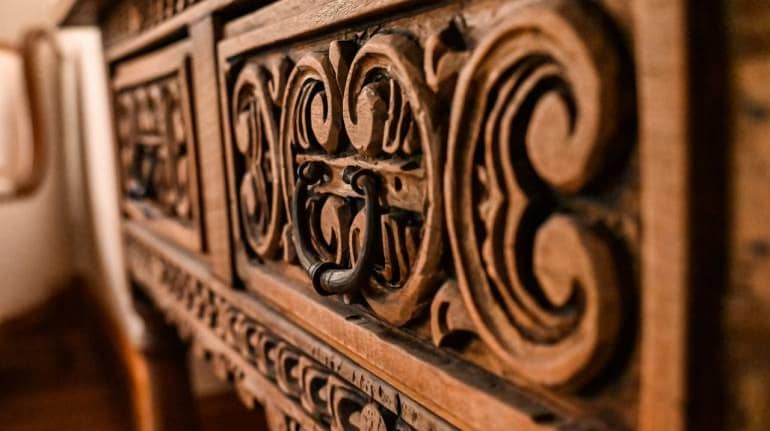
In Saharanpur, Uttar Pradesh, Chambers’ research showed, job opportunities for female wood workers are still curtailed. Most women are restricted to the home, and many of those who work in factories, are concerned about sexual predators.
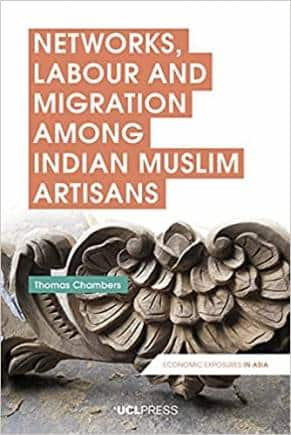
Whose stories are centred when ‘working from home’ is seen as ‘the new normal’? How does one account for the labour of women who have always worked from home because of the patriarchal structures in their lives? Thomas Chambers’ book Networks, Labour and Migration among Indian Muslim Artisans (2020) will make you think about these questions.
The author is a senior lecturer in anthropology at the Oxford Brookes University. His book is based on ethnographic fieldwork with woodworkers in Saharanpur, Uttar Pradesh.
Chambers notes that migration to the Gulf Cooperation Council (GCC) from Uttar Pradesh now exceeds that from Kerala, Andhra Pradesh and Tamil Nadu. He writes, “The state registered 191,341 emigrants to the Gulf in 2012, compared with 27,428 in 2004. Figures for 2013 and 2015 suggest that numbers exceeded 200,000 in these years.”
The book examines how local friendship groups and apprenticeship networks open up opportunities for men to migrate to the GCC whereas women’s engagement with the labour market keeps them mostly confined to the home. The book will help readers appreciate how ‘working from home’ is experienced outside corporate India, and how this experience is shaped by gender. Chambers tries to explain this using the concept of ‘chal-chalan’ in local parlance.
He writes, “The term articulates a complex assemblage of gendered moral and ethical circulations that regulate women’s sexualities, bodies and subjectivities. It was also at the forefront of women’s discourses about participation in paid labour within and beyond the home.” His book will deepen your understanding of workplace sexual harassment, a big reason for women woodworkers to prefer working from home rather than in factories.
Unlike men who are able to withdraw their labour and seek work elsewhere within India or outside, women’s mobility is restricted. They are expected to look after children, and the sick and elderly. Their economic independence is also curtailed by employers who justify low wages by insisting that their labour is unskilled, and that their income is meant to supplement the earnings of the men in the house who are supposed to be the real breadwinners.
The book shows how this reasoning is flawed. Chambers found that women with husbands who were either unemployed or alcoholic had to bear all the responsibility for running their households. Women who were divorced or widowed were also in a precarious situation. Working in factories would pay them a lot better but it would make them more vulnerable to sexual predators who saw them as easy prey as “they lack(ed) the ‘protection’ of a husband.”
Chambers writes, “My involvement with the mohallas has always been mediated in a highly gendered context. Narrating the lives, experiences and subjectivities of women is therefore one of the more challenging aspects of this book.” He adds, “Gradually, curtains fell away, and over the years I have developed many close relationships with women in the mohallas.”
Earning the trust of one’s respondents is key to producing ethical scholarship. Researchers need to care not only about their research questions but also the human beings who help them generate knowledge by sharing their time, lived experiences and personal insights.
Chambers has quoted some of the women he interviewed. One of them, named Sabra, says, “Sometimes in the factories the men are really very rude. Some men address me like a dog…I never talk to men in the factory as I know they are shameless…They say, ‘If you are pak daman, then go to your home. If you belong to a respectable family, you would not come to the factory.’ I have to bear this blame silently. If I did not, my job would be finished.”
Acknowledging the particularities of his social location as a white, non-Muslim man from the UK entering a gender-segregated environment in north India for his research, he attempts to listen and understand with sincerity. This is refreshing because the trope of white men trying to save brown women from brown men is not only patronizing but has also been overdone.
Chambers writes, “My male positionality imposed limitations that did not arise in my relationships with men. The experiences of women who labour in wood production are so distinct from those of their male counterparts that any attempt to interlace the narratives runs the risk of obscuring these distinctions.” To overcome these limitations, he draws on Ayesha Ansari’s work to contextualize Muslim women’s experiences in the Indian workforce.
It can be rewarding to read Chambers’ book alongside Devaki Jain’s recent memoir The Brass Notebook (2020). As a feminist economist, she is deeply invested in pointing out that women in households marked as being below the poverty line are neither sitting idle nor occupied exclusively with household chores and childcare. They roll bidis, sell cow dung cakes, or earn money for their family in other ways. This is economic activity, and it requires skill acquisition.
Though Chambers’ analysis is largely heteronormative, he subtly points out the relationship between homosociality and same-sex desire in Saharanpur’s gullies, expressed through the religious rhetoric of brotherhood. You might find it useful to read Gayatri Gopinath’s book Unruly Visions: The Aesthetic Practices of Queer Diaspora (2018), which suggests that the “Gulf dreams” of migrants may “extend beyond limited heteronormative framings.”
She writes, “If working-class migrants are viewed as heterogeneous, desiring subjects rather than reductively defined simply through their labour, what other longings and forms of relationality come into view in the homosocial, regional and diasporic spaces they inhabit?”
This question could also be posed in relation to the desires and aspirations of women woodworkers in Saharanpur, involved in “polishing, sanding and touching up on defects on items such as boxes, incense holders and rehals (folding stands for holding the Quran).”Are these women’s lives defined only by their income and status as woodworkers? Chambers’ limited access to them keeps him from offering insights into the friendships, solidarities and intimacies that might be forged between them. However, his research on how women’s labour is devalued and underpaid lays the ground for future researchers to explore how women offer care, joy and strength to each other within patriarchal settings.
source: http://www.moneycontrol.com / Money Control / Home> News> Trends> Features / by Chintan Girish Modi / July 24th, 2021
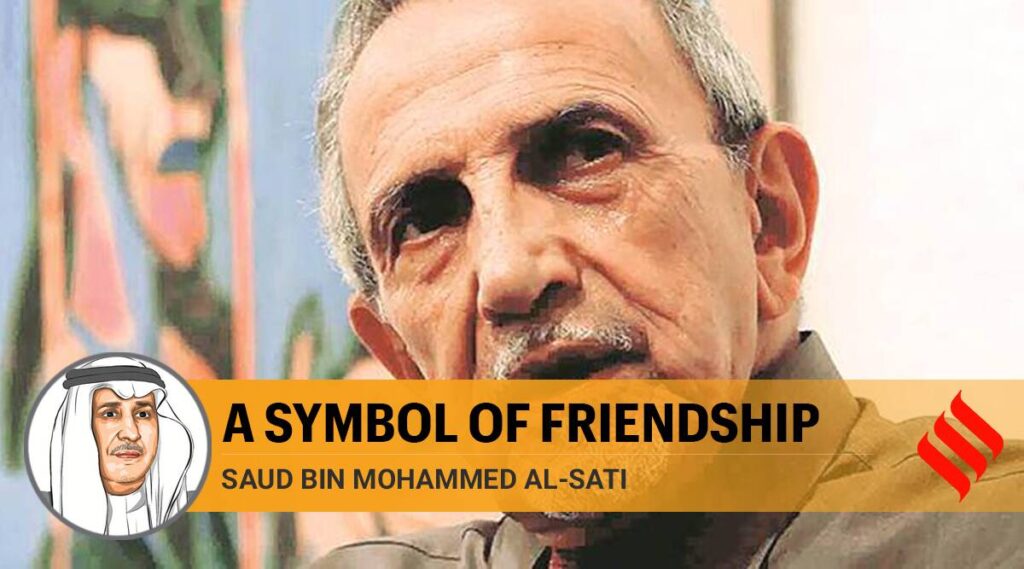
Ebrahim Alkazi will continue to live in the hearts of Saudis and Indians who are on the quest to deepen the friendship and cultural heritage they share.
Ebrahim Alkazi (1925-2020)
Last week, we lost Ebrahim Alkazi, a legend of Indian theatre with Saudi Arabian roots. I fondly remember my first experience of meeting him in the spring of 2014 at his house in New Delhi. I was touched by his unique character and his passion for the arts. He greeted me with a few words spoken in the distinct Qassimi dialect. Alkazi was also a noted art connoisseur and collector, credited for fundamentally transforming Indian theatre and having etched a name for Indian theatre worldwide. His legacy will forever remain a testament to the rich intellectual and cultural links between Saudi Arabia and India.
Alkazi’s father, Hamad, was a trader from Unaiza in Saudi Arabia’s Qassim region, who subsequently settled in Pune where Ebrahim was born in 1925. Despite his early immersion in theatre, he gradually pursued his love for visual arts. He showcased the avant-garde artist in him throughout India, the US and Europe through his path-breaking work before becoming the director of the National School of Drama in Delhi and the Asian Theatre Institute in 1962. He will always be remembered for his contributions in the field of arts that resonate with our cultural bonds. The strings that bind Saudi Arabia and India are many and have become stronger and more diverse over time. However, the cultural ties that the two countries share are perhaps the deepest. Pre-Islamic Arab poetry has many references to Indian swords and several other Indian goods.
The two countries have a fascinating history of intellectual exchanges. Science, arts, literature, and languages – the mutual influence has indeed been profound. For instance, many Indian texts in the field of medicine, mathematics and astronomy were translated over the centuries into Arabic. The father of Indology is none other than the Arab scholar Al-Biruni. His monumental work Ta’rikh al-Hind is undoubtedly the most comprehensive pre-modern encyclopaedic work on India.
Another notable text, the Panchatantra, was translated by the Arabs who took it to Europe and the rest of the world, as were Hitopadesha and Chanakya’s Arthashastra. India’s famous medical treatises such as Charaka and Susruta were translated into Arabic as well.
The Arab travellers were also prolific writers and wrote extensively on India, its people and diverse cultures. Writers such as Sulaiman, Ibn-ul-Faquih, Al-Masudi and Al-Idrisi documented in great detail their impressions of south India, its people, customs and traditions. The world-famous Arabian Nights also called Alf Laila in Arabic and Adventures of Sindbad the Sailor too describe southern India. According to Ibn Nadeem, a 16th-century Arab writer, Sindbad was written in India.
These deeply-rooted cultural ties have continued to grow. For instance, Yoga has become an increasingly popular sport in Saudi Arabia. Since November 2017, the International Yoga Day is celebrated in an open area in the centre of Riyadh. In 2018, India was a guest of honour at our annual cultural festival of Al Janadriyah. The theme of the Indian pavilion at the festival was “Saudi ka Dost Bharat” (India is a friend of Saudi Arabia). This last decade has been seminal in expanding our friendship into a strategic partnership.
A most significant milestone in our ties with India was the visit of His Royal Highness Crown Prince to India in February 2019, which re-affirmed the deep commitment of the two nations to strengthen their strategic engagement.
Our shared cultural bonds are also deepened by the religious ties between our peoples. The annual pilgrimage to Makkah has facilitated the exchange of cultures and traditions as well. But above all, our ties have been strengthened by pioneers like Ebrahim Alkazi. He will continue to live in the hearts of Saudis and Indians who are on the quest to deepen the friendship and cultural heritage they share.
This article first appeared in the print edition on August 12 under the title “A symbol of friendship”. The writer is the ambassador of the Kingdom of Saudi Arabia to India
source: http://www.indianexpress.com / The Indian Express / Home> Opinion> Columns / by Saud Bin Mohammed Al Sati, Ambassador Kingdom of Saudi Arabia to India / August 12th, 2020
Noted Persian scholar Prof Syed Ainul Hasan is the new Vice-Chancellor of Maulana Azad National Urdu University. According to a communication received from the Union Education Ministry to the varsity, the President in his capacity as the Visitor of MANUU appointed Prof Hasan, as the fifth VC of MANUU for a five-year term.
Prof Ainul Hasan is a professor, Persian & Central Asian Studies, Jawaharlal Nehru University, New Delhi. Earlier, he also served as the Dean, School of Language, Literature and Culture Studies, JNU. He is also the president, All-India Persian Scholars’ Association. He has more than 34 years of teaching experience and produced 87 research scholars.
A visiting professor of Rutgers State University, New Jersey (US) under Fulbright, Prof Hasan authored 13 books. He is a specialist in Indo-Iran, Indo-Arab relations and comparative literature.
Prof S M Rahmatullah, In-charge VC and Prof Siddiqui Mohd Mahmood, Registrar I/c, congratulated Prof Hasan on his appointment. They hoped that under his leadership MANUU will attain new heights of academic excellence.
source: http://www.telanganatribune.com / Telangana Tribune / Home> Hyderabad / by Telangana Tribune / July 24th, 2021