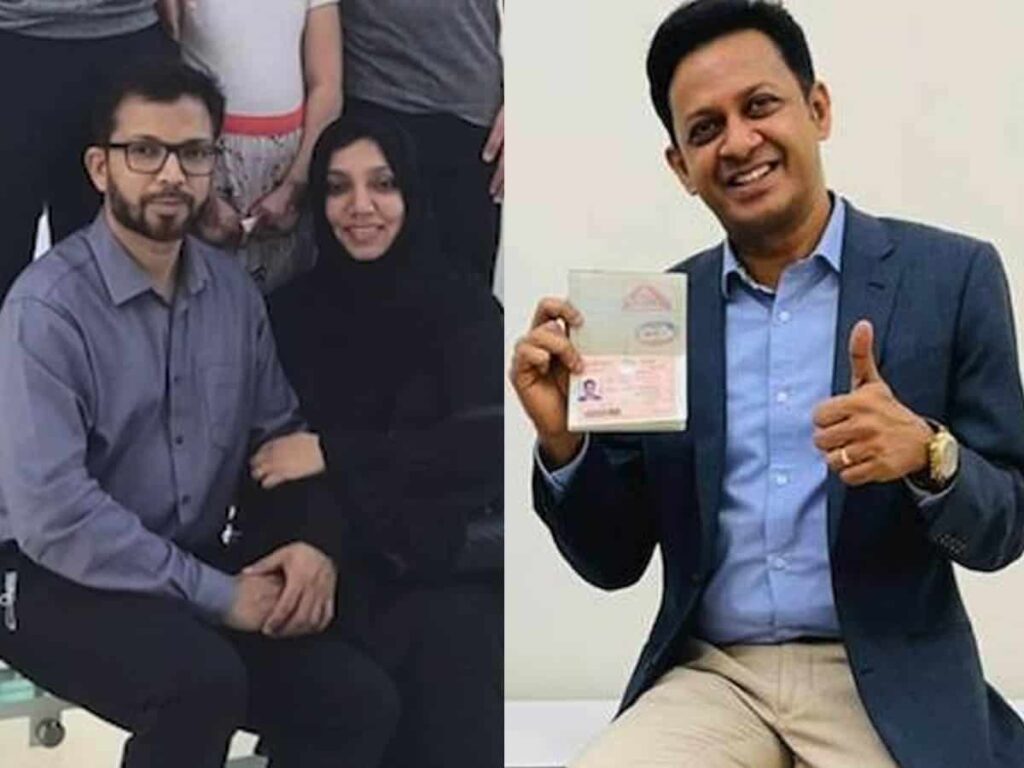
Left Dr Jasna Jamal with family. Right Dr Shyam Vishwanathan
Abu Dhabi:
Two Ayurveda doctors, who are originally from India’s Kerala state and now based in the United Arab Emirates (UAE), have received the Gulf nation’s coveted Golden Visa, according to a media report on Saturday.
A Golden Visa enables foreigners to live, work and study in the country without the need of a national sponsor and with 100 per cent ownership of their business on the UAE mainland.
They are issued for five or 10 years and are renewed automatically.
Both Shyam Vishwanathan Pillai and Jasna Jamal were granted the Golden Visas by the UAE’s Federal Authority for Identity and Citizenship (ICA).
Vishwanathan, CEO of Vaidyashala at the Burjeel Day Surgery Centre in Abu Dhabi, received it under the medical professionals and doctors category on June 17, the Khaleej Times report said.
“My sincere gratitude to the rulers and policymakers of UAE for the kind support to Ayurveda and Ayurveda practitioners,” Shyam, from Kollam, told the newspaper.
“I truly appreciate their vision in integrating the Ayurveda for the wellbeing of UAE residents and at the same time keeping in place strong measures to ensure the quality delivery of Ayurveda practice,” he added.
Shyam came to Dubai in 2002.
A resident of Al Mamzar in Dubai, Jamal, from Thrissur, was given the Golden Visa on June 24.
She moved to the UAE 12 years ago soon after getting married.
With over 16 years of experience in Ayurveda, Jamal established her own Ayurveda clinic in Al Mamzar.
source: http://www.siasat.com / The Siasat Daily / Home> News> Middle East / by IANS/ June 26th, 2021
In his career spanning over 60 years, Shah Manzoor Alam moved to Hyderabad in 1950 when job openings appeared in the Osmania university (OU).
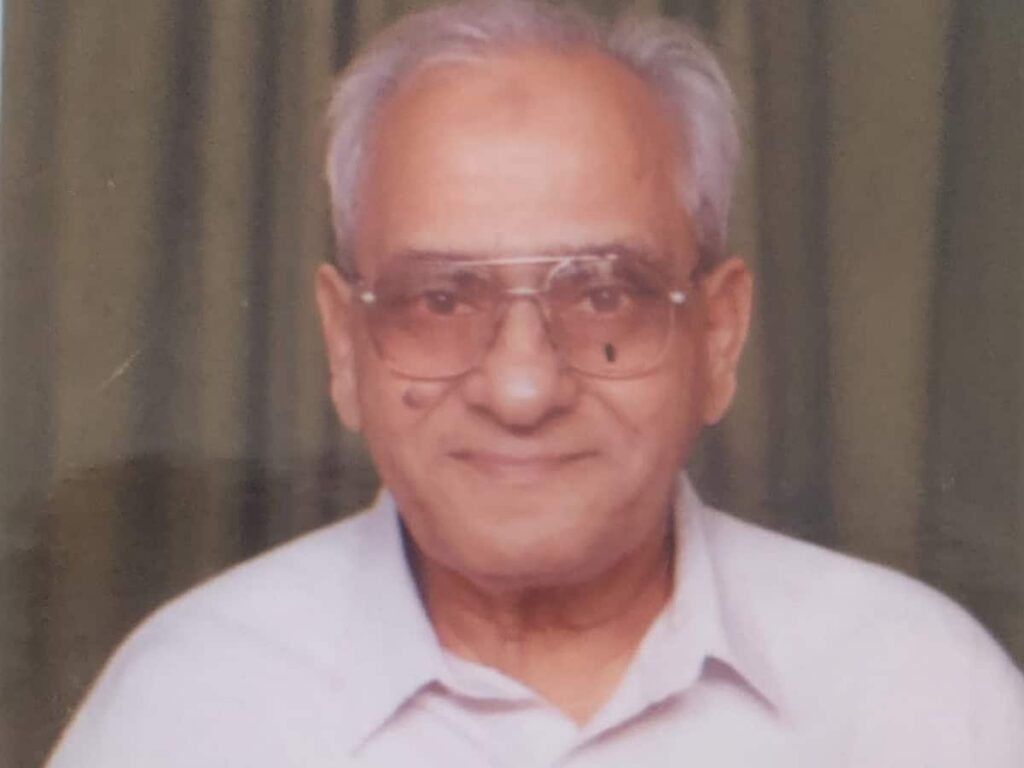
Former vice-chancellor of Kashmir University, Srinagar and the former head department of geography Osmania University, Shah Manzoor Alam, 93. (Photo supplied)
Hyderabad:
Renowned professor—former vice-chancellor of Kashmir University, Srinagar and the former head department of geography Osmania University, Shah Manzoor Alam, 93, has passed away of a cardiac arrest on Tuesday evening at his residence in Hyderabad.
A native of Ghazipur, Uttar Pradesh, Alam did his early schooling in Gorakhpur. He did his bachelor’s and masters in arts from Aligarh Muslim University (AMU).
In his career spanning over 60 years, Shah Manzoor Alam moved to Hyderabad in 1950 when job openings appeared in the Osmania university (OU) and joined the university as lecturer in geography in evening college.
In the mid-1960s, he became the head of the geography department in the arts college of the Osmania University (OU). Subsequently went to the United Kingdom to do a Doctor of Philosophy (PhD) from Edinborough.
In the year 1972, Manzoor Alam was invited to Australia as a visiting professor and later to New Zealand in 1974.
Shah Manzoor Alam was a vice chancellor (VC) of Kashmir university, Srinagar from 1984-1987.
In 1992 he was invited by the Al-Imam Mohammed ibn Saud university, Riyadh to work on the scientific significance in selected Quranic verses.
He was responsible for establishing a trust called Mustafa Educational Network trust. The trust had brought out a set of 30 monographs related to different aspects of Islam.
In 2004, he was key to establishing the Indian school of excellence trust that would provide quality education combined with human values at an affordable cost. A school under this trust was set up at Tolichowki and became functional in June 2004.
Professor Alam lost his wife to heart disease in 1998, lost his only son Shah Shahab Alam to lung cancer in 2013. In spite of these severe personal losses, his strong faith kept him going till he breathed his last on the evening of June 22 due to cardiac failure.
Professor Shah Manzoor Alam is survived by three daughters Rana Siddiqi (USA), Rumana Ahmed (Hyderabad), Rubab Ali Fareed (USA).
MANUU pays tributes
Maulana Azad National Urdu University (MANUU) on Thursday paid rich tributes to Professor Shah Manzoor Alam.
Prof Manzoor Alam was also closely associated with MANUU in it’s formative years as the member of it’s first executive council. He played an important role in the development of MANUU in its initial days.
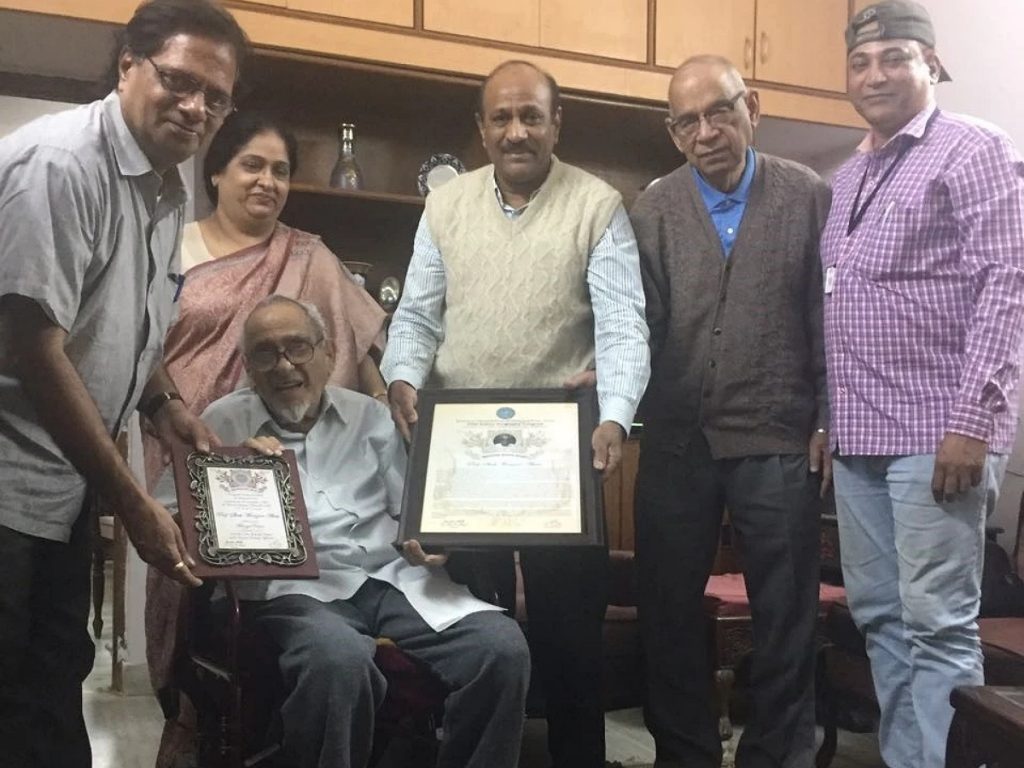
Prof Alam who was also the founder director of centre for area studies on the Indian ocean region, OU was also awarded the prestigious, ‘BHOOGOL RATNA AWARD’ for 2017 by NAGI (National Association of Geographers India), New Delhi, during the 39th, Indian geography congress (IGC) held at Osmania University.
Shah Manzoor Alam awarded the prestigious, ‘BHOOGOL RATNA AWARD’ for 2017 by NAGI (National Association of Geographers India), New Delhi
Professor S M Rahmatullah, Vice-Chancellor and Professor Siddiqui Mohd Mahmood, Registrar in their message expressed their condolences to bereaved family members.
source: http://www.siasat.com/ The Siasat Daily / Home> News> Hyderabad News / by Sakina Fatima / June 25th, 2021
An excerpt from ‘A Map of Longings’, by Manan Kapoor.
Agha Shahid Ali.
In Delhi, Shahid also became aware of the city’s Mughal and colonial history, and was impressed by its architecture. In the early ’60s, the Mexican poet Octavio Paz had visited New Delhi and had been charmed by its architecture. He wrote numerous poems about the city and about all that he had witnessed here. He found Delhi’s “aesthetic equivalent” in “novels, not in architecture”, and to him, wandering the city was “like passing through the pages of Victor Hugo, Walter Scott, or Alexandre Dumas”.
Paz’s gaze, wherever he went, was directed inwards. For him, all the experiences, including the splendour of the Mughal architecture that attracted him, were revelatory and enlightening in one way or the other. In his book In Light of India, he called Delhi’s architecture “an assemblage of images more than buildings”. It was quite the same for Shahid who, after nineteen years, had returned to the city of his birth.
He was a student at Delhi University, which wasn’t too far from Old Delhi or what was once known as Shahjahanabad, the walled city of Delhi constructed by Shah Jahan – the emperor who “knew the depth of stones, / how they turn smooth rubbed on a heart. / And then? Imprisoned / with no consoling ghosts…”
The tomb of Amir Khusro at Hazrat Nizamuddin in Delhi was a place that had attracted Paz. In “The Tomb of Amir Khusro”, he wrote: “Amir Khusru, parrot or mockingbird: / the two halves of each moment, muddy sorrow, voice of light. / Syllables, wandering fires, vagabond architectures.”
The tomb attracted Shahid as well when he visited the dargah in Delhi almost a decade later: “I come here to sing Khusro’s songs. / I burn to the end of the lit essence… / The muezzin interrupts the dawn, calls / the faithful to the prayer with a monster-cry: / We walk through the streets calligraphed with blood.”
In Delhi, Shahid found poetry at each turn. In an interview with First City in 1991, he said: “For me the lanes of Delhi, particularly the ones leading to and from the Jama Masjid, hold a dazzling value. When I used to go to Kareem restaurant or was having nihari or kulfi on the steps of Jama Masjid, I used to imagine that I was living in the days of Ghalib.”
Unlike Paz, who as an outsider in Delhi could only adore the architecture, Shahid also saw history in the city. Although he had been exposed to the historical forces that had shaped Kashmir, it was in Delhi that he discovered, for the first time, history in brick walls, minarets and on the streets. In “The Walled City: Seven Poems on Delhi”, he wrote about Jama Masjid:
Imagine: Once there was nothing here. Now look how minarets camouflage the sunset.Do you hear the call to prayer? It leaves me unwinding scrolls of legend till I reach the first brick they brought here. How the prayers rose, brick by brick?
Shahid’s poetic concerns were largely a constant for most of his life, and are palpable in these early poems. His engagement with history, which he deals with as both an insider and outsider, reflects his tenderness and the experience of a poet who belongs to multiple worlds and none at the same time.
For the next three decades, he wrote about loss and the memory of loss, the burden of history and injustices of all kinds. The seeds of these poetic concerns were sown during his childhood, mostly at home. However, they were nourished in Delhi, by the city’s air and its history, which Shahid couldn’t ignore.
In the poems from Bone Sculpture and In Memory of Begum Akhtar, Shahid emerges as a poet who feels deeply about South Asian culture as well as politics. Both the collections are influenced by Delhi and reflect an understanding of history. From a very young age, he was aware of the historical movements, the revolutions and leaders who had shaped the world he lived in.
In time, he established his position as a poet of witness with the publication of his poem “After Seeing Kozintsev’s King Lear in Delhi”, which talks about the last Mughal emperor Bahadur Shah Zafar. In the poem, Shahid makes a conscious choice as he turns from King Lear and looks at Zafar, turning away from fiction towards fact, from the stories of the colonisers to the histories of the colonised.
This turn marks an important moment in Shahid’s poetry, and it is from here that his poems and sensibility come to be defined by a certain post-colonial outlook, where he sheds light on those whom history had ignored:
I think of Zafar, poet and Emperor, being led through this street by British soldiers, his feet in chains, to watch his sons hanged.
In exile he wrote: “Unfortunate Zafar spent half his life in hope, the other half waiting. He begs for two yards of Delhi for burial.”
He was exiled to Burma, buried in Rangoon.
In the late ’60s, when Shahid joined Hindu College, the syllabus was still under a colonial shadow and predominantly included English writers like John Milton, Shakespeare, Thomas Hardy and the Romantic poets. Although he had read all their works and admired most of them, Shahid’s language was very different from the poets that were taught to him.
Shahid once said that he was often aware that the music of his language was different, that he was able to bring certain flavours to English poetry in India for the first time, which he believed was a result of the combination of Hindu, Muslim and Western cultures in him, and the fact that he had a “natural and profound inwardness with them”.
His use of these cultures was not exotic – unlike, say, Eliot importing the word “shantih” in “The Waste Land”. Shahid felt them in three languages and didn’t have to “hunt” for subjects. In an essay written much later, he reflected on English poetry in India and said that Satyajit Ray had accomplished what he had because Ray was using a specifically Indian idiom for the first time on celluloid.
“I can use the Indian landscape, and the subcontinent’s myths and legends and history from within, and I can do so for the first time in what might seem like a new idiom, a new language – subcontinental English.”
Salman Rushdie’s case was similar. Ray, Rushdie (as well as Shahid when it came to English subcontinental poetry) had an abundance of history, tradition and what seemed like an endless river of subjects that they could explore. Shahid had, in fact, acknowledged that if the novel had done it, poetry couldn’t be far behind.
Little did he know that along with poets like Arun Kolatkar and AK Ramanujan, he would become a proponent of English writing in the Indian subcontinent, a poet who had tradition and the flavour of the soil in his bones. In an essay written much later, he reflected on how the English language was changing in the subcontinent:
The colonisers left fifty years ago, and subcontinental writers, particularly poets, can breathe greater confidence into Indian English (as Walt Whitman did into American English) not only because they belong to what, with qualifications, is the international-ism of the English language (in this context, note the awarding of the Nobel Prize to Patrick White, Wole Soyinka, Nadine Gordimer, and Derek Walcott) but because, by re-creating the language, by infusing into it all the traditions and forms at their command, they can make subcontinentals feel that they do not have to seek approval for any idiosyncrasy in syntax and grammar from the queens, Victoria or Elizabeth (the second, of course). As a matter of fact, for all kinds of reasons, it is gratifying to give an insult to the English language.
By the ’60s and ’70s, some young Indian English poets had started emerging on the literary scene, much of which had to do with Purushottama Lal, the founder of Writers’ Workshop, Calcutta. The publishing house started by Lal, which operated out of the library of his residence in Calcutta, had turned into a platform for publishing Indian writing in English. It published the first works of such poets as Nissim Ezekiel, Vikram Seth, Ruskin Bond and AK Ramanujan. Lal also published Shahid’s first two collections of poetry, Bone Sculpture and In Memory of Begum Akhtar.
Yet, in the ’90s, Shahid wrote in an essay that the “Indo-English scene” during those decades was “thoroughly empty and corrupt” and that “in some quarters” it continued to remain the same, singling out Lal’s publishing house, which he said had been functioning as a near vanity press.
In his essay “Indian Poetry in English”, Shahid wrote, “Educated Indians generally speak three languages, write in two, and dream in one – English.” Although they were written in English at a time when the chutnification, or what he called the biriyanisation, of the language hadn’t taken place, Shahid’s poems were indeed very Indian in nature and in terms of the subjects they dealt with.
The English language came to him naturally, while his ideas were deeply rooted in the culture of the subcontinent. Shahid’s English wasn’t the Queen’s “propah” English but a product of the biriyanisation of the language. Although as a poet he was slowly learning, poems like “Bones”, “Introducing”, “The Walled City” and others not only marked the beginning of a poetic career but also a poetic style that was steeped in a sense of loss, language and the history of the subcontinent. When at last, in the late ’60s, he met Begum Akhtar, his appreciation for the traditions of the subcontinent grew and his poetry changed in unimaginable ways.
Excerpted with permission from A Map of Longings: The Life and Works of Agha Shahid Ali, Manan Kapoor, Vintage.
source: http://www.scroll.in / Scroll.in / Home> Book Excerpt / by Manan Kapoor / June 03rd, 2021
Glossier, more attractive birding books have been published in the 80 years since Ali’s guide first appeared, but it remains indispensable.
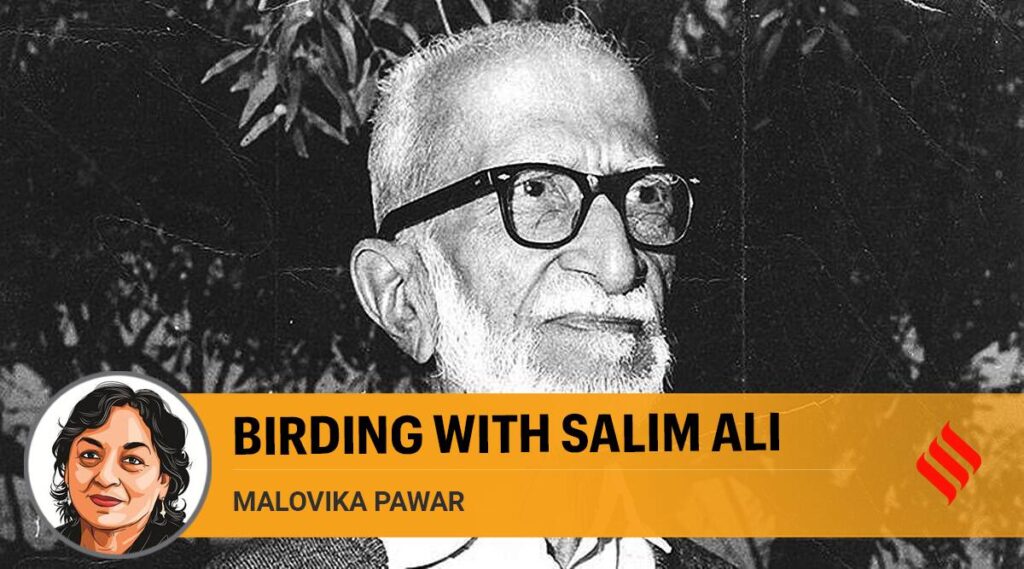
The first edition of Salim Ali’s book appeared in 1941. (Source: Wikimedia Commons)
It is a small book, my copy of Salim Ali’s The Book of Indian Birds — a hardcover version, bound in green, a mere 187 pages. I have the 1979 edition. The cover is long gone, leaving behind a few tatters of the original, but I am hard put to think of a book I have treasured and used as much. The book and an old pair of Bushnell binoculars acquired some 20 years ago are a part of my essential travelling kit, as essential as a toothbrush and comb.
The first edition of the book appeared in 1941. Jawaharlal Nehru , a keen nature lover, gifted a copy to his daughter while lodged in Dehradun jail.
Ali was quite matter-of-fact in his autobiography, The Fall of a Sparrow. According to him, the book was “acknowledged as largely responsible for creating and fostering much of the interest in birds and birdwatching seen in the country today”. Indeed, for people of a certain generation, no other guide has been valued and loved in the same way, and even among Ali’s other classic works, it is this book that has iconic status among Indian birdwatchers. While setting off on a birding trip, we would ask each other: “Have you taken your Salim Ali?” Or: “Oh, no, I forgot my Salim Ali.” It was always the small green book that we were talking of. It is the essential — the foundational — field guide for Indian birders. It is now in its 13th edition. No other book can take its place.
I came to birdwatching by serendipity. No one on either side of my family was even remotely interested in birds. By a throw of the dice, I was allotted Bharatpur for my district training in the IAS. The Keoladeo Ghana National Park beckoned. I was hooked. Ali, who had done more than anyone alive to create this “Garden of God” out of a Maharaja’s private wetlands reserve, was still alive, and visited a few times while I was there. Two bird guides, Sohan Lal and Bholu Khan, still active today, were being trained by him and other naturalists. They were to mature into fine birding guides, much in demand.
The Book of Indian Birds is where we learned our basic vocabulary of birdwatching. For instance, we learned that “pied” meant black and white, that “rufous” meant reddish-brown as in rust or oxidised iron, and that “fulvous” indicated tawny. Every carefully chosen word signified something. The clarity and the precision of expression meant that in a short half-page entry, we would have all the necessary information about a species. Each write-up was organised around five or six points — size, field characters or appearance, distribution, habits, food, call and nesting. Size was always charmingly described as myna plus, or house crow minus, or with reference to a sparrow, a bulbul or other common bird. Under “field characters”, Ali beautifully and accurately described the appearance: Colour of the feathers, the shape of the bill, silhouette in flight. A crimson-breasted barbet was “heavy-billed”, a blue-throated barbet “a gaudily coloured, dumpy green, arboreal bird” and the common grey hornbill a “clumsy brownish-grey bird”. Birds are described variously as handsome, squat, soft-plumaged, lively, dapper, dainty, spruce, slim, perky, well-groomed. The common roller or blue jay (neelkanth) is described as a “striking, Oxford and Cambridge blue bird”.
People who have always noticed the easy readability of the prose might not be aware that Ali himself gave credit to his wife, Tehmina, for ironing out the “stilted passages” and for “moderating the language”. He did not fail to praise her “remarkable feeling for colloquial English prose style”.
My Salim Ali bears the marks of the trajectory of my life, where I went, what I did. It is not merely well-worn and well-thumbed, with an unravelling spine and precarious binding; it also bears the added signs of pickle stains and tick marks in ink and pencil. Like me, it has seen better days. I know that many bird guides have been subsequently published with much better production values and better colour plates. I am aware that many of the illustrations in the Salim Ali book are decidedly not true to life. For instance, never did a rosy pastor look as pink in real life as it does in the book. But this is mere quibbling. The core and kernel of the book is that it communicates to us so successfully the magical universe of the birds of India.
The international jury which selected Ali for the J Paul Getty Wildlife Conservation Prize of the World Wildlife Fund in 1975 said in its citation: “Your message has gone high and low across the land and we are sure that weaver birds weave your initials in their nests, and swifts perform parabolas in the sky in your honour.”
On his 34th death anniversary on June 20, it is time to remember the book that Ali gave us, which took us on this magical journey to the birds.
This column first appeared in the print edition on June 19, 2021 under the title ‘Birding with Salim Ali’. The writer is a former IAS officer.
source: http://www.indianexpress.com / The Indian Express / Home> Opinion> Columns / by Malovika Pawar / June 19th, 2021
Born on 21 October 1933, Shakeb grew up in Hyderabad and Aurangabad . He received a BA in Political Science from the Osmania University , and an MA from the Aligarh Muslim University in 1956. He completed his doctorate on Relations of Golkonda with Iran from Deccan College in 1976.
Shakeb together with Vasanth Kumar Bawa, setup the first-ever Hyderabad Urban Development Authority which is now referred to as Hyderabad Metropolitan Development Authority.
In 1962, he was appointed as an archivist at the State Archives of Andhra Pradesh in Hyderabad. Whilst here he created the Mughal Record Room. His publications include Mughal Archives Vol I: A Descriptive Catalogue of the Documents Pertaining to the Reign of Shah Jahan, in 1977 which remains critical reading for those seeking to learn how to read administrative documents in Indo-Persian. He went on to write many publications for The British Library , State Archives Andhra Pradesh and other repositories, universities, and auction houses.
From 1980 to 1987, Shakeb taught Indian history and the history of Indo-Islamic art and culture in the Department of Indology at the School of Oriental and African Studies, University of London.
He later on worked as a consultant for Christie’s in their department of Islamic and Indian Art as their leading expert on Persian and Arabic manuscripts for 30 years.
He also continued to work on Indo-Persian manuscripts and Mughal documents and catalogued such manuscripts in the British Library, such as the Batala Collection of Mughal Documents 1527-1757 in 1990. Throughout this time he supervised many doctoral researchers in the fields of Mughal history, Deccan studies and Urdu and Persian literature.
Shakeb was also the Director of Urdu teachers training at Middlesex University up until 1998.
He also played a key role in setting up the Haroon Khan Sherwani Center for Deccan Studies at Maulana Azad National Urdu University and had been a member of the center’s first advisory board. He was considered a pioneer, having helped lay the foundations of Deccan Studies
Shakeb was an authority on various poets from the Indian subcontinent and Persia, writing books and organising and speaking at conferences on Bedil, Amir Khusrau, Iqbal, Ghalib and Rumi .
Shakeb died in London on 20 January 2021, aged 87. He is survived by his wife, Farhat Ahmed, two daughters, a son and nine grandchildren.
source: http://www.indianmuslim.org.uk / Indian Muslim UK / Home> Obituary / by Mohmed / April 03rd, 2021
A leading Islamic scholar and freedom fighter Mufti Abd-ur-Razzaq Khan of Bhopal, who was national vice president of Jamiat Ulema-e-Hind (Maulana Arshad Madani faction), breathed his last after a prolonged illness here on May 26. He was about 96 years of age.
Mufti Abd-ur-Razzaq was laid to rest on May 27 afternoon with state Guard of Honours granted by the Madhya Pradesh Government. Since he was a popular figure and had followers cutting across the barriers of religion, cast and creed, the funeral was held amidst tight security apprehending mass turnout in the face of prevailing lockdown and Corona curfew in the city.
He had authored more than 50 books including Sarzamīn-e-Hind: Ambiyā kirām aur Islām; Qur’ān mai kya hai?, Āzādi; Aslāf aur Jamiat Ulama-e-Hind; Islāmi zindagi: paidā’ish se jannat tak; Ahle Qur’ān aur ahle kitāb etc.
Police sealed walled city
Meanwhile, considering the popularity and his large number of followers, police took precautionary measures to avoid large congregation during his last rites because of corona curfew. The police put up barricades at prominent squares and roads of old city areas and police officers along with district administration also appealed people to avoid gathering because of the Corona curfew. Bhopal entry points from all sides were also sealed to prevent followers and admirers of the cleric from all the districts of the state from entering the city.
Police barricaded the roads in old Bhopal. Only family members and limited people were allowed to attend the funeral. The heavy police force was deployed at all the prime squares and areas including Tarjama Wali Mosque, Iqbal Maidan, Peer Gate, Bhopal Talkies, Nadra bus stand, Alpana Talkies, Sangam Talkies, Moti Masjid, Ret Ghat, Kamla Park and adjoining areas. In addition to barricading all the routes to old Bhopal, the old city area was guarded by additional force of 700 policemen. The routes connecting Bhopal from borders and the roads towards old city areas remained closed.
Equally respected in all circles
Mufti Abd-ur-Razzaq in 1958 had established the Madrasa Islamia Arabia in Bhopal and a mosque popularly known as Tarjama Wali Masjid of Bhopal. He used to teach Islamic preaching in Indian language because of which the mosque gained the name Tarjama (translation) mosque. He was an Indian Muslim scholar, mufti and an activist of Indian freedom struggle, who was equally respected in political, social, civil and all circles. The Governor of Madhya Pradesh, Anandiben Patel, honoured him in January 2021 for his participation in the Indian freedom struggle.
The high point of his life was that he was able to establish a chain of Madrasas/Maktabs all over Madhya Pradesh and Chhattisgarh wherein thousands of students receive Deeni Taleem (Religious education). He was revered by leaders of all religions. He used to organise meetings of leaders of various faiths to establish inter-religious dialogue with objective of creating communal harmony among the people. He was among those religious leaders who ran one of the oldest Gaushala on the outskirt of the city.
Madhya Pradesh Chief Minister Shivraj Singh, MP Congress Committee president & former chief minister Kamal Nath, Rajya Sabha member and Digvijay Singh expressed grief over his demise.
Mufti Abd-ur-Razzaq was born on 13th August 1925. He was schooled in “Masjid Malang Shah”, Jamia Darul Uloom Ilāhiya and Jamia Aḥmadiya in Bhopal. In July 1952, he joined the Darul Uloom Deoband to complete his studies. He studied Sahih Bukhari with Hussain Ahmad Madani; Sahih Muslim with Fakhrul Hasan Moradabadi; Jami’ al-Tirmidhi with Muḥammad Ibrāhim Balyawi; Sunan Abu Dawud with Bashīr Aḥmad; Sunan Nasai and Sunan ibn Majah with Mubārak Hussain; Muwatta Imām Muḥammad with Meraj-ul-Haq Deobandi; Muwatta Imam Malik with Sayyid Hasan; Shama’il Muhammadiyah with Muhammad Tayyib Qasmi; and Sharah Wiqāyah with Muhammad Salim Qasmi. He completed studying the “Dars-e-Nizami” course in 1377 AH and then specialized in “Ifta” with Mahdi Hasan Shahjahanpuri.
Participated in freedom struggle
Mufti Abd-ur-Razzaq participated in the Indian freedom struggle. In 1947, he was part of a fight that took place in Bhopal’s Qazi camp against the British colonialism. In 1958, he established Madrasa Islamia Arabia, one of the oldest and largest Islamic seminary in Bhopal. He was patron of various Islamic seminaries in Madhya Pradesh. He was also the state-president of the Darul Uloom Deoband’s “Rābta Madāris-e-Islamiya” for Madhya Pradesh. He is credited with the growth and development of Jamiat Ulama-e-Hind in Madhya Pradesh. He served as its national vice-president and the state-president for Madhya Pradesh. In 1958, he was appointed the vice-mufti of Bhopal’s “Dārul Qadha” (Islamic court); and chief-judge in 1968. He served as the Mufti of Bhopal city from 1974 to 1983. He promoted inter-religious harmony by organizing meetings with leaders of various faiths.[10] He was a vivid speaker and instructed Muslims to cope with communal riots with ways befitting the situation.
In 2016, denouncing the RashtriyaSwayamsevak Sangh, Vishva Hindu Parishad and Bajrang Dal activities in Madhya Pradesh, he told Muslims to maintain peace and not to engage in rioting or other things that could damage the peaceful atmosphere in the State. He expressed, “if someone attacks you and you don’t have any other solution but to kill him or to die for saving others from rioters, do not hesitate and go ahead. He also asked the political leaders of Madhya Pradesh to control these right-wing organisations and stop them from attacking and abusing Muslims.
source: http://www.indiatomorrow.net / India Tomorrow / Home> Featured> Religion / by Parvez Bari, India Tomorrow / May 31st, 2021
Dhangri Village (Rajouri District), JAMMU & KASHMIR :
Dr. Shakeel Ahmed
Srinagar :
Life has come full circle for a 31-year-old scientist from the border district of Rajouri, who has become one of the youngest Indians to figure on Stanford University’s list of top 2 percent scientists in the world.
Dr. Shakeel Ahmed, Assistant Professor at the Department of Chemistry in Government Degree College, Mendhar, has published research papers on green nanomaterials and biopolymers for various applications including biomedical, packaging, and water treatment.
He has penned more than 15 books on polymers, nanomaterials, and green materials. The database of the independent study has been published in one of the highly-rated journals, `PLOS Biology’. He is a member of American Chemical Society and Royal Society of Chemistry.
“It is a moment of gratification to be on the list. It will inspire the young generation of Jammu and Kashmir to work for furthering science especially from Pir Panjal region”, Dr. Shakeel said.
It was a hard-earned success for a 31-year-old scientist who lost his father when he was just a year old.
“I was just one year old when my father passed away. At that time there was no breadwinner in my family. I had suffered a lot during my childhood and sometimes it was difficult for me to continue my studies. I am first generation learner in my family”, he said.
Principal of GDC, Mendhar, Dileep K. Raina said it is a matter of great pride that Dr Shakeel has featured on the prestigious list. “It is a matter of great pride for Government Degree College Mendhar that Dr. Shakeel Ahmed of the Department of Chemistry (GDCM) has been named among the top 2% scientists of the world in the field of polymer chemistry,” said the college in a statement.
Stanford University recently released a list of 1,59,683 top 2 percent of most-cited scientists in various disciplines. It includes 1,500 Indians and most of them are from IITs, IISc, and other top institutions.
Hailing from Dhangri village, Dr. Shakeel completed his B.Sc from Government PG College, Rajouri. He completed M.Sc in 2012 from Dr. Saiqa Ikram Department of Chemistry, Jamia Milia Islamia. In 2016, he completed his Ph.D. from Jamia Milia Islamia.
For the last three and a half years, he is serving as an assistant professor in GDC, Mendhar in Poonch district. He has authored numerous books that are available on Amazon and other platforms.
Some of the books include `Green and Sustainable Materials: Processing and Characterization’, `Alginates: Applications in the Biomedical and Food Industries and `Marine Polysaccharides: Advances and Multifaceted Applications’.
source: http://www.indiatomorrow.net / India Tomorrow / Home> Education / by Ishfaq-Ul-Hasan , India Tomorrow / Srinagar – November 10th, 2020
A file photo of Prince Anjum Qudr, Dr Kaukub Quder Sajjad Ali Meerza and Prince Nayyar Qudr posing for a photo with Meerza’s daughter, Manzilat Fatima, at Imambara Sibtainabadin Metiabruz, Kolkata, sometime during 1985-1986
Kolkata / Lucknow :
Kaukub Quder Sajjad Ali Meerza, the great-grandson of Awadh’s last monarch, Nawab Wajid Ali Shah, and grandson of Nawab Birjis Quder, died of Covid-19 in Kolkata on Sunday afternoon, aged 87.
Considered an authority on Wajid Ali Shah’s literary and cultural contributions, he is survived by his wife, two sons and four daughters.
Meerza may be buried on Monday at the royal burial ground(Gulshanabad Imambara), about a kilometre from the Sibtainabad Imambarah in Metiabruz, where Wajid Ali Shah rests.
A popular figure in the billiards and snooker fraternity of the country, Quder had graduated with honours in economics from St Xavier’s College in the same batch as Amartya Sen. He studied political science and then a three-year law course.
Subsequently, he studied Urdu at CU, won a silver medal in 1962 and also earned a UGC Junior Fellowship for research on the “Literary & Cultural Contributions of Wajid Ali Shah” in the department of Urdu at Aligarh Muslim University. In 1967, he joined the department as a lecturer and earned a doctorate for his thesis.
Kaukub Quder Sajjad Ali Meerza’s daughter, Talat Fatima, is now translating his book from Urdu to English. “His research was extremely rich. This book, published in the late 70s, has a compilation of some 42 works of Wajid Ali Shah. Some of them are in Persian,” she said, adding that her father preferred to be addressed as “Dr Kaukub Quder Sajjad Ali Meerza” instead of using the title of a prince.
It was his academic interest in his forefather that had also got Satyajit Ray to get in touch with him during the making of “Shatranj ke Khilari”.
On Ray’s birth anniversary this year, his daughter, Manzilat , had tweeted: “There are a couple of letters that were exchanged between Bawa [her father] and Satyajit Ray during the making of Shatranj Ke Khilari.” On Sunday, she spoke about how Ray had even visited their 11 Marsden Street residence that is popularly known as ‘House of Awadh’. “Ray could have gone to anyone else for information. But he chose to get in touch with my father. In fact, he had made many attempts to meet my father but the meeting never happened. Hence, it was through correspondence that he got the information regarding Wajid Ali Shah. I feel Ray had portrayed Wajid Ali Shah in the right light. Many often claim that Wajid Ali Shah had been exiled, but that isn’t true. He had left the kingdom of his own volition. I believe my father’s information helped him give authentic information about Wajid Ali Shah,” she said.
Quder was also a great connoisseur of food. A big photograph of him along with his two brothers hangs in the rooftop restaurant opened by his daughter. “He was happy when he saw how, in my capacity, I was upholding the family name. Awadhi food was already losing its identity. He was happy I was making the effort to popularize that food,” Manzilat said.
Incidentally, he was the chief referee of first World Snooker Championship held at the Great Eastern Hotel in Kolkata in 1963-64. He had remained the chief referee of the National Billiards & Snooker Championship till it left the Palm Court of the Great Eastern Hotel in the 70s .
“It was my father who coached me to play snooker and billiards. I became the first woman participant from India to play the games at the national level,” said Manzilat.
The rolling trophy of the IBSF World Snooker Championship, the MM Baig Trophy, was designed by him. In the 70s, he had also brought out a pioneering Billiards magazine, “The Baulkline”.
According to his son, Irfan Ali Mirza, “He was the founder-secretary of The Billiards & Snooker Federation of India, The West Bengal Billiards Association and The Uttar Pradesh Billiards & Snooker Association.
Sudipta Mitra, the chief executive officer (CEO) of Peerless Hospital and a student of Meerza, describes his mentor’s demise as a “huge loss”. “A part of our cultural history is lost with his demise. He came with pneumonia and was admitted to the ICCU. Unfortunately, he passed away today afternoon due to Covid pneumonia. Jawaharlal Nehru had initiated the idea of the government of India bearing the expense of his education. He was my research guide while writing the book titled ‘Pearl by the River: Nawab Wajid Ali Shah’s Kingdom in Exile’,” Mitra said
The Peerless Hospital CEO, said according to his research, he was “the last royal pension holder”. “In 1892, the British government had created a royal pension book where only the lineage of Birjish and his wife, Mahtab Ara Begum, who was the granddaughter of Bahadur Shah Zafar, the last Mughal Emperor of India, was recognized.
Birjish, who was the only son of Wajid Ali Shah and Begum Hazrat Mahal, was the eldest surviving son of Wajid Ali Shah when the latter died in 1887. That is why this lineage has been recognized for royal pension,” Mitra said.
source: http://www.timesofindia.indiatimes.com / The Times of India / Home> News> City News> Kolkata / by Priyanka Dasgupta and Yusra Husain / TNN / September 14th, 2020
The nawab, who was deposed by the British, came to plead his case with Governor General Lord Charles Canning, only to be imprisoned at Fort William.
Nawab Wajid Ali Shah (Photo| Wikimedia Commons)
Kolkata :
Some 165 years ago, in the month of May, Nawab Wajid Ali Shah — the last ruler of Awadh — is believed to have written the now-famous lament “Babul Mora Naihar Chooto Jai…Mein Chali Piya ke Des” (O father, my home I leave behind…I go to my beloved’s land), as he made his way to Kolkata to live the next 31 years of his life in exile.
The nawab, who was deposed by the British, came to plead his case with Governor General Lord Charles Canning, only to be imprisoned at Fort William as the East India Company feared that he may turn into a rallying point for sepoy mutineers during the first war of Indian Independence, which broke out the very next year.
After he was freed two year later, Wajid Ali and many from his court who chose to join him in exile decided to live in his ‘Piya ke Des, gifting a legacy of music, dance, Urdu poetry, fashion and fusion cuisine to the syncretic culture of the metropolis.
“My great, great, grandfather Wajid Ali Shah, who landed here by steamer on May 13, could have chosen to live anywhere after he was freed…but he chose this city. We believe he fell in love with its culture and found remnants of his beloved Lucknow in Metiabruz or Matiaburj where he chose to settle,” said Shahenshah Mirza, 54, a civil servant and a history buff.
The nawab, over the years, built some 18 palaces and the landmark Sibtainabad Imambara in Calcutta, but his descendants live scattered as the British demolished the palazzos on one pretext or the other.
Mirza and his father, 86-year-old Sahebzada Wasif Mirza – the president of the Awadh Royal Family Association — now live in a modest though stately old house at Talbagan Lane, off Dargah Road, in the heart of the eastern metropolis.
“Just 500 of his followers came with him in 1856, but as news spread that he was building a Lucknow-like city within a city, at Metiabruz in Calcutta, many of his nobles, artisans and musicians followed and flourished here,” said Mirza.
Though much of the original mini-city which Wajid Ali built was taken over for Garden Reach shipyards, Metiabruz still exists and is now famous as a garment tailoring hub — reportedly accounting for Rs 15,000 crore worth of textile trade a year — mainly on account of the skilled tailors who came here as part of the Nawab’s entourage.
Wajid Ali, who used the pen name “Akhtarpiya” for his poetry, prose and thumris, was a known patron of arts, and with the destruction of Mughal cities in the aftermath of the 1857 revolt, Kolkata subsequently became the new cultural capital, attracting talent from all over north India.
As time progressed, Bengal’s zamindars and rich ‘bhadraloks’ (gentlemen) enthusiastically developed a taste for the Nawab’s leisure activities ‘mujra’ (music and dance soirees), kite-flying and pigeon games (kabootar baazi). “Even today some 3,000 people are engaged in the business of making kites in this city,” explained Mirza.
The nawab introduced the citys elite to Thumri, Dhrupad and Kathak. “Singers and dancers of the calibre of Bindadin Maharaj, Piyari Sahab, Gauhar Jaan, Malka Jaan, Jauhar Jaan came to settle here…Kolkata opened up to Kathak and thumris,” said well-known Shantiniketan-based musicologist Rantideb Maitra.
This, in later years, influenced the film industry and the dance and music forms became part of the pan-Indian culture.
The song ‘Babul Mora’ itself was popularised by Kolkata-based music director Rai Chand Boral when he got Kundan Lal Saigal to sing it for the movie ‘Street Singer’ in 1938, nearly 80 years after it was written.
“Kathak, though it started as a temple dance, had taken a stylised form under the Mughal patronage. When brought to Kolkata by Wajid Ali, who himself often danced as Krishna, it blossomed into a popular classical dance form,” said Shyam Banerjee, another musicologist and Urdu translator.
However, if the average Kolkatan remembers the Awadh ruler with fondness, it is because of the gastronomic legacy he left behind.
Said Manzilat Fatima, another of Wajid Ali’s descendants from his junior begum, Hazrat Mahal — who led mutineers in Lucknow and eventually escaped to Nepal — “He (Wajid Ali) tried to recreate Lucknow but with a difference…(among other things) his kitchen became an experimental centre for new dishes.”
Fatima (53), who runs the up-market restaurant Manzilat’s explained that experiments led to the inclusion of potato — then a rich man’s exotic vegetable favoured by Europeans — and eggs to Awadh’s Biryani. “New spices, coconut milk, mustard oil, all went into the making of Awadhi dishes and the result was the unique dum-pukht Kokata Biryani, now so popular all over,” she said.
The Nawab also set up a printing press in Metiabruz and came out with a weekly gazette in Urdu, adding to the literary and journalistic tradition of the city, which boasts of being the cradle to some of India’s oldest newspapers.
“We feel he was more popular in the city he chose to make his own than in Lucknow…When the legendary filmmaker, Satyajit Ray, asked my father how he saw Wajid Ali’s legacy, he had explained that it lives on, as is evident from the fact that ‘you chose to make your first Hindi movie – Shatranj ke Khilari – on a novel based on the the Awadh ruler’s life’,” added Mirza.
source: http://www.newindianexpress.com / The New Indian Express / Home> Kolkata / by PTI / May 23rd, 2021
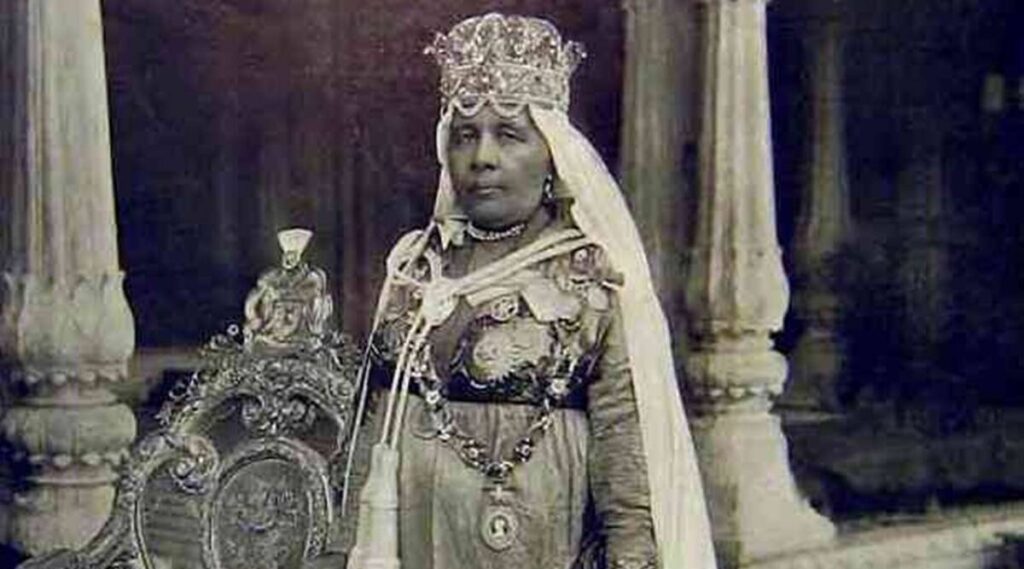
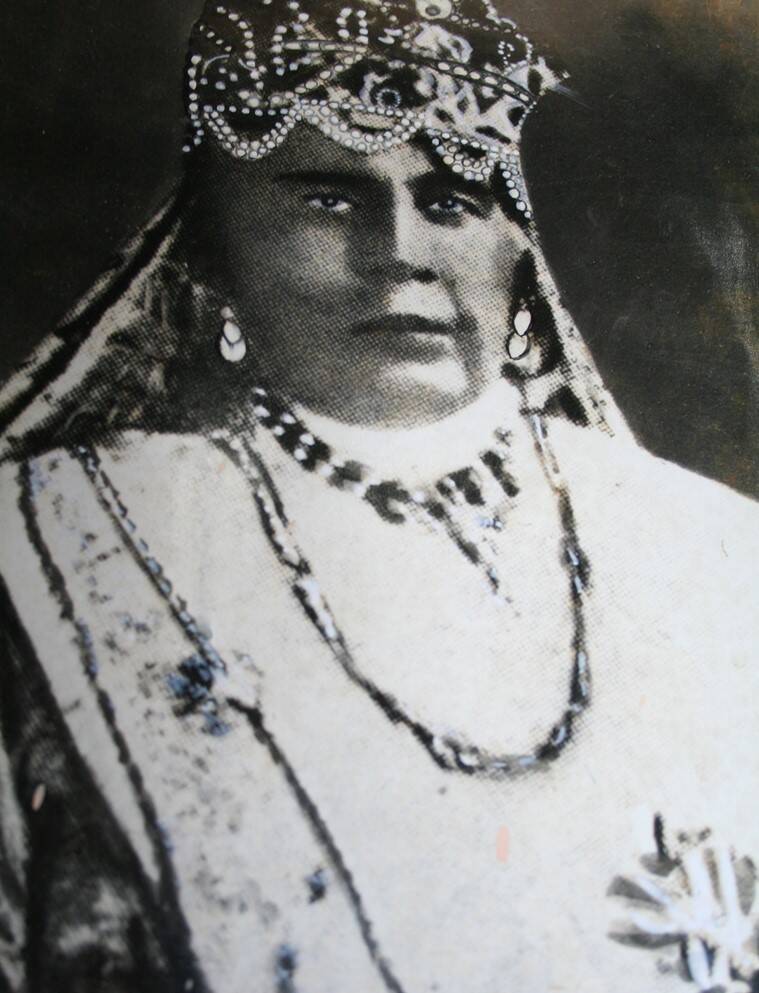
Born in 1858, Begum Sultan Jahan ascended the throne in 1901. While she was the fourth female ruler of Bhopal, she is credited with many firsts. She was known for ruling in the present with her eyes set on the future. Her progressive policies for women, at a time when they were shackled by the forces of patriarchy, have made her a feminist icon even today.
Begum Sultan Jahan was a pioneer in the field of education and even authored a book, Dars-e-Hayat, about the education and parenting of young girls.
Nearly a century ago, when the term feminism was not yet part of common parlance, the princely estate of Bhopal was run by a line of powerful women. In the absence of male successors, they initiated a matrilineal reign from 1819, which continued till 1926. These rulers are often referred to as the Begums of Bhopal.
During this era, they ruled with authority, dignity and bold reforms — disrupting the patriarchal system that had been laid down centuries before them.
The last Begum of Bhopal was Begum Sultan Jahan. She ruled from 1909 to 1926 after which she stepped down and was succeeded by her son.
Begum Sultan Jahan died on May 12, 1930 at the age of 71. She was known for ruling in the present with her eyes set on the future. Her progressive policies for women, at a time when they were shackled by the forces of patriarchy, have made her a feminist icon even today.
Apart from being a philanthropist and prolific writer, she was a symbol of women empowerment, known for taking up the cause of female education. She was the first female Chancellor of Aligarh Muslim University, which she had nurtured during its nascent stage, when it was still known as the Mohammadan Anglo Oriental College.
In a time when it was rare for women to venture out due to a strict purdah system, she famously constructed a Meeting Hall for Ladies in Lahore.
But above all, Begum Sultan Jahan was an astute ruler who restored the glory of her estate.
It is hard to find a female ruler who authored over 40 books, designed school curriculum, founded women’s clubs, travelled to Europe, met British officials with authority, funded almost all major institutions — both in the country as well as one in Saudi Arabia — and even headed a University as its first female Chancellor.
Interestingly, film actress Sharmila Tagore is the granddaughter-in-law of Nawab Hamid Ullah Khan, the youngest son of Begum Sultan Jahan.
Begum Sultan Jahan, the ruler of Bhopal
Born in 1858, Begum Sultan Jahan ascended the throne in 1901. While she was the fourth female ruler of Bhopal, she is credited with many firsts.
She was not one to stand on the sidelines. An incident from the early days of her regime is often cited to highlight her penchant for ruling from the front. When she took over as Queen, there was only Rs 40,000 in the treasury which was not enough to even pay the salary of her employees. Begum Sultan Jahan decided to tour her kingdom and interact with the village folk. After learning their concerns, she set up the municipality system and even introduced municipal elections.
She also constructed a walled city and a palace for herself. She took steps for improving public health, sanitation, and water supply in the walled city and implemented widespread vaccination drives for its residents.
Apart from being a philanthropist and prolific writer, she was a symbol of women empowerment, known for taking up the cause of female education.
Recognising that women needed a space exclusively for them to assemble and discuss ideas, she laid the foundation stone for a meeting hall in Lahore in 1913.
To encourage women and promote handicrafts, she organised an exhibition called ‘Numaish Masunuaat e Hind’ in Bhopal, where she displayed her own creations. Queens from other kingdoms, such as Gwalior, Jhanjhar, Sultanpur, Narsinghgarh and Gulburgah also participated and displayed their handiwork.
Begum Sultan Jahan as an educationist
She was a pioneer in the field of education and even authored a book, Dars-e-Hayat, about the education and parenting of young girls. There was a time when almost every city of the country had one or more educational institutes for girls which were funded by Begum Sultan Jahan.
To encourage parents to educate their daughters, she set up several schools. However, most initially resisted the idea, as at the time it was considered socially acceptable to teach their daughters at home.
Undeterred, she started the Sultania School and also improved the condition of two existing schools — Madarsa Bilqisia and Madarsa Victoria. She even revamped the syllabus and added subjects such as English, Urdu, Arithmetic, Home Science and crafts. These schools were meant for underprivileged children and hence their expenses were borne by the Bhopal estate. Even in those times, she got the Madarsa Sultania affiliated to the Allahabad Board. This Madarsa was well equipped and even had an ambulance and sections for medicine and nursing. Later she also started a nursing school called Lady Minto Nursing School.
Begum Sultan Jahan did not solely focus on uplifting Muslim girls. She famously founded the Barjeesiya Kanya Paathshala’ and even instituted a scholarship for the underprivileged students of Jain Shwetambar Paathshala.
Despite being a small princely estate, Bhopal had an education budget of one lakh rupees. The educational institutions she supported were not confined to Aligarh alone. She was also funding a Madarsa in Deoband, Nadwatul Uloom in Lucknow and even Madarsa Sultania in Mecca, Saudi Arabia. Institutions such as Lady Hardinge Medical College, Delhi and some renowned colleges in Bombay (now Mumbai), and Calcutta (now Kolkata) received generous grants from her.
Begum Sultan Jahan established the Ladies Club in Bhopal with the aim of involving more women in her mission. She addressed the functions of the Ladies Club. Later, she even organised an event under the aegis of All India Women Association in Sadar Bhopal and established the Sultan Jahan Endowment Trust with a corpus of Rs three lakhs for helping needy students.
Begum Sultan Jahan also went as far as encouraging the rulers of other princely states to promote education. Even Lord Harding praised her efforts.
She authored 41 books, many of which were distributed for free. She also translated a number of English books into Urdu.
Begum Sultan Jahan and AMU
Around that time, more than 600 kilometres away from Bhopal, in the province of Uttar Pradesh, the Mohammedan Anglo Oriental College was taking shape in Aligarh.
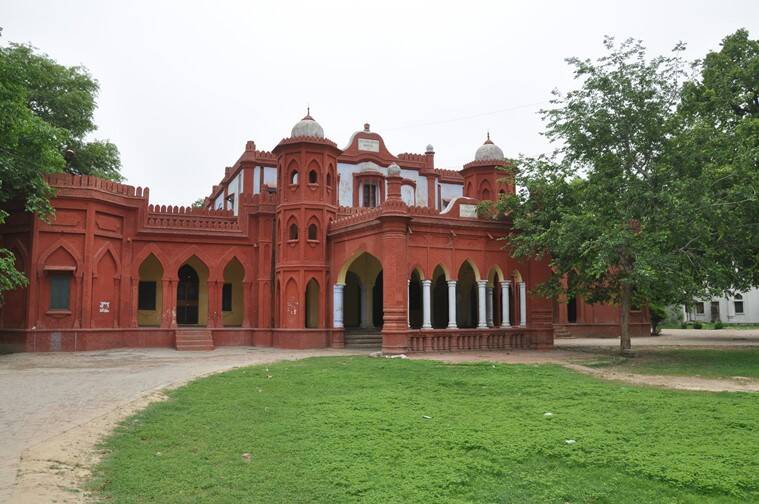
In 1910, while returning from Mussoorie, she stayed in Aligarh for the first time. During her visit, she donated Rs 50,000 for the construction of the All India Muhammadan Educational Conference, which still exists today and is known as Sultan Jahan Manzil.
A monthly grant of Rs 100 was sanctioned by her for the girls school started in Aligarh by Sheikh Abdullah, which is now known as the Women’s College of AMU. She designed the syllabus herself and offered it to the school authorities. It was done at a time when there was a paucity of funds and women ’s education had taken a backseat. Later, when MAO College became AMU, she was named its first Chancellor.
During AMU’s centenary celebrations on December 22, 2020, Prime Minister Narendra Modi paid tribute to Begum Jahan and her contribution to the historic institution — “The AMU has the rare distinction that Begum Sultan Jahan took over the responsibility of its founder chancellor. How daunting it would have been one hundred years ago!”
In 1910, she stayed in Aligarh for the first time. During her visit, she donated Rs 50,000 for the construction of the All India Muhammadan Educational Conference, which still exists today and is known as Sultan Jahan Manzil.
As Chancellor of the AMU, she addressed its first-ever convocation ceremony in 1922 amidst renowned scholars from across the country. She also arranged cars and lodging for 175 persons during the jubilee ceremony of the University. Begum Sultan Jahan visited Aligarh seven times, with her last visit being in 1929.
Her speech during the foundation stone laying ceremony of Sultania Boarding House in Women’s College reflects her vision. She said, “Today is the beginning of a new era in the history of Muslims. And, whenever, in the coming time, the history of this era is recorded, today’s programme will be remembered as one of its brightest chapters.”
Her prophecy came true. The school patronised by Begum Sultan Jahan has grown into a college drawing over 3,095 female students from across the country and overseas enrolled in 34 courses taught by 107 faculty members.
The women’s college attracts international students from more than 20 countries including, Afghanistan, Malaysia, Turkey, Thailand, Indonesia, Iran, UAE, Iraq, Yemen, Bangladesh, Libya, Nepal, Syria among others.
The Nasrullah Hostel for Boys in AMU, too, was constructed with her support. It is often said that whenever AMU needed help, Begum Sultan Jahan of Bhopal Estate was among the first to step up.
Following in her footsteps, her son Hamidullah Khan, who studied in Aligarh, founded a Science College in the city, and donated Rs two lakh to it.
(Nasir is Assistant Professor, Department of Law, Aligarh Muslim University; Fareed is Media Advisor, AMU)
source: http://www.indianexpress.com / The Indian Express / Home> Lifestyle> Art & Culture / by Faisal Fareed & Mohammad Nasir (Aligarh, UP) / May 27th, 2021