Pairaband Village (Rangpur),BENGAL (British India):
A PAST WE MUST PRESERVE | She was a pioneer of women’s education and feminist writing who started the first school for education of Muslim girls in Calcutta
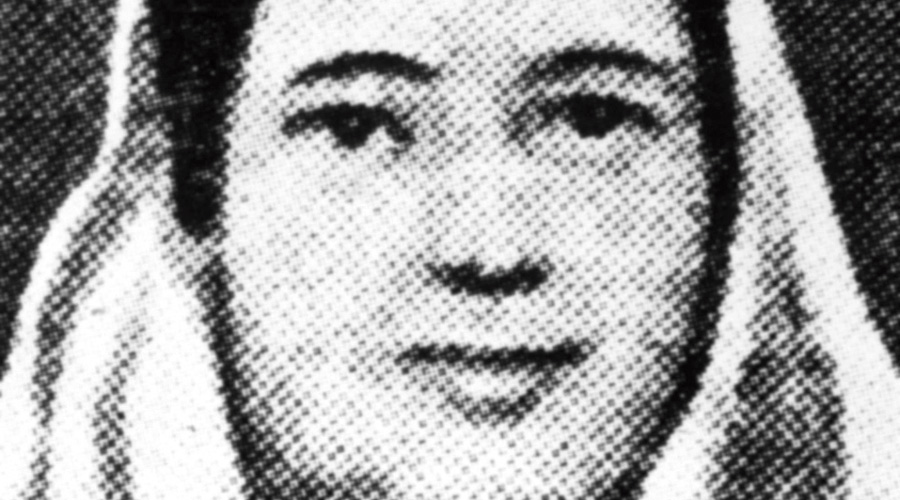
Begum Rokeya, 1880-1932 / File picture
Rokeya Sakhawat Hossain, popularly known as Begum Rokeya, was a pioneer of women’s education and feminist writing who started the first school for education of Muslim girls in Calcutta. She considered education to be crucial to women’s emancipation.
She was born in 1880 at Pairaband village in Rangpur, now in Bangladesh. Her elder sister Karimunnesa, who was a poet who wrote in Bengali, was a great influence on her life. Rokeya at 18 was married to Khan Bahadur Sakhawat Hussain, who was 38 and the deputy magistrate of Bhagalpur.
A liberal man who spoke Urdu, he encouraged his young wife to continue her studies in Bengali and English and to write.
Rokeya chose to principally write in Bengali and her works uphold the equality of men and women. Matichur (1904, 1922) is a two-volume collection of her essays on her thoughts about women and society, Padmarag (1924) is about the oppression of Bengali wives and Abarodhbasini (1931) is a robust critique of the severe forms of purdah for women.
Ten years before the American novelist Charlotte P. Gilman published Herland, Begum Rokeya wrote her feminist utopia Sultana’s Dream in 1905. Written in English, it is a novella set in Ladyland, ruled by women.
A few months after her husband’s death in 1909, Begum Rokeya started Sakhawat Memorial Girls’ High School in Bhagalpur, with five students. She moved the school to Calcutta in 1911, where it is still located, but is run by the government.
In 1916, Begum Rokeya founded Anjuman-e-Khawateen-e-Islam (Islamic Women’s Association) to hold discussions on women, education and progress. She advocated change in Muslim women’s lives and spoke up against rigidity and conservatism.
She went from door to door to ask Muslim families to send their daughters to school. She was engaged till the very end of her life in ideas and activities that would lead to the empowerment of women. She passed away on December 9, 1932, shortly after presiding over a session of the Indian Women’s Conference.
Bangladesh observes Rokeya Day on her death anniversary every year.
source: http://www.telegraphindia.com / The Telegraph Online / Home> Culture> People / by Chandrima S. Bhattacharya / March 28th, 2021
Iqtidar Alam Khan’s Latest Books on India’s Medieval History Unearth Hidden Secrets
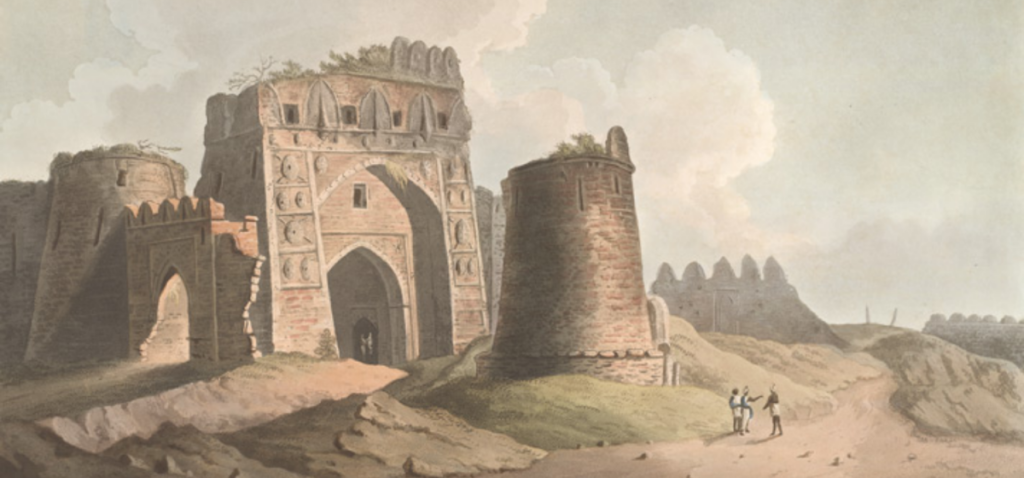
A painting of west gate of Firozabad fort, near Delhi. This fort was built by Feroz Shah Tughlaq in the 1350s, but destroyed by later dynasties. Photo: Wikipedia/Public domain
Iqtidar Alam Khan’s first slim book, a biography of Humayun’s brother Mirza Kamran was published in 1964; his latest book, slightly bulkier than the first, has been published in early 2021 when he is nearing 90, with nearly a dozen authored and edited volumes in-between. Quite an emphatic comment on how prolific he has been in his distinguished career as a historian of medieval India! Add a very distinct quality of the huge range of themes and the empirical solidity of his researches and one begins to appreciate the indelible imprint on the study of medieval Indian history he has left for his own and future students.
Professor Iqtidar Alam Khan was an alumnus and later faculty of the department of history at Aligarh Muslim University when it shone like the pole star in the study of medieval Indian history under the leadership of frontline scholars like Professors Mohammad Habib, Nurul Hasan, K. A. Nizami and Irfan Habib; he himself added to its lustre, evident in his extensive explorations of different facets of his discipline. This, when he always avoided drawing attention to himself.
The range of his explorations is amazing: biographies of two Mughal nobles, “Turko-Mongol theory of kingship” which had a decisive influence on Mughal notion of sovereignty, the system of revenue assignment of Akbar.
The classic essay on “Akbar’s nobility and the evolution of his religious policy”, which was a sort of watershed intervention in 1968 in that it set new terms for the study of the Mughal “religious policy” and has stood the test of time, some feeble recent challenges notwithstanding, the pioneering studies of gunpowder, guns and artillery and not least the bringing to attention some Persian language texts. However, all this work pertained to the Mughal period of Indian history.
Attention to detail
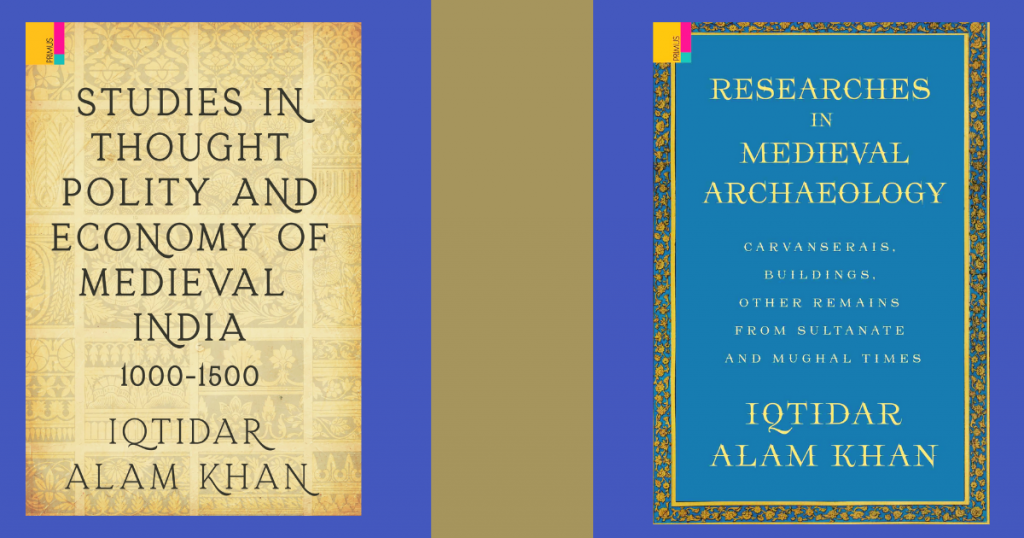
This current year has, however, revealed two hitherto unknown facets of his scholarship with the publication of two books in quick succession, both by the venerable publishers, Primus: Studies in Thought, Polity and Economy of Medieval India 1000-1500 and, hard to believe, Researches in Medieval Archaeology.
The first brings to us his mastery of various themes from the Delhi Sultanate era with the same eye for empirical soundness of every detail as his works on the Mughal period, though still tied to the Court and its outliers except for a revisit to Alberuni’s ‘concept of India’.
It is the second work that takes us literally to the ground level, taking us through the dust and grime of small buildings, remains of centuries-old Sarais (inns), waterworks, indigo vats, dykes and fascinatingly the ‘city’ built by Sultan Muhammad bin Tughlaq which he had named Swargduari, Gateway to Heaven, in district Etah in present day Uttar Pradesh.
Traveling in ramshackle vehicles for nearly two decades, Professor Khan along with his team, dedicated himself to recovering and recording the remains of small, virtually forgotten buildings of various kinds – calling them monuments would be grandiose – in every little detail of location, dimensions, recoverable history from texts and from folklore. It was remarkable labour of love where his age and family’s pleas could not hold him back.
The introduction, besides bringing the reader up to date on the theoretical backdrop of archeological study makes the valuable plea that one should embark on field exploration only after running through all the relevant textual material available for imparting completeness to the exploration.
While for all the sites studied included in the book have almost every kind of technical detail have been recorded, the last and longest chapter, dealing with Sarais is the most fascinating in that it opens up a number of windows to the social history of the period. It reveals that the state took upon itself the task of promoting travel as well trade, and at a certain stage postal service, by constructing inns and rest houses all along the trade routes. The task of constructing inns starts as early as Asoka’s time, for it is mentioned in one of his edicts, but later history on the theme is obscure.
In medieval India, references to these, along with milestones, kos minars resume from Sher Shah’s time and continue into the 18th century. The title Sarai is scattered all over the land with prefixes like Ber Sarai, Arab ki Sarai, Katwaria Sarai, Sarai Kale Khan and numerous others in Delhi itself, not to forget the Mughal Sarai, its history now erased through political diktat.
The very spread of these is suggestive of both the extent of travel and trade and state’s assumption of responsibility for providing security and patronage for it. The lodging and boarding at Sarais were often complementary and at times chargeable.
Luckily for the historian, the travelers at times left some graffiti on the walls noting their identity, several of which have been copied in the book. Where boarding was provided, separate kitchens were run for the Hindu and the Muslim travelers, suggesting that they came from both communities and shared the space but maintained differences in food, which was recognised and accepted by the state.
It also suggests that the difference did not turn into hostility. The book reproduces one graffiti in Devnagari on the wall of a mosque by one Kishan Das wald (son of) Maha Nand Kambu of Agra; he had obviously found shelter at least for a night at the mosque which he appears to have gratefully recorded; this reminds Professor Khan of Goswami Tulsi Das’ reference to “sleeping at a mosque”!
These two books, the second one, in particular, is a delightful revelation of an attractive aspect of an extremely reticent scholar of great eminence: dedication without seeking recompense in the form of the fanfare of recognition, but pure dedication to the unearthing of history’s hidden secrets without a trace of prejudice or preference. Dedication that cuts across compartmentalisation of Delhi Sultanate versus Mughal Empire, economic history versus political history, archeology versus textual narratives and so forth. A dedication that does not tire with age.
We are grateful to Professor Ali Nadeem Rezavi, who as head of the department of history and in-charge of its section of archeology persisted with Iqtidar Alam Khan to collect all his scattered data and reproductions of photographs of remains and graphs prepared to put together in a book; we owe a big debt to him for succeeding in the effort.
Harbans Mukhia taught medieval history at JNU.
source: http://www.thewire.in / The Wire / Home> Analysis> Books> History / by Harbans Mukhia / May 11th, 2021
Sahitya Akademi awardee and former PCS officer, Mohd Idrees Amber Bahraichi (71), died of Covid-19 complicat ..
He was the husband of All India Muslim Women Personal Law Board (AIMWPLB) president Shaista Amber.
Both Mohd Idrees Amber and Shaista Amber had tested negative for Covid-19 in their RT-PCR report which came out on April .
“Both my parents gave their samples on April 25 and tested negative. They were both at home. When my mother’s oxygen saturation level started dipping, I got a CT scan done for my parents which confirmed both of them had coronavirus infection,” said their daughter Aaisha Sumbul.
“My mother is currently on oxygen support at home and is not very stable and needs prayers,” she said
“My father was fine and all his other vitals were getting better too. Suddenly, he had a heart attack and a stroke and left us on Friday,” Aaisha said.
source: http://www.timesofindia.indiatimes.com / The Times of India / Home> News> City News / by TNN / May 09th, 2021
Simply Rizwan to most of his friends and colleagues, a leading voice among the historians of Modern India, succumbing to the virus, academic life will no longer be the same
With the untimely death of Prof. Rizwan Qaiser, Rizwan for most of his friends and colleagues, a leading voice among the historians of Modern India, the academic life of the country and more so of the capital will no longer be the same.
While Jamia Milia Islamia, where he has been a key member of the Department of History and Culture and also an extremely energetic member of its Teachers’ Union , loses one of academic leaders, Jawaharlal Nehru University, under siege for some time anyway, loses one of its most loved alumni who represented the University in more than one sense: someone who thought scientifically about social issues, believed that a humane world could be built with the ideals of compassion, equity and a sense of justice, the virtues tried to be enshrined in our collective consciousness during the national movement for freedom, and someone ready to speak up against the divisive social and political forces.
Born and educated in Munghyr, Bihar, Rizwan came to Jawaharlal Nehru University in 1980. It was in the Centre for Historical Studies where he had his training in Modern Indian history, with Prof. Bipan Chandra, Mridula Mukherjee, K.N. Panikkar, Sabyasachi Bhattacharya, and many others who had made the Centre the location of a robust historiography on Modern Indian history.
Coming a couple of years after the Emergency and having experienced the student movements in Bihar as a young boy, Rizwan took to the new kind of history in no time but also took to the political life of the campus at this time. Though he later moved to the School of International Studies where he worked for his Doctoral thesis with the renowned Prof. Bimala Prasad and Prof. Uma Singh, he remained a steadfast historian of the Centre for Historical Studies mould, as for him the historian’s job was not over with merely arranging facts and interpreting them in a chronological manner in a sophisticated academic language.
The historian has to review one’s own historiographical premises as well of others and present one’s case in that ouvre, as it is here that presuppositions, prejudices, biases and premises of historians and the traditions of history are located. At least two generations of students of history in Jamia Milia Islamia were richer with these historical practices becoming a prevailing mode there given the active presence of such historians. Rizwan remained till the last its most vocal proponent.
This has also allowed him to emerge as the most articulate historian of the national movement and its different strands. He meticulously located the participation of the Muslim in general and nationalist Muslims in particular in the overall universe of the national movement. In his Doctoral thesis, he chose to concentrate on the idea, role and politics of Maulan Abul Kalam Azad, the quintessential nationalist Muslim that one could think of. His work was an examination of the ideological position of the nationalist Muslims and the predicaments they had faced when the Muslim masses joined the Muslim League as against the wishes and exhortation of the Nationalist Muslims against such a move.
Prof. Qaiser showed with a historian’s craft and meticulous attention to detail how his protagonist, Abul Kalam Azad was not after all a failure just because, as other historians like V.N.Dutta and Ian Douglas claimed, he could not carry his co-religionists to the national movement under the leadership of the Congress.
In fact, Prof. Qaiser showed how Azad’s ideological position, that Muslims while following their religious credo must embrace a secular political line, turned out to be socially the most valid position to take. To Prof. Qaiser, Azad was, since his emergence as a national leader of the Muslims in the 1920s, trying to build a consensus on the point where the concerns and angst of the Muslim community, born out of their general and particular location, could be alleviated within the Congress platform so that the Muslim need not seek other forums for such issues. Once the Muslim League emerges in the late thirties, Azad’s work, as Prof Qaiser shows, became more challenging as he had to think afresh and sometime not in a very friendly atmosphere within the Congress, to bring the younger generations of Muslims towards the Congress.
His becoming the President of the Congress in 1940 in many ways was an acknowledgement of the tough job that he had at hand. Prof. Qaiser maintained that Azad had developed an ideological position where Hindus and Muslims could coexist within the framework of a single nation with adequate amount of mutual cooperation and adjustment. The need for such adjustment became greater as the movement for Pakistan became deeper and sharper and the opposition to such demand too began to take intransigent position.
Azad, in his work came out as a historical figure, and not merely as a tragic one, or a literary genius as many others have tried to paint him. The previous historians who had worked on the Khilafat and Non Co-operation movement saw the flank of the Muslim leadership in the shape of Mohammad Ali or Abul Kalam Azad taking their historical places, somehow placing them in the context of the Muslim awakening. Further, the politics within the Muslim community as having to face the new realities of Indian politics and turning into some kind of sectarian politics had also been brought to the fore in earlier histories.
Where Qaiser diverged and made a lasting contribution with his book, Resisting Colonialism and Communal Politics: Maulana Azad and the Making of the Indian Nation (Manohar, Delhi,2011) was the fact that he placed the question of an ideological choice in politics at the centre of the historiography. Thus, Azad made a conscious choice in accepting an ideology which he thought was the ideal path for the Muslims to follow in their opposition to colonialism as well as accepting their role in defining the Indian nation. He held on to this despite being marginalised both by the Muslim masses who joined the League in large numbers, and within the circle of leadership in the Congress and yet, as Qaiser suggests, this ideological choice was the right one in hindsight as this provided a correct picture of the anti colonial feelings of the Muslim masses and their desire to be the part of a free nation. Muslim Communalism provided them a false idea and a false promise.
Communalism, for him, was a modern phenomenon and it used religion and yet communalism cannot be identified with the religious life of people, a line – very subtle at times – being taken by many historians of Muslim communities and Islam in South Asia.
Prof. Qaiser ‘s critique of the writings of Francis Robinson, Peter Hardy or Paul Brass was posited in this understanding. For Prof. Qaiser, modern history of Islam and more so the Muslims in India cannot bypass the issue of their fight against colonialism and their place in negotiating Indian Nationalism. His recent writings and lectures on Jamiat ul Ulema I Hind for example and their role during the 1940s in supporting the Congress and opposing the Muslim league for example, also underpinned Prof Qaiser’s continued emphasis on an appropriate historical trajectory within modern history for the Muslims and Indian nationalism.
.A social scientist and a socialist
Rizwan’s was also an acutely conscious historical persona steeped deeply in the cosmopolitan nature of Indianness. A proud Bihari who came out of the famed Zila School of Munghyr which once upon a time used to be an excellent institution and had already produced Indian’s pioneering historian of science, Prof. Deepak Kumar, Rizwan of late was also steering many good researches on the regional history of Bihar in modern times. He also had been noticing the inter regional differences in the nature of popular protest during the national movement in a recent lecture about how the elite and educated in Bihar actually were happy about the partition of Bengal, as they saw it was needed for the development of Bihar.
His consciousness was also shaped by his being part of the socialist students formation, Samata Yuvajan Sabha, which had produced most of the socialist leaders in the last century. He like thousands of students of his generations believed that a scientific secular and socialist society can be formed by the struggle of the youth. His was an active political academic life in the JNU where he even contested for the JNUSU presidential post in 1987 which also saw his ability to articulate a non communist socialist position for a general population. His was also a non compromising secular position and he intellectually tried to add his contribution to refine the secular position in the light of the actual politics that India was undergoing. One still remembers his visiting and holding meetings in villages for maintaining communal harmony during the Babri Masjid demolition days of 1992-3. He was in fact one of the founding members of the Sadbhavna Mission which Prof. Vipin Kumar Tripathy of IIT Delhi has been steering for almost three decades now.
In the light of the discussion on secularism, the author had asked him once about his steering the move to the granting of minority institution status to Jamia. He was asked whether that was not smacking of a political route to communal position; his answer to this was scientific and quite valid. Why do we assume that by giving an institution a minority status which is a legal status, the political and social outlook of the teachers and students will become communal?
When the country is going to celebrate its 75th year of Independence, it would be a pity that one of the finest and most articulate historians of the national movement will not be with us. His absence will be more acutely felt when we fight our battle for collective consciousness which has been showing enormously dangerous communal portents in the present.
source: http://www.nationalheraldindia.com / National Herald / Home> Obituary / by Rakesh Batabyal / May 03rd, 2021
The Great Mughals is a term used to describe the most powerful of the Mughal emperors; Babur, Humayun, Akbar, Jahangir, Shah Jahan and Aurangzeb.
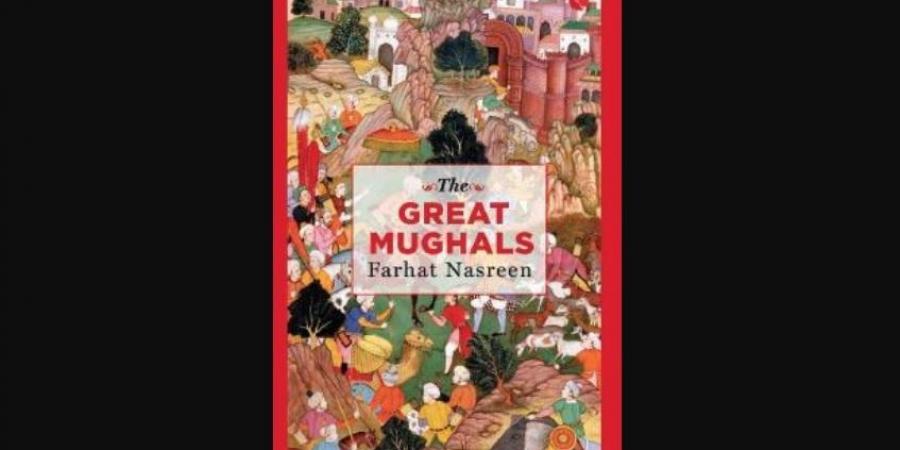
The Great Mughals by Farhat Nasreen
Professor of History at Jamia Millia Islamia, Farhat Nasreen has published a new book The Great Mughals (publisher: Rupa). The book encompasses the stalwarts of Mughal Empire from Babur to Bahadur Shah Zafar. It charts the origin, rise, success and downfall of an empire that ruled India for three centuries.
One will find myths and mysteries of the Mughal times, including narratives about its courts and harems, bazaars and battlefields, blood and gore, and the gloss and glamour of the Empire. Nasreen previously penned Kashful Baghaavat Gorakhpur – a rare eyewitness account of the Revolt of 1857 – along with several monographs and articles on historical themes, including the much acclaimed, If History Has Taught Us Anything.
Please introduce us to The Great Mughals. The Great Mughals is a term used to describe the most powerful of the Mughal emperors; Babur, Humayun, Akbar, Jahangir, Shah Jahan and Aurangzeb. Their empire played the double role of being a modern version of an ancient state and an ancient version of the modern one. Like players of the Rubik’s cube, they twisted and turned their policies to create the Mughal brand. Raw power supported their sovereignty but only just. They made a great play of spirituality to unify people of their multi-religious empire. Eventually, the Mughal brand grew to command an almost unbelievable brand loyalty even as late as 1857.
Could you reflect on the research you undertook for this book? My relationship with history is romantic, which made the research easy. I read most of the primary and secondary sources relevant to the Mughals. Grasping of the significance of sub themes like economic and social history, etc., is critical because many pieces complete the jigsaw. To situate the Mughal Empire as a microcosm of the medieval times, reading non-Mughal histories was equally vital. My father; a judge by profession and my teachers taught me to hold on to facts and then approach history from various angles. It is only then that one can see a new fantastic point of view.
What are the certain paradigms of history writing that an author should consider before bringing out a title? A historian must be watchful of the statics and dynamics of the past and present. Characters of the past were implicated in the power relations of their own times. Therefore, using current standards to judge, criticise or mythicise them could be unfair. Likewise, deconstructing time frames and labelling them as good or bad can be tricky. With the passage of time it becomes difficult to retrieve the past, luckily the historians are trained to recover it. They must spend the treasures of memory-facts and interpretations in such a way that they can buy peace and humanism.
How has history shaped your life? More than anything else, history has taught me to be humble. It has shown that the countless riches of the rich perished, blood of celebrated bloodlines spilled unaccounted, blinding dazzle of glory faded away and so on. It has taught me to value what I have now, because I may not have it forever. History extracts the truth and presents it before decision makers – individuals who decide for themselves and leaders who often decide for many. It maintains a logbook of choices made and prices paid. It reminds us that nothing is free.
Are you working on any new book? Yes, I do hope to present more writings on history. Besides, there is the idea of ‘Omnipresent Past’ which argues that past is the most everlasting thing. A simple anecdote from one’s childhood brings an instant smile on the most unsmiling of faces. Each passing second adds to its immeasurable volume. Present speeds towards the future, but both are eventually overtaken by the phenomenon of passage of time and get converted into the past. I feel each of the Mughal rulers deserves a book that contextualises their lives in the present-day scenario.
source: http://www.newindianexpress.com / The New Indian Express / Home> Lifestyle> Books / by Express News Service / April 25th, 2021
Writer, translator and poet Bushra Alvi Razzack about her journey with words
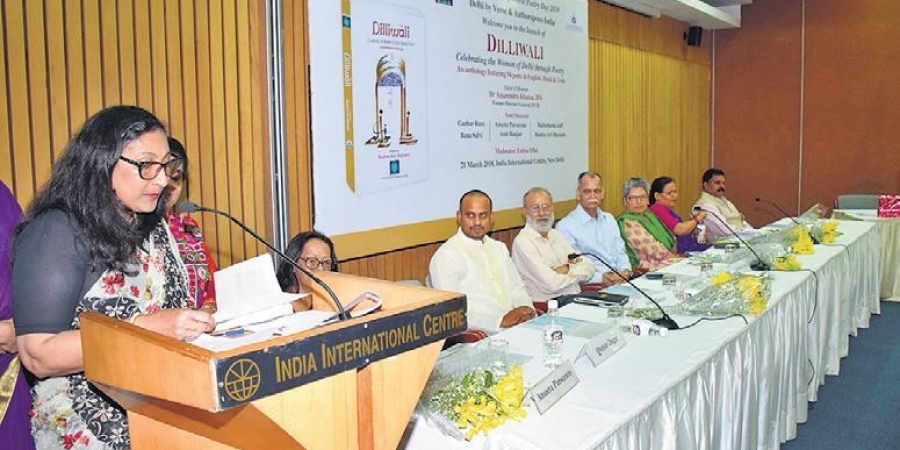
At the book launch of Dilliwali, IIC
Meet Bushra Alvi Razzack – Founder of the poetry group, Delhi by Verse. She has compiled and edited Dilliwali: Celebrating the Woman of Delhi through Poetry (2018), an anthology by 94 poets. Her poems have featured in anthologies and online magazines, and her articles were published in Khaleej Times, Dawn, Rising Kashmir, among others.
She just completed translating writer Manzoor Ahtesham’s Hindi novel, Basharat Manzil, into English, is translating Urdu writer Jeelani Bano’s short stories into English, and is working on her novel. Photography and old buildings are other fascinations.
our writing schedule?
I don’t follow a rigid schedule, but I plan to rectify that soon. A lot of ideas take root while commuting, and so I always keep a pencil and paper handy to jot down stray thoughts.
Does writing energise or exhaust you?
I would say both. It energises and is cathartic too. Creating something beautiful from a mere thought can be very satisfying. Translating is fun, but can drain you pretty soon. Sometimes, it’s really difficult trying to find the right word to convey in the target language. So, I leave that portion and come back to it later. It always works. I also switch between projects on whim. So, if a Eureka moment for the novel I am working on pops up during a dull phase in the translation, I jump and pursue it till i t ’s there in my headspace.
Writing advice for your younger self ?
If there’s a novel in your head, just write it quick because the idea won’t remain floating in your mind till you’re ready to tick off other ‘have-to-do-it-first’ things.
Your favourite books?
Top on the list is The Golden Treasury – poet Francis Turner Palgrave’s compilation of the best songs and lyrical poems, by the greats including William Shakespeare, John Milton, Alexander Pope, William Wordsworth and John Keats. This book was part of my school syllabus in Grade 8 and 9, and has been with me ever since. Then Pride and Prejudice by Jane Austen… one of the most adored love stories that finds an echo in Indian families too. I have taught this book as part of my teaching assignments. Z` Then Delhi by Heart, where Raza Rumi offers unusual perspectives into the political and cultural capital of India.
Literary success vs number of copies sold?
Literary success is that praise and acknowledgement I receive from readers on how they loved my writing and how it has touched them deeply. However, receiving awards for my writing would be great, once I have a larger body of work.
Favourite spot/s in Delhi to write at?
I find my creative juices flowing when in the midst of nature. At home, my writing table is set near the window so that I can see the trees and hear birds sing. When deciding which direction my story should take, a stroll through the shaded environs of my neighbourhood or the park, gets me on track. But poetry tumbles out in my observation of people – be it at home, on the road, a crowded space, etc.
source: http://www.newindianexpress.com / The New Indian Express / Home> Lifestyle> Books / by Bhumika Popli / Express News Service / March 08th, 2020
Manzoor Ahtesham was a Hindi writer from Bhopal, who raised important questions about the identity of the increasingly alienated Muslim minority
Decorated Hindi writer Manzoor Ahtesham signed off on a well-spent life in a hospital around midnight in Bhopal on Sunday last. When he breathed his last, he was in the company of a doctor and some paramedical staff as he was a COVID-19 patient and family members were not allowed.
He is survived by the families of two daughters and that of younger brother Aijaz Ghafoor, a well-known interior designer in Bhopal. Manzoor had recently lost his wife and elder brother to COVID-19.
Born in April 1948, Manzoor belonged to one of the middle class families of Afghan lineage in picturesque Bhopal. He was handsome, very polite, unassuming, and friendly. A gentleman to the core, Manzoor had a sensitive heart, a sharp mind, and frugal lifestyle. For more than seven years that I spent in Bhopal as Resident Editor of Hindustan Times from 2000, and even later during numerous visits to the city, I found people had only good things to say about him.
His parents wanted him to do engineering. He took admission, tried for a few years, but gave up, as his interest was in literature. When his brother Aijaz started a furniture showroom in late 70s, he requested Manzoor to help him out by being there. Aijaz fondly says, “Many visitors to the showroom would tell me that Manzoor Bhai was not to be seen, though he used to be around, sitting in one corner surrounded by books.”
Over my 35 years in journalism, I have interacted with numerous writers and public figures, but none can match Manzoor’s depth of understanding of world literature. There is hardly any classical or contemporary writer of repute in English, Hindi, and Urdu literature whom Manzoor had not read. “Our younger generation has stopped reading books,” he would often lament.
During one of the several evenings that I spent with him discussing poetry, novels, plays, and world affairs, he talked very fondly of Orhan Pamuk’s writings. It was in July or August of 2006 that he had told me he expected Pamuk to win the Nobel Prize in Literature that year. A couple of months later in October, Pamuk did get the Nobel.
Bhopal’s topography — an abundance of greenery, large water bodies, and generally pleasant weather through the year – also helped Manzoor’s literary sensibilities to flourish. I remember him telling me once that the name of his highly awarded novel Sukha Bargad (A Dying Banyan), came from Dela Wadi, a forest area near Bhopal having several banyan trees. The novel tells the story of a middle-class Muslim family’s struggle to come to terms with the transformation of Indian society after partition, particularly worsening Hindu-Muslim relations.
Some institutions, such as Bharat Bhawan, a premier multi-arts autonomous complex and museum, and theatre and literary personalities such as BV Karanth, Habib Tanvir, and Shani Gulsher Ahmed helped Manzoor hone his literary skills. His interest in theatre helped him get the role of a professor in Merchant Ivory Production’s film In Custody (Muhafiz in Urdu) in 1993.
In 2007, New York magazine cited Dastan-e Lapata, (The Tale of the Missing Man) as one of “the world’s best untranslated novels.” The book, which raises important questions about Muslim identity, was translated into English in 2018 by Jason Grunebaum and Ulrike Stark of the Department of South Asian Languages and Civilizations at the University of Chicago. It has received the Global Humanities Translation Prize.
Manzoor was a recipient of several awards such as Shikhar Samman, Bharatiya Bhasha Parishad Puruskar, Vir Singh Deo Award, and several others. The government of India honoured him with the Padma Shri, the fourth highest Indian civilian award, in 2003. However, writer and poet Rajesh Joshi was recently quoted in a Hindi newspaper saying that Manzoor had wanted to exchange his Padma Shri with his Sahitya Akademi award which Rajesh had got at about the same time.
Manzoor Ahtesham’s first published short story in 1973 was Ramzaan Mein Maut (Death in Ramzaan). Ironically, we lost him during this time of fasting and prayer.
source: http:///www.thehindu.com / The Hindu / Home> Society> Obituary / by Askari Zaidi / April 19th, 2021
On Tuesday morning, a resident of Belapu Military Colony, senior author, writer, Mumtaz Begum (72) passed away in a private hospital in Mangaluru.
Mumtaz Begum, who was engaged in the field of literature and writing for five decades has written various works including Avyakta, Paradeshi, Vartula, Bandalike, Chimpi, Sarva Rathugalu Ninagagi, Ankura Sahita Kathe, poetry, novels, and various other books.
For her contributions to the field of literature and writing, she has won various awards and accolades including Attimabbe, Chennashri, Jilla Rajyotsava, Matrashri Ratnamma Heggade Book Prize, Meevundi Mallaari Children’s Story Prize, Kittur Rani Chennamma Award, Kannada Literature Council’s Charitable Award, Senior Citizens Literary Award, and Basava Literary Arts Forum’s Basava Jyoti Award among various others.
He translated Rumi’s 13th century magnum opus Masnavi
Noted Urdu writer and translator Syed Ahmed Esar, 98, known for his translations of classical Persian poetry of Allama Iqbal and Rumi into Urdu, passed away in Bengaluru on Wednesday.
His son Syed Sultan said that he was suffering from age-related ailments and was hospitalised on Tuesday night.
Born in the garrison of Mysore Lancers in Munireddy Palya to a World War I veteran in 1922, Syed Ahmed Esar lived in the narrow Sher Khan Galli off Avenue Road almost all his life. A former Indian Forest Service officer, he worked as the Chief Conservator of Forests, Karnataka, and retired from service in 1980.
Though his interest in classical Persian poetry began at a very young age and he began trying his hand at poetry adopting a pen name “Esar”, which he later added to his name, his first collection of translation was published only in 1997, 17 years after his retirement.
Persian poetry was his constant companion on lonely postings in the forests during his service, Syed Ahmed Esar said to Frontline in April 2020.
His work
He translated the entire seven volume corpus of Allama Iqbal’s Persian poetry into Urdu. He next took up the challenge of translating Rumi’s 13th century magnum opus Masnavi of over 27,000 verses into Urdu. The work took up almost two decades of his life and the six-volume poem was published by the National Council for the Promotion of Urdu Language in 2019.
He has also published a collection of his own poems and an autobiography. He was given the Rajyotsava Award in 2017 and was the recipient of several literary awards.
source: http://www.thehindu.com / The Hindu / Home> News> States> Karnataka / by K.V Aditya Bharadwaj / Bengaluru – April 21st, 2021
Tibetan spiritual leader Dalai Lama and Maulana Wahiduddin Khan, right, in New Delhi [File: Mohd Zakir/Hindustan Times via Getty Images] / pix: aljazeera.com
Ninety-six-year-old Khan, who authored more than 200 books including a two-volume commentary on the Holy Quran, died on Tuesday.
Indian Islamic scholar and peace activist Maulana Wahiduddin Khan has died in the capital New Delhi after contracting novel coronavirus, his family members announced on Tuesday.
Ninety-six-year-old Khan was recently admitted to a hospital in New Delhi after testing positive for COVID-19.
“The great Islamic scholar Maulana Wahiduddin Khan breathed his last, late this evening. Doctors failed to revive his sinking heart. Pray for his maghfirat [penitence] and high station in Paradise. Amin,” Zafarul Islam, Khan’s eldest son, tweeted on Tuesday.
The author of more than 200 books, Khan has been honoured with several awards. This year, he was awarded the Padma Vibhushan, India’s second-highest civilian honour.
___________________
Twitter
Zafarul-Islam Khan @khan_zafarul . 2H
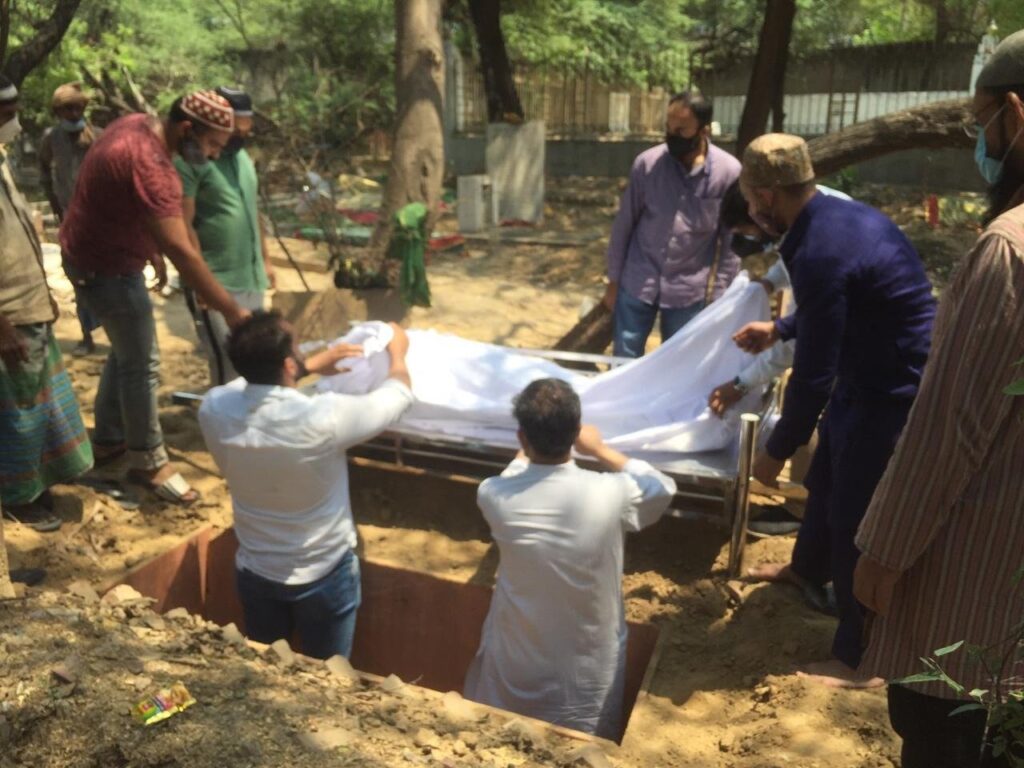
Islamic scholar Maulana Wahiduddin Khan was buried at noon today in Panjpeeran Qabristan near Basti Hazrat Nizamuddin. Buried in same qabristan are his mother Zaibunnisa n wife Sabi’a Khatoon. Seen are his grandsons lifting his body to place in grave. Pl pray for his maghfirat.
2:06PM – Apr 22, 2021
____________
Born in Azamgarh, India, in 1925, Khan has been internationally recognised for his contributions to world peace.
In 2009, Georgetown University in Washington, DC’s list of 500 Most Influential Muslims of 2009 named him “Islam’s spiritual ambassador to the world”.
In 2001, he established the Centre for Peace and Spirituality to promote and reinforce a culture of peace. Khan went on a 15-day Shanti Yatra (peace march) through the western Maharashtra state in the wake of the demolition of the 16th-century Babri Mosque by Hindu hardliners in the state of Uttar Pradesh in 1992.
He also wrote a two-volume commentary on the Holy Quran.
Indian Prime Minister Narendra Modi said he was “saddened” by the news of Khan’s loss.
“He will be remembered for his insightful knowledge on matters of theology and spirituality. He was also passionate about community service and social empowerment. Condolences to his family and countless well-wishers. RIP,” Modi wrote on Twitter.
Indian President Ram Nath Kovind said he was “deeply grieved” by the demise of Khan, saying: “Maulana Wahiduddin made significant contributions to peace, harmony and reforms in the society. My deepest condolences to his family and well-wishers.”
source: http://www.aljazeera.com / Al Jazeera / Home> News / source: News Agencies / April 22nd, 2021
![Tibetan spiritual leader Dalai Lama and Maulana Wahiduddin Khan, right, in New Delhi [File: Mohd Zakir/Hindustan Times via Getty Images]](https://www.aljazeera.com/wp-content/uploads/2021/04/GettyImages-163399715.jpg?resize=770%2C513)