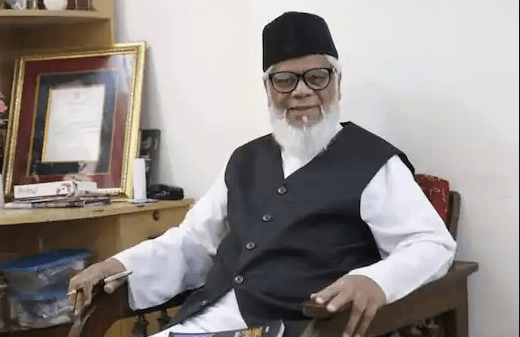
Book-lover Syed Isak and senior journalist-publisher R. Poornima have been selected for ‘M. Gopalakrishna Adiga Pustaka Parichalaka Prashasti’ and ‘Nanjangud Tirumalamba Prashasti’ respectively. The awards are being given by Ankita Prakashana and Sringara Prakashana.
Addressing a press meet yesterday, Karnataka Prakashakara Sangha President Prakash Kambattalli stated that Kannada poet Siddalingaiah will present the award to the recipients at a function to be held at Kendra Sahitya Academy Auditorium, Central College in Bengaluru on Apr. 23 at 11.30 am, as part of World Book Day celebrations.
The awards carry a cash prize of Rs. 5,000 and a citation.
source: http://www.starofmysore.com / Star of Mysore / Home> News / April 24th, 2021
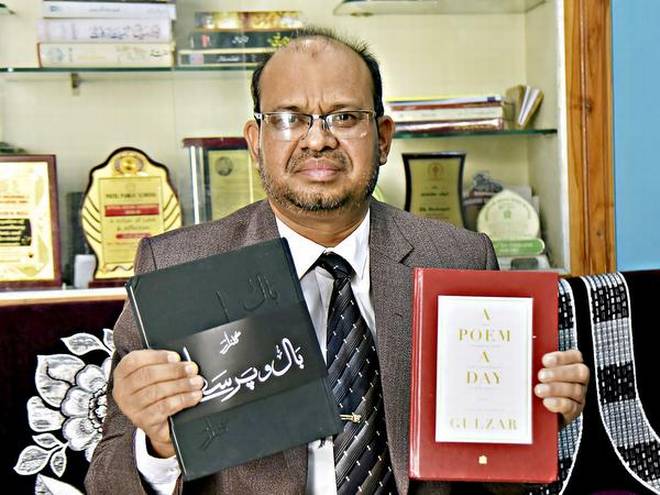
Prized possession: Mustaque Ahmed S. Mulla displays the books sent by lyricist Gulzar.
The award-winning poet calls up Mustaque Ahmed S. Mulla after he reads the latter’s letter
Never in his dream had Mustaque Ahmed S. Mulla thought that a letter he wrote to award-winning poet and lyricist Gulzar would lead to a moment he would cherish for life.
It was in the second week of March that Prof. Mulla, principal of Tippu Shaheed Institute of Technology at Old Hubballi, happened to watch a reading of Mirza Galib’s poem by Mr. Gulzar in the ‘Jashn-e-Rekhta’ programme.
A fan of ‘Gulzar Sahab’, Prof. Mulla could not resist penning down what he felt. He also wrote about Mr. Gulzar’s determination on reading and writing in Urdu in its own ‘Rasmul Khat’(script) and his views on learning Urdu and expressing it Devanagari script. Mr. Gulzar’s 1972 film Koshish revolved around visually-impaired characters and Prof. Mulla related to it as his father was disabled. He wrote on how the film changed his view of his father, posted the letter and had almost forgot about it.
One afternoon, a few days later, Prof. Mulla’s cell phone rang and to his surprise, the person identified himself as Gulzar. He could not believe that a Dada Saheb Phalke award winner would personally call him and checked to confirm what he had heard.
The conversation extending to over 15 minutes will remain etched in the memory of Prof. Mulla and his daughter Nikhat Sameen, who was by his side. “Gulzar Sahab thanked me for my letter and sought to know about Hubballi and its literary culture. His poetry, films, the region, my father, his struggle, Koshish… all figured in the conversation,” Prof. Mulla recalled.
Mr. Gulzar asked Ms. Sameen, a postgraduate students, about the city, its literary circles and her literary inclination. She requested Mr. Gulzar to send an endorsed copy of his latest Urdu poetry collection Bal o par sare.
“He said he would send it. A few moments later, he called back to ask whether she knew Urdu. At that moment, I said, I too had the right to an endorsed copy, being her father,” Prof. Mulla told The Hindu. Ms. Sameen told her father that more than a poet and lyricist, Gulzar Sahab was a great human being who respected others’ sentiments.
After the conversation, Mr. Gulzar sent two books, one in English for Prof. Mulla and one in Urdu for Ms. Sameen, with endorsement.
These days, Prof. Mulla’s house has visitors who comes to see the books with Mr. Gulzar’s handwriting. Prof. Mulla never gets tired recalling the pleasant surprise.
source: http://www.thehindu.com / The Hindu / Home> News> States> Karnataka / by Girish Pattanashetti / Hubballi – April 16th, 2021
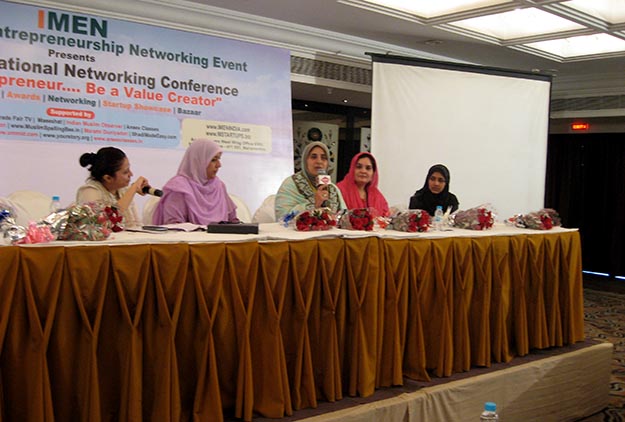
Uzma Nahid addressing the first IMEN summit and Startup Showcase held in Pune on Februray 07, 2016 (ummid.com [Uzma Nahid addressing the first IMEN summit and Startup Showcase held in Pune on Februray 07, 2016. Also seen in the photo are Architect Nafisa Kazi, Sameena Razzaq and Farah Deeba. (ummid.com photo)]photo)
Pune (Maharashtra):
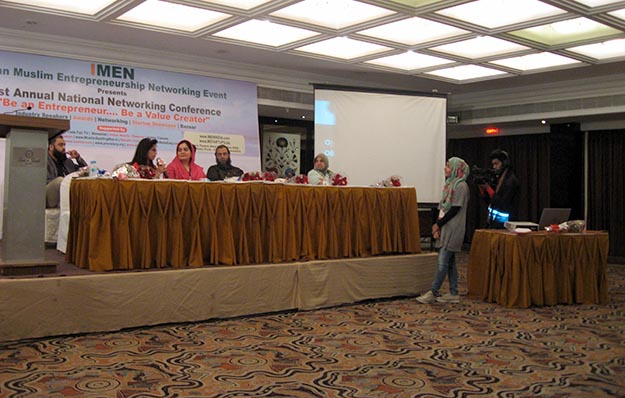
A new initiative aimed at driving Muslim involvement in India’s startup and technology economy hosted by Indian Muslim Entrepreneurs Network (IMEN) in Pune last Sunday ended in double delight when it showcased the upcoming business opportunities along with success stories of Muslim female entrepreneurs and young achievers.
The event, brainchild of Chicago based Indian American Tausif Malik, was organized in association with Pune based trainers Anees Kutty and Gaffar Asim Malik.
Started with National Anthem at about 09:00 in the morning, the event ran throughout the day before ending at 06:30pm, uncovering the inspiring stories of Muslim female entrepreneurs and achievers, and also sharing the experiences of Muslim change-makers who have dedicated them for years for the social, educational and economic empowerment of the Muslims in India.
Besides sharing their success stories, the ‘Role Models’ – as the organizers introduced them, also urged the ‘would be’ entrepreneurs to gear up and prepare to take the benefits of the ‘Start-up India Action Plan’ unveiled by Prime Minister Narendra Modi.
“This is an emergency like situation for Muslims, especially the Muslim women. In the situation when we have limited opportunities, it is high time we develop business skills in women so as to fruitfully utilize their skill and talent for the empowerment of the community”, Uzma Nahid said while participating in the panel discussion titled “Role of Women in Business & Community”.
“A huge number of Muslim men and women artisans are skilled and talented. But they are unorganized and hence are vulnerable to exploitation. We should adopt areas dominated by such people, form small groups and establish small scale and cottage industries for them”, Uzma, founder of India International Women’s Alliance (IIWA) which has more than 3000 women members, said.
The views were endorsed by Architect Nafisa Kazi, Educationist and one of the youngest Headmistress of School Farah Deeba and senior journalist Sameena Razzaq, with each one of them adding valuable inputs to the idea mooted by Uzma Nahid.
Participating in another panel discussion Managing Director of Exhicon and Executive President, Imamia Chamber Of Commerce & Industry MQ Syed appealed the young entrepreneurs to use their talent effectively to maintain quality and present innovative products of world-class quality.
“There is no discrimination if you have talent and skill, and there absolutely no challenge and competition to quality”, he said.
Highlighting the importance of business and entrepreneurship in Islam, MQ Syed said, “The Holy Quran gives 9 out of 10 marks to business and trade while discussing the livelihood. Jobs and service have the least priority for us”, Syed, who has mentored over fifty start-ups, said.
Stating that the Muslim community is wasting their energies on useless issues MQ Syed said, “We might have problems with Israel. But, instead of boycotting Pepsi to corner Israel, we should produce a product better than Pepsi.”
Mariyah Rehmani, author of e-book titled ‘The Hijab And Its Purpose: Understanding the veil’ taking the question from Maryam Asif Siddiquee, the winner of ‘Gita Champions League’. (ummid.com photo)
Detailing the key features of ‘Start-up India Action Plan’, Aleem Faizee, Chief Executive Officer (CEO) of Awaz Multimedia & Publications and Founder Secretary of Malegaon Industries & Manufacturers Association (MIMA), said if implemented properly the plan is the best suitable for Indian Muslims.
“Everyone suffered due to ‘inspector raj’, and lengthy and tiring bureaucratic procedure in India. But, Muslims were worst sufferer of this menace. The Start-up India Action Plan has many features to end this problematic and unhealthy regime”, he said while opening the Start-up showcase session.
“If implemented properly, the Start-up action plan will surely open the doors of opportunities for Muslim entrepreneurs in India”, Faizee, who is instrumental in establishing a mini Textile Park in Malegaon, said.
Irfan Pathan, founder of ‘Coffe Addict’, showcased the ‘soon to be launched’ product by giving history of coffee and elaborating on the role of Muslims in spreading the coffee drink. During the presentation, he was supported by Khan his cousin and team member.
The event was also addressed by, Managing Director of Idafa Investments Pvt. Ltd. & Rehbar, Regional Head, West India Ashraf Mohamedy, Mariyah Rehmani, teenager who authored e-book titled ‘The Hijab And Its Purpose: Understanding the veil’, Serial Entrepreneur, Mentor and Investor Altaf Rehmani and Program Facilitator UNCTAD-Empretec Program for India Nasser Mehdi.
Among the organisers, Tausif Malik, Anees Kutty and Asim Gaffar Malik detailed the objectives of the event and also shared their valuable experiences in their long careers.
At the end of the ceremony, MQ Syed was conferred ‘IMEN Businessman of the Year Award’, Mohammad Yunus, who saved more than 2000 lives during Chennai flood, was conferred ‘Shaheed Abdul Hamid Award’ and Maryam Asif Siddiquee, the winner of ‘Gita Champions League’, was conferred ‘Educational Excellence Award’.
source: http://www.ummid.com / Ummid.com / Home> Business & Economy / by Zohair Mohammad Safwan / February 13th, 2016
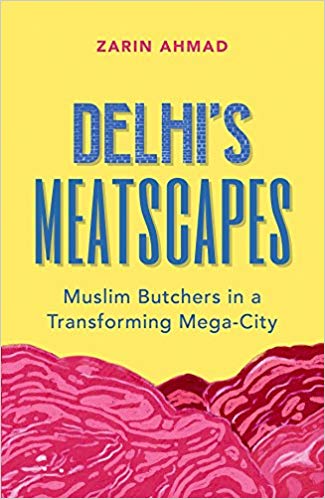
Tracing the journey of meat from the farm to the meat shop and other workspaces of the butcher within the multi-sited margins in Delhi, the current volume intimately follows the lives of Qureshi butchers and other meat sector workers in this transforming mega-city.
The author addresses the tensions that meat throws up in a bristling society whose stakes are now more than ever intense.
She shows how meat is also a rising sector in the Indian economy, and fetches precious foreign exchange. Qureshi butchers stand at the crossroads of class, caste, stigma, religion, market, urban ecological policies, and a never- ceasing political debate around these issues.
Delhi’s Meatscapes brings together rare archival documents, vernacular sources, and ethnographic insights gleaned from several years of immersion in the city’s meatscapes and is the first of its kind for urban anthropologists, economists, political scientists, policy planners and readers who wish to take a hard look at their own (non-) meat choices.
source: http://www.newindiafoundation.org / New India Foundation / Home / by Zarin Ahmad
Watch Video: Dr Abidullah Ghazi laid to rest in Chicago
Ambehta (Sahranpur District),(formerly United Provinces) UTTAR PRADESH / INDIA, Chicago, U.S.A. :
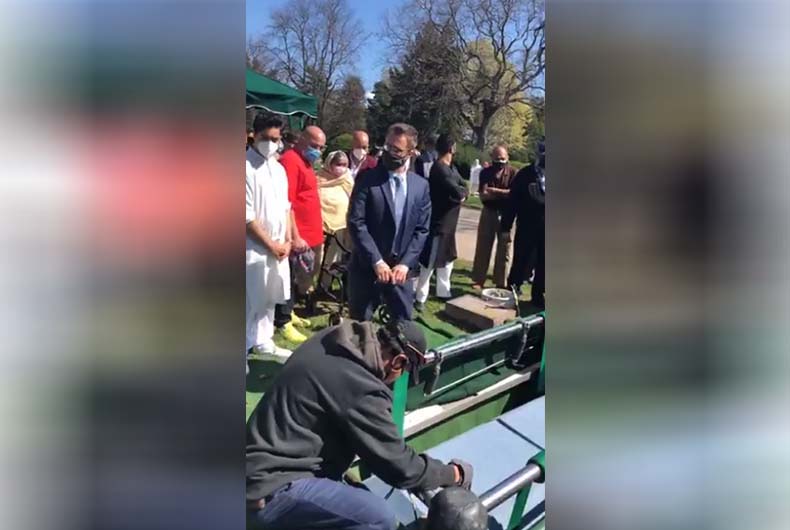
Dr Abidullah Ghazi’s wife Dr Tasneem and others at the funeral ceremony held in Chicago on Monday afternoon.
The 85-year-old founder of Iqra International Educational Foundation was ailing since last few years and died on Sunday.
Chicago:
Dr Abidullah Ghazi – Scholar, Poet, Author, Philosopher and Activist, was laid to rest in the afternoon Monday April 12, 2021 in Chicago.
The 85-year-old founder of Iqra International Educational Foundation was ailing since last few years and under medication at a Chicago hospital-cum-rehab. He passed away in the wee hours of Sunday April 12, 2021.
He is survived by his wife, three sons and two daughters.
Immediate family members, including his wife Dr Tasneema Ghazi and children, were present when he was buried at Chicago cemetery on Monday.
The funeral that lasted for more than one and half hours was limited only to the immediate family members due to the Coronavirus pandemic.
Dr Abidullah Ghazi was born to Maulana Hamid Al Ansari – freedom fighter and a renowned journalist of his time, on July 6, 1936 in India. His mother had died when he was still in her early age. Under the guardianship of his grandmother, he was admitted in Jamia Millia at the age of 08.
Later he completed M A (Political Science) and BTh from Aligarh Muslim University (AMU). He went on to do M A in Economics from the London School of Economics and later wrote thesis on the revivalist views of Raja Rammohan Roy for his Ph.D. at the Ivy League, Harvard University.
Dr Ghazi also published, ‘Zikr-e-Saman Izaraan’, an anthology of Urdu poems.
After completing his education he first migrated to the United Kingdom and then to the United States where he stayed till his last breath.
Dr. Ghazi, who had also done Ph.D. in comparative religions from Harvard University, was a fixture in America’s Muslim community and a pioneer in providing quality Islamic education to our children.
Dr Ghazi was the author and editor of over 150 text and support books on Islamic syllabus designed with his wife Dr Tasneema Ghazi especially for Muslim children living in Western countries or studying in English-medium schools.
He had established Iqra Foundation in Mumbai which is run and taken care of by his younger brother Salman Ghazi and his wife Uzma Nahid.
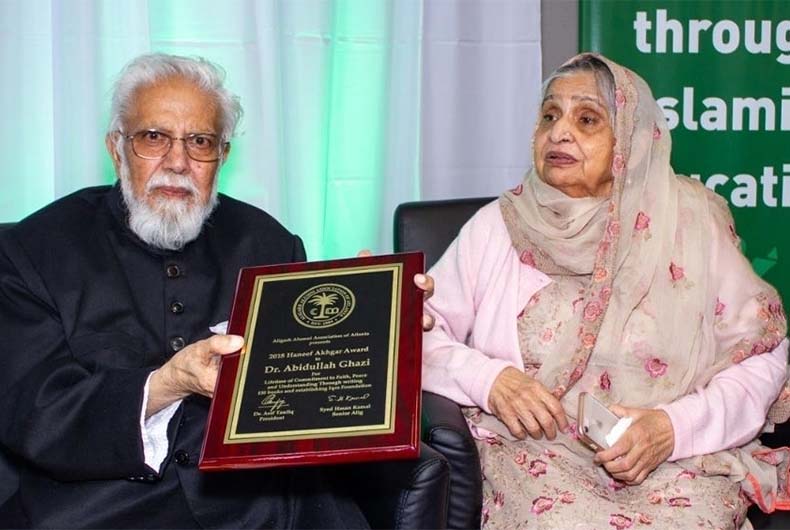
Dr Abidullah Ghazi was named by the Royal Islamic Strategic Studies Centre as being among the 500 Most Influential Muslims in the World. Besides, Dr. Ghazi was also the recipient of numerous awards notably the Citizen’s Award, the Ronald Regan Award, Nishan-e-Imtiaz (Order of Excellence) from Pakistan, a Certificate of Welcome from the City of Los Angeles many others.
Condolences pour in
Condolences are pouring in from different circles and by prominent people who termed the demise of Dr Abidullah Ghazi a great loss not just for the Muslims in the United States but also for those living in other parts of the world, especially India.
“Dr Ghazi, a prominent alumnus, enriched cerebral legacy of Aligarh Movement. He was among a bunch of highly motivated, adventurous persons who broke barriers and went on to distinguish themselves in their chosen fields,” AMU Vice Chancellor, Prof Tariq Mansoor said.
Extending condolences to the bereaved family of the deceased, the Vice Chancellor said:
“I shared a warm personal rapport with Dr Ghazi. The AMU fraternity will always carry Dr Ghazi’s memory in hearts.”
In his condolence message, renowned literary personality Hashmat Sohail said:
“It’s hard to believe Dr. Ghazi is no longer with us. I spent many years together. He will be remembered forever in the worldwide literary community.”
Ali Khan, President and Founder of Urdu Semaj Chicago, in his condolence message said:
“He was a legend in our community and a very genuine, Urdu lover People from Chicago will especially miss the late Dr. Abid Ghazi This is a total loss for us. He was devoted and inspirational leader for the whole community.”
http://www.iqra.org
source: http://www.ummid.com / Ummid.com / Home> India>Life & Style / by ummid.com news network / April 13th, 2021
Shaikh Dr Wasiullah Abbas is a renowned Islamic scholar from India. A graduate from the Islamic University of Madinah and Umm Al Qura University in Makkah, he is a teacher of Tafsir, Principles of Tafsir, Hadith and Principles of Hadith in Umm Al Qura University, a position he has held since 1979.
He also delivers lectures on Sahih al-Bukhari and Sunan Abu Dawood in Arabic and general Islamic lectures in Masjid al-Haram in Makkah where Abdullah Ibn Abbas (RA) used to deliver his talks.
Early Life and Education
Dr Wasiullah Abbas was born in 1948 in Basti district, in a small town of Bherabhoj, renowned for producing many Islamic scholars of repute. His father’s name was Muhammad Abbas Khan, his grandfather’s name was Ahmad Khan, and his great grandfather’s name was Khushhaal Khan. Dr Wasiullah’s grandfather Ahmad Khan was the chief of his town.
Dr Wasiullah received primary education from Shaikh Muhammad Saleem, a well-known Islamic teacher who was a student of Madrasah Rahmaniyyah. He later moved to the town of Yusufpur and enrolled in Madarsa Darul Huda and did his further studies in Jamia Rahmaniyyah in Banaras.
In 1966, the Jamia Salafia, one of the largest Islamic universities was established in the city Banaras. One of the scholars, who attended the inauguration of the university was Shaikh Abd al-Aziz ibn Baz. On Shaikh ibn Baz’s direction, four students were selected from both Jamia Salafia and Jamia Rahmaniyyah to study at the Islamic University of Madinah. These four students were Dr Wasiullah Abbas, Shaikh Abdul Hameed Rahmani, Shaikh Abdus-Salam Madani and Shaikh Abdur-Rahman al-Bastawi.
Islamic University of Madinah and Umm Al Qura University
At the Islamic University of Madinah, Dr Wasiullah Abbas obtained a bachelors degree in Dawah and Ilm Usool Ad-Deen (Principles of the Religion), from the department of Tafsir and Hadith.
After successfully completing the bachelors (undergraduate) program at the Islamic University of Madinah, Dr Wasiullah Abbas travelled to Makkah for higher (post-graduate) studies.
Here, he completed his Masters and PhD (doctorate) programs in Makkah, with a specialization in Hadith. He completed his PhD (doctorate) program in the year 1981, which was the year in which Umm Al Qura University was established in Makkah. Prior to this, the structured study in Makkah – “adDirasaat al-Ulyaa” (the higher studies programs), the Faculty of Shari’ah, and the Faculty of Tarbiyyah – were under the administration of King Abdulaziz University in Jeddah.
Teaching
During his time as a PhD student, he was appointed as a teacher at the Mahad at Masjid al-Haram. He continued teaching with this position for many years, after completing his PhD. Later, he was selected as a professor in Umm Al Qura University in Makkah, where he continues to hold a teaching position in the department of “al-Kitaab (the Qur’an) and the Sunnah” in the Faculty of Da’wah and Usool-ud-Deen, lecturing on numerous subjects related to the science of Hadith.
The Shaikh also holds a teaching chair in Masjid al-Haram, with authorization attained from the “General Director of the Affairs of the Grand Mosque in Makkah and the Prophet’s Mosque in Madinah. His chair is located in the “Mataf” (the area of Tawaaf around the Kabah), between the doors of Bab al-Malik Fahad (King Fahad Gate) and Bab al-Umrah, where he continues to teach five days a week between the Maghrib and Isha prayers.
Books
Among the books Dr Wasiullah Abbas authored are as follows: “ad-Du’afaa’ wal-Matrookoon wal-Majhooloon fee Sunan an-Nasa’i” (The Weak, Abandoned, and Unknown [Narrators of the Ahadith] in Sunan an-Nasa’i). This was Shaikh’s Masters thesis.
Tahqeeq (Verification) of the book “Fadaa’il as-Sahaabah” (Virtues of the Companions [of the Prophet Muhammad (SAWS)] of al-Imaam Aboo Abdullaah Ahmad ibn Muhammad ibn Hanbal ash-Shaybaanee (RH) [d.241H]. This was Shaikh’s PhD (doctorate) thesis.
Tahqeeq of the book “al-‘Ilal wa Ma’rifatur-Rijaal” ([The Science of] Defects [in the Asaaneed of the Ahaadeeth] and [the Science] of Narrators [of the Ahaadeeth]) as narrated by al-Imaam Aboo Abdur-Rahmaan Abdullaah ibn al-Imaam Ahmad ibn Hanbal (RH).
Tahqeeq of the book “Bahrid-Dam feeman Takallama feehi al-Imaam Ahmad bi-Madh aw Dham” (The one [i.e. Narrators of Ahaadeeth] al-Imaam Ahmad [ibn Hanbal (RH)] Spoke about with Commendation or Disparagement) of al-Imaam Jamaalud-Deen Yoosuf ibn Hasan ibn Ahmad ibn Hasan ibn Abdul-Haadee as-Saalihee, well-known as Ibnul-Mibrad al-Hanbalee (RH).
Tahqeeq of the book “al-‘Ilal wa Ma’rifatur-Rijaal” ([The Science of] Defects [in the Asaaneed of the Ahaadeeth] and [the Science] of Narrators [of the Ahaadeeth]) as narrated by al-Imaam Aboo al-Fadal Saalih ibn al-Imaam Ahmad ibn Hanbal (RH).
Tahqeeq of the twelfth volume of the book “Ittihaaf al-Mahrah bil-Fawaa’id al-Mubtakarah min Atraaf al-Ashrah” of al-Imaam al-Haafidh Shihaab-ud-Deen Aboo al-Fadal Ahmad ibn Alee ibn Hajar al-Kunaanee al-Asqalaaanee (RH) [d. 852H], upon request from “Markaz Khidmatis-Sunnah was-Seerah an-Nabawiyyah”31 of Madinah, Saudi Arabia.
Tahqeeq of the fifth volume of the book “Lisaan al-Meezaan”32 of al-Imaam al-Haafidh Shihaab-ud-Deen Aboo al-Fadal Ahmad ibn Alee ibn Hajar al-Kunaanee al-Asqalaaanee (RH) [d. 852H], upon request from “Markaz Khidmatis-Sunnah was-Seerah anNabawiyyah” of Madinah, Saudi Arabia.
“al-Masjid al-Haraam: Taareekhuhu wa Ahkaamuh” (The Grand Mosque in Makkah: Its History and Its Rulings).
“Ilal al-Hadeeth wa Dawruhu fee Hifdhis-Sunnah” ([The Science of] Defects [in the Asaaneed of the Ahaadeeth] and its Role in Protecting the Sunnah).
“Tahqeeq al-Kalaam fee Wujoobil-Qiraa’ah Khalf al-Imaam” (Verification of the Speech Regarding the Obligation of Reciting [Sooratul-Faatihah] Behind the Imaam [in the Salah]) of ash-Shaykh al-Allaamah al-Muhaddith Abdur-Rahmaan al-Mubaarakpooree (RH) [d.1353H]. This book has been translated from Urdu into Arabic by the Shaykh and he has added his annotations upon it.
“Khuluq al-Muslim fee Daw’il-Kitaab was-Sunnah” (Manners of the Muslim in Light of the Qur’an and the Sunnah).
“al-Musaafahah bil-Yadil-Yumnaa” (Greeting with the Right Hand [Upon Saying Salaam]) of ash-Shaykh al-Allaamah al-Muhaddith Abdur-Rahmaan al-Mubarakpuri (RH) [d.1353H]. This book has been translated from Urdu into Arabic by the Shaikh and he has added his annotations upon it.
“Fiqh Ahlil-Hadeeth: Khasaa’isuhu wa Mumayyizaatuhu” (Jurisprudence of the People of the Hadith: Its Unique and Exclusive Aspects).
“at-Ta’reef bi-Kutub Taraajimir-Ruwaat” (The Introduction to the Books [which Contain] Biographies of the Narrators [of Ahadith]).
Family
Dr Wasiullah Abbas is married and has five sons and five daughters.
References
Biography of Allamah Dr Wasiullah Abbas by Umm-Ul-Qura Publications.
Dr Wasiullah Abbas On Social Media
source: http://www.thecognate.com / The Cognate / Home> Biography / by Shaik Zakeer Hussain / March 31st, 2021
“I am really excited. A scam of this magnitude has to be taken to masses,” the author said
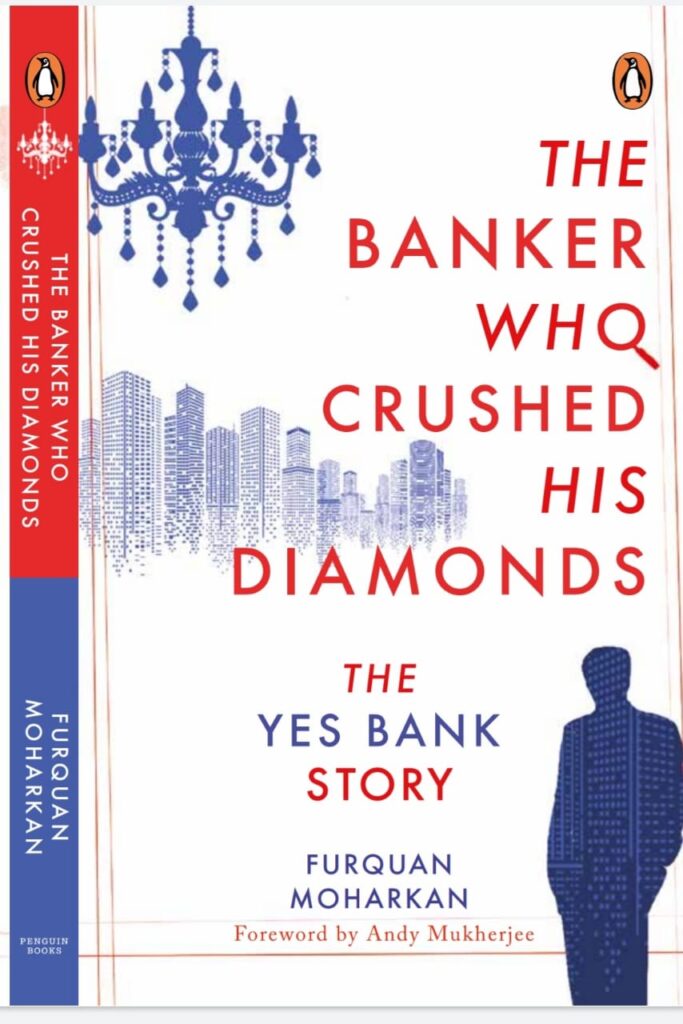
Furquan Moharkan’s financial thriller ‘The Banker Who Crushed His Diamonds: The YES Bank Story‘, is all set to be adapted for screen. Published by Penguin Random House India earlier this year, the story uncovers the deep rot set in YES Bank’s glittering success story.
The crisp page-turner will now be adapted for screen, and according to a press release, the publishing house has already closed a deal with Almighty Motion Picture for the rights.
The book charts the trajectory of the bank, from its inception to its dramatic rise and meteoric downfall. It also entails the story of the people behind one of the biggest banking failures in Indian history.
About the recent developments, Moharkan said in a statement: “I am really excited. A scam of this magnitude has to be taken to masses, and what better than a book getting made into an AV form. We have also seen growing interest in financial thrillers in the country, which I hope would lead to success of The Banker... This will also help a lot in making the masses financially more literate.”
Almighty Motion Picture launched in 2020 with a web series on MX Player. Headquartered in Mumbai, it is headed by actor turned entrepreneur Prabhleen Kaur Sandhu.
“We have always craved for good content and when I came to know about The Banker Who Crushed his Diamonds by Furquan Moharkan, it did not take me another thought to go for the rights to be adapted on screen,” she said.
source: http://www.indianexpress.com / The Indian Express / Home> Books and Literature / by Lifestyle Desk , New Delhi / April 12th, 2021
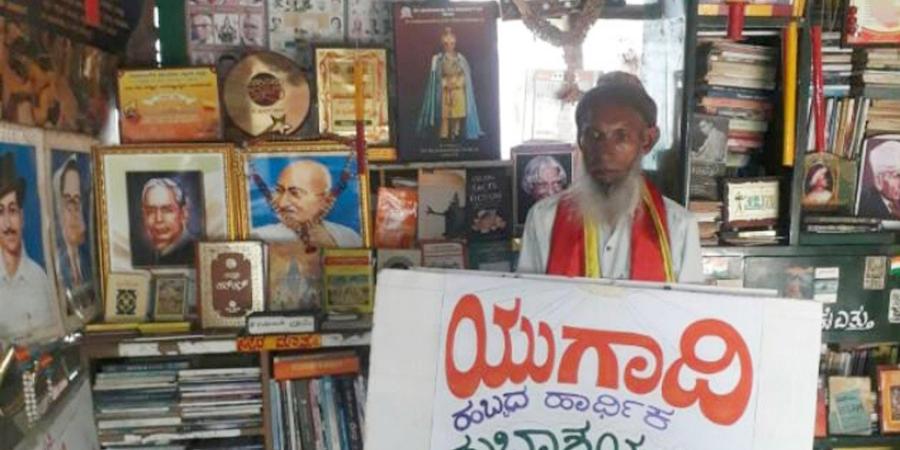
Syed Isaaq in front of a portion of the library (Photo | EPS)
Syed Issaq, a daily wage worker, had collected more than 11,000 books for his library, 85% of books were in Kannada.
Mysuru :
In a tragic incident, miscreants have allegedly set ablaze a public library run by a 62-year-old daily wage labourer that had a collection of 11,000 books including three thousand copies of Bhagavad Gita, in Mysuru on Friday.
Syed Isaaq had become a popular face among the residents of Rajiv Nagar and Shanti Nagar in the city as he took up a bold step of setting up a library giving free access to all the residents in the region for the last 10 years.
Deprived of education, Isaaq worked as a bonded labourer before turning into an Under Ground Drainage (UGD) cleaner and did odd jobs to earn a livelihood.
“At 4 am, a man residing next to the library informed me that there was a fire inside. When I rushed to the library which is just a stone’s throw away distance, I could only see them being reduced to ashes,” said Isaaq in teary eyes.
With an intent to help inculcate reading habits among the people and also encourage them to learn Kannada, Isaaq had set up this public library in a shed-like structure inside a corporation park in Rajiv Nagar second stage near Ammar Masjid. Every day, over 100-150 people would visit his library. Issaq would purchase over 17 newspapers including the ones in Kannada, English, Urdu and Tamil.
Nearly 85% of the books in his library collection were Kannada while several were English and Urdu. “The library had over 3,000 exquisite collections of Bhagavad Gita, over a 1,000 copies of Quran and Bible besides thousands of books of various genres which I sourced from donors,” he says.
Though he did not spend money from his pocket, he used to spend nearly Rs 6,000 for the maintenance of the library and on the purchase of newspapers.
Following this incident, Issaq approached the Udayagiri police station and lodged a complaint against the miscreants. Police have filed an FIR under the IPC section 436 and have launched an operation to nab the culprits.
However, the incident has not deterred Issaq. “I will not cow down. I will rebuild the library from the scratch”.
“I was deprived of education and I want to ensure that others should not face my plight. I want people to learn, read and speak Kannada and will rebuild it again,” he said.
source: http://www.newindianexpress.com / The New Indian Express / Home> States> Karnataka / by Karthik KK , Express News Service / Myuru – April 09th, 2021
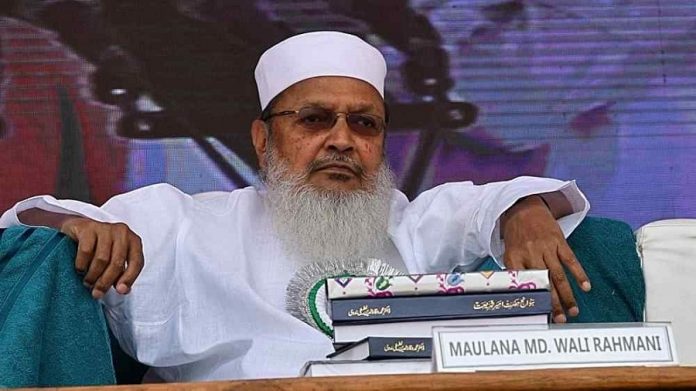
Maulana Wali Rahmani | Photo Courtesy: Clarion India
What set Maulana Wali Rahmani, an Indian Sunni Islamic Scholar, academician and founder of Rahmani30, apart was his efforts towards the promotion of education among Muslim youth. Although Rahmani was a multi-lingual man, he had evident love for the Urdu language. In February this year, he launched a campaign for education among the Muslim community and promotion of the Urdu language.
The well-known torchbearer of India’s Muslim community, who strove to work for the promotion of education, Maulana Mohammad Wali Rahmani would have turned 78-years-old on June 5 this year. On April 3, Maulana Wali Rahmani breathed his last at a Patna hospital after a brief illness and other complications.
Such was his repute and respect among the community that he had 8.5 lakh followers who took the oath of allegiance to him as “Sajjada Nashin” of Khanqah Rahmani in Munger in the Indian state of Bihar. Rahmani became “Sajjada Nashin” of Khanqah Rahmani, Munger in 1991 after the death of his father Sayyid Minatullah Rahmani. At present, Rahmani was the Secretary-General of All India Muslim Personal Law Board (AIMPLB). He was Ameer-e-Shariat, or the head, of the renowned religious organization Imarat-e-Shariah of Bihar, Jharkhand and Odisha. However, what set him apart was his endeavour in the field of education. His organization, Rahmani30, founded in 2008, was his gift to the Muslim community of Bihar, and the country.
Had there been no Rahmani30, hundreds of students might not have heard about him and many poor Muslim students could not have realized the dream of making it to India’s top engineering institutes; the IITs or the Indian Institute of Technology.
The Rahmani30 has since then expanded to NEET or the National Eligibility cum Entrance Test for medical education. Top accountancy and Law entrance tests have also been included now.
Rahmani30 is modelled on Super30 founded by famous mathematics teacher Anand Kumar of Bihar who started selecting 30 poor students and grooms them for IITs. Super30 was a big success. So is Rahmani30. Since its inception, Rahmani30 had the services of Bihar senior police officer Abhayanand, who retired as DGP Bihar. Every year test exams are held for the selection of Rahmani30 and the selected candidates are provided with free residential coaching with food.
Maulana Wali Rahmani was a political personality. His proximity with political leaders got him brickbats too. He was elected to the Bihar Legislative Council on April 7, 1974, and continued till 1996. In 1984 and 1990 he was elected as deputy chairman of Bihar Legislative Council. He was criticized after his (in)famous Deen Bachao Desh Bachao (Save Islam, Save Country) rally at Patna in 2018. Just after the rally, one of its organizers were declared as the candidate from Nitish Kumar’s party for the Bihar Legislative Council. Maulana Rahmani was accused of compromising with Nitish for ‘a seat in Bihar council.’
He, however, was also praised for his bold statements before the top political leaders when the issues related to the Muslim community were discussed.
His birthplace Khanqah Rahmani is a well-known religious place that was founded in 1909 by his grandfather Maulana Mohammad Ali Mungeri, who was a co-founder of Nadwatul Ulema, Lucknow. Maulana Wali Rahmani’s father Maulana Minatullah Rahmani was also a renowned religious scholar who also held the post of General Secretary in All India Muslim Personal Law Board.
Maulana Rahmani got his initial education at Rahmania Urdu School, Jamia Rahmani in Munger, Bihar and then proceeded to Nadwatul Ulema and Darul Uloom Deoband. He also studied at Bhagalpur University which is now known as Tilka Manjhi Bhagalpur University in Bihar.
At the age of 22, Maulana Rahmani joined ‘Naqeeb’, a weekly published by Imarat-e-Shariah. He also served at Jamia Rahmani.
In 1991, following the demise of his father, he was made Sajjada Nashin of Khanqah Rahmani.
He was made Ameer-e-Shariat at Imarat-e-Shariah in November 2015 and held the post till his last breath. Here too, Maulana Rahmani’s focus was on education. He also worked for the better medical facility at Sajjad Memorial Hospital being run by Imarat-e-Shariah.
Although Maulana Rahmani was a multi-lingual man, he had evident love for the Urdu language. In February this year, he launched a campaign for education among the Muslim community and promotion of the Urdu language.
He also campaigned for the upliftment of the Madrasas.
His biography Hayat-e-Wali penned by Shah Imran Hasan states, “Maulana’s untiring efforts and timely steps to save the country’s Madrasas are worth mentioning. He met several dignitaries, including the then Prime Minister Atal Behari Vajpayee and presented before him the case of Madrasas in the context of their roles in the country’s freedom struggle and nation-building.”
Maulana Rahmani was a man who loved to make friends in other Muslim organizations too. He kept Maulana Rizwan Ahmad Islahi, the young Ameer-e-Halqa (Bihar chief) very close to him. Maulana Rizwan recalls that when representatives of Muslim organizations went to meet Bihar Chief Minister Nitish Kumar, everybody wanted Maulana Rahmani to talk to him but he proposed his name (Maulana Rizwan’s). “Such was his generosity,” he said.
Maulana Rahmani will be missed at many places, including at AIMPLB and Imarat-e-Shariah. However, his absence would be felt most at Rahmani30. The passing away of Rahmani poses a challenge for both Imarat-e-Shariah and Rahmani30 to take his dream further.
source: http://www.twocircles.net / TwoCircles.net / Home> Lead Story / by Sami Ahmad, TwoCircles.net / April 05th, 2021
Well known educationist, intellectual, thinker and author of several books, Professor Anees Chishti has passed away in Pune at the age of 79. He was unsung hero of the community who made tremendous contributions in the progress of the community in the country. He will be also remembered for his dawha works as he translated Islamic literature into local Marathi language. He was a close confidant of late Maulana Abul al Hasan Nadvi who launched All India Tahreek e payam e insaaniyat with an aim to dispel misunderstandings about Islam. Chisty was one the pillars of this movement.
According to Anees Chishti’s family, he first suffered a heart attack and then later normal infected by COVID-19. During his treatment at Azam campus Unani hospital Pune He took his last breath and was buried on Monday, April 5, after Isha prayers at Muhammad Jamia Hussaini Masjid in the city.
As news of his demise spread, condolence messages flooded on social media. Many important personalities expressed their grief and sorrow who acknowledged the scholarly and social services of Anees Chishti.
Chisti was born on February 6, 1943 in Pune. His father Shakeel Ahmad was a freedom fighter. He was educated in Pune and Sholapur. Pune is considered the brain of Brahminical forces.
Expressing condolences on the demise of Anish Chishti, PA Inamdar administrator of Azam Campus Pune, said his demise is a great loss to the nation. He said that Anees Chishti was recognized as an authority in Islamic studies and science and literature.
Munawar Pir Bhai from Pune termed the demise of Anis Chishti as a great loss of the society and said that he was a very capable and intelligent person. Traveled to many countries, he had a keen eye on Islam and Allama iqbal. And he described the death of Anis Chishti as his personal loss.
Talha, nephew of Anees Chishti, said that after the death of Maulana Wali Rahmani, he had gone to Lucknow to meet Maulana Rabi Hasni Nadvi.
After returning from the trip, his health deteriorated and on April 5, at around 5.30 pm, he passed away. The personality of Anees Chishti was a person with various attributes. He was a member of the Majlis-e-Shura of Darul Uloom Nadwa tul Ulema, Lucknow and member of the, All India Muslim Personal Law Board.
He was very close to Maulana Syed Abul Hassan Ali Nadvi, a thinker of Islam, and he was the General Secretary of the All India Tahreek e payam e insaaniyat. The movement was launched in the backdrop of Babri masjid dispute which had been used by the communal forces to spread lies about Muslims and Islam in the country.
He was the author of many Urdu, Marathi and English books. His books have been translated into various languages. He was a connoisseur of calligraphy, a teacher of calligraphy, an Islamic scholar, and an educator. Apart from Urdu, many of his books have been published in Marathi.
Mirza Abdul Qayyum Nadvi, a bookseller and activist from Aurangabad, said that he had spoken to Anis Chishti two days before his death. More than 53 of his books have been published. Anis Chishti was fluent in many languages. These included Urdu, Marathi, Hindi, English, Arabic, Persian and other languages. He was a very good man, a man of knowledge, a good teacher, a good writer, a credible writer, an eloquent speaker, a guest lecturer on the panel of high-ranking training institutes. He has received numerous accolades for his books on education, and books on Muslim freedom fighters .and other books. In many countries, his Urdu and English language books are included in the Syllabus.
He trained soldiers at the Indian Institute of Education, College of Military Engineering Pune. He has delivered sermons and lectures on Islamic and scientific and literary topics in different parts of the country. He is survived by a daughter and four brothers. Arguably, his demise made the community further poorer as it was in the shocked after Muslim Personal Law Board General Secretary Maulana Mohammad Wali Rahmani in Patna just two days before.
source: http://www.muslimmirror.com / Muslim Mirror / Home> Indian Muslim / by Abdul Bari Masoud / April 07th, 2021