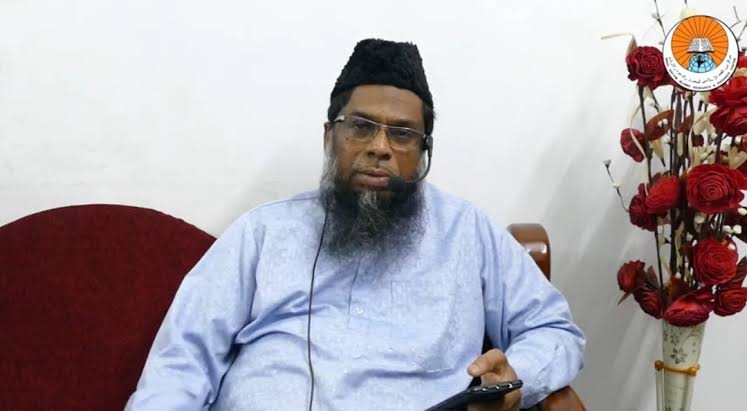
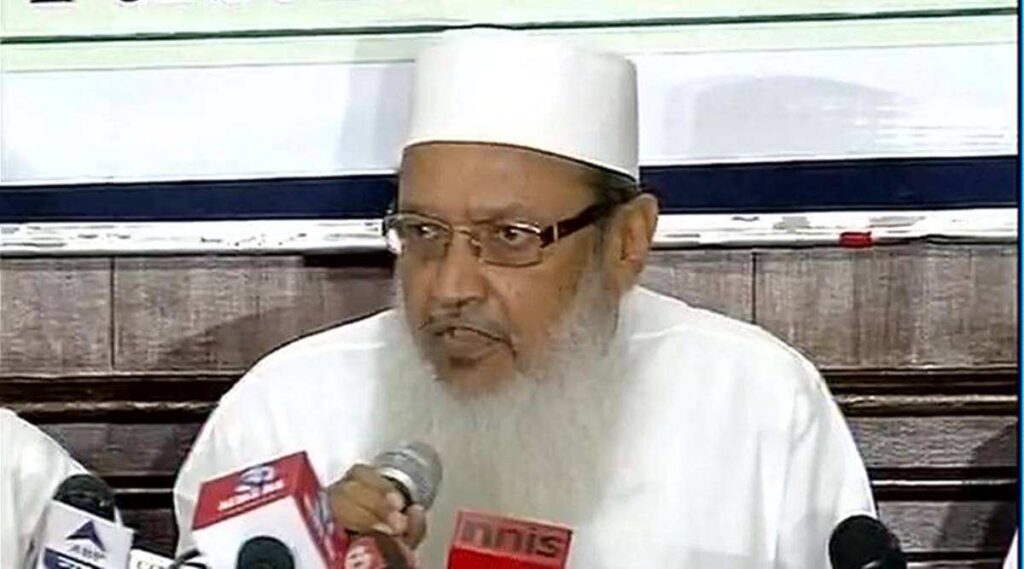
Renowned Islamic Scholar Dr R K Noor Muhammad Umari Madani passed away Sunday morning due to COVID-19. He was a scholar of hadith and an author of numerous books.
Shaikh Dr R K Noor Muhammad was born in Pallikonda, Vellore District in Tamil Nadu. He Completed his Alim Fazil course from Jamia Darussalam, BA (Adeeb Fazil) from Madras University in 1985. In 1991, he did his BA in Hadith from the Islamic University of Madinah and completed his MA in Hadith in 1996 and obtained his PhD in 2002 from the same university. A meritorious student, Shaikh Dr R K Noor Muhammad was awarded a Gold Medal from Madinah University.
Shaikh Dr R K Noor Muhammad was the All India General Secretary, Jamiat Ahle Hadees Hind and President, Jamiat Ahle Hadees Tamil Nadu & Puducherry and Vice President of Ibnul Qayyim Islamic Research & Guidance Centre (IRGC) in Chennai.
The Shaikh presented Islamic programs for many years on Peace TV Urdu, Studio Islam and other TV channels and Dawah organisations.
His thesis on the fatwa of the first four Khalifahs was published by Darussalam under the title, ‘Aqdhiyah Tul Khulafa-er-Rashideen’, Khalid Paulraj reported.
Loss to the entire Ummah
The All India Da’wah Centres Association (AIDCA) in a statement said that the demise of Shaikh Dr R K Noor Muhammad is a loss to the entire Ummah. “We have lost a knowledgeable personality who was revered by one and all because of his knowledge, simplicity and steadfastness,” the statement read.
“The Shaikh had championed the cause of Da’wah and his long association with Da’wah Centres and Da’ees is well known in the Da’wah Field.
Shaikh’s guidance to the Scholars and Da’ees has left a long-lasting impact and benefitted the masses through the initiates taken up as a consequence of Shaikh’s encouragement.
Shaikh’s demise has left a void which we hope Allah (SWT) helps the ummah in finding a worthy heir to his legacy & may Allah help us all endure this loss, Aameen. We pray to Allah (SWT) for the Shaikh’s maghfirah and forgiveness of his shortcomings, May Allah grant him Jannat-ul-Firdaus, aameen, and we stand by Shaikh’s family, students and all those pained at this difficult time,” the statement added.
source: http://www.thecongnate.com / The Cognate / Home> News / by The Cognate News Desk / March 21st, 2021
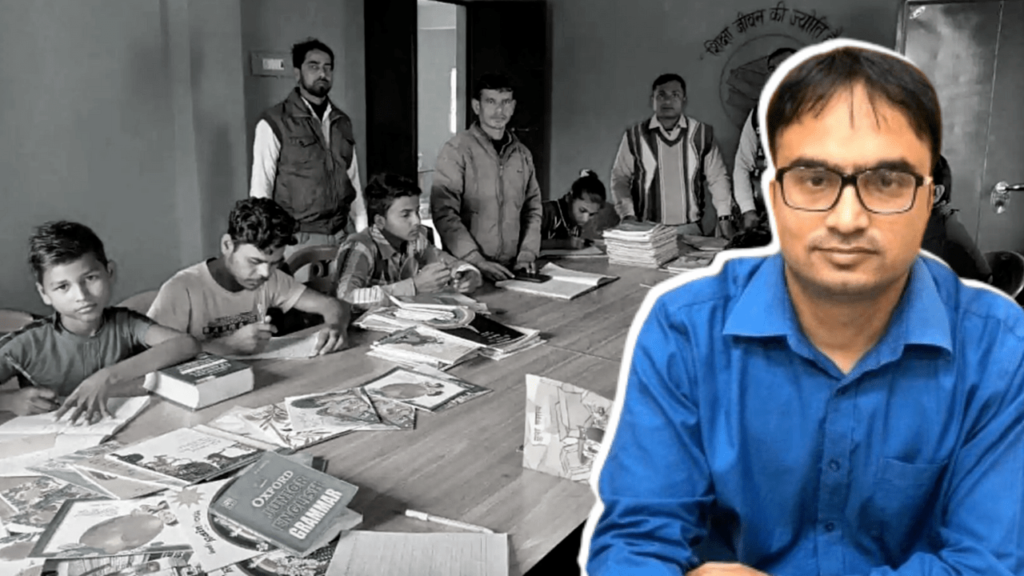
Faiz Aquil Ahmed Mumtaz, District Magistrate of Jamtara in Jharkhand, has triggered what could be called a ‘library movement’ in the infamous ‘phishing capital of India’. He has successfully renovated 118 dilapidated government buildings and converted them into public libraries in the past five months.
He has inaugurated around 100 of them and the remaining ones are likely to be opened soon.
Faiz believes that this initiative would positively change the identity of the Jamtara district.
It is said that the majority of online fraud calls received by people across the country emanate from Jamtara. Many youth, mostly drop-outs in the 15-35 years age group, have been turning to cybercrime to make a few quick bucks.
“With people using digital platforms more often than before, cybercrime incidences are only going to increase. In pursuit of easy money, youth were found resorting to online fraud. We need to divert them into studies,” Faiz says.
“Now the students don’t need to go to Patna or Delhi to prepare for competitive exams. They can remain in the villages and do that. People from lower class and lower middle class cannot afford coaching and so they give up hope,” he adds, explaining the significance of the initiative.
Faiz is an alumnus of Jamia Millia Islamia’s Residential Coaching Academy and had cleared civil service examinations, obtaining the 17th rank in 2014.
source: http://www.thecongnate.com / The Cognate / Home> News / by Rushda Fatima Khan / March 06th, 2021
The Urdu writer was chosen for his work Fakr-E-Watan
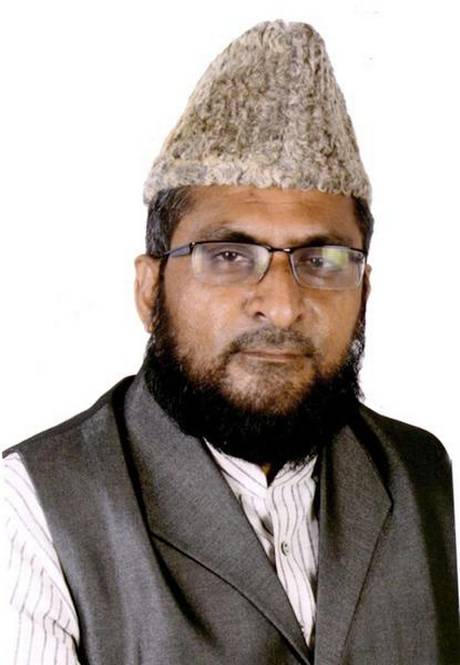
Shikaripur-based Urdu writer Hafiz Karnataki has been chosen for Sahitya Akademi’s Bal Sahitya Puraskar of 2020. He received the award for his book Fakr-E-Watan, a work on freedom fighters of India.
Mr. Karnataki, 57, began his literary career as a poet in the 1980s and later turned towards writing for children. So far, he has brought out 94 books. He has translated many vacahanas of Basavanna and Akkamahadevi and writings of Kuvempu into Urdu.
Born into a family of teachers, he developed an interest in literature at a young age. He became a teacher at a government primary school in 1987 and worked at different places before resigning from the job in 2006.
Now he looks after his educational institution, which provides education to 3,000 girls at Shikaripura. He also worked as chairman of Karnataka Urdu Academy. A couple of students have done PhDs on his literature. Considering his contribution to the field of literature, Gulbarga University honoured him with an honorary doctorate in 2013.
After the Sahitya Akademi announced the award on Friday, he received calls from different parts of the country congratulating him. “I am getting congratulatory messages from many people. First among those called me were the scholars who did study my literature for PhD,” he told The Hindu on the phone.
Mr. Karnataki wants to hit a century by bringing out six more books soon, as he has already published 94 works. “Children of the present generation are more intelligent than me. I wish to write for them on values they have to inculcate at a young age,” he said. The award carries a cash prize of ₹50,000, besides a memento.
source: http://www.thehindu.com / The Hindu / Home> News> States> Karnataka / by Special Correspondent / Hassan – March 14th, 2021
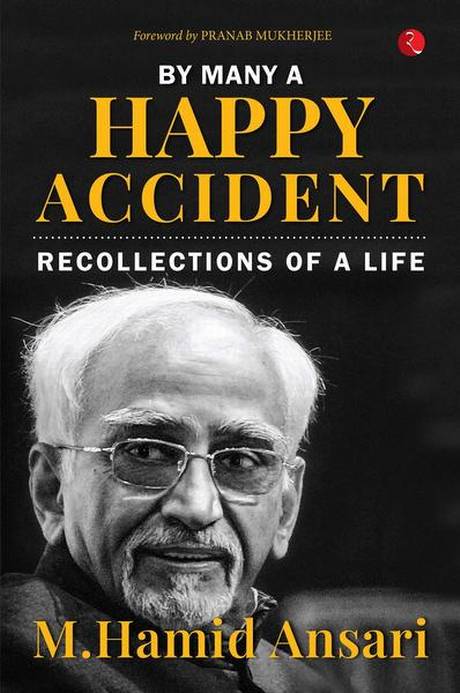
In his autobiography, Hamid Ansari, Vice-President for two terms, brings to the fore the predicament of Indian Muslims, who still live in the shadow of Partition
The Indian republic has had 13 vice-presidents since 1952 and only two, Dr. S. Radhakrishnan and Hamid Ansari, got two terms in office. Therefore, it would be natural and tempting to focus on Ansari’s vice-presidential years, but it needs to be kept in mind that the post of Vice-President is essentially an inconsequential office in terms of power and authority; to the extent, the Vice-President also doubles up as the chairman of the Rajya Sabha does allow the incumbent some wiggle room, but that too can be misleading. Of the 13 men, only one, Bhairon Singh Shekhawat, had some political heft but he too was to discover that parliamentary conventions and politicians’ conveniences ensure that a party man gets cordoned off from the power vortex.
Civility and grace
The other hat Ansari wore for many years was that of an Indian diplomat. He was a competent, loyal foot-soldier and at his joyful best when crossing swords with Pakistani counterparts at global forums. It would perhaps be most rewarding to read the book as the reflections of a nationalist Indian Muslim.
Ansari acquaints readers with a different generation that valued civility, grace, erudition, and took pride in its love for scholarship, language and poetry.
He anchors himself firmly in the nationalist milieu; early in the book we are informed that his father spurned Mohammed Ali Jinnah’s invitation, on the eve of August 14, 1947, to all senior Muslim officers to proceed to Pakistan. The senior Ansari expressed his inability “to change my country.” The Ansari family was only one of the two at the senior level to stay back in India. A choice was made: India was home.
Modernist at heart
This confidence in the new, free India was justified when Ansari made it to the elite Indian Foreign Service. A meritocracy was at work. The new arrangements were fair, in letter and spirit, and being a Muslim attracted no discrimination nor endowed any advantage.
He locates himself unapologetically in the modernist milieu. He fell for — then married — a young “cigarette-smoking and sherry-sipping” woman. He did not defer to traditionalists and conservatives. There is not an obscurantist bone in this doubly cosmopolitan man, who is just as much at ease in any western environs as he is well-versed in the civilisational richness of the global Islamic world.
Consequently, he never allowed himself to get inveigled in the intrigues and pettiness that soon came to define the Muslim political crowd, especially when Muslim leaders and the masses got entangled with the exigencies of electoral politics. Nor was he unobservant of the unhealthy tendencies creeping upon Muslim society and its institutions.
For precisely this reason his reflections on the state of the Indian Muslims command our attention and respect.
Ansari acknowledges that from the very beginning the Indian Muslims have lived under “a shadow of physical and psychological insecurity” because they were made “to carry, unfairly, the burden of political events and compromises that resulted from the Partition.” And, as the Sachar Committee Report would record, they remain on “the margins of structures of political, economic and social relevance.”
Islam and nationalism
Given our own constitutional commitments, Ansari wants to underline “the imperative to recognise pluralism and secularism as the normative principles of politics” along with “an unflinching adherence to principles of equality and equal treatment.”
He is not reticent about reflecting on the unresolved and unsettled equation between Islam and nationalism. A ‘successful synthesis of Islam and nationalism’ is very much feasible, because, as he argues, invoking Maulana Abdul Kalam Azad, “…nationality is not synonymous with religious community since the two are in the shape of concentric circles that do not collide…”
Nor, for him, is there any fundamental incompatibility between Islam and democracy in the Asian Muslim world.
Yet, as he puts it, there is global dimension to the followers of Islam. The Muslim communities all over, including India, do subscribe “to an emotional bond of ‘Muslim-ness.’ The sentiment is amorphous as well as real; it is usually taken for granted but gets evoked at times of stress when protection physical or emotional, is perceived to be required.”
Ansari also tackles the ticklish issue of the majority-minorities syndrome in a democratic society. He argues for a need to move beyond ‘assimilation’ and ‘tolerance’. Both are inadequate from the minority perspective. While ‘tolerance’ does prohibit discrimination, it does not endorse diversity, and, therefore, leaves room for the problematic ‘other.’ And, of course, ‘assimilation’ simply boils down to absorption of the minority personality in the larger, majority crowd.
He comes across as a rare breed in these vulgar times. Instead of stridency, Ansari contextualises the many ‘accidents’ of his life with subtlety and sensitivity. With enormous reasonableness he enjoins us to ponder on the matrix of ‘accommodation’ and ‘acceptance’ intersecting with temptations of majoritarian politics. Perhaps it is this very gentleness in reminding us of our obligations to the social contract inherent in the Constitution that Prime Minister Narendra Modi mocked on the occasion of Hamid Ansari’s last day as Chairman of the Rajya Sabha. Neither leopard is willing to change his spots.
By Many a Happy Accident: Recollections of a Life; M. Hamid Ansari, Rupa, ₹595.
The reviewer is a senior journalist based in Delhi.
source: http://www.thehindu.com / The Hindu / Home> Books> Reviews / by Harish Khare / March 13th, 2021
Bengaluru’s zero-waste advocate Sahar Mansoor has brought out a guide book that provides personal insights and interactive activities to help the reader transition to a more sustainable lifestyle.
Sahar Mansoor
Bengaluru :
Health and environmental issues have come to the fore in the last one year. With increasing number of people becoming conscious about their choices, the recently-released book, Bare Necessities: How to Live a Zero-Waste Life, by Sahar Mansoor and Tim de Ridder aims to provide personal insights, interactive activities and solutions that can help you transition to a more sustainable lifestyle.
”The book has taken a staged approach where the reader journeys through topics that are intimate such as personal care routines and fashion choices, to more communal areas of life such as the kitchen, home care and festival occasions. It also looks at broad aspects of life, including the community and global impacts of waste. One of the fantastic things that we have achieved is to provide a toolkit of zero-waste information and insights throughout, such as my personal stories about how to make zero-waste products such as toothpaste and food such as holige,” says Mansoor.
Published by Penguin, the guide (Rs 299) includes activity sheets to share ideas with friends and families throughout the text. “We have provided recipes, tips and tricks and other ideas to help people learn, and enjoy the zero-waste journey,” says Mansoor, who has been working in the sustainability sector since 2015, participating in areas like waste reduction and climate change.
Ridder and she began putting pen to paper in September 2019. “Unfortunately he had to work abroad from October to January last year. We had to face challenges such as scheduling meetings across time zones.
When the borders were closed in March 2020, he stayed permanently in Australia,” she says. The situation also provided them a new perspective, and prompted them to add valuable sections in the final version. “We would love the book to be used in schools, where kids can learn about the wealth of resources available in India. There are opportunities to learn how to compost, create a community garden and make sustainable gifts,” says Mansoor.
source: http://www.newindianexpress.com / The New Indian Express / Home> Cities> Bengaluru / by Express News Service / March 09th, 2021
Granddaughter of India’s greatest Urdu poet pens a poignant tribute to her late grandfather
“And He was transfigured before them; and His face shone like the sun, and His garments became as white as light.”— Matthews 17:2-9
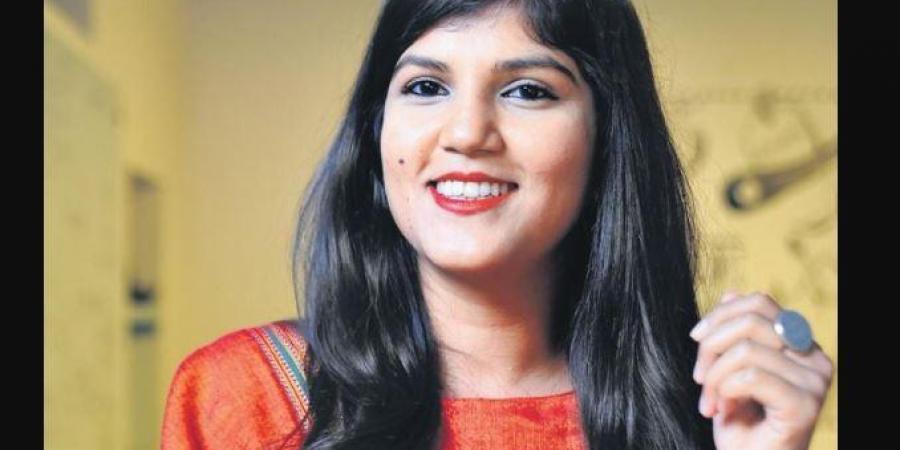
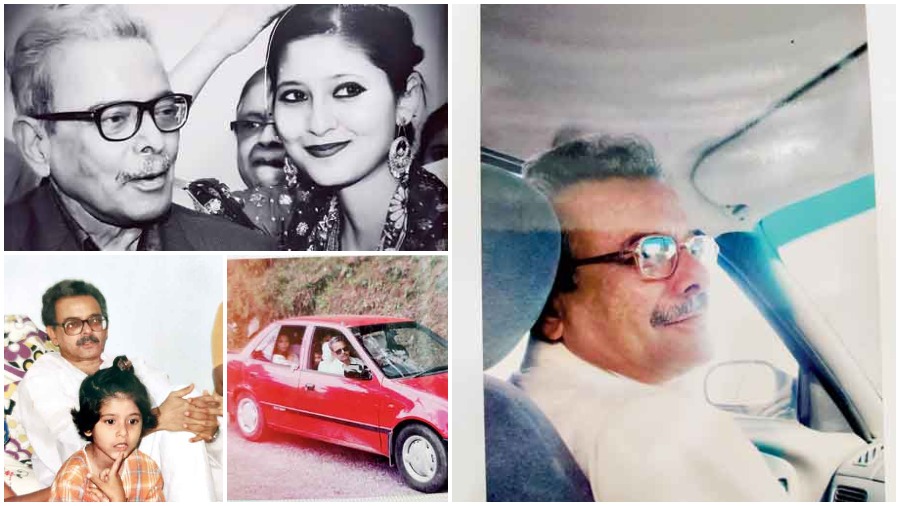
My family keeps trying to talk me into mourning the loss of my grandfather, who I lovingly call ‘Bhai’, as did everybody else who knew him. I can’t exactly put this into words and I can’t make people understand that mourning his death is an insult to the madness, the magic, the man, the movement, the miracle, the marvel, the Master. Why don’t you understand that this loss isn’t the kind for me to cry about? This is the kind of loss for me to die about.
When I was a kid, I used to love watching The Lion King. I like to believe that literature and media that you absorb during childhood, shapes your personality as an adult. I always made sure I skipped the scene of Mufasa’s death, with a bewildered and heart-broken Simba trying to wake his father up. It was because I always feared that this day would come, and I would see myself trying to awaken Bhai from eternal, unending sleep. And it did, it happened. And now I am here, and he is there — out there, up there. He is missing from me.
Are they still memories if they’re engraved in my heart, etched on my mind and tattooed on my skin? I like to believe they’re a part of me, my body, an extension to my entity, and as long as I shall live so shall they. So many people argue that he wasn’t my father. They’re right. Because to me, he is God. He is the giver, the provider, creator, the all-encompassing, the all-knowing, the omnipresent.
Provider, because he gave me everything I have and survive on, from my passion and love for animals to my affinity towards literature, music, art. We would stand inside his aviary, enough to accommodate two human beings, where he kept his birds. He would clean and wash their water bowls with his beautiful, wrinkly, holy hands and then he would pick up a bird in the palm of his hands — sometimes a cockatiel, sometimes a budgie, sometimes a quail — and show me, directing my gaze with his finger, the feather patterns, and beak shapes, explaining how a certain type of bird crushes the seed with which exact part of its beak. All-knowing, because he knew everything, quite literally. Anything and everything.
Driving home from a homeopathic clinic, we would have long conversations about The Battle of Karbala, and pretty much every historic event that ever occurred on the face of this planet. We talked about the possibilities of the existence of mermaids — how perhaps, in the course of evolution, a third of the primate population went towards the water and even into it, and developed webbed limbs and tails. We talked about the Fer-De-Lance, we sat and browsed through pictures of wildlife. We discussed dog breeds and how they evolved. He always told me (before the world went ‘vocal for local’) that nothing can beat the hounds of India — the Rajapalayam, The Chippiparai, The Rampur, and the Mudhol. He always had an eye out for the Saluki (a superior type of sighthound that originated in the Fertile Crescent), and would say to me, “Abey Saluki hai kya kahin pe? Saluki mile kahin toh batana, hum le lenge.”
On his birthday in 2019, I had gifted him a deep grey, white-speckled Cockatiel who he named Sooty. He stayed in Bhai’s room, and the two whistled to each other all day. Bhai would talk to him lovingly, and Sooty would chirp back in adoration. When Bhai got sick, Sooty mysteriously died. I had begun to believe that like Bhai’s previous dogs and other pets, Sooty too had died of loyalty in an attempt to take the impending death upon himself. Bhai always believed that wafadaar jaanwar aane wali museebat ko apne sar le lete hain. While it is unlike me — and everyone else in my family — to respond to the death of an animal, that too a beloved pet, with gladness and optimism, Sooty’s sudden passing had given us some hope. We were counting on life to make Bhai get better and to help us get through this untimely qayamat.
Grandfather — this word always gave me the same serotonin release you get from a warm blanket, a cup of hot chocolate, biting through the layers of a Ferrero Rocher, the morning of the day of Id, seeing my birthday cake for the first time.
And now it’s all gone, all taken away away from me. It is so ironic and at the same time baffling how our worst fears manifest right before our eyes. I didn’t allow myself to watch enough of The Lion King growing up because I was afraid if I looked at it then it would somehow happen. And now I see how everything unfolded just like it did in the movie. Covid attacked us like Uncle Scar. And while all of us got Covid, he somehow took it upon himself and while we lived, he left.
My animals in Delhi found me, picked me up, and saved my life, just like Timon and Pumba did with orphaned Simba in The Lion King. I think I have managed to figure out where this affinity comes from and why it has always been this way — the need to be around animals in order to survive. It was just another gift, another tool, another strength my Grandfather was equipping me with and conditioning me for, so that I may be able to carry on someday in his absence, and so that I have a purpose, a reason to live till the time he and I can finally reunite.
Only mourning him isn’t enough, isn’t fair, isn’t needed. His existence was a celebration of life, a creation of art, and his death was transfiguration. He didn’t just lay there still. He sublimated, became one with what he loved most, nature. He united with a power that was of the same immense magnitude that only he alone in this world was made of. If one should live, one should live like this. Not in the lap of luxury but in the embrace of nature. Not in bursts of passion, but in the steadiness of an unwavering purpose. Not for moments of moping, but for the unfazed ambition of the human spirit.
Lead my longing heart
To the high ground, to the clear view
And in awe I’ll be there
Beholding You…
source: http://www.telegraphindia.com / The Telegraph Online / Home> Culture / by Tazmeen Amna Siddiqui / March 04th, 2021
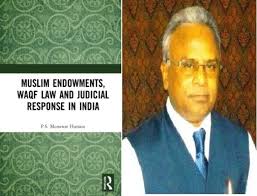
The book “Muslim Endowments Waqf Law and Judicial Response in India” authored by Dr. P.S. Munawar Hussain is making waves as renowned publisher Routledge from London and New York have published its international edition in December 2020. The book has found its place in around 70 libraries of universities and colleges of different countries around the world.
The author is a Joint Registrar of Maulana Azad National Urdu University, Hyderabad who has expertise in waqf affairs. India boasts of more than 6 lakh waqf properties but mostly is under adverse possession or is not used to its optimum potential.
The volume covers several jurisprudential and historical aspects of Waqf, which include Doctrines of Waqf; Essential Requisites of Waqf; Valid Objects of Waqf; Historical Account of Waqf; Emergence of Waqf Law in India; and Constitutional Validity of Waqf in India. The chapters then go on to discuss the Waqf Act 1995 and Waqf Amendment Act 2013. The legal perspectives of each Section of Waqf Act and its amendments are elucidated with references under Reflections. The case-law has been analysed and cited under each Section of Waqf Act, wherever applicable.
As per the information available on Worldcat.org, the book has found its place in around 70 libraries of universities and colleges of different countries around the world including Australia, Canada, U.K., USA, Mexico, Germany, Nigeria, Malta, etc., apart from the Gulf countries in just one month of its release.
The book will be of interest to scholars and researchers of law and legal studies. It will help practitioners of Law, the managers of Waqf Institutions and officials involved in Waqf Administration.
The Foreword is written by Justice L. Narasimha Reddy, Chairman Central Administrative Tribunal and Dr. Ausaf Sayeed, Indian Ambassador to Saudi Arabia. It is priced at 120 British Pounds.
The Publisher has placed the book in Theorising Education Series, because of its innovative work from a wide range of contexts and traditions.
source: http://www.muslimmirror.com / Muslim Mirror / Home> Featured / by Special Correspondent / February 22nd, 2021
Simone has been a student at the Uptown School in Mirdif for all of her grade school years and has managed to keep straight A’s.
Dubai:
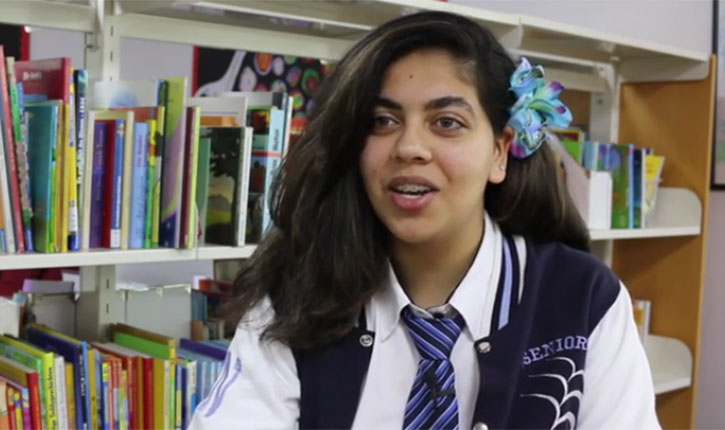
A Dubai-based Indian teen has been offered acceptance letters from seven prominent US-based universities, including Ivy League schools such as Dartmouth College and the University of Pennsylvania, the media reported on Sunday.
Other high-ranking universities, such as University of California in Berkeley, John Hopkins, Emory, George Town and George Washington University, have also offered Simone Noorali, 17, a spot, reports The Khaleej Times.
She has been a student at the Uptown School in Mirdif for all of her grade school years and has managed to keep straight A’.
“I honestly think there is no secret to being accepted into these many universities. The whole process is about discovering yourself. Everyone has something unique to offer,” she told Khaleej Times.
“While applying to universities, it forced me to look back at my life and try to figure out the reason behind everything I did. I had explained all of that eloquently to universities in my college application essays,” said Simone, who is also the head girl at her school.
Besides keeping her grades on top, Simone is also an accomplished pianist, has written a book on human trafficking in India called “The Girl in the Pink Room” that is being used for educational purposes, is part of the school’s Model UN programme.
Simone’s father, Sameer Noorali, said his daughter is a “prime example” of how students can get into prestigious universities without parents having to buy their way in.
When asked which university she would choose, Simone said her decision would be based on which varsity offers the best programme in international relations and economics.
source: http://www.ummid.com / Ummid.com / Home> Education & Career / by IANS / April 28th, 2019
“The working committee of AIMPLB passed a resolution to start a Sharia awareness webseries. It also decided to start a legal journal in the Urdu and English languages,” read a tweet from AIMPLB’s handle.
AIMPLB general secretary Syed Mohammad Wali Rahmani. (File)
The All India Muslim Personal Law Board (AIMPLB) on Monday announced that it would soon launch a legal journal in Urdu and English, and a webseries to spread awareness about Sharia and Indian laws, and explain court judgments to Muslims.
The decision was taken during a board meeting led by its president Mohd Rabey Hasani Nadvi.
“The working committee of AIMPLB passed a resolution to start a Sharia awareness webseries. It also decided to start a legal journal in the Urdu and English languages,” read a tweet from AIMPLB’s handle.
Speaking to The Indian Express , AIMPLB general secretary Syed Mohammad Wali Rahmani said the idea behind the web series was to spread awareness on legal issues for Muslims. “The series will be done in an interview-discussion format… The series will analyse high court and supreme court judgments so that common people can understand them. Not just Sharia, we will also focus on the country’s laws and judgments,” said Rahmani.
According to a statement issued by the Board, board member Asma Zehra has been tasked with preparing a blueprint for the webseries. Lawyer members like Yusuf Hatim Muchhala, Zafaryab Jilani and M R Shamshad “endorsed this suggestion, and said they will give it their time”.
Advocate M R Shamshad has been asked to prepare a plan for the legal journal in English and Urdu and “present it to the general secretary”.
In the meeting, the issue of safeguarding Waqf properties was also discussed and a campaign in this regard will be launched across the country.
“…The Waqf Act was prepared and approved after a lot of hard work. It has provisions to safeguard Waqf properties from being sold. But efforts are being made from several quarters to make changes to these provisions, which can threaten the safeguarding of Waqf properties. So, it was decided that for the safety of Waqf properties, a campaign should be launched across the country,” read the statement issued in Urdu.
The board said it was fighting cases related to Waqf properties “in its full capacity”.
source: http://www.indianexpress.com / The Indian Express / Home> India / by Express News Service, Lucknow / February 23rd, 2021
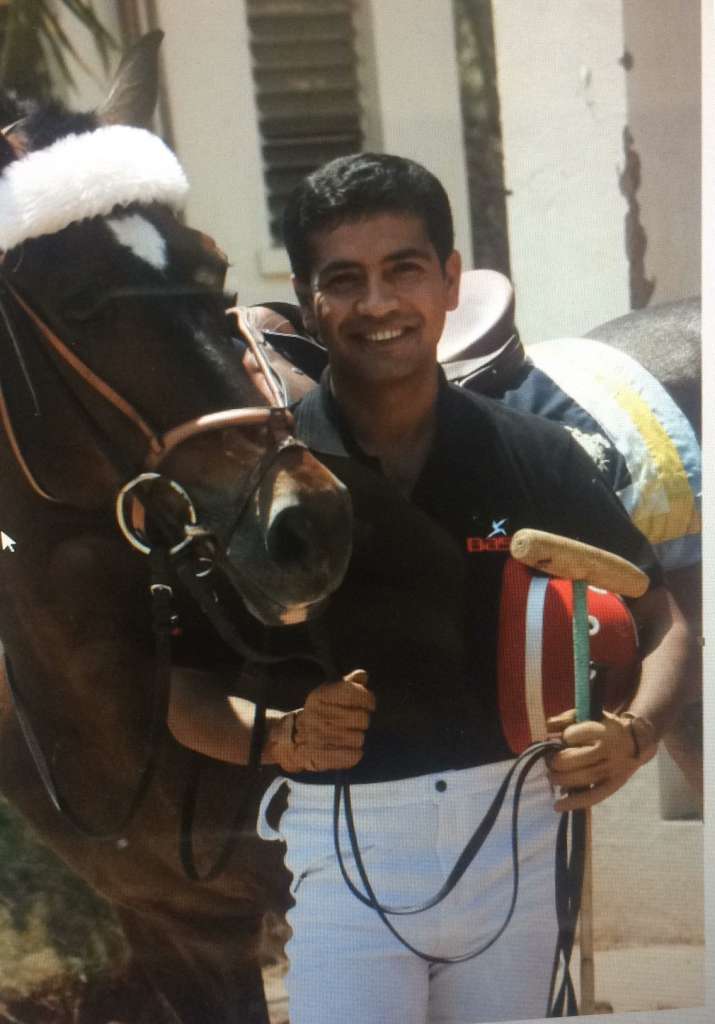
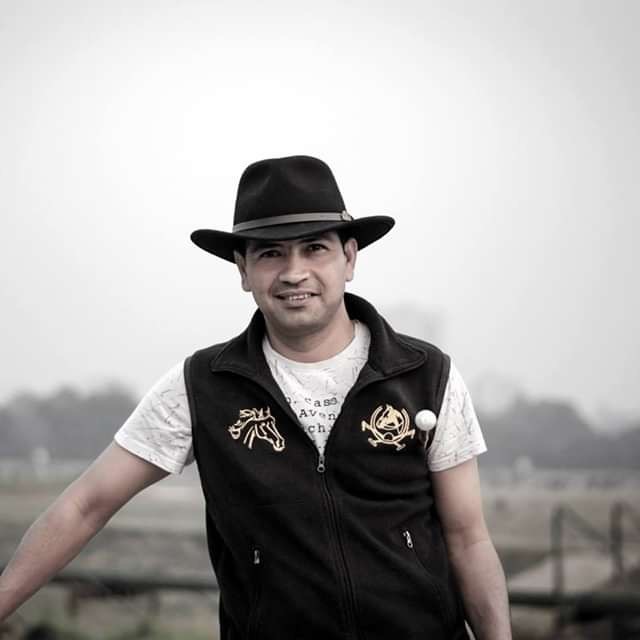
Keep Calm and Ride On! Well, take a cue from this in life. And that’s what Lt Colonel Faiz Siddiqui’s book is also all about — horses.
Keep Calm & Ride On’: Meet Lt Colonel Faiz Siddiqui, and delve deeper into the art of horse riding
In times when we keep on telling ourselves how dogs are man’s best friend, we must not forget horses. Oh wait, hold your horses…quite literally.
Lt Colonel Faiz Siddiqui, an internationally certified coach, has come out with his book: ‘Keep Calm and Ride On’. The book delves deeper into the art of horse riding, especially at a time when parents are struggling hard to move out their children from mobile screen and experience real life.
Keep Calm & Ride On!
The book emphasises the importance of horses and horse riding. Infact, it is quite a part of every institute where future leaders are trained, be it Army, IAS or IPS.
This book gives an easy and interesting insight into the world of horses and induces a desire to experience them in real life. It covers all the important aspects which a non-rider or a beginner needs to know without overwhelming him/her with avoidable and boring details.
source: http://www.indiatvnews.com / IndiaTV / Home> English News / by India TV News Desk, New Delhi / September 27th, 2019