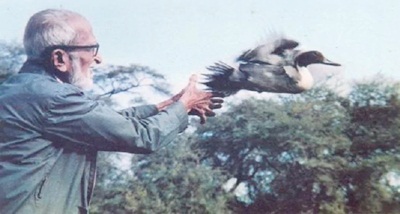
Today is the Birth Anniversary of renowned ornithologist Salim Ali. Born in Mumbai on 12th November in 1896, Sálim Moizuddin Abdul Ali was not only a bird lover but also a naturalist. He is often referred to as the ‘Birdman of India’. He was the first Indian to conduct systematic bird surveys across India and wrote several books that popularized ornithology in India. His research work is considered highly influential in the development of ornithology. He was a well-known environmental crusader who often stood for protecting the wildlife.
Salim Ali played a pivotal role in establishment of Bharatpur Bird Sanctuary (Keoladeo National Park) and prevented the destruction of what is now the Silent Valley National Park. Along with Sidney Dillon Ripley, he wrote the landmark ten-volume Handbook of the Birds of India and Pakistan, a second edition of which was completed after his death.
He was awarded the Padma Bhushan in 1958 and the Padma Vibhushan in 1976, India’s third and second highest civilian honours respectively. Besides the Padma Bhushan and the Padma Vibhushan, Ali received the Gold Medal of the British Ornithologists’ Union in 1967. He was the first non-British citizen to receive the honour.
source: http://www.newsonair.com / All India Radio (AIR), News Services Division / Home> News Highlights / November 12th, 2020
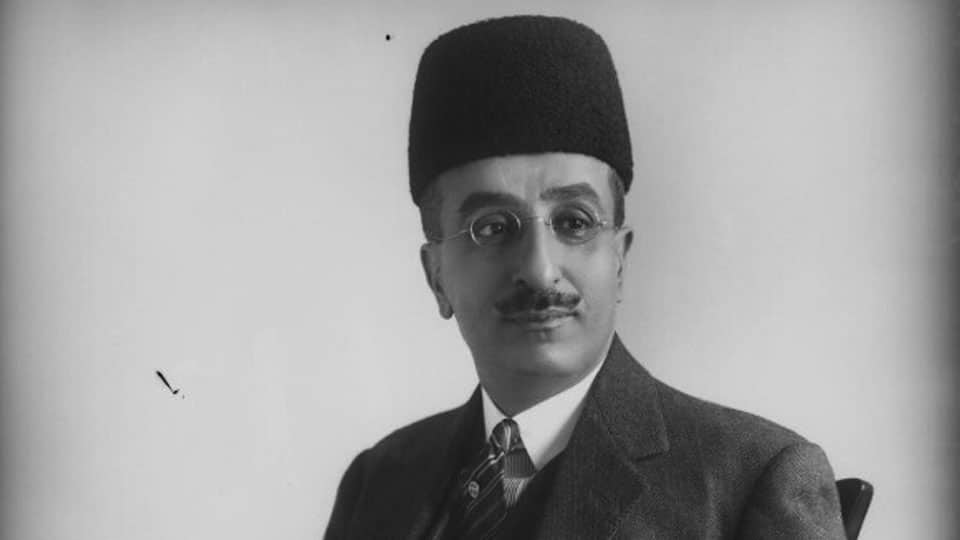
October 24th was the 137th birth anniversary of Sir Mirza Ismail, one of the Dewans of the erstwhile Mysore State who later went on to become the Dewan of the Princely States of Jaipur and Hyderabad too.
To mark this event, the Anjuman-E-Hadiqatul Adab, Mysuru, conducted a webinar that was well-received by the large number of viewers who logged in. I can say with some confidence that the Anjuman requires no introduction to most Mysureans because it is well-known for the annual Eid Milan get-together which it has been hosting over the past fifteen years to promote communal harmony and camaraderie among people of different faiths.
This event is as old as my column is because it is with my report of the first Eid Milan, which I filed for Star of Mysore, that my column was born! However, this year’s Eid Milan unfortunately could not be conducted because COVID-19 wiped out all celebrations from the entire face of this earth. Let’s all hope that things will change for the better before it is time to hold the Eid Milan next year.
Niranjan Nikam, the well-known senior journalist, who again does not need any introduction to most Mysureans, was the principal speaker at the webinar. He spoke on ‘The Unknown side of Sir Mirza Ismail,’ a topic which I suggested because I felt that by being slightly unusual, it would certainly be a crowd-puller! And Niranjan rose up to the expectations of his large virtual audience admirably well. Through some very painstakingly collected and well-curated references, Niranjan brought out many very interesting anecdotes from the life of Sir Mirza which were very noteworthy because I don’t think they are known to present day Mysureans.
Although it is understandable and expected too, that any speaker worth his salt will come well-informed and well-prepared for his talk, it quickly became evident to me that Niranjan was privy to much inside information which left me more than a little amazed. Take for instance the revelation that upon his death, the body of Sir Mirza that had already been interred was once again exhumed when there was a hue and cry from many grieving members of the public that they did not get a chance to see it and pay their last respects to their dear leader.
The body was once again displayed on a platform of sand for many more hours till late in the night and till all the people assembled there were satisfied that they had paid their homage to the man before it was interred into the grave once again. I have never heard of anything like this having happened, anywhere in the world in connection with the death of any public figure. DVG, the well-known Kannada writer, in his account about Sir Mirza has said that among the mourners was a frail old lady who was weeping bitterly saying that Sir Mirza, once while on his morning rounds, in response to her humble plea summoned one of the municipal engineers and ordered him to immediately provide a water tap to the street she lived in!
R.K. Narayan, the famous writer says in his autobiography, ‘My Days’ on page 138 that when his writing was not very paying, with him having got just 40 pounds for his book ‘The Dark Room’, it was Sir Mirza who got him a free railway pass and a government grant and commissioned him to write his book on Mysore, which Narayan was keen on writing.
As Niranjan’s talk progressed, the pieces of a most interesting jigsaw puzzle began to fall in place one by one. Niranjan revealed that his wife Pamela and he were associated for over ten months with the production of a book on Agha Aly Asker, the paternal grandfather of Sir Mirza, written by Sir Mirza’s very charming and graceful nephew Maj. Mohammed Mirza’s wife Syeda Mirza who stays in Bengaluru. The book which the speaker had brought with him, says that Sir Mirza who shared a very close working association and more significantly a very intimate friendship with the then Maharaja of Mysore, Sri Nalwadi Krishnaraja Wadiyar, would not have been a part of the history and growth of Mysore if his very enterprising grandfather, Agha Aly Asker, as a sixteen-year-old lad had not overheard a conversation between two people who were sipping tea in a chaikhana at his hometown, Shiraz in Iran. Learning that there was a great demand for Arab horses in the court of the Maharaja of a distant kingdom called Mysore, he decided to try his luck in selling them where they were in demand. So, he wasted no time in buying two hundred fine steeds and setting sail with them to India from Iran in the year 1824. The most surprising fact is that every one of those two hundred horses survived this long and arduous journey over sea and land, reaching Bangalore, alive and kicking!
The man who sold the horses to the Maharaja endeared himself to his customer and settled down in Bangalore which soon became his ‘Karmabhumi’ according to the writer Syeda Mirza. At that time Mummadi Krishnaraja Wadiyar, the then Maharaja of Mysore was about to become a victim of the very vicious Doctrine of Lapse imposed on Indian royalty by a very scheming British regime by which it could annex any kingdom if the ruler did not have a direct heir. It is reported that Agha Aly Asker became very close to the Maharaja because he could through his good relationship with Sir Mark Cubbon, the British Commissioner, get the Crown to restore the kingdom’s reins into the Maharaja’s hands, which understandably must have been a very difficult task. Meanwhile Sir Mark Cubbon commissioned Aly Asker to build more than a hundred bungalows around High Grounds, Richmond Town and the Bangalore Cantonment, many of which still stand in testimony to his abilities. We also have the Ali Asker Road named after him in Bengaluru on which his own house too still stands, although in a very vestigial state.
The close relationship between his family and the Mysore royal family continued down the line with his grandson, Sir Mirza Ismail becoming the classmate of the young Maharaja Sri Nalwadi Krishnaraja Wadiyar at the private royal school that was being run in the Summer Palace in Bangalore. Sir Mirza, who graduated from the Central College, Bangalore in the year 1905 and held many high posts was the first Indian to become the Private Secretary to the Maharaja. At the age of forty-two, he also went on to become the youngest Dewan of the State of Mysore in the year 1926 after A.R. Banerjee relinquished office.
His love for Mysore was so intense that in a speech that was aired on All India Radio, which can still easily be found on its archives in the internet, Sir Mirza says: I want Mysoreans to wash with Mysore soap, dry themselves with Mysore towels, clothe themselves in Mysore silk, ride Mysore horses, eat abundant Mysore food, drink Mysore coffee, sweetened with Mysore sugar, equip their houses with Mysore furniture, light them with Mysore lamps and write on Mysore paper!
Sir Mirza in his autobiography, ‘My Public Life’ says that the passing away of his dear friend, the Maharaja was the greatest sorrow that he had known! Towards the last phase of his active public life Sir Mirza seemed to have lapsed into a slightly disillusioned frame of mind. Here in Mysore he was seen by his detractors as a Muslim who was unusually close and influential with a Hindu Maharaja only because of his childhood friendship. At Jaipur he was seen as anti-Hindu while at Hyderabad he was seen as anti-Muslim because he did not support its existence as an independent State, without integration into the Indian Union!
It is said that once when the Maharaja and he were doing their morning rounds together on horseback, Sir Mirza, for reasons best known to him, expressed his desire to step down from his post. The Maharaja smiled and pointing towards the Chamundi Hill said: “You can do it when I go there.” He meant the cremation ground at the foot of the hill! And, that is how it was. Sir Mirza’s death came calling at the age of seventy-five while he was still very active. His demise was mourned not only here at home but across the world too, with newspapers in many countries writing about his very productive life.
Reporting on Sir Mirza’s resignation as Dewan of Mysore, The Ceylon News on May, 12th, 1941 said, Truth is a paradox and so is greatness. Sir Mirza too was a man of paradoxes. He was an autocrat with democratic instincts. A dictator with a weakness for having a constitution. A capitalist with socialist leanings. An idealist with an intense practical outlook. A dreamer with the astute mind of a businessman. A most charming man but a very stern and strict official. A perfect host but an indifferent friend. And he had no bosom friends, except the late Maharaja of Mysore!
The most amazing thing that Niranjan revealed in his talk was that the grand-old-man of India, Sir C. Rajagopalachari, fondly known as Rajaji, the first Indian to become the Governor General of India, at the time of the imminent partition told Sir Mirza to accept the invitation of Mohammed Ali Jinnah and go over to Pakistan. When a shell-shocked and very outraged Sir Mirza angrily asked him why, he said, “that way we will have someone in Pakistan who will love India and thus ensure that the Pakistanis too will do the same!” A wry but a terrific compliment indeed !
e-mail: kjnmysore@rediffmail.com
source: http://www.starofmysore.com / Star of Mysore / Home> Columns, Over A Cup of Evening Tea / November 07th, 2020
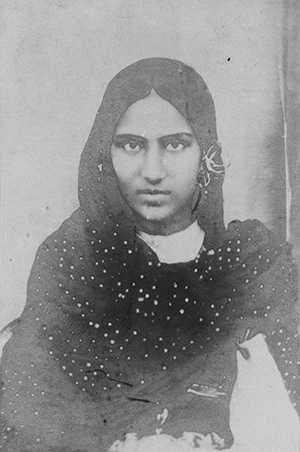
Syeda Muhammadi Begum was the first woman in the Indian sub-continent to be the editor of a weekly magazine,‘Tehzeeb-e-Niswaan’. The Urdu magazine was dedicated to emancipate the women. The magazine came out with its first edition on 1st July, 1898.
Muhammadi Begum started her work along with her husband Mumtaz Ali. Mumtaz, who had also written a book stressing upon the rights of women, ‘Huqooq-e-Niswaan’, was a Darul Uloom, Deoband educated Lahore based publisher. He was a close associate of Sir Syed Ahmad Khan during the later years of the leader of Aligarh Movement. In fact, a hostel has been named after Mumtal Ali in AMU. Muhammadi and her husband realised that its was important that Muslim women also access modern education along with Muslim men. It must be kept in mind that when the magazine was launched Aligarh College was only a boys institution and there was no women’s college in Aligarh.
In fact, Sir Syed Ahmad Khan disagreed with Mumtaz and Muhammadi on women’s education. It was not until the demise of Sir Syed that they actually launched the magazine for women.
Muhammadi Begum, born in 1878 in Shahpur, Punjab, married Mumtaz Ali in 1897 after the death of his first wife. Syed Muhammad Shafi, father of Muhammadi, was the Principal of Wazeerabad High School and ensured that his daughters received modern education. In fact, Muhammadi used to play cricket and ride horses as well in those days when women were kept inside homes. When she married Mumtaz, he was already owning a publishing house and a printing press in Lahore.
Within a year, Muhammadi learned the art of publishing, editing and proofreading from her husband. She could read English, Hindi, Urdu, Persian and Arabic. Soon the first Urdu weekly dedicated to the cause of women was launched, ‘Tehzeeb-e-Niswaan’.
As expected, people did not take such progressive magazine positively. Muhammadi and Mumtaz used to send free complimentary copies to the well known educated people. In return they would receive the copies back along with letters abusing Muhammadi. The magazine picked very slowly and even after three months only 70 people subscribed to the magazine, after three years 345 and after five years 428.
Muhammadi had one son, Imtiaz Ali, whom he used to affectionately call Taj. She used to write stories, poems, plays and lullabies especially for him. She trained him to be a man of literary taste. Imtiaz grew up to edit the magazine and established himself as one of the greats of Urdu literature.
Muhammadi later launched another magazine for women, ‘Musheer-e-Madar’, in 1905. Which did not survive much after her death. She also established schools for women. A very interesting experiment carried out by Muhammadi was of an all-Women shop. This shop was operated by the women and for the women and no man was allowed inside the shop for any work. Interestingly, the title of Ashraf Ali Thanvi’s Bahishti Zewar is inspired by one of the poems written by Muhammadi.
From 1897, Muhammadi’s life was busy with social work. She edited magazines, wrote essays, stories, poems and held public meetings to emancipate the women of India. This hard work took a great toll on her health and left this world at a young age of 30, in 1908.
(Author is a well known historian)
source: http://www.heritagetimes.com / Heritage Times / Home> Women / by Saquib Salim / September 14th, 2020
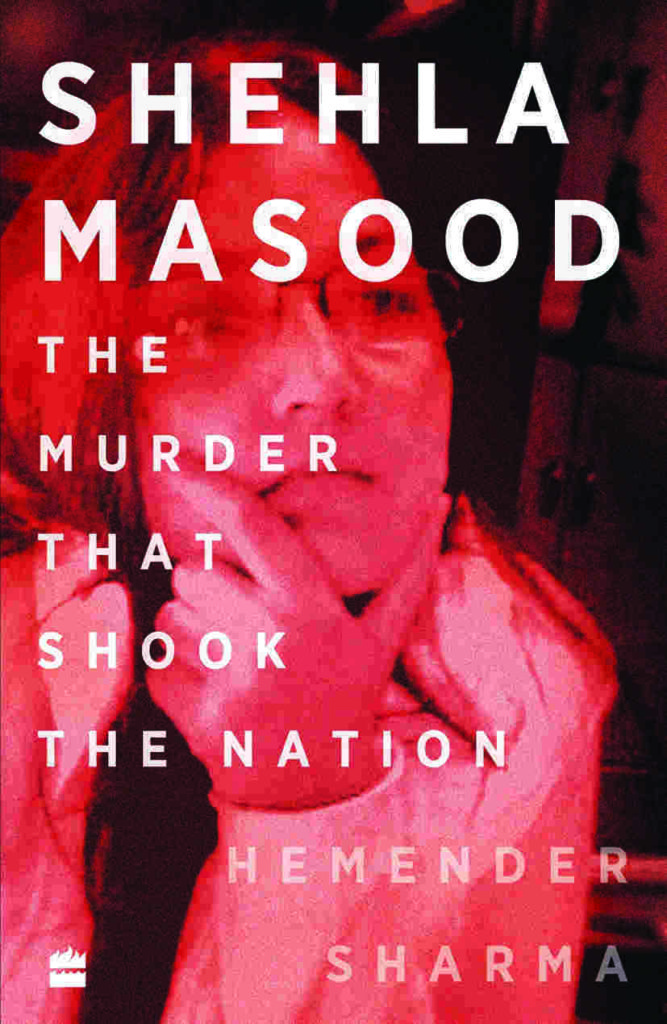
Author Hemender Sharma re-examines activist and environmentalist Shehla Masood’s gruesome murder with detailed insight into the events leading to the conspiracy.
Author: Hemender Sharma
Publisher: HarperCollins
If an urban woman with ‘modern’ sophistication and a ‘questioning’ attitude is killed in our country, the investigation, in most instances, begins with a close examination of her character. Shehla Masood was one such gutsy woman – an Indian environmentalist, wildlife and RTI activist. Hemender Sharma, in his book, Shehla Masood: The Murder that Shook the Nation, peels many layers to understand her life, her murder and the ultimate resolution of her case
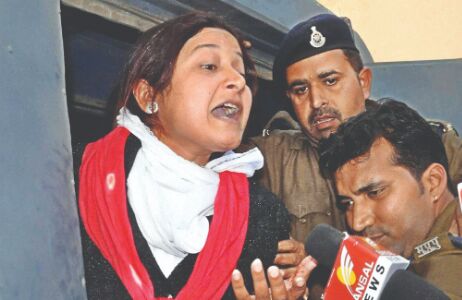
Stepping out of her house in Bhopal to attend Anna Hazare’s ‘India Against Corruption’ campaign, Masood was shot dead from point-blank range in broad daylight on August 16, 2011. With Masood featuring in the news ahead of her murder after exposing corruption rackets through ‘RTI Anonymous’ – a portal where individuals could file an RTI without disclosing their identity – the Indian media had covered her gruesome death extensively. Shehla came from a humble background, but convent education along with brave instincts made her a savvy Muslim girl endowed with big dreams.
The book unravels the circumstances that led to her murder, the politics that subsequently unfolded and the long fight for justice that ensued. Cover-ups and attempts to tarnish her image started soon after her death. The local police tried to label her death as a suicide, while the state chief minister ordered a CBI probe within 48 hours. Names of various political dignitaries and bureaucrats were in the suspect list, but when the verdict was declared in January 2017, Zahida Parvez, an interior designer who gave the contract to kill Shehla, along with three others, stood convicted.
Zahida, a mother of two girls, in her statement, revealed her affair with Darbar (pseudonym) who was the Chairman of Madhya Pradesh Tourism Department. After a few formal meetings, their friendship strengthened, leading to intimacy. Darbar, on the other hand, was already in a relationship with Shehla. Zahida was madly in love with Darbar and surely not fond of Shehla.
Darbar’s 53rd birthday was approaching and Zahida wished to celebrate it with grandeur. Bhopal has a tradition of politicians putting up their own hoardings and congratulating themselves on their birthdays. But to her disappointment, Darbar’s hoardings had no place for her, leaving her heartbroken.
She knew that Darbar was a Casanova, but couldn’t substantiate her doubt with palpable evidence. With her friend Sabah, she followed Darbar on instances to gather evidence and catch him red-handed. When Darbar went to meet Shehla on his birthday, Zahida was left fuming. Her anger and frustration usually subsided the moment she finished pouring her heart out in her diary. But this time, her anger knew no bounds. The man for whom she had waited the whole day, putting her family and daughters at stake, was drifting away from her. She assumed that Shehla was the culprit jeopardizing her illicit relation with Darbar, which was now showing visible cracks.
Zahida contacted Shakib, a contractor. When Shakib entered her office, she threw a file towards him with the initials ‘SM’ inscribed. It contained Shehla Masood’s newspaper cuttings from Hindustan Times and Free Press. She told him that she wanted this woman dead as she was negatively influencing girls. Besides, she had also lied to him about Shehla’s affair with her husband. She negotiated a deal worth Rs 3 lakh to get Shehla killed. Very soon, Shakib brewed the plan along with Irfan and Tabish, and it was only after a couple of failed attempts that they succeeded in executing the conspiracy.
On the day of her murder, Shehla walked towards her car around 11:19 am. She was about to ignite the car when Shakib pounced on her from the rear and shot her in the trachea. The detailed narrative furthers reveals Shakib’s call to Zahida confirming the murder, who further lets Sabah, her friend, know of their success. Irfan, Shakib’s partner in the crime, was let go as he turned an approver during trials. Zahida and Sabah were convicted under Section 302 (murder) with 120B (criminal conspiracy) of IPC and sentenced to life imprisonment. Shehla’s father, upset with the verdict, asserted, “Probably the real culprit will never be caught.”
The book also details how the CBI team, led by Joint Director Keshav Kumar and DIG Arun Bothra, painstakingly reached the killers after being severely misled.
source: http://www.millenniumpost.in / Millennium Post / Home> Book Review / by Arif Mohammad / May 04th, 2019
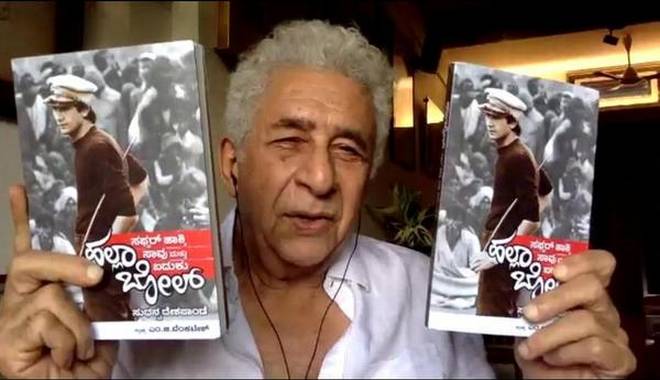
Actor Naseeruddin Shah releasing the book Halla Bol: Safdar Hashmi Savu Mattu Baduku. | Photo Credit: Handout E Mail
Actors and authors call for solidarity with activist and intellectuals
Veteran actor Naseeruddin Shah called for people to fight for their right to democratic dissent, which, he said, is increasingly being interpreted as sedition at a time when history is being replaced by mythology. He was speaking at the virtual release of Halla Bol: Safdar Hashmi Savu Mattu Baduku, a Kannada translation of Sudhanva Deshpande’s book on the playwright and director Safdar Hashmi. The book has been translated to Kannada by M.G. Venkatesh.
Safdar Hashmi was fatally injured in an attack on the theatre group when Halla Bol, a street play on exploitation and rights of factory workers, was being performed near Delhi in January 1989.
At the book launch, Mr. Shah said that the life, achievements and murder of Safdar Hashmi was a testimony as to why fascist powers and forces were so terrified about the lives of activists and intellectuals, who are being hounded in the country today. “It is high time we stand in solidarity with jailed activists and intellectuals like Varavara Rao and Anand Teltumbde,” he said.
“When I read the English and Hindi versions of Halla Bol, I was informed, amused, raged, disturbed and moved. He [Safdar Hashmi] took plays to factories, schools and streets, and informed people about their exploitation and rights. It is from his life I realised that even an actor’s life can be of use and impactful,” he added.
M.G. Venkatesh, translator of the book, said that the thoughts and writings of Safdar Hashmi are more relevant now than at the time he was killed. “The current regime is diluting labour laws, not only in a dangerous way but also in a way that insults labourers,” he added.
Author Sudhanva Deshpande spoke about the assassination of editor-activist Gauri Lankesh. “The killing of Hashmi stirred the need for the defence of freedom of art and expression,” he said.
Actor Achyuth Kumar said that the times had not changed much. “Hashmi was killed when the Congress was in power, and Gauri Lankesh was killed by the fundamental right wing. This is the way ruling dispensations suppress the voices of people. They just kill them,” he said.
Writer Bolwar Mahammad Kunhi said that we are fighting two types of viruses now. “It is said that a vaccine for COVID-19 will be available in the future. But who will and how can a vaccine be invented for those who suppress dissent, spread hatred and eulogise killings and violence?”
source: http://www.thehindu.com / The Hindu / Home> News> Cities> Bengaluru / by Staff Reporter / October 31st, 2020
Yusufpur- Mohammadabad (Ghazipur) , UTTAR PRADESH / NEW DELHI :
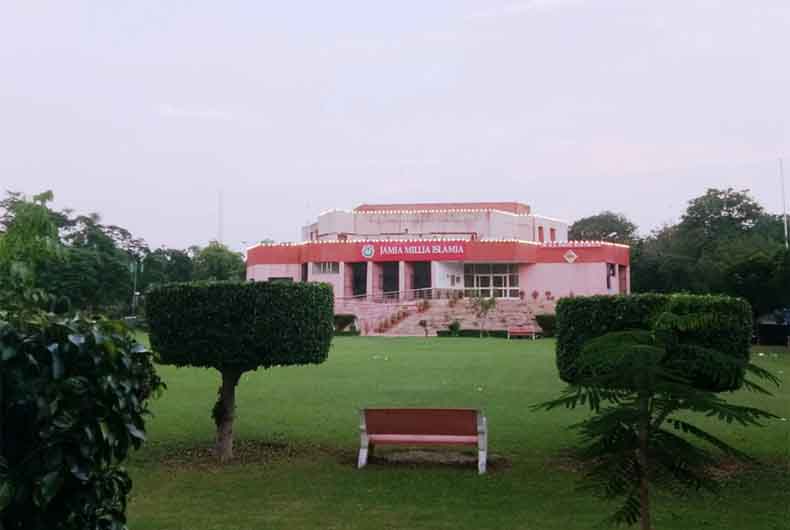
As Jamia celebrates 100 years of its foundation, we extend our gratitude to Dr Mukhtar Ansari for his contribution
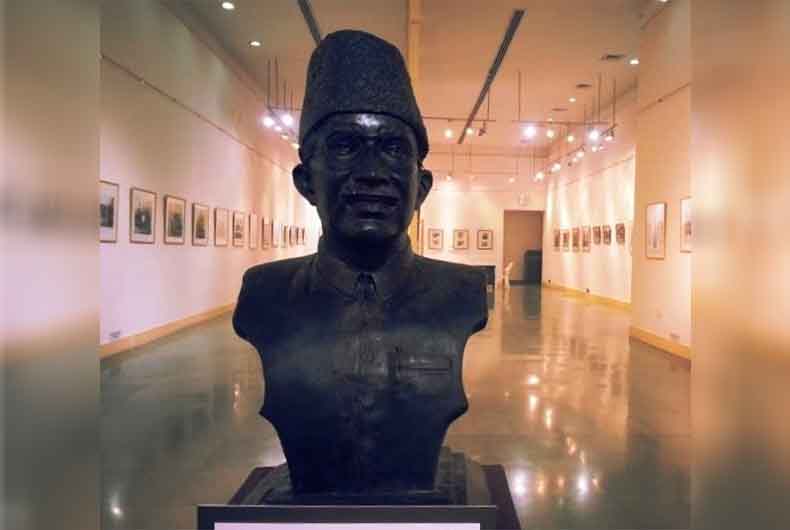
Dr M A Ansari’s bust during a photo-exhibition at M.F. Husain Art Gallery, JMI on 24 Dec. 2014. (Photo Courtesy: Aniket Dikshit)
The three most important persons who, undoubtedly, not only played the most significant role in the foundation of Jamia Millia Islamia, but also shifted it from the makeshift arrangement of Aligarh to Delhi’s Karol Bagh on 7 July, 1925, are Hakim Ajmal Khan, Abdul Majeed Khwaja and Dr Mukhtar Ahmad Ansari.
In view of upheavals faced in Aligarh, Jamia was shifted but problems existed. The problems that made many think that Jamia will not survive long. However, the trio’s efforts were no way trivial. They set the future course of Jamia as ‘an institution with a difference.’
Mukhtar Ahmad Ansari’s consistent efforts bore fruits. Not only did Jamia get its first house in Karol Bagh in 1931, it was also shifted to a much bigger plot of land of its own in 1936 in its present location in South Delhi’s Okhla, then a ‘non-descript village’ where now it has a panoramic sprawling campus.
However, the journey was not as simple as it might look to a casual viewer. Within those ten years, much sweat and blood went in to nurse the tender sapling whose seed was sown in Aligarh on 29 October, 1920. Dr Ansari’s contribution through all these years is one of the most unforgettable and astonishingly stout chapters in the history of Jamia Millia Islamia.
Born on 25 December, 1880 in Yusufpur-Mohammadabad, Ghazipur in eastern Uttar Pradesh, son of Haji Abdur Rahman and Ilahan Bibi, Mukhtar Ahmad Ansari, received primary and secondary education at Ghazipur and Allahabad, then studied medicine and graduated from Madras Medical College. He went to England from where he achieved M.D. and M.S. degrees. He earned the Master of Surgery degree from the University of Edinburgh in 1910. Being a top-class student and a pioneering surgeon he worked in some well-known hospitals of England where “he had a successful medical career”.
Dr Ansari had everything – money, fame, fortune, and life that could be lived luxuriously. This brief background is provided to underscore the significance of his passion, devotion and commitment not just for Jamia but for the country’s struggle for freedom as those were the years of heightened activism for independence during which Dr Ansari – through his active involvement in and unwavering support for freedom, emerged as a committed nationalist leader.
From England, Dr Ansari returned to India in 1910 and started medical practice at Delhi. His contact with leaders like Motilal Nehru, Hakim Ajmal Khan and Pandit Jawaharlal Nehru rekindled in him the desire to take part in the country’s political developments.
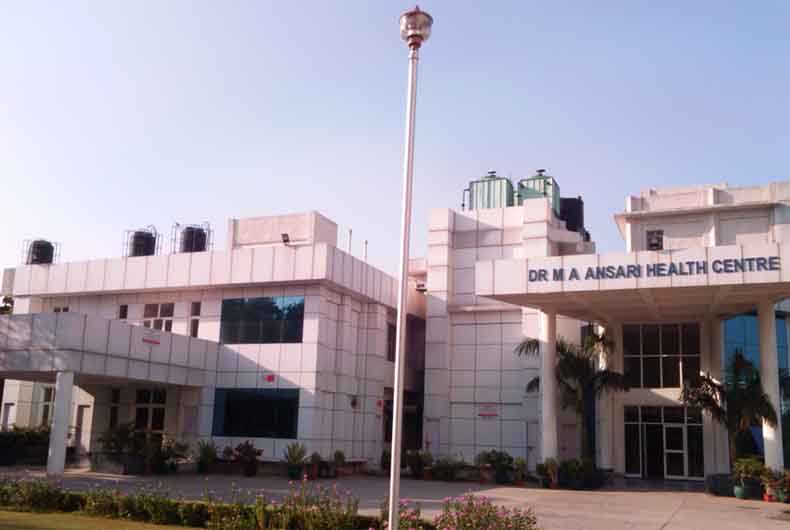
Dr M A Ansari Health Centre, Jamia Millia Islamia. (Photo: Manzar Imam)
During the Balkan Wars of 1912-13, he led a Medical Mission to Turkey to provide medical aid to the Turkish army. “The mission”, according to Dr. Burak Akçapar, Ambassador of the Republic of Turkey to India, “not only established two field hospitals, but also did other humanitarian and political work.”
This was among his first political works which won the hearts and minds of the Turkish public and leaders which created a deep bond between Turkey and Jamia. Many Turkish leaders and prominent literary figures visited Jamia. The series of ‘Extension Lectures’ that began was his brainchild. It was on his invitation that famous Turkish scholars Dr Husein Raouf Bey (1933) and Ms Halide Edib (1936) and Dr Behadjet Wahbi of Cairo (1934) then delivered their lectures at Jamia.
His role in the Khilafat Movement was pivotal and his presence both in the Congress and Muslim League was equally felt. His Delhi house ‘Darus-Salam’ was a meeting point for leading Congressmen. For many years he was General Secretary of Congress and remained a member of the Congress Working Committee all through his life.
Dr M A Ansari Auditorium, Jamia Millia Islamia. (Photo: Manzar Imam)
Dr Ansari was the leader of the Khilafat delegation of 1920 which went to meet the Viceroy. He was also a member of the second delegation of Khilafat which went to England and other countries of Europe under the leadership of Maulana Mohammad Ali Jauhar. He was also president of the Delhi Khilafat Committee. During his presidential address at the Nagpur session of Muslim League in 1920 he demanded Swaraj.
When his name was proposed for the Secretary of the Foundation Committee of Jamia during its foundation, he requested not to appoint him for the post as it would require regular visits to Aligarh. Nevertheless, his interest in the activities of Jamia persisted.
Dr Ansari was among the front leaders of the Congress and was made its president in 1927. According to Prof Zafar Ahmad Nizami his name for the president of Congress was proposed at the instance of Mahatma Gandhi in 1924 who believed that “only he could make the efforts of Hindu-Muslim unity successful.”
Although Dr Ansari could not live long to see Jamia blossom into a beautiful university or see India breathing in freedom from the strangulating slavish life under the colonial rule, he had played his gigantic role both as a freedom seeker and as a founder of Jamia. He was a prominent member of the sixteen-member Foundation Committee formed on 29 October, 1920 to establish Jamia which would become a historic institution and the first one to be set up in response to call for boycott of the British Indian government-run, aided and supported academic institutions.
According to The British Medical Journal:
“As leader of the Congress movement, though at first opposed to the teaching of Gandhi on civil disobedience, he actively associated himself later with the various non-cooperative movements, and served at least one term of imprisonment.”
When it comes to Jamia as also to some other movements that were the currency of the 1920’s and 1930’s, it is very difficult to dissociate the trio of Hakim Ajmal Khan, Maulana Mohammad Ali Jauhar and Dr Mukhtar Ahmad Ansari, the “great Muslim trio of Indian politics”, as they were quite befittingly called so. However, each person has certain unique and individual personality traits and characteristics which separate him from others.
According to Dr Hamida Riaz (1988, p.119), Dr Ansari had a great passion for education. Initially, he highly appreciated Western education and culture and would keep himself completely away from what did not interest him. However, on the call of Mohammad Ali Jauhar, he participated in the medical delegation that went to Turkey and did a tremendous service. In a way, the beginning of international politics in India was made by Dr Ansari’s delegation.
Together with Hakim Ajmal Khan, Motilal Nehru and Maulana Azad, Dr Ansari formed a non-sectarian “Indian National Union.” He had opposed the Rowlatt Bill and participated in Home Rule and Non-Cooperation movements. In 1929, Dr Ansari formed the All India Muslim Nationalist Party. Besides Jamia, he was also associated with the foundation of Kashi Vidyapith, Benaras.
Faculty of Dentistry, Jamia Millia Islamia. (Photo: Manzar Imam)
Riaz (p.121) writes that all through his life he [Dr Ansari] “stayed away from sectarian groups” and continued his efforts to forge “Hindu-Muslim unity”. His wife Shamsun Nisa Begum too, was committed to the cause of women uplift.
Dr Ansari actively participated in the Jamia’s establishment, nurtured it, and, following the demise of Hakim Ajmal Khan in December 1927, served as its second Chancellor from 1928 to 1936. The financial needs that Hakim Sahab used to carry had fallen on his shoulder which he discharged diligently.
The “Ajmal Khan Fund”, set up exclusively for the purpose, was a result of his efforts. At a critical juncture when Jamia faced great financial crisis a Board of Trustees was created. Dr Ansari was appointed its chairman. It was at Gandhiji’s indication that industrialist Jamnalal Bajaj (1889-1942) was made its treasurer. Other bodies were also formed in which he was there.
As Chancellor of Jamia, Dr Ansari could not be an employee and Life Member of the ‘Anjuman Talim-e-Milli’. However, he extended all his support to all the bodies and continued to serve Jamia all his life. Remembering the services of Hakim Ajmal Khan and Dr Mukhtar Ahmad Ansari during a lecture in Jamia on 26 August 2014, former VC and renowned historian Prof Mushirul Hasan (d. 10 December 2018), terming the duo as the “real founders” of Jamia, had said, “Ansari raised money for Jamia and Hakim Ajmal Khan provided nobility and support.”
As mentioned earlier, Dr Ansari did not live long after Jamia was shifted to its present place in the national capital. He passed away on 10 May, 1936 and buried in the Jamia graveyard.
A radio speech which Dr Zakir Hussain had prepared for the 1936 Foundation Day of Jamia, which Dr Ansari could not hear as he passed away before it, sheds enough light both on the impact Dr Ansari had on Dr Zakir Husain and on his character and sphere of activity. It read:
[Dr Ansari] set out for a journey from which no one looks back…Dr Sahab’s personality was a fountain of blessings…a mainstay for anyone in times of need. His heart was a refuge where many would seek solace for their heartfelt grief.
As in life, in death too, he did not part ways from Jamia, writes Ghulam Haider, as he became the first among the founders of Jamia, to find his resting abode in Jamia Nagar where he was laid to rest three months before the primary madrasa of Jamia moved in.
Dr Mukhtar Ahmad Ansari, who died near Delhi on May 10th, at the age of 56, had been a member of the British Medical Association since 1909, and had gained distinction in India as a medical practitioner as well as in politics. In view of his services and to keep his memory as a prominent physician, Jamia has named its health centre and a big auditorium after him.
It was his sincerity for the national cause and his passionate commitment for Jamia that whenever Gandhiji would come to Jamia, he would definitely pay a visit to his grave. As Jamia celebrates 100 years of its foundation, we extend our gratitude to its architect for nurturing it with his consistent remedial care, unflinching commitment and great sacrifices!
[Sources: Celebrating India : Reflections on Eminent Indian Muslims 1857-2007, Meher Fatima Hussain (2009, Manak Publications, New Delhi), “Dr. Mukhtar Ahmed Ansari”, The British Medical Journal (Vol. 1, No. 3933 (May 23, 1936) p.1082, Mohammad Ali Jauhar, authored and published by Hamida Riaz (1988, Nagpur), Nuqoosh-e-Jamia (Jamia ki Kahani Jamia Walon ki Zabani or the Story of Jamia from Jamiites) by Ghulam Haider (2012, Maktaba Jamia Limited in collaboration with National Council for Promotion of Urdu Langue, New Delhi), www.jmi.ac.in.
Manzar Imam is a Ph.D. Candidate at Maulana Mohammad Ali Jauhar Academy of International Studies, Jamia Millia Islamia. He can be reached at manzarimam@rediffmail.com. The above article is ummid.com special series titled ‘Founders of Jamia Millia Islamia’. Read the first part here. To read the second article of the series click here. To read the 3rd article of the series, click here.]
source: http://www.ummid.com / Ummid.com / Home> India / by Manzar Imam, ummid.com / October 28th, 2020
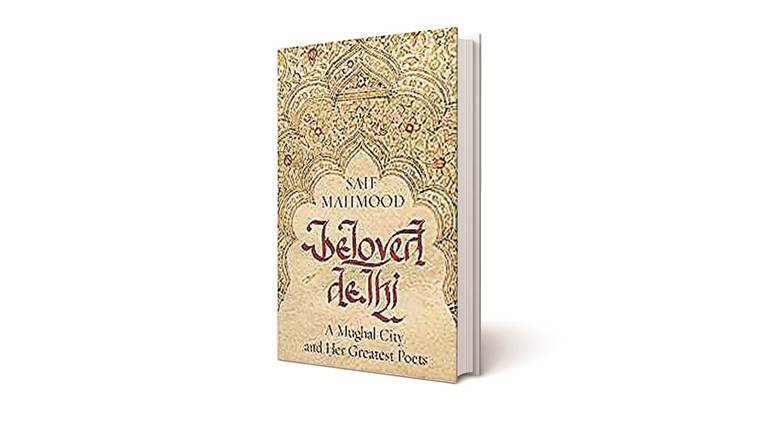
The life and times of Delhi’s leading poets of the Mughal era and their enrichment of a syncretic language
Beloved Delhi: A Mughal City and Her Greatest Poets
Beloved Delhi: A Mughal City and Her Greatest Poets Saif Mahmood Speaking Tiger 367 pages Rs 599
Shaikh Mohammad Ibrahim Zauq, the poetry ustaad of the last Mughal Emperor, Bahadur Shah ‘Zafar’ saw, in his lifetime, the Mughal Empire brought to its knees (though not formally ended — Zauq, perhaps mercifully, died three years before the ‘Ghadar’ of 1857, the uprising that was to so impact the fabric of Delhi’s social, cultural and literary life). But an impoverished Mughal court and an equally penurious north Indian aristocracy meant that many of Zauq’s contemporaries drifted south to Hyderabad, where there was still patronage to be sought and stipends to be earned. Zauq, however, when asked why he did not migrate to the Deccan, had famously remarked, “In dinon garche Dakan mein hai bohot qadr-e-sukhan/ Kaun jaaye Zauq par Dilli ki galiyaan chhor kar?” As Saif Mahmood translates this in his book Beloved Delhi: “Although poetry is greatly valued in the Deccan these days, Zauq, who would trade that for the lanes of Delhi?”
It is this — the connection between Delhi and her Urdu poets, an almost umbilical cord that binds the city to her greatest bards — that forms an important theme in Mahmood’s book. Beloved Delhi has, as its subtitle, A Mughal City and Her Greatest Poets, and those words describe the book perfectly: it is about the Mughal city of Delhi — not the city before or after the Mughals (though there is a fleeting mention of those as well), and about its greatest poets of the 18th and 19th centuries.
Mahmood examines the life and work of eight of Delhi’s greatest Urdu poets, against the backdrop of the city. Mirza Mohammad Rafi Sauda, Khwaja Mir Dard, Mir Taqi Mir, Mirza Asadullah Khan Ghalib, Momin Khan Momin, Bahadur Shah Zafar, Shaikh Mohammad Ibrahim Zauq and Nawab Mirza Khan Daagh Dehlvi are the eight poets who form the subject of Mahmood’s book. For each poet, Mahmood begins with a biography (often preceded by a description of the current state of the poet’s grave or former home). The biography is followed by an insight into the most relevant aspects of the poet’s work — Sauda’s satire, Zauq’s use of everyday language, Momin’s sensuality, Ghalib’s often cryptic verses, and so on. Finally, there are selected verses (with translations) by each poet.
There are several reasons to recommend Beloved Delhi. Firstly, it’s a well-written, readable book that manages to strike a balance between being informative on the one hand and unintimidating, entertaining, even witty on the other. Mahmood handles with commendable skill a subject that is often perceived as unapproachable by those not familiar with the Urdu script, or who are daunted by the more Persianised form of the language. But it’s also a subject that is regaining popularity and Mahmood’s translations, his occasional helpful notes, and the very fact that he takes care to bring in popular connections — Hindi film music’s use of couplets and ghazals from classical poets, for example, or ghazals rendered by popular singers — helps make this poetry more relatable.
Also playing a major role in making the poetry easier to relate to is Mahmood’s approach to the lives of the men who wrote that poetry. He uses various sources — autobiographies, reminiscences of contemporaries, memoirs, correspondence, even the poetry they penned— to bring alive the men behind the verses. Sauda, so acerbic that his satire repeatedly got him into trouble. Mir, the mad egoist, who willingly wrote poetry in exchange for groceries. Momin, a brilliant hakim as well as a great poet. Ghalib, so addicted to gambling that it brought him into repeated conflict with the law (which, Mahmood, himself a lawyer, points out as being reflected in the many legal and judicial terms — muddai, talab, hukm, faujdaari, giraftaari, etc — that Ghalib uses in his poetry). Mahmood even busts some myths, such as the authorship of popular works attributed to poets like Zafar and Ghalib.
And there is Delhi. The Delhi of mushairas. A city where fakirs and courtesans could be heard singing Ghalib’s ghazals, where a language born out of a syncretic confluence of cultures and traditions was nurtured even through the turbulence and horror of 1857 and its aftermath. As much as he brings alive the eight poets he focusses on, Mahmood brings alive the Delhi that was so beloved to them.
Madhulika Liddle is a Delhi-based writer
source: http://www.indianexpress.com / The Indian Express / Home> Lifestyle> Books / by Madhulika Liddle / May 18th, 2019
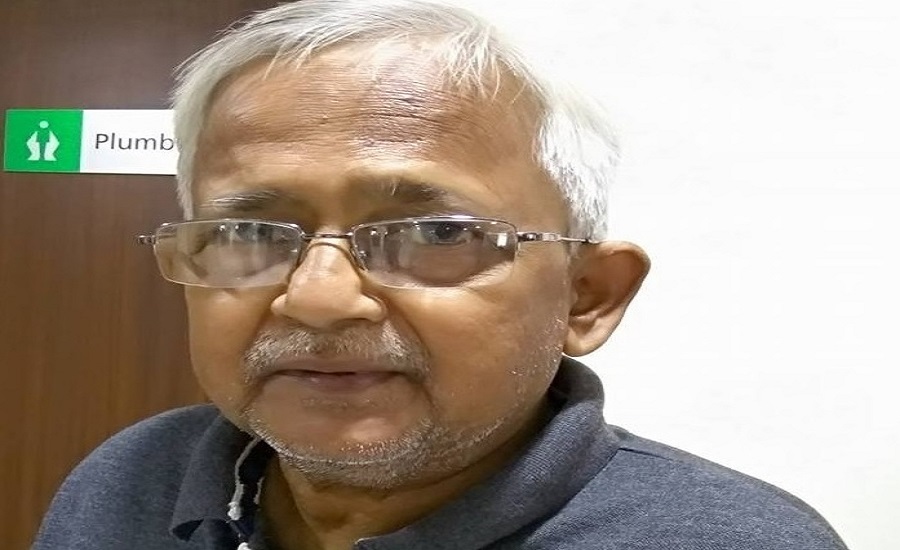
Senior Aligarian Ishrat Afroz passed away on September 30, 2020.
A senior Aligarian and one of the soldiers of the struggle of AMU’s Minority Character, Ishrat Firoz, breathed his last in JN Medical College, AMU on September 30, 2020.
He was my senior in VM Hall’s Nasrullah Hostel. For two years, I lived in Room 33 and he was in 34 and thus we were neighbours as well. Later, I moved to Room 25 with my classmate and close friend Waseem Ahmad Qadri (now a senior advocate at Supreme Court of India). Nevertheless, Ishrat Bhai and I lived in Nasrullah Hostel for nine years—1974-83.
Although much junior to Javed Habeeb, Arif Mohammad Khan (sorry to mention the name of this man who does not want to have anything to do with the community but a historical fact has to be mentioned), Akhtarul Wasey, Z.K. Faizan, Mushtaq Ahmad Khillu and several others, Ishrat Bhai and his close friend Nadeem Tarin —both PUC (Pre-University Course) students at that time—took an active part in the long struggle for the restoration of AMU’s Minority Character and went to jail for this cause.
In our student days, AMU used to be the hub of positive Milli activities. In such a lively culture and environment, our hostel, with residents like Azam Khan, Nadeem Bhai and Ishrat Bhai, was bound to be more vibrant and active. Not only was Ishrat Bhai an active student leader, he was also a cabinet member (perhaps senior cabinet, if my memory is not failing me) in the students’ union in which Azam Khan was Honorary Secretary.
In order to give young Aligarians and non-Aligarians an idea of the Aligarian spirit of those days, I feel it necessary to narrate an interesting incident. In our hostel, we had two groups: anti-Azam Khan and pro-Azam Khan. The pro-Azam Khan group was led by three seniors and very close friends: Ishrat Bhai, Nadeem Bhai and Akhtar Zameer Bhai. Akhtar Bhai and Ishrat Bhai were roommates as well.
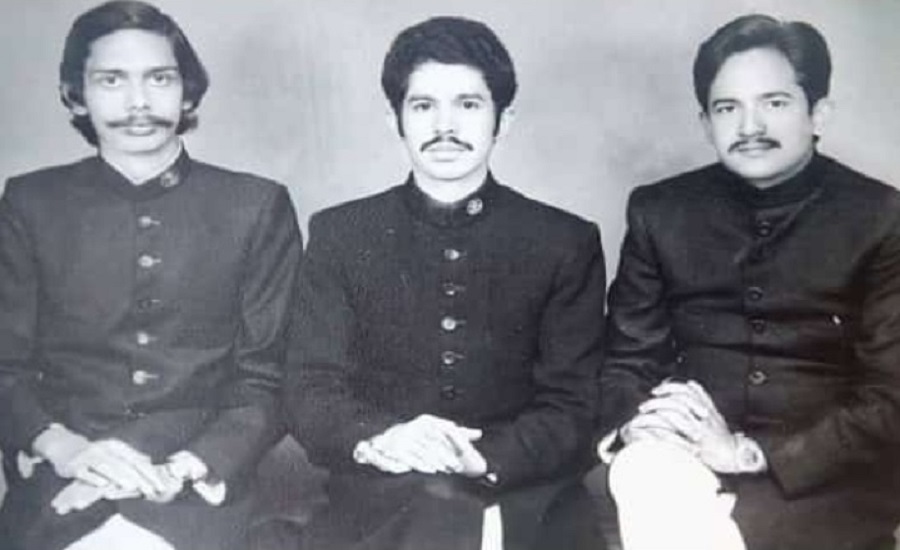
Akhtar Zameer, Nadeem Tarin and Ishrat Afroz in 1970
After leaving AMU Akhtar Bhai got a job in Dubai. Like any dutiful son and brother, obviously, he would have shared the joy of getting his first salary by sending money or gifts to his parents and siblings. But, along with them, he remembered his hostel mates as well and sent some money to Ishrat Bhai to arrange a dinner for the whole hostel total numbers of whose residents were around 109. Since Ramadan started only a few days after, Ishrat Bhai arranged a magnificent Iftar instead.
During the emergency, an atmosphere of fear and suffocation had gripped the country. Everyone was trying to be more loyal than the king and outdo even the most loyal Congress members by doing something extraordinary. In AMU, students’ union was dissolved and Azam Khan was arrested. As per tradition, our hostel was going to have an annual group photograph.
Even in that fear-stricken atmosphere, Ishrat Bhai, Nadeem Bhai and Akhtar Bhai showed the courage to propose that in the group photo Azam Khan’s portrait be put on one of the front chairs reserved for senior students, warden and the provost.
Obviously, this was opposed by the anti-Azam Khan group and the warden and, as a result, that year there was no group photograph.
Born in Azamgarh in 1955, Ishrat Bhai came to Aligarh at an early age to join Minto Circle . He was a bright student and did his Ph.D. in Psychology from AMU. He was not only a good writer but was a fine orator too. He conducted cultural and social gatherings in his typically attractive Aligarian style quoting Urdu verses. But he had a passion for writing, took journalism as a career, and published a serious magazine Satoon from Delhi. But sadly, he could not pursue his journalistic career for long. He suffered from diabetic and related ailments affecting his kidneys and worsening his health rapidly forcing him to close his magazine and take leave from an active life.
After leaving Aligarh, I lost touch with him. Whenever he happened to see my uncle (chacha), Dr Mohammad Yusuf Khan (Dept of Arabic), he told him without fail that he wanted to talk to me. But Chacha jan always forgot to give Ishrat Bhai my number or take his phone number. When Ishrat Bhai came on Facebook, I talked to him via voice mail and later by phone. On a couple of occasions when I phoned him he was not feeling well and had been hospitalised. Thinking that I might be disturbing him, I stopped calling him this way. I remained in touch on Facebook though. From his Facebook activity it was becoming clear that he was not keeping well.
In Ishrat Bhai’s demise, I have lost a good friend and the community has lost a sincere and dedicated activist. May Allah SWT grant him maghfirah (forgiveness) and bless his family the courage to bear this loss.
source: http://www.clarionindia.net / Clarion / Home> India / by M Ghazali Khan , Clarion India / October 05th, 2020
Read more at: https://www.deccanherald.com/national/historian-rana-safvi-gets-yamin-hazarika-award-891896.html
Historian Rana Safvi has been conferred an award instituted in memory of Yamin Hazarika, the first woman from the Northeast to join the central police service.
Safvi, who has published several books on culture, history, and monuments of India, was chosen for her “contribution to the syncretic culture of India”.
Hailing from Assam, Hazarika was selected for the NCT of Delhi, Andaman and Nicobar Islands, Lakshadweep, Daman and Diu and Dadra and Nagar Haveli Police service (DANIPS) in 1977. She held the post of assistant commissioner of Police in Chanakyapuri (Delhi) and went on to become deputy commissioner of police (Crime against Women Cell) in the national capital.
In the crucial period after the 1984 anti-Sikh riots, Hazarika was in-charge of three key police stations. In 1998, she was posted in Bosnia as part of the UN peacekeeping force. But her life was tragically cut short by destiny as she succumbed to cancer at the age of 43 in 1999.
The ceremony was held online though Hazarika’s daughter Huma presented the silver salver to Safvi in Delhi. Assam DGP Bhaskar Jyoti Mahanta was the guest of honour. He recalled the contribution of Hazarika and also spoke about her grit and determination.
The award is given every year by a collective of women professionals since 2015. Previous winners are author Indrani Raimedhi, athlete Tayabun Nisha, actor Moloya Goswami, environmental activist Purnima Devi Barman and social activist Hasina Kharbhih.
source: http://www.deccanherald.com / Deccan Herald / Home> National / by PTI, New Delhi / September 23rd, 2020
Syed Sagheer Ahmad was not much of a public figure but he always had access to the highest echelons of power and politics.
OBITUARY
In spite of his close associations with some of the giants of Indian politics, he never became an MLC, MLA or MP. He was, in a true sense, a compassionate and dignified face of Indian politics.
IT was 10:45 in the morning yesterday when my friend and class fellow at AMU Mr Najam uz Naqvi called me to inform that Sagheer Mama had passed away at a hospital in Bareilly. The news was so unexpected that it had me shivering, too numb for any reaction. For quite some time I was stunned beyond words still trying to fully grasp the heart wrenching information perhaps very much in denial.
This was not any news of a relative’s death. It is not that unusual for us to hear about the death of someone close, but the passing away of Syed Sagheer Ahmad (Najam’s Mama) was not the death of an ordinary person. It was as if I was witnessing right before my eyes the end of an era.
Syed Sagheer Ahmad was born on the 4th of December, 1934, in the Tahseel/ Qasba Sehsawan in Badaun district. He received his education from Aligarh Muslim University, the same place from where he picked up interest in socialist politics and remained a lifetime loyalist. Janab Syed Sagheer Ahmad was not much of a public figure but he always had access to the highest echelons of power and politics. He was one of those rare young turks in Congress who had dared to revolt against the dictatorial regime of Mrs. Indira Gandhi along with Chandershekharji and Mohan Dharia.
He was an avowed socialist, a well-known and respected face among the notable socialist leaders and movements. Mrs. Gandhi personally knew him well. He was a close friend and confidant of Chandershekharji. Chandershekharji mentions him fondly in his Jail Diary. V.P. Singh knew him personally too. The two great leaders of Congress party in Uttar Pradesh, Mr. Hemwati Nandan Bahuguna and Mr. Narayan Datt Tiwari kept him close to their hearts always consulting him on critical minority issues. He often played an important role in removing misgivings between Mrs. Gandhi and her party satraps in Uttar Pradesh. He worked under patronage of giant leaders like Jai Parkash Narayan, Acharya Kripalani, Ram Manohar Lohia. He was closely associated with renowned socialist leaders like Babu Tarloki Singh, Dr. Abdul Jalil Faridi and Narayan Datt Tiwari.
In spite of his close associations with some of the giants of Indian politics, he never became an MLC, MLA or MP. He was, in a true sense, a compassionate and dignified face of Indian politics. He belonged to Muslim aristocracy in UP. However, he never used politics for personal favours. Throughout his life, he depended on his family or personal resources for his political activities and finances. He would never speak or ask for himself but for the populace, he was a firm and assertive advocate.
There are numerous persons in UP who reached Assembly and Parliament only because of his consistent backing. He neither sought nor was he rewarded for his unfaltering selflessness, sacrifice, honesty and self-esteem. Those who know Janab Syed Sagheer Ahmad would definitely agree with me that he was the greatest victim of political injustice of his time. He was not an ordinary politician or a socialist thinker. He had closely watched all the important political developments, especially in North India. He was aware of the ins and outs of political circuits.
It wouldn’t be wrong of me to say that he was a mini encyclopedia of Indian politics in the post independent era. He new most of the ins and outs of political upheavals during sixties, seventies, eighties and nineties. He was a close watcher of Muslim politics and observed with disdain the discriminatory policies of the government against Muslim minorities.
With his advent in Indian politics, Syed Shahabuddin created many controversies around him. He was nominated as the general secretary of Janata party and Rajya Sabha member in 1979. Many a stalwarts in Janata party and later Janata Dal turned against him. This still didn’t deter Janab Syed Sagheer Ahmad sahib to stand like a rock in support of late Syed Shahabuddin. In 1991, Janata Dal had completely ignored Syed Shahabuddin in parliamentary election and denied him the party ticket from his favored constituency Kishanganj. Yet it was only the magnanimity, political stewardship and endless backstage efforts of Sagheer sahib that at the last moment Janata Dal had to concede and accommodate Syed Shahabuddin for a ticket from Kishanganj.
Sagheer sahab was an ardent admirer of Chandershekharji and considered him the bravest leader of his time. He was considered a close confidant of Chandershekharji, yet on occasions he would take a stand contrary to the wishes of his leader. One incident, I remember well. In 1986, when organisational elections for UP Janata Party was going on, Manager Singh an MLA from Ballia was candidate for district Presidentship. Chandershekharji somehow didn’t want Manager Singh to become the party president of his home constituency. But Sagheer Saheb openly went against the wishes of Chandershekharji and played an instrumental role in getting his friend Manager Singh elected as the Ballia Distict president.
I am personally aware of it that during his 60 years long political career, he helped many people achieve their political aims without seeking any return. I am sure nobody in the world of politics could ever claim that he accepted even a penny from anybody during his extensive political tenure. He used to travel much but he would never travel alone. He would usually stay in a middle class hotel. There were few exceptions who were fortunate enough to host Syed sahib. He would always strain his own pocket for all the expenses, not only for himself but for all those who accompanied him. He was a very caring person. If you were travelling with him, he would make sure to take care of every little thing – your ticket, your accommodation, your food and even your laundry.
Today even his political adversaries would agree with me that he was the gentlest and most honest politician of his time with an unmatched sense of self respect — something he never compromised upon.
I have no qualms in saying that India politics ill-treated its two great sons – Captain Abbas Ali khan who was a freedom fighter, a captain in Netaji’s Indian National Army and consequently got arrested and was awarded a death sentence but luckily India won independence before he could be executed.
After Independence, Captain Abbas Ali Khan spent his whole life in opposition and socialist politics. He was the president of UP Janata party when it was in power there. But all his sacrifices in the freedom movement and his contribution in the socialist movement was ignored. He was favoured only once with a single tenure of MLC. Second one is of course, Sagheer sahab. He shall be recorded as the most unfortunate and prejudiced victims of the discriminatory Indian political mindset.
In fact both Captain Abbas Ali Khan and Syed Sagheer Ahmad deserved a seat in Rajya Sabha or a provincial governorship.
Few days back he had penned down his autobiography named as “abhi ummeed baqi hai” “hope still remains” in Hindi and it was inaugurated in the Constitution Club of India. The event was joined by top socialist and intellectuals from across the country. The book received much appreciation and acknowledgement.
Today he is no more leaving behind a void which can never be filled for where can we find again this level of honesty, integrity, philanthropy and discipline. Those who know him must have plunged into deep sorrow and darkness. With Sagheer sahab a beacon of gentle light of Indian Politics has extinguished. May Allah rest his soul in peace.
____________
The author is ex-President of AMU Students Union.
source: http://www.clarionindia.net / Clarion / Home> Culture> India> Indian Muslim / by S.M. Anwar Hussain / September 28th, 2020