Illustrated book on legendary hero Kunjali Marakkar brought out for children
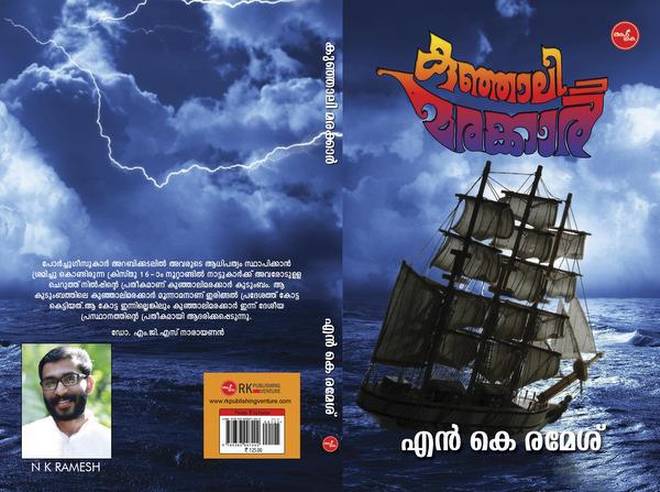
The popular witticism – when the going gets tough, the tough get going – has literally set off a young anthropologist- cum- archaeologist to author a book for children on Kunjali Marakkar, the legendary hero of the 16th century.
For N.K. Ramesh, a guide at the Kunjali Marakkar Memorial Museum at Vadakara, it was an opportunity to trace the history of the four Kunjali Marakkars, when his contract was terminated after the museum was closed to the public from March.
“Certainly a difference existed between writing for children and for adults. So I put down a simple narration and included illustrations based on important events during the period of Kunjali Marakkar and also a picture of a mural painting of a sea war,” he says.
Kunjali Marakkar was a honorific title given to the Muslim naval chief of the erstwhile Zamorin of Calicut. “The four Kunjali Marakkars who were the naval commanders of Zamorin fought against the Portuguese from 1507 to 1600. In fact, the Kunjali Marakkars were maritime merchants and supporters of Arab trade who lived in the coastal regions of Kayalpattinam, Kilakarai, Thoothukudi, and Karaikal. But they shifted their trade to Kochi and then migrated to Ponnani after Portuguese trade interference,” Mr. Ramesh says.
He took about four months to pen the book with 104 pages. The book has already hit the stands although the official launch has been deferred in view of the COVID-19 protocol.
Historian M.G.S. Narayanan has given an introduction to the book on Kunjali Marakkar, whose battles against the Portuguese were portrayed as a symbolic national movement.
The book also delves into the objective of the construction of a fort by Pattu Marakkar, the third Kunjali Marakkar, at Iringal (Kottakkal) in 1571 and the political dispute between his nephew Mohammed Marakkar, who became the fourth Kunjali Marakkar, and the Zamorin.
Later, the Zamorin joined hands with the Portuguese to defeat the last Kunjali Marakkar. The fort was also demolished and Kunjali executed by the Portuguese. The decline of Kunjali Marakkar, he says, led to establishment of Dutch Dominion and later British rule in India.
Mr. Ramesh, who holds a postgraduate degree in anthropology from Kannur university and Post M.Sc. Diploma in Museology from Aligarh Muslim University, has been credited with numerous discoveries, including the unearthing of Palaeolithic tools from north Malabar.
For a living, the 34-year-old is now engaged in de-husking at farms and odd jobs at Nadapuram and adjoining areas.
source: http://www.thehindu.com / The Hindu / Home> News> States> Kerala / by Biju Govind / Kozhikode – September 15th, 2020
The book, co-published by Zubaan Publishers, will hit the stands on October 12
The book will hit the stands on October 12. (Source: University of Chicago Press)
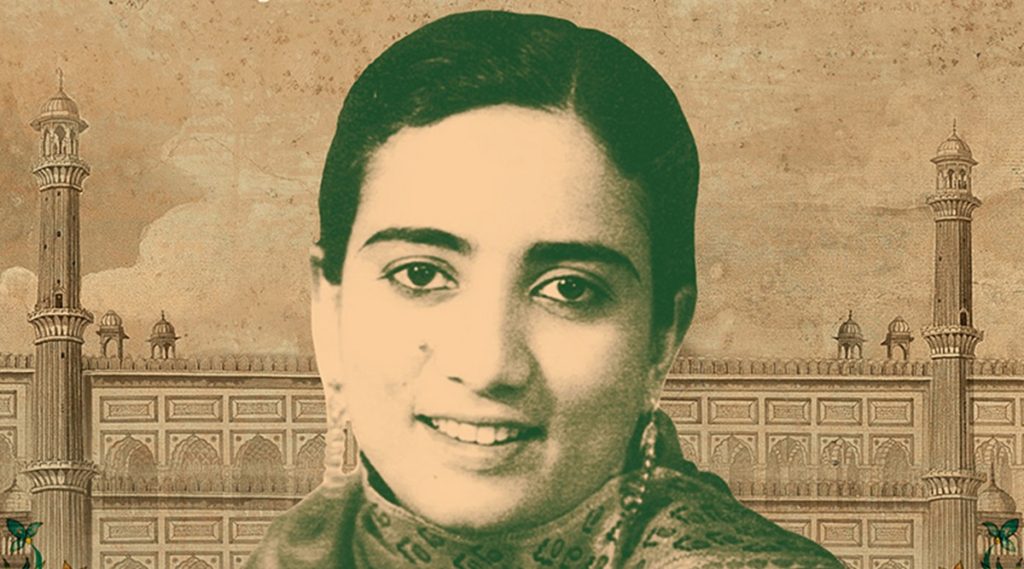
The life and times of India’s first woman radio newsreader Saeeda Bano will unravel in a new book, originally written as a memoir in Urdu, Penguin Random House India announced on Monday.
The book, Off the Beaten Track, has been translated into English by Bano’s granddaughter Shahana Raza from her 1994 memoir Dagar Se Hat Kar“.
The memoir takes the reader through events of great personal impact in her life such as walking out of a suffocating marriage, witnessing the violence of the Partition, moving to Delhi from Lucknow as a single mother, eating toast with prime minister Jawaharlal Nehru , and falling in love with a married man — Nuruddin Ahmed, who would, in the course of their twenty-five-year relationship, become the Mayor of Delhi.
“Unflinching and riveting, ‘Off the Beaten Track’ offers a personal account of the Partition and the burgeoning capital city of a newly-independent India.
“A story of hope and resilience, it’s an unforgettable exploration of a fascinating woman; beckoning readers to reflect upon what it means to live and love passionately in the face of conformity and social pressure,” the publishers said in a statement.
The book, co-published by Zubaan Publishers, will hit the stands on October 12.
source: http://www.indianexpress.com / Indian Express / Home> Books and Literature / by PTI, New Delhi / September 28th, 2020
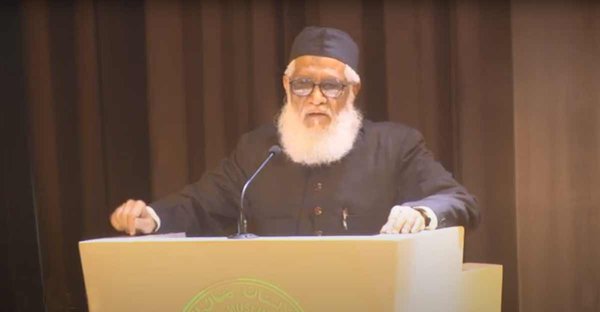
Noted Islamic scholar and author, Professor Yasin Mazhar Siddiqui (76), former Chairman, Department of Islamic Studies, Aligarh Muslim University passed away today after a prolonged illness.
Professor Yasin Mazhar Siddiqui wrote more than 40 books and 300 research articles in Urdu, Arabic and Persian. His writings on the Prophet and his teachings got wide acclaim. He wrote extensively in reputed literary journal, ‘Nuqoosh’ and got international ‘Nuqoosh Award’, ‘Seerat-e-Rasool Award’ and ‘Seerat Nigari Award’.
Professor Siddiqui, an alumnus of Aligarh Muslim University worked for ten years at the department of History before joining the department of Islamic Studies as a Reader, and later he became professor and chairman of the department. He also served as the Provost of Aftab Hall.
Professor Tariq Mansoor, Vice Chancellor, expressed his deep sense of sorrow at the demise of professor Siddiqui whose profound scholarship explored new dimensions of Seerah writing. His death causes irreparable loss to the academic world.
Professor Nisar Ahmad Khan, Dean, Faculty of Social Sciences, Professor Muhammad Ismail, Chairman, Department of Islamic Studies and Professor Obaidullah Fahad deeply mourned his death.
source: http://www.milligazette.com / The Milli Gazette / Home> News> Community News / by The Milli Gazette Online / September 15th, 2020
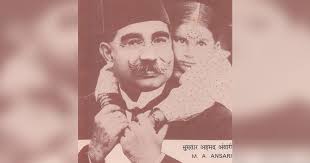
Dr Mukhtar Ahmed Ansari was a staunch Congressman and author of a book titled ‘Regeneration in Man’. Wednesday marks his 81st death anniversary.
India’s political leadership during the British Raj was dominated by lawyers and journalists. A noted exception was Dr Mukhtar Ahmed Ansari (1880-1936), one of Delhi’s richest men, who dexterously balanced his busy medical practice with a deep involvement with politics.
Ansari was a close companion of Gandhi and an icon of the Khilafat movement. The few scholars who have studied his life have focused solely on his role as a Congress leader, and on his skills on the negotiating table of high politics. His exploits with the scalpel have been ignored. More than 80 years after he died, on May 10, 1936, it is remarkable that forget any serious study, there is hardly any discussion about the hundreds of operations he conducted in India in which he grafted animal testicles – from bulls, monkeys and sheep – onto human beings.
Adviser to princes
Dr Ansari studied at Queen’s Collegiate school in Benares and at the Muir Central College in Allahabad (which was later incorporated into Allahabad University). He later joined the Nizam College in Hyderabad where he was given a scholarship in 1900 to study medicine in the UK. After earning a medical degree at the University of Edinburgh, he worked in London at Charing Cross hospital, the Lock Hospital and St Peter’s Hospital. He returned to India in 1910, and set up his practice in Calcutta before shifting to Delhi.
He acted as medical adviser to the princes of Alwar, Rampur, Joara and Bhopal. His two older brothers were well-known hakims, who practised the traditional unani system of medicine. They were close to the scholars at the respected Islamic school in Deoband. His own circumstances and family background proved crucial in his positioning as a key functionary during the Khilafat movement of 1919. This movement was launched by Indian Muslims to urge the British government to preserve the authority of the Turkish Sultan as Caliph of Islam with the disintegration of the Ottoman Empire after World War I.
A new science
Along with his political activity, Ansari turned his mind to a matter that has obsessed physicians for centuries: the quest for medical interventions to help ageing clients produce heirs. In the early 20th century, medical journals in Europe and America were increasingly documenting cases of xenotransplantation – the transplantation of living cells, tissue or organs from one species to another. It was through such articles that Ansari became interested in this field.
In his role as a medical practitioner, Ansari was also constantly faced with a large number of patients suffering from a “real or imaginary decline in their mental, physical and sexual powers”. His brothers attempted to treat such with traditional medicines. But Ansari looked to Europe for possible answers.
In 1921, 1925 and 1932 he visited Vienna, Paris, Lucerne and London and spent a considerable amount of time in laboratories, hospitals and clinics. He met and observed urologist Dr Robert Lichenstern, Eugen Steiach, Dr Serge Voronoff – all of whom are considered pioneers in the field of grafting animal testicles onto humans. He also collected vast amounts of literature on the subject, sourcing books and journals from Germany, France, Switzerland, Austria and the US.
This procedure may now be ridiculed but in the Roaring Twenties there was quite the rush of men wanting to undergo these regenerative surgeries. Ansari offered a treatment to his clientele in India that was only available to the elite in the West.
Rejuvenating the nation
According to Ansari, there were a few key reasons why the people of India suffered from poor health. These included unhygienic surroundings, poverty and the lack of medical facilities, as well as seclusion and segregation of the sexes, and rules confining the choice of marriage partner to a limited circle.
In his 1927 presidential address to the Congress in Madras, he dwelt on the problem of healthcare in India.
He said:
“Sixty percent of the revenues of India is absorbed by the Military Department in the name of Defence of the country but the government ought to know that there can be no defence of the country when people are allowed to exist in such a state of utter physical degeneration. The real defence lies in tackling the problem of manhood and improving the general health of the nation.”
In the last decade of his life, Ansari conducted such testicle grafting operations on around 700 people. These included property agents, merchants, jewellers, bankers, provincial civil servants, sportsmen and labourers.
In a letter to Aziz Ansari, his cousin, the doctor wrote that Eugen Steinach “urged me to publish my researches (sic) and not to hide my light under the bushel”.
Ansari meticulously noted down around 440 cases of grafting that he had done. He monitored or kept in touch with these individuals for a period of three to four years after the surgery. In one case, he wrote that a wrestler whose testicles were badly damaged by an opponent and lost his “sexual power” for eight years underwent grafting and found that his sexual appetite was restored. In another case, a man in his early 50s, who was a heavy drinker and had contracted sexual diseases in his 30s, found his health to be deteriorating drastically. After Ansari grafted slices of a bull’s testicles onto the man’s gonads, he gained weight, became healthy, and started leading a normal life with a new wife. Through such case studies, Ansari emphasised that his surgeries resulted in the rejuvenation of patients, which added to the productivity of the nation.
He gave Gandhi a copy of his book Regeneration in Man, who read it with great interest in one day. Describing it as evidence of “research and great labour”, Gandhi, whose aversion to western medical practices is well known, asked his friend: “What is revival of youth worth if you cannot be sure of persistent physical existence for two consecutive seconds?”
But for the short, well-built, moustachioed doctor who played the role of Othello in a play while a student at the University of Edinburgh, these procedures were part of a larger vision for a “universal campaign against the disability of old age”.
source: http://www.scroll.in / Scroll.in / Home / by Danish Khan / May 10th, 2017
In response to the COVID-19 pandemic crisis, a nationwide lockdown was imposed. During this time, we were exposed to a lot more information and news (both reliably and fake), than usual.
Almost all news channels and WhatsApp groups were filled with hate and communal bullying towards Muslims. In every way possible, this pandemic was driven towards giving the situation a communal angle. It’s not something new. We all have experienced the deteriorating quality of reporting of Indian mainstream media. Recent events like the Delhi riots, Shaheen Bagh protest , and now a Pandemic, were all politically propagandised to make them communal events.
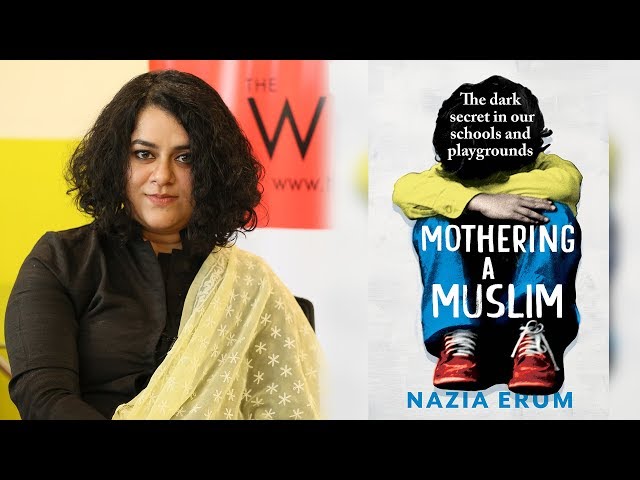
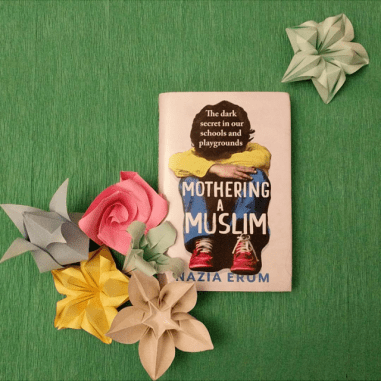
It became overwhelming for me to watch such hateful news channels. As an educator, this made me think, how do these news affect the children? Following the guidelines for this pandemic, to change this crisis into opportunity, I ended up reading ‘Mothering A Muslim’ by Nazia Erum in this lockdown. Nazia Erum in her book decodes Islamophobia in schools.
Nazia very eloquently writes about Islamophobia residing in our living rooms which then find its way in our children’s classrooms and playgrounds:
“This book only mirrors the world we have created for our children. In truth, it is not the words of the kids that hurt. It’s the imagined words in the speech of the parents and other adults around the kid that hurt more. What are we saying in our drawing rooms and over dinner tables which our kids translate into hatred for each other in classrooms and playgrounds? If we truly look into our hearts, and listen to our politicians and journalists with open minds, we will find the source.“
The language we use has a major impact on our children. How we talk about people who are different from us reflects our thoughts, beliefs, values, biases, and stereotypes. The way we talk has the power to include or exclude the people around us.
She wanted to bring together the experiences of motherhood and challenges of Muslim mothers, and highlight how their worries are different from mothers from other religious backgrounds. The book is an experiential journey of how a part of someone’s identity (here, the Muslim identity), became the utmost crucial factor to be marked and held accountable for.
The book was released in 2017, and it was a result of research conducted by the author about the experiences and anxieties of Muslim mothers. The book starts with Nazia’s dilemma to name her daughter. She shares her fear when she held her daughter for the first time; she was worried about even giving her a ‘Muslim’ name.
“Should I choose a name that signalled her religion, like Fatima, or pick a modern and neutral-sounding name, like Myra, to avoid too much spotlight on her being Muslim? I settled for the latter.“
Holding that fear in her heart, Nazia went on a journey with some questions in her mind. Many mothers shared this common fear with her. She wanted to bring together the experiences of motherhood and challenges of Muslim mothers, and highlight how their worries are different from mothers from other religious backgrounds. The book is an experiential journey of how a part of someone’s identity (here, the Muslim identity), became the utmost crucial factor to be marked and held accountable for.
This makes it an essential feminist book too as it is a powerful piece of writing that brings together the voices of mothers, which usually is lost in our patriarchal society.
Nazia writes, “Hate affects not just the tormented by also the tormentor.” The difference lies in how hate affects the tormentor and the tormented. When hate becomes a free commodity, we need to teach our children love and empathy. We often talk about communal hate that is increasing every day in our social surroundings. What we forget to address is how this communal bullying has reached our children’s classrooms and playgrounds. How schools, which are considered safe spaces for learning and making friends, have become institutions of communal bullying?
Mothering A Muslim will make you understand how deep and how early the communal hate gets in the discourse of children’s lives. Children as young as those attending kindergarten to the ones attending higher education do face communal bullying. Bullying is repeated and instances of misuse of power with intent to cause harm is common. It can be verbal, physical, and online to cause humiliation and exclusion.
Mothering A Muslim will make you understand how deep and how early the communal hate gets in the discourse of children’s lives. Children as young as those attending kindergarten to the ones attending higher education do face communal bullying. Bullying is repeated and instances of misuse of power with intent to cause harm is common. It can be verbal, physical, and online to cause humiliation and exclusion.
‘Paki’, ‘Terrorists’, and ‘Go to Pakistan’ have become the classroom and playground discourses. What we need here to pause and think, where is it coming from?
A mother shared:
“When a Muslim student is bullied it is on pronounced religious lines. Now he is called Baghdadi, Bangladeshi, Pakistani, or simply a terrorist. Everyone’s speech is borrowed from the language used in the news [channels].”
This book provides us a mirror to reflect on what is wrong in our society and forces you to question what lessons and values you teach your children. I recommend this book to present and future, teachers and parents, and to all those who want to get an insight into what it means to be a Muslim in this country.
Also, watch Nazia Erum interview by The Wire.
Swati is a postgraduate in Education with a specialization in Early Childhood Care and Education, from the School of Education Studies, Ambedkar University Delhi. Her research interest lies in understanding gender issues in education. She can be reached at shukla011swati@gmail.com, Twitter, Instagram and Facebook.
Featured Image Source: The Wire
source: http://www.feminisminindia.com / Feminism In India / Home> Culture> Books / by Guest Writer / posted by Swati Shukla / September 11th, 2020
Dar-ul-Uloom Deoband, the world-famous seminary is proud of its educational heritage since its inception. Its huge library plays an important role in attracting students and research scholars from all over the world. Dar-ul-Uloom is currently working on a project to digitize its colossal library containing rarest of the rare books and manuscripts with great zeal.
The man in charge of this overwhelming task is its librarian Maulana Shafique and his team of 13. They are going about their task with enthusiasm and passion. Even though they have no pressure of any deadline, they still realize the sheer enormity of their task which would leave an indelible mark in the pages of history and immortalize their names.
This prestigious library preserves Islamic History in the form of more than 2 lakhs books and around 1563 rare manuscripts including the Holy Quran written by the Moghul Emperor Aurangzeb and a 750-year-old handwritten book on botany by Imammuddin Zakaria. The age of these historical manuscripts is between 500 to 800 years. Most of this treasure trove is bequeathed to Dar-ul-Uloom as a gift or ‘Hadiya’.
Dar-ul-Uloom has taken enormous care in preserving and curating these rare books and manuscripts with great seriousness till now.
The library has an enormous collection of books on Sufism. According to Maulana Shafique, the library houses hundreds of handwritten books on Tasawwuf (Islamic mysticism). The latest amongst them being 300 years old. This vast collection of books was acquired during the last 150 years.
Pic credit -umair hashmi
The library which was established in 1866 has more than 2 lakh books. Apart from this mammoth collection, there are about 40 thousand books which are part of the Seminary’s syllabus. The most precious collection of this library is those 1563 manuscripts which were handwritten in Arabic, Persian, Urdu and Sanskrit. Out of these about 300 manuscripts have become extremely frail and its contents began to be hazy and illegible which requires immediate curative measures to arrest its further deterioration. This situation caused a great deal of concern amongst the seminary’s officials and its Vice-Chancellor Maulana Abdul Khalique Madrasi who decided to take immediate initiative to conserve these priceless books and manuscripts.
Since the library houses ancient books in addition to 1563 manuscripts which included a letter from the Prophet Mohammed (PBUH) addressed to the Egyptian King, a Quran written by the Moghul Emperor Aurangzeb, another Quran written with golden ink, yet another one written completely on one page as well as handwritten copies of Towrah, Vedas, Geeta, Mahabharat and Ramayan and such other antique manuscripts of knowledge which are being conserved and curated by using modern technology.
According to Maulana Shafique, the scholars of Dar-ul-Uloom give utmost importance to conserve the treasure of knowledge of this seminary. He narrated the famous incident of the Late Shaikh-ul-Hadith Maulana Anzar Shah Kashmiri when he went to Egypt. He chanced upon a rare ancient book which he wanted to bring for the library. But the owner of the book declined to part with it. Maulana then borrowed this book for reading and he memorized the whole book in just one night. When he returned to India he re-wrote the book “Nurul Aza” which is part of the Seminary’s curriculum.
Pic credit -umair hashmi
Maulana Shafiq considers the books as the treasure trove of knowledge. These books are an important source of research work. “We have research students from all over the world. Hence, we had to protect these books. For this, the ‘Mohtamim’ (Vice-Chancellor) Maulana Abdul Khaliq Madrasi himself took me to the National Archives of India and got information from there,” he said, and added, “Later a team of three people attended a seminar organized on the same subject in Jammu. We contacted Iran Culture House in Delhi. The people of Iran Culture House were quite professional and knowledgeable. They agreed to cooperate and conserve the books and manuscripts by using the modern techniques but on a condition that they would retain a copy of each preserved book or manuscript as their fee. However, we did not accept their condition in this regard. Maulana Abdul Khaliq Madrasi Sahab’s seriousness reached to the extent of a zeal. We collected all the technical knowledge to undertake this mammoth task all by ourselves by relying on Allah. We commenced our task during the lockdown.”
Maulana Shafique says that the books are related to a great number of subjects such as Unani Medicine, Biology, Jurisprudence, Law, History, Theology, Culture and Astronomy.
He adds that hundreds of books were never opened since centuries because of its delicate and infirm nature to save it from damage.
“There is a manuscript of the 24th Section of the Holy Quran written by the Moghul Emperor with golden ink. Specialists are conserving the manuscripts at a rate of about 150 to 200 pages a day. They are being scanned, laminated and digitized. A new library has been constructed at Darul Uloom. After its completion, the books will be shifted over there. So far 1 lakh pages have been saved. Preservation of 50 lakh pages is yet to be done,” he said.
About the digitization process, Maulana Shafiq, in charge of the library, explains that the boys first separate the pages of the manuscripts by inserting a serial number with a pencil and applying a paste of transparent glue, then laminated with a special tissue glass cloth and dried. These pages are then saved sequentially. It is scanned before binding and preserving digitally. Our conservation project includes books of every religion written in about 20 languages.
The 95 per cent of books found in the library were acquired as a gift.
Darul Uloom’s library has an annual budget of Rs 50 lakhs which is included in Darul Uloom’s total budget.
Sameer Chaudhary of Deoband says that very few in the world know that Darul Uloom has such a wealth of valuable books. “The whole world will have a big surprise once our digitization project is completed,” he adds.
As of now the National Archives of India, Malaysia, Saudi Arabia and Iran have shown great interest in this project and offered help but according to sources, Darul Uloom does not want to accept any help in this regard.
Maulana Shafiq informs that earlier he was afraid to touch these ancient books as the paper was falling apart by a mere touch. Now, since the preservation process is being completed these books would come alive and benefit research scholars from around the world. After its digitization, these books would be safe to be handled for thousands of years.
The library which was built in 1907 would be considered among the most modern libraries of the country. A new library building is being built within Darul Uloom’s campus at a cost of Rs 20 crore. These digitally restored books would then be shifted in the new building.
There is a large stock of old books at the library. These include letters written by Prophet Muhammad (PBUH) to the Emperor of Egypt, Quran written by Aurangzeb’s hand, another one written with gold ink, yet another one completely written on one page as well as an amazing collection of books like Towrah, Vedas, Geeta, Mahabharata and Ramayana.
source: http://www.twocircles.net / TwoCircles.net / Home> Indian Muslim> Lead Story> TCN Positive / by Aas Mohammed Kaif / TwoCircles.net / September 04th, 2020
The late former British secret agent Noor Inayat Khan plays a Veena.(File/AFP)
English Heritage described her as “Britain’s first Muslim war heroine in Europe”
Khan was the first female wireless operator sent to Nazi-occupied France but was captured, tortured and shot dead
London :
A woman of Indian-origin dubbed “the spy princess” on Friday gets a new memorial in Britain honoring her espionage work and refusal to betray secrets in World War II.
English Heritage is putting up a Blue Plaque honoring Noor Inayat Khan outside 4 Taviton Street in the Bloomsbury area of central London where she lived from 1942-43.
In 2012, Queen Elizabeth II’s daughter Princess Anne unveiled a bronze bust of Khan in nearby Gordon Square Gardens.
Her biographer, Shrabani Basu, said Khan, born into a princely Indian Sufi family and descended from Tipu Sultan, the 18th century ruler of Mysore, was an “unlikely spy.”
She believed in non-violence and religious harmony but gave her life in the fight against fascism when her adopted country needed her, she said. “It is fitting that Noor Inayat Khan is the first woman of Indian origin to be remembered with a Blue Plaque,” said Basu, who wrote “Spy Princess: The Life of Noor Inayat Khan.”
“As people walk by, Noor’s story will continue to inspire future generations. In today’s world, her vision of unity and freedom is more important than ever.”
Khan was the first female wireless operator sent to Nazi-occupied France but was captured, tortured and shot dead aged 30 at the Dachau concentration camp in September 1944.
English Heritage described her as “Britain’s first Muslim war heroine in Europe.” She was killed after refusing to give away secrets under repeated torture by the Gestapo.
Khan was posthumously awarded the George Cross and is one of only four women to have directly received Britain’s highest non-combat award for gallantry.
English Heritage has acknowledged that the proportion of women celebrated by its blue plaque scheme remains “unacceptably low.” It is planning to unveil tributes to the secret agent Christine Granville at a west London hotel where she lived and the sculptor Barbara Hepworth in north London.
Another is planned for the headquarters of the National Union of Women’s Suffrage Societies, which campaigned successfully for women to be allowed to vote.
source: http://www.arabnews.com / Arab News / Home> World / by AFP / August 29th, 2020
Coinciding 74th Independence Day on Aug. 15, scholars recollect help of Turkey to India’s national freedom struggle
Abdul Hameed Nomani, General secretary of the All India Muslim Majlis Mushawarat
New Delhi:
Celebrating country’s 74th Independence Day on Aug. 15, under the shadow of recent communal riots in capital Delhi and anti-citizenship law stir, many Indian scholars have called for recalling the role of Muslims during India’s freedom struggle.
Author and scholar Waseem Ahmed Saeed said over time, the contribution of Muslim freedom fighters in India has been forgotten.
In his book titled Kala Pani: Gumnam Mujahideen-e-Azadi 1857, Saeed said from the 1757 Battle of Plassey in Bengal, Tipu Sultan’s Seringapatam battle in South India in 1799 to the massive revolt in 1857 against the British was led by Muslims.
Saeed, who has authored a book on the subject in the Urdu language, said while India’s official history celebrates Udham Singh for killing Michael O’Dwyer, the lieutenant governor of Punjab in India, in revenge for the 1919 Jallianwala Bagh massacre in Amritsar, it does not recognize Sher Ali Afridi, who killed Lord Mayo, British viceroy and governor-general of India from 1869-1872.
Speaking to Anadolu Agency, many Muslim scholars and historians said the role of their ancestors in the freedom struggle has been overlooked.
According to Syed Jamaluddin, director of historical research projects at the Institute of Objective Studies, a think tank, there is no adequate coverage of the role of the Indian Muslims in the national movement.
“The contribution of Muslim revolutionaries, poets and writers is not known today. Similarly, little is known about the contribution of people like Ali Musliyar and Bi-Amma, who made significant contributions,” he told Anadolu Agency. He is currently editing a book on the Muslim role in India’s freedom struggle.
Saeed recalled in his book that it was the ruler of Bengal Siraj-ud-Daulah, who first fought and lost to the British in 1757, which became a cornerstone for the imperial power to colonize India.
He said that even after losing this battle, there were many rebellions led by Muslims until 1850.
Muslim revolts against British
Jamaluddin mentions the Fakir-Sannyasi rebellion, a joint revolt against colonial power by Muslim and Hindu ascetics, for preventing them from collecting religious tax from locals. It started in 1764 and continued until the 1850. He said the rebellion even spread its wings to southern India’s Madras (now Chennai) presidency.
But most prominent and popular movements that hit the British hard in the early 20th century in the subcontinent was the Reshmi-Rumaal Tehreek (Silk Cloth Movement) led by Maulana Ubaidullah Sindhi with the help of Turkey, Germany, and Afghanistan.
Speaking to Anadolu Agency, a prominent Muslim scholar Abdul Hameed Nomani said that despite his best efforts, Sindhi’s contribution has not been included in the official Indian history.
Along with an Indian prince Raja Mahender Pratap Singh, Sindhi, and Maulvi Barkatullah had established the exiled government of India in Afghanistan in 1915.
“The movement picked up around the same time when Subhash Chandra Bose [renowned Indian freedom fighter] was allying with Germany and Japan to oust the British from India. While Bose is celebrated nationwide, not much is known about Sindhi and his supporters,” said Nomani, who is also the general secretary of the All India Muslim Majlis Mushawarat, an umbrella group of prominent Muslim organizations.
It was named Silk Cloth Movement because Sindhi and other leaders used to send letters and directions to their cadres written on silk cloth.
Later, Sindhi went to Turkey and joined the country’s national struggle.
“The movement led to the formation of Indo-German-Turkish mission to encourage local tribes on the borders of Afghanistan to attack Britishers and their interests. While the key figures were arrested by the British, the movement remains a key event in the freedom history,” he added.
He said even though in 2011 the government released a postal stamp to commemorate Sindhi’s movement, there has been no vigor to record the sacrifice of Sindhi and his allies Mahmud Hasan and Husayn Ahmad.
“Only passing reference has been made about the role of Muslims in India’s national struggle,” rued Nomani.
source: http://www.aa.com.tr / Anadolu Agency / by Cheena Kapoor / August 14th, 2020
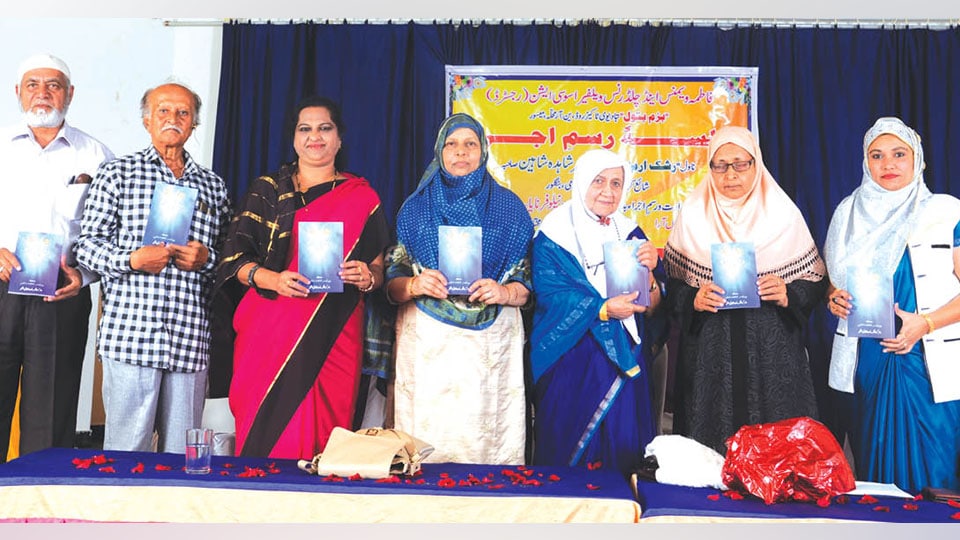
Rashk e Iram, a novel in Urdu by Shahida Shaheen and published by Karnataka Urdu Academy, was released at Bazm e Batool in N.R. Mohalla recently.
Syeda Niloufer Nayab, President, Fatima Women and Children’s Welfare Association, releasing the book, wished success and encouraged the novelist to continue writing.
Prof. Jahan Ara, retired, Head, Department of Urdu, spoke on the book.
The programme started with Quranic verses by Yasmin Taj, Hamd by Uzma Sultana, Naat by Salma Bano followed by introduction of Novelist by Momina Mukhtar. Salma Siddiqua and Mushtaq Sayeed were the chief guests. Prof. Shahida thanked all those who assisted her in bringing out this novel. Nyamathulla Khan compered.
source: http://www.starofmysore.com / Star of Mysore / Home> News / October 14th, 2019
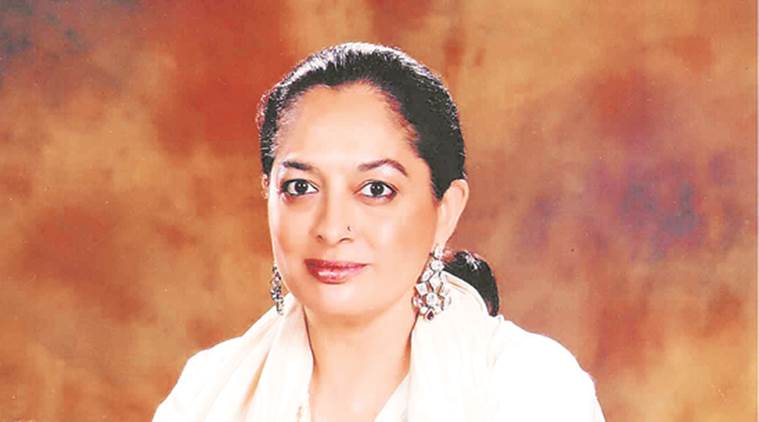
Sadia Dehlvi, master storyteller who chronicled capital, dies at 62
Dehlvi was also a close friend of celebrated author Khushwant Singh, who dedicated his book Not a Nice Man to Know to her. (File)
Of all the roles that 62-year-old Sadia Dehlvi played in her life, the one she mastered was that of a storyteller. From her childhood memories, she dug out stories of “nihari Sundays” at home, the jinns that inhabited Shama Kothi where the Dehlvis lived, and the family’s contribution to society in the form of the iconic Urdu and Hindi magazines called Shama and Sushma.
On Wednesday night, Dehlvi — author, activist and food connoisseur — passed away after a long battle with cancer. She had been admitted to the hospital for a few days, and on August 1, her son Arman Ali Dehlvi posted a “cancer treatment fundraiser request” for his mother on social media. A close friend of Dehlvi’s said she passed away at home on Wednesday night.
Activist John Dayal, who also knew Dehlvi’s father, told The Indian Express , “I wished her on her birthday in June, she was fighting cancer so bravely. Her family contributed immensely to the syncretic culture of the city, and so did she. She popularised Mughal cuisine with her writing.”
City chronicler Rana Safvi recalled several meetings with Dehlvi at the Nizamuddin Dargah. Safvi said, “I love her writing, especially her book The Sufi Courtyard: Dargahs of Delhi. I used to often see her at the Dargah… With her gone, the dargahs will feel empty.”
Apart from The Sufi Courtyard, Dehlvi also wrote Sufism: The Heart of Islam in 2009, and Jasmine and Jinns: Memories and Recipes of My Delhi in 2017. She also scripted the hugely popular TV show, Amma and Family, starring Zohra Sehgal. Dehlvi founded Al Kauser, the restaurant in Chanakyapuri, with her mother in 1979.
In 2017, she had told The Indian Express, “Al Kauser was the first roadside kebab shop in New Delhi. It became quite the rage in the ’80s and ’90s. The kitchen was in our house.”
The Dehlvis, who were essentially traders, moved to Delhi in the early-17th Century and took the name “Dehlvi”, which means “the one from Dehli (Delhi),” said writer Sohail Hashmi. “The family started publishing Shama, one of the first Urdu magazines on Hindi cinema, which also served as a quasi-literary magazine. Then came Sushma, a magazine in Hindi. Actor Dilip Kumar was a patron of the magazines,” he said.
Dehlvi was also a close friend of celebrated author Khushwant Singh, who dedicated his book Not a Nice Man to Know to her.
Later, Dehlvi produced a television serial called Not A Nice Man to Know, in which Singh was the anchor.
source: http://www.indianexpress.com / The Indian Express / Home> Books and Literature / by Somya Lakhani / New Delhi / August 06th, 2020