Deoband, UTTAR PRADESH / KENYA / Croydon (South London). UNITED KINGDOM :
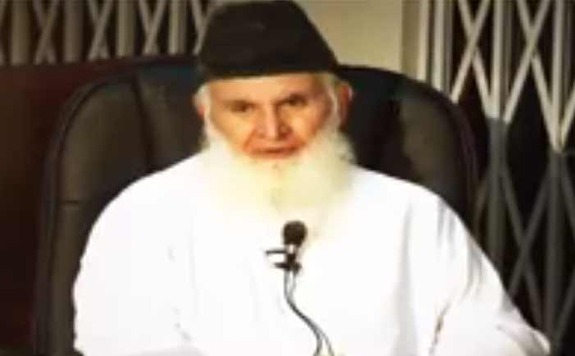
With 2019 saying goodbye, Maulana Izhar Ahmad Qasmi, an embodiment great scholarship, piety, humility, patience and perseverance, also said adieu to this mortal world.
Maulana Izhar Ahmad Qasmi, 74, was born in Deoband, India, and breathed his last on 30 December, leaving his family and admirers in tears.
He belonged to a very rare breed of ulema who had dedicated themselves to the service of Islam. His funeral prayer and burial was attended by thousands of his admirers from all over UK.
A widely respected and admired person, Maulana Izhar worked tirelessly to propagate the message of Qur’an without indulging in controversial issues.
In 1970 when Indian Muslims living in Kenya approached the great scholar and rector of Darul Uloom Deoband, late Maulana Qari Tayyab, and requested him to send a scholar to Kenya for their religious guidance, his choice fell on Maulana Izhar, a man Allah SWT had blessed with a spiritual attraction, humility, politeness and deep knowledge of Deen. He convinced Maulana Izhar to accept this responsibility.
From 1970 – 1983, Maulana Izhar served as the Imam in Pangani Mosque of Kenya. Following political unrest in the country, like several other Asians, Maulana Izhar had to migrate to Britain with his family.
In Britain he established the first mosque in Croydon, a town in South London, and served as an Imam for 15 years until he was diagnosed with a brain tumour and had to undergo a delicate surgery in the 90s.
As an Imam Maulana Izhar earned admirable love and respect of the local community. His knowledge of Qur’an and deep love to spread its message earned him wide respect all over Britain.
After his surgery, doctors said that his days were numbered and that he would not be able to survive more than a few days. But Allah SWT’s plans and works in strange and mysterious ways. When He chooses someone for the service of His Deen, He does it in ways that are beyond human comprehension. Not only did Maulana Izhar lived for at least 21 years but also completed his seminal translation and interpretation of Qur’an, titled, Izharul Qur’an in ten volumes, and continued his Qur’anic lectures even after suffering from stroke after his brain surgery and becoming partially paralysed. Gradually he became bedridden and spent the last few years in this condition. Strangely until it was possible for him to sit in a chair he continued his Qur’anic lectures on Iqra TV without letting the viewers feel that his body was paralysed and that he was bedridden.
A comment on my Facebook from Dr Atif Suhail Siddiqui, University of Yale, says it all about Maulana’s resolve. He writes, ‘You did not mention one of the most important qualities of Maulana: He performed 42 Hajjs. After every Hajj he used to travel to Deoband to see his parents. In Deoband, my house is next door to his. So whenever he came to India, I used to visit him. When his [extended] family members noticed his swollen shoulder, they were shocked. I am a witness to it myself. They immediately called for a doctor who advised them to take him to an orthopaedist. His x-ray showed a fracture in his shoulder. It was then that it was found out that during Hajj he got pushed during tawaf and fell down. Due to the stroke one side of his boy had become so insensitive that he did not feel any pain and did not realise that his shoulder had been fractured. He performed all the arkans of Hajj in this condition and even travelled to Deoband. May Allah SWT shower His mercy on him.’
Despite such severe condition Maulana did not like to take anybody’s help. Another Facebook friend, Chicago based alim, social media activist, blogger and YouTuber, Mufti Yasir Nadeem al-Wajidi, said that he had seen Maulana performing Tawaf and SaI during Umrah without anybody’s assistance or a wheelchair despite the fact that ‘He was virtually dragging himself.’ He added, ‘On one occasion Maulana said that his ailment and his bedridden condition had become a blessing for him because it allowed him to finish one Qur’an every day. Seeing this [and his contentment] one of his Christian doctors had embraced Islam.’
Among Maulana’s survivors is the renowned Alim of Britain, Mualana Qasim Rasheed, who himself is an institutions-maker. Lest this be confused with merely establishing mosques and madarsas, let me make it clear that he is the founder and chairman of one of the major charity organisations, Al-Khair Foundation , that does not only send food and other temporary aid to the displaced people in war-torn and hit by natural-disaster-hit regions of Africa, Middle East, Bangladesh and Pakistan but has also built schools and health clinics for them. He has also established two secondary schools and two TV channels in Britain. However, most important of all these is a full-fledged hospital in Gaza . I have mentioned it only to reflect on the impact of tarbiyah on one’s children.
May Allah SWT bless Maulana Izhar saheb with huge rewards for his services and bless Imam Qasim Saheb and all the survivors with patience and perseverance to tolerate this loss.
source: http://www.milligazette.com / The Milli Gazette / Home> Online News> Community News / by M Ghazali Khan , The Milli Gazette Online / January 04th, 2020
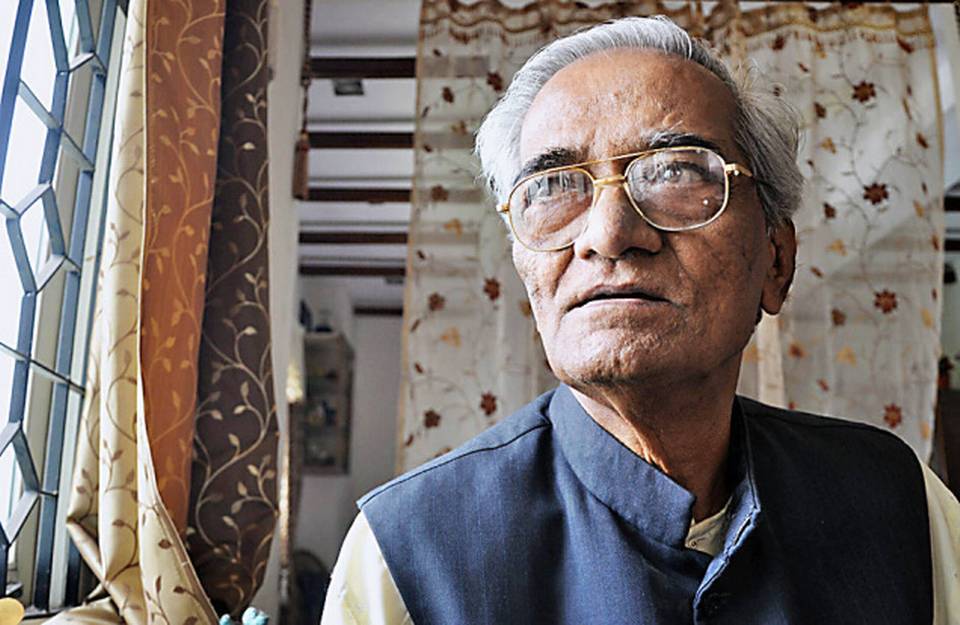
Born as Salma Begum in a Muslim family of a small town Dibai, District Bulandshahar in the northern state of India, Uttar Pradesh, she went on to become the first Muslim woman in the world to do her PhD in Sanskrit (1969), India’s ancient language. After marriage she changed her name to Salma Mahfooz.
“My father, Ishtiaque Ahmed and mother, Ehsaan Fatima encouraged me to pursue my higher studies in Sanskrit as I was deeply interested in the language.
After completing high school from the UP board, I came to Aligarh Muslim University (AMU) for higher studies in 1961 and opted for Sanskrit,” says Dr. Salma Mahfooz.
Salma Mahfooz completed her BA and MA in Sanskrit and finally went on to write her PhD thesis in Sanskrit on the ‘Types of Heroines in Sanskrit Dramas’ under the supervision of India’s acclaimed Sanskrit scholar Dr. Ram Suresh Tripathi. She also did an MA in Hindi literature.
“In my PhD thesis, I have analysed several roles that a woman portrays in multiple Sanskrit literary forms,” says Dr. Salma Mahfooz.
She taught Sanskrit at Rani Bhagyawati College in Bijnor and later joined AMU as a Lecturer.
Under the fellowship of India’s regulatory body for higher education, University Grants Commission, she authored a book ‘A Critical Study of ‘Sirre Akbar visa-vis-The Upanishads’ by Dara Shikoh (1615 – 1659), the eldest son of Mughal Emperor Shah Jahan
“I have taught Upanishads, Hindu religious texts, and various other Sanskrit literature components,” adds Dr. Salma Mahfooz.
A practicing Muslim, Salma Mahfooz has studied Hindu scriptures and texts, including The Bhagavad Gita, a 700-verse Sanskrit scripture that is part of the Hindu epic Mahabharata, and Kama Sutra, an ancient Indian Sanskrit text on sexuality and eroticism.
She was a Senior Research Fellow and Research Associate at the University Grants Commission and also headed the Sanskrit Department of the Aligarh Muslim University.
source: http://www.youtube.com / www.cineink.com / Cine Ink / January 10th, 2019
Padma Shri Mujtaba Hussain who completed 50 years of humour writing in Urdu. Photo: G. Ramakrishna | Photo Credit: G_RAMAKRISHNA
Many people have learned Urdu just to read his articles
Laughter is the shortest distance between two people. But in this case, it spans the entire Indian sub-continent. Whatever he writes, creates ripples of laughter across the Urdu world.
No prizes for guessing who the writer is. If it is Urdu and humour ,it ought to be Mujtaba Hussain.
For the past half a century, this Padma Shri recipient has been dishing out what is in great short supply today – humour.
Mr. Hussain’s writings open up the lips and the heart and at the same time show the pearls and the soul.
At 77, he is anything but tired.
This Hyderabadi humorist doesn’t believe in resting on laurels. Week after week, he churns out sharp and witty write-ups that are lapped up by his growing fans club.
Two books recently published by the Educational Publishing House, Delhi, bring out some of the finest writes-ups about Mr. Hussain penned by critics and writers of no mean repute.
The book “Mujtaba Hussain Jaisa Dekha Jaisa Paya” is all about his personality while “Mujtaba Hussain Aayeinon ke Beech” deals with his art and style.
At a time when the Urdu language has few takers, Mr. Hussain has revived interest in it through his satirical writings.
Many people have learnt Urdu just to read his articles.
Today a number of people have done research on him and many waiting to do Ph.D on his art.
The enduring appeal of his writings is a tribute to his uncanny sense of humour and the Urdu language itself.
Well known writer-journalist, Khushwant Singh, is an unabashed admirer of Mr. Hussain and feels he is rare among Indian writers of humour.
Pakistan writer, Syed Arif Hussaini, calls Mr. Hussain a purveyor of wit and humour.
“He excels in his field due to simplicity of his language, racy style and absence of overlapping themes,” he says.
Sure, Mr. Hussain’s brand of humour is wholesome and straightforward.
He creates humour without offending anyone. Borrowed brilliance is not his forte, says Mohd Ali Siddique, Pakistan’s well known critic.
No compromises
In a bid to tickle the funny bone, Mr. Hussain doesn’t compromise on the language either.
The simple but literary touch in his works comes as a breath of fresh air.
“His humour is laced with a bitter truth which only a honest person can perceive,” says his daughter, Rashida Samdani. Those who have read his “Apni Yad Mein” composition will know. It is a masterpiece of self obituary wherein the author highlights his own follies while taking pot-shots at life.
The two publications unveil interesting facets of Mr. Hussain’s personality. Several real life incidents are cited to show his ready repartee, subtle intellect and scintillating humour even during trying times.
Man knows how to cry from birth, but laughter takes some learning. But with Mr. Hussain’s ready wit, the job sure becomes easier.
source: http://www.thehindu.com / The Hindu / Home> News> Cities> Hyderabad / by J.S. Ifthekhar / Hyderabad – April 01st, 2013
Nadir Khan Sargiroh’s stories about trivial things like raasta, chuha-billi and joote are full of proverbs, puns and punchlines.
To improve is to change, to be perfect is to change often. He has done just that and is garnering significant attention. Nadir Khan Sargiroh, the new kid on the block, has come as a breath of fresh air in Urdu literary circles. With a whole new approach to humour writing, he is trying to be ahead of the curve.
What is different about him is his out-of-the-box thinking and alternative way of telling stories. As his name suggests, Nadir has novel ideas. He has chosen to move off the beaten path, think freely and creatively. He doesn’t carry the burden of his contemporaries or constraints of his predecessors. Humour gets a fresh lease of life at his hands.
Humour is usually created by poking fun at someone. Urdu humourists do it at the expense of biwi, saas and saali. Nadir Khan steers clear of these stereotype characters. He doesn’t need a fixed image to construct his story or connect with readers. He is adept at creating humour by talking about such trivial things like raasta (way), chuha-billi (mouse and cat), janwar ki dum (animal tail), joote (shoes). He sets store by well-known phrases and expressions. His writings are proverb-packed and pun-based, something unheard of in Urdu literature.
In the story Duniya Bhar Ke Raaste Waaste, he writes: Kisi bhi manzil tak pahunchne ki awwaleen shart hai raasta. Shahron main raaste iss liye banaye jaate hain ke waqt be-waqt khudai ke liye koee maqool jagah maissar ho, aur hadison ka koee bahana ho (Roads are the prerequisite to reach any destination. In cities roads are laid so that they come in handy for on and off digging and there is some pretext for accidents). About the roadways in China, he says Cheen ke raaste duniya ke raaston ke muqable main zara chain ka saans lete hain. And here is the masterstroke: Cheen ke tamam raaste Made in China hain.
Nadir Khan has developed the craft of playing on words. Idiomatic construction of sentences is his strong point. And he loves to exploit multiple meanings of a term. There is, of course, spontaneity in the use of expressions and this adds to the charm. Readers never feel that an expression has been squeezed in needlessly. In the story Hunooz Billi Door Ast, Nadir Khan’s writing prowess comes to the fore as he goes on a wordplay binge. The story is all about the terrific time rats give, their secret holes and clever exit points. There is nothing new about rat infestation, but the way Nadir Khan weaves the story with idioms and expressions makes it highly readable. Sample these sentences:
Baaz janwar dil main ghar kar jaate hain aur chuhe ghar main bil kar jaate hain. Nadir plays on the word ‘ghar’ and ‘bil’ to say how some animals make a home in hearts while some a burrow in homes. Then, he goes on to explain the ‘naak main dum’ created by rats and also the importance of ‘har-bil azeez’ rodents in medical testing. If only they stopped making runs from here to there. For this wishful thinking, he puns on Mirza Ghalib’s famous verse: Gharon main daudte phirne ke hum nahin qaail
Nadir Khan, who hails from Mumbai, is an engineer in urban designing. He took to Urdu fiction writing in 2006 but soon realised that he should write something different if he wants to stand out from the rest. Endowed with a natural flair for humour, he decided to make it his passion. But here too, he faced challenges as there are many big names in Urdu humour writing like Ibne Insha, Mushtaq Ahmed Yousufi (Pakistan) and Mujtaba Hussain of India.
“I have evolved a different style of humour writing which is engaging and full of proverbs,” says the 48-year-old writer who enthralled the audience at the recently-held annual humour conference of Zinda Dilan-e-Hyderabad.
Nadir Khan is careful in avoiding double meaning words and below-the-belt remarks. His stories are humorous in a dignified way. No wonder he has a good fan-following among women. The title of his first book itself is humorous. He has named it Baa-Adab Baa-Muhaawara Hoshiyaar. His second book Nadir Shahi Tukde is almost ready and will be released shortly.
Nadir Khan keeps his short stories really short, sometimes just a few paragraphs. But, every para is laced with phrases and punchlines. When he writes about cricket, he says how Australia ‘cricket ko khel samjhta hai’. Describing the nabbing of a thief from a well he twists the well-known proverb to say ‘chor geele hathon pakda gaya’. In a ten-line write-up on Payedar Paye, he uses as many proverbs. Playing on the word ‘paya’ (goat’s legs), he writes how badi der tak paye aag par aur hum intezar main galte rahe (for a long time, the lamb trotters on fire and me in waiting kept roasting). In the short piece on Ainak Ka Bojh, he explains how spectacles rest on naak ke sar par pate ke bal while uski tangon ka bojh donon kanon ke kandhe sambhalte hain.
Writing about the shoe-hurling incident at George Bush by an Iraqi journalist, he says the media highlighted the targetted attack more than the gola-bari on Iraq. But, see the bravado of Bush who jootiyan kha ke be-maza na huva. Nadir Khan resorts to Ghalib’s famous verse to deliver the punch by replacing the word ‘gaaliyaan’ with ‘jootiyan’. His write-ups are such that readers will die laughing. And surely zindagi naam hai hans-hans ke mar janeka.
Nadir Khan’s sense of humour and irony come out in the story on matrimonial ads. He writes: Alliance is required from a teacher who is educated, a policeman who is honest, a professor who is attentive and a politician ‘jo galiyan kha ke be-maza na hua’.
Like all humour writers, a sidekick figures in Nadir Khan’s stories. This Quixote goes by the name Purjosh Puri and comes in handy for the author to take pot-shots. Many writers, including the king of humour, Mujtaba Hussain, feels Nadir Khan has the potential to emerge as the leading humour writer of Urdu.
Karta nahin hai tanz-nigari main aiyen-gaiyen
Khail hain iske rang ke khud Mujtaba Hussain
Ye Sargiroh-e-Khafila haraf saaz hai
Iss par to Urdu ke adeebon ko naaz hai
source: http://www.telanganatoday.com / Telangana Today / Home> Literature / by J S Ifthekhar / December 15th, 2019
Qureshi talks of the attack that changed her life, her journey through depression and her book, Being Reshma
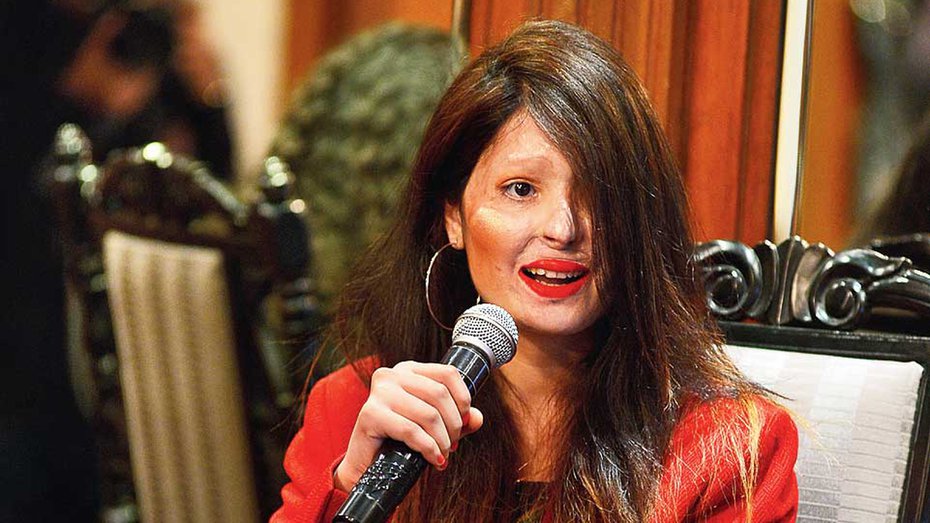
Reshma Qureshi / Image: Arnab Mondal
She is a vlogger, has walked the ramp and is an youth icon. She is also an acid attack survivor. Reshma Qureshi talks of the attack that changed her life, her journey from depression and her book, Being Reshma (Pan Macmillian, Rs 599), at an event, An Author’s Afternoon, at the Alipore star hotel. She shared the dais with co-author Tania Singh, the CEO of NGO Make Love Not Scars, who traced the making of the book. They were in conversation with designer Agnimitra Paul.
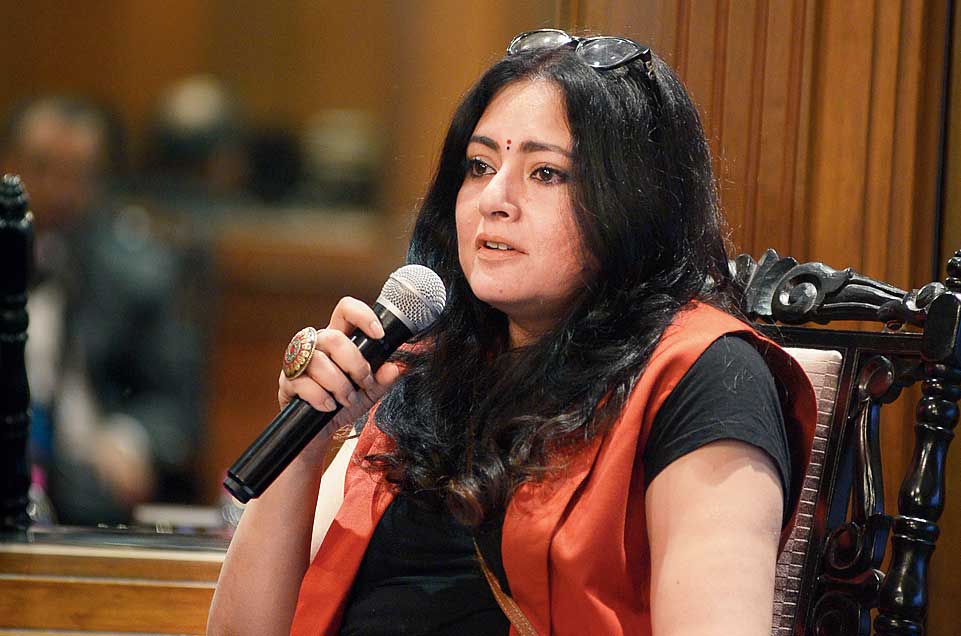
Agnimitra Paul / Picture: Arnab Mondal
CHILDHOOD DAYS
Reshma: I was the youngest in the family and my father’s favourite. I used to be very naughty as a child. If I wanted something, I would get it somehow. I was also full of mischief. I would sell stuff from the house to buy treats that I fancied. Once I sold a gold ornament to buy apples. That was the time my mother had beat me up. I lived with my parents, two brothers and two sisters in Allahabad. My father was a taxi driver, but he had to sell his taxis when my mother was diagnosed with cancer.
WHY A BOOK ON RESHMA
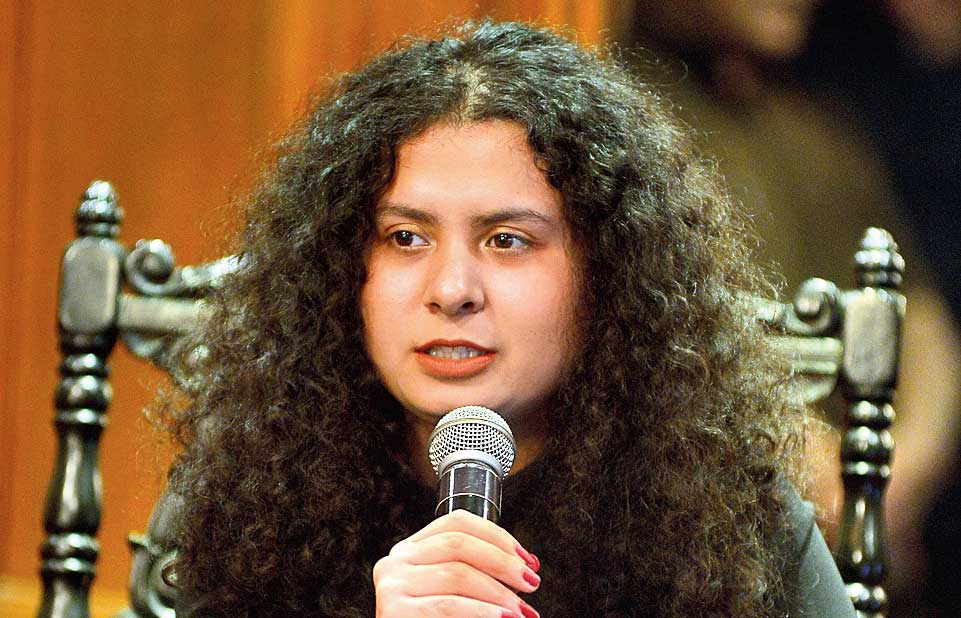
Tania: We run a rehabilitation centre for acid attack survivors in Delhi. So many people confess they don’t have the courage to interact with a survivor. They wonder how I can work with them day in and day out. Such reaction has always left me shell-shocked. The minute you make a statement like this, you have made an attacker successful in his mission and you make survivors believe that they don’t belong to mainstream society. Many survivors, despite the trauma they go through, have retained their sense of humour. They have a love for life. They love dressing up and going out. Some of them will enjoy an occasional glass of wine. They are normal people.
Reshma is so inspiring. For a 17-year-old girl who was attacked with acid, she overcame depression in a year and a half. She went on to create videos that garnered millions of views, she gives beauty tutorials, walks the ramp and is always the first one to jump at every opportunity. She loves the colour pink and designs her own clothes, including the red jacket she is wearing today. I wanted the book to show people that you are not an accumulation of your circumstances. You are a human being first. I hope this book will help readers connect with survivors. When I am having a tough day I talk to these survivors and realise that nothing in the world is that bad. And that’s what I hope this book will give readers — courage.
Tania Singh / Image: Arnab Mondal
THE ATTACK AND TRAUMA
Reshma: I was attacked in Allahabad on May 19, 2014. My sister Gulshan’s husband was the perpetrator. My sister had a bad marriage. Her husband would physically abuse her and would not give her food. When my father was told of the situation, he brought Gulshan home. She had two kids. We admitted the boy to a school but his father kidnapped him from school. After that incident we slapped a case on my brother-in-law. One day he accosted Gulshan and me near the station. He caught me by the hair and two others pinned down my hands and threw acid on my face from a glass bottle. That minute I did not even understand what was thrown at me. Initially I thought maybe it was hot water. I heard my sister shouting. As she tried to catch the perpetrators her hands were also burnt. The culprits managed to run away. My face and eyes were burning, I could not see anything and we kept screaming but nobody came to help. I still have nightmares of the scene. Only one guy came to our rescue and dropped me home in his motorcycle, burning his back in the process. The minute my mother saw me she became unconscious. My whole face was burnt!
COLLABORATION AND CAMARADERIE
Tania: When I broached the idea of a book to Reshma, she was excited. At first I asked her about childhood memories and how she was attacked. I knew the story since her joining Make Love Not Scars. Reshma’s memory had a lot of lapses. People who go through trauma have certain vivid memories but they forget a few events in between because of depression. I had to fill up these gaps by talking to her family. I visited Reshma’s house in Mumbai. Her family made me biryani and were happy to have me over. I stayed there for a while and interviewed her mom, sister and brother. They filled me in on details of what happened while she was in the hospital and what it takes for a family to help a survivor recover. So while Reshma’s story is written from her perspective, it has anecdotes of what went on when she was not around. In Mumbai, I also bonded with Reshma, the person. I would stay in my friend’s place and Reshma would join me there for some fun time.
THE BATTLE
Reshma: Post-surgery, I was sent home after 15 days. I had not seen my face after the attack. I was taken to my aunt’s house since my home did not have an air-conditioner. When I finally saw my face on the washroom mirror, I was shocked. Scared I came out of the washroom and decided to go home. I did not feel like staying with my aunt. I kept howling even after I reached home. I could not accept my face. I was angry and upset at the same time. I hurled a glass at my brother in frustration. My brother told me to fight for my rights. He said it was my duty to put the perpetrators behind bars. He helped me get back the confidence. I met Ria Sharma, the founder of Make Love not Scars a few days later. Till then I had no clue how common acid attacks were. Ria showed me pictures of other survivors. I realised so many girls were living with greater scars. I got the strength to fight and start living.
REALITY CHECK
Tania: There is no data to tell the exact number of acid survivors in India. Datas are always contradictory. In 2017 the UK reported more acid attacks than India. I refuse to believe the UK has more victims than India. The rate of crime reported in that country must be higher. It is a reflection on the willingness of authorities to take down the victim’s complaint and of the society’s willingness to actually report the crime.
In India, the police and local authorities are often unwilling to take down the complaint. Sometimes survivors don’t go to cops as they are attacked by their own family members. There is a case in UP where a woman and her daughter were attacked by the husband and are still living with him. Again, in some cases, the victims might pass away before they have a chance to report the crime. So whatever the reported number is, the reality is always 15 to 20 times bigger.
Now the minimum sentence for an attacker is 10 years and a survivor is supposed to get compensation. After campaigns on social media more people are feeling confident to report the crime. Acid is a weapon and we have to recognise that. In America there are gun shootings. In India guns are not easily available, knives are messy so acid is the easiest weapon. It’s like throwing water on someone’s face. It leaves no trace. Attackers cover their bike’s number plate, wear helmets and drive off. It is the easiest crime to commit and the most brutal and long-lasting.
In 2015 we did a campaign with Reshma seeking ban on the sale of acid. There was a petition to the Supreme Court demanding implementation of the ban. We garnered over 350,000 signatures and SC upheld the petition. The law states you cannot sell acid to anyone without ID proof and specific purpose of purchase. But just like any law in India, implementation is the problem.
TURNING POINT IN LIFE
Reshma: I met an acid attack survivor in the hospital in Mumbai. Both her eyes and nose were damaged. Seeing her I realised I am better off. The girl did not even have family support, unlike me. That incident got me thinking. I got strength from my family too. When I had recovered, my cousins would take me out for movies. Slowly my confidence grew. But people continued to stare and react insensitively. I would cover my face but people kept saying how my life was spoilt. Nobody appreciated my efforts to start living. Initially I was not even keen on applying make-up. I thought what was the point when you have scarred your face. But then I decided to give people a damn. There are many who look at me and shudder even now. But I don’t care. I keep telling other victims, too, to apply make up. Everybody deserves it. I have learnt to live for myself. Hopefully my efforts are giving strength to others.
ON NEW YORK FASHION WEEK
Reshma: I had won an award for my beauty tips and campaigns. Ria (Sharma) told me at the award show that a greater surprise is awaiting me. I was told that I will participate at the New York Fashion Week and walk the ramp with other models. I was so thrilled that I cried for an hour. This was my first trip abroad. Ria was with me in New York. There was so many media. I was very scared before my ramp walk, but Ria gave me support. She told me the world was looking at me so I better be good. I did my job well and was praised. Since then I have travelled to many places.
BUCKET LIST
Reshma: I dream of a movie on my life where I am the heroine. I am the best fit for Reshma’s role.
The event, An Author’s Afternoon, is presented by Shree Cement and Taj Bengal and held in association with t2, Prabha Khaitan Foundation and literary agency Siyahi
source: http://www.telegraphindia.com / The Telegraph, Online edition / Home> Books by Chandreyee Ghose / January 16th, 2019
‘Dastan-e-Ghadar: The Tale of the Mutiny’ by Zahir Dehlvi offers insights that are particularly relevant today.
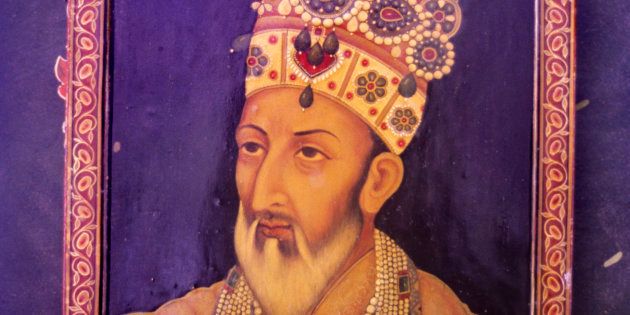
NDIAPICTURES VIA GETTY IMAGES Miniature of Bahadur Shah Zafar.
Butkhano’n mein jab gaya main kenchkar qashqa Zafar
Bol utha woh but, ‘Brahmin yeh nahin to kaun hai?’
(When Zafar went to the temple with a tilak on my forehead
The idol exclaimed, ‘If not a Brahmin then who is he?’)
—Bahadur Shah Zafar
Abu Zafar Sirajuddin Mohammed Bahadur Shah, better known by his pen name Bahadur Shah Zafar, was the son of Akbar Shah II and his Rajput wife Lal Bai.
He inherited an empire that was his only in name as the British writ ran through it. He was their pensioner. The British Resident in Delhi was responsible for everything that happened in Delhi as well as in the Qila.
Bahadur Shah Zafar [foresaw] trouble and banned cow-slaughter in the areas he nominally controlled… Bakr-Eid passed peacefully in 1857 thanks to the wise decisions of the emperor.
However, along with his empire he also inherited the national outlook of his ancestor Akbar and father Akbar Shah II. He believed in the wisdom that all his subjects were his children, and in fact his last prayer when he left the Qila after the fall of Delhi on the night of 16th September 1857 was:
“Khuda, the Hindus and Muslims of India are my children. Please keep them safe and don’t let them suffer for my deeds at the hands of the British.”
(Related by his daughter Kulsum Zamani Begum who saw him praying on his musalla the night he left it. This has been included in the story “Shahzadi ki Bipta” in the book Begumat ke Aansu which comprises eyewitness accounts recorded by Khwaja Hasan Nizami.)
The Hindu men and women who came to bathe in the River Yamuna every dawn would participate eagerly in the jharokha darshan when the emperor appeared before his subjects in the balcony of the Musamman Burj in the Qila every morning. Only after that would they go home and eat.
Bahadur Shah Zafar condemned the actions of maulvis who tried to divide the populace on religious lines:
Kaho mullah se kiya hum se rindo’n ko padhega
Ki hum Lahaul padh ke teri taqreer sunte hain
(Ask the mullah what can he teach one, so drunk in love
I hear his speeches with a disclaimer on my lips)
Akbar Shah II, who started the Phoolwaalon ki Sair , would offer pankhas both at Qutub Sahib’s dargah and Yogmaya temple in Mehrauli. Bahadur Shah Zafar went to the extent that he would not go to the dargah if for some reason he couldn’t visit the temple the previous day.
The Indian society of the 19th century was living quite happily and in communal harmony, bar a few incidents here and there. When Bahadur Shah Zafar was exiled there was a palpable sense of loss amongst the Hindus and Muslims alike; they felt as if they had lost their father.
Nowhere is this emotion more emphasized as in an anecdote described by Zahir Dehlvi in Dastan-e-Ghadar*.
“Once, some Hindus, along with officers of the British government, hatched a plot to throw all the butchers slaughtering cows out of the city. The British government gave orders stating that these butchers should take their shops out of the city. They had all the shops within the city closed.
When the butchers realized that they had no choice but to obey and lose their means of livelihood, they banded together, took their wives, children and possessions, and came and camped on the riverbank under the jharokha. From there, they appealed to the king, asking ‘How can we leave our city and go away?’
The cherisher of subjects, the emperor, heard their petition and gave the order that his tent be pitched alongside theirs on the riverbank.
‘Whatever is the state of my subjects is my state,’ he said.
As per the decree of their emperor, the servants immediately took the imperial paraphernalia and installed it on the bank of the river.
As soon as the British Resident heard the news, he came running to the emperor and respectfully asked, ‘Huzoor, what are you doing? All the people of the city will come and stand here with you.’
Badshah Salamat replied, ‘I am wherever my subjects are. My subjects are my children and I can’t be separated from them. Has flesh ever been separated from the fingernail? Today, the butchers have been given orders to leave the city; tomorrow, it will be some other community; the day after, it will be another one, and these orders will continue. Slowly, the entire city will be emptied. If the intention of the British government is to empty the city, then tell me so in plain words. I will take all my people and go and live in Khwaja Sahib. Since you have control over the city (Shahjahanabad), you can do whatever you will.’
The Resident was taken aback. ‘Huzoor, don’t even think of such an action. I will redress the complaints of these people immediately and settle them in the city. Huzoor, please have your camp removed from here.’
The Resident gave orders for the butchers to go back to their houses and ply their trade within the city as before. The tent of the emperor was removed.”
Bahadur Shah was equal in his treatment of his subjects and did the same for the ghosis or herdmen of Shahjahanabad when they were faced with a similar situation. Zahir Dehlvi in Dastan-e-Ghadar* writes:
“Once the British government gave orders to the herdsmen to take their family and cattle and leave the city and go and settle outside the city. There was a tumult in the entire city and once again the ghosi (herdsmen/milkmen) along with their families and cattle came and camped on the Reti.
Once again the Emperor, Raiyyat Panaah (shelter of the subjects) was so distraught by the cries of the children and the distress of the cattlemen the emperor gave orders for his tent to be pitched alongside theirs so he could share their sorrow. Once again the Resident came and pleaded with the Emperor and gave orders revoking the previous ones so that the herdsmen could go back to their original quarters in the city.
This time the Emperor told the Resident, ‘Look in my presence do not exile my subjects from their houses. After me you will be in control and can devastate the city (eeint se eeint baja dena).’
That is what was done (after the Emperor).”
On 12th May 1857 when the Indian soldiers who had risen up against the British crowned Bahadur Shah Zafar as the Emperor of India he issued the following decree:
“To all the Hindus and Muslims of India, taking my duty by the people into consideration at this hour, I have decided to stand by my people… It is the imperative duty of Hindus and Mussalmans to join the revolt against the Englishmen. They should work and be guided by their leaders in their towns and should take steps to restore order in the country. It is the bounden duty of all people that they should, as far as possible, copy out this Firman and display it at all important places in the towns. But before doing so, they should get themselves armed and declare war on the English.”
During the Uprising of 1857 the British tried their best to disrupt the Hindu-Muslim unity that was very apparent amongst those they called “baghi” or rebels.
Colonel Keith Young, Judge-Advocate General of the Indian Army who was present with the British forces on the ridge in Delhi regularly sent letters to his wife in the safety of Simla. This wife published them later as “Delhi—1857; the siege, assault, and capture as given in the diary and correspondence of the late Colonel Keith Young’.
On 29th July 1857 he wrote to her:
“Camp, Delhi Cantonments, Wednesday, 29th July:
Hodson just now came into our tent and interrupted my writing this. He tells me that a letter has just come in from the city confirming what we had before heard of the dissensions going on, and they seem likely to terminate in something serious at the Festival of the Eed, as some of the Mahomedan fanatics have declared their fixed intention of killing a cow as customary on that day at the Jumma Musjid. It is hoped that they will religiously adhere to their determination, and there is then sure to be a row between the Mahomedans and Hindoos.”
Colonel Keith Young to his wife. Camp, Delhi Cantonments, Thursday, 30th July:
“All is quiet in camp, and the mutineers must, I should hope— as we all believe—be quarrelling amongst themselves, and unable to agree to come out and attack us again. The Eed, we trust, will bring matters to a crisis with them, and be the day for a grand row between the Hindoos and Mahomedans.”
Camp, Delhi Cantonments, Sunday, 2nd August:
“Our hopes of a grand row in the city yesterday at the Eed Festival have not, apparently, been fulfilled—at least the only newsletter received from the city alludes to nothing of the kind. The King had issued strict orders against killing cows, or even goats, in the city, and this, if acted upon, must have satisfied the Hindoos; and instead of fighting amongst themselves they all joined together to make a vigorous attack to destroy us and utterly sweep us from the face of the earth, when it was arranged that the King should perform his evening prayers in our camp!”
Bahadur Shah Zafar had foreseen this trouble and banned cow-slaughter in the areas he nominally controlled. In The Great Uprising of 1857, Prof Z.H. Jafri cites that they found several documents in the Mutiny Papers in the National Archives, New Delhi by Bahadur Shah Zafar and Bakht Khan, the commander in chief of the Indian forces, asking the people to desist from cow-slaughter and to the kotwal to capture the cows from the houses of people who might go ahead with such sacrifices. There is evidence to support the fact that the police officers took these orders very seriously and thus prevented any sacrifice of cows by them, which could have led to the trouble that Young, and his colleagues were so eagerly anticipating.
Bakr-Eid passed peacefully in 1857 thanks to the wise decisions of the emperor.
The fallout of the First war of Indian Independence was the well-documented policy of divide and rule adopted by the British, which tried to create disharmony between Hindus and Muslims. The two communities fought together again in the freedom struggle leading up to Independence in 1947, but the partition of India and subsequent riots and murder show that the British did succeed to a great extent.
* Book excerpt from ‘Dastan-e-Ghadar : The Tale of the Mutiny ‘ by Zahir Dehlvi, translated from Urdu by Rana Safvi, Penguin Random House.
source: http://www.huffingtonpost.in / HuffPost / Home> The Blog / by Rana Safvi / May 18th, 2017
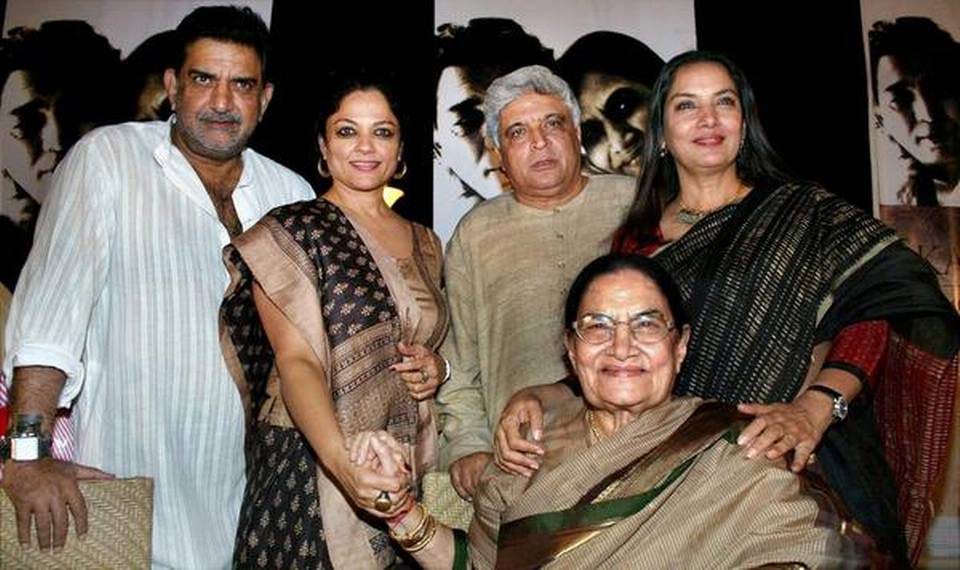
Shaukat Kaifi with her daughter actor Shabana Azmi, lyricist Javed Akhtar, Tanvi and Baba Azmi. File | Photo Credit: PTI
In the world of films she is best known for her work in M.S. Sathyu’s Garm Hava, Muzaffar Ali’s Umrao Jaan and Sagar Sathadi’s Bazaar.
Veteran theatre and film actor and writer Shaukat Kaifi is no more. According to a family source she was in her 90s and ailing for a long while and passed away on Friday evening at her Juhu home in the arms of her daughter, actor Shabana Azmi.
Shaukat Aapa, as she was called, along with her husband, Urdu poet and film lyricist, Kaifi Azmi had been the leading light of the Indian People’s Theatre Association (IPTA) and the Progressive Writers Association, the cultural wings of the Communist Party of India (CPI).
In the world of films she is best known for her work in M.S. Sathyu’s Garm Hava, Muzaffar Ali’s Umrao Jaan and Sagar Sathadi’s Bazaar.
Shaukat Kaifi’s memoirs , Kaifi and I had been turned into a theatrical rendition Kaifa aur Main with Shabana and Javed Akhtar reading the parts of Shaukat and Kaifi respectively.
She is survived by her daughter Shabana, son and noted cinematographer Baba Azmi, daughter in law actor Tanvi Azmi and son-in-law, poet, writer and lyricist Javed Akhtar. She has passed away even as the year-long Kaifi centenary events roll on.
source: http://www.thehindu.com / The Hindu / Home> Entertainment> Movies / by Special Correspondent / Mumbai – November 22nd, 2019
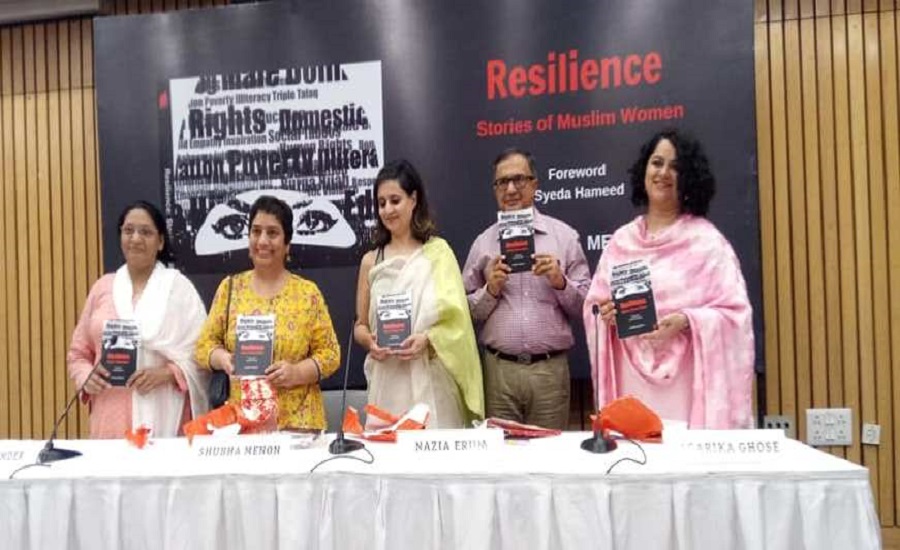
The book “Resilience: Stories of Muslim Women” was released by noted journalist and author Sagarika Ghose at a function at the India International Center, New Delhi on Wednesday. — Photo: Caravan Daily
‘Resilience: Stories of Muslim women’ released in New Delhi
New Delhi :
At a time when her stereotypes as meek and submissive entity are used by a political class to further its agenda, a new book catches Muslim woman in her multidimensional persona and in the process blasts many a myth surrounding her. In each of the varied fields of human endeavour, these Muslim women have come out in flying colours.
The book “Resilience: Stories of Muslim Women” was released by noted journalist and author Sagarika Ghose at a function at the India International Center here on Wednesday in the presence of many woman activists.
Speaking on the occasion, Ghose said the book negated the stereotype image of Muslim women as it illustrates that no matter what the economic impediments or social taboo, given the means and empathy Muslim women could also scale the height of success.
The book explores the lives of 11 resilient Muslim women who fought against all odds and got the opportunity to study in a tiny adult education centre. She congratulated these women and lamented in the scientific age woman have to face many odds and discrimination in every community.
The book release ceremony was followed by a discussion on the condition of women moderated by Nazia Erum, author and media advocacy head of Amnesty International India.
Social activist Shabnam Hashmi, the spirit behind the success of these women, said the book is like fresh air in the present political environment of the country in an oblique reference to the Modi Government’s push for enacting controversial Triple Talaq law which seeks to criminalise a civil matter like marriage.
She claimed stereotypical images of Muslim women are being used to further marginalise the minority community.
In early 1980, we started teaching the Nizamuddin Basti girls but it was a bumpy journey as girls had to struggle against severe hostility from the Basti residents whom Muslim girls going to study was “ anti-Islam or anti-Deen”, she added.
Shubha Menon, author, who documented the life of girls and women of Nizamuddin Basti, Delhi, said these were mostly dropouts or had not studied at all. She said she was touched by their stories and decided to bring the brighter side of the Muslim women.
On the occasion, many of these women narrated their stories of struggles.
Farida, who is a daughter of a Maulvi attached to Tablighi Jamaat, said she fought patriarchy, gender bias, poverty, and triple talaq to become a graduate. She said there was no discrimination on the basis of gender at home as her father loved her much but did not in favour of sending her to school. She told she was made to wear a burqa at 9, married off at 13 abandoned with two children at 16.
Farida, who now runs an NGO, has a sister Syeda whose story is also the same. “Both the sisters married to two brothers, unpaid labour in their matrimonial home, sloggers, beaten at the whims of a cruel matriarch, bearing children and hardship in one go. Their father, a Maulvi of Tablighi Jamaat, caught between the demands of his fellow Jamaatis and love for his daughters. The two sisters return home with meager belongings plus four pairs of mouths to feed. Then from rock bottom poverty, they extricate themselves. Their horizon widens and they rise and thanks to Seher Study Centre”.
Ayesha said she not only fought for her education but brought up her son to be an MBA and her daughter a Master in Science. Mussarrat, who now works for an international NGO, told that her grandmother kept her locked at home.
Other women Asma, Ishrat, Parveen, Shahjahan, Farhat, Parveen, and Najma’s stories are similar but not identical.
Shabnam said the mentors of Seher Study Centre in the Basti; teaching, counselling, chatting, encouraging the oppressed girls to break out of their fetters and manacles and ultimately from their cloisters.
From verbal threats to lathis, they not only bore them but spun them around to give great leverage to the girls they were grooming, she said.
The book, which chronicles the stories of successful women, also highlights the Markaz versus the Dargah which is another contradiction of the Basti. Stories of the Dargah dot the entire book. For example, Nizamuddin’s disdain for power is a poignant anecdote. Rulers of the Sultanate, Tughlaqs and Khiljis were not permitted to enter the Pir’s Khanqah. The Saint’s priority was not to pay obeisance to the ruler but to feed the poor and indigent no matter of what faith or of what caste while the Markaz propagates orthodox Islam. The author does not deride one practice at the cost of the other. Their parallel existence may occasionally clash but seldom becomes a major eruption.
She makes the reader a partner in her adventure as a reader is taken through the winding gulleys, narrow stairs, tottering houses, all the time surrounded by a mass of humanity; namely Muslims who live and breathe Nizamuddin. There is a constellation of girls who were transformed by the Seher Adult Education Centre. The stories unfold one by one.
The author Menon concludes that Seher comes out as a unique experiment, which not only transformed all those women who studied there but their future generations as well.
source: http://www.caravandaily.com / Caravan Daily / Home> Books / by Abdul Bari Masoud, Caravan Daily / August 29th, 2019
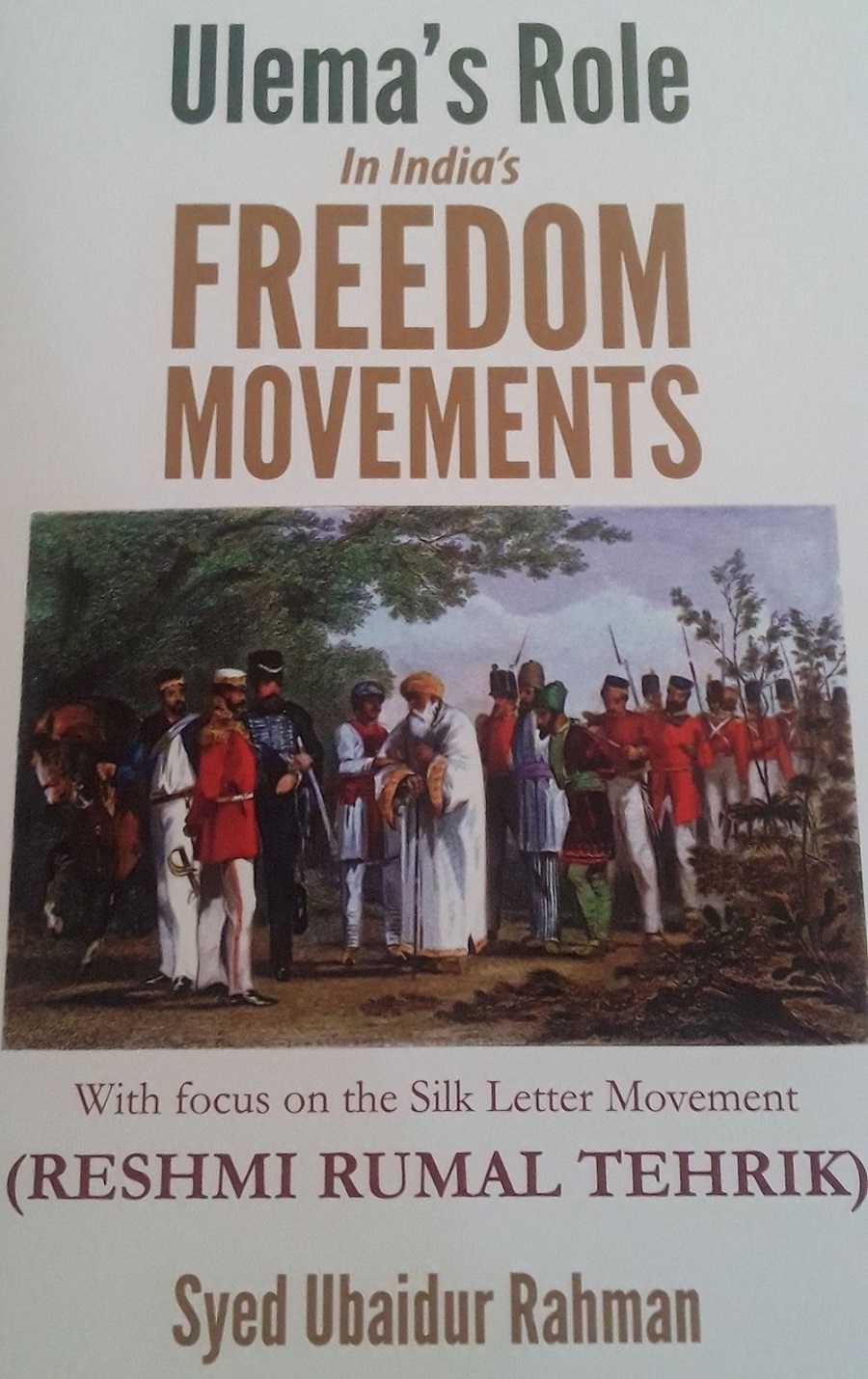
Amidst well-organized and power-backed attempts to erase M-word from the history of India’s freedom movement, has come out a humble academic bid to preserve in black and white the key role of Ulema or Muslim clerics in the ‘bloody’ freedom struggle spreading over around one century. Written by a young writer Syed Ubaidur Rahman, who is just 44, the book ‘Ulema’s Role in India’s Freedom Movements: With focus on Silk Letter Movement (Reshmi Rumal Tehrik) captures Ulema’s sacrifices in the Mutiny of 1857 and 1858, Faraizi Movement and Sayyid Ahmad Barelvi’s movement besides mainly focusing on the Silk Letter Movement as the title declares.
“The word ‘Ulema’ has become a rather very misunderstood term in the present day Indian society. Like everything Muslim, a conscious effort has been made to malign and ridicule the Muslim clergy…Over the last few centuries, the Muslim scholars have contributed immensely in seeing to it that the nation remains a single, united and cohesive unit and have made significant contributions to this end,” writes the author in the introduction of the book.
While admitting that “Ulema’s role in the society has considerably shrunk over the last several centuries,” he says that Ulema “used to have a very important place in the Indian society during Muslim rule in the country and even after the dismantling of the Mughal empire…over the centuries, on many occasions, they have led not just on spiritual front but on temporal front as well.”
“Every time in the past, when the country found itself in challenging situations, they stepped in and tried to play a much bigger role than what is usually anticipated from them. This was seen during different phases of freedom movements beginning with the first war of independence of 1857,” writes Rahman, a journalist by career who has penned several books in the last one decade, besides regularly writing articles and columns for various periodicals.
The 280-page book deals with different phases of India’s freedom struggle “with special focus on Silken Letter Conspiracy, better known as the Reshmi Rumal Tehrik.”
Highlighting the need and relevance of the book, the author says: “Not much has been written on Reshmi Rumal Tehrik or the people behind it and thus it remains shrouded in mystery. The book also discusses at length the Mutiny of 1857 and 1858, Faraizi Movement that was anti-colonial movement launched and sustained by Islamic scholars, besides Tehrik-e-Jihad of Sayyid Ahmad Barelvi in North Western Frontiers and Kashmir.”
The author says: “Despite the slide of the Muslim empire and the subsequent dismemberment, first between Muslim nawabs in the North, Deccan and South India, and later the annexation of these territories by the East India Company, Muslim scholars remained instrumental in trying to keep the Muslim empire intact. They were at the forefront in trying to stop the slide, and in posing challenges, first against those who fought the Mughals and later against the British East India Company. Shah Waliullah, the legendary Islamic scholar and reformist, did everything to stop the Mughal Empire from going to dogs. But, when despite all his efforts nothing happened, he sent a later to Ahmad Shah Abdali and also to Nawab of Oudh and Hafiz Rahmat Khan, the shrewd Ruhella chieftain. The rest is history.”
Deliberating on the core topic of the book, that is the role of Ulema in India’s freedom movement, the author writes: “Muslim ulema’s role was not limited to merely giving advice to the rulers and then become mute spectators of what was taking place. On the contrary, when they realized that there was no one coming forward to lead the masses, they took up leadership role, and fought off the invaders. From Bengal to Balakot and from Delhi to Lucknow, Muslim ulema played prominent roles in all the uprisings against the British (mis)rule. Be it Faraizi Movement, first war of independence of 1857 or the Reshmi Rumal Tehrik, they were instrumental and took leadership role. During the Mutiny of 1857, ulema were at the forefront and paid heavy price for their leadership role.”
The book highlights the contributions of some Ulema during the Mutiny of 1857 and subsequent fights.
The author says: Maulavi Ahmadullah Shah was one of the most prominent leaders of the entire freedom movement, who led on many war fronts and collaborated with all other renowned freedom fighters. Despite being among the most prominent leaders of the 1857 Mutiny, Maulavi Ahmadullah Shah remains a rather unknown figure in the country.He was a stalwart, a shrewd military planner, a great scholar of Islamic sciences and above all a unifier beyond any iota of doubt. He allied with almost all the leading actors of the 1857 revolution, be it Tantia Topi, Nana Sahib, Begum Hazrat Mahal, Bakht Khan Ruhilla, Khan Bahadur Khan Rohilla of Bareilly or any other freedom fighter of repute. It is an irony that despite his military successes against the British East India Company in 1857 from Lucknow to Bareilly and Shahjahanpur, his name is not even mentioned. His military planning unnerved the colonial rulers and his bravery won praise from the British generals like George Bruce Malleson and Thomas Seaton.
Haji Imdadullah Muhajir Makki was another alim of repute, known for his personal piety, scholarship, courage and military exploits during the Mutiny of 1857. A father figure among ulema of his time, his most renowned disciples include Maulana Qasim Nanotwi and Maulana Rasheed Ahmad Gangohi who not just fought alongside him in Thana Bhawan and Shamli but later went on to launch Darul Ulum Deoband. Maulvi Liaqat Ali, another alim was behind the uprising in Allahabad and evicting the East India Company out of the major North Indian town. It was his personal charisma and shrewd military planning that first brought together the mutineers and later successfully beat back the Company forces. Many more ulema played prominent roles during the uprising and paid dearly when the Company came back with a vengeance. Tens of thousands of ulema were hanged to death. Even those ulema who had nothing to do with the Mutiny were implicated, jailed, sent to kalapani and unceremoniously killed. However, this dance macabre didn’t stop them from taking to the same means to defeat the colonial rulers later.
Silk Letter Movement
The author says: “Reshmi Rumal Tehrik is a freedom movement that remains largely unknown. Not much has been written on it and both its top leaders, Mahmud Hasan and Ubaidullah Sindhi, despite their stellar roles and sacrifices, remain rather unknown. While Shaikhul Hind spent three years in trying circumstances in Malta, Ubaidullah Sindhi spent more than three decades in exile, first in Afghanistan and then in Turkey and Hejaz.”
Silk Letter Movement, known more widely as the Reshmi Rumal Tehrik, was launched by ulema of Deoband, particularly Mahmud Hasan and his renowned disciple Ubaidullah Sindhi, who later went on to become the Home Minister in the first provisional government established in Kabul. Raja Mahendra Pratap Singh was its President and Maulana Barkatullah Bhopali was its Prime Minister. The Reshmi Rumal Tehrik had a two-fold objective, one to incite the tribal people in North Western Frontier region and then forging alliance with other world powers including Afghanistan, Turkey and Germany. While Mahmud Hasan headed to Hijaz to seek help from Turkish officials, Ubaidullah Sindhi went to Kabul to forge alliance with Afghan amir. Both were very successful in their planning, but while Mahmud Hasan was still in Hijaz, Ottomans suffered heavy reverses against Sharif of Mecca who was being propped by Britain. At the same time, the entire planning of Ubaidullah Sindhi was discovered when the Silken Letters, sent by him to Mahmud Hasan were unearthed by the British CID. Hundreds of their supporters across Punjab, United Provinces and Delhi were arrested by British police.
In the introduction of the book, author Rahman says: “The pages that follow unravel a history that has been often suppressed and not much has been written on it. To many people, this side of the history may seem rather bewildering as I examine it and try to make sense as to what happened in our part of the world and how those brave men, despite the failure of 1857 mutiny rose repeatedly to defy the British Raj.”
How Important Is This Book when saffron eraser is moving fast on the canvas of freedom history of India?
Talking to India Tomorrow, the author responded to the question: “History needs to be preserved. It is the responsibility of the people, communities and the nations to preserve their histories and present right perspectives to what happened in the past. Indian Muslims have done precious little when it comes to presenting their perspective in right context. On the contrary, the Sangh Parivar, bent upon distorting the history of the last few centuries, has made strides in this field. Despite the fact they were never part of the freedom movement, they have claimed an important role for them, and have tried to co-opt major historic figures as part of their narrative. This began with Patel. Now they are trying to claim Gandhi and Ambedkar as their own, despite both being fiercely opposed to their ideology of hate. On the contrary, the Muslims have ignored this part completely. Hope this book serves its purpose and creates awareness among masses about what Muslim scholars and ulama did for the nation in the freedom struggle.”
The book has come out at a time when the BJP government in Karnataka has decided to scrap the state’s official celebrations around Tipu Sultan’s birth anniversary. Going one step ahead, the government announced to remove the lesson on the 18th century Mysore ruler from school history books.
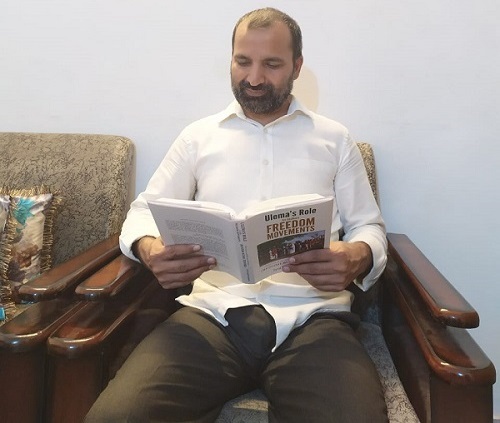
Author Syed Obaidur Rahman
Given the communal hatred widening the gulf between Hindus and Muslims, the author wants the book reaches the masses.
“While this is of paramount importance to render this book in Hindi and other vernacular languages, this seems a hard nut to crack due to want of resources. God willing, I would definitely like to bring it in Urdu, Hindi and other regional languages,” says Rahman who has several other books to his credit, including Muslim Freedom Fighters: Contribution of Indian Muslims in the Freedom Movement, Understanding Muslim Leadership in India and Muslim Mujahideen e Aazadi, aur Tehrik e Azadi mein unki khidmaat (Urdu).
Book:Ulema’s Role in India’s Freedom Movements: With focus on the Silk Letter Movement (RESHMI RUMAL TEHRIK)
With a master’s degree in innovation and management from UK, Mohsina’s exceptional work has been showcased in a series of coffee table books.
Mohsina Mirza (HT Photo)
Driven by a passion to excel, this teacher by profession wants to give every child wings to fly high.
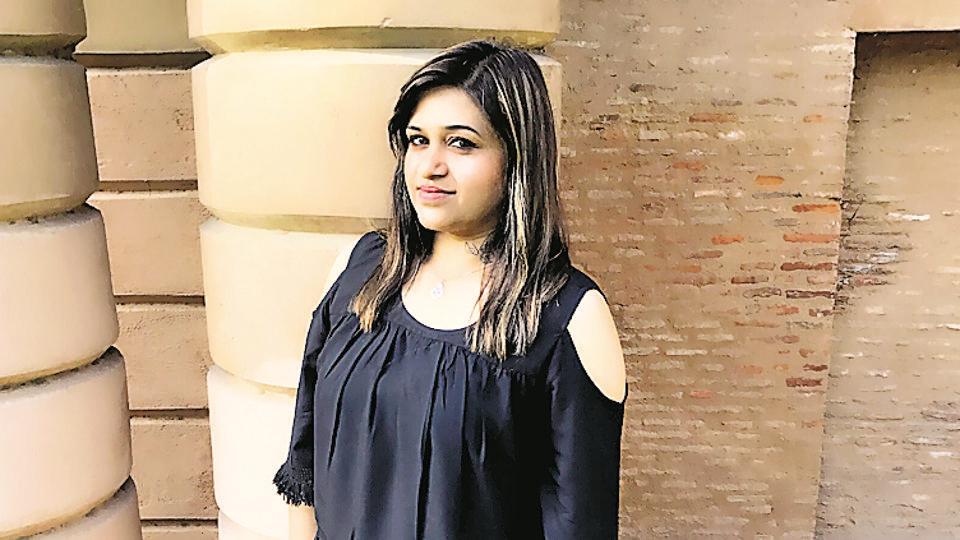
Meet Mohsina Mirza, a drone pilot who is motivating millions of children across the country. A pioneer in drone piloting, Mohsina has introduced the concept of aviation and flying technology in schools.
Talking about her interest in the field, she says, “When I completed my BTech-PGDBM from UK, I realised that my interest in robotics and drones has increased manifolds. I knew I wanted to do this in future but as I learnt and explored the subject I realised it was time to pass on the knowledge to kids. I knew the concept will be of interest to many children who have nothing but books on the topic. Practical is equally important as theory and this was my mantra.”
Talking about her choice of an out of the box subject, she says, “I always had this in mind that I would do something different. Being a female, I wanted to bring in more girls along with me. I knew this was not something routine and it would be difficult for me to make people understand its importance. But I also had firm belief that with one right step everything will fall into place.”
“I fail to understand why people stick to conventional and routine in any profession. Why do they shy away or are afraid to explore? I decided to deviate from regular teaching stuff and innovate something interesting and think beyond books,” she remarks.
With a master’s degree in innovation and management from UK, Mohsina’s exceptional work has been showcased in a series of coffee table books – ‘Secret of Mart’, ‘Mausoleum of Boulone Lise’ and ‘The Lat’. At present, her passion for aerial photography is taking most of her time other than training children in the subject.
Speaking about her new venture, she adds, “I launched my new dream venture Techno Kids in collaboration with InveroTech. This is a one-of-its-kind robotics and aviation flying club where children in the age group of 6 to 18 years get exposure to aviation and flying technology. Children are trained to pilot their own self-made flying robots and fixed wings, and become future ready.”
With 10 exclusive flying robots and aircrafts of various sizes, she is teaching skills to countless school-going boys and girls of the city who have interest in technology and robotics. She takes regular classes at La Martiniere College that are open to students of all the schools.
“My classes are for all students irrespective of their school or city. My club provides basic knowledge to students who aspire to take up piloting, engineering and aerial photography as their profession after 10+2,” she says. “We use world class drones, variables and more for practical usage. We also use automated drones for all age groups and segments. In senior techno group, we have everything for aero modelling, scratch building of RC models, glider aircrafts, assembling and flying of different aircraft and remote controlled models. I strive to help children develop and pursue their interest in aerial photography or robotics,” says Mohsina.
Speaking about her love for innovation, she says: “I am excited about my new invention, an air selfie chip, which is set to roll out in a couple of months. I am waiting for little support from some company. With this chip in the phone, you can click selfies by lifting your hand and leaving the phone in the air.”
source: http://www.hindustantimes.com / Hindustan Times / Home> India> Cities> Lucknow / by S. Farah Rizvi , Lucknow, Hindustan Times / April 17th, 2017