Though he has just released a new book, Mohsin is already working on his next graphic novel series, a science fiction set in ’90s, with the working title of E.T Club.
Bengaluru :
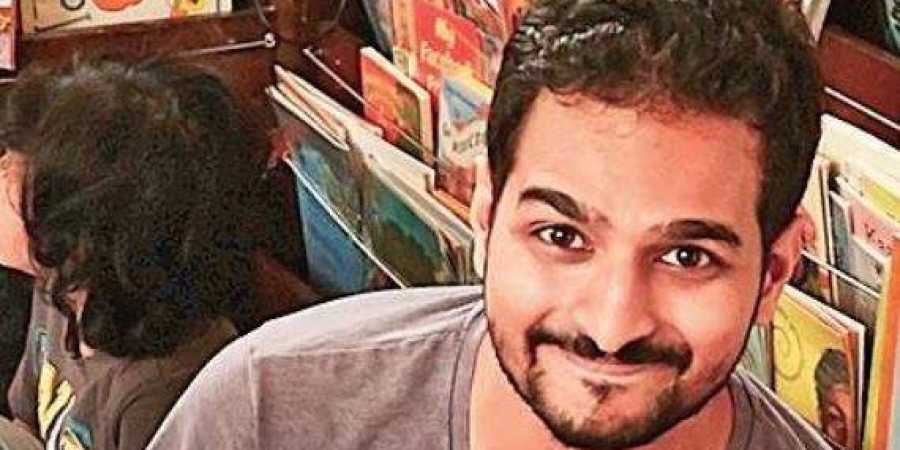
Rahil Mohsin is sure living his dream as a comic book creator. After having spent his childhood watching and drawing cartoons, nothing much has changed for him since he continues his hobby and even publishes it for others. The journey began with him being an avid comic book reader as a child, which led to a BA Honours in Animation later. Today, he has been a comic book creator for eight years and is all set to launch his fourth book, a comic series called Catdad & Supermom. The first issue of the same will be launched at Bengaluru Comic Con this year.
Looking back at the initial years, Mohsin recalls how in 2011 he was approached by Sufi Studios, a city-based Indian comic book publisher, with whom he went on to illustrate three graphic novels. Later, he moved to self publishing to create his own content and was successful in publishing his three one shots, called The Big Sheep, Kiss Kiss Blam Blam and Blame it on Rahil, respectively. “I realised that being an artist for hire wasn’t that difficult. But once you start publishing by yourself, there’s business along with promoting, printing and marketing at different conventions,” he told CE at Champaca Bookstore, Library, Café, where he conducted a creativity and imagination workshop for children.
His latest work, Catdad & Supermom, is a creation of Mohsin’s friend, a Florida-based independent comic book publisher named Robert Gregory. Ask Mohsin to describe the work and he says, “A group of silly superheroes with wholesome family entertainment where we teach kids about serious topics.” Entertaining and educative, the first issue of the series deals with the concept of bullying and how a kid imagines superheroes who teach them how to stand for himself and help people who are in need. “The characters were created by Robert Gregory and I have designed the characters artistically, and I also wrote the story and drew it in a comic format,” he added.
Comics are generally assumed to be targeted at teenagers and young adults. And as someone who ‘grew up on comics’, Mohsin knew he too wanted to work on comics for the same age group. “Since I am Bengaluru-based, I used to frequent the many second-hand bookstores of the city to buy my comics. Once I grew up, I realised most of the content was not kid-friendly. This is close to my heart as I used to work with kids as a schoolteacher before I started making comics. I wanted kids to have entertaining stories with superheroes and a lot of comedy in it; they also need to take something home it shouldn’t be just about entertainment. They need to have a message to carry along with them,” he explained.
Though he has just released a new book, Mohsin is already working on his next graphic novel series, a science fiction set in ’90s, with the working title of E.T Club.
source: http://www.newindianexpress.com / The New Indian Express / Home> Cities> Bengaluru / by Priyansha / Express News Service / October 30th, 2019
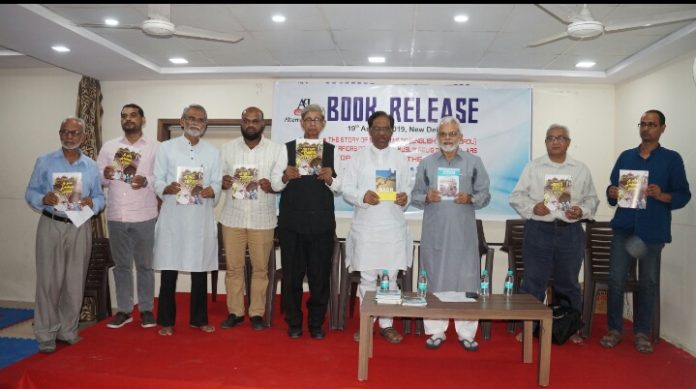
“The Story of Babri Masjid” (Babri Masjid ki Kahani), a pictorial history book in English, Hindi and Urdu was released in a function organised by the publishers, Aternate Press in New Delhi. This book is being published at a time when Ayodhya case arguments are progressing in Supreme Court. Though this book with cartons and narrations is primarily meant for children, it is equally aimed at the new generation who are born after the demolition of Babri Masjid.
In the book release program along with the above title, two other relevant books namely “Warriors of Malabar: Muslim Religious Scholars” (English) and “Badr: Lessons of the Battle” (English) were also released.
Advt. A. Mohammad Yusuf introduced the book on Babri Masjid. The other two books were introduced by E.M. Abdul Rahiman. He also paid tribute to the author of the book Badr A. Sayeed who has passed away a few months back.
While delivering his presidential address, A.S. Ismail, the Managing Director of Alternate Press stated that in the context of efforts of rewriting the history by the fascist forces, these books are aimed at creating awareness among the youth towards the real history of the country and their forefathers.
Popular Front of India Chairman E. Abubacker while expressing his views on the books said that we should never let the memories of Babri Masjid vanish from the minds of people. “The three books are most relevant to the contemporary situations of this country and I hope the efforts of all those who are behind this work, will bring fruits”, he said.
The meeting was also addressed by Ravi Nair (Director, SAHRDC), Advt. N.D. Pancholi (Forum for Citizens for Democracy), Dr. Taslim Ahmad Rahmani (National Secretary, SDPI) and Prof. Rakesh Ranjan (Delhi University).
Parvez Ahmad (Director, Alternate Press) welcomed the guests and Salim Shaikh presented vote of thanks.
source: http://www.muslimmirror.com / Muslim Mirror / Home> Book Review / August 20th, 2019
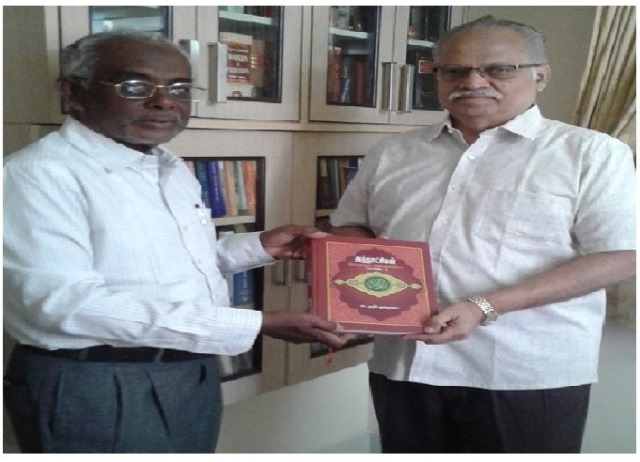
Retired, but not tired of working for former NTC official Dr M Ameer Althaf, who took up intensive research on Holy Quran for well over three decade. And in his seven yearlong untiring effort, he has penned the book ‘Athaatchigal Thirukkuran Kalai Kalanjiam’ in a four part series, which is close to his heart. Undoubtedly, this is a magnum opus for the author.
Notably, Ameer Althaf had won the heart of Kovaiites for his different avatars in Thirukkuran Arakkattalai, Coimbatore District United Jamaath, AIMMS Muslim Women Community College. Adding another feather to his cap, he brought out the book ‘Pettagam’, a compilation of 300 long history of Coimbatore Muslims which was released at a gala function in 2014.
As to the adage ‘Hardwork pays rich dividends’, his research papers on Holy Quran were presented and published in global forum like Umma-al Qura University in Mecca, King Fahad University in Madina, University Malaya, Islamic Science University Malaysia besides universities in Istanbul, Jordan, Qatar, Mali. His four decade central government service and three decade research on Holy Quran made him go places across the globe. Significantly, he became to be known as International Holy Quran researcher.
A function is being organised under the aegis of Dhaanish Ahmed Institute of Technology (DAIT) and Al Azhar Educational Trust on October 20 at Podanur Thendral mahal to release the book ‘Athaatchigal’ by former supreme court judge Fakir Mohamed Ibrahim Kalifullah and former High Court judge K N Basha in the presence of leading luminaries Alhaj K Moosa, chairman, DAIT group, Alhaj UAK Jailani, managing trustee, Al Azhar Education Trust.
Sunnath Jamaath Federation general secretary Alhaj M A Inayathullah will preside while Ranipet Additional District and Sessions Judge A Mohamed Ziyavudeen will felicitate at the event.
Moulavi Alhaj M A Abdur Rahim, president, Coimbatore-Nilgiris-Tirupur district Jamathul Ulema Sabai, Moulavi Alhaj M A Mohammed Imdhadi, president, Coimbatore city Jamathul Ulema Sabai, social activist Aloor Shanavas, Coimbatore district United Jamaath president Alhaj A R Basheer Ahamed, Tamil Nadu Haj organisors association president Alhaj A Mohamed Rafeek, Iqra Educational Trust president Alhaj H E Iqbal Sait, Project Manager in Kuwait Haji M A Azad will address the audience at the book release event. Himayathul Muslimeen Sunnath Jamaath, Podanur secretary Haji KTS Riyas Kapoor will propose the vote of thanks. Other dignitaries who will speak at the event include Holy Quran translator Prof Mohamed Khan baqavi, TN state Jamathul Ulema deputy general secretary Moulavi Alhaj K M Ilyas Riyaji, Chennai Anna Salai Makkah Masjid chief imam Moulana M Mohammed Mansoor Kasimi, Madras University HoD Arabic, Persian and Urdu Dr A Zakir Hussain Baqavi and senior network consultant, Abudhabi Dr Mohamed Ibrahim.
source: http://www.muslimmirror.com / Muslim Mirror / Home> Indian Muslim> Positive Story> Religion / by M. Rafi Ahmed / October 10th, 2019
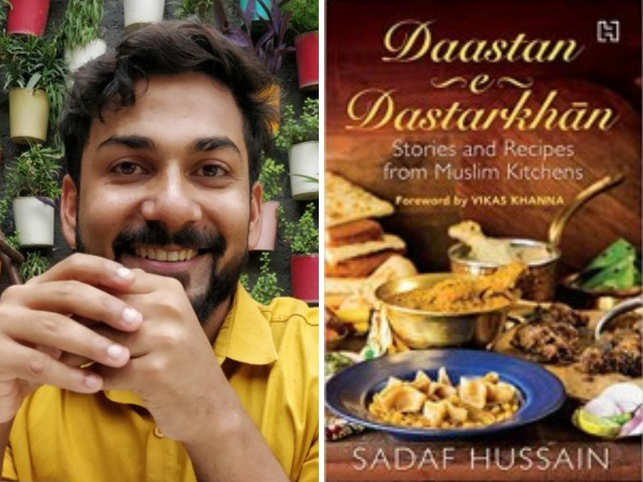
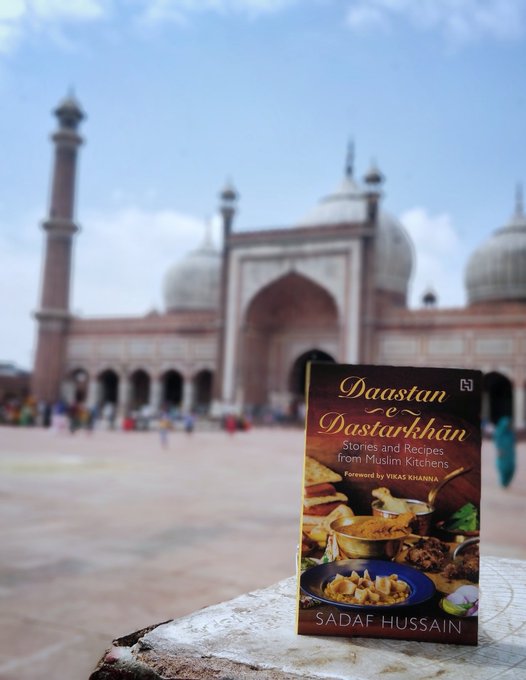
Sadaf Hussain chronicles home-made food in his new book Daastane-Dastarkhan.
Sadaf Hussain’s charming new, first book Daastane-Dastarkhan has been published by Hachette India.
Sadaf Hussain’s charming new book Daastane-Dastarkhan starts with the story of a pir who, every Thursday, visited his mother’s family in Sasaram, Bihar. But one day he appeared on a Wednesday, throwing his grandmother into panic because there was no meat for the aloo-gosht she always fed him. She had to be inventive. She used dried figs and poppy seed paste, to make a salan, threw in fried potatoes, balanced it with garam masala and chillies, and served it with rice and besan rotis. The pir was delighted: “May Allah bless you with an abundance of food and may no one ever leave your home hungry.
A recipe like this is not what many would think of as Indian Muslim food. Where is the intense meat focus? Where are the kebabs and biryanis? The problem starts with thinking there is something that can be neatly labelled Indian Muslim food. The fact that people do this might be just another way in which Indian Muslims are diminished by clubbing their many communities into one and ascribing easy stereotypes to them.
Ummi Abdulla, who has documented the food of Malabar Muslims, makes mutta mala or egg threads.
Part of the problem is that there is a market in catering to such stereotypes. Once a year during Ramzan, many people decide to have an iftar experience and go out — without fasting — to eat the rich food cooked on street sides for the occasion. But this has as little relation to regular home food in Muslim communities across India, as does a Diwali or Christmas feast have for Hindu or Christian home food.
One way people get exposed to home food of different communities is when they share food with neighbours, especially as kids. But as housing becomes increasingly segregated, this is becoming harder.
This lack of knowledge has been compounded by a curious lack of cookbooks from different Indian Muslim communities.
There are cookbooks from cities like Lucknow and Hyderabad where certain types of Muslim food dominate, but what’s presented tends to be street food or special occasion dishes, both mostly made by men. These are important, but it means that the daily, home dishes get left out.
There have been a few exceptions. Ummi Abdulla made a pioneering contribution by documenting the food of the Malabar Muslim, or Moplah, community, with all its complex interactions between the local ingredients of Kerala and influences from Arab traders.
Bilkees Latif ’s Essential Andhra Cookbook captured similar interactions from Hyderabad. Mumbai’s Inquilab newspaper brought out a collection of booklets, in Urdu and English, on Memon, Kokani, Bohra and Kashmiri food. There were a few other books printed privately or abroad, but little else.
Adil Ahmad’s Tehzeeb chronicles the home food of an upper-class Lucknow family.
Doreen Hassan’s Saffron and Pearls does the same for her husband’s family from Hyderabad, but with roots in both Persia and Uttar Pradesh. Zaiqa e-Kadwai provides a very different perspective. It is a team effort to document the food of a village in Ratnagiri district, where most of the families just happen to be Muslim, but their food is quite typically Konkani. Hazeena Syed’s Ravathur Recipes: With a Pinch of Love shows, in a very impressively produced volume, the food of this Tamil Muslim community.
These books show the food of these communities to be, as with all communities in a region, primarily dictated by what’s locally available, but with small tweaks. As Hassan’s husband’s family shows, at a more upper-class level there were more likely to be interactions with communities across countries, and recipes travel with daughters-inlaw, who are one of the least acknowledged agents for social change.
There is certainly a lot of meat eaten in all these communities, but the recipes are much simpler and subtler than what is served up to unthinking eaters as “Muslim” food. Meat is often cooked with vegetables as in the chuqandar gosht, beetroot and mutton; or keema kakdi, cucumbers and mince, given in Tehzeeb. There are inventive egg dishes, like boiled eggs stuffed with mince and then skewered, that Hassan discovers in Hyderabed, or eggs fried in gravy that are a favourite in Kadwai.
Other similarities might be slightly more use of some spices, like star anise, and less of others — hing rarely features since onions are widely used. Chefs will tell you that Muslims in their kitchens are particularly adept at frying, and that copper, with its excellent heat conduction, is the metal of choice for utensils. Many traditional vessels shown in these books are copper, and careful distinctions are made in types of frying: shallow, deep, braising and so on.
Books like these are important because, apart from the problems of unthinking stereotypes, the food of Indian Muslim communities faces another kind of obliterating pressure. Many cooks from the communities have gone to work in the Gulf and have picked up the kind of Lebanese-Arab food that is becoming a standard across the world. It is easy to produce, cheap and tasty enough and has the allure of being modern, rather than old-fashioned, labour-intensive home food. People shouldn’t be faulted for opting for what’s cheap and convenient, but it is important to remember, as these books remind us, that there are also other ways to nourish our roots.
source: http://www.economictimes.indiatimes.com / The Economic Times / Home> Business News> Magazines> Panache / by Vikram Doctor / ET Bureau / October 13th, 2019
The period between 1371 and 1405, during the initial days of the Shahmiri Sultanate, was extremely crucial in Kashmir’s transition to Islam. It witnessed the arrival of Amir-e-Kabir, his son and their 1000-odd followers who joined a more than 200-year old campaign for Islam in a Hindu state. How these 33 years changed Kashmir forever is one of the fascinating stories of Kashmir’s quantum jump in faith and mobility, reportsMasood Hussain
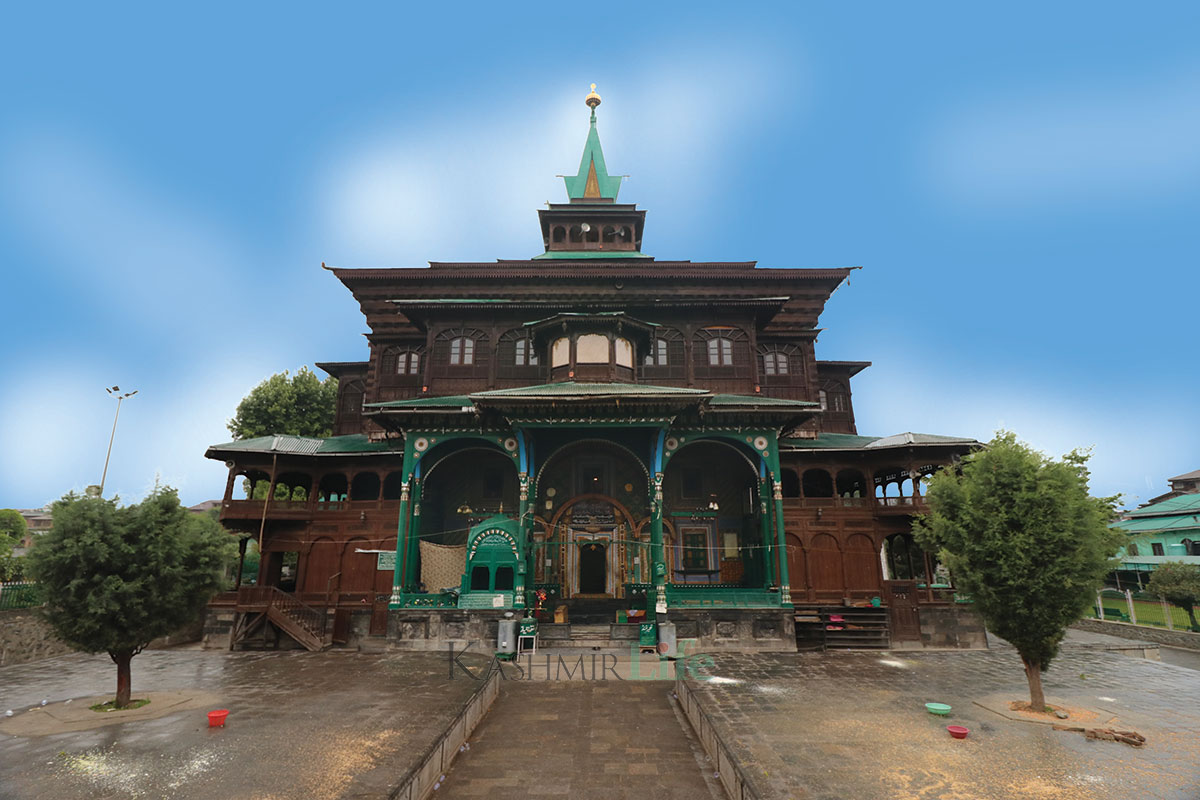
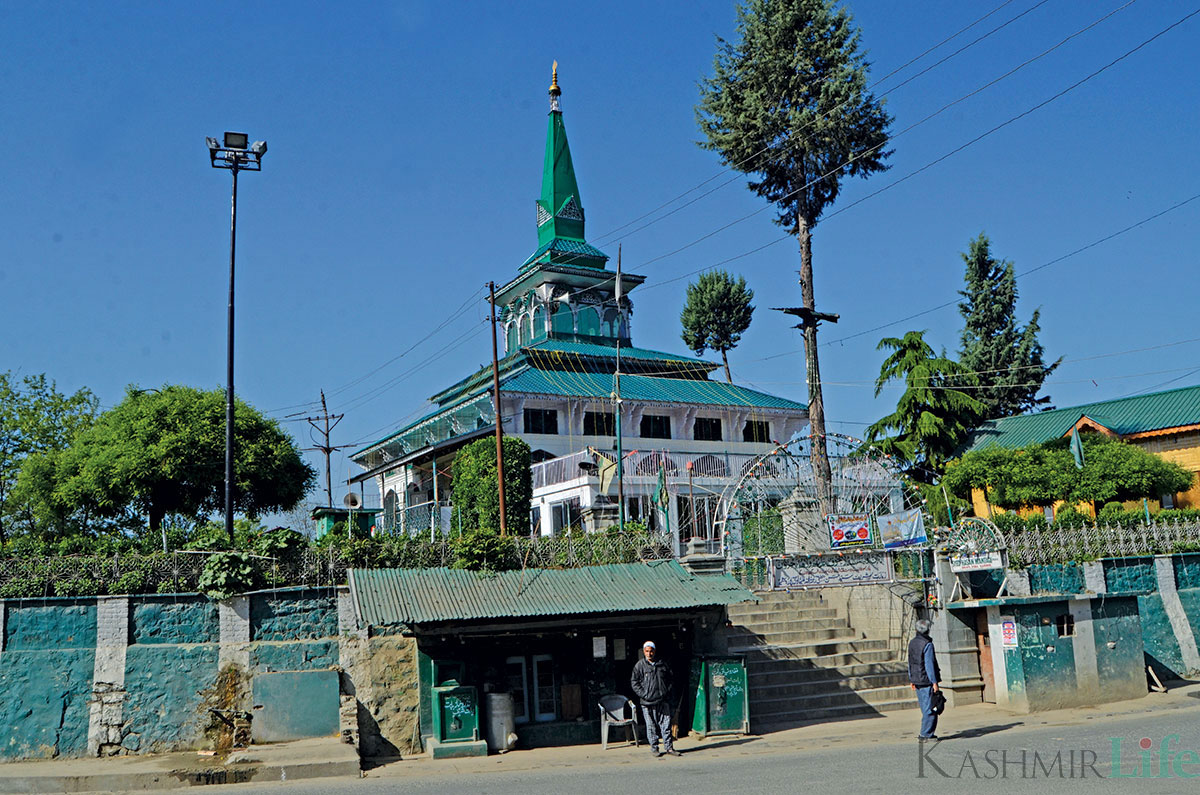
Khanqah Moula. KL Image: Bilal Bahadur
Noble of nobles, commander of Persia; whose hand is the architect of the nations; Ghazali himself learned the lesson of Allah is He; and drew meditation and thought from his stock; Guide he of that emerald land, counsellor of princes, dervishes, and Salatin; A king ocean-munificent, to that vale, he gave sciences, crafts, education, religion; That man created a miniature Iran, with rare and heart-ravishing arts, With one glance, he unravels a hundred knots rise, and let his arrow transfix your heart.”
Allama Iqbal on Shah-e-Hamadan in Javid Nama
Involving the reign of four Sultans, the history of Islam in Kashmir had a vital three decades that went into shaping the society as it is known today. This period begins with Shah-e-Hamadan visiting Kashmir in 1371, and concludes with the emigration of his son Mir Mohammed Hamadani from Kashmir in 1405. This period also witnessed the emergence of Sheikh Noorruddin Noorani, Kashmir’s bearer saint, and Lal Ded, one of Kashmir’s most popular woman ascetics, whose campaign against idolatry is unprecedented in Kashmir history.
This period falls in the first phase of Kashmir Sultanate that Shahmir built in 1339 over the ruins of a Hindu empire. The Sultanate lasted around 191 years till 1530. Muslim rule was actually established by Ladakhi prince Rinchan, who effortlessly took over a headless, mourning Kashmir in 1320 after Dulchu wrecked the Vale. Three years later, a Hindu king succeeded him for five years but the administration was controlled by Shahmir family, who eventually founded the Sultanate.
What makes this period distinct is that faith started interrupting the power politics at a time when Kashmir was still a Hindu majority state with Muslim chunks in army and administration. Mir Syed Ali Hamadani and his son Mir Mohammad Hamadani were the two major players behind these interventions. This was perhaps because Shah-e-Hamadan, the most respected Islamic scholar of his time, came from Hamadan’s ruling family. His father was the city governor.
Even though the number of visits Amir-e-Kabir made to Kashmir has divided historians, it is generally believed that he came for four months in September 1372 and then left for Mecca. He then returned in 1379 to stay for almost two and a half years. His last visit to Kashmir was in 1383 and he stayed for almost a year.
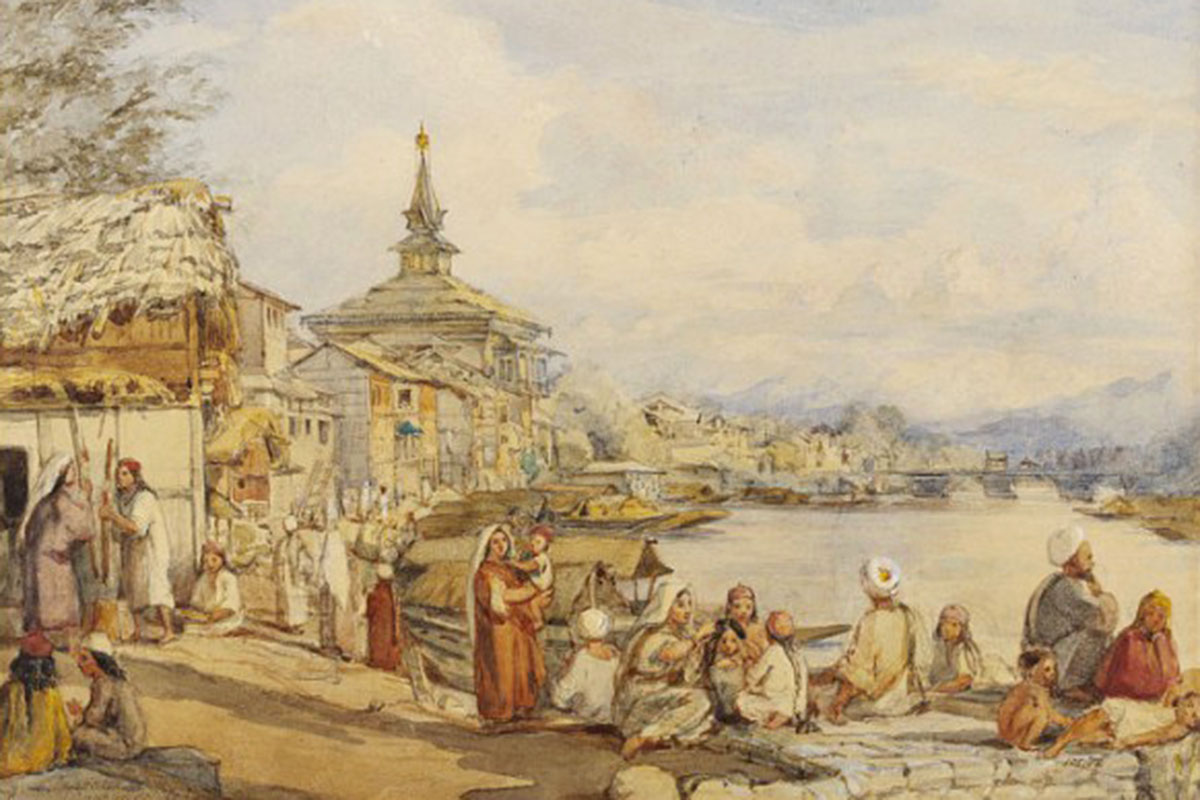
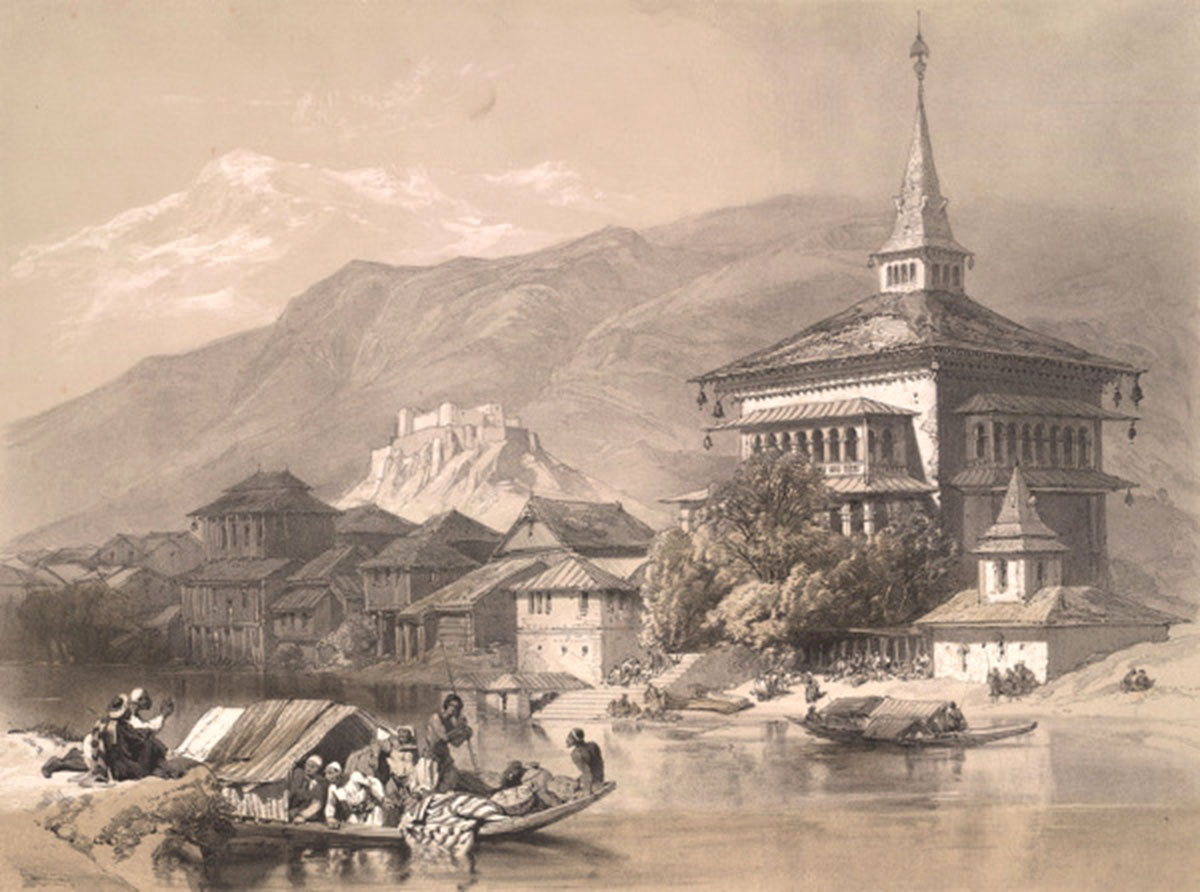
Near Khanqah-e-Moala British colourist William Carpenter Junior (1818-1899) has drawn this picture during one of his three visits to Kashmir. the most Known was in 1853.
“The most credible sources of the particular era talk of only one visit of the Amir,” Prof M Ashraf Wani, the author of Islam in Kashmir. “There is, however, a dispute over the duration of the visit between 80 days and six months.”
Historians perceive his last visit as the most consequential one since he led 700 people from Hamadan to Kashmir who eventually began working as missionaries and preachers, after settling in the valley. More than faith, they spearheaded a socio-cultural transformation of Kashmir.
Amir’s Migration
Amir-e-Kabir belonged to Alawi Sayyids who were facing problems due to Timur’s Iran takeover. Timur disliked the Sayyids who knew that circumstances may force them to migrate. In anticipation of his visit, Amir sent his cousins to Kashmir to explore if it was hospitable for missionary work, and possibly migration. The first cousin was Sayyid Tajuddin, who came in the reign of Sultan Shahabuddin (1354-73). The king built a Khanqah for him in Shahabuddin Pora in Srinagar and, according to historians, assigned revenues from Nagam village for the hospice’s maintenance. The Sultan visited him frequently. On his insistence, Tajuddin opened a few Darsgahs where Hadith and Fiqah were taught.
Later, Tajuddin invited his brother, Syed Hussain Simnani, who had already migrated to Delhi, to Kashmir along with his family and they settled in Kulgam. On his hand, Salat Sanz, Sheikh Noooruddin Noorani’s father converted to Islam. Syed Tajuddin is buried in Awantipore.
Amir followed his cousins to Kashmir. It was September 1372 and Shihabuddin was ruling Kashmir. But the Sultan was out, probably on an expedition against king of Ohind (now Attock Khurd), and Qutubuddin, in-charge ruler, writes Muhib-ul Hasan in his Kashmir Under the Sultans, went out with his chief officials and received the Amir with great warmth and respect, and brought him and his followers to the city. He started living in Alauddin Pora where a Suffa, a raised floor, was built for his prayers, which the Sultan would usually attend.
After staying in Kashmir for four months, the Amir left, and, according to G M D Sufi, the author of Kashir – Being a History of Kashmir, he visited the battleground and brought reconciliation between the two Muslim rulers.
It was his next visit in 1379 when Sultan Qutubuddin personally received him. Amir stayed for two and a half years, the longest of his three sojourns in Kashmir.
This lithograph drawn by James Duffield Harding (1798-1863) was an English landscape painter somewhere in 1847, shortly after Kashmir was sold under Treaty of Amritsar.
Then, kings were Muslims but the majority of the subjects were Hindus. Beliefs had changed but the customs and the traditions of the neo-converts were rooted in Hindu culture. Qutubuddin would wear the typical Hindu elite dress; perform a yagna to avert a famine, go to the Alaudin Pora temple every morning along with Muslims and had two sisters in his harem. Amir intervened. The Sultan divorced the older of the two sisters he had married, remarried the younger one in Islamic tradition, and started using the Muslim nobles dress.
Limited Intervention
A great scholar, Amir-e-Kabir would write in Persian and Arabic on a variety of subjects. He has authored nearly 170 books in his life. The manuscripts of around 20 of his Rasails are preserved in Oriental Research Department, Srinagar, according to Mohammad Hayat, who has extensively worked on Hamadani’s religious thought as part of his doctorate.
Historians have specially mentioned his Zakhirat-ul-Malook, a collection of his thoughts about routine life, politics, governance and the statecraft. Amir’s idea of Muslim rulers was that they should not be pleasing-all, dishonest, haughty rulers who would appoint cruel tax collectors or draw peoples’ attention by force and ignore ulema. He wanted them to be just and benevolent rulers who would address the needs of the Muslims before offering prayers, follow the Caliphs in dress and food, are polite with subjects, have a strong sense of good and bad, keep promises, and respect elders.
The Amir put the subjects into Muslims and Kafirs and gave the Muslim subjects 20 rights. Listed by Darakhshan Abdullah in Religious Policy of the Sultans of Kashmir (1320-1586), the Amir disliked the Muslim ruler listening trivial things against Muslim subjects or unnecessarily peeping into their faults. He wanted the ruler to pardon smaller offenders, avoid entering into Muslim homes without permission, not treat a wicked and civilised at par, encourage the rich to send poor on Haj on their behalf, take care of the poor, set up robber-free roads, lay bridges, build mosques, appoint Imam’s and pay them for their services, and implement lawful and prevent unlawful.
The book included a set of 20 rules about how the Sultan should handle zimins. Invoking an agreement of the Caliph Omar bin Khatab, the Amir wanted the Muslim ruler must disallow non-Muslims construction and repairing of temples, living near Muslims, burying their dead in Muslim graveyards, mourning loudly over a death, imitating Muslim dress, taking Muslim names, riding any house with saddles and bridles, putting swords, arrows and bows, exhibiting their rituals to Muslims, or using signet rings. Hindus, according to this doctrine, required a distinct dress, could not take a Muslim slave, or disrespect Muslims.
Not Delinked From Politics
“One of the significant contributions of Hamadani was, despite being a Sufi, he did not set himself aloof from politics or the government,” Mohammad Iqbal Rather writes in his doctoral thesis A Study of Islamic Political Thought of Mir Syed Ali Hamadani (1314-84). “He, apart from writing on political affairs of state, personally established contacts and wrote letters to the rulers of Kashmir for enlightening them with Islamic teachings and Shariah rulings, particularly regarding state affairs.”
Sultan Qutubuddin would routinely attend his sermons in Srinagar. Still, he received a letter from the Amir, possibly from Pakhli. “If the tempters lead the unbelievers towards evil, it is not surprising. What is surprising is that Muslims are running away from the true path in spite of God’s warning,” the Persian letter translated by A Q Rafiqui in his Letters of Mir Syed Ali Hamadani, reads. “Out of sheer love, I advice you that the worldly glamour is like a fast wind and the worldly favour is like an unfulfilled dream; He alone is wise who neither gets fascinated by dreams, not feels proud of any notion but learns a lesson from the experiences of bygone people, believing firmly in the axiom that ‘one who does not learn the examples of others, himself becomes an example for others’”.
“Hamadani, uniquely opines that a just ruler must be accompanied by a ‘Sufi reformer’ who would keep a check on the rulers,” writes Rather. “He suggests that the Sufi reformer should assist the ruler to keep the society free from injustice and rebellion and should always guide him in implementing the laws of Shariah. At the same time, Hamadani lays stress on the economic autonomy of the Ulama so that they may not work under the influence of the ruler and dictate the laws according to the wishes and whims of the rulers.”
“Anxious not to antagonise his non-Muslim subjects, Qutubuddin did not follow every advice of the Sayyid, but he held him in great reverence, and visited him every day,” Muhibul Hassan writes. “Sayyid Ali gave him a cap, which, out of respect, the Sultan always wore under his crown.” The Amir has not accepted any monetary help or royal gifts and is recorded to have earned his livelihood by making Kullah caps, one of which he had gifted to the king. He had stayed in a Saraie and not the palace. In his Sufism in Kashmir (14th to 16th Century), historian Dr Abdul Qayoom Rifiqui concludes: “Sayyid Ali’s political thought was altogether theoretical and had no bearing upon actual practice.”
Facilitating Faith
Sultans had the power at the core of their priorities. So they disagreed with the preachers on many counts. But they never stopped facilitating the preachers in spreading Islam. Many think that the thousand-odd Sayyids came as a sort of state-supported intervention in the spread of Islam in Kashmir that, till then, was organic. Every single migrant-preacher deployed on ground by the Amir was extended some sort of support by the Sultanate in Srinagar. Various Khanqahs were set-up and revenues from specific villages were assigned to their upkeep.
Some of the most prominent of the Amir’s followers were Sayyid Kamaluddin, the preacher whom Sultanate retained for guidance when the Amir decided to leave Kashmir. There was Sayyid Muhammad Kazim, aka Sayyid Qazi, Amir’s librarian (Lethpora), Sayyid Kabir Baihaqi (Srinagar), Sayyid Muhammad Balkhi aka Pir Haji Mohammad Qari, the scholar who would teach the royal family, lived and is buried in the Khanqah that history knows as Langherhat (Srinagar), Sayyid Mohammad Qureshi and Syed Abdullah, who were stationed in Vijayesvara (now Bejbehara), Sayyid Fakhruddin and Sayyid Rukunuddin (Avantipore).
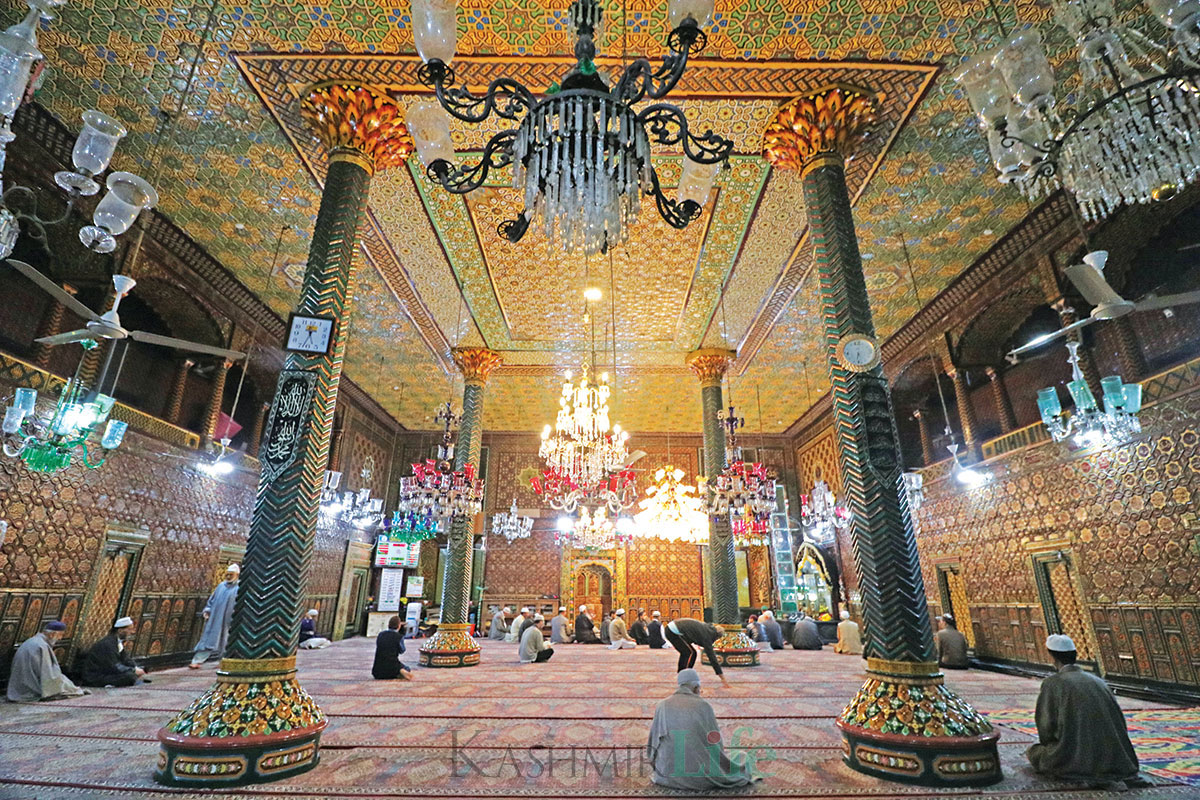
An inside view of Khanqah Moula. KL Image: Bilal Bahadur
The Sayyids’ entry came at a time when the ground had slipped away from Hinduism, and the situation was ripe for a change. Lal Ded, Kashmir’s most known acetic was Amir’s contemporary. She is recorded to have met his cousin in Kulgam.
“Men were intolerant, depraved and vicious, and women were no better than they could make of them,” Dr R K Parmu writes in A History of Muslim Rule in Kashmir (1320-1819) explaining how Lal Ded’s poetry ripped the society apart. “The people were generally made to believe in occultism, in magic, in stocks and stones, in springs, in rivers, in fact, in all the primitive forms of worship.” Parmu has written that the ascetic openly preached against this kind of worship. “The stone in the temple, she says, is no better than a millstone or the stone in a pavement,” Parmu wrote. “The idol is but a lump of stone and the temple the house of this lump.”
The rebellion within the caste-ridden society opened the doors for Islam.
“She preached harmony between Hindu Vedantism and Sufism,” Fehmida Wani writes in her excellent study The Search for Shared History of Mankind: A Case Study of the Technological and Cultural Transmission from Persia and Central Asia to Kashmir. “It benefited in the process of conversion.”
Sayyid Impact
With the state apparatus supportive and the society willing to change, how the immigrant Sayyids used the situation for Islam’s spread is something that historian may have to find answers for. So far, the narratives that have emerged in the last more than 600 years revolve more around ‘miracles’ and legends of the privileged preachers.
Islam, it needs to be mentioned, existed in Kashmir more than 200 years before the Ladakhi prince converted at the hand of Hazrat Sayyid Sharfuddin Abdur Rahman, the Bulbul Shah, in 1320. However, what was visible was that converts were rooted in the culture they had come from. That is perhaps why Tarikhi Kashmir insists that the Amir “cleaned the mirrors of the hearts of the converts of Kashmir from the rust of darkness by showing them the right path.”
Written by Sayyid Ali in 1579, historians see Tarikh-i Kashmir as the first Persian chronicle that details the migrations of the father and son along with 1000-odd murids who contributed in Islamising Kashmir culture.
Amir’s followers and disciples had come from the cradle of Muslim civilisation. Men of letters, they came with improved crafts and a sense of politics and history. Amir himself was a master Sozan Kar, a poet, an impressive prose writer and thinker. With access to the ruling structure, having some sort of economic tools in hand and logical explanations to the issues of faith, Sayyids obviously had an impact on the ground. They changed the culture forever.
The Aurad
Prof Mohammad Ishaq Khan, however, sees the situation differently. “It seems that Sayyid Ali’s stay in Kashmir was brief, not extending beyond one year. During this period, he remained the royal guest and, as such, his activities remained mainly confined to royal circles. He imparted lessons to the Sultan on God’s commands about the good works and evil,” Khan assesses in his magnum opus Kashmir’s Transition to Islam. “Besides engaging in some missionary activities in Alauddinpura and around the capital, he does not seem to have established any mass contacts. One wonders how, in view of the language barrier, a Sufi scholar like Sayyid Ali, would have made the esoteric as well as the exoteric version of Islam, as given by him in a plethora of works, intelligible to the Kashmiri masses.”
Khan, however, sees Hamadani’s major contribution in the Aurad-i-Fatḥiyyah. A grand mix of prayers, the praises for God, excerpts from the Quran, this Aurad has been an essential morning recitation in mosques for nearly 700 years now. It was Amir’s response to the pleas of neo-converts that the temple rings disrupt their morning prayers and they need something for loud joint recitation, something they had been doing for ages as Hindus. Khan sees it as “local influence” and “assimilation of the local mode of worship in the Islam of Kashmiris”.
“Islam, in no small measure, owes its success to his remarkable role which was distinguished by his tolerance towards the Kashmiris’ penchant for singing hymns aloud in temples,” Khan wrote. “The sight of a small number of people professing faith in Islam and simultaneously going to temples must have caused a great deal of concern to Sayyid Ali. But it goes to his credit that instead of taking a narrow view of the religious situation in Kashmir, he showed an acute discernment and a keen practical sense in grasping the essential elements of popular Kashmiri religious culture and ethos, and gave creative expression to these in enjoining his followers in the Valley to recite Aurad-i Fathiyya aloud in a chorus in mosques”
As the neo-converts chanted the Aurad, even the Hindu court historian Srivara was impressed: “It was here that the yavanas (Muslims) chanted mantras and looked graceful like the thousand lotuses with humming bees.”
But Ashraf insists that Amir’s contribution was in laying the foundations for the institutions of Islam in Kashmir. “Islam was spreading gradually before him and took a long time after him as well,” Ashraf said. “But the institutions of faith in Sufi systems were set up by him and his disciples.”
Departure
“After Sayyid had been for about a year in the Valley, he decided to leave,” Hassan writes about Amir’s eventual departure in 1383. “The sultan tried to persuade him to postpone his departure, but Sayyid refused, and departed with some of his followers, leaving behind Moulana Mohammad Bulkhi commonly called Mir Haji Mohammad, at the request of the sultan, to give him guidance in matters relating to the Sharia.”
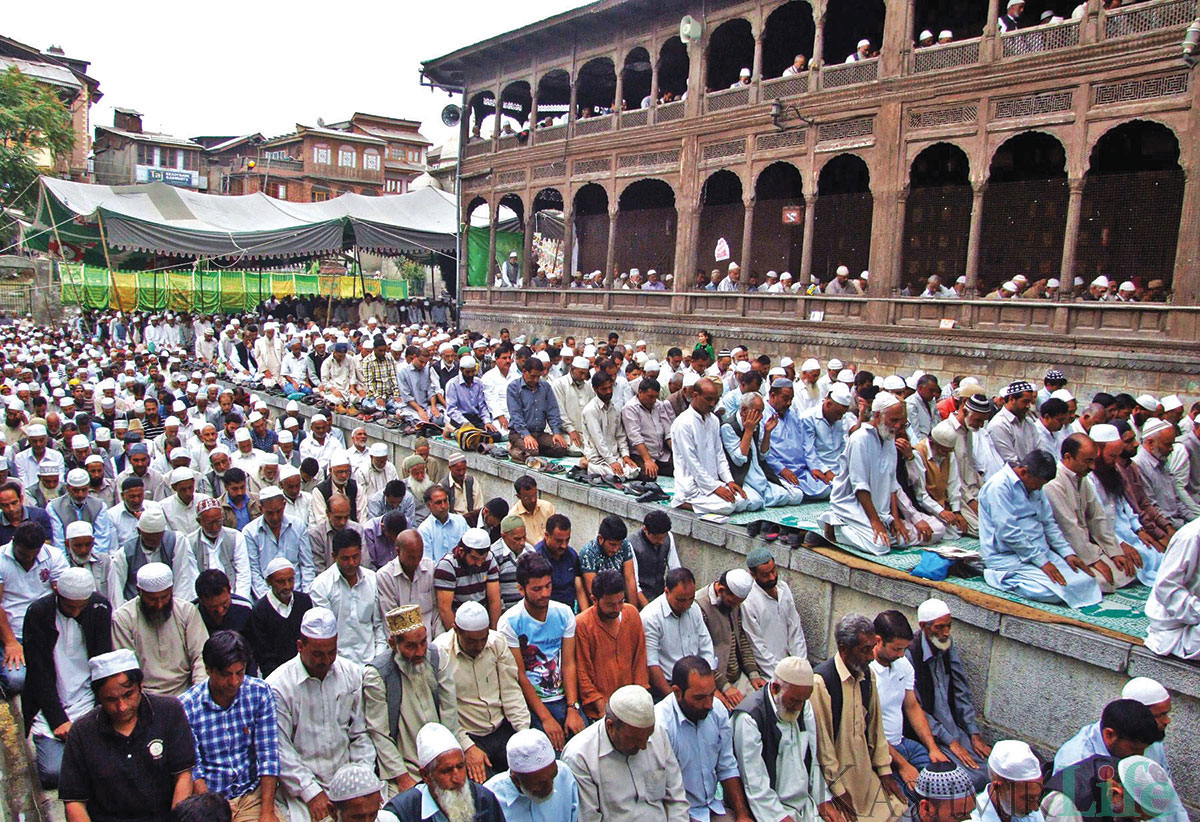
People offering prayers outside Khanqah Moula. KL Image by Bilal Bahadur
Did the Amir leave because he was unhappy with the Sultan, who would still go to the temple and meet the Brahmins. “As chronicler Sayyid Ali (Tarikhi Kashmir) points out “a large majority of his subjects were kafir and most of his officials were polytheists” so for maintaining a cordial relation, he considered it necessary to follow such a policy,” writes Darakhshan. “It was on this ground that Qutubuddin did not follow every advice of Sayyid Ali regarding state matters. Dissatisfied with Sultan’s response to his directives, Sayyid Ali decided to leave Kashmir. He left via Baramulla with the intention of performing the pilgrimage.” Another contemporary history, Baharistan-e-Shahi also points out that Sultan could not oblige the Amir by implementing the Shariah.
Ishaq Khan, however, says that his departure was not the outcome of the alleged conflict with the Sultan. Amir had written favourably to the king, even after his departure. “Notwithstanding Sayyid Ali’s emphasis on following the Sharia, he seems to have allowed practical wisdom and expediency to guide him in his attitude towards the Sultan’s non-Muslim subjects in Kashmir rather than the model he had chosen in his general work for a Muslim Sultan to follow,” writes Khan. He continued writing letters to the Sultan. In one, he praised a devote Brahmin. “In another letter sent to the Sultan from Pakhli, Sayyid Ali urged him to leave no stone unturned in popularizing the Sharia, but only within the possible limits.”
But, at the same time, it was also a fact that Amir’s letter indicated the spread of Islam in Kashmir was still a work in progress. “Our souls can never live in peace and tranquillity even if all (our) ambitions get fulfilled,” the Amir wrote to Muhammad Khawarazim, who he had left in Kashmir. “But it is really surprising that how can one ever live peacefully in the land of infidels or feel contended where the wicked flourish and are provided support!”
(This is first of the three-part series on the socio-economic impact of the immigration of more than 1000 preachers and professionals that Amir-e-Kabir Mir Syed Ali Hamadani led to Kashmir during the initial years of the Kashmir Sultanate.)
source: http://www.kashmirlife.net / Kashmir Life / Home> Cover Story> Faith / by Masood Hussain / May 22nd, 2019
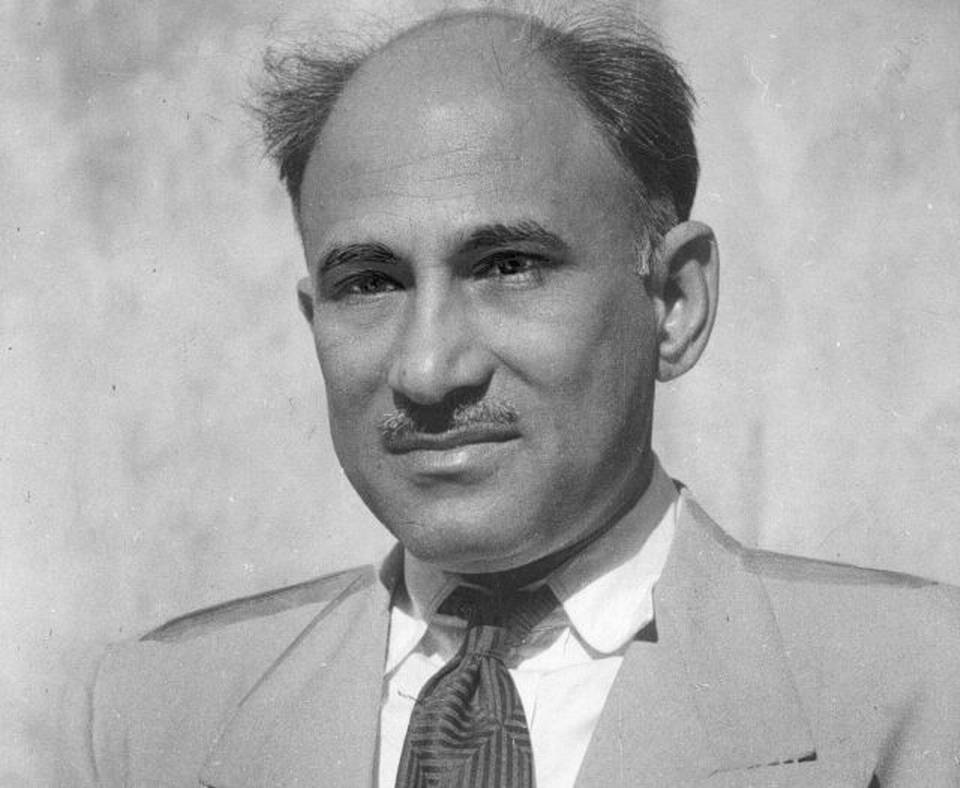
Mr. Khwaja Ahmad Abbas, well-known film critic, script writer and producer. | Photo Credit: THE HINDU ARCHIVES
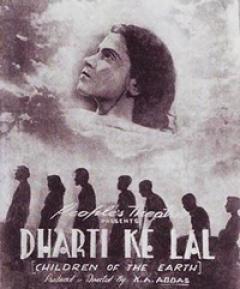
On the occasion of writer-filmmaker Khwaja Ahmad Abbas’s 102nd birth anniversary that fell earlier this week, some reflections on his first movie Dharti Ke Lal, a film that was not available for public viewing until about a year back…
The name Khwaja Ahmad Abbas, whose 102nd birth anniversary passed by this week with nary a mention of him in mainstream media, rings a bell in the mind of an average cinephile primarily for two reasons. The first is as the story/screenplay writer for Raj Kapoor’s cinema; and the second is as the filmmaker who introduced the star of the millennium, Amitabh Bachchan, to Hindi films. His directorial output, comprising 14 feature films and numerous short films and documentaries, is either ignored or overlooked.
This year is special for someone who wants to get introduced to Abbas’s cinema — heavily influenced by the art of Soviet filmmakers like Sergei Eisenstein and Vsevolod Pudovkin — as it marks seven decades since his first film, Dharti Ke Lal (Sons of the Soil) was released. It was a unique experiment by the Indian People’s Theatre Association (IPTA), co-founded by Abbas, at film-making and an early example of Indian film industry’s tryst with social realism. This was the realism of the kind that would be seen later in the films of Satyajit Ray, Bimal Roy and Mrinal Sen.
The tale of a peasant family’s struggles during the British-authored Bengal famine of 1943 during World War-II, the film was a combined adaptation of three literary works — Bijon Bhattacharya’s Bengali play Nabanna; a Hindustani play Antim Abhilasha; and Krishan Chander’s short story Annadata.
Dharti Ke Lal can also be considered a part of an Abbas trilogy (emphasis mine) of 1946. The three films — the other two being Dr. Kotnis Ki Amar Kahani and Neecha Nagar, both written by him — presented three different ways in which he expressed the idealism of a common man in pre-Independence India. Dr. Kotnis Ki Amar Kahani, a biopic on Dr. Dwarkanath Kotnis, was based on Abbas’s story, And One Did Not Come Back. It showed a young doctor, inspired by Pandit Jawaharlal Nehru’s call to serve the wounded Chinese during the Sino-Japanese War, staking his career to serve the dispossessed masses in a distant country. This was a primer into Abbas’s early-day internationalism.
Neecha Nagar by Chetan Anand, about a nonviolent rebellion by residents from a decrepit shantytown, shows an educated youngster Balraj (Rafiq Tanwar) motivating and organising the masses to speak up against Sarkar (Rafi Peer), the municipality head. Abbas’s desire to lift the urban subaltern to a state of peaceful revolution found expression through the screenplay of the movie.
Neecha Nagar – Part 1 of 10 – Cannes Awarded Indian Classical Movie
source: http://www.youtube.com
Dharti Ke Lal, with a young peasant Niranjan (played by Balraj Sahni) in the lead role, was much more explicit than Neecha Nagar in advocating for independence and self-rule. It is set in Ameenpur, a village in pre-Partition Bengal, is slowly coming to grips with India’s struggle for independence. Through references to Saare Jahan Se Achcha, with Ravi Shankar’s music playing in the background, Abbas introduces a nationalist tenor into the film.
The first half, where the family of Samaddar, the village pradhan (head) and his son, Niranjan, tries to live a happy, agrarian life within their means, is an early-day attempt at realistically portraying the village life. This is celluloid portrayal of the kind of society people got introduced to through Munshi Premchand’s novels like Godan and short stories like Panch Parameshwar. Tropes like the affinity of the villagers toward their land and the affection they show toward their cattle and cow are straight out of a Premchand short story.
The second half, where Samaddar’s family is forced to migrate to Calcutta is Abbas’s attempt to see the city through the prism of a humble peasant. The scarcity created by the famine; the apathy of the rich in the city; and the simmering Hindu-Muslim animosity combine to create absolute misery in the lives of the economic migrants. They further encounter indifference as they are forced to beg. Finally, following the end of famine, they are forced to return to their village where they mobilise themselves into a group and practise saajhe ki kheti (collective farming).
Coming back to the Abbas trilogy part, while Dr. Kotnis Ki Amar Kahaani and Neecha Nagar were inspired by Nehru’s vision of an enlightened urban India, Dharti Ke Lal seeks to emphasise Gandhian ethos of seeking comfort in the village life.
In terms of aesthetic merits, Dharti Ke Lal ranks equal to the likes of Do Bigha Zameen made in the next decade. The affection with which the camera views the villagers as it takes their close-ups makes the characters and their situations relatable. Just notice the sense of wonder on the faces of the family members in the 10th minute as they welcome the clouds, emphasising the love-hate relationship a farmer enjoys with the monsoons. The poignancy of the moment is accentuated by an alaap, with a flute playing in the background. This surely reminded me of joy in the face of villagers of Champaren in Lagaan as they anticipate the rains on seeing the clouds, expressed through the ghanan-ghanan song.
source: http://www.youtube.com
In a radio interview quoted in an audio tribute, Abbas expressed a sense of pride when he says that Dharti Ke Lal is the only film that was ‘socialist’ when it comes to the production process. He says none of the members was paid less than Rs.200 or more than Rs.400. His socialist ideals and life-long belief in upliftment of the downtrodden — his commitment to idealism made journalist Vinod Mehta compare him to historian Eric Hobsbawm — kept informing his writing and his film-making.
source: http://www.youtube.com
His production company, named ‘Naya Sansaar’ (A New World) was his way of voicing his message of empowerment as he made films like Shahar Aur Sapna, Do Boond Paani and Saat Hindustani. Most of them were commercial disasters and some of them look didactic from a 2016 viewpoint. However, if there is one film that has remained relevant, both in terms of its art and its content, it is Dharti Ke Lal.
source: http://www.thehindu.com / The Hindu / Home> Cinema / by Hari Narayan / June 11th, 2016
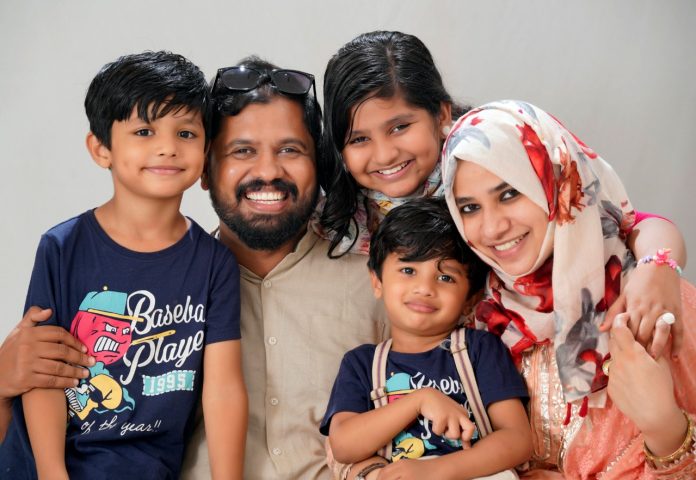
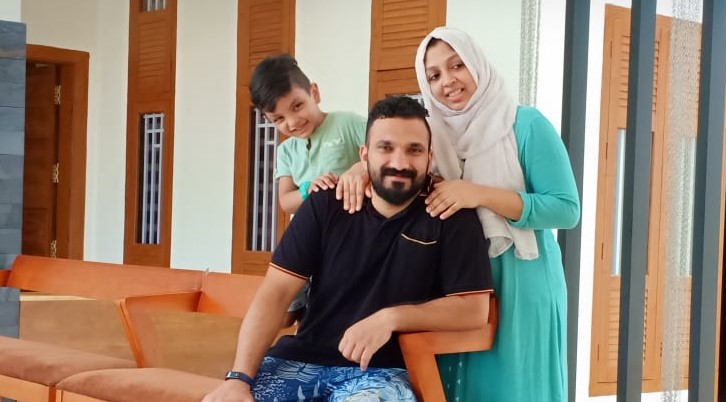
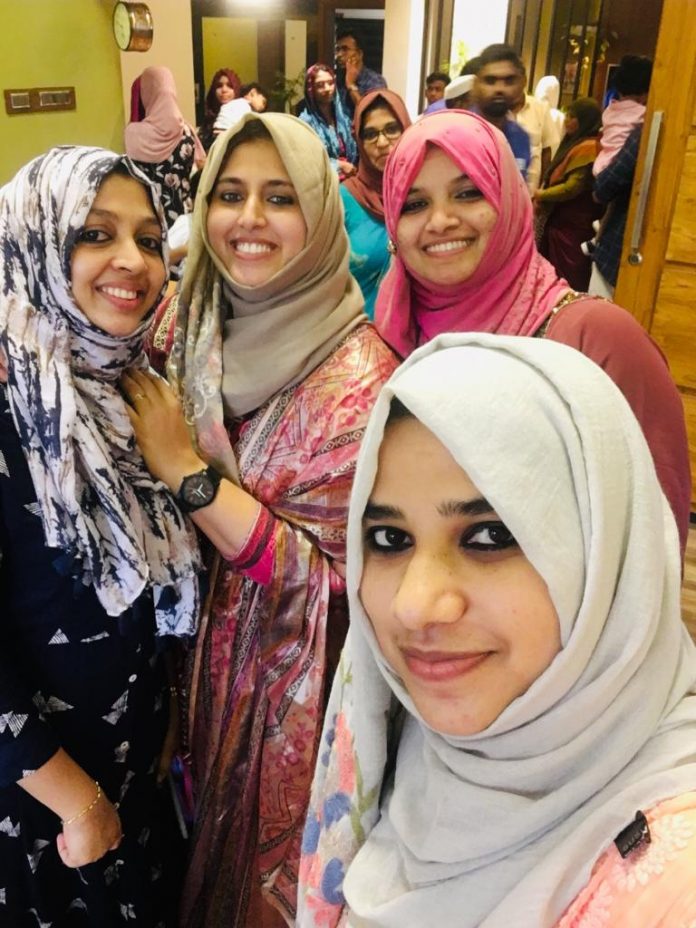
Vlogging or video-blogging is nothing new in this modern age of technology. But there is an interesting vlogger family worth knowing about. Let’s meet four women from a family in Malappuram, who have established their paths in successful vlogging – Shamseera, Femina, Sabeena and Shabna.
Moyin KP and Khadeeja EC belong to the village of Munduparamb in Malappuram. They have four children – a daughter and three sons. Their daughter Shabna and the three daughters-in-law are into vlogging now. It all began with Shamseera, their eldest daughter-in-law. She grew up in Kerala and Qatar and lived with her husband and kids in Dubai where she too worked for a while. But when they moved to Saudi Arabia in 2014, she found it so different from the places she had been till then – it was hard to go out alone, she couldn’t work as job opportunities were very less for foreign women back then.
Her only solace then lay in her cooking experiments, reading and crafts etc. She even joined her kids’ school as an art teacher but soon realised that ‘teaching itself was art I (she) lacked’. In between, she was also watching videos on YouTube, which gradually brought her to the idea of starting a channel of her own. Shamseera began a YouTube channel in 2016 but had to drop it due to some technical issues. She then began another one in 2017 and uploaded the videos of the previous one in it and thus started the journey again. Since then, she hasn’t turned back from her ‘Momtastic’ channel. (https://m.youtube.com/channel/UCL-LW86fWpQejgKbsoWrQqw#menu). She now has 2.98 lakh subscribers from different parts of the world.
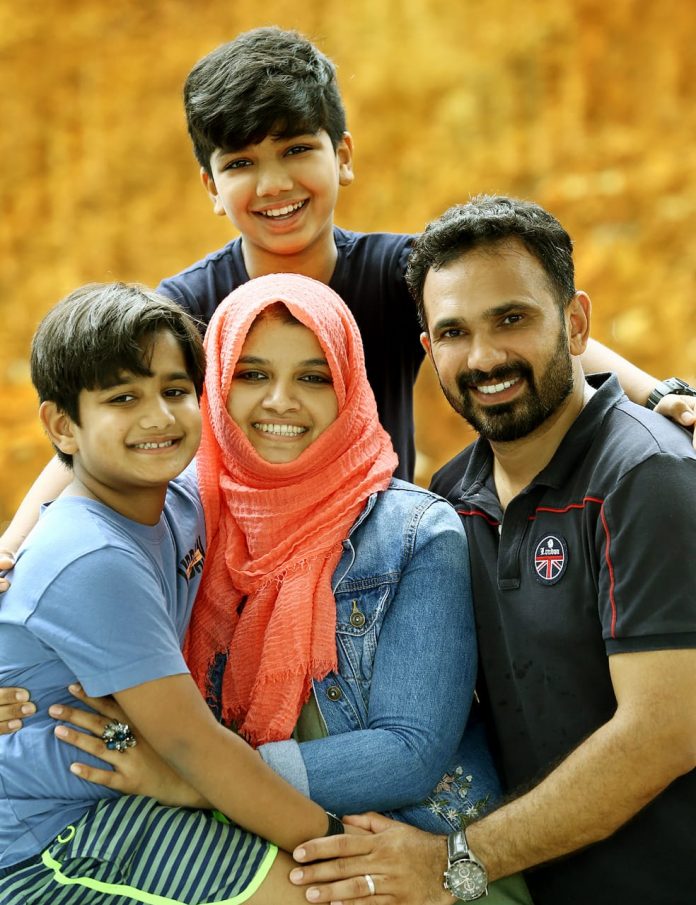
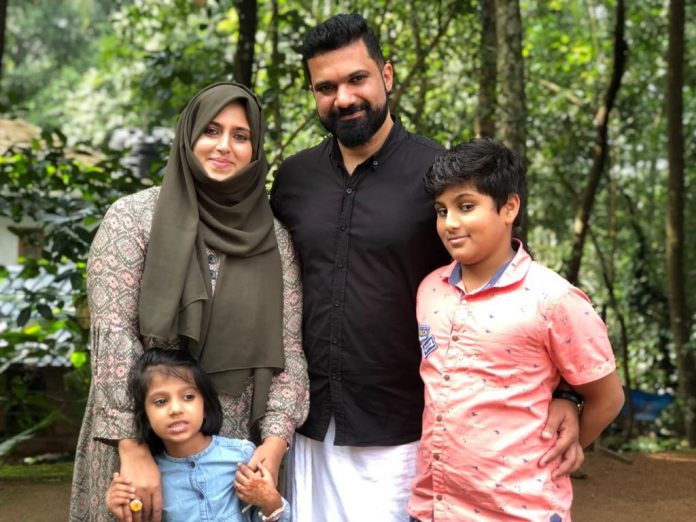
Shamseera Sherin and family
The other three were inspired by Shamseera. Shabna Hasker was the second to enter the field. She began her channel ‘Taste Tours’ (https://www.youtube.com/channel/UCwXXEk9v87KS57cFkpoTgIQ) in May 2018, and soon Sabeena Shemin joined with ‘Sabeena’s Spice Diary’ (https://www.youtube.com/channel/UChiazvVDnNGssDgqshIKGAA) in June 2018. And now, Femina couldn’t stay back. She joined the YouTube journey along with her husband Shajin in October 2018 – ‘Femina & Shajin’ (https://www.youtube.com/channel/UCzfIuOwn17TYHnt9NygsWKg) The topics they have selected are all similar – cooking, cleaning, organizing, gardening, crafts, travel, daily house chores etc. Shamseera chose English as the medium for her vlogs, though she has done one in English, Malayalam and Hindi together. Sabeena and Femina began in English and switched to Malayalam owing to the request of viewers. Shabna uses only Malayalam in her videos.
Femina Shejin and family
All the four ladies manage their YouTube channels along with taking care of their respective families and running their houses. Shamseera, a graduate in commerce, lives in Riyadh with husband and two kids. Femina, an MBA graduate, is in Calicut with her husband and two kids. Sabeena, a Statistical Investigator on leave from government service, lives with husband and a kid in Sharjah. Shabna, a graduate in commerce, lives in Malappuram with husband, three kids and parents-in-law. Speaking to TwoCircles.Net, they said that they wished to upload videos twice or thrice a week in a fixed time but were not able to do so always. Shamseera, Femina and Sabeena shoot their videos and do the related works when their kids are away in school, while Shabna has her youngest child always with her at home and so has to do her works at night after the kids go to sleep. All mentioned the support of their families. Shabna’s channel has more than 1.5 lakh subscribers, while Sabeena’s has 1.01 lakh and Femina’s more than 31,000.
Shabna Hasker and family
Shabna now has a cookbook to her credit – ‘Janapriya Ruchikal’ by leading publisher DC Books, expected to be released soon. It was her husband Dr Hasker who suggested the idea and pushed her into writing it when she was reluctant. Shamseera has even starred in an advertisement for the famous Lulu Supermarket.
When asked how they managed their private life and public vlog with the camera inside their homes, all four said they were extremely particular that their vlogging shouldn’t affect their private lives. Shabna said, “We do capture our daily life at home but only for a short time. For example, we capture the first few moments of having food and then turn it off. So we have our time too.” Femina owes the lag between her videos to the priority she has kept.
shabna hasker
While the other three vlog on their own, Femina does it along with her husband. “It is good. We can spend some more time together,” she said. In addition to the usual topics dealt with by all, they also do comedy videos along with their kids. However, there are times when Femina has to do the vlogs alone as Shajin gets busy with work. The daughter of an Army Major, Femina was born in Kerala and grew up in different parts of the country. After completing her graduation in Commerce, she did MBA in HR and worked for a while when they were in Dubai and back in Kerala. Now she is also running a home décor-related business online.
Sabeena Shemin and family
They also try to keep regular contact with their viewers–replying to messages on social media and trying to do videos on request. “Editing and uploading a video is a big task. My eyes get tired, my energy levels fall. But once I publish a video, the comments from my loving viewers are just enough to make my battery level go 100% in a few seconds,” said Shamseera. She recalled an experience she had last month on a trip to Kochi when a lady rode 6-7 kilometers on a scooter with two kids just to meet her.
So, how has YouTube affected their lives? Shamseera confesses she was reserved and shy earlier, but vlogging has made her a more confident person. Life has become busier and more hectic, but now that they are used to it, Femina says it is a beautiful mix. The women are doing their bit for charity too, the latest being during the floods in Kerala. Life has changed for all the four – getting recognized is indeed a matter, but it makes them more responsible too.
source: http://www.twocircles.net / TwoCircles.net / Home> TCN Positive> Indian Muslim> Lead Story> Women / by Najiya O – TwoCircles.net / September 16th, 2019
Ahead of its release this Friday, Bard of Blood writers Bilal Siddiqi and Mayank Tewari discuss the challenges involved in adapting a book into a seven-episode TV format
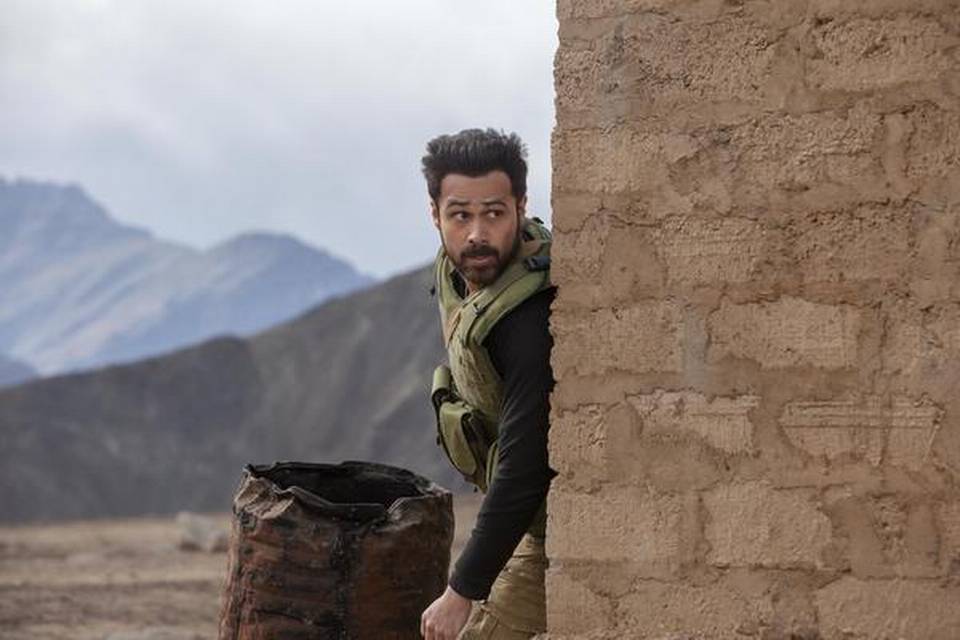
In 2015, at the book launch of The Bard of Blood, author Bilal Siddiqi and novelist, Hussain Zaidi, made jokes on Emraan Hashmi as to how he is the right candidate to essay RAW agent Kabir Anand, without considering the eventuality that would transpire four years later. Bilal agrees that he did not put an image to the character while writing, and that the casting of Emraan Hashmi happened organically. “When you have a star like Emraan on board, it will obviously elevate the viewership of the show. He embodied the character and brought in lots of nuances to Kabir Anand,” says Bilal Siddiqi, who has written the screenplay of Bard of Blood along with writer Mayank Tewari, known for writing Newton and The Accidental Prime Minister.
Inside the writer’s world
The biggest selling point of The Bard of Blood was Bilal’s age (he was 20) — too young to be dealing with guns, agents and weapons of mass destruction (read: third world politics). But his fascination for the espionage genre stems from his mentor Hussain Zaidi, with whom he assisted in books like Byculla to Bangkok, Mumbai Avengers and My Name Is Abu Salem. Bilal wrote a brief outline of Kabir Singh, the protagonist of The Bard of Blood, and says he never had the intention to make it into a novel. “He [Zaidi] liked whatever I had written and sent it to my publisher. They called me one day, asking to finish the book so that they can take a call. I somehow managed to fulfil my dream of writing,” he says.
He was “subconsciously influenced” by Zaidi, who had one advice for him: ‘Make it visceral and graphic’. That he did when he sat with Mayank Tewari in the writer’s room, having discussions back and forth on how to better the book. “Bilal was very proactive in saying, ‘let us use this material as a springboard to take it to the next level’. Since it was written five years back, we had to spend more time on the screenplay to make it relevant and real,” says Mayank Tewari, adding that the duo has taken the “best chunk from the book”.
Unlike The Accidental Prime Minister, which was non-fiction, the challenge for Mayank was to construct scenes that drives the characters throughout the season, in a satisfying way for the audience. “The one good advantage is that, all characters were sharply etched out. There were some really good lines in the book, which we have retained,” he adds. Mayank did have heated exchanges with Bilal on how to interpret Balochistan. He quips, “But that’s what makes the collaboration rewarding, right? Disagreements lead to fruitful agreements. And everything was in the spirit of making a good show.”
Writing a novel has its own perks. For instance, Bilal had the luxury to use The Bard of Blood as a device to get into the character’s psyche, exploring his inner voice and go overboard with the descriptions — a counter to the film format, where you need to show these things on screen rather than tell. He admits that they had to tone down the details, adding, “Screenplay is like a manual for filmmakers to shoot. So, it is a different ball game and Mayank has given some valuable inputs.”
Bilal acknowledges the timely suggestions of Shah Rukh Khan, who has produced it along with Netflix. In fact, Jannat Mari, the character played by Kirti Kulhari, is Shah Rukh Khan’s brainchild and was not there in the book. “He [SRK] saw the pitch before it went to Netflix. The series has several characters that were not part of the book. In that sense, you can say that Bard of Blood is the best version of my book.”
(The writer was in Mandawa at the invitation of Netflix)
source: http://www.thehindu.com / The Hindu / Home> Entertainment> Movies / by Srivatsan S / September 24th, 2019
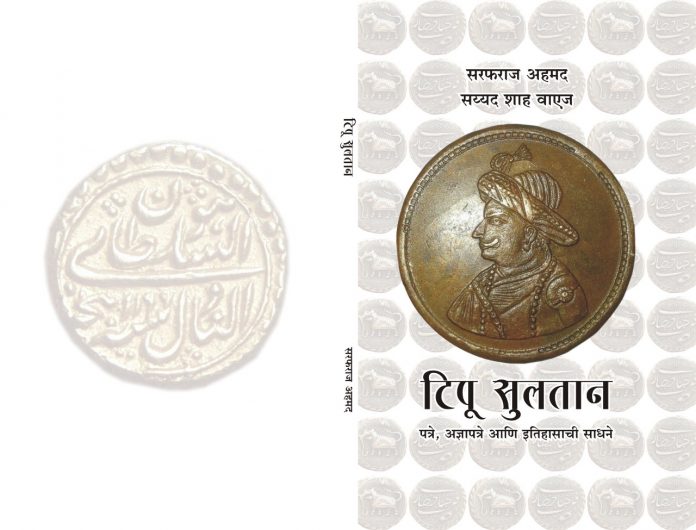
In an attempt to highlight Tipu Sultan’s personality, diplomacy, relationships with other rulers, foreign policies and other facets of his rule, two youths from Solapur city, Sarfaraz Ahmed and Wayez Sayed are bringing out a Marathi book named “Tipu Sultan – Patre, Hukum Name aani Itihasache Sadhne” (Tipu Sultan – Letters, Orders and History materials).
About 415 letters and 10 orders (Hukm name) of Tipu Sultan have been collected by these two youths and translated into Marathi.
The book containing Tipu’s written material is ready for release and will be published by Adv. Gaziuddin Research Center, Solapur, Maharashtra. This research centre has released five books on Tipu Sultan.
Speaking with Twocircles.net, Sarfaraz Ahmed informed that they worked for nearly six years to translate this 300-page book.They had to travel across India to collect these 415 letters written by Tipu which have been preserved in different libraries of the country, he added.
“These letters show that he had very good relations with Maratha Sardars of Maharashtra, Nizam II of Hyderabad and other Indian kings. He also contacted foreign rulers, including Napoleon Bonaparte and British rulers as a part of foreign policy, ” Ahmad added.
Come author Sayed Shah Wayez said they had to work hard to translate these letters because they were written in seven languages since Tipu Sultan used to communicate with other rulers in their mother tongue only.
Renowned activist Ram Punyani, who has written the introduction for this book, lauded the efforts and the hardwork of Sarfaraz and Wayez.
source: http://www.twocircles.net / TwoCircles.net / Home> Historical Facts> Indian Muslims> Lead Story / by Imran Inamdar, Twocirlces.net / September 22nd, 2019
Feroz Shah Tughlaq (Reign 1351 – 88), the third ruler of the Tughlaq Dynasty was embarked on a vigorous campaign of construction activity, consisting mainly of public buildings of utilitarian nature.
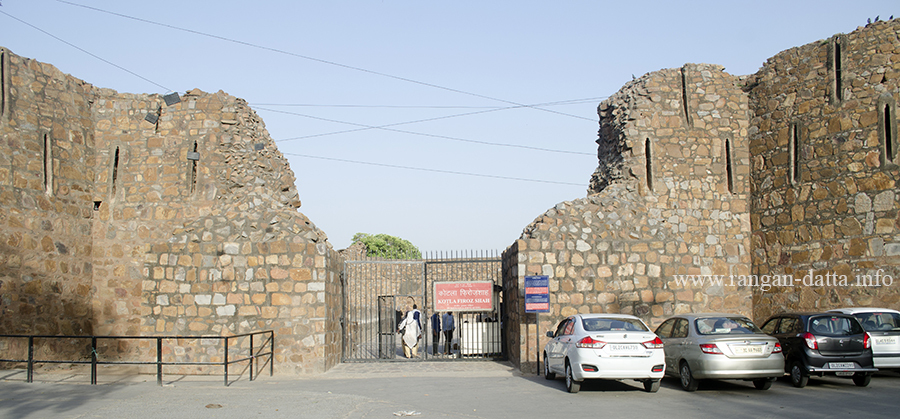
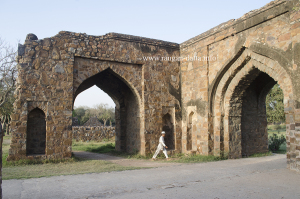
Gate of the citadel of Feroz Shah Kotla or Firozabad, Delhi
He made 1200 garden around Delhi and is credited with the erection of 200 towns, 40 mosque, 30 villages, 30 reserviors, 50 dams, 100 hospitals, 100 public baths and 150 bridges
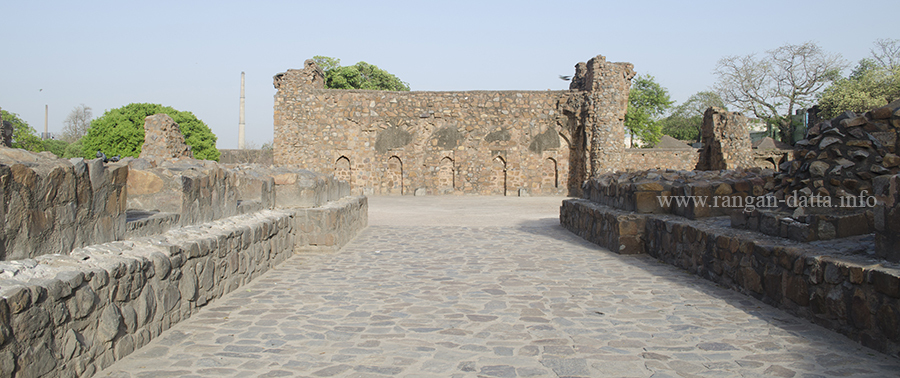
Passageway leading to the interiors of Feroz Shah Kotla or Firozabad, Delhi
In 1354 Feroze Shah Tughlaq built Feroz Shah Kotla or Firozabad, the fifth citadel of Delhi. His predecessors Ghiyasuddin Tughlaq (Reign: 1321 -25) and Muhammad bin Tughluq (Reign: 1324 – 51) has the credit of erecting the third and fourth citadel of Delhi.
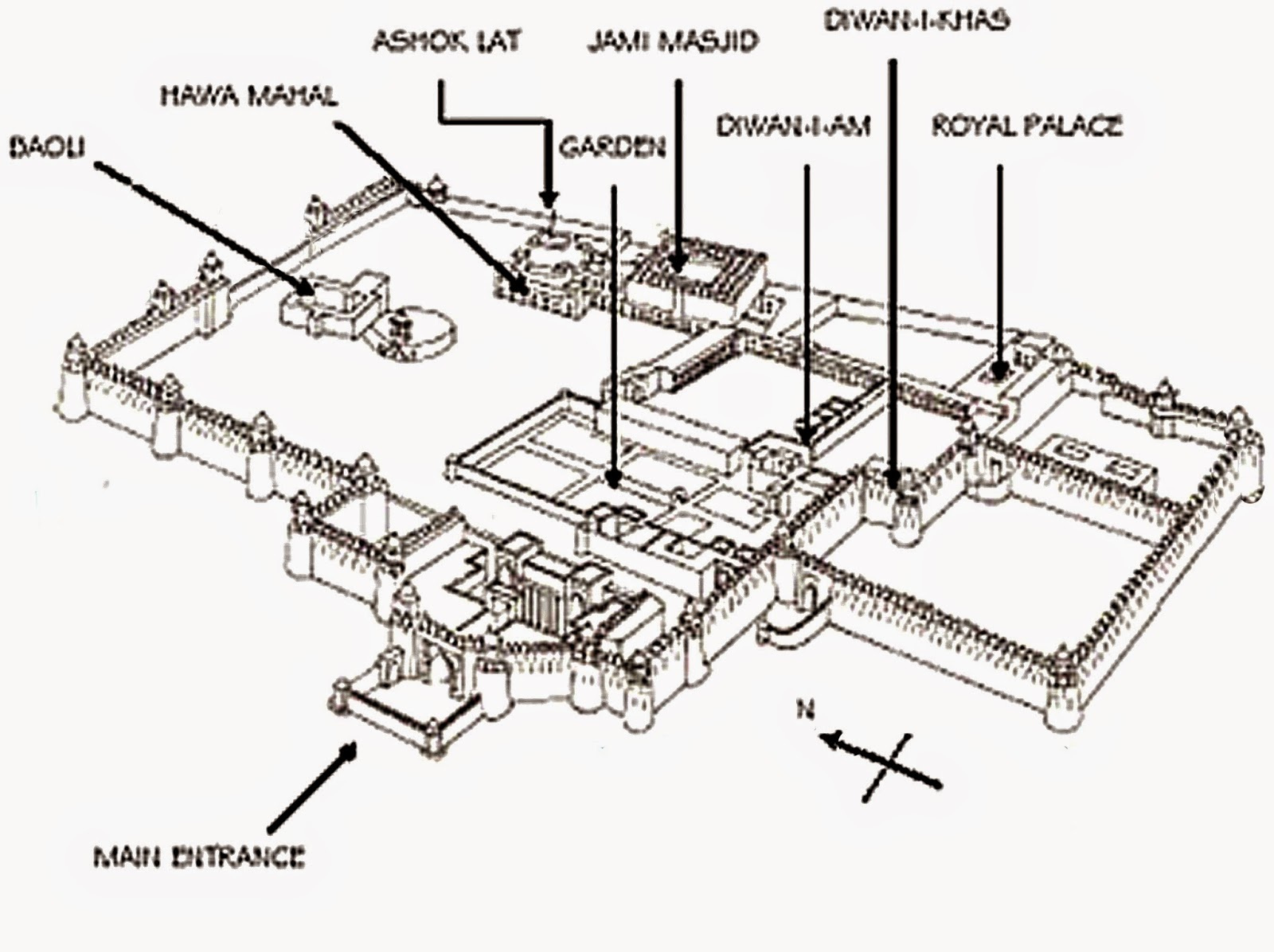
Plan of Feroz Shah Kotla or Firozabad (Source: http://www.pixels-memories.blogspot.in)
Tughlaqbad, the third citadel of Delhi, along with Jahanpanah, the fourth citadel of Delhi were abandoned because of acute water shortage. This lead Feroze Shah Tughlaq to move further north and to construct its citadel along the west bank of Yamuna River.
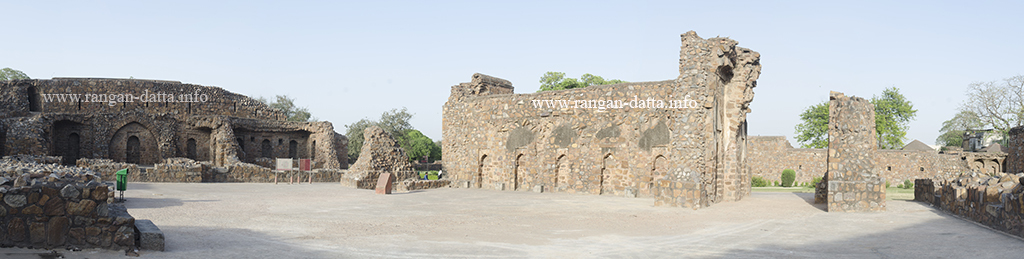
Panoramic view of the ruins of Feroz Shah Kotla or Firozabad, Delhi
Unlike Tuglaqabad, Feroz Shah Kotla lacked the defensive construction and after the collapse of the Tuglaq empire the Mongol invader Timur found it an easy target. In 1398 Timur gladly carried out all the riches of the citadel leaving behind the ruined rubble structures, which was again plundered and reused by Shahjahan (Reign AD 1627-57) for the construction of Shahjanabad, the seventh and last ancient citadel of Delhi.
An arched gateway, Feroz Shah Kotla, Delhi
Despite being plundered by several rulers in the past and with centuries of neglect Feroz Shah Kotla still houses several interesting ruins, although minimalistic in nature, they still reveal the former glory and splendor of the ancient citadel.
Today the ruins of Feroz Shah Kotla nestles between the cricket stadium, of the same name, and the Ring Road. Every Thursday thousand of visitors visit the ruins of the ancient citadel.
Strangely these visitors are not history or heritage enthusiasts but are devotees looking for the blessings of Djinns, who according to legend are residents of the ruins of Feroz Shah Kotla. No wonder Delhi has always been a “City of Djinns.“
Djinns live in the heart of Delhi: they are spirits tending to the faithful seeking help. On Thursdays, they are busy when thousands turn up with letters for them.
A kid makes his way through the arched gateways of Feroz Shah Kotla, Delhi
Every Thursday hordes of devotees, irrespective of religion, visit the ruins of Feroz Shah Kotla with photocopies of letters, citing there problems. They stick the letters on different strategic spots of the citadel and offer prayers to the Djinns.
Strangely the concept of letters to the Djinns has only been an recent concept in the ancient citadel, which dates back to the 14th century.
The first records of people coming to Firoz Shah Kotla in large numbers began shortly after the emergency of 1977.
It was only in 1977, a few months after the end of the Emergency, that we have the first record of people starting to come to Firoz Shah Kotla in large numbers. This seems significant, given how destructive the Emergency was for the Old City and how many poor and working class people were displaced from the Old City to resettlement colonies across the river
Anand Vivek Taneja, Anthropologist
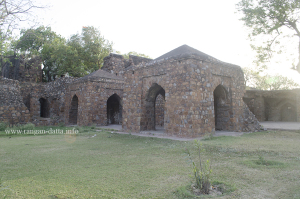
Ruined structures of Feroz Shah Kotla, Delhi
Even on other days large groups of Muslim devotes visit Feroz Shah Kotla to offer their Namaz at the Jami Masjid, one of the few structures of the citadel that have remained, more or less, intact to this day.
Designed by Feroz Shah Tughlaq’s state architects Malik Ghazi Samana and Abdul Haq the citadel of Feroz Shah Kotla follows a rectangular plan with dimensions 800 m by 400 m, with the longer side along the north – south axis.
The entire citadel is encased within a high stone wall. Although the walls look solid but it lacks the massive bastions of Tuglaqabad. The entrance is through a small and simple gateway on the eastern side and a broad passageway leads to the scattered ruins of Feroz Shah Kotla or Ferozabad
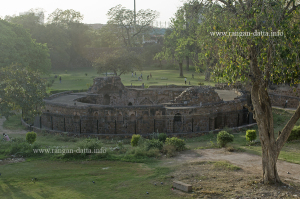
Circular Baoli (Stepwell) at Feroz Shah Kotla
Most of the buildings within the citadel are made of rubble masonry covered with heavy plaster and without any surface ornamentation.
The passages leads to series of scattered ruins, which was once part of the citadel’s garden.
It leads further to the Diwan – i – Am (hall of audience) and Diwan – i – Khas (hall of private audience).
A few pavilions and archways are all that remains today of the famed halls of audience of Feroz Shah Tughlaq. The Royal Palace located at the far end of the citadel lies in similar ruined condition.
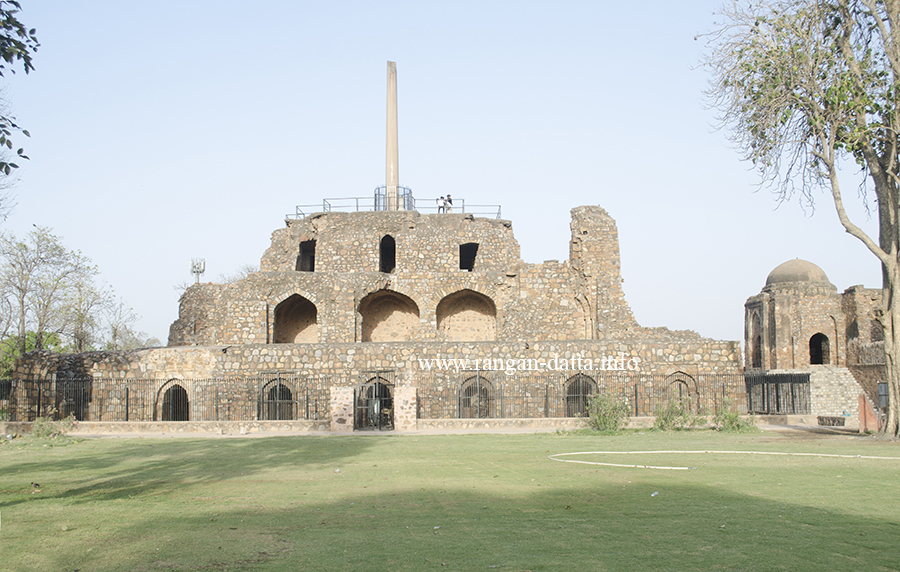
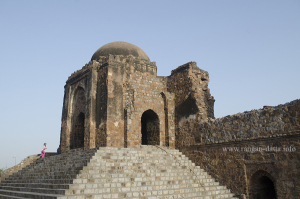
Stepped pyramidal structure, crowned with the Ashokan Pillar, Feroz Shah Kotla, Delhi
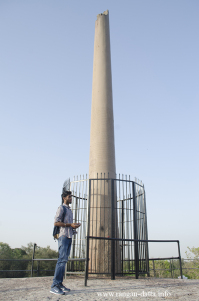
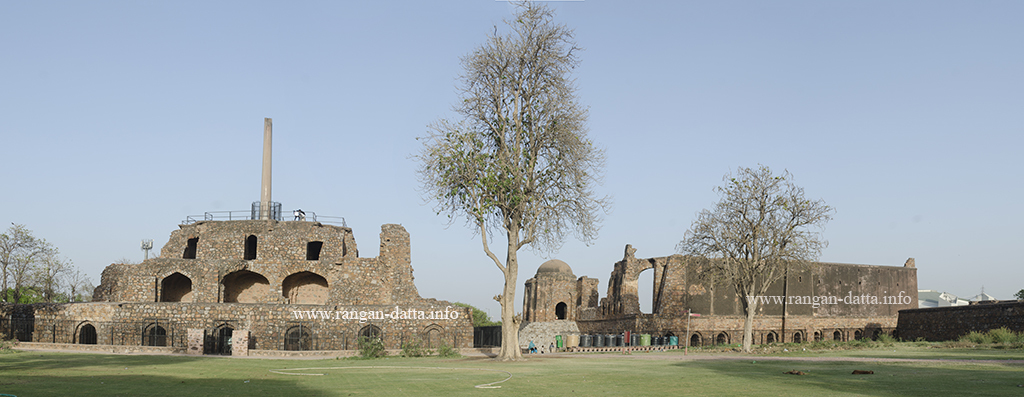
The more intact and interesting structures of Feroz Shah Kotla are located on its northern side. Towering above the lawns is the massive Jami Masjid and towards its left is the stepped pyramidal structure, known as the Hawa Mahal or Kushk-i-Shikar. It is crowned with the Ashokan Pillar, also referred as the Minar-e-Zarreen.
Ashokan Pillar, Feroz Shah Kotla
Just in front of the stepped pyramidal structure is a baoli (stepwell).
Delhi is no stranger to Baolis and even a century ago more than a hundred of them existed in Delhi.
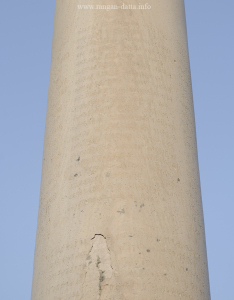
Inscription on Ashokan Pillar
Today more than a dozen remains (Also see: Baolis of Delhi) but what makes the Feroz Shah Kotla baoli unique is its circular shape. It is the only circular baoli in Delhi. Sadly the baoli is kept under lock and key and the interiors are out of reach for the common tourist. But the baoli is best viewed from the differnt levels of the nearby stepped pyramid.
Domed Pavilion at the entrance of Jami Masjid
The Hawa Mahal is a three tired stepped pyramid with diminishing floors. Built with a central solid core and vaulted cells around it. Stairs at the comers lead to the uppermost terrace where the Ashokan pillar is planted.
The Ashokan Pillar was shifted from Topar in Ambala by Feroz Shah Tughlaq and placed atop the Hawa Mahal.
The 13 m high 27 ton pillar was shifted on a custom built 42 wheel carriage operated by 8400 men, which transported it to the banks of Yamuna River. From where it was transported by boat to Feroz Shah Kotla in Delhi
Incidentally Delhi contains another Ashokan Pillar, which was also shifted by Feroz Shah Tughlaq and placed near his hunting lodge on Delhi’s North Ridge, also known as the Kamala Nehru Ridge. (Also see: Historical Trail along Delhi’s North Ridge)
Tanks, along Jami Masjid, for ritual wash
The structure is open to public and one can take the stairs all the way to the base of the pillar. The pillar still maintains its shining police and the inscriptions in Prakrit are clearly visible.
According to popular belief Laat (pillar) Waale Baba, the chief of the Kotla djinns, dwells in the Ashokan Pillar, which is also referred to as the Minar-e-Zarreen. Every Thursdaay devotees ties up their wish letters on the railing surmounting the Ashokan Pillar.
The top story of the Hawa Mahal offers grand bird eye view of the circular baoli (stepwell) and also the Jami Masjid, which lies on its southern side.
Namaz being offered at the Jami Masjid, Feroz Shah Kotla, Delhi
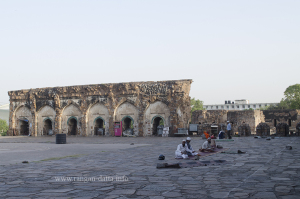
South of the Hawa Mahal lies the gigantic mosqque of Feroz Shah Kotla, the Jami Masjid. Built of Delhi quartzite stone. During the time of its construction it was the largest mosque in India.
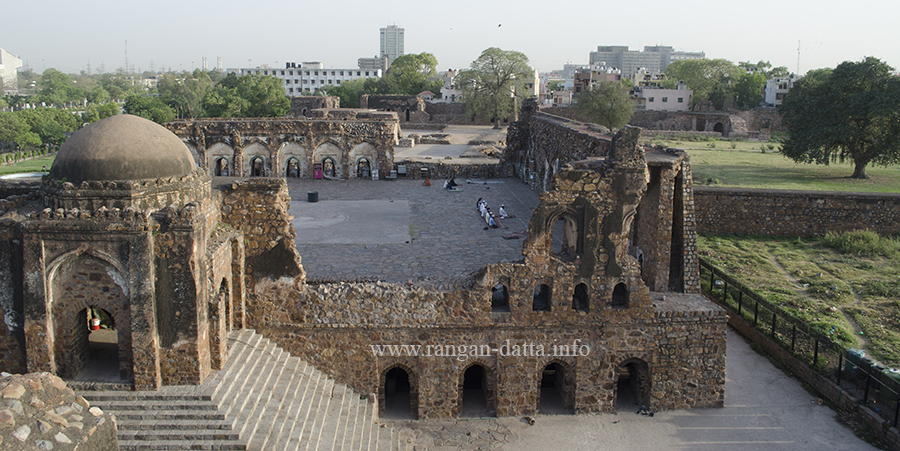
The mosque rests on a series of cells on the ground floor and is approachable by a long flight of stairs leading to a domed pavilion gateway on the northern side. The grand dome pavilion, which once stood at the centre of courtyard has long vanished.
Even Taimur, who plundered Feroz Shah Kotla, was so impressed with the mosque that he commissioned a similar one in his capital Samarkhand. Even Shah Jahan constructed a underground tunnel connecting the Jami Masjid to his newly constructed citadel of Shahjanabad. The tunnel still exist but is sealed for obvious reasons.
Grand view of the Jami Masjid, from Hawa Mahal, Feroz Shah Kotla or Firozabad, Delhi
Strangely the Jami Masjid is still an active mosque and attracts thousand of devotees during the time of eid. Even on normal days large groups of local Muslims along with Muslim office staff from nearby offices drop in for there daily namaz.
Panoramic view of Stepped Pyramid Structure and Jami Masjid, Feroz Shah Kotla or Firozabad
Colourfull plastic tanks, along the eastern wall of the ancient mosque, serve as a makeshift ritual wash (wudu) area for the devotees, who drop in to offer namaz.
Just outside the citadel of Firozabad or Feroz Shah Kotla, on a road divider lies the notorious gateway of Khooni Darwaza.