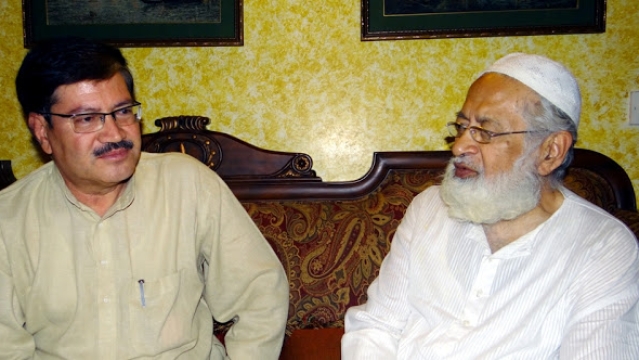
Shopian District (South Kashmir) , JAMMU & KASHMIR :
When the author asked Ummer’s schoolmates whether they would want to be like Lt. Ummer Fayaz, they said no. ‘’Ma’am he joined the army, the society here does not accept him and some who don’t even consider him a Kashmiri.’’
Bhawan Arora with her book at Chandigarh Press club
“Musrat is my sister, mama. If I don’t come for her wedding, what sort of brother am I? And for how long will I run, Mama? Kashmir is my home. With all of you there, can I stay away forever?” These were the words of Lt. Ummer Fayaz, when his family, fearful for his life, was urging him not to come home, weeks before he was killed by militants on 9 May 2017.
‘Undaunted: Lt. Ummer Fayaz of Kashmir’ by Bhaavna Arora, chronicles his life. The 232-page book took the author two years during which she visited Ummer’s family and met a large number of people who knew him.
Lt. Ummer was born on 8 June 1994, to an apple orchardist of South Kashmir’s Shopian district. He was abducted by veiled gunmen at 8.00 pm from his maternal uncle’s house on 8 May 2017 where he was attending the wedding of his cousin sister Musrat. His body drenched in blood was found at Herman Chowk of Shopian the next morning.
“Three men with scarves covering their face and shawls around their bodies swiftly entered through the front door of the house. They climbed the stairs and threw open the door of the room that Ummer was sitting in and asked, Are you Ummer Fayaz? Yes, I am, Ummer replied. Come with us, one of the veiled man commanded,” writes the book.
The book brings to life the high-spirited youngster, right from his childhood days. ‘’One day, a child from the Ummer’s class lost his geometry box. The teacher called all the students and asked them to swear by the holy Quran that they had not stolen it. One by one the students did and when it was Ummer’s turn, he took one look at the book and said, ‘Sir, this this is a dictionary, not the Quran.’ After that the teacher informed his father of his son’s cheekiness. His father gave him a dressing down, but was secretly pleased that his son had spotted what the entire class had missed.’’
Bhaavna Arora said he was also a very wam-hearted and friendly young man .
Bhawan Arora with Ummer’s famil
“At the National Defence Academy (NDA), he was the first to seek permission from instructors for offering Friday prayers; from then on every Friday Muslim soldiers are allowed to pray even during trainings,” she said.
Piecing together the life of the young officer turned out to be an emotionally charged journey. Bhaavna said, ‘’It is not easy to meet a family that has lost a son. When I first met his sister Asmat, we cried for half an hour. She asked me what does your brother do, and I had no answer.’’
Ummer was 11 when he joined Jawahar Navodaya Vidyalaya (JNV) in Anantnag district. The author recounts in the book how she was bombarded by questions from his schoolmates at JNV Anantnag. ‘’Students were eager to know if I was on their side. They asked me why I was there. When I told them whether they knew Lt. Ummer Fayaz, they said, ‘Yes, ma’am, he was our senior’.’’
When she asked them whether they would want to be like Lt. Ummer Fayaz, they said no. ‘’Ma’am he joined the army, the society here does not accept him and some who don’t even consider him a Kashmiri.’’
Once on his way home from Khodwani to Kulgam he was stopped by Army soldiers near Kulgam. They wanted to inspect his bag but he refused to let them do so. Ummer was trying to free himself from the grip of the soldier but failed. When the soldier could not control him anymore, he slapped Ummer, and he cried. Later, Ummer asked him whether he would let him go if he did not find anything in the bag. The soldier said, of course, and asked him what he wanted to become when he grew up. ‘’Someone like you. How can I become like you?’’, Ummer asked the soldier. When the soldier asked him what was so special about him, Ummer said, ‘’You are not like other soldiers who beat and torture my friends.’’
Before Ummer left the camp, the officer said to him, if you want to be an officer like me, join the National Defence Academy when you complete your Class XII.
Ummer reported at National Defence Academy, Pune, on December 30. Bhaavna Arora, who comes from an Army family, says it was Lt Fayaz’s coursemate who asked her to wrote the book. ‘’They wanted him to be immortalised in words.’’
Arora has in the past written three works of fiction. Her first book ‘The Deliberate Sinner’ revolves around infidelity.
source: http://www.indianexpress.com / The Indian Express / Home> India / by Dar Ovais / Chandigarh – March 29th, 2019
Nettara Sootaka by Rahmath Tarikere is a collection of articles written for different occasions in the last five to six years on contemporary writers and issues
What it means to write in Kannada at present as an intellectual or, to be more specific, as a literary and cultural critic? Keeping this question in mind, I would like to introduce Rahamath Tarikere’s Nettara Soothaka: Dharma, Rajakarana, Samskriti, Sahitya (Spectre of Bloodshed: Religion, Politics, Culture, Literature), a collection of articles written for different occasions in the last five to six years on contemporary writers and issues.
Rahamath Tarikere, one of the makers of cultural criticism in Kannada, has been a prolific writer. His research into the culture of Sufis, Nathapantha, Shakthapantha and Moharum of Karnataka is an exemplary field-work investigation in Kannada scholarship. Apart from travelogues, his scholarly engagements encompass writings on literary texts and cultural issues, literary criticism, research methods, edited volumes on Kannada literature, and interviews of intellectuals among others. He works largely in the field where literary and cultural studies intersect.
Tarikere has kept his writerly life alive by contributing pieces to journals and periodicals, and the present book, the sixth of his collected writings, consists twenty-two articles. Six articles in the early part of the book are reminisces of writers after their death.
Among these, Tarikere’s observations on the life and works of U. R. Ananthamurthy, Gauri Lankesh, Vasu Malali and M.M. Kalburgi are worth reading.
“Ananthamurthy: Kashtakalada Naitika Dani” (Moral Voice of Hard Times) — one of the best tributes to Murthy I have ever read in Kannada — delves deep into his intellectual and political complexities. Tarikere is at his best in identifying the archaeology of Ananthamurthy’s thought as ‘resistance’ (to structures of power and fascism), ‘dialectical mode of analysis’ (Right-Left, Kannada-English, Brahmin-Shudra, etc.), ‘dialogic’ and ‘transgressive’ (going beyond). Similarly, “M.M. Kalburgi: Kalakelagini Agnikunda (Fire-Pot beneath Feet)”, written in academic style, explores the philosophical underpinnings of Kalburgi’s research work against the larger backdrop of violence and intellectual life today.
This is a major point of departure for those interested not just in Kalburgi’s work but in Kannada research in general. Further, the portraits of writers and other eminent personalities including Dr. Rajkumar, celebrated Kannada film actor, Jawaharlal Nehru, N. K. Hanumanthaiah, B. M. Rasheed, Ramadas, H. S. Raghavendra Rao and A. K. Ramanujan have been sketched informatively in plain and clear prose.
The articles on Muslim and Sufi culture give a detailed account of the Muslim way of life in India. “Muslimarigobba Ambedkar Agatya” (Muslims Need an Ambedkar) and “Muslim Samudayada Sankathanada Tathvika Nelegalu” (Philosophical Foundations of Discourse on Muslim Community) and “Muslim Samskrutikalokada Swarup”(The Nature of Muslim Cultural World) unfold the dynamics of Muslim identity politics, socio-historical problems of Islamic culture and the formation of different discourses on Muslims. Those interested in understanding the nuances of Sufism and Islam will find these articles enormously useful.
One more article which deserves our attention in the collection is “Hyderabad Karnataka Sahitya: Chaharegalu” (Literature of Hyderabad Karnataka: Traces). It raises an important question about literary culture: what is the relationship between literary expression and its geo-political conditions? While sketching the uniqueness of literary culture in the region of Hyderabad Karnataka, Tarikere shows how it is unique and different from literary cultures in Dharwad and Mysuru regions. His insights in this article open up further scope for in-depth investigations into Kannada Literary Studies.
Overall, the articles in the book try to diagnose what ails our times, particularly how writing and intellectual life have become vulnerable. As the title of the book suggests Tarikere grasps it with the metaphor of bloodshed, modelled on how Sharanas problematized the interconnectedness of experience, acts and speech in ‘Nudi Soothaka’ (Spectre of Speech). The practice of Fearless Speech, according to Tarikere, has become the target of violence in the 21st century. In tune with this perspective, the book is dedicated to Dabholkar, Pansare, M.M. Kalburgi and Gauri. Throughout the book the reader can experience the author’s anxieties, concerns and aspirations about our socio-intellectual life in India. The book certainly contains some insightful articles which Kannada readers should not miss. However, some articles could have been left out from the selection. What is the rationale behind bringing out a collection of articles written for different occasions? A careful selection of articles, rewriting some of them when they go as part of a book and a long introduction that connects these articles on different themes would make the anthology more useful than merely compiling hitherto published articles.
Rahmath Tarikere’s prose, though wanting in liveliness, does not fail to convey what it intends to. However, his mode of analysis still remains largely ‘ideology criticism’, the modernist reasoning scrutinizing all types of issues. We need to go beyond the Marxist- ideology-critique and explore different forms of analytics as the nature of evil we are confronting today does not reveal itself easily to worn-out tools of analysis. It might be useful to examine cognitive structures of contemporary society, instead of resorting to ideology criticism. In this respect, a scholar like Tarikere can bank upon his own studies on Indian intellectual traditions such as Sufism, Nathapantha, Shakthapantha, etc. to develop new tools of analysis and grasp the reality differently, if not from the informed understanding of the western scholarship available in English.
If this project, further, calls for thinking how to shape the Kannada critical thought, I could not help but invoke the writings of, just to mention two critically important forerunners among several others, D. R. Nagaraj and Keerthinath Kurthkoti. The present Kannada literary and cultural criticism can fruitfully learn from their art of thinking, making powerful narratives and analysis.
Rahamath Tarikere also belongs to this tribe, and his individual talent certainly promises new modes of thinking and renewing this tradition.
source: http://www.thehindu.com / The Hindu / Home> Books> Reviews / by N. S. Gundur / September 05th, 2019
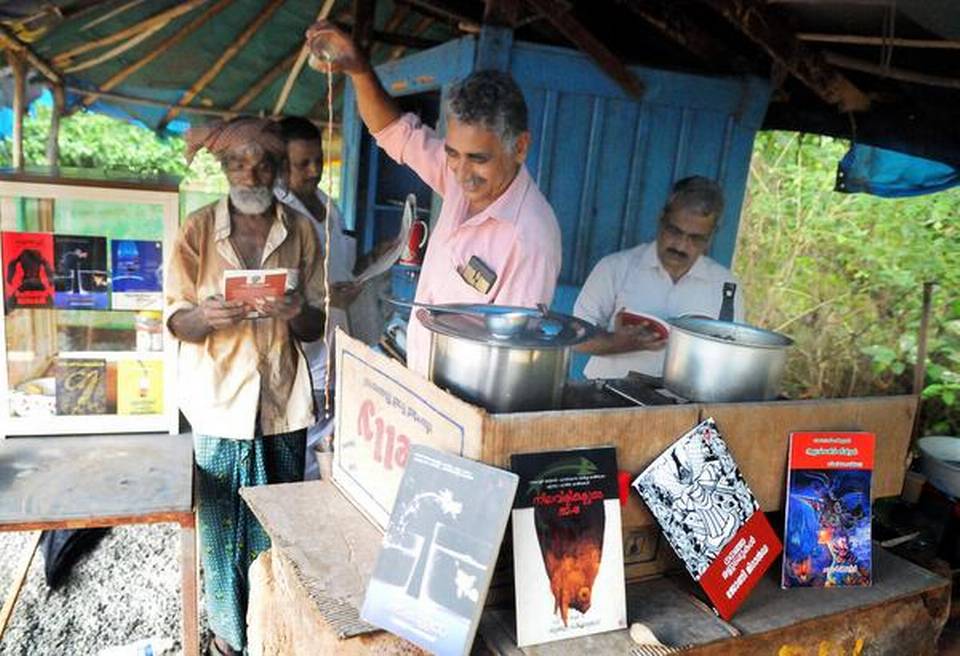
Symposium: Shukoor Pedayangode (centre) has been holding literary gatherings at his tea shop for four years. | Photo Credit: S.K. MOHAN
Welcome to Veranda, a teashop in a Kerala village, where ideas flow as liberally as the tea, run by school dropout-turned-littérateur Shukoor Pedayangode
At first glance, the roadside tea shack with a blue poly tarp stretched on wooden poles seems nondescript. Shukoor Pedayangode, its 50-something owner, looks equally unassuming as he tosses the sweet milk tea back and forth from saucepan to glass before serving it to his customers. But don’t be fooled: both this chayappeedika (teashop) in Pedayangode village, about 35 km from Kannur, and the tea-seller are as special as it gets. Over the years, this teashop called Veranda has become a literary hub, with celebrity authors not just from Kerala but also from neighbouring Karnataka and Tamil Nadu gracing it with their presence.
When I meet Pedayangode, it is late August and he has just reopened Veranda after a longish break when his shop was submerged under the waters of River Bavali when it breached its banks earlier in the month. But Pedayangode’s spirit hasn’t been dampened: he is all cheer as he talks about the next literary gathering at his teashop, scheduled for September 29. The special guest at the event? Tamil author Perumal Murugan — copies of the Malayalam translation of Murugan’s Poonachi are displayed at the teashop.
Free for all
The school dropout Pedayangode began to organise informal monthly literary gatherings at his teashop some four years ago. And he has so far hosted 34 discussions. Among the Malayalam writers and poets who have visited are Paul Zacharia, M. Mukundan, Khadeeja Mumtaz, P.F. Mathews, Kalpetta Narayanan, Rafeeq Ahmed and N. Prabhakaran, a veritable who’s who. Kannada writer Vivek Shanbhag and Tamil writer B. Jeyamohan have also been there.
“I announce every event in advance on my Facebook page,” says Pedayangode. The events generally last three hours and the audience is free to express views on the book under discussion and interact with the author. For non-Malayalam writers, Pedayangode gets friends who speak the language to act as moderators.
A bookworm from childhood, Pedayangode used to devour anything he found in print. “I read Vaikom Muhammad Basheer’s Mucheettukalikkarante Makal (Card Sharper’s Daughter) when I was in Class V,” he says. He hated Maths, and after Class V, he started skipping classes since he dreaded his teacher’s wrath. Eventually, he stopped school altogether.
One of 12 siblings, Pedayangode started odd jobs to help the family along. He worked in quarries, sold fish. “I earned some money selling fish; that’s when I started buying books both to read and to sell,” says Pedayangode.
In fact, even as a teenager he used to write poems for richer friends who would buy him books in exchange. His published poetry collections are quite a few: Onpathu Pennungal (Nine Women), Nilavilikalude Bhasha (Language of Screams), Mazhappollal (Rain Burn) Azhangalile Jeevitham (Life in the Depths).
Novel idea
He even wrote a novel called Veranda, which would later become the name of his teashop. It’s apt, given the idea of open space it connotes. Pedayangode envisaged his shop as a free space for discussions. “I wanted to encourage the reading habit and create an ambience for healthy discussions devoid of restrictions or posturing,” he says.
The monthly gatherings are open to all. “Around 30 to 50 people usually attend,” says Ashraf Macheri, Pedayangode’s neighbour and close friend. Macheri, who used to run a printing press before moving to the Gulf, recalls how Pedayangode would visit his press to collect waste paper to write poems on.
Publishing houses give copies of their books for sale at the teashop; books of the author under discussion are sold on the day. Pedayangode funds the literary meets from the commissions he gets from book sales.
He also organises book fests in Kannur schools to promote reading among students. Pedayangode misses no literary event in the area. These days, he is regularly invited to local colleges to inaugurate literary events. And he does all this while reworking a novel he had finished and left unpublished four years ago.
mohamed.nazeer@thehindu.co.in
source: http://www.thehindu.com / The Hindu / Home> Books> Tea Time / by Mohamed Nazeer / September 07th, 2019
Surat , GUJARAT / Bombay (now Mumbai) MAHARASHTRA / London, ENGLAND :
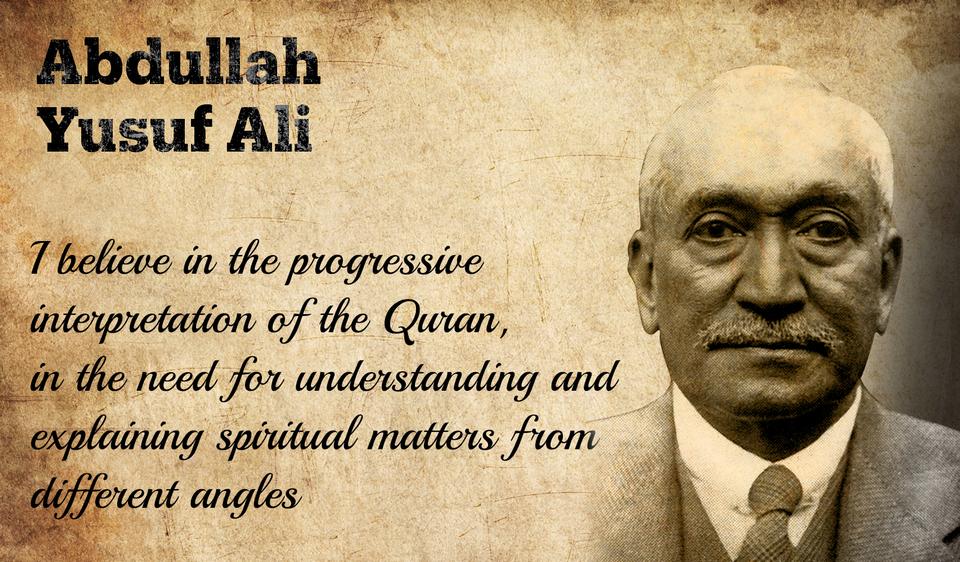
Abdullah Yusuf Ali wrote perhaps the most famous translation of the Quran but he also supported the British against the Ottomans and died a lonely man.
On a frigid December morning in 1953, a policeman found a half-conscious old man slumped on a street bench in the Westminster area of London. He was in a delirious state and died a day later on December 10. Ali
That man was Abdullah Yusuf Ali, the famous 20th-century translator of the Quran. He died alone, homeless, and with no one by his side. When the news reached Pakistan’s embassy in London, it dispatched someone to pay for his last rites.
“It pains me to think that so able and eminent a gentleman should have met with so pathetic an end,” Mirza Abul Hassan Ispahani, Pakistan’s High Commissioner in London, wrote in a letter to his prime minister two days later.
Generations of Muslims in English-speaking countries have grown up reading Yusuf Ali’s interpretation of the Quran. More than 200 editions of it have been published so far, making it perhaps the most read commentary in any non-Arabic language.
“Ask any English-speaking Muslim what translation and commentary of the Quran they originally studied, and the chances are that it was the one by Abdullah Yusuf Ali,” writes a commentator.
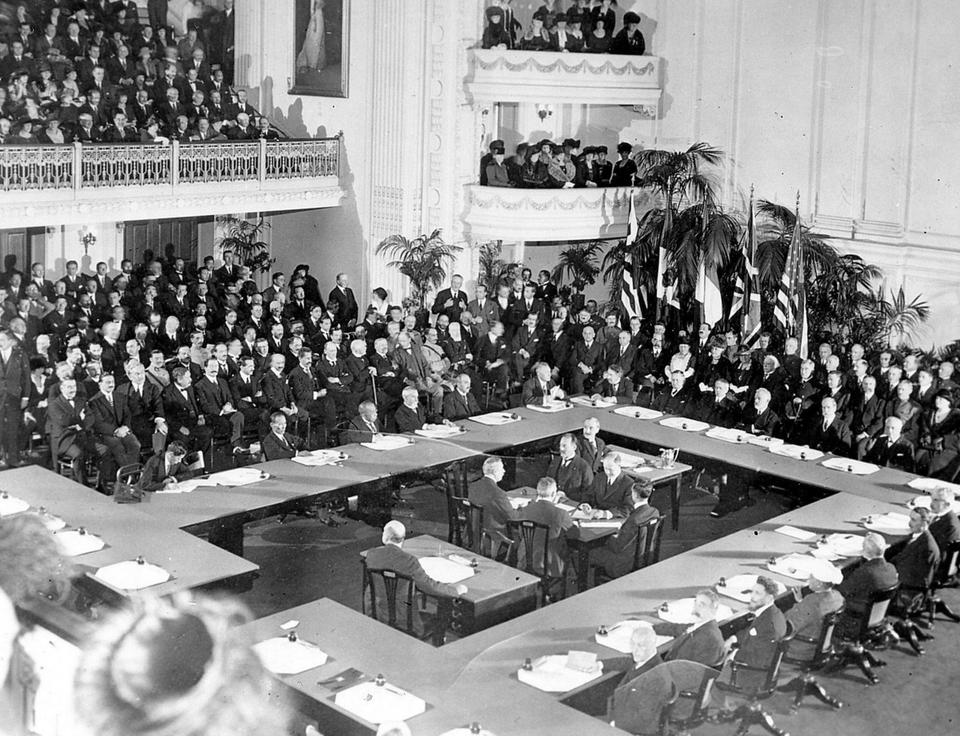
Yusuf Ali’s work and affiliations solidify his place as a giant of his time. He was one of the most senior Muslim civil servants during the British Raj, rubbed shoulders with the likes of Mohammad Ali Jinnah and the Aga Khan, inaugurated the first mosque in Canada, represented India at the Paris Peace Talks in 1919, was a trustee of London’s oldest mosque, and a known educationist. He was also a prolific writer on Islam.
But how did a prominent Muslim like him meet such a terrible end? Why was he forgotten so quickly?
A child of his time
In 1915, during World War I, the British faced a dilemma. Nearly half a million soldiers were Muslims from the Indian Subcontinent — modern-day India, Pakistan and Bangladesh — which was then under colonial rule. Some refused to fight the Turkish Ottoman soldiers who had joined the war against the allied army.
A mutiny broke out in November of that year in Singapore where Indian Muslim soldiers turned their guns on officers and took control of the island. The uprising was quickly crushed and 70 Muslim men were lined up against a wall and executed.
The events shook British officials. Many Muslims considered the Ottoman Sultan Mehmed Reshad as their Caliph. Their personal affinity and strong connection led to the Khilafat Movement in India that called for boycotting the British.
Abdullah Yusuf Ali thought otherwise.
“Fight ye glorious soldiers, Gurkha, Sikh or Muslim, Rajput or Brahman!” he said in a November 1914 speech at a London event in front of top British military officials. “You have comrades in the British army whose fellowship and lead are a priceless possession to you.”
In his talks and articles throughout the war, he urged fellow Muslims to side with the British, at times doing it so effusively that his rhetoric appeared jingoistic.
“The Ottoman Caliph announces Jihad against the British and what does Yusuf Ali do? He goes around European countries asking Muslims to fight for the British,” Humayun Ansari, a professor of Islam at the University of London, told TRT World.
“He was consistently loyal to the British and considered the British Empire to be a blessing. In his understanding of Islam he was very liberal. He wanted a reconciliation between the Muslim and Western philosophy.”
Abdullah Yusuf Ali attended the all-important Paris Peace Conference in 1919. (Getty Images)
Yusuf Ali was born in 1871 in Surat, western India, during a period of great introspection for the Muslims of India as their rule over the region for centuries came to an end and they were at the mercy of the English and a more politically organised Hindu majority.
Among the Muslims there was a realisation that they would have to study English, attain a modern education and learn British ways to get government jobs and regain their lost social status.
Yusuf Ali, who came from a middle-class family, proved to be an exceptional student throughout his school years and after matriculating from a missionary school, he won a scholarship to study at Cambridge University in London. The scholarship was given to only nine Indian students each year.
“We have to look at him in the context of his times. That was a generation when the British claimed superiority over the natives. And then you have somebody who can emerge and beat them at their own game,” says Jamil Sherif, who wrote Yusuf Ali’s biography titled Searching for Solace.
“Yusuf Ali’s approach was to show through his writing that Islam had made major contributions through the ages. But I think his compromise was that he saw religion mainly in spiritual terms and he saw socio-political dimensions of Islam as not really relevant in the days of empire,” he told TRT World.
At Cambridge, Yusuf Ali excelled in English composition, Arabic and other subjects. He also cleared the intensely competitive exam for the elite Indian Civil Service (ICS). In subsequent years, he rose to become perhaps the highest-ranking Muslim civil servant in India when he worked under Cabinet’s member of finance.
He was a devout Muslim, making sure he offered daily prayers, attended religious congregations and led prayers at the Shah Jahan Mosque in Woking, a town near London.
At the same time, he was against political Islam and insisted that Muslims could do better under British rule and that they should focus on educating themselves as opposed to agitating for independence.
Over the years, he remained affiliated with different institutions and also served as the principal of Lahore’s Islamia College – he was invited to take the position by the venerated poet Allama Muhammad Iqbal.
But behind the veneer of his intellect, busy schedule and scholarly importance, he was a man suffering from internal conflicts.
When the east meets west
Yusuf Ali was a troubled man. He married twice and both relationships ended bitterly.
In 1900, just a few years into his role as a civil servant, he married Teresa Mary Shalders, in a ceremony at the St. Peter’s Church in England.
“It was a bold and uninhibited act by the young couple, who may have looked at the dawn of the new century and thought everything possible – including the harmony of races, religions, and continents,” Sherif, who uses M.A. Sherif as his pen name, writes in his book.
But any hope of making a statement with this marriage of two different cultures faded in a few short years. They had four kids over the years but Yusuf Ali spent most of this time in India as a government officer while Shalders, who was in England, fell in love with another man.
Their divorce in 1911 was particularly painful for Yusuf Ali and he might have hinted at that period in the preface of his Quranic commentary when he wrote: “A man’s life is subject to inner storms…which nearly unseated my reason and made life meaningless.”
He won custody of their children but became estranged from them over time.
“These children by their continued ill-will towards me have alienated my affection for them, so much that I confer no benefit on them by this will,” Yusuf Ali later wrote in his will.
As an ICS officer, he rose swiftly from an assistant magistrate to more important positions, and the British government increasingly relied on him as its key propagandist.
Yusuf Ali was not entirely oblivious to the systematic discrimination that Muslims faced under British rule.
“He wrote about how Britain was using Indian revenue in the Great War. That’s a very subtle way of criticism. He also made references to discrimination suffered [by locals] on the basis of colour,” says Sherif.
In the early 1920s, Yusuf Ali married Gertrude Anne Mawbey, who he liked to call Masuma (innocent). That marriage didn’t work out either.
(TRTWorld)
It was during this personal crisis that Ali began the monumental work of writing an English translation of the Quran, often working on solitary ocean liner journeys which he took at the behest of the British government.
“Yusuf Ali’s bond with the Quran was forged in these times of anguish when searching for solace,” writes Sherif.
Prominent scholars such as Marmaduke Picktall and others had already done a lot to introduce the West to Islam’s holiest book but Yusuf Ali did it with humility and open-mindedness which set his work apart.
“His interpretation is very balanced. It doesn’t force you to any particular corner, it can be read by all the schools of thought. It’s a very broadminded, compassionate approach to studying religion,” Sherif tells TRT World.
Yusuf Ali was a Dawoodi Bohra, a strain of Shia Islam, but he garnered enough respect across the spectrum to lead congregations at Sunni mosques.
“In his translation of the Quran, published between 1934 and 1937, Yusuf Ali expounded the spiritual side of Islam more than its worldly view,” writes A R Kidwai, a prominent researcher.
His excellent command over the English language lends a poetic touch to the thousands of footnotes and he didn’t shy away from using English poets such as Longfellow and Milton to explain the word of God.
Besides dealing with his matrimonial failures, he had a hard time coming to terms with what happened to Arab Muslims after World War I.
“Unlike many of his contemporaries, he did not criticise the League of Nations when it dismembered the Ottoman empire,” says Sherif. “But what really shook him was the proposal to partition Palestine.”
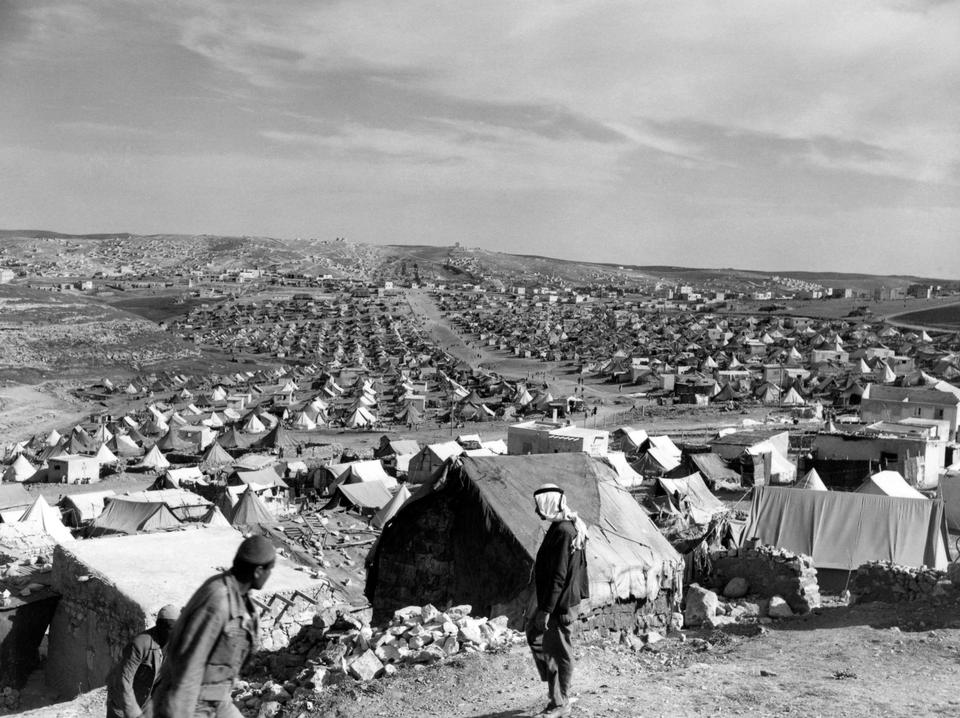
Hundreds of thousands of Palestinians were forced to live in camps in neighboring countries after Israel pushed them out of their homes. (TRTWorld)
For someone groomed to believe that the English people were true to their word, the haphazard division of the Ottoman Empire and the creation of Israel was unsettling for Yusuf Ali.
In 1937 he attended many meetings and conferences fighting the case of Palestinians and warned Western powers about creation of a Jewish state on Muslim land.
“One way alone can bring thee peace:
That ancient rights be not suppressed,
That aliens from encroachments cease,
And Quds be given its rightful rest,” he wrote in the poem Palestine published in January 1938.
However, Palestine’s tragedy wasn’t enough to deter his loyalty to the British as he travelled to India at the urging of England’s Ministry of Information to rally Muslim support after it declared war on Germany in 1939.
In Delhi, he met Sir Sikandar Hayat Khan and spoke to students about the need for India’s support for the British. That was a time of turmoil in India as both Muslims and Hindus had begun rallying for independence.
Upon his return, he wrote articles and gave speeches, asking Indians to unite in defence of the empire and drop their demand for political reforms. But his appearance as an important player in international events quickly faded after the war ended in 1944.
We might never know what broke him in the end. But as the British pulled out of the subcontinent in the days of its waning global status, so did Yusuf Ali slowly recede from the newspapers, his powerful friends no longer found a use for him.
Yusuf Ali spent his last years living in the National Liberal Club on a monthly pension that he received against his government job.
“How did the British treat him? There’s certainly a question mark there. They didn’t recognise his contribution as much as he probably expected,” says Humayun Ansari.
His powerful friends in the Muslim community including Pakistan’s then ambassador Ispahani had also lost track of Ali’s whereabouts, not bothering to check on him.
“That is an indictment of the Muslim society that we were not able to honour and care for someone of his stature,” says Jamil Sherif.
Source: TRT World
source: http://www.trtworld.com / TRT World / Home> News> Magazine / by Saad Hasan / September 04th, 2019
Despite a self-imposed limit on the Nadaprabhu Kempegowda Award 2019 to only 70 people, the BBMP announced 100 recipients of the same on Tuesday.
Senior Kannada writers Chandrashekhar Patil, Keshavareddy Handrala, Abdul Rasheed, Pratibha Nandakumar, actor-politician Mukhyamantri Chandru, singer Manjula Gururaj, educationist Gururaj Karjagi, Dalit activist Mavalli Shankar and senior advocate Ravi Verma Kumar are among the awardees.
IPS officer M.N. Anucheth, the chief investigation officer in the Gauri Lankesh murder case, and six members of his team, have also been given the award for the successful probe that eventually led to breakthroughs in three other murder cases.
Another IPS officer D. Roopa is also on the list of awardees.
While 10 women, including social activist and JD(S) leader Leeladevi R. Prasad, have been awarded the Nadaprabhu Kempegowda Sose Mahatyagi Lakshmidevi award, five organisations including Bosco Mane, that helps children, have been awarded the Paramapoojya Dr. Shivakumara Swamiji award.
Chief Minister B.S. Yediyurappa will present the awards on Wednesday, observed as the 508th Nadaprabhu Kempegowda Jayanti.
source: http://www.thehindu.com / The Hindu / Home> News> States> Karnataka / by Staff Reporter / Bengaluru – September 04th, 2019
For decades, a book wrongly identified as ‘The Holy Koran’ was kept at a mosque in Broken Hill. Who was the unnamed traveller who brought Bengali stories of the prophets to the Australian desert?
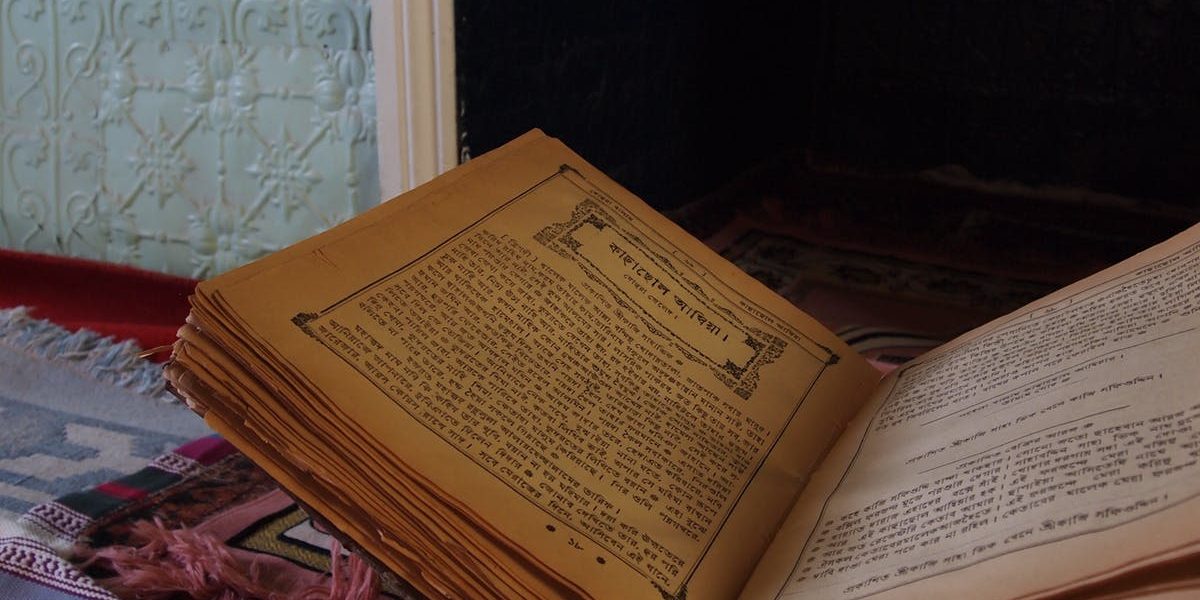
The large book bearing a handwritten English label, ‘The Holy Koran’, was not a Quran, but a 500-page volume of Bengali Sufi poetry. Photo: Samia Khatun/The Conversation
Some 1,000 kilometres inland from Sydney, over the Blue Mountains, past the trees that drink the tributaries of the Darling River, there stands a little, red mosque. It marks where the desert begins.
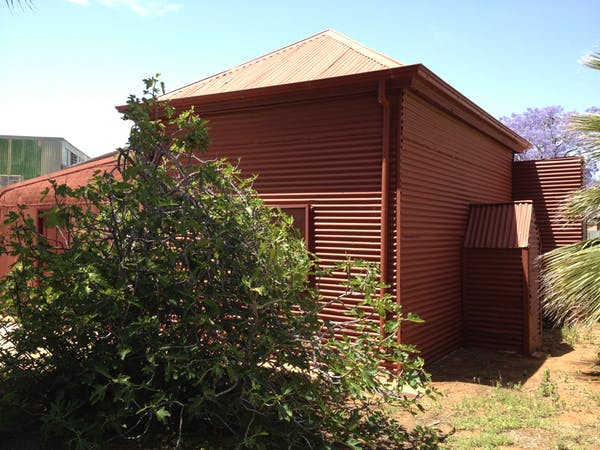
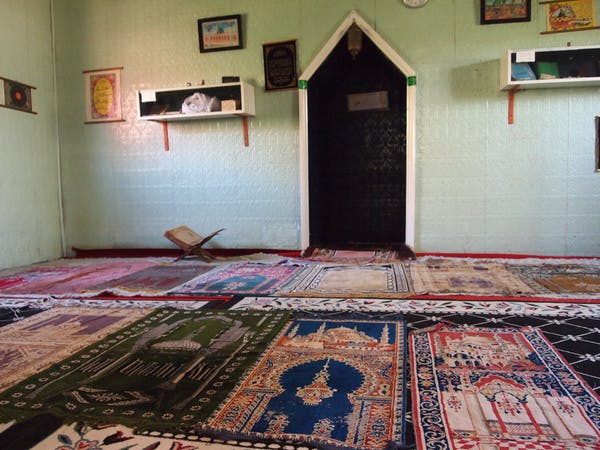
The mosque was built from corrugated iron in around 1887 in the town of Broken Hill. Its green interiors feature simple arabesque and its shelves house stories once precious to people from across the Indian Ocean. Today it is a peaceful place of retreat from the gritty dust storms and brilliant sunlight that assault travellers at this gateway to Australia’s deserts.
The corrugated iron mosque in Broken Hill. Photo: Samia Khatun/The Conversation
By a rocky hill that winds had “polished black”, the town of Broken Hill was founded on the country of Wiljakali people. In June 1885, an Aboriginal man whom prospectors called “Harry” led them to a silver-streaked boulder of ironstone and Europeans declared the discovery of a “jeweller’s shop”.
Soon, leading strings of camels, South Asian merchants and drivers began arriving in greater numbers at the silver mines, camel transportation operating as a crucial adjunct to colonial industries throughout Australian deserts. The town grew with the fortunes of the nascent firm Broken Hill Propriety Limited (BHP) — a parent company of one of the largest mining conglomerates in the world today, BHP-Billiton.
As mining firms funnelled lead, iron ore and silver from Wiljakali lands to Indian Ocean ports and British markets, Broken Hill became a busy industrial node in the geography of the British Empire. The numbers of camel merchants and drivers fluctuated with the arrival and departure of goods, and by the turn of the 20th century an estimated 400 South Asians were living in Broken Hill. They built two mosques. Only one remains.
In the 1960s, long after the end of the era of camel transportation, when members of the Broken Hill Historical Society were restoring the mosque on the corner of William Street and Buck Street, they found a book in the yard, its “pages blowing in the red dust” in the words of historian Christine Stevens. Dusting the book free of sand, they placed it inside the mosque, labelling it as “The Holy Koran”. In 1989, Stevens reproduced a photo of the book in her history of the “Afghan cameldrivers”.
I travelled to Broken Hill in July 2009. As I searched the shelves of the mosque for the book, a winter dust storm was underway outside. Among letters, a peacock feather fan and bottles of scent from Delhi, the large book lay, bearing a handwritten English label: “The Holy Koran”.
Turning the first few pages revealed it was not a Quran, but a 500-page volume of Bengali Sufi poetry.
Sitting on the floor, I set out to decipher Bengali characters I had not read for years. The book was titled Kasasol Ambia (Stories of the Prophets). Printed in Calcutta, it was a compendium of eight volumes published separately between 1861 and 1895. It was a book of books. Every story began by naming the tempo at which it should be performed, for these poems were written to be sung out loud to audiences.
The mosque’s interior. Photo: Samia Khatun/The Conversation
As I strained to parse unfamiliar Persian, Hindi and Arabic words, woven into a tapestry of 19th-century Bengali grammar, I slowly started to glimpse the shimmering imagery of the poetry.
Creation began with a pen, wrote Munshi Rezaulla, the first of the three poets of Kasasol Ambia. As a concealed pen inscribed words onto a tablet, he narrates, seven heavens and seven lands came into being, and “Adam Sufi” was sculpted from clay. Over the 500 pages of verse that follow, Adam meets Purusha, Alexander the Great searches for immortal Khidr, and married Zulekha falls hopelessly in love with Yusuf.
As Rezaulla tells us, it was his Sufi guide who instructed him to translate Persian and Hindi stories into Bengali. Overwhelmed by the task, Rezaulla asked, “I am so ignorant, in what form will I write poetry?”
In search of answers, the poet wrote, “I leapt into the sea. Searching for pearls, I began threading a chain.” Here the imagery of the poet’s body immersed in a sea evokes a pen dipped in ink stringing together line after line of poetry. As Rezaulla wrote, “Stories of the Prophets (Kasasol Ambia) I name this chain.”
Its pages stringing together motif after motif from narratives that have long circulated the Indian Ocean, Kasasol Ambia described events spanning thousands of years, ending in the sixth year of the Muslim Hijri calendar. Cocooned from the winds raging outside, I realised I was reading a Bengali book of popular history.
Challenging Australian history
In the time since Broken Hill locals dusted Kasasol Ambia of sand in the 1960s, why had four Australian historians mislabelled the book? Why did the history books accompanying South Asian travellers to the West play no role in the histories that are written about them?
Moreover, as Christine Stevens writes, the people who built the mosque in North Broken Hill came from “Afghanistan and North-Western India”. How, then, did a book published in Bengal find its way to an inland Australian mining town?
Captivated by this last enigma, I began looking for clues. First, I turned to the records of the Broken Hill Historical Society. Looking for fragments of Bengali words in archival collections across Australia, I sought glimpses of a traveller who might be able to connect 19th-century Calcutta to Broken Hill.
As I searched for South Asian characters through a constellation of desert towns and Australian ports once linked by camels, I encountered a vast wealth of non-English-language sources that Australian historians systematically sidestep.
A seafarer’s travelogue narrated in Urdu in Lahore continues to circulate today in South Asia and in Australia, while Urdu, Persian and Arabic dream texts from across the Indian Ocean left ample traces in Australian newspapers.
One of the most surprising discoveries was that the richest accounts of South Asians were in some of the Aboriginal languages spoken in Australian desert parts. In histories that Aboriginal people told in Wangkangurru, Kuyani, Arabunna and Dhirari about the upheaval, violence and new encounters that occurred in the wake of British colonisation, there appear startlingly detailed accounts of South Asians.
Central to the history of encounter between South Asians and Aboriginal people in the era of British colonisation were a number of industries in which non-white labour was crucial: steam shipping industries, sugar farming, railway construction, pastoral industries, and camel transportation. Camels, in particular, loom large in the history of South Asians in Australia.
Camel harnesses at the mosque. Photo: Samia Khatun/The Conversation
From the 1860s, camel lines became central to transportation in Australian desert interiors, colonising many of the long-distance Indigenous trade routes that crisscross Aboriginal land. The animals arrived from British Indian ports accompanied by South Asian camel owners and drivers, who came to be known by the umbrella term of “Afghans” in settler nomenclature.
The so-called Afghans were so ubiquitous through Australian deserts that when the two ends of the transcontinental north-south railway met in Central Australia in 1929, settlers rejoiced in the arrival of the “Afghan Express”. Camels remained central to interior transportation until they were replaced by motor transportation from the 1920s. Today the transcontinental railway is still known as “the Ghan” .
As a circuitry of camel tracks interlocking with shipping lines and railways threaded together Aboriginal lives and families with those of Indian Ocean travellers, people moving through these networks storied their experiences in their own tongues. Foregrounding these fragments in languages other than English, this book tells a history of South Asian diaspora in Australia.
Asking new questions
I start by reading the copy of Kasasol Ambia that remains in Broken Hill, and interpret the many South Asian- and Aboriginal-language stories I encountered during my search for the reader who brought the Bengali book to the Australian interior. Entry points into rich imaginative landscapes, these are stories that ask us to take seriously the epistemologies of people colonised by the British Empire.
My aim is to challenge the suffocating monolingualism of the field of Australian history. In my new book, Australianama, I do not argue for the simple inclusion of non-English-language texts into existing Australian national history books, perhaps with updated or extended captions.
Instead, I show that non-English-language texts render visible historical storytelling strategies and larger architectures of knowledge that we can use to structure accounts of the past. These have the capacity to radically change the routes readers use to imaginatively travel to the past. Stories in colonised tongues can transform the very grounds from which we view the past, present and future.
In July 2009, when I first encountered Kasasol Ambia, the Bengali book long mislabelled as a Quran made front-page news in Broken Hill. With touching enthusiasm, the journalist announced that I would “begin work on a full translation shortly “.
Overwhelmed by such a task, I began trawling mosque records held by the Broken Hill Historical Society, soon beginning a search through port records, customs documents and government archives. I did not know how to decipher the difficult book, and so in these archival materials I hoped to glimpse, however fleetingly, the skilled 19th-century reader who had once performed its poetry.
Slowly, it dawned on me that I was following the logic that Rezaulla outlines in his schema for translation. For I too had stepped into the imaginative world of the poetry in search of answers to some hard questions: How do we write histories of South Asian diaspora which pay attention to the history books that travelled with them? Who was the unnamed traveller who brought Bengali stories of the prophets to Broken Hill? Can historical storytelling in English do more than simply induct readers into white subjectivities?
Threading together seven narrative motifs that appear in Kasasol Ambia, I began to piece together a history of South Asians in Australia.
Samia Khatun , Senior Lecturer, SOAS, University of London
Professor Sharib Rudaulvi was awarded the All India Bahadur Shah Zafar Award
[Manish Sisodia, who is also the Minister of Art, Culture and Languages, appealed to the writers to create more literature to inculcate the feelings of communal harmony and patriotism. (Photo: IANS/Twitter)]New Delhi:
Delhi Deputy Chief Minister Manish Sisodia on Tuesday conferred the annual awards to Urdu scholars for their contribution to Urdu literature.
Sisodia, who is also the Minister of Art, Culture and Languages, appealed to the writers to create more literature to inculcate the feelings of communal harmony and patriotism.
He congratulated the Urdu scholars and said it is the writers and thinkers, who ensure change and bring about ‘inqlab’ in the society through their creative writings with the “power of the pen”.
Professor Sharib Rudaulvi was awarded the All India Bahadur Shah Zafar Award.
“Hailing from Lucknow, Rudaulvi is a prominent critic and poet. He started his career as an Urdu faculty member at Dayal Singh College of Delhi University. In 1990, he joined Jawaharlal Nehru University as a Reader in 1990 from where he retired in 2000. He started his career as a poet, but he later turned towards criticism with greater attention,” the government said in a statement.
Ghazal singer-brothers Ustad Ahmad Hussain and Mohammed Hussain were given All India Award for Promotion of Urdu Language and Literature.
“Ahmed and Mohammed Hussain are two brothers who sing classical ghazals. Born in Rajasthan as sons of the famous Ghazal and ‘Thumri’ singer Ustad Afzal Hussain, the two touch genres like Indian classical music and ‘Bhajan’ as well as ‘Ghazal’. They started their singing career in 1958. They have uniqueness as they always sing the ‘ghazals’ together,” the statement said.
The award for Urdu poetry was given to G.R. Kanwal, who has published five anthologies of self-composed Urdu poetry.
Professor Atiqullah was awarded Pt. Brij Mohan Dattaria Kaifi Award.
“Atiqullah is a noted Urdu Critic and author of numerous books. He was also a professor at Delhi Univerisity.”
Ghazal singer Radhika Chopra received the award for ‘ghazal’ singing, the statement added.
The Deputy Chief Minister released and uncovered a book of Urdu pronunciation “Talaffuz” written by Shakeel Hasan Shamshi.
Delhi’s Urdu Academy, since its inception in May, 1981, has been conducting various educational, cultural and literary activities for the promotion, propagation and development of Urdu language, literature and composite lingual culture.
source: http://www.ummid.com / Ummid.com / Home> India / by IANS / August 20th, 2019
How two rulers with a common name left a rich history and culture for its people but one is more renowned than the other.
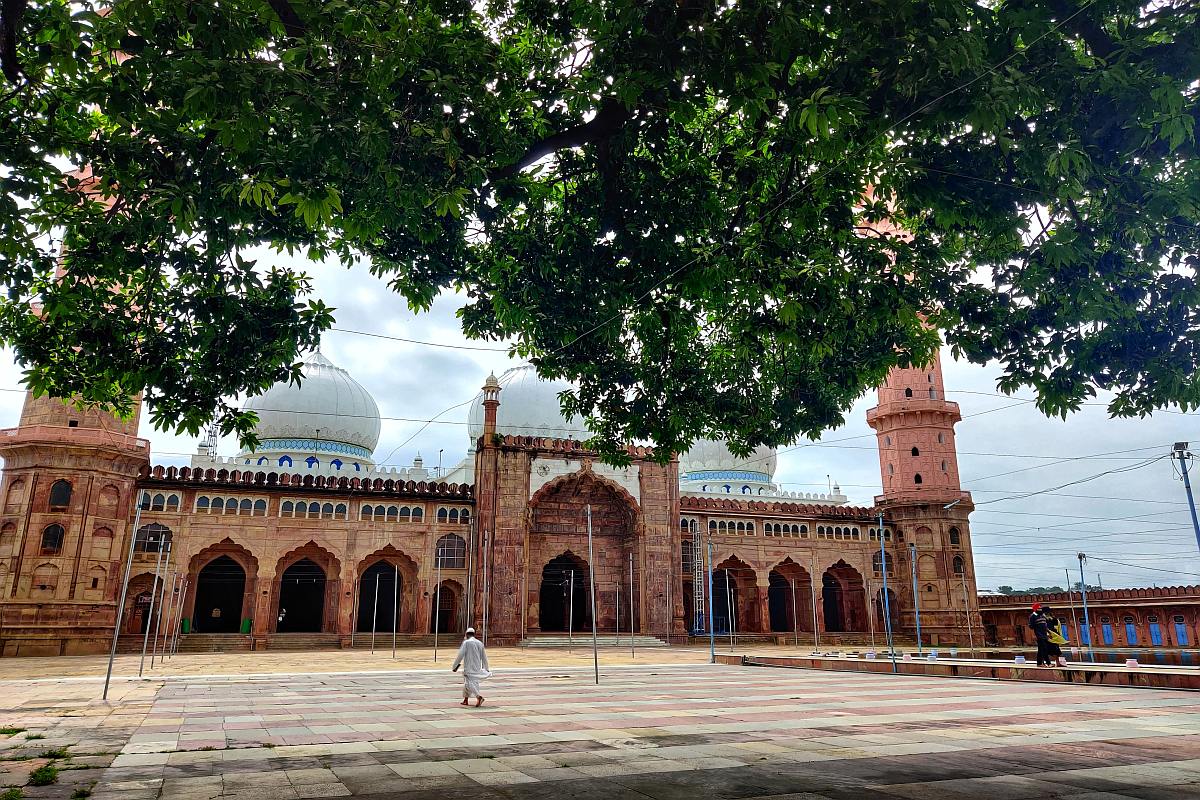
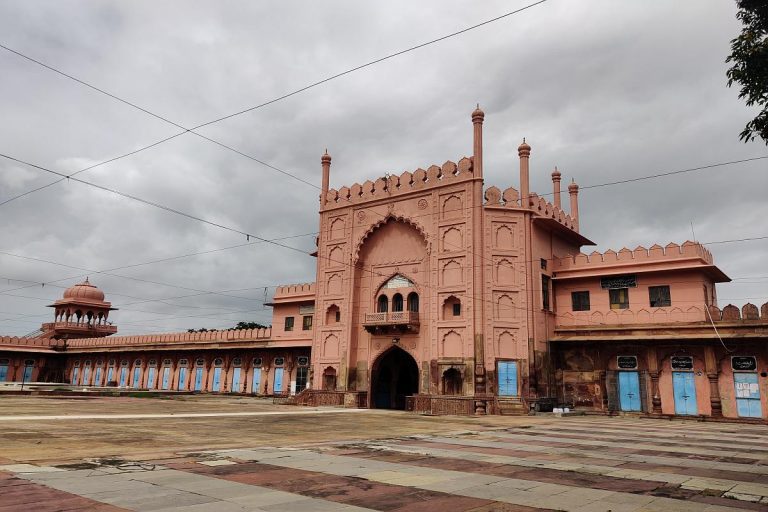
Taj-ul-Masajid, Bhopal (Photo: SNS/Aena Thakur)
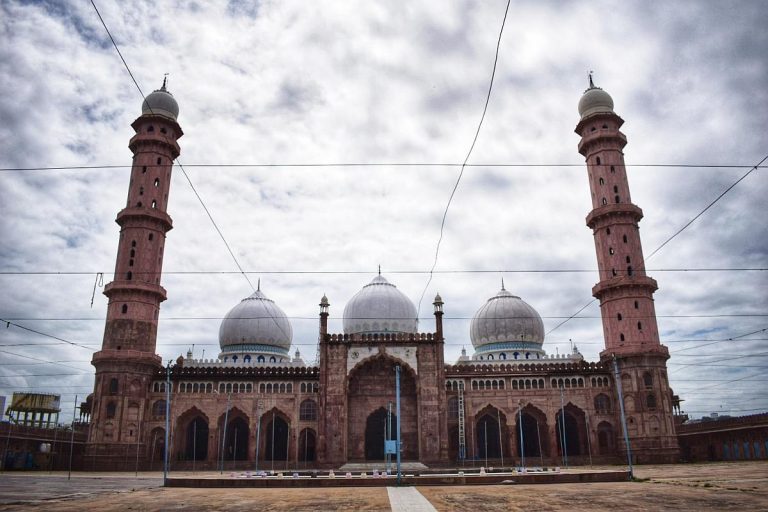
In the heart of Madhya Pradesh’s capital city, Bhopal, resides Taj-ul-Masajid which literally translates to the ‘crown of mosques’. The mosque was intended to be the largest mosque in the country and was based on the design of Delhi’s Jama Masjid. In a town called Woking in England stands a mosque called Shah Jahan.
The common denominator between these three mosques is the name Shah Jahan. The fifth Mughal emperor Shah Jahan built the Jama Masjid in Delhi and the third female ruler of Bhopal, Shah Jahan Begum built Taj-ul-Masajid of Bhopal. The Bhopal’s matriarch went a step ahead as she also funded the construction of England’s first Mosque in 1889.
Taj-ul-Masajid (Image: SNS/Aena Thakur)
In the 19th century when India was a British colony, the princely state of Bhopal had a string of female rulers for roughly 107 years. The city was founded in 1707 by Afghan ruler Dost Muhammad Khan. Surrounded by Rajputs in Rajasthan and Marathas in Maharashtra, Bhopal was a vulnerable state yet the female rulers with their loyal allegiance to the British rule survived the turbulent times.
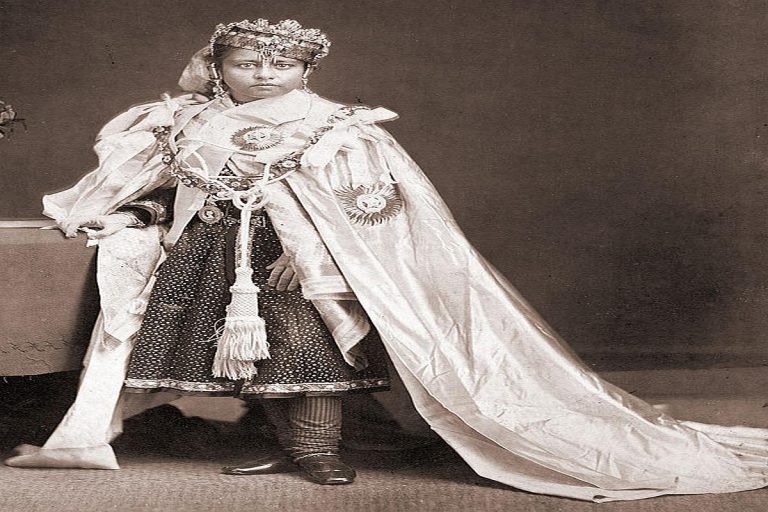
The female dynasty of Bhopal started with the death of young Nawab Nazar Muhammad Khan. His 18-year-old wife Qudsia Begum decided that the legacy of her family shall continue and declared her 15-month-old daughter Sikandar as the rightful heir of the state. In 1819, Qudsia Begum became the first Muslim female who defied the veil and became the ruler of Bhopal. Her rule was legitimised by the British and the clergy.
Both Qudsia (1819-37) and Sikandar (1847-68) were known to be tough rulers who strengthened Bhopal’s military and trained themselves to fight. However, it was the third matriarch of Bhopal, Shah Jahan Begum who brought in the period of flourishing art and culture just like her male Mughal namesake.
Unlike Qudsia and Sikandar, Shah Jahan was not known for her tough training for battles. Shah Jahan followed the system of veil and was more interested in literature, poetry, and arts.
Shah Jahan Begam of Bhopal (Image: Wikimedia Commons)
Interested in Urdu and Persian poetry, Shah Jahan Begum also offered state pensions to poets like Amir Minai, a contemporary of Mirza Ghalib.
Shah Jahan Begum ordered that a dictionary of select terms in Hindustani, Persian, Arabic, Sanskrit, English, and Turkish was compiled to facilitate translation of literature between these languages. A poet herself, Shah Jahan Begum also patronized a group of female poets. According to Siobhan Lambert-Hurley’s book Muslim women, Reform and PrincelyPatronage, these gifted women included “Hasanara Begam ‘Namkeen,’ author of a diwan and two prose publications, Munawwar Jahan Begam and Musharraf Jahan Begam, the daughters of Nawab Mustafa Khan ‘Shefta,’ and several others.”
In her book, Siobhan Lambert-Hurley also mentions, “Shah Jahan’s interest in this area was so great that she charged a male poet at her court, Abul Qasim ‘Muhtasham’, to devote himself to collecting an anthology of female poets writing in Persian. Entitled Akhtar-i-taban, it publicized the work of 81 poetesses when it was printed in Bhopal in 1881 in dedication to the ruling Begam.”
Her ambitions for grand architecture is evident from the fact that her daughter Sultan Begum in her biography mentioned that she has lost count of the number of palaces and buildings, her mother made. Some of the prominent buildings that still remain are Taj-ul-Masajid, Taj Mahal, Ali Manzil, and Benazir.
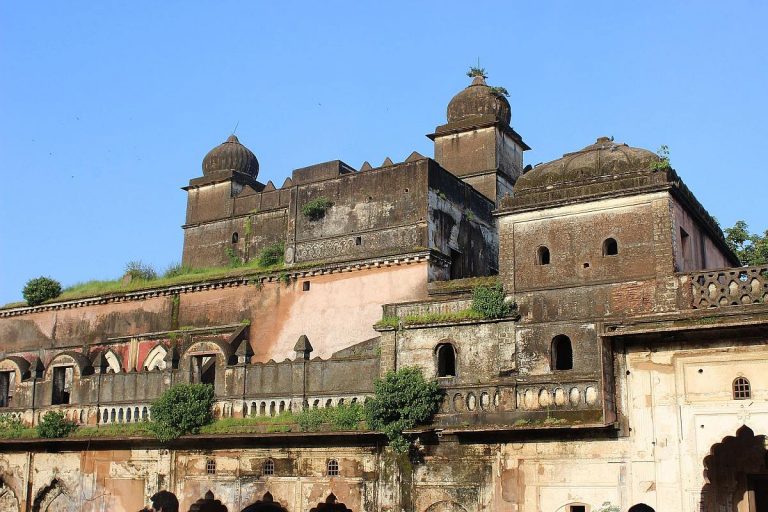
Taj Mahal, Bhopal (Image: Wikimedia Commons)
Unlike Mughal emperor, Shah Jahan’s Taj Mahal which is a tomb, Bhopal’s Taj Mahal was a palace for the Begum. Shah Jahan Begum also helped orientalist and scholar Dr Gottlieb Wilhelm Leitner in constructing England’s first mosque which is also called the Shah Jahan mosque.
The similarities do not stop here. Just like the Mughal emperor built a planned city named Shahjahanabad, the Begum too built a neighbourhood with the same name. Hurley mentions in her book, “Shah Jahan was also responsible for building an entirely new neighbourhood of homes and offices within her capital that was predictably named Shahjahanabad. Unlike the version at Delhi, however, it was laid out on a uniform plan in-keeping with the latest ideas of town planning in Britain.”
Taj-ul-Masajid, Bhopal (Image: SNS/Aena Thakur)
Shah Jahan Begum of Bhopal encouraged female participation in education, religion, and culture. She was responsible for setting up institutions for female education, she reserved areas in mosques for veiled women to pray on special occasions, she also constructed a Pakka bazaar exclusively for women.
Shah Jahan Begum’s daughter Sultan Jahan Begum was the last Begum of Bhopal whose reign ended in 1926. The reign of female rulers in Bhopal broke stereotypes and brought in various reforms in the princely state. Even though women still continue to fight for their rights it should not be forgotten that the Begums did assert their authority in the 19th century and it can be done again.
source: http://www.thestatesman.com / The Statesman / Home> Features / by Aena Thakur, New Delhi / August 20th, 2019
Torch bearer Syed Husain Bilgrami, Special arrangement
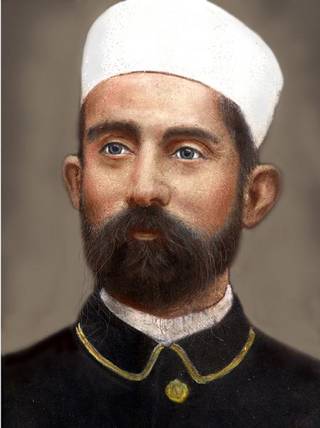
Apart from holding high ranking positions in Nizam’s dominion, Syed Husain Bilgrami was also made a member of the Secretary of State’s Council, in London.
Nawab Imad-ul Mulk is a familiar name in the annals of Hyderabad’s 19th century history. He was a noted educationalist, civil servant, prominent administrator and a noted scholar in the Nizam’s dominions. He was private secretary to Salar Jung I, the then Prime Minister of Hyderabad State; also a tutor and conscience keeper of the Nizam — Mahboob Ali Pasha — whose government he served with great distinction. For his dedication for work, strength of character and extraordinary mastery over English language and literature, the British government also utilised his services on many occasions. He had the rare honour of having served as member in the Secretary of State’s Council .He also had the distinction of having met along with Salar Jung I, Queen Victoria at Buckingham Palace in London.
Nawab Imad ul Mulk was the title that the Nizam bestowed in recognition of the services he rendered, with which he was well known in Hyderabadi circles; but his actual name was Syed Husain Bilgrami.
Syed Husain Bilgrami was born in 1844 at Gaya, where his father held high position under the East India Company administration. He was educated at the Presidency College, Calcutta from where he graduated in English literature. In 1868 he became a Professor at the Canning College in Lucknow before joining the service of the Nizam of Hyderabad in 1873. It was the time when Salar Jung I the Prime Minister of Hyderabad state was looking for English educated young men to be appointed in Hyderabad to modernise the administration and to improve educational facilities in the dominions. In 1872, Salar Jung while on a visit to Lucknow, met young Syed and was attracted to his intelligence and demeanour. He was invited to join the Hyderabad service, which he did the next year. For his impeccable English, both spoken and written, Syed Husain was taken as the private secretary to Salar Jung. The rest of his long career was irrevocably bound with Hyderabad.
The story goes that when Salar Jung asked Syed where his family originally hailed from, he answered, ‘Bilgrami’ (in the then United Provinces). The Prime Minister in a lighter vein suggested that Bilgrami could as well be added to his name and thus he became Syed Husain Bilgrami.
Bilgrami’s rise to prominence in Hyderabad was due to his sheer work as an educationalist. As the first Director of Public Instruction (1875- 1902) he initiated several reforms to improve the educational set up in the state. He was instrumental in the establishment of the Nizam College with English medium, with Dr Aghoranath Chattopadhyay, (father of Sarojini Naidu) as its first Principal. It is said that Bilgrami was the person who discovered the genius in Chattopadhyay, the first Indian to obtain D. Sc in Biochemistry from Edinburgh University. The College was affiliated to Madras University as there was no University in the Hyderabad dominions by then. Bilgrami was for some years taken by the government of India, as a member of the Universities Commission, a forerunner of the present UGC. In Hyderabad, he established Madarsa- i- Aizza, a school exclusively for the children of the nobles with a view to make them cultured and more responsible towards society. A crowning achievement of Bilgrami in the furthering of education in Hyderabad was the establishment of a girls school in 1885 with his personal funds. This was hailed as one of its kind in the country as the girls were taught besides usual subjects, needle work, household duties etc. English, besides Urdu and Arabic, was made the medium of instruction. To make girls from traditional families attend school, bullock carts with curtains were arranged to fetch them to school and back home.
In Hyderabad state, with a view to foster industrial growth, Bilgrami established three Industrial Schools at three important towns in the state, Aurangabad, Warangal and Hyderabad, which later grew to be Engineering Colleges. The State Central Library in Hyderabad also owes its establishment to the untiring efforts of Syed Husain Bilgrami.
Bilgrami was also a prolific writer in English and his books include Historical and Descriptive Sketches of His Highness, the Nizam’s Dominions, in 2 volumes, and A Memoir of Sir Salar Jung I. Besides, he had also composed several poems.
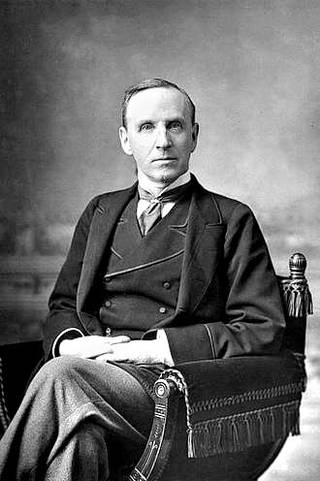
Lord Morely, the Secretary of State for India, who took Bilgrami as a member of his council.
The career graph of Syed Husain Bilgrami reached its zenith when he was made a member of the Secretary of State’s Council, in London. After the Liberal Party came to power in Great Britain in 1906, the new Secretary of State for India, Lord Morley, along with Lord Minto, the Viceroy of India wanted to initiate certain administrative and legislative reforms which ultimately resulted in the passing of India Councils Act of 1909 ( popularly known as Morley-Minto Reforms). For the task of formulating the reforms, Morley took two Indians as members to his council. The first was Syed Husain Bilgrami, who from the days of his first visit to England accompanying Salar Jung way back in 1876, had maintained friendship with several high ranking British political leaders of his time like Disraeli, Lord Salisbury, Gladstone etc. The other Indian appointed to the council by Morley was Krishna G Gupta, a senior ICS officer. Bilgrami thus played a key role in the passing of the first ever Constitutional Act of 1909.
Indian ayahs
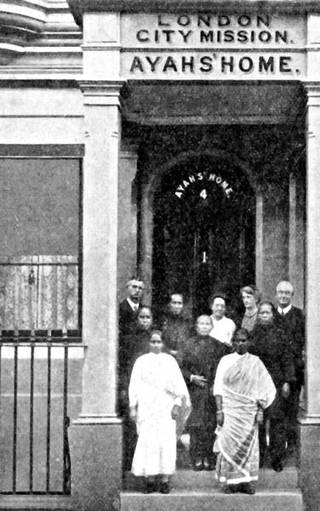
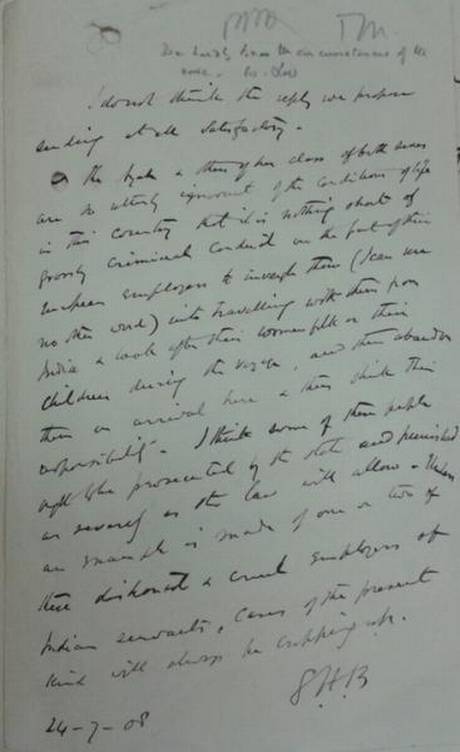
As a member of the Council of the Secretary of State for India, Bilgrami once made history by protesting the pitiable and callous attitude to Indian ayahs and other caretaker women who had been abandoned by their British employers. Many British officials in those days, employed Indian ayahs to look after their children on the long voyage from India to Britain and the employer was to provide for their passage home. But many a time those ayahs were dismissed once they reach Britain and left to fend for themselves. Such conditions led even to the founding of a ‘Ayahs Home in East London’, where such abandoned destitute ayahs were temporarily provided with food and shelter.
Ayas House / special arrangement
In May 1908, an Indian ayah Meera Sayal from Bombay arrived in London with a British family that was returning home. But she was abandoned by the family on the busy Kings Cross road in Central London, with a mere one pound in hand. The matter was brought to the notice of the India Office in London by the manager at Ayahs Home. The British authorities were of the opinion that Indian ayahs had no legal remedy in the absence of any written agreements that they would be taken back to India and quoted a precedent when the India Office in London in a similar case in 1890 had declined to take any action.
The protest note Bilgrami wrote as a member of the council of Secretary of State for India.
But Syed Husain Bilgrami, as a member of the Secretary of State’s Council felt hugely outraged and immediately wrote a strongly worded resentment on “the dishonest and cruel European employers inveighing Indian servants to travel with them and abandoning them on arrival in Britain”. This bold stand of Syed Husain Bilgrami reflected how he was a man of lofty principles and high ideals with a strong sense of duty and impeccable uprightness. This letter dated July 14, 1908, had been quoted in many future complaints of the Asian caretakers against British employers that ultimately led to the betterment of Indian ayahs going with British families to London.
After returning from England in 1909, Bilgrami spent his retirement in Hyderabad in a villa on the slopes of the iconic Naubath Pahad, overlooking the waters of Hussain Sagar and died in 1926, aged 82. Bilgrami had four sons and all of them were brilliant as they excelled in their different chosen fields. Nawab Sir Mehdi Yar Jung Bahadur, the Education and Finance member in Nizam’s administration and who led a delegation to the Round Table Conference in London in 1930 -31, as a representative of the Nizam, was one of Bilgrami’s sons. Yar Jung as the Vice-Chancellor of Osmania University, had hosted the 5th session of the Indian History Congress (IHC) in 1941. Today Bilgrami’s progeny has a network that is spread across all the continents. Prof. Akeel Bilgrami, the California=based renowned academic intellectual, is one among the high-profile, large Bilgrami family.
source: http://www.thehindu.com / The Hindu / Home> Society> History & Culture> Hyderabad Heritage / by K S S Seshan / August 19th, 2019
Yunus Dehlvi ran the world’s biggest chain of the Urdu magazines from 1943 till 1994 after the family fragmented and the historic era of these publications ended
We have all grown through the fragrant flairs of our childhood, one of them being our childhood mother-tongue historic magazines like, “Thakurmar Jhuli” (Bengali), “Khilauna” (Urdu), “Hans” (Marathi), “Parag” (Hindi), “Chitralekha” (Gujarati), “Chandamama” (Telugu), etc.
So have I grown reading the world famed Urdu chain of magazines including, “Khilauna”, “Shama”, Bano”, “Shama”, “Mujrim”. The doyen of these magazines, Yunus Dehlvi, father of eminent author, Sadia Dehlvi, is no more. He was the Ghalib of publications and Azad of the content.
Dehlvi’s efforts need to be hailed and made known to the world through the most widely circulated edition of yours as a true homage to a warrior for his mother-tongue. Started by his father, Haji Yusuf Dehlvi, Yunus ran the world’s biggest chain of these Urdu magazines from 1943 till 1994 after the family fragmented and the historic era of these publications got sacrificed at the altar of children and grandchildren’s egos.
I “drank” my Urdu and learnt the language not from any madrasa, school or college but from these publications only — my treasure trove!
Having known the “Shama”, “Sushma”, “Khilauna”, “Bano”, “Shabistan”, “Mujrim”, and “Doshi” publisher and the owner of once the biggest chain of Urdu magazine anywhere in the world, Yunus Dehlvi since childhood, it is the saddest blow for me that the third surviving brother after Idrees Dehlvi and Ilyas Dehlvi is no more. It is a huge loss of Urdu and the connoisseurs of the above-mentioned magazines mentioned above.
On February 7, 2019, he breathed his last in the lap of his daughter Sadia Dehlvi and grandson, Ali Dehlivi, besides almost a hundred other relatives around him. He was buried at the Qaum Punjabian cemetery at Sheedipura, Karol Bagh, Delhi, in the presence of hundreds of his lovers with eyes welled in tears. He was 89 and about two years ago, he suffered from stroke.
Dehlvi was member, Governing Council of the Audit Bureau of Circulations Ltd (ABC), besides being the President (1969-70) of Indian and Eastern Newspaper Society (IENS).
A winner of umpteen Urdu awards round the globe, he had it, including Urdu Delhi Award, Edinburgh Urdu Circle, the John Gilchrist gold medal, Sahir Award besides a list of inexhaustible felicitations.
Magazines like “Shama” and “Khilauna” used not only to sell like hot cakes but these were also sold in “black”, the moment these were sent to the vendors. Another reason for the popularity of “Shama” was its “Muamma” (literary puzzle) where words had to be filled from Urdu novels and lakhs of rupees were at stake.
I remember the times when the issue of “Shama” Urdu monthly, the most sought after, had its circulation into lakhs, in fact more than a newspaper, like, “The Times of India” or the weekly, like, “The Illustrated Weekly”, as told to me by Yunus, when I had interviewed him some two years ago just before he was struck by a stroke.
In fact, special flights were booked for transporting “Shama” and “Khilauna” to London, Karachi and New York and the three brothers — Yunus, Ilyas and Idrees — used to accompany. The duty of Yunus was on the Air India or PIA Karachi sector.
Top film actors like Dileep Kumar, Ashok Kumar, Raj Kapoor, Asha Parekh, Nutan, Nargis, Raj Kumar, Sanjeev Kumar, Mohammed Rafi, Malika Pukhraj and many more used to frequent Yunus’ mansion at Sardar Patel Marg, now bought by politician, Mayawati.
Started by his father, Haji Yusuf Dehlvi, Yunus ran the world’s biggest chain of these Urdu magazines from 1943 till 1994 after the family fragmented and the historic era of these publications got sacrificed at the altar of children and grandchildren’s egos.
To be frank, I have learnt my Urdu from the magazines mentioned above and especially, “Khilauna”. Several old fans of “Khilauna”, today in their middle or old age, rummage “raddi” (scrap) shops or old bookshops from Karachi to Delhi and Lahore to Mumbai in search of it but in vain. Even in the libraries, these are not available. Fortunately, I have some 100 copies of the magazine from 1946 till 1987.
Several old fans of “Khilauna”, today in their middle or old age, rummage “raddi” (scrap) shops or old bookshops from Karachi to Delhi and Lahore to Mumbai in search of it.
Syed Faisal Ali, the editor of the Urdu daily “Sach ki Awaz” manages from his resources to get the old issues of “Khilauna” and reads these to relieve stress, “You escape back into your childhood, when you didn’t have a care in the world.” What was once a household name in the comity of children’s Urdu monthlies has become a collector’s item post its shut down.
“The craze for ‘Khilauna’ is keener among the older bunch,” Prof Akhtarul Wasey said, adding smugly that the old magazines always sold ‘at a premium’. However, these are just extinct now.
“Khilauna”, a collection of Urdu culture and heritage, had carved its niche through stories, poems, cartoons, comic strips like — “Nanhi Munni Kahaniyan” (a column for young writers), “Hamara Akhbar” (newspaper clippings), “Suraj Ka Bahadur Beta Shamsi” (serial pictorial story), “Muskurahatein” (jokes), “Hamarey Naam” (letters from readers), “Batao To Bhala” (Readers’ Questions and Answers), and much more.
Renowned Urdu poets and writers of the time — like Khwaja Ahmed Abbas, Hafeez Jalandhari, Hasrat Jaipuri, Qateel Shifai, Ismat Chughtai, Salam Machhli Shehri, Razia Sajjad Zaheer, Krishan Chander, Raja Mehdi Ali Khan, Balwant Singh, Kanhaiya Lal Kapoor, Ram Pal, Sahir Ludhianavi, Ram Lal, Siraj Anwar, Basheshar Pradeep, Shafiuddin Naiyar, Kaif Ahmed Siddiqui, Dr Kewal Dhir, KP Saxena, Azhar Afsar, Prakash Pandit, Aadil Rasheed, MM Rajinder, Jilani Bano, Naresh Kumar Shad, Abrar Mohsin, Masooda Hayat, Ishrat Rehmani, Abrar Mohsin, Khaliq Anjum Ashrafi — besides many others used to be household names from 1940 to 1990s.
The “Shama” and its sister publications will never be forgotten as the connoisseurs of best Urdu literature won’t forget Yunus Dehlvi.
source: http://www.nationalheraldindia.com / National Herald / Home> Cafe> Counter View / February 11th, 2019
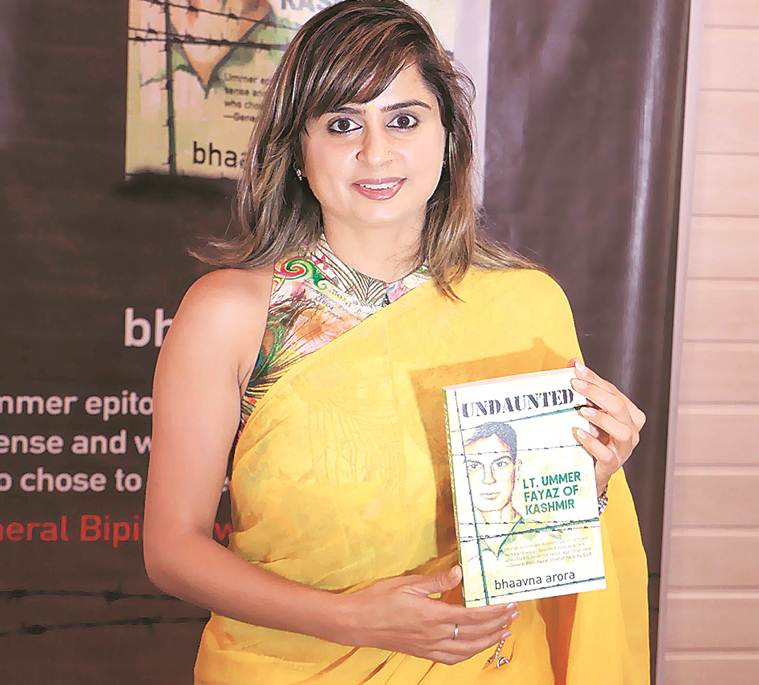 Bhawan Arora with her book at Chandigarh Press club
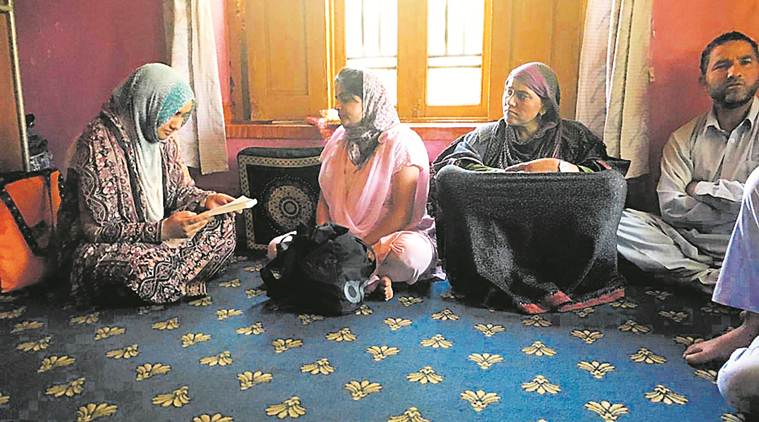 Bhawan Arora with Ummer’s famil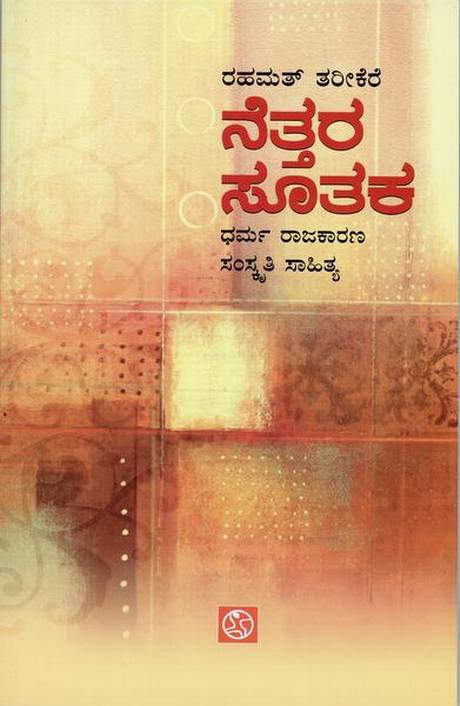

![[Manish Sisodia, who is also the Minister of Art, Culture and Languages, appealed to the writers to create more literature to inculcate the feelings of communal harmony and patriotism. (Photo: IANS/Twitter)]](http://www.mpositive.in/wp-content/uploads/2019/08/ManishMPOs31aug2019.jpg)