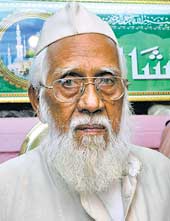
Claim to fame: Recipient of the Padma Bhushan award this year, he is an illustrious Unani practitioner, 105 years old. Quadri has been treating patients for the past 75 years at his dispensary at Haji Mohsin Square, near Wellington, free of cost.
Fighting fit: Hakimji begins his day with namaaz at the break of dawn followed by his visit to Swadeshi Dawakhana — his dispensary, where he attends patients all day. About 100 patients visit daily.
The centurion is amazing in his physical fitness and sharpness of mind and is a specialist in treating infertility. After a day’s hard work, which ends around midnight, he goes for a walk — to keep his gout from acting up.
Starting point: Born in a family of hakims in Bihar, it was natural for him to choose this profession. Quadri completed a course on Unani from Shafakhana Darsgah Tibbia (Gaya) in 1930. He participated in the freedom movement. He started to practise in Calcutta after his family shifted here.
Other activities: He began an informal school for children and triggered an adult literacy campaign in his locality. He had also published a magazine called Hikmate Bangala in the late Fifties. He works for citizen’s rights and is a founder member of the Unani Medical College and Hospital, Calcutta.
Low profile: He has had a lot of visitors since becoming the only person from the city to be awarded the Padma Bhushan this year. But he keeps reminding them that he is a mere “hakim”.
source: http://www.telegraphindia.com / The Telegraph, online edition / Home> West Bengal / by Shabina Akhtar / June 17th, 2007
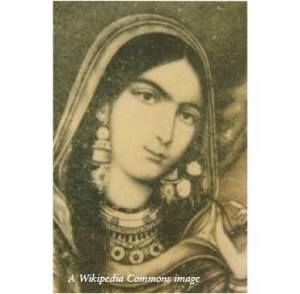
Begum Hazrat Mahal was the last of the official queens of the kingdom of Avadh, or “Oudh” as known to the British imperialists, a large province in northern India.
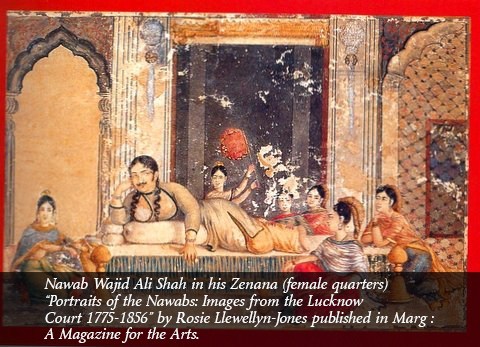
While the details of her birth and family are unclear, it is certain that Begum Hazrat Mahal was not of royal lineage. She is believed to have been a courtesan in the court of the last king of Avadh, Nawab Wajid Ali Shah, starting as a dancing girl named “Mahak-Pari” or fragrant fairy. The Nawab, besotted with the young girl, married her by means of the Shiite tradition of “mutah” marriage or “temporary marriage of pleasure.” It was a convenient method by which the Nawabs could add to their harems, and not technically stray from their marriages.
Mahak-Pari, as she was initially known, gave birth to a male child named Mirza Birgis Qadr Bahadur, and was elevated to the title of Hazrat Mahal Saheba, commonly known as Begum Hazrat Mahal. Transforming from a courtesan—a Pari (fairy)—to a Mahal (a royal queen) was rare, and the good fortune of bearing a male child combined with the right maneuvers in harem politics likely helped the young woman.
In 1856, the administrators of the East India Company annexed the kingdom of Avadh, by means of the infamous Doctrine of Lapse. The British coveted this territory as a great resource for cotton and indigo, and appalled by the debauchery of the Avadh court and its gross mismanagement of revenue, preferred to govern the region directly with a more “conventional” administration.
Nawab Wajid Ali Shah was exiled to Calcutta, and the unhappy king left with a few of his wives, and without most of his large harem, including his “secondary” wives. Begum Hazrat Mahal did not accompany the deposed king, continuing to reside in Lucknow with her young son.
When the Mutiny of 1857 broke out, Avadh was one of the major areas of rebellion as several recruits of the army were from Avadh. People were unhappy about the annexation, the deposition of their king, and the religious insensitivity of the British. The rebels needed a leader to further their cause.
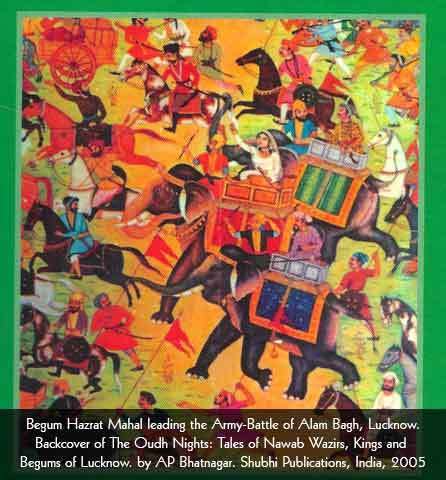
Begum Hazrat Mahal rose to the occasion to help the rebels defend Lucknow against the British troops. To the surprise of her adversaries, she reorganized the army with better co-ordination between the three units of the cavalry, artillery, and infantry. Many times, she rode at the head of the army on an elephant to encourage the soldiers against the advancing British troops.
As in other places, the Indian rebels could not hold out for long against the larger number of British troops, and the queen’s advisors asked the Begum to leave Lucknow in March 1858. She fled to the countryside, continuing her hostilities against the British by issuing orders while in hiding.
On November 1, 1858, Queen Victoria issued a proclamation whose intent was to end the Mutiny, pacify the religious sentiments of the Indians, and formally transfer control of the British territories in India from the East India Company to the British Crown. Begum Hazrat Mahal issued a counter-proclamation in which she argued against every claim of Queen Victoria.
The Begum reminded the Indians that several previous treaties had been violated, that princely heads had either been pensioned or killed, and property worth millions of rupees seized. If the British intent was honorable, why did the British Queen not “restore our country to us when our people wish it?” asked the bold and shrewd Begum. She questioned Queen Victoria’s claim to religious non-interference:
“…to destroy Hindoo and Mussulman temples on pretence of making roads to build churches—to send clergymen into streets and alleys to preach the Christian religion—to institute English schools, and to pay a monthly stipend for learning the English sciences, while the places of worship of Hindoos and Mussulmans are to this day entirely neglected; with all this how can the people believe that religion will not be interfered with?”
Begum Hazrat Mahal forewarned the Indians that their future prospects appeared limited under British rule. “It is worthy of a little reflection, that they have promised no better employment for Hindoostanees than making roads and digging canals.” The Begum’s words were rather prophetic. For decades after 1857, Indians pushed files under British bureaucracy and worked as laborers for the British government in India and overseas.
Begum Hazrat Mahal eventually sought asylum in the kingdom of Nepal, where she lived for the rest of her life. The British administration initially negotiated with her, assuring her a safe return and the possibility of a pension. The Begum, distrusting the British, refused—most likely because British retribution in the immediate aftermath of the rebellion was extremely harsh. While both Hindu and Muslim rebels were ruthlessly punished, there was fear that the Muslims would rise against the British (and Christian power) because it was a hitherto Muslim power that was being displaced, and the repercussions in former-Muslim strongholds such as Lucknow and Delhi were particularly extreme. After their initial negotiations failed, the British labeled the Begum as a woman of “savage disposition.”
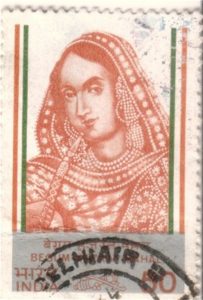
Begum Hazrat Mahal has remained a relatively minor figure in Indian history. Her legacy and her heirs were inadequately honored in the centenary celebrations of the Mutiny held at Lucknow post-Indian independence. Her great-grandsons protested against this oversight by the Indian government, which led Prime Minister Jawaharlal Nehru to order an inquiry into her place of burial. Her grave was discovered near Kathmandu, Nepal, in very poor condition. At this point, a park in Lucknow was named after her to commemorate her memory—this park has very recently been renamed—and later a postage stamp was issued in her honor.
Begum Hazrat Mahal’s legacy was diminished in the changed landscape of India post-1857. Her humble beginnings as a courtesan made her an inadequate role model.
The courtesans at the zenith of Lucknow’s court were no petty “nautch-girls” as described by the Victorian sensibilities of the colonists. They were sophisticated women, well versed in the arts of dance, music, and poetry. Their association with the courts made them extremely wealthy and nineteenth-century British records indicate that they were in the highest income-tax bracket before 1857. While the British derided the courtesans, and the culture they espoused, they did not hesitate to tax them on their “ill-earned” wealth. During the Mutiny, the courtesans monetarily supported the rebels, and their homes became rebel hideouts and secret meeting-venues.
Yet, this courtesan culture, the associated decadence and “debauchery” became a source of embarrassment for late-nineteenth-century Indian nationalists, social reformers, and the emerging middle-class English-educated “elite.” Indian nationalists believed that it was decadence and indolence that had helped the British uproot power in the princely states. A strong, respectable people hoping for self-rule needed to identify with respectable women and men, and a former courtesan-turned-warrior-queen did not fit this idealized image.
A strong and resolute woman, the Begum never gave in to the British, while her husband—a good man and an artist at heart, but weak in resolution—continued to live off the generous pension he received, always short of money, and therefore always acquiescing to the British.
Postage Samp of Hazrat Mahal. www.kamat.com
Several years after the Mutiny, a British painter visited Begum Hazrat Mahal, in Kathmandu, to paint a portrait of her son, Birgis Qadr. As he worked on his task, the painter ventured to ask her whether she would consider returning to Lucknow. Given the fact that much time had elapsed since 1857, the British regime was willing to forgive her and pay her a pension. Her residence in India would be proof of the British paternalistic spirit of forgiveness. Their condition, however, was that she would not be allowed a lavish lifestyle with a large retinue of servants. Perhaps, surprised by, or suspicious of the offer, but more likely annoyed at the continued interference in her life, the Begum refused the gesture, stating, with true Avadhi andaaz (style) “of what use will be the salary, if I am not to spend it upon the servants?”
Begum Hazrat Mahal was buried in a simple grave in the grounds of a mosque she built. Ironically she named it Hindustani Masjid, after the beloved homeland she had left behind, for whose sovereignty she had fought, and in which she has largely been forgotten.
Aarti Johri is a tech-professional turned history buff. This is an extract from her thesis for the Stanford MLA degree. Her articles have been published in the San Jose Mercury News, Stanford’s Tangents Magazine, and others. She serves on the board of SACHI (Society for the Art and Cultural Heritage of India).
source: http://www.indiacurrents.com / India Currents / Home> Features, General / by Aarti Johri / June 11th, 2016
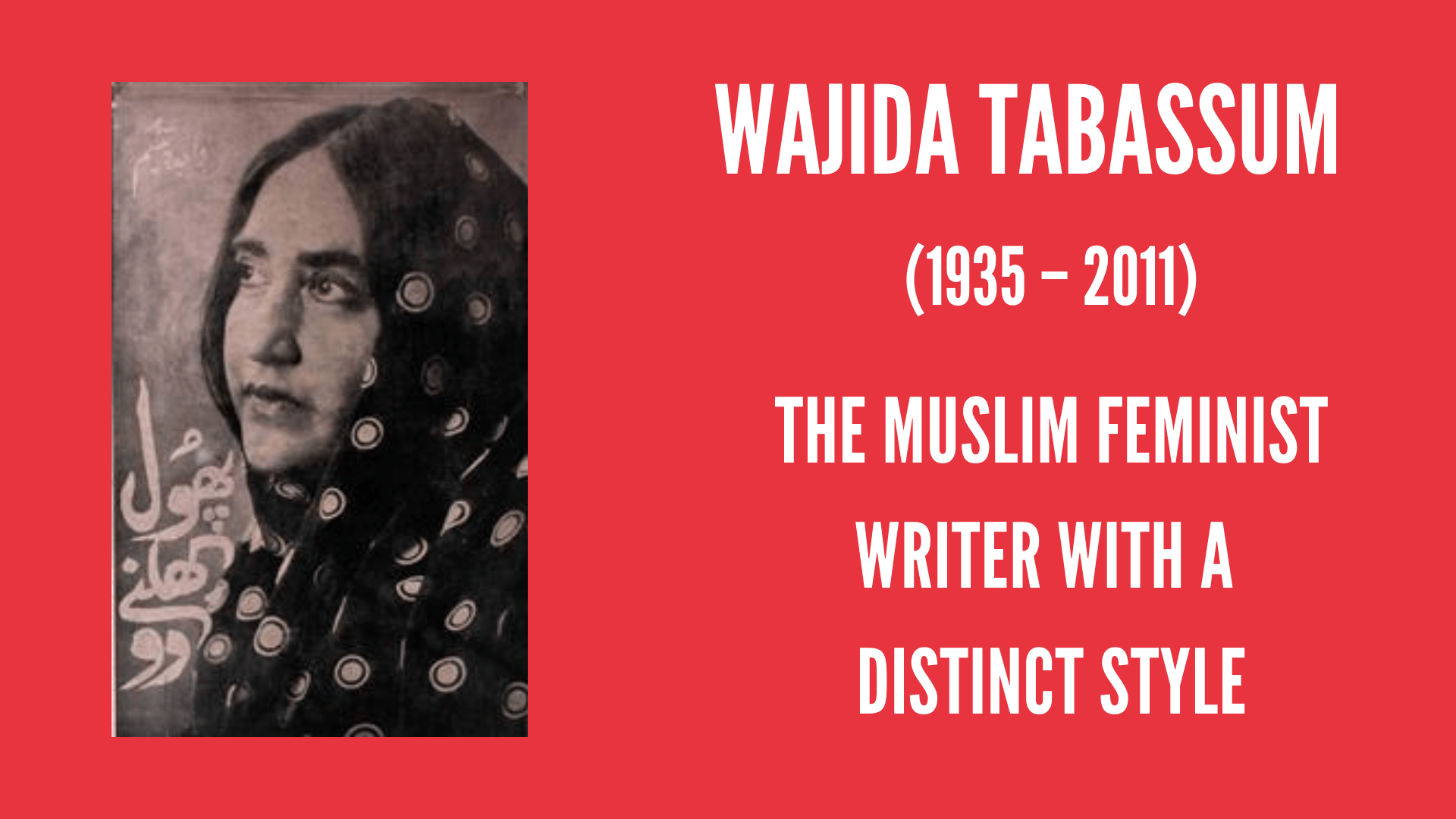
Wajida Tabassum is the first writer to be called sahib-e-asloob (a writer with a distinct style) after Ismat Chughtai. Her unique style of writing and choice of themes have been riveting and revolutionary at the same time. With a lot of opposition for her work, Tabassum managed to remain a defiant writer until her last works.
Early Life And Education
Born in Amravati, Maharashtra in 1935, Tabassum graduated from Osmania University with a degree in Urdu. After graduation, her family moved from Amravati to Hyderabad, the influence of which is evident in her writing.
IN A SOCIETY WHERE WOMEN ARE SHUNNED, TABASSUM EXPLORES THE STRENGTH THAT UNDERLIES THE EXISTENCE OF THE WORKING CLASS INDIAN WOMAN.
Writing And Her Life After
In 1940, she started writing stories in Urdu in the Dakhini dialect. Her writing continued as a backdrop of an aristocratic social life of Hyderabad. Her books were published by her husband, Ashfaq Ahmad, after his retirement from the Indian Railways. With four sons, and daughter they settled in Bombay.
Career
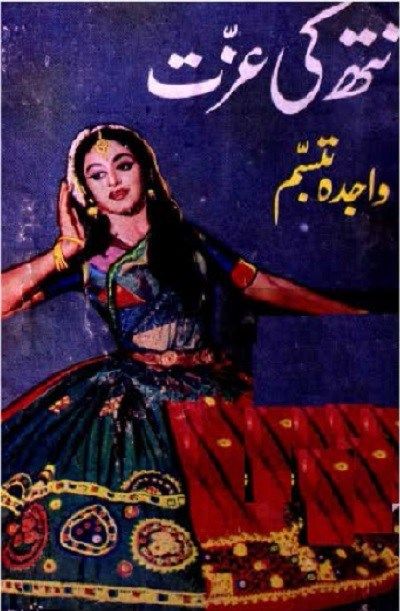
Tabassum’s career started with her stories appearing in a monthly magazine called ‘Biswin Sadi’. She wrote erotic stories in a way that brought out the lifestyles of Hyderabadi Nawabs, which was often considered luxurious. The very first collection of her short stories, called ‘Shahr-e-Mamnu’ (‘Forbidden City’), was published in 1960.
Her work wasn’t just widely acclaimed by critics, it was also popularly loved. Her story titled ‘Utran’ (‘Cast-Offs’) was made into a popular soap opera on Indian Television in 1988. During the 1960s and 1970’s, her erotic stories were published in Shama magazine which also got her a handsome payment for those times. Her books include Teh Khana, Kaise Samjhaoon, Phul Khilne Do, Utran, Zakhme-e-Dil Aur Mahak Aur Mahak and Zar, Zan, Zamin, which she had published in 1989.
WAJIDA TABASSUM IS THE FIRST STORY WRITER TO BE CALLED SAHIB-E-ASLOOB (A WRITER WITH A DISTINCT STYLE) AFTER ISMAT CHUGHTAI.
Breaking Taboos
She was repetitively criticized for crossing the limits of decorum and ‘decency’. Her stories like Nath Ka Bojh (Burden of the Nose-Ring), Haur-Upar(A Litter Higher), and Nath Utarwai(Removal of the Nose-Ring) which were more on the erotic side, were highly controversial. Tabassum’s works saw public protests in the city in lieu of her showing the community in a bad light. Her stories were not just a courageous depiction of women’s sexualities, but the reclamation of it too.
In one of her stories called ‘Chutney’, the reader witnesses the sexual tension between a young Nawab and an incredibly gorgeous employed servant. Following the allegedly explicit description of the erotic aspect of the dynamic, is the climax wherein the servant gets raped. The story, like rest of her work, is a social commentary on how there is class-based exploitation in the self-proclaimed elegant lifestyle of the Nawabs as well. However, a revolution begins through the story when the servant rips her clothes and challenges the Nawab to try again on his wedding day.
The theme of women taking charge of her sexuality remains constant in Tabassum’s stories. In another story called ‘Tiya Paancha’, we witness the anger of a wife who declares her husband impotent publicly after he cheats on her. In a society where women are shunned, Tabassum explores the strength that underlies the existence of the working class Indian woman.
source: http://www.feminisminindia.com / FII – Feminism In India / Home> History / by Harshita Chhatlani / July 04th, 2019
An interview with the author of ‘Patna Blues’, a novel about a lower-middle class Muslim family in small-town Bihar.
Abdullah Khan is a banker by profession and a poet-storyteller at heart. Born and raised in Bihar, Khan’s fiction carries evocative descriptions of his roots. His debut novel Patna Bluesisa coming-of-age story set in Patna and other places in Bihar in the 1990s. In an interview with Scroll.in Khan talks about his first novel, his inspirations, his poetry, and Bihar.
You started writing Patna Blues as “The Remains of a Dream”. I had the opportunity to read parts of this novel when you posted some chapters on your blog, way back in 2010. How was the journey from 2010 till 2018, from starting to write the novel as “The Remains of the Dream” to seeing it published as Patna Blues? Actually, I started writing this novel in 1997 just after Arundhati Roy won the Booker Prize. And the excerpts you read in 2010 were from probably the third draft of my novel. Initially, it was a romantic drama mostly focussing on Arif’s love life. Then, on the basis of the feedback I received from my writer friends and a couple of literary agents to whom I had submitted my manuscript for possible representation, I rewrote the entire thing making a lot of changes in the plot and in the characters.
Once the final draft was ready, I started sending my queries to British and American literary agents. And, after collecting more than 200 rejection slips, I decided to submit the manuscript to Indian publishers. I was lucky that my novel landed first on Renu Agal’s table at Juggernaut Books and she could connect with the story. Renu asked me to make certain changes in my manuscript which I immediately did. Then she recommended Patna Blues to senior editor Sivapriya who also liked this story about a small town and, finally, my book found a home.
Now, in its present avatar, Patna Blues is a culturally insightful coming-of-age novel with political undertones. It is actually three stories in one. One is simply the story of a boy: Arif, the central character, who deals with love, lust, and ambitions as he goes through the painful process of growing up. The second too is Arif’s story, but it is also the story of a Muslim boy in particular, and this flows into a larger narrative of being a Muslim in post-Babri India, with its own challenges and anxieties. The third is the story of India itself, not the India that exists in the cities, but the India of villages and small towns.
Who or what inspired the character of Arif Khan and how much of Abdullah Khan is there in Arif Khan? Arif is a fictional character and is not inspired by anyone in particular. Unlike Arif, I was never interested in the civil services. But, yes, the moral values of Arif are quite similar to those of mine. And, like Arif, I also lived in police colonies in Patna and Darbhanga.
The story of Arif Khan’s family seems to be a story of several families in Bihar and Jharkhand, not only Muslim families. Was it one particular family that gave you the insights to create this one or was it what you observed in several families? Is there an issue (or many issues) you wish to highlight through your portrayal of Arif Khan’s family? Arif’s family is a typical lower middle class Bihari family and their problems are not different from the other families of the same class. Since I also come from a similar background, it was easy for me to create such a fictional family. Some of the incidents portrayed in my novel, however, are inspired by real life stories. For example, Arif’s sister’s marriage to a man double her age was inspired by a real event. It had happened in Darbhanga. I was barely 12-13 years old at that time. In my neighbourhood, a girl was married off to a man who was no match for her only because her father was not willing to spend too much money on her wedding.
The characters of Arif’s mother and grandmother are inspired by my own mother and grandmother.
The whole novel is very atmospheric. Be it the description of Patna city or the villages in north Bihar or the description of the 1990s – the time period in which a major part of your novel is set – or the politics of the time (and place), you have given a no holds barred description of everything, even of the film magazine Priya. Thank you for re-igniting our memories. Is there a particular memory from those times that made your writing so evocative? Something you would like to share? Thank you very much for your kind words. I didn’t plan it. Since the story is mostly set in Bihar of the 1990s, I just tried to evoke a sense of time and place by mentioning the things which signify Bihar of the 1990s. And, it appears that, to an extent, I have succeeded in doing so.
One important feature of Patna Blues is the poetry/ghazals in Urdu that Arif and Sumitra compose. You yourself are a poet and the poetry and ghazals you have featured in Patna Blues are your original works. You have also written the screenplay and lyrics for a Hindi film, Viraam. What made you use your poetry in the novel? How do you think the book would have turned out had this poetry not been there? The main characters of this novel, Arif and Sumitra, are interested in Urdu poetry, so it is obvious that they will use poetry in their conversations. Additionally, the use of poetry in my novel is not only for ornamental purposes but they have also been used as a narrative tool.
Since Arif and Sumitra are amateur poets, it would not have been appropriate if I had used the poetry of well-known poets. So I decided to use my own poems, for both Arif and Sumitra. I believe that this novel couldn’t have been written without using Urdu poetry.
My favourite character is Zakir, Arif Khan’s younger brother. But you have not really given him closure. Similarly, the character Maya Banerjee, Sumitra’s friend, too has not been given closure. Why? Can we expect to see their stories somewhere else? Are you planning a sequel to Patna Blues? Zakir is one of my favourite characters too and his story is too big to be covered in this book. It needs a separate book. In fact, I have plans to write two sequels to Patna Blues. In Zakir’s Dilemma, I will give closure to Zakir’s story, which is going to be more intriguing and suspenseful than Patna Blues. The third book in thetrilogy will be Sumitra’s Choice, which will be told from Sumitra’s POV.
As far as Maya Banerjee is concerned, as of now, I don’t know much about her except that she used to be Sumitra’s friend. But, in future, I’d certainly like to explore this character.
What are you writing right now? Is there a new book from you that we can look forward to Right now, I am working on a novel titled Aslam, Orwell and a Pornstar. It is about a man called Aslam who was born in the same house in Motihari, India, where George Orwell was born. The story is set in Motihari, India, and Los Angeles, USA, against the backdrop of contemporary political events.
Simultaneously, I am also working on a couple of story ideas for television and web.
source: http://www.scroll.in / Scroll.in / Home> Meet The Writer / by Hansa Sowvendra Shekhar / September 22nd, 2018
Stories of kings and queens fascinate all children and we were no different.
We never grew tired of hearing Amma tell us stories about the Kashi Naresh (king of Banares) and her life in Ramnagar, in present-day Varanasi. Stories of how my seven-year-old aunt was on the lead elephant in the Ramlila celebrations, because the Kashi Naresh was studying in Mayo College; stories of her roza kushai (celebrations when a child fasts for the first time) which had a 16-year-old Bismillah Khan playing the shehnai; stories of my Nani, Begum Hameeda Khatoon attending state dinners in chiffon saris and brocade blouses with matching brocade shoes and a dash of Tangee, her favourite lipstick. We heard of Khan Bahadur Syed Ali Zamin, MBE, our teetotaller Nana raising the toast to the very senior British dignitaries who came with a glass of water! We heard of Nana ensuring that there was a constant supply of Ganga Jal for the young Kashi Naresh studying in Mayo College, since he could only use that pure water. We often heard stories from my grandmother of the jewels in the state treasury; Nana must have described the jewels to her—the keys to the treasury were kept with him and he discharged his duties with utmost integrity and honesty. Another story, and my favourite, was that Nana personally chose the piece of brocade and silk, which went from Benares as Queen Elizabeth’s wedding present.
The rulers of Benares appointed many of their dewans and other officers from the Syed family of Kajgaon, near Jaunpur… Benares State was the biggest employer of our family!
Our childhood was shaped by these stories of a land where the Ganges flowed and the Ganga Jamuni Tehzeeb, as our syncretic culture is referred to, flourished.
A land where there was a Brahmin king and a Muslim dewan!
The rulers of Benares appointed many of their dewans and other officers from the Syed family of Kajgaon, near Jaunpur. In fact, as my aunt says, back then Benares State was the biggest employer of our family!
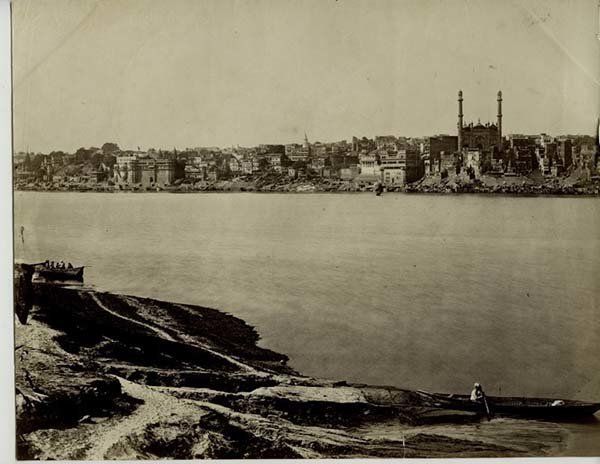
A VIEW OF THE GHATS OF BANARAS FROM RAMNAGAR, IN A PHOTO BY RUST, C.1880’S
Ramnagar, which is 18km from Varanasi, was the capital of the erstwhile princely state under the British Raj. Its history dates back to the ancient Kingdom of Kashi and its Brahmin rulers are said to be the incarnation of Shiva.
Mansa Ram Singh founded the Benares estate and in 1740 his son Balwant Singh became its first Raja. It became a princely state in 1911 under the British government.
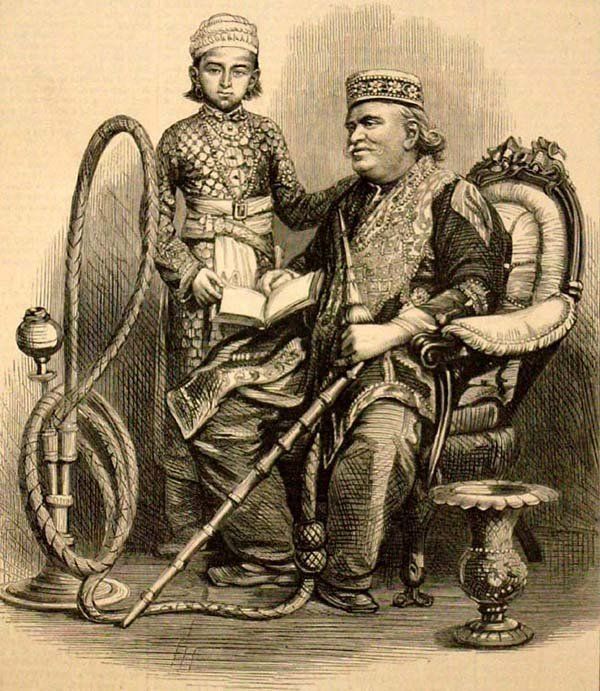
Maharaja Ishwari Prasad Narayan Singh succeeded his uncle and ruled till his death in 1889.
WWW.COLUMBIA.EDU “The Maharajah of Benares,” from the Illustrated London News, 1876
A family tradition begins
The first dewan from our family was my mother’s great-great-grandfather, Maulana Syed Gulshan Ali, a qualified mujtahid from Najaf in Iraq came in Maharaja Ishwari Prasad Narayan Singh’s reign.
AHMED ZAMIN / Maulana Syed Gulshan Ali
He advised and supported the king’s decision to not get involved in the 1857 Uprising and as chief minister and dewan he was instrumental in getting the estate, which had been confiscated by the British, restored to the Maharaja. According to the family lore, he had the idea of going to England to appeal to the Privy Council for the return of the confiscated land. He took three lakh rupees from the Maharaja and proceeded to the head office of the East India Company in Calcutta (now Kolkata). On the way, he met a British officer associated with Fort William in Calcutta where the head office of the East India Company was located. When the officer discovered that Maulana was a scholar he offered to help him in return for Urdu and Persian lessons. Upon finding out Maulana’s concern, he advised him that there was no need to go to England because the case could be pleaded from India. Maulana stayed in Calcutta for about a year teaching Urdu and Persian to the British officer
His detractors who had spread the rumours that Maulana sahib had decamped with the money were proved wrong when he returned and after deducting his nominal expenses handed over the remaining amount to the Maharaja.
Vignettes to cherish
My cousin Syed Naqi Hasan’s yet-to-be-published memoirs, My Nostalgic Journey, is a storehouse of information and family stories.
His uncle Khan Bahadur Syed Ahmed Hasan CIE was dewan and his grandfather, Syed Ali Sagheer (My Nana’s brother) was a collector in Gyanpur, one of the districts of Benares state. He heard these anecdotes from both our grandfathers and his uncle. Those were the days when elders sat in the courtyard surrounded by the youngsters and told them stories and anecdotes to ensure that family legacies, cultural traditions were carried on. Today’s TV, computers and smart phone have taken this away from us. Oral history will soon die a natural death.
Maharaja Ishwari Parasad Narayan Singh valued Maulana Gulshan Ali’s advice and loyalty so much that when Maulana died, he “wept bitterly and said, ‘Today my father has died.'”
He writes that Maharaja Ishwari Parasad Narayan Singh valued Maulana Gulshan Ali’s advice and loyalty so much that when Maulana died, “Maharaja Ishwari Parsad wept bitterly and said, ‘Today my father has died.'”
Later Maulana Gulshan Ali’s son Syed Ali Mohammad served as Naib Dewan.
AHMED ZAMIN / My grandparents, mother and aunts in their Ramnagar house
My aunt reminisces that amongst the many privileges granted to Maulana and his family by the Maharaja, the most important one was that until the merger of Benares state with India, two white horses were kept in the royal capital of Ramnagar at the State’s expense, and were sent to Kajgaon to be used as Zuljanah (representation of Imam Hussain’s horse) in the Muharram processions.
My elders kept our family’s oral history intact and I share some here.
HTTP://WWW.COLUMBIA.EDU/ “Benares, Maharaja’s Palace,” a professional photo, 1930’s.
Maulana Syed Gulshan Ali’s extraordinary presence of mind and good judgment during the annexation of Awadh by the East India Company in 1856 is still talked about in our family. When the last Nawab of Awadh, Wajid Ali Shah, was deposed and exiled to Calcutta he halted on his way at Benares. It was customary to offer a nazrana usually in the form of gold coins to a visiting king, which the king sometimes doubled and returned to the giver. The dilemma was that not offering a nazrana meant ignoring the king. Offering gold coins was inappropriate because the king was in no position to double it. Maulana thought of presenting the king with tasbih and sajdigah made of khaak e pak or the dust of Karbala where Imam Hussain was martyred, which the Shias revere. It is priceless in terms of its symbolic value and yet not much in monetary terms, which would make giving something in return unnecessary. What could be a better nazrana for a Shia nawab!
His son Maharaja Prabhu Narayan Singh succeeded Maharaja Ishwari Prasad Narayan Singh in 1889 and was the first maharaja of the newly created princely state of Benares in 1911. He died in 1931, and was succeeded by his only son, Aditya Narayan Singh.
Maharaja Aditya Narayan Singh reigned for a very short time.
AHMED ZAMIN / My grandfather Khan Bahadur Syed Ali Zamin
My grandfather, Khan Bahadur Syed Ali Zamin, MBE joined as Chief Secretary of the State in 1939 and the Maharaja died shortly after that.
As the Maharaja was childless he adopted a distant cousin to succeed him. Vibhuti Narayan Singh, the last Maharaja of Benares, was a minor when Maharaja Aditya Narayan Singh died.
Nana [ensured] that there was a constant supply of Ganga Jal for the young Kashi Naresh studying in Mayo College, since he could only use that pure water.
In My Nostalgic Journey, my cousin Syed Naqi Hasan writes that on his deathbed Maharaja Aditya Narayan Singh summoned my grandfather and his adopted son and placed the hand of his son in Nana’s hand and said, “Syed Sahib, I am placing my son under your protection. Please protect him as well as the throne for him.” There were many claimants to the throne. Against all odds, Nana had Vibhuti Narayan Singh perform the funeral rites as required by the Hindu religion to establish his claim to the throne.
As Maharaj Kumar Vibhuti Narayan Singh, a minor, became the maharaja under regency Council of Administration was formed and C.R. Peters Esq was appointed its President and Nana as the Chief Minister was next in line of authority. Peters had to return to England in 1944 after a sudden illness, and Nana was named to act as President of the Council of Administration.
As the President of the Benares State, Nana was responsible not only for the well being of the state but also of his young charge.
Such was the level of comfort of the Maharaja Vibhuti Narayan Singh with our families that he maintained a friendship with the younger generation and decades later in1979, he stayed in the house of my cousin whose husband S.K.R. Zaidi who was the Chief Officer of Reserve Bank of India in Kanpur, rather than a hotel where he wasn’t sure of the purity of the environment. His young son was very keen on cricket and there was a test match between India and Australia in Green Park, Kanpur.
Their children Atiya and Abid Zaidi have fond memories of his charming manners and how the Maharaja floored the servants with his courtesies.
The Maharaja came with his full entourage and was given the lower floor of their huge house, with a kitchen where he could be comfortable.
Maharaja Vibhuti Narayan Singh ascended the throne, before reaching the full legal age on 11 July, 1947, approximately four months short of his 20th birthday. His ascension was speeded up in view of India’s imminent Independence. Charles Allen and Sharada Dwivedi in their book, Lives of the Indian Princes , quote the young Maharaja Vibhuti Narayan Singh as saying that he wanted to finish his education but was told by the political advisor to the Viceroy, Conrad Corfield, “If you waste a day you may not become a Maharaja.” He goes on to add that that the people of Benares were kind to him and how my grandfather, Syed Ali Zamin, who was presiding over the meeting of the Cabinet of Ministers stepped aside and asked him to preside over the meeting so that he “could play a leading part.”
He succeeded to the throne in July 1947 after becoming an adult, a month before India’s independence. The Council of Administration was dissolved after his ascension and the position of President was abolished. Nana became the Dewan.
End of an era
Maharaja Vibuti Narayan Singh signed the Instrument of Accession to India in Oct 1947, and Benares State was merged with the United Provinces now the Indian state of Uttar Pradesh.
In 1948 my grandfather suffered a heart attack while addressing a meeting in Ramnagar, the capital of Benares State, and had to be carried home on a stretcher. He took voluntary retirement from his position as Dewan because of ill health but after helping the young Maharaja to ensure a smooth merger of the state with India.
The last Muslim Dewan of Benares state passed away on 1 November, 1955 a few days before his birthday on the 5th of November.
The Muslim Dewans of Banares
source: http://www.huffingtonpost.in / HuffPost / Home> The Blog / by Rana Safvi / October 27th, 2016
These women embodied feminism long before it became a part of the zeitgeist.
The heiress apparent to the throne of Bhopal, Abida Sultan, wore her hair short, played the saxophone, had her own band, sped around in a Daimler, and when her husband announced that he’ll assume custody of their son, threatened to kill him with the pistol she kept in her pocket. All the while, she remained pious and committed to Islam.
Abida Sultan’s autobiography, Memoirs of a Rebel Princess, was unabashed and far from removed from the stereotypical picture of an oppressed Muslim woman. In the book, she wrote frankly about her conjugal life and her inability to be the good, dutiful wife. But could one expect any less from the child of a feminist royal lineage?
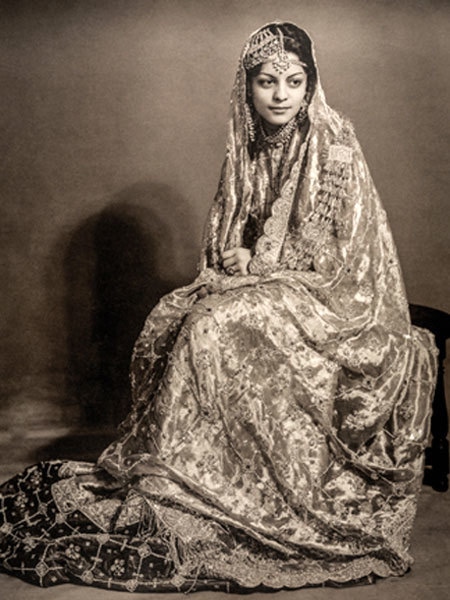
This matrilineal reign, which began in 1819, lasted more than a hundred years, with the lone interruption in 1926, when Sultan Jahan Begum abdicated in favour of Nawab Hamidullah Khan. Hamidullah Khan’s daughter Abida Sultan was to succeed to the throne, but when she chose to leave for Pakistan after the Partition of India, her younger sister Sajida became the Begum of Bhopal.
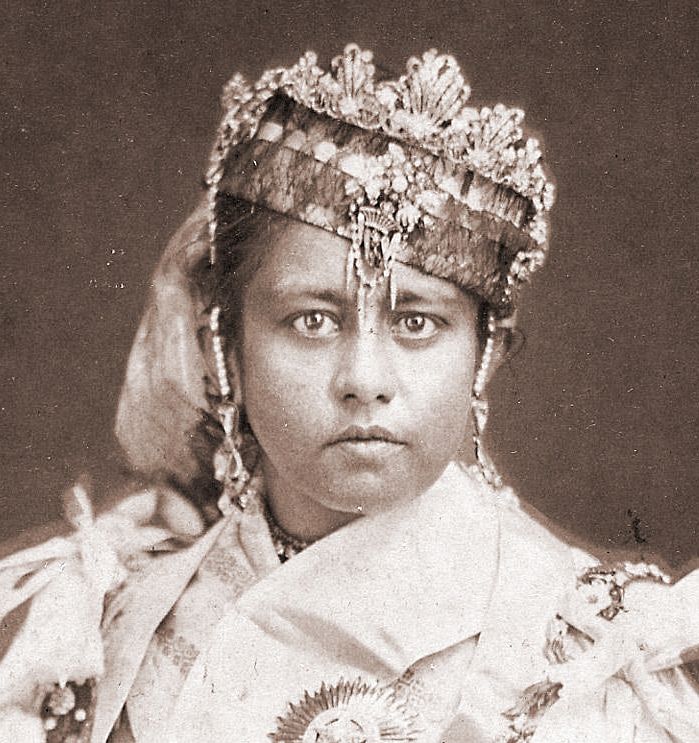
Sajida Sultan. — Unknown/Wikimedia Commons
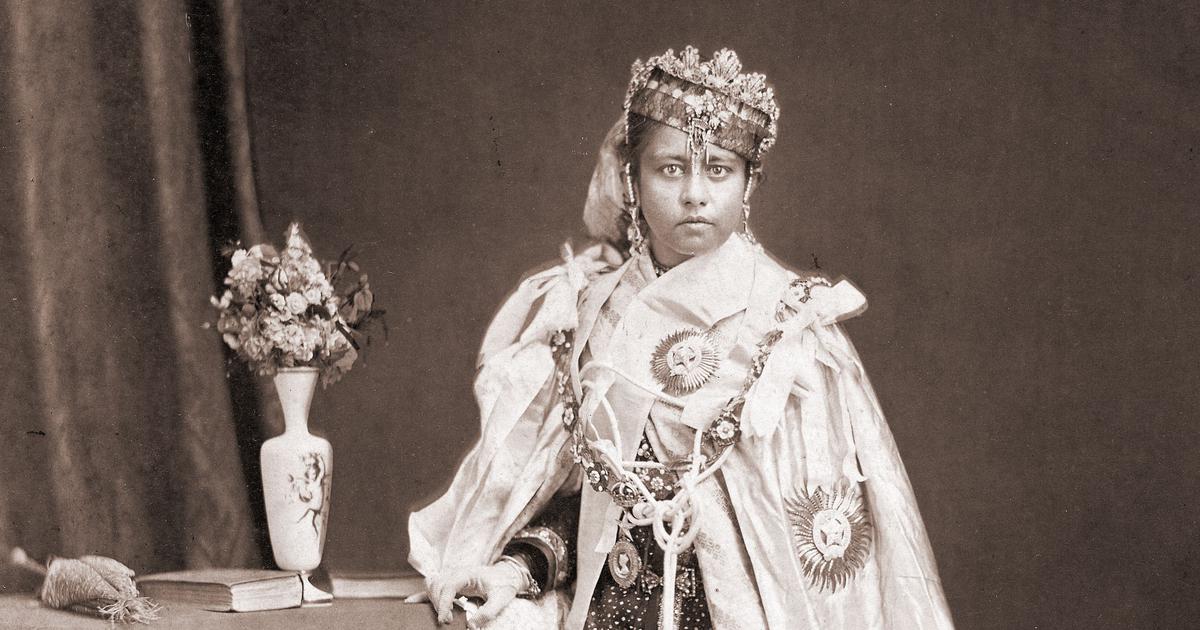
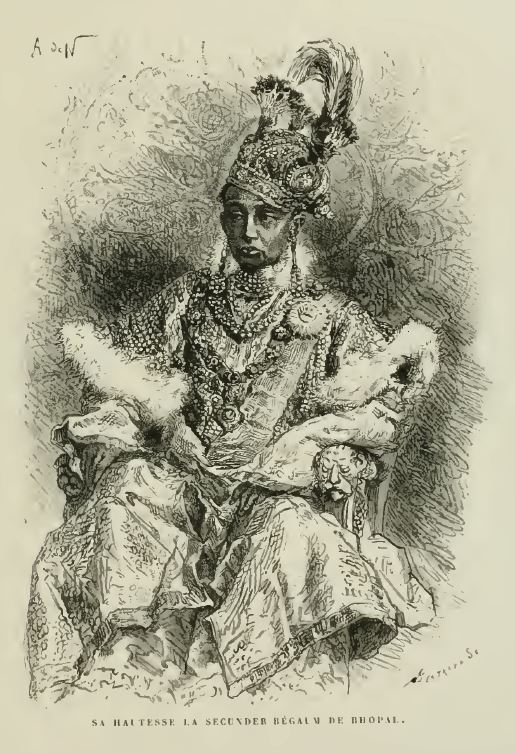
Unlike the Queen-Regent of Travancore, whose brief radical rule ran only till her son came of age, these women ruled for unexpectedly long periods, facilitated by the absence or death of male contenders to the throne, and through sheer grit. A photograph taken in 1872 of Nawab Shah Jahan Begum, Abida Begum’s great-grandmother, shows a booted woman staring straight at the camera, much in the manner of a Vogue cover shoot. The Begums of Bhopal practised feminism much before it gained prominence. They were interesting, headstrong and opinionated, but their wars weren’t fought on the battlefield.
Archival records are filled with the Begums exhibiting their commitment to Islam: donating money to build a mosque in Basra, Iraq, funding the Muslim University at Aligarh, and opening a school for girls in Delhi in the early 1920s. At the time, it was unusual to have a ruler devote time and money to women’s education — even a progressive thinker like Syed Ahmad Khan was focused on Muslim men getting Western education — but to do so outside their state was truly remarkable. So much so that when Lord Edwin Montagu, the British Secretary of State for India, met Begum Sultan Jahan in 1917, he noted in his diary that she was “frightfully keen on education, and jabbered about nothing else”.
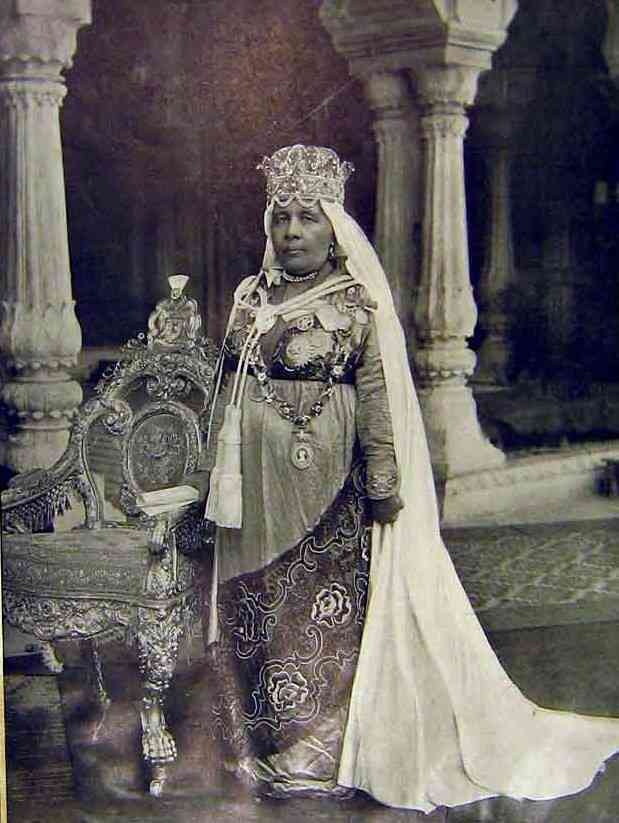
Sultan Jahan Begum. — Wikimedia Commons
Fringes of history
Women and their assumption of political power have always been sidelined in Islamic history, though there is reason to believe that Aisha, the Prophet’s wife, had a role to play in the establishment of the first Islamic state. Razia Sultana’s brief reign as the Sultanah of Delhi in the 1200s and her killing demonstrated the near impossibility and legitimacy of a Muslim women ruler.
Nothing changed over the centuries. Though it was a young woman, Queen Victoria, who reigned over the hundreds of Indian monarchs at the start of the Paramountcy, assuring them gently of their territorial sovereignty, this mattered little in India. Indian monarchies have been patrilineal and patriarchal, guarding the male and natural right to ascend the throne.
Against this background, to have four Muslim women successively rule a state is unprecedented in world history. But what makes it all the more remarkable is that these women administered a state dominated by feudal warlords accustomed to male privilege over the throne.
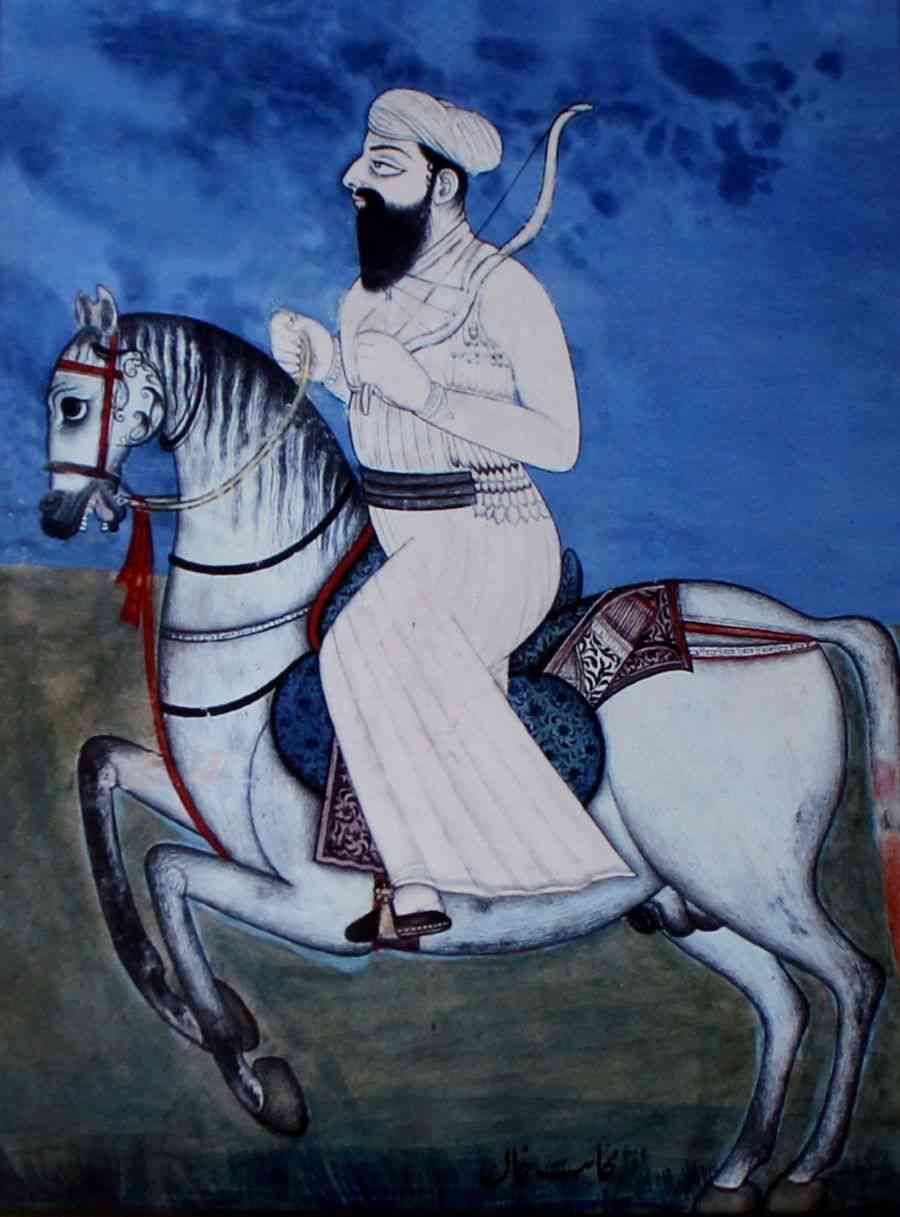
The modern city of Bhopal was founded in the early 18th century by Dost Mohammad Khan, an Orakzai Pathan from Afghanistan, and it soon became the second-most important Muslim princely state after Hyderabad. Its geographical location — in Central India — was vital for the suppression of the 1858 War of Independence.
Dost Mohammad Khan. — Wikimedia Commons
In North India, there were several Muslim princely states — such as Bahawalpur, Mahmudabad, Tonk, Pataudi and Rampur — which were supported by the British under the Paramountcy. Under this policy, while nearly 500 princely states were autonomous and maintained internal sovereignty, their foreign policy and right to wage wars was controlled by the British.
The reign of the Begums began in Bhopal in 1819, when the ruling Nawab, Mohammad Khan, died without an heir and the British decided to crown his young wife Qudsia till her daughter Sikandar came of age. Sikandar Begum’s husband too died in 1844, and she proved to be a competent ruler and a worthy ally to the British, playing a vital role in the First War of Independence in 1857-1858. This compelled the British to make a provision that the Begum was a sovereign in her own right. Three years later, in 1861, she was invested with the Exalted Order of the Star of India, making her, at the time, the only female knight in the British Empire besides Queen Victoria. She was succeeded by her daughter Shah Jahan Begum and then by Sultan Jahan Begum.
Sultan Jahan Begum went on to have a 25-year-long reign, marked by a commitment to progress, education and women’s health reforms. She was the last Begum of Bhopal as the heiress apparent, Abida Sultan, abdicated the throne in 1948.
Sikandar Begum. — Louis Rousselet/Wikimedia Commons
‘Magical island’
The first and foremost among them, Qudsia Begum, set the template of the ideal ruler. Spartan, and shunning jewellery, she refused to take loans and made sure that any money spent would be solely for education and philanthropy. As the British agent Lancelot Wilkinson in Bhopal noted: “She rides and walks about in public, and betrays her determination to maintain herself in power by learning the use of the spear and other manly accomplishments. At times she became quite frantic; and as one of the soldiers observed, more terrible to approach than a tigress.”
This “magical island”, as at least one commentator called it, was as rare as it was difficult to create. Like all figures of power, the Begums too attracted people who wanted to manipulate them — and in their case, this meant both the British and the ruling clan.
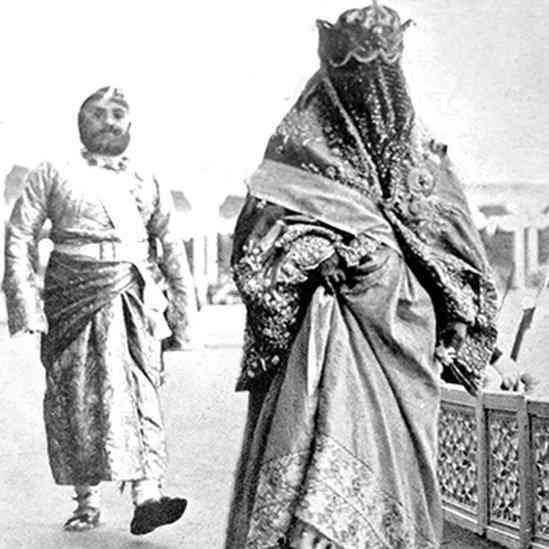
Qudsia Begum and her daughter, early inheritors of an uneasy throne, responded to the tugs and pulls by quickly learning traditional masculine skills like fencing and hunting. Shah Jahan Begum embraced the Purdah, asserting notions of orthodox Islamic femininity. She withdrew from public life into strict seclusion and refused to meet the British Viceroy in 1875. Her daughter would later recount in her autobiography that “even as a young girl, she preferred to meet with other girls of her age to discuss ‘a thousand little points of household duties and of domestic management than to perform outdoor activities’.” None of this though got in the way of being a good ruler, and she proved that a veiled woman could rule as competently as anybody else.
Shah Jahan Begum. — Louis Rousselet/Wikimedia Commons
Balance of power
The Begums carefully navigated the multiple demands of power by ingeniously playing around with tradition and modernity. They would sometimes opt to let go of the burkha and at times wear it to demonstrate a different modernity. In their writings, the Begums constantly acknowledged their mothers and grandmothers, paying obeisance to the strong women who shaped their lives and characters.
Their commitment to austerity and Islam set them apart from the wasted royal lives that were given to overindulgence and dissipation. They constantly drew upon the Quran and respected Islamic scholars, reinforcing the idea that Islam speaks of equity between the sexes. Their spartan lives struck Mahatma Gandhi too, when he visited the state in the late 1920s, on invitation. He was suspicious that the Begum’s cotton clothes and thin mattress had been “put on as a show”, till his travelling companion Sarojini Naidu assured him otherwise.
The Begums of Bhopal, who styled themselves as “Nawab Begums”, were radical and unconventional (the term ‘Nawab Begum’ itself was ingenious as there is no word for queen in the Islamic political imagination). Nonetheless, with consummate ease and success, they proved they were no less. Keeping in line with the Islamic tradition of maintaining a diary, like the founder of their state used to, the Begums invested much energy in maintaining records — of the state and of themselves.
Sultan Jahan Begum. — The Graphic/Wikimedia Commons
Shah Jahan Begum, the third in the line, established a History Office, along with a system for retrieving and maintaining records of important characters in her family. Abida Sultan’s son, Shahryar Khan, a former career diplomat in Pakistan, has carried on this family tradition by writing an authoritative account of the dynasty, The Begums of Bhopal.
Like a host of other wealthy Muslim ashraf women, the Begums travelled to Europe and to West Asia as part of the obligatory hajj. And despite the seriousness of the occasion, they never failed to display flashes of their chutzpah. There are anecdotes of Sikandar Begum not disembarking from the ship to Europe without her bottles of pickle. And upon reaching London, she mistakenly wore a dressing gown to meet King George V and Queen Mary, a realisation made only owing to the headlines in the newspapers the next morning.
Many princesses have ascended to power in democratic India by contesting and winning parliamentary elections. The Begums of Bhopal, however, are remarkable for sustaining a determined succession of women monarchs, despite hostility to their gender ruling — the very first Begum, Qudsia, had declared that her infant daughter would succeed after her. Despite the religious and political odds against them, their reign was marked by benevolence and modernity, a radical openness to change, like women’s education and medicine, while maintaining a steadfast commitment to the tenets of Islam. The Begums are icons for women, Muslim or otherwise.
This piece was originally published on Scroll and has been reproduced with permission.
source: http://www.dawn.com / Dawn / Home> Prism / by Priya Mirza / June 04th, 2019
The book releasing ceremony was attended by a large number of the intelligentsia, academics, scribes, and others.
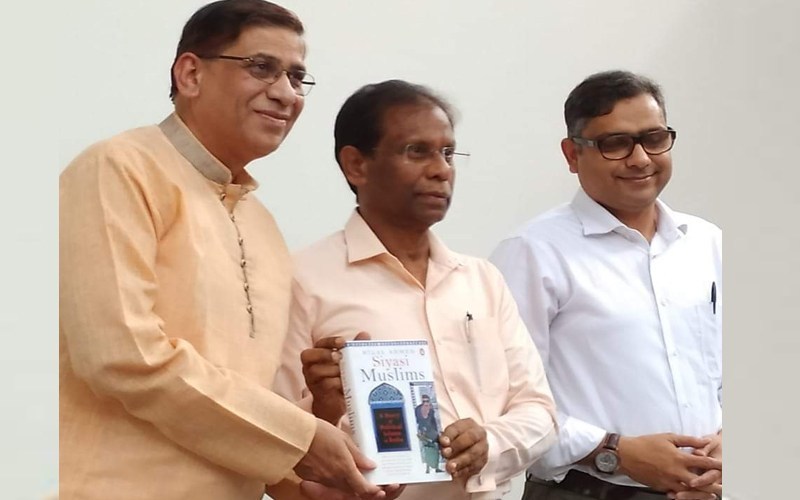
Mr. AK Khan and Prof Faizan Mustafa holding the book following its release by Mr. Khan at Lamakaan, Banjara Hills. Author of the book Dr. Hilal Ahmed looks on.
Hyderabad :
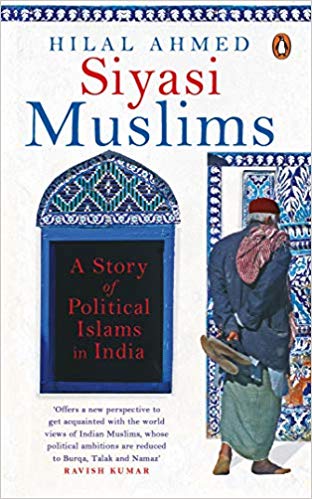
Mr. AK. Khan, advisor to the Telangana State government on Minority Affairs, released a book, Siyasi Muslims, on Thursday evening at Lamakaan, Banjara Hills, Hyderabad.
The book written by Hilal Ahmed is ‘a story of Political Islam in India.’ It is published by Penguin India.
Prof M Faizan Mustafa, an eminent jurist and Vice Chancellor of NALSAR, reviewed the book describing it as an important read in changing political and economic scenarios in India.
According to the author, “The book answers questions on political Islam; nationalist Islam; Good Muslim vs Bad Muslim, etc.
The other pertinent questions asked by Hilal Ahmed, Associate Professor at the Centre for the Study of Developing Societies (CSDS), New Delhi, include, “How do we make sense of the Muslims in India? Do they form a political community? Does the imagine conflict between Islam and modernity affect the Muslims’ political behavior in the country? Are the Muslim religious institutions—mosques and madrassas directly involved in politics? Do they instruct the community to vote strategically in all elections? What are Muslim issues? And finally, are Muslims in India truly nationalists?”
The book releasing ceremony was attended by a large number of the intelligentsia, academics, scribes, and others.
source: http://www.siasat.com / The Siasat Daily / Home> Hyderabad> News / by Safoora / May 03rd, 2019
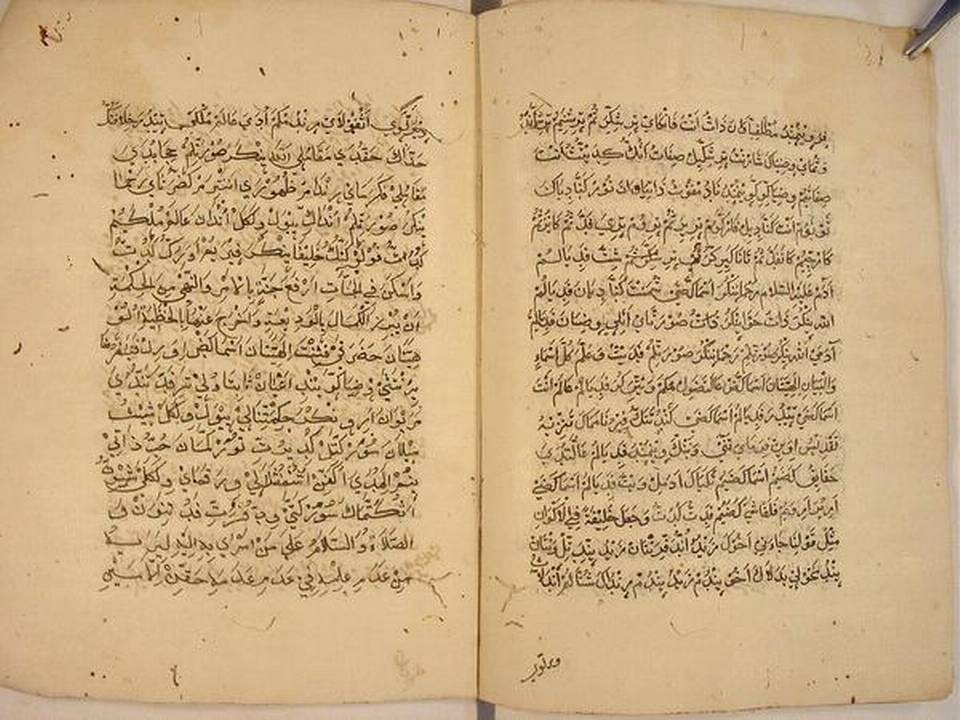
An Arwi manuscript. Photo: Special Arrangement/The Hindu
Tracing the roots of Arabu-Tamil, a link-language that evolved to facilitate communication between Arab settlers and Tamil Muslims
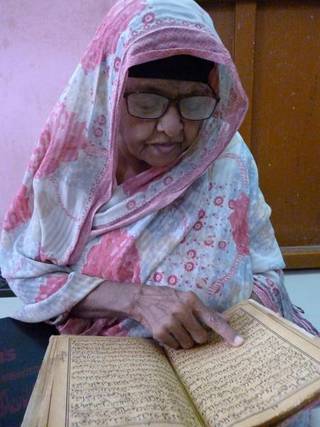
A hush falls over the room when Ammaji Akka starts reading out from the yellowing pages of a textbook called Simt-us-Sibyan (Pearls of Wisdom for the Young). Her voice may quaver, but her fingers glide surely on the modified Arabic alphabet that expresses ideas in Tamil.
The Salem-based septuagenarian is among a dwindling number of people who know Arabu-Tamil (or Lisan al-Arwi), the link-language that texts like Simt-us-Sibyan are written in. A language that evolved to facilitate communication between Arab settlers and the Tamil Muslims in southern India and Sri Lanka, Arwi was in active use from the 8th century up to 19th century.
A former Ustad Bi, or female teacher of Islamic scriptures, Ammaji Akka used to visit Tamil Muslim families at home to tutor adolescent girls and women in how to recite the Holy Quran in Arabic.
Simt-us-Sibyan (written by Maulana Mohamed Yusuf al-Hanafi al-Qadiri) was a learning tool in religious studies; and for many Tamil Muslim children up to the 1970s, used to be a part of Quran recitation classes.
Ammaji Akka, a former Ustad Bi or teacher of Islamic scriptures, reads an Arabu-Tamil booklet at her home in Salem. Photo: Special Arrangement/The Hindu
“I have four Arabu-Tamil books — Noor Nama (an account of Prophet Muhammad’s life), Simt-us-Sibyan, Ya Sayed Maalai (songs in praise of the Prophet) and Penn Buththi Maalai (advice for Muslim women). Though nobody wants to learn Arabu-Tamil anymore, I still read these books out loud after the evening (Maghrib) prayer, because I believe they will bring good fortune to the neighbourhood,” says Ammaji Akka.
Linguistic influence
The impact of Arabs on the Indian subcontinent is most evident in its languages; and Arabu-Tamil is just one of the several hybrid tongues that were once prevalent here.
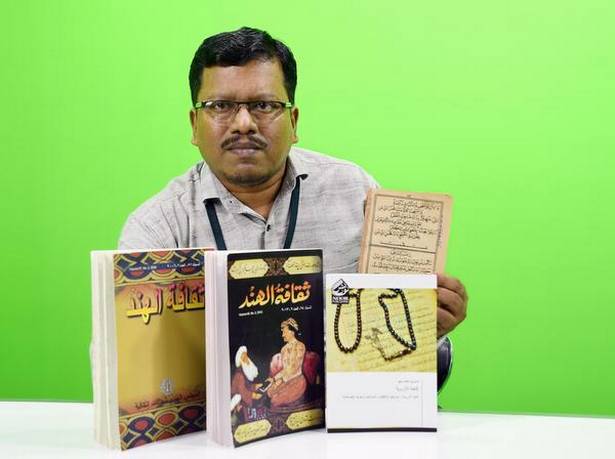
“The vocabulary and certain grammatical features of indigenous languages like Hindi, Punjabi, Bengali and Sindhi have been affected by Arabic,” says KMA Ahamed Zubair, assistant professor, Department of Arabic, New College, Chennai, who has written four books on Arabu-Tamil. “Some of the languages along the western and southern coasts of India even adapted the Arabic script, as evident in Sindhi, Arabu-Tamil, Gujarati, Arabu-Malayalam, Arabu-Telugu and Arabu-Bengali.
“According to catalogues maintained in the Madras Archives Library, there are 3000 Arabu-Tamil books dating from 1890-1915, on a variety of subjects,” says Zubair. While the Arabu-Tamil texts still in use seem to be primarily religious in nature, the language had covered general topics like sports, astronomy, horticulture, medicine, and children’s literature, among others, when it was in common usage. On most social occasions, such as weddings, invitations would be issued in Arabu-Tamil.
“The Bible was translated in Arwi. There are four Arwi dictionaries published in the 1930s. Magazines in the language were printed in Ceylon and Rangoon since the 1870s,” says Zubair.
Dr KMA Ahmed Zubair of New College, Chennai, with books on Arabu-Tamil. Photo: R. Ravindran/The Hindu
Literacy drive
Arabu-Tamil spurred a major literacy drive in the Tamil Muslim community in pre-independence India, with women especially using the language to play vital roles in education, medicine and even politics.
“In those days, Tamil Muslims were invariably taught Arabic, not Tamil,” says J Raja Mohamed, former curator of Pudukottai Government Museum, who has chronicled the use of the language in his book Maritime History of the Coromandel Muslims (A Socio-Historical Study on the Tamil Muslims 1750-1900). “In conservative families, women were educated in Arabu-Tamil rather than Western languages. Many people still have archive files of personal correspondence and bookkeeping ledgers in Arabu-Tamil. Most of the Islamic folkloric traditions such as prayer songs and hymns in praise of the Prophet were recorded in this language.”
Tamil Muslim merchants were the descendants of Arab maritime traders who had settled down in the coastal areas of southern India. The power of this mercantile community declined in the early 20th century due to stiff competition from the British and the reluctance of the Tamil Muslims to adopt new shipping technology and modern education.
After independence, Arabu-Tamil started losing out to the predominance of English in nearly every sphere of life, and has become an heirloom language that only a few can remember. Seminaries in Kayalpattinam and Kilakkarai are among the places where rare Arwi manuscripts can be found. With qualified calligraphers of Arwi no longer available, most printers have stopped publishing Arabu-Tamil books.
_________________________________________
How it works
The Arwi alphabet consists of 40 letters, out of which 28 are from Arabic, and 12 are devised by adding diacritical marks that allow Arabic letters to express sounds particular to Tamil.
Common loan words from Arabic that are still in use in Tamil:
Abattu (danger, from the Arabic root Aafat)
Baaki (remaining, from Arabic root Baaqi)
Jilla (district/zone, from Arabic root Zill’a, one side of a triangle)
Wasool (levying/collection, from the Arabic root Wusool, arrival
_______________________________________
Need for revival
It is ironic that while Arabic is taught at graduate level in several colleges across the State, Arabu-Tamil doesn’t get much attention, except in a few madrassas (religious schools).
“Arwi works should be introduced as Open Educational Resources (OER) content to reach Tamil Muslims and the diaspora living in Malaysia, Singapore, Myanmar and Bangladesh,” says Zubair, who has devised Unicode substitutes for four Arwi characters in a research paper.
There are others who are hoping to revive interest in the language among young people. E Mohamed Ali, a former telecom employee based in Tiruchi, learned Arwi in his childhood through the devotional songs taught by his mother.
He is currently transliterating into Tamil, the Arwi song anthologies Tohfat-ul-Atfal and Minhat-ul-Atfal written by noted Sri Lankan Islamic scholar Syed Mohamed Alimsa for a local magazine, and is also planning to release an audio CD of the same with young singers.
“Arabu-Tamil enriched not just Arabic, but also Tamil, in many ways. Notable poets and writers of the coastal districts have written extensively in this language. Bringing it back would be a rewarding experience for the coming generations,” says Ali.
source: http://www.thehindu.com / The Hindu / Home> Society> History & Culture / by Nahla Nainar / May 24th, 2019
She was one of the most powerful women of medieval India, a Mughal princess like no other. And yet, her extraordinary story remains lost in the pages of history.
In an unassuming part of India’s capital city, amidst winding alleys lined with attar and chadar sellers, lies the 800-year-old dargah of Hazrat Nizamuddin Auliya—one of the most revered saints in Sufism. From dusk to dawn, thousands of devotees throng this bustling complex to pay their respects.
Yet, few know that Delhi’s most famous Sufi shrine is also home to the tomb of one of the most powerful women of medieval India, Jahanara Begum.
A writer, poet, painter and the architect of Delhi’s famous Chandni Chowk, Jahanara was a Mughal princess like no other.
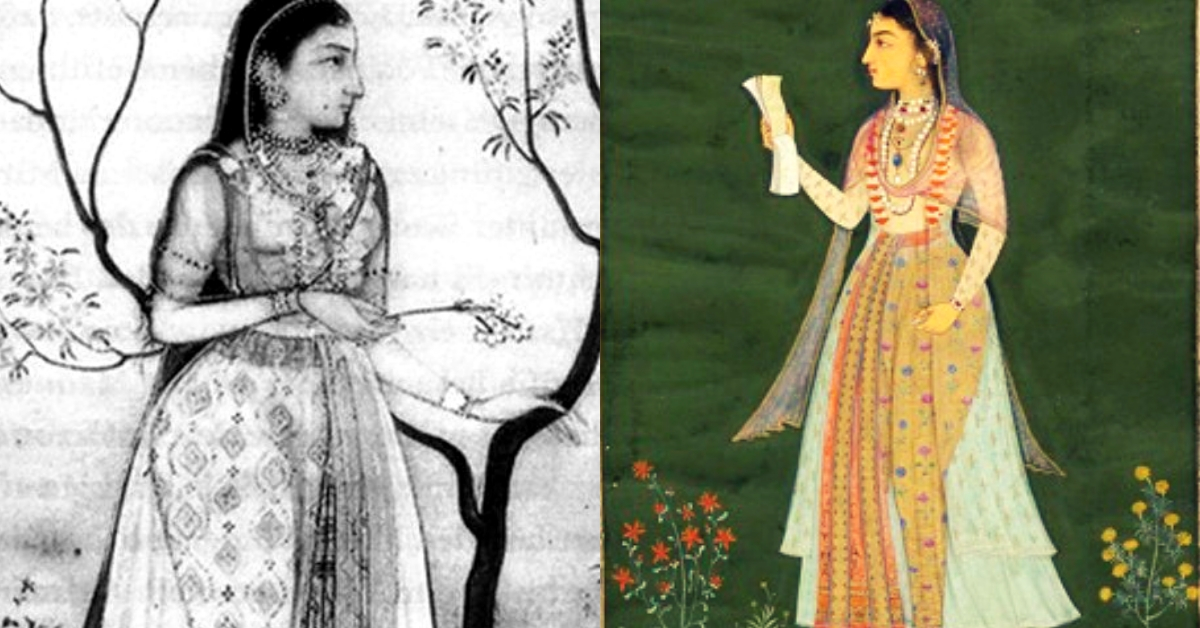
Portraits of Jahanara Begum. Source: Wikimedia Commons
This is her story.
The eldest child of Emperor Shah Jahan and his favourite wife, Mumtaz Mahal, Jahanara was born in Ajmer in 1614. Growing up in one of the richest and most splendid empires in the world, the young princess spent her childhood in opulent palaces, humming with family feuds, battle intrigues, royal bequests and harem politics.
As such, she was well-versed in statecraft by the time she was a teenager.
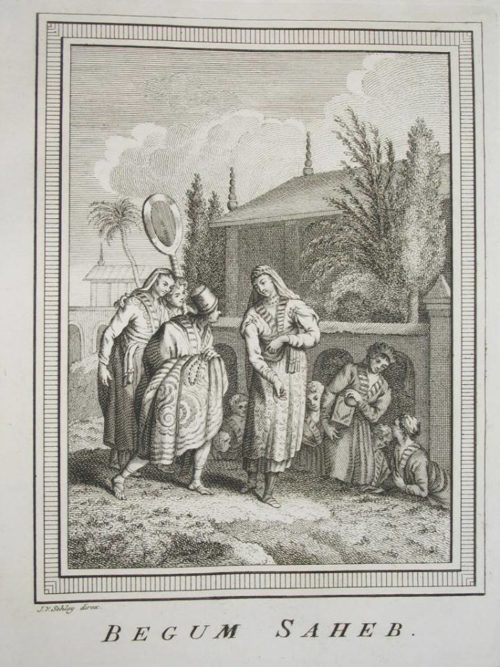
Soon after, Jahanara was appointed Begum Sahib (Princess of Princesses) by her doting parents. She would often spend her evenings playing chess with Shah Jahan, understanding the workings of the royal household, and helping her father plan the reconstruction of other palaces.
As French traveller and physician François Bernier writes in his memoirs, Travels in theMogul Empire ,
“Shah Jahan reposed unbounded confidence in his favourite child; she watched over his safety, and so cautiously observant, that no dish was permitted to appear upon the royal table which had not been prepared under her superintendence.”
Jahanara was also especially close to Dara Shikoh, Shah Jahan’s eldest son and her favourite brother. The two shared a love of poetry, painting, classic literature and Sufism.
In fact, she also wrote many books, including a biography of Ajmer’s Sufi saint Khwaja Moinuddin Chishti, displaying her flair for prose.
The Begum Sahib. Source: Royal India Families/Facebook
But tragedy struck the young princess’s life with the untimely demise of her beloved mother, Mumtaz, in 1631. At the tender age of 17, she was entrusted with the charge of the Imperial Seal and made Malika-e-Hindustan Padshah Begum—the First Lady of the Indian Empire—by the shattered Emperor, whose grief kept him away from his royal duties.
It was only on Jahanara’s behest that the inconsolable Shah Jahan came out of mourning.
In the years to follow, she became her father’s closest confidante and advisor. Highly educated and skilled in diplomatic dealings, her word became so powerful that it could change the fortunes of people. Her favour was much sought-after by foreign emissaries.
In 1654, Shah Jahan attacked Raja Prithvichand of Srinagar. Despairing of success in the battle, the Raja sent a plea for mercy to Jahanara. The Princess asked him to send his son, Medini Singh, as a sign of his loyalty to the Mughal Empire, thereby getting him a pardon from the Emperor.
The following year, when Aurangzeb was the viceroy of the Deccan, he was bent on annexing Golconda, ruled by Abdul Qutb Shah. The Golconda ruler wrote an arzdast(royal request) to the Princess, who intervened on his behalf. Qutb Shah was pardoned by Shah Jahan (against Aurangzeb’s wishes) and secured his safety on payment of tax.
Interestingly, Jahanara was also one of the few Mughal women who owned a ship and traded as an independent entity.
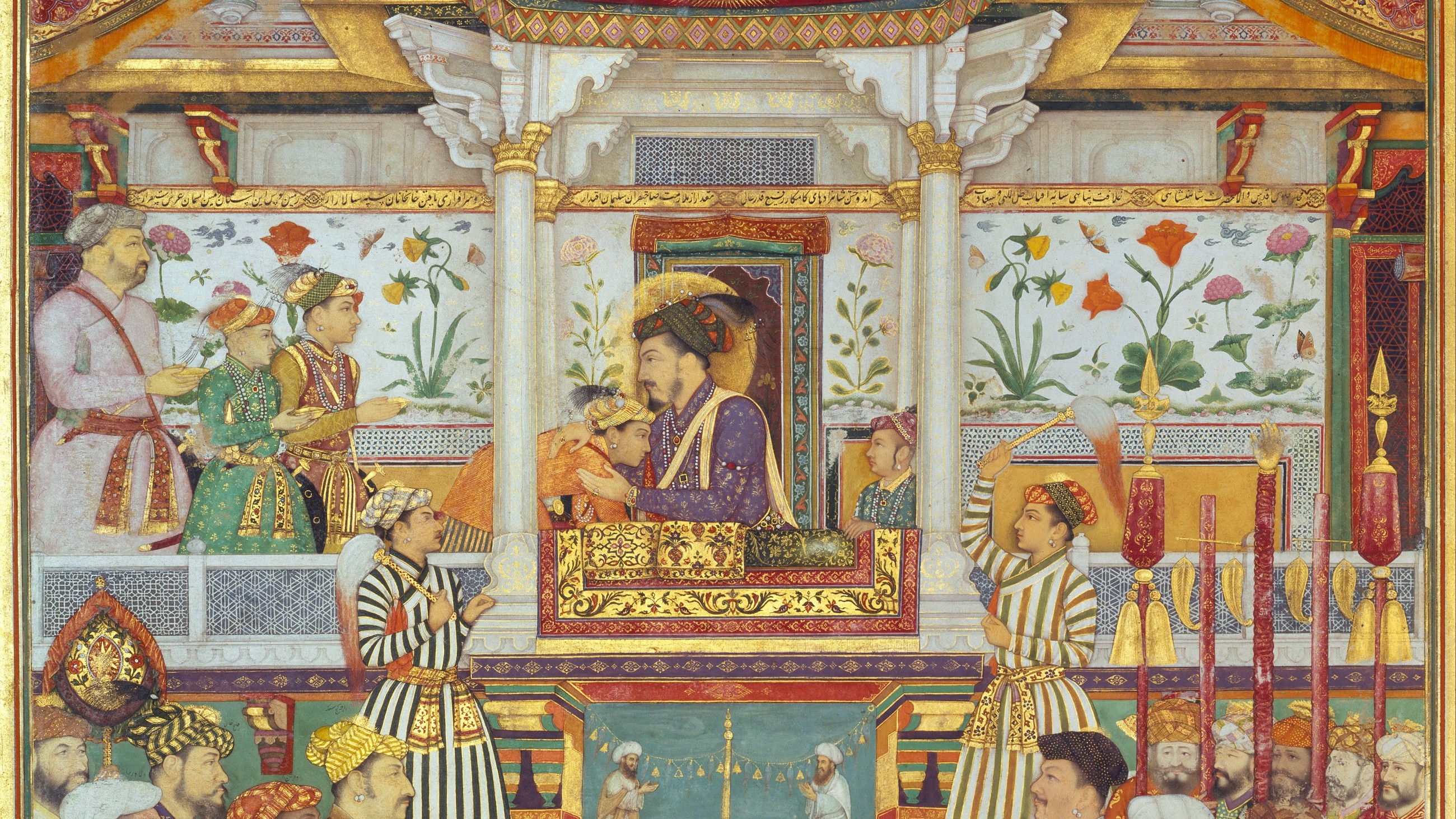
Padshahnama plate 10 : Shah Jahan receives his three eldest sons and Asaf Khan during his accession ceremonies (8 March 1628). Source: Wikimedia Commons
Named ‘Sahibi’ after its owner, Jahanara’s ship would carry the goods made at herkarkhanas (factories) and dock at her very own port in Surat; its revenue and the colossal profits she made via trade significantly boosted her annual income of three million rupees!
In his book Storia Do Mogor, Italian traveller Niccolao Manucci writes, “Jahanara was loved by all, and lived in a state of magnificence.” The book is considered to be one of the most detailed accounts of Shah Jahan’s court.
But Jahanara’s political and economic clout failed to have an impact on the bitter war of succession between her brothers, Dara Shikoh and Aurangzeb. She made several attempts to mediate between them, but as Ira Mukhoty writes in her book Daughters of The Sun , she had “underestimated the corrosive loathing that Aurangzeb has for Dara, whom he blames for his father’s cold criticism throughout his career”.
Aurangzeb ultimately killed Dara Shikoh and placed an ill Shah Jahan under house arrest in Agra Fort’s Muthamman Burj (Jasmine Tower). Faithful to her father, Jahanara set aside her lucrative trade and luxurious lifestyle to accompany him into imprisonment.
A constant presence beside Shah Jahan in his exile, she took care of him for eight years, till he breathed his last in 1666.
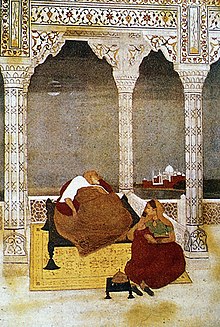
“The Passing of Shah Jahan” (1902), a painting by Abanindranath Tagore. At the foot of the bed is Jahanara Begum, the daughter of Shah Jahan; the Taj Mahal is in the background. Source: Wikimedia Commons
It says much for her stature in the Mughal court that after Shah Jahan’s death, Aurangzeb restored her title of Padshah Begum and gave her a pension along with the new title of Sahibat al-Zamani (Lady of the Age)—befitting for a woman who was ahead of her time.
Unlike other royal Mughal princesses, she was also allowed to live in her own mansion outside the confines of the Agra Fort.
“Jahanara establishes herself in the city as the most influential woman patron[s] of literature and poetry. She collects rare and beautiful book[s], and her library is peerless. She donates money to charity, especially Sufi dargahs, and carries on a genteel diplomacy with minor rajas who come to her with grievances and gifts,” writes Ira Mukhoty in her book.
Spending her last years in the pursuit of her artistic and humanitarian passions, Jahanara passed away in 1681 at the age of 67 but not before she etched her mark in the annals of history in a manner that would have made her father proud.
She commissioned several architectural spectacles, mosques, inns and public gardens across the Mughal empire.
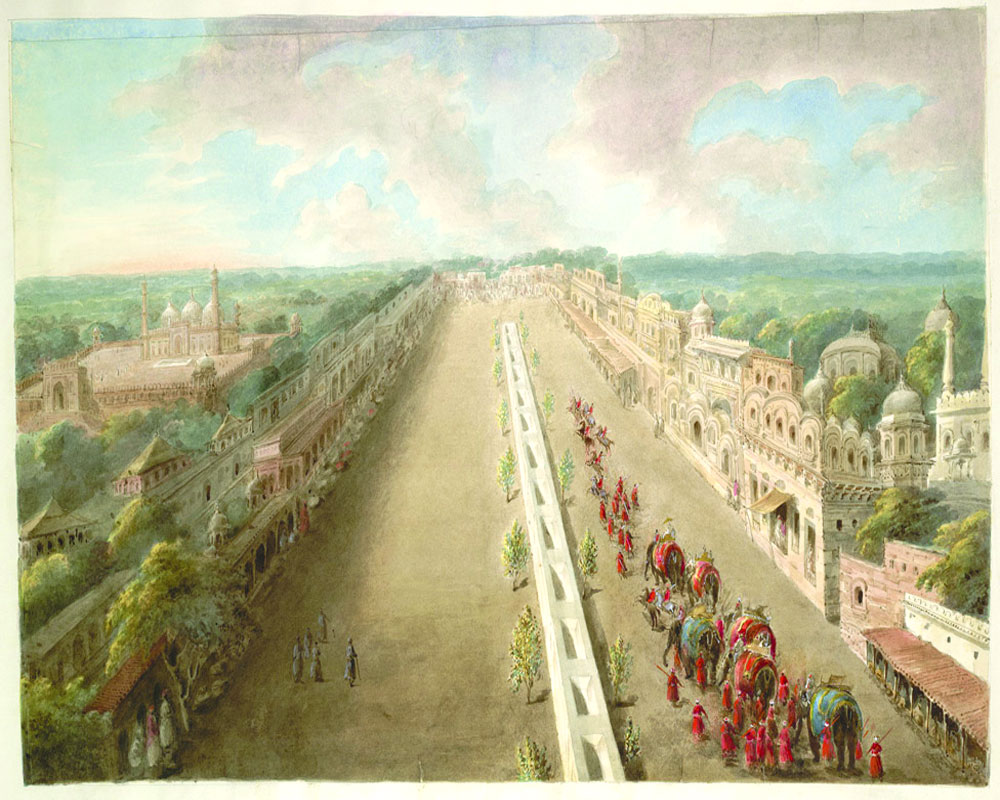
But she is best remembered as the architect of Old Delhi’s legendary bazaar, Chandni Chowk—which translates to ‘Moonlit Intersection’.
Water colour of Chandni Chowk in Delhi from ‘Views by Seeta Ram from Delhi to Tughlikabad Vol. VII’. Source: British Library
In his book Shahjahanabad : The Soverign City in Mughal India , Stephen Blake writes,
“The chowk was an octagon with sides of one hundred yards and a large pool in its center. To the north, Jahanara built a caravansarai (roadside inn) and a garden and, to the south, a bath. On certain nights, the moonlight reflected pale and silvery from the central pool and gave to the area the name Chandni Chawk (Silver or Moonlight Square). This name slowly displaced all others until the entire bazaar, from the Lahori Gate to the Fatehpuri Masjid, became known as Chandni Chawk.”
Today, many of Chandni Chowk’s ancient buildings have been torn down, as its lanes brim with new shops and colliding crowds. And yet, somehow it manages to invoke the spirit with which Jahanara lived—the same spirit that helped her survive and thrive amidst betrayals and tragedies.
Interestingly, Jahanara’s resting place in the Nizamuddin Dargah is of her own choosing, just like her character.
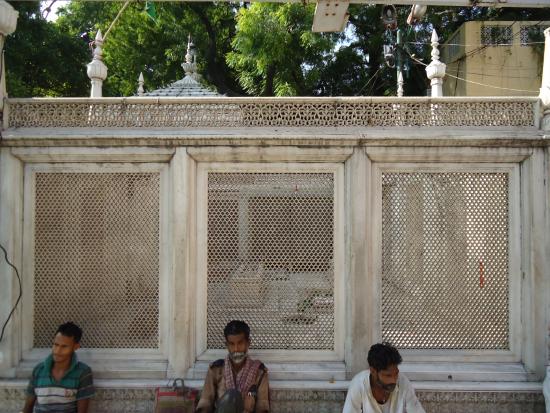
Jahanara’s tomb at the Nizamuddin Dargah. Source
Unlike the giant mausoleums built for her parents, she rests in a simple marble tomb open to the sky, inscribed with her own couplet in Persian:
Baghair subza na poshad kase mazar mara, (Let no one cover my grave except with green grass,) Ki qabr posh ghariban hamin gayah bas-ast. (For this very grass suffices as a tomb cover for the poor.
Perhaps it is poetic justice that green vines grow on the grave of this extraordinary princess of India.
(Edited by Shruti Singhal)
source: http://www.thebetterindia.com / The Better India / Home> History> Women / by Sanchari Pal / May 24th, 2019
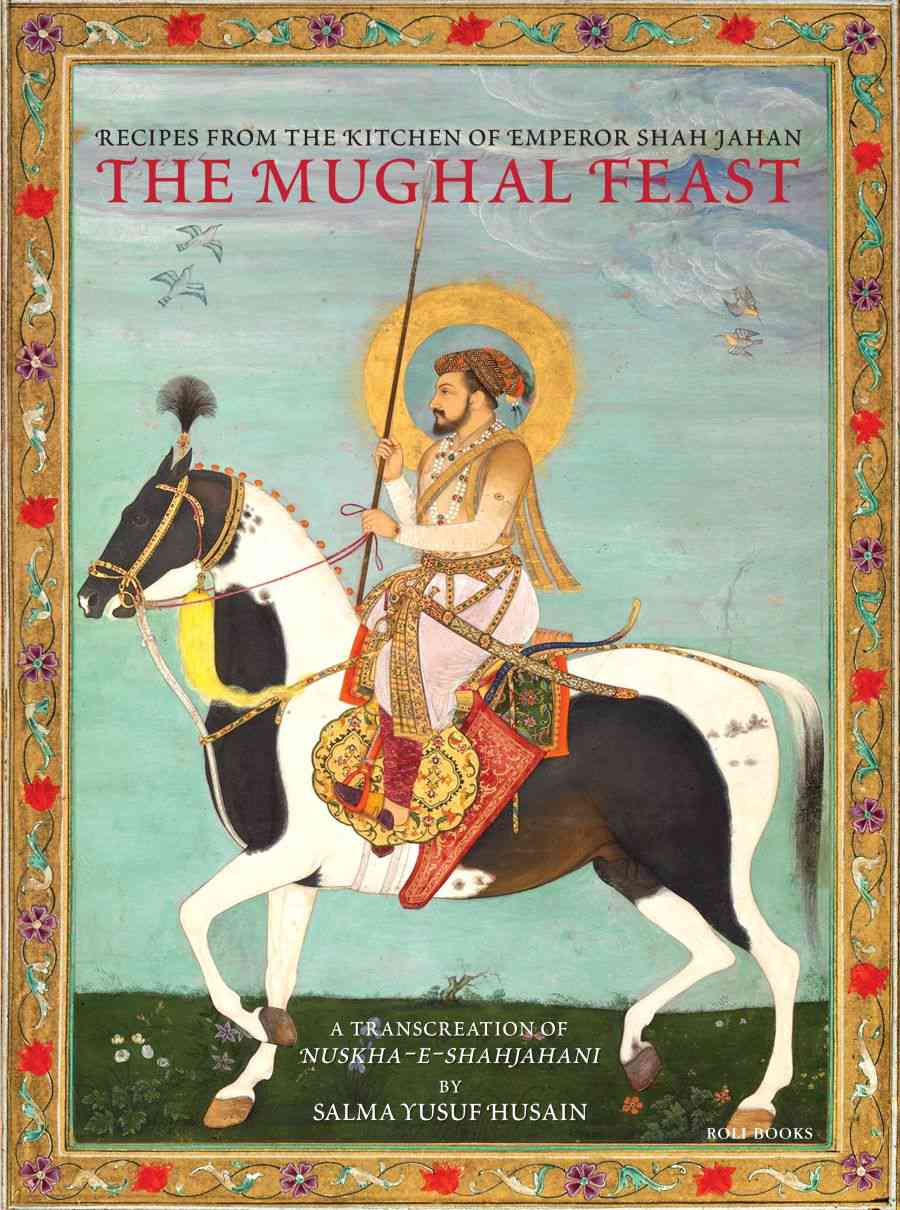
‘The Mughal Feast’ by Salma Yusuf Husain recreates the Persian recipe book ‘Nuskha-e-Shahjahani’, providing a glimpse into a bygone era of pomp and show.
Mughal Emperor Shah Jahan in his court | Google Cultural Institute/Wikimedia Commos Licensed under CC BY Public Domain Mark 1.0].
The silver twilight of Mughal civilization began with Shah Jahan. Delhi was now a sanctuary of an urbane, sophisticated court which had taste, even elegance. By early 1730 the city had absorbed various elements from neighbouring regions and witnessed a mingling of international as well as national strains and an interchange of ideas, customs and food.
The Portuguese relationship with the Mughals had already been established a long time back, along the trade routes. Hence the imperial kitchens, besides Indian ingredients, saw an additional ingredient brought by the Portuguese – the chilli. The chilli was very similar to the long pepper, already in use, and therefore did not look too unfamiliar to royal chefs, but had the hot taste. Other vegetables like potatoes and tomatoes also appeared on the scene and the food of the Red Fort became rich in colour, hot in taste, and varied as compared to the bland food of its ancestors. Qormas and qaliyas, pulaos and kababs, and vegetables in different garb, besides European cakes and puddings, adorned the table.
Cooking and serving food in the royal kitchens was a riot of colours, fragrances, experiments, table manners and protocols. The emperors usually ate with their queens and concubines, except on festive occasions, when they dined with nobles and courtiers. Daily meals were usually served by eunuchs, but an elaborate chain of command accompanied the food to the table. The hakim (royal physician) planned the menu, making sure to include medicinally beneficial ingredients. For instance, each grain of rice for the pulao was coated with silver warq, which aided digestion and acted as an aphrodisiac. One account records a Mughal banquet given by Asaf Khan, the emperor’s wazir, during Jahangir’s time to Shah Jahan – though no outsider had ever seen any emperor while dining except once when Friar Sebastian Manriquea, a Portuguese priest, was smuggled by an eunuch inside the harem to watch Shah Jahan eat his food with Asaf Khan.
Once the menu was decided, an elaborate kitchen staff – numbering at least a few hundred – swung into action. Since a large number of dishes were served at each meal, an assembly line of staff undertook the chopping and cleaning, the washing and grinding. Food was cooked in rainwater mixed with water brought in from the Ganges for the best possible taste. Not only the cooking but the way the food was served is interesting to note – food was served in dishes made of gold and silver studded with precious stones, and of jade, as it detected poison. The food was eaten on the floor; sheets of leather covered with white calico protected the expensive carpets. This was called dastarkhwan. It was customary for the emperor to set aside a portion of food for the poor before eating. The emperor began and ended his meal with prayers; the banquet ran for hours as Shah Jahan liked to enjoy his food, spending long hours at dastarkhwan.
With the passage of time, indigenization in the cooking style became obvious and certain Indian ingredients, like Kashmiri vadi, sandalwood powder, suhaga, betel leaves, white gourd, and batasha, and fruits like mango, phalsa, banana, etc., were used to give different flavours to dishes.
The arrival of every dish was a ceremony and history will never forget the pomp of those times, along with the flavours which remain only in the pages of handwritten manuscripts of those days, such as Nuskha-e-Shahjahani. Not only the imperial kitchens of the emperor, but also the bazaars of the city were charged with the smoke of different kababs, and the environment was filled with the fragrance of nahari, haleem, qormas and qaliyas. The array of breads was dazzling. Festive occasions were never complete without baqarkhani, kulchas and sheermals. Sharbat ke katore and kulfi ke matke added colour to the scenario. The city of Shah Jahan was a paradise of food with the creations of local and foreign chefs.
This luxurious way of serving and preparing food continued only till the time Shah Jahan ruled, as his son Aurangzeb did not believe in luxury, pomp and show. Unfortunately, the last years of this great emperor were unhappy. Deposed by his son Aurangzeb, Shah Jahan was imprisoned in Agra Fort and remained there for eight years until his death in 1666. Legend has it that Aurangzeb ordered that his father be allowed only one ingredient of his choice, and Shah Jahan chose chickpeas. He chose them because they can be cooked in many different ways. Even today, one of the signature dishes of North Indian cuisine is Shahjahani dal, chickpeas cooked in a rich gravy of cream.
QALIYA KHASA DO-PIYAZAH
LAMB COOKED WITH ONIONS, GREEN GRAM AND VEGETABLE | Serves: 4-6
INGREDIENTS
Lamb, cut into medium-sized pieces 1 kg
Green gram (moong dal), washed, soaked for ½ hour ¼ cup / 60 gm
Ghee 1 cup / 250 gm
Onions, sliced 1 cup / 250 gm
Salt to taste
Coriander (dhaniya) seeds, pounded 4 tsp / 20 gm
Ginger (adrak), grated 4 tsp / 20 gm
Beetroots (chuqander), peeled, cut into medium-sized pieces 3 cups / 750 gm
Turnips (shalgam), peeled, cut into medium-sized pieces 3 cups / 750 gm
Carrots (gajar), scraped, cut into cubes 3 cups / 750 gm
Rice paste 4 tsp / 20 gm
Saffron (kesar) 2 gm Freshly ground to a fine powder: Cinnamon (dalchini) ½ tsp / 3 gm
Cloves (laung) ½ tsp / 3 gm
Green cardamoms (choti elaichi) ½ tsp / 3 gm
Black peppercorns (kali mirch), ground 1 tsp / 5 gm
METHOD
1. Heat 100 gm ghee in a pan; sauté the onions and lamb with 2 tbsp water. Add the salt, pounded coriander seeds and grated ginger; cook, on medium heat, until the lamb is tender.
2. Add the beetroots, turnips, carrots and green gram with enough water to cover; cook the vegetables on low heat.
3. When the vegetables and lamb are fully cooked and at least 1 cup water remains in the pan, remove the pan from the heat and separate the lamb pieces and vegetables from the stock.
4. Temper the stock with the remaining ghee. Return the vegetables and lamb to the stock and bring to a boil. Add the rice paste and mix well.
5. Add the freshly ground spices and mix.
6. Transfer into a serving dish and serve garnished with saffron.
NARANJ PULAO
ORANGE-FLAVOURED LAMB CURRY COOKED WITH RICE | Serves: 6-8
INGREDIENTS
Oranges 4 big / 6 small
Rice 4 cups / 1 kg
Yoghurt (dahi), whisked 1 cup / 250 gm
Lemons (nimbu) 2
Sugar 2 cups / 500 gm
Saffron (kesar) ¼ tsp
Ghee 1 cup / 250 gm
Salt to taste
Dry fruits as needed
Green coriander (hara dhaniya), chopped as needed For the yakhni: Lamb, cut into pieces 1 kg
Ghee 1 cup / 1250 gm
Onions, sliced 1 cup / 250 gm
Ginger (adrak) 4 tsp / 20 gm
Salt to taste
Cinnamon (dalchini), 2 sticks 1˝
Green cardamoms (choti elaichi) ½ tsp / 3 gm
Coriander (dhaniya) seeds, crushed 4 tsp / 20 gm
Cloves (laung) ½ tsp / 3 gm
METHOD
1. Peel the oranges carefully so that the case remains intact. Remove the segments and keep aside. Sprinkle salt inside the case and float them in whisked yoghurt for an hour. Remove the cases from the yoghurt and wash with cold water. Boil the orange cases for a minute. Remove and keep aside.
2. In another pan filled with water, squeeze the juice of one lemon and boil the orange cases again. In case lemon is not available, boil in thin yoghurt liquid, simmer to make them tender.
3. Make yakhni with the lamb pieces and all the ingredients mentioned. Temper the stock with cloves.
4. Parboil the rice and keep aside.
5. Prepare a sugar syrup of one-string consistency; keep aside.
6. Remove the seeds and the skin of each segment and coarsely chop and mix with the yakhni. Take 1 tbsp cooked rice and mix it with saffron. Cook on low heat and simmer for 5 minutes. Remove and keep aside.
7. In a separate pan, spread the yakhni, evenly pour 3 tbsp syrup and simmer, when the syrup is absorbed, spread the rice and pour some ghee. Cover the pan and put on dum. While serving, transfer the pulao into a serving dish and place the orange cases over it. Fill one case with almond halwa, another with pistachio halwa, another with saffron and orange rice and another with salted minced lamb*. Garnish all with dry fruits and chopped coriander.
*You can buy almond halwa, pistachio halwa and salted minced lamb at a grocery store, or make them separately. You can also choose your fillings as per your liking.
GURAK KABAB
CHICKEN STUFFED WITH MEAT AND SLOW-COOKED ON CINNAMON BED | Serves: 4
INGREDIENTS
Chicken, cleaned, washed, skinned 2 (700-800 gm each)
Onion juice ½ cup / 125 ml
Ginger (adrak) juice ¼ cup / 60 ml
Salt to taste
Vegetable oil 3 tbsp / 45 ml
Lamb, minced 400 gm
Onion, medium-sized, sliced 1
Coriander (dhaniya) seeds, crushed 1 tbsp / 15 gm
Ginger (adrak), chopped 1 tbsp / 15 gm
Saffron (kesar), dissolved in milk 1.5 gm
Yoghurt (dahi), whisked ¼ cup / 60 gm
Cinnamon (dalchini) sticks to cover the bottom of the pan 8-10
Ghee ½ cup / 125 gm
Black gram (urad dal) flour ½ cup / 125 gm Freshly ground to a fine powder: Cloves (laung) 1 tsp / 5 gm
Cardamom (elaichi) 1 tsp / 5 gm
Black peppercorns (sabut kali mirch) 1 tsp / 5 gm
METHOD
1. Prick the chicken all over with a fork.
2. Marinate the chicken with onion juice, ginger juice and salt; rub well inside and outside the chicken and keep aside for 30 minutes.
3. Heat the oil in a pan; add the minced meat, onion, crushed coriander seeds, chopped ginger and salt. Stir and cook until the meat is tender.
4. Smoke the cooked mixture.
5. Fill the chicken with the minced lamb and tie both legs with twine to keep the shape of the chicken intact.
6. Mix the saffron and ground spices with the yoghurt.
7. Apply the yoghurt and saffron mixture all over the chickens evenly.
8. Spread the cinnamon sticks on the bottom of the pan. Place the chicken on the cinnamon bed and pour the ghee around.
9. Make a semi-hard dough of black gram flour. Cover the pan and seal with this dough.
10. Place the pan on low charcoal heat and cook on dum for 4 hours.
11. Remove the cover, take the chicken out, cut into four pieces and serve over the mince.
BAQLAWA
LAYERED SQUARES GARNISHED WITH PISTACHIOS | Yield: 10
INGREDIENTS
Egyptian lentil 1 cup / 250 gm
Ghee 1 cup / 250 gm
Ginger (adrak) 4 tsp / 20 gm
Salt 8 tsp / 40 gm
Wholewheat flour (atta) 4 cups / 1 kg
Kid fat 4 tsp / 20 gm
Sugar 2 cups / 500 gm
Pistachios (pista), pounded 8 tsp / 40 gm Freshly ground to a fine powder:
Cinnamon (dalchini) ½ tsp / 3 gm
Cloves (laung) ½ tsp / 3 gm
Green cardamoms (choti elaichi) ½ tsp / 3 gm
METHOD
1. Boil the lentil until soft. Remove from heat and drain. Fry the lentil in little ghee with ginger and salt. Then add enough water to cook the lentil, ensuring that it is not mashed and each grain looks separate. Sprinkle the ground spices and smoke the mixture.
2. Knead the flour into a hard dough (in summer one part ghee and two parts kid fat is used while in winter the proportions should be equal).
3. Divide the dough equally into small portions. Roll each portion out into a thin poori, apply ghee and dust with dry flour, sprinkle the lentil mixture lightly and cover with another poori. Repeat the process with 5-7 pooris.
4. Shape them into squares and secure the edges with water.
5. Heat the ghee in a pan; deep-fry the squares. Remove and keep aside to cool.
6. Make a sugar syrup and soak the fried squares in it. When the syrup is absorbed, sprinkle pounded pistachios.
Excerpted with permission from The Mughal Feast: Recipes from the Kitchen of Emperor Shah Jahan, a transcreation of Nuskha-e-Shahjahani by Salma Yusuf Husain, Roli Books.
source: http://www.scroll.in / Scroll.in / Home> Magazine> Book Excerpt / by Salma Yusuf Husain / May 18th, 2019
![Mughal Emperor Shah Jahan in his court | Google Cultural Institute/Wikimedia Commos Licensed under CC BY Public Domain Mark 1.0].](http://www.mpositive.in/wp-content/uploads/2019/05/MughalCookBook01MPOs18may2019.jpg)