Category Archives: Books (incl.Biographies – w.e.f.01 jan 2018 )

I’m Both Muslim & Indian – My Father Didn’t Take the Train to Pak

NEW DELHI :

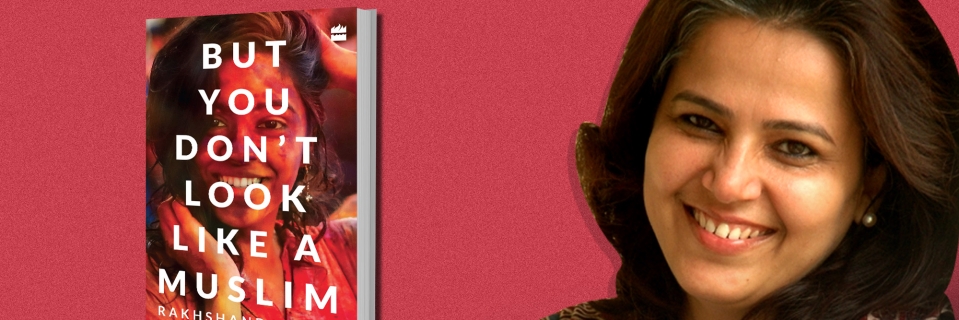
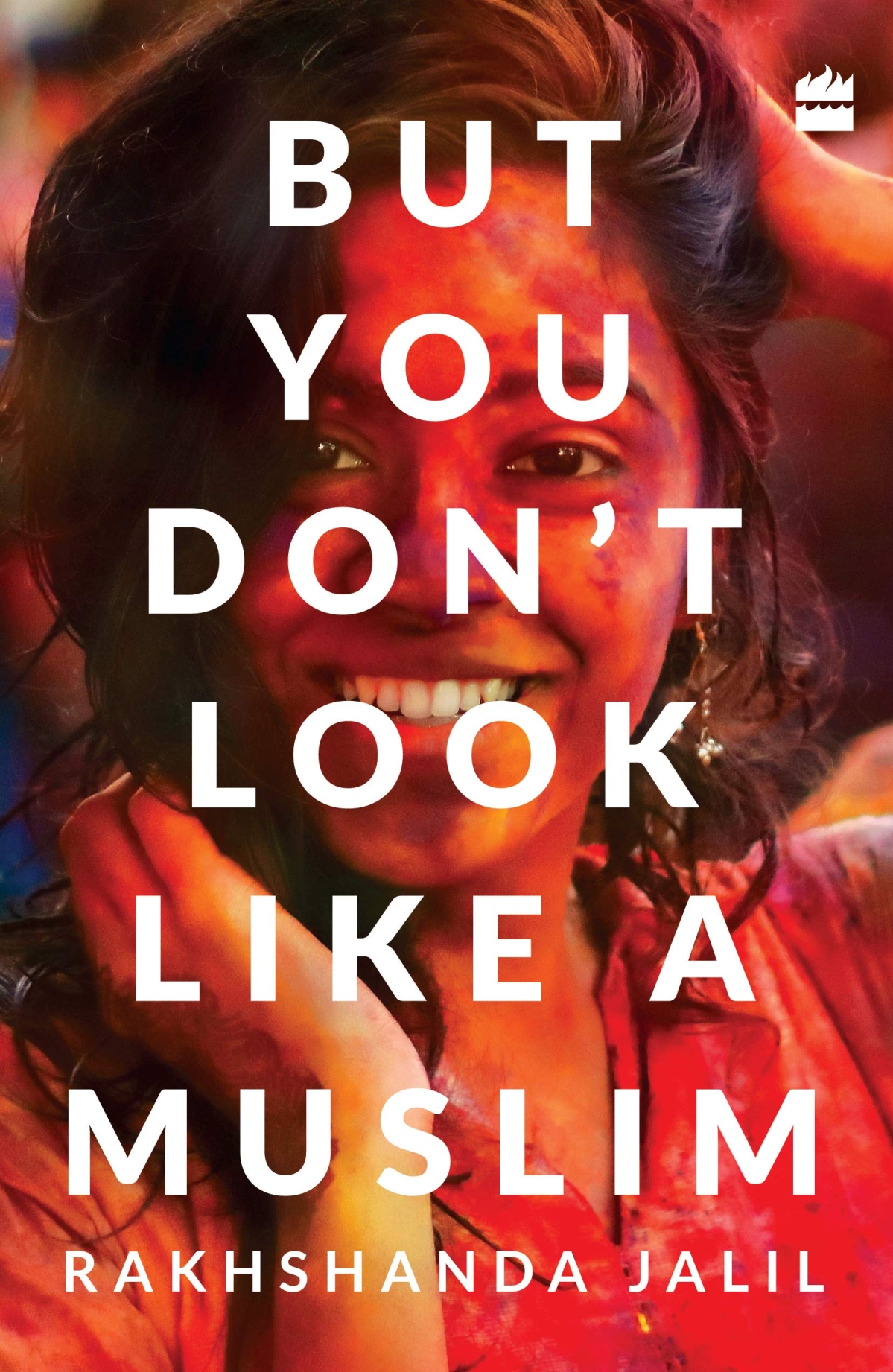
Image of the book cover and the author.(Photo: Altered by Kamran Akhter / The Quint)

(The following has been excerpted with permission, from author Rakhshanda Jalil’s latest book ‘But You Don’t Look Like a Muslim’, published by Harper Collins India. Sub-headers are NOT part of the book, and have been added by The Quint.)

I was eight years old in 1971. I remember the brown paper pasted on our windowpanes, the trenches dug in the park facing our house in a South Delhi neighborhood, and the near-palpable fear of air strikes that held us in thrall.

I also remember being called a ‘Paki’ by other kids in school, as India and Pakistan prepared to go to war against each other yet again, or at least the only time in living memory for my generation.

Being the only Muslim child in class, many of my peers, a Kashmiri Pandit boy in particular, took great delight in grilling me on my Pak connections. I tried, in vain, to explain that I had none. But no one would believe my stoic denials; I was a Muslim after all, I must have relatives in Pakistan. My sympathies must necessarily lie with ‘them’. And this tacit sympathy – taken for granted by my young tormentors – made me as much an enemy as ‘them’.

The Option of Going to Pakistan – And the Choice to Stay Back in ‘Hindustan’

I remember coming home in tears one afternoon. I remember my father, a man of great good sense, sitting down with me and giving me a little spiel. That afternoon chat was to give form and shape to my sense of nationhood in more ways than I could then fathom. It was also to place me squarely on a trajectory that has allowed me to chart my destiny in 21st century India precisely as I wish – not out of defiance or head-on collision, but with self-assurance and poise.

My father started by telling me how he had to leave his home in Pilibhit, a small town in the Terai region bordering the foothills of the Himalayas, and find shelter in a mosque, how many homes in his neighbourhood were gutted, others were vacated almost overnight by families leaving for Pakistan, and his goggle-eyed surprise at the first sight of the Sikh refugees who moved into the houses abandoned by fleeing Muslims.

Image of the book cover. (Photo: Harper Collins India)
Image of the book cover.
(Photo: Harper Collins India)

While the option of going to Pakistan was there for him too – a newly-qualified doctor from a prestigious colonial-era medical college in Lucknow – he chose not go. In choosing to stay back and raise a family here in this land where his forefathers had lived and died, he was putting down more roots – stronger and deeper into the soil that had sustained generations before him. ‘Wear your identity, if you must, as a badge of courage not shame’, he said.

Why Muslims Like My Family Chose Nehru Over Jinnah

He also gave the example of my mother’s father, Ale Ahmad Suroor, a well-known name in the world of Urdu letters, and his decision too, to stay put, despite the many inducements that were offered to qualified Muslim men from sharif families. The ‘Land of the Pure’ held out many promises: a lecturer could become a professor, a professor a Vice-Chancellor, sons would get good jobs, daughters find better grooms and there would be peace and prosperity among one’s own sort.

And yet, my mother’s family like my father’s, chose not to go. To be honest, I was later told, my grandmother – a formidably headstrong lady – wanted to go, especially since many in her family had moved to Karachi.

But my grandfather, then a Lecturer at Lucknow University, was adamant: his future and his children’s lay here in ‘Hindustan’. And so they stayed. In the face of plain good sense, some might say. Why? What made them stay when so many were going?

Over the years, I have had many occasions to dwell upon this – both on the possible reasons, and the implications of their decision. I have grappled with my twin identities (am I an Indian Muslim or a Muslim Indian?), or tried not to sound defensive about my so-called liberalism, or struggled to accept the patronising compliment of being a ‘secular Muslim’ without cringing. And I have wondered, why families like mine, in the end, chose Jawaharlal Nehru over Mohammad Ali Jinnah.

How Did Muslims Become the ‘Other’?

Like many Muslims in India, I have often wondered if the cleavage of hearts and land was truly inevitable, or could it have been averted? What would have been the state of the Indian sub-continent today had a pact been reached between the Muslim League and the Congress? What happened to the heady days of 1919, when Hindus and Muslims had come together to fight the common enemy, the British? What went so wrong between the two major communities of the subcontinent? What caused the disenchantment with the Congress? What made some staunch Congressmen rally around the once-derided Muslim League? What cooled the Muslim’s ardour to join nationalistic mainstream politics?

For that matter, why was the Muslim suddenly regarded as a toady and a coward, content to let the Hindus fight for freedom from the imperial yoke? Why was he suddenly beyond the pale? How did he become the ‘other’?

And what of the dream of the ‘Muslim Renaissance’, spelt out in such soul-stirring verse by the visionary poet Iqbal? In turn, why did the Congress balk at the issue of separate electorates, calling it absurd and retrograde? Why did it do nothing to allay the Muslim fear that the freedom promised by the Congress meant freedom for Hindus alone, not freedom for all?

Seen from the Muslim point of view, the Congress appeared guilty of many sins of omission and some of commission. ‘Nationalism’ increasingly began to mean thinking and living in the ‘Congress way’ and none other. Those who lived or thought another way, came to be regarded as ‘anti-national’, especially in the years after Independence.

How the Muslim League ‘Divided’ Muslims

However, to come back to the Muslim League and the extreme reactions it has always evoked among Indian Muslims, it is interesting to explore why the ‘League logic’ enamoured some so completely, and left others cold. When the Leaguers (or ‘Leaguii’ as they were referred to among Urdu speakers) first spoke of protecting the rights of the Muslims by securing fair representation in the legislature, they were giving voice to a long-felt need to recognize the Muslims as a distinct religious and political unit.

On the face of it, these seemed perfectly legitimate aspirations; the problem, I suspect, lay in the manner in which the Muslim League went about its business. It employed a combination of rhetoric and religion to bludgeon its way.

It used fear as a campaign tool, making Muslims view all Hindus as a ‘threat’ to their survival, once Independence was achieved and the ‘protective’ presence of the British removed.

The sentiment behind Choudhry Rahmat Ali’s pamphlet Now or Never: Are We to Live or Perish Forever? was echoed by countless volunteers – clad in the by-now trademark black shervani-white ‘Aligarh-cut’ pajama – who saw themselves as soldiers in the “grim and fateful struggle against political crucifixion and complete annihilation”. They descended in droves on towns and hamlets all across Uttar Pradesh and Bihar, where their speeches – delivered in chaste Urdu and peppered with suitably rousing verses penned by Iqbal and Mohamed Ali and Hafiz Jallundari – found rapt audiences and deep pockets. While a great many began to share their enthusiasm for the Muslim League, and simple country women began to stitch League flags out of every available bit of green fabric, an equal number still held out.

The Pain of Partition

Quite a few were frankly unconvinced by the very notion of Muslims being a homogenised monolithic community that could be brought under the green banner unfurled by that most unlikely of all Muslim leaders – the Karachi-born, English-speaking, ultra-anglicised Jinnah.

Many Muslims began to see the bogey of Hindu domination as exaggerated, others were uneasy with the theocratic underpinnings of the proposed new homeland.

The Muslim League’s final unequivocal demand – a separate homeland – did not appeal to some Muslims for the same reasons of faulty logic. Jinnah’s assurance of providing constitutional safeguards to minorities, appeared humbug in the face of his proclamation of a Pakistan that would be a hundred percent Muslim. As Partition drew near, scores of Muslims who had hitched their star to the wagon of the Muslim League, began to leave for the new homeland. Families began to be divided, often with one sibling opting for Pakistan and – as it were – choosing Jinnah over Nehru – and the other digging their heels in and putting their faith in a new secular nation.

In the end, while it is clear why those who went did so, it is not always entirely evident why those who didn’t go chose to stay back. Was it gross sentiment or astute foresight that kept them back? Was the choice between Nehru over Jinnah made from the head or the heart?

My Grandfather’s Wise Words in ‘Khwaab Baqui Hain’

The generation that could have fully and satisfactorily answered these questions is either dead and gone or too frail to be disturbed by ghosts from a troubled past. Hoping to find some clues, I find myself turning the pages of my grandfather’s autobiography, Khwaab Baqui Hain (‘Dreams Still Remain’). His words bring me solace and hold out hope for my own future and that of my children:

I am a Musalman and, in the words of Maulana Azad, a caretaker of the thirteen hundred years of the wealth that is Islam”. My deciphering of Islam is the key to the interpretation of my spirit. I am also an Indian and this Indianness is as much a part of my being. Islam does not deter me from believing in my Indian identity. Again, to quote Maulana Azad, if anything “it shows the way”.

While it is true that I imbibed religion from my family and the environment in which I grew up, my own experiences and understanding made its foundations stronger. In Badayun, religion was the name for blind faith in traditionalism and age-old orthodoxies, miracles and marvels, faith healing by pirs and fakirs. I believe Belief in One God leads the way to equality among all mankind. Allah is not simply Rabbu’l-Muslimeen [‘the Lord of Muslims’]; He is also Rabbu’l Aalameen [‘the Lord of the World’]. The all-encompassing compactness of the personality of the Prophet of Islam has always drawn me.

Islam doesn’t teach renunciation from the affairs of the world; it teaches us how to fulfill our duties in this world while at the same time instructing us to regard this mortal world as the field in which we sow the seeds for the Other World. There is no obduracy in Islam. I have seldom found obdurate people to be good human beings. The Islam that I know gives more importance to Huqooq-ul ibad [‘rights of the people’] rather than Huqooq-ul Lah [‘rights of God’].

Despite Ayodhya & Gujarat, I’m Glad Families Like Mine Didn’t Choose Pakistan Over India

I am hopeful that Islam will ‘show the way’ as, indeed it did for my grandfather – a much-feted Urdu writer, critic, poet and teacher – and will in no way deter me from believing in my Indian identity as much as in my religious one.

As I clock in a half century and more, I find I have done my share of soul-searching and raking over the ashes. I am done, too, with defensive or aggressive posturing, or the equally ridiculous sitting-on-the-fence. Life has come full circle.

My daughters went to the same school and university as I did. The clamorous unruly Jana Sangh of my childhood has been replaced by the Bharatiya Janta Party, a stronger, more vociferous – yet no less militant – face of the Hindu right-wing. My daughters meet their share of Muslim-baiters. I have told them what my father said to me. As I watch them grow into confident young people, I know that they shall cope, as I did. That they shall enjoy the dual yet in no way conflicting identities – of being Muslim and being Indian in no particular order.

Despite Ayodhya and Gujarat, despite the politicians who come and go spouting venom and spreading biases, despite the many bad jokes about katuas, despite the discrimination that is sometimes overt and often covert, I do feel, it is a good thing that families like mine chose not to hitch their star to the wagon of the Muslim League.

(Rakhshanda Jalil is a writer, translator and literary historian. She runs Hindustani Awaaz, an organisation devoted to the popularisation of Urdu literature. She tweets at@RakhshandaJalil. This is an opinion piece and the views expressed above are the author’s own. The Quint neither endorses nor is responsible for the same.)

source: http://www.thequint.com / The Quint / Home> Books / by Rakshanda Jalil / May 15th, 2019

‘Moideen’s personality transcended politics’

Mangaluru , KARNATAKA :

There are very few people who are remembered as good politicians and B A Moideen is one of them, former Mangalore University History Prof Surendra Rao said.

Releasing ‘The I within Me’, the English version of Moideen’s autobiography in Mangaluru on Wednesday, he said that the humanitarian values that Moideen believed in and followed transcended the boundaries of politics.

Terming the autobiography rare, Prof Rao pointed out that the work was not a repository of self-praise (as most autobiographies are).

“Instead, it traces the socio-political developments of his time, in an accurate way,” he remarked.

“It seems that Moideen had a soft corner for his party. This is reflected in his opinions on the Emergency rule in India. But, all other incidents in his life are recorded by him without any prejudice. In all, his life is a lesson that no community can live an island; separated from others. This message is reflected in his work”, Prof Rao said.

Releasing the book, Urban Development Minister U T Khader said that B A Moideen had shown the way for modern-day politicians. “He was known for his idealistic politics. Sacrifices made by him are evident in the book,” he added.

The minister opined that good autobiographies in Kannada should be translated to English and vice versa.

Chief Minister’s parliamentary secretary Ivan D’Souza, journalist Abdussalam Puttige, Beary’s Group of Institutions chairman Syed Muhammed Beary and P A Engineering College Principal Dr Abdul Sharrif were present.

source: http://www.deccanherald.com / Deccan Herald / Home> State> Mangaluru / by DH News Service, Mangaluru / May 03rd, 2019

Indian-origin anti-apartheid activists receive South Africa’s highest National Order awards

SOUTH AFRICA :

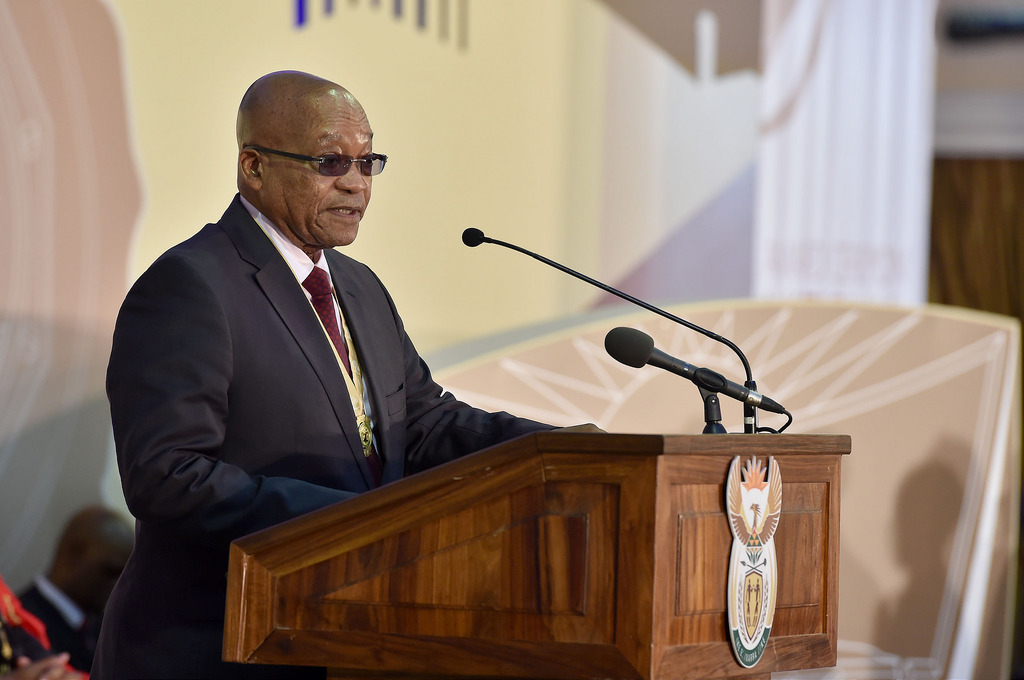
Fatima Meer and Shantie Naidoo, two Indian-origin women veterans of the freedom struggle in South Africa, were conferred South Africa’s highest National Order awards by President Jacob Zuma.

South Africa President Jacob Zuma presenting the awards. Photo courtesy: GovernmentZA

Meer posthumously received the Order of Luthuli in Silver; while Shantie Naidoo joined 21 others, who were part of a group who suffered at the hands of the apartheid-era security police, to receive the same award at the Presidential Guest House in Pretoria.

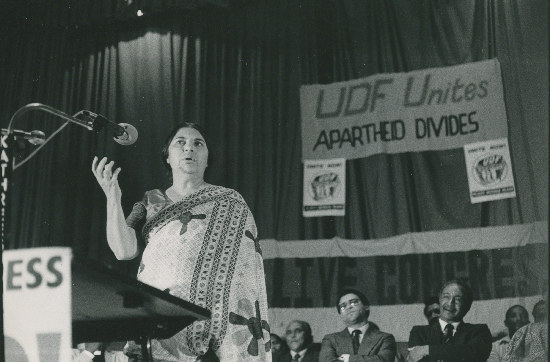
Meer,  who was a longtime friend of the late Nelson Mandela together with her husband Ismail Meer, started her activist career as a high school student aged 17 in 1945.

“The Indian community suffered the enactment of the first Segregation Act which restricted their economic and residential rights to specific areas in the country,” said Meer’s citation from the President. “The Indian community resisted by organising Satyagraha, the first since Gandhi’s Satyagraha at the close of the century.”

Meer mobilised high school students and established the Students Passive Resistance Committee to canvass and raise funds for the Passive Resistance Campaign.

Meer was a prolific writer, historian and sociologist, and penned many books including a biography of Mandela, as well as the script for the film Taj Mahal, made by Indian filmmaker Akbar Khan.

In 1969, she published a book, Portrait of Indian South Africans, donating the total proceeds thereof to the Gandhi Settlement towards the building of the Gandhi Museum and Clinic at the Phoenix Settlement started by Gandhi. After the advent of democracy in 1994 under President Mandela, Meer served as a member of parliament before her death in 2010.

Fatima Meer. saha.co.za

Naidoo is a descendant of Thambi Naidoo, one of Gandhi’s most trusted lieutenants during his tenure in South Africa. She was imprisoned multiple times as a member of the Transvaal Indian Congress and the African National Congress.

“My mother Amma Naidoo, inspired by my grandfather Thambi before her, was at the forefront of the historic Women’s March to the Union Buildings in Pretoria in 1956 to protest the unjust anti-apartheid laws,” Naidoo said.

“Her undying commitment to justice, freedom and equality was in turn an inspiration to me, my brother and sisters,” said Naidoo at the award reception.

source:  http://www.connectedtoindia.com / Connected To India / Home> News Global / by Tushaar Kuthiala / May 02nd, 2017

Oklahoma Commission on Status of Women Gets Kashmiri-American Muslim Commissioner

JAMMU & KASHMIR / NEW DELHI / Oklahoma , U.S.A. :

Dr. Nyla Ali Khan
Dr. Nyla Ali Khan

Oklahoma City :

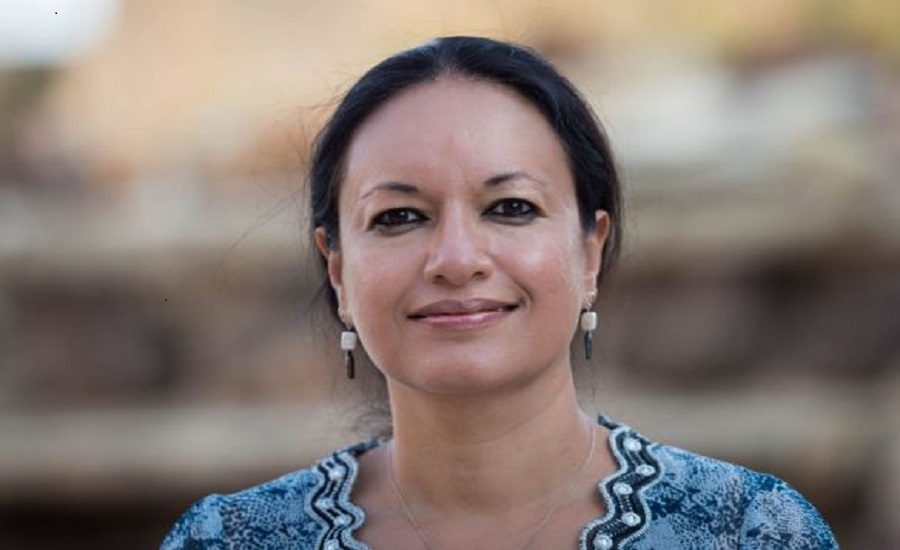
Dr. Nyla Ali Khan has been appointed as a Commissioner on the Oklahoma Commission on the Status of Women. She has been appointed for a five-year term by Senator Greg Treat, who is President Pro Tempora of the Oklahoma Senate.

“The Oklahoma Legislature created the Oklahoma Commission on the Status of Women in 1994 to act as an advisory entity on equity issues relating to gender bias; monitor legislation to determine whether it is discriminatory toward one gender or the other; act as a resource and a clearinghouse for research on issues related to women and gender bias; report annually to the governor, president pro tempore of the Senate, and speaker of the House of Representatives regarding its activities and make recommendations concerning needed legislation or regulatory changes relating to equity and gender bias.”

Dr. Nyla Ali Khan is the first South Asian Muslim member of the Oklahoma Commission on the Status of Women. She said that as a member of the Oklahoma Commission on the Status of Women, she acts as a resource and provides expertise to the Commission. She provides research and information on societal violence and structural inequities that result from deep-rooted prejudices against women. Dr. Nyla Khan said, “The questions to which I seek to provide well-substantiated answers are as follows: How can we, as women, develop the ability to organize and mobilize for social change, which requires the creation of awareness not just at the individual level but at the collective level as well? How can we develop self-esteem for which some form of financial autonomy is a basis? How can we make strategic life choices that are critical for people to lead the sort of lives they want to lead? We require a quality education for these mammoth tasks.”

c.reddirtreport.com

source: http://www.caravandaily.com / Caravan Daily / Home> Indian Muslim / March 12th, 2019

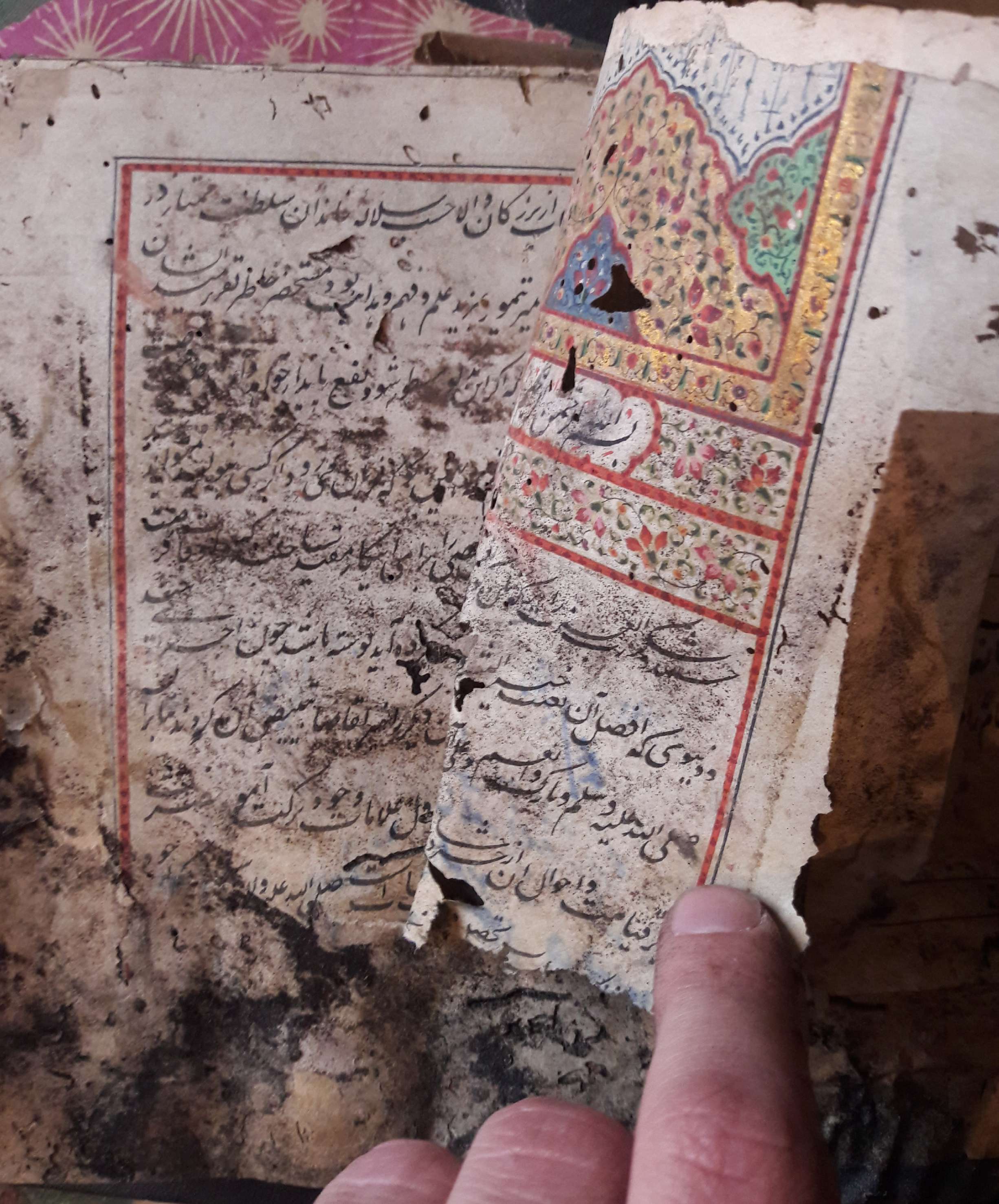
Welcome to the graveyard of rare books, also known as the Saulat Public Library, Rampur

Rampur, UTTAR PRADESH   :

Priceless editions of Urdu, Persian and English lie in neglect as no one cares to maintain a library that should have been a national treasure.

Daniel Jacobius Morgan

I have spent much of the past week digging through piles of books at the Saulat Public Library in the city of Rampur in Uttar Pradesh. I am looking for a single manuscript: Muhammad Sanaʾullah Panipati’s Khawass-i Hizb al-Bahr, an 18th century Persian commentary, written in Delhi, on the occult properties of a famous prayer formulae compiled by Abu al-Hasan al-Shadhili, the Maghribi mystic of the 13th century. It is, very likely, the only copy of the commentary in the world.

I know it is somewhere in the library because it appears in Abid Reza Bedar’s 1966 catalogue, but despite my excavations and those of Mazhar Muin Khan, the endlessly patient librarian, the manuscript remains hidden.

I am sure that Muhammad Sanaʾullah Panipati would have understood my search: just as words have occult sympathies with the material world, so too does this hidden manuscript exercise its power, drawing me to the library day after day although it remains unseen, buried beneath thick layers of dust, cobwebs and mouldering pages. As I dig through the stacks, I can’t help but call to mind the hadith qudsi: “I was a hidden treasure that loved to be known.”The disappearance of a single manuscript, though serious in itself, is part of a far larger problem at Saulat Library: one of India’s richest archives of Urdu, Persian and Arabic works, it has fallen into a state of absolute desuetude.

Reader's ticket
Reader’s ticket

Founded in 1934, the library was once an important centre of political and social life for North Indian Muslims. In its heyday, famous visitors included Khalid Sheldrake (the British pickle manufacturer turned king of Chinese “Islamistan”), Sayyid Hashimi Faridabadi (author of a famous Urdu history of Greece), Khwaja Hasan Nizami (the great Chishti Sufi of Delhi), and the Agha Khan.

Besides 25,000 Urdu printed books – including the only known first edition of Ghalib’s 1841 Urdu diwan – the library holds hundreds of irreplaceable manuscripts: eighteenth-century Afghan chronicles, works on occult science, personal diaries of Rampuri notables, volumes of Persian poetry, and richly-illuminated Qurʾāns. It also holds a complete run of Raja Ram Mohan Roy’s Persian newspaper Jam-i Jahan Numa, Muhammad ʿAli Jauhar’s Urdu-language Hamdard and English-language Comrade, as well as Sayyid Ahmad Khan’s Tahzib al-Akhlaq.

Since the partition, when many of its leading lights moved to Pakistan, it has undergone a process of steady decline. A further blow came with the abolition of the privy purse of the Rampuri royal family, the library’s major patrons.

The reading room with pictures of Hakim Ajmal Khan, Sayyid Ahmad Khan, Muhammad Ali and the first Nawab of Rampur

These days, residents of Rampur have barely heard its name. As I searched for it in the city’s narrow lanes, I kept being directed to its well-funded and illustrious sister library, the Raza Library, housed in the old Nawabi palace. Like its manuscripts, Saulat is hidden. To get there you have to walk through the winding streets that lead to the heart of the Chaku (knife) Bazaar to a small courtyard behind the city’s Jama Masjid (the congregational mosque). The library is up an unlit staircase behind a tailor’s shop. You really have to know where it is to get there.

The main reading room only has three walls now: the fourth collapsed in March 2013, and there is no money to replace it. All the books have now been moved into a single room where the electricity is intermittent at best and daylight comes in through a few holes in the ceiling. The library was already in poor condition when the wall fell. Since then the cataloguing system has broken down entirely.
External view with missing wall
The library’s one regular patron, a retired engineer who studied at Aligarh Muslim University, comes each morning to read the newspaper. He described the library as a “graveyard for books” (kitabon ka qabaristan). It is hard to disagree: the books are piled high on shelves, some strewn on the floor, torn and covered in dust so thick it looks like the set of a low-grade horror film.The sad irony is that the collection survived almost certain destruction once before. In the violence that accompanied partition in 1947, the managing committee of the library faced an enraged crowd who were marching through the city torching government buildings. Because the library is located in a former tehsil office, it was targeted for destruction. Forming a human chain, they passed thousands of books, manuscripts and newspapers from hand to hand across the courtyard that separates the library from the Jama Masjid (congregational mosque) some eighty metres away. But where fire and violence failed, ants and neglect are winning the day.I have come to Rampur to gather materials for my PhD dissertation on the history of eighteenth-century North Indian intellectual culture. For my task, the most precious manuscripts are often those that were never printed because they reveal much about fields of knowledge that were neglected with the coming of colonial rule. To see these irreplaceable texts crumbling before my eyes is heartbreaking.

A water-damaged Persian manuscript

Given the working conditions, Mazhar Muin’s daily enthusiasm for our thus far thankless search is remarkable. But without some urgent action to preserve or at least digitise the collection, the loss to India’s intellectual history will be immense. In the words of Ghalib:

“nāla-yi dil ne diye aurāq-i laḳht-i dil ba bād
yādgār-i nāla ek dīwān-i be-shīrāza thā”

“The heart’s lament threw the pages of the heart’s fragments to the wind
The memorial to the lament was a single unbound book.”

Neglected stacks
Neglected stacks

The great women behind the Mughal empire

INDIA :

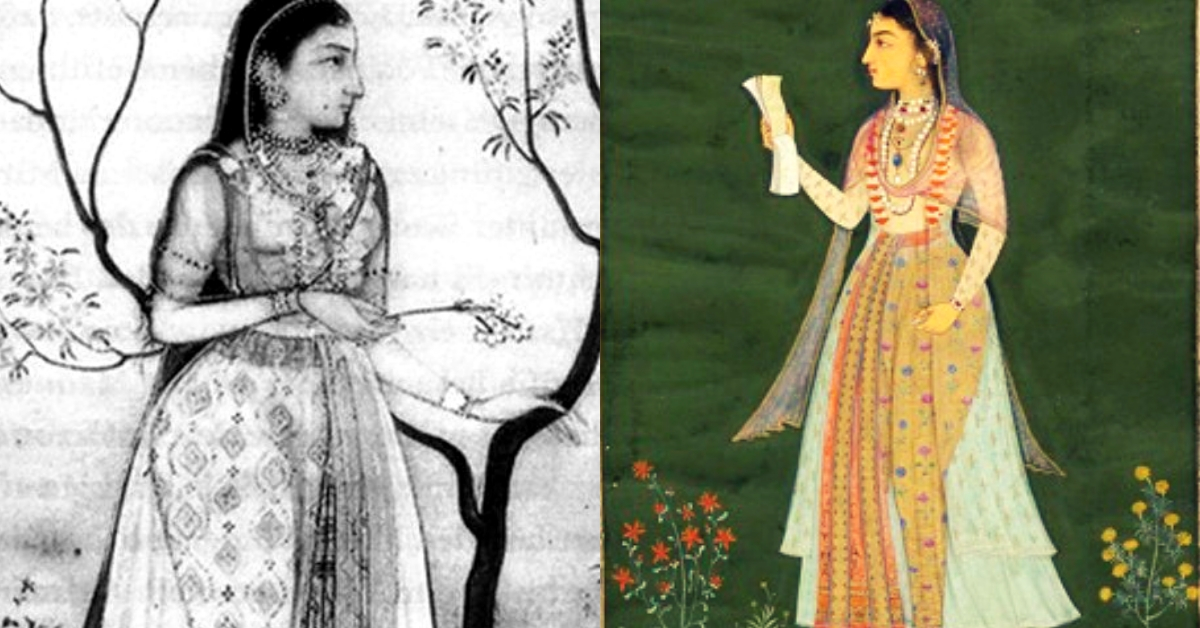
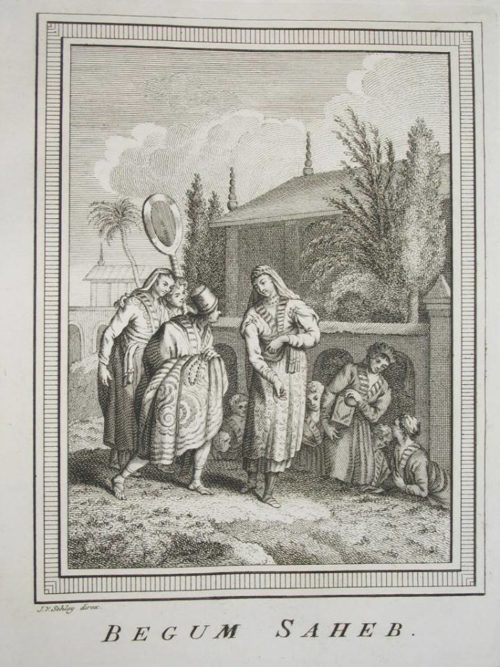
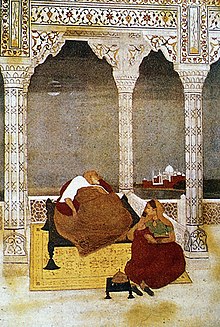
Most people know of this hierarchy but how much do we know of the women behind this great dynasty?

Mughal empire
Mughal empire

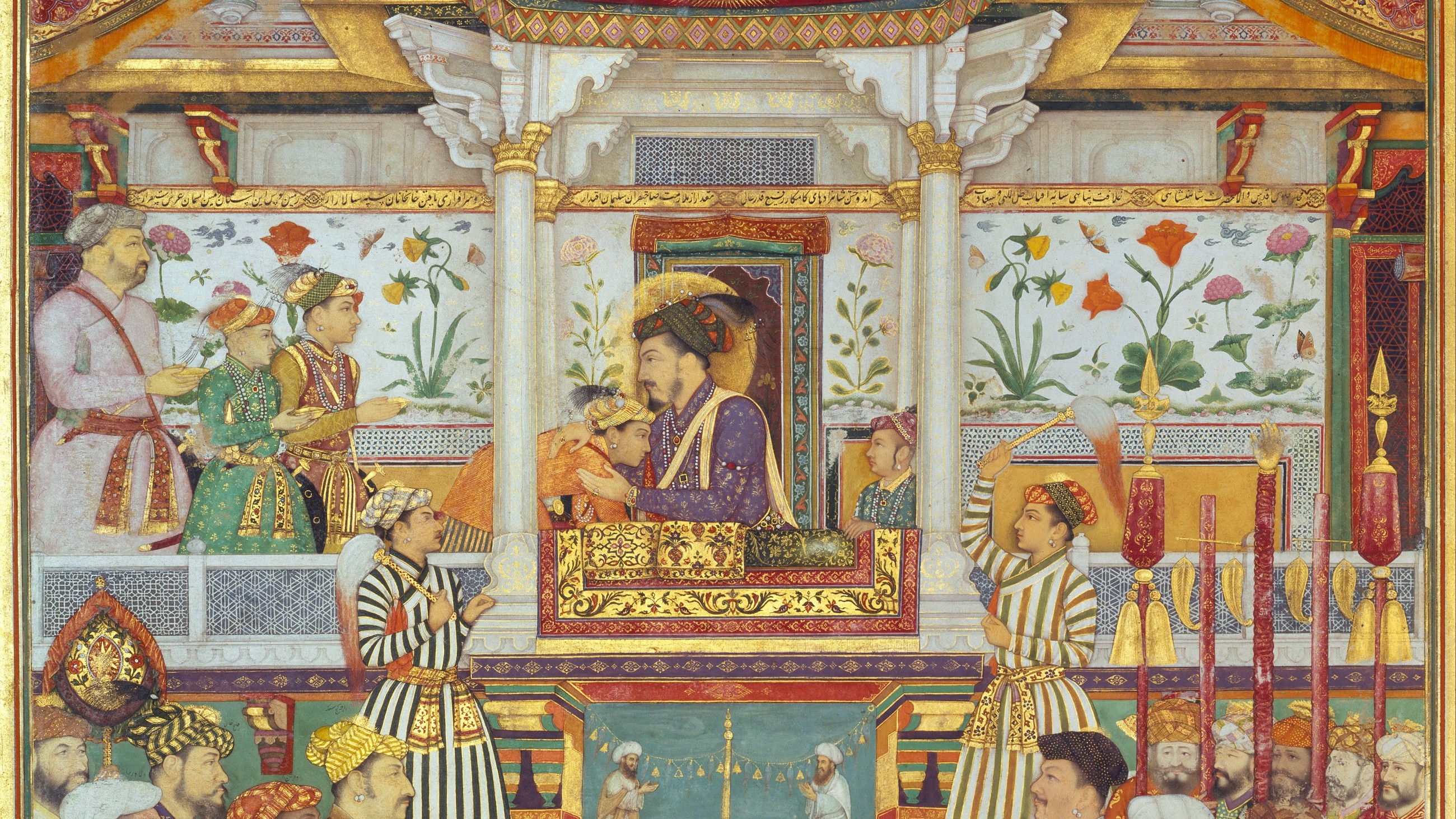
The Mughal Empire (1526-1707) was established by Babur defeating Ibrahim Lodi in the First Battle of Panipat. His reign went on for four years (1526-1530). His successor was his son, Humayun. Then arrived Akbar, followed by his son Jahangir, followed by Shah Jahan, and the, the last great Mughal ruler– Aurangzeb.

Most people know of this hierarchy but how much do we know of the women behind this great dynasty?

Here’s a list to educate you about the same!


source: http://www.indiatoday.in / India Today / Home> News> Education Today> GK & Current Affairs> History / by India Today Web / New Delhi – May 06th, 2016

Foziya Rabab’s first collection of poems launched

Ahmedabad, GUJARAT :

foziyaRababMPOs05apr2019

New Delhi:

Mazameen.com, one of the largest websites of Urdu after Rekhta.org, in collaboration with Department of Urdu, Jamia Millia Islamia (JMI) organized a programme to launch Foziya Rabab’s first collection of poems “Aankhon Ke Us Paar” at the auditorium of the University’s Engineering Department here on Friday, 3 November, 2017.

Speaking on this occasion former Chairman of National Commission for Minority Educational Institutions Justice Suhail Ejaz Siddiqui likened the young poet from Ahmedabad with the famous poet Parveen Shakir (1952-1994) and extended his good wishes for her poetry to flourish in years to come. Renowned Urdu litterateur Gulzar Dehlvi maintained that Rabab was aware of the style of expression. “There is possibility of great creativity in her poetry,” said the nonagenarian poet.

Former Head of the Department of Urdu, JMI, Professor Khalid Mahmood appreciated the title Aankhon Ke Us Paar (Beyond the Horizons) in a philosophical note stating that the metaphor stood for wisdom and farsightedness.

He described the poem Mujhko to kuchh aur dikha hai aankhon ke us paar/Ek tilsam-e-hoshruba hai aankhon ke us paar as one of the finest poems of the collection.

Mahmood, who has also served as Vice Chairman of Delhi Urdu Academy, commended the feminine expression of emotions in her poetry stating that at times the changing mood in her narration took one by great surprise.

Urdu essayist and critic Kausar Mazhari said, “Foziya has tried to unfold women’s poetry which usually remains closed, but in so doing she has opened it a little more than required”. He called her a beautiful poet of romanticism with an amazing blend of simplicity and sincerity.

Head of the Department of Urdu, JMI, Prof Shehpar Rasool said, “The poet [Foziya] in Aankhon Ke Us Paar knows well what to say, when to say and how much to say”.

There is no feminism in Foziya’s poetry, rather it has an oriental household woman’s love for her man in which romanticism prevails because of the power of expression, remarked Dr Baran Farooqi.

About her own poetic journey Rabab said that her achievement was the result of the blessing of Allah and love of friends and well-wishers. “Playing around words is my profession; words which keep changing and which then take the shape of poetry.”

Words are the signs and symbols of life and carriers of truth and honesty, she added. She also read out some of her poems. Dr Adil Hayat presented a paper in which he termed Rabab’s poetry as the “poetry of love and separation”.

The book launch and discussion was followed by a mushaira in which over a dozen poets participated. These among others included Shehpar Rasool, Shakil Jamali, Tarannum Riyaz, Alok Shrivastav, Salim Saleem, Alina Itrat, Abdul Wahab Sukhan, Khalid Mubashshir, Kunwar Ranjit Singh, Poonam Yadav, Rehman Musawwir, Saurabh Shekhar, Tabish Mehdi, Urmila Madhav. Irfan Waheed and Khalid Saifullah Asari of mazameen.com also shared their views.

Moin Shadab beautifully compèred the mushaira whereas Dr Khalid Mubashshir moderated the book launch session.

A good number of literary persons including teachers and students from JMI and other institutions attended both the book release programme and the mushaira.

(A Delhi-based freelance journalist Manzar Imam can be contacted at manzarkhalil@gmail.com)

source: http://www.ummid.com / Ummid.com / Home> Life & Style / by Manzar Imam , ummid.com / November 13th, 2017

The matriarch who grew a moustache

Rampur (British India) , UTTAR PRADESH :

An exhibition reveals the life stories of three generations of women of a powerful Rampur family

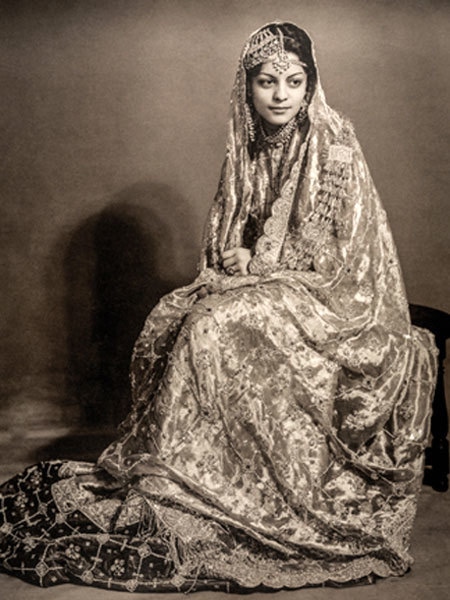
Qamar Zamani’s granddaughter Mumtaz / Source: From the family collection
Qamar Zamani’s granddaughter Mumtaz /
Source: From the family collection

Before India’s Independence, Rampur used to be a princely state in Rohilkhand in western Uttar Pradesh. And the Rohila Pathan sardars were the rulers of Rampur. Qamar Zamani was the wife of Akbar Ali Khan, home minister of the Nawab of Rampur.

Though 19th century Rampur was a feudal and patriarchal setup, Akbar Ali’s household was different. Women not only had a say in most matters, they also had their way. In time, when Akbar Ali was executed by the Nawab, the reins of the family were taken over by his widow.

The exhibition, Gold Dust of Begum Sultans, narrates the life-stories of Qamar and the other matriarchs of Rampur. Curator Ranesh Ray is loath to call it a travelling exhibition, but fact is the exhibits did travel all the way from Delhi to Calcutta, where they were displayed at the Kolkata Centre for Creativity.

Apart from photographs, clothes and family jewellery, the exhibition hall is fitted with large screens showing films and speakers playing audio clips on a loop. “I have tried to give viewers a haptic experience, wherein you can feel as well as see things,” says Ray.

The exhibition is based on the book, Sunehri Rait, which is Urdu for gold dust, and is the story of Akbar Ali’s family as chronicled by his descendant, Zubaida Sultan, in 1989 and translated into English in 2016 by two other descendants, Zakia Zaheer and Syeda Saiyidain Hameed. Says Syeda, “The manuscript of the book was lying in our family for a long time. It was in fragments; we have fleshed it out. We have also altered the names of the characters.”

At the core of the narrative of Sunehri Rait is the relationship between Asad Ali, the Nawab of Rampur, and his uncle and chief confidante, Akbar Ali Khan. Ray says, “It is a complex story — a story of three generations, touching on the fourth. It is about the relationship with each other, the relationship with the Nawab and it also takes into account the traditions and customs.”

Asad Ali was known for his sexual profligacy; he would often marry a woman for one night only. And not just that, writes Zubaida, “Once the bridal night was over, they were buried alive within the four walls of the palace.” But one such wife got away and even gave birth to a son. The Nawab acknowledged his son, but at some point when the boy went against him, he ordered his men to execute him and it was Akbar Ali who was supposed to ensure it.

But Akbar Ali could not get himself to obey the Nawab in this case. He fled the state to escape Asad Ali’s wrath, but was eventually found and summoned, and thereafter he died in Rampur under mysterious circumstances. Says Syeda, “It is said that Akbar Ali Khan was poisoned to death.” The exhibition too is structured around this story.

Qamar as a bride at nine / Source: From the family collection
Qamar as a bride at nine /
Source: From the family collection

One of the exhibits that arrests attention is a photograph of Qamar Zamani as a little girl. It shows a little girl in a chair, swaddled in several yards of cloth, a weighty looking necklace around her neck, bangles on either hand and loopy earrings. Her head is tilted back, her little hands are stiff and downturned on her lap and her feet barely touch the ground. According to the legend below the photograph, she was married when she was nine and by the time she was 12 , she had given birth to a daughter.

It is difficult to imagine this little girl growing up to become the man in charge of Akbar Ali’s household. Says Syeda, “It is said that she wanted to be called ‘dada’ instead of ‘dadi’. She started speaking in a guttural voice and grew a beard even.” There is a sketch of a telescope on display and Ray tells us that Qamar Zamani was known to spend hours looking through it at the world beyond.

Says Zakia, “Qamar was a tyrant. She made the rules of her own household and dominated to the extent that she did not allow her husband to come into her room during the day, something unheard of in those days.” The other rule she introduced was that the women in the family could not bring up their own children.

Zakia does not have an explanation for this other than it was atypical of Qamar’s highhandedness. But could it have been crafty domestic politics, a way of blunting any imminent battle for succession? Who knows? And when it was her turn to marry off daughter Jahanara, she ensured that her son-in-law stayed with them.

Qamar's granddaughter-in-law (left) / Source: From the family collection
Qamar’s granddaughter-in-law (left) /
Source: From the family collection

There are not too many exhibits from Jahanara’s personal collection — it is said she set fire to all her finery after her husband left her as he felt suffocated in his in-laws’ home. But the belongings of her granddaughter, Mumtaz, and granddaughter-in-law Shehzadi have been put on display. There are cloth dolls in all their miniature glory, including a wealth of dolls’ trousseau.

As visitors pause before an exhibit or a scroll, Begum Akhtar’s ancient voice fills the air; curator Ray says she belonged to the Rampur gharana. In one of the adjoining rooms, Satyajit Ray’s Jalsaghar plays on the giant flatscreen. Iffat Fatima, in charge of the audio-visual part of the exhibitions, says, “The clip from Jalsaghar I have chosen is one where a majlis is on. After all, a majlis used to be integral to Shia Muslim households of a certain time.”

Qamar’s true successor, as far as the spirit of matriarchy goes, was Shehzadi. Zakia tells The Telegraph how Qamar first spotted her while peering into her telescope and fell in love with her good looks. But as Shehzadi grew older, she came into her own. She went against Qamar and brought up her youngest child herself. She stopped wearing the burqa.

“It is said her friend, Rehana Sharif, who was one of the first women graduates from Aligarh Muslim University, helped her,” says Ray. Shehzadi also started socialising.

The book ends with Qamar and Shehzadi reconciling against the ruins of a golden legacy. The exhibition, however, is missing a crescendo or even a wrap. But curator Ray would have one believe that the abruptness is symptomatic of the final swift drizzle of the sand through a clenched fist and the consequent all-enveloping emptiness. Indeed, it is an empty feeling.

source: http://www.telegraphindia.com / The Telegraph, online edition / by Moumita Chaudhari in Calcutta / March 03rd, 2019

The book ‘Aankh Aur Urdu Shayeri’: A poetic eye on ‘aankh’

Aligarh, UTTAR PRADESH :

UrduBookMPOs11mar2019

An anthology of Urdu verses and proverbs, all on eyes, was launched recently

Eyes are a mirror of the soul, it is said. Some eyes are sly and roguish, some serene and shining, a few, seductive and mysterious. Prod Dr Abdul Moiz Shams and he reels out details about a variety of eyes and their intrinsic worth. He should know considering he is an ophthalmologist by profession, but then Dr Shams also has a keen eye for Urdu  poetry.

DrAbdulMoizMPOs11mar2019

During his long service as an ophthalmologist, he has looked into innumerable defective eyes holding a little flashlight. While restoring vision, he has also looked beyond, into the soul. And what he has come up with is a book titled Aankh Aur Urdu Shayeri.

Inki aankhen ye keh rahi hain Faraz

Ham pe tasneef ek kitab karo

(Her eyes tell Faraz

Write a book on us)

Dr Shams has compiled a 389-page book containing couplets of different shades and emotions on eyes. It’s a treasure trove for connoisseurs of poetry. From Mirza Ghalib, Allama Iqbal to Meer, Sauda, Shaad, Faiz, Majaz, Jigar Muradabadi, Ali Sardar Jafery, Parveen Shakir — a whole lot of Urdu poets and their verses on aankh have been listed.

The book is divided into three parts — the first one contains couplets beginning with aankh, the second one has verses which are allegorical in nature and the third part has proverbs containing the word aankh, listed topic-wise. The book is a ready reckoner of sorts, on eyes. This is perhaps the only book of its kind where all the pages are full of verses on one body part.

Right from his student days Dr Shams had a love for poetry and when he became an eye specialist, his passion took a different turn. He started focussing on poetry of eyes. It’s no wonder that he has four other books to his credit: Hamari Aankhen, Jism-o-Jan, Jism-Be-Jan and Aab-e-Hayat.

“The eye is the jewel of the body. Its function is not just to see but to look beyond and sense colour, form, light and movement. That’s why I started collecting couplets on eyes,” says Aligarh-based Dr Shams who released his book in Hyderabad.

The insightful couplets are real eye-openers. Sample this couplet of Parveen Shakir.

Aankh ko yaad hai wo pal ab bhi

Neend jab pehle pehal tuti thi

Full-length ghazals of Ali Sardar Jafery, Khaisar Siddiqi, Hasrat Mohani and Basheer Badr, all on eyes, make for delightful reading.

Gulab aankhen, sharaab aankhen

Yehi to hain lajawab aankhen

Aankhen uthen to dard ke chashme ubal pade

Palken juhken to payar ka badal baras gaya

One can get an eyeful of couplets in this book which was released at the recent two-day National Urdu Science Congress at the Maulana Azad National Urdu University. “There is no dichotomy between science and literature. In fact they complement each other,” says Dr Abid Moiz, who is also a good humour writer.

source: http://www.thehindu.com / The Hindu / Home> Life & Style> Book / by J S Ifthekhar / March 06th, 2019

In Memoriam : Major General Afsir Karim, AVSM

Lucknow – Aligarh,(UTTAR PRADESH)  / NEW DELHI  :

MAJOR GENERAL AFSIR KARIM, AVSM
(MAY 1933 – FEB 2019)

India Foundation is deeply saddened to announce the sad passing away of Major General Afsir Karim on 12 February 2019, after a long and heroic fight against cancer.

General Karim was commissioned in the Indian Army in June 1954 and had the unique distinction to fight for his country in the 1962 India-China war and in the 1965 and 1971 India-Pakistan wars. In the 1971 Liberation War, he commanded a Parachute battalion in the Eastern theatre. For distinguished service of an exceptional order, he was awarded the AtiVishishtSeva Medal while serving in the Army.

Post retirement in May 1989, the General took to academic life and became a renowned scholar and thinker on strategic issues. As a soldier turned scholar, General Afsir Karim contribute greatly to the study of counter-terrorism and was one of the pre-eminent experts on the complexities that plagued the state of Jammu and Kashmir, having served a good part of his career in that part of India. He also served as a member of India’s National Security Advisory Board (1999–2001).

Amongst the books authored by him, are Sri Lanka Crisis (co-author 1990); Counter-Terrorism: The Pakistan Factor (1991); Transnational Terrorism: Danger in the South (1995); Kashmir: The Troubled Frontiers (1994) and Story of the Airborne Forces (1995). Amongst his writings on Kashmir was Op Topac, a semi-fictional account of Pakistan’s game plan for Kashmir. He was a former editor of the Indian Defense Review and a life trustee on the Forum for Strategic & Security Studies. He was also founder-editor of AAKROSH, India’s first journal on trans-national terrorism and an India Foundation publication.

An officer known for his uprightness and integrity, his passing away is a sad loss for the Armed Forces and the strategic community. We in India Foundation shall miss him as will countless others across the country. Om Shanti.

source: http://www.indiafoundation.in  / India Foundation /  Home> In Memoriam / February 2019