Category Archives: Books (incl.Biographies – w.e.f.01 jan 2018 )

She chose the less-travelled path

Adoor, KERALA :

HaleemaBiwiMPOs28feb2019

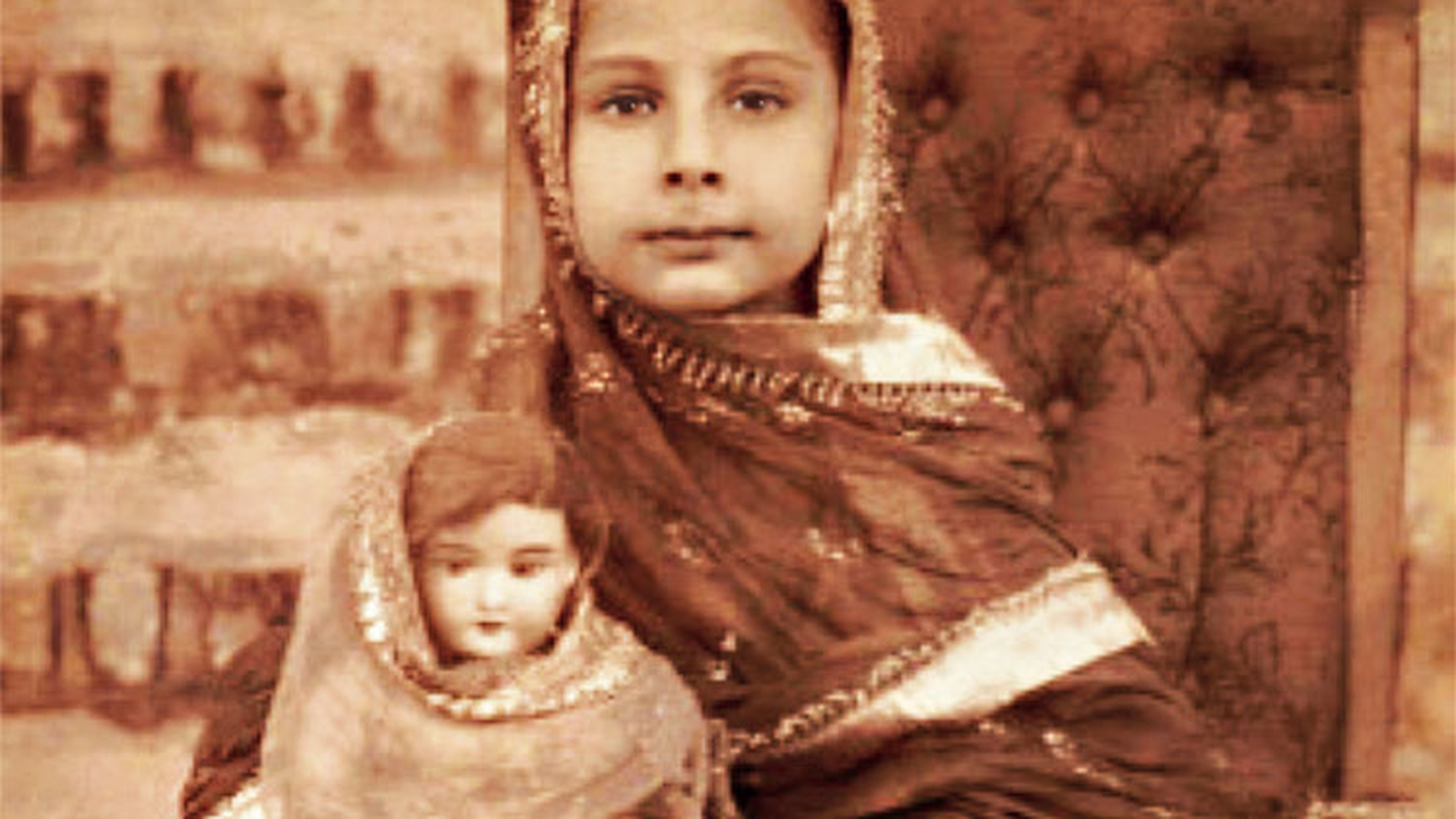
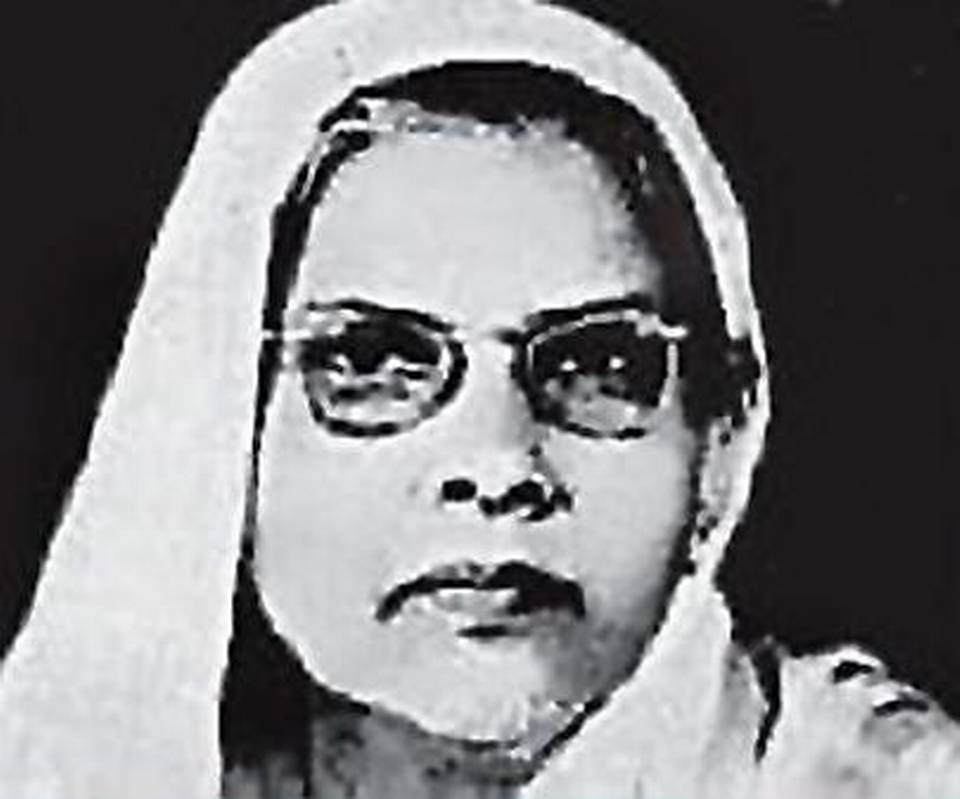
Haleema Beevi, first Muslim woman journalist of Kerala, to be remembered

Her life was a crusade against oppression of women in the Muslim community. Amidst strong protests and threats, she dedicated her life for the empowerment of women in her community.

The Kerala  Sahitya Akademi is remembering Haleema Beevi, the first Muslim woman journalist of the State, on her 100th birth anniversary.

Unsung heroine

The celebration, to be held in connection with the inauguration of the national book exhibition on Saturday, will also pave the way for more explorations on the unsung heroine of Kerala Journalism and her writings, noted Kerala Sahitya Akademi president Vaishakhan.

A recent Facebook post by writer Shihabuddin Poythumkadavu on Haleema Beevi had many responses.

Available records indicate that Haleema Beevi started her career as a journalist at the age of 18. Born in an orthodox Muslim family at Adoor in 1918, as the daughter of Peer Mohammed and Maideen Beevi, she was an ardent reader from childhood. Though she was good at studies, she could not go to school after Class 7. But she continued to read.

Muslim Vanitha

At a time when Muslim women did not even dare to come to the mainstream, Haleema Beevi started a women’s magazine, Muslim Vanitha, at Thiruvalla. Later, its functioning was shifted to Kodungalloor. She later started a daily in 1946 called Bharatha Chandrika. Later, she even started a weekly in the same name. Haleema Beevi functioned as its editor, printer, and publisher.

Prominent writers

Eminent writers Vaikom Mohammed Basheer, Sukumar Azhikode, K. Gomathi, and P. Valsala had written in her publications. Haleema Beevi used to write articles related to education.

Haleema Beevi was a municipal councillor at Thiruvalla for five years. Her husband K.M. Mohammed Moulavi, a prominent presence in the struggles against Sir C.P. Ramaswamy Iyer, was imprisoned for taking part in agitations against the Divan. Haleema Beevi too had gone to jail during the Independence struggles.

She relentlessly worked for the empowerment of women. Her goal was to bring Muslim women, who were socially and educationally backward, to the mainstream.

Women’s education

At that time, the community was even against its members learning Malayalam. But Haleema Beevi argued that education was the basic right of every man and woman. She recalled that even the Prophet had called for women’s education.

She died at the age of 82 in 2000. Though her birth centenary was in 2018, nobody noticed it that time. The akademi and Mr. Poythumkadavu are on efforts to find her writings.

source: http://www.thehindu.com / The Hindu / Home> News> States> Karnataka / by Mini Muringatheri / Thrissur – February 01st, 2019

Fatima and Fatima

Kolkata, WEST BENGAL :

Two remarkable women from the family of Wajid Ali Shah, the last king of Awadh, are reviving his culinary tradition in Calcutta, the city where he famously introduced potatoes into the biryani!

Last king of Awadh,Wajed Ali Shah,Manzilat Fatima

Manzilat Fatima is a descendent of Wajid Ali Shah, the last Nawab of Awadh who spent 29 years in exile in Metiayaburj, a Calcutta suburb. She launched a pop-up restaurant of Awadhi cuisine in 2014 and a home dining service, Manzilat’s, in 2018 in Calcutta. (Arijit Sen/HT Photo)

What do you do you do if a goose is plump beyond reason, won’t lay eggs and needs too much feed? Cook it, I guess. And that’s what the British Crown did to Wajid Ali Shah, the last king of Awadh, who ascended the throne as a 25-year-old in 1847 and was dethroned nine years later in 1856, a year before the first war of Indian Independence broke out.

The British said this was done because he lived and ate like a king and did little else, thus overlooking his military reforms, his attempts at administration which the East India Company did its best to thwart, and his immense popularity with his subjects.

Packed off to Metiyaburj, about four miles south of Calcutta, the ousted king was joined by his prime minister, some of his wives, musicians and officials. His chefs attended to this displaced court as best as they could. They prepared their master’s banquets with the lavishness of his days as monarch, so that when he sat for his meals, he would remember Lucknow as his great romance and not the painful reality of its passing.

If five kilogrammes of lamb mince was used to make a single kofta when he had been the king, they were not going to scale down, when he was no longer one.

Wajid Ali shah during his days in exile in Metiyaburj, a Calcutta suburb, wearing his trademark kurta with part of his chest exposed. His descendants say it was an expression of his heart being open to his subjects. ( Arijit Sen/HT Photo )

But how do you claim, centuries later, that one of India’s most famous ex-royal is your old man and that you are the sole inheritor of the royal cuisine he helped found? Wajid Ali Shah’s descendants Manzilat Fatima, 51, and Fatima Mirza, 45, of Calcutta are doing that, courtesy the documents of political pensions of their families on the one hand, and by cooking his food, on the other. Team Manzilat and Team Fatima, both say they are the real thing.

***

Family recipes are a cook’s real estate. Wajid Ali Shah’s descendants face the problem of plenty. At the time of his death, the king had 250 wives and 42 children so no ‘family recipe’ matches the other. The British also made sure that after the king’s death in 1887, his days in exile would go undocumented.

On Fatima Mirza’s table: Kachhe Tikia ke Kebab, Mutton biryani, Nargisi Kofta. Mirza is a great-great grandchild of the last king of Awadh. ( Arijit Sen/HT Photo )

“His successors and his subjects were left with nothing,” says Wasif Hussain, the manager of the king’s mausoleum in Metiyaburj. “I’ve heard that in Chartwell House [the country home of a former British premier, Winston Churchill], his kitchen with its tea-kettle, his flour bin, the utensil rack and the weighing machine have been left intact…. It’s a museum….”

A law graduate, Manzilat Fatima, is from the ‘ruling line’. Her father, Kaukub Meerza, a former Reader of the Aligarh Muslim University, is the grandson of Birjis Qadr, the son of Begum Hazrat Mahal and Wajid Ali Shah. Birjis was crowned king by Mughal emperor Bahadur Shah Zafar during 1857 as Wajid Ali Shah was by then in Calcutta. Birjis met his death in 1893 after dinner at a relative’s home in Metiyaburj.

This was not the first time that poisoning had killed an Awadhi royal, Sudipta Mitra, author of Pearl by the River, a book on Wajid Ali Shah’s exile, points out. Royal biographies mention a consort sending the king paan as a token of her love during their better days and the king not putting it past her to lace its leaves with poison when those days were over.

The murder of Birjis and its memory have stayed with the family for over 120 years. It has seeped into Manzilat’s remembrances of her childhood home (“My paternal grandmother would always check the food before it was served to family members”), and explains her impatience with ‘proof’-seekers. Ever since she launched a pop-up restaurant of Awadhi cuisine in 2014 and a home dining service, Manzilat’s, in 2018 in Calcutta, there are some set questions she has had to answer.

“ ‘Do I have monogrammed table-mats from Wajid Ali’s time?’ ‘Did I inherit a recipe book?’ No, I didn’t! Birjis’ murder snapped our links with the other branches of the family. His wife escaped from Metiyaburj to Calcutta…. And besides, my great-great-grandmother, Hazrat Mahal, was a queen who was fighting the British, not writing cookbooks. For a while, I made this my FB status,” says Manzilat cheekily while adding finishing touches to an order of Ghutwaan Kebab (made of mashed meat marinated with papaya) that a delivery man from Swiggy is waiting for her to complete, besides the mandatory biryani.

Manzilat makes a good mutton biryani, but with mustard oil to keep it non-greasy and light; Fatima Mirza, a school principal (she is of the line of Wajid Ali Shah’s principal consort, Khas Mahal) and her husband Shahanshah Mirza (his father Wasif Mirza is another great grandson of Wajid Ali Shah) consider the leaving out of ghee an overturning of the “basic biryani rule-book”. Both families, however, have more in common than they think.

While Manzilat’s cooking displays her control in colour, sense of proportion and spicing so integral to Awadhi cooking, Fatima, too, has considerable domain knowledge. Since 2018, she has been working on a cookbook penning family recipes such as the Kachhe Tikia ke Kebab.

“This is the only Awadhi kebab in which sattu is added and it was a Wajid Ali Shah favourite,” she says. “To neutralise the heat of meat and to make it easily digestible, hakeems advised chefs to add sattu (ground Bengal gram) as the king aged. The trend seems to have been to keep things light and fragrant.”


Shahanshah Mirza, another descendant of Wajid Ali Shah, with a family heirloom – a ceramic bowl. Such bowls were common in royal households. Their contents were checked by food inspectors before they were placed before the nawab. They had a special coating which would ‘crack’ if the food had poison, says Mirza. ( Arijit Sen/HT Photo )

Shahanshah Mirza, a government official and heritage enthusiast, elaborates on the difference between Awadhi and Mughlai cuisine. “Unlike Mughlai, ours has no overdose of mace or cardamom or dry fruits. We say about Urdu, Urdu aap ke zubaan pe hamla nahin karta hai, speaking it, does no assault to your tongue… Likewise, Awadhi food plays on understatement. It is big on presentation though.” Any aspiration to cheffy-ness of the standard of the former royal house of Awadh has to get the food styling right.

Wajid Ali’s descendants also make great allowances for a master chef’s ego. It was not uncommon in the heyday of the king to have his chefs refuse to cook for any other branch of the family. Some of the chefs even announced during the time of seeking employment that they were not going to expand their expertise! That is, the maker of dal would remain a dal specialist throughout his life. A biryani cook would touch nothing else.

***

The Sibtainabad Imambara, the mausoleum of Wajid Ali Shah and his son Birjis Qadr at Metiayaburj. Birjid was declared king in the absence of his father by the sepoys during 1857 and his kingship was acknowledged by the Mughal emperor, Bahadur Shah Zafar. ( Arijit Sen/HT Photo )

In Metiyaburj, Guddu, a grandson of Puttan, a descendant of one of Wajid Ali Shah’s great chefs, drops by at the Shahi Imambara, for a chat. He talks of a dish that has the sound of one made in Awadh’s hoary past. There are few “with the stomach and liver of Wajid Ali Shah” to digest dishes like a meat mutanjan (a rice dish) now, Guddu says. But Nawabi biryani, and yes, with the potato, is everywhere.

Do kings thus prepare the future food of the people? The rich trying out the pleasures that the masses will eventually grasp is something historian Fernand Braudel has elaborated upon in his works. Rows of biryani shops of various prices line the road on either side of the king’s mausoleum. “Jameson Inn, a branch of Shiraz [an old Calcutta eatery], began to make a Murgh Hazrat Mahal in 2011,” informs Hussain, the Imambara manager. But there is a piece of information doing the rounds he would like to correct.

“The potato was added to the biryani because of its exotic value. It was a new vegetable in the market introduced by the Portuguese,” says Hussain. Both Fatimas back this view. According to Abdul Halim Sharar’s Guzishta Lucknow, considered to be the go-to book for any information on Wajid Ali Shah’s exile, the king spent Rs 24,000 on a pair of silk-winged pigeons, Rs 11,000 on a pair of white peacocks and approximately Rs 9,000 a month on food for some animals in his zoo in Metiyaburj.

“If a man could afford so much, he could certainly add more meat to his biryani and not bulk it up with potatoes,” suggests Fatima Mirza. The king would presumably also not risk his social prestige. At the evening concerts in the then resplendent Sultan Khana that had all the splendour of his palaces in Lucknow, when the Calcutta elite would visit, with thumri, there was biryani and it had potatoes. Surely Wajid Ali Shah would not have a dish served that had hard times written all over it.

(L-R) Mohammad Sulaiman Qadr Meerza with his grandfather, Kaukab Meerza, the great grandson of Wajid Ali Shah and Begum Hazrat Mahal, and his father, Kamran Meerza. ( Arijit Sen/HT Photo )

******

Mohammad Sulaiman Qadr Meerza, 9, in a yellow tee and jeans is following the discussion on food and music, and the Awadh royal family closely. When he was six, his father Kamran (Manzilat’s brother), a businessman, disclosed his antecedents. He told his friends in between classes at school that he belonged to a royal family.

His friends asked: “Which one?” Sulaiman said he was the fifth generation of Wajid Ali Shah and Begum Hazrat Mahal. They did not believe him.

Next year, when he is 10, Sulaiman has plans to grow bigger. And then he will try to convince them. He says he must give it one last try.

Kitchen confidential- Nawabi recipes passed down the family
MANZILAT FATIMA’S PINEAPPLE MUTANJAN
INGREDIENTS
  • 1 cup Gobindo Bhog rice soaked for an hour
  • 1 cup sugar
  • 2 cups chopped pineapples
  • 2 1/4 cups boiling hot water (boiled with saffron strands and a pinch of kesariya colour)
  • 1 tbspoon pure ghee
  • 1 cup grated mawa
  • 1 clove; 1 cardamom; almond slivers
METHOD:

Take a heavy-bottom handi, add ghee. When hot, add cloves and the cardamom, then add the whole of the drained rice and saute quickly on medium flame.

Pour the hot water in the handi. Keep the flame high for 2-3 minutes, lower the flame and keep on sim till the rice is 3/4 cooked.

In another handi, scoop out the cooked rice and make a layer; sprinkle 1/2 of the sugar and 1/2 of the chopped pineapples and 1/2 the grated mawa.

Similarly, repeat a second layer, cover the lid and keep the handi on a tawa on sim. Leave for 5-10 minutes till the sugar melts and all ingredients blend well. Switch off the gas.

Before serving lightly mix the layers, serve hot after garnishing with silver leaf and almond slivers.

FATIMA MIRZA’S KACHHE TIKIA KE KEBAB
INGREDIENTS
  • Mince meat 500 gms; salt to taste
  • Bengal gram flour (roasted, powdered) 2 tsp
  • Garam Masala powder -1 teaspoon
  • Paste of nutmeg and mace -1 tsp
  • Onions -2 big ones; ginger-garlic paste -3 tsp; raw papaya paste -2 tsp
  • Green chillies -2; coriander leaves
  • Ghee for frying
METHOD:

Wash the minced meat. Fry the onions till they are golden brown. Mix garam masala, a paste of nutmeg, mace, fried onion and ginger-garlic paste. Sprinkle salt as desired. Add the raw papaya paste. Keep it aside for 10 minutes.

When the mutton turns tender, then mix the chopped coriander leaves and green chillies.

Using the mince mixture make flat round patties (tikia) of even size. Pour ghee into a pan. Heat it on a low flame. When the ghee crackles, start frying the patties till golden brown.

Drain out the excess ghee and serve it hot.

source: http://www.hindustantimes.com / Hindustan Times / Home> India / by Paramita Ghosh / Hindustan Times / February 24th, 2019
 

Ammi’s sass in a bottle

Hyderabad, TELANGANA :

SassyBegumMPOs24feb2019

The heat of the masala, the tart of the mango, and the bite of garlic — a surprise delivery worth writing home about

It all started with a post on Facebook. My friend Amita wrote about a harrowing experience she’d had with an online order of pickles. She was lured by some “mouth-watering pictures of plump veggies glistening with oil, sitting on golden paranthas,” but ended up feeling “foolish and short-changed”. The pickles cost a bomb, but leaked oil when they arrived. The vegetables were still raw, and she was informed that she had to keep the jar out in the sun for several days. No, that was not nice.

Pleasant pickles

I, on the other hand, had a smooth experience with a recent pickle delivery. For one, I had not asked for them, so they came as a pleasant surprise. Two, they were well-packed and leaked no oil. Three, though I could only try out a tiny bit from the two kinds of pickles that had arrived, they were rather good.

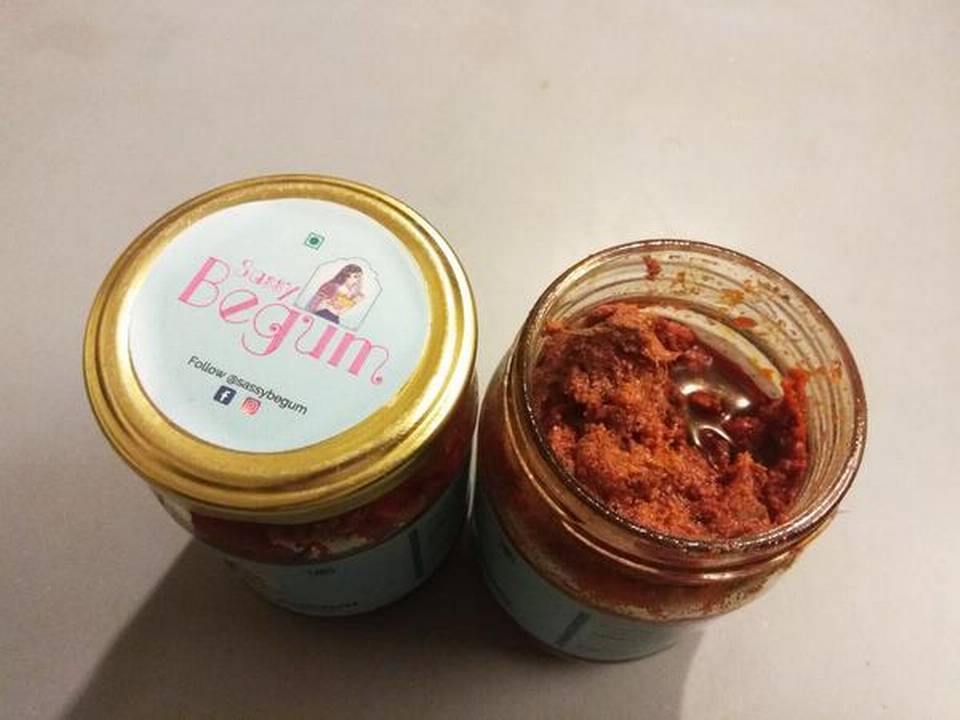
The pickles are from Ammi ke Achar, and are being marketed by a young man called Sahil Hassan, who runs a food-delivery system known as Sassy Begum. The Hassan family prepares and sells hot and delicious Hyderabadi pickles prepared with garlic, mango, gongura, tamarind, and lime.

The spicy mango achar in avvakai masala, and the garlic pickle are for ₹375 (for 300g). The raw tamarind thokku chutney (with tamarind, green chillies, fenugreek seeds), nimmakaya (lime), and gongura pickles are for ₹300 (for 300g).

I liked the masala and the tartness of their mango pickle, and the raw, edgy bite of the garlic pickle. The pickle recipes, Sahil tells me, have been in the family for generations. Some of them can be found in Saffron and Pearls, a book written by his mother, Doreen Hassan.

In my house, people have diverse views about pickles. My favourite is gobhi-gajar-shalgam – a sweet and sour pickle of cauliflower, carrots, and turnips. My friend Raj got me some of this recently, and I have been quietly licking my fingers. My wife likes the Bengali sweet pickle prepared with a berry called kul. Our home-manager loves anything that is hot and spicy, so she embraced a prawn pickle that another friend had brought for us last week. And she has been lapping up Ammi ke Achar.

Banarasi chillies

In the last few months, I have ordered pickles online from Delight Foods, and another site called Place of Origin. You get everything here — from the stuffed red chillies of Banaras to sweet lemon pickle, topa kuler achar, and jackfruit pickle.

Products from the best pickle place in Delhi — Harnarain Gokulchand in Khari Baoli — can also be bought online. From an Assamese food site, I ordered some pork pickle which was, however, not very exciting.

But if you want to make your own pickle, you could try this baingan ka achar (eggplant pickle) from Doreen Hassan’s book: Wash, dry, and cube 750g of eggplants. Soak them in salted water for 3-4 hours. Take 1 litre of vinegar. Take 30g red chillies and grind them in some of the vinegar. Grind this to a fine paste, along with 30g green chillies, 2tsp turmeric powder, 1 tsp black pepper, 1/2tsp fenugreek, 1tsp mustard seeds and ½ tbsp cumin seed, using more of the vinegar as needed.

Heat ½ litre of refined groundnut oil; bring to a boil. Add the masala and fry until fragrant. Add 2 sprigs of curry leaves, 3tsp chopped ginger, and 2tsp of chopped garlic. Fry well. Add salt. Add the eggplants and 150g of sugar. Add the remaining vinegar. Cook on slow heat till the eggplants are done and the gravy has thickened. Cool and bottle.

Try it out. You will — pardon the pun — relish it.

For more information, call 9999122999 or log on to sassybegum.com.

source: http://www.thehindu.com / The Hindu / Home> Life & Style> Food / by Rahul Verma / February 23rd, 2019

From a child labourer to an award-winning translator

Colachel (Kanyakumari ), TAMIL NADU :

KulachalYousufMPOs06feb2019

Kulachal Mu. Yoosuf bagged the Sahitya Akademi Translation Prize for 2018

It has been an arduous journey from a child labourer to the winner of the Sahitya Akademi Translation Prize 2018 for Kulachal Mu. Yoosuf, 60. His translation of Malayalam writer G.R. Indugopan’s Maniyan Pillaiyuda Athma Katha into Tirudan Manian Pillai in the Tamil has won him the distinction. The story has already been made into the successful Malayalam film Kallante Katha.

The laurels have arrived not a moment too soon. Mr. Yoosuf was forced to discontinue his studies after Class V when his family fell on hard times. bad days. A passion for reading, picked up in school, stayed with him. “There was a library run by the Hindu Ilaignar Iyakkam in my native town of Colachel. I sat in the library and read while other students played,” says Mr. Yoosuf, who became a child labourer when his family moved to Kanniyakumari.

Malayalam language and literature arrived serendipitously while he worked in a provisions shop in Nagercoil.

Tamil and Malayalam

“Customers would sell old books for raddi and among them were Malayalam books. I would read them. I was fascinated by Vaikom Muhammad Basheer’s short stories. One customer suggested that I should read them in Malayalam and I followed his advice,” recalls Mr. Yoosuf. Gradually, he gained mastery over the Malayalam language. “The sentence patterns are similar in Malayalam and Tamil. If there were a cinema poster, I would stop for a second to read it,” laughs Mr. Yoosuf.

He recalls that books on revolutionary movements like the Punnapura-Vayalar upsurge in Kerala, the life of naxal leader Ajitha, and Basheer’s works, motivated him to learn Malayalam with greater determination. His first article supported the Supreme Court verdict in the Shah Bano case.

As he gained confidence, Mr. Yoosuf tried his hand at translation. His first work was a translation of Sahitya Akademi-winner Punathil Kunjabdulla’s Smarakashilakal into Tamil as Meesan Karkal in 2004.

Over time, he translated more than 30 works, particularly by Vaikom Muhammad Basheer, from Malayalam into Tamil.

“Even though there were [other] translations, friends, particularly [publisher] ‘Kalachuvadu’ Kannan, were particular that I translate Basheer’s works. I have translated his [Basheer’s] short stories, novels and letters,” says Mr. Yoosuf.

His translations restored the legendary writer’s fame among Tamil readers.

Other important works

His translation of M.T. Vasudevan Nair’s Naalukettu as Naalukettu and Nalini Jameela’s autobiography as Oru Paaliyal Thozhilaliyin Kathai, and the rendering in Tamil of the autobiography of social activist K. Ajitha were other important turning points. Mr. Yoosuf has written a detailed book on the Great Poets of Persia, Paarasika Mahakavikal, and taken Tamil Sangam works to readers in Malayalam.

“My translation of Naladiyar [post-Sangam Tamil poetic work] was appropriated by a writer from Kerala. I sent it to a writer to read the proof, but another writer published it in his name. I have filed a case,” he says.

When asked what it means to be a full-time writer, Mr. Yoosuf says, “Literature cannot be considered a revenue-generating venture.”

He adds, “I have a good publisher and they are paying me well. Literature never leaves me poor.”

source: http://www.thehindu.com / The Hindu / Home> News> Cities> Chennai / by B. Kolappan / Chennai – February 05th, 2019

Kerala Arabic Academy to publish football directory

Thiruvananthapuram , KERALA :

The academy is running various programmes for promotion of Urdu, Arabic, Konkani and Tamil languages.

Malappuram  :

Malappuram’s soccer craze is set to receive yet another recognition. Kerala Arabic Academy has stepped in with a plan to bring out a comprehensive football directory. The directory ‘Malappuram’s football grandeur’,  will have all details of academies, coaching centres and tournaments taking place across the district.

“The district is known for its love for the game and the directory is a befitting gift to people in Malappuram,” said Academy chairman Shanavas Abdul Gafoor. Based in Thiruvananthapuram, the academy is functioning for the promotion of languages and local culture. The academy is running various programmes for promotion of Urdu, Arabic, Konkani and Tamil languages.

Apart from details of clubs, organisations and tournaments, the directory will give space for football players, former players, events and families that contributed to the promotion of football in Malappuram. In addition to the photos and contacts of individuals, clubs and organisations, the directory will feature
their brief history.

The major attraction is the ‘sevens calendar’ that will help football enthusiasts to get information about major sevens tournaments and their time. Academy organisers have started efforts to collect details from clubs and football lovers. Publication work of the directory is expected to be started by March.

source: http://www.newindianexpress.com / The New Indian Express / Home> States> Kerala / by Shafeeq Alingul – Express News Service / February 04th, 2019

The zamindar of Laksam

UNDIVIDED BENGAL / current day BANGLADESH :

BegumFaizenussisaMPOs03feb2019

So famous did the zamindar, a descendant of the Timurid dynasty from which the ruling Mughals derived become, in work to develop female education and other issues of social deprivation of women in the latter half of the 19th century, that Her Imperial Majesty Victoria, Empress of India, personally intervened to award the title of “Nawab.”

In that unique process, Begum Faizunnesa Choudhurani became the first woman in South Asia to be so honoured.

Homnabad-Pashchimgoan, now known as Laksam, close to the Indian border in Comilla District of Bangladesh, was a zamindari, characteristic of the British period, being held by a Muslim family in an area which, even today, enjoys a rich heritage of fine Hindu Temples that betrays a probable Hindu majority of the time.

She was born in 1834 to a very devout Muslim family, with its very aristocratic heritage, and was, very strictly, brought up in purda; although, in fact, her father was of sufficiently liberal mind to hire a male tutor to enhance the education of his two daughters.

Of course, in the great traditions of Islam, such an upbringing may not have permitted a great deal of social intercourse, but it is clear that it did facilitate for her an opportunity for a high degree of self education: Reading. Sadly, a vital form of education that has diminished in modern times.

That process of self and home education was, certainly, effective. Arabic and Persian in the household would have been the most commonly used languages, as in most such aristocratic families of the time; indeed, Persian was commonly used, even by the East India Company in its communications, and was an essential learning for Company employees.

Faizunnesa, in the preface of her famous work of poetic fiction, Rupjalal, was to acknowledge her tutor, Ustad Tazuddin, as the source of inspiration, and learning.

It may also be interesting to speculate that she had access to newspapers, that, as English language publications, would certainly have aided a familiarity with social changes, even in Britain.

Two years before her birth, 1832 was the year of the First Great Reform Bill passed by the British Parliament.

The act, itself, only marginally extended the voting franchise, still limited to males, as well as reforming Parliamentary seats. However, in 1817, Jeremy Bentham had first advocated enfranchisement of women, and although it was to be nearly another century before such reform was enacted in Britain, together with the succession to the throne of Queen Victoria in 1837, emancipation of women, combined with an embryonic movement for women’s rights, were certainly already on an international agenda from before the Begum’s birth.

Fascinating, indeed to suspect that, so early already, deep in the rurality of the lands that are now Bangladesh, and in a very strict Muslim family, it appears that something stirred in the field of female educational rights and opportunities.

Which, amongst other things, begins to raise suspicions that the movement towards independence, which seems largely in the late 19th and early 20th centuries to have emerged from a more “anglicised” upper and middle class in the sub-continents, may well have had some roots amongst the more leisured zamindari, especially those of ancient lineage.

However, Faizunnesa found herself at the age of 27, in a traditional polygamous marriage to a neighbouring zamindar, a distant cousin, Muhammad Gazi, becoming his second wife with whom she had two daughters.

In fact, it was a marriage at an unusually high age; at the age of nine, Muhammad Gazi, on a family visit, became obsessed with her, and sought marriage then.

Faizunnesa’s father denied permission then, on the grounds of her youth, but in the ensuing years, found it difficult to arrange any marriage for his daughter, over the well-known objections of her older suitor.

It was evidently not a marriage or situation that suited the well-educated, evidently rather independent-minded young woman.

After bearing two daughters, she returned to her parental home. There then ensued a lengthy process of obtaining marital alimony, at the end of which she received property as a settlement.

It is, however, clear that she remained on good terms with her husband, blaming his first wife, who he had married on rebound from his original failure to marry Faizunnesa, for the failure of the marriage.

On the death of her father, her apparently similarly self-assured and educated mother, took over administration of the zamindari.

On her mother’s death in 1883, Faizunnesa inherited the zamindari.

It is evident that, like so many, she was not content with British colonial rule; we may well surmise that the 1857 rebellion, although it had little impact in Bengal, and indeed the lands still at the time designated as a part of Tripura, especially the suspicion engendered by the role of Muslims in that uprising, was also contributory to her discontent.

Other women rulers in India had proved themselves content with the title Begum, usually the way in which a zamindar’s wife was addressed; Faizunnesa, alone, and a Muslim woman, made it clear that she found it degrading not to be recognised equally with male zamindars

In her writing, she also refers to the suicide of her maternal grandfather, Mozaffar Gazi  Chowdhury, preferring death to submission to the then colonial ruler, the East India Company.

In the period between the Battle of Buxar, that facilitated the Company’s domination of the lands, and the Act of Permanent Settlement in 1793, governance was so rapacious that 75% of zamindari are believed to have changed hands. It was not a period in which such aristocratic rulers could work easily.

But it is apparent that she was determined not to be suppressed by the rule of the successor administration, the British Imperial rule.

As zamindar were invited by Magistrate Douglas, the district magistrate of Tripura, to contribute to funds for his provincial development plan, she was the only zamindar who responded to the request, donating — in the absence of other support — all the funds requested.

As a result, Douglas requested the British government that she be awarded with a title. Nawab,was, at the time, the highest honorific awarded to zamindars.

The male zamindars, however, objected vociferously, and Faizunnesa was awarded the honorific title of Begum, with the agreement of Queen Victoria.

She rejected the offer, pointing out that she was already known in her lands by that title; she demanded that she be treated with equality to male zamindars. The British Parliament decided in her favour, and she became Nawab Faizunnesa. It is not hard to imagine her satisfaction beating the system!

Other women rulers in India had proved themselves content with the title Begum, usually the way in which a zamindar’s wife was addressed; Faizunnesa, alone, and a Muslim woman, made it clear that she found it degrading not to be recognised equally with male zamindars.

Her work as zamindar was far from limited to the effective administration of the lands she held. As early as 1893, with the support of her mother, she had established one of the earliest privately established female schools in the Indian sub-continent.

She also established a school at Pashchimgaon, now upgraded to a college.

In 1893, she established a dispensary for women, particularly destitute women, as well as a hospital for women in Comilla.

Her semi autobiographical “allegory,” Rupjalal, published in Dhaka in 1876, eventually brought her a worldwide literary reputation, but she also remains an outstanding figure in the continuing fight for women’s rights in the lands that are now Bangladesh.

Her origins and her upbringing suggest how hard it must have been for her to plough her furrow, despite her advantages of wealth and family.

A conspicuous, and perhaps somewhat neglected figure in the social and religious cultural development of Bangladesh today.

Tim Steel is a communications, marketing and tourism consultant.

source: http://www.dhakatribune.com / Dhaka Tribune / Home> Opinion> Heritage / by Tim Steel / August 06th, 2016

3,000 books in top honcho’s library

Bengaluru, KARNATAKA / Silicon Valley, USA  :

As senior vice-president of SAP, V R Ferose’s job has taken him to as many as 40 countries.

Ferose01MPOs30jan2019

Bengaluru :

As senior vice-president of SAP, V R Ferose’s job has taken him to as many as 40 countries. With back-to-back meetings and tight schedules, Ferose rarely has had any time to explore the places. But the corporate honcho has found a unique way of understanding cultures: Visiting bookstores. In fact, he even planned an entire vacation to visit the world’s largest independent bookstore – Powell’s Bookstore in Portland, USA.

VR Ferose
VR Ferose

As a child, Ferose read magazines such as Reader’s Digest and comics, but his reading habit didn’t really take off until college. “My wife Deepali was a voracious reader, and gifted me Eric Segal’s The Class. That is when I got hooked to reading,” he says.

Today, he has more than 3,000 books in his collection, but Ferose reveals that he doesn’t have a particular way of organising these books. “Currently I am cataloguing my 100 rarest books.

I have always wanted to organise my books properly, but never found the time. Also, I find there is fun in randomness and the hunt for finding a book is a part of the experience,” he says.People may call him crazy for his quirky hobby, but his wife has always been supportive. To an extent. He explains: “I have no more place in my home or office. Sometimes, my wife gets frustrated when books pile up in our wardrobes.”

So in order to strike a balance, Ferose does what most booklovers would find hard to do: “I have started giving away books – every time I buy a book, I give away one!” says the senior corporate professional.
On a visit to the Nobel museum in Stockholm, he found that every chair in the cafeteria was signed by a Nobel Laureate. This then sparked off another idea: to collect books signed by Nobel Laureates.

Over a decade, Ferose managed to expand his collection of such books to 67. This collection includes Geetanjali signed by Tagore, My Experiments with Truth signed by Gandhi, Effects And Self Fertilization In The Vegetable Kingdom signed by Darwin, Where Do We Go From Here signed by Martin Luther King and Profiles In Courage signed by John F Kennedy.

Ferose03MPOs30jan2019

His favourite, however, is Man’s Search for Meaning by Victor Franklyn. “It was hard to get a signed book by him, since he rarely signed books. Getting this copy from a book dealer was a high point,” he explains.

His favourite bookstores are all over the world, from Mystery Pier Books in LA (where every book is a true first edition) to El Ateneo in Buenos Aires (considered to be the most beautiful bookstore in the world) to Bookworm in Bengaluru. Collecting books, however, isn’t just a hobby for Ferose. “It’s also about focus and constant learning. A hobby allows me to stand out in the crowd and it’s something I lean on in good times and bad. As they say, books are uniquely portable magic,” he says.

source: http://www.newindianexpress.com / The New Indian Express / Home> Cities> Bengaluru / by Simran Ahuja / Express News Service / January 08th, 2019

‘Meeting of three Abdul Khaders’

KERALA :

Writer U.A. Khader shares a lighter moment with lyricist Poovachal Khader during a meeting to commemorate actor Prem Nazir in Kozhikode on Tuesday. | Photo Credit: S_RAMESHKURUP

Prem Nazir Samskarika Vedi’s award presented to lyricist Poovachal Khader

“The coincidental meeting of three Abdul Khaders” was how writer U.A. Khader described the 29th death anniversary commemoration meet of actor Prem Nazir in Kozhikode on Tuesday. The first being the actor whose real name was Abdul Khader, the second, the writer himself and the third Poovachal Khader, noted lyricist and poet who bagged the Prem Nazir Samskarika Vedi’s 10th anniversary award on Tuesday.

‘Memories still alive’

Prem Nazir, who holds many a record in Malayalam cinema, passed away in 1989 at the age of 62. “It is not for nothing that his memories are still alive in the minds of cinema viewers,” said the writer, adding that Prem Nazir had immortalised many of his characters. He cited the actor’s performance as Bhranthan Velayudhan in Iruttinte Athmavu as a classical one.

Film producer P.V. Gangadharan, who presented the award to Poovachal Khader, recalled how Prem Nazir supported him in his early days as a producer.

The Prem Nazir Samskarika Vedi has been presenting the award to many known and lesser known personalities in cinema over the last 10 years. Actors T.R. Omana, Shantha Devi and Sreelatha Namboothiri were some of the recipients of the award in previous years. Poovachal Khader, a relative of Prem Nazir, is also the president of Thiruvananthapuram-based Prem Nazir Foundation.

source: http://www.thehindu.com / The Hindu / Home> News> Cities> Kozhikode / by Staff Reporter / Kozhikode – January 17th, 2018

U.A. Khader, in his own words

KERALA :

U.A. Khader
U.A. Khader

Kozhikode:

The dilemma of a child who had to straddle two cultures, as distinct as Keralite and Burmese, form writer U.A. Khader’s memories of his early life.

Speaking at a session of the Leisure Programme organised by the Kozhikode Public Library and Research Centre, Khader narrated the story of his life, beginning with his time in Burma, the land of his mother and where his father worked till he was eight. He also spoke about the isolated life he led as a student in Koyilandy where other students found him strange because of his Burmese face and “big size.”

Khader, who shot to fame with his ‘Thrikkottur Peruma,’ recalled Mammumusliyar who was entrusted with teaching him the Koran. He narrated how the man who became an indelible influence in his life taught him the Arabic alphabets through pictures of animals. It was Mammumusliyar who enrolled him in the first standard of a Mappila school at the age of eight.

Khader remembered how he had to make double the effort of students whose mother tongue was Malayalam to learn its words. Other students just had to learn the alphabets ‘pa’ and ‘na’ to know it was ‘pana,’ but little Khader had to know what ‘pana’ (palm tree) meant.

Another decisive time in his life was when his grandmother died and the question of who will take custody of Khader arose. His father had married a second time and he shifted his stay to his step-mother’s residence.

He spoke about his association with former Chief Minister C.H. Mohammed Koya. It was CH who initiated him into the world of reading by gifting him Vaikom Muhammed Basheer’s ‘Balyakalasakhi.’

The audience was in splits when the writer narrated how his first story, based on a real life incident in which he sold his watch and bought a dinner set as a wedding present for a friend, was published in a totally different form. He had written quite harshly about his father and step-mother when he put the story to paper. He handed over the story to CH who published it in the Chandrika, but in a totally different form. His message to Khader was that story writing was not about writing ill of others. CH’s words “to write more and not to write if the urge is not felt; but to read a lot, including the stories of Maupassant and Anton Chekov,” still echo in his ears.

He also narrated his journey to Madras (now Chennai) to learn painting, where he got in touch with writers such as K.A. Kodungalloor.

Speaking about his masterpiece, ‘Thrikkottur Peruma,’ he said that the novel was noted because it espoused the essence of Kerala culture. Other works during that period lacked this and were also difficult to understand, he said. His next ambition was to write a novel that explores the northern Kerala Kalari system. He had been working on it for sometime but could not start writing.

The Leisure Programme is a continuing learning programme in which people who have excelled in various walks of life share their experiences and expertise in various sessions.

M.M. Basheer, literary critic, presided. Paramesharan Potti, librarian, also spoke.

source: http://www.thehindu.com / The Hindu / Home> National> Kerala / by Staff Reporter / August 11th, 2008