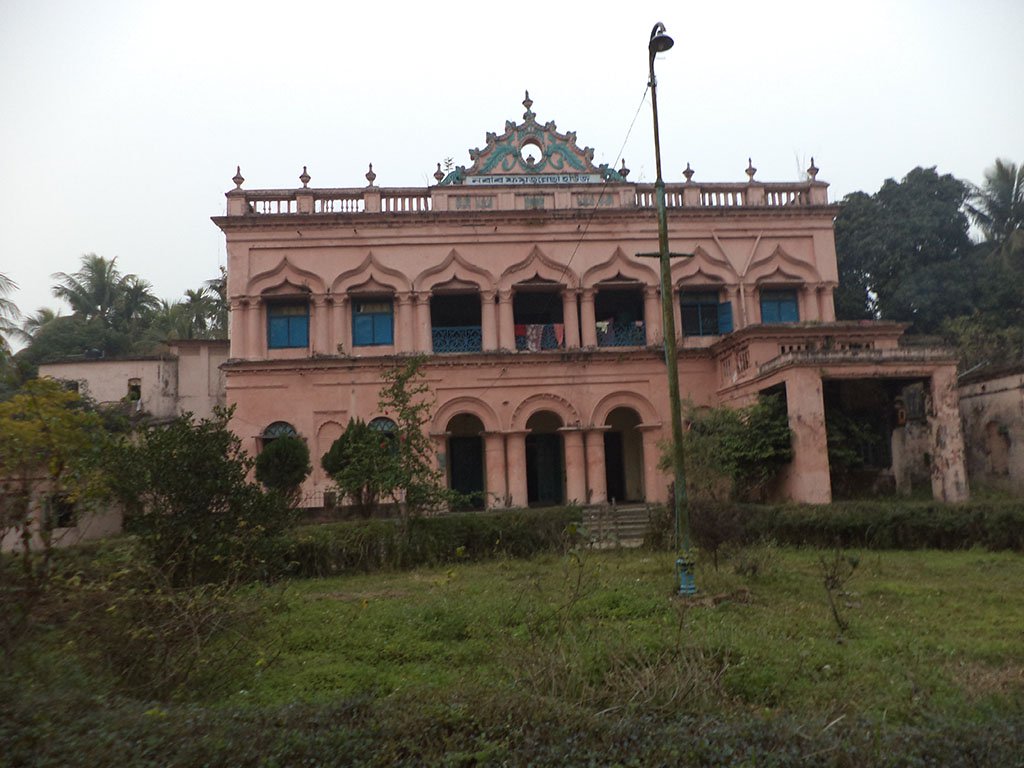
Samatala Village, Tarikere Taluk, Chikkamagalur District – KARNATAKA :
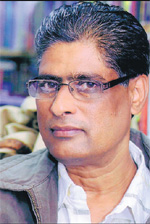
Tarikere, the Dean of the Languages Discipline at the Hampi Kannada University won the award for his work Kattiyanchina Daari.
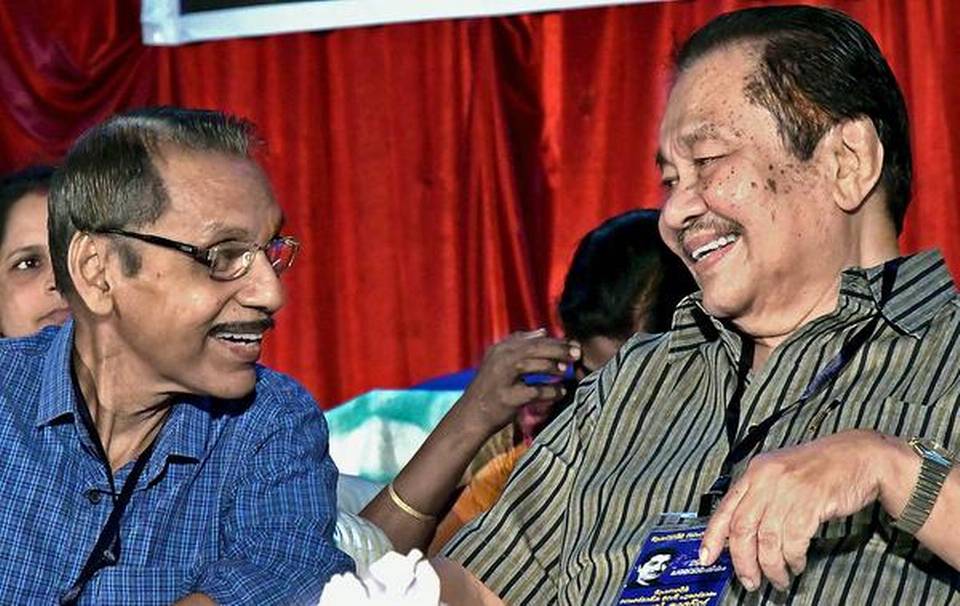
The others who have been chosen for the awards are former union minister Veerendrakumar (Malayalam), Aurobindo Uzir (Bodo), Arun Sakhardande (Konkani), Gopi Narayan Pradhan (Nepali), Vanita (Punjabi), Mangat Badal (Rajasthani), Mithila Prasad Tripathi (Sanskrit), Laxman Dubey (Sindhi), Sheen Kaaf Nizam (Urdu), Bani Basu (Bengali), Esther David (English), Dhirendra Mehta (Gujarati), M Borkanya (Manipuri), Manoj (Dogri), Uday Prakash (Hindi), Nanji Nadan (Tamil), Keshada Mahanta (Assamese), Basher Bashir (Kashmiri), Ashok R Kelkar (Marathi) and Pathani Pattnaik (Oriya).
Tarikere told Deccan Herald: “I had authored this book in 2006 itself. The joy is manifold as the award comes at a time when Kannada University is celebrating the 19th ‘Nudihabba’. I dedicate the award to the university”.
source: http://www.deccanherald.com / Deccan Herald / Home> State / by New Delhi – Hospet / DHNS / December 20th, 2010
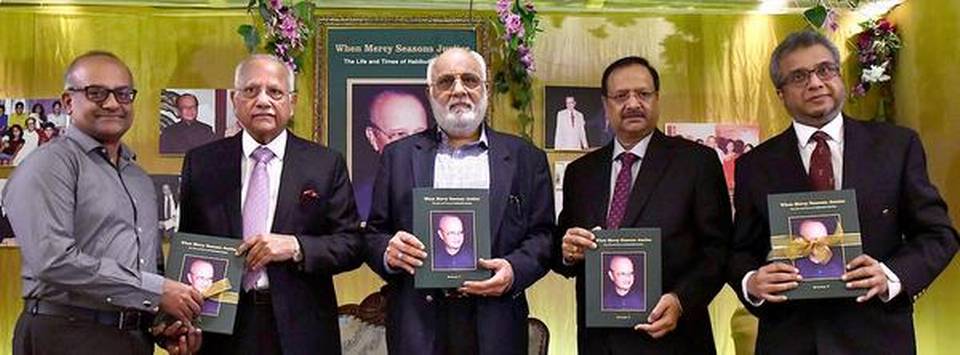
Paying tribute: (from left) Historian V. Sriram, Apollo Hospitals Chairman P. C. Reddy, Prince of Arcot Nawab Mohammed Abdul Ali and Justice R. Sudhakar at the event.
Will include excerpts from the former Advocate General’s memoirs
Jurist Habibulla Badsha was an amazing person and he always did what he thought was right, Dr. Prathap C. Reddy, Chairman, Apollo Group of Hospitals, said on Sunday.
Speaking at the launch of the book ‘When Mercy Seasons Justice’ – The Life and Times of Habibullah Badsha authored by historian V. Sriram, he recalled how they had met in the 1950s as college students.
“It was for an event in which the then Prime Minister Jawaharlal Nehru was to address students. I had chosen the Presidency College grounds and I went to meet their chairman and it turned out to be Badsha, and that was the beginning of a life long relationship,” he recalled. The former Advocate General was also a founder-director of the Apollo Hospitals.
Recalling his long association with Badsha, Prince of Arcot, Nawab Mohammed Abdul Ali said that on many occasions, he had fought cases for free for clients who could not afford any fees.
Chief Justice of the Manipur High Court R. Sudhakar recalled how his guru’s home was always open to friends and family.
He said Badsha and his wife were a couple who should be emulated and added that their home was witness to many an intellectual discussion.
Mr. Sriram said he had used large passages from Badsha’s memoirs in the book. His memoirs reflected the life of the Muslim community and the anguish they felt during Partition.
source: http://www.thehindu.com / The Hindu / Home> News> Cities> Chennai / by Special Correspondent / Chennai – December 31st, 2018
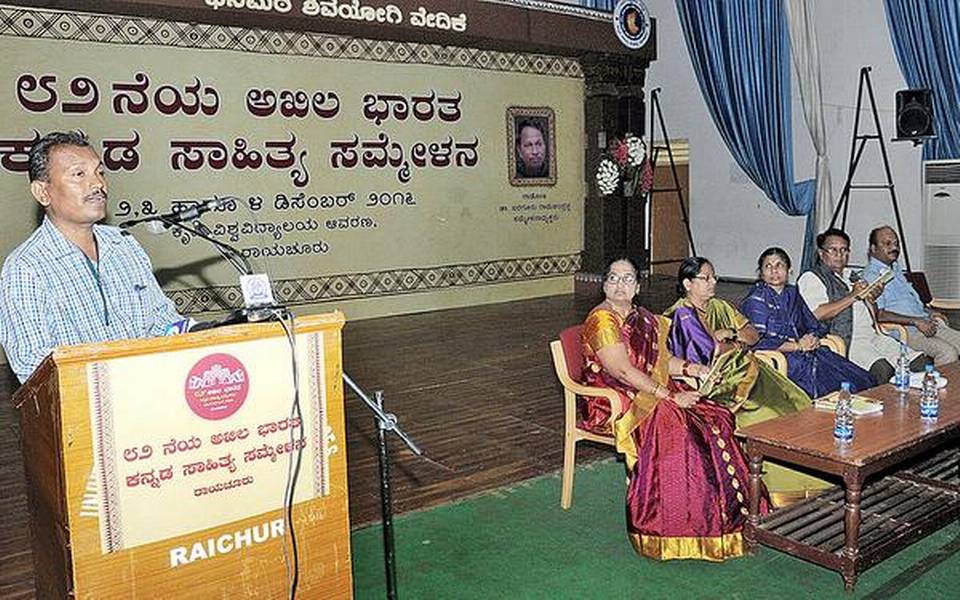
Dastagirsab Dinni, writer, speaking at parallel venue at the 82nd Akhila Bharata Kannada Sahitya Sammelan in Raichur on Sunday.
Terming triple talaq, restrictions on going to masjids, bigamy and other Islamic practices as shackles, Dastagirsab Dinni, a progressive writer, stressed the need for raising voices against Islamic fundamentalistic forces, for women’s liberation.
He was speaking on Muslim sensitivities in literature at a session on multiple dimensions of literature at the 82nd Akhila Bharata Kannada Sahitya Sammelan in Raichur on Sunday. The writer went on to point out prevalent anti-women practices which were indeed not preached by Prophet Mohammed.
“Prophet Mohammed did not oppose women offering prayers at masjids, but our fundamentalists are doing it. Muslim women are increasingly opposing the practice of triple talaq and bigamy practices. Some are even fighting against these anti-women practices in courts. Literature should voice their woes,” he said.
Pointing at the standard approach of fundamentalists towards progressive Muslim writers, Mr. Dinni went on to give a long list of Muslim writers who in one way or the other had to face the wrath of fundamentalism for their radical writing.
“Salman Rushdie, Taslima Nasreen, Sara Abubakar, Safeera, Bhanu Mushtaq and others Muslim writers were under attack from Islamic fundamentalists as they questioned the anti-women and other ill-practices of Islam.
“The attacks indeed gave rise to more resistance rather than curbing the existing opposition,” he said.
He added that Mumtaz Begum, Bolvar Mohammed Kunhi, Fakir Mohammad Katpadi, Ramzan Darga, Jameer Ulha Sharif, Rahamat Tarikere, Abdul Rashid and other Muslim writers have continued to question reactionary practices and resist the attack on freedom of expression.
He called upon young Muslim writers to continue the tradition of questioning fundamentalistic practices in Islam so that the process of emancipation of women could get quickened.
source: http://www.thehindu.com / The Hindu / Home> News> States> Karnataka / by Kumar Buradikatti / Raichur – December 05th, 2016
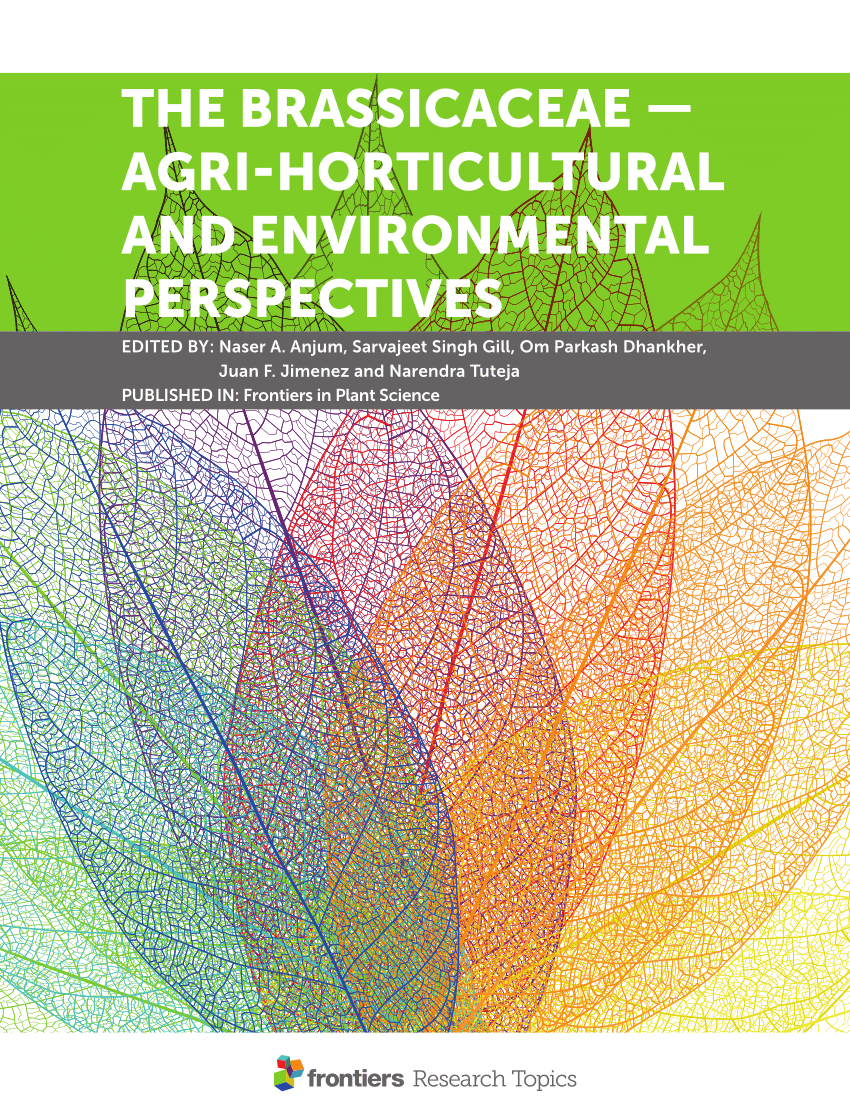
Dr Naser A Anjum, a DBT-RLF researcher (Scientist-D) in the Department of Botany, Aligarh Muslim University edited “The Brassicaceae – Agri-Horticultural and Environmental Perspectives” in collaboration with Prof Om Parkash Dhankher (University of Massachusetts Amherst, USA), Prof Juan F Jimenez (Instituto Potosino de Investigación Científica y Tecnológica, San Luis Potosí, Mexico), Dr Sarvajeet S Gill (MD University, Rohtak) and Dr Narendra Tuteja (ICGEB, New Delhi). The Frontiers Media, Lausanne, Switzerland has published the book.
The book covers Agri-Horticultural and Environmental role of members of Brassicaceae, an angiosperm family that includes model plants such as Arabidopsis, Alyssum, and Brassica, developing model generic systems like Boechera, Brassica, and Cardamine and several cultivated plant species including radish, rocket, watercress, wasabi, horseradish, vegetable and oil crops.
According to Dr Anjum, the book is available at https://www.frontiersin.org/research-topics/3959 for free consultation and download.
source: http://www.amu.ac.in / Aligarh Muslim University / Home> AMU News / Public Relations Office, Aligarh Muslim University / December 26th, 2018
The British unleashed ruthless violence over Mappilas to quell the rebellion in south Malabar taluks
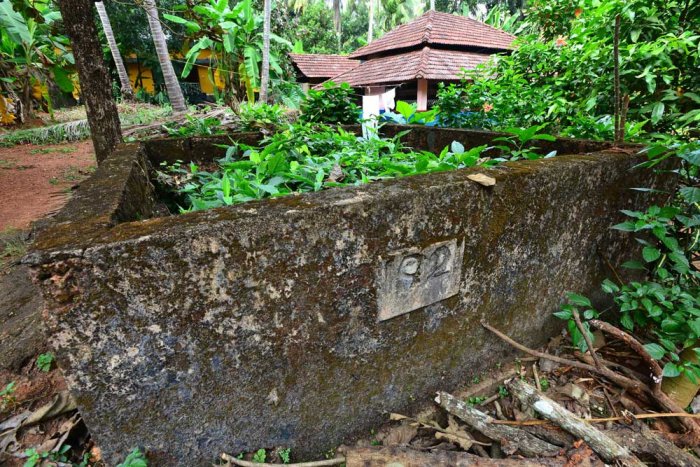
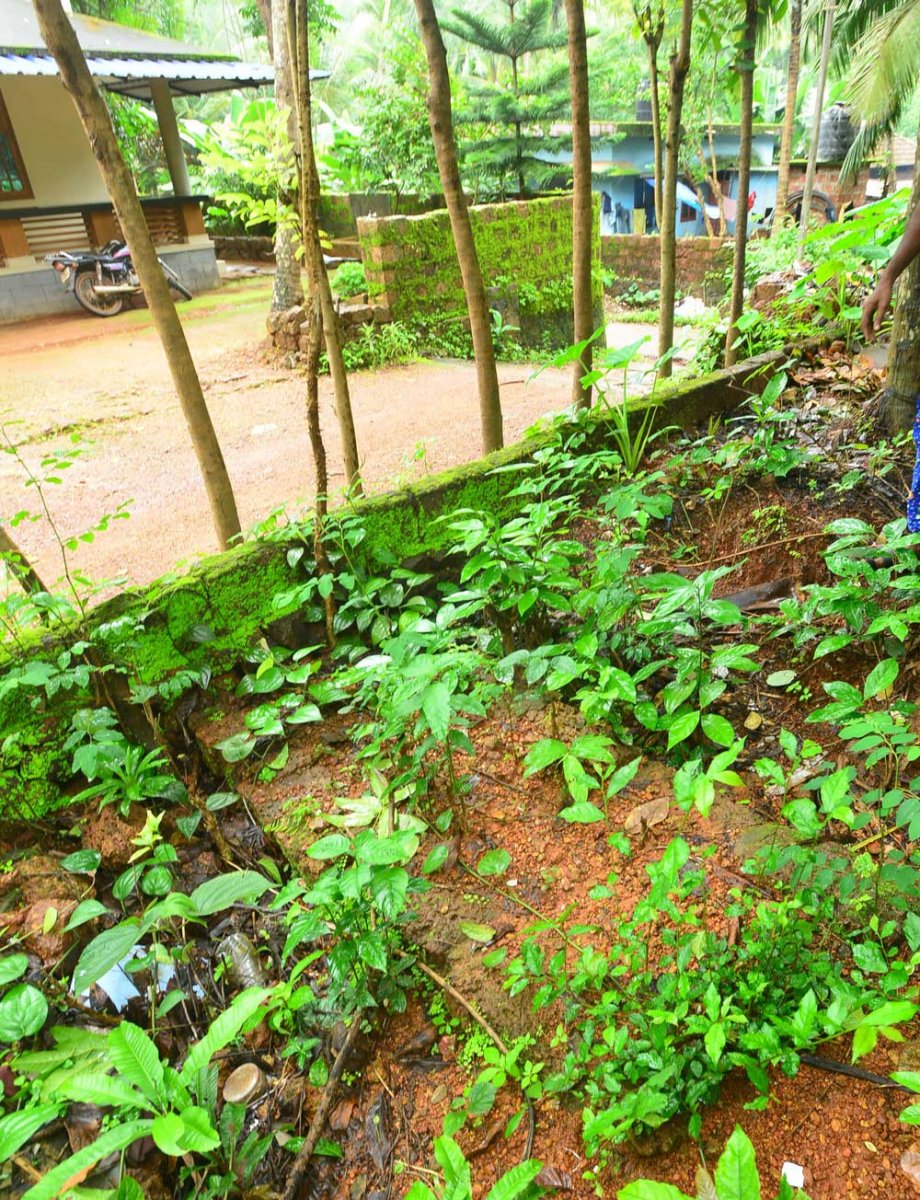
A mass grave in Adhikarathodi, Melmuri, where 11 bodies had been buried after the massacre. (Photo courtesy: Sameel)
Ninety-seven years ago on this day, the British army massacred 246 people in a small village in the Malappuram district of Kerala as part of a crackdown against the Mappila rebels.
The Mappila Rebellion was part of the non-violent Khilafat Movement led by Mahatma Gandhi and the Ali Brothers in 1921-22. The Mappila Muslims, who reside in the south Malabar region, had taken the movement seriously and engaged in combat with the well-equipped British army.
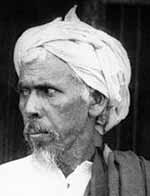
Ali Musliyar (Courtesy: Wikimedia)
The Mappila warriors, under the leadership of cleric Ali Musliyar and Variyam Kunnath Kunjahammed Haji (V K Haji), captured the taluks of Eranadu and Valluvanadu from the British and established their own rule.
After a short period, the British suppressed the rebellion savagely by letting loose the Gurkha Regiment, Dorset Regiment etc. According to official data, more than 2,300 people were killed and over 45,000 rebels were imprisoned in different jails across the country (the numbers are five-fold higher in unofficial records).
The rebellion had a huge impact on the region as well as the country. Mahatma Gandhi distanced himself from the rebels stating that the rebellion was just “an outburst of fanatics”. Several works, both critical and in support of the rebellion, have been published, but most of them are silent about the British crackdown on the rebels.
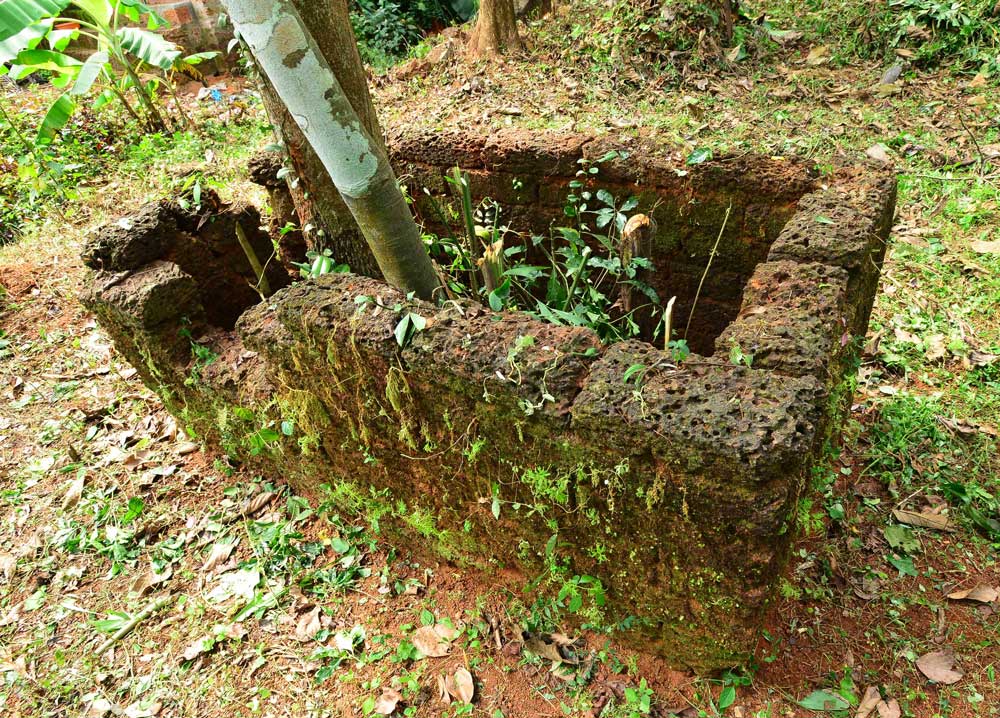
Two bodies were buried in this grave. (Courtesy: Sameel)
Unmarked graves
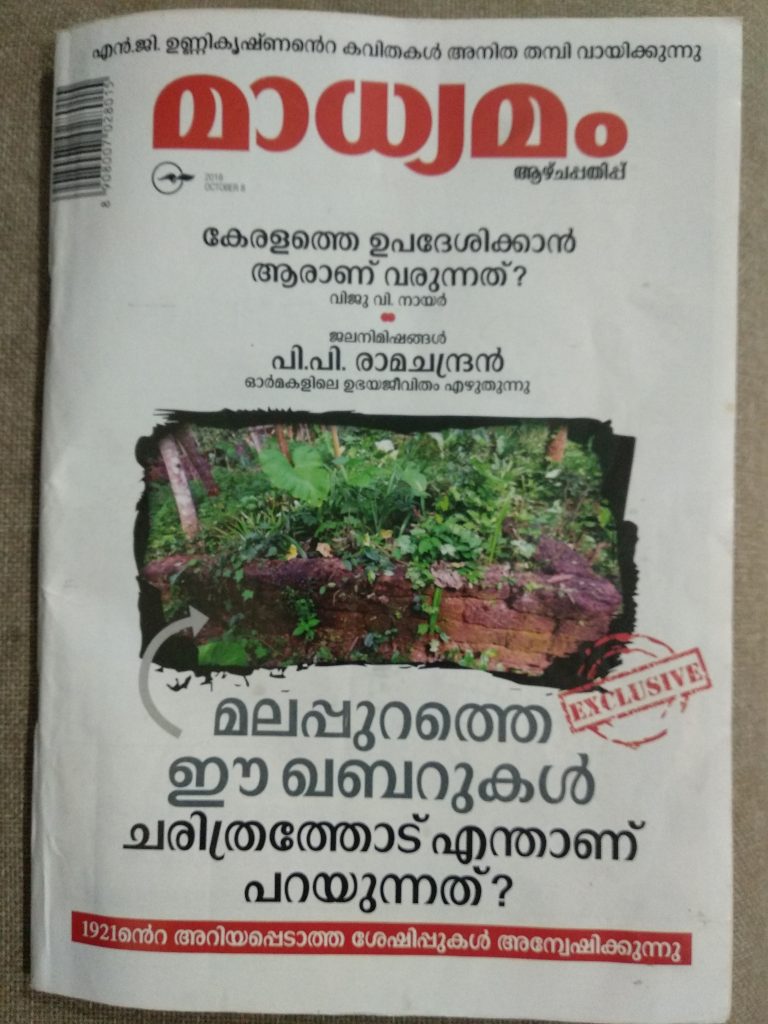
This bloodbath, which was largely forgotten, came to light after a three-year-long research by a journalist. Illikkal Sameel, who is with a Malayalam media organisation, spent four years documenting the history behind unmarked graves in a village located 3 km from the Malappuram district headquarters. In a detailed report published in Madhyamam Weekly, a Malayalam magazine, Sameel has illustrated the brutality of the British towards the Mappila, mostly innocents, including the old and the sick, to terrorise the rebels who had driven the mighty English force away from the region for months.
Cover page of Madhyamam Weekly.
In an ironic twist, Sameel, who resides in a nearby village, got to know about this forgotten historical episode four years ago from a friend, K Ashraf, who is pursuing his PhD from Johannesburg University, South Africa. Ashraf informed Sameel about the undocumented graves dating back to 1921 present in the area.
Initially, Sameel could find only five graves at Adhikarathodi in Melmuri village but nobody had any details about those buried there. After tracing the descendants of those buried, Sameel obtained information of 40 people from nine graves. All the graves had more than one body buried and among them one had upto 11 bodies.
“Malabar struggle is a well-researched topic from Kerala’s freedom movement and several scholars are still trying to explore more aspects. But I could find no trace of this particular massacre in any of those works,” Sameel said.
“In a casual conversation, a researcher in Malabar history mentioned Dorset Regiment and their involvement in suppressing the rebellion. I dug further to get details of the regiment and their expeditions, that was also futile,” Sameel explains.
From an octogenarian physician Dr Thorappa Muhammed, Sameel got to know that the number of people killed in the massacre was more than he could count. Muhammed told him that the number would go above 200 and challenged him to look at official British documents for more information.
Connecting the dots
“Most of the documents are not publicly available now, so I started flipping through the contemporary chronicles of officials. Among them, I went through a book of the Personal Assistant of Kozhikode Collector Mr Gopalan Nair’s ‘The Moplah Rebellion 1921’, which was published in 1924. In that book, he has just mentioned that the Dorset Regiment met some rebels near Melmuri and it led to the killing of 246 people on October 25, 1921,” said Sameel.
A book by the then police inspector of Malappuram, R H Hitchcock, describes every moment of his life as a British officer in Malappuram.
“The book is no more in print, hence, I got a photocopy of the book from one of my friends and a professor at Malappuram Government College, Dr Jameel Ahmed,” said Sameel.
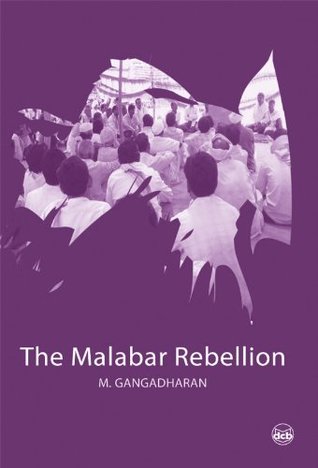
Another historian, Dr M Gangadharan, has cited British officials G R F Tottenham and C T Atkinson in his work on the Malabar struggle. Sameel found Tottenham’s book to be the most valuable as the author had added all the official communications, notes, commission reports etc., that were available during the rebellion.
“I stitched all these details together with the verbal accounts of various residents and stories of survivors to write this report. It was a painful effort,” said Sameel.
Earlier efforts
In the early 2000s, an article published in ‘Souvenir’ as part of the Pookkottur War anniversary had made some efforts to cover the massacre.
Some young enthusiasts and writers had also made videos regarding this massacre and related artefacts still available in the area. The information for these efforts led Sameel to more graves.
Two feet deep grave. (Courtesy: Sameel)
‘Girls were murdered’
“Dr Thorappa Muhammed had mentioned graves dug by Muslim women as men were unavailable to conduct the funerals,” elaborates Sameel. “I found two such graves in the latest expedition. Unlike the usual six-feet deep Muslim graves, these were only two feet in depth,” he said.
“As per some official documents and the accounts of descendants of the dead, a significant amount of the people killed in the massacre were innocent. Family members told me about men, including aged and sick, being forcefully dragged out of their home and shot. Two girls who were trying to protect their fathers were also shot by the army,” Sameel added.
Punished for links?
Apart from a telegram communication of the officials mentioning the short-engagement between Dorset and rebels in Melmuri after the Mappilas were attacked, there is no other evidence to lead us to the motive behind the massacre.
“A large gang reported last night four miles north-west of Malappuram. Operations are undertaken against them by Dorsets, Artillery and armoured cars. Enemy met in jungle west of Melmuri opposing our troops there and in the houses, refusing to come out when ordered to surrender and offering continued opposition resulting in 246 rebel casualties,” reads the telegram.
Sameel assumes the British unleashed violence in that particular place due to the presence of a big chunk of Ali Musliyar’s students and giving shelter to V K Haji when he was in underground.
He rules out any connections to the alleged Mappila brutality, including forceful conversion of non-Muslims. “In my research, I could not find any credible information about the forceful conversion. Rather, there are mentions of participation of lower caste people in the rebellion,” Sameel claims.
“If such forceful conversions had happened, where are the later generations of those people. But till now nobody came forward claiming as the descendants of ‘those people’,” says Sameel.
“The story of forceful conversion was to demonise Mappila warriors and justify the British brutality. Even the leaders in the freedom movement believed this story and ignored the ruthless suppression of the rebellion,” he added.
In his article, Sameel gives an account of assistance from Thiyya family, lower caste Hindus, to extinguish the fire set on homes of Muslim neighbours by the army.
The course of rebellion changes
The entire course of the rebellion changed after the massacre as more rebels surrendered. Also, the popular support to the rebellion had also diminished. The British created an impression among the people that none, despite being active or inactive in the rebellion, would be spared.
“This was the British strategy to terrorise the rebels as well as sympathisers of rebels to give a strong message: ‘either support British or die’,” Sameel added.
The British officials themselves accepted that all they killed were not rebels, but they cheered the increase in the number of submissions as a result of the army act.
“In the interval before they (Dorset Regiment) came into action, there had been several encounters with the rebels and on October 25th the Dorsets had killed 246 Mapillas in the Melmuri area. Not all of these probably were active rebels, and the encounter seems to have had a considerable moral effect, for shortly afterwards petitions began to be received from ‘amsams’ in the neighbourhood of Malappuram offering submission,” Under Secretary reported to superiors. (Tottenham, 39).
In the correspondence of F B Evans, I US, Special Civil Officer, he wrote that Malappuram Kazi with thousands of men and women pleaded for amnesty after the massacre. In continuation, he regrets about the bloodbath, saying, “I think this may be put down as the effect of the Melmuri show on the 25th when no doubt a certain number of comparatively innocent people were unavoidably killed.”
Complete cover-up
British and upper caste historians deliberately neglected this episode for their benefits, alleges Sameel.
British officials tried to cover up this brutality to suppress the rebellion as part of maintaining themselves from further reactions from Muslims from other parts of India and to avert the global scrutiny of the war crime.
Sameel demands an open apology and reparation from the British government for their brutality on innocent people.
“The massacres the British army unleashed as part of a crackdown on the rebellion in Malabar, including the one in Melmuri, was one of the deadliest violence in India when one looks at its intensity. There were families without men, as all men were killed or taken to prisons. Those families need both an apology as well as compensation. The Indian government should pressurise the UK for this,” Sameel said.
For generations to come
After publication of the article, Sameel received several calls from different corners detailing other similar massacres. He is planning to write a book with more descriptions and related events.
There is also a plan to produce a documentary on this. Malayalam filmmaker and director of hit movie ‘Sudani from Nigeria’, Zakaria Muhammed, has agreed to produce the documentary under the banner of his production house – Cross Border Camera.
Sameel hopes the history books will feature this episode in the coming days. “The episode of the massacre was known among the victims’ families, till the last generation. The present generation is not aware of this. I hope my work will instil curiosity among them,” Sameel added.
source: http://www.deccanherald.com / Deccan Herald / Home> Specials / by Ajmal V / DH News Service, Bengaluru / October 25th, 2018
Stories of conviction and contribution of Indian Muslim women, who “gave up the purdah” and were at “the forefront of the nationalist and feminist discourse” in the past century are on display here.
The exhibition on 21 “pathbreakers” opened for public view on Saturday.
Organised by Muslim Women’s Forum at the India International Centre (IIC), the show “Pathbreakers: The Twentieth Century Muslim Women of India” features women who remain largely unheard of and unsung in the mainstream narrative.
During and after the freedom movement, a note on the exhibition said, many Muslim women shed the ‘purdah’ and became partners in the project to build a new India.
They went on to become writers, teachers, artists, scientists, lawyers, educators, political workers, trade unions, MPs, and MLAs.
“With a few exceptions, most of them have been forgotten in time.”
The show, inaugurated by author-filmmaker Syeda Imam (granddaughter of early 20th century writer-educator Tyaba Khedive Jung), embodies the spirit of the active contribution of these women, and as Imam said, “were not in the recesses of home and kitchen”.
Far from the commonly-held impression of silenced, cloistered and acquiescent women, ‘Pathbreakers’ narrates the stories of strong, determined and engaged women, the note said.
Some of these women include Qudsia Aizaz Rasul, the only Muslim woman member of the Constituent Assembly and author of “From Purdah to Parliament: A Muslim Woman in Indian Politics”; Assam’s first woman MP Mofida Ahmed, elected from Jorhat in 1957; and Aziza Fatima Imam, who served in the Rajya Sabha for 13 years starting 1973.
Why Muslim women?
The exhibition of photographs, text and video installations, points to their significant contribution towards the building of the nation, along with their sisters of other communities, through its freedom struggle, independence and beyond.
“A multiplicity of stereotypes are constructed by diverse actors regarding Muslim women. But the fact is there is no undifferentiated amass’ of Muslim women. Like women of all socio-cultural groups, they too are a divergent, shifting composition of individuals, often dumped in popular parlance into one single heap. This homogenisation has to be rejected,” the note read.
The show also projects video recordings of readings from writings of some of the featuring women.
The organisers, however, said while the participating women might seem elite, it is only the first step in identifying and recognising pathbreakers from all sections.
Indira Iyengar’s book flounders on history, making some foundational conclusions untenable.
Shazi Zaman who has recently written a well-researched book on Akbar and has a detailed account of Akbar’s contact with the Europeans who visited his court, makes no mention of a Bourbon. Credit: Wikipedia
Some books need to be read because they are likely to tell you things you have always wanted to know. Some stories need to be told because they make for riveting narratives or expand your frontiers of knowledge in exciting and dramatic ways.
It is with such noble (and hopeful) intentions that one embarks upon The Bourbons and Begums of Bhopal: The Forgotten History despite its awkward size and substantial weight. In its size and appearance, it is is an unfortunate mix of a book with pictures and copious amounts of running text: too large to carry while travelling and not sufficiently picturesque to qualify as a coffee-table book. Its contents prove to be an awkward mix too, floundering between academic research and family lore.
The Bourbons and Begums of Bhopal: The Forgotten History Indira Iyengar, Niyogi Books Private Limited, 2018.
Indira Iyengar’s tale is part family history, part archival research and part anecdotal memoir. It opens with a disarming admission: ‘I am no historian, but I have a story to tell.’ Iyengar’s mother, Magdaline Bourbon traced her lineage to Jean Philippe de Bourbon who left his native France to arrive in Mughal India, sought and received employment in Emperor Akbar’s court, was actively involved in Akbar’s meeting with the Jesuit priests from Goa. For his services, Akbar is said to have gifted him a small principality, Shergarh near Narwar in present-day Madhya Pradesh and the sister of his Christian wife, an Armenian woman (Portuguese by some accounts) by the name of Juliana who apparently also served as a doctor in Akbar’s harem. Thus began the Bourbon line in India which spread its roots from the Mughal court to the princely state of Bhopal where the descendants of this first Bourbon eventually settled down. Being neither Muslim nor Hindu the Frenchmen were viewed as unbiased and loyal to their masters. The stories of their swashbuckling past and alleged purported ‘royal bloodline’ no doubt added to their mystique.
While Iyengar is at pains to establish her ancestor’s descent from the Bourbons of Navarre, historians are divided as to whether Jean Philipe was indeed from the royal house of Bourbon or simply a fugitive Frenchman, a mercenary who found name and fame in distant India, established a lineage and bestowed a legacy. Iyengar seems to be working on the principle that her mother’s version of the family history should suffice and she, as the custodian of that family history, is obligated to tell the story. ‘My mother’s narration of the family was also very interesting,’ Iyengar writes, ‘and I feel it needs to find a place in recorded history’. It is this assertion that proves to be problematic. For, had it been told as a colourful yarn with anecdotes and family portraits or even bits and pieces of trivia and family lore it could have been a charming story – as history it is on decidedly shaky grounds.
Also, while Iyengar’s research in the archives of the Agra Archdiocese may well establish the role of her French forefathers in various administrative capacities, it does not satisfactorily establish Jean Philippe’s link with Duke Charles III de Bourbon (1490-1527), also known as Connetable de Bourbon. The earliest account of Jean Philippe she is able to offer is by Madame Dulhan Bourbon, wife of Balthazar Bourbon; this comes in the form of a testimony made to a British general. Coming from a family member, that too as late as the late-19th century, it carries dubious weight at best. All other accounts, by missionaries, are in the nature of hearsay, urban legends that acquired veneers of half-truths with each telling. Jean Philippe himself is said to have presented a document to Jahangir in 1605 or 1606, according to Iyengar, stating that he was the son of Charles Connetable de Bourbon and that he had to flee France after arranging a mock funeral for himself. Since such a document does not exist, we can only rely on the author’s mother, Magdaline Bourbon’s memory of a ‘certain priest from Bombay’ who possessed the Bourbon family records that were subsequently ‘lost with time’. Shazi Zaman who has recently written a well-researched book on Akbar and has a detailed account of Akbar’s contact with the Europeans who visited his court, makes no mention of a Bourbon.
While Jean Philippe’s relationship with the House of Bourbon may be in dispute, Iyengar’s research in the archives of the Agra Archdiocese shows that there existed a certain Jean Philipe de Bourbon, who was married to a certain Bibi Juliana (referred to in later Jesuit accounts as Dona Juliana Dias da Costa) who helped build the first Catholic church in Agra in 1588 on land gifted by Akbar. Jean Philipe is said to have died in Agra in 1592 leaving behind two sons one of whom, according to Iyengar, was in charge of the seraglio. At the time of Nadir Shah’s invasion, the Bourbons left poor, ravaged Delhi and the clan, by now comprising 300 men and women, sought refuge in the family estate in Shergarh and thence began the southern sojourn of Jean Philippe’s descendents. Mamola Bai, the first woman ruler of Bhopal, offered Salvador Bourbon the position of general in the Bhopal state army. Salvador married a certain Miss Thome and the family then embarked on a long innings serving as confidantes, generals, even Prime Ministers to the Bgeums of Bhopal.
Already carrying two names, a European and a Muslim one, the Bourbons began to wear Bhopali dress and live like the local nobility. However, the fleur de lis in their coat of arms never failed to remind them and their local patrons of their royal past in distant France.
Rakshanda Jalil is a writer, translator and literary historian.
source: http://www.thewire.in / The Wire / Home> Books / by Rakshanda Jalil / October 05th, 2018
Deepthi Sashidharan and Usha Bala Krishnan releasing a book on Nizam’s jewellery at Chowmohalla Palace on Thursday. | Photo Credit: G_RAMAKRISHNA
Treasures of the Deccan – Jewels of the Nizam released
Princess Esra lent a royal touch to the release of the Treasures of the Deccan – Jewels of the Nizam in Hyderabad’s Chowmahalla Palace on Thursday evening. “I can imagine Alexander Jacob walk into this very same Chowmahalla Palace holding in his hand the 184.5 carat diamond and climb the stairs to meet the Sixth Nizam Mahbub Ali Khan,” said Usha Bala Krishnan, who has co-authored the two-volume work with Deepthi Sashidharan.
The book documents the fabulous collection of the Nizam’s Jewellery, some of which is currently locked up in vaults of banks, while other pieces are in private collections.
The authors made a short presentation about how the book has evolved.
“Earlier, I worked on the Jewels of the Nizam which was more in the nature of a catalogue.
Launching this book in Hyderabad is special, as the jewellery has a special, almost metaphysical, connection to this place,” said Ms. Krishnan who is a well-known historian of jewellery and was commissioned by the Central Government before the jewels of Nizam were put on display in Hyderabad’s Salar Jung Museum in 2001.
“Matching some of the black-and-white photographs with the jewellery that the royalty was wearing at that time was an a-ha moment.
We discovered the jewels in private collection as well as what is known as Nizam’s Jewellery,” said Deepthi Sasidharan who trawled through a vast collection photographs to bring alive the story of Nizam’s jewellery.
source: http://www.thehindu.com / The Hindu / Home> News> States> Telangana / by Special Correspondent / Hyderabad – November 30th, 2018
Namita Devidayal’s book on Ustad Vilayat Khan is an interesting account of his life and musical journey
Writing the life sketch of a legendary musician such as Ustad Vilayat Khan is no easy task. Going by his lineage, stature, proficiency and lasting influence, summing up his music and personality in 252 pages is like exploring a raga in five minutes. Yet, such an attempt is important to enable young musicians to imbibe from his distinctive style and virtuosity.
The book, The Sixth String of Vilayat Khan, has been authored by Namita Devidayal, who had earlier penned the bestseller, The Music Room: A Memoir. Namita says she has tried to create an impressionistic fluid portrait — of a magnificent artiste and a fragmented human being. “I have tried to imagine him and tell a story anchored in fact but narrated with poetic license, like improvising on a jazz standard. It would be a mistake to regard this strictly as a biography.”
The book is an outcome of Namita’s long discussions with people who were close to the Ustad and his family and through interviews, archival records and photographs.
Vilayat Khan was 10 when his illustrious father Enayat Khan passed away, but not before inducting his son into the legacy of the greatest sitar gharana (his grandfather was Imdad Khan, who undertook the tough 40-day chilla ritual, when the musician does not step out of the house and only practises).
As a young lad, living in Calcutta, in a house named ‘Riyaz,’ Vilayat had only the sitar for a friend. He was eight when he performed at the All-India Bengal Music conference and earned immense praise. The Megaphone Recording Company even came up with a 78 rpm featuring the father on one side and the prodigious son, on the other. But his father’s untimely death left Vilayat shattered, both monetarily and musically.
The book gives a detailed account of how Vilayat fought hardships to become one of India’s foremost musicians. One night, he left home with his sitar, swearing to return only as an accomplished musician. He boarded a train to Delhi and reached his destination thanks to kind-hearted ticket collectors.
He went straight to All India Radio; the station director recognised him as Enayat Khan’s son and gave him refuge in the station’s garage. He used to have food from the canteen and clean instruments in the studio. He was delighted to see eminent artistes walking AIR’s corridors and listen to the recordings of musical greats.
Packed with interesting anecdotes and providing insights into the artistic ambience of the time, the author takes the readers through Vilayat’s training under his maternal grandfather (Bande Hasan Khan) and uncle (Zinda Hasan Khan), who were vocalists and would come to Delhi to teach him. Sometimes, Vilayat visited their house in Saharanpur. Bande Hasan Khan was also a wrestler and took his grandson to the akhada to build his stamina.
Vilayat’s mother Basheeran Begum was happy that her family had undertaken the responsibility of his training, but her son’s growing fondness for singing worried her. She warned him about breaking the family tradition. A distraught Vilayat approached his uncle, who advised him to make his sitar sing instead. So he began to consciously nurture the gayaki ang in his instrument. The Ustad, who was also an accomplished surbahar player, once said, “When I sit down on stage to play, everything comes to me in the form of a vocal performance. It just happens.”
An entire chapter is devoted to the 1944 Vikramaditya Music Conference in Bombay, where a sitar maestro called Vilayat Khan was born. Soon he became a regular at prestigious festivals and private concerts. At the same time, another sitar exponent, Ravi Shankar was making a mark too. Though stories of their rivalry were spoken about in music circles, both had tremendous respect for each other.
Vilayat’s tryst with fame, money and the film industry (among his close friends were Naushad and Madan Mohan) began when he moved to Bombay. It was also where he met his disciple Arvind Parikh, who came from a Gujarati business family. A devoted shagird, Arvindbhai also became his close confidante. By 1950, Vilayat Khan began touring the world.
His preparation for concerts included planning his attire. The book talks about how he would often have a dress rehearsal in which the entire family would be forced to participate. Even his silver and carefully-designed paan box had to be set the night before a performance. He loved the good life, traditional when it came to his art, while preferring to be up-to-date in his appearance. From Bombay, he moved to Shimla, to enjoy the quietude of the hills, and then to the U.S.
While drawing the portrait of an older Vilayat Khan, Namita touches upon his uneasy relationship with his son Shujaat Khan, a well-known sitar player and his younger son Hidayat Khan’s struggle to live up to his father’s expectations.
In 2004, after traversing the highs and lows of life like the notes of his strings, the Ustad died of lung cancer. In his hands, the sitar gained a beautiful voice.
source: http://www.thehindu.com / The Hindu / Home> Entertainment> Music / by Chitra Swaminathan / November 08th, 2018
Sohaila Abdulali was the first Indian woman to write about being raped, in 1983. In a new book, she raises tough questions about how we view sexual violence.
Who rapes? Just as we can have fixed ideas about victims, we have them about perpetrators as well.
Are all men capable of rape? In my own life, I cannot accept this. Here is what one man said when I asked him if he thought he could imagine raping someone. “For myself, I would say no,” he said. “There’s a level of empathy that would make it impossible for me.” I believed him.
I can imagine murdering, but not raping. Murder is worse than rape, I know, but there are lots of reasons to do it. If I were in a state of out-of-control rage, if someone were threatening to harm me or someone else, if killing someone were the only way to avoid some terrible catastrophe…I know, this is a weird, weird paragraph. But think about it – there is no reasonable reason to rape. You’re either doing it explicitly to cause damage, or because you want sex and don’t understand or care that the other person does not want it.
Justifiable homicide exists (for instance, if you’re killing someone to stop a rape), but justifiable rape? Do you ever need to rape someone to stop any other crime? The only people who openly justify rape are those who run blatantly woman-hating societies, where women are objects.
Speaking of which, let’s talk about objectification. In my days of clarity and righteousness as a college student, I wholeheartedly believed the conventional feminist wisdom that men objectify women in order to rape them. The logic goes like this: if you deny someone’s humanity, you can abuse them.
But perhaps it’s your own humanity you have to deny. Or at least your own positive humanity. Cruelty and sadism are also very human.
Social scientists Alan Fiske and Tage Rai have studied the moral motivations of violence. Rape often has a (twisted) value component. You value your own needs more than your victim. You want to teach someone a lesson. You want to feel powerful. You feel you deserve to humiliate someone. All these values and emotions only apply to other people. We don’t usually feel the urge to humiliate objects. It’s precisely because someone is a human being that it matters how you treat him or her.
Paul Bloom wrote in the New Yorker about Fiske and Tage’s analysis:
In many instances, violence is neither a cold-blooded solution to a problem nor a failure of inhibition; most of all, it doesn’t entail a blindness to moral considerations. On the contrary, morality is often a motivating force…Moral violence, whether reflected in legal sanctions, the killing of enemy soldiers in war, or punishing someone for an ethical transgression, is motivated by the recognition that its victim is a moral agent, someone fully human.
The men who raped me were very clear that they were angry at me. Don’t ask me to explain why, and they’re not available for comment. I just know that they were enraged. I had no right to be out with a boy, they said. They would teach me a lesson. This is what happens to bad girls. At no time was I just an object. At worst, I was a whore who had to be put in her place. At best, I was a fool who had to be taught a lesson. But I was definitely a person.
I babbled like a parakeet on speed through the whole ordeal, trying to get them to show some mercy. Talking about myself and my life and trying to get them to see me as worthy of compassion – all that went nowhere. I was a wicked, clueless girl and had to be taught. But one thing did have an effect – when I started talking about them. “We are all brothers and sisters,” I ranted. “You are my brothers.” That infuriated them. They didn’t want to be reminded of their humanity.
This is just one story. But I think it’s worth considering the idea that other rapists have equally distorted views of themselves and their victims.
Audrey, the young British woman who was gang-raped in Italy, told me that one of her rapists said in his police statement that he didn’t need to rape to get women; he was so naturally attractive that women just flocked to him. In his mind, it wasn’t even rape. She was just lying there, clearly fine with it, so what was the problem?
We’ve got a long way to go when we can’t even agree on what is rape.
Audrey went on to say that the judge in her case sided with the rapists. “The judge and prosecutor seemed to share this perspective to an extent – that rape was something only real psychos jumping out of bushes did, or losers who couldn’t get sex any other way; it was not something that good-looking, well-dressed young men needed to resort to. I guess I would respond today that rape is really not about sexual attraction or having sex in the first place. Especially when you’re talking about a group, there’s a different dynamic at play, one that is more about humiliating someone and treating her as inferior…at least, this is the conclusion I have reached.”
Consider the Stanford rape case. Undergraduate Brock Turner sexually assaulted an intoxicated woman and left her unconscious. A woman friend of his wrote a letter to the judge, which said, “Where do we draw the line and stop worrying about being politically correct every second of the day and see that rape on campuses isn’t always because people are rapists?”
Rape on campus is always because people are rapists. We just don’t want to think about the uncomfortable truth that a rapist is just a guy, any guy, who rapes.
“Does anyone enjoy raping?” Kalki Koechlin wanted to know when we were trying to figure it all out. “What’s going on?”
Patriarchy is to blame, says writer bell hooks.
Provocative women are to blame, say the Iranian morality police.
Alcohol is to blame, says the Campus Sexual Assault Study, prepared for the US National Institute of Justice. The woman who was raped by Brock Turner, the Stanford student who infamously got a ridiculously light sentence for his crime (from Santa Clara County Superior Court Judge Aaron Persky, who lost his position two years later), wrote a powerful letter to be read out in court. She talked about alcohol:
Alcohol is not an excuse. Is it a factor? Yes. But alcohol was not the one who stripped me, fingered me, had my head dragging against the ground, with me almost fully naked. Having too much to drink was an amateur mistake that I admit to, but it is not criminal. Everyone in this room has had a night where they have regretted drinking too much, or knows someone close to them who has had a night where they have regretted drinking too much. Regretting drinking is not the same as regretting sexual assault. We were both drunk; the difference is, I did not take off your pants and underwear, touch you inappropriately, and run away. That’s the difference.
Brock Turner’s father also wrote a letter about his son, to the judge. It is a devastating testament to rape culture:
Now he barely consumes any food and eats only to exist. These verdicts have broken and shattered him and our family in so many ways. His life will never be the one that he dreamed about and worked so hard to achieve. That is a steep price to pay for twenty minutes of action out of his twenty-plus years of life.
Some rapists have permission to take what they want. Some rapists have had terrible lives full of abuse and despair. As a friend who was raped by a troubled man said, “You get a lot of shit on your plate – it starts to affect you.” It’s not an excuse, but a reality, like witnesses of domestic abuse who grow up to beat their partners. But then, there are the men who’ve had perfectly healthy, wholesome lives and commit rape anyway. What about them? Or the men who abuse their power, like those I’ve talked about in Washington, and Hollywood, whose penises have spent an inordinate amount of time outside their owners’ pants.
It’s time to throw one idiotic notion overboard – the notion that men can’t stop, that there’s a point of no return once you’re sexually aroused.
We keep talking about women’s agency, but men have agency too. Guys, tell me this: if you were in the middle of hot sex and really, really into it, and your grandmother walked into the room and peered at you over her glasses, would you stop, or would you keep going?
Rape is like a go-to hobby for men of all types. Godmen in Goa. Daddies in Denmark. Teachers in Tanzania. Boyfriends in Britain. Ski instructors in Switzerland. Priests in Prague.
This doesn’t necessarily contradict my earlier point about rapists dehumanising themselves. Violence has so many motivations. There’s damage rape (you want to cause pain) and there’s casual rape (you want sex).
When you look around at the whole panorama, it’s difficult to muster up wholesale abhorrence of all abusers.
They’re so aggravatingly human. So few have bulging red eyes, uncontrollable drooling, and fifteen heads. A therapist told me about how he took on the case of a fourteen-year-old boy who had raped a twelve-year-old autistic girl. “Everyone at the clinic thought he was a monster, and nobody wanted to take the case.” The therapist wondered how he would deal with this twisted teenager. “And then, this sweet young kid walked in.” He had been terribly sexually abused and brutalised himself, all his life, and he was “doing the only thing he knew.”
Why they do it is interesting, but after a point I’m more interested in moving along from this unevolved state of human interaction. I don’t want to care about rapists’ motivations. They should just stop. Whether it’s wired in or because their daddy didn’t play with them or they’re just jerks or they’re sexually frustrated or they do it because they can or they do it because they can’t not do it or they’re normal or they’re abnormal, who cares? They should just stop what one superior babysitter once called this “third-class behaviour.”
Unfortunately we do have to spend time trying to understand, if we’re going to stop it. So yeah, we can’t talk about rape without talking about why men rape.
Excerpted with permission from What We Talk About When We Talk About Rape, Sohaila Abdulali, Penguin Random House India.
source: http://www.scroll.in / Scroll.in / Home> Book Excerpt / by Sohaila Abdulali / November 14th, 2018