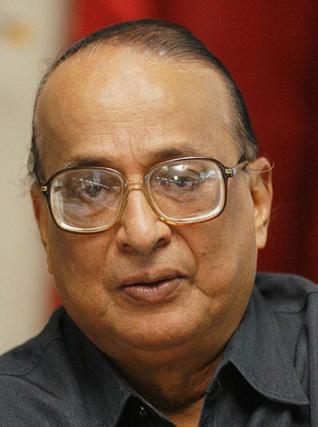
Actor Asif Ali is stepping into entrepreneurship with a food outlet, called Waffle Street.
Asif Ali
Located in Panampilly Nagar, Kochi, Waffle Street will serve Waffles, Crepes, Donuts and more. Asif, along with two friends are behind the venture which launched on Monday evening.
Actor Prithviraj inaugurated the outlet officially.
Asif told media that he always wanted to start an exclusive food outlet and felt that Waffles was a good option.
BMTC launched an electric bus at Shantinagar Bus Station on Thursday; Right: A view of the interiors | Sudhakara Jain
The Bangalore Metropolitan Transport Corporation (BMTC) introduced the country’s first electric zero-emission bus in the city on Thursday.
Although the bus has been in Bangalore for over a month now, it was officially launched by Transport Minister Ramalinga Reddy after getting the required permissions from the Transport Department.
The bus will run on a trial basis for the next three months. During this time, it will operate along various routes, beginning with one from Majestic to Kadugodi that is likely to cost `80.
Plans are also afoot to run the bus along the airport routes. The charging point for the bus is at the Volvo depot at Majestic.
“We will study whether the bus is economical and if it can function efficiently in the city. When the battery is fully charged (six hours), the bus can run for about 250 km, which is ideal for BMTC. However, this needs to be tested. We also need to see how it fares on various roads in the city and which routes are best suited to operate the bus,” said BMTC managing director Anjum Parvez.
Transport Minister Ramalinga Reddy said that though the bus is expensive, it is likely to be a good deal as a long-term investment.
“The bus costs about `2.7 crore and this is expensive. But this is one bus in the entire country. Once the demand for the bus goes up and more people express interest in purchasing it, the rates are likely to come down. Moreover, the research and development wings of various bus manufacturers are working on this and it is some only time before the initial cost of the bus is reduced,” he said.
When asked if the state government would be willing to share the cost or offer subsidies, Reddy said, “We will consider various options if the bus is found to be suitable for the city. At present, it is on a three-month trial and following this, a decision will be taken on whether or not to purchase the bus,” he said. He added that what was important was that pollution levels would be brought down by using electric buses, hybrid or CNG-operated buses. The bus, manufactured by Build Your Dreams (BYD), was brought to India by Utopia Pvt Ltd. At least 5,000 such buses are operational in countries such as the United States, Netherlands, Switzerland and some European countries.
GOING GREEN
Zero emission
No oil required
Costs Rs 2.7 crore (Volvo Rs 88 lakh)
Fare from Majestic to Kadugodi – Rs 80
Runs for 250 km with 6 hours of charging
source: http://www.newindianexpress.com / The New Indian Express / Home> Cities> Bangalore / by Express News Service- Bangalore / February 28th, 2014
People from all walks of life paid tributes to industrialist P.K. Mohamed, 73, who died here on Monday. He was the managing director (MD) of Western India Plywoods Ltd. (WIP).
He had been recuperating at his residence at Thana here after a recent cardiac surgery. The body was taken to Thalassery for burial at Elangol Juma Masjid, Chettamkunnu.
Early years
He followed his father, A.K. Kaderkutty, into the industry. After college education in Chennai, Mohamed went to Germany for extensive training in wood technology.
He joined WIP as production manager in 1962. He was made MD in 1993.
He was involved in the modernisation and diversification of the company.
He had functioned as office-bearer of the North Malabar Chamber of Commerce and was a sports organiser. He was a member of various industry organisations and was actively involved in the social sphere.
He is survived by wife and four sons. Political leaders including Rural Development Minister K.C. Joseph and E. Ahamed paid their last respects.
source: http://www.thehindu.com / The Hindu / Home> News> National> Kerala / by Special Correspondent / Kannur – October 01st, 2014
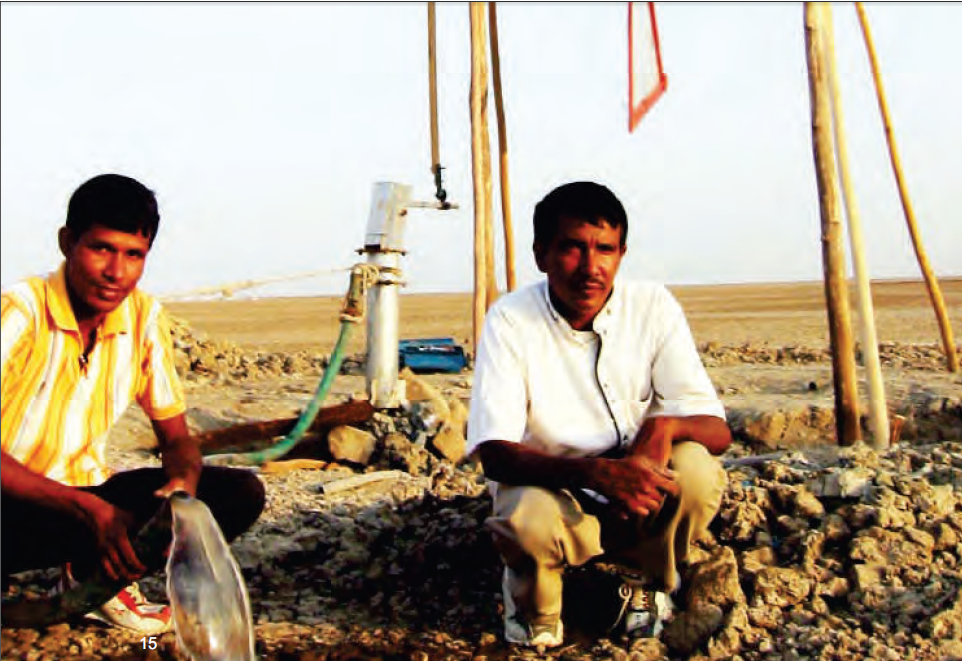
Brothers Mohammad Methar Hussain and Mushtaq Ahmad wanted power for irrigation and they developed a low cost windmill made out of bamboo, which is more than 10 times cheaper than the regular ones available in the market. Now, there are more than 25 such windmills running in Gujarat. Read to know more about their journey and how they did it.
Mohammad Methar Hussain and his brother Mushtaq Ahmad from Darrang district in Assam grew paddy in the winter season (also known as bodo paddy). Irrigation involved a lot of manual effort and using diesel sets for pumping water was a huge drain on the resources. To tackle this issue, Mehtra thought that if they could run a large wheel on wind power, and connect the wheel to the hand pump, that would serve their purpose quite efficiently.
So, both of them started working on making a windmill unit from locally sourced materials such as bamboo wood, strips of old tyres, pieces of iron, etc. With the help of a carpenter, the first prototype was ready in four days. Since the supporting framework was composed of bamboo, the final product costed Rs. 4500, vis-a-vis the commercially available wind mills which cost over Rs. 60,000.
Mehtar and Mushtaq
Innovation Diffusion : Assam —–> Gujarat
India is the third largest salt producing country in the world with an average annual production of about 157 lakh tonnes. The Little Rann of Kutch (LRK) supplies 21% of the total salt production of India.
Salt workers, known as Agarias, are some of the poorest people in the state. Agarias mostly used counterpoise, a method that requires two people, one for lowering the counterpoise and other for straining the water. Some of them started using diesel pumps, but the exorbitant machine and fuel costs made a huge dent in their already diminishing returns from salt farming.
With the mission to improve lives of salt farmers, Gujarat Grassroots Innovation Augmentation Network – West (GIAN W) along with National Innovation Foundation (NIF-India) took the lead in diffusing the innovation in salt farming areas.
Based on the feedback received from salt farmers, GIAN W improved the design and developed a multi-dimensional model which was installed at LRK in 2008. Understanding the diverse needs of farmers to increase the efficiency of windmills, GIAN W joined hands with Alstom foundation for design modification and improvement.
As of 2012, 25 of these windmills have been installed in Kathivadar and Kadiali villages in Amreli district.
Low cost windmill has solved irrigation problems for the village
Benefits of the Windmill Pump
Thanks to the windmill pump, now salt farmers don’t have to slog for hours with the water pump. The windmill pump saves about Rs.50,000 worth of diesel in six months. It has decreased salt farmers’ reliance on manual labour resulting in savings of about Rs. 28,000 per season per person. Farmers can now easily recover their investments within the harvesting season.
The innovation would also result in the reduction of five tonnes of carbon emissions for every 100 tonnes of salt produced. As per NIF, on an average, every windmill-powered hand pump should generate five Carbon Emission Reductions (CERs) certificates worth Rs.3750.
Every rupee saved and milligram of carbon emission reduced is a glaring testimony of how rural innovations impact the community, society and the world at large.
In the next phase, GIAN W plans to erect more windmills in other parts of Gujarat. The salt farmers of Gujarat are indebted to Mehtar and Mustaq for making their lives more efficient and their occupation, profitable.
For any enquiries related to the machine, please get in touch with NIF-India at bd@nifindia.org.
source: http://www.thebetterindia.com / The Better India / Home> Innovation> Gujarat / by Rahul Anand / July 24th, 2014
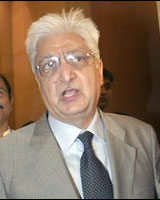
A personality revered by all the software professionals and an icon to the aspiring youth of the country, Azim Premji besides being the Chairman of Wipro Technologies, is a good human being who has never failed to inspire the young entrepreneurs. Initially starting with cooking oil to household goods to software, the company under the flag of his leadership never failed to deliver its best.
Early Genesis
Azim Premji was born in the year 1945 in Mumbai in a Gujarat Muslim family. He studied electrical engineering at Stanford University, US when he had to come back to India to take care of his family business because of the sudden demise of his father. He took control of ‘Wipro’ the company that dealt in the business of vegetable oil at the age of 21 and his success that followed afterwards is history. Azim Premji is happily married to Yasmin Premji with two children, Rishad and Tariq.
A devoted professional and hard worker, Azim Premji took ‘Wipro’ to an admirable height. Eventually ‘Wipro’ grew into a 3,500 Crore empire. Today ‘Wipro’ is included among the top hundred technological companies in the world and Azim Premji holds the position of the richest man in country his property amounting to around 17.1 billion US dollars. Azim has taken his company to the height from where it operates with the major IT companies of the world namely Nokia, Cisco, Nortel, Alcatel and General Electric company. Under Azim Premji the company has spread its wings in the fields of IT, R & D Services and BPO. The largest outsourcing company in India and research and service provider, ‘Wipro’ has ventured into the areas which nobody could think of.
Other Achievements
For his stupendous contribution to the field of software technology Azim Premji has received several awards and accolades. He has been titled ‘Businessman of the year 2000’ by Business India, ‘Business leader of the year 2004’ by Economic Times, one of the ‘100 most influential people in the world’ by the Financial Times in the year 2004, ‘One of the 25 most powerful business leaders outside the USA’ by Fortune in the year 2003 and “power to effect change” by Forbes in the year 2003. He has also been facilitated and honored by the title of doctorate by the Indian Institute of Technology,Roorkee and Manipal Academy of Higher Education. He is the first person in India who received the ‘Faraday Medal’ in the year 2005. He has been given the title of ‘Padmabhushana’ by the government of India.
The Other side of him
Azim Premji has contributed a lot to the development of the country. He has started an organization known by the name of ‘Azim Premji Foundation’ which works with the sole motto of providing primary education to every single child of the country. Having around 17,000 schools operating under the organization, Premji finances for all its requirements.
A man of principles and ethics, Azim Premji has never compromised with the quality and level of commitment to his work. He is informed of all the officials working for his company who respect and revere their employer for the strength of his character. ‘Don’t do anything that you’re unwilling to have published in tomorrow’s newspaper with your photograph next to it’ -is the slogan of his company with which it has reached the zenith of success and fame.
source: http://www.headlines.mapsofindia.com / Headlines India / Home> LifeStyle> Man’s Word
Once confined to South India, coffee has emerged into pan Indian beverage, not just at cafes but also in homes. However, the coffee industry is facing several challenges due to shortage of labour in its estates and plantations. Hassan M Kamal investigates
There’s a story that claims how nearly 400 years ago, a Sufi poet named Baba Budan smuggled coffee beans from Mocha (Yemen), to the hills of Chikmagalur in Karnataka. While there is no recorded evidence to prove this story, it has remained a popular folklore among India’s coffee lovers.
The presence of a controversial shrine of the Sufi saint on top of Dattagiri (or Baba Budan) range of the Western Ghats, watching over the coffee estates of Chikmagalur, further lends credence to the belief. After its arrival, over the next four centuries, coffee grew to become an integral part of South Indian culture.
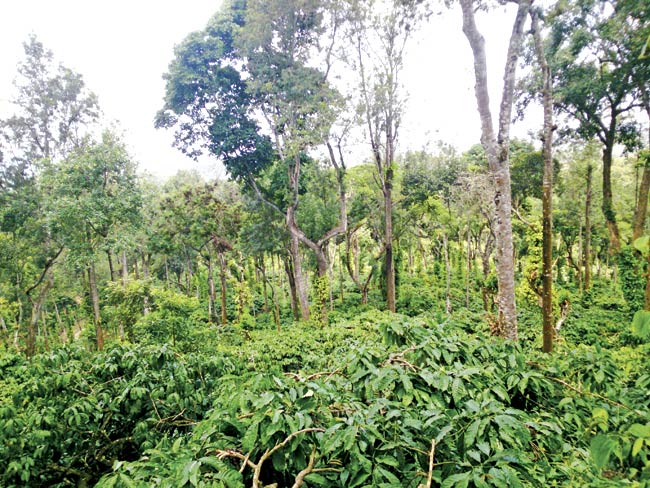
Most coffee plants in India are grown under the shade of trees. Pic courtesy/ Dr Ashwini Kumar BJ
Different communities and cities came to master the art of growing coffee, roasting and brewing a fine concoction from the coffee beans, in their own way.
Aromatic trail
“Even today, there are several households in South India who roast their own batch of coffee beans in the kitchen, grind it and prepare a decoction that suits their needs,” shares Dr Ashwini Kumar BJ, who holds the Coffee Board Research Chair at the Indian Institute of Plantation Management in Bangalore.
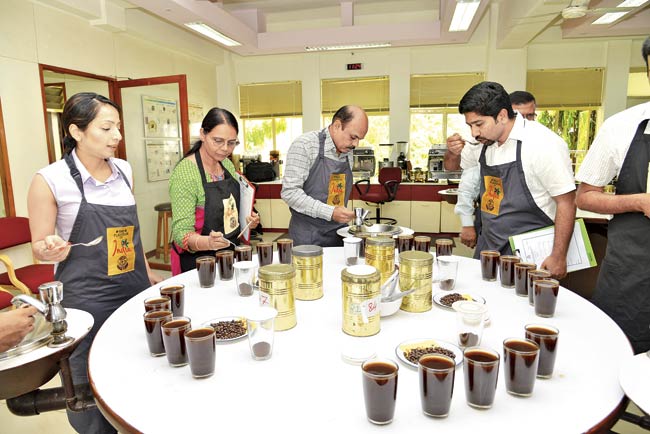
A tasting session in progress at the Coffee Board head office in Bangalore. Pic courtesy/ Dr Ashwini Kumar BJ
Their methods have created specialty coffees, which are in huge demand in the Western markets as well as location-centric versions of Indian filter coffee like the Degree coffee of Kumbakonam in Tamil Nadu (most popular among Tamilians), Coorg coffee and Chikmagalur coffee, each known for its unique taste, informs Dr Kumar (check box for details).
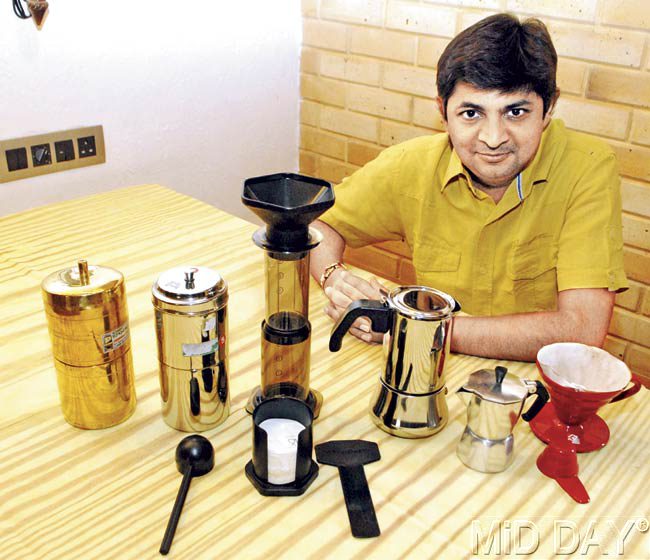
Mumbai-based brewing expert Jignesh Shah with the three coffee-making equipments (from left to right) the Indian Filter Coffee Maker (in brass and steel), Aero Press and the Moka Pot. Pics/ Shadab Khan
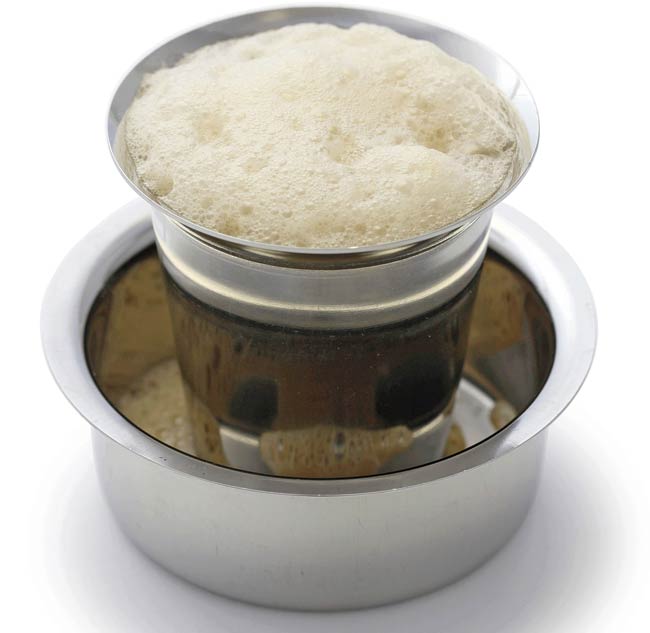
The equipment to make the popular Indian filter coffee is proof of how engrained the beverage is in the daily life of a South Indian. While the origins of the filter coffee maker aren’t documented comprehensively, according to photographer K Suresh, a die-hard coffee lover, the earlier method required keeping ground coffee wrapped around a cloth dipped in a pot of water overnight.
“My grandma would make fresh coffee every morning; jaggery was used to sweeten it. Sugar was reserved for tea,” he recalls. He still sources coffee beans from Mangalore, but also vouches for beans sold at Philips Tea and Coffee in King’s Circle, a locality famous for its authentic coffee. “The process continues with the Indian filter coffee makers, even today.
The ground coffee is kept inside a chamber and filled with hot water. Overnight, the coffee filters down into a chamber right under it, giving the final decoction a strong flavour,” says Jignesh Shah, a Mumbai-based coffee entrepreneur. He adds that in most South Indian families, there’s a tradition of offering the first drink from the brew to the head of the family in the morning.
Arrival of new coffee fans
Shah comes from the new breed of coffee lovers, who are not South Indian, but have acquired a taste for this beverage, and see coffee as an item that needs to be appreciated. “Most Indians have been cheated with, when it comes to coffee, as we have never got anything beyond instant coffee. Coffee is more than that,” says Shah.
He adds that the beverage is gaining popularity among other communities, including the tea-crazy North Indians. “And, I’m not referring to a Barista, Cafe Coffee Day or Starbucks outlet (though they played a role in popularising coffee) or drinking instant coffee from vending machines, but coffee fans who want to prepare it from scratch in their own homes.”
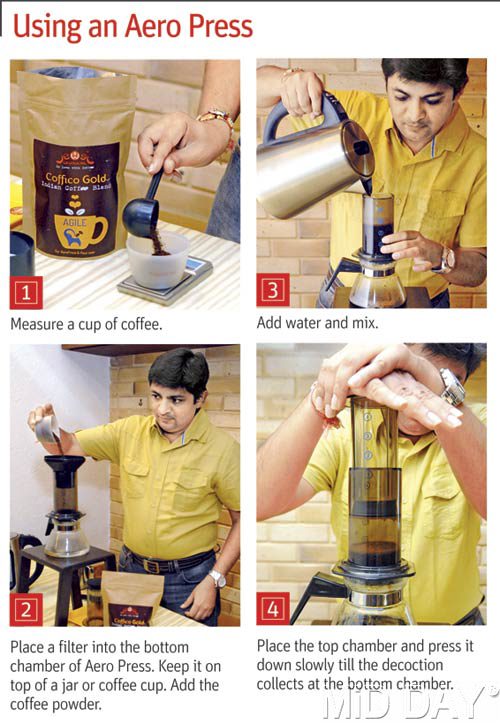
Shah recently launched his brand of coffee, Jewel Aromantic, and has also been conducting workshops and taking classes, teaching Mumbaikars how to brew coffee at home. One of his focus areas has been making inexpensive fuss-free coffee makers like the Italian Moka Pot (comes for just Rs 500), Indian Filter Coffee maker (Rs 500) and the most-recent Aero Press (Rs 2,500), now available in India.
“Most of us are only aware of instant coffee or the expensive espresso machines. But there are several other equipments like the Moka Pot, the Aero Press or the Indian Filter Coffee Maker, which are inexpensive and easy to operate. Now, people are exploring these options, and loving them,” he adds, adding, “Some devices like the Aero Press and Indian Filter Coffee Maker doesn’t require any heat source.”
Home of specialties
India grows two types of commercial coffees Indian Robusta and the Indian Arabica. Earlier, most of the produce used to be the Indian Arabica, which is still in huge demand internationally. But since Arabicas are prone to pests, most coffee estates have moved to the Indian Robusta. “It has a much more stronger taste than the Arabica, and though it was initially not considered good, and still fetches lower prices internationally, it’s gaining popularity in the market,” says Shah.
Dr Kumar says that what gives Indian coffee a special place internationally is its unique coffees, which are referred to as Specialty Coffees. “The three specialty coffees produced in India are Monsooned Malabar, Mysore Nuggets and Robusta Kaapi Royale. All these coffees vary in their cup characteristics, and are popular internationally,” he adds.
India is also gaining popularity for its unique animal coffee, the Monkey Parchment coffee, a rare type of coffee made from beans chewed by Rhesus monkeys. The coffee is produced in Chikmagalur, Karnataka.
“The monkeys select the best coffee cherries, pick them, chew them leisurely for a few minutes and spit the remainder of the fruit onto the ground.
These discarded fruits are collected, rinsed, washed and processed using water to remove the pulp (parchment), and then dried. The enzymes in the saliva of the Rhesus monkey initiates a chemical process, giving the beans a different taste and colour,” says Shah.
Challenges galore
But all is not good with the coffee estates, located mostly in the Western Ghats. In the last few years, there had been several reports of labour constraints in Indian coffee estates. “Most of India’s coffee is grown in undulating slopes of the Western Ghats.
The coffee plantations are experiencing a severe shortage of labour for undertaking key farm operations, such as manuring, application of fertiliser, harvesting and farm-level processing. While larger plantations have initiated efforts for mechanisation, medium and small plantations continue to incur higher costs on labour, thereby reducing their surplus for capital investments,” says Dr Kumar.
According to a report by The Seattle Times, some plantations in India have begun offering good-quality housing, medical care and other benefits to attract labour. But it’s been of no help. Another major problem is the low level of value addition at the farm level, informs Dr Kumar.
“The value addition of coffee takes place at the level of roasters and retailers. But since most of our coffee is exported as green beans (unprocessed), most Indian coffee producers become very susceptible to the fluctuations in international prices. Higher value addition and domestic consumption could reduce the susceptibility of producers to the drastic price fluctuations that are currently seen in primary markets of Indian coffee,” he adds.
Another concern emerges from lower production due to unseasonable and fluctuating rainfall. “While the consumption of Indian coffee has increased, the productivity of Indian coffee plantations has been stagnant,” reveals Dr Kumar adding that India should produce more coffee to meet the domestic demand and exploit opportunities that emerge from a growing international demand for Indian coffee.
Grading of coffee primarily refers to the segregation / classification of coffee beans based on their size. The primary grades of Arabica Coffee are Peaberry, AB, A, B, C, Blacks/Browns, Bits and Bulk. The primary grades of Robusta Coffee are Peaberry, AB, C, Blacks/Browns, Bits and Bulk.
Bits and Bulk are the most inferior in the lot and used to make instant coffee. In India, coffee is also categorised based on taste like Monsooned Malabar, Mysore Nuggets and Robusta Kaapi Royale. Based on the region of production in India, 13 regional coffees have also been defined.
They are Anamalais, Araku Valley, Bababudangiris, Biligiris, Brahmaputra, Chikmagalur, Coorg, Manjarabad, Nilgiris, Pulneys, Shevaroys, Travancore and Wayanaad.
Improve your coffee quotient
What’s roasting?
Roasting is a process that helps bring out the aroma and flavour of coffee.
The major techniques for roasting coffee beans are Rotating cylinder or drum roasting where the coffee beans are fed into a cylinder through which hot air is passed and the drum rotates; and fluidized bed roaster where gases entering into the fixed chamber of the roaster lead to the beans’ rapid turbulent circulation (levitation).
Following roasting, the beans are cooled and run through a destoner that uses air to remove stones and other extraneous materials. The roasted beans are then ground by using grinders.
source: http://www.mid-day.com / MidDay / Home> Life and Style News> Food News / by Hassan M Kamal / September 27th, 2014
The 71st Annual General body Meeting (AGM) of The Crescent Consumer’s Co-operative Stores Ltd., Udayagiri, will be held on Sept. 23 at 10.30 am at the Store premises under the Chairmanship of the Store President Mahmood Hasan Sait.
source: http://www.starofmysore.com / Star of Mysore / Home> In Brief / September 22nd, 2014
Shah Rukh Khan and Bollywood’s Global Fortunes Advance
The Bollywood superstar Shah Rukh Khan, left, and Deepika Padukone in “Chennai Express,” from 2013. Credit Red Chillies Entertainments/UTV Motion Pictures
Mumbai :
Shah Rukh Khan has many titles. The 48-year-old Bollywood superstar is known as King Khan, King of Bollywood and Bollywood Badshah (or emperor). This summer Mr. Khan became a knight. In a glittering ceremony in Mumbai, the French foreign affairs minister, Laurent Fabius, conferred France’s highest civilian honor — the Knight of the Legion of Honor — on Mr. Khan. In the official news release, Mr. Fabius said, “The French people hail Shah Rukh Khan’s talent and generosity,” which transcend “cultural and historical differences.”
Mr. Khan’s archrival Aamir Khan (no relation) was also transcending cultural differences. On July 25, his latest film, “Dhoom 3,” an action thriller and India’s highest-grossing film ever, was released on 2,000 screens in China, a first for an Indian film and a distribution strategy more often used for Hollywood blockbusters.
“There are numerous Aamir Khan fans in China,” the film’s Chinese distributor, Ying Li of HGC Entertainment, said in an email. “His image is very positive.”
The French and Chinese are among the many converts to Bollywood’s rapidly growing following. Hindi films have long had devoted fans among the 21 million Indians living overseas, and in the 1950s and ’60s, the actor-director Raj Kapoor became a household name in Soviet Russia, while Hindi films traveled to the Middle East and Africa. But in the last decade, Bollywood’s unique cocktail of emotion, song, dance and melodrama has found takers in several new markets. According to the box office tracking company Rentrak, revenues for Indian films across 36 territories rose from $66.2 million for 69 titles in 2009 to $289 million for 170 titles in 2013.
The new fans are in countries as diverse as Turkey, Peru, Panama and Iraq. Hindi films first reached Japanese theaters in 1952, but regular releases began only last year. Aki Sugihara of the Nikkatsu Corporation, the leading distributor of Hindi films there, said the Japanese like “the fact that there is not too much dependency on CGI, like in Hollywood movies.”
The Japanese pop musician and soundtrack composer Matsumura Masahide (known as Titi Matsumura) is a fan and said the appeal lies in the films’ ardent approach. “We like Indian films full of emotional feeling with the richness of heart, which Japanese people tend to miss now,” he said by email. “Even when films describe a negative problem, the way to describe it is full of big Indian love.”
The Germans are besotted with Shah Rukh Khan. Their ardor can be traced to 2004, when a German television station programmed a prime slot for “Kabhi Khushi Kabhie Gham” (“Sometimes Happiness, Sometimes Sadness”), featuring Mr. Khan as the estranged, adopted son of a rich industrialist. The three-hankie melodrama — the film’s tagline was “It’s all about loving your parents” — single-handedly opened up a new market. Viewers “cried, felt great pleasure, joy and release,” the film’s distributor, Stephan Holla, said by email. “We do not get this from German movies or Hollywood.”
Among those viewers was Julia Wessel, a 25-year-old student of cultural anthropology. “I was intrigued by it, but I was even more intrigued by the effect it had on my mother,” she said by email. “I cannot remember ever seeing my mother cry, not even at funerals. But there she was watching this film, and she had tears running down her face.”
Bollywood became such an obsession that Ms. Wessel dropped her studies and in 2006, started a German-language Bollywood magazine called Ishq (Urdu for love), which now has a circulation of 30,000 in Germany, Austria and Switzerland.
Despite evangelists like Ms. Wessel, Brand Bollywood hasn’t been an easy sell overseas. Hollywood and regional productions provide stiff competition. Even big-name studios like Disney India, which produces Disney-branded films, find it tough going in other countries. Amrita Pandey, who heads marketing and distribution for the studio, cited a host of factors in an email interview: “Language barriers, high investments required to develop new markets, the definite grammar of Hindi films and cultural gaps are also barriers.”
In Britain and the United States, these barriers have proved insurmountable. They are the largest overseas territories for Bollywood, but while Hindi films do penetrate mainstream theaters, the audiences are mostly of South Asian descent. Avtar Panesar, vice president of international operations for Yash Raj Films, one of Bollywood’s largest studios, pegs the non-Indian viewership at 0.5 percent. “We have done events in theaters, carried out media campaigns,” he said by email. “But it seems that these films are being made by Indians and watched by Indians.”
The crossover Hindi film has been the holy grail for Mumbai filmmakers since the success of Ang Lee’s “Crouching Tiger, Hidden Dragon” in 2000, the Oscar-winning American-Chinese-Taiwanese coproduction that drew mainstream audiences in the United States. But efforts at such cross-pollination have delivered uneven results. The Indian company Reliance Entertainment invested upward of $500 million in Steven Spielberg’s DreamWorks, but the hits have been limited. Initially, Hollywood studios in India stumbled with local productions. Eventually Disney found an Indian partner, UTV, and Disney India’s first film after the merger — a rom-com called“Khoobsurat” — was released in the United States on Sept. 17.
Relativity Media is hoping to alter the landscape. At the Cannes Film Festival in May, it announced a $100 million joint venture with B4U, a Bollywood entertainment company. “We don’t consider ourselves Hollywood,” Relativity’s chief executive, Ryan Kavanaugh, said by phone. “We consider ourselves a content technology company. Studios think, ‘How do we sell our stuff to them?’ We are looking at how to create content for this huge market.”
Instead of finding one film that satisfies both palates, the Relativity strategy is to tailor the same content for two markets. So with an as-yet-untitled action-comedy now in production with Zach Galifianakis, Owen Wilson and Kristen Wiig, the plan is to film it again in Bollywood. A reboot of “The Crow” would follow a similar model, with two versions shot simultaneously — one in Hollywood and one in Bollywood with American actors in the Indian version and vice versa. “Our goal is to be at this long-term,” Mr. Kavanaugh said, “We go slowly and we take the consumer with us.”
Along with consumers, Hindi films have also evolved. They are no longer a monolithic entity defined by song and dance. Daring, more personal indie productions known as Hindie movies are also making inroads locally and globally. In the past year, “The Lunchbox,” a small-budget film starring Irrfan Khan as a widower forming a bond with a neglected Mumbai housewife, made about $10 million globally at the box office, with about 40 percent of that coming from America. Despite the absence of songs and mainstream Bollywood stars, “The Lunchbox” was among the highest-grossing Hindi films in the United States. It was distributed by Sony Pictures Classics, which perhaps helped it find viewers beyond the Indian market.
Could films like “The Lunchbox” help the Hindi film industry infiltrate the final frontier of the American mainstream? As Shah Rukh Khan put it in an email: “Our content is improving. Our technology is improving. It’s time.”
source: http://www.nytimes.com / The New York Times / Home> Movies / by Anupama Chopra / September 26th, 2014
A version of this article appears in print on September 28, 2014, on page AR15 of the New York editionwith the headline: Bollywood Is Prancing Far Abroad. Order Reprints|Today’s Paper|Subscribe
The Board of Directors of Tata Coffee Ltd at its meeting held on November 07, 2013, have reappointed Mr. Hameed Huq as Managing Director on the expiry of his present tenure of office viz from January 03, 2014 to March 31, 2015.
Shares of Tata Coffee Ltd was last trading in BSE at Rs.1054.65, down by Rs.78.40 or 6.92%. The stock hit an intraday high of Rs.1154.95 and low of Rs.1020.
The total traded quantity was 1.69 lakhs as compared to 2 week average of 0.42 lakhs.
From knowing zilch about crops, Zainab Husain is now one of Jalgaon and Barwani’s most prosperous farmers.
To find a Dawoodi Bohra agriculturist in the interiors of Madhya Pradesh is not everyday. But that’s not the only reason 33-year-old Zainab Husain merits a story. One of Barwani district’s most prosperous farmers today, Husain inherited her father, Sabir Husain’s 52-acre farm and pesticide and fertiliser business more as liability.
His sudden demise when she was 27, left her, his only child, in charge of the land that yielded cotton, chillies, wheat and bananas. Running the agro-products business was the true challenge, Husain realised, when she discovered that farmers owed her late father Rs 90 lakh.
To sell out, and get her married is the most practical solution, suggested her father’s family. Husain, a post-graduate in chemical science, hadn’t dirtied her hands in the fields.
Neither had she dabbled in business or chased debtors. Based in Jalgaon, a seven-hour drive from Mumbai, Husain had moved there as a child to live with her grandparents since the industrialised city offered the bright student better schooling prospects.
The farm was a good 210 kms from her home, and the family wasn’t moneyed (“We took a Rs 10,000 loan from the jamaat so that we could treat my father in Mumbai,” she says). How would she manage the farm via remote control or dare to sit months at the Barwani trading store? Just when the sale looked most feasible, a contrarian spoke up. Husain herself.
The extended family threw a fit, and just like it sometimes happens, an unlikely game-changer appeared on the scene. It was the goodwill her father had garnered over the years.
“When farmers or farm hands were in trouble,” says Husain, “he’d quietly help them with agrochemical supplies against long credit which they’d repay during the following harvest.
If they needed health assistance, my father would fund the treatment.” When Husain turned up at her store to ferret the list of debtors, she found unlikely allies. “They accompanied me from home to home, farm to farm, requesting the debtors to pay up.”
Sixty per cent of the outstanding was recovered; the family could breathe again. The early months were gruelling — negotiating the eight-hour Jalgaon-Barwani circuit while changing four bus routes; spending three months on the trot in unknown territory; communicating with 50 farm hands to enhance her insight into costing, irrigation potential and cropping patterns, and imploring the general manager of a lending bank in Mumbai to defer instalments. For someone who has been a farmer six years, Husain has a fair report.
Her cotton yields have trebled to 25 quintals per acre, she has more than doubled farm revenues, got into a positive capex cycle with tractor purchase and has plans to set up a back-ended nursery. Success gave her enough confidence to dabble in construction, building bungalows and apartments in Jalgaon. “The construction business provided us advances and perennial revenues, which we could use to fund the seasonal business of agriculture,” she says.
Over the last year, she has ploughed surplus funds into organic manure manufacture (100 tonnes per month, which has proved profitable from year one), forayed into the business of writing education support software, and is widening the construction portfolio to commercial properties.
And, she won’t stop learning. The soft-spoken lady, who could be a small time case study, is pursuing a PhD in agricultural extension.
source: http://www.punemirror.com / Pune Mirror / Home> Others>Sunday Read / May 25th, 2014