After a near-death experience, Badrunissa Irfan, wife of Irfan Razack, CMD of Prestige Group, has put paintbrush to paper, expressing all that she’s been through.
Bengaluru :
11 years ago, Badrunissa Irfan was in a comatose state for almost a month. Doctors had lost hope but Irfan pulled along.
Today, over a decade after the incident, Irfan is sharing what she experienced for the first time, through her art works. Titled ‘Freedom of the Soul’, 35 paintings of Irfan will be on display at Sublime Galleria in UB City through the month of June.
Picking up her acrylic paints after a 20-year break, Irfan questions what a soul is through her paintings. “I had a near-death experience where I was in a state of coma for 23 days and was declared clinically dead twice. But I came back to life and what I witnessed during those days is what I have painted now. I want to convey the message I received from the Almighty through my art.”
While she took to art at a young age, her passion took a backseat when life and responsibilities took over. “It was my daughter Uzma [Uzma Irfan, director of Prestige Group], who encouraged me to pick up the brushes again. When I told her that my body cannot do what it used to before, she sent her daughter (my granddaughter) Alayna Zaid (who is also an artist) to sit with me while working,” she says, adding that she started work on her paintings in January this year.
Talking about her paintings, Irfan says, “You’ll find that most of my paintings are of open skies, mountains, gushing streams, animals and birds.”
Starting at `75,000 and going up to `1,40,000, all proceeds from this show will be donated to charity. She recalls how she couldn’t hear anyone except her daughter reading verses from the Quran every day.
“In my unconscious state, there was a scenario where I felt like I was looking at my own body from the outside,” she says. Every experience that she went through during that period comes to life in this series. “The colours that I use depend completely on my mood. I spend about two hours in the afternoon and another two in the evening and finish one painting within two days. It might take a little longer if it’s a bigger one,” Irfan adds.
Irfan believes she ‘came back to life’ to share what she has seen and witnessed. “I personally feel more connected with nature, animals, birds, flowers and fruits. I feel humans are hypocrites and so I use my art to share the beauty I believe in,” says Irfan, who is also the author of cookbook Duniya-e-Ziyafat.
(Freedom of the Soul will be showcased from June 1 to 30 at Sublime Galleria. All proceeds from this show will be donated to charity)
source: http://www.newindianexpress.com / The New Indian Express / Home> Cities> Bengaluru / by Anila Kurian , Express News Service / May 31st, 2022
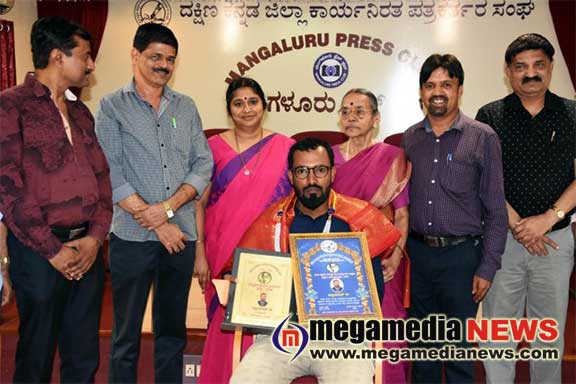
Pa Gopalakrishna Memorial Award 2018 for ‘Best Rural Reporting’ was presented to Journalist Imtiaz Shah Tumbe at Patrika Bhavan.
His article on Kodagu natural calamity, published in Vartha Bharati, was selected for the award.
Shah, a sub-editor in Vartha Bharati, said he had stepped into the field of journalism without any proper background. He said his parent organisation had honed his skills and provided him with an opportunity. “I feel privileged to receive the award.”
Dakshina Kannada District Information and Public Relations Senior Assistant Director K Rohini presented the award to Shah.
Speaking on the occasion, Rohini said the family members of veteran journalist late Pa Gopalakrishna, who had instituted the award, had set an example for others.
DK District Working Journalists’ Association Srinivas Indaje presided over the programme. Secretary Ibrahim Adkasthala, Mangaluru Press Club President Annu Mangaluru, Patrika Bhavan Trust President K Ananda Shetty, Pa Go’s spouse Savitri and senior journalist Manohar Prasad were present.
source: http://www.megamedianews.com / MegaMedia News / Home / March 02nd, 2019
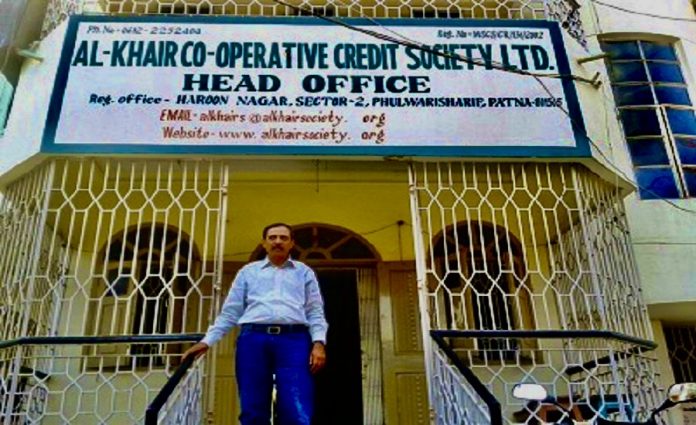
Head office of Al-Khair Society in Patna, Bihar. | Picture: Clarion India
Headquartered in a small building in the state capital Patna, Al-Khair Co-operative Credit Society, with thirteen branches in four states, has transformed lives by loaning money to low-income groups at zero interest rate.
Patna (Bihar) :
For 18 years, 51-year-old Kamala Devi used to sell vegetables at her small shop in Patna, Bihar, to support her family. The business wasn’t doing well and when in need of cash she would borrow money from a local lender at a 20 percent interest rate per month. Paying back this money at this interest rate was an extra burden. She found a way out when she came to know about the Al-Khair Co-operative Credit Society, a registered society based in Patna that loans money to low-income groups at zero interest rate.
In 2012, she borrowed Rs 10,000 from Al-Khair with zero interest and a one-time nominal service charge. With this money, which she had to repay by easy installments of Rs 50 per day, Devi started selling readymade garments at her shop. Her business improved. She paid back the loan amount in one year. Happy with the result, she took two more loans to expand her business.
“I am planning to borrow Rs five lakh from Al-Khair after repaying a loan of three lakh twice in the last three years. My goal is to further expand my business with the help of my elder son,” Devi told TwoCircles.net.
Besides lending her money to help her business, Al-Khair also loaned her money to buy a laptop for her younger son, who works in a private company.
“My family is settled now and our days of hardships are over,” she said.
Devi is one among 29,000 members of Al-Khair Co-operative Credit Society, a registered body under the Multi-State Co-operative Society (MSCS) Act 2002.
The society has 13 branches across Bihar, Jharkhand, Uttar Pradesh and New Delhi. Its beneficiaries include vegetable vendors, ready-made garments shopkeepers, medicine shop owners and Dhaba (eatery) owners etc.
Launched in 2002 by Arshad Ajmal (then chairman of Al-Khair Charitable Trust), Dr Badurl Hoda, Syed Shamim Rizvi and a few others, it employs 125 people as its staff. The need for such a society was felt after a detailed survey in 2001 conducted by S.B. Sinha, a Harvard University expert, revealed that “only 10% of people who were in need of loans had access to commercial banks.”
In order to become a member, one is required to buy at least 10 shares of Rs 10 each.
Managing Director of Al-Khair Naiyer Fatmi told TwoCircles.net that “Al-Khair has disbursed loans of Rs 113 crores since its inception.”
Fatmi said that they levy a one-time service charge ranging from 3.5 to 8.5 per cent.
Helping hand to low-income women during pandemic Nearly 35 percent of Al-Khair’s members are women. In 2012, Al-Khair started a branch in Mahendru, Patna that is run entirely by women. 42-year-old Shama Parween of Dargah Shah Arzan neighborhood is a member at this branch. She runs a small eatery near a school in Sultanganj, Patna.
In 2019, she became a member of Al-Khair by depositing Rs 500 per month from her husband’s savings.
“During the countrywide Covid-19 lockdown in March 2020, managing our household expenses became difficult as there was no work,” Parween, a mother of two daughters, told TwoCircles.net. As she was a member of Al-Khair, it only took a week for her to avail a loan of Rs 25,000.
She said she found it easier to repay the loan as the field staff from Al-Khair collected Rs 100-200 every day from her.
The hassle-free loans offered by Al-Khair, which take around two weeks to disburse after submitting basic documents, are popular among low-income groups. Its door-to-door system of collection is also found to be a matter of ease for its members.
Rajesh Sahu, from the Madhubani district of Bihar, is a vegetable vendor in Gomti Nagar, Lucknow in Uttar Pradesh. In 2012, he started his small shop with a loan of Rs 3000 from Al-Khair.
Sahu told TwoCircles.net that he was introduced to Al-Khair by his brother-in-law who was a beneficiary. “There is no hassle with Al-Khair. They don’t ask for too many documents and their charges to disburse loan is reasonable unlike where interest is charged which gets compounded,” he said. He is currently repaying his loan of Rs two lakhs, which he had taken in March this year, by depositing Rs 800 to 1000 every day.
Despite its popularity, Al-Khair is finding it difficult to increase its number of branches. The last branch was opened in 2014 at Jamia Nagar, New Delhi which remains its only branch in the national capital.
Fatmi said they have been waiting for almost five years for approval to open their five new branches, which include three in Bihar and two in Jharkhand. Earlier, the decision to open any new branch under MCMS Act lay with the Board of Society, Government of Bihar but after the demonetisation in 2016, the authority was delegated to Registrar, Co-operative in New Delhi under the Central government.
“Our application is lying with them from 2016. We just hope that it gets approved,” Fatmi said.
Sami Ahmad is a journalist based in Patna, Bihar. He tweets at @samipkb
source: http://www.twocircles.net / TwoCircles.net / Home> Lead Story / by Sami Ahmad, TwoCircles.net / May 26th, 2022
The Imperial Sweet House in Hyderabad’s Sultanpur area was started by Nafees and her daughter-in-law Nasreen Hussaini in the 1960s. Over the years, they’ve expanded their business across India and the world.
A paradise for food lovers, history geeks and street shopaholics, the Charminar city of Hyderabad has a special place for everyone. Being the soul of Hyderabad, Nawabi dawats (delicacies) like Biryani, Qubani ka Meetha and Kaddu ki Kheer are certain to tickle the taste buds of tourists and locals alike.
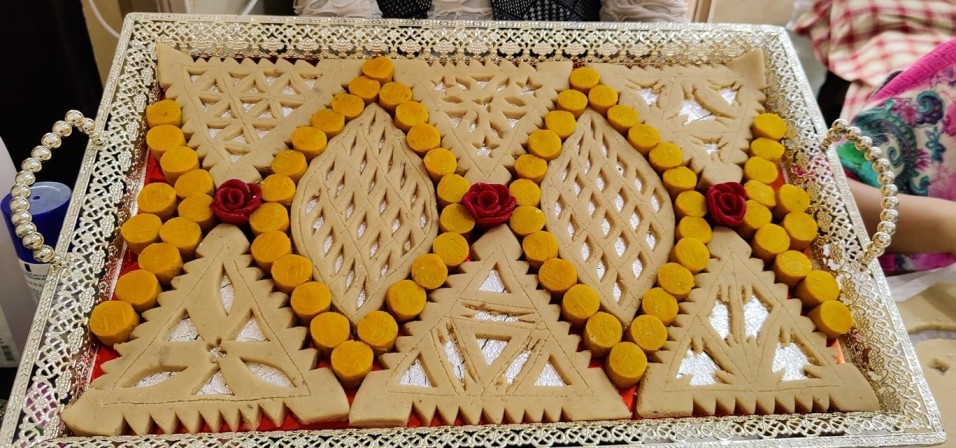
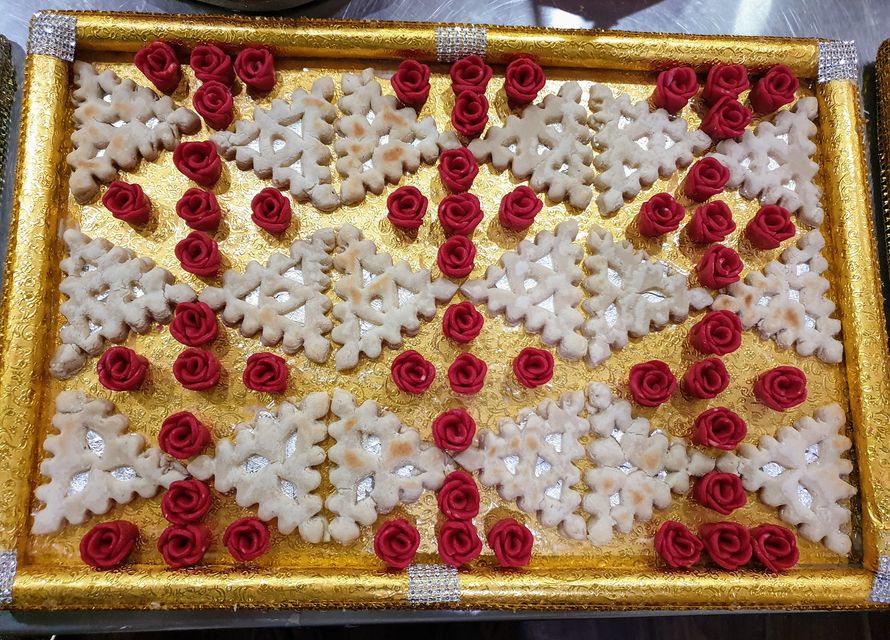
But among the popular dishes, there is a lesser-known sweet dish called ‘Badam ki Jali’ that often goes undetected by foodies. Primarily made with almonds, cashews and sugar, the recipe of this confection is known to have been passed on from one generation to another.
However, according to reports, there are only a handful of families left in the city that serve Badam ki Jali, which originated in the old Madras and Acrot areas of Tamil Nadu. It travelled to Hyderabad through inter-community marriages, where brides also had their closely guarded recipes in their elaborate wedding trousseau.
One of the few remaining families that make this dish in its authentic form is the Hussaini. As per the family’s accounts, Syeda Aijaz Fatima brought the recipe with her when her family moved to Hyderabad 60 years ago. She passed her recipie to her daughter-in-law, Nafees.
She would make the dish during family gatherings, festivals and weddings but she never considered selling them or making a business out of it.
Cut to 2022, the women of the house run a successful store, ‘Imperial Sweet House’, in the Sultanpur area near Noorkhan Bazar. With an average daily turnover of Rs 20,000, the family supplies their best seller Badam ki Jali and other sweets not just across India but the world.
A Woman’s World
The Hussaini matriarch turned into homepreneurs in the ’60s when their community and the society was reluctant to see women of the house earning money.
It was with the entry of Nafees’ daughter-in-law, Nasreen, that they decided to sell the sweets during festivals. They converted the ground floor of their house into a store to save money on rent. This also ensured they were able to manage both household work and sweet making.
Recalling the early days of their business, Nafees says, “It is a Nawabi mithai that we made accessible to everyone. Initially, we started with a few orders of 1-2 kg and gradually increased to 10 [kg]. I still remember that cashews were priced at Rs 8 per kg and almonds were Rs 10 when we started. The help we hired 50 years ago is still with us. But nowadays there are grinders to grind almonds and cashews but back then it was a tedious process.”
Now 87, Nafees credits her husband, Syed Mohammed, who supported her dream to expand the store’s business.
“Whether it was completing an order of 52 trays of Badam ki Jali, delivering the sweets on his way back from work or working overnight while streaming movies on VCDs [to accompany the sweetmakers], he always helped,” she adds.
As part of their expansion plan, Nasreen introduced new colours, shapes and sizes like stars, betel leaves, flowers and fruits, to the recipe with help from her husband, Mansoor. Meanwhile, Nafees added an ‘ashrafi’ design, which is achieved by pressing the dough between two Nizami coins to get their inscriptions.
Explaining the process of preparing Badam ki Jali without revealing much, she says, “We soak almonds in hot water and then dry it. Cashews and almonds are then ground into flour and then made into dough with sugar. The mould is then given different shapes and kept for baking. The whole process takes around 4-5 hours. The texture of the sweet is like cookies but the taste is similar to Kaju Katli.”
Nafees passed down the recipe to her daughter-in-law Nasreen who then taught her daughter-in-law, Aisha. Under the late Nasreen, the orders multiplied and she was the one to get new machines like grinders for easing the cooking process.
To ensure the quality of the ingredients, Nasreen and Nafees would themselves visit the Begum market to taste cashews and almonds.
When Aisha, the fourth-generation entrant, took over six years ago, she expanded the deliveries outside the city and country. She used online platforms like Whatsapp and social media for marketing. She was also instrumental in customising trays to get special shapes.
“Currently, our selling capacity is 300-400 kg per month. We also make Puran Poli, Gajar Halwa and other sweets. Every dish is made fresh and if there is an exhibition in the city, we do not sell in bulk and make fresh sweets if they get over. Although the shelf-life of this sweet is four to five days if covered in butter paper and packed properly. In case a customer is unhappy with the quality, we replace the entire order. We care about our reputation and family legacy more than anything,” says Aisha, who is a software engineer.
Over the years many competitors have arrived who make the same dish but the Husaainis are not worried.
“We prefer forgoing profits over compromising on taste and consistency. My grandmother, Nafees taught us this. It is due to these principles that we have a global footprint. Even actor Dia Mirza Rekhi had ordered our Badam ki Jali for her wedding last year,” says Ali, Aisha’s husband.
Both Aisha and Ali left their respective jobs in Dubai to continue the family’s legacy.
“The women of this house have a business acumen without having any business-related degrees. They hold magic in their hands to be able to make thousands of people smile with delight with their Badam ki Jali. So leaving a job abroad was totally worth it. We hope our next generation continues the family tradition,” he adds.
When the businessman, Yusuff Ali, paid a visit to the palace in 2012 Marthanda Varma had expressed his wish to gift the car to him. A year later Varma died (December 16, 2013) and the transfer was delayed due to many reasons.
Earlier, the German luxury carmaker Mercedes-Benz came back to Marthanda Varma with an offer of two new high-end cars, but the royal entity refused to part with his favourite vehicle. (SOURCED.)
Marthanda Varma’s favourite car — a 1955-model Benz nicknamed “Mile a Minute,”– will soon join the fleet of well-known business tycoon MA Yusuff Ali. Varma was the patriarch of the erstwhile Travancore royal family.
The royal family and Uthradam Tirunal Marthanda Varma Foundation have said the late royal figure’s announcement in 2012 in this connection will soon be fulfilled. Many vintage car collectors and businessmen have eyed the vehicle for quite some time. Even the German luxury carmaker Mercedes-Benz came back to him with an offer of two new high-end cars, but the royal entity refused to part with it.
What is amazing is that the old beauty had travelled 40 lakh miles, a rare achievement for a vehicle. People close to the royal family said he bought the car when he was 38, in 1955, and he drove a major portion of the miles it covered on his own and the rest as a passenger. Built in Stuttgart in Germany, Varma bought it for ₹12,000 and got it registered in Karnataka, CAN 42. It got its nickname “Mile a Minute” after it used to cover one mile in one minute.
When the businessman, Yusuff Ali, paid a visit to the palace in 2012 Marthanda Varma had expressed his wish to gift the car to him. A year later Varma died (December 16, 2013) and the transfer was delayed due to many reasons. Though delayed, the royal family members decided to fulfil his desire and informed the business magnate about it. He is yet to react to the royal offer.
The car is with his son Padmanabha Varma and in good road condition. Benz had presented many honours to the car and some of them are placed in front of the car and bonnet, said royal members. Palace old timers say even on his sick bed Varma used to watch his trusted companion. “He was so attached to it and looked after it as his progeny,” said one of them. A multinational businessman, Yusuff Ali, owns the Lulu group. He had a miraculous escape after his chopper crash-landed in Kochi last April.
source: http://www.hindustantimes.com / Hindustan Times / Home> Top News> India News / by HT Correspondent / April 04th, 2022
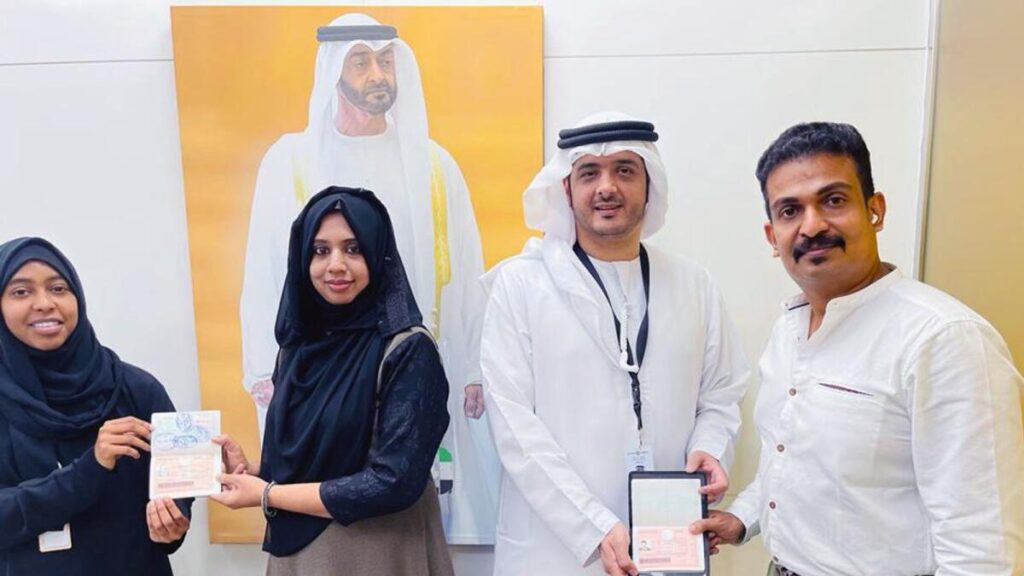
Abu Dhabi-based dentist couple Abdul Rahiman Nizar and Simi are the latest recipients of the 10-year UAE Golden Visa.
Abu Dhabi :
Abdul Rahiman Nizar gained popularity for amassing a rare collection of all the teeth extracted so far in his career.
Abu Dhabi-based dentist couple Abdul Rahiman Nizar and Simi are the latest recipients of the 10-year UAE Golden Visa.
Dr Nizar has served in Abu Dhabi for 20 years, including 18 years at Ahalia Group. However, the Indian doctor gained popularity for amassing a rare collection of all the teeth extracted so far in his career.
“Teeth are the strongest part of your body. I have always liked teeth. And once into my job, I started collecting it. Soon, it became a hobby. And I began to have a varied collection, which has been helping students in their dental studies,” said Dr Nizar, who is from Kerala, India.
“Over the years, I have collected nearly 15,000 teeth. I clean each tooth with antimicrobial hydrogen peroxide and then treat it with disinfectant. Once dried, I preserve them in a box. I am aiming to see my name in record books,” said the general practitioner dentist.
Dr Nizar urges people to take care of their teeth and visit a dentist every six months.
“Early detection of any tooth decay will help to avert a situation of tooth extraction. I always try to save a tooth and opt for extraction only as a last resort,” he said.
Dr Simi, who works at Al Mafraq Medical Centre in Baniyas, has also been collecting teeth.
“We are very excited to have bagged the Golden Visa. During this pandemic, both of us served the community, sacrificing our off days,” Dr Simi said.
The couple have four daughters: Grade 12 student Neha, Naila in Grade 8, Naima in Grade 3 and Naira is eight months old.
Dr Nizar, who also holds a 10-year US visa, added: “We plan to spend the rest of our lives in the service of Abu Dhabi. I thank the leadership for this honour and our hospital for the support in building our careers.”
source: http://www.khaleejtimes.com / Khaleej Times / Home / by Ashwani Kumar / September 29th, 2021
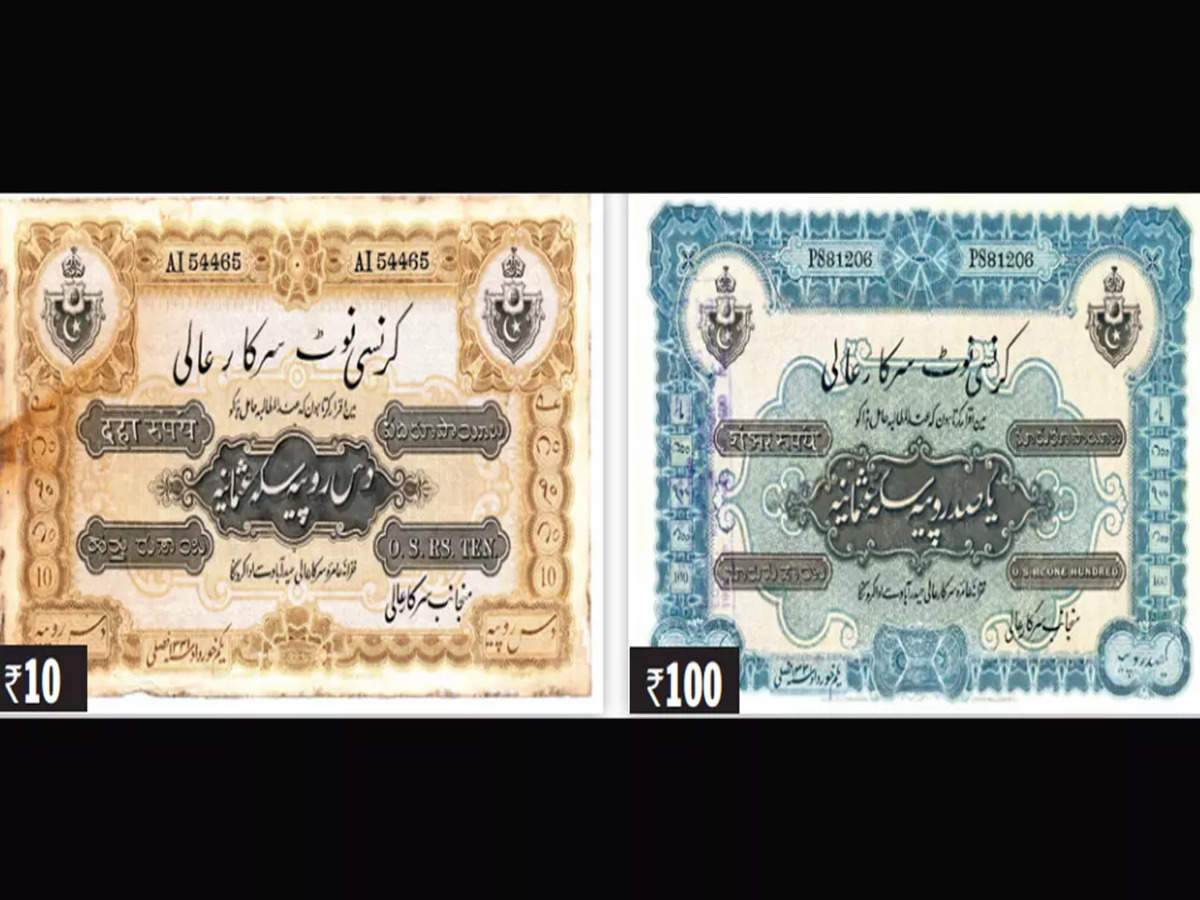
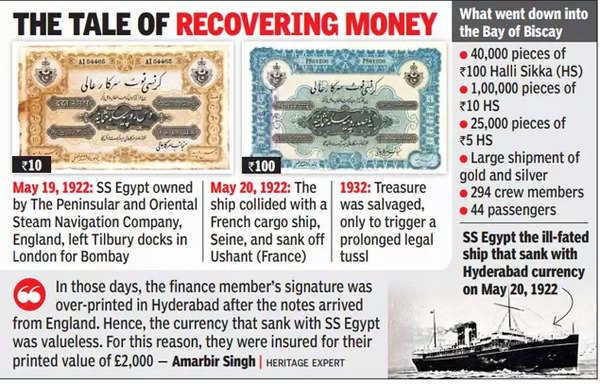
The Hyderabad currency comprised 40,000 pieces of 100 Halli Sikka (HS), 1,00,000 pieces of 10 HS, and 25,000 pieces of of 5 HS, totalling 1,65,000 pieces
After the ocean liner, SS Egypt , sank in the Celtic Sea on May 20, 1922, the events that unfolded over the next 17 years forced the Nizam VII, Mir Osman Ali Khan, to shift the printing of Hyderabad currency from England to Nashik.
On this day (May 19) 100 years ago, SS Egypt owned by The Peninsular and Oriental Steam Navigation Company, England, left Tilbury docks in London for Bombay (Mumbai). It had 44 passengers and 294 crew members, besides a large shipment of gold and silver and 1. 6 lakh pieces of Hyderabad currency, which had a face value of Rs 51,25,000.
The next day (on May 20, 1922), the ship collided with a French cargo ship and sank off Ushant in France. The Hyderabad currency shipped by Waterlow and Sons to the princely state of Hyderabad too went down into the sea. The treasure was salvaged a decade later in 1932, only to trigger a prolonged legal tussle.
“The Hyderabad currency comprised 40,000 pieces of Rs 100 Halli Sikka (HS), 1,00,000 pieces of Rs 10 HS, and 25,000 pieces of Rs 5 HS, totalling 1,65,000 pieces. The face value was Rs 51,25,000,” eminent numismatist and heritage expert . Amarbir Singh told TOI, adding that since the currency notes were unsigned, they did not legally carry value.
“In those days, the finance member’s signature was over-printed in Hyderabad after the notes arrived from England. Hence, the currency that sank with SS Egypt was valueless. For this reason, they were insured for their printed value of £2,000,” Amarbir said.
Stating that few of the notes salvaged had made their way to Hyderabad, resulting in a spate of legal fights, Amarbir said the issue was closed 17 years after the notes were printed which entailed seven years of negotiation and litigation.
“The government of Hyderabad decided it would be safer to print currency in India. The outbreak of World War II shortly after proved it was indeed a wise decision,” Amarbir said, explaining how the princely state changed location of currency printing from England to India.
The Hyderabad government requested Waterlow to destroy the notes and ordered a replacement stock from the printers, with the same series repeated, but in a slightly different type of font used in the serial number to indicate the difference. These were received and duly circulated, and the matter was regarded as closed, he said.
source: http://www.timesofindia.indiatimes.com / The Times of India / Home> City> Hyderabad> News> City News> Hyderabad News / by Syed Akbar, TNN / May 19th, 2022
By directly procuring ingredients such as wheat, raggi, millets and almonds needed for products directly from farmers, Shamila ensures a profit for them as well.
Shamila with her husband Muhammed Shahabaz
Ernakulam : :
With adulterated food posing a serious hazard, staying healthy now depends as much on trustworthy sources as on a balanced diet. Worried parents face a difficult time trying to get their children to eat nutritious food.
Doctor-turned-entrepreneur Shamila Shahabaz, 30, is aiming to make life easier for such parents. ‘Mama Papa Zay’, Shamila’s venture, aims to provide a variety of fully homemade and preservative-free products for children, right from eight months old. By procuring ingredients like wheat, ragi, millets and almonds directly from the farmers, the venture is earning profits for them as well.
“The idea struck me when I became a mother,” said Shamila, who is also a certified child nutritionist.
“People, generally, don’t have the habit of reading labels and ingredients before buying a product. This should change. You will stop buying so many products just by reading the ingredients list such as added sugar, artificial flavours and preservatives. It shocked me too and I wondered what to feed my baby. When I started sharing my recipes on social media after my pregnancy, people asked me whether I could make the products myself on a larger scale. Now we are getting orders from all over the world.”
Local farmers are benefiting greatly from Shamila’s initiative. “Kannankaya is the key ingredient used to make banana powder. We have a few local farmers cultivating it, and we directly deal with them. Shops charge Rs 35-40 per kg for the fruit. We pay Rs 20-25 directly to the farmers, who thus get a better deal than selling their produce in the market. Millets, ragi, nuts and other ingredients are similarly sourced from farmers in Salem and Mysuru,” said Mohammed Shahabaz, Shamila’s husband.
“We are playing a small part in trying to transform our society’s health as a whole, by cultivating healthy food habits. This is just a small step, we hope to be known as a trustworthy source of nutritional food for children. Young mothers should never find themselves in the quandary I was in, to identify unadulterated baby food,” said Shamila.
source: http://www.newindianexpress.com / The New Indian Express / Home> Good News / by Anuja Susan Varghese, Express News Service / May 22nd, 2022
A view of the dargah of Moinuddin Chishti in Ajmer
Ajmer’s dargah of Moinuddin Chishti is undergoing massive restoration work
The dargah of Moinuddin Chishti, fondly remembered as Khwaja Garib Nawaz, or the benefactor of the poor, in Ajmer, will, in two years’ time see a restoration and an incorporation of modern facilities. Considered a holy place of hope, where people from different denominations believe their prayers will be answered, the dargah was built in the 13th century. The tomb was constructed in wood, later covered with a stone canopy. In 1579, Akbar reconstructed the sanctum sanctorum and built the dome. It was renovated in later years by Jahangir, Shah Jahan, and Jahanara.
The project, a part of the CSR wing of Hindustan Zinc Limited, is headed by architect Surbhi Gupta, a heritage management consultant. At present, the dargah that was organically built with various materials, ranging from brick and marble to sandstone, is seeing restoration and redevelopment of the interiors of the Mehfil Khana, widening of gates, structural consolidation, facade work in the courtyards, cleaning of stone surfaces, and new terracing in lime concrete.
“There is no single language of design or material as the dargah was never planned systematically,” says Surbhi, working on one of the most important pilgrimage sites of South Asia with members of her studio Rasika that specialises in heritage management.
The square structure of the royal darbar (Mehfil Khana),was built in 1888 AD. She says it “has been painted over as a part of living tradition. The idea is to bring out its character as a space meant for performances. The architectural character needs to be revived to bring back the original identity of the structure. The patterned ceiling will be designed on the lines of Kashmiri Khatambandh (a woodwork ceiling with a carved geometric pattern), and Mughal stone inlay flooring,” says Surbhi.
Work is also going on at the famous Shahjahani Gate, built by the Mughal emperor Shahjahan to mark the expansion of the dargah complex beyond the Buland Darwaza.
The project — under the Swacch Bharat Abhiyan — also revolves around sanitation, cleanliness, and waste management within the dargah’s periphery. The work entails providing clean drinking water for pilgrims, building toilets, and kiosk management.
“Every day, seven tonnes of rose petals are wasted. For the flower-waste disposal, a compost waste converter has been installed.” As the Khwaja was known far and wide for his large-heartedness and hospitality, the dargah distributes degh ka khana (food from a cauldron) comprising rice, almonds, cashew nuts, raisins and ghee. “The food is prepared in two big deghs , which were made during Mughal emperor Akbar’s reign. A retort packaging machine (sterile packaging of plastic and foil) has been installed to increase the shelf life of food from three hours to three months.”
Feeding into the Swacch Bharat Abhiyan, Surbhi says that her team is working on the revival of wudu (Islamic ritual purification) points so that pilgrims can wash their hands, face and feet before offering namaz. Right now, the overflow leads to a cesspool of water. “We are also building newer ones that are aesthetic as well as functional,” says Surbhi, who from her days in college at CEPT, Ahmedabad, has been interested in heritage structures.
She chose Chunnamal ki haveli in Old Delhi, as a research project. “On the ground floor were shops, first and second floors were residential spaces. It had five chowks (internal courtyards). And it was built as an organic edifice over many decades during the 18th century,” she says.
Meanwhile, she hopes to look at the parts around the dargah. “The approach street is famous for food, craft and gota work done on the chadar laid at the dargah by devotees. We have proposed a facilitating centre that includes a large shopping space, kiosk, and toilets inside the complex,” she says.
source: http://www.thehindu.com / The Hindu / Home> Society> History & Culture / by Madhur Tankha / Septemeber 03rd, 2019
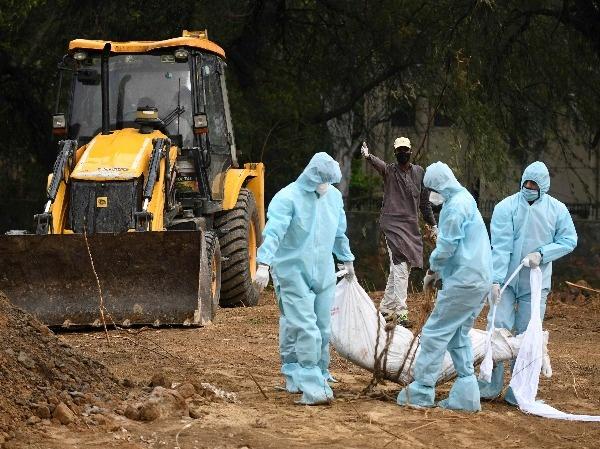
As the number of COVID victims rose in Delhi, more and more bodies needed a final resting place.
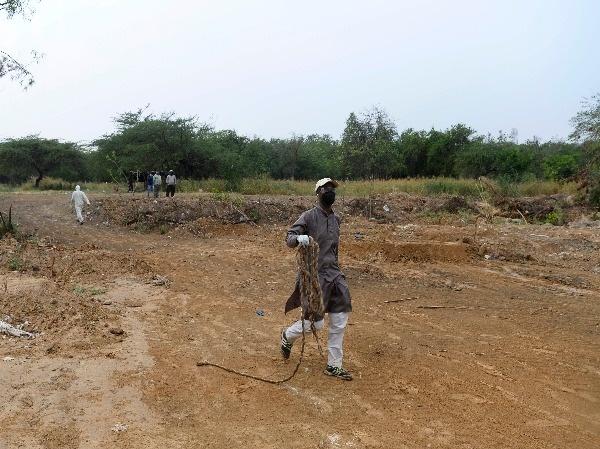
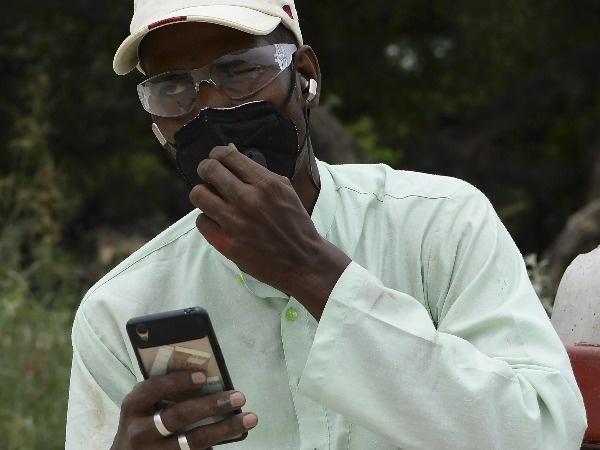
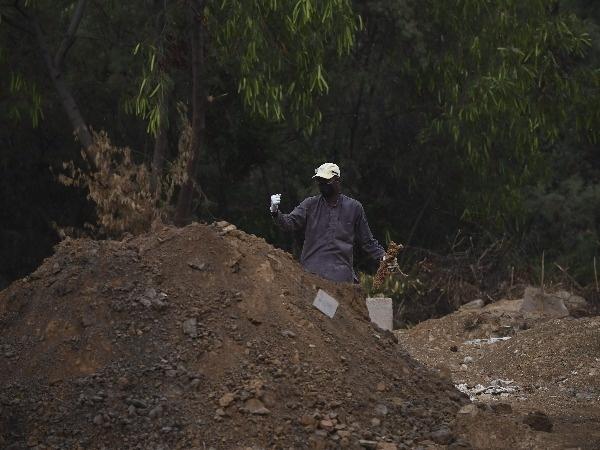
And that’s probably why Cemetery Supervisor Mohammed Shamim at ITO cemetery had no choice but to turn families away and risk his life to bury those who died of COVID-19. “I am fighting corona daily. I have not taken a single day off since the lockdown and come to the cemetery every day. I don’t even go to my home and sleep here only as no other person is ready to come here,” Shamim said.
afp
Gravedigger Mohammed Shamim brings a rope to use for burial of a coronavirus victim at a graveyard in Delhi. The death toll from coronavirus in Delhi has reached a reported 176.
afp
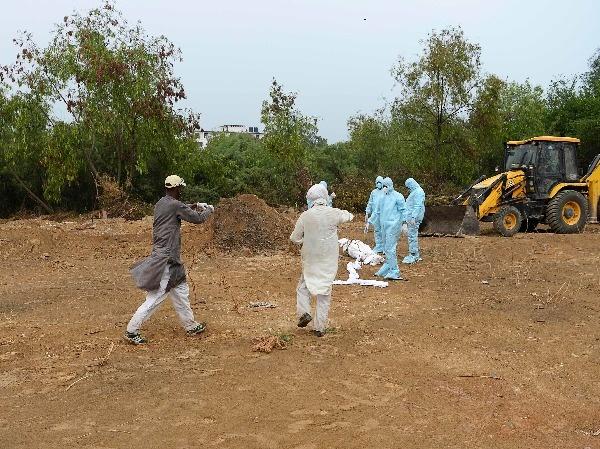
Shamim instructs relatives of a coronavirus victim before burial at a graveyard. As of May 20, the total number of confirmed coronavirus cases in India stand at 1,07,819.
afp
“I’ve been burying the dead for the last two decades. But until now, I’ve never been scared for my own life,” he said to AFP.
afp
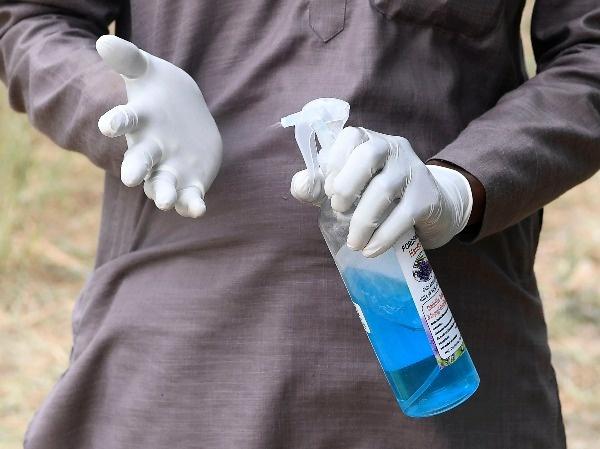
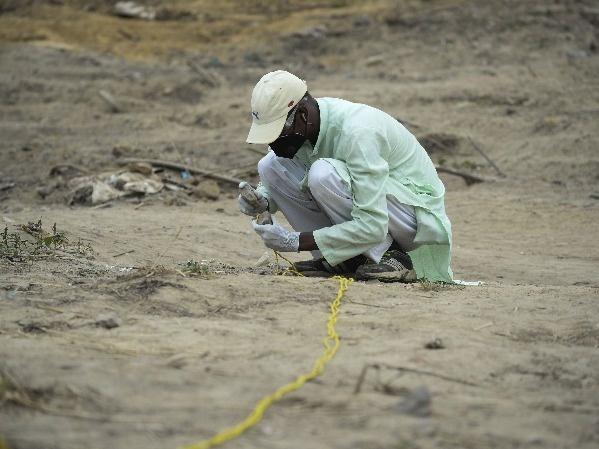
Shamim sanitises his gloves before the burial of a COVID-19 victim. He always keeps a santiser bottle with him.
afp
He uses his mobile phone after a burial.
afp
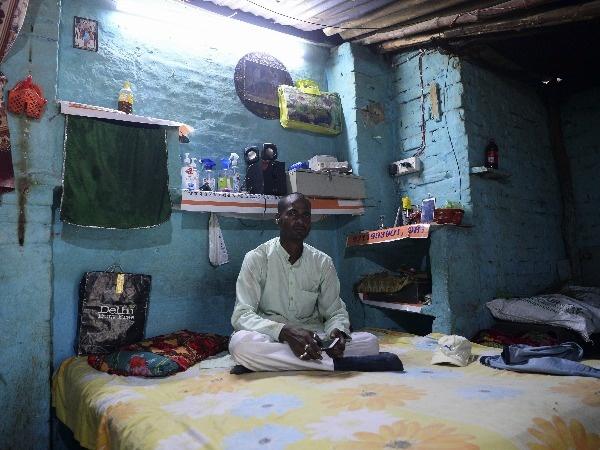
Shamim rests in his room after the burial of a COVID-19 victim. He has moved his four daughters to his parents’ house to prevent the risk of them catching the disease.
afp
Mohammed Shamim prepares a rope to use it to lower a body into a grave.
afp
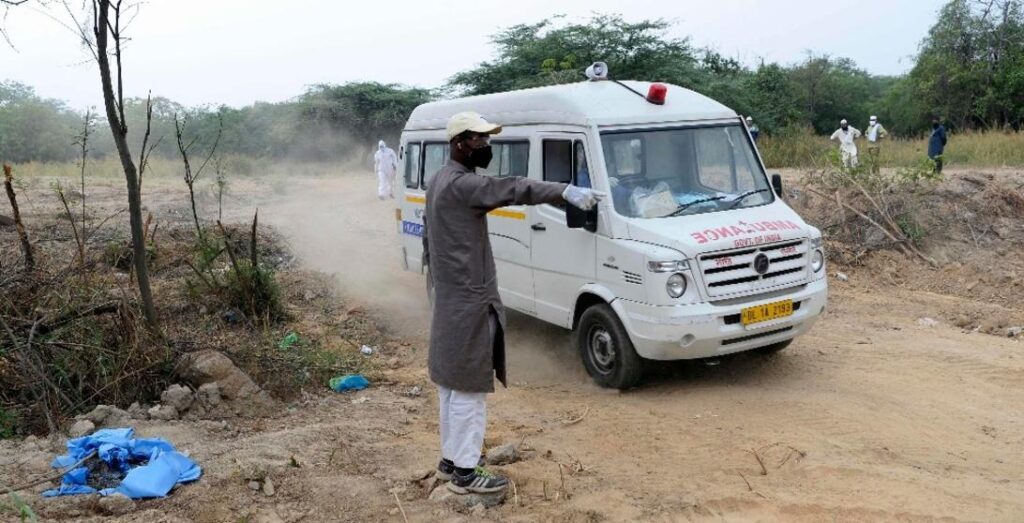
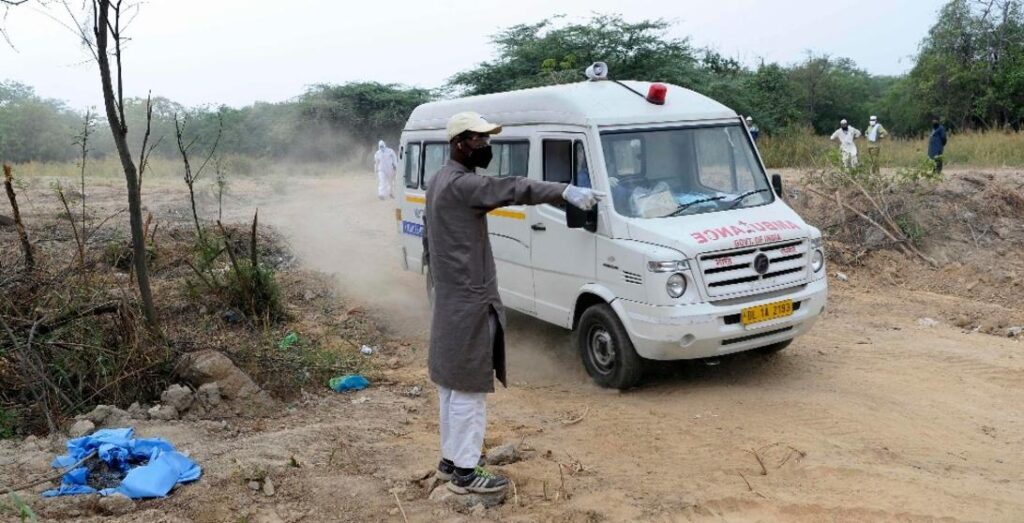
Here, he’s seen directing an ambulance carrying the victims of COVID-19.
afp
He talks to the relatives and asks them to put on protective suits, gloves, and masks for the burial ceremony.
afp
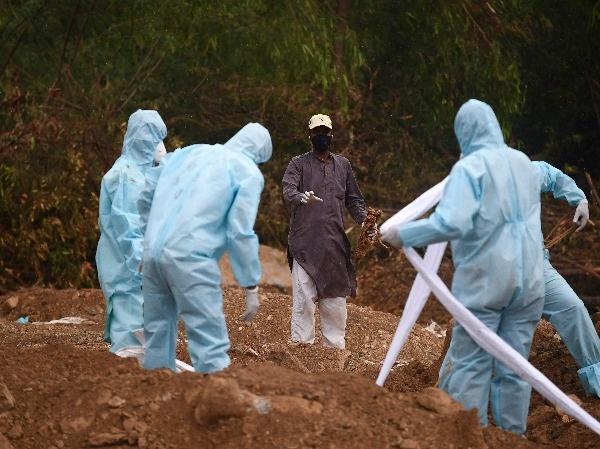
“People just refuse to come help with the burial. What can you do? I have to step in,” he said, describing “heartbreaking” scenes, like when only a wife and a small child came to the funeral of one man.
afp
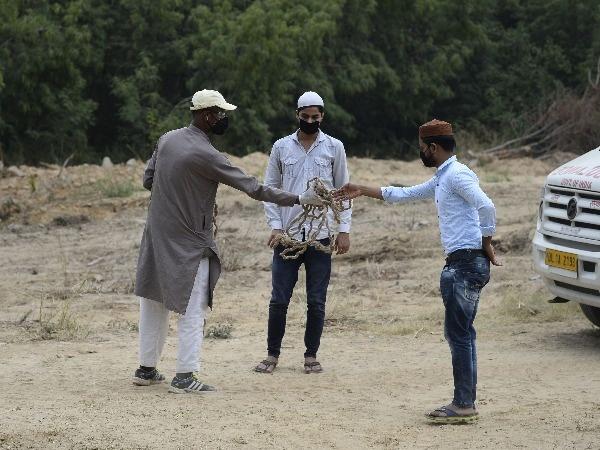
Shamim receives a rope to use for the burial of a coronavirus victim at a graveyard. “I always felt safest around the dead and most vulnerable in the outside world. Now I find it difficult to sleep at night,” he said.
Inputs From AFP
source: http://www.indiatimes.com / India Times / Home> Trending> Social Relevance / by Bhupinder Singh / Inputs fr9om AFP / July 21st, 2020